Mid-19th Century Figurative Prints
to
41
2,940
552
27
13
3
Overall Width
to
Overall Height
to
3,003
53
36
21
7
2
1
1
98
95
87
82
34
3,665
7,760
25,347
6,691
287
587
1,470
1,206
1,098
2,063
3,053
5,194
3,143
1,614
3,112
1,838
1,678
19
2,560
1,243
993
927
681
482
352
349
241
187
178
177
157
144
143
134
122
115
111
100
2,618
683
364
150
104
67
2,824
2,101
190
Period: Mid-19th Century
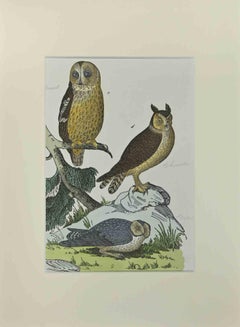
Owls - Etching by Johann Friedrich Naumann - 1840
Located in Roma, IT
Owls is an Etching hand colored realized by Gotthilf Heinrich von Schubert - Johann Friedrich Naumann, Illustration from Natural history of birds in pictures, published by Stuttgart ...
Category
Modern Mid-19th Century Figurative Prints
Materials
Etching
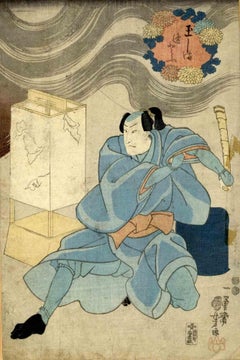
Yakushae Aizurie - Woodcut Print by Utagawa Kuniyoshi - 1840s
Located in Roma, IT
Yakushae Aizurie is an original artwork realized in 1840-1843 by Utagawa Kuniyoshi (January 1, 1798– April 14, 1861).
Woodcut Print.
Actor in the r...
Category
Modern Mid-19th Century Figurative Prints
Materials
Woodcut
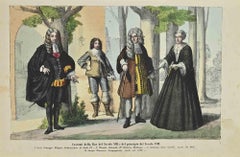
Costumes of the 17th century - Lithograph - 1862
Located in Roma, IT
Costumes of the 17th century is a lithograph on paper realized in 1862.
The artwork belongs to the Suite Uses and customs of all the peoples of the universe: " History of the govern...
Category
Modern Mid-19th Century Figurative Prints
Materials
Lithograph
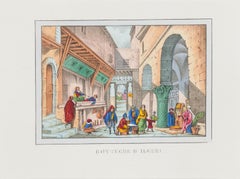
Bazaar In Algeria - Original Lithograph - 1846
Located in Roma, IT
Bazaar in Algeria is an original Hand-colored lithograph on paper realized in 1846 by an Anonymous artist of the 19th Century.
Titled in Italian on the lower center "Botteghe d Alg...
Category
Mid-19th Century Figurative Prints
Materials
Lithograph
Guerrier Cafre - Lithograph by Auguste Wahlen - 1844
Located in Roma, IT
Guerrier Cafre is a hand colored lithograph realized by Auguste Wahlen in 1844.
Good conditions.
The artwork belongs to the Suite Moeurs, usages et costumes de tous les peuples du ...
Category
Modern Mid-19th Century Figurative Prints
Materials
Lithograph
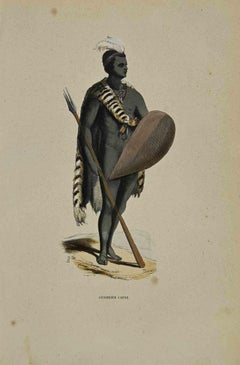
Cockatiel - Etching by Johann Friedrich Naumann - 1840
Located in Roma, IT
Cockateil is an Etching hand colored realized by Gotthilf Heinrich von Schubert - Johann Friedrich Naumann, Illustration from Natural history of birds in pictures, published by Stutt...
Category
Modern Mid-19th Century Figurative Prints
Materials
Etching
Fairy - Lithograph by Hégésippe Moreau - 1838
Located in Roma, IT
Fairy is a lithograph on paper realized by Hégésippe Moreau in 1838.
The artwork is in good conditions.
Hégésippe Moreau (1810-1838) was a French ly...
Category
Modern Mid-19th Century Figurative Prints
Materials
Lithograph
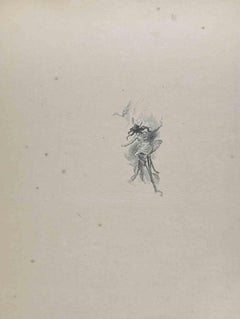
French Costumes at the Time of Charles IX - Lithograph by Auguste Wahlen - 1844
Located in Roma, IT
French costumes at the time of Charles IX is a lithograph made by Auguste Wahlen in 1844.
Hand colored.
Good condition.
At the center of the artwork is the original title "Costumi...
Category
Modern Mid-19th Century Figurative Prints
Materials
Lithograph
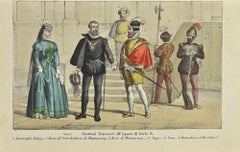
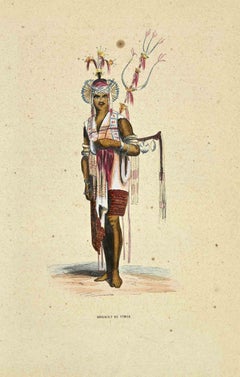
Herault de Timor - Lithograph by Auguste Wahlen - 1844
Located in Roma, IT
Herault de Timor is a hand colored lithograph realized by Auguste Wahlen in 1844.
Good condition.
The artwork belongs to the Suite Moeurs, usages et costumes de tous les peuples du...
Category
Modern Mid-19th Century Figurative Prints
Materials
Lithograph
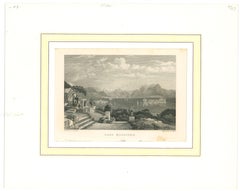
Ancient View of Lago Maggiore - Lithograph on Paper - Mid-19th Century
Located in Roma, IT
Ancient View of Lago Maggiore is an original modern artwork realized in Italy in the first half of the 19th Century.
Original Lithograph on Ivory Paper...
Category
Surrealist Mid-19th Century Figurative Prints
Materials
Lithograph
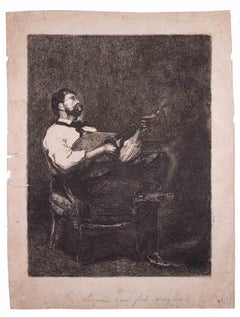
Guitar Player - Original Etching by F. Bonvin - 1861
Located in Roma, IT
Guitar Player is an original print, realized in 1861 by the French artist François Bonvin.
Black and white etching on paper. The artwork is attached o...
Category
Modern Mid-19th Century Figurative Prints
Materials
Etching

$420 Sale Price
20% Off
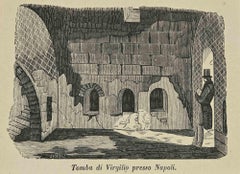
Uses and Customs - Virgil
s Tomb in Naples - Lithograph - 1862
Located in Roma, IT
Uses and Customs - Virgil's Tomb in Naples is a lithograph on paper realized in 1862.
The artwork belongs to the Suite Uses and customs of all the peoples of the universe: " History...
Category
Modern Mid-19th Century Figurative Prints
Materials
Lithograph
Uses and Customs - Underground Church of Saint Nicholas... - Lithograph - 1862
Located in Roma, IT
Uses and Customs - Underground Church of Saint Nicholas of Bari in Naples is a lithograph on paper realized in 1862.
The artwork belongs to the Suite Uses and customs of all the peo...
Category
Modern Mid-19th Century Figurative Prints
Materials
Lithograph
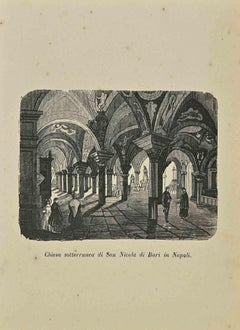
The Queen
s Staircase - Original Lithograph by F.A. Pernot - 1836
Located in Roma, IT
The Queen's Staircase is an original modern artwork realized in 1836 by the French artist François Alexandre Pernot (1793-1865).
Original Lithograph on paper. The sheet is glued on ...
Category
Modern Mid-19th Century Figurative Prints
Materials
Lithograph
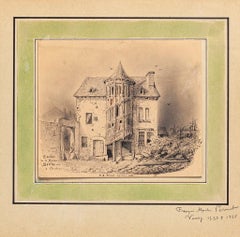
French Costumes at the Time of Louis XII - Lithograph by Auguste Wahlen - 1844
Located in Roma, IT
French Costumes at the time of Louis XII is a lithograph made by Auguste Wahlen in 1844.
Hand colored.
Good condition.
At the center of the artwork is the original title "Costumi ...
Category
Modern Mid-19th Century Figurative Prints
Materials
Lithograph
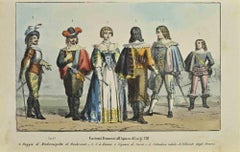
Prince Louis Bourbon - Original Lithograph by Antonio Zezon - 1850s
Located in Roma, IT
Prince Louis Bourbon is an original lithograph by Antonio Zezon.
Interesting colored lithograph which describes the Prince Louis Bourbon, Count of Aquil...
Category
Modern Mid-19th Century Figurative Prints
Materials
Lithograph
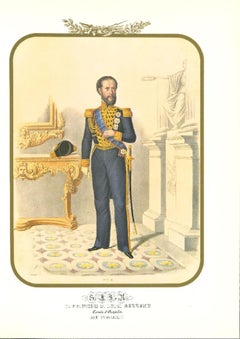
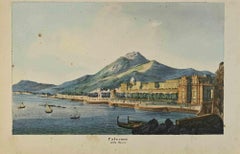
View of Palermo - Lithograph - 1862
Located in Roma, IT
Palermo is a hand colored lithograph realized in 1864.
Good conditions.
The artwork belongs to the Suite Uses and customs of all the peoples of the universe, or History of the gov...
Category
Modern Mid-19th Century Figurative Prints
Materials
Lithograph
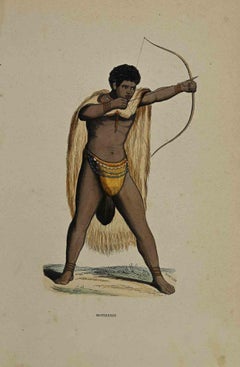
Hottentote - Lithograph by Auguste Wahlen - 1844
Located in Roma, IT
Hottentote is a hand colored lithographs realized by Auguste Wahlen in 1844.
Good conditions.
The artwork belongs to the Suite Moeurs, usages et costu...
Category
Modern Mid-19th Century Figurative Prints
Materials
Lithograph
The Courtship - Lithograph by Hégésippe Moreau - 1838
Located in Roma, IT
The Courtship is a lithograph on paper realized by Hégésippe Moreau in 1838.
The artwork is in good conditions.
Hégésippe Moreau (1810-1838) was a French lyric poet. The romantic m...
Category
Modern Mid-19th Century Figurative Prints
Materials
Lithograph
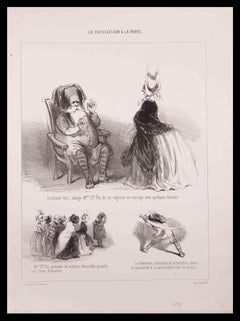
Le Grand-Turc - Lithograph by Paul Gavarni - 1850s
By Paul Gavarni
Located in Roma, IT
Le Grand-turc is a lithograph on ivory-colored paper, realized by the French draftsman Paul Gavarni (alias Guillaume Sulpice Chevalier Gavarni, 1804-1866) in the mid-19th Century.
F...
Category
Modern Mid-19th Century Figurative Prints
Materials
Lithograph
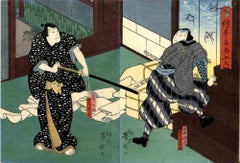
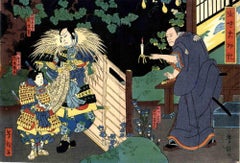
Kabukie - Woodcut by Ichiyôsai Yoshitaki - 1860s
Located in Roma, IT
Kabukie is an original artwork realized in the 1861 by Ichiyôsai Yoshitaki.
Woodcut Print.
The actor Onoe Tomizo as Ishii Genzo and Jitsugawa Ensaburo as Isshi Hyosuke in the 9th a...
Category
Modern Mid-19th Century Figurative Prints
Materials
Woodcut
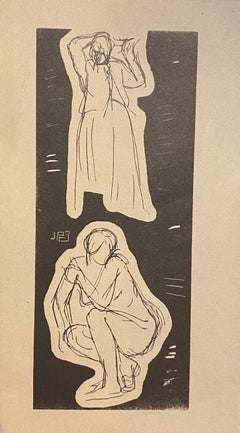
Figures of Women - Original Lithograph on Paper - 1840s
Located in Roma, IT
Figures of Women is an original lithograph on ivory-colorated paper by an unknown artist in 1840s.
In very good condition.
Not signed. Monogrammed J.P.
Category
Modern Mid-19th Century Figurative Prints
Materials
Lithograph
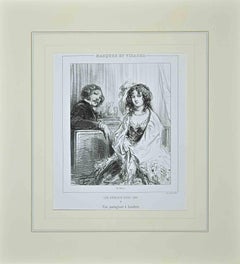
Une Partegeuse à Londres - Lithograph by Paul Gavarni - 1850s
By Paul Gavarni
Located in Roma, IT
Une partegeuse a Londres is a lithograph on ivory-colored paper, realized by the French draftsman Paul Gavarni (alias Guillaume Sulpice Chevalier Gavarni, 1804-1866) in the mid-19th Century.
From series of "Masques et Visages". Titled on the lower.
Good conditions except for some foxings.
Paul Gavarni (Paris, 1804 – 1866). Gavarni's father, Sulpice Chevalier, was from a family line of coopers from Burgundy. Paul began work as mechanical work in a machine factory but he saw that to make any progress in his profession, he had to be able to draw; accordingly, in his spare time in the evenings, he took classes in drawing. He devoted his special attention to architectural and mechanical drawing and worked at land surveying...
Category
Modern Mid-19th Century Figurative Prints
Materials
Lithograph
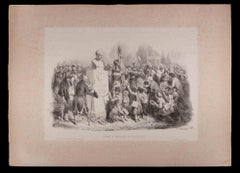
Dédié a Madame Vve. Charlet - Original Lithographs by Hippolyte Bellangé - 1846
Located in Roma, IT
Dédié a Madame Vve. Charlet is an original artwork realized by Hippolyte Bellangé in 1846.
Original lithograph on paper. The title appear on the lo...
Category
Modern Mid-19th Century Figurative Prints
Materials
Lithograph
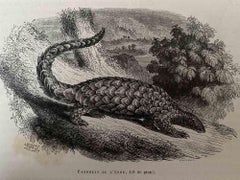
Pangolin De L
Inde - Original Lithograph by Paul Gervais - 1854
By Paul Gervais
Located in Roma, IT
Pangolin De L'Inde is an original lithograph on ivory-colored paper, realized by Paul Gervais (1816-1879). The artwork is from The Series of "Les Trois Règnes de la Nature", and was ...
Category
Modern Mid-19th Century Figurative Prints
Materials
Paper, Lithograph
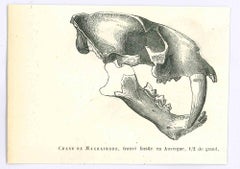
The Skull - Original Lithograph by Paul Gervais - 1854
By Paul Gervais
Located in Roma, IT
The Skull is an original lithograph on ivory-colored paper, realized by Paul Gervais (1816-1879). The artwork is from The Series of "Les Trois Règnes de la Nature", and was published...
Category
Modern Mid-19th Century Figurative Prints
Materials
Paper, Lithograph
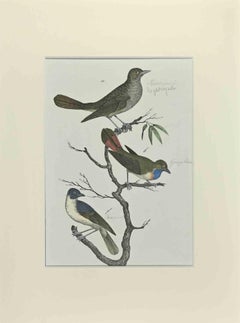
Nightingale - Etching by Johann Friedrich Naumann - 1840
Located in Roma, IT
Nightingale is a Etching hand colored realized by Gotthilf Heinrich von Schubert - Johann Friedrich Naumann, Illustration from Natural history of birds in pictures, published by Stut...
Category
Modern Mid-19th Century Figurative Prints
Materials
Etching
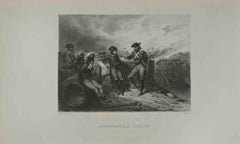
Napoleon Bonaparte in Toulon - Etching by Hippolyte Bellangé - 1837
Located in Roma, IT
Napoleon Bonaparte in Toulon is an etching that belongs to the suite AtlasBatt realized within Jacques Norvins' Histoire de Napoleon, published in 1837.
Author Jacques Norvins publ...
Category
Modern Mid-19th Century Figurative Prints
Materials
Etching
Osakae - Woodcut by Ichiyôsai Yoshitaki - 1860s
Located in Roma, IT
Osakae is an original artwork realized in the 1861 by Ichiyôsai Yoshitaki.
Woodcut print Chuban Diptych.
The actor Nakamura Jakuemon I as Matsushita Kaheiji, Arashi Rikan III as Ak...
Category
Modern Mid-19th Century Figurative Prints
Materials
Woodcut
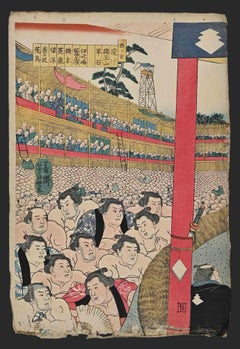
Sumo - Woodcut by Utagawa Kunisada - Mid 19th century
Located in Roma, IT
Sumo Tournament is a Woodcut print realized in the first half of the 19th century by Utagawa Kunisada.
Good condition and Beautiful colored woodblock print.
This wonderful modern artwork represents Japanese Sumo...
Category
Modern Mid-19th Century Figurative Prints
Materials
Woodcut
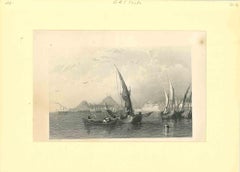
Ancient View of Corfu - Original Lithograph - Mid-19th Century
Located in Roma, IT
Corfu is an original modern artwork realized in the mid-19th Century.
Original B/W Lithograph on Ivory Paper.
Inscripted on the lower margin in Capital Letters: Corfu. Drawn by T...
Category
Modern Mid-19th Century Figurative Prints
Materials
Lithograph
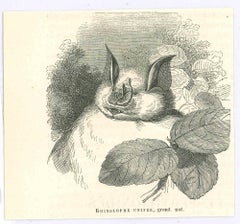
The Bat - Lithograph by Paul Gervais - 1854
By Paul Gervais
Located in Roma, IT
The Bat is an original lithograph on ivory-colored paper, realized by Paul Gervais (1816-1879). The artwork is from The Series of "Les Trois Règnes de la Nature", and was published i...
Category
Modern Mid-19th Century Figurative Prints
Materials
Paper, Lithograph
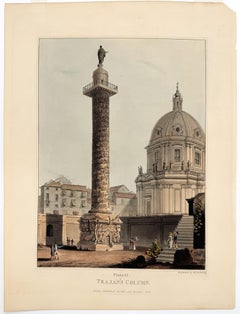
Trajan
s Column
Located in Middletown, NY
London: J. Taylor, 1820.
Etching with aquatint and engraving with hand coloring in watercolor on cream wove paper with a gilded edge, 10 x 12 inches (254 x 306 mm), the full sheet. ...
Category
English School Mid-19th Century Figurative Prints
Materials
Engraving, Aquatint, Etching, Handmade Paper
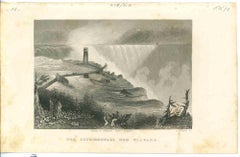
Ancient View of Niagara Waterfalls - Original Lithograph - 1850s
Located in Roma, IT
Ancient View of Niagara Waterfalls is an original modern artwork realized in Italy in the first half of the 19th Century.
Original Lithograph on Ivory Paper.
Inscripted in capital...
Category
Modern Mid-19th Century Figurative Prints
Materials
Lithograph
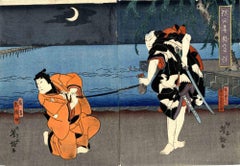
Sumida Haru - Kakutai - Woodcut by Utagawa Yoshitaki - 1860
Located in Roma, IT
Sumida haru - kakutai is an original artwork realized in 1860 by Utagawa Yoshitaki (April 13, 1841 – June 28, 1899) also known as Ichiyosai Yoshitaki.
Two Chuban from a Triptych.
M...
Category
Modern Mid-19th Century Figurative Prints
Materials
Woodcut
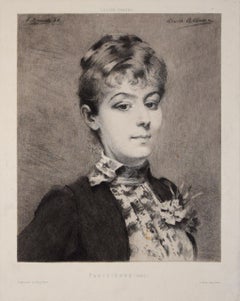
Parisienne - Original Etching by Fernand Desmoulin - 1886
Located in Roma, IT
Pariesienne is an original artwork realized by Fernand Desmoulin in 1886. Etching on paper.
Titled on the lower central margin; "Supplement de Paris-Noel" at the bottom; "L. Eudes ...
Category
Mid-19th Century Figurative Prints
Materials
Etching
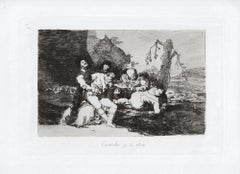
Curarlos y a Otra - Etching by Francisco Goya - 1863
Located in Roma, IT
Curarlos y a otra is an original artwork realized by the great Spanish artist Francisco Goya in 1810. Original etching on paper.
The artwork belongs to the famous print collection L...
Category
Old Masters Mid-19th Century Figurative Prints
Materials
Etching, Aquatint
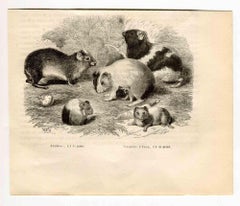
Brazilian Guinea Pig - Lithograph by Paul Gervais - 1854
By Paul Gervais
Located in Roma, IT
Brazilian Guinea Pig is an original lithograph on ivory-colored paper, realized by Paul Gervais (1816-1879). The artwork is from The Series of "Les Trois Rè...
Category
Modern Mid-19th Century Figurative Prints
Materials
Paper, Lithograph
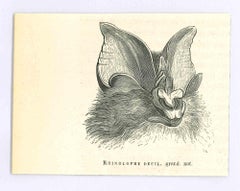
The Bat - Lithograph by Paul Gervais - 1854
By Paul Gervais
Located in Roma, IT
The Bat is an original lithograph on ivory-colored paper, realized by Paul Gervais (1816-1879). The artwork is from The Series of "Les Trois Règnes de la Nature", and was published i...
Category
Modern Mid-19th Century Figurative Prints
Materials
Paper, Lithograph
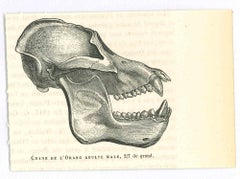
The Skull - Original Lithograph by Paul Gervais - 1854
By Paul Gervais
Located in Roma, IT
The Skull is an original lithograph on ivory-colored paper, realized by Paul Gervais (1816-1879). The artwork is from The Series of "Les Trois Règnes de la N...
Category
Modern Mid-19th Century Figurative Prints
Materials
Paper, Lithograph
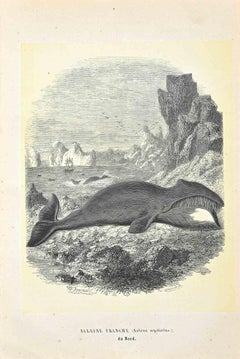
North Atlantic Right Whale - Original Lithograph by Paul Gervais - 1854
By Paul Gervais
Located in Roma, IT
North Atlantic Right Whale is an original lithograph on ivory-colored paper, realized by Paul Gervais (1816-1879). The artwork is from The Series of "Les T...
Category
Modern Mid-19th Century Figurative Prints
Materials
Lithograph
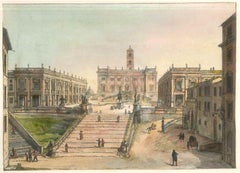
Pyramid of Cestius - Original Lithograph and Stencil - Mid 19th Century
Located in Roma, IT
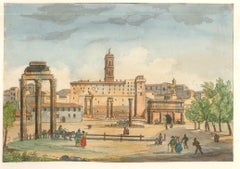
The Capitol is a beautiful lot of two hand-watercolored lithographs realized by an Italian artist of the XIX century. It represents the incredible landscape of the communal site of t...
Category
Modern Mid-19th Century Figurative Prints
Materials
Watercolor, Stencil
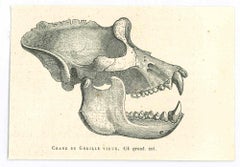
The Skull - Original Lithograph by Paul Gervais - 1854
By Paul Gervais
Located in Roma, IT
The Skull is an original lithograph on ivory-colored paper, realized by Paul Gervais (1816-1879). The artwork is from The Series of "Les Trois Règnes de la Nature", and was published...
Category
Modern Mid-19th Century Figurative Prints
Materials
Paper, Lithograph
Bath in Algeria - Original Lithograph - 1846
Located in Roma, IT
Bath in Algeria is an original Hand-colored lithograph on paper realized in 1846 by an Anonymous artist of the 19th century.
Titled in Italian on the lower center.
The state of pr...
Category
Mid-19th Century Figurative Prints
Materials
Lithograph

Ancient View of the Ruins of Palmira - Original Lithograph - Mid-19th Century
Located in Roma, IT
Ancient Ruins of Palmira is an original modern artwork realized in the mid-19th Century.
Original B/W Lithograph on Ivory Paper.
Inscripted on the lower margin in Capital Letters...
Category
Modern Mid-19th Century Figurative Prints
Materials
Paper, Lithograph
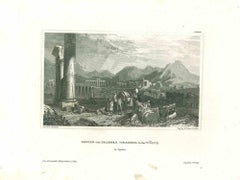
The Capitol - Original Lithographs and Watercolors - Mid 19th Century
Located in Roma, IT
The Capitol is a beautiful lot of two hand-watercolored lithographs realized by an Italian artist of the XIX century and later watercolored. It represents ...
Category
Modern Mid-19th Century Figurative Prints
Materials
Watercolor, Lithograph
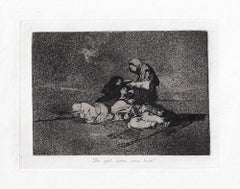
De que Sirvé una Taza? - Etching by Francisco Goya - 1863
Located in Roma, IT
Di que sirvé una taza? is an original artwork realized by the great Spanish artist Francisco Goya in 1810.
Original Etching on paper.
The artwork belongs to the famous series "Lo...
Category
Old Masters Mid-19th Century Figurative Prints
Materials
Etching, Aquatint
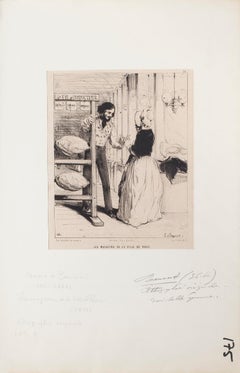
Les Magasins de la Ville de Paris - Original Lithograph on Paper - 1843
Located in Roma, IT
Les Magasins de la ville de Paris is original vintage lithograph realized by Edouard De Beumont (1821-1889), in 1843.
Not -Signed on the lower right margin. IMP. D'Aubert & C., Chez...
Category
Mid-19th Century Figurative Prints
Materials
Lithograph
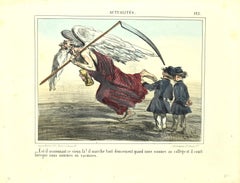
Actualités, Old Angle - Original Lithograph by Cham - 1865
Located in Roma, IT
Actualités, Old Angle is an amusing satirical illustration by the French illustrator and caricaturist, Cham (alias Count Amédée de Noé, 1818-1879) realized in 1865.
Beautiful Hand-c...
Category
Mid-19th Century Figurative Prints
Materials
Lithograph
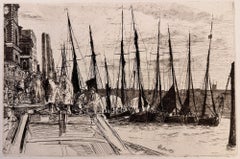
Billingsgate
Located in Middletown, NY
Etching printed in dark brownish black ink on cream laid paper, 6 x 8 7/8 inches (152 x 226 mm); full margins. Extremely minor and unobtrusive band of toning along the top sheet edg...
Category
Impressionist Mid-19th Century Figurative Prints
Materials
Laid Paper, Drypoint, Etching
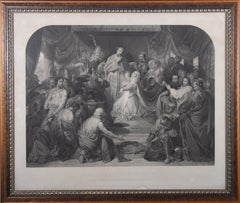
John Robinson (1796-1871) after Selous - 1868 Engraving, The Surrender Of Calais
Located in Corsham, GB
A fine 19th Century engraving showing a dramatic scene from the Hundred Year War, showing Queen Philippa pleading for the Burgesses. Philippa was a French princess who married Edward III...
Category
Mid-19th Century Figurative Prints
Materials
Engraving
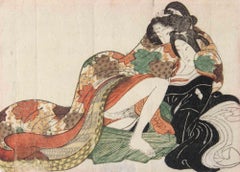
Shunga - Woodcut attr. Keisai Eisen - Mid-19th Century
By Keisai Eisen
Located in Roma, IT
Woodcut shunga print attributed to Keisai Eisen and realized in the early 19th century.
Good condition except for some signs of time.
Category
Modern Mid-19th Century Figurative Prints
Materials
Woodcut
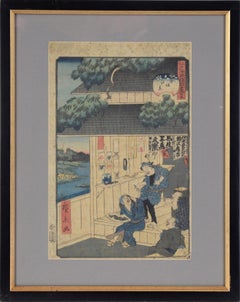
No. 45, View of Akasaka from "Comical Views of Famous Places in Edo" Woodblock
Located in Soquel, CA
No. 45, View of Akasaka from "Comical Views of Famous Places in Edo" Woodblock
Whimsical woodblock print by Utagawa Hirokage (Japanese, active 1855–1865). Four people are sitting on...
Category
Edo Mid-19th Century Figurative Prints
Materials
Rice Paper, Woodcut
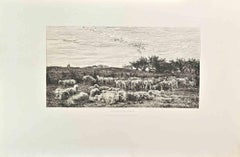
Parc a Moutons - Etching by Charles-François Daubigny - 1860s
Located in Roma, IT
Parc a Moutons is a black and White etching realized by Charles-François Daubigny in 1860s
Titled in the lower
Image Size:21x38
Very good impression.
Realized by Cadart for the ...
Category
Impressionist Mid-19th Century Figurative Prints
Materials
Etching
19th century color lithograph figures cemetery willow tree memorial headstone
Located in Milwaukee, WI
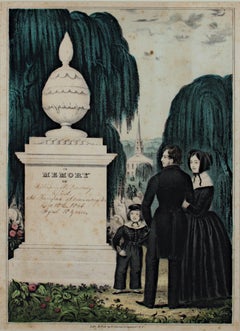
The present hand-colored lithograph was produced as part of the funeral and mourning culture in the United States during the 19th century. Images like this were popular as ways of remembering loved ones, an alternative to portraiture of the deceased. This lithograph shows a man, woman and child in morning clothes next to an urn-topped stone monument. Behind are additional putto-topped headstones beneath weeping willows, with a steepled church beyond. The monument contains a space where a family could inscribe the name and death dates of a deceased loved one. In this case, it has been inscribed to a young Civil War soldier:
William W. Peabody
Died at Fairfax Seminary, VA
December 18th, 1864
Aged 18 years
The young Mr. Peabody probably died in service for the Union during the American Civil War. Farifax Seminary was a Union hospital and military headquarters in Alexandria, Virginia. The hospital served nearly two thousand soldiers during the war time. Five hundred were also buried on the Seminary's grounds.
13.75 x 9.5 inches, artwork
23 x 19 inches, frame
Published before 1864
Inscribed bottom center "Lith. & Pub. by N. Currier. 2 Spruce St. N.Y."
Framed to conservation standards using 100 percent rag matting and TruVue Conservation Clear glass, housed in a gold gilded moulding.
Nathaniel Currier was a tall introspective man with a melancholy nature. He could captivate people with his piercing stare or charm them with his sparkling blue eyes. Nathaniel was born in Roxbury, Massachusetts on March 27th, 1813, the second of four children. His parents, Nathaniel and Hannah Currier, were distant cousins who lived a humble yet spartan life. When Nathaniel was eight years old, tragedy struck. Nathaniel’s father unexpectedly passed away leaving Nathaniel and his eleven-year-old brother Lorenzo to provide for the family. In addition to their mother, Nathaniel and Lorenzo had to care for six-year-old sister Elizabeth and two-year-old brother Charles. Nathaniel worked a series of odd jobs to support the family, and at fifteen, he started what would become a life-long career when he apprenticed in the Boston lithography shop of William and John Pendleton.
A Bavarian gentleman named Alois Senefelder invented lithography just 30 years prior to young Nat Currier’s apprenticeship. While under the employ of the brothers Pendleton, Nat was taught the art of lithography by the firm’s chief printer, a French national named Dubois, who brought the lithography trade to America.
Lithography involves grinding a piece of limestone flat and smooth then drawing in mirror image on the stone with a special grease pencil. After the image is completed, the stone is etched with a solution of aqua fortis leaving the greased areas in slight relief. Water is then used to wet the stone and greased-ink is rolled onto the raised areas. Since grease and water do not mix, the greased-ink is repelled by the moisture on the stone and clings to the original grease pencil lines. The stone is then placed in a press and used as a printing block to impart black on white images to paper.
In 1833, now twenty-years old and an accomplished lithographer, Nat Currier left Boston and moved to Philadelphia to do contract work for M.E.D. Brown, a noted engraver and printer. With the promise of good money, Currier hired on to help Brown prepare lithographic stones of scientific images for the American Journal of Sciences and Arts. When Nat completed the contract work in 1834, he traveled to New York City to work once again for his mentor John Pendleton, who was now operating his own shop located at 137 Broadway. Soon after the reunion, Pendleton expressed an interest in returning to Boston and offered to sell his print shop to Currier. Young Nat did not have the financial resources to buy the shop, but being the resourceful type he found another local printer by the name of Stodart. Together they bought Pendleton’s business.
The firm ‘Currier & Stodart’ specialized in "job" printing. They produced many different types of printed items, most notably music manuscripts for local publishers. By 1835, Stodart was frustrated that the business was not making enough money and he ended the partnership, taking his investment with him. With little more than some lithographic stones, and a talent for his trade, twenty-two year old Nat Currier set up shop in a temporary office at 1 Wall Street in New York City. He named his new enterprise ‘N. Currier, Lithographer’
Nathaniel continued as a job printer and duplicated everything from music sheets to architectural plans. He experimented with portraits, disaster scenes and memorial prints, and any thing that he could sell to the public from tables in front of his shop. During 1835 he produced a disaster print Ruins of the Planter's Hotel, New Orleans, which fell at two O’clock on the Morning of the 15th of May 1835, burying 50 persons, 40 of whom Escaped with their Lives. The public had a thirst for newsworthy events, and newspapers of the day did not include pictures. By producing this print, Nat gave the public a new way to “see” the news. The print sold reasonably well, an important fact that was not lost on Currier.
Nat met and married Eliza Farnsworth in 1840. He also produced a print that same year titled Awful Conflagration of the Steamboat Lexington in Long Island Sound on Monday Evening, January 18, 1840, by which melancholy occurrence over One Hundred Persons Perished. This print sold out very quickly, and Currier was approached by an enterprising publication who contracted him to print a single sheet addition of their paper, the New York Sun. This single page paper is presumed to be the first illustrated newspaper ever published.
The success of the Lexington print launched his career nationally and put him in a position to finally lift his family up. In 1841, Nat and Eliza had their first child, a son they named Edward West Currier. That same year Nat hired his twenty-one year old brother Charles and taught him the lithography trade, he also hired his artistically inclined brother Lorenzo to travel out west and make sketches of the new frontier as material for future prints. Charles worked for the firm on and off over the years, and invented a new type of lithographic crayon which he patented and named the Crayola. Lorenzo continued selling sketches to Nat for the next few years.
In 1843, Nat and Eliza had a daughter, Eliza West Currier, but tragedy struck in early 1847 when their young daughter died from a prolonged illness. Nat and Eliza were grief stricken, and Eliza, driven by despair, gave up on life and passed away just four months after her daughter’s death.
The subject of Nat Currier’s artwork changed following the death of his wife and daughter, and he produced many memorial prints and sentimental prints during the late 1840s. The memorial prints generally depicted grief stricken families posed by gravestones (the stones were left blank so the purchasers could fill in the names of the dearly departed). The sentimental prints usually depicted idealized portraits of women and children, titled with popular Christian names of the day.
Late in 1847, Nat Currier married Lura Ormsbee, a friend of the family. Lura was a self-sufficient woman, and she immediately set out to help Nat raise six-year-old Edward and get their house in order. In 1849, Lura delivered a son, Walter Black Currier, but fate dealt them a blow when young Walter died one year later. While Nat and Lura were grieving the loss of their new son, word came from San Francisco that Nat’s brother Lorenzo had also passed away from a brief illness. Nat sank deeper into his natural quiet melancholy. Friends stopped by to console the couple, and Lura began to set an extra place at their table for these unexpected guests. She continued this tradition throughout their lives.
In 1852, Charles introduced a friend, James Merritt Ives, to Nat and suggested he hire him as a bookkeeper. Jim Ives was a native New Yorker born in 1824 and raised on the grounds of Bellevue Hospital where his father was employed as superintendent. Jim was a self-trained artist and professional bookkeeper. He was also a plump and jovial man, presenting the exact opposite image of his new boss.
Jim Ives met Charles Currier through Caroline Clark, the object of Jim’s affection. Caroline’s sister Elizabeth was married to Charles, and Caroline was a close friend of the Currier family. Jim eventually proposed marriage to Caroline and solicited an introduction to Nat Currier, through Charles, in hopes of securing a more stable income to support his future wife.
Ives quickly set out to improve and modernize his new employer’s bookkeeping methods. He reorganized the firm’s sizable inventory, and used his artistic skills to streamline the firm’s production methods. By 1857, Nathaniel had become so dependent on Jims’ skills and initiative that he offered him a full partnership in the firm and appointed him general manager. The two men chose the name ‘Currier & Ives’ for the new partnership, and became close friends.
Currier & Ives produced their prints in a building at 33 Spruce Street where they occupied the third, fourth and fifth floors. The third floor was devoted to the hand operated printing presses that were built by Nat's cousin, Cyrus Currier, at his shop Cyrus Currier & Sons in Newark, NJ. The fourth floor found the artists, lithographers and the stone grinders at work. The fifth floor housed the coloring department, and was one of the earliest production lines in the country. The colorists were generally immigrant girls, mostly German, who came to America with some formal artistic training. Each colorist was responsible for adding a single color to a print. As a colorist finished applying their color, the print was passed down the line to the next colorist to add their color. The colorists worked from a master print displayed above their table, which showed where the proper colors were to be placed. At the end of the table was a touch up artist who checked the prints for quality, touching-in areas that may have been missed as it passed down the line. During the Civil War, demand for prints became so great that coloring stencils were developed to speed up production.
Although most Currier & Ives prints were colored in house, some were sent out to contract artists. The rate Currier & Ives paid these artists for coloring work was one dollar per one hundred small folios (a penny a print) and one dollar per one dozen large folios. Currier & Ives also offered uncolored prints to dealers, with instructions (included on the price list) on how to 'prepare the prints for coloring.' In addition, schools could order uncolored prints from the firm’s catalogue to use in their painting classes.
Nathaniel Currier and James Merritt Ives attracted a wide circle of friends during their years in business. Some of their more famous acquaintances included Horace Greeley, Phineas T. Barnum, and the outspoken abolitionists Rev. Henry Ward, and John Greenleaf Whittier (the latter being a cousin of Mr. Currier).
Nat Currier and Jim Ives described their business as "Publishers of Cheap and Popular Pictures" and produced many categories of prints. These included Disaster Scenes, Sentimental Images, Sports, Humor, Hunting Scenes, Politics, Religion, City and Rural Scenes, Trains, Ships, Fire Fighters, Famous Race Horses, Historical Portraits, and just about any other topic that satisfied the general public's taste. In all, the firm produced in excess of 7500 different titles, totaling over one million prints produced from 1835 to 1907.
Nat Currier retired in 1880, and signed over his share of the firm to his son Edward. Nat died eight years later at his summer home 'Lion’s Gate' in Amesbury, Massachusetts. Jim Ives remained active in the firm until his death in 1895, when his share of the firm passed to his eldest son, Chauncey.
In 1902, faced will failing health from the ravages of Tuberculosis, Edward Currier sold his share of the firm to Chauncey Ives...
Category
Romantic Mid-19th Century Figurative Prints
Materials
Watercolor, Lithograph
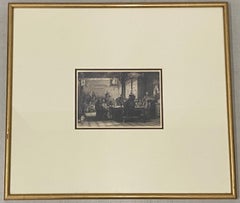
G. Paterson "Dinner Party at a Mandarin
s House" Engraving After T. Allom c.1840
Located in San Francisco, CA
G. Paterson "Dinner Party at a Mandarin's House" Original Engraving After T. Allom C.1840
Original engraving
Dimensions 8" wide x 5" high
The frame measures 20.5" wide x 18.5" hig...
Category
Realist Mid-19th Century Figurative Prints
Materials
Engraving
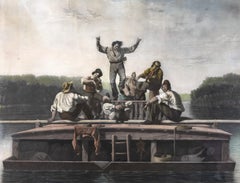
The Jolly Flat Boat Men
By George Caleb Bingham
Located in Missouri, MO
The Jolly Flat Boat Men, 1847
After George Caleb Bingham (American, 1811-1879)
Engraved by Thomas Doney (French, active New York 1844-1849)
Engraving with Hand-Coloring
Published by The American Art-Union, New York (1838-1851)
Printed by Powell and Co.
18 x 24 inches
32 x 38 inches with frame
In 1847, the American Art-Union purchased Bingham’s painting "The Jolly Flat Boat Men" (1846; National Gallery of Art) directly from the artist. The subscription-based organization, founded in 1838 as the Apollo Association, boasted nearly ten-thousand members at this date. For an annual fee of five dollars, each received a large reproductive engraving and was entered in a lottery to win original artworks exhibited at the Art-Union’s Free Gallery. Aimed at educating the public about contemporary American art, the organization developed an impressive distribution network that reached members in every state. The broad circulation of the Art-Union's print helped to establish Bingham's reputation and made his river scene famous.
Born in Augusta County, Virginia in the Shenandoah River Valley, George Caleb Bingham became known for classically rendered western genre, especially Missouri and Mississippi River scenes of boatmen bringing cargo to the American West and politicians seeking to influence frontier life. One of his most famous river genre paintings was The Jolly Flatboatmen completed in several versions in 1846. This first version of this painting is in the Manoogian Collection at the National Gallery of Art. Fame resulted for this work when it was exhibited in New York at the American Art Union whose organizers made an engraving of 10,000 copies and distributed it to all of their members. Paintings such as Country Politician (1849) and County Election (1852) and Stump Speaking (1854) reflected Bingham's political interests.
In 1819, as an eight-year old, he moved to Boon's Lick, Missouri with his parents and grandfather who had been farmers and inn keepers in the Shenandoah Valley near Rockingham, Virginia. Reportedly as a child there, he took every opportunity to escape supervision to travel the River and watch the marine activity.
His father died in 1827, when his son was sixteen years old. His mother had encouraged his art talent, but art lessons were not easily obtainable. In order to earn money, he apprenticed to a cabinet maker but determined to become an artist. By 1835, he had a modest reputation as a frontier painter and successfully charged twenty dollars per portrait in St. Louis. "His portraits had become standard decorations in prosperous Missouri homes." (Samuels 46). In 1836, he moved to Natchez, Mississippi and there had the same kind of career, only was able to charge forty dollars per portrait.
He remained largely self taught until 1837, when he, age 26 and using the proceeds from his portraiture, studied several months at the Pennsylvania Academy of the Fine Arts. He later said that he learned much of his atmospheric style and classically balanced composition by copying paintings in collections in St. Louis and Philadelphia and that among his most admired painters were Thomas Cole, John Vanderlyn, and William Sidney Mount. Between 1856 and 1859, Bingham traveled back and forth to Dusseldorf, Germany, where he studied the work of genre painters. Some critics think these influences were negative on his work because during that time period, he abandoned his luminist style that had brought him so much public affirmation.
Bingham credited Chester Harding (1792-1866) as being the earliest and one of the most lasting influences on his work. Harding,a leading portraitists when Bingham was a young man, had a studio in Franklin, near Bingham's home town. In 1822, when Bingham was ten years old, he watched Harding finish a portrait of Daniel Boone. Bingham recalled that watching Harding with the Boone portrait was a lasting inspiration and that it was the first time he had ever seen a painting in progress. Harding suggested to Bingham that he begin doing portraiture by finding subjects in the river men, which, of course, opened the subject matter that established fame and financial success for Bingham. Harding also encouraged Bingham to copy with paint engravings. He later painted two portraits of Boone but, contrary to the assertions of some scholars, he did not do Boone portraits in the company of Harding.
Bingham's portraits of Boone are not located, but one of them, a wood signboard for a hotel in Boonville circa 1828 to 1830, showed a likeness of Boone in buckskin dress...
Category
Hudson River School Mid-19th Century Figurative Prints
Materials
Engraving
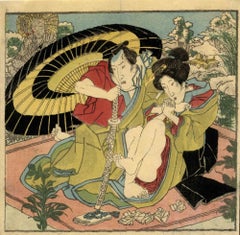
Shunga - Woodcut by Utagawa Kunisada - 1850s
Located in Roma, IT
Shunga is an original artwork realized in the 1850s by Utagawa Kunisada (1786-1865).
Making love in the winter on a terrace, behind the couple stone sculpture of the Jizo-Bosatsu.
...
Category
Modern Mid-19th Century Figurative Prints
Materials
Woodcut
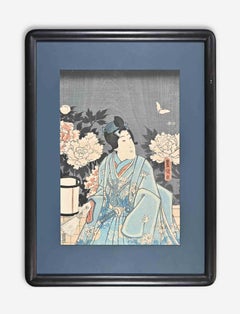
Japanese Woman - Woodcut - Mid-19th Century
Located in Roma, IT
Japanese woman is an original moder artwork realized in the half of 19th century by a japanese artist.
Mixed colored woodcut print.
Includes black frame: 53 x 3 x 39 cm
The artwor...
Category
Modern Mid-19th Century Figurative Prints
Materials
Woodcut
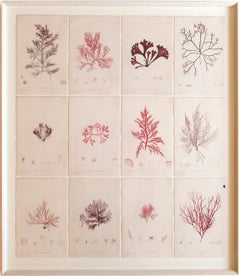
Rare Seaweed "Nature Prints" by Henry Bradbury
Located in London, GB
A beautifully framed set of twelve rare "nature prints" produced in 1856 by Henry Bradbury.
Henry Bradbury (1829-1860) is known for the innovative technique of “nature printing”, a...
Category
Naturalistic Mid-19th Century Figurative Prints
Materials
Paper
More Ways To Browse
Eduardo Roca
Edward B Gay
Edward Hopper Oil Painting
Edward Simmons
Edwin Lord Weeks
Elizabeth Enders
Elizabeth Horning
Emil Holzhauer
England Church Oil Painting
English Deer Painting
English Fox Hunt Painting
English Toy Terrier
Enrique Martinez Celaya
Eric Aho
Eritrea Art
Ernest Chateignon
Erotic Art Animal
Eugene Chigot