Expressionist Figurative Prints

EXPRESSIONIST STYLE

While “expressionist” is used to describe any art that avoids naturalism and instead employs a bold use of flattened forms and intense brushwork, Expressionist art formally describes early-20th-century work from Europe that drew on Symbolism and confronted issues such as urbanization and capitalism. Expressionist artists experimented in paintings and prints with skewed perspectives, abstraction and unconventional, bright colors to portray how isolating and anxious the world felt rather than how it appeared. 

Between 1905 and 1920, Austrian and German artists, in particular, were inspired by Postimpressionists such as Paul Gauguin and Vincent van Gogh in their efforts to strive for a new authenticity in their work. In its geometric patterns and decorative details, Expressionist art was also marked by eclectic sources like German and Russian folk art as well as tribal art from Africa and Oceania, which the movement’s practitioners witnessed at museums and world’s fairs.

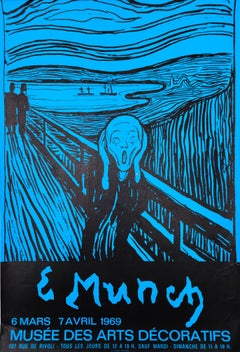
Groups of artists came together to share and promote the themes now associated with Expressionism, such as Die Brücke (The Bridge) in Dresden, which included Erich Heckel, Ernst Ludwig Kirchner and Karl Schmidt-Rottluff and investigated alienation and the dissolution of society in vivid color. In Munich, Der Blaue Reiter (The Blue Rider), a group led by Wassily Kandinsky and Franz Marc, instilled Expressionism with a search for spiritual truths. In his iconic painting The Scream, prolific Norwegian painter Edvard Munch conveyed emotional turmoil through his depiction of environmental elements, such as the threatening sky.

Expressionism shifted around the outbreak of World War I, with artists using more elements of the grotesque in reaction to the escalation of unrest and violence. Printmaking was especially popular, as it allowed artists to widely disseminate works that grappled with social and political issues amid this time of upheaval. Although the art movement ended with the rise of Nazi Germany, where Expressionist creators were labeled “degenerate,” the radical ideas of these artists would influence Neo-Expressionism that emerged in the late 1970s with painters like Jean-Michel Basquiat and Francesco Clemente.

​​Find a collection of authentic Expressionist paintings, sculptures, prints and more art on 1stDibs.

to
394
546
212
147
64
24
Overall Width
to
Overall Height
to
15,581
7,941
2,669
2,428
2,252
1,054
725
673
416
324
112
93
39
143
53
38
31
28
1
25
882
89
53
66
137
33
8
103
127
78
98
34
1
698
287
8
683
403
305
242
235
224
150
121
71
41
36
31
23
23
21
21
21
18
17
16
599
146
90
85
53
97
151
804
134
Style: Expressionist
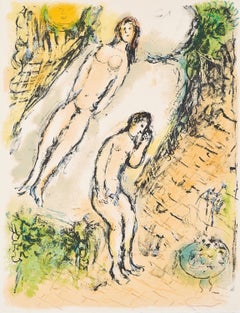
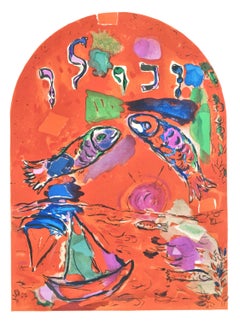
Marc Chagall, The Lovers in the Tree, from Tales of Boccaccio, 1950
Located in Southampton, NY
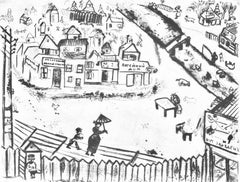
This exquisite lithograph by Marc Chagall (1887–1985), titled Les Amants dans l’arbre (The Lovers in the Tree), from Contes de Boccace, peintures du manuscrit des ducs de Bourgogne, ...
Category

1950s Expressionist Figurative Prints

Materials

Lithograph

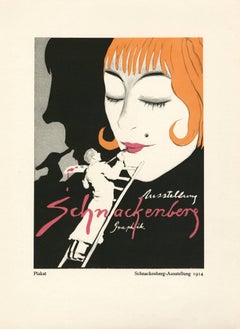
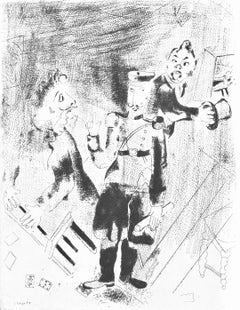
Kostume, Plakate, und Dekorationen, "Schnackenberg-Ausstellung 1914""
Located in Palm Beach, FL
Walter Schnackenberg’s style changed several times during his long and successful career. Having studied in Munich, the artist traveled often to Paris where he fell under the spell o...
Category

1910s Expressionist Figurative Prints

Materials

Lithograph

Excelsior by Simon Tozer, Limited edition, Sailing, Landscape, Figurative art
Located in Deddington, GB
Excelsior by Simon Tozer [2021] limited_edition and hand signed by the artist Screenprint on Paper Edition number of 30 Image size: H:23 cm x W:30 cm ...
Category

21st Century and Contemporary Expressionist Figurative Prints

Materials

Paper, Screen

Kostume, Plakate, und Dekorationen, "Anne Lemans"
Located in Palm Beach, FL
Walter Schnackenberg’s style changed several times during his long and successful career. Having studied in Munich, the artist traveled often to Paris where he fell under the spell of the Henri de Toulouse-Lautrec’s colorful and sensuous posters depicting theatrical and decadent subjects. Schnackenberg became a regular contributor of similar compositions to the German magazines Jugend and Simplicissimus before devoting himself to the design of stage scenery and costumes. In the artist’s theatrical work, his mastery of form, ornamentation, and Orientalism became increasingly evident. He excelled at combining fluid Art Nouveau outlines, with spiky Expressionist passages, and the postures and patterns of the mysterious East. In his later years, Schnackenberg explored the unconscious, using surreal subject matter and paler colors that plainly portrayed dreams and visions, some imbued with political connotations. His drawings, illustrations, folio prints, and posters are highly sought today for their exceedingly imaginative qualities, enchanting subject matter, and arresting use of color. SCHNACKENBERG: KOSTUME, PLAKATE UND DEKORATIONEN, a cardboard bound art book consisting of 43 prints of work by Walter Schnackenberg, 30 of which are color lithographs that are signed and some are titled and dated in the plate, as well as black and white prints and photographs with accompanying text by Oskar Bie; lithographs printed at Kunstanstalt Oskar Consee in Munich, other images printed by Gesellschaft Pick & Co. in Munich, the text and cover with color images by Schnackenberg front and verso printed by R. Oldenbourg in Munich; published by Musarion Verlag, Munich, 1920. The majority of Walter Schnackenberg’s artistic output was destroyed by bomb attacks in Munich in 1944. The highly publicized 2013 auction in New York of the recovered pre-war poster collection once belonging to German poster aficionado, Hans Sachs has reintroduced the world to Walter Schnackenberg’s graphic genius and priceless ephemeral art from a lost era. Besides the museum world, designer Karl Lagerfeld is one of the most prodigious collectors of Schnackenberg. Flipping through the pages of Kostume, Plakate und Dekorationen, it becomes quite clear that Schnackenberg’s collection is ground zero at the crossroads of early modern fashion where the cult of celebrity meets up with dance, music, theater and cabaret, film and the graphic medium. Berlin and Munich under Germany’s Weimar Republic in the first quarter of the 20th century produced just the atmosphere to feed this burgeoning industry. Rising inflation sparked a recklessness to live large for the moment and heightened a desire for escapism. An influx of Indian and East Asian dancers and musicians added to the artsy bohemian cultural mix. A new decadence and tolerance resulted. Film boldly featured provocative subject matter. Cabarets became popular venues giving rise to the demi-monde in which people from all social stations mixed more freely in a thriving underground economy and culture where there was a blurring of boundaries and of social codes. Noted art historian and cultural doyen, Oskar Bie astutely observes in his introduction to Schnackenberg’s publication that what unites the images is fantasy and advertisement. Schnackenberg uses the eye as an instrument to brilliantly construct and convey this double message. His personages never directly confront the viewer. Their eyes gaze off in the distance like those of the screenplayer and film star Hedamaria Scholz in Schnackenberg’s “Die Rodelhexe” movie poster. Their eyes follow the path of a dance composition or become a transfixed and ogling male gaze such as the iconic 1911 Odeon Casino...
Category

1910s Expressionist Figurative Prints

Materials

Lithograph

Klimt, Lithograph by Estelle Ginsburg
Located in Long Island City, NY
Klimt Estelle Ginsburg, American Date: circa 1979 Screenprint, signed and numbered in pencil Edition of 500, AP 50 Size: 21.5 in. x 29 in. (54.61 cm x 73.66 cm)
Category

1970s Expressionist Figurative Prints

Materials

Lithograph

Abschied (Parting)
Located in New York, NY
Emil Nolde (1876-1956), Abschied (Parting), etching and aquatint (tonal effects), 1906, signed in pencil lower right. Reference: Schiefler/Mosel 20, third state (of 3). One of only...
Category

Early 1900s Expressionist Figurative Prints

Materials

Etching, Aquatint

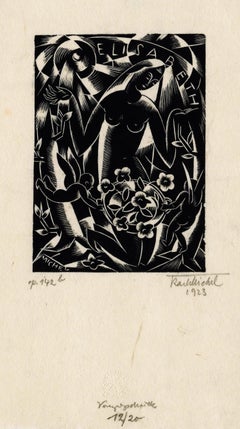
Elisabeth — German Expressionism
Located in Myrtle Beach, SC
Karl Michel, 'Elisabeth', woodcut, edition 20, 1923. Signed, dated, and numbered 'op.142b' and '12/20' in pencil. Signed in the block, lower left. Annotated 'Vorgesdruck' [artist’s proof] in pencil. A fine impression, on heavy fibrous Japan paper, with full margins (1 3/16 to 3 1/2 inches), in good condition. Printed by the artist, With the artist’s blindstamp in the bottom center margin. Scarce. Matted to museum standards, unframed. Image size 4 15/16 x 6 inches (131 x 152 mm); sheet size 10 x 6 inches (254 x 152 mm). ABOUT THE ARTIST Karl Michel (1889-1984) was a noted graphic designer and expressionist printmaker during Germany's pre-Nazi Weimar Republic (1919-1933). Michel’s work was the subject of a feature article in the influential German graphic design magazine Das Plakat (The Poster) in 1920. An anti-war advocate, Michel created a suite of 12 wood engravings depicting his impressions of the humanitarian toll of WWII entitled ‘Humanitas’ (Humanity). The German publishing house Greifenverlag published the series in a reduced folio of unsigned prints. Michel’s graphic work is held in the permanent collections of the Auckland War Memorial Museum (New Zealand), Frederikshavn Kunstmuseum & Exlibrissamling (Denmark), Museum of Applied Arts (Budapest), The Robert Gore Rifkind Center for German Expressionist Studies at the Los Angeles County Museum of Art, and the German Expressionism...
Category

1920s Expressionist Figurative Prints

Materials

Woodcut

"La Promanade" Black and White Print of a Women in a Carriage Edition
Located in Houston, TX
Black and white print of an upper class women in a carriage. There are other figures in the back riding in a carriage as well. Edition 17 of 58. Painting is signed by the artist and ...
Category

Early 1900s Expressionist Figurative Prints

Materials

Engraving

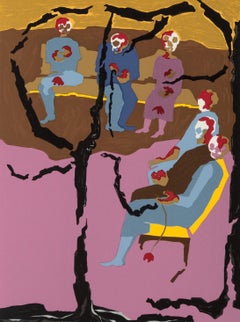
Faith Ringgold, Brown Versus Board of Education 1954, 2007
Located in Southampton, NY
This exquisite silkscreen by Faith Ringgold (1930–2024), titled Brown Versus Board of Education 1954, from the folio Letter from Birmingham City Jail, originates from the 2007 editio...
Category

Early 2000s Expressionist Figurative Prints

Materials

Screen

Bodies and Heads / - The new human couple -
Located in Berlin, DE
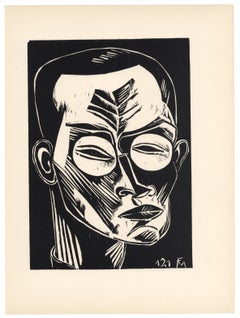
Frans Masereel (1889 Blankenberge - 1972 Avignon), Bodies and Heads, 1948. Woodcut on Japanese paper, 24.5 cm x 18 cm (image), 42.5 cm x 33.5 cm (frame), monogrammed and dated “FM 19...
Category

1940s Expressionist Figurative Prints

Materials

Paper

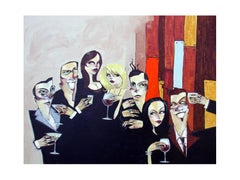
Hard Candy
Located in Toronto, ON
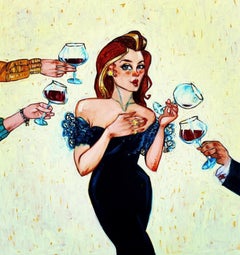
40" x 30" Unframed Limited Edition Giclee with Hand Embellishment of 100 Hand Signed by Todd White Todd white captures restaurant, night and Hollywood scenes with contrasting color...
Category

2010s Expressionist Figurative Prints

Materials

Giclée

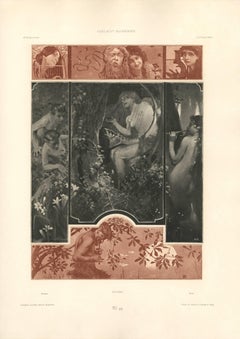
Gerlach s Allegorien Plate #47: "Morning in the Spring" Lithograph
Located in Palm Beach, FL
Koloman Moser (1868 –1918), AUSTRIAN Instead of applying his flair and art education solely to painting, Koloman Moser embodied the idea of Gesamt Kunstwerk (all-embracing art work) by designing architecture, furniture, jewelry, graphics, and tapestries meant to coordinate every detail of an environment. His work transcended the imitative decorative arts of earlier eras and helped to define Modernism for generations to come. Moser achieved a remarkable balance between intellectual structure (often geometric) and hedonistic luxury. Collaborating with Gustav Klimt and Josef Hoffmann, the artist was an editor and active contributor to Ver Sacrum, (Sacred Spring), the journal of the Viennese Secession that was so prized for its aesthetics and high quality production that it was considered a work of art. The magazine featured drawings and designs in the Jugendstil style (Youth) along with literary contributions from distinguished writers from across Europe. It quickly disseminated both the spirit and the style of the Secession. In 1903 Moser and Hoffmann founded and led the Wiener Werkstatte (Viennese Workshop) a collective of artisans that produced elegant decorative arts items, not as industrial prototypes but for the purpose of sale to the public. The plan, as idealistic then as now, was to elevate the lives of consumers by means of beautiful and useful interior surroundings. Moser’s influence has endured throughout the century. His design sensibility is evident from the mid-century modern furniture of the 1950s and ‘60s to the psychedelic rock posters...
Category

1890s Expressionist Figurative Prints

Materials

Paper

Women of Intellect #6, Folk Art Lithograph by Estelle Ginsburg
Located in Long Island City, NY
Artist: Estelle Ginsburg, American Title: Women of Intellect #6 Year: 1978 Medium: Lithograph, signed and numbered in pencil Edition: 150 Size: ...
Category

1970s Expressionist Figurative Prints

Materials

Lithograph

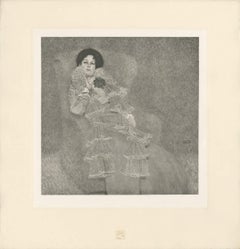
H.O. Miethke Das Werk folio "Portrait of Marie Henneberg" collotype print
Located in Palm Beach, FL
DAS WERK GUSTAV KLIMTS, a portfolio of 50 prints, ten of which are multicolor collotypes on chine colle paper laid down on hand-made heavy cream wove paper with deckled edges; under ...
Category

Early 1900s Expressionist Figurative Prints

Materials

Paper

Gustav Klimt "Standing Girl w/Lace Headdress" collotype - Funfundzwanzig folio
Located in Palm Beach, FL
Title page numbered: 263/450
Category

1910s Expressionist Figurative Prints

Materials

Paper

Women in Interior #7, Folk Art Screenprint by Estelle Ginsburg
Located in Long Island City, NY
Artist: Estelle Ginsburg, American Title: Women in Interior #7 Year: 1978 Medium: Screenprint, signed and numbered in pencil Edition: 150 Image S...
Category

1970s Expressionist Figurative Prints

Materials

Screen

"Motif aus Improvisation 25: The Garden of Love" original woodcut
Located in Henderson, NV
Medium: original woodcut. Catalogue reference Roethel 105. Printed in Paris in 1938 for the art revue XXe Siecle (issue number 3). Image size: 8 1/2 x 8 3/4 inches (217 x 220 mm). Sh...
Category

1930s Expressionist Figurative Prints

Materials

Woodcut

Marc Chagall, The Soul of Elpenor, from Homer, The Odyssey, 1989 (after)
Located in Southampton, NY
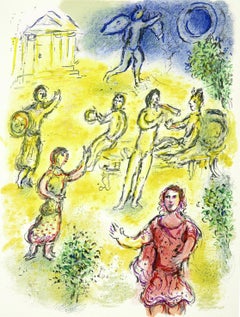
This exquisite lithograph after Marc Chagall (1887–1985), titled Die Seele Elpenors (The Soul of Elpenor), from Homer, Die Odyssee (The Odyssey), originates from the 1989 German-lang...
Category

1980s Expressionist Figurative Prints

Materials

Lithograph

E. Strache, Handzeichnungen folio, "Reclining Female Nude Glancing Up" Collotype
Located in Palm Beach, FL
after Egon Schiele (1890 – 1918), AUSTRIA “ART CANNOT BE MODERN, ART IS PRIMORDIALLY ETERNAL.” -SCHIELE Defiantly iconoclastic in life and art, Egon Schiele is esteemed for his mas...
Category

1920s Expressionist Figurative Prints

Materials

Paper

By the Nets - German Expressionism Woodcut Schmidt-Rottluff
Located in London, GB
KARL SCHMIDT-ROTTLUFF 1884-1976 Rottluff, Germany 1884 - 1976 Berlin (German) Title: By the Nets Bei den Netzen, 1914 Technique: Original Hand Signed Woodcut on Laid Paper Paper size: 51.2 x 62.4 cm. / 20.2 x 24.6 in. Additional Information: This original woodcut is hand signed in pencil by the artist "S. Rottluff" at the lower right margin. This is the fifth woodcut of the portfolio "Zehn Holzschnitte von Schmidt-Rottluff" [Ten Woodcuts by Schmidt-Rottluff] that was published in 1919. It was published by Graphisches Kabinett J. B. Neumann, Berlin in a limited unnumbered edition of 75 plus some proofs. The printer was Fritz Voigt...
Category

1910s Expressionist Figurative Prints

Materials

Woodcut

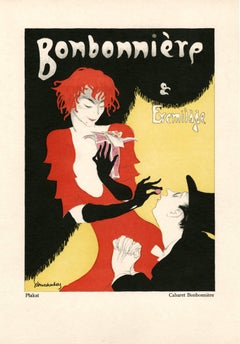
Kostume, Plakate, und Dekorationen, "Cabaret Bonbonniere"
Located in Palm Beach, FL
Walter Schnackenberg’s style changed several times during his long and successful career. Having studied in Munich, the artist traveled often to Paris where he fell under the spell o...
Category

1910s Expressionist Figurative Prints

Materials

Lithograph

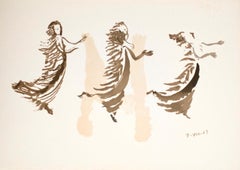
BADENDE MANNER: (THREE MALE BATHERS AT THE SHORE)
Located in Portland, ME
Kaus, Max. BADENDE MANNER: (THREE MALE BATHERS AT THE SHORE). Lithograph, c. 1924. Signed, lower left, in pencil, and numbered 6-10, further inscribed, lo...
Category

1920s Expressionist Figurative Prints

Materials

Lithograph

Gerlach s Allegorien Plate #30: "Love" Lithograph
Located in Palm Beach, FL
Koloman Moser (1868 –1918), AUSTRIAN Instead of applying his flair and art education solely to painting, Koloman Moser embodied the idea of Gesamt Kunstwerk (all-embracing art w...
Category

1890s Expressionist Figurative Prints

Materials

Lithograph

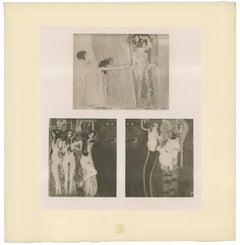
H.O. Miethke Das Werk folio "Beethovan Frieze 1 2" set of collotype prints
Located in Palm Beach, FL
DAS WERK GUSTAV KLIMTS, a portfolio of 50 prints, ten of which are multicolor collotypes on chine colle paper laid down on hand-made heavy cream wove paper with deckled edges; under ...
Category

Early 1900s Expressionist Figurative Prints

Materials

Paper

"Woman Desired by Man" original woodcut
Located in Henderson, NV
Medium: original woodcut. Printed in 1920 for the Deutsche Graphiker der Gegenwart portfolio, and published in Leipzig by Klinkhardt & Biermann in an edition of 500. Catalogue refere...
Category

1920s Expressionist Figurative Prints

Materials

Woodcut

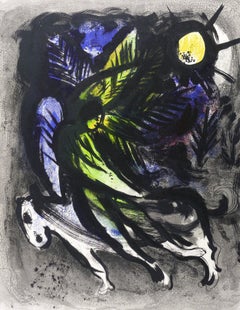
Marc Chagall, The Creation, from Drawings for the Bible, 1956
Located in Southampton, NY
This exquisite lithograph by Marc Chagall (1887–1985), titled Creation (The Creation), from Marc Chagall, Dessins Pour La Bible (Drawings for the Bible), Verve: Revue Artistique et Litteraire, Vol. VIII, No. 33–34, originates from the September 1956 issue published by Editions de la revue Verve, Paris, under the direction of Teriade, Editeur, Paris, and printed by Mourlot Freres, Paris, 1956. This visionary composition depicts the divine act of creation, evoking the genesis of light, life, and spirit through Chagall’s radiant imagination and poetic symbolism. The flowing forms and luminous harmonies reflect the unity between the divine and the natural world—a theme central to Chagall’s lifelong spiritual vision. Infused with movement and transcendence, the work transforms the biblical narrative into a lyrical meditation on the origin of existence and the creative essence of faith. The piece forms part of Chagall’s celebrated series of lithographs and drawings created for Dessins Pour La Bible, a monumental project uniting art, scripture, and mysticism in one of the artist’s most important achievements. Executed as a lithograph on velin du Marais paper, this work measures 14 x 10.5 inches (35.56 x 26.67 cm). Unsigned and unnumbered as issued. The edition exemplifies the superb craftsmanship of the Mourlot Freres atelier, renowned for its collaborations with the greatest modern masters of the 20th century. Artwork Details: Artist: Marc Chagall (1887–1985) Title: Creation (The Creation), from Marc Chagall, Dessins Pour La Bible (Drawings for the Bible), Verve: Revue Artistique et Litteraire, Vol. VIII, No. 33–34, September 1956 Medium: Lithograph on velin du Marais paper Dimensions: 14 x 10.5 inches (35.56 x 26.67 cm) Inscription: Unsigned and unnumbered as issued Date: 1956 Publisher: Editions de la revue Verve, Paris, under the direction of Teriade, Editeur, Paris Printer: Mourlot Freres, Paris Catalogue raisonne references: Cain, Julien, and Fernand Mourlot. Chagall Lithographe. Andre Sauret, Editeur, 1960, illustrations 117–46. Cramer, Patrick, and Meret Meyer. Marc Chagall: Catalogue Raisonne Des Livres Illustrés. P. Cramer ed., 1995, illustration 25. Condition: Well preserved, consistent with age and medium Provenance: From Marc Chagall, Dessins Pour La Bible (Drawings for the Bible), Verve: Revue Artistique et Litteraire, Vol. VIII, No. 33–34, published by Editions de la revue Verve, Paris, 1956 Notes: Excerpted from the album (translated from French), This double issue of Verve is dedicated to the full reproduction in heliogravure of the one hundred-five plates etched by Marc Chagall, between 1930 and 1955, for the illustration of the Bible. The artist composed especially for the present work, sixteen lithographs in color and twelve in black, as well as the cover and the title page. This volume was completed and printed on September 10, 1956, by the Master Printers Draeger Freres for heliogravure, and by Mourlot Freres for lithography. About the Publication: Marc Chagall, Dessins Pour La Bible (Drawings for the Bible), published as Verve Vol. VIII, No. 33–34 in September 1956, represents one of the crowning achievements of Chagall’s lifelong dialogue with the sacred. Conceived and directed by the visionary publisher Teriade and printed by the master lithographers Mourlot Freres, the issue features thirty-four color lithographs and numerous black-and-white drawings inspired by biblical figures and stories. Chagall’s works for this edition unite text and image in a luminous meditation on divine creation, moral struggle, and spiritual renewal, imbued with his signature dreamlike symbolism and radiant color. Produced in postwar Paris, this landmark publication reaffirmed the enduring union of art and faith, establishing Dessins Pour La Bible as one of the most important illustrated works of the 20th century. About the Artist: Marc Chagall (1887–1985) was a Belarus-born French painter, printmaker, and designer whose visionary imagination, radiant color, and deeply poetic symbolism made him one of the most beloved and influential artists of the 20th century. Rooted in the imagery of his Jewish heritage and the memories of his childhood in Vitebsk, Chagall’s art wove together themes of faith, love, folklore, and fantasy with a dreamlike modern sensibility. His unique style—merging elements of Cubism, Fauvism, Expressionism, and Surrealism—defied categorization, transforming ordinary scenes into lyrical meditations on memory and emotion. Influenced by Russian icon painting, medieval religious art, and the modern innovations of artists such as Pablo Picasso, Henri Matisse, and Georges Braque, Chagall developed a profoundly personal visual language filled with floating figures, vibrant animals, musicians, and lovers that symbolized the transcendent power of imagination and love. During his early years in Paris, he became an integral part of the Ecole de Paris circle, forming friendships with Amedeo Modigliani, Fernand Leger, and Sonia Delaunay, and his creative spirit resonated with that of his peers and successors—Alexander Calder, Alberto Giacometti, Salvador Dali, Joan Miro, Wassily Kandinsky, Marcel Duchamp, and Man Ray—artists who, like Chagall, sought to push the boundaries of perception, emotion, and form. Over a prolific career that spanned painting, printmaking, stained glass, ceramics, and stage design, Chagall brought an unparalleled poetic sensibility to modern art, infusing even the most abstract subjects with human warmth and spiritual depth. His works are held in the most prestigious museums around the world, including the Museum of Modern Art, the Centre Pompidou, the Tate, and the Guggenheim, where they continue to inspire generations of artists and collectors. The highest price ever paid for a Marc Chagall artwork is approximately $28.5 million USD, achieved in 2017 at Sotheby’s New York for Les Amoureux (1928). Marc Chagall Creation...
Category

1950s Expressionist Figurative Prints

Materials

Lithograph

Naomie aux Longues Tresses
Located in San Francisco, CA
Artist: Teo Tobiasse (French/Israeli, 1927-2012) Title: "Naomie Aux Longues Tresses" Year: Circa 1970 Medium: Color lithograph Edition: Numbered 146/150 in pencil Paper: Japan...
Category

Mid-20th Century Expressionist Figurative Prints

Materials

Lithograph

E. Strache, Handzeichnungen folio, "Female Nude, Walking" Collotype plate
Located in Palm Beach, FL
after Egon Schiele (1890 – 1918), AUSTRIA “ART CANNOT BE MODERN, ART IS PRIMORDIALLY ETERNAL.” -SCHIELE Defiantly iconoclastic in life and art, Egon Schiele is esteemed for his mas...
Category

1920s Expressionist Figurative Prints

Materials

Paper

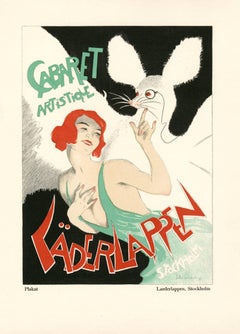
Kostume, Plakate, und Dekorationen, "Läderlappen"
Located in Palm Beach, FL
Walter Schnackenberg’s style changed several times during his long and successful career. Having studied in Munich, the artist traveled often to Paris where he fell under the spell of the Henri de Toulouse-Lautrec’s colorful and sensuous posters depicting theatrical and decadent subjects. Schnackenberg became a regular contributor of similar compositions to the German magazines Jugend and Simplicissimus before devoting himself to the design of stage scenery and costumes. In the artist’s theatrical work, his mastery of form, ornamentation, and Orientalism became increasingly evident. He excelled at combining fluid Art Nouveau outlines, with spiky Expressionist passages, and the postures and patterns of the mysterious East. In his later years, Schnackenberg explored the unconscious, using surreal subject matter and paler colors that plainly portrayed dreams and visions, some imbued with political connotations. His drawings, illustrations, folio prints, and posters are highly sought today for their exceedingly imaginative qualities, enchanting subject matter, and arresting use of color. SCHNACKENBERG: KOSTUME, PLAKATE UND DEKORATIONEN, a cardboard bound art book consisting of 43 prints of work by Walter Schnackenberg, 30 of which are color lithographs that are signed and some are titled and dated in the plate, as well as black and white prints and photographs with accompanying text by Oskar Bie; lithographs printed at Kunstanstalt Oskar Consee in Munich, other images printed by Gesellschaft Pick & Co. in Munich, the text and cover with color images by Schnackenberg front and verso printed by R. Oldenbourg in Munich; published by Musarion Verlag, Munich, 1920. The majority of Walter Schnackenberg’s artistic output was destroyed by bomb attacks in Munich in 1944. The highly publicized 2013 auction in New York of the recovered pre-war poster collection once belonging to German poster aficionado, Hans Sachs has reintroduced the world to Walter Schnackenberg’s graphic genius and priceless ephemeral art from a lost era. Besides the museum world, designer Karl Lagerfeld is one of the most prodigious collectors of Schnackenberg. Flipping through the pages of Kostume, Plakate und Dekorationen, it becomes quite clear that Schnackenberg’s collection is ground zero at the crossroads of early modern fashion where the cult of celebrity meets up with dance, music, theater and cabaret, film and the graphic medium. Berlin and Munich under Germany’s Weimar Republic in the first quarter of the 20th century produced just the atmosphere to feed this burgeoning industry. Rising inflation sparked a recklessness to live large for the moment and heightened a desire for escapism. An influx of Indian and East Asian dancers and musicians added to the artsy bohemian cultural mix. A new decadence and tolerance resulted. Film boldly featured provocative subject matter. Cabarets became popular venues giving rise to the demi-monde in which people from all social stations mixed more freely in a thriving underground economy and culture where there was a blurring of boundaries and of social codes. Noted art historian and cultural doyen, Oskar Bie astutely observes in his introduction to Schnackenberg’s publication that what unites the images is fantasy and advertisement. Schnackenberg uses the eye as an instrument to brilliantly construct and convey this double message. His personages never directly confront the viewer. Their eyes gaze off in the distance like those of the screenplayer and film star Hedamaria Scholz in Schnackenberg’s “Die Rodelhexe” movie poster. Their eyes follow the path of a dance composition or become a transfixed and ogling male gaze such as the iconic 1911 Odeon Casino poster...
Category

1910s Expressionist Figurative Prints

Materials

Lithograph

Boa Constrictors
Located in Toronto, ON
28" x 38" Unframed Limited Edition Giclee with Hand Embellishment of 135 Hand Signed by Todd White Todd white captures restaurant, night and Hollywood scenes with contrasting colors...
Category

2010s Expressionist Figurative Prints

Materials

Giclée

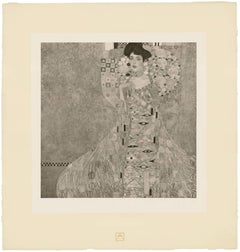
H.O. Miethke Das Werk folio "Portrait of Adele Bloch-Bauer II" collotype print
Located in Palm Beach, FL
DAS WERK GUSTAV KLIMTS, a portfolio of 50 prints, ten of which are multicolor collotypes on chine colle paper laid down on hand-made heavy cream wove paper with deckled edges; under ...
Category

Early 1900s Expressionist Figurative Prints

Materials

Paper

Faith Ringgold, A letter From Martin Luther King, 2007
Located in Southampton, NY
This exquisite silkscreen by Faith Ringgold (1930–2024), titled A Letter From Martin Luther King, from the folio Letter from Birmingham City Jail, originates from the 2007 edition pu...
Category

Early 2000s Expressionist Figurative Prints

Materials

Screen

"Untitled - LJ #53, " Lithograph signed by Lester Johnson
Located in Milwaukee, WI
"Untitled - LJ#53" is an original color lithograph by Lester Johnson. The artist signed the piece in the lower center and also wrote the edition number,...
Category

1970s Expressionist Figurative Prints

Materials

Lithograph

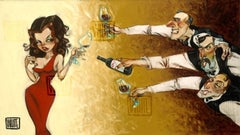
Same Hell Different Devils
Located in Toronto, ON
“This painting started off as a commentary on the dating world. No matter what age you’re at, starting out in your 20’s, going through life. If you get back out there in the 40’s it’...
Category

2010s Expressionist Figurative Prints

Materials

Giclée

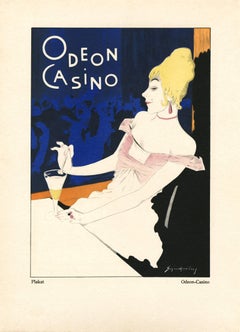
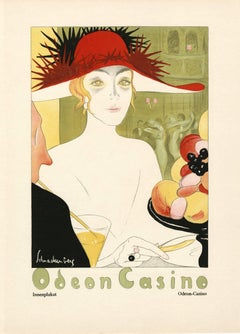
Kostume, Plakate, und Dekorationen, "Odeon-Casino"
Located in Palm Beach, FL
Walter Schnackenberg’s style changed several times during his long and successful career. Having studied in Munich, the artist traveled often to Paris where he fell under the spell of the Henri de Toulouse-Lautrec’s colorful and sensuous posters depicting theatrical and decadent subjects. Schnackenberg became a regular contributor of similar compositions to the German magazines Jugend and Simplicissimus before devoting himself to the design of stage scenery and costumes. In the artist’s theatrical work, his mastery of form, ornamentation, and Orientalism became increasingly evident. He excelled at combining fluid Art Nouveau outlines, with spiky Expressionist passages, and the postures and patterns of the mysterious East. In his later years, Schnackenberg explored the unconscious, using surreal subject matter and paler colors that plainly portrayed dreams and visions, some imbued with political connotations. His drawings, illustrations, folio prints, and posters are highly sought today for their exceedingly imaginative qualities, enchanting subject matter, and arresting use of color. SCHNACKENBERG: KOSTUME, PLAKATE UND DEKORATIONEN, a cardboard bound art book consisting of 43 prints of work by Walter Schnackenberg, 30 of which are color lithographs that are signed and some are titled and dated in the plate, as well as black and white prints and photographs with accompanying text by Oskar Bie; lithographs printed at Kunstanstalt Oskar Consee in Munich, other images printed by Gesellschaft Pick & Co. in Munich, the text and cover with color images by Schnackenberg front and verso printed by R. Oldenbourg in Munich; published by Musarion Verlag, Munich, 1920. The majority of Walter Schnackenberg’s artistic output was destroyed by bomb attacks in Munich in 1944. The highly publicized 2013 auction in New York of the recovered pre-war poster collection once belonging to German poster aficionado, Hans Sachs has reintroduced the world to Walter Schnackenberg’s graphic genius and priceless ephemeral art from a lost era. Besides the museum world, designer Karl Lagerfeld is one of the most prodigious collectors of Schnackenberg. Flipping through the pages of Kostume, Plakate und Dekorationen, it becomes quite clear that Schnackenberg’s collection is ground zero at the crossroads of early modern fashion where the cult of celebrity meets up with dance, music, theater and cabaret, film and the graphic medium. Berlin and Munich under Germany’s Weimar Republic in the first quarter of the 20th century produced just the atmosphere to feed this burgeoning industry. Rising inflation sparked a recklessness to live large for the moment and heightened a desire for escapism. An influx of Indian and East Asian dancers and musicians added to the artsy bohemian cultural mix. A new decadence and tolerance resulted. Film boldly featured provocative subject matter. Cabarets became popular venues giving rise to the demi-monde in which people from all social stations mixed more freely in a thriving underground economy and culture where there was a blurring of boundaries and of social codes. Noted art historian and cultural doyen, Oskar Bie astutely observes in his introduction to Schnackenberg’s publication that what unites the images is fantasy and advertisement. Schnackenberg uses the eye as an instrument to brilliantly construct and convey this double message. His personages never directly confront the viewer. Their eyes gaze off in the distance like those of the screenplayer and film star Hedamaria Scholz in Schnackenberg’s “Die Rodelhexe” movie poster. Their eyes follow the path of a dance composition or become a transfixed and ogling male gaze such as the iconic 1911 Odeon Casino...
Category

1910s Expressionist Figurative Prints

Materials

Lithograph

Kostume, Plakate, und Dekorationen, "Odeon-Casino 1911"
Located in Palm Beach, FL
Walter Schnackenberg’s style changed several times during his long and successful career. Having studied in Munich, the artist traveled often to Paris where he fell under the spell of the Henri de Toulouse-Lautrec’s colorful and sensuous posters depicting theatrical and decadent subjects. Schnackenberg became a regular contributor of similar compositions to the German magazines Jugend and Simplicissimus before devoting himself to the design of stage scenery and costumes. In the artist’s theatrical work, his mastery of form, ornamentation, and Orientalism became increasingly evident. He excelled at combining fluid Art Nouveau outlines, with spiky Expressionist passages, and the postures and patterns of the mysterious East. In his later years, Schnackenberg explored the unconscious, using surreal subject matter and paler colors that plainly portrayed dreams and visions, some imbued with political connotations. His drawings, illustrations, folio prints, and posters are highly sought today for their exceedingly imaginative qualities, enchanting subject matter, and arresting use of color. SCHNACKENBERG: KOSTUME, PLAKATE UND DEKORATIONEN, a cardboard bound art book consisting of 43 prints of work by Walter Schnackenberg, 30 of which are color lithographs that are signed and some are titled and dated in the plate, as well as black and white prints and photographs with accompanying text by Oskar Bie; lithographs printed at Kunstanstalt Oskar Consee in Munich, other images printed by Gesellschaft Pick & Co. in Munich, the text and cover with color images by Schnackenberg front and verso printed by R. Oldenbourg in Munich; published by Musarion Verlag, Munich, 1920. The majority of Walter Schnackenberg’s artistic output was destroyed by bomb attacks in Munich in 1944. The highly publicized 2013 auction in New York of the recovered pre-war poster collection once belonging to German poster aficionado, Hans Sachs has reintroduced the world to Walter Schnackenberg’s graphic genius and priceless ephemeral art from a lost era. Besides the museum world, designer Karl Lagerfeld is one of the most prodigious collectors of Schnackenberg. Flipping through the pages of Kostume, Plakate und Dekorationen, it becomes quite clear that Schnackenberg’s collection is ground zero at the crossroads of early modern fashion where the cult of celebrity meets up with dance, music, theater and cabaret, film and the graphic medium. Berlin and Munich under Germany’s Weimar Republic in the first quarter of the 20th century produced just the atmosphere to feed this burgeoning industry. Rising inflation sparked a recklessness to live large for the moment and heightened a desire for escapism. An influx of Indian and East Asian dancers and musicians added to the artsy bohemian cultural mix. A new decadence and tolerance resulted. Film boldly featured provocative subject matter. Cabarets became popular venues giving rise to the demi-monde in which people from all social stations mixed more freely in a thriving underground economy and culture where there was a blurring of boundaries and of social codes. Noted art historian and cultural doyen, Oskar Bie astutely observes in his introduction to Schnackenberg’s publication that what unites the images is fantasy and advertisement. Schnackenberg uses the eye as an instrument to brilliantly construct and convey this double message. His personages never directly confront the viewer. Their eyes gaze off in the distance like those of the screenplayer and film star Hedamaria Scholz in Schnackenberg’s “Die Rodelhexe” movie poster. Their eyes follow the path of a dance composition or become a transfixed and ogling male gaze such as the iconic 1911 Odeon Casino...
Category

1910s Expressionist Figurative Prints

Materials

Lithograph

Ghosts of Philadelphia 2
Located in Brooklyn, NY
Monotype Dramatic imagery from Tom Bennett’s series of black and white monotypes, blending surrealistic mindscapes with stark realism About Tom Bennett: With quick brushstrokes, Tom...
Category

2010s Expressionist Figurative Prints

Materials

Monotype, Archival Ink

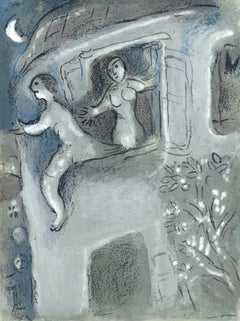
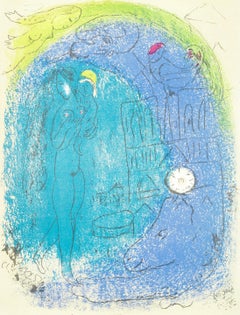
Marc Chagall, The Lovers in Gray, from Chagall, 1957
Located in Southampton, NY
This exquisite lithograph by Marc Chagall (1887–1985), titled Les Amoureux au Gris (The Lovers in Gray), from the album Chagall, originates from the 1957 edition published by Maeght Editeur, Paris, and printed by Mourlot Freres, Paris, 1957. This intimate and poetic composition reveals Chagall’s enduring fascination with love as both a personal and universal theme. Les Amoureux au Gris presents two lovers tenderly united against a soft, monochromatic background, their forms gently intertwined in a suspended moment of emotion and serenity. The subdued palette of grays enhances the dreamlike atmosphere, evoking nostalgia and the quiet beauty of devotion. Through its delicate tonal harmonies and lyrical symbolism, the work exemplifies Chagall’s belief that love transcends time, space, and circumstance—a central tenet that defines his artistic legacy. Executed as a lithograph on velin paper, this work measures 9.06 x 7.875 inches (23.01 x 20 cm). Unsigned and unnumbered as issued. The edition reflects the extraordinary craftsmanship of the Mourlot Freres atelier, renowned for its close collaboration with Chagall and for achieving unmatched brilliance and subtlety in color lithography. Artwork Details: Artist: Marc Chagall (1887–1985) Title: Les Amoureux au Gris (The Lovers in Gray), from Chagall, 1957 Medium: Lithograph on velin paper Dimensions: 9.06 x 7.875 inches (23.01 x 20 cm) Inscription: Unsigned and unnumbered as issued Date: 1957 Publisher: Maeght Editeur, Paris Printer: Mourlot Freres, Paris Catalogue raisonne references: Chagall, Marc, and Julien Cain. Chagall Lithographe. Andre Sauret, Editeur, 1960, illustration 194. Cramer, Patrick, and Meret Meyer. Marc Chagall: Catalogue Raisonne Des Livres Illustres. P. Cramer ed., 1995, illustration 34. Condition: Well preserved, consistent with age and medium Provenance: From the album Chagall, published by Maeght Editeur, Paris, 1957 Notes: Excerpted from the album (translated from French), This album was printed by Drager Freres in Montrouge on behalf of Maeght Editeur, 13, Rue de Teheran, Paris VIII. The original color lithographs were drawn by Mourlot Freres. The photographs of the works printed are of Y. Hervochon, M. Routhier, Draeger. Copyright 1957. About the Publication: The 1957 album Chagall, published by Maeght Editeur, Paris, and printed by Mourlot Freres, stands among the most celebrated collaborations between Marc Chagall and the great Parisian ateliers of the mid-20th century. The album features a series of color lithographs that capture Chagall’s poetic world of memory, faith, and love through luminous tones and expressive line. Each lithograph embodies the artist’s mastery of the medium, where the transparency of pigment and fluidity of form fuse into a language of visual music. Guided by the technical expertise of Mourlot Freres, these works convey Chagall’s painterly spontaneity and emotional depth with remarkable fidelity. The Maeght album remains a touchstone in modern printmaking, symbolizing the creative dialogue between artist, publisher, and master printer that defined the golden age of the French art book. About the Artist: Marc Chagall (1887–1985) was a Belarus-born French painter, printmaker, and designer whose visionary imagination, radiant color, and deeply poetic symbolism made him one of the most beloved and influential artists of the 20th century. Rooted in the imagery of his Jewish heritage and the memories of his childhood in Vitebsk, Chagall’s art wove together themes of faith, love, folklore, and fantasy with a dreamlike modern sensibility. His unique style—merging elements of Cubism, Fauvism, Expressionism, and Surrealism—defied categorization, transforming ordinary scenes into lyrical meditations on memory and emotion. Influenced by Russian icon painting, medieval religious art, and the modern innovations of artists such as Pablo Picasso, Henri Matisse, and Georges Braque, Chagall developed a profoundly personal visual language filled with floating figures, vibrant animals, musicians, and lovers that symbolized the transcendent power of imagination and love. During his early years in Paris, he became an integral part of the Ecole de Paris circle, forming friendships with Amedeo Modigliani, Fernand Leger, and Sonia Delaunay, and his creative spirit resonated with that of his peers and successors—Alexander Calder, Alberto Giacometti, Salvador Dali, Joan Miro, Wassily Kandinsky, Marcel Duchamp, and Man Ray—artists who, like Chagall, sought to push the boundaries of perception, emotion, and form. Over a prolific career that spanned painting, printmaking, stained glass, ceramics, and stage design, Chagall brought an unparalleled poetic sensibility to modern art, infusing even the most abstract subjects with human warmth and spiritual depth. His works are held in the most prestigious museums around the world, including the Museum of Modern Art, the Centre Pompidou, the Tate, and the Guggenheim, where they continue to inspire generations of artists and collectors. The highest price ever paid for a Marc Chagall artwork is approximately $28.5 million USD, achieved in 2017 at Sotheby’s New York for Les Amoureux (1928). Marc Chagall Les Amoureux...
Category

1950s Expressionist Figurative Prints

Materials

Lithograph

Faith Ringgold, Four Little Girls Bombed in a Church, 2007
Located in Southampton, NY
This exquisite silkscreen by Faith Ringgold (1930–2024), titled Four Little Girls Bombed in a Church, from the folio Letter from Birmingham City Jail, originates from the 2007 editio...
Category

Early 2000s Expressionist Figurative Prints

Materials

Screen

"Self Portrait" original woodcut
Located in Henderson, NV
Medium: original woodcut. Printed in 1920 for the Deutsche Graphiker der Gegenwart portfolio, and published in Leipzig by Klinkhardt & Biermann in an edition of 500. Catalogue refere...
Category

1910s Expressionist Figurative Prints

Materials

Woodcut

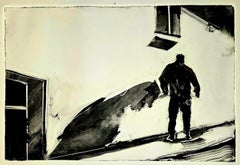
Eremitic, monotype powerful black and white, light and shadow
Located in Brooklyn, NY
A monotype created with oil based etching inks and oil paint printed from a plexiglass matrix. Expressive, Figurative image with stark light and shadow.
Category

2010s Expressionist Figurative Prints

Materials

Monotype

The Hills
Located in Toronto, ON
30" x 40" Unframed Limited Edition Giclee on Canvas with Hand Embellishment of 125 Hand Signed by Todd White Todd white captures restaurant, night and Hollywood scenes with contras...
Category

2010s Expressionist Figurative Prints

Materials

Giclée

Forgiveness - Lithograph and Offset by George Grosz - 1925
Located in Roma, IT
Forgiveness is an offset and lithograph print, realized by George Grosz. The artwork is from the suite of illustrations realized by Grosz for the book "Kobes". 1st edition printed ...
Category

1920s Expressionist Figurative Prints

Materials

Lithograph, Offset

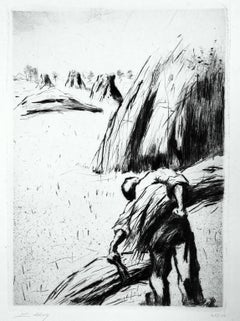
Beim Kornpuppenbinden (Corn Husking)
Located in New York, NY
Lesser Ury (German, 1861–1931), Beim Kornpuppenbinden, drypoint, 1923, signed in pencil lower right and numbered 45/100, from the edition of 100. Reference: Rosenbach 17, only state...
Category

1920s Expressionist Figurative Prints

Materials

Drypoint

RÜCKSEITE AKTSTUDIE
Located in New York, NY
(After) Egon Schiele Marked on the bottom: EGON SCHIELE, RÜCKSEITE AKTSTUDIE, 1912 PUBLISHED BY MULTIPLA s.r.I., PARMA, ITALY, 1988 © BY SIAE, 1988 Label on Reverse specifies no. ...
Category

Late 20th Century Expressionist Figurative Prints

Materials

Paper, Screen

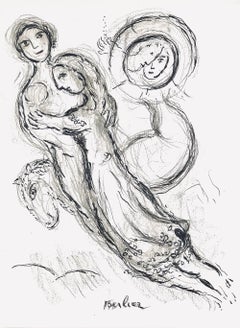
Scène Biblique
Located in New York, NY
A very good impression of this lithograph printed in gray and black. Signed and numbered in pencil by Chagall, from an edition of 50.
Category

1970s Expressionist Figurative Prints

Materials

Lithograph

Frau und Mädchen (Woman and Girl) /// Max Pechstein German Expressionist Litho
Located in Saint Augustine, FL
Artist: Hermann Max Pechstein (German, 1881-1955) Title: "Frau und Mädchen (Woman and Girl)" Portfolio: Paraphrasen zur Samländischen Ode (Paraphrases of the Samland Ode) *Signed and...
Category

1910s Expressionist Figurative Prints

Materials

Lithograph

Marc Chagall, Athena and Telemachus, from Homer, The Odyssey, 1989 (after)
Located in Southampton, NY
This exquisite lithograph after Marc Chagall (1887–1985), titled Athene und Telemachos (Athena and Telemachus), from Homer, Die Odyssee (The Odyssey), originates from the 1989 German...
Category

1980s Expressionist Figurative Prints

Materials

Lithograph

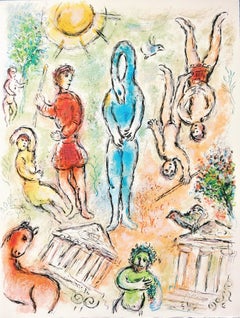
Marc Chagall, Sacrifice for Athena, from Homer, The Odyssey, 1989 (after)
Located in Southampton, NY
This exquisite lithograph after Marc Chagall (1887–1985), titled Opfer für Athene (Sacrifice for Athena), from Homer, Die Odyssee (The Odyssey), originates from the 1989 German-langu...
Category

1980s Expressionist Figurative Prints

Materials

Lithograph

These Cost?
Located in Toronto, ON
26" x 24" Unframed Limited Edition Giclée with Hand Embellishment of 135 Hand Signed by Todd White “These Cost is a satirical piece on the fact that a beautiful woman has never paid...
Category

2010s Expressionist Figurative Prints

Materials

Giclée

Marc Chagall, The Lovers’ Sky, from The Lithographs of Chagall, 1963
Located in Southampton, NY
This exquisite lithograph by Marc Chagall (1887–1985), titled Le Ciel des Amoureux (The Lovers’ Sky), from the album The Lithographs of Chagall, Volume II, originates from the 1963 e...
Category

1960s Expressionist Figurative Prints

Materials

Lithograph

Marc Chagall, Ulysses and Eumaeus, from Homer, The Odyssey, 1989 (after)
Located in Southampton, NY
This exquisite lithograph after Marc Chagall (1887–1985), titled Ulysses und Eumaios (Ulysses and Eumaeus), from Homer, Die Odyssee (The Odyssey), originates from the 1989 German-lan...
Category

1980s Expressionist Figurative Prints

Materials

Lithograph

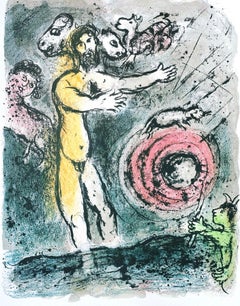
Marc Chagall, Poseidon, from Homer, The Odyssey, 1989 (after)
Located in Southampton, NY
This exquisite lithograph after Marc Chagall (1887–1985), titled Poseidon, from Homer, Die Odyssee (The Odyssey), originates from the 1989 German-language folio published by Daco-Ver...
Category

1980s Expressionist Figurative Prints

Materials

Lithograph

Marc Chagall, The Bed of Odysseus, from Homer, The Odyssey, 1989 (after)
Located in Southampton, NY
This exquisite lithograph after Marc Chagall (1887–1985), titled Das Bett des Odysseus (The Bed of Odysseus), from Homer, Die Odyssee (The Odyssey), originates from the 1989 German-l...
Category

1980s Expressionist Figurative Prints

Materials

Lithograph

Marc Chagall, ...I Am Odysseus, from Homer, The Odyssey, 1989 (after)
Located in Southampton, NY
This exquisite lithograph after Marc Chagall (1887–1985), titled ...Ich bin Odysseus (...I Am Odysseus), from Homer, Die Odyssee (The Odyssey), originates from the 1989 German-langua...
Category

1980s Expressionist Figurative Prints

Materials

Lithograph

Marc Chagall, Odysseus Before Nausicaa, from Homer, The Odyssey, 1989 (after)
Located in Southampton, NY
This exquisite lithograph after Marc Chagall (1887–1985), titled Odysseus vor Nausikaa (Odysseus Before Nausicaa), from Homer, Die Odyssee (The Odyssey), originates from the 1989 Ger...
Category

1980s Expressionist Figurative Prints

Materials

Lithograph

Marc Chagall, Proteus, from Homer, The Odyssey, 1989 (after)
Located in Southampton, NY
This exquisite lithograph after Marc Chagall (1887–1985), titled Proteus (Proteus), from Homer, Die Odyssee (The Odyssey), originates from the 1989 German-language folio published by...
Category

1980s Expressionist Figurative Prints

Materials

Lithograph

EVENING (SELF PORTRAIT with the Battenbergs)
Located in Santa Monica, CA
MAX BECKMANN (German 1884 - 1950) EVENING (Self-Portrait with the Battenbergs) 1916, (Hofmaier 90: Gallwitz 67) Etching and drypoint, Plate 10 from the portfolio Gesichter (Faces)...
Category

1910s Expressionist Figurative Prints

Materials

Drypoint, Etching

Ex Libris Verein — 1920s German Expressionism
Located in Myrtle Beach, SC
Karl Michel, 'Ex Libris Verein' (New Year's Ex Libris Club Announcement), etching, 1924. Signed, dated, and numbered 'op. 167' in pencil. Signed and dated in...
Category

1920s Expressionist Figurative Prints

Materials

Etching

A Second Generation, For My People, Elizabeth Catlett
Located in Southampton, NY
Lithograph on vélin d’Arches 300gm paper. Paper Size: 21.8125 x 18.3125 inches. Inscription: Unsigned and unnumbered, as issued. Notes: From the album, For My People, 1992. Published...
Category

1990s Expressionist Figurative Prints

Materials

Lithograph

Expressionist figurative prints for sale on 1stDibs.

Find a wide variety of authentic Expressionist figurative prints available for sale on 1stDibs. Works in this style were very popular during the 21st Century and Contemporary, but contemporary artists have continued to produce works inspired by this movement. If you’re looking to add figurative prints created in this style to introduce contrast in an otherwise neutral space in your home, the works available on 1stDibs include elements of orange, blue, purple, red and other colors. Many Pop art paintings were created by popular artists on 1stDibs, including George Grosz, Marc Chagall, Todd White, and Gustav Klimt K.K. Hof-und Staatsdruckerei. Frequently made by artists working with Lithograph, and Paper and other materials, all of these pieces for sale are unique and have attracted attention over the years. Not every interior allows for large Expressionist figurative prints, so small editions measuring 3 inches across are also available. Prices for figurative prints made by famous or emerging artists can differ depending on medium, time period and other attributes. On 1stDibs, the price for these items starts at $88 and tops out at $975,000, while the average work sells for $1,100.

Recently Viewed

View All