Baby Figurative Prints
to
1,305
2,447
728
598
200
100
Overall Width
to
Overall Height
to
1,564
577
251
230
223
173
121
47
39
31
23
3
2
1
106
83
70
66
54
384
514
2,752
440
33
115
296
185
165
264
273
486
275
150
317
2,608
1,343
118
26,641
14,585
10,425
8,967
7,621
6,938
4,504
4,090
2,355
2,023
1,911
1,863
1,690
1,467
1,456
1,452
1,444
1,279
1,223
1,152
1,404
1,337
550
395
276
310
1,933
1,819
1,609
Art Subject: Baby
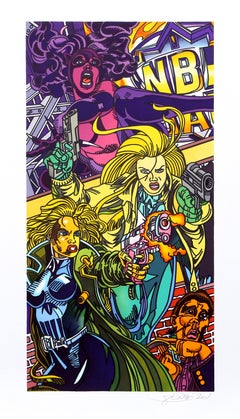
Catman, Pop Art Lithograph by Erró
By Erró
Located in Long Island City, NY
A lithograph by Icelandic Pop artist Erro. Like many other noteworthy Pop artists, Erro drew inspiration for his style and subjects from popular media, focusing mostly on comic books...
Category
Early 2000s Pop Art Figurative Prints
Materials
Lithograph
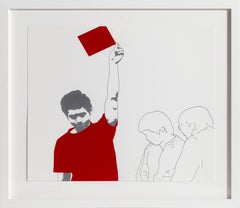
Fragile Springs, Vietnam, Pop Art Screenprint by Dinh Q. Le
By Dinh Q. Lê
Located in Long Island City, NY
Artist: Dinh Q. Lê (Vietnamese, 1968 - )
Title: Fragile Springs, Vietnam
Date: 2012
Medium: Screenprint, signed and dated verso
Edition: 21
Image Size: 14 x 17 inches
Frame Size: 18....
Category
2010s Contemporary Figurative Prints
Materials
Screen
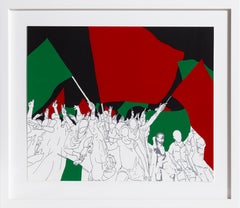
Fragile Springs, Libya, Pop Art Screenprint by Dinh Q. Le
By Dinh Q. Lê
Located in Long Island City, NY
Artist: Dinh Q. Lê (Vietnamese, 1968 - )
Title: Fragile Springs, Libya
Date: 2012
Medium: Screenprint, signed and dated verso
Edition: 21
Image Size: 14 x 17 inches
Frame Size: 18.5 ...
Category
2010s Contemporary Figurative Prints
Materials
Screen
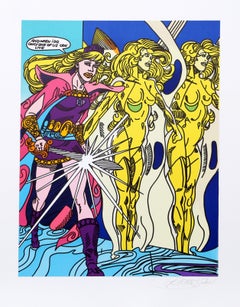
Swordslady, Pop Art Lithograph by Erró
By Erró
Located in Long Island City, NY
A lithograph by Icelandic Pop artist Erro. Like many other noteworthy Pop artists, Erro drew inspiration for his style and subjects from popular media, focusing mostly on comic books...
Category
Early 2000s Pop Art Figurative Prints
Materials
Lithograph
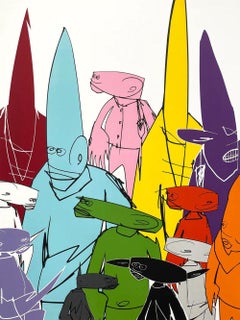
Characterization poster
By Futura
Located in Washington , DC, DC
Beautiful poster featuring a colorful cast of Futura's characters including his iconic Pointman. Screen printed with 12 colors on high quality 100 lb Cougar Natural Cover paper, this...
Category
2010s Contemporary Figurative Prints
Materials
Screen
$1,880 Sale Price
20% Off
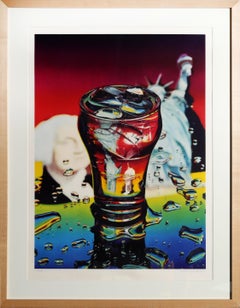
Yankee Flame, Colorful Pop Art Collotype by Ben Schonzeit
Located in Long Island City, NY
Artist: Ben Schonzeit, American (1942 - )
Title: Yankee Flame from the Portfolio, America: The Third Century
Year: 1976
Medium: Collotype, signed and numbered in pencil
Edition: 200
...
Category
1970s Surrealist Figurative Prints
Materials
Lithograph
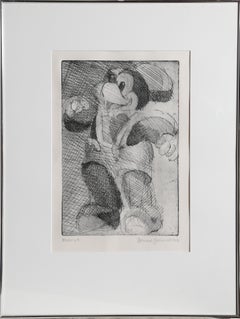
Mickey Mouse II, Pop Art Etching by Bernard Greenwald
Located in Long Island City, NY
Artist: Bernard Greenwald, American (1941 - )
Title: Mickey Mouse II
Year: circa 1990
Medium: Etching, Signed and titled in pencil
Image Size: 17.5 x 12 inches
Frame: 32 x 24 inches
Category
Late 20th Century Pop Art Figurative Prints
Materials
Etching
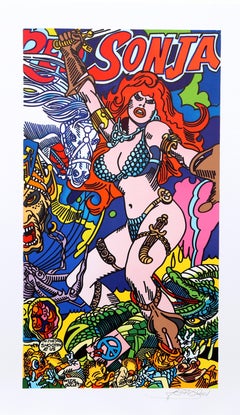
Red Sonja, Pop Art Comic Book-Style Lithograph by Erró
By Erró
Located in Long Island City, NY
A lithograph by Icelandic Pop artist Erro. Like many other noteworthy Pop artists, Erro drew inspiration for his style and subjects from popular media, focusing mostly on comic books and cartoons. What set his work apart was the regular integration of references to other artists like Picasso and Leger as well as explicit political commentaries on figures like former president of the People's Republic of China, Mao Zedong. This print was published by Galerie Ernst Hilger in Vienna and is signed and numbered in pencil by the artist.
Artist: Gudmundur Erro, Icelandic (1932 - )
Title: Red Sonja...
Category
Early 2000s Pop Art Figurative Prints
Materials
Lithograph
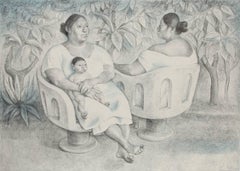
Yucatecas en la Parque, State II, Folk Art Lithograph by Francisco Zuniga
Located in Long Island City, NY
Artist: Francisco Zuniga, Mexican (1912 - 1998)
Title: Yucatecas en la Parque, State II
Year: 1986
Medium: Lithograph on Japon, Signed and numbered in pencil
Edition: PA 5
Size: 21 ...
Category
1980s Expressionist Figurative Prints
Materials
Lithograph
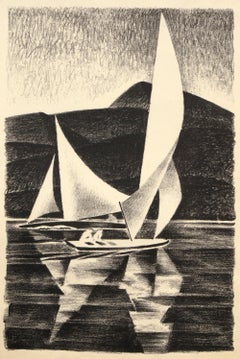
Arnold Ronnebeck 1930s Lithograph – Grand Lake Colorado Yacht Races, WPA Era
Located in Denver, CO
This striking vintage 1930s black-and-white lithograph by celebrated Colorado artist Arnold Ronnebeck (1885–1947) captures the dynamic energy of the Grand Lake...
Category
1930s American Modern Landscape Prints
Materials
Lithograph
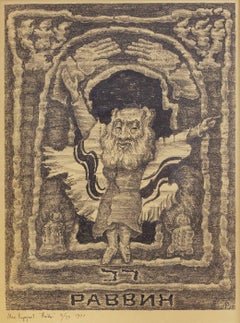
The Rabbi 1977 Soviet Non Conformist Avant Garde Print
Located in Surfside, FL
Dimensions w/Frame: 25 3/4" x 20 3/4"
Alek Rapoport (November 24, 1933, Kharkiv, Ukraine SSR – February 4, 1997, San Francisco) was a Russian Nonconformist artist, art theorist and teacher.
Alek Rapoport spent his childhood in Kiev (Ukraine SSR). During Stalin's "purges" both his parents were arrested. His father was shot and his mother spent ten years in a Siberian labor camp. Rapoport lived with his aunt. At the beginning of World War II, he was evacuated to the city of Ufa (the Bashkir Autonomous Soviet Socialist Republic). A time of extreme loneliness, cold, hunger and deprivation, this period also marked the beginning of Rapoport's drawing studies.
After the war, Rapoport lived in Chernovtsy (Western Ukraine), a city with a certain European flair. At the local House of Folk Arts, he found his first art teacher, E.Sagaidachny (1886–1961), a former member of the nonconformist artist groups Union of the Youth (Soyuz Molodyozhi) and Donkey's Tail, popular during the 1910s–1920s. His other art teacher was I. Beklemisheva (1903–1988). Impressed by Rapoport's talent, she later (1950) organized his move to Leningrad, where he entered the famous V.Serov School of Art (the former School of the Imperial Society for the Promotion of Arts, OPKh, later the Tavricheskaya Art School).
His association with this school lasted eight years, first as a student, and then, from 1965 to 1968, as a teacher. With "Socialist realism" the only official style during this time, most of the art school's faculty had to conceal any prior involvement in non-conformist art movements. Ya.K.Shablovsky, V.M.Sudakov, A.A.Gromov introduced their students to Constructivism only through clandestine means.
(1959–1963) Rapoport studied stage design at the Leningrad Institute of Theater, Music and Cinema under the supervision of the famous artist and stage director N.P.Akimov. Akimov taught a unique course based on theories of Russian Suprematism and Constructivism, while encouraging his graduate students to apply their knowledge to every field of art design. Despite differences in personal artistic taste with Akimov, who was drawn to Vermeer and Dalí, Rapoport was influenced by Akimov's personality and liberalism, as well as the logical style of his art.
In 1963, Rapoport graduated from the institute. His highly acclaimed MFA work involved the stage and costume design for I.Babel's play Sunset. In preparation, he traveled to the southwest regions of the Soviet Union, where he accumulated many objects of Judaic iconography from former ghettos, disappearing synagogues and old cemeteries. He wandered Odessa in search of Babel's characters and the atmosphere of his books.
He organized a new liberal course in technical aesthetics, introducing his students to Lotman's theory of semiotics, the Modulor of Le Corbusier, the Bauhaus school, Russian Constructivism, Russian icons and contemporary Western art. As a result of his "radicalism," Rapoport was fired for "ideological conspiracy."
He sought to cultivate himself as Jewish artist. This became particularly noticeable after the Six-Day War, when the Israeli victory led intellectuals, including the Jewish intelligentsia, to feel a heightened interest in Jewish culture and its Biblical roots. Rapoport's works of this period include Three Figures, a series of images of Talmudic Scholars, and works dealing with anti-Semitism. In the 1970s Rapoport joined the non-conformist movement, which opposed the dogmas of "Socialist realism" in art, along with Soviet censorship. The movement sought to preserve the traditions of Russian iconography and the Constructivist/Suprematist style of the 1910s. Despite the authorities' persecutions of nonconformist artists (including arrests, forced evictions, terminations of employment, and various forms of routine hassling), they united in a group, "TEV – Fellowship of Experimental Exhibitions." TEV's exhibitions proved tremendously successful.
In the same period, Rapoport became one of the initiators of another anti-establishment group, ALEF (Union of Leningrad's Jewish Artists). In the United States this group was known as "Twelve from the Soviet Underground." Rapoport's involvement with this group increased tension with the authorities and attracted KGB scrutiny, including "friendly conversations," surveillance, detentions and house arrests. It became increasingly dangerous for him to live and work in the USSR. In October 1976, Rapoport with his wife and son were forced to leave Russia.
In Italy, Rapoport exhibited at the Venice Biennale, "La Nuova Arte Sovietica-Una prospettiva non-ufficiale" (1977), participated in television programs about nonconformist art in the Soviet Union, and created lithographic works continuing his theme of Jewish characters from Babel's play Sunset.
In 1977, Rapoport's family was granted U.S. immigration status and settled in San Francisco. a significant event in Rapoport's life occurred in his meeting with San Francisco gallery owner Michael Dunev, who became his friend and representative, organizing all his exhibitions until the artist's death.
Toward the end of the 1980s and beginning of the 1990s, Rapoport completed his most ambitious works on the theme of the Old Testament prophets: Samson Destroying the House of the Philistines (1989), Lamentation and Mourning and Woe (1990), the four paintings Angel and Prophets (1990–1991) and Three Deeds of Moses (1992).
In 1992, the artist's friends in St. Petersburg organized the first exhibition of his works there since his departure into exile, with works patiently gathered from collectors and art museums. This exhibition, held in the City Museum of St. Petersburg and accompanied by headlines such as "A St. Petersburg artist returns to his town," was followed by much larger ones in 1993 (St. Petersburg and Moscow), organized in collaboration with Michael Dunev Gallery under the name California Branches – Russian Roots.
He Exhibited in "Soviet Artists, Jewish Themes...
Category
1970s Post-Modern Figurative Prints
Materials
Lithograph
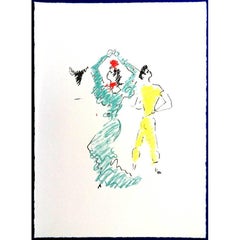
Jean Cocteau (after) - The Flamenco Dancer - Lithograph
By Jean Cocteau
Located in Collonge Bellerive, Geneve, CH
Lithograph after a drawing by Jean Cocteau
Title: The Flamenco Dancer
1971
Dimensions: 38 x 28 cm
Lithograph made for the portfolio "Gitans et Corridas" published by Société de Diffu...
Category
1960s Modern Figurative Prints
Materials
Lithograph
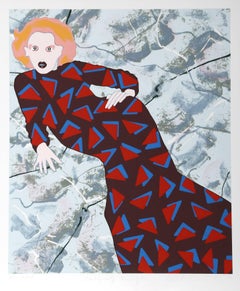
Lady and Triangles, Pop Art Screenprint by Kiki Kogelnik
Located in Long Island City, NY
Artist: Kiki Kogelnik, Austrian (1935 - 1997)
Title: Lady and Triangles
Year: 1979
Medium: Screenprint, signed and numbered in pencil
Edition: 200, AP 35
Size: 32 x 26 in. (81.28 x 6...
Category
1970s Contemporary Figurative Prints
Materials
Screen
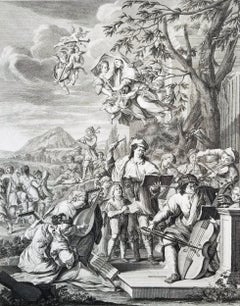
Vespera; Der Abend (Evening; The Evening) /// Johann Daniel Preissler Old Master
Located in Saint Augustine, FL
Artist: (after) Johann Daniel Preissler (German, 1666-1737)
Title: "Vespera; Der Abend (Evening; The Evening)"
Portfolio: Die Vier Tageszeiten (The Four Times of Day)
Year: 1723
Medium: Original Etching and Engraving on laid paper
Limited edition: Unknown
Printer: likely Johann Balthasar Probst, Augsburg, Germany
Publisher: Jeremias Wolff (Erben), Augsburg, Germany
Reference: Le Blanc No. 255, 38; Nagler No. 23
Sheet size: 22.5" x 16.63"
Image size: 17.38" x 13.63"
Condition: Soft handling creases and folds to sheet. Some scattered foxmarks in left margin. Two small tears skillfully repaired from verso in margins. Has been professionally stored away for decades. It is otherwise a strong impression in good condition with full margins
Extremely rare
Notes:
Provenance: private collection - Aspen, CO. Engraved by German artist Johann Balthasar Probst (1673-1750) after a drawing by German artist Johann Daniel Preissler (1666-1737). Comes from Preissler's 1723 "Die Vier Tageszeiten (The Four Times of Day)" portfolio of four etchings and engravings. Printed from one copper plate in one color: black. Descriptions of the portrayed image are printed in Latin and German.
Biography:
Johann Daniel Preissler, or Preisler (1666–1737) was a German painter and director of Nuremberg's Academy of Fine Arts. He was a notable member of a German artistic family, originating in Bohemia. His children included Johann Justin Preissler (1698–1771), Georg Martin Preisler (1700–1754), Barbara Helena Preisler (1707–1758; married to Oeding), Johan Martin Preisler (1715–1794), and Valentin Daniel Preisler (1717–1765), all in their time renowned artists. Most notable for his portraits, nudes and history paintings, Johann Daniel Preissler also produced drawings and frescoes. He was particularly known beyond his native Nuremberg for his "Die durch Theorie erfundene Practic", a sequence of works on art theory – the individual works were translated into several other languages and served as textbooks for students such as the Swiss Salomon Gessner...
Category
1720s Old Masters Figurative Prints
Materials
Laid Paper, Engraving, Etching
Calder, Composition, A Bestiary (after)
Located in Southampton, NY
Letterpress printing on spécialement fabriqué Curtis Rag vélin paper. Paper Size: 12.5 x 9.1875 inches. Inscription: Unsigned and unnumbered, as issued. Notes: From the album, A Best...
Category
1950s Surrealist Figurative Prints
Materials
Lithograph

$956 Sale Price
20% Off
Calder, Composition, A Bestiary (after)
Located in Southampton, NY
Letterpress printing on spécialement fabriqué Curtis Rag vélin paper. Paper Size: 12.5 x 9.1875 inches. Inscription: Unsigned and unnumbered, as issued. Notes: From the album, A Best...
Category
1950s Surrealist Figurative Prints
Materials
Lithograph
$956 Sale Price
20% Off
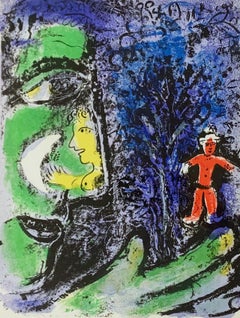
Profile and Red Child, from Mourlot Lithographe I
By Marc Chagall
Located in Washington, DC
Artist: Marc Chagall
Title: Profile and Red Child
Portfolio: Mourlot Lithographe I
Medium: Lithograph
Year: 1960
Edition: Unnumbered
Framed Size: 18 1/2" x 15 1/2"
Image Size: 12 1/2...
Category
1960s Modern Figurative Prints
Materials
Lithograph
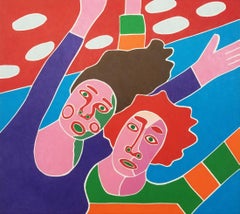
Roller Coaster /// Contemporary Pop Art Relief Print Figurative Funny Colorful
By Dan May
Located in Saint Augustine, FL
Artist: Dan May (American, 1955-)
Title: "Roller Coaster"
*Signed and numbered by May in pencil lower left
Year: 1982
Medium: Original Relief Print on u...
Category
1980s Contemporary Figurative Prints
Materials
Woodcut
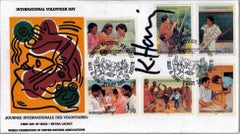
Signed Keith Haring International Volunteer Day mailer 1988
By Keith Haring
Located in NEW YORK, NY
Keith Haring International Volunteer Day 1988:
A rare example featuring a well-preserved, bold black-marker signature by Keith Haring. "International Volunteer Day" was a human right...
Category
1980s Pop Art Prints and Multiples
Materials
Lithograph, Offset
Untitled - Lithograph by Ermanno Laia - 1990
Located in Roma, IT
Lithograph on Magnani-Pescia paper. Paper size 35cmx50cm, work size 26cmx40cm. Excellent condition, no defects.
Ermanno Iaia - Born in Rome in 1933,
He attended the San Giacomo Aca...
Category
1990s Contemporary Figurative Prints
Materials
Lithograph
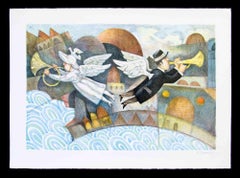
The Vans
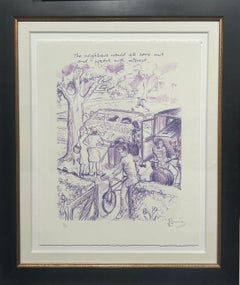
By Ronnie Wood
Located in Toronto, ON
19" x 16.5" Framed
Limited Edition Giclée
Numbered of 140
Hand Signed by Ronnie Wood
Category
21st Century and Contemporary Figurative Prints
Materials
Giclée
$2,000
L
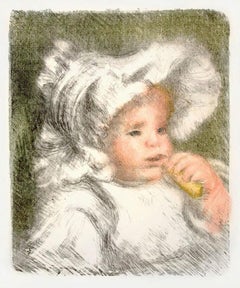
efant aux biscuit (Child with Cookie)
Located in Palo Alto, CA
An intimate portrait of his second son, Jean Renoir (1894 – 1979), evokes a childlike sentiment and love that Renoir had for his children. Most likely no more than age 3, Jean is shown here with a cookie, beneath a frilly bonnet characteristic of late 19th century French society. His pink, rosy cheeks are defined with rich, glowing hues that contrast from the pale yellow and grey background in which he rests. Jean was also featured in a family portrait of the Renoirs, titled La Famille de l’Artiste (1896).
Created in 1899, this Color Lithograph on Cream Laid Paper is from the edition of 100, from the unpublishedL’Album d’estampes originales de la Galerie Vollard; printed by Auguste Clot, Paris.
Catalogue Raisonné:
It is fully documented and referenced in the below catalogue raisonnés and texts (copies will be enclosed as added documentation with the invoices that will accompany the final sale of the work):
1. Delteil, Loys. Pierre-Auguste Renoir, l’œuvre grave...
Category
1890s Modern Portrait Prints
Materials
Lithograph
$12,300 Sale Price
40% Off
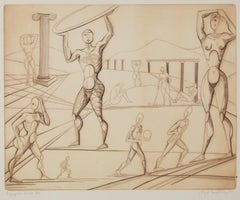
Olympian Games
Located in Fairlawn, OH
Olympian Games
Engraving, 1957
Signed, dated, titled and numbered (see photos)
Edition: 25 (7/25)
From the first and only edition, probably less than 8 impressions printed
Printed by the artist
Condition: Excellent
soft fold in upper left margin
Image size: 15 7/8 x 19 7/8 inches
Sheet size: 18 1/2 x 22 3/8 inches
Provenance: Estate of the artist
Martha A. French Revocable Trust
Item Reference
LU14013763732
Crucifixion, color etching, 1947
Item Reference
LU14013160582
The Web, engraving, 1950
Item Reference
LU14011892032
The Swan, mixed media (etching & soft ground), 1957
Item Reference
LU1404294651
Snowy Egret, engraving, 1954, third edition c. 1990, printed by the master printer Jon Clemens
Item Reference
LU1402253433
Debris, color etching, c. 1940, printed by the artist at the John Herron Art Institute, Indianapolis, Indiana
Item Reference
LU140331242
Crucifixion, engraving, 1958
Item Reference
LU140145330
Strange Animals, engraving, 1947
Item Reference
G130708140172
The Gull, engraving, 1955
Item Reference
LU14012448972
Moon Rays...
Category
1950s American Modern Figurative Prints
Materials
Engraving
*A travers" portfolio 14 ex.
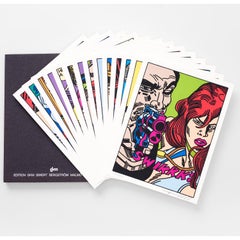
By Erró
Located in Malmo, SE
A travers.Portfolio with 14 silkscreens.
Publisher GKM.
Unframed.
Edition of 200 ex.
Signed, dated and numbered.
Free shipment worldwide.
“I paint because painting is a private Utopia,” Erró writes of his art. The landscapes in Erró’s work are a constantly changing kaleidoscope of images, multivalent and mysterious, not infrequently controversial, bursting with life – and titillating, too! There is room in his pictures for both paradise and visions of fear. Erró is the alias of Gudmundur Gudmundsson, born on 19 July 1932 in Olafsvik, in north-western Iceland. Since Gudmundur first became enthralled by pictures of works of art in a catalogue from the Museum of Modern Art in New York at the tender age of ten, painting has been his passion and his mission in life. He was accepted into art school in Reykjavik as a 19-year old, subsequently complementing what he had learned there with further studies in Oslo. Erró travelled extensively in Spain, Italy, France and Germany in the 1950s, studying at the Florence Academy of Art in 1954 and at the School of Byzantine Mosaic Art in Ravenna in 1955. It was around this time that he began to exhibit his works, first and foremost in Paris, where he chose to make his home in 1958. During the 1960s he established contact with the Swedish museum director Pontus Hultén, who encouraged him and took him under his wing. Over the years Erró has taken part in hundreds of exhibitions and today his works are on show in museums all over the world, including the Centre Pompidou in Paris. Erró’s pictorial world is peopled by comic-strip characters and autocratic despots alike. Donald Duck with his Daisy, Chip & Dale, and other Walt Disney creations are unselfconsciously juxtaposed with Greek gods and madonnas. Elsewhere the German dictator Adolf Hitler stands shoulder to shoulder with his Iraqi counterpart Saddam Hussein...
Category
1990s Pop Art Figurative Prints
Materials
Screen
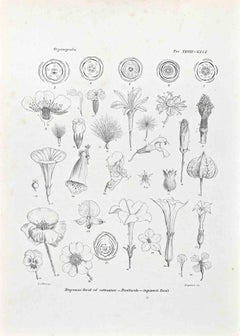
Organography - Lithograph by Vincenzo Tenore - 1870s
Located in Roma, IT
Lithograph.
Belongs to the Series "Atlante di Botanica popolare ossia Illustrazione di Piante Notevoli di ogni famiglia" (Atlas of popular botany or illustration of notable plants o...
Category
1870s Modern Figurative Prints
Materials
Lithograph
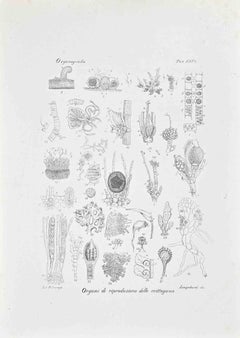
Organography - Lithograph by Vincenzo Tenore - 1870s
Located in Roma, IT
Lithograph.
Belongs to the Series "Atlante di Botanica popolare ossia Illustrazione di Piante Notevoli di ogni famiglia" (Atlas of popular botany or illustration of notable plants o...
Category
1870s Modern Figurative Prints
Materials
Lithograph
A Sail
By Sam Francis
Located in Palo Alto, CA
Sam Francis A Sail, 1969 is an exciting expression of color and movement formatted in a landscape orientation. Emblematic of two of the artist’s most recognized approaches, A Sail, 1...
Category
1960s Modern Figurative Prints
Materials
Lithograph

$9,000 Sale Price
40% Off
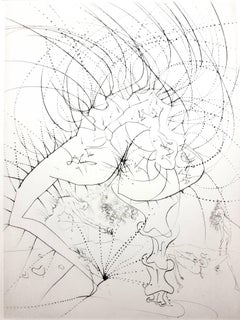
Salvador Dali - Lady Leaf - Original Stamp-Signed Etching
Located in Collonge Bellerive, Geneve, CH
Salvador Dali - Lady Leaf - Original Stamp-Signed Etching
Stamp signed by Dali
Edition of 294 copies.
Paper : Arches vellum.
Dimensions : 16x12".
Catalogue Raisonné : Field 68-6 (...
Category
1960s Surrealist Figurative Prints
Materials
Etching
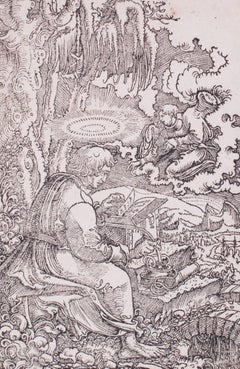
Matthew the Evangelist
By Georg Lemberger
Located in Petworth, West Sussex
Georg Lemberger (German, c. 1490 – 1540)
Matthew the Evangelist
Woodcut on paper
5.3/4 x 3.3/4in. (14.5 x 9.6 cm. )
Hollstein, 7. This is from the New German bible...
Category
16th Century Old Masters Figurative Prints
Materials
Woodcut
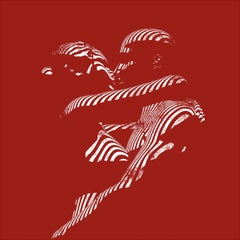
Red Kiss, Jason Keeley, Limited Edition Figurative Art, Affordable Nude Print
By Jason Keeley
Located in Deddington, GB
Jason Keeley
Red Kiss
Limited Edition Silkscreen Print
Edition of 70
Image Size: H 66cm x W 66cm
Sheet Size: H 74cm x W 74cm x D 0.1cm
Sold Unframed
Please no...
Category
21st Century and Contemporary Feminist Figurative Prints
Materials
Paper, Screen
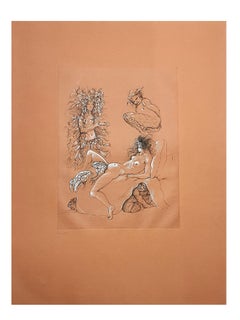
Leonor Fini - Toads - Original Handsigned Lithograph
By Leonor Fini
Located in Collonge Bellerive, Geneve, CH
Leonor Fini - Toads - Original Handsigned Lithograph
Circa 1982
On colored paper
Handsigned and Numbered
Edition: 275
Dimensions: 69 x 52.5 cm
Category
1980s Modern Nude Prints
Materials
Lithograph
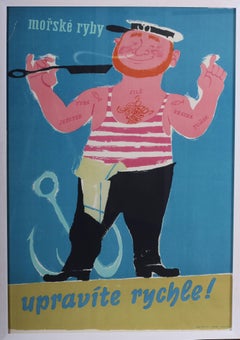
Original vintage advertising poster -
Upravite rychle
Located in Petworth, West Sussex
An original vintage advertising poster from Czechoslavakia for sea fish. The names of the sea fish are tattoo'd all over his body ...
Category
Mid-20th Century Modern Figurative Prints
Materials
Lithograph
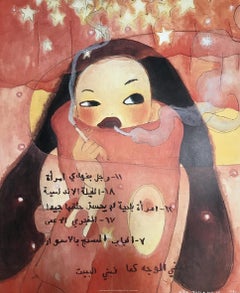
Arabian Night and End (2006) Offset print Limited Edition by Aya Takano signed
By Aya Takano
Located in Hong Kong, HK
Arabian Night and End (2005). Offset print by Aya Takano
Offset print, numbered and signed by the artist
Image 59.5 × 49.4 cm (23⅜ × 19½ in.)
Sheet 60.5 × 50.5 cm (23⅞ × 19⅞ in.)
Ed...
Category
Early 2000s Pop Art Figurative Prints
Materials
Offset
"Girl in the Garden" Copper Plate Heliogravure
Located in Palm Beach, FL
2018 marks the centenary anniversary of Ferdinand Hodler’s death. In that 100 years time, the art world’s esteem of this important artist has proved fickle. It has shifted from extolling his artistic merits during his lifetime to showing something of a feigned disdain- more reflective of the world political order than a true change of heart for Hodler’s work. After years of Hodler being all but a footnote in the annals of art history and generally ignored, finally, the pendulum has righted itself once again. Recent retrospective exhibitions in Europe and the United States have indicated not only a joyful rediscovery of Hodler’s art but a firm conviction that his work and world view hold particular relevance today. DAS WERK FERDINAND HODLERS is not only a collection of printed work reflecting the best of all of his painted work created up to 1914 just before the outbreak of World War I, the portfolio itself is an encapsulation of Hodler’s ethos, Parallelisme.
Hodler developed his philosophy of Parallelisme as a unifying approach to art which strips away detail in search of harmony. By means of abstraction, symmetry and repetition, Hodler sought ways to depict Nature’s essence and her fundamental, universal order. He believed these universal laws governing the natural, observable world extend to the spiritual realm. Symbolist in nature with Romantic undertones, his works are equally portraits of these universal concepts and feelings governing all life as they are a visual portrait in the formal sense. Whether his subject is a solitary tree, a moment in battle, mortal fear, despair, the awe inspired by a vast mountain range, a tender moment or even the collective conviction in a belief, Hodler unveils this guiding principle of Parallelisme.
Several aspects of Hodler’s portfolio reinforce his tenets of Parallelisme. The Table of Contents clearly preferences a harmonious design over detail. The two columns, consisting of twenty lines each, list the images by order of appearance using their German titles. The abbreviated titles are somewhat cryptic in that they obscure the identities of the sitters. Like the image Hodler presents, they are distillations of the sitter without any extraneous details. This shortening was also done in an effort to maintain a harmonious symmetry of the Table of Contents, themselves, and keep titles to a one-line limit. The twenty-fourth title: “Bildnis des Schweizerischen Gesandten C.” was so long, even with abbreviation, that it required two lines; so, for the sake of maintaining symmetry, the fortieth title: “Bauernmadchen” was omitted from the list. This explains why the images are not numbered. Hodler’s reasoning is not purely esoteric. Symmetry and pattern reach beyond mere formal design principles. Finding sameness and imposing it over disorder goes to the root of Hodler’s identity and his art. A Swiss native, Hodler was bi-lingual and spoke German and French. Each printed image, even number forty, have titles in both of Hodler’s languages. Certainly, there was a market for Hodler’s work among francophones and this inclusion may have been a polite gesture to that end; however, this is the only place in the portfolio which includes French. With German titles at the lower left of each image, Hodler’s name at bottom center and corresponding French titles at the lower right of each image, there is a harmony and symmetry woven into all aspects of the portfolio. This holds true for the page design, as it applies to each printed image and as it describes the Swiss artist himself. Seen in this light, Hodler’s portfolio of printed work is the epitome of Hodler’s Parallelisme. DAS WERK FERDINAND HODLERS is also one of the most significant documents to best tell the story of how Hodler, from Switzerland, became caught between political cross-hairs and how the changing tides of nations directly impacted the artist during his lifetime as well as the accessibility of his art for generations to come.
The Munich-based publisher of the portfolio, R. Piper & Co., Verlag, plays a crucial role in this story. Publishing on a wide range of subjects from philosophy and world religion to music, literature and the visual arts; the publisher’s breadth of inquiry within any one genre was equal in scope. Their marketing strategy to publish multiple works on Hodler offers great insight as to what a hot commodity Hodler was at that time. R.Piper & Co.’s Almanach, which they published in 1914 in commemoration of their first ten years in business, clearly illustrates the rapid succession- strategically calculated for achieving the deepest and broadest impact - in which they released three works on Hodler to hit the market by the close of 1914. DAS WERK FERDINAND HODLERS was their premier publication. It preceded C.A. Loosli’s Die Zeichnungen Ferdinand Hodlers, a print portfolio after 50 drawings by Hodler which was released in Autumn of 1914 at the mid-level price-point of 75-150 Marks; and a third less expensive collection of prints after original works by Hodler, which had not been included in either of the first two portfolios, was released at the end of that year entitled Ferdinand Hodler by Dr. Ewald Bender.
The title and timing of DAS WERK FERDINAND HODLERS' debut leaves little doubt as to the connection it has with another avant-garde portfolio of art prints, Das Werk Gustav Klimts, released in 5 installments from 1908 -1914 by Galerie Miethke in Vienna. Hodler, himself, was involved in Klimt’s ground-breaking project. As the owner of Klimt’s 1901 painting, “Judith with the Head of Holifernes” which appears as the ninth collotype print in the second installment of Das Werk Gustav Klimts, Hodler was obliged to grant access of the painting to the art printers in Vienna for them to create the collotype sometime before 1908. Hodler had been previously invited in 1904 to take part in what would be the last exhibition of the Vienna Secession before Klimt and others associated with Galerie Miethke broke away. In an interview that same year, Hodler indicated that he respected and was impressed by Klimt. Hodler’s esteem for Klimt went beyond the art itself; he emulated Klimt’s method aimed at increasing his market reach and appeal to a wider audience by creating a print portfolio of his painted work. By 1914, Hodler and his publisher had the benefit of hindsight to learn from Klimt’s Das Werk publication.
Responding to the sluggish sales of Klimt’s expensive endeavor, Hodler’s publisher devised the same diversified 1-2-3 strategy for selling Hodler’s Das Werk portfolio as they did with regards to all three works on Hodler they published that year. For their premium tier of DAS WERKS FERDINAND HODLERS, R. Piper & Co. issued an exclusive Museum quality edition of 15 examples on which Hodler signed each page. At a cost of 600 Marks, this was generally on par with Klimt’s asking price of 600 Kronen for his Das Werk portfolio. A middle-tiered Preferred edition of 30, costing somewhat less and with Hodler’s signature only on the Title Page, was also available. The General edition, targeting the largest audience with its much more affordable price of 150 Marks, is distinguishable by its smaller size.
Rather than use the subscription format Miethke had chosen for Klimt’s portfolios which proved to have had its challenges, R. Piper & Co. employed a different strategy. In addition to instantly gratifying the buyer with all 40 of the prints comprising DAS WERK FERDINAND HODLERS and the choice among three price points, they advertised in German journals a fourth possibility of ordering single prints from them directly. These printed images are easily discernible from the three complete folio editions. The paper size of the single purchased images is of the larger format like the Museum and Preferred editions, measuring 65 h x 50 w cm; however, the paper itself is the same copper print paper used in the General edition and then mounted on poster board. The publishing house positioned itself to be a direct retailer of Hodler’s art. They astutely recognized the potential for profitability and the importance, therefore, of having proprietary control over his graphic works.
R. Piper & Co. owned the exclusive printing rights to Hodler’s best work found in their three publications dating from 1914. That same year, a competing publication out of Weimar entitled Ferdinand Hodler: Ein Deutungsversuch von Hans Muhlestein appeared. Its author, a young scholar, expressed his frustration with the limited availability of printable work by Hodler. In his Author’s Note on page 19, dated Easter, 1914, Muhlestein confirms that the publisher of Hodler’s three works from that same year owned the exclusive reproductive rights to Hodler’s printed original work. He goes further to explain that even after offering to pay to use certain of those images in his book, the publisher refused. Clearly, a lot of jockeying for position in what was perceived as a hot market was occurring in 1914.
Instead, their timing couldn’t have been more ill-fated, and what began with such high hopes suddenly found a much different market amid a hostile climate. The onset of WWI directly impacted sales. Many, including Ferdinand Hodler, publicly protested the September invasion by Germany of France in which the Reims Cathedral, re-built in the 13th century, was shelled, destroying priceless stained glass and statuary and burning off the iron roof and badly damaging its wooden interior. Thomas Gaehtgens, Director of the Getty Research Institute describes how the bombing of Reims Cathedral triggered blindingly powerful and deeply-felt ultra-nationalistic responses: “The event profoundly shocked French intellectuals, who for the most part had an intense admiration for German literature, music and art. By relying on press accounts and abstracting from the visual propagandistic content, they were unable to interpret the siege of Reims without turning away from German culture in disgust. Similarly, the German intelligentsia and bourgeoisie were also shocked to find themselves described as vandals and barbarians. Ninety-three writers, scientists, university professors, and artists signed a protest, directed against the French insults, that defended the actions of the German army.”
In similar fashion, a flurry of open letters published in German newspapers and journals as well as telegrams and postcards sent directly to Hodler following his outcry in support of Reims reflected the collectively critical reaction to Hodler’s position. Loosli documents that among the list of telegrams Hodler received was one from none other than his publisher in Germany, R.Piper & Co. Allegiances were questioned. The market for Hodler in Germany immediately softened. Matters worsened for the publisher beyond the German backlash to Hodler and his loss of appeal in the home market; with the war in full swing until 1918, there was little chance a German publisher would have much interest coming from outside of Germany and Austria. Following the war and Hodler’s death in 1918, the economy in Germany continued to spiral out and just 5 years later, hyper-inflation had rendered its currency worthless vis-a-vis its value in the pre-war years. Like the economy, Hodler’s reputation was slow to find currency in these difficult times. Even many French art fans had turned sour on Hodler as they considered his long-standing relationship in German and Austrian art circles. Thus, the portfolio’s rarity in Hodler’s lifetime and, consequently, the availability of these printed images from DAS WERK FERDINAND HODLERS since his death has been scarce.
In many ways, Hodler and his portfolios were casualties of war. Thwarted from their intended purpose of reaching a wide audience and show-casing Parallelisme, Hodler’s unique approach to art, this important, undated work has been both elusive and shrouded in mystery. Perhaps DAS WERK FERDINAND HODLERS was left undated as a means of affirming the timelessness of Hodler’s art. Digging back into the past, Hodler’s contemporaries, like R. Piper, C.A. Loosli and Hans Muhlestein, indeed provide the keys to unequivocally clarify what has largely been mired in obscurity. Just after Hodler’s death, the May, 1918 issue of the Burlington Review ran a small column which opined hope for better access to R.Piper & Co.’s DAS WERK FERDINAND HODLERS; 100 years later, it is finally possible. Hodler’s voice rings out through these printed works. Once more, his modern approach to depicting portraits, landscapes and grand scale scenes of Swiss history speak to us of what is universal. Engaging with any one of these images is the chance to connect to Hodler’s vision and his world view- weltanschauung in German, vision du monde in French- however one expresses these concepts through language, its message embedded in his work is the same: “We differ from one another, but we are like each other even more. What unifies us is greater and more powerful than what divides us.” Today, Hodler’s art couldn’t be more timely.
FERDINAND HODLER (SWISS, 1853-1918) explored Parallelisme through figurative poses evocative of music, dance and ritual. His images of sex, night, desertion and death as well as his many landscapes exploring the universal longing for harmony with Nature are unique and important works embodying a Symbolist paradigm. Truly a Modern Master, Hodler’s influence can be felt in the work of Gustav Klimt and Kolomon Moser and subsequent Expressionist artists such as Egon Schiele. He was born into an impoverished family in Bern, Switzerland in 1853. His entire family succumbed to tuberculosis, and he was orphaned by the age of 13, the only surviving child among his 13 siblings. In the absence of family, the influence and guidance which his art instructors provided Hodler was foundational and profound. Hodler began formal studies in 1872 at the Geneva School of Design. Under Barthelemy Menn, Hodler was drawn to the ordered beauty of Euclidian geometry and Durer’s fundamentals of human proportion that proved to be guiding principles informing his art throughout his life.
By the 1880s, Hodler began to enjoy some recognition for his work which put him on a new path towards stability. Remaining in Geneva, he became assistant to the well-known muralist, Edouard Castres. Following his first solo show in 1885, Hodler’s work took on a Symbolist quality. He frequently associated with a group of Swiss Symbolist...
Category
1910s Symbolist Figurative Prints
Materials
Paper
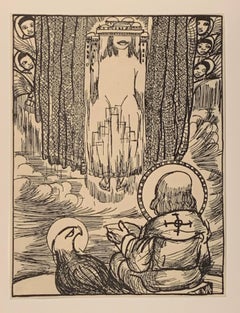
THE REVELATION OF SAINT JOHN THE DIVINE.
Located in Portland, ME
Crite, Alan Rohan. THE REVELATION OF SAINT JOHN THE DIVINE. Limited Editions Club, NY, 1995. Number 88 of the edition of 300 copies. Large folio (22 x 16 inches) clamshell box in black cloth with morocco label, book in Black Cloth, with morocco label, 58 pages with the text of Revelations in the King James Version, and fifteen "relief engravings" (wood-engravings?) by Alan Crite...
Category
1990s Figurative Prints
Materials
Engraving
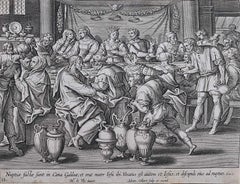
Adrian Collaert 17th Century Engraving Wedding at Cana Martin de Vos
Located in London, GB
We have the full series of 52 prints (including title page) from Vita Passio et Resurrectio Iesu Christi listed. To find the others scroll down to "More from this Seller" and below i...
Category
17th Century Realist Figurative Prints
Materials
Engraving
Deep Blue - Small Scale
Located in Nottingham, GB
Limited edition Photographic Mosaic.
Edition of 30
The same incredible artwork on a slightly smaller scale.
Joel creates these contemporary pieces by adding lots of tiny images of ...
Category
2010s Contemporary Figurative Prints
Materials
Mosaic
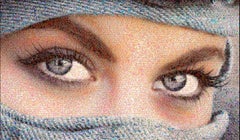
Plate 5 from the Portfolio Derriere le Miroir #212
Located in Washington, DC
Alexander Calder Plate 5 (Derriere le Miroir # 212)
Artist: Alexander Calder
Medium: Original lithograph in colors
Title: Plate 5
Portfolio: Derriere le M...
Category
1970s Post-Modern Figurative Prints
Materials
Lithograph
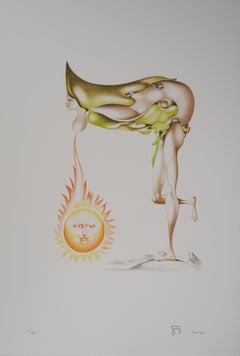
Woman and Sun - Original lithograph, Signed
Located in Paris, IDF
Jules Perahim (1914-2008)
Woman and Sun, 1974
Original lithograph
Signed in pencil by the artist
Numbered / 199
On Arches vellum 56 x 38 cm (c. 22 x 15 inches)
INFORMATION : From p...
Category
1970s Surrealist Figurative Prints
Materials
Lithograph
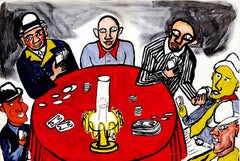
Ephemera
Located in New York, NY
Available individually ($2500), and also as a suite of five ($12,000).
Born in Bronx, NY, Ida Applebroog attended NY State Institute of Applied Arts and Sciences (1949). She moved...
Category
Late 20th Century Contemporary Figurative Prints
Materials
Aquatint, Photogravure
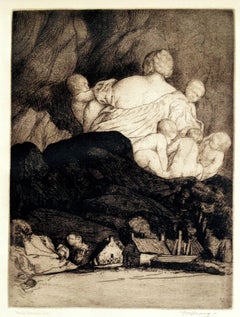
Mother Earth
Located in New York, NY
William Strang (1859-1921), Mother Earth, 1897, etching, drypoint, aquatint ); signed in pencil lower right, and signed by the printer David Strang and...
Category
1890s Symbolist Figurative Prints
Materials
Drypoint, Etching, Aquatint
"Figure, " Nude Portrait Linoleum Cut by Gerrit Sinclair
Located in Milwaukee, WI
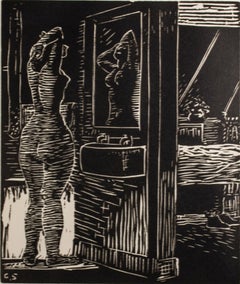
"Figure" is an original linoleum print by Gerrit Sinclair, signed in plate the lower left corner. It features a woman fixing her hair in front of a mirror, her nude body visible to the viewer from the back and front reflecting in the mirror.
Image: 6" x 5"
Framed: 13.37" x 12.43"
Gerrit Sinclair brought the charming style of American Regionalism painting...
Category
1930s American Realist Figurative Prints
Materials
Linocut
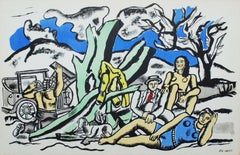
The Outing (La Partie de Campagne) (Verve)
Located in Washington, DC
Artist: Fernand Leger
Title: The Outing (La Partie de Campagne) (Verve)
Medium: Original lithograph
Date: 1952
Edition: Unnumbered
Sheet Size: 14" x...
Category
1950s Figurative Prints
Materials
Lithograph
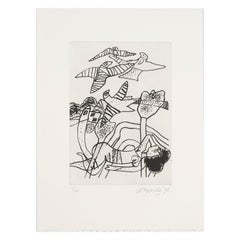
Leonor Fini - Untitled - Original Handsigned Etching
By Leonor Fini
Located in Collonge Bellerive, Geneve, CH
Leonor Fini - Untitled - Original Handsigned Etching
Circa 1982
On colored paper
Handsigned and Numbered
Edition: 275
Dimensions: 69 x 52.5 cm
Leonor Fini is considered one of the most important women artists of the mid-twentieth century, along with Leonora Carrington, Frida Kahlo, Meret Oppenheim, Remedios Varo, and Dorothea Tanning – most of whom Fini knew well. Her career, which spanned some six decades, included painting, graphic design, book illustration, product design (the renowned torso-shaped perfume bottle for Schiaparelli’s Shocking), and set and costume design for theatre, ballet, opera, and film. In this compellingly readable, exhaustively researched account, author Peter Webb brings Fini’s provocative art and unconventional personal life, as well as the vibrant avant-garde world in which she revolved, vividly in life.
Born in Buenos Aires in 1907 (August 30 – January 18, 1996, Paris) to Italian and Argentine parents, Leonor grew up in Trieste, Italy, raised by her strong-willed, independent mother, Malvina. She was a virtually self-taught artist, learing anatomy directly from studying cadavers in the local morgue and absorbing composition and technique from the Old Masters through books and visits to museums.
Fini’s fledging attempts at painting in Trieste let her to Milan, where she participated in her first group exhibition in 1929, and then to Paris in 1931.
Her vivacious personality and flamboyant attire instantly garnered her a spotlight in the Parisian art world and she soon developed close relationships with the leading surrealist writers and painters, including Paul Eluard, Salvador Dali, Man Ray, and Max Ernst, who became her lover for a time. The only surrealist she could not abide because of his misogyny was André Breton. Although she repeatedly exhibited with them, she never considered herself a surrealist. The American dealer Julien Levy,
very much impressed by Fini’s painting and smitten by her eccentric charms, invited her to New York in 1936, where she took part in a joint gallery exhibition with Max Ernst and met many American surrealists, including Joseph Cornell and Pavel Tchelitchew. Her work was included in MoMA’s pivotal Fantastic Art, Dada and Surrealism exhibition, along with De Chirico, Dali, Ernst, and Yves Tanguy.
In 1939 in Paris she curated an exhibition of surrealist furniture for her childhood friend Leo Castelli for the opening of his first gallery.
Introductions to her exhibition catalogues were written by De Chirico, Ernst, and Jean Cocteau.
A predominant theme of Fini’s art is the complex relationship between the sexes, primarily the interplay between the dominant female and the passive, androgynous male. In many of her most powerful works, the female takes the form of a sphinx, often with the face of the artist. Fini was also an accomplished portraitist; among her subjects were Stanislao Lepri...
Category
1980s Modern Nude Prints
Materials
Etching

Envol des oiseaux
By Corneille
Located in Malmo, SE
Envol des oiseaux.
Publisher GKM.
Unframed.
Edition of 30 ex.
Signed, dated and numbered.
Free shipment worldwide.
Corneille, one of the founders of the COBRA group, has passed aw...
Category
1990s Contemporary Figurative Prints
Materials
Engraving
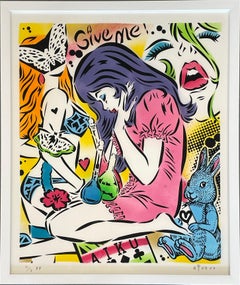
Emotions (Purple Variant)
By AIKO
Located in Hollywood, FL
Artist: Aiko
Title: Emotions - Purple Variant
Medium: 8 Color Hand Painted Stencil + 2 Screen Print on 290gsm Fine Art Paper
Size: 24 x 20 inches (Framed: 25.5 x 21.5 Inches)
Editio...
Category
2010s Street Art Figurative Prints
Materials
Screen, Stencil
$6,000 Sale Price
20% Off
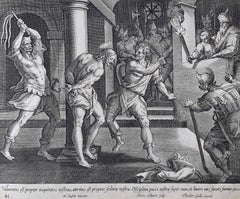
Theodoor Galle Martin de Vos Engraving The Suffering Servant
Located in London, GB
We have the full series of 52 prints (including title page) from Vita Passio et Resurrectio Iesu Christi listed. To find the others scroll down to "More from this Seller" and below it click on "See all from this Seller" and search for 'Collaert' - or message us as they may not all have been uploaded yet.
Theodoor Galle...
Category
17th Century Realist Figurative Prints
Materials
Engraving
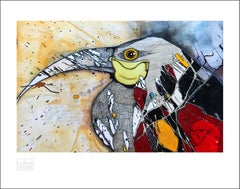
Huia
Located in Red Bank, NJ
Huia by Cheryl Gross
Signed on front, lower right
Print, Abstract, Geometric, Bird, Animal, Wildlife, Earth tones, Bright and Vivid Colors, Home Decor, Wall Art, Wall Hanging, Wall...
Category
21st Century and Contemporary Contemporary Animal Prints
Materials
Archival Paper, Giclée
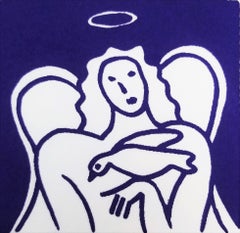
Angel /// Contemporary Pop Art Screenprint Blue Minimal Religious Portrait Bird
By Dan May
Located in Saint Augustine, FL
Artist: Dan May (American, 1955-)
Title: "Angel"
*Signed and numbered by May in pencil lower left
Year: 1992
Medium: Original Screenprint on unbranded white wove paper
Limited editio...
Category
1990s Contemporary Figurative Prints
Materials
Screen
R. Layni, Zeichnungen folio, "Kneeling Female Semi-Nude" Collotype plate XII
Located in Palm Beach, FL
Egon Schiele (1890 – 1918), AUSTRIA
“ART CANNOT BE MODERN, ART IS PRIMORDIALLY ETERNAL.” -SCHIELE
Defiantly iconoclastic in life and art, Egon Schiele is esteemed for his masterful draftsmanship and precocious insight into the human condition. Part of the first wave of Austrian Modernism, he was swept away by the Viennese fascination with the tension between Life and Death (known in the works of Freud and his later interpreters as Eros and Thanatos). Life, identified with attraction, love, sexuality, and reproduction, and Death, represented by distortion, disease, repulsion, and hysteria, often appeared in the same composition, thereby suggesting the frightening life cycle of the human mind and body.
Young throughout his career, Schiele universalized his childhood traumas, thriving libido, insecurities, fears, and longings. His contorted line, jarring contrasts, and flat areas of color, demonstrate an early alliance with Expressionist philosophy and artists who were relentlessly frustrated by conventionality in all its forms. Schiele’s work embodied man’s disorientation and confusion in a seemingly absurd world, a world plagued by disease and war. It continues to be astonishingly relevant today, not just because it helped define Modernism but also because it revealed the dark and immutable aspects of the human condition.
Zeichnungen is a fine art print portfolio published by Verlag der Buchhandlung Richard Lanyi, Vienna, 1917, printed by Max Jaffe...
Category
1910s Vienna Secession Figurative Prints
Materials
Paper

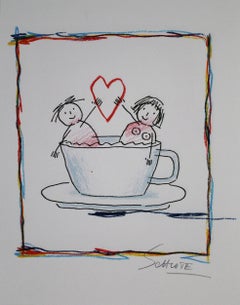
Love in a cup (Stick Figure Art, Heart, Love, Playful, Warm, Heartfelt)
Located in Kansas City, MO
Wilhelm Schlote
Love in a cup
Giclee on hand made cotton paper
Year: 2015
Signed by hand
Size: 11.4 × 10.6 on 15.0 × 12.0 inches
COA provided
Ref.: 924802-899
----------------------------------
Wilhelm Schlote (born March 4, 1946 in Lüdenscheid) is a German artist, children's book author, cartoonist and caricaturist.
Schlote grew up in Essen. His first art teacher was Heinz Mack (member of the artist group ZERO), who recognized Wilhelm Schlote's talent for drawing early on. His mentor and friend Albert Schulze-Vellinghausen, who, as a literary critic for the Frankfurter Allgemeine Zeitung (FAZ), was the predecessor of Marcel Reich-Ranicki, was just as philosophically influential. After graduating from high school, Schlote studied philosophy in Bonn until 1968 and then art at the Kunsthochschule Kassel until 1972. From 1973 to 1978 he was a teacher in higher education in Kassel and Hamburg. Simultaneously with the decision to go to Paris, Schlote was offered a professorship at a German art college. In 1978, however, Schlote decided to move to France, where he lived partly in Nice, but mainly in Paris. In 1980 he exhibited for the first time in the Medical Faculty of St. Germain des Pres in Paris. Since 2011 Wilhelm Schlote lives and works in Cologne, Germany.
In 1968 Schlote published the first of a total of 35 children's books. Starting in 1976 he published cartoon postcards - the so-called "Schlote-Karten" - and in the same year received the German Youth Book Prize for “I wish for a hippopotamus today”. In 1991 he was awarded by the "Académie Calvet"; the award was presented to him by Catherine Deneuve and Claude Chabrol. Schlote's cartoons and drawings have appeared in magazines such as Die Zeit, Die Welt, The New Yorker, Le Monde and Le Figaro. He creates his city posters...
Category
2010s Contemporary Figurative Prints
Materials
Giclée, Handmade Paper
"Meditation, " Figure
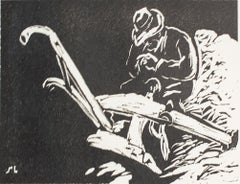
Farm Tool Linoleum Cut signed by Schomer Lichtner
Located in Milwaukee, WI
"Meditation" is an original linoleum print by Schomer Lichtner, signed in the lower right hand corner. It features a man in the middle of a project, in quiet meditation.
Image: 6" x 8"
Framed: 14.5" x 14.37"
Lichtner and his wife, Ruth Grotenrath (1912-1988), are celebrated as Milwaukee’s first couple of painting and are regarded as major Wisconsin artists. Lichtner’s impressive production, perseverance, longevity, and positive approach to his life and art made him and his work distinctive and much loved by his many admirers. His work is currently represented in collections at the Milwaukee Art Museum, the John Michael Kohler Art Center, the West Bend Museum, and in the collections of many individuals. Books on the lives and art work of both Lichtner and Grotenrath are in progress and it is anticipated that they will be published next year. Recipient of the 2006 Wisconsin Visual Artist Lifetime Achievement Award The late Milwaukee artists, Schomer Lichtner and Ruth Grotenrath, created original silkscreen prints as a part of their Christmas celebration starting in the 1940's. The subjects and colors varied from year to year but they laboriously printed these little gems themselves. Ruth Grotenrath, 1912-1988, and her husband, Schomer Lichtner, (1905-2006), are celebrated as Milwaukee’s first couple of painting and are regarded as major Wisconsin artists. From the outset, Lichtner and Grotenrath were determined to become full-time artists. Ruth Grotenrath and Schomer Lichtner began their careers by creating numerous murals for the WPA (Work Projects Administration), primarily post offices. A wonderful example can be seen in the Sheboygan, Wisconsin post office. Even during the Great Depression they worked producing Post Office murals under the Treasury Department's Section of Fine Arts (SFA). According to James Auer, former Milwaukee Journal Sentinel art critic, "As art and economic trends evolved, the couple’s palettes brightened and warmed. Both fell under the spell of the Mexican social realists, notably Diego Rivera, and modernists such as Matisse and Dufy. The couple’s perspective changed further after they became friends with philosopher Alan Watts...
Category
1930s American Modern Figurative Prints
Materials
Linocut
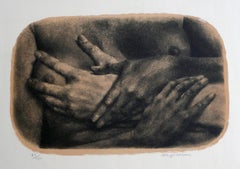
UNTITLED (WOMAN WITH HANDS ACROSS BREASTS)
Located in Portland, ME
Hirsch, Joseph. UNTITLED (WOMAN WITH HANDS ACROSS BREASTS). Lithograph in two colors, not dated, but between 1970/80. Not in Cole. Edition of 100. Signed and numbered 85/100 in penci...
Category
1970s Figurative Prints
Materials
Lithograph
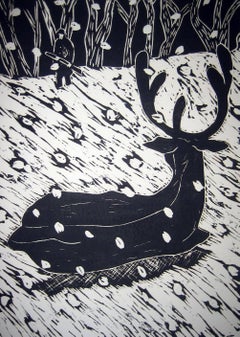
Confrontation
Located in New York, NY
Richard Bosman is a painter and printmaker known for his woodcuts depicting turbulent seascapes. He studied at Bryam Shaw School of Painting and Drawing in London, The New York Studi...
Category
20th Century Contemporary Figurative Prints
Materials
Linocut
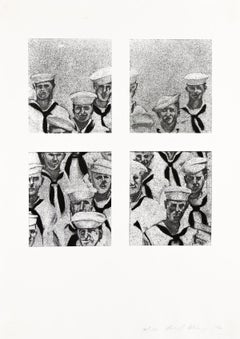
Sailors
Located in New York, NY
Screenprint on Rives BFK, 1972. Signed by the artist, dated and numbered 14/180 in pencil in lower margin. Printed by Syria Studio, Ltd., New York City, with the blind stamp in low...
Category
1970s Contemporary Figurative Prints
Materials
Screen
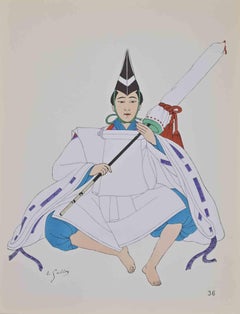
Japanese Costume - Lithograph by Emile Gallois - Mid-20th Century
Located in Roma, IT
Lithograph and pochoir realized by Emile Gallois in the mid-20th Century ca. to illustrate japanese costumes.
Signed in the plate.
Published by H. Laurens, Paris.
Very good condit...
Category
Mid-20th Century Modern Figurative Prints
Materials
Lithograph
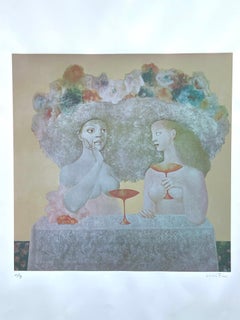
Leonor Fini, rare original serigraph on Rives paper, circa 1970
By Leonor Fini
Located in Saint Ouen, FR
Rare print handsigned by surrealist artist Leonor Fini, inscreasingly esteemed with the movement of rediscovering art by women. This silkscreen is in perfect condition and from a ver...
Category
Mid-20th Century Surrealist Figurative Prints
Materials
Paper
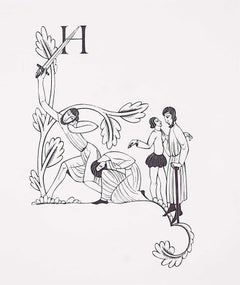
Eric Gill 1934 Woodblock Print Canterbury Tales The Doctor
s Tale, Initial H
By Eric Gill
Located in London, GB
From a series of wood engravings by Eric Gill. To see them or our other Modern British Art, scroll down to "More from this Seller" and below it click on "See all from this Seller" - or send us a message if you cannot find the artist you want.
Initial Letter 'H' for The Canterbury Tales (1929) - The Doctor's Tale
Woodblock Print
Published Hague & Gill 1934 in an unnumbered edition of 300
23x21cm
Following Chichester Technical and Art School, Gill moved to London in 1900 to train with the ecclesiastical architects W D Caroe. Finding architecture somewhat pedestrian he took stonemasonry lessons at Westminster Technical Institute and calligraphy lessons at the Central School of Arts and Crafts, coming under the influence of Edward Johnson, the designer of the London Underground's own typeface. In 1903 he ceased his attempts to become an architect, instead becoming a monumental mason, letter-cutter and calligrapher.
Based in Ditchling, he began direct carving of stone figures, the semi-abstract figures taking their influence from mediaeval statuary, mixed with influences from Classical statuary from the Greeks and Romans, with a little post-Impressionism added in.
With major commissions from Westminster Cathedral for its Stations of the Cross (1914), a series of War Memorials including the Grade II* memorial in Trumpington, and three of the sculptures for Charles Holden's 1928 headquarters of London Underground at 55 Broadway, St James's, and a series of sculptures for the new 1932 Broadcasting House. The list continues.
Never one to rest on his laurels, he was at the same time engaged in typographical adventures. He had collaborated with Edward Johnson on the latter's initial thoughts on his London Transport typeface, but in 1925 designed Perpetua on his own, and Gill Sans between 1927-30. For the Golden Cockerel Press he created, in 1929, a bolder typeface to complement wood engravings.
And of course Gill was publishing decorated...
Category
1930s Modern Figurative Prints
Materials
Woodcut
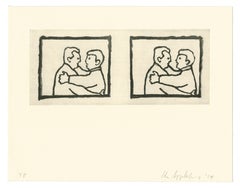
Ephemera
Located in New York, NY
Available individually ($2500), and also as a suite of five ($12,000).
Born in Bronx, NY, Ida Applebroog attended NY State Institute of Applied Arts and Sciences (1949). She moved...
Category
Late 20th Century Contemporary Figurative Prints
Materials
Aquatint, Photogravure
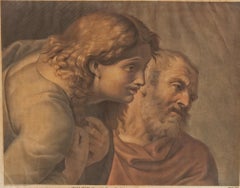
Old Master Print Heads of Two Apostles after Raphael
By (after) Raphael (Raffaello Sanzio da Urbino)
Located in Rochester, NY
Early 19th century print on laid paper. Two apostles after Raphael (Raffaello Sanzio da Urbino). Good color. Some subtle wrinkles to the paper. Framed.
Category
Early 19th Century Old Masters Figurative Prints
Materials
Paper
Recently Viewed
View AllMore Ways To Browse
Enrique Martinez Celaya
Eric Aho
Eritrea Art
Ernest Chateignon
Erotic Art Animal
Eugene Chigot
Eugene Devaud De Madelin
Eugene Jardin
Faith Sheppard
Fearless Girl
Felix Armand
Florida Everglades Painting
Ford Gran Torino
Frances Baker
Francesco Tironi
Fred Parks
Frederick Johnston
Fredericus Jacobus Van Rossum Du Chattel