Mid-19th Century Landscape Prints
to
18
729
259
29
17
2
Overall Width
to
Overall Height
to
556
17
11
5
3
1
114
54
34
19
18
1,012
2,176
9,765
4,036
117
115
718
496
430
1,011
1,420
1,635
1,396
694
654
763
272
1
637
225
206
133
128
105
99
89
83
76
69
65
56
54
54
50
49
48
39
35
699
213
130
100
63
65
763
456
285
Period: Mid-19th Century
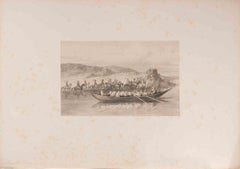
Everyday Life of the Army - Lithograph by Auguste Raffet - 1838
Located in Roma, IT
Lithograph realized in 1838.
Image dimension 15x27 cm.
The scene depicts a group of figures crossing a river by boat, with rowers guiding the craft. In the background, a large troo...
Category
Modern Mid-19th Century Landscape Prints
Materials
Lithograph
Troupe en marche escortant des convois - Lithograph by Auguste Raffet - 1838
Located in Roma, IT
Lithograph realized by Raffet in 1838.
Signed and dated in the plate.
Image dimension 20x29 cm.
The composition captures a striking juxtaposition between land and water. In the foreground, a large wooden boat...
Category
Modern Mid-19th Century Landscape Prints
Materials
Lithograph
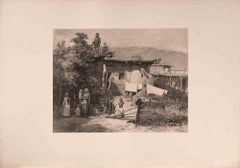
Village Scene in Dagestan - Lithograph by Auguste Raffet - 1841
Located in Roma, IT
Lithograph realized by Raffet in 1841. Signed and dated in the plate.
Image dimension: 24x32 cm.
This fine lithograph by Auguste Raffet depicts a detailed village scene in the Cauc...
Category
Modern Mid-19th Century Landscape Prints
Materials
Lithograph
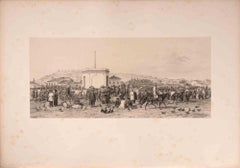
Vue du Marché de Lisbonne - Lithograph by Auguste Raffet - 1844
Located in Roma, IT
Lithograph realized by Raffet in 1846. Signed and dated in the plate.
Image dimension 19x42 cm.
A finely detailed lithograph by Auguste Raffet, depicting the bustling market of Lis...
Category
Modern Mid-19th Century Landscape Prints
Materials
Lithograph
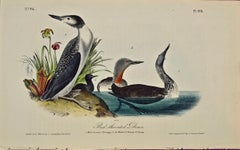
Red-throated Diver Bird: Original First Edition Audubon Hand-colored Lithograph
Located in Alamo, CA
This is an original rare and extremely collectible first octavo edition John James Audubon hand colored royal octavo lithograph entitled "Red-throated Diver", No. 96, Plate 478, from...
Category
Naturalistic Mid-19th Century Landscape Prints
Materials
Lithograph
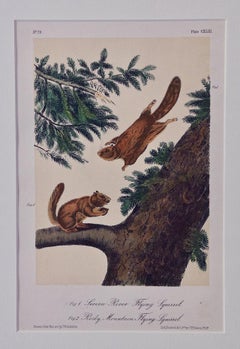
Flying Squirrels: An Original Audubon Hand-colored Lithograph
Located in Alamo, CA
This is an original John James Audubon hand colored lithograph entitled "Severn River Flying Squirrel & Rocky Mountain Flying Squirrel", No. 29, P...
Category
Naturalistic Mid-19th Century Landscape Prints
Materials
Lithograph
Pair of 19th C. Hand-colored Lithographs of Ducks by John Gould
By John Gould
Located in Alamo, CA
A pair of hand-colored lithographs of ducks entitled "Tadorna Vulpanser" (Sheldrake Ducks) and "Mergus Umbellus' (Smew or Nun Ducks) from John Gould's publication "Birds of Great Br...
Category
Naturalistic Mid-19th Century Landscape Prints
Materials
Lithograph

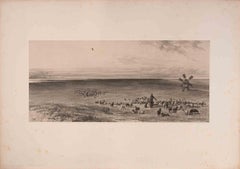
Vue prise près de la Tête de Pont - Lithograph by Auguste Raffet - 1844
Located in Roma, IT
Lithograph on wove paper.
Signed and dated in the plate.
Image dimension 19x42 cm.
A sweeping and atmospheric composition by Auguste Raffet, master of lithographic detail, depicti...
Category
Modern Mid-19th Century Landscape Prints
Materials
Lithograph
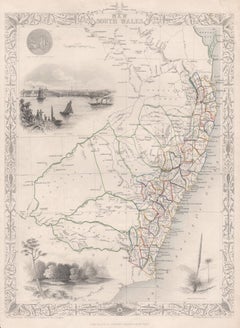
New South Wales, Australia, antique mid 19th century engraved John Tallis map
Located in Melbourne, Victoria
'New South Wales'
With decorative border surrounds and vignettes of 'Sydney Cove'. 'The Murray' and 'Xanthorrhea'.
'Drawn and engraved by J Rapkin'. Published by John Tallis.
375m...
Category
Victorian Mid-19th Century Landscape Prints
Materials
Engraving
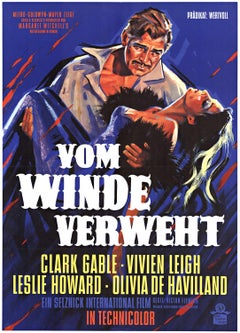
Original
Gone with the Wind" vintage German movie poster
Located in Spokane, WA
Original Gone with the Wind “Vom Winde Verweht” vintage lithograph poster.
Original vintage movie poster with professional acid-free linen backing; excellent condition; ready to frame. This is the German 1962 release of Gone with the Wind, printed in the full lithographic style of the old French posters. Unique imagery of the famous scene of the burning of Atlanta.
Starring Clark Gable, Vivien Leigh, Leslie Howard, Olivia de Havilland...
Category
American Modern Mid-19th Century Landscape Prints
Materials
Lithograph

$628 Sale Price
20% Off
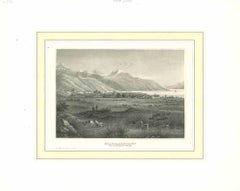
Ancient View of Salt Lake City - Original Lithograph - Early 19th Century
Located in Roma, IT
Ancient View of Salt Lake City is an original modern artwork realized in the first half of the 19th Century.
Original B/W Lithograph on Ivory Paper.
...
Category
Modern Mid-19th Century Landscape Prints
Materials
Lithograph
La Servante Indiscrete - Etching by Henri Guérard - 1860s
Located in Roma, IT
La Servante Indiscrete is a black and White etching realized by Henri Guérard in the 1860s.
Titled in the lower.
Image size: 31x24.
Very good impression with wide margins and a v...
Category
Modern Mid-19th Century Landscape Prints
Materials
Etching

East End of the Four Acre - Etching by Joseph Banks - 1837
Located in Roma, IT
East End of the Four Acre is an artwork, realized by the artist Joseph Banks in 1837.
Colored etching, titled and signed in the plate.
Beautiful engraving with contemporary colouri...
Category
Modern Mid-19th Century Landscape Prints
Materials
Etching

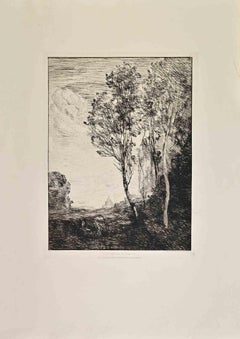
Souvenir d
Italie - Etching by Camille Corot - 1860s
Located in Roma, IT
Souvenir d'Italie is a black and White etching realized by Camille Corot in the 1860s.
Titled in the lower
Image Size: 32x23
Very good impression.
Realized for the "Société des ...
Category
Modern Mid-19th Century Landscape Prints
Materials
Etching
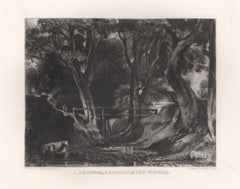
A Dell, Helmingham Park, Suffolk. Mezzotint by Lucas after John Constable, 1855
By David Lucas
Located in Melbourne, Victoria
'A Dell, Helmingham Park, Suffolk'
Mezzotint on steel by David Lucas (1802-1881) after John Constable (1776–1836).
From 'English Landscape Scenery', 1855. John Constable RA was an English Romantic...
Category
Victorian Mid-19th Century Landscape Prints
Materials
Mezzotint
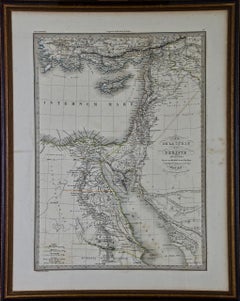
Map of the Holy Land "Carte de la Syrie et de l
Egypte" by Pierre Lapie
By Pierre M. Lapie
Located in Alamo, CA
This is an early 19th century map of ancient Syria and Egypt entitled "Carte de la Syrie et de l'Egypte anciennes/dressée par M. Lapie, Colonel d'Etat M...
Category
Mid-19th Century Landscape Prints
Materials
Engraving
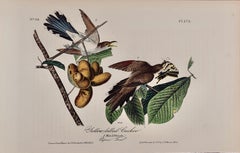
Yellow-billed Cuckoo: An Original 1st Ed. Audubon Hand-colored Bird Lithograph
Located in Alamo, CA
This is an original 1st octavo edition John James Audubon hand-colored lithograph entitled "Yellow-billed Cuckoo, 1. Male, 2, Female, Papaw Tree", No. 55, Plate 275 from Audubon's "B...
Category
Naturalistic Mid-19th Century Landscape Prints
Materials
Lithograph
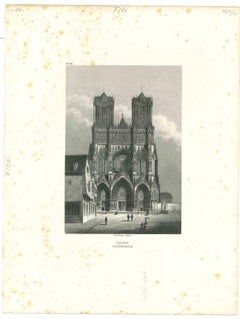
Reims Kathedrale - Original Lithograph - Mid-19th Century
Located in Roma, IT
Reims Kathedrale is an original modern artwork realized in the Mid-19th Century.
Original B/W Lithograph on Ivory Paper.
Inscripted on the lower central margin in Capital Letters:...
Category
Modern Mid-19th Century Landscape Prints
Materials
Lithograph
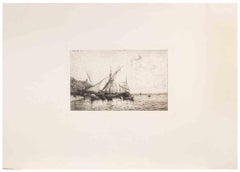
Le Port de Monaco - Etching by Appian - 1874
Located in Roma, IT
Le Port de Monaco is an artwork realized by Appian.
Etching, realized in 1874.
Sheet 158 x 237 mm..
Curtis and Prouté 36.
Meeting of a very beautiful proof on white laid paper, f...
Category
Modern Mid-19th Century Landscape Prints
Materials
Etching
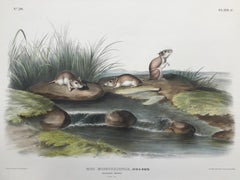
MISSOURI MOUSE - Large Folio "The Viviparous Quadrupeds of North America" Pl.100
Located in Santa Monica, CA
(After) JOHN JAMES AUDUBON (1785 - 1851)
MISSOURI MOUSE, 1846 - Plate 100 (C) No. 20
Lithograph with original hand coloring. From Audubon's "The Viviparous Quadrupeds of North America...
Category
American Realist Mid-19th Century Landscape Prints
Materials
Lithograph
$600 Sale Price
20% Off
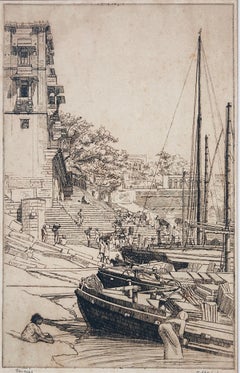
India Etching Listed Artist c1920 Signed and Titled Benares Ghats Daily Life
Located in Norfolk, GB
Benares, India
Artist: M.Sherlock (1897-1973)
Medium: Etching
Date: c 1920
Size Mounted: 53 x 37 cm
Size Plate: 34.7 x 22 cm
Marjorie Sherlock was part of a group of women artists ...
Category
Other Art Style Mid-19th Century Landscape Prints
Materials
Paper, Black and White, Etching
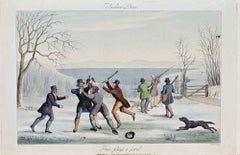
Blashaw Dam - Etching by Joseph Banks - 1837
Located in Roma, IT
Blashaw Dam is an artwork, realized by the artist Joseph Banks in 1837.
Etching colored. Titled and signed on plate .
Beautiful engraving with contemporary colouring. Edition by R...
Category
Modern Mid-19th Century Landscape Prints
Materials
Etching
Cuvier
s Sabre-wing Hummingbirds: A 19th C. Hand-colored lithograph by Gould
Located in Alamo, CA
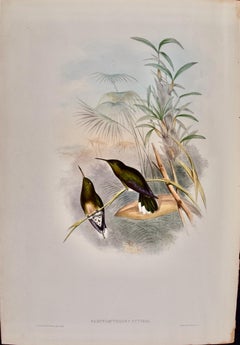
This is an original 19th century hand-colored folio-sized lithograph entitled "Campylopterus Cuvieri" (Cuvier's Sabre-wing Hummingbird) by John Gould, as plate 52 published in his "A Monograph of the Trochilidae, or Family of Humming-birds", published in London between 1849 and 1861. The print, which was drawn by Gould and Henry Richter and lithographed by Hullmandel and Walton, depicts two mostly green-colored hummingbirds with brown wings perched on a branch of a tropical long leafed plant, possibly bamboo with ferns in the background.
This beautiful Gould hand-colored hummingbird lithograph is augmented with gum-arabic paint. It is in very good condition, other than some discoloration at the edges of the upper and lower right corners and residual binding material where the print was bound in the 19th century publication. The original descriptive text page from Gould's 19th century publication is included.
There are several other unframed Gould hummingbird lithographs available on our 1stdibs and InCollect storefronts. Two or more of these striking lithographs would make an attractive display grouping. A discount is available for purchase of a set depending on the number. These additional Gould hummingbirds may be viewed by typing Timeless Intaglio...
Category
Naturalistic Mid-19th Century Landscape Prints
Materials
Lithograph
Hudsonian Godwit 19th C. 1st Octavo Edition Audubon Hand-colored Bird Lithograph
Located in Alamo, CA
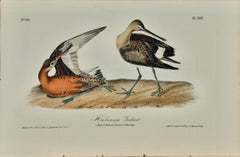
This is an original 19th century John James Audubon hand-colored 1st octavo edition lithograph entitled "Hudsonian Godwit, 1. Male, 2. Female, Summer Plumage", No. 70, Plate 349 from...
Category
Naturalistic Mid-19th Century Landscape Prints
Materials
Lithograph
Red-breasted Rail: An Original 19th C. Audubon Hand-colored Bird Lithograph
Located in Alamo, CA
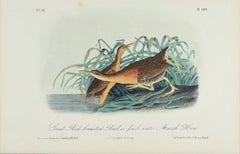
This is an original 19th century John James Audubon hand-colored lithograph entitled "Great Red-breasted Rail or Fresh Water Marsh Hen, 1. Male Adult, 2. Young", No. 62, Plate 309 fr...
Category
Naturalistic Mid-19th Century Landscape Prints
Materials
Lithograph
Views of Rome - Collections of Views of Rome by Bartolomeo Pinelli - 1834
Located in Roma, IT
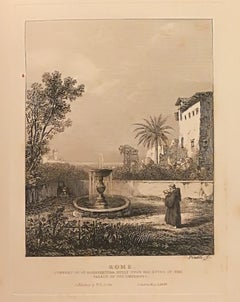
Views in Rome, drawn and engraved by Bartolomeo Pinelli, of Rome, London, W.B. Cooke, 1834.
In-8° (cm 24x17). Unumered pages with 27 b/w plates out of the text, etchings on copper with tissue paper. Polished speciment, with diffused foxing on margins. Brown Canvas Binding Cover with title marked in gold on wedge in the spine.
Spine ligtly damaged in lower margin. Cover with the Castle Saint Angel...
Category
Mid-19th Century Landscape Prints
Materials
Etching
Hamburg - Amerika Linie original vintage travel poster
By Albert Fuss
Located in Spokane, WA
Original Hamburg - Amerika linie, Hamburg America Line vintage travel by ship antique poster. Art Deco time frame vintage poster for traveling by cruise...
Category
Art Deco Mid-19th Century Landscape Prints
Materials
Lithograph

$1,000 Sale Price
20% Off
David Roberts
19th Century Duo-tone Lithograph, "Suez, General View"
Located in Alamo, CA
"Suez, General View" is a 19th century folio sized tinted duo-tone lithograph, plate 124 from the "The Holy Land, Syria, Idumea, Arabia, Egypt and Nubia" volume of David Roberts’ large folio edition, published in London by F. G. Moon in 1843. The lithographs were prepared by Louis Haghe (1806-1885) from paintings by Roberts. The resultant large folio editions of 'The Holy Land' and 'Egypt & Nubia' are considered the greatest lithographically illustrated works issued in the 19th century. The lithograph depicts the Suez city skyline on a peninsula with boats moored in the bay. Men, dressed in traditional Arab costumes, rest on a hillside In the foreground with their camels, weapons and presumably goods for sale and trade.
This tinted lithograph, which is professionally framed in a decorative gold-colored wood frame with cream-colored double mats. The print is in excellent condition.
There are four additional listings of David Roberts hand colored engravings of Egypt...
Category
Realist Mid-19th Century Landscape Prints
Materials
Lithograph
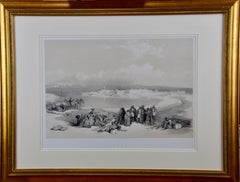
St. Helena - Etching - 1837
Located in Roma, IT
St. Helena is an etching that belongs to the suite AtlasBatt realized within Jacques Norvins' Histoire de Napoleon, published in 1837.
Author Jacques Norvins published one of the m...
Category
Surrealist Mid-19th Century Landscape Prints
Materials
Etching
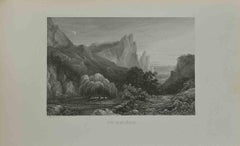
Leemane, Connemara - Original Lithograph - Mid-19th Century
Located in Roma, IT
Leemane, Connemara is an original modern artwork realized in Germany in the Mid-19th Century.
Original B/W Lithograph on Ivory Paper.
Inscripted on the lower central margin: Leema...
Category
Modern Mid-19th Century Landscape Prints
Materials
Lithograph
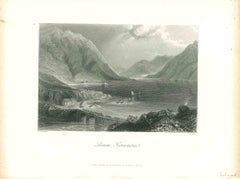
Les Vendagnes - Etching by Charles François Daubigny - 1860s
Located in Roma, IT
Les Vendagnes is an artwork realized by Charles François Daubigny in the 1870s.
Etching.
Image size:20x33
Good conditions.
Realized for the "Société des Aquafortistes. Born on ...
Category
Modern Mid-19th Century Landscape Prints
Materials
Etching
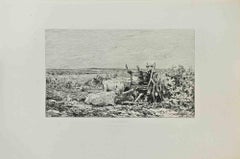
The Retreat of Constantine - Lithograph by Auguste Raffet - 1836
Located in Roma, IT
The Retreat of Constantine is a Lithograph realized by Auguste Raffet in 1836.
Signed on the plate.
Good condition with foxing.
Category
Modern Mid-19th Century Landscape Prints
Materials
Ink, Pencil
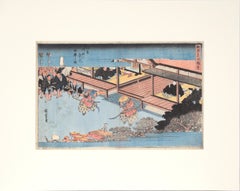
Sumiyoshi: Dengaku dance performed during an Onda ceremony - Woodblock Print
Located in Soquel, CA
Sumiyoshi: Dengaku dance performed during an Onda ceremony - Woodblock Print
Bright woodblock print by Utagawa Hiroshige (Japanese, 1797-1858). In this scene, two dancers with swords and fans are facing each other, in the center of a courtyard. There are spectators surrounding them, including nobles in black clothing on a balcony.
Presented in a new off-white mat with foamcore backing.
Mat size: 16"H x 20"W
Paper size: 9.63"H x 14.5W"
Utagawa Hiroshige (1797-1858, sometimes called Ando Hiroshige) was the second of the two great masters of the Japanese landscape woodblock print...
Category
Edo Mid-19th Century Landscape Prints
Materials
Ink, Rice Paper, Woodcut
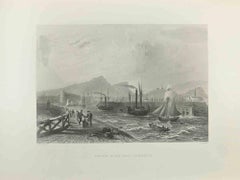
Leith Pier and Harbour - Etching By W.H. Bartlett - 1845
Located in Roma, IT
Leith Pier and Harbour is an etching realized in 1845 by William Henry Bartlett.
Signed on the plate.
Titled on the lower center.
Good condi...
Category
Modern Mid-19th Century Landscape Prints
Materials
Etching
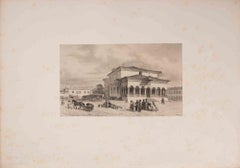
Le Château de Georges, Valachie - Lithograph by Auguste Raffet - 1839
Located in Roma, IT
Lithograph, c. 1840s
Signed and dated in the plate.
Image dimension: 17x29 cm.
A rare lithograph by Auguste Raffet, depicting the Château de Georges in Wallachia. The composition ...
Category
Modern Mid-19th Century Landscape Prints
Materials
Lithograph
Tour à Rhotaye - Lithograph by Auguste Raffet - 1839
Located in Roma, IT
Lithograph, c. 1840s
Signed and dated in the plate.
Image dimension: 23x21 cm.
An evocative lithograph by Auguste Raffet, depicting a tall defensive tower rising starkly against t...
Category
Modern Mid-19th Century Landscape Prints
Materials
Lithograph
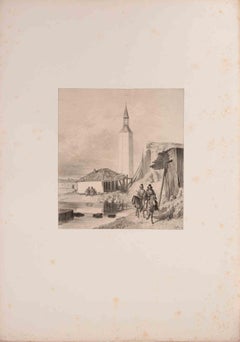
La. Benediction de l
Aieul - Etching by Edouard Moyse - 1860s
Located in Roma, IT
La. Benediction de l'Aieul is a black and White etching realized by Edouard Moyse in the 1860s.
Titled in the lower.
Image size:23x31.
Very good impression with wide margins and ...
Category
Modern Mid-19th Century Landscape Prints
Materials
Etching
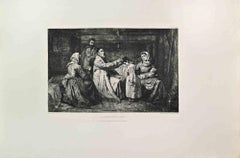
Uses and Customs - Jupiter and Juno - Lithograph - 1862
Located in Roma, IT
Uses and Customs -Jupiter and Juno is a lithograph on paper realized in 1862.
The artwork belongs to the Suite Uses and customs of all the peoples of the universe: " History of the ...
Category
Modern Mid-19th Century Landscape Prints
Materials
Lithograph
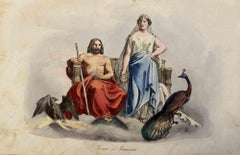
Les Taupes - Etching by Félix Bracquemond - 1860s
Located in Roma, IT
Les Taupes is a black and White etching realized by Félix Bracquemond in the 1860s.
Titled in the lower.
Image size: 27x19.
Very good impression with wide margins and a very fres...
Category
Impressionist Mid-19th Century Landscape Prints
Materials
Etching
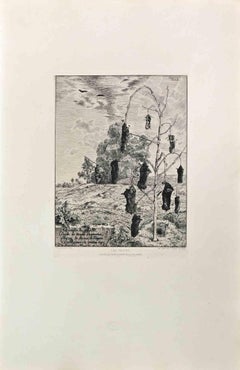
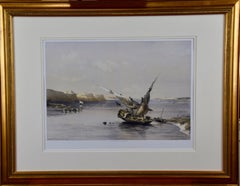
"View Towards the Pyramids": David Roberts
19th Century Hand Colored Lithograph
Located in Alamo, CA
"View Towards the Pyramids" is a 19th century full folio sized hand-colored lithograph by David Roberts from his monumental publication "The Holy Land, Syria, Idumea, Arabia, Egypt, and Nubia", published in London in 1846. It depicts a scene of a boat on the Nile, along with several smaller boats. Saccara (Saqqara), near Memphis, the original capital of Egypt, can be seen in the background with its ancient Step Pyramid of Pharoah Djoser. This was the first Egyptian pyramid, designed by the physician and architect Imhotep. Pharoah Snofru’s (Sneferu) failed design Bent Pyramid and the subsequent replacement Red Pyramid can be seen in Dashour (Dashur). These structures preceded the more famous pyramids in Giza.
This lithograph is professionally framed in a gold-colored wood frame, double cream-colored mats and it is glazed with museum quality archival material. The print is in excellent condition.
There are four additional listings of David Roberts engravings of Egypt...
Category
Realist Mid-19th Century Landscape Prints
Materials
Lithograph
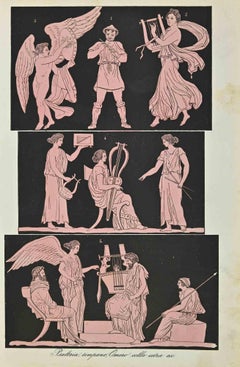
Lyre - Lithograph - 1862
Located in Roma, IT
Lyre is a lithograph on paper realized in 1862.
The artwork belongs to the Suite Uses and customs of all the peoples of the universe: " History of the government, of the laws, of th...
Category
Modern Mid-19th Century Landscape Prints
Materials
Lithograph
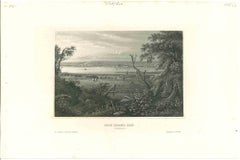
Ancient View of Rock Island City - Original Lithograph - 1850
Located in Roma, IT
Ancient View of Rock Island City is an original modern artwork realized in Italy in the first half of the 19th Century.
Original Lithograph on Ivory Paper...
Category
Modern Mid-19th Century Landscape Prints
Materials
Lithograph
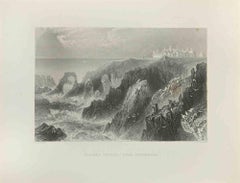
Slaines Castle - Near Peterhead - Engraving by Robert Brandard - 1845
Located in Roma, IT
Slaines Castle - Near Peterhead is an engraving realized in the 1845 by R.Brandard.
signed on plate.
The artwork is realized in a well-balanced composition.
Category
Modern Mid-19th Century Landscape Prints
Materials
Engraving
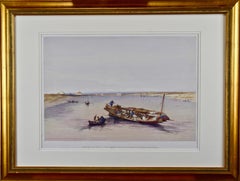
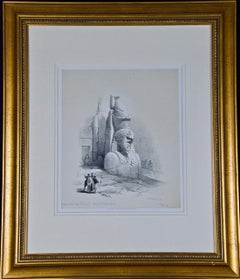
Colossal Statues of Ramses: David Roberts
19th Century Hand Colored Lithograph
Located in Alamo, CA
"One of Two Colossal Statues of Rameses II. Entrance to the Temple at Luxor" is a 19th century half-folio sized duo-tone lithograph from the "The Holy Land, Syria, Idumea, Arabia, Eg...
Category
Realist Mid-19th Century Landscape Prints
Materials
Lithograph
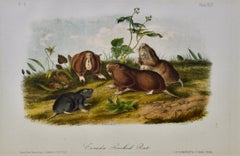
Canada Pouched Rat: An Original 19th Century Hand-colored Lithograph by Audubon
Located in Alamo, CA
This is an original John James Audubon hand-colored lithograph entitled "Canada Pouched Rat", No. 9, Plate XLIV from John James Audubon's Quadrupeds of North America, published in Ph...
Category
Naturalistic Mid-19th Century Landscape Prints
Materials
Lithograph
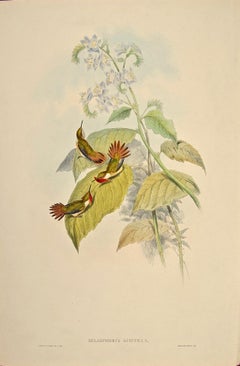
Flame-bearer Hummingbirds: A 19th C. Gould Hand-colored "Selasphorus Scintilla"
Located in Alamo, CA
This is a hand-colored folio sized lithograph entitled "Selasphorus Scintilla" (Little Flame-bearer Hummingbirds) by John Gould, Plate 162 in his "A Monograph of the Trochilidae, or Family of Humming-birds", published in London in 1850. The print, which was drawn by Gould and Henry Richter and lithographed by Hullmandel and Walton, depicts three brown, green, ochre-colored hummingbirds with flame red protrusions under their beaks; perched on broad moss green-colored leaves of a plant with pale blue-colored flowers.
This beautiful Gould hand-colored hummingbird lithograph is augmented with iridescent gum-arabic paint. It is in excellent condition. The original text page is included, which has extensive foxing related to the lower quality paper used for the text pages in the publication.
There are several other unframed Gould hummingbird...
Category
Naturalistic Mid-19th Century Landscape Prints
Materials
Lithograph
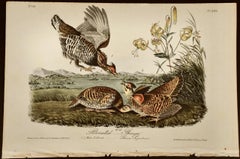
"Pinnated Grouse", an Original Audubon Hand-colored First Edition Lithograph
Located in Alamo, CA
An original extremely collectible first octavo edition John James Audubon hand-colored royal octavo lithograph entitled "Pinnated Grouse", No. 60, Pl. 296, from Audubon's "Birds of A...
Category
Naturalistic Mid-19th Century Landscape Prints
Materials
Lithograph
Vue de Balaklava - Lithograph by Auguste Raffet - 1841
Located in Roma, IT
Lithograph on paper realized by Auguste Raffet in 1841.
It is part of the suite "Crimée".
Image dimension cm. 24x32.5.
Signed and dated in the plate.
Very good condition.
August...
Category
Modern Mid-19th Century Landscape Prints
Materials
Lithograph
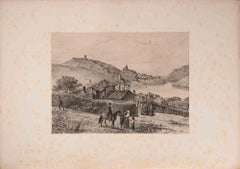
Vue du Port de Sébastopol - Lithograph by Auguste Raffet - 1841
Located in Roma, IT
Lithograph on paper realized by Auguste Raffet in 1841.
It is part of the suite "Crimée".
Image dimension cm. 14x34.
Signed and dated in the plate.
Very good condition.
Auguste ...
Category
Modern Mid-19th Century Landscape Prints
Materials
Lithograph
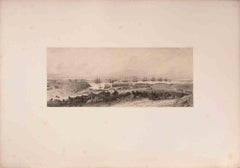
Tombeau des Kalifes - Etching by Edouard Dufeu - 1864
Located in Roma, IT
Etching realized by Edouard Dufeu in 1864.
Image dimension: 22x32 cm.
With diffused foxing, otherwise very good condition.
Category
Modern Mid-19th Century Landscape Prints
Materials
Etching
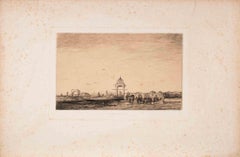
Rue de la Paix, Paris - Hand Colored Lithograph 1845-1860
Located in Soquel, CA
Rue de la Paix, Paris - Hand Colored Lithograph 1845-1860
Delicate hand-colored lithograph of Rue de la Paix Palace in Paris, France printed by Rose-Joseph Lemercier (French, 1803 - 1887). Published, Paris 1843 to 1867 by Hautecoeur Freres (Eugène and Alfred Hautecoeur (French). After Charles Riviere...
Category
Romantic Mid-19th Century Landscape Prints
Materials
Paper, Ink, Watercolor
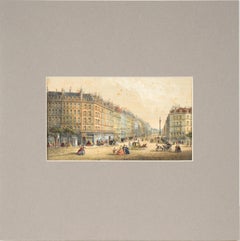
David Roberts
19th Century Hand Colored Lithograph, "Fortress of Ibrim, Nubia"
Located in Alamo, CA
"Approach to the Fortress of Ibrim, Nubia" is a 19th century folio sized hand-colored lithograph from the Egypt and Nubia volume of David Roberts’ large folio edition, published in London by F. G. Moon in 1847. The lithographs were prepared by Louis Haghe (1806-1885) from drawings and paintings by Roberts. The resultant large folio editions of 'The Holy Land' and 'Egypt & Nubia' are considered the greatest lithographically illustrated works issued in the 19th century.
The print is presented in a gold-colored wood frame with a decorative inner trim, with a cream-colored double mat. It is in excellent condition.
The lithograph depicts the Fortress of Ibrim in Nubia in the background, which had been a Roman and an Egyptian fortification for centuries due to its strategic elevation, allowing a view of large portions of the surrounding desert. Men are securing the boat in the foreground for the night, taking down its sails. A herd of cattle drinks and cools themselves in the water on the left.
There are four additional listings of David Roberts engravings of Egypt...
Category
Realist Mid-19th Century Landscape Prints
Materials
Lithograph
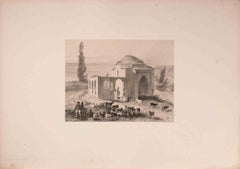
Tombeau à Merdach - Lithograph by Auguste Raffet - 1838
Located in Roma, IT
Lithograph on paper realized by Auguste Raffet in 1838.
It is part of the suite "Crimée".
The scene shows an Islamic funerary monument (türbe), partially in ruins, in the Crimea or...
Category
Modern Mid-19th Century Landscape Prints
Materials
Lithograph
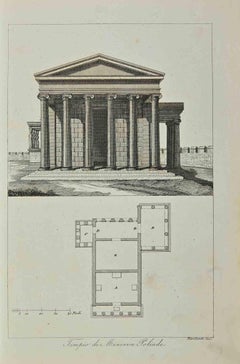
Columns of the Temple of Minerva Poliade - Lithograph - 1862
Located in Roma, IT
Columns of the Temple of Minerva Poliade is a lithograph on paper realized in 1862.
The artwork belongs to the Suite Uses and customs of all the peoples of the universe: " History o...
Category
Modern Mid-19th Century Landscape Prints
Materials
Lithograph
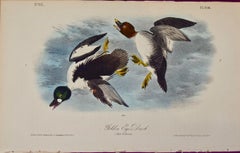
Golden Eye Duck: an Original 1st Edition Hand Colored Audubon Bird Lithograph
Located in Alamo, CA
An original rare and extremely collectible first edition John James Audubon hand colored royal octavo lithograph entitled "Golden Eye Duck", No. 82, Plate 406, from Audubon's "Birds of America". It was lithographed, printed and colored by J. T. Bowen and published in Philadelphia between 1840-1844. It depicts male and female Golden Eye ducks in flight.
This original rare first edition hand colored Audubon bird lithograph is in excellent condition. The sheet measures 6.25" x 10". The original text pages, pages 362-366, from Audubon's publication are included.
John James Audubon (1785-1851) was a naturalist and artist. He was initially unsuccessful financially prior to the publication of his famous work “The Birds of America”, spending time in debtor’s prison, once stabbing a disgruntled investor in self-defense. However, his obsession with birds and art motivated him to persist in his goal of documenting every bird in America via his watercolor paintings and publishing his works for all to enjoy. Audubon's first illustrations were published in a large elephant folio size. Due to their expense they were purchased in rather small numbers by the wealthy. To reach a larger audience, Audubon, with the help of his sons and J. T. Bowen, published a smaller octavo sized lithograph version, which were much more affordable.
With the success of his bird projects, Audubon then turned his attention to four-legged animals. He explored the Missouri River in 1843 sketching the four-legged animals he encountered in their natural setting. His expedition covered some of the same regions recently explored by Lewis and Clark, traveling from present day Alaska to Mexico. Audubon realized that this was an opportunity to document these animals in the still relatively pristine American wilderness, before man encroached on their environment.
Between 1845 and 1848, Audubon and his sons John Woodhouse Audubon and Victor Gifford Audubon produced a set of elephant folio sized lithographs that were primarily engraved and hand colored by J. T. Bowen in Philadelphia. The publication, which included text descriptions of the animals was published 3 years before Audubon died. As with the birds, this was followed by a three-volume set of 155 octavo-sized plates entitled “The Quadrupeds of North America” completed and published by Audubon’s sons, John, Jr. and Victor.
Audubon prints continue to be popular and a wise investment. The double elephant folio set...
Category
Naturalistic Mid-19th Century Landscape Prints
Materials
Lithograph
Ancient View of Salt Lake City - Original Lithograph - 1850s
Located in Roma, IT
Ancient View of Salt Lake City is an original modern artwork realized in the first half of the 19th Century.
Original Colored Lithograph on Ivory Paper...
Category
Modern Mid-19th Century Landscape Prints
Materials
Lithograph
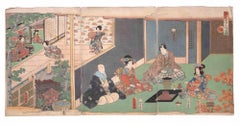
Genji in the Twelve Months - Woodcut by Utagawa Toyokuni III - 1858
Located in Roma, IT
Genji in the Twelve Months / The Tenth Month (Moto) is a tryptich woodcut print realized by Utagawa Toyokuni III in 1858.
Very good condition except for some minor signs of wear.
Category
Modern Mid-19th Century Landscape Prints
Materials
Woodcut
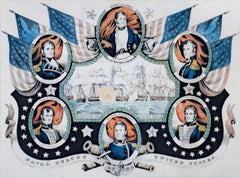
19th century color lithograph portraits ship seascape patriotic flags military
Located in Milwaukee, WI
The present hand-colored lithograph is an excellent example of patriotic mid-nineteenth century American imagery. The print shows the battle and several of the major figures involved in the Battle of Lake Erie: At the center is a view of several frigates on the lake, embroiled in conflict. Above the battle is the quotation: "We have met the enemy and they are ours." Surrounding are laurel-lined roundels with portraits of Oliver Hazard Perry (1785-1819), Stephen Dicateur (1779-1820), Johnston Blakeley (1871-1814), William Bainbridge (1774-1833), David Porter (1780-1843), and James Lawrence (1781-1813) - all of these framed by American flags, banners and cannons. This print shows that the Battle of Lake Erie, part of the War of 1812, still held resonance for American audiences several decades later and was part of the larger narrative of the founding of the country.
9.5 x 13.5 inches, artwork
20 x 23.38 inches, frame
Entitled in the image
Signed in the stone, lower left "Lith. and Pub. by N. Currier"
Inscribed lower right "2 Spruce N.Y." and "No. 1"
Copyrighted lower center "Entered according to Act of Congress in the year 1846 by N. Currier in the Clerk's office of the Southern District of N.Y."
Framed to conservation standards using 100 percent rag matting and housed in a gold gilded moulding.
Nathaniel Currier was a tall introspective man with a melancholy nature. He could captivate people with his piercing stare or charm them with his sparkling blue eyes. Nathaniel was born in Roxbury, Massachusetts on March 27th, 1813, the second of four children. His parents, Nathaniel and Hannah Currier, were distant cousins who lived a humble yet spartan life. When Nathaniel was eight years old, tragedy struck. Nathaniel’s father unexpectedly passed away leaving Nathaniel and his eleven-year-old brother Lorenzo to provide for the family. In addition to their mother, Nathaniel and Lorenzo had to care for six-year-old sister Elizabeth and two-year-old brother Charles. Nathaniel worked a series of odd jobs to support the family, and at fifteen, he started what would become a life-long career when he apprenticed in the Boston lithography shop of William and John Pendleton.
A Bavarian gentleman named Alois Senefelder invented lithography just 30 years prior to young Nat Currier’s apprenticeship. While under the employ of the brothers Pendleton, Nat was taught the art of lithography by the firm’s chief printer, a French national named Dubois, who brought the lithography trade to America.
Lithography involves grinding a piece of limestone flat and smooth then drawing in mirror image on the stone with a special grease pencil. After the image is completed, the stone is etched with a solution of aqua fortis leaving the greased areas in slight relief. Water is then used to wet the stone and greased-ink is rolled onto the raised areas. Since grease and water do not mix, the greased-ink is repelled by the moisture on the stone and clings to the original grease pencil lines. The stone is then placed in a press and used as a printing block to impart black on white images to paper.
In 1833, now twenty-years old and an accomplished lithographer, Nat Currier left Boston and moved to Philadelphia to do contract work for M.E.D. Brown, a noted engraver and printer. With the promise of good money, Currier hired on to help Brown prepare lithographic stones of scientific images for the American Journal of Sciences and Arts. When Nat completed the contract work in 1834, he traveled to New York City to work once again for his mentor John Pendleton, who was now operating his own shop located at 137 Broadway. Soon after the reunion, Pendleton expressed an interest in returning to Boston and offered to sell his print shop to Currier. Young Nat did not have the financial resources to buy the shop, but being the resourceful type he found another local printer by the name of Stodart. Together they bought Pendleton’s business.
The firm ‘Currier & Stodart’ specialized in "job" printing. They produced many different types of printed items, most notably music manuscripts for local publishers. By 1835, Stodart was frustrated that the business was not making enough money and he ended the partnership, taking his investment with him. With little more than some lithographic stones, and a talent for his trade, twenty-two year old Nat Currier set up shop in a temporary office at 1 Wall Street in New York City. He named his new enterprise ‘N. Currier, Lithographer’
Nathaniel continued as a job printer and duplicated everything from music sheets to architectural plans. He experimented with portraits, disaster scenes and memorial prints, and any thing that he could sell to the public from tables in front of his shop. During 1835 he produced a disaster print Ruins of the Planter's Hotel, New Orleans, which fell at two O’clock on the Morning of the 15th of May 1835, burying 50 persons, 40 of whom Escaped with their Lives. The public had a thirst for newsworthy events, and newspapers of the day did not include pictures. By producing this print, Nat gave the public a new way to “see” the news. The print sold reasonably well, an important fact that was not lost on Currier.
Nat met and married Eliza Farnsworth in 1840. He also produced a print that same year titled Awful Conflagration of the Steamboat Lexington in Long Island Sound on Monday Evening, January 18, 1840, by which melancholy occurrence over One Hundred Persons Perished. This print sold out very quickly, and Currier was approached by an enterprising publication who contracted him to print a single sheet addition of their paper, the New York Sun. This single page paper is presumed to be the first illustrated newspaper ever published.
The success of the Lexington print launched his career nationally and put him in a position to finally lift his family up. In 1841, Nat and Eliza had their first child, a son they named Edward West Currier. That same year Nat hired his twenty-one year old brother Charles and taught him the lithography trade, he also hired his artistically inclined brother Lorenzo to travel out west and make sketches of the new frontier as material for future prints. Charles worked for the firm on and off over the years, and invented a new type of lithographic crayon which he patented and named the Crayola. Lorenzo continued selling sketches to Nat for the next few years.
In 1843, Nat and Eliza had a daughter, Eliza West Currier, but tragedy struck in early 1847 when their young daughter died from a prolonged illness. Nat and Eliza were grief stricken, and Eliza, driven by despair, gave up on life and passed away just four months after her daughter’s death.
The subject of Nat Currier’s artwork changed following the death of his wife and daughter, and he produced many memorial prints and sentimental prints during the late 1840s. The memorial prints generally depicted grief stricken families posed by gravestones (the stones were left blank so the purchasers could fill in the names of the dearly departed). The sentimental prints usually depicted idealized portraits of women and children, titled with popular Christian names of the day.
Late in 1847, Nat Currier married Lura Ormsbee, a friend of the family. Lura was a self-sufficient woman, and she immediately set out to help Nat raise six-year-old Edward and get their house in order. In 1849, Lura delivered a son, Walter Black Currier, but fate dealt them a blow when young Walter died one year later. While Nat and Lura were grieving the loss of their new son, word came from San Francisco that Nat’s brother Lorenzo had also passed away from a brief illness. Nat sank deeper into his natural quiet melancholy. Friends stopped by to console the couple, and Lura began to set an extra place at their table for these unexpected guests. She continued this tradition throughout their lives.
In 1852, Charles introduced a friend, James Merritt Ives, to Nat and suggested he hire him as a bookkeeper. Jim Ives was a native New Yorker born in 1824 and raised on the grounds of Bellevue Hospital where his father was employed as superintendent. Jim was a self-trained artist and professional bookkeeper. He was also a plump and jovial man, presenting the exact opposite image of his new boss.
Jim Ives met Charles Currier through Caroline Clark, the object of Jim’s affection. Caroline’s sister Elizabeth was married to Charles, and Caroline was a close friend of the Currier family. Jim eventually proposed marriage to Caroline and solicited an introduction to Nat Currier, through Charles, in hopes of securing a more stable income to support his future wife.
Ives quickly set out to improve and modernize his new employer’s bookkeeping methods. He reorganized the firm’s sizable inventory, and used his artistic skills to streamline the firm’s production methods. By 1857, Nathaniel had become so dependent on Jims’ skills and initiative that he offered him a full partnership in the firm and appointed him general manager. The two men chose the name ‘Currier & Ives’ for the new partnership, and became close friends.
Currier & Ives produced their prints in a building at 33 Spruce Street where they occupied the third, fourth and fifth floors. The third floor was devoted to the hand operated printing presses that were built by Nat's cousin, Cyrus Currier, at his shop Cyrus Currier & Sons in Newark, NJ. The fourth floor found the artists, lithographers and the stone grinders at work. The fifth floor housed the coloring department, and was one of the earliest production lines in the country. The colorists were generally immigrant girls, mostly German, who came to America with some formal artistic training. Each colorist was responsible for adding a single color to a print. As a colorist finished applying their color, the print was passed down the line to the next colorist to add their color. The colorists worked from a master print displayed above their table, which showed where the proper colors were to be placed. At the end of the table was a touch up artist who checked the prints for quality, touching-in areas that may have been missed as it passed down the line. During the Civil War, demand for prints became so great that coloring stencils were developed to speed up production.
Although most Currier & Ives prints were colored in house, some were sent out to contract artists. The rate Currier & Ives paid these artists for coloring work was one dollar per one hundred small folios (a penny a print) and one dollar per one dozen large folios. Currier & Ives also offered uncolored prints to dealers, with instructions (included on the price list) on how to 'prepare the prints for coloring.' In addition, schools could order uncolored prints from the firm’s catalogue to use in their painting classes.
Nathaniel Currier and James Merritt Ives attracted a wide circle of friends during their years in business. Some of their more famous acquaintances included Horace Greeley, Phineas T. Barnum, and the outspoken abolitionists Rev. Henry Ward, and John Greenleaf Whittier (the latter being a cousin of Mr. Currier).
Nat Currier and Jim Ives described their business as "Publishers of Cheap and Popular Pictures" and produced many categories of prints. These included Disaster Scenes, Sentimental Images, Sports, Humor, Hunting Scenes, Politics, Religion, City and Rural Scenes, Trains, Ships, Fire Fighters, Famous Race Horses, Historical Portraits, and just about any other topic that satisfied the general public's taste. In all, the firm produced in excess of 7500 different titles, totaling over one million prints produced from 1835 to 1907.
Nat Currier retired in 1880, and signed over his share of the firm to his son Edward. Nat died eight years later at his summer home 'Lion’s Gate' in Amesbury, Massachusetts. Jim Ives remained active in the firm until his death in 1895, when his share of the firm passed to his eldest son, Chauncey.
In 1902, faced will failing health from the ravages of Tuberculosis, Edward Currier sold his share of the firm to Chauncey Ives...
Category
Victorian Mid-19th Century Landscape Prints
Materials
Watercolor, Lithograph
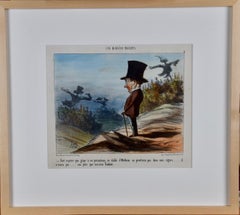
Daumier Colored Lithographic Satire of a Man Concerned for His Vineyard and Wine
Located in Alamo, CA
A hand-colored lithograph by the father of French satire and caricature, Honore Daumier (1808-1879) entitled "Faut espérer que grâce à ces précautions ce diable d'Oïdum ne pénétrera ...
Category
Other Art Style Mid-19th Century Landscape Prints
Materials
Lithograph
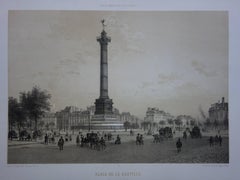
Paris : The Column with an Angel on Bastille Square - Original stone lithograph
Located in Paris, IDF
Philippe BENOIST
Paris : The Column with an Angel on Bastille Square - 1861
Original two tones stone lithographs
Printed name of the artist bottom right
On vellum 33.5 x 49 cm (c. 1...
Category
Realist Mid-19th Century Landscape Prints
Materials
Lithograph