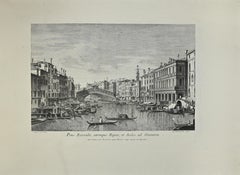
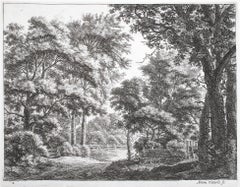
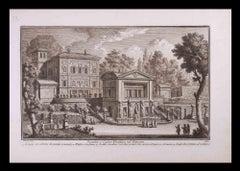
Old Masters Landscape Prints

OLD MASTERS

Encompassing centuries of change in Europe between 1300 and 1800, from booms of prosperity to bloody revolutions, Old Masters describes a wide range of artists. The informal term was derived from the title of an artist who trained in a guild long enough to become a master, such as Leonardo da Vinci, who studied in a Florence painters’ guild. However, Old Masters paintings, prints and other art is now used to refer to work made by any artist with a high level of skill in painting, drawing, sculpture or printmaking who worked during this era.

The 15th century’s expansive trade and commerce spread culture across borders. A vibrant period of art emerged, bolstered by studies of anatomy and nature that influenced a new visual realism. From Raphael and Michelangelo in the Renaissance to Rembrandt van Rijn and Johannes Vermeer in the Dutch Golden Age, artists expressed emotion, naturalism, color and light in new ways. El Greco and Paolo Veronese were leaders in the dramatic style of Mannerism, while Caravaggio and Peter Paul Rubens demonstrated the movement and meticulous detail of Baroque art.

Historically, most attention was concentrated on male artists, but recent research and exhibitions have elevated the impactful work of women such as Rachel Ruysch and Artemisia Gentileschi. In late-18th-century France, female artists like Adélaïde Labille-Guiard and Élisabeth Vigée Le Brun were prominent names. Nevertheless, access to the academies and guilds was highly restricted for women, and even those able to establish practices were expected to adhere to portraits and still lifes rather than the grand history paintings being created by men.

Find a collection of Old Masters prints, paintings, drawings and watercolors and other art on 1stDibs.

to
16
284
119
33
7
2
Overall Width
to
Overall Height
to
4,674
3,274
828
745
664
659
570
384
90
82
72
28
15
96
25
15
13
11
373
69
5
1
1
285
339
68
38
279
163
124
58
55
53
46
38
36
34
27
27
22
21
15
15
14
13
13
12
345
99
66
54
23
44
216
172
171
Style: Old Masters
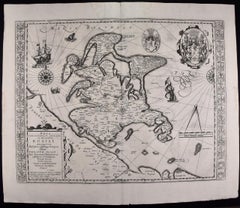
Rugen Island, Germany: An Early 17th Century Map by Mercator and Hondius
Located in Alamo, CA
This is an early 17th century map entitled "Nova Famigerabilis Insulae Ac Ducatus Rugiae Desciptio" (Map of Rugen Island, Germany) by Gerard Mercator and Henricus and Joducus Hondiu...
Category

Early 17th Century Old Masters Landscape Prints

Materials

Engraving

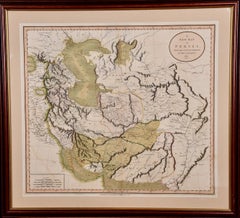
Persia Afghanistan: A Framed Hand-colored 17th Century Map by John Cary
By John Cary
Located in Alamo, CA
This colorful and detailed early 18th century copperplate map by John Cary entitled "A New Map of Persia from the Latest Authorities" was published in London in 1801. It depicts Persia, the region of modern day Afghanistan, the Caspian Sea, the Sea of Aral, the Persian Gulf...
Category

Early 19th Century Old Masters Landscape Prints

Materials

Engraving

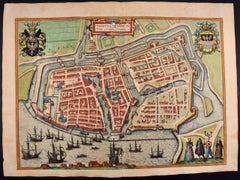
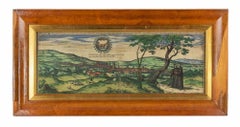
View of Emden, Germany: A 16th Century Hand-colored Map by Braun Hogenberg
Located in Alamo, CA
This is a 16th century original hand-colored copperplate engraved map of a bird's-eye View of Embden, Germany entitled " Emuda, vulgo Embden vrbs Frisia orientalis primaria" by Georg Braun & Franz Hogenberg, in volume II of their famous city atlas "Civitates Orbis Terrarum", published in Cologne, Germany in 1575. This is a beautifully colored and detailed map of Emden, a seaport in northwestern Germany, along the Ems River and perhaps portions of over Dollart Bay, near the border with the Netherland. The map depicts a bird's-eye view of the city from the southwest, as well as a view of the harbor and an extensive system of canals. Numerous ships of various sizes, as well as two rowboats containing numerous occupants are seen in the main waterway in the foreground and additional boats line two canals in the center of the city. Two men and two women are shown on a hill in the foreground on the right, dressed in the 16th century style of nobility. Two ornate crests are included in each corner. A title strap-work cartouche is in the upper center with the title in Latin. The crest on the right including Engelke up de Muer (The Little Angel on the Wall) was granted by Emperor Maximilian I in 1495. This is an English translation of an excerpt of Braun's description of Embden: "In Emden, the capital of East Frisia, rich merchants live in very fine houses. The city has a broad and well-situated harbour, which in my opinion is unique in Holland. Frisia and the whole of the Netherlands, for the ships can anchor here right under the city walls. They have also extended the harbour as far as the New Town, so that up to 400 ships can now find shelter here when the sea is rough." The emphasis on the harbor and waterways within the city highlights the importance of Emden's place as a seaport at this time. Embden developed from a Dutch/Flemish trading settlement in the 7th-8th centuries into a city as late as late 14th century. In 1494 it was granted staple rights, and in 1536 the harbour was extended. In the mid-16th century Emden's port was thought to have the most ships in Europe. Its population then was about 5,000, rising to 15,000 by the end of the 16th century. The Ems River flowed directly under the city walls, but its course was changed in the 17th century by the construction of a canal. Emden has canals within its city limits, a typical feature of Dutch towns, which also enabled the extension of the harbor. In 1744 Emden was annexed by Prussia and is now part of Germany. It was captured by French forces in 1757 during the Seven Years' War, but recaptured by Anglo-German forces in 1758. During the Napoleonic French era, Emden and the surrounding lands of East Frisia were part of the short-lived Kingdom of Holland. References:Van der Krogt 4, 1230, State 2; Taschen, Braun and Hogenberg...
Category

16th Century Old Masters Landscape Prints

Materials

Engraving

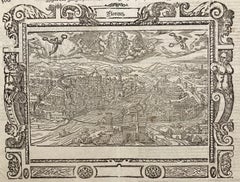
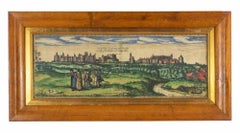
!6th c. VIEW OF FLORENCE
Located in Santa Monica, CA
SEBASTIAN MUNSTER (1488-1552) FLORENCZ - -- FIGUR UND GELEGENHEIT DER EDLEN UND HOCH BERHÜMPTEN STATT FLORENTZ. . c 1550 (Fauser, #3925.) Woodcut f...
Category

16th Century Old Masters Landscape Prints

Materials

Woodcut

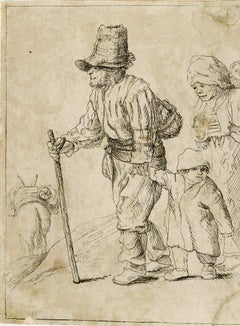
Peasant Family on the Tramp – after Rembrandt van Rijn
Located in Middletown, NY
Etching on cream laid paper, 4 5/8 x 3 1/2 inches (118 x 89 mm), thread margins. Laid down to a medium weight laid support, scattered nicks and corner wear. The top and bottom corner...
Category

17th Century Old Masters Landscape Prints

Materials

Laid Paper, Etching

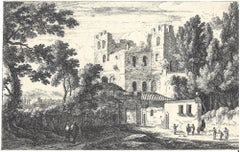
Jeux de boules - Near the City Gate
Located in Middletown, NY
Etching on cream laid paper, 6 7/8 x 10 7/8 inches (175 x 275 mm), thin margins. Some minor surface soiling and paper tape residue in four areas along the top sheet edge, verso, othe...
Category

Mid-17th Century Old Masters Landscape Prints

Materials

Laid Paper, Etching

Welbeck Park Belongs to the Marquis of Newcastle /// Equestrian Horse Old Master
Located in Saint Augustine, FL
Artist: William Cavendish (English, 1593-1676) Title: "Welbeck Park Belongs to the Marquis of Newcastle" (Plate 38, Page 263) Portfolio: Methode et Invention Nouvelle de Dresser Les ...
Category

1730s Old Masters Landscape Prints

Materials

Watercolor, Laid Paper, Engraving, Etching, Intaglio
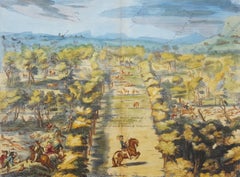
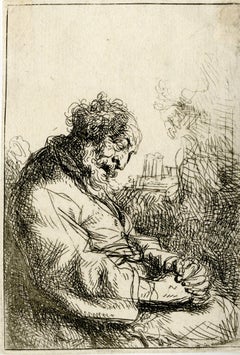
Sleeping Man
Located in Middletown, NY
A superb impression from an important mid-19th century collection. Etching on white laid paper with a partial crown and shield watermark, 4 x 2 7/8 inches (102 mm x 73 mm), margins....
Category

17th Century Old Masters Landscape Prints

Materials

Laid Paper, Etching

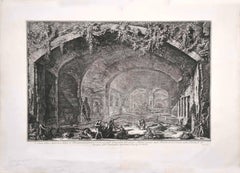
View of the Cave known as Bergantino - Etching by G. B. Piranesi - 1762
Located in Roma, IT
View of the Cave known as Bergantino is an etching realized by the italian artist Giovanni Battista Piranesi in 1762. Very precious and rare lifetime impression. Roman edition. C...
Category

1750s Old Masters Landscape Prints

Materials

Etching

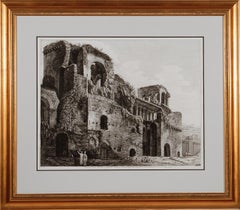
Ruins of the Roman Baths of Belisarius: A 19th C. Etching by Luigi Rossini
Located in Alamo, CA
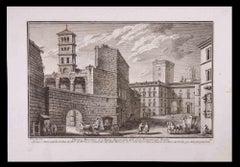
This early 19th century etching entitled "Veduta degl' Avanzi delle Torri di Belisario Dalla parte che guarda l' Interno della Città, vicino a Porta S. Giovanni, A. Mura Aureliane" (...
Category

1820s Old Masters Landscape Prints

Materials

Etching

Two Cavaliers (after Herman Swanevelt)
Located in Middletown, NY
Etching on cream laid paper with a large foolscap watermark, 5 5/8 x 7 7/8 (150 x 200 mm), thread margins. In excellent condition with a light pencil inscription and an inventory num...
Category

17th Century Old Masters Landscape Prints

Materials

Laid Paper, Etching

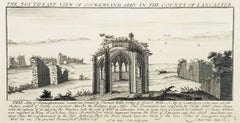
"Cockersand Abbey" from "Buck s Antiquities" /// British Old Master Engraving
Located in Saint Augustine, FL
Artist: Samuel and Nathaniel Buck (English, 1696-1779) and (?-1759/1774) Title: "Cockersand Abbey" (Plate 148) Portfolio: Buck's Antiquities or Venerable Remains of Above 400 Castles...
Category

1720s Old Masters Landscape Prints

Materials

Laid Paper, Engraving, Intaglio

Map of the World: An Original 18th Century Hand-colored Map by E. Bowen
Located in Alamo, CA
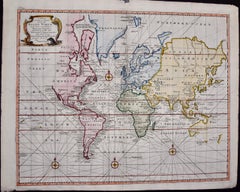
This is an original 18th century hand-colored map entitled "A New & Correct Chart of All The Known World Laid down according to Mercator's Projection" by Emanuel Bowen. It was published in 1744 in London in John Harris's "Navigantium atque Itinerantium Bibliotheca" or "A Complete Collection of Voyages and Travels". This highly detailed and colorful map depicts the world. as it was known in the mid 18th century. A majority of the northern and central portions of Canada and America are left blank due to the purity of knowledge at the time this map was published. The map is embellished with four Compass Roses in the lower left, lower center, lower right and center, along with many rhumb lines. There a is a decorative title cartouche in the upper left. This colorful, attractive, historical and interesting 1744 map presents the entire world on Mercator's projection as it was understood in the middle part of the 18th century, before the landmark explorations of Captain’s Cook, Vancouver, Wilkes and others. It is an example of a nautical chart, a type of map that was designed specifically for use by mariners. The map is centered on the equator and includes both the Eastern and Western Hemispheres. The continents of North America, South America, Europe, Africa, and Asia are depicted, as well as various islands in the Atlantic, Pacific, and Indian Oceans. The map is laid out according to the Mercator projection, a type of cylindrical map projection that was developed in the 16th century by Flemish cartographer Gerardus Mercator. This projection has the advantage of preserving angles and shapes, making it useful for navigation. The map presents a paucity of inland detail, particularly for the Americas, but major cities, geographical landmarks, and regions are included. Ocean currents and Tradewinds are identified, as well as the magnetic declination lines or magnetic variance, which refers to the difference between true north and compass north. The continents are color coded, enhancing the beauty of this map. The three compass roses indicate the directions of the cardinal points. The depiction of the western coast of America, the Pacific and Australia are interesting. There was very little exploration of Australia between the navigations of William Damper in 1699 and Tobias Furneaux in 1773. Most of the maps detail relies on the 17th century Dutch expeditions to Australia's western coast, by Abel Tasman and William Janszoon. Van Diemen's Land (Tasmania) and New Guinea appear connected to the Australian continent. New Zealand appears as a single landmass. North of New Zealand there is a landmass labelled 'Ter d' St. Esprit' which probably represents the New Hebrides Islands. This map precedes the accurate exploration of the South Pacific and east coast of Australia by Captain James Cook later in the 18th century. The map includes ‘Drakes' Port,' the site where Sir Francis Drake supposedly landed in 1579 during his 1579 circumnavigation of the globe. Here he claimed territory for England, restocked, and repaired his vessels. Drake named the region New Albion. The exact location of Drake's Port is a cartographic mystery. Drake's Harbor is believed to be in the region of San Francisco Bay, Bodega Bay, San Pablo Bay...
Category

Mid-18th Century Old Masters Landscape Prints

Materials

Engraving

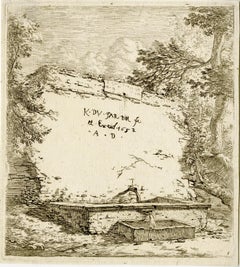
Frontispiece with stepped fountain.
Located in Middletown, NY
Dujardin, Karel. Frontispiece with stepped fountain; a stone wall with water spout pouring water into a rectilinear basin, from which a second spout pour...
Category

Mid-17th Century Old Masters Landscape Prints

Materials

Handmade Paper, Etching, Laid Paper

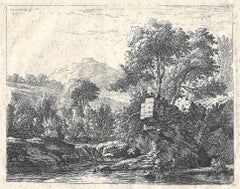
Two men standing ankle-deep in a body of water, rocky outcrop ... hilltop
Located in Middletown, NY
Etching on light, fibrous, laid Japon paper, 5 3/16 x 6 1/4 inches (132 x 158 mm), full margins. Scattered moderate foxing throughout, very minor printing creases (innate), and one s...
Category

Mid-17th Century Old Masters Landscape Prints

Materials

Handmade Paper, Etching

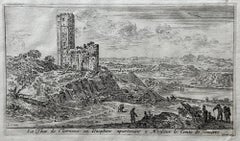
Le Tour de Clermont en Dauphine apartenant a Monsieur de Tonnerre
Located in Middletown, NY
Etching and engraving on handmade cream laid paper, 3 7/8 x 6 7/8 inches (97 x 173 mm), full margins. In good condition, consistent with age. Several small notations in pencil in t...
Category

18th Century Old Masters Landscape Prints

Materials

Handmade Paper, Laid Paper, Engraving, Etching
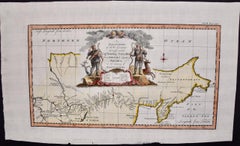
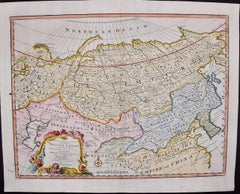
Siberia as Explored by Behring: Original 18th Century Hand-colored Map by Bowen
Located in Alamo, CA
This is an original 18th century hand-colored map entitled "An Exact Chart of all the Countries through which Capt. Behring Travelled from Tobolski, Capital of Siberia to the Country...
Category

Mid-18th Century Old Masters Landscape Prints

Materials

Engraving

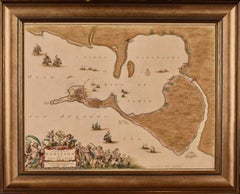
Cadiz Island: A Framed 17th Century Hand-colored Map from Blaeu s Atlas Major
Located in Alamo, CA
This is a 17th century hand-colored map entitled "Insula Gaditana Isla de Cadiz" from Johannes (Joan) Blaeu's Atlas Maior, published in Amsterdam in 1662. The map provides an excellent plan of Cadiz Island on the southwest coast of Spain, with its harbor, fortifications, agricultural fields and several surrounding salt processing areas. Numerous sailing ships of various sizes are included in and around the harbor and bay, including five large sailing ships, as well as twenty-four smaller ships. There is a small compass rose overlying the bay. The bridge to the mainland from the island is shown on the right. There is an extremely ornate and colorful title cartouche in the lower left, with its mythological figures reminiscent of Raphael’s Galatea fresco at the Villa Farnesina in Rome. The vibrant colors are vividly preserved. The master colorist tried to emulate a painting by using various tones to create a three-dimensional effect.
 Blaeu's name is present in the plate in the lower right. Blaeu stated in his description of Cadiz: “The main wealth of the islanders consists of salt, which they harvest, and
 the tuna fisheries.” 
 This 17th century hand-colored map is framed in an ornate, partially textured bronze-colored wood frame and glazed with UV protected conservation glass. There is a vertical center fold, as issued. There is a faint crease in the lower right and faint color offset on the left from the right side of the map, resulting from having been in an atlas for hundreds of years. Small foci of paint are present in the upper portion of the left margin and in the left corner margin. The map is otherwise in very good condition. Due in large part to their powerful trade empire, the Dutch became known for cartography in the seventeenth century. This period is considered the Golden Age of Dutch cartography. Their publishing houses produced the highest quality work in Europe, particularly those maps and charts of foreign lands, and Dutch map-making set the bar for cartographic accuracy and artistry into the early-eighteenth century. Some of the most well-known cartographers worked in Amsterdam during this period. Perhaps the most famous of these was the Blaeu family. Willem Janszoon Blaeu, set up shop in Amsterdam. His son, Johannes (Joan), succeeded him upon his death in 1638, continuing in his father’s position as Hydrographer to the Dutch East India Company and selling maps to the public. The Blaeu map presses, located near Amsterdam’s Dam Square...
Category

Mid-17th Century Old Masters Landscape Prints

Materials

Engraving

Prospectuum Aedium Viarumque Insignorum Ubis Venetiarum -by G.B. Brustolon- 1763
By Giovanni Battista Brustolon
Located in Roma, IT
Complete series of 20 original black and white etchings on oblong folio and laid paper, in first state before numeration. On frontispiece with date “1763”, dedication to Prince Marco Foscareno and name and address of Ludovico Furlanetto. Each plate is titled and signed on plate "Jo. Bap. Brustoloni sculp." on the lower right margin. Complete title of the series: Prospectuum aedium, viarumque insigniorum Urbis venetiarum nautico certamine, ac nundinis adiectis. Tomus Primus, tabulas XII complectens, quas Antonius Canale coloribus expressit – Joannes Baptista Brustolon aere incidit. Serenissimo Principi D.D. Marco Foscareno Egregio, emerito, sapientissimo Augustae Republicae Duci D.D.D. Anno AE C. 1763 ab V.C. 1341. This series is considered the most important one by Brustolon after Canaletto (from the engravings of Visentini), and was edited in a first version of 12 tables and in a second version of 22 tables. However, Succi affirms that the I state series includes just 20 tables, and the missing two vary from suite to suite so that this series can be considered complete. Very fresh and bright sheets in wide margins, with restored little tear on 4 sheets and a very light vertical fold on center. Papers show the following watermarks: Big cartouche with half-moon Big cartouche with letters “FO” and “AS” Bound and ripples on paper. In detail: Prospectuum Aedium Viarumque Insignorum Ubis Venetiarum is one of the finest of Venetian topographical print suites, equal in relevance to the publications of Carlevarijs, Canaletto-Visentini, and Marieschi, preciously rare, especially in the first edition (of four) with all plates in first state and in excellent state of preservation. Ten of its twenty vedute of the Serenessima derive from the paintings of Canaletto, drawn and engraved by Antonio Visentini, adapted to a larger size by Brustolon. The Bellunese artist extended the views and enriched the landscapes with new objects and figures that animate the scenes. Other four views are deeply inspired by Michele...
Category

1760s Old Masters Landscape Prints

Materials

Etching

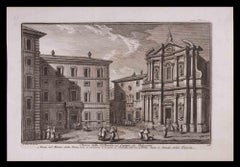
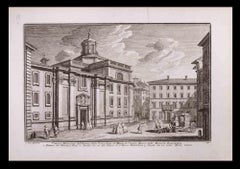
Chiesa della SS. Trinità - Etching by G. Vasi - Late 18th Century
Located in Roma, IT
Chiesa della SS. Trinità is a black and white etching of the Late 18th century realized by Giuseppe Vasi. Signed and titled on plate lower margin. Good conditions and aged margins...
Category

Late 18th Century Old Masters Landscape Prints

Materials

Etching

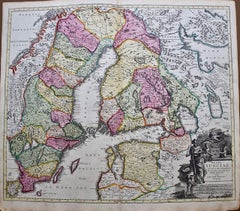
Sweden and Adjacent Portions of Scandinavia: A Hand-colored 18th C. Homann Map
Located in Alamo, CA
This hand-colored copper-plate map of Sweden and adjacent portions of Scandinavia entitled "Regni Sueciae in Omnes suas Subjacentes Provincias accurate divisi Tabula Generalis" was c...
Category

Early 18th Century Old Masters Landscape Prints

Materials

Engraving

The Great Landscapes II, (4th State)
Located in Chicago, IL
Watermark: Schellenkappe (Foolscap) Similar to Churchill no. 340
Category

17th Century Old Masters Landscape Prints

Materials

Etching

Map of the Russian Empire: An Original 18th Century Hand-colored Map by E. Bowen
Located in Alamo, CA
This is an original 18th century hand-colored map entitled "A New & Accurate Map of The Whole Russian Empire, As Contain'd Both In Europe and Asia, Drawn from Authentic Journals, Sur...
Category

Mid-18th Century Old Masters Landscape Prints

Materials

Engraving

Ancient View of Windsor - Etching by G. Braun and F. Hogenberg - 17th Century
Located in Roma, IT
Ancient view of Vindesorium (Windsor) is an old master artwork realized by George Braun and Franz Hogenberg in the Late 17th Century, as part of the famous Series "Civitates Orbis Te...
Category

17th Century Old Masters Landscape Prints

Materials

Etching

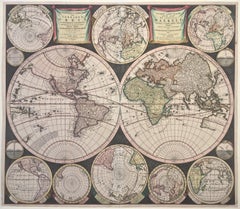
WORLD MAP - Planisphaerium Terrestre Sive Terrarum Orbis... 1696
By Carel Allard
Located in Santa Monica, CA
CAREL ALLARD (1648 – 1709) PLANISPHAERIUM TERRESTRE SIVE TERRARUM ORBIS… 1696 (Shirley 578) Engraving, 20 ½ x 23 ½”, sheet 21 x 24 1/8". A stunning double hemisphere World Map...
Category

17th Century Old Masters Landscape Prints

Materials

Engraving

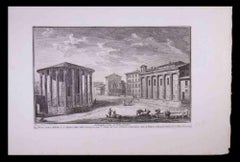
Veduta del Tempio della Fortuna Virile, from Raccolta delle più belle Vedute ...
Located in Middletown, NY
By Giuseppe Vasi after Giovanni Piranesi: Etching and engraving with hand coloring in watercolor on laid paper with an E and R watermark, full margins. Minor...
Category

Late 18th Century Old Masters Landscape Prints

Materials

Watercolor, Laid Paper, Engraving, Etching
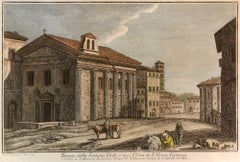
Monastero e Chiesa dell Immacolata- Etching by Giuseppe Vasi - Late 18th Century
Located in Roma, IT
Monastero e Chiesa dell'Immacolata is an original black and white etching of the Late 18th century realized by Giuseppe Vasi. The beautiful etching represents a glimpse of Rome. Si...
Category

Late 18th Century Old Masters Landscape Prints

Materials

Etching

Red Roses: A Framed 17th C. Hand-colored Botanical Engraving by Basilius Besler
Located in Alamo, CA
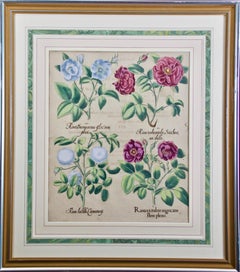
"Rosa ex rubro nigricans" (Red Roses); a hand-colored copper engraving from Basilius Besler's landmark work, Hortus Eystettensis (Garden at Eichstatt), first published in 1613 in Eichstatt, Germany near Nuremberg and later in 1640 and 1713. This engraving is presented in a glossy silver and matte gold-colored wood frame with a green edge and an elaborate double cream-colored French mats with light mauve bands; each accented by a broad decorative marbleized green band. It is glazed with plexiglass. There is text offset and a very small crease in the left margin, but the print is otherwise in excellent condition. Provenance: W. Graham Arader Gallery...
Category

17th Century Old Masters Landscape Prints

Materials

Engraving

The Great Landscapes VI (2nd State)
Located in Chicago, IL
Watermark: Wappen von Amsterdam mit Nebenmarke
Category

17th Century Old Masters Landscape Prints

Materials

Etching

A Hand Colored 17th Century Janssonius Map of Prussia: Poland, N. Germany, etc.
Located in Alamo, CA
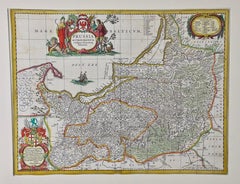
An attractive hand-colored copperplate engraved 17th century map of Prussia entitled "Prussia Accurate Descripta a Gasparo Henneberg Erlichensi", published in Amsterdam by Joannes Janssonius in 1664. This very detailed map from the golden age of Dutch cartography includes present-day Poland, Latvia, Lithuania, Estonia and portions of Germany. This highly detailed map is embellished by three ornate pink, red, mint green and gold...
Category

Mid-17th Century Old Masters Landscape Prints

Materials

Engraving

View of Meissen, Germany: A 16th Century Hand-colored Map by Braun Hogenberg
Located in Alamo, CA
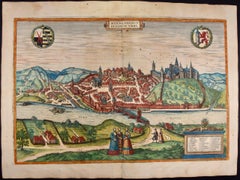
This is a 16th century original hand-colored copperplate engraved map of View of View of Meissen, Germany entitled "Misena Hermun Duvorum Urbs" by Georg Braun & Franz Hogenberg, from their famous city atlas "Civitates Orbis Terrarum", published in Cologne, Germany in 1575. The map depicts a side view and bird's-eye view, looking across the Elbe River (labelled Albis Fluvius on the map; White River in Latin) from the northeast. In the foreground are three women in conversation on a hill above the city, along with a man and a woman in conversation by a road, all dressed in contemporary costumes of the upper class. A coat-of-arms is present in each upper corner. A great castle sits atop a hill in the background on the left. Meissen grew up around Albrechtsburg castle, built by Emperor Henry I around AD 929, and was granted a municipal charter at the end of the 12th century. From 1471 onwards, the castle complex was reconstructed as the residence of the Saxon electors on the northeast corner of the Domberg (Cathedral Hill). Meissen cathedral is a Gothic hall church begun c. 1270; in 1413 a bolt of lightning destroyed its west towers, which were replaced only in the 20th century. Meissen lies to the northwest of Dresden, Germany in Saxony. Meissen is famous for its Meissen porcelain and the Albrechtsburg castle The following is an English translation of an excerpt from Braun's description of the city:  "This city is surrounded by very many rivers, to the east flows the Elbe, to the south the Triebisch, to the west are the mountains, to the north the Meisse, after which the city is said to be named. The city is well-situated in its surroundings, the navigable rivers, the mountains and the healthy air. Around the city there is a good land to grow grain, fertile vineyards on the hillsides and without doubt the mountains are not without ore, for one mile away, up the Elbe, is Scharfenberg, where silver and lead ore are mined.." 
  References: Van der Krogt 4, 2684; Taschen, Braun and Hogenberg...
Category

16th Century Old Masters Landscape Prints

Materials

Engraving

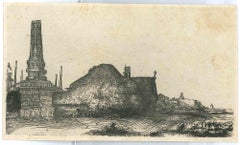
Landscape with an Obelisk - Engraving after Rembrandt - 19th Century
Located in Roma, IT
Landscape with an Obelisk is an engraving on ivory-colored paper realized after an etching by Rembrandt dated 1650 ca. This wonderful piece of art belongs to an edition of the late 1...
Category

19th Century Old Masters Landscape Prints

Materials

Engraving

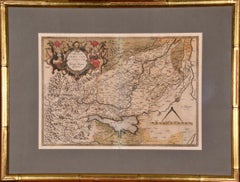
Northern Italy: A 16th Century Hand-colored Map by Abraham Ortelius
Located in Alamo, CA
This is a framed 16th century hand-colored copperplate map of northern Italy entitled "Veronae Urbis Territorium a Bernardo Bragnolo Descriptium" by Abraham Ortelius from his atlas "Theatrum Orbis Terrarum", which was the first modern atlas of the world, with the first volume published in 1570. This map was part of a subsequent volume, published in Antwerp in 1584. It was based on an earlier map by Bernardo Brognoli. This beautiful map of northern Italy is focussed on Verona and its environs, including Mantua. Lake Garda and the South Tyrol mountains are prominently depicted. There is a very large striking cartouche in the upper left and a decorative distance scale in the lower right. This striking hand-colored map of northern Italy is presented in a gold-colored wood frame and an olive green-colored mat. It is glazed with UV conservation glass. All mounting materials used are archival. The frame measures 21.5" high by 28" wide by 0.75" deep. There is a central vertical fold, as issued, with slight separation of the lower portion of the fold. There are faint spots in the upper and right margins, but the map is otherwise in very good condition. Abraham Ortelius (also known as Ortels, Orthellius, and Wortels) (1527-1598) was a Dutch cartographer, geographer, and cosmographer. He began his career as a map colorist. In 1547 he entered the Antwerp guild of St Luke as an "illuminator of maps". He had an affinity for business from an early age and most of his journeys before 1560, were for business. He was a dealer in antiques, coins, maps, and books. 
His business income allowed him to acquire an extensive collection of medals, coins, and antiques, as well as a large library of books...
Category

16th Century Old Masters Landscape Prints

Materials

Engraving

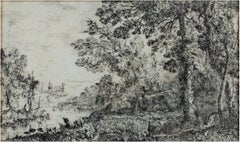
17th century etching black and white landscape forest trees river scene
Located in Milwaukee, WI
"L'Apparition (The Vision)" is an original etching by Claude Lorrain (Claude Gellee). This print depicts a religious vision near the edge of a river. The publisher is Mannocci #5 and...
Category

1630s Old Masters Landscape Prints

Materials

Etching

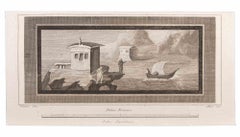
Seascape with Monument and Figures- Etching by Luigi Aloja - 18th Century
Located in Roma, IT
Seascape With Monument and Figures is an Etching realized by Luigi Aloja (1783-1837). The etching belongs to the print suite “Antiquities of Herculaneum Exposed” (original title: “...
Category

Late 18th Century Old Masters Landscape Prints

Materials

Etching

Meissen, Germany : A Large Framed 18th Century Map by Petrus Schenk
Located in Alamo, CA
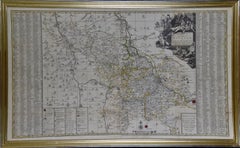
This is a hand-colored 18th century map of the Meissen region of Germany, entitled "Geographischer Entwurff Derer Aemmter Meissen als Creys-Procuratur-Schul-und Stiffts-Ammt benebst ...
Category

Mid-18th Century Old Masters Landscape Prints

Materials

Engraving

Frankfort, Germany: A 16th Century Hand-colored Map by Braun Hogenberg
Located in Alamo, CA
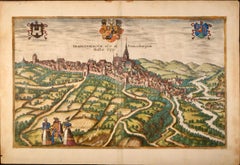
This is a 16th century original hand-colored copperplate engraved map of Frankfort, Germany entitled "Francenbergum, vel ut alij Francoburgum Hassiae Opp" by Georg Braun & Franz Hogenberg, from their famous city atlas "Civitates Orbis Terrarum", published in Cologne, Germany in 1595. This is an English translation of an excerpt from the original text in the atlas: "Frankenberg or, according to others, Francoburgum, a town in Hesse. Charlemagne vested the town of Frankenberg with many freedoms and privileges, which it still enjoys to this day, and on account of its valiant and victorious soldiers awarded a signet, upon which there formerly appeared a golden castle with a tower, together with the letter F and a golden crown. Frankenberg, seen here from the northeast, lies on a hill above the River Eder. The hillside is covered with fields neatly separated by bushes and fences. Soaring above the town is the massive Liebfrauenkirche, which was modelled on St Elizabeth's church in Marburg. The New Town was founded in 1335 at the foot of the hill (right) and merged with the Old Town as late as 1556. Frankenberg was founded by Conrad of Thuringia in 1233/34 to prevent the archbishops of Mainz from expanding their sphere of influence...
Category

16th Century Old Masters Landscape Prints

Materials

Engraving

View of Seravalle, Italy: A 16th Century Hand-colored Map by Braun Hogenberg
Located in Alamo, CA
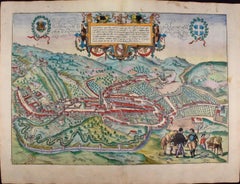
This is an original 16th century copperplate originally hand-colored engraved map of View of Seravalle, Italy entitled "Seravallum Celeberrimum Marchiae Tarvisiniae in Agro Foro Juliensi Opp. - Seravalli, quam vides, Spectator, iconem, operi huic nostro suis sumptib. . . ." by Georg Braun & Franz Hogenberg, from their famous city atlas "Civitates Orbis Terrarum", published in Augsberg, Germany in 1575. The map depicts a view of Seravalle, now Vittorio Veneto, in San Marino, Italy, north of Venice, in a topographically accurate bird's-eye view from the south. A water-filled moat is seen to the south of the city walls and farmland to the east. Two men are depicted standing on a hill in the lower right in conversation next to grain sacks and a grazing horse, while a younger man behind them to the right herds a mule carrying presumably pigs. A very colorful and ornate title cartouche is in the upper center and coat-of-arms are in the right and left upper corners. Serravalle lies in an idyllic setting in the foothills and surrounded by orchards. St Mary's Cathedral with its tall bell tower is prominent in the center of the town. The marketplace and town hall with a bell tower in the square are depicted. Houses and shops are around the main square. Serravalle's importance as an agricultural centre is emphasized by the figures in the foreground. In 1337 Serravalle was conquered by the Republic of Venice. In 1866 the town was united with neighbouring Ceneda to form the town of Vittorio Veneto. The following is an English translation of an excerpt from the French description of the city on the back of the map: "Serravalle, a market town renowned for cloth, wine and grain, is in such a beautiful situation that the number of its inhabitants, attracted by the loveliness of the place, has grown so much at times that the wall encircling it has had to be enlarged for the third time. The city with the surrounding town once belonged to the Church in Ceneda as an imperial fief. It subsequently became the seat of the Da Camino family (a princely house that at that time was one of the five most noble in all Italy). Now the city is under the sway of the Venetians but is prudently governed by them. For they send only one city councillor with instructions to ensure that justice prevails and to collect duties. In all else, power lies in the hands of the noble families." This is a translation of the Latin in the title cartouche on the front: "The picture of the town of Serravalle, which you see, viewer, has been contributed to our work entirely at his own expense by Minutius, son of Hieronymus Minutius, a noble gentleman and one renowned for the far-reaching competence of his jurisdiction. We saw him sojourning in Cologne, where he was on business for Gregory XIII; while our good wishes accompany him, we should also like to accompany him on his way with this remembrance, even though it might be against his will, so that even those who have not seen him may learn of his excellence. However, those who do not yet know him will also see his excellence if God the Almighthy does not summon erring souls too soon back to the eternal seat of the Blessed." References: Van der Krogt 4, 4728, State 1; Taschen, Braun and Hogenberg, p.331; Fauser, #14960 This striking hand-colored city view is printed on laid, chain-linked paper with wide margins. The sheet measures 16" high by 21" wide. There is a central vertical fold as issued and French text on the verso, with Latin on the front. There is some discoloration in the upper and right margins which may represent some watercolor paint from the time of the original hand-coloring of the map. There is a small hole to the right of the upper portion of the vertical fold, which is only visible when held up to light and an area of reinforcement on the verso of the lower vertical fold. The map is otherwise in very good to excellent condition. Braun and Hogenberg's 'The Civitates Orbis Terrarum' was the second atlas of maps ever published and the first atlas of cities and towns of the world. It is one of the most important books published in the 16th century. Most of the maps in the atlas were engraved by Franz Hogenberg and the text, with its descriptions of the history and additional factual information of the cities, was written by a team of writers and edited by Georg Braun. The work contained 546 bird-eye views and map views of cities and towns from all over the world. It gave graphic representation of the main features of the illustrated cities and towns, including the buildings and streets. Although the ordinary buildings are stylized, the principal buildings are reproduced from actual drawings created on location. The principal landmarks and streets can still be recognized today. In addition, the maps often include the heraldic arms of the city, the nature of the surrounding countryside, the important rivers, streams and harbors, even depicting stone bridges, wooden pontoons, flat-bottomed ferries, ships and working boats, wharves and jetties, as well as land-based activities, including horsemen, pedestrians, wagons, coaches, and palanquins. Small vignettes are often included which illustrate the trade, occupations and habits of the local inhabitants, such as agriculture, paper-making and textiles, as well as local forms of punishment, such as gibbets, wheels, floggings etc. Large figures dressed in their local costume are often presented out of proportion in the foreground. The aim of the authors was to give as much information as possible in a pleasing visual form. They succeeded in creating maps that were both informative and decorative works of art. The atlas is a wonderful glimpse of life in medieval Europe. Georg Braun (1541-1622) was German Catholic...
Category

16th Century Old Masters Landscape Prints

Materials

Engraving

Map of Dordrecht - Etching by G. Braun/F. Hogenberg - Late 16th Century
Located in Roma, IT
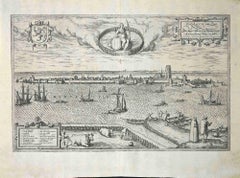
Map od Dordrecht is an artwork realized by Braun and Hogemberg in the late 16th century. Hand watercolored etching. 40x54 cm. Good conditions. Braun Hoghemberg (1541-1622) was a ...
Category

16th Century Old Masters Landscape Prints

Materials

Etching

Ancient View of Oxonium - Etching by G. Braun and F. Hogenberg - 17th Century
Located in Roma, IT
Ancient view of Oxonium (Oxford) is an old master artwork realized by George Braun and Franz Hogenberg in the early 17th Century, as part of the famous Series "Civitates Orbis Terrar...
Category

17th Century Old Masters Landscape Prints

Materials

Etching

Il Ponte Palatino - Etching by Giuseppe Vasi - Late 18th Century
Located in Roma, IT
Il Ponte Palatino is an original black and white etching of the Late 18th century realized by Giuseppe Vasi. Signed and titled on plate lower margin. Good ...
Category

Late 18th Century Old Masters Landscape Prints

Materials

Etching

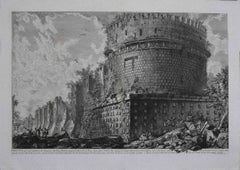
View of Mausoleo of Cecilia Metella - Etching by G. B. Piranesi - 1773
Located in Roma, IT
View of Mausoleo of Cecilia Metella is an original etching realized by the italian artist Giovanni Battista Piranesi in 1773. Precoius roman edition. Complete title on the lower ma...
Category

1770s Old Masters Landscape Prints

Materials

Etching

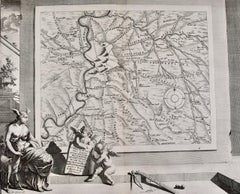
Roman Hills, Aqueducts and Roads: An Early 18th Century Map by Jan Goeree
Located in Alamo, CA
This richly engraved map of Rome and its environs entitled "Urbis Cum Vicis Seu Pagis Adiacentibus Dissertationi III De Aq et Aqueaed Veteris Promae Praemissa Authore Raph Fabretto G...
Category

Early 18th Century Old Masters Landscape Prints

Materials

Engraving

View of the Tiber with Country Landscape
By Jan Dirksz Both
Located in Chicago, IL
Etching on paper with Schriftband watermark. Reference: Bartsch 7 III/IV (from VI). A very fine, early impression. Printed with the name of the artist, but before the addition...
Category

15th Century and Earlier Old Masters Landscape Prints

Materials

Etching

Tournai (Tournay), Belgium: A 16th Century Hand-colored Map by Braun Hogenberg
Located in Alamo, CA
This is a 16th century original hand-colored copperplate engraved map of Tournai, Belgium, entitled "Tornacum" by Georg Braun & Franz Hogenberg, in volume IV of their famous city atlas "Civitates Orbis Terrarum", published in Cologne or Augsberg, Germany in 1575. The map provides a bird's-eye view of the walled city of Tournai, the second oldest city in Belgium. It lies approximately one hour by car southwest of Brussels or from Ghent. The names of thirty of its streets, prominent buildings, churches and squares are listed in a key within a strap-work cartouche in the lower left. These locations are numbered in the key corresponding to their locations on the map. This colorful map of Tournai (Tornacum or Tournay as it was called in the 16th century) includes the title in Latin in a cartouche in the upper center. Three crests are present across the upper map. A man and two woman are standing on a hill in the foreground in the lower right dressed in the style of 16th century upper class residents of the town. This is an English translation of an excerpt of Braun's description of Tornai: “Tornacum or Turnacum is a city in Gallia Belgica, situated on the Schelde in the territory of the Nervii, called Tournai by its French inhabitants, but Dorneck by the Germans. Tournai has always been a large and powerful city, with an abundance of goods and commercial activities and wonderfully resourceful craftsmen, who invent new articles every day, and although some of these go out of use they constantly conceive of other new things, both useful and delightful, so that they have at all times something that provides work and a means of livelihood for the poor." ReferencesVan der Krogt 4, 4435, State 1; Taschen, Braun and Hogenberg...
Category

16th Century Old Masters Landscape Prints

Materials

Engraving

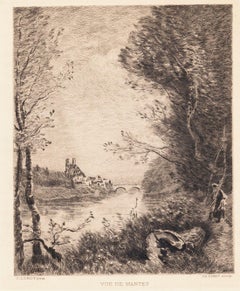
Vue de Mantes - Etching after C. Corot by C. Pinet - 19th Century
Located in Roma, IT
Vue de Mantes is a beautiful artwork realized by Charles Pinet after a painting by Camille Corot in the middle of XIX century. This etching represents a natural landscape with some...
Category

19th Century Old Masters Landscape Prints

Materials

Etching

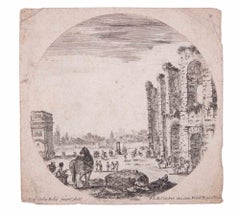
Ruines de Rome - Etching by Stefano Della Bella - 17th Century
Located in Roma, IT
Paysages et ruines de Rome is an original artwork realized by Stefano Della Bella in 1646. Etching in paper, signed on plate on the left margin, es. II/VI. Th...
Category

17th Century Old Masters Landscape Prints

Materials

Etching

Chiesa e Monastero di S. Maria Annunziata - Etching by G.Vasi -Late 18th Century
Located in Roma, IT
Chiesa e Monastero di S. Maria Annunziata is an original black and white etching of the Late 18th century realized by Giuseppe Vasi. The beautiful etching represents a glimpse of Ro...
Category

Late 18th Century Old Masters Landscape Prints

Materials

Etching

Danube River, Italy, Greece and Croatia: A Hand-colored 18th C. Homann Map
Located in Alamo, CA
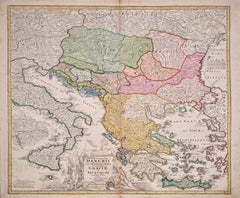
"Fluviorum in Europa principis Danubii" is a hand-colored map of the region about the Danube river created by Johann Baptist Homann (1663-1724) in his 'Atlas Novus Terrarum', publish...
Category

Early 18th Century Old Masters Landscape Prints

Materials

Engraving

View of Venice, including Gondolas, 18th Century Hand Colored Engraving
Located in Alamo, CA
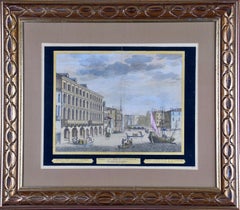
An early 18th century hand colored engraving of a scene of the city of Venice, Italy entitled "Palazzo Lin, a. S. Samuele sopra il Canal Grande". It depicts Venetian architecture, wa...
Category

1720s Old Masters Landscape Prints

Materials

Engraving

Daniel Marot s The Siege of the Dutch Fortified City of Ypres by Louis XIV
By Daniel Marot
Located in Alamo, CA
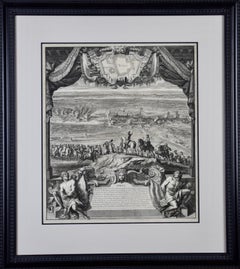
"Ypres, Grand Ville Riche & Marchande" is an engraving and etching by Daniel Marot (le Vieux) (1661–1752). It depicts a view of the siege of the city of Ypres and its citadel on the left in the Spanish Netherlands by Louis XIV's troops. This battle took place between March 18 and March 25, 1678, as part of the Franco-Dutch War. Marot illustrated in great detail (best appreciated with magnification) the French attack on the strong pentagonal citadel on the extreme left, which had been built recently in anticipation of a French attack. The trenches built by the French approaching the town are seen on the right. King Louis XIV can be seen in the foreground surveying the battle mounted on his white horse, surrounded by his officers and troops. The print is presented in an attractive ornate black wood frame with a cream-colored double mat with a black inner trim. It is glazed with plexiglas. The frame measures 25.38" x 22.63" x .88". The engraving, frame, mat and glazing are in excellent condition. Artist: Daniel Marot (1661–1752) was also called "Le Vieux". He was the son of the famous architect, Jean Marot. Marot had diverse interests and talents. In addition to his art, he designed garden projects, architectural ornaments, furniture, and even upholstery. Marot as a Huguenot protestant was forced to leave France in 1685 following the revocation of the Edict of Nantes. He emigrated to Holland, where he worked for William of Orange (an arch enemy of his former employer Louis XIV). Marot was largely responsible for the interiors of Williams palace at the Loo. In 1694 he went Britain as William had married Queen Mary and he had become King William III of England. He later returned to Holland in about 1698 and died in the Hague in 1752. He left a lasting legacy on the decorative arts in the Netherlands, where his grand version of the Louis XIV style remained popular into the 1730s. Historical Background: In October 1677, Mary Stuart, niece and possible successor of Charles II of England, married Louis XIV's arch enemy William III of Orange...
Category

Late 17th Century Old Masters Landscape Prints

Materials

Engraving, Etching

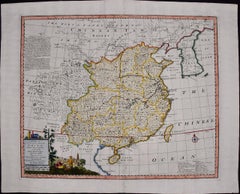
China: An Original 18th Century Hand-colored Map by E. Bowen
Located in Alamo, CA
This is an original 18th century hand-colored map entitled "A New & Accurate Map of China, Drawn from Surveys made by the Jesuit Missionaries, by order of the Emperor. The whole bein...
Category

Mid-18th Century Old Masters Landscape Prints

Materials

Engraving

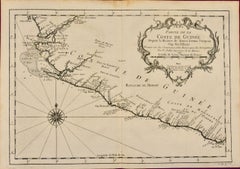
West Coast of Africa; Guinea Sierra Leone: Bellin 18th Century Map
Located in Alamo, CA
This is a Jacques Bellin copper-plate map entitled "Partie de la Coste de Guinee Dupuis la Riviere de Sierra Leona Jusquau Cap das Palmas", depicting the coast of Guinea and Sierra L...
Category

1740s Old Masters Landscape Prints

Materials

Engraving

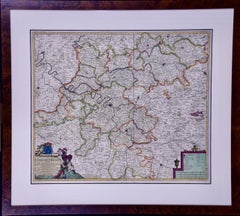
L Isle de France: A Hand-colored 17th Century Map by De Wit
Located in Alamo, CA
This colorful and detailed 17th century hand-colored copperplate map by Frederick De Wit was published in Amsterdam between 1666 and 1760. The map depicts the Île-de-France, which is one of the ancient provinces of France. Paris is located in the center of the map, with Versailles to the southwest The map extends from Rouen in the west to Reims in the east. The area around Paris, the Véxin Français, was the original domain of the king of France. Other areas were ruled by French feudal lords. For example, the Véxin Normand area was the domain of the Duke of Normandy...
Category

Early 18th Century Old Masters Landscape Prints

Materials

Engraving

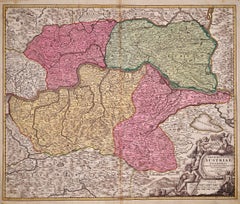
Hand Colored 18th Century Homann Map of Austria Including Vienna the Danube
Located in Alamo, CA
"Archiducatus Austriae inferioris" is a hand colored map of Austria created by Johann Baptist Homann (1663-1724) and published in Nuremberg, Germany in 1728 shortly after his death. ...
Category

Early 18th Century Old Masters Landscape Prints

Materials

Engraving

18th Century Engraving "Attack with a Battering Ram" by Montfaucon
Located in Alamo, CA
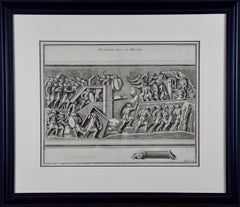
This early original copper-plate engraving entitled "Attaque avec le Belier" from 'L'antiquité expliquée et représentée en figures' (Antiquity Explained and Represented in Diagrams), published in Paris in 1719 by Bernard de Montfaucon. It depicts an ancient...
Category

Early 18th Century Old Masters Landscape Prints

Materials

Engraving

Set of Two Engravings from Nash s "History of Worcestershire" /// Landscapes Art
Located in Saint Augustine, FL
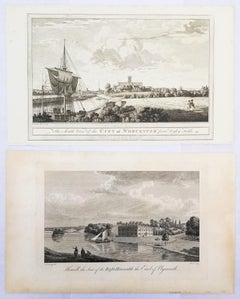
Artist: Treadway Russell Nash (English, 1724-1811) Title: "The South View of the City of Worcester, from Digley Fields" and "Hewell, the Seat of the Right Honorable the Earl of Plymouth" Portfolio: Collections for the History of Worcestershire Year: 1781-1782 (First edition) Medium: Set of Two Original Engravings on watermarked laid paper Limited edition: Unknown Printer: John Nichols, London, UK Publisher: T. Payne and Son, J. Robson, B. White, Leigh and Sotheby, London, UK; Fletcher, Oxford, UK; and Lewis, Worcester, UK Reference: Upcott III, page 1330 Sheet size (each): approx. 10.25" x 16.63" Image size (each): approx. 7" x 12" Condition: "The South View of the City of Worcester, from Digley Fields" has some minor foxmarks in margins. "Hewell, the Seat of the Right Honorable the Earl of Plymouth" has toning and uneven discoloration to its sheet. Have been professionally stored away for decades. They are both otherwise strong impressions, the first in excellent condition, and the second in good condition Notes: Provenance: private collection - Aspen, CO. "The South View of the City of Worcester, from Digley Fields" was engraved by English artist Thomas Sanders (Active: Mid-Late 18th Century) after a drawing by himself. "Hewell, the Seat of the Right Honorable the Earl of Plymouth" was engraved by English artist Michael Angelo Rooker (1743-1801) after a watercolor painting by English artist Paul Sandby (1731-1809). Comes from Nash's two volume "Collections for the History of Worcestershire", (1781-1782) (First edition), which consists of 75 engravings. Each work is printed from one copper plate in one color: black. There was a (Second edition) "with Additions" bound in with Volume II of this portfolio published by John White in (1799). And both the First and Second editions of "Collections for the History of Worcestershire" are based off Thomas Sanders' 1779-1781 "Perspective Views of the Market Towns within the County of Worcester". "The South View of the City of Worcester, from Digley Fields" has an unidentified watermark in the center of its sheet resembling "XV". Biography: Treadway Russell Nash (24 June 1724 – 26 January 1811) was an English clergyman, now known as an early historian of Worcestershire and the author of Collections for the History of Worcestershire, an important source document for Worcestershire county histories. He was a fellow of the Society of Antiquaries of London. Treadway Russell Nash was born on 24 June 1724 born at Clerkenleap, in Kempsey, Worcestershire. His family were from Ombersley. They had lands there and at Claines, and had later bought lands in the Reformation around St Peter's, Droitwich. He was related to James Nash and John Nash, both MPs for Worcester. His father Richard, a grandson of Sir Rowland Berkeley, died in 1740, and Richard's eldest son in 1757. As a result, Treadway Russell Nash inherited the Russells' Strensham estates from his brother, as well as the Nash estates, and took both names. He was educated from the age of twelve at King's School, Worcester, and became a scholar at Worcester College, Oxford aged fifteen. In March 1749, he accompanied his brother on a trip to the continent, to aid Richard's health. They visited Paris for about six weeks, before spending the summer "on the banks of the Loire". They then visited "Bourdeaux, Thoulouse, Montpelier, Marseilles, Leghorn, Florence, Rome, Naples, Bologna, Venice, Padua, Verona, Milan, Lyons, and again Paris"; such expeditions are often known as the Grand Tour. On his return in late summer 1751, Nash took up a post as Vicar of Eynsham through his friend and future brother-in-law, John Martin. He also had an income as a tutor at Oxford. He took his Doctor of Divinity degree and left Oxford, having "gone out grand compounder", following the death of his brother. He also left his benefice at Eynsham in 1757. While at Oxford he had proposed a road from there to Witney (now the A40 and B4022), and also stood for Parliament. Nash married Margaret Martin...
Category

1780s Old Masters Landscape Prints

Materials

Laid Paper, Engraving, Intaglio

Supplicium sceleri Fraenum - Etching by Jacques Callot - 1624/34
Located in Roma, IT
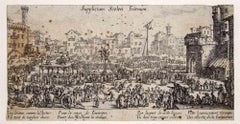
Supplicium sceleri Fraenum (Les Supplices) is an original Etching realized by Jacques Callot in 1624/34. Lettered with name of etcher (bottom right), title and four columns of French verses: 'Voy, lecteur, comme la Justice... Des effectz de la forfaicture'. Good condition included a cream colored cardboard passpartout (40x60 cm). Jacques Callot (1592 – 1635) was a baroque printmaker and draftsman from the Duchy of Lorraine (an independent state on the north-eastern border of France, southwestern border of Germany and overlapping the southern Netherlands). He is an important person in the development of the old master print...
Category

1660s Old Masters Landscape Prints

Materials

Etching

Salmacis et Hermaphrodite - Etching by Bernard Picart - 1742
Located in Roma, IT
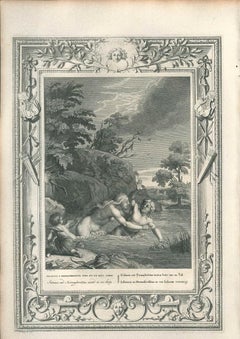
Black and white etching on wire rod paper, representing the Greek myth of Salmacis and Hermaphroditus. Wonderful plate with very fresh impression and a beautiful use of chiaroscuro,...
Category

1740s Old Masters Landscape Prints

Materials

Etching

Giardino e Casino Pontificio - Etching by Giuseppe Vasi - Late 18th Century
Located in Roma, IT
Giardino e Casino Pontificio is an original black and white etching of the Late 18th century realized by Giuseppe Vasi. The beautiful etching represents a glimpse of Rome. Signed ...
Category

Late 18th Century Old Masters Landscape Prints

Materials

Etching

Old Masters landscape prints for sale on 1stDibs.

Find a wide variety of authentic Old Masters landscape prints available for sale on 1stDibs. Works in this style were very popular during the 20th Century, but contemporary artists have continued to produce works inspired by this movement. Many Pop art paintings were created by popular artists on 1stDibs, including Giuseppe Vasi, Giovanni Battista Piranesi, Ludovico Caracciolo, and Frans Hogenberg. Frequently made by artists working with Etching, and Engraving and other materials, all of these pieces for sale are unique and have attracted attention over the years. Not every interior allows for large Old Masters landscape prints, so small editions measuring 2.37 inches across are also available. Prices for landscape prints made by famous or emerging artists can differ depending on medium, time period and other attributes. On 1stDibs, the price for these items starts at $66 and tops out at $45,000, while the average work sells for $655.