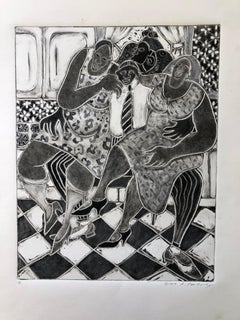
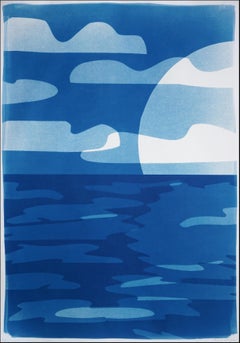
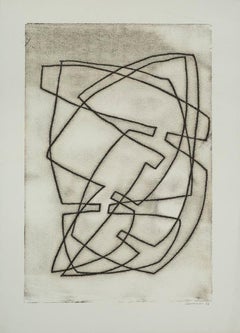
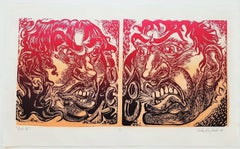
Monotype Prints and Multiples

to
132
227
223
268
179
125
Overall Width
to
Overall Height
to
361
325
51
45
23
19
14
11
8
4
3
3
1
103
44
39
36
29
1
428
593
1
3
7
2
2
26
28
16
107
159
605
336
80
162
108
89
88
80
69
56
46
39
37
36
35
31
27
26
24
22
19
18
18
1,408
35,666
19,934
17,701
10,724
138
162
802
199
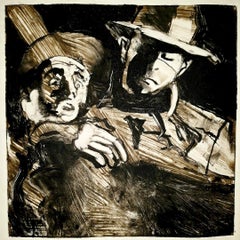
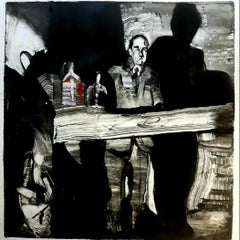
Medium: Monotype
Born to Kill, monochromatic, crime, narrative, high contrast, drama
Located in Brooklyn, NY
Dramatic imagery from FILM NOIR series of black and white monotypes, blending surrealistic mindscapes with stark realism About Tom Bennett: With quick brushstrokes, Tom Bennett crea...
Category

2010s Neo-Expressionist Monotype Prints and Multiples

Materials

Archival Paper, Monotype

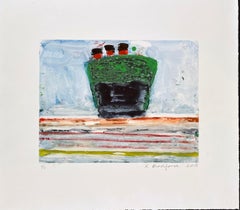
STEAMBOAT SUITE PORTFOLIO WITH AN EXTRA MONOTYPE ADDED, 2013
Located in Portland, ME
Bradford, Katherine (American, born 1942) STEAMBOAT SUITE PORTFOLIO WITH AN EXTRA MONOTYPE ADDED, 2013. Edition of 10, plus 7 Artist's Proofs and Collaborators copies. Of the editio...
Category

2010s Monotype Prints and Multiples

Materials

Etching, Monotype

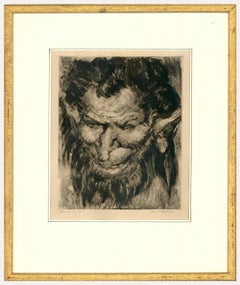
Jean Dulac (1902-1968) - Mid 20th Century Monotype, Tete de Faun II
Located in Corsham, GB
A striking monotype depicting the head of a faun in monochrome. Signed in graphite. Presented in a gilt frame. On paper.
Category

20th Century Monotype Prints and Multiples

Materials

Monotype

Untitled 21-16 Abstract Monotype, Pink Blue Green Ink on Paper, by Casey Haugh
Located in New York, NY
Untitled 21-16 by Casey Haugh "I produce these monotypes layer by layer and often color by color. Each one is made with four or five separate layers of ink, starting with a solid co...
Category

21st Century and Contemporary Abstract Monotype Prints and Multiples

Materials

Archival Paper, Monotype

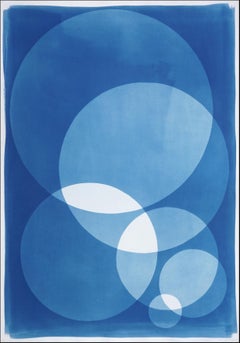
Descending Circles, White and Blue, Handmade Unique Monotype Cyanotype, Paper
Located in Barcelona, ES
This cyanotype monotype features a constellation of overlapping circular forms that seem to hover like celestial bodies or drifting clouds. The soft, mottled texture within each whit...
Category

2010s Contemporary Monotype Prints and Multiples

Materials

Paper, Monotype

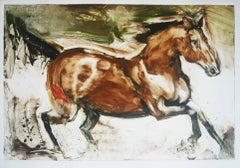
Arabian, horse monotype, earth tones, energetic brushwork
Located in Brooklyn, NY
Oil based ink and oil paint monotype on fine printmaking paper. Moving horse in expressionist active strokes. Bold, direct motion.
Category

2010s Expressionist Monotype Prints and Multiples

Materials

Monotype, Archival Paper

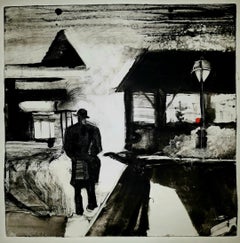
The Killers, black and white city scape, surrealistic, narrative
Located in Brooklyn, NY
Dramatic imagery from FILM NOIR series of black and white monotypes, blending surrealistic mindscapes with stark realism About Tom Bennett: With quick brushstrokes, Tom Bennett crea...
Category

2010s Surrealist Monotype Prints and Multiples

Materials

Archival Paper, Monotype

Asphalt Jungle, black and white, interior, crime scene, narrative
Located in Brooklyn, NY
Dramatic imagery from FILM NOIR series of black and white monotypes, blending surreal mindscapes with stark realism About Tom Bennett: With quick brushstrokes, Tom Bennett creates r...
Category

2010s Abstract Impressionist Monotype Prints and Multiples

Materials

Monotype, Archival Paper

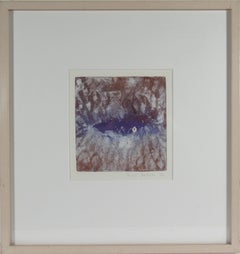
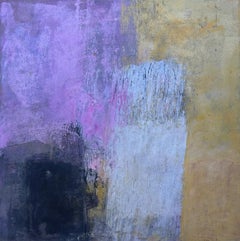
Untitled #1
Located in San Francisco, CA
This artwork "Untitled #1" 1992 is a original monotype on paper by Swiss artist Barbara Diethelm, born 1962. It is hand signed and dated in pencil by the artist. Printed and published by Aurobora Press, San Francisco. The artwork (image) size is 7 x 6.75 inches, framed is 18.5 x 17.5 inches. It is framed in a wooden maple frame. It is in very good condition, frame have very minor scratches. About the artist. Barbara Diethelm was born and raised in Zürich. After attending college in Zürich she moves to the United States in 1982. 1983 – 1988 Studies Graphic Design and Fine Art (with Mel Casas, Mark Pritchett und Tom Willome) at S.A.C. in San Antonio, Texas. Studies Humanities and Management at St. Mary’s University, San Antonio. 1988 – 1990 studies Painting (with Sam Tchakalian...
Category

Late 20th Century Abstract Monotype Prints and Multiples

Materials

Monotype

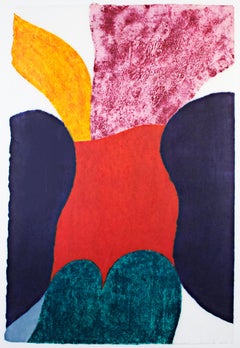
"India, " Abstract Woodcut and Monotype signed by Carol Summers
Located in Milwaukee, WI
"India" is a woodcut and monotype signed by Carol Summers. Here, Summer's abstract language for landscape imagery is taken to its most extreme: The image offers a view of a highly stylized waterfall, with red water falling down behind green foliage below. A hint of light blue at the lower left suggests a continuation of the water's flow. Above, purples and yellows mist upward from the power of the water. The playfulness of the image is enhanced by Summers' signature printmaking technique, which allows the ink from the woodblock to seep through the paper, blurring the edges of each form. Summers' signature can be found in pencil at the bottom of the rightmost blue form, with the title and edition at the bottom of the leftmost blue form. A copy of this print can be found in the collection of the Fine Arts Museums of San Francisco. 37.25 x 24.88 inches, artwork 48.5 x 35.5 inches, frame Numbered 44 from the edition of 75 Carol Summers (1925-2016) has worked as an artist throughout the second half of the 20th century and into the first years of the next, outliving most of his mid-century modernist peers. Initially trained as a painter, Summers was drawn to color woodcuts around 1950 and it became his specialty thereafter. Over the years he has developed a process and style that is both innovative and readily recognizable. His art is known for it’s large scale, saturated fields of bold color, semi-abstract treatment of landscapes from around the world and a luminescent quality achieved through a printmaking process he invented. In a career that has extended over half a century, Summers has hand-pulled approximately 245 woodcuts in editions that have typically run from 25 to 100 in number. His talent was both inherited and learned. Born in 1925 in Kingston, a small town in upstate New York, Summers was raised in nearby Woodstock with his older sister, Mary. His parents were both artists who had met in art school in St. Louis. During the Great Depression, when Carol was growing up, his father supported the family as a medical illustrator until he could return to painting. His mother was a watercolorist and also quite knowledgeable about the different kinds of papers used for various kinds of painting. Many years later, Summers would paint or print on thinly textured paper originally collected by his mother. From 1948 to 1951, Carol Summers trained in the classical fine and studio arts at Bard College and at the Art Students League of New York. He studied painting with Steven Hirsh and printmaking with Louis Schanker. He admired the shapes and colors favored by early modernists Paul Klee (Sw: 1879-1940) and Matt Phillips (Am: b.1927- ). After graduating, Summers quit working as a part-time carpenter and cabinetmaker (which had supported his schooling and living expenses) to focus fulltime on art. That same year, an early abstract, Bridge No. 1 was selected for a Purchase Prize in a competition sponsored by the Brooklyn Museum. In 1952, his work (Cathedral, Construction and Icarus) was shown the first time at the Museum of Modern Art in New York City in an exhibition of American woodcuts. In 1954, Summers received a grant from the Italian government to study for a year in Italy. Woodcuts completed soon after his arrival there were almost all editions of only 8 to 25 prints, small in size, architectural in content and black and white in color. The most well-known are Siennese Landscape and Little Landscape, which depicted the area near where he resided. Summers extended this trip three more years, a decision which would have significant impact on choices of subject matter and color in the coming decade. After returning from Europe, Summers’ images continued to feature historical landmarks and events from Italy as well as from France, Spain and Greece. However, as evidenced in Aetna’s Dream, Worldwind and Arch of Triumph, a new look prevailed. These woodcuts were larger in size and in color. Some incorporated metal leaf in the creation of a collage and Summers even experimented with silkscreening. Editions were now between 20 and 50 prints in number. Most importantly, Summers employed his rubbing technique for the first time in the creation of Fantastic Garden in late 1957. Dark Vision of Xerxes, a benchmark for Summers, was the first woodcut where Summers experimented using mineral spirits as part of his printmaking process. A Fulbright Grant as well as Fellowships from the Louis Comfort Tiffany Foundation and the Guggenheim Foundation followed soon thereafter, as did faculty positions at colleges and universities primarily in New York and Pennsylvania. During this period he married a dancer named Elaine Smithers with whom he had one son, Kyle. Around this same time, along with fellow artist Leonard Baskin, Summers pioneered what is now referred to as the “monumental” woodcut. This term was coined in the early 1960s to denote woodcuts that were dramatically bigger than those previously created in earlier years, ones that were limited in size mostly by the size of small hand-presses. While Baskin chose figurative subject matter, serious in nature and rendered with thick, striated lines, Summers rendered much less somber images preferring to emphasize shape and color; his subject matter approached abstraction but was always firmly rooted in the landscape. In addition to working in this new, larger scale, Summers simultaneously refined a printmaking process which would eventually be called the “Carol Summers Method” or the “ Carol Summers Technique”. Summers produces his woodcuts by hand, usually from one or more blocks of quarter-inch pine, using oil-based printing inks and porous mulberry papers. His woodcuts reveal a sensitivity to wood especially its absorptive qualities and the subtleties of the grain. In several of his woodcuts throughout his career he has used the undulating, grainy patterns of a large wood plank to portray a flowing river or tumbling waterfall. The best examples of this are Dream, done in 1965 and the later Flash Flood Escalante, in 2003. In the majority of his woodcuts, Summers makes the blocks slightly larger than the paper so the image and color will bleed off the edge. Before printing, he centers a dry sheet of paper over the top of the cut wood block or blocks, securing it with giant clips. Then he rolls the ink directly on the front of the sheet of paper and pressing down onto the dry wood block or reassembled group of blocks. Summers is technically very proficient; the inks are thoroughly saturated onto the surface of the paper but they do not run into each other. The precision of the color inking in Constantine’s Dream in 1969 and Rainbow Glacier in 1970 has been referred to in various studio handbooks. Summers refers to his own printing technique as “rubbing”. In traditional woodcut printing, including the Japanese method, the ink is applied directly onto the block. However, by following his own method, Summers has avoided the mirror-reversed image of a conventional print and it has given him the control over the precise amount of ink that he wants on the paper. After the ink is applied to the front of the paper, Summers sprays it with mineral spirits, which act as a thinning agent. The absorptive fibers of the paper draw the thinned ink away from the surface softening the shapes and diffusing and muting the colors. This produces a unique glow that is a hallmark of the Summers printmaking technique. Unlike the works of other color field artists or modernists of the time, this new technique made Summers’ extreme simplification and flat color areas anything but hard-edged or coldly impersonal. By the 1960s, Summers had developed a personal way of coloring and printing and was not afraid of hard work, doing the cutting, inking and pulling himself. In 1964, at the age of 38, Summers’ work was exhibited for a second time at the Museum of Modern Art. This time his work was featured in a one-man show and then as one of MoMA’s two-year traveling exhibitions which toured throughout the United States. In subsequent years, Summers’ works would be exhibited and acquired for the permanent collections of multiple museums throughout the United States, Europe and Asia. Summers’ familiarity with landscapes throughout the world is firsthand. As a navigator-bombardier in the Marines in World War II, he toured the South Pacific and Asia. Following college, travel in Europe and subsequent teaching positions, in 1972, after 47 years on the East Coast, Carol Summers moved permanently to Bonny Doon in the Santa Cruz Mountains in Northern California. There met his second wife, Joan Ward Toth, a textile artist who died in 1998; and it was here his second son, Ethan was born. During the years that followed this relocation, Summers’ choice of subject matter became more diverse although it retained the positive, mostly life-affirming quality that had existed from the beginning. Images now included moons, comets, both sunny and starry skies, hearts and flowers, all of which, in one way or another, remained tied to the landscape. In the 1980s, from his home and studio in the Santa Cruz mountains, Summers continued to work as an artist supplementing his income by conducting classes and workshops at universities in California and Oregon as well as throughout the Mid and Southwest. He also traveled extensively during this period hiking and camping, often for weeks at a time, throughout the western United States and Canada. Throughout the decade it was not unusual for Summers to backpack alone or with a fellow artist into mountains or back country for six weeks or more at a time. Not surprisingly, the artwork created during this period rarely departed from images of the land, sea and sky. Summers rendered these landscapes in a more representational style than before, however he always kept them somewhat abstract by mixing geometric shapes with organic shapes, irregular in outline. Some of his most critically acknowledged work was created during this period including First Rain, 1985 and The Rolling Sea, 1989. Summers received an honorary doctorate from his alma mater, Bard College in 1979 and was selected by the United States Information Agency to spend a year conducting painting and printmaking workshops at universities throughout India. Since that original sabbatical, he has returned every year, spending four to eight weeks traveling throughout that country. In the 1990s, interspersed with these journeys to India have been additional treks to the back roads and high country areas of Mexico, Central America, Nepal, China and Japan. Travel to these exotic and faraway places had a profound influence on Summers’ art. Subject matter became more worldly and nonwestern as with From Humla to Dolpo, 1991 or A Former Life of Budha, 1996, for example. Architectural images, such as The Pillars of Hercules, 1990 or The Raja’s Aviary, 1992 became more common. Still life images made a reappearance with Jungle Bouquet in 1997. This was also a period when Summers began using odd-sized paper to further the impact of an image. The 1996 Night, a view of the earth and horizon as it might be seen by an astronaut, is over six feet long and only slightly more than a foot-and-a-half high. From 1999, Revuelta A Vida (Spanish for “Return to Life”) is pie-shaped and covers nearly 18 cubic feet. It was also at this juncture that Summers began to experiment with a somewhat different palette although he retained his love of saturated colors. The 2003 Far Side of Time is a superb example of the new direction taken by this colorist. At the turn of the millennium in 1999, “Carol Summers Woodcuts...
Category

1990s Contemporary Monotype Prints and Multiples

Materials

Monotype, Woodcut

Opus 22, Ukiyo-e monotype landscape print, 2011
Located in New York, NY
Keiji Shinohara was born and raised in Osaka, Japan. After 10 years as an apprentice to the renowned Keiichiro Uesugi in Kyoto, he became a Master Printmaker and moved to the United ...
Category

2010s Contemporary Monotype Prints and Multiples

Materials

Monotype

Grand Canyon River, Organic Minimalism, Soft Blue Cyanotype, Abstract Landscape
Located in Barcelona, ES
This unique cyanotype monotype transforms organic, river-like forms into a serene field of flowing blues. Soft, undulating shapes echo water, canyon horizons, and desert calm, giving...
Category

2010s Post-Modern Monotype Prints and Multiples

Materials

Paper, Lithograph, Monotype

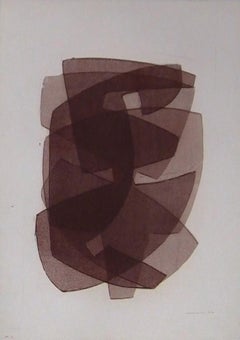
Estate No. 067036
Located in New Orleans, LA
Otto Neumann (1895-1975) was an expressionist painter and printmaker born in Heidelberg, Germany. He was one of the most versatile and original artists of the twentieth century. Neum...
Category

1960s Abstract Monotype Prints and Multiples

Materials

Monotype

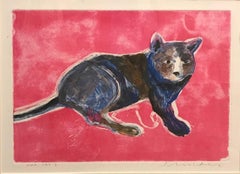
One Cat D
Located in Bozeman, MT
Born in 1937 in Breckenridge, Minnesota, Fritz Scholder knew what he must do at an early age. As a high school student at Pierre, South Dakota, his teacher was Oscar Howe...
Category

Late 20th Century Contemporary Monotype Prints and Multiples

Materials

Monotype

"Reign" Colorful, Abstract Monotype Print
Located in New York, NY
Reign Monotype print Natasha Karpinskaia's paintings are characterized by their vibrant colors, bold shapes, and dynamic compositions. She uses a variety of media, including acrylic...
Category

2010s Abstract Monotype Prints and Multiples

Materials

Paint, Paper, Monoprint, Monotype

Ghosts of Philadelphia 2
Located in Brooklyn, NY
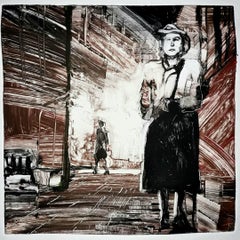
Monotype Dramatic imagery from Tom Bennett’s series of black and white monotypes, blending surrealistic mindscapes with stark realism About Tom Bennett: With quick brushstrokes, Tom...
Category

2010s Expressionist Monotype Prints and Multiples

Materials

Monotype, Archival Ink

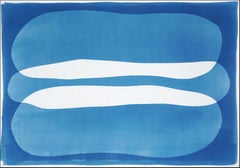
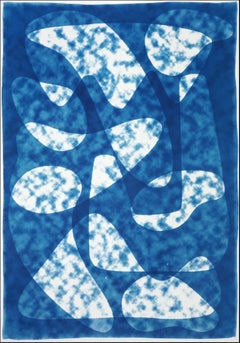
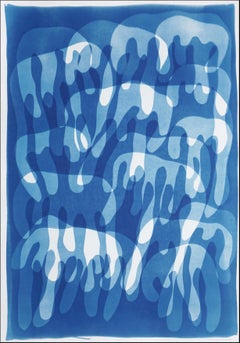
Blue Blurry Dream, Blue Tones Abstract Shapes, Unique Monotype Cyanotype, Paper
Located in Barcelona, ES
This unique monotype cyanotype, rendered in rich blue tones, draws inspiration from mid-century modern shapes to explore themes of balance and duality. Abstract forms echo harmony an...
Category

2010s Post-Modern Monotype Prints and Multiples

Materials

Paper, Monotype

House by the River, dramatic, black white, noir, mystery, genre
Located in Brooklyn, NY
Dramatic imagery from Tom Bennett’s series of black and white monotypes, blending surrealistic mindscapes with stark realism About Tom Bennett: With quick brushstrokes, Tom Bennett ...
Category

2010s Surrealist Monotype Prints and Multiples

Materials

Monotype

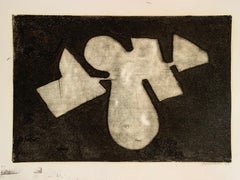
Estate No. 082031
Located in New Orleans, LA
Otto Neumann (1895-1975) was a German Expressionist painter and printmaker. His monotypes evolved from sharp, angular, black and whites to late abstract prints in a variety of colors. Neumann lived through revolutionary changes in the art world of prewar and postwar Germany. He was a prolific artist in Germany during a time of the country’s unprecedented academic and intellectual growth. His early work shows the influence of both French masters like Cezanne and the contemporary style that was then being developed by German Expressionists like Kirchner. A master printmaker, Neumann was also inspired by the works of Albrecht Durer, whose allegorical subject-matter and unmatched drawing technique Neumann would emulate throughout his career. A lifetime preoccupation with the human figure informs his work, with frieze-like human figures recalling ancient Greek art...
Category

1960s Expressionist Monotype Prints and Multiples

Materials

Monotype

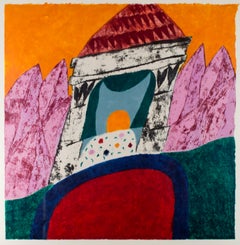
"Diocletian s Retreat, " Woodcut and Monotype signed by Carol Summers
Located in Milwaukee, WI
"Diocletian's Retreat" is a woodcut and monotype signed by Carol Summers. The image combines landscape and architecture, in this case a classical struc...
Category

1990s Contemporary Monotype Prints and Multiples

Materials

Monotype, Woodcut

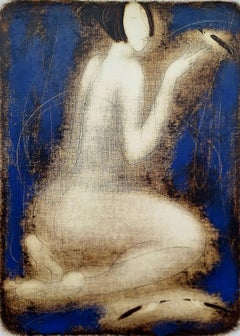
Nude with birds. Contemporary Figurative Monotype Print, European artist
Located in Warsaw, PL
Contemporary figurative nude monotype print by Belarussian artist, Siergiej Timochow. Print depicts a sitting woman. The composition is in blue with details in black. Monotype on tex...
Category

Early 2000s Contemporary Monotype Prints and Multiples

Materials

Cardboard, Monotype

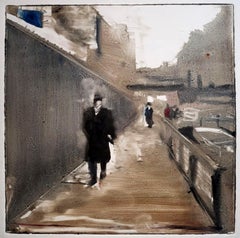
Ghosts of New York 2, monochromatic dramatic city-scape surrealistic undertones
Located in Brooklyn, NY
One of a series of oil-based monotypes on fine printmaking paper. Monochromatic with subtle color. Moody, symbolist/expressionist image reflecting on NY city's ambient current and past.
Category

2010s Symbolist Monotype Prints and Multiples

Materials

Monotype, Archival Paper

The Great Depression 3, dramatic, black white, noir, mystery, genre
Located in Brooklyn, NY
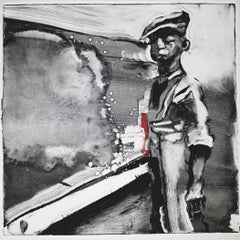
Dramatic imagery from Tom Bennett’s series of black and white monotypes, blending surrealistic mindscapes with stark realism About Tom Bennett: With quick brushstrokes, Tom Bennett ...
Category

2010s Surrealist Monotype Prints and Multiples

Materials

Monotype, Archival Paper

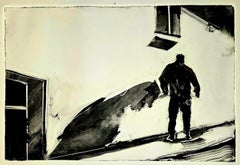
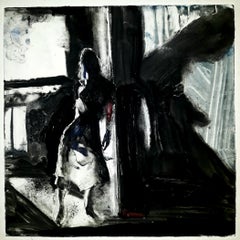
Eremitic, monotype powerful black and white, light and shadow
Located in Brooklyn, NY
A monotype created with oil based etching inks and oil paint printed from a plexiglass matrix. Expressive, Figurative image with stark light and shadow.
Category

2010s Expressionist Monotype Prints and Multiples

Materials

Monotype

Mercado
Located in Lyons, CO
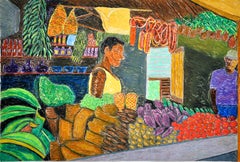
Color monotype. Rafael Ferrer depicts the intense life of the Caribbean in his paintings and prints. With hot colors, deep shadows and mysterious relationships among his figures, Fe...
Category

1990s Contemporary Monotype Prints and Multiples

Materials

Monotype

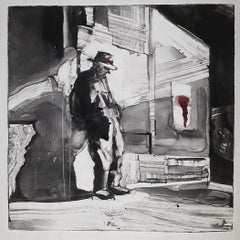
Third Man 3, night, city scape, monochromatic, narrative
Located in Brooklyn, NY
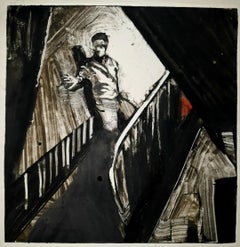
Dramatic imagery from FILM NOIR series of black and white monotypes, blending surrealistic mindscapes with stark realism About Tom Bennett: With quick brushstrokes, Tom Bennett crea...
Category

2010s American Modern Monotype Prints and Multiples

Materials

Archival Paper, Monotype

Kiss of Death, night scene, interior, black and white, dramatic narrative
Located in Brooklyn, NY
Dramatic imagery from FILM NOIR series of black and white monotypes, blending surrealistic mindscapes with stark realism About Tom Bennett: With quick brushstrokes, Tom Bennett crea...
Category

2010s American Modern Monotype Prints and Multiples

Materials

Archival Paper, Monotype

The New Great Depression 5, dramatic, black white, noir, mystery, genre
Located in Brooklyn, NY
Dramatic imagery from Tom Bennett’s series of black and white monotypes, blending surrealistic mindscapes with stark realism About Tom Bennett: With quick brushstrokes, Tom Bennett ...
Category

2010s Surrealist Monotype Prints and Multiples

Materials

Archival Paper, Monotype

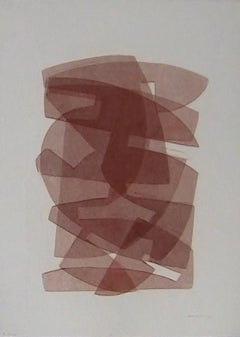
Estate No. 091013
Located in New Orleans, LA
Otto Neumann (1895-1975) was a German Expressionist painter and printmaker. His monotypes evolved from sharp, angular, black and whites to late abstract p...
Category

1960s Expressionist Monotype Prints and Multiples

Materials

Monotype

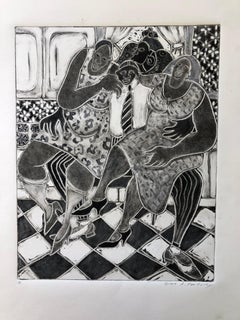
Ann Tanksley "Images of Zora" Monotype
Located in San Francisco, CA
Ann Tanksley is an African American artist who was born in 1934. She studied at Carnegie Mellon as well as the Arts Students League and New School for Soc...
Category

1980s Monotype Prints and Multiples

Materials

Monotype

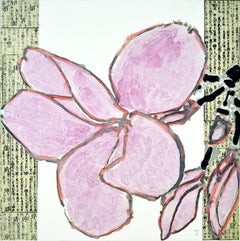
Pink Plumeria IV
Located in Lyons, CO
Color monotype with collaged antique paper. Robert Kushner is a painter and a sculptor. He gained attention in the early seventies as a performance ar...
Category

2010s Contemporary Monotype Prints and Multiples

Materials

Monotype

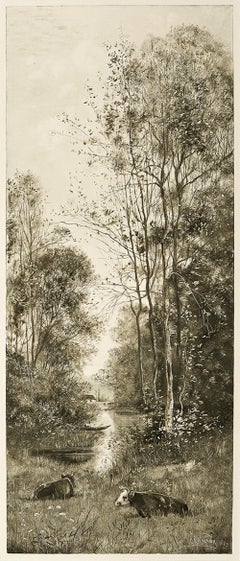
Brookside
Located in New York, NY
Signed (at lower right): C A Walker
Category

Late 19th Century American Realist Monotype Prints and Multiples

Materials

Monotype

Dripping Paint, Graffiti Forms in Blue Tones, Floating Abstract Shapes on Paper
Located in Barcelona, ES
This unique monotype cyanotype, rendered in rich blue tones, invites the viewer into a dreamlike rhythm of interwoven shapes. Created using the cyanotype process, this one-of-a-kind ...
Category

2010s Abstract Monotype Prints and Multiples

Materials

Paper, Watercolor, Lithograph, Monotype

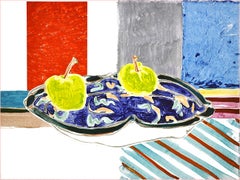
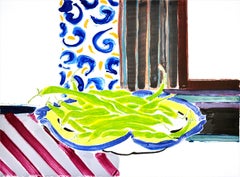
"Green Apples III"
Located in Lyons, CO
Kushner completed a series of monotypes, many with collaged decorative papers. He worked from still-lives of flowers, fruits, pitchers and Betty Woodman ceramic vessels. These prints...
Category

2010s Contemporary Monotype Prints and Multiples

Materials

Monotype

"Green Beans I"
Located in Lyons, CO
Kushner completed a series of monotypes, many with collaged decorative papers. He worked from still-lives of flowers, fruits, pitchers and Betty Woodman ceramic vessels. These prints...
Category

2010s Contemporary Monotype Prints and Multiples

Materials

Monotype

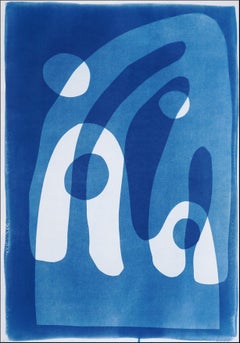
Rain Over Mountain, Modern Art in Blue Tones, Landscape, Cyanotype Monotype 2024
Located in Barcelona, ES
This is an exclusive handprinted unique cyanotype that takes its inspiration from the mid-century modern shapes. It's made by layering paper cutouts and different exposures using uv-...
Category

2010s Modern Monotype Prints and Multiples

Materials

Watercolor, Lithograph, Monotype, Paper

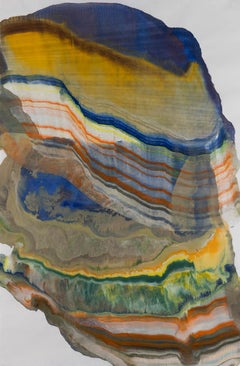
A Mineral Exoskeleton - Contemporary Abstract Geology Encaustic Monotype, 2024
Located in Kent, CT
In this contemporary encaustic monotype, layers of pigmented beeswax on lightweight paper create an undulating composition suggesting layers of the earth's crust and geological forma...
Category

2010s Contemporary Monotype Prints and Multiples

Materials

Encaustic, Archival Paper, Monotype

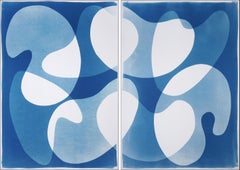
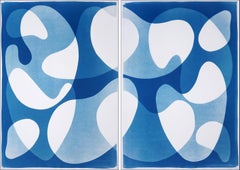
Blue Modular Forms, Organic Floating Forms Diptych, Mobile Shapes Cyanotype
Located in Barcelona, ES
This unique cyanotype monotype diptych features fluid, interlocking shapes that drift across luminous fields of blue, creating a rhythmic balance between movement and stillness. Hand...
Category

2010s Naturalistic Monotype Prints and Multiples

Materials

Handmade Paper, Monotype

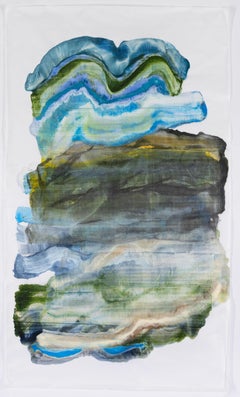
Stormy - Abstract Geology Encaustic Monotype Blue Green, 2024
Located in Kent, CT
In this contemporary encaustic monotype, layers of pigmented beeswax on a scroll of lightweight Japanese paper create an undulating composition suggesting layers of the earth's crust...
Category

2010s Contemporary Monotype Prints and Multiples

Materials

Encaustic, Archival Paper, Monotype

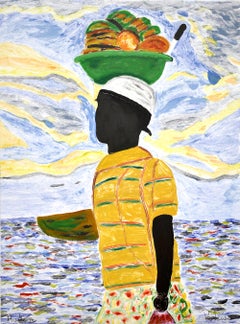
Haiti II
Located in Lyons, CO
Color monotype. Rafael Ferrer depicts the intense life of the Caribbean in his paintings and prints. With hot colors, deep shadows and mysterious relationships among his figures, Fe...
Category

1990s Contemporary Monotype Prints and Multiples

Materials

Monotype

Pink Lake, square abstract monoprint
Located in New York, NY
The coastal landscapes of Maine have been the main source of inspiration for Rachel Burgess for many years. Burgess’s ongoing fascination with how land meets water— along rivers, lak...
Category

2010s Contemporary Monotype Prints and Multiples

Materials

Paper, Monoprint, Monotype

Vintage Modern Forms, Abstract Flaoting Shapes in Blue, Organic Design, Paper
Located in Barcelona, ES
This unique cyanotype monotype diptych features fluid, interlocking shapes that drift across luminous fields of blue, creating a rhythmic balance between movement and stillness. Hand...
Category

2010s Naturalistic Monotype Prints and Multiples

Materials

Handmade Paper, Monotype

Untitled Print CR203-Pr (Message to inquire about price)
Located in Kansas City, MO
Monotype Dimensions : 44.5 x 30.75 inches image and paper Peter Voulkos (popular name of Panagiotis Voulkos; January 29, 1924 – February 16, 2002) was an American artist of Greek descent. He is known for his abstract expressionist ceramic sculptures, which crossed the traditional divide between ceramic crafts and fine art. While his early work was fired in electric and gas kilns, later in his career he primarily fired in the anagama kiln of Peter Callas, who had helped to introduce Japanese wood firing aesthetics in the United States. After serving in the United States Army during the Second World War, Voulkos studied painting and printmaking at Montana State College, in Bozeman (now Montana State University), where he was also introduced to ceramics; Frances Senska...
Category

1980s Abstract Monotype Prints and Multiples

Materials

Monotype

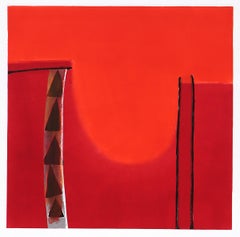
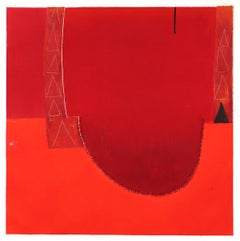
20th Century Monotype, Abstract Red Square with Black Triangles
Located in Denver, CO
This original fine art monotype print by Denver artist Wilma Fiori features a striking abstract composition rendered in deep black, red, and scarlet tones. The bold palette and layer...
Category

Mid-20th Century Abstract Geometric Monotype Prints and Multiples

Materials

Monotype

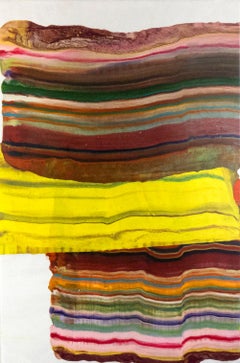
Ex Uno Plures Eight - Geological Neon Yellow Magenta Pink Monotype, 2020
Located in Kent, CT
Laura Moriarty's Ex Uno Plures 8 is a multicolored encaustic monotype on kozo paper. Layers of pigmented beeswax on lightweight paper create an undulating composition suggesting laye...
Category

2010s Contemporary Monotype Prints and Multiples

Materials

Encaustic, Archival Paper, Monotype

Ann Tanksley "Images of Zora" Monotype
Located in San Francisco, CA
Ann Tanksley is an African American artist who was born in 1934. She studied at Carnegie Mellon as well as the Arts Students League and New School for Soc...
Category

1980s Monotype Prints and Multiples

Materials

Monotype

Sunset with Reflection, Blue Tones Unique Monotype Cyanotype, Desert Modernism
Located in Barcelona, ES
Sunset with Reflection is a unique cyanotype monotype on watercolor paper, blending the timeless beauty of ocean horizos with the clean, geometric serenity inspired by Desert Moderni...
Category

2010s Contemporary Monotype Prints and Multiples

Materials

Paper, Monotype

Estate No. 091014
Located in New Orleans, LA
Otto Neumann (1895-1975) was an expressionist painter and printmaker born in Heidelberg, Germany. He was one of the most versatile and original artists of...
Category

1970s Expressionist Monotype Prints and Multiples

Materials

Monotype

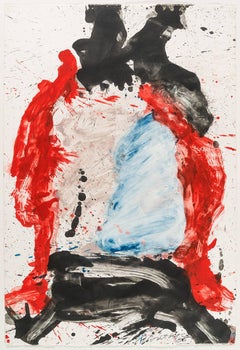
Ma + Pa
By Faith Bayless
Located in Kansas City, MO
Faith Bayless Title: Ma + Pa Medium: Woodcut on Monotype Date: 2018 Dimensions: 6"x4"x0.25" COA provided
Category

2010s Contemporary Monotype Prints and Multiples

Materials

Monotype, Woodcut

Ma + Pa
Ma + Pa
$149 Sale Price
50% Off
Wilma Fiori Abstract Monotype Print in Red, Mboom Creation Myth
Located in Denver, CO
This original vintage monotype print by Denver artist Wilma Fiori presents a powerful abstract composition rendered in brilliant shades of scarlet and red, evoking intensity, movemen...
Category

20th Century Abstract Expressionist Monotype Prints and Multiples

Materials

Monotype

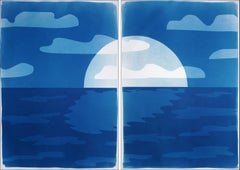
Sunset Over Ocean, Desert Modernism Landscape Diptych, Monotype Cyanotype, Paper
Located in Barcelona, ES
Sunset Over Ocean is a unique cyanotype monotype on watercolor paper, blending the timeless beauty of ocean horizons with the clean, geometric serenity inspired by Desert Modernism. ...
Category

2010s Contemporary Monotype Prints and Multiples

Materials

Paper, Monotype

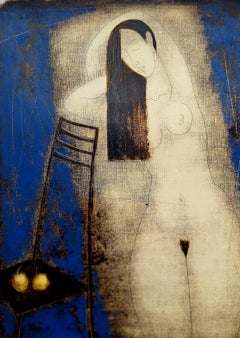
Nude with paradise apples. Contemporary Nude Monotype Print, European artist
Located in Warsaw, PL
Contemporary figurative nude monotype print by Belarussian artist, Siergiej Timochow. Print depicts a sitting woman. The composition is in blue and dark brown. Monotype on textured p...
Category

Early 2000s Contemporary Monotype Prints and Multiples

Materials

Cardboard, Monotype

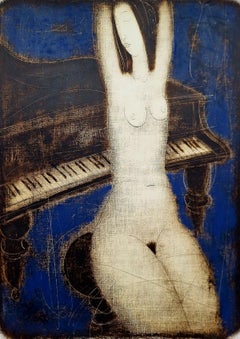
Nude with piano. Contemporary Figurative Nude Monotype Print, European artist
Located in Warsaw, PL
Contemporary figurative nude monotype print by Belarussian artist, Siergiej Timochow. Print depicts a sitting woman. The composition is in blue and black. Monotype on textured paper....
Category

Early 2000s Contemporary Monotype Prints and Multiples

Materials

Cardboard, Monotype

Estate No. 082050
Located in New Orleans, LA
Otto Neumann (1895-1975) was a German Expressionist painter and printmaker. His monotypes evolved from sharp, angular, black and whites to late abstract prints in a variety of colors. Neumann lived through revolutionary changes in the art world of prewar and postwar Germany. He was a prolific artist in Germany during a time of the country’s unprecedented academic and intellectual growth. His early work shows the influence of both French masters like Cezanne and the contemporary style that was then being developed by German Expressionists like Kirchner. A master printmaker, Neumann was also inspired by the works of Albrecht Durer, whose allegorical subject-matter and unmatched drawing technique Neumann would emulate throughout his career. A lifetime preoccupation with the human figure informs his work, with frieze-like human figures recalling ancient Greek art...
Category

1960s Expressionist Monotype Prints and Multiples

Materials

Monotype

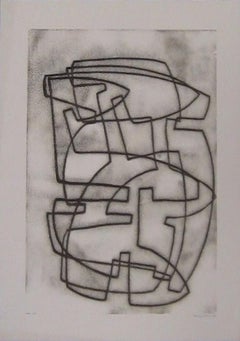
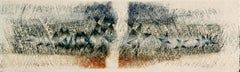
Bertoia — Mid-Century Visionary Abstraction, Unique
Located in Myrtle Beach, SC
Harry Bertoia, Untitled (Abstraction), monotype, c. 1960, a unique impression. Signed 'HB' in pencil, lower right sheet corner, verso. Inscribed '1852' (the artist’s inventory number) in pencil, lower right sheet corner, recto. A superb, painterly impression, on cream wove Japan paper, the full sheet, in excellent condition. Unmatted, unframed. Sheet size 12 x 39 inches (30 x 99 cm). Provenance: Val Bertoia; Private Collection; Rago Auctions, Lambertville, NJ. Literature: 'Harry Bertoia: Monoprints,' Nancy N. Schiffer, Schiffer Publishing LTD, 2011; pg. 253. This work is included in the Harry Bertoia Foundation digital resource, Harry Bertoia Catalogue Raisonné, number TD.MO.1584. ABOUT THE ARTIST Harry Bertoia (1915-1978) was a visionary Italian-American artist, sculptor, and designer. Born in San Lorenzo, Italy, Bertoia immigrated to the United States with his family at age fifteen, settling in Detroit, Michigan. From an early age, Bertoia demonstrated a keen interest in art and design, studying painting and drawing at the Cass Technical High School in Detroit. Later, he attended the Cranbrook Academy of Art in Bloomfield Hills, Michigan, where he studied under renowned designers Eliel Saarinen and Charles Eames. At Cranbrook, Bertoia first began to explore the possibilities of working with metal, a medium that would come to define his artistic career. In the 1940s, Bertoia moved to California to work for Charles and Ray Eames, contributing to the development of innovative molded plywood furniture. However, his experimentation with metal wire sculpture would ultimately catapult him to international acclaim. Bertoia's iconic "Sonambient" sculptures, consisting of delicate metal rods arranged in various configurations, created ethereal sounds when touched or moved, transforming the act of sculpture into a multisensory experience. Bertoia's talent and innovation caught the attention of Florence Knoll, the founder of Knoll Associates, a leading furniture design company. In 1950, Bertoia began collaborating with Knoll, producing a series of iconic wire chairs that became emblematic of mid-century modern design. His "Diamond Chair," with its geometric form and airy construction, remains a classic of modern furniture design. Bertoia continued to explore sculpture as a means of artistic expression, experimenting with new forms and materials. His work was characterized by organicism and fluidity, with forms that evoked natural phenomena such as waves, leaves, and clouds. A decade before Harry Bertoia began creating three-dimensional sculpture, he dedicated his creative efforts to producing experimental prints at the Cranbrook Academy in Bloomfield Hills, Michigan, pursuing a passion that would continue for the rest of his life. With these spontaneous works, he worked intuitively, testing different tools and techniques to achieve his desired effects. Rather than using a traditional mechanical pressing process, he would apply ink to a glass or smooth Masonite plate with a sheet of paper laid directly on top. Then, tools such as brayers, dog hair brushes, styluses, and different parts of his hands were employed to draw or “press” the images on the back of the sheet. Rice paper was typically used due to its semi-translucent nature, offering Bertoia limited visibility of the effects of his experimentation, but ultimately, the unpredictable nature of the process was an integral aspect of the results, which never ceased to delight him. Each work was a singular composition with abstract imagery ranging from linear, structural compositions to fantastic surrealistic forms to poetic tonal landscapes. He received little input from other artists, developing his unique vision with rare purity and a deep personal resonance. From his first year of printmaking in 1940, Bertoia quickly amassed an extensive collection of unique works. The compositions were strongly tied to the non-objective movement, which, while popular in Europe, was still in its nascent stages in the US. There were few proponents of this new art form to be found in the 1940s, and it was Hilla Rebay, then Director of the Guggenheim Museum of Non-Objective Art, who gave Bertoia the encouragement and promotion he needed. In 1943, Bertoia sent approximately 100 monotypes to Rebay for review. After receiving the prints, she responded with a surprising offer to buy them all. Rebay then began including them in the museum’s exhibitions. The Guggenheim shows succeeded in putting Bertoia’s name out into the world. He began exhibiting his works regularly at the Neierndorf Gallery in New York and was provided a stipend to ensure a steady supply of prints until Karl Neierndorf died in 1947. By the 1950s...
Category

1960s American Modern Monotype Prints and Multiples

Materials

Monotype

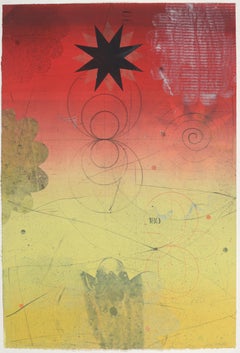
Navigator XIII - Yellow, Red Vertical Abstract Monotype Black Star Circles, 2005
Located in Kent, CT
Abstract monotype on paper with geometric shapes on a background transitioning from pale yellow to dark red. A pointed star in black shapes contrast the circular and floral shapes in...
Category

Early 2000s Contemporary Monotype Prints and Multiples

Materials

Archival Paper, Monotype

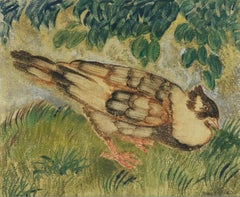
Procede by Georges Manzana Pissarro - Monotype of a bird, Animal
Located in London, GB
Procede by Georges Manzana Pissarro (1871-1961) Coloured monotype with gold, silver and pencil 24 x 30 cm (9¹/₂ x 11³/₄ inches) Signed lower right, Manzana Artist biogaphy Like all ...
Category

1920s Post-Impressionist Monotype Prints and Multiples

Materials

Gold, Silver

XXII, Abstract Expressionist Monoprint by Liu Jian
Located in Long Island City, NY
Liu Jian, Chinese (1961 - ) - XXII, Year: 1999, Medium: Monoprint, signed and dated in pencil, Size: 25 x 19 in. (63.5 x 48.26 cm), Description: An Abstract Expressionist monop...
Category

1990s Abstract Expressionist Monotype Prints and Multiples

Materials

Monotype

Valley and Mountain, Impressionist Monotype by John Beerman
Located in Long Island City, NY
John Beerman, American (1958 - ) - Valley and Mountain, Year: 1990, Medium: Monotype, signed in pencil, Image Size: 14.5 x 15 inches, Size: 21 x 26 in. (53.34 x 66.04 cm), Printe...
Category

1990s Impressionist Monotype Prints and Multiples

Materials

Monotype

Serene Cove Waters, Feng Shui Seascape, Blue and White Ripples, Horizontal Print
Located in Barcelona, ES
This is an exclusive handprinted limited edition cyanotype. "Serene Cove Waters" is a handmade cyanotype print portraying fresh ripples movements in a Greek Islands cove...
Category

2010s Abstract Monotype Prints and Multiples

Materials

Emulsion, Mixed Media, Watercolor, Photographic Paper, Lithograph, Monop...

Monotype prints and multiples for sale on 1stDibs.

Find a wide variety of authentic Monotype prints and multiples available on 1stDibs. While artists have worked in this medium across a range of time periods, art made with this material during the 21st Century is especially popular. If you’re looking to add prints and multiples created with this material to introduce a provocative pop of color and texture to an otherwise neutral space in your home, the works available on 1stDibs include elements of blue, orange, yellow, purple and other colors. There are many well-known artists whose body of work includes ceramic sculptures. Popular artists on 1stDibs associated with pieces like this include Kind of Cyan, David Collins, Anna Kunz, and Kim Frohsin. Frequently made by artists working in the Contemporary, Abstract, all of these pieces for sale are unique and many will draw the attention of guests in your home. Not every interior allows for large Monotype prints and multiples, so small editions measuring 0.01 inches across are also available