18th Century and Earlier More Prints
to
20
100
92
26
19
2
Overall Width
to
Overall Height
to
34
2
1
26
13
10
7
5
239
511
4,630
2,984
33
57
92
132
239
380
793
1,073
599
424
175
134
103
2
7
2
2
2
2
2
2
2
1
1
1
1
1
1
1
1
1
1
1
1
202
46
19
12
12
31
62
138
28
Period: 18th Century and Earlier
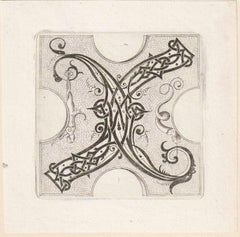
Mythological Roman Alphabet Leaf with Celtic Motif, Letter X
Located in Middletown, NY
Engraving printed in black ink on hand-made, thin-laid paper, 3 5/8 x 3 5/8 inches (84 x 84 mm), 3/4 inch margins. In excellent condition, printed 19th century.
Category
Italian School 18th Century and Earlier More Prints
Materials
Laid Paper, Engraving
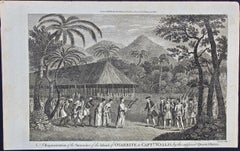
Surrender of Tahiti to Captain Wallis: An Original 18th C. Engraving
By John Webber
Located in Alamo, CA
"A Representation of the Surrender of the Island of Otaheite to Capt.n Wallis, by the Supposed Queen of Oberea" is an original 18th century engraving created by Sparrow, from a drawi...
Category
18th Century and Earlier More Prints
Materials
Engraving

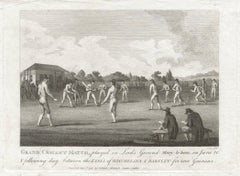
Grand Cricket Match at Lord
s Ground, Marylebone, sport engraving, 1793
Located in Melbourne, Victoria
Title : 'Grand Cricket Match, played in Lord's Ground Mary-le-bone, on June 20th and following day between the Earl's of Winchelsea and darnley for 1000 Guineas.'
Publication line ...
Category
Victorian 18th Century and Earlier More Prints
Materials
Engraving
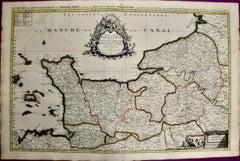
The Normandy Region of France: A 17th C. Hand-colored Map by Sanson and Jaillot
Located in Alamo, CA
This large hand-colored map entitled "Le Duché et Gouvernement de Normandie divisée en Haute et Basse Normandie en divers Pays; et par evêchez, avec le Gouvernement General du Havre ...
Category
18th Century and Earlier More Prints
Materials
Engraving
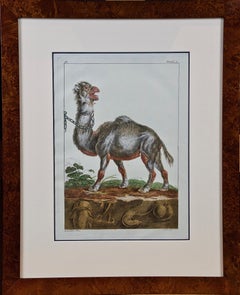
18th Century Hand Colored Engraving of a Camel from Pennant
s " British Zoology"
Located in Alamo, CA
An 18th Century Hand Colored Engraving of a Camel from Thomas Pennant's famous publication on natural history "The British Zoology, Published under the Inspection of the Cymmrodorion...
Category
Naturalistic 18th Century and Earlier More Prints
Materials
Engraving
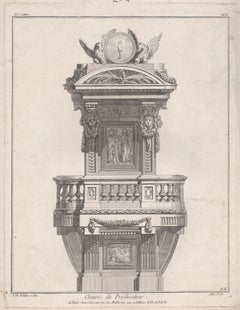
French Neoclassical design for a Pulpit, engraving after Delafosse
Located in Melbourne, Victoria
Copper-line engraving. C1768.
Delafosse was a French decorative designer, engraver and architect. Apprenticed for a time to a sculptor, by 1767 he styled himself an 'architect and professor of design'. He published the first volume of his most important work, 'Nouvelle Iconologie Historique' in 1768, containing 110 plates of his designs for furniture, decorative arts and architectural...
Category
French School 18th Century and Earlier More Prints
Materials
Engraving
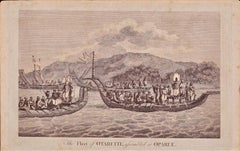
The Fleet of Tahiti displayed for Captain Cook: An Original 18th C. Engraving
Located in Alamo, CA
"The Fleet of Otaheite, Assembled at Oparee" is an original 18th century engraving from a drawing by William Hodges (1744-1797), who was the artist who accompanies Captain Cook on hi...
Category
18th Century and Earlier More Prints
Materials
Engraving
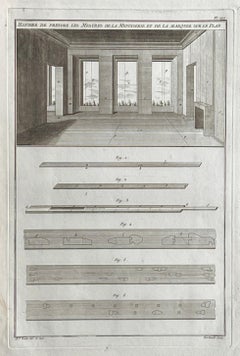
Maniere de Prendre Les Mesures, Roubo French cabinetmaking design engraving
Located in Melbourne, Victoria
'Maniere de Prendre Les Mesures de la Menuiserie et de la Marquer sur le Plan'
French copper-line engraving by Berthault after Andre Jacob Roubo (1739–1791). 18th century laid water...
Category
French School 18th Century and Earlier More Prints
Materials
Engraving
Cartusia Bruxellensis Monastery in Brussels: A 17th C. Hand-colored Engraving
Located in Alamo, CA
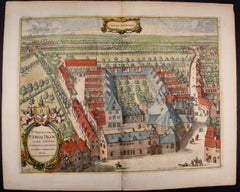
This is a 17th century hand-colored copperplate engraving entitled "Cartusia Bruxellensis" by Lucas Vorsterman, the Younger, after a drawing by Jacob van Werden or Jacques van Weerden, published in 1659 in Antonius Sanderus' book 'Chorographia sacra Brabantiae sive celebrium aliquot in ea provincia ecclesiarum et coenobiorum descriptio . . . Brussel' (A sacred chorography of Brabant, or a description of several famous churches and convents in that province). It also appeared in other publications by Sanderus. In the 17th century, Brussels was within the Duchy of Brabant.
This engraving depicts a bird's-eye view of the Scheut Carthusian Monastery in Brussels. Scheut is a district of Anderlecht, a municipality of Brussels, Belgium. The monastery housed monks, who took a vow of silence, in 20 rooms. There is a central courtyard with trees and shrubs. Monks are depicted strolling along its pathways. The cells for the friars are in the middle the cloister. There are people along the streets in the foreground and to the right of the large, imposing monastery. Some are on horseback, others are walking. In the lower right, what appears to be a dog pulls a small cart containing barrels, possibly of beer or wine. Districts and neighborhoods are labelled in the background, including Scheut, Anderlecht and Ransfort. A very ornate cartouche in the lower left contains Latin and the artist's attribution. Another decorative cartouche in the upper central area contains the title.
This beautifully hand-colored and detailed engraving is printed on laid, chain-linked paper with wide, full margins. The sheet measures 17.25" high and 21.25" wide. It has Latin text on the verso. It has a central vertical fold, as issued, which is reinforced on the verso. Two small spots in the lower margin may actually represent drops of watercolor paint used to color the engraving. It is otherwise in very good condition.
Antonius Sanderus (1586-1664) was a Flemish Catholic cleric and historian. He was born "Antoon Sanders", but Latinized his name like many writers and scholars of his time. He was the author of several books, including 'Chorographia Sacra Brabantiae', which was illustrated with this engraving.
Lucas Vorsterman the Younger (1624-between 1666 & 1676) was a Flemish Baroque engraver and draughtsman. He produced engravings after the work of contemporary painters and for books by Antwerp publishers.
Jacob van Werden or Jacques van Weerden (active 1643-1669), was a Flemish draughtsman, cartographer, military engineer and archer who was active in the Habsburg Netherlands. His drawings were used as designs for prints executed by various printmakers. He worked on maps, topographical views, historical scenes, portraits and book illustrations. He had a career as a military engineer and a member of the guard of the Spanish King. He advised on various military engineering projects and was an engineer of the Spanish army...
Category
Old Masters 18th Century and Earlier More Prints
Materials
Engraving
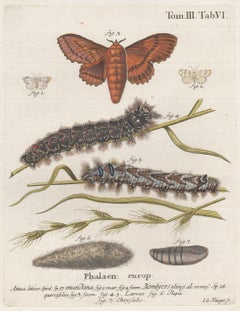
Esper Antique 18th century Moth engraving with original hand-colouring
Located in Melbourne, Victoria
A German copper-line engraving with original hand-colouring of a moth, caterpillars and chrysalis. Printed on hand made laid paper. Engraved by JC Bock.
From Eugenius Esper's "Die S...
Category
Naturalistic 18th Century and Earlier More Prints
Materials
Engraving
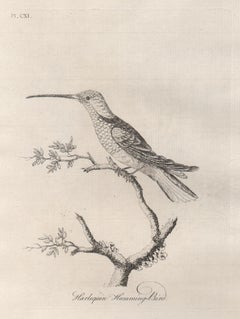
Harlequin Humming-Bird, 18th century bird engraving by John Latham
By John Latham
Located in Melbourne, Victoria
Copper-line engraving. 1781. From John Latham's 'General Synopsis of Birds' 1781-1785, and its Supplements. Plate number top left. Laid paper.
John Latham was the leading English or...
Category
Naturalistic 18th Century and Earlier More Prints
Materials
Engraving
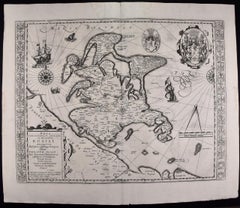
Rugen Island, Germany: An Early 17th Century Map by Mercator and Hondius
Located in Alamo, CA
This is an early 17th century map entitled "Nova Famigerabilis Insulae Ac Ducatus Rugiae Desciptio" (Map of Rugen Island, Germany) by Gerard Mercator and Henricus and Joducus Hondiu...
Category
Old Masters 18th Century and Earlier More Prints
Materials
Engraving
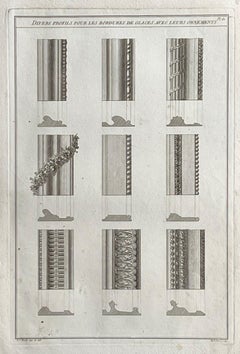
Different Profils Pour Les Bordures, Roubo French cabinetmaking design engraving
Located in Melbourne, Victoria
'Different Profils Pour Les Bordures de Glaces avec leurs Ornements'
French copper-line engraving by Michelinot after Andre Jacob Roubo (1739–1791). 18th century laid watermarked pa...
Category
French School 18th Century and Earlier More Prints
Materials
Engraving
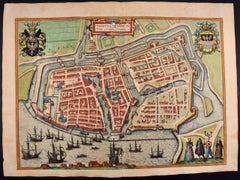
View of Emden, Germany: A 16th Century Hand-colored Map by Braun
Hogenberg
Located in Alamo, CA
This is a 16th century original hand-colored copperplate engraved map of a bird's-eye View of Embden, Germany entitled " Emuda, vulgo Embden vrbs Frisia orientalis primaria" by Georg Braun & Franz Hogenberg, in volume II of their famous city atlas "Civitates Orbis Terrarum", published in Cologne, Germany in 1575.
This is a beautifully colored and detailed map of Emden, a seaport in northwestern Germany, along the Ems River and perhaps portions of over Dollart Bay, near the border with the Netherland. The map depicts a bird's-eye view of the city from the southwest, as well as a view of the harbor and an extensive system of canals. Numerous ships of various sizes, as well as two rowboats containing numerous occupants are seen in the main waterway in the foreground and additional boats line two canals in the center of the city. Two men and two women are shown on a hill in the foreground on the right, dressed in the 16th century style of nobility. Two ornate crests are included in each corner. A title strap-work cartouche is in the upper center with the title in Latin. The crest on the right including Engelke up de Muer (The Little Angel on the Wall) was granted by Emperor Maximilian I in 1495.
This is an English translation of an excerpt of Braun's description of Embden: "In Emden, the capital of East Frisia, rich merchants live in very fine houses. The city has a broad and well-situated harbour, which in my opinion is unique in Holland. Frisia and the whole of the Netherlands, for the ships can anchor here right under the city walls. They have also extended the harbour as far as the New Town, so that up to 400 ships can now find shelter here when the sea is rough."
The emphasis on the harbor and waterways within the city highlights the importance of Emden's place as a seaport at this time. Embden developed from a Dutch/Flemish trading settlement in the 7th-8th centuries into a city as late as late 14th century. In 1494 it was granted staple rights, and in 1536 the harbour was extended. In the mid-16th century Emden's port was thought to have the most ships in Europe. Its population then was about 5,000, rising to 15,000 by the end of the 16th century. The Ems River flowed directly under the city walls, but its course was changed in the 17th century by the construction of a canal. Emden has canals within its city limits, a typical feature of Dutch towns, which also enabled the extension of the harbor. In 1744 Emden was annexed by Prussia and is now part of Germany. It was captured by French forces in 1757 during the Seven Years' War, but recaptured by Anglo-German forces in 1758. During the Napoleonic French era, Emden and the surrounding lands of East Frisia were part of the short-lived Kingdom of Holland.
References:Van der Krogt 4, 1230, State 2; Taschen, Braun and Hogenberg...
Category
Old Masters 18th Century and Earlier More Prints
Materials
Engraving
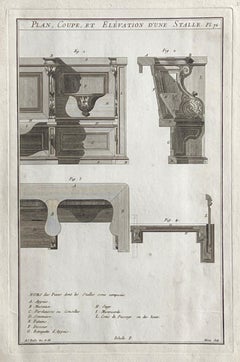
Plan, Coupe, et Elevation d
une Stalle, Roubo French cabinetmaking engraving
Located in Melbourne, Victoria
'Plan, Coupe, et Elevation d'une Stalle'
French copper-line engraving by Milson after Andre Jacob Roubo (1739–1791). 18th century laid watermarked paper.
From Roubo's 'L'Art du Men...
Category
French School 18th Century and Earlier More Prints
Materials
Engraving
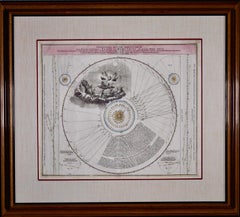
The Orbits of Venus and Mercury: An 18th C. Framed Celestial Map by Doppelmayr
Located in Alamo, CA
This 18th century hand-colored copperplate celestial map by Johann Doppelmayr entitled "Phænomena Motuum Irregularium quos Planetar inferiores Venus et M...
Category
18th Century and Earlier More Prints
Materials
Engraving
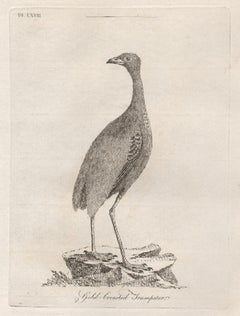
Gold-breasted Trumpeter, 18th century bird engraving by John Latham
By John Latham
Located in Melbourne, Victoria
Copper-line engraving. 1781. From John Latham's 'General Synopsis of Birds' 1781-1785, and its Supplements. Plate number top left. Laid paper with watermark.
John Latham was the lea...
Category
Naturalistic 18th Century and Earlier More Prints
Materials
Engraving
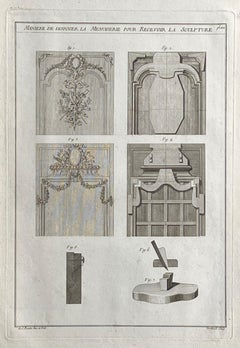
Maniere de Disposer La Menuiserie, Roubo French cabinetmaking design engraving
Located in Melbourne, Victoria
'Maniere de Disposer La Menuiserie pour Recevoir La Sculpture'
French copper-line engraving by Berthault after Andre Jacob Roubo (1739–1791). 18th century laid watermarked paper.
F...
Category
French School 18th Century and Earlier More Prints
Materials
Engraving
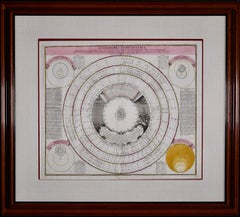
Theories of Planetary Orbits: A Framed 18th C. Celestial Map by Doppelmayr
Located in Alamo, CA
This 18th century hand-colored copperplate celestial map by Johann Doppelmayr entitled "Astronomia Comparativa in qua Planetarum Primaria Phaenomena" (Co...
Category
18th Century and Earlier More Prints
Materials
Engraving
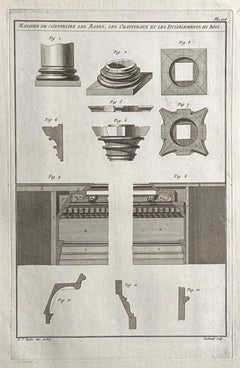
Maniere De Construire Les Bazes, Roubo French cabinetmaking design engraving
Located in Melbourne, Victoria
'Maniere de Construire Les Bazes, Les Chapiteaux et Les Entablements en Bois'
French copper-line engraving by Berthault after Andre Jacob Roubo (1739–1791). 18th century laid waterm...
Category
French School 18th Century and Earlier More Prints
Materials
Engraving
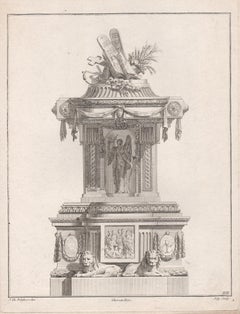
French Neoclassical design for a Pulpit, engraving after Delafosse
Located in Melbourne, Victoria
Copper-line engraving. C1768.
Delafosse was a French decorative designer, engraver and architect. Apprenticed for a time to a sculptor, by 1767 he styled himself an 'architect and professor of design'. He published the first volume of his most important work, 'Nouvelle Iconologie Historique' in 1768, containing 110 plates of his designs for furniture, decorative arts and architectural...
Category
French School 18th Century and Earlier More Prints
Materials
Engraving
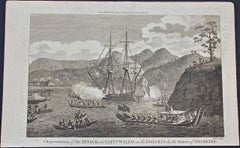
Attack on Captain Wallis When He Discovered Tahiti: Original 18th C. Engraving
Located in Alamo, CA
"A Representation of the Attack on Captain Wallis in the Dolphin by the Natives of Otaheite (Tahiti)" is an engraving created by the artist Sparrow based on an engraving in John Hawk...
Category
18th Century and Earlier More Prints
Materials
Engraving
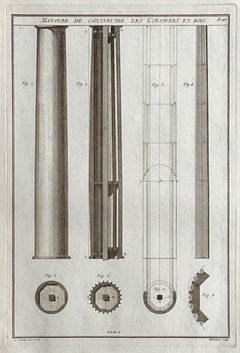
Maniere de Construire Les Colonnes, Roubo French cabinetmaking design engraving
Located in Melbourne, Victoria
'Maniere de Construire Les Colonnes en Bois'
French copper-line engraving by Michelinot after Andre Jacob Roubo (1739–1791). 18th century laid watermarked paper.
From Roubo's 'L'Ar...
Category
French School 18th Century and Earlier More Prints
Materials
Engraving
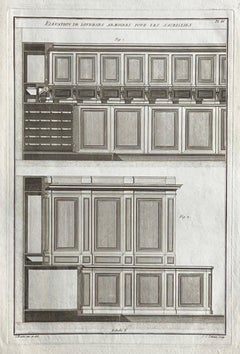
Elevations de Diverses Armoires, Roubo French cabinetmaking design engraving
Located in Melbourne, Victoria
'Elevations de Diverses Armoires Pour Les Sacristies'
French copper-line engraving by Berthault after Andre Jacob Roubo (1739–1791). 18th century laid watermarked paper.
From Roubo...
Category
French School 18th Century and Earlier More Prints
Materials
Engraving
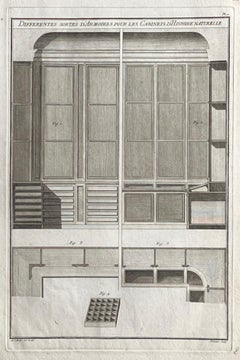
Les Cabinets D
Histoire Naturelle, Roubo French cabinetmaking design engraving
Located in Melbourne, Victoria
'Differentes Sortes D'Armoires Pour Les Cabinets D'Histoire Naturelle'
French copper-line engraving by Pelletier after Andre Jacob Roubo (1739–1791). 18th century laid watermarked p...
Category
French School 18th Century and Earlier More Prints
Materials
Engraving
Family in Dusky Bay, New Zealand: Original 18th C. Engraving from Captain Cook
Located in Alamo, CA
"A Family in Dusk Bay, New Zealand" is an original 18th century engraving from a drawing by William Hodges (1744-1797), who was the artist who accompanies Captain Cook on his second ...
Category
18th Century and Earlier More Prints
Materials
Engraving

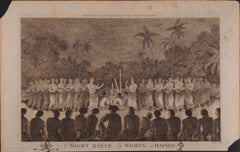
A Night Dance by Women in Tonga: Original 18th C. Engraving, Cook
s 3rd Voyage
By John Webber
Located in Alamo, CA
"A Night Dance by Women in Hapaee" is an original 18th century engraving from a drawing by John Webber (1751-1793), who was the artist who accompanied Captain Cook on his third voyag...
Category
18th Century and Earlier More Prints
Materials
Engraving
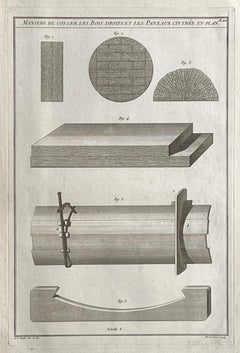
Maniere de Coller Les Bois Droits, Roubo French cabinetmaking design engraving
Located in Melbourne, Victoria
'Maniere de Coller Les Bois Droit et Les Paneaux Cintree en Plan'
French copper-line engraving by Michelinot after Andre Jacob Roubo (1739–1791). 18th century laid watermarked paper...
Category
French School 18th Century and Earlier More Prints
Materials
Engraving
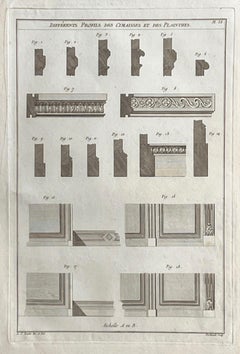
Different Profils Des Cimaisses, Roubo French cabinetmaking design engraving
Located in Melbourne, Victoria
'Different Profils Des Cimaisses et Des Plainthes'
French copper-line engraving by Berthault after Andre Jacob Roubo (1739–1791). 18th century laid watermarked paper.
From Roubo's ...
Category
French School 18th Century and Earlier More Prints
Materials
Engraving
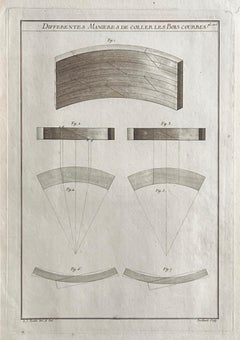
Differents Manieres de Coller, Roubo French cabinetmaking design engraving
Located in Melbourne, Victoria
'Differents Manieres de Coller les Bois Courbes'
French copper-line engraving by Berthault after Andre Jacob Roubo (1739–1791). 18th century laid watermarked paper.
From Roubo's 'L...
Category
French School 18th Century and Earlier More Prints
Materials
Engraving
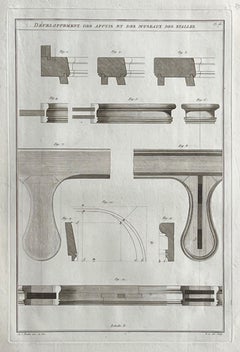
Developments des Appuis, Roubo French cabinetmaking design engraving
Located in Melbourne, Victoria
'Developments des Appuis et Des Museaux des Stalles'
French copper-line engraving by P Le Cor after Andre Jacob Roubo (1739–1791). 18th century laid watermarked paper.
From Roubo's...
Category
French School 18th Century and Earlier More Prints
Materials
Engraving
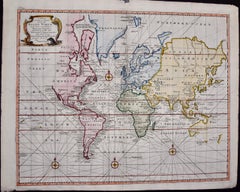
Map of the World: An Original 18th Century Hand-colored Map by E. Bowen
Located in Alamo, CA
This is an original 18th century hand-colored map entitled "A New & Correct Chart of All The Known World Laid down according to Mercator's Projection" by Emanuel Bowen. It was published in 1744 in London in John Harris's "Navigantium atque Itinerantium Bibliotheca" or "A Complete Collection of Voyages and Travels". This highly detailed and colorful map depicts the world. as it was known in the mid 18th century. A majority of the northern and central portions of Canada and America are left blank due to the purity of knowledge at the time this map was published.
The map is embellished with four Compass Roses in the lower left, lower center, lower right and center, along with many rhumb lines. There a is a decorative title cartouche in the upper left. This colorful, attractive, historical and interesting 1744 map presents the entire world on Mercator's projection as it was understood in the middle part of the 18th century, before the landmark explorations of Captain’s Cook, Vancouver, Wilkes and others. It is an example of a nautical chart, a type of map that was designed specifically for use by mariners. The map is centered on the equator and includes both the Eastern and Western Hemispheres. The continents of North America, South America, Europe, Africa, and Asia are depicted, as well as various islands in the Atlantic, Pacific, and Indian Oceans. The map is laid out according to the Mercator projection, a type of cylindrical map projection that was developed in the 16th century by Flemish cartographer Gerardus Mercator. This projection has the advantage of preserving angles and shapes, making it useful for navigation. The map presents a paucity of inland detail, particularly for the Americas, but major cities, geographical landmarks, and regions are included. Ocean currents and Tradewinds are identified, as well as the magnetic declination lines or magnetic variance, which refers to the difference between true north and compass north. The continents are color coded, enhancing the beauty of this map. The three compass roses indicate the directions of the cardinal points.
The depiction of the western coast of America, the Pacific and Australia are interesting. There was very little exploration of Australia between the navigations of William Damper in 1699 and Tobias Furneaux in 1773. Most of the maps detail relies on the 17th century Dutch expeditions to Australia's western coast, by Abel Tasman and William Janszoon. Van Diemen's Land (Tasmania) and New Guinea appear connected to the Australian continent. New Zealand appears as a single landmass. North of New Zealand there is a landmass labelled 'Ter d' St. Esprit' which probably represents the New Hebrides Islands. This map precedes the accurate exploration of the South Pacific and east coast of Australia by Captain James Cook later in the 18th century. The map includes ‘Drakes' Port,' the site where Sir Francis Drake supposedly landed in 1579 during his 1579 circumnavigation of the globe. Here he claimed territory for England, restocked, and repaired his vessels. Drake named the region New Albion. The exact location of Drake's Port is a cartographic mystery. Drake's Harbor is believed to be in the region of San Francisco Bay, Bodega Bay, San Pablo Bay...
Category
Old Masters 18th Century and Earlier More Prints
Materials
Engraving
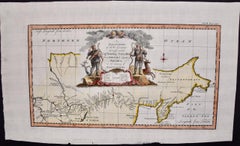
Siberia as Explored by Behring: Original 18th Century Hand-colored Map by Bowen
Located in Alamo, CA
This is an original 18th century hand-colored map entitled "An Exact Chart of all the Countries through which Capt. Behring Travelled from Tobolski, Capital of Siberia to the Country...
Category
Old Masters 18th Century and Earlier More Prints
Materials
Engraving
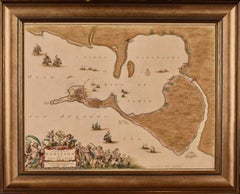
Cadiz Island: A Framed 17th Century Hand-colored Map from Blaeu
s Atlas Major
Located in Alamo, CA
This is a 17th century hand-colored map entitled "Insula Gaditana Isla de Cadiz" from Johannes (Joan) Blaeu's Atlas Maior, published in Amsterdam in 1662.
The map provides an excellent plan of Cadiz Island on the southwest coast of Spain, with its harbor, fortifications, agricultural fields and several surrounding salt processing areas. Numerous sailing ships of various sizes are included in and around the harbor and bay, including five large sailing ships, as well as twenty-four smaller ships. There is a small compass rose overlying the bay. The bridge to the mainland from the island is shown on the right. There is an extremely ornate and colorful title cartouche in the lower left, with its mythological figures reminiscent of Raphael’s Galatea fresco at the Villa Farnesina in Rome. The vibrant colors are vividly preserved. The master colorist tried to emulate a painting by using various tones to create a three-dimensional effect.
Blaeu's name is present in the plate in the lower right. Blaeu stated in his description of Cadiz: “The main wealth of the islanders consists of salt, which they harvest, and
the tuna fisheries.”
This 17th century hand-colored map is framed in an ornate, partially textured bronze-colored wood frame and glazed with UV protected conservation glass. There is a vertical center fold, as issued. There is a faint crease in the lower right and faint color offset on the left from the right side of the map, resulting from having been in an atlas for hundreds of years. Small foci of paint are present in the upper portion of the left margin and in the left corner margin. The map is otherwise in very good condition.
Due in large part to their powerful trade empire, the Dutch became known for cartography in the seventeenth century. This period is considered the Golden Age of Dutch cartography. Their publishing houses produced the highest quality work in Europe, particularly those maps and charts of foreign lands, and Dutch map-making set the bar for cartographic accuracy and artistry into the early-eighteenth century. Some of the most well-known cartographers worked in Amsterdam during this period. Perhaps the most famous of these was the Blaeu family. Willem Janszoon Blaeu, set up shop in Amsterdam. His son, Johannes (Joan), succeeded him upon his death in 1638, continuing in his father’s position as Hydrographer to the Dutch East India Company and selling maps to the public. The Blaeu map presses, located near Amsterdam’s Dam Square...
Category
Old Masters 18th Century and Earlier More Prints
Materials
Engraving
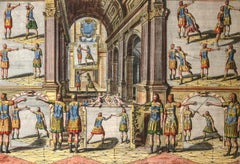
Academie de l’Espee Tabula XXI by Girard Thibault 17thc fencing engraving
Located in Paonia, CO
Hand colored original engraving from the Academie de l’Espee ( full title can be translated as Academy of the Sword: wherein is demonstrated by mathematical rules on the foundation of a mysterious circle the theory and practice of the true and heretofore unknown secrets of handling arms on foot and horseback ) by Girard Thibault...
Category
Other Art Style 18th Century and Earlier More Prints
Materials
Engraving
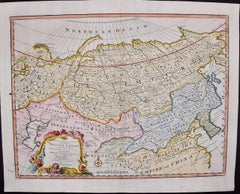
Map of the Russian Empire: An Original 18th Century Hand-colored Map by E. Bowen
Located in Alamo, CA
This is an original 18th century hand-colored map entitled "A New & Accurate Map of The Whole Russian Empire, As Contain'd Both In Europe and Asia, Drawn from Authentic Journals, Sur...
Category
Old Masters 18th Century and Earlier More Prints
Materials
Engraving
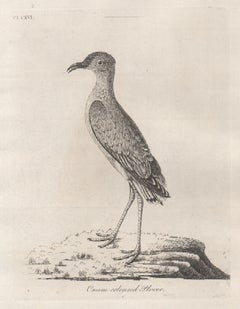
Cream-coloured Plover, 18th century bird engraving by John Latham
By John Latham
Located in Melbourne, Victoria
Copper-line engraving. 1781. From John Latham's 'General Synopsis of Birds' 1781-1785, and its Supplements. Plate number top left. Laid paper.
John Latham was the leading English or...
Category
Naturalistic 18th Century and Earlier More Prints
Materials
Engraving
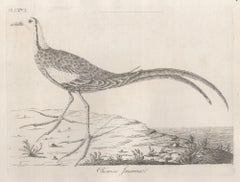
Chinese Jacana, 18th century bird engraving by John Latham
By John Latham
Located in Melbourne, Victoria
Copper-line engraving. 1781. From John Latham's 'General Synopsis of Birds' 1781-1785, and its Supplements. Plate number top left. Laid paper.
John Latham was the leading English or...
Category
Naturalistic 18th Century and Earlier More Prints
Materials
Engraving
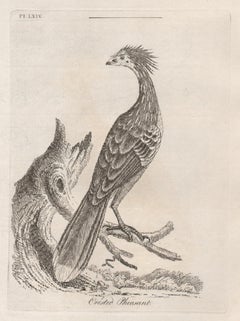
Crested Pheasant, 18th century bird engraving by John Latham
By John Latham
Located in Melbourne, Victoria
Copper-line engraving. 1781. From John Latham's 'General Synopsis of Birds' 1781-1785, and its Supplements. Plate number top left. Laid paper.
John Latham was the leading English or...
Category
Naturalistic 18th Century and Earlier More Prints
Materials
Engraving
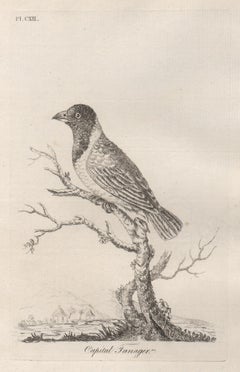
Capital Tanager, 18th century bird engraving by John Latham
By John Latham
Located in Melbourne, Victoria
Copper-line engraving. 1781. From John Latham's 'General Synopsis of Birds' 1781-1785, and its Supplements. Plate number top left. Laid paper.
John Latham was the leading English or...
Category
Naturalistic 18th Century and Earlier More Prints
Materials
Engraving
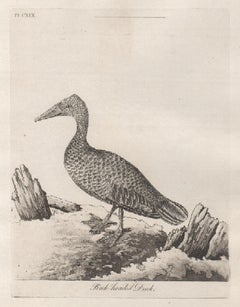
Pink-headed Duck, 18th century bird engraving by John Latham
By John Latham
Located in Melbourne, Victoria
Copper-line engraving. 1781. From John Latham's 'General Synopsis of Birds' 1781-1785, and its Supplements. Plate number top left. Laid paper.
John Latham was the leading English or...
Category
Naturalistic 18th Century and Earlier More Prints
Materials
Engraving
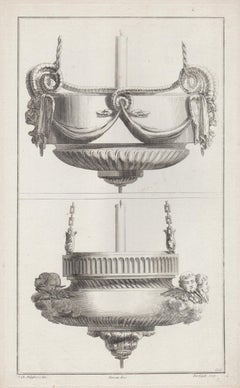
French Neoclassical Design Engraving for Braziers
Located in Melbourne, Victoria
Copper-line engraving. C1768.
Delafosse was a French decorative designer, engraver and architect. Apprenticed for a time to a sculptor, by 1767 he styled himself an 'architect and professor of design'. He published the first volume of his most important work, 'Nouvelle Iconologie Historique' in 1768, containing 110 plates of his designs for furniture, decorative arts and architectural...
Category
French School 18th Century and Earlier More Prints
Materials
Engraving
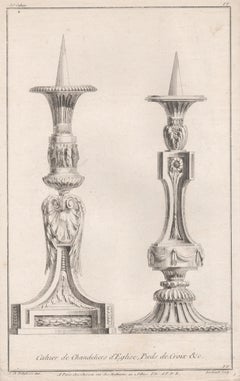
French Neoclassical Design for Candlesticks, engraving after Delafosse
Located in Melbourne, Victoria
Copper-line engraving. C1768.
Delafosse was a French decorative designer, engraver and architect. Apprenticed for a time to a sculptor, by 1767 he styled himself an 'architect and professor of design'. He published the first volume of his most important work, 'Nouvelle Iconologie Historique' in 1768, containing 110 plates of his designs for furniture, decorative arts and architectural...
Category
French School 18th Century and Earlier More Prints
Materials
Engraving
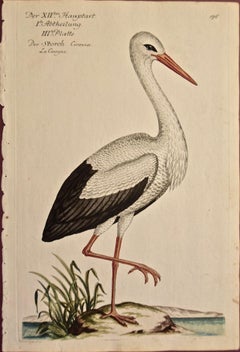
White Stork "Storch Ciconia": An 18th Century Hand-colored Frisch Engraving
Located in Alamo, CA
This is a rare 18th Century hand-colored copperplate engraving entitled "Der Storch Ciconia" (White Stork) by Johann Leonhard Frisch is plate 19...
Category
Naturalistic 18th Century and Earlier More Prints
Materials
Engraving
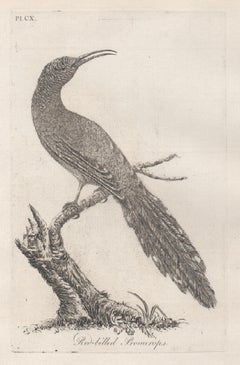
Red-billed Promerops, 18th century bird engraving by John Latham
By John Latham
Located in Melbourne, Victoria
Copper-line engraving. 1781. From John Latham's 'General Synopsis of Birds' 1781-1785, and its Supplements. Plate number top left. Laid paper.
John Latham was the leading English or...
Category
Naturalistic 18th Century and Earlier More Prints
Materials
Engraving
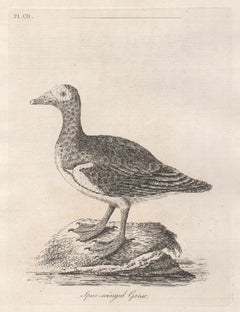
Spur-winged Goose, 18th century bird engraving by John Latham
By John Latham
Located in Melbourne, Victoria
Copper-line engraving. 1781. From John Latham's 'General Synopsis of Birds' 1781-1785, and its Supplements. Plate number top left. Laid paper.
John Latham was the leading English or...
Category
Naturalistic 18th Century and Earlier More Prints
Materials
Engraving
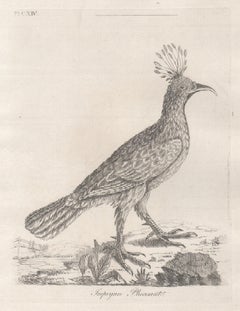
Impeyan Pheasant, 18th century bird engraving by John Latham
By John Latham
Located in Melbourne, Victoria
Copper-line engraving. 1781. From John Latham's 'General Synopsis of Birds' 1781-1785, and its Supplements. Plate number top left. Laid paper.
John Latham was the leading English or...
Category
Naturalistic 18th Century and Earlier More Prints
Materials
Engraving
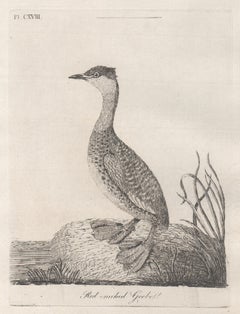
Red-necked Grebe, 18th century bird engraving by John Latham
By John Latham
Located in Melbourne, Victoria
Copper-line engraving. 1781. From John Latham's 'General Synopsis of Birds' 1781-1785, and its Supplements. Plate number top left. Laid paper.
John Latham was the leading English or...
Category
Naturalistic 18th Century and Earlier More Prints
Materials
Engraving
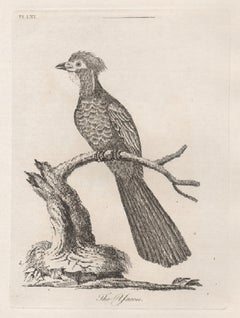
The Yacou, 18th century bird engraving by John Latham
By John Latham
Located in Melbourne, Victoria
Copper-line engraving. 1781. From John Latham's 'General Synopsis of Birds' 1781-1785, and its Supplements. Plate number top left. Laid paper.
John Latham was the leading English or...
Category
Naturalistic 18th Century and Earlier More Prints
Materials
Engraving
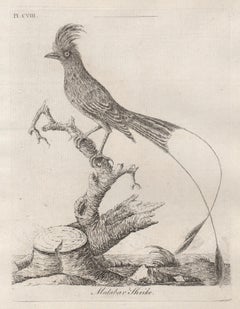
Malabar Shrike, 18th century bird engraving by John Latham
By John Latham
Located in Melbourne, Victoria
Copper-line engraving. 1781. From John Latham's 'General Synopsis of Birds' 1781-1785, and its Supplements. Plate number top left. Laid paper.
John Latham was the leading English or...
Category
Naturalistic 18th Century and Earlier More Prints
Materials
Engraving
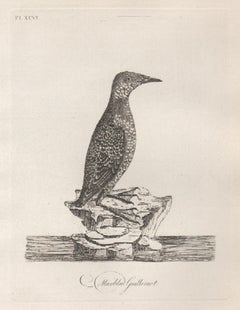
Marbled Guillemot, 18th century bird engraving by John Latham
By John Latham
Located in Melbourne, Victoria
Copper-line engraving. 1781. From John Latham's 'General Synopsis of Birds' 1781-1785, and its Supplements. Plate number top left. Laid paper with watermark.
John Latham was the lea...
Category
Naturalistic 18th Century and Earlier More Prints
Materials
Engraving
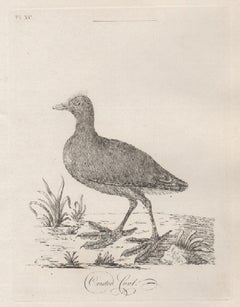
Crested Coot, 18th century bird engraving by John Latham
By John Latham
Located in Melbourne, Victoria
Copper-line engraving. 1781. From John Latham's 'General Synopsis of Birds' 1781-1785, and its Supplements. Plate number top left. Laid paper.
John Latham was the leading English or...
Category
Naturalistic 18th Century and Earlier More Prints
Materials
Engraving
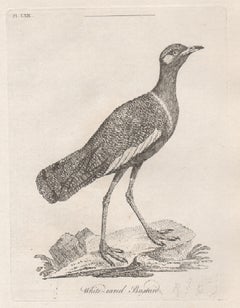
White-eared Bustard, 18th century bird engraving by John Latham
By John Latham
Located in Melbourne, Victoria
Copper-line engraving. 1781. From John Latham's 'General Synopsis of Birds' 1781-1785, and its Supplements. Plate number top left. Laid paper.
John Latham was the leading English or...
Category
Naturalistic 18th Century and Earlier More Prints
Materials
Engraving
View of Meissen, Germany: A 16th Century Hand-colored Map by Braun
Hogenberg
Located in Alamo, CA
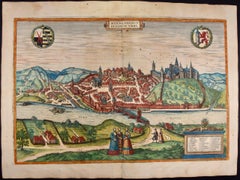
This is a 16th century original hand-colored copperplate engraved map of View of View of Meissen, Germany entitled "Misena Hermun Duvorum Urbs" by Georg Braun & Franz Hogenberg, from their famous city atlas "Civitates Orbis Terrarum", published in Cologne, Germany in 1575.
The map depicts a side view and bird's-eye view, looking across the Elbe River (labelled Albis Fluvius on the map; White River in Latin) from the northeast. In the foreground are three women in conversation on a hill above the city, along with a man and a woman in conversation by a road, all dressed in contemporary costumes of the upper class. A coat-of-arms is present in each upper corner. A great castle sits atop a hill in the background on the left. Meissen grew up around Albrechtsburg castle, built by Emperor Henry I around AD 929, and was granted a municipal charter at the end of the 12th century. From 1471 onwards, the castle complex was reconstructed as the residence of the Saxon electors on the northeast corner of the Domberg (Cathedral Hill). Meissen cathedral is a Gothic hall church begun c. 1270; in 1413 a bolt of lightning destroyed its west towers, which were replaced only in the 20th century. Meissen lies to the northwest of Dresden, Germany in Saxony. Meissen is famous for its Meissen porcelain and the Albrechtsburg castle
The following is an English translation of an excerpt from Braun's description of the city: "This city is surrounded by very many rivers, to the east flows the Elbe, to the south the Triebisch, to the west are the mountains, to the north the Meisse, after which the city is said to be named. The city is well-situated in its surroundings, the navigable rivers, the mountains and the healthy air. Around the city there is a good land to grow grain, fertile vineyards on the hillsides and without doubt the mountains are not without ore, for one mile away, up the Elbe, is Scharfenberg, where silver and lead ore are mined.."
References: Van der Krogt 4, 2684; Taschen, Braun and Hogenberg...
Category
Old Masters 18th Century and Earlier More Prints
Materials
Engraving
"Inside of a House in Nootka Sound" (Canada) from Captain Cook
s 3rd Voyage
By John Webber
Located in Alamo, CA
"The Inside of a House in Nootka Sound" is an engraving created by William Sharp (1749-1824), from a drawing by John Webber (1752-1793), who was the artist on Captain James Cook's 3rd and final voyage of discovery. It is Plate 65 in "A Voyage to the Pacific Ocean Undertaken by the Command of His Majesty, for Making Discoveries in the Northern Hemisphere", the official British Admirality sanctioned journal published upon completion of the voyage in London in 1784 by Strahan & Cadell.
This engraving is presented in a Koa wood frame and a white mat. There are occasional tiny faint spots, but the print is otherwise in very good condition. Koa wood is legendary in Hawaii. Not only is this amazing wood native to Hawaii, but it is known for the deep rich colors and varied grain pattern. Koa has an honored heritage in Hawaii and is highly revered and sacred. The word “koa” means “warrior” in Hawaiian. The warriors of King Kamehameha the Great, created canoes and weapons from a wood plentiful on the Big Island of Hawaii. This wood became synonymous with the warriors themselves, and it became known as koa.
There are three other engravings listed form the official journal of Captain Cook's 3rd voyage available that are presented in identical Koa wood frames and mats. They would make a wonderful grouping for a display of 2, 3 or 4 prints. Please see listings: LU117324682432, LU117324684022, LU117324684062. A discount is available for a grouping depending on the number of items included.
Nootka Sound is on the west coast of Vancouver Island, British Columbia, Canada. It was explored by Captain Cook in 1778 after he discovered Hawaii during his 3rd voyage. He originally named it King George's Sound, but did record Nootka Sound, which he thought was its native name. Hawaii was originally called The Sandwich Islands in honor of The Earl of...
Category
Realist 18th Century and Earlier More Prints
Materials
Engraving

Antique 1765 Wine Country Folding Map of France, Bordeau etc.
Located in Paonia, CO
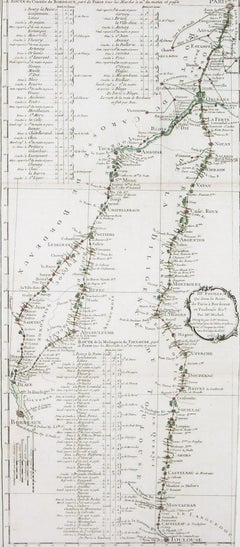
Route du Carosse de Bordeaux, part de Paris tous les Mardis a 11 matin. a et pafse 1765 is a comprehensive map with two routes through the wine country of France starting in Paris going south...
Category
Other Art Style 18th Century and Earlier More Prints
Materials
Etching
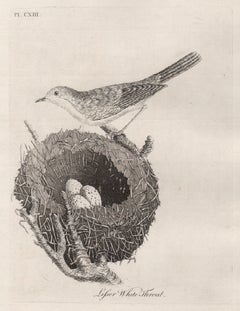
Lesser White Throat, bird and nest engraving by John Latham
By John Latham
Located in Melbourne, Victoria
Copper-line engraving. 1781. From John Latham's 'General Synopsis of Birds' 1781-1785, and its Supplements. Plate number top left. Laid paper with water...
Category
Naturalistic 18th Century and Earlier More Prints
Materials
Engraving
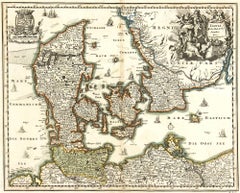
Map of Denmark, 1724
Located in Houston, TX
Extraordinary copper engraved map of Denmark by cartographer Christoph Weigel from 1724. Shows counties, rivers and towns. Ornate title cartouche. Original hand-color. Over 250 years old.
Original antique map displayed...
Category
Other Art Style 18th Century and Earlier More Prints
Materials
Paper, Ink, Watercolor
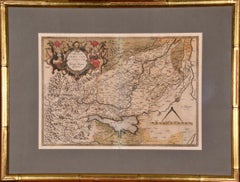
Northern Italy: A 16th Century Hand-colored Map by Abraham Ortelius
Located in Alamo, CA
This is a framed 16th century hand-colored copperplate map of northern Italy entitled "Veronae Urbis Territorium a Bernardo Bragnolo Descriptium" by Abraham Ortelius from his atlas "Theatrum Orbis Terrarum", which was the first modern atlas of the world, with the first volume published in 1570. This map was part of a subsequent volume, published in Antwerp in 1584. It was based on an earlier map by Bernardo Brognoli.
This beautiful map of northern Italy is focussed on Verona and its environs, including Mantua. Lake Garda and the South Tyrol mountains are prominently depicted. There is a very large striking cartouche in the upper left and a decorative distance scale in the lower right.
This striking hand-colored map of northern Italy is presented in a gold-colored wood frame and an olive green-colored mat. It is glazed with UV conservation glass. All mounting materials used are archival. The frame measures 21.5" high by 28" wide by 0.75" deep. There is a central vertical fold, as issued, with slight separation of the lower portion of the fold. There are faint spots in the upper and right margins, but the map is otherwise in very good condition.
Abraham Ortelius (also known as Ortels, Orthellius, and Wortels) (1527-1598) was a Dutch cartographer, geographer, and cosmographer. He began his career as a map colorist. In 1547 he entered the Antwerp guild of St Luke as an "illuminator of maps". He had an affinity for business from an early age and most of his journeys before 1560, were for business. He was a dealer in antiques, coins, maps, and books.
His business income allowed him to acquire an extensive collection of medals, coins, and antiques, as well as a large library of books...
Category
Old Masters 18th Century and Earlier More Prints
Materials
Engraving
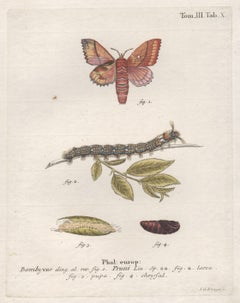
Esper Antique 18th century Moth engraving with original hand-colouring
Located in Melbourne, Victoria
A German copper-line engraving with original hand-colouring of a moth, caterpillars and chrysalis. Printed on hand made laid paper. Engraved by JC Bock.
From Eugenius Esper's "Die S...
Category
Naturalistic 18th Century and Earlier More Prints
Materials
Engraving
More Ways To Browse
Gustav Klutsis
Ihap Hulusi
Ivan Navarro
James B Painter
James Bond Movie Posters
Jan V Roy Posters
John Lennon On Sale
Lait Pur Sterilize
Lake District Vintage Travel Poster
Land Rover Poster
Le Frou Frou Vintage Poster
Leon De Pas
Leon Wuidar
Lillian Snelling
Man Ray Electro Magie
Maurin Quina Print
Michael Schwab Posters
Miroslav Sutej