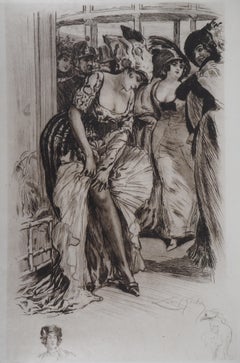
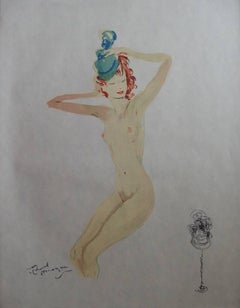
Modern Nude Prints

MODERN STYLE

The first decades of the 20th century were a period of artistic upheaval, with modern art movements including Cubism, Surrealism, Futurism and Dadaism questioning centuries of traditional views of what art should be. Using abstraction, experimental forms and interdisciplinary techniques, painters, sculptors, photographers, printmakers and performance artists all pushed the boundaries of creative expression.

Major exhibitions, like the 1913 Armory Show in New York City — also known as the “International Exhibition of Modern Art,” in which works like the radically angular Nude Descending a Staircase by Marcel Duchamp caused a sensation — challenged the perspective of viewers and critics and heralded the arrival of modern art in the United States. But the movement’s revolutionary spirit took shape in the 19th century.

The Industrial Revolution, which ushered in new technology and cultural conditions across the world, transformed art from something mostly commissioned by the wealthy or the church to work that responded to personal experiences. The Impressionist style emerged in 1860s France with artists like Claude Monet, Paul Cézanne and Edgar Degas quickly painting works that captured moments of light and urban life. Around the same time in England, the Pre-Raphaelites, like Edward Burne-Jones and Dante Gabriel Rossetti, borrowed from late medieval and early Renaissance art to imbue their art with symbolism and modern ideas of beauty.

Emerging from this disruption of the artistic status quo, modern art went further in rejecting conventions and embracing innovation. The bold legacy of leading modern artists Georges Braque, Pablo Picasso, Frida Kahlo, Salvador Dalí, Henri Matisse, Joan Miró, Marc Chagall, Piet Mondrian and many others continues to inform visual culture today.

Find a collection of modern paintings, sculptures, prints and other fine art on 1stDibs.

to
140
351
146
111
29
17
Overall Width
to
Overall Height
to
642
253
191
82
67
49
20
20
11
9
6
3
1
35
30
18
17
16
3
17
584
51
5
38
57
66
23
92
63
88
37
7
3
448
203
2
545
317
293
248
143
136
132
100
96
20
18
13
13
12
11
11
10
8
8
7
314
194
80
54
28
71
241
380
211
Style: Modern
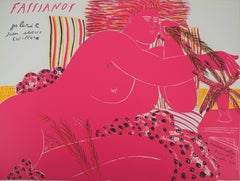
Greece : Pink Nude with Wheat Ear - Original lithograph, 1982
Located in Paris, IDF
Alekos FASSIANOS Greece : Pink Nude with Wheat Ear, 1982 Original lithograph Printed signature in the plate On heavy paper 56 x 75 cm (c. 22 x 30 inch) For the Fassianos exhibition...
Category

1980s Modern Nude Prints

Materials

Lithograph

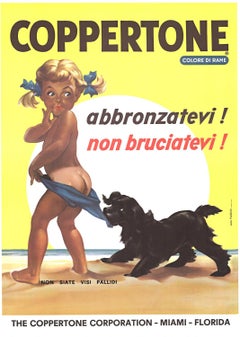
Original Coppertone Italian sun tan cream, small format vintage poster
Located in Spokane, WA
The Original Coppertone Italian suntan lotion vintage poster is in small format. It is backed with archival linen and is in Grade A condition. It is ready to frame. Step Back in Time, One Tan at a Time! Elevate your space with a piece of pop culture history! This original Coppertone vintage...
Category

1950s Modern Nude Prints

Materials

Offset

"Two Palms" Black White Photography 36" x 24" in Edition 2/15 by Larsen Sotelo
Located in Culver City, CA
"Two Palms" Black & White Photography 36" x 24" in Edition 2/15 by Larsen Sotelo Not framed. Ships in a tube Giclee (Archival Ink) print on 310G Platine Fibre Cotton Rag w/satin fin...
Category

21st Century and Contemporary Modern Nude Prints

Materials

Archival Ink, Rag Paper, Giclée

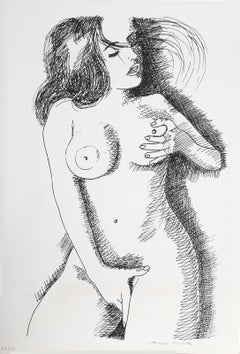
Nude Woman, Modern Screenprint by Biagio Civale
Located in Long Island City, NY
Biagio Civale, Italian/American (1936 - ) - Nude Woman, Medium: Screenprint, Signed and Numbered in Pencil, Edition: 65/100, Size: 19 x 13 in. (48.26 x 33.02 cm)
Category

1980s Modern Nude Prints

Materials

Screen

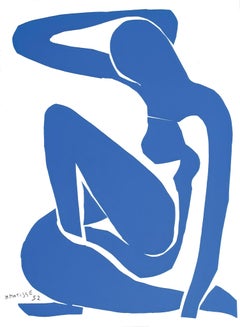
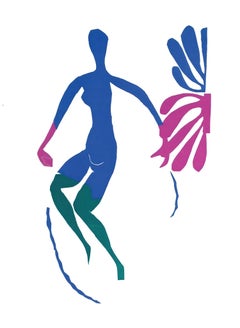
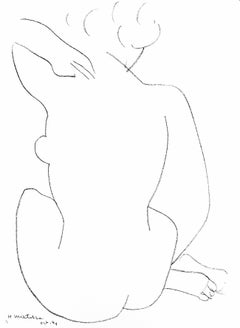
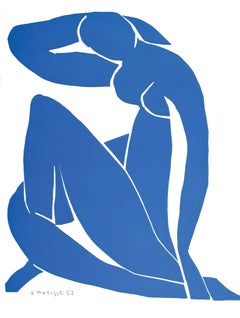
Henri Matisse, Blue Nude VI, from Verve, Revue Artistique, 1958 (after)
Located in Southampton, NY
This exquisite lithograph after Henri Matisse (1869–1954), titled Nu Bleu VI (Blue Nude VI), from Verve, Revue Artistique et Litteraire, Vol. IX, No. 35–36, originates from the 1958 ...
Category

1950s Modern Nude Prints

Materials

Lithograph

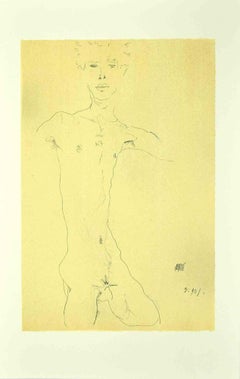
Standing Male Nude - Lithograph - 2007
Located in Roma, IT
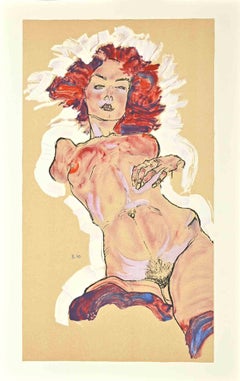
Standing Male Nude is a beautiful colored lithograph from the portfolio " Erotica " after Egon Schiele. It deals with a reproduction of the homonym artwork realized in pencil by Eg...
Category

Early 2000s Modern Nude Prints

Materials

Lithograph

The Smoking Girl - Etching by Edouard Chimot - 1930s
Located in Roma, IT
The Smoking Girl is an etching realized by Edouard Chimot in the 1930s. Signed on the plate by the artist on the lower right corner. Good conditions. Édouard Chimot (26 November 1...
Category

1930s Modern Nude Prints

Materials

Etching

Original Coppertone suntan lotion vintage poster - Italian
Located in Spokane, WA
Original “Coppertone” Colore di Rame vintage Italian poster. Colore de Rame translates into the color of copper. Abbronzatevi! (suntan) Non bruciatevi! (don’t burn) Archival linen-backed in fine condition, ready to frame. This original Coppertone poster is in A condition. The background in the poster is a brighter yellow; after all, it is a sunny day, and you need suntan lotion! Coppertone is an American suntan cream. Interestingly, the American poster of this famous little girl and dog...
Category

1960s Modern Nude Prints

Materials

Offset

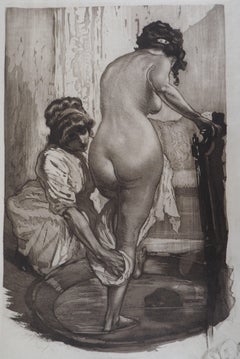
Nude - Etching by Edouard Chimot - 1930s
Located in Roma, IT
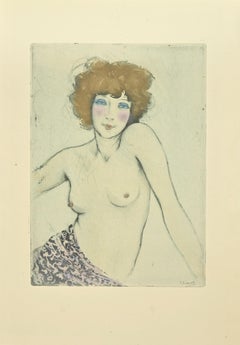
Nude is an etching realized by Edouard Chimot in the 1930s. Signed on the plate by the artist on the lower right corner. Good conditions. Édouard Chimot (26 November 1880 – 7 June...
Category

1930s Modern Nude Prints

Materials

Etching

Henri Matisse, Ballerina, from Derriere le Miroir, 1952 (after)
Located in Southampton, NY
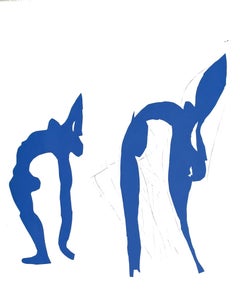
This exquisite lithograph after Henri Matisse (1869–1954), titled Ballerine (Ballerina), originates from the 1952 folio Derriere le Miroir, No. 46–47, published by Maeght Editeur, Pa...
Category

1950s Modern Nude Prints

Materials

Lithograph

Henri Matisse, Blue Nude V, from Verve, Revue Artistique, 1958 (after)
Located in Southampton, NY
This exquisite lithograph after Henri Matisse (1869–1954), titled Nu Bleu V (Blue Nude V), from Verve, Revue Artistique et Litteraire, Vol. IX, No. 35–36, originates from the 1958 is...
Category

1950s Modern Nude Prints

Materials

Lithograph

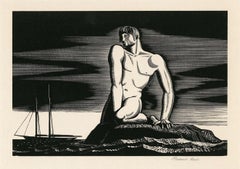
The Bather — Iconic American Modernism
Located in Myrtle Beach, SC
Rockwell Kent, 'The Bather', wood engraving, 1931, edition 120, Burne Jones 63. Signed in pencil. A brilliant, black impression, on cream, wove Japan paper; the full sheet with margins (2 1/2 to 3 1/4 inches); slight skinning at the top sheet edge, verso, otherwise in excellent condition. Archivally matted to museum standards, unframed. Image size 5 3/8 x 7 7/8 inches (137 x 200 mm); sheet size 11 1/8 x 14 1/2 inches (283 x 368 mm). Impressions of this work are held in the following public collections: Burne Jones Collection (Illinois), Chazen Museum of Art, Chegodaev Collection (Moscow), Kent Collection (New York), National Gallery of Art, Philadelphia Museum of Art; SUNY Plattsburg Art Museum, Princeton University Library, Pushkin Museum (Moscow), Smithsonian American Art Museum, Spector Collection (New York), University of Illinois. ABOUT THE ARTIST Rockwell Kent (1882-1971), though best known as a painter, graphic artist, and illustrator, pursued many careers throughout his life, including architect, carpenter, explorer, writer, dairy farmer, and political activist. Born in Tarrytown, New York, Kent was interested in art from a young age. These ambitions were encouraged by his aunt Jo Holgate, an accomplished ceramicist. Jo came to live with the family after Kent’s father passed away in 1887 and took him to Europe as a teenager, undoubtedly kindling his interest in exploring the world. Kent attended the Horace Mann School in New York City, where he excelled at mechanical drawing. His family’s financial circumstances prevented him from pursuing a career in the fine arts; however, after graduating from Horace Mann in 1900, Kent decided to study architecture at Columbia University. Before matriculating at Columbia, Kent spent the first of three consecutive summers studying painting at William Merritt Chase’s art school in Shinnecock Hills, Long Island. There he found a community of mentors and fellow students who encouraged him to pursue his interest in art. At the end of Kent’s third summer at Shinnecock, Chase offered him a full scholarship to the New York School of Art, where he was a teacher. Kent began taking night classes at the art school in addition to his architecture studies but soon left Columbia to study painting full-time. In addition to Chase, Kent took classes with Robert Henri and Kenneth Hayes Miller, where his classmates included the artists George Bellows and Edward Hopper. Kent spent the summer of 1903 assisting the eccentric painter Abbott Handerson Thayer at his studio in Dublin, New Hampshire—a position he secured through the recommendation of his Aunt Jo. Thayer’s naturalist lifestyle and almost mystical appreciation for natural phenomena greatly influenced Kent; he returned to Dublin for many years to visit Thayer and his family. Thayer gave the young artist time to pursue his work, and that summer Kent painted several views of the New Hampshire landscape, including Mount Monadnock...
Category

1930s Modern Nude Prints

Materials

Woodcut

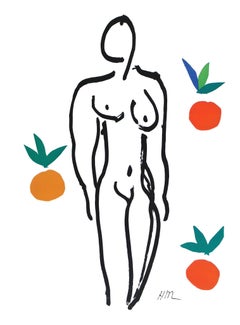
Henri Matisse, Nude with Oranges, from Verve, Revue Artistique, 1958 (after)
Located in Southampton, NY
This exquisite lithograph after Henri Matisse (1869–1954), titled Le Nu aux Oranges (Nude with Oranges), from Verve, Revue Artistique et Litteraire, Vol. IX, No. 35–36, originates fr...
Category

1950s Modern Nude Prints

Materials

Lithograph

Shunga - Woodcut by Katsukawa Schuncho - Mid-18th Century
Located in Roma, IT
Shunga is an original modern artwork realized by Katsukawa Schuncho (1726 – 1793) in the half of the 18th Century. Oban yokoe. Erotic scene from the series "Koshuko zue juni ko" (Erotic pictures...
Category

1750s Modern Nude Prints

Materials

Paper, Woodcut

"Man Receiving Himself" By NY graphic artist Mury
Located in New York, NY
Mury (Mury Rabin) Man Receiving Himself, c. 1960s Softground monoprint Sight: 16 1/2 x 18 1/4 in. Framed: 23 1/8 x 25 1/8 x 7/8 in. Titled lower right, signed lower left Graphic ar...
Category

1960s Modern Nude Prints

Materials

Monoprint

The Architect s Tools - Original lithograph (Atelier Michel Cassé), 1964
Located in Paris, IDF
Le Corbusier The Architect's Tools, 1964 Original lithograph Printed signature in the plate Limited to 250 copies On Arches vellum 42.5 x 35.5 cm (c. 16.5 x 13.7 in) Edited by Forc...
Category

1960s Modern Nude Prints

Materials

Lithograph

Figure Endormie dans un Intérieur (Interior with Sleeping Figure) /// Matisse
Located in Saint Augustine, FL
Artist: Henri Matisse (French, 1869-1954) Title: "Figure Endormie dans un Intérieur (Interior with Sleeping Figure)" *Signed and numbered by Matisse in pencil lower right Year: 1929 ...
Category

1920s Modern Nude Prints

Materials

Etching, Intaglio

Henri Matisse, Nude Woman, from Derriere le Miroir, 1952 (after)
Located in Southampton, NY
This exquisite lithograph after Henri Matisse (1869–1954), titled Femme nue (Nude Woman), originates from the 1952 folio Derriere le Miroir, No. 46–47, published by Maeght Editeur, P...
Category

1950s Modern Nude Prints

Materials

Lithograph

Romeo and Juliet - Lithograph
Located in Paris, IDF
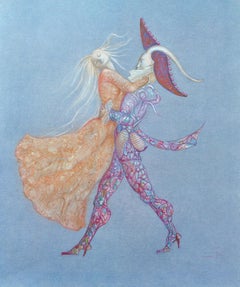
Leonor FINI (1908-1996) Romeo and Juliet, 1980 Lithograph Printed signature in the plate On Vellum 43 x 36 cm (c. 16.92 x 14.1 in) Excellent condition
Category

1980s Modern Nude Prints

Materials

Lithograph

Dancing — les années folles Paris Masterwork, 1928
Located in Myrtle Beach, SC
Yasuo Kuniyoshi, 'Dancing', lithograph, 1928, edition 30, Davis L-29. Signed, dated, and numbered '8/30' in pencil. A superb, richly-inked impression, printed on cream chine appliqué on heavy off-white wove backing; the full sheet with wide margins (1 3/8 to 4 7/8 inches), in excellent condition. Printed by Desjobert, Paris. Scarce. Matted to museum standards, unframed. Impressions of this work are in the collections of the Museum of Modern Art, Whitney Museum of Modern Art, and Yasuo Kuniyoshi Museum (Japan). ABOUT THIS WORK The French economy boomed from 1921 until the Great Depression reached Paris in 1931. This period called 'Les années folles' or the 'Crazy Years', saw Paris reestablished as a capital of art, music, literature, and cinema. Paris in the 1920s and 1930s was the home and meeting place of some of the world's most prominent painters, sculptors, composers, dancers, poets, and writers. For those in the arts, it was, as Ernest Hemingway described it, "A moveable feast". Paris was home to an exceptional number of galleries, art dealers, and a network of wealthy patrons who offered commissions and held salons. Pablo Picasso, perhaps the most famous artist in Paris, shared renown with a remarkable group of others, including the Romanian sculptor Constantin Brâncuși, the Belgian René Magritte, the Italian Amedeo Modigliani, the Russian émigré Marc Chagall, the Catalan and Spanish artists Salvador Dalí, Joan Miró, Juan Gris, and the German surrealist...
Category

1920s Modern Nude Prints

Materials

Lithograph

Les 120 Journées de Sodome - Etching by Hans Bellmer - 1968
Located in Roma, IT
Hand Signed. From the Portfolio "Petit Traité de Morale", Paris, Editions Georges Visat, 1968. Copy on Japon Nacré from the additional suite. Includes matting. Hans Bellmer was a G...
Category

1960s Modern Nude Prints

Materials

Paper, Etching

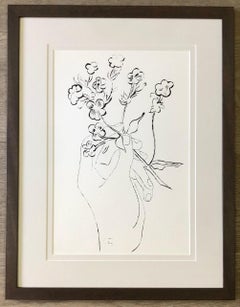
Hand with Flowers
Located in London, GB
Original lithograph on paper Bears the AWAAB and Estate of Andy Warhol stamps, on verso Annotated with initials 'LC' and a unique authenticity number in pencil, on verso Accompanied ...
Category

1950s Modern Nude Prints

Materials

Lithograph

Series 347:301 (Raphael et Fornarina VI: Enfin seuls)
Located in New York, NY
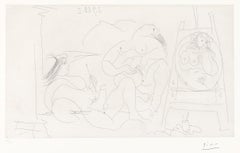
A very good impression of this etching. Signed and numbered 35/50 in pencil by Picasso. Printed by Crommelynck, Mougins. Published by Galerie Louise Leiris, Paris. From "347 Gravures...
Category

1960s Modern Nude Prints

Materials

Etching

Henri Matisse, Claude, Nude Woman, from Derriere le Miroir, 1952 (after)
Located in Southampton, NY
This exquisite lithograph after Henri Matisse (1869–1954), titled Claude, Femme nue (Claude, Nude Woman), originates from the 1952 folio Derriere le Miroir, No. 46–47, published by M...
Category

1950s Modern Nude Prints

Materials

Lithograph

The Bath - Original Etching Handsigned
Located in Paris, IDF
Alméry Lobel-Riche The bath Original engraving Handsigned in pencil Numbered /12 On parchment 31 x 22.5 cm (c. 12.2 x 8.9 inches) Excellent condition
Category

Early 20th Century Modern Nude Prints

Materials

Etching

"Melanie" Nude Black White Photography 42" x 30" in Ed. 1/7 by Larsen Sotelo
Located in Culver City, CA
"Melanie" Nude Black White Photography 42" x 30" in Ed. 1/7 by Larsen Sotelo Not framed. Ships in a tube Giclee (Archival Ink) print on 310G Platine Fibre Cotton Rag w/satin f...
Category

21st Century and Contemporary Modern Nude Prints

Materials

Archival Ink, Rag Paper, Giclée

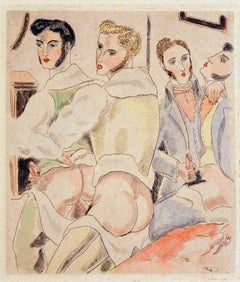
Sex Theme - Etching by Charkes Laborde - Early 20th Century
Located in Roma, IT
Etching hand colored by Chas Laborde, realized to illustrate "Les Chansons Erotiqies" by Pierre-Jean Beranger. Realized in the early 20th Century. Very good condition.
Category

Early 20th Century Modern Nude Prints

Materials

Etching

Erotic Scene - Gouache on Silk
Located in Roma, IT
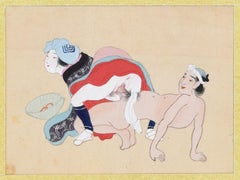
Erotic Scene is a gouache and China ink original painting on silk, realized probably in the second half of XIX century by an anonymous Japanese artist of XIX century, From a collection of twelve Japanese erotic silk paintings, wrongly titled "Shunga", mounted under a yellow cardboard Passepartout, cm 37 x 26.8, this modern artwork of little dimensions, but of extraordinary quality represents an erotic scene between two young Japanese lovers portrayed in their intimate situation and with their sophisticated traditional costumes and hairstyle. Without ever being vulgar or too explicit but with extreme elegance, our ancient Japanese artwork...
Category

Late 19th Century Modern Nude Prints

Materials

Gouache

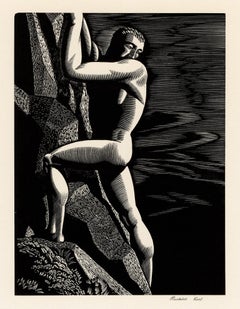
Mountain Climber — American Modernism
Located in Myrtle Beach, SC
Rockwell Kent, 'Mountain Climber', wood engraving, 1933, edition 250, Burne Jones 93. Signed in pencil. A brilliant, black impression, on cream, wove Japan paper; the full sheet with margins (2 9/16 to 3 5/8 inches); slight skinning at the top sheet edge verso, where previously hinged; otherwise, in excellent condition. Archivally matted to museum standards, unframed. Image size 7 7/8 x 5 7/8 inches (200 x 149 mm); sheet size 14 x 11 1/8 inches (356 x 283 mm). Printed by Pynson Printers, New York. Distributed by The Print Club of Cleveland, Publication No. 11, 1933. Literature: 'Rockwellkentiana,' Harcourt, Brace and Company, New York, 1933. '101 of The World’s Greatest Books', edited by Spencer Armstrong, 1950. Impressions of this work are held in the following museum collections: Akron Art Institute, Burne Jones Collection, IL; Cincinnati Art Museum; Cleveland Museum of Art; Columbus Gallery of Fine Arts; Crystal Bridges Museum of American Art; Davis Museum at Wellesley College; Fine Art Museums of San Francisco; H. M. de Young Museum; Hermitage Museum; Kent Collection, NY; Library of Congress; Memorial Art Gallery, University of Rochester; Metropolitan Museum of Art; New York Public Library; Philadelphia Museum of Art; Princeton University Library; Smithsonian American Art Museum, Spector Collection, NY; SUNY, Plattsburg. ABOUT THE ARTIST Rockwell Kent (1882-1971), though best known as a painter, graphic artist, and illustrator, pursued many careers throughout his life, including architect, carpenter, explorer, writer, dairy farmer, and political activist. Born in Tarrytown, New York, Kent was interested in art from a young age. These ambitions were encouraged by his aunt Jo Holgate, an accomplished ceramicist. Jo came to live with the family after Kent’s father passed away in 1887 and took him to Europe as a teenager, undoubtedly kindling his interest in exploring the world. Kent attended the Horace Mann School in New York City, where he excelled at mechanical drawing. His family’s financial circumstances prevented him from pursuing a career in the fine arts; however, after graduating from Horace Mann in 1900, Kent decided to study architecture at Columbia University. Before matriculating at Columbia, Kent spent the first of three consecutive summers studying painting at William Merritt Chase’s art school in Shinnecock Hills, Long Island. There he found a community of mentors and fellow students who encouraged him to pursue his interest in art. At the end of Kent’s third summer at Shinnecock, Chase offered him a full scholarship to the New York School of Art, where he was a teacher. Kent began taking night classes at the art school in addition to his architecture studies but soon left Columbia to study painting full-time. In addition to Chase, Kent took classes with Robert Henri and Kenneth Hayes Miller, where his classmates included the artists George Bellows and Edward Hopper. Kent spent the summer of 1903 assisting the eccentric painter Abbott Handerson Thayer at his studio in Dublin, New Hampshire—a position he secured through the recommendation of his Aunt Jo. Thayer’s naturalist lifestyle and almost mystical appreciation for natural phenomena greatly influenced Kent; he returned to Dublin for many years to visit Thayer and his family. Thayer gave the young artist time to pursue his work, and that summer Kent painted several views of the New Hampshire landscape, including Mount Monadnock. In 1905 Kent moved from New York to Monhegan Island in Maine, home to a summer art colony, where he continued to find inspiration in nature. Kent soon found success exhibiting and selling his paintings in New York, and in 1907, he was given his first solo show at Claussen Galleries. The following year he married his first wife, Kathleen Whiting (Thayer’s niece), with whom he had five children. The couple divorced in 1924, and Kent married Frances Lee the following year. They divorced after 15 years of marriage, and the artist married Sally Johnstone. For the next several decades, Kent lived a peripatetic lifestyle, settling in several locations in Connecticut, Maine, and New York. During this time he took several extended voyages to remote, often ice-filled, corners of the globe, including Newfoundland, Alaska, Tierra del Fuego, and Greenland, to which he made three separate trips. For Kent, exploration and artistic production were twinned endeavors, and his travels to these rugged, elemental locations inspired his visual art and his writings. He developed a stark, realist landscape style in his paintings and drawings that revealed both nature’s harshness and its sublimity. Kent’s human figures, which appear sparingly in his work, often allude to the mythic themes of isolation, individualism, heroism, and the quest for self-connection. Important exhibitions of works from these travels include the Knoedler Gallery’s shows in 1919 and 1920, featuring Kent’s Alaska drawings...
Category

1930s Modern Nude Prints

Materials

Woodcut

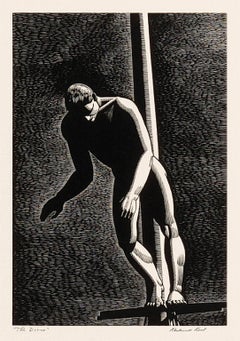
Diver — 1930s American Modernism
Located in Myrtle Beach, SC
Rockwell Kent, 'Diver', wood engraving, 1931, edition 150, Burne Jones 88. Signed, and titled 'The Diver' in pencil.. A brilliant, black impression, on cream, wove Japan paper; the f...
Category

1930s Modern Nude Prints

Materials

Woodcut

Erotic Scene - Lithograph by Albert Marquet - 1920s
Located in Roma, IT
Erotic Scene is a beautiful lithograph on ivory-colored paper, realized in the 1920s by Albert Marquet (Bordeaux, 1875 - Paris,1947). Monogrammed on the plate on the lower margin. ...
Category

1920s Modern Nude Prints

Materials

Lithograph

Grand Maternity - Handsigned - (after) Pablo Picasso
Located in Collonge Bellerive, Geneve, CH
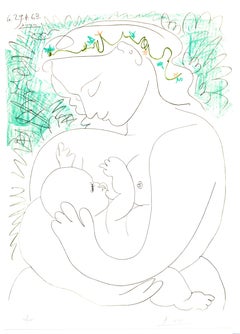
After PABLO PICASSO (1881-1973) Maternity (Grande Maternité) 1963 Offset Lithograph on Paper Signed and Dated Handsigned in Pencil Numbered: 73/200 9...
Category

1960s Modern Nude Prints

Materials

Lithograph

Erotic Scene - Lithograph by Albert Marquet - 1920s
Located in Roma, IT
Erotic Scene is a beautiful lithograph on ivory-colored paper, realized in the 1920s by Albert Marquet (Bordeaux, 1875 - Paris,1947). Monogrammed on the plate on the lower margin. ...
Category

1920s Modern Nude Prints

Materials

Lithograph

Erotic Scene - Lithograph by Albert Marquet - 1920s
Located in Roma, IT
Erotic Scene is a beautiful lithograph on ivory-colored paper, realized in the 1920s by Albert Marquet (Bordeaux, 1875 - Paris,1947). Monogrammed on the plate on the lower margin. ...
Category

1920s Modern Nude Prints

Materials

Lithograph

Brunelleschi, Composition, La Leçon d amour dans un parc (after)
Located in Southampton, NY
Lithograph and stencil on vélin d’Arches paper. Unsigned and unnumbered, as issued. Good condition. Notes: From the volume, La Leçon d'amour dans un parc, 1933. Published by Éditions...
Category

1930s Modern Nude Prints

Materials

Lithograph, Stencil

Henri Matisse, Blue Nude XII, from Verve, Revue Artistique, 1958 (after)
Located in Southampton, NY
This exquisite lithograph after Henri Matisse (1869–1954), titled Nu Bleu XII (Blue Nude XII), from Verve, Revue Artistique et Litteraire, Vol. IX, No. 35–36, originates from the 195...
Category

1950s Modern Nude Prints

Materials

Lithograph

Erotic Scene - Héliogravure by Micheal Von Zichy - 1911
Located in Roma, IT
Erotic scene is an original Héliogravure artwork on ivory-colored paper, realized by Micheal Von Zichy in 1911. Printed in only 300 copies, Leipzig; Privatdruck, from the Catalogue ...
Category

1910s Modern Nude Prints

Materials

Paper, Engraving

Erotic Scene - Lithograph by Albert Marquet - 1920s
Located in Roma, IT
Erotic Scene is a beautiful lithograph on ivory-colored paper, realized in the 1920s by Albert Marquet (Bordeaux, 1875 - Paris,1947). Monogrammed on the plate on the lower margin. ...
Category

1920s Modern Nude Prints

Materials

Lithograph

Modernist Nude — Atelier 17
Located in Myrtle Beach, SC
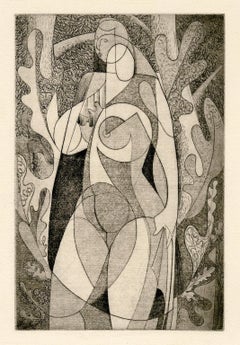
Russell T. Limbach, 'Untitled (Modernist Nude)', etching and aquatint, no known edition, c. 1930. Signed in pencil. A fine impression, on cream wove paper, with full margins (1 7/8 to 2 3/4 inches), in excellent condition. Image size 8 15/16 x 5 15/16 inches; sheet size 13 3/8 x 10 1/4 inches. Extremely rare. Matted to museum standards, unframed. Probably created when Limbach was in Paris (1928-1934), where he was exposed to modernist printmaking explorations at Stanley William Hayter’s 'Atelier 17'. ABOUT THE ARTIST Born in Massillon, Ohio, Russell Limbach...
Category

1930s Modern Nude Prints

Materials

Etching

Shunga - Woodcut attr. Keisai Eisen - Mid-19th Century
Located in Roma, IT
Woodcut shunga print attributed to Keisai Eisen and realized in the early 19th century. Good condition except for some signs of time.
Category

Mid-19th Century Modern Nude Prints

Materials

Woodcut

In the Cabaret - Original Etching Handsigned
Located in Paris, IDF
Alméry Lobel-Riche In the cabaret Handsigned original engraving Signature printed in the plate Numbered /12 On parchment 31 x 22.5 cm (c. 12.2 x 8.9 inches) Excellent condition
Category

Early 20th Century Modern Nude Prints

Materials

Etching

Dreaming Nude - Lithograph
Located in Paris, IDF
Moise KISLING Dreaming Nude Lithograph enhanced with watercolor stencil Printed signature in the plate On vellum 38 x 28 cm (c. 15 x 11 inch) Very good condition
Category

1950s Modern Nude Prints

Materials

Lithograph, Stencil

La Negra (The Black Woman)
Located in San Francisco, CA
This artwork titled "La Negra (The Black Woman)" from the suite "The Mujeres File" 1969 is an original colors lithograph on B.F.K. Rives paper by renown Mexican artist Rufino Tamayo, 1899-1991. It is hand signed and numbered 150/150 in pencil by the artist. The image size is 26.85 x 21.25 inches, sheet size is 29.5 x 22.15 inches, framed size is 42 x 35 inches. Published by Touchtone Publisher, New York, printed by Ateliers Desjobert, Paris. Referenced and pictured in the artist's catalogue raisonne by Pereda, plate #109 page 107. Custom framed in a wooden silver frame, with silver spacer and fabric matting. It is in excellent condition. About the artist: A native of Oaxaca in Southern Mexico, Rufino Tamayo's father was a shoemaker, and his mother a seamstress. Some accounts state that he was descended from Zapotec Indians, but he was actually 'mestizo' - of mixed indigenous/European ancestry. (Santa Barbara Museum of Art). He began painting at age 11. Orphaned at the age of 12, Tamayo moved to Mexico City, where he was raised by his maternal aunt who owned a wholesale fruit business. In 1917, he entered the San Carlos Academy of Fine Arts, but left soon after to pursue independent study. Four years later, Tamayo was appointed the head designer of the department of ethnographic drawings at the National Museum of Archaeology in Mexico City. There he was surrounded by pre-Colombian objects, an aesthetic inspiration that would play a pivotal role in his life. In his own work, Tamayo integrated the forms and tones of pre-Columbian ceramics into his early still lives and portraits of Mexican men and women. In the early 1920s he also taught art classes in Mexico City's public schools. Despite his involvement in Mexican history, he did not subscribe to the idea of art as nationalistic propaganda. Modern Mexican art at that time was dominated by 'The Three Great Ones' : Diego Rivera, Jose Clemente Orozco, and David Alfaro Siqueros, but Tamayo began to be noted as someone 'new' and different' for his blending of the aesthetics of post Revolutionary Mexico with the vanguard artists of Europe and the United States. After the Mexican Revolution, he focused on creating his own identity in his work, expressing what he thought was the traditional Mexico, and refusing to follow the political trends of his contemporary artists. This caused some to see him as a 'traitor' to the political cause, and he felt it difficult to freely express himself in his art. As a result, he decided to leave Mexico in 1926 and move to New York, along with his friend, the composer Carlos Chavez. The first exhibition of Tamayo's work in the United States was held at the Weyhe Gallery, New York, in that same year. The show was successful, and Tamayo was praised for his 'authentic' status as a Mexican of 'indigenous heritage', and for his internationally appealing Modernist aesthetic. (Santa Barbara Museum of Art). Throughout the late thirties and early forties New York's Valentine Gallery gave him shows. For nine years, beginning in 1938, he taught at the Dalton School in New York. In 1929, some health problems led him to return to Mexico for treatment. While there he took a series of teaching jobs. During this period he became romantically involved with the artist Maria Izquierdo...
Category

Mid-20th Century Modern Nude Prints

Materials

Lithograph

Musizierender Faun, Modern Nude Lithograph by Oskar Kokoschka
Located in Long Island City, NY
Oskar Kokoschka, Austrian (1886 - 1980) - Musizierender Faun, Year: 1976, Medium: Lithograph on laid paper, signed and numbered in pencil, Edition: 100, Image Size: 10.25 x 8 inche...
Category

1970s Modern Nude Prints

Materials

Lithograph

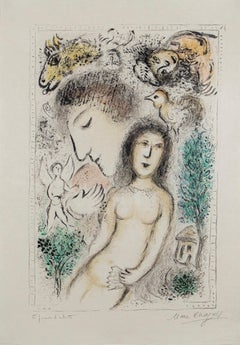
Marc Chagall “Le Nu” The Nude - Color Lithograph 1978 - Framed - Signed - Angel
Located in Rancho Santa Fe, CA
Marc Chagall "Le Nu" Lithograph in colors on Arches paper 21.25 x 14 in. (image size) 25.5 x 18.38 in (sheet size) ​​​​​​​Edition of 50 + Épreuve d'artiste Signed in pencil lower rig...
Category

1970s Modern Nude Prints

Materials

Lithograph, Archival Paper

"Melanie" Black White Photography 35" x 25" in Edition 1/15 by Larsen Sotelo
Located in Culver City, CA
"Melanie" Black White Photography 35" x 25" in Edition 1/15 by Larsen Sotelo Not framed. Ships in a tube Giclee (Archival Ink) print on 310G Platine Fibre Cotton Rag w/satin f...
Category

21st Century and Contemporary Modern Nude Prints

Materials

Archival Ink, Rag Paper, Giclée

Nude - Lithograph by Andrè Derain - 1929
Located in Roma, IT
Nude is a modern artwork realized by Andrè Derain in Early 20th century. Lithograph on simili-Japan paper. Realized for "Les Travaux et les Jeux" by Vincent Muselli. Published by J...
Category

1920s Modern Nude Prints

Materials

Lithograph

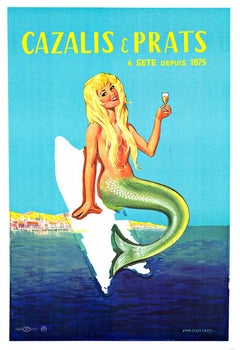
Leaves of Love-Orange Lady plus Mermaid (two proof prints)
Located in Middletown, NY
A colorful, myth-based female nude along with a portriat of a mermaid by the same artist. Lithograph in color on white wove paper, 18 1/4 x 11 3/4 inches (462 x 297 mm), full margin...
Category

Mid-20th Century Modern Nude Prints

Materials

Lithograph

Erotic Scene - Héliogravure by Micheal Von Zichy - 1911
Located in Roma, IT
Erotic scene is an original Héliogravure artwork on ivory-colored paper, realized by Micheal Von Zichy in 1911. Printed in only 300 copies, Leipzig; ...
Category

1910s Modern Nude Prints

Materials

Paper, Engraving

"Lendas Africanas Da Bahia" from the suite.
Located in San Francisco, CA
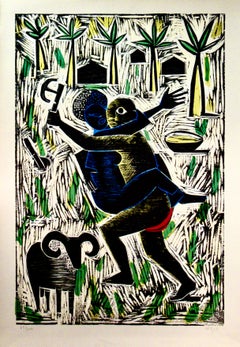
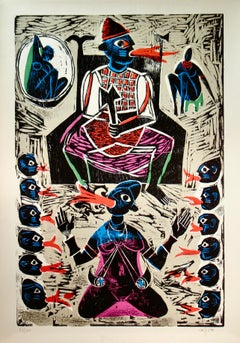
This artwork titled " Lendas Africanas Da Bahia" from the suite, 1978, is an original colors woodcut by renown Brazilian/Argentinian artist Hector Julio Paride Barnabo Carybe, 1911-1997. It is hand signed and numbered 83/200 in pencil by the artist. The Wood block mark (image) is 23.65 x 15.75 inches, sheet size is 26.75 x 19 inches. It is in excellent condition, has never been framed. It will be shipped in a 8 inches diameter heavy duty tube. About the artist: Héctor Julio Páride Bernabó (7 February 1911 – 2 October 1997) was an Argentine-Brazilian artist, researcher, writer, historian and journalist. His nickname and artistic name, Carybé, a type of piranha, comes from his time in the scouts. He died of heart failure after the meeting of a candomblé community's lay board of directors, the Cruz Santa Opô Afonjá Society, of which he was a member. Quick Facts Born, Died ... Carybé Born Héctor Julio Páride Bernabó 7 February 1911 Lanús, Argentina Died 2 October 1997 (aged 86) Salvador, Bahia, Brazil Nationality Brazilian Known for Painter, engraver, draughtsman, illustrator, potter, sculptor, mural painter, researcher, historian and journalist Close He produced thousands of works, including paintings, drawings, sculptures and sketches. He was an Obá de Xangô, an honorary position at Ilê Axé Opô Afonjá. Orixá Panels in the Afro-Brazilian Museum in Salvador Some of Carybé's work can be found in the Afro-Brazilian Museum in Salvador: 27 cedar panels representing different orixás or divinities of the Afro-Brazilian religion candomblé. Each panel shows a divinity with their associated implements and animal. The work was commissioned by the former Banco da Bahia S.A., now Banco BBM S.A., which originally installed them in its branch on Avenida Sete de Setembro in 1968. Murals at Miami International Airport American Airlines, Odebrecht and the Miami-Dade Aviation Department partnered to install two of Carybé's murals at Miami International Airport. They have been displayed in the American Airlines terminal at John F. Kennedy International Airport in New York since 1960. The 16.5 x 53-foot murals were accredited when Carybé won the first and the second prize in a contest of public art pieces for JFK airport. As its terminal at that airport was due for demolition, American Airlines donated the murals to Miami-Dade County, and Odebrecht invested in a project to remove, restore, transport and install the murals at Miami International Airport. The mural "Rejoicing and Festival of the Americas" portrays colorful scenes from popular festivals throughout the Americas, and "Discovery and Settlement of the West" depicts the pioneers’ journey into the American West. Carybé's Woodcuts in Gabriel García Márquez's Books Carybé illustrated four books by the Colombian writer Gabriel García Márquez, including One Hundred Years of Solitude, The Autumn of the Patriarch, Chronicle of a Death Foretold, and Love in the Time of Cholera "Carybé: um mestre da cultura baiana". ArqBahia Arquitetura, design, arte e lifestyle (in Brazilian Portuguese). 26 April 2023.. In particular, the woodcuts in One Hundred Years of Solitude are well-known for providing a visual image of the fictional town of Macondo, where the story takes place. The illustrations depict the colorful and winding houses, the railway bridge, and the hot and humid climate of the region, contributing to the reader's immersion in the story. Carybé's woodcuts are, therefore, an important part of Gabriel García Márquez's literary legacy, bringing a visual dimension to his stories that further enriches the reader's experience. Timeline 1911 — Birth in Lanús, Argentina. 1919 — Moved to Brazil. 1921 — The name Carybé is first given to him by the Clube do Flamengo scouts group, in Rio de Janeiro. 1925 — Beginning of his artistic endeavours, going to the pottery workshop of his elder brother, Arnaldo Bernabó, in Rio de Janeiro. 1927–1929 — Studies at the National School of Fine Arts, in Rio de Janeiro. 1930 — Worked for the newspaper Noticias Gráficas, in Buenos Aires, Argentina. 1935–1936 — Works with the writer Julio Cortázar and as a draughtsman for the El Diario newspaper. 1938 — Sent to Salvador by newspaper Prégon. 1939 — First collective exhibition, with the artist Clemente Moreau, at the Buenos Aires City Museum of Fine Arts, Argentina; illustrates the book Macumba, Relatos de la Tierra Verde, by Bernardo Kardon, published by Tiempo Nuestro. 1940 — Illustrates the book Macunaíma, by Mário de Andrade. 1941 — Draws the Esso Almanach, the payment for which allows him to set on a long journey through Uruguay, Brazil, Bolivia, and Argentina. 1941–1942 — Study trip around several South American countries. 1942 — Illustration for the book La Carreta by Henrique Amorim, published by El Ateneo (Buenos Aires, Argentina). 1943 — Together with Raul Brié, translates the book Macunaíma, by Mário de Andrade, into Spanish; produces the illustrations for the works Maracatu, Motivos Típicos y Carnavalescos, by Newton Freitas, published by Pigmaleon, Luna Muerta, by Manoel Castilla, published by Schapire, and Amores de Juventud, by Casanova Callabero; also publishes and illustrates Me voy al Norte, for the quarterly magazine Libertad Creadora; awarded First Prize by the Cámara Argentina del Libro (Argentine Book Council) for the illustration of the book Juvenília, by Miguel Cané (Buenos Aires, Argentina). 1944 — Illustrates the books The Complete Poetry of Walt Whitmann and A Cabana do Pai Tomás, both published by Schapire ; as well as and Los Quatro Gigantes del Alma by Mira y Lopez, Salvador BA; attends capoeira classes, visits candomblé meetings and makes drawings and paintings. 1945 — Does the illustrations for Daniel Defoe's Robinson Crusoe, for the Viau publishing house. 1946 — Helps in setting up the Tribuna da Imprensa newspaper, in Rio de Janeiro. 1947 — Works for the O Diário Carioca newspaper, in Rio de Janeiro. 1948 — Produces texts and illustrations for the book Ajtuss, Ediciones Botella al Mar (Buenos Aires, Argentina). 1949–1950 — Invited by Carlos Lacerda to work at the Tribuna da Imprensa, in Rio de Janeiro. 1950 — Invited by the Education Secretary Anísio Teixeira, moves to Bahia, and produces two panels for the Carneiro Ribeiro Education Center (Park School), in Salvador, Bahia. 1950–1997 — Settles in Salvador, Bahia. 1950–1960 — Actively participate in the plastic arts renewal movement, alongside Mário Cravo Júnior, Genaro de Carvalho, and Jenner Augusto. 1951 — Produces texts and illustrations for the works of the Coleção Recôncavo, published by Tipografia Beneditina and illustrations for the book, Bahia, Imagens da Terra e do Povo, by Odorico Tavares, published by José Olímpio in Rio de Janeiro; for the latter work he receives the gold medal at the 1st Biennial of Books and Graphic Arts. 1952 — Makes roughly 1,600 drawings for the scenes of the movie O Cangaceiro, by Lima Barreto; also works as the art director and as an extra on the film (São Paulo, SP). 1953 — Illustrations for the book A Borboleta Amarela, by Rubem Braga, published by José Olímpio (Rio de Janeiro, RJ). 1955 — Illustrates the work O Torso da Baiana, edited by the Modern Art Museum of Bahia. 1957 — Produces etchings, with original designs, for the special edition of Mário de Andrade's Macunaíma, published by the Sociedade dos 100 Bibliófilos do Brasil. 1958 — Makes an oil painting mural for the Petrobras Office in New York, USA; illustrates the book As Três Mulheres de Xangô, by Zora Seljan, published by Editora G. R. D. (Rio de Janeiro, RJ); Receives a scholarship grant in New York, USA. 1959 — Takes part in the competition for the New York International Airport panels project, in New York, USA, winning first and second prizes. 1961 — Illustrates the book Jubiabá, by Jorge Amado, published by Martins Fontes (São Paulo, SP). 1963 — Awarded the title of Honorary Citizen of Salvador, Bahia. 1965 — Illustrates A Muito Leal e Heróica Cidade de São Sebastião do Rio de Janeiro, published by Raymundo Castro Maya (Rio de Janeiro, RJ). 1966 — With Jorge Amado, co-authors Bahia, Boa Terra Bahia, published by Image (Rio de Janeiro, RJ); writes and illustrates the book Olha o Boi, published by Cultrix (São Paulo, SP). 1967 — Receives the Odorico Tavares Prize – Best Plastic Artist of 1967, in a competition ran by the state government to stimulate the development of plastic arts in Bahia; makes the Orixás Panels for the Banco da Bahia (currently at the UFBA Afro-Brazilian Museum) (Salvador, BA). 1968 — Illustrates the books Carta de Pero Vaz de Caminha ao Rei Dom Manuel, published by Sabiá (Rio de Janeiro) and Capoeira Angolana, by Waldeloir Rego, published by Itapoã (Bahia). 1969 — Produces the illustrations for the book Ninguém Escreve ao Coronel, by Gabriel Garcia Marquez, published by Sabiá (Rio de Janeiro, RJ). 1970 — Illustrates the books O Enterro do Diabo and Os Funerais de Mamãe Grande, published by Sabiá (Rio de Janeiro, RJ), Agotimé her Legend, by Judith Gleason, published by Grossman Publishers (New York, USA). 1971 — Illustrates the books One Hundred Years of Solitude, by Gabriel Garcia Marquez and A Casa Verde by Mario Vargas Llosa, both published by Sabiá (Rio de Janeiro, RJ); produces texts and illustrations for the book Candomblé da Bahia, published by Brunner (São Paulo, SP). 1973 — Illustrations for Gabriel Garcia Marquez's A Incrível e Triste História de Cândida Erendira e sua Avó Desalmada (Rio de Janeiro, RJ); paints the mural for the Legislative Assembly and the panel for the Bahia State Secretary of the Treasury. 1974 — Produces woodcuts for the book Visitações da Bahia, published by Onile. 1976 — Illustrates the book O Gato Malhado e a Andorinha Sinhá: uma história de amor, by Jorge Amado (Salvador, BA); receives the title of Knight of the Order of Merit of Bahia. 1977 — Certified with the Honor for Afro-Brazilian Cult Spiritual Merit, Xangô das Pedrinhas ao Obá de Xangô Carybé (Magé, RJ). 1978 — Makes the concrete sculpture Oxóssi, in the Catacumba Park; illustrates the book A Morte e a Morte de Quincas Berro D´Água, by Jorge Amado, published by Edições Alumbramento (Rio de Janeiro, RJ). 1979 — Produces woodcuts for the book Sete Lendas Africanas da Bahia, published by Onile. 1980 — Designs the costumes and scenery for the ballet Quincas Berro D´Água, at the Teatro Municipal in Rio de Janeiro. 1981 — Publication of the book Iconografia dos Deuses Africanos no Candomblé da Bahia (Ed. Raízes), following thirty years of research. 1982 — Receives the title of Honorary Doctor of the Federal University of Bahia. 1983 — Makes the panel for the Brazilian Embassy in Lagos, Nigeria. 1984 — Receives the Jerônimo Monteiro Commendation – Level of Knight (Espírito Santo); receives the Castro Alves Medal of Merit, granted by the UFBA Academy of Arts and Letters; makes the bronze sculpture Homenagem à mulher baiana (Homage to the Bahian woman), at the Iguatemi Shopping Center (Salvador, BA). 1985 — Designs the costumes and sets for the spectacle La Bohème, at the Castro Alves Theater; illustrates the book Lendas Africanas dos Orixás, by Pierre Verger, published by Currupio. 1992 — Illustrates the book O sumiço da santa: uma história de feitiçaria, by Jorge Amado (Rio de Janeiro, RJ). 1995 — Illustration of the book O uso das plantas na sociedade iorubá, by Pierre Verger (São Paulo, SP). 1996 — Making of the short film Capeta Carybé, by Agnaldo Siri Azevedo, adapted from the book O Capeta Carybé, by Jorge Amado, about the artist Carybé, who was born in Argentina and became the most Bahian of all Brazilians. 1997 — Illustration of the book Poesias de Castro Alves. Exhibitions ммIndividual Exhibitions: 1943 — Buenos Aires (Argentina) — First individual exhibition, at the Nordiska Gallery 1944 — Salta (Argentina) — at the Consejo General de Educacion 1945 — Salta (Argentina) — Amigos del Arte, Buenos Aires (Argentina) — Motivos de América, at the Amauta Gallery, Rio de Janeiro RJ — individual exhibition at the IAB/RJ 1947 — Salta (Argentina) — Agrupación Cultural Femenina 1950 — Salvador BA — First individual exhibit in Bahia, at the Bar Anjo Azul; São Paulo SP — MASP. 1952 — São Paulo SP — MAM/SP 1954 — Salvador BA — Oxumaré Gallery 1957 — New York (USA) — Bodley Gallery; Buenos Aires (Argentina) — Bonino Gallery * 1958 - New York (USA) — Bodley Gallery 1962 — Salvador BA - MAM/BA 1963 — Rio de Janeiro RJ — Bonino Gallery 1965 — Rio de Janeiro RJ — Bonino Gallery 1966 — São Paulo SP — Astrea Gallery 1967 — Rio de Janeiro RJ — Santa Rosa Gallery 1969 — London (England) — Varig Airlines 1970 — Rio de Janeiro RJ — Galeria da Praça 1971 — Rio de Janeiro RJ — MAM/RJ, São Paulo SP — A Galeria; Belo Horizonte MG, Brasília DF, Curitiba PR, Florianopolis SC, Porto Alegre RS, Rio de Janeiro RJ and São Paulo SP — The Orixás Panel (exhibition tour), at the Casa da Cultura in Belo Horizonte, MAM/DF, the Public Library of Paraná, the Legislative Assembly of Santa Catarina State, the Legislative Assembly of Rio Grande do Sul, MAM/RJ and MAM/SP 1972 — The Orixás Panel in Fortaleza CE — at the Ceará Federal University Art Museum, and in Recife PE — at the Santa Isabel Theater 1973 — São Paulo SP — A Galeria 1976 — Salvador BA — at the Church of the Nossa Senhora do Carmo Convent 1980 — São Paulo SP — A Galeria 1981 — Lisbon (Portugal) — Cassino Estoril 1982 — São Paulo SP — Renot Art Gallery, São Paulo SP — A Galeria 1983 — New York (USA) — Iconografia dos Deuses Africanos no Candomblé da Bahia, The Caribbean Cultural Center 1984 — Philadelphia (USA) — Art Institute of Philadelphia; Mexico — Museo Nacional de Las Culturas; São Paulo SP — Galeria de Arte André 1986 — Lisbon (Portugal) — Cassino Estoril; Salvador BA — As Artes de Carybé, Núcleo de Artes Desenbanco 1989 — Lisbon (Portugal) — Cassino Estoril; São Paulo SP — MASP 1995 — São Paulo SP — Documenta Galeria de Arte, São Paulo SP — Casa das Artes Galeria, Campinas SP — Galeria Croqui, Curitiba PR — Galeria de Arte Fraletti e Rubbo, Belo Horizonte MG — Nuance Galeria de Arte, Foz do Iguaçu PR — Ita Galeria de Arte, Porto Alegre RS — Bublitz Decaedro Galeria de Artes, Cuiabá MT — Só Vi Arte Galeria, Goiânia GO — Época Galeria de Arte, São Paulo SP — Artebela Galeria Arte Molduras, Fortaleza CE — Galeria Casa D'Arte, Salvador BA — Oxum Casa de Arte Collective Exhibitions: 1939 — Buenos Aires (Argentina) — Carybé and Clemente Moreau Exhibition, at the Museo Municipal de Belas Artes 1943 — Buenos Aires (Argentina) — 29th Salon de Acuarelistas y Grabadores — first prize 1946 — Buenos Aires (Argentina) — Drawings by Argentine Artists, at the Kraft Gallery 1948 — Washington (USA) — Artists of Argentina, at the Pan American Union Gallery 1949 — Buenos Aires (Argentina) — Carybé and Gertrudis Chale, at the Viau Gallery; Salvador BA — Bahian Showroom of Fine Arts, at the Hotel Bahia 1950 — Salvador BA — 2nd Bahian Showroom of Fine Arts; São Paulo SP — MAM/SP 1951 — São Paulo SP — 1st São Paulo Art Biennial, Trianon Pavilion. 1952 — Salvador BA — 3rd Bahian Showroom of Fine Arts, at Belvedere da Sé; São Paulo SP — MAM/SP 1953 — Recife PE — Mario Cravo Júnior and Carybé, at the Santa Isabel Theater; São Paulo SP — 2nd São Paulo Art Biennial, at MAM/SP 1954 — Salvador BA — 4th Bahian Showroom of Fine Arts, at the Hotel Bahia. — Bronze medal 1955 — São Paulo SP — 3rd São Paulo Art Biennial, at MAM/SP — first prize for drawing 1956 — Salvador BA — Modern Artists of Bahia, at the Oxumaré Gallery; Venice (Italy) — 28th Venice Biennial 1957 — Rio de Janeiro RJ — 6th National Modern Art Show — exemption from the jury; São Paulo SP — Artists from Bahia, at the MAM/SP 1958 — San Francisco (USA) — Works by Brazilian Artists, at the Fine Arts Museums of San Francisco, Washington and New York (USA) — Works by Brazilian Artists, at the Pan American Union and the MoMA 1959 — Seattle (USA) — 30th International Exhibition, at the Seattle Art Museum; Salvador BA — Modern Artists of Bahia, at the Dentistry School. 1961 — São Paulo SP — 6th São Paulo Art Biennial, at MAM/SP — special room 1963 — Lagos (Nigeria) — Brazilian Contemporary Artists, at the Nigerian Museum; São Paulo SP — 7th São Paulo Art Biennial Bienal, at the Fundação Bienal 1964 — Salvador BA — Christmas Exhibition, at the Galeria Querino 1966 — Baghdad (Iraq) — collective exhibition sponsored by the Calouste Gulbenkian Foundation; Madrid (Spain) — Artists of Bahia, at the Hispanic Culture Institute; Rome (Italy) — Piero Cartona Palace; Salvador BA — 1st National Biennial of Plastic Arts (Bienal da Bahia) — special room; Salvador BA — Draughtsmen of Bahia, at the Convivium Gallery 1967 — Salvador BA — Christmas Exhibition at the Panorama Art Gallery; São Paulo SP — Artists of Bahia, at the A Gallery 1968 — São Paulo SP — Bahian Artists, at the A Gallery 1969 — London (England) — Tryon Gallery; São Paulo SP — 1st Panorama of Current Brazilian Art at the MAM/SP; São Paulo SP — Carybé, Carlos Bastos...
Category

Late 20th Century Modern Nude Prints

Materials

Woodcut

Dancers in Love - Original Etching Handsigned
Located in Paris, IDF
Alméry Lobel-Riche Dancers in love Original etching Handsigned in pencil (with also a printed signature in the plate) Numbered /12 On Japan paper 31 x 22.5 cm (c. 12.2 x 8.9 inches)...
Category

Early 20th Century Modern Nude Prints

Materials

Etching

Erotic Scene - Héliogravure by Micheal Von Zichy - 1911
Located in Roma, IT
Erotic scene is an original Héliogravure artwork on ivory-colored paper, realized by Micheal Von Zichy in 1911. Printed in only 300 copies, Leipzig; Privatdruck, from the Catalogue ...
Category

1910s Modern Nude Prints

Materials

Paper, Engraving

The Hat : Dressed with Nothing - Original signed lithograph - Mourlot, 1956
Located in Paris, IDF
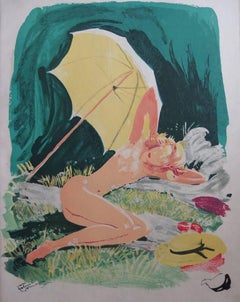
Jean-Gabriel DOMERGUE The Hat : Dressed with Nothing, 1956 Original lithograph (Mourlot workshop) Printed signature in the plate On Japan paper 40 x 31 cm (c. 16 x 12") INFORMATION...
Category

1950s Modern Nude Prints

Materials

Lithograph

"Lendas Africanas Da Bahia" from the suite.
Located in San Francisco, CA
This artwork titled " Lendas Africanas Da Bahia" from the suite, 1978, is an original colors woodcut by renown Brazilian/Argentinian artist Hector Julio Paride Barnabo Carybe, 1911-1997. It is hand signed and numbered 83/200 in pencil by the artist. The Wood block mark (image) is 23.65 x 15.75 inches, sheet size is 26.75 x 19 inches. It is in excellent condition, has never been framed. It will be shipped in a 8 inches diameter heavy duty tube. About the artist: Héctor Julio Páride Bernabó (7 February 1911 – 2 October 1997) was an Argentine-Brazilian artist, researcher, writer, historian and journalist. His nickname and artistic name, Carybé, a type of piranha, comes from his time in the scouts. He died of heart failure after the meeting of a candomblé community's lay board of directors, the Cruz Santa Opô Afonjá Society, of which he was a member. Quick Facts Born, Died ... Carybé Born Héctor Julio Páride Bernabó 7 February 1911 Lanús, Argentina Died 2 October 1997 (aged 86) Salvador, Bahia, Brazil Nationality Brazilian Known for Painter, engraver, draughtsman, illustrator, potter, sculptor, mural painter, researcher, historian and journalist Close He produced thousands of works, including paintings, drawings, sculptures and sketches. He was an Obá de Xangô, an honorary position at Ilê Axé Opô Afonjá. Orixá Panels in the Afro-Brazilian Museum in Salvador Some of Carybé's work can be found in the Afro-Brazilian Museum in Salvador: 27 cedar panels representing different orixás or divinities of the Afro-Brazilian religion candomblé. Each panel shows a divinity with their associated implements and animal. The work was commissioned by the former Banco da Bahia S.A., now Banco BBM S.A., which originally installed them in its branch on Avenida Sete de Setembro in 1968. Murals at Miami International Airport American Airlines, Odebrecht and the Miami-Dade Aviation Department partnered to install two of Carybé's murals at Miami International Airport. They have been displayed in the American Airlines terminal at John F. Kennedy International Airport in New York since 1960. The 16.5 x 53-foot murals were accredited when Carybé won the first and the second prize in a contest of public art pieces for JFK airport. As its terminal at that airport was due for demolition, American Airlines donated the murals to Miami-Dade County, and Odebrecht invested in a project to remove, restore, transport and install the murals at Miami International Airport. The mural "Rejoicing and Festival of the Americas" portrays colorful scenes from popular festivals throughout the Americas, and "Discovery and Settlement of the West" depicts the pioneers’ journey into the American West. Carybé's Woodcuts in Gabriel García Márquez's Books Carybé illustrated four books by the Colombian writer Gabriel García Márquez, including One Hundred Years of Solitude, The Autumn of the Patriarch, Chronicle of a Death Foretold, and Love in the Time of Cholera "Carybé: um mestre da cultura baiana". ArqBahia Arquitetura, design, arte e lifestyle (in Brazilian Portuguese). 26 April 2023.. In particular, the woodcuts in One Hundred Years of Solitude are well-known for providing a visual image of the fictional town of Macondo, where the story takes place. The illustrations depict the colorful and winding houses, the railway bridge, and the hot and humid climate of the region, contributing to the reader's immersion in the story. Carybé's woodcuts are, therefore, an important part of Gabriel García Márquez's literary legacy, bringing a visual dimension to his stories that further enriches the reader's experience. Timeline 1911 — Birth in Lanús, Argentina. 1919 — Moved to Brazil. 1921 — The name Carybé is first given to him by the Clube do Flamengo scouts group, in Rio de Janeiro. 1925 — Beginning of his artistic endeavours, going to the pottery workshop of his elder brother, Arnaldo Bernabó, in Rio de Janeiro. 1927–1929 — Studies at the National School of Fine Arts, in Rio de Janeiro. 1930 — Worked for the newspaper Noticias Gráficas, in Buenos Aires, Argentina. 1935–1936 — Works with the writer Julio Cortázar and as a draughtsman for the El Diario newspaper. 1938 — Sent to Salvador by newspaper Prégon. 1939 — First collective exhibition, with the artist Clemente Moreau, at the Buenos Aires City Museum of Fine Arts, Argentina; illustrates the book Macumba, Relatos de la Tierra Verde, by Bernardo Kardon, published by Tiempo Nuestro. 1940 — Illustrates the book Macunaíma, by Mário de Andrade. 1941 — Draws the Esso Almanach, the payment for which allows him to set on a long journey through Uruguay, Brazil, Bolivia, and Argentina. 1941–1942 — Study trip around several South American countries. 1942 — Illustration for the book La Carreta by Henrique Amorim, published by El Ateneo (Buenos Aires, Argentina). 1943 — Together with Raul Brié, translates the book Macunaíma, by Mário de Andrade, into Spanish; produces the illustrations for the works Maracatu, Motivos Típicos y Carnavalescos, by Newton Freitas, published by Pigmaleon, Luna Muerta, by Manoel Castilla, published by Schapire, and Amores de Juventud, by Casanova Callabero; also publishes and illustrates Me voy al Norte, for the quarterly magazine Libertad Creadora; awarded First Prize by the Cámara Argentina del Libro (Argentine Book Council) for the illustration of the book Juvenília, by Miguel Cané (Buenos Aires, Argentina). 1944 — Illustrates the books The Complete Poetry of Walt Whitmann and A Cabana do Pai Tomás, both published by Schapire ; as well as and Los Quatro Gigantes del Alma by Mira y Lopez, Salvador BA; attends capoeira classes, visits candomblé meetings and makes drawings and paintings. 1945 — Does the illustrations for Daniel Defoe's Robinson Crusoe, for the Viau publishing house. 1946 — Helps in setting up the Tribuna da Imprensa newspaper, in Rio de Janeiro. 1947 — Works for the O Diário Carioca newspaper, in Rio de Janeiro. 1948 — Produces texts and illustrations for the book Ajtuss, Ediciones Botella al Mar (Buenos Aires, Argentina). 1949–1950 — Invited by Carlos Lacerda to work at the Tribuna da Imprensa, in Rio de Janeiro. 1950 — Invited by the Education Secretary Anísio Teixeira, moves to Bahia, and produces two panels for the Carneiro Ribeiro Education Center (Park School), in Salvador, Bahia. 1950–1997 — Settles in Salvador, Bahia. 1950–1960 — Actively participate in the plastic arts renewal movement, alongside Mário Cravo Júnior, Genaro de Carvalho, and Jenner Augusto. 1951 — Produces texts and illustrations for the works of the Coleção Recôncavo, published by Tipografia Beneditina and illustrations for the book, Bahia, Imagens da Terra e do Povo, by Odorico Tavares, published by José Olímpio in Rio de Janeiro; for the latter work he receives the gold medal at the 1st Biennial of Books and Graphic Arts. 1952 — Makes roughly 1,600 drawings for the scenes of the movie O Cangaceiro, by Lima Barreto; also works as the art director and as an extra on the film (São Paulo, SP). 1953 — Illustrations for the book A Borboleta Amarela, by Rubem Braga, published by José Olímpio (Rio de Janeiro, RJ). 1955 — Illustrates the work O Torso da Baiana, edited by the Modern Art Museum of Bahia. 1957 — Produces etchings, with original designs, for the special edition of Mário de Andrade's Macunaíma, published by the Sociedade dos 100 Bibliófilos do Brasil. 1958 — Makes an oil painting mural for the Petrobras Office in New York, USA; illustrates the book As Três Mulheres de Xangô, by Zora Seljan, published by Editora G. R. D. (Rio de Janeiro, RJ); Receives a scholarship grant in New York, USA. 1959 — Takes part in the competition for the New York International Airport panels project, in New York, USA, winning first and second prizes. 1961 — Illustrates the book Jubiabá, by Jorge Amado, published by Martins Fontes (São Paulo, SP). 1963 — Awarded the title of Honorary Citizen of Salvador, Bahia. 1965 — Illustrates A Muito Leal e Heróica Cidade de São Sebastião do Rio de Janeiro, published by Raymundo Castro Maya (Rio de Janeiro, RJ). 1966 — With Jorge Amado, co-authors Bahia, Boa Terra Bahia, published by Image (Rio de Janeiro, RJ); writes and illustrates the book Olha o Boi, published by Cultrix (São Paulo, SP). 1967 — Receives the Odorico Tavares Prize – Best Plastic Artist of 1967, in a competition ran by the state government to stimulate the development of plastic arts in Bahia; makes the Orixás Panels for the Banco da Bahia (currently at the UFBA Afro-Brazilian Museum) (Salvador, BA). 1968 — Illustrates the books Carta de Pero Vaz de Caminha ao Rei Dom Manuel, published by Sabiá (Rio de Janeiro) and Capoeira Angolana, by Waldeloir Rego, published by Itapoã (Bahia). 1969 — Produces the illustrations for the book Ninguém Escreve ao Coronel, by Gabriel Garcia Marquez, published by Sabiá (Rio de Janeiro, RJ). 1970 — Illustrates the books O Enterro do Diabo and Os Funerais de Mamãe Grande, published by Sabiá (Rio de Janeiro, RJ), Agotimé her Legend, by Judith Gleason, published by Grossman Publishers (New York, USA). 1971 — Illustrates the books One Hundred Years of Solitude, by Gabriel Garcia Marquez and A Casa Verde by Mario Vargas Llosa, both published by Sabiá (Rio de Janeiro, RJ); produces texts and illustrations for the book Candomblé da Bahia, published by Brunner (São Paulo, SP). 1973 — Illustrations for Gabriel Garcia Marquez's A Incrível e Triste História de Cândida Erendira e sua Avó Desalmada (Rio de Janeiro, RJ); paints the mural for the Legislative Assembly and the panel for the Bahia State Secretary of the Treasury. 1974 — Produces woodcuts for the book Visitações da Bahia, published by Onile. 1976 — Illustrates the book O Gato Malhado e a Andorinha Sinhá: uma história de amor, by Jorge Amado (Salvador, BA); receives the title of Knight of the Order of Merit of Bahia. 1977 — Certified with the Honor for Afro-Brazilian Cult Spiritual Merit, Xangô das Pedrinhas ao Obá de Xangô Carybé (Magé, RJ). 1978 — Makes the concrete sculpture Oxóssi, in the Catacumba Park; illustrates the book A Morte e a Morte de Quincas Berro D´Água, by Jorge Amado, published by Edições Alumbramento (Rio de Janeiro, RJ). 1979 — Produces woodcuts for the book Sete Lendas Africanas da Bahia, published by Onile. 1980 — Designs the costumes and scenery for the ballet Quincas Berro D´Água, at the Teatro Municipal in Rio de Janeiro. 1981 — Publication of the book Iconografia dos Deuses Africanos no Candomblé da Bahia (Ed. Raízes), following thirty years of research. 1982 — Receives the title of Honorary Doctor of the Federal University of Bahia. 1983 — Makes the panel for the Brazilian Embassy in Lagos, Nigeria. 1984 — Receives the Jerônimo Monteiro Commendation – Level of Knight (Espírito Santo); receives the Castro Alves Medal of Merit, granted by the UFBA Academy of Arts and Letters; makes the bronze sculpture Homenagem à mulher baiana (Homage to the Bahian woman), at the Iguatemi Shopping Center (Salvador, BA). 1985 — Designs the costumes and sets for the spectacle La Bohème, at the Castro Alves Theater; illustrates the book Lendas Africanas dos Orixás, by Pierre Verger, published by Currupio. 1992 — Illustrates the book O sumiço da santa: uma história de feitiçaria, by Jorge Amado (Rio de Janeiro, RJ). 1995 — Illustration of the book O uso das plantas na sociedade iorubá, by Pierre Verger (São Paulo, SP). 1996 — Making of the short film Capeta Carybé, by Agnaldo Siri Azevedo, adapted from the book O Capeta Carybé, by Jorge Amado, about the artist Carybé, who was born in Argentina and became the most Bahian of all Brazilians. 1997 — Illustration of the book Poesias de Castro Alves. Exhibitions ммIndividual Exhibitions: 1943 — Buenos Aires (Argentina) — First individual exhibition, at the Nordiska Gallery 1944 — Salta (Argentina) — at the Consejo General de Educacion 1945 — Salta (Argentina) — Amigos del Arte, Buenos Aires (Argentina) — Motivos de América, at the Amauta Gallery, Rio de Janeiro RJ — individual exhibition at the IAB/RJ 1947 — Salta (Argentina) — Agrupación Cultural Femenina 1950 — Salvador BA — First individual exhibit in Bahia, at the Bar Anjo Azul; São Paulo SP — MASP. 1952 — São Paulo SP — MAM/SP 1954 — Salvador BA — Oxumaré Gallery 1957 — New York (USA) — Bodley Gallery; Buenos Aires (Argentina) — Bonino Gallery * 1958 - New York (USA) — Bodley Gallery 1962 — Salvador BA - MAM/BA 1963 — Rio de Janeiro RJ — Bonino Gallery 1965 — Rio de Janeiro RJ — Bonino Gallery 1966 — São Paulo SP — Astrea Gallery 1967 — Rio de Janeiro RJ — Santa Rosa Gallery 1969 — London (England) — Varig Airlines 1970 — Rio de Janeiro RJ — Galeria da Praça 1971 — Rio de Janeiro RJ — MAM/RJ, São Paulo SP — A Galeria; Belo Horizonte MG, Brasília DF, Curitiba PR, Florianopolis SC, Porto Alegre RS, Rio de Janeiro RJ and São Paulo SP — The Orixás Panel (exhibition tour), at the Casa da Cultura in Belo Horizonte, MAM/DF, the Public Library of Paraná, the Legislative Assembly of Santa Catarina State, the Legislative Assembly of Rio Grande do Sul, MAM/RJ and MAM/SP 1972 — The Orixás Panel in Fortaleza CE — at the Ceará Federal University Art Museum, and in Recife PE — at the Santa Isabel Theater 1973 — São Paulo SP — A Galeria 1976 — Salvador BA — at the Church of the Nossa Senhora do Carmo Convent 1980 — São Paulo SP — A Galeria 1981 — Lisbon (Portugal) — Cassino Estoril 1982 — São Paulo SP — Renot Art Gallery, São Paulo SP — A Galeria 1983 — New York (USA) — Iconografia dos Deuses Africanos no Candomblé da Bahia, The Caribbean Cultural Center 1984 — Philadelphia (USA) — Art Institute of Philadelphia; Mexico — Museo Nacional de Las Culturas; São Paulo SP — Galeria de Arte André 1986 — Lisbon (Portugal) — Cassino Estoril; Salvador BA — As Artes de Carybé, Núcleo de Artes Desenbanco 1989 — Lisbon (Portugal) — Cassino Estoril; São Paulo SP — MASP 1995 — São Paulo SP — Documenta Galeria de Arte, São Paulo SP — Casa das Artes Galeria, Campinas SP — Galeria Croqui, Curitiba PR — Galeria de Arte Fraletti e Rubbo, Belo Horizonte MG — Nuance Galeria de Arte, Foz do Iguaçu PR — Ita Galeria de Arte, Porto Alegre RS — Bublitz Decaedro Galeria de Artes, Cuiabá MT — Só Vi Arte Galeria, Goiânia GO — Época Galeria de Arte, São Paulo SP — Artebela Galeria Arte Molduras, Fortaleza CE — Galeria Casa D'Arte, Salvador BA — Oxum Casa de Arte Collective Exhibitions: 1939 — Buenos Aires (Argentina) — Carybé and Clemente Moreau Exhibition, at the Museo Municipal de Belas Artes 1943 — Buenos Aires (Argentina) — 29th Salon de Acuarelistas y Grabadores — first prize 1946 — Buenos Aires (Argentina) — Drawings by Argentine Artists, at the Kraft Gallery 1948 — Washington (USA) — Artists of Argentina, at the Pan American Union Gallery 1949 — Buenos Aires (Argentina) — Carybé and Gertrudis Chale, at the Viau Gallery; Salvador BA — Bahian Showroom of Fine Arts, at the Hotel Bahia 1950 — Salvador BA — 2nd Bahian Showroom of Fine Arts; São Paulo SP — MAM/SP 1951 — São Paulo SP — 1st São Paulo Art Biennial, Trianon Pavilion. 1952 — Salvador BA — 3rd Bahian Showroom of Fine Arts, at Belvedere da Sé; São Paulo SP — MAM/SP 1953 — Recife PE — Mario Cravo Júnior and Carybé, at the Santa Isabel Theater; São Paulo SP — 2nd São Paulo Art Biennial, at MAM/SP 1954 — Salvador BA — 4th Bahian Showroom of Fine Arts, at the Hotel Bahia. — Bronze medal 1955 — São Paulo SP — 3rd São Paulo Art Biennial, at MAM/SP — first prize for drawing 1956 — Salvador BA — Modern Artists of Bahia, at the Oxumaré Gallery; Venice (Italy) — 28th Venice Biennial 1957 — Rio de Janeiro RJ — 6th National Modern Art Show — exemption from the jury; São Paulo SP — Artists from Bahia, at the MAM/SP 1958 — San Francisco (USA) — Works by Brazilian Artists, at the Fine Arts Museums of San Francisco, Washington and New York (USA) — Works by Brazilian Artists, at the Pan American Union and the MoMA 1959 — Seattle (USA) — 30th International Exhibition, at the Seattle Art Museum; Salvador BA — Modern Artists of Bahia, at the Dentistry School. 1961 — São Paulo SP — 6th São Paulo Art Biennial, at MAM/SP — special room 1963 — Lagos (Nigeria) — Brazilian Contemporary Artists, at the Nigerian Museum; São Paulo SP — 7th São Paulo Art Biennial Bienal, at the Fundação Bienal 1964 — Salvador BA — Christmas Exhibition, at the Galeria Querino 1966 — Baghdad (Iraq) — collective exhibition sponsored by the Calouste Gulbenkian Foundation; Madrid (Spain) — Artists of Bahia, at the Hispanic Culture Institute; Rome (Italy) — Piero Cartona Palace; Salvador BA — 1st National Biennial of Plastic Arts (Bienal da Bahia) — special room; Salvador BA — Draughtsmen of Bahia, at the Convivium Gallery 1967 — Salvador BA — Christmas Exhibition at the Panorama Art Gallery; São Paulo SP — Artists of Bahia, at the A Gallery 1968 — São Paulo SP — Bahian Artists, at the A Gallery 1969 — London (England) — Tryon Gallery; São Paulo SP — 1st Panorama of Current Brazilian Art at the MAM/SP; São Paulo SP — Carybé, Carlos Bastos...

Category

Late 20th Century Modern Nude Prints

Materials

Woodcut

Kneeling Male Nude in Profile - Original Lithograph after E. Schiele
Located in Roma, IT
Kneeling Male Nude in Profile is a beautiful and original colored lithograph from the portfolio "Erotica" by Egon Schiele. It is a reproduction of the homonym artwork realized in gou...
Category

Early 2000s Modern Nude Prints

Materials

Lithograph

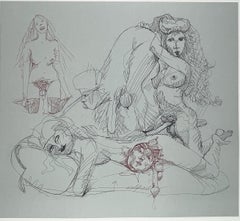
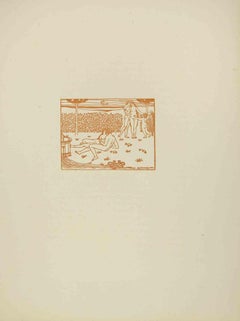
Four Figures and a Head, on Giant Phallus by Claes Oldenburg erotic nude scene
Located in New York, NY
This sensuous and playful scene is characteristic of Oldenburg’s printmaking ouevre: a veritable heap of women displaying various expressions of joy and come-hither coquettishness. T...
Category

1970s Modern Nude Prints

Materials

Etching

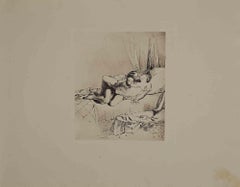
“Standing Female Nude”
Located in Southampton, NY
Beautiful, original lithograph on handmade paper by the well known French artist, Aristide Maillol. Artist monogram “M” lower right. Condition is good. Early 20th century on artist...
Category

Early 20th Century Modern Nude Prints

Materials

Lithograph, Handmade Paper

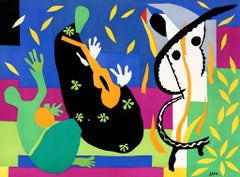
Henri Matisse, The Sorrow of the King, Verve, Revue Artistique, 1958 (after)
Located in Southampton, NY
This exquisite lithograph after Henri Matisse (1869–1954), titled La Tristesse du Roi (The Sorrow of the King), from Verve, Revue Artistique et Litteraire, Vol. IX, No. 35–36, origin...
Category

1950s Modern Nude Prints

Materials

Lithograph

Nude Body II Print Canvas Colors Red Brown Black Orange Yellow
By Dimiter Buyukliiski Mitchi
Located in Sofia, BG
"Nude Body II" is an modern art in cubism and abstract line print after the famous Bulgarian artist Dimiter Buyukliiski-Mitchy, TECHNIQUE: oil painting Edition : Limited 1 of 10 c...
Category

2010s Modern Nude Prints

Materials

Canvas, Oil

Lying Nude on a bed - Original Etching Handsigned
Located in Paris, IDF
Alméry Lobel-Riche Lying Nude on a bed Original etching Handsigned in pencil Numbered /12 On parchment 31 x 22.5 cm (c. 12.2 x 8.9 inches) Excellent condition
Category

Early 20th Century Modern Nude Prints

Materials

Etching

Modern nude prints for sale on 1stDibs.

Find a wide variety of authentic Modern nude prints available for sale on 1stDibs. Works in this style were very popular during the 21st Century and Contemporary, but contemporary artists have continued to produce works inspired by this movement. If you’re looking to add nude prints created in this style to introduce contrast in an otherwise neutral space in your home, the works available on 1stDibs include elements of yellow, orange, blue, purple and other colors. Many Pop art paintings were created by popular artists on 1stDibs, including Alain Bonnefoit, Leonor Fini, (after) Egon Schiele, and Felice Casorati. Frequently made by artists working with Lithograph, and Charcoal and other materials, all of these pieces for sale are unique and have attracted attention over the years. Not every interior allows for large Modern nude prints, so small editions measuring 2.56 inches across are also available. Prices for nude prints made by famous or emerging artists can differ depending on medium, time period and other attributes. On 1stDibs, the price for these items starts at $11 and tops out at $170,000, while the average work sells for $621.

Recently Viewed

View All