1910s Prints and Multiples

to
82
540
116
151
45
74
Overall Width
to
Overall Height
to
218
121
58
21
19
9
7
1
1
95
34
22
22
17
4,816
10,524
57,675
24,853
721
2,295
2,318
2,438
4,983
7,808
13,553
8,024
4,245
3,985
619
299
6
713
350
311
279
209
175
149
144
136
128
89
55
42
39
37
28
26
26
25
22
375
279
215
169
101
83
219
505
367
Period: 1910s
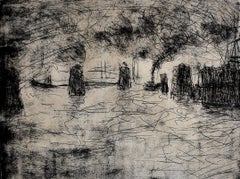
John Sloan Etching, 1916, "McSorley s Back Room"
Located in Phoenix, AZ
John Sloan (1871-1951) etching created 1916. Edition: 100 Titled: “McSorley’s Back Room” Plate size: 5 1/4" H x 7 " W Sheet size: 7 1/2" H x 10 3/8" W In excellent condition, unframe...
Category

1910s Prints and Multiples

Materials

Paper

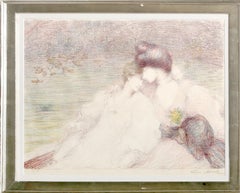
Two Women in Boat, Signed Impressionist Lithograph by Louis Marie Joseph Ridel
Located in Long Island City, NY
Louis Ridel, born February 12, 1866 in Vannes and died November 10, 1937 in Paris, is a painter, sculptor, medalist, French decorator. Louis Ridel studied at the Académie Julian then under the direction of Gustave Moreau at the Ecole des Beaux-Arts in Paris in 1889 (with Matisse, Camoin, Marquet and Rouault). He exhibited at the Salon des Artistes Français between 1893 and 1935, at the Salon des Tuileries between 1927 and 1934, the Universal Exhibition of Ghent in 1913 and the famous Georges Petit Gallery (1909-1910). The works of the artist are present in the museums of Nantes, Strasbourg, Pont-Aven but also Tokyo, Buenos Aires and Rio de Janeiro. This symbolist painter, friend of Aman-Jean, Maxence and Albert Besnard, represented essentially women of the bourgeoisie, ethereal and diaphanous or landscapes of his native region, Brittany. In 1896, he received an honorable mention from the Salon des artistes français, then a third class medal in 1898 and second class in 1900. In 1901, he was out of competition. In 1909, he was named Knight of the Legion of Honor. He receives official orders for the Senate, the Ministry of Public Works or the mayor of the 12th arrondissement of Paris. Two Women in Boat...
Category

Post-Impressionist 1910s Prints and Multiples

Materials

Lithograph

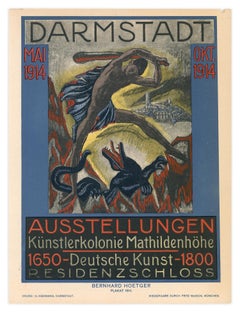
Fourth Darmstadt exhibition, Expressionist dragon poster, Bernhard Hoetger, 1914
By Bernhard Hoetger
Located in Chicago, IL
Bernhard Hoetger’s 1914 Expressionist poster for the Darmstadt Artists' Colony’s (Darmstädter Künstlerkolonie) fourth and final exhibition depicts the legend of Saint George slaying ...
Category

Expressionist 1910s Prints and Multiples

Materials

Offset

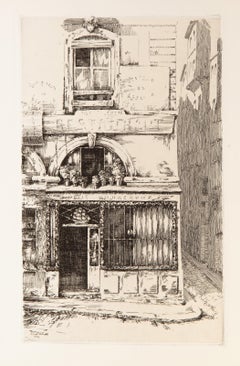
Au Petit Dunkerque, Modern Etching by Ernest Laborde
Located in Long Island City, NY
Ernest Laborde, French (1870 - 1935) - Au Petit Dunkerque, Year: 1913, Medium: Etching, signed and dated in the plate, Image Size: 9 x 5.5 inches, Size: 11 x 7.5 in. (27.94 x 19.05...
Category

Modern 1910s Prints and Multiples

Materials

Etching

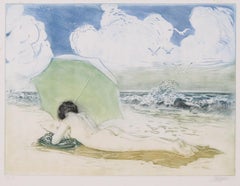
Sunbathing
Located in Fairlawn, OH
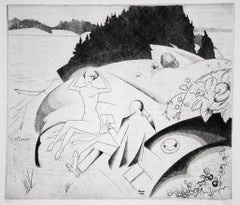
Sunbathing Etching and color aquatint on watermarked Umbria Italy paper, c. 1915 Signed by the artist in pencil lower right (see photo) Annotated: "No. 6" in pencil lower left (see photo) An early color print by the artist Condition: Excellent Plate size: 11-3/4 x 15-7-8" (30 x 40.3 cm.) Frame size: 21 x 26 1/8 x 1 inches Provenance: Estate of the artist By decent Louis Oscar Griffith (1875-1956) Born in Greencastle, Indiana, Griffith grew up in Dallas, Texas where Texas artist and teacher Charles Franklin Reaugh recognized young “Griff’s” artistic talent. At age 18, Griffith moved to St. Louis where he attended the St. Louis School of Fine Arts. In 1895, he moved to Chicago where he worked making color prints for the firm Barnes and Crosby. He attended the Art Institute of Chicago and during a brief stay in New York, the National Academy of Design. A successful commercial artist with a studio in the Chicago Loop...
Category

American Impressionist 1910s Prints and Multiples

Materials

Etching

Hamburg, Mild Atmosphere - German Expressionism Hamburg Harbour Maritime Scene
Located in London, GB
This original drypoint is hand signed and dated in pencil by the artist "Emil Nolde" at the lower right margin. It is one of at least 18 impressions printed on Van Gelder Zonen pape...
Category

Expressionist 1910s Prints and Multiples

Materials

Drypoint

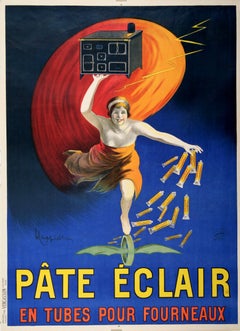
Original Leonetto Cappiello Poster 1912 - Pate Eclair Stove Polish
Located in Boca Raton, FL
This vintage poster advertises the Éclair brand of stove polish paste, a product in high demand during a time when almost all stoves were made out of cast iron. The winged wheel is a...
Category

1910s Prints and Multiples

Materials

Lithograph

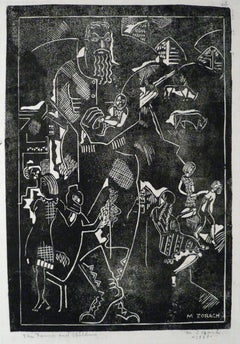
THE FARMER AND CHILDREN (A NEW ENGLAND FAMILY, or THE FATHER).
Located in Portland, ME
Zorach, Marguerite. THE FARMER AND CHILDREN (also titled A NEW ENGLAND FAMILY, or THE FATHER). Linoleum cut, circa 1917. Titled, Signed, and dated 1920 in pencil in the margin and si...
Category

1910s Prints and Multiples

Materials

Linocut

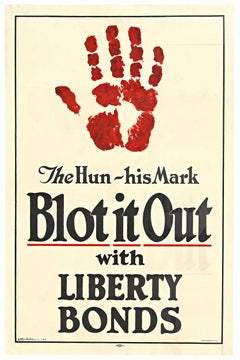
Original Blot it Out The Hun - his Mark vintage 1918 WW1 postter
Located in Spokane, WA
Original The Hun ~ his Mark, Blot it Out with Liberty Bonds vintage American World War One poster. Archivail linen backed in mint condition, ready to frame. The images shown are...
Category

American Modern 1910s Prints and Multiples

Materials

Lithograph

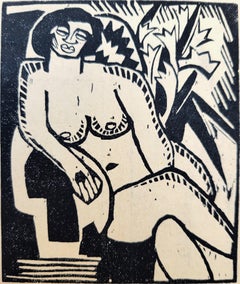
Sitzende Frau mit Blüten (Seated Woman with Flowers) /// Karl Schmidt-Rottluff
Located in Saint Augustine, FL
Artist: (after) Karl Schmidt-Rottluff (German, 1884-1976) Title: "Sitzende Frau mit Blüten (Seated Woman with Flowers)" Series: Die Aktion Year: 1914 Medium: The Complete Vol. 4, No. 11 issue of 'Die Aktion' with a Lithograph on cream smooth wove paper Limited edition: Unknown Printer: F.E. Haag, Melle, Hanover, Germany Publisher: Verlag der Wochenschrift DIE AKTION, Berlin, Germany Sheet size: 12.25" x 9.25" Image size: 3.82" x 3.25" Condition: Toning to sheets (as normal). Light water staining at center right edge and upper right corner. Some separation and small paper losses at spine. It is otherwise in very good condition Extremely rare A very nice copy of this extremely scarce issue Notes: Provenance: private collection - Fürstenberg/Havel, Germany. The lithograph on the cover is a smaller-sized reproduction after Schmidt-Rottluff's 1913 larger original signed woodcut engraving edition, ("Das Graphische Werk Bis 1923" - Schapire No. 114, page 28). Published March 14th, 1914. A total of 14 pages. There is an example of this complete issue in the permanent collection of the Museum of Modern Art, New York, NY. In 1911 Franz Pfemfert, a cantankerous critic of capitalism and Wilhelmine society, founded Die Aktion as a political and literary journal. In April of the following year, a new subtitle declared the journal a "weekly for politics, literature, and art." Although politics remained the priority, Die Aktion began featuring visual art coverage as well as original prints and illustrations. Artist Max Oppenheimer (MOPP) worked closely with 'Die Aktion' in its early years, portraying in its pages many of the young writers who gave the journal its distinctive voice. Egon Schiele made his first woodcuts at Pfemfert's urging in 1916, for publication in the journal. Other frequent contributors included Ludwig Meidner and, later, Conrad Felixmüller and Karl Schmidt-Rottluff. Adamantly opposed to World War I, Pfemfert skirted tightened censorship from August 1914 to October 1918 by treating contemporary events only through artistic and literary allusions. At a time when reading books by foreign authors was considered unpatriotic, he dedicated entire issues of Die Aktion to Russian, French, and Belgian authors and artists. In late 1918, however, Pfemfert resumed vocal political critique, siding with the radical left. His selection of prints, formerly varied, became overtly political. After 1921, he ceased art coverage altogether, decreased the number of issues, and used the publication exclusively as a mouthpiece for his own increasingly partisan views. Biography: Karl Schmidt-Rottluff (born December 1, 1884, Rottluff, near Chemnitz, Germany—died August 9, 1976, West Berlin [now Berlin]), German painter and printmaker who was noted for his Expressionist landscapes and nudes. In 1905 Schmidt-Rottluff began to study architecture in Dresden, Germany, where he and his friend Erich Heckel met Ernst Ludwig Kirchner and Fritz Bleyl...
Category

Expressionist 1910s Prints and Multiples

Materials

Lithograph

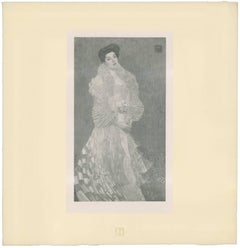
H.O. Miethke Das Werk folio "Portrait of Hermine Gallia" collotype print
Located in Palm Beach, FL
DAS WERK GUSTAV KLIMTS, a portfolio of 50 prints, ten of which are multicolor collotypes on chine colle paper laid down on hand-made heavy cream wove paper with deckled edges; under ...
Category

Vienna Secession 1910s Prints and Multiples

Materials

Paper

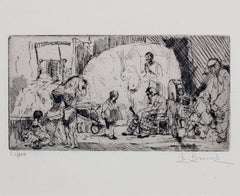
"Le Petit Cirque Prinder, " Original Etching signd by Auguste Brouet
Located in Milwaukee, WI
"Le Petit Cirque Prinder" is an original etching by Auguste Brouet. This piece depicts a variety of circus performers surrounded by small children. The artist signed the piece in the...
Category

Academic 1910s Prints and Multiples

Materials

Pencil, Etching

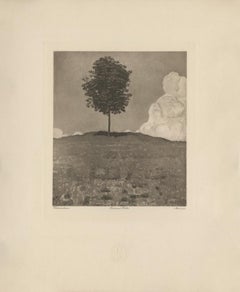
"Chestnut Tree" Copper Plate Heliogravure
Located in Palm Beach, FL
2018 marks the centenary anniversary of Ferdinand Hodler’s death. In that 100 years time, the art world’s esteem of this important artist has proved fickle. It has shifted from extolling his artistic merits during his lifetime to showing something of a feigned disdain- more reflective of the world political order than a true change of heart for Hodler’s work. After years of Hodler being all but a footnote in the annals of art history and generally ignored, finally, the pendulum has righted itself once again. Recent retrospective exhibitions in Europe and the United States have indicated not only a joyful rediscovery of Hodler’s art but a firm conviction that his work and world view hold particular relevance today. DAS WERK FERDINAND HODLERS is not only a collection of printed work reflecting the best of all of his painted work created up to 1914 just before the outbreak of World War I, the portfolio itself is an encapsulation of Hodler’s ethos, Parallelisme. Hodler developed his philosophy of Parallelisme as a unifying approach to art which strips away detail in search of harmony. By means of abstraction, symmetry and repetition, Hodler sought ways to depict Nature’s essence and her fundamental, universal order. He believed these universal laws governing the natural, observable world extend to the spiritual realm. Symbolist in nature with Romantic undertones, his works are equally portraits of these universal concepts and feelings governing all life as they are a visual portrait in the formal sense. Whether his subject is a solitary tree, a moment in battle, mortal fear, despair, the awe inspired by a vast mountain range, a tender moment or even the collective conviction in a belief, Hodler unveils this guiding principle of Parallelisme. Several aspects of Hodler’s portfolio reinforce his tenets of Parallelisme. The Table of Contents clearly preferences a harmonious design over detail. The two columns, consisting of twenty lines each, list the images by order of appearance using their German titles. The abbreviated titles are somewhat cryptic in that they obscure the identities of the sitters. Like the image Hodler presents, they are distillations of the sitter without any extraneous details. This shortening was also done in an effort to maintain a harmonious symmetry of the Table of Contents, themselves, and keep titles to a one-line limit. The twenty-fourth title: “Bildnis des Schweizerischen Gesandten C.” was so long, even with abbreviation, that it required two lines; so, for the sake of maintaining symmetry, the fortieth title: “Bauernmadchen” was omitted from the list. This explains why the images are not numbered. Hodler’s reasoning is not purely esoteric. Symmetry and pattern reach beyond mere formal design principles. Finding sameness and imposing it over disorder goes to the root of Hodler’s identity and his art. A Swiss native, Hodler was bi-lingual and spoke German and French. Each printed image, even number forty, have titles in both of Hodler’s languages. Certainly, there was a market for Hodler’s work among francophones and this inclusion may have been a polite gesture to that end; however, this is the only place in the portfolio which includes French. With German titles at the lower left of each image, Hodler’s name at bottom center and corresponding French titles at the lower right of each image, there is a harmony and symmetry woven into all aspects of the portfolio. This holds true for the page design, as it applies to each printed image and as it describes the Swiss artist himself. Seen in this light, Hodler’s portfolio of printed work is the epitome of Hodler’s Parallelisme. DAS WERK FERDINAND HODLERS is also one of the most significant documents to best tell the story of how Hodler, from Switzerland, became caught between political cross-hairs and how the changing tides of nations directly impacted the artist during his lifetime as well as the accessibility of his art for generations to come. The Munich-based publisher of the portfolio, R. Piper & Co., Verlag, plays a crucial role in this story. Publishing on a wide range of subjects from philosophy and world religion to music, literature and the visual arts; the publisher’s breadth of inquiry within any one genre was equal in scope. Their marketing strategy to publish multiple works on Hodler offers great insight as to what a hot commodity Hodler was at that time. R.Piper & Co.’s Almanach, which they published in 1914 in commemoration of their first ten years in business, clearly illustrates the rapid succession- strategically calculated for achieving the deepest and broadest impact - in which they released three works on Hodler to hit the market by the close of 1914. DAS WERK FERDINAND HODLERS was their premier publication. It preceded C.A. Loosli’s Die Zeichnungen Ferdinand Hodlers, a print portfolio after 50 drawings by Hodler which was released in Autumn of 1914 at the mid-level price-point of 75-150 Marks; and a third less expensive collection of prints after original works by Hodler, which had not been included in either of the first two portfolios, was released at the end of that year entitled Ferdinand Hodler by Dr. Ewald Bender. The title and timing of DAS WERK FERDINAND HODLERS' debut leaves little doubt as to the connection it has with another avant-garde portfolio of art prints, Das Werk Gustav Klimts, released in 5 installments from 1908 -1914 by Galerie Miethke in Vienna. Hodler, himself, was involved in Klimt’s ground-breaking project. As the owner of Klimt’s 1901 painting, “Judith with the Head of Holifernes” which appears as the ninth collotype print in the second installment of Das Werk Gustav Klimts, Hodler was obliged to grant access of the painting to the art printers in Vienna for them to create the collotype sometime before 1908. Hodler had been previously invited in 1904 to take part in what would be the last exhibition of the Vienna Secession before Klimt and others associated with Galerie Miethke broke away. In an interview that same year, Hodler indicated that he respected and was impressed by Klimt. Hodler’s esteem for Klimt went beyond the art itself; he emulated Klimt’s method aimed at increasing his market reach and appeal to a wider audience by creating a print portfolio of his painted work. By 1914, Hodler and his publisher had the benefit of hindsight to learn from Klimt’s Das Werk publication. Responding to the sluggish sales of Klimt’s expensive endeavor, Hodler’s publisher devised the same diversified 1-2-3 strategy for selling Hodler’s Das Werk portfolio as they did with regards to all three works on Hodler they published that year. For their premium tier of DAS WERKS FERDINAND HODLERS, R. Piper & Co. issued an exclusive Museum quality edition of 15 examples on which Hodler signed each page. At a cost of 600 Marks, this was generally on par with Klimt’s asking price of 600 Kronen for his Das Werk portfolio. A middle-tiered Preferred edition of 30, costing somewhat less and with Hodler’s signature only on the Title Page, was also available. The General edition, targeting the largest audience with its much more affordable price of 150 Marks, is distinguishable by its smaller size. Rather than use the subscription format Miethke had chosen for Klimt’s portfolios which proved to have had its challenges, R. Piper & Co. employed a different strategy. In addition to instantly gratifying the buyer with all 40 of the prints comprising DAS WERK FERDINAND HODLERS and the choice among three price points, they advertised in German journals a fourth possibility of ordering single prints from them directly. These printed images are easily discernible from the three complete folio editions. The paper size of the single purchased images is of the larger format like the Museum and Preferred editions, measuring 65 h x 50 w cm; however, the paper itself is the same copper print paper used in the General edition and then mounted on poster board. The publishing house positioned itself to be a direct retailer of Hodler’s art. They astutely recognized the potential for profitability and the importance, therefore, of having proprietary control over his graphic works. R. Piper & Co. owned the exclusive printing rights to Hodler’s best work found in their three publications dating from 1914. That same year, a competing publication out of Weimar entitled Ferdinand Hodler: Ein Deutungsversuch von Hans...
Category

Symbolist 1910s Prints and Multiples

Materials

Paper

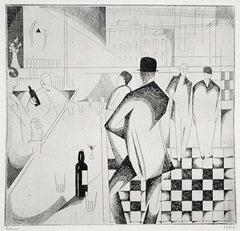
Bar en Pennsylvania, 1914
Located in New York, NY
Jean-Emile Laboureur (1877-1943), Bar en Pennsylvanie, etching, 1914. Signed in pencil lower left and numbered 21/35 lower right [also signed and dated lower in the plate lower left]...
Category

Cubist 1910s Prints and Multiples

Materials

Etching

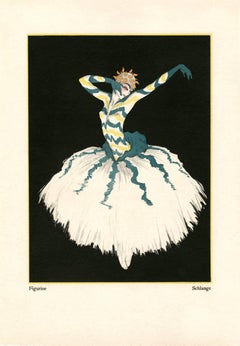
Kostume, Plakate, und Dekorationen, "Schlange (Snake)"
Located in Palm Beach, FL
Walter Schnackenberg’s style changed several times during his long and successful career. Having studied in Munich, the artist traveled often to Paris where he fell under the spell of the Henri de Toulouse-Lautrec’s colorful and sensuous posters depicting theatrical and decadent subjects. Schnackenberg became a regular contributor of similar compositions to the German magazines Jugend and Simplicissimus before devoting himself to the design of stage scenery and costumes. In the artist’s theatrical work, his mastery of form, ornamentation, and Orientalism became increasingly evident. He excelled at combining fluid Art Nouveau outlines, with spiky Expressionist passages, and the postures and patterns of the mysterious East. In his later years, Schnackenberg explored the unconscious, using surreal subject matter and paler colors that plainly portrayed dreams and visions, some imbued with political connotations. His drawings, illustrations, folio prints, and posters are highly sought today for their exceedingly imaginative qualities, enchanting subject matter, and arresting use of color. SCHNACKENBERG: KOSTUME, PLAKATE UND DEKORATIONEN, a cardboard bound art book consisting of 43 prints of work by Walter Schnackenberg, 30 of which are color lithographs that are signed and some are titled and dated in the plate, as well as black and white prints and photographs with accompanying text by Oskar Bie; lithographs printed at Kunstanstalt Oskar Consee in Munich, other images printed by Gesellschaft Pick & Co. in Munich, the text and cover with color images by Schnackenberg front and verso printed by R. Oldenbourg in Munich; published by Musarion Verlag, Munich, 1920. The majority of Walter Schnackenberg’s artistic output was destroyed by bomb attacks in Munich in 1944. The highly publicized 2013 auction in New York of the recovered pre-war poster collection once belonging to German poster aficionado, Hans Sachs has reintroduced the world to Walter Schnackenberg’s graphic genius and priceless ephemeral art from a lost era. Besides the museum world, designer Karl Lagerfeld is one of the most prodigious collectors of Schnackenberg. Flipping through the pages of Kostume, Plakate und Dekorationen, it becomes quite clear that Schnackenberg’s collection is ground zero at the crossroads of early modern fashion where the cult of celebrity meets up with dance, music, theater and cabaret, film and the graphic medium. Berlin and Munich under Germany’s Weimar Republic in the first quarter of the 20th century produced just the atmosphere to feed this burgeoning industry. Rising inflation sparked a recklessness to live large for the moment and heightened a desire for escapism. An influx of Indian and East Asian dancers and musicians added to the artsy bohemian cultural mix. A new decadence and tolerance resulted. Film boldly featured provocative subject matter. Cabarets became popular venues giving rise to the demi-monde in which people from all social stations mixed more freely in a thriving underground economy and culture where there was a blurring of boundaries and of social codes. Noted art historian and cultural doyen, Oskar Bie astutely observes in his introduction to Schnackenberg’s publication that what unites the images is fantasy and advertisement. Schnackenberg uses the eye as an instrument to brilliantly construct and convey this double message. His personages never directly confront the viewer. Their eyes gaze off in the distance like those of the screenplayer and film star Hedamaria Scholz in Schnackenberg’s “Die Rodelhexe” movie poster. Their eyes follow the path of a dance composition or become a transfixed and ogling male gaze such as the iconic 1911 Odeon Casino poster...
Category

Expressionist 1910s Prints and Multiples

Materials

Lithograph

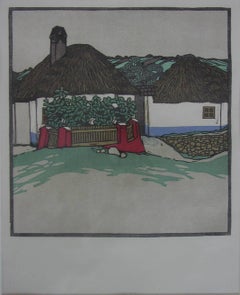
Slowakisches Bauernhaus,
By Karl Schwetz
Located in New York, NY
Schweiz, Karl. Slowakisches Bauernhaus, Ca 1911. Color linoleum cut. Framed. Provenance: Galerie Michael Pabst, Munich. Noted artist, painter, illustr...
Category

Vienna Secession 1910s Prints and Multiples

Materials

Linocut

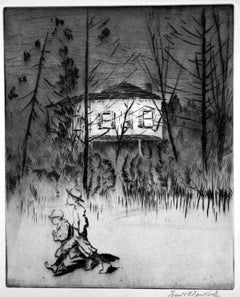
Walking in the Woods
By Frank Arthur Nankivell
Located in New York, NY
Frank Arthur Nankivell (18691959), [Walking in the Woods at Night], drypoint, c. 1910, signed in pencil lower right. Printed on a cream laid paper. In good condition, with margins (s...
Category

American Realist 1910s Prints and Multiples

Materials

Drypoint

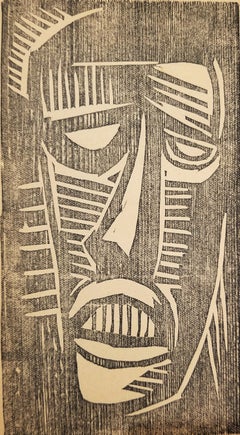
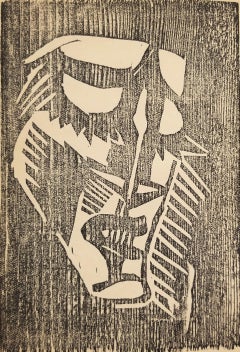
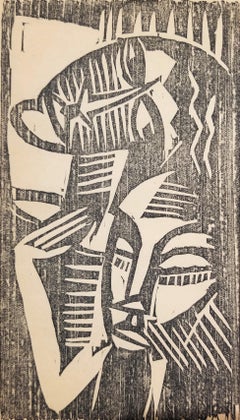
Männlicher Kopf von vorn (Male Head from the Front) /// German Expressionism
Located in Saint Augustine, FL
Artist: Karl Schmidt-Rottluff (German, 1884-1976) Title: "Männlicher Kopf von vorn (Male Head from the Front)" Portfolio: Das Spiel Christa vom Schmerz der Schönheit des Weibes (The Play Christa from the Pain of the Beauty of the Woman) *Issued unsigned Year: 1918 Medium: Original Woodcut Engraving on wove paper Limited edition: Unknown Printer: Fritz Voigt, Berlin, Germany Publisher: Verlag Die Aktion, Berlin, Germany Reference: Schapire No. 226, page 46; Jentsch No. 35. Rifkind No. 2563; Lang No. 300; Reed No. 118 Overall size with attached page: 8.5" x 10.63" Sheet size: 8.5" x 5.38" Image size: 6.38" x 3.5" Condition: Toning to sheet (as normal). In very good condition Very rare Notes: Provenance: private collection - Oxnard, CA. Comes from a complete originally bound 48 page folio with 9 original woodcut engravings by Schmidt-Rottluff. Text by Alfred Brust. Presently attached to its accompanying page. The cover and title pages in pictures are not included, only for reference/provenance. There is an example of this work in the permanent collection of the Brücke Museum, Berlin, Germany. Biography: Karl Schmidt-Rottluff (born December 1, 1884, Rottluff, near Chemnitz, Germany—died...
Category

Expressionist 1910s Prints and Multiples

Materials

Engraving, Woodcut

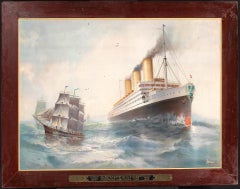
Period Lithograph on Tin of SS IMPERATOR
Located in Costa Mesa, CA
This period lithograph of the S.S. IMPERATOR includes its original period frame with plaque. There are a few nicks on the tin but the condition is overall excellent. SS IMPERATOR was a German ocean liner built for the Hamburg America Line. At the time of her completion in June 1913, she was the largest passenger ship in the world by gross tonnage, surpassing the new White Star liner OLYMPIC. IMPERATOR was the first of three successively larger Hamburg American liners that included SS Vaterland (later the United States Liner LEVIATHAN) and SS Bismarck (purchased and renamed MAJESTIC for the White Star Line transatlantic passenger service). IMPERATOR ran a transatlantic route for 14 months, until the outbreak of World War I, after which she remained in port in Hamburg. After the war, she was briefly commissioned into the United States Navy as USS IMPERATOR and employed as a troop transport, returning American troops from Europe. Following her service with the U.S. Navy, IMPERATOR was handed over to Britain's Cunard Line as part of war reparations, due to the loss of the RMS LUSITANIA...
Category

Other Art Style 1910s Prints and Multiples

Materials

Lithograph

Original engraving by Manuel Robbe - Promenade Au Parc Monceau
Located in PARIS, FR
Bathed in the gentle light of a Parisian afternoon, this charming original aquatint by Manuel Robbe captures an idyllic moment of bourgeois leisure in the Parc Monceau, one of the ca...
Category

1910s Prints and Multiples

Materials

Paper, Engraving, Aquatint

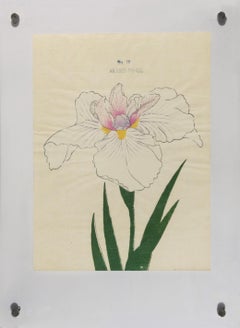
Iris Kaempferi: No.10 AKASHI-NO-UE
Located in London, GB
Iris Kaempferi: No. 10 AKASHI-NO-UE Tokyo, Yoshinoen-Garden, circa 1910. Hand-coloured woodblock print on handmade rice paper, numbered and captioned at top, outlined in ink. Fram...
Category

Naturalistic 1910s Prints and Multiples

Materials

Wood, Watercolor, Rice Paper

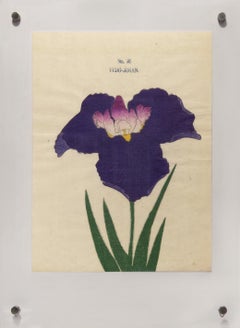
Iris Kaempferi: No.36 YEDO-JIMAN
Located in London, GB
Iris Kaempferi: No. 36 YEDO-JIMAN Tokyo, Yoshinoen-Garden, circa 1910. Hand-coloured woodblock print on handmade rice paper, numbered and captioned at top, outlined in ink. Framed ...
Category

Naturalistic 1910s Prints and Multiples

Materials

Wood, Watercolor, Rice Paper

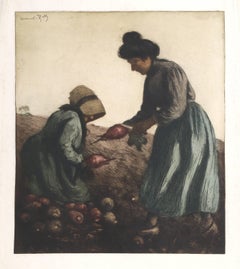
"Harvest (Sugar Beets), " Aquatint Etching by Manuel Robbe, circa 1910
Located in Long Island City, NY
This etching with aquatint was created by French printmaker Manuel Robbe. Robbe’s innovative techniques, along with his sense of color harmony and his choice of subjects: stylish wom...
Category

Impressionist 1910s Prints and Multiples

Materials

Etching, Aquatint

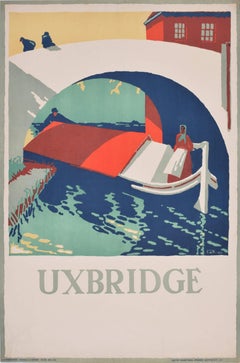
Uxbridge original vintage poster by Edward McKnight Kauffer
Located in London, GB
To see our other original vintage posters, scroll down to "More from this Seller" and below it click on "See all from this Seller" - or send us a message if you cannot find the poster you want. Edward McKnight Kauffer (1890 - 1954) Uxbridge (1919) Original vintage poster 76 x 51 cm Designed in 1919 and printed by the Dangerfield Printing Co...
Category

1910s Prints and Multiples

Materials

Lithograph

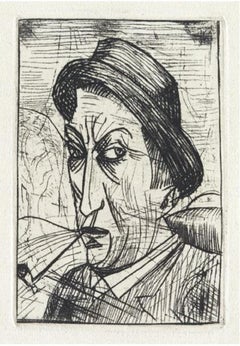
Autoportrait a la Pipe
Located in New York, NY
Etching and drypoint on cream laid paper. Catalogue raisonne reference: Adhemar 44.
Category

Fauvist 1910s Prints and Multiples

Materials

Drypoint, Etching

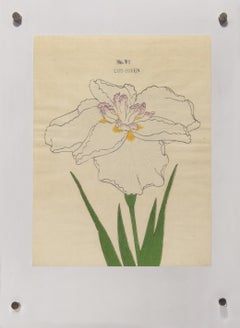
Iris Kaempferi: No. 91 CHO-HIYEN
Located in London, GB
Iris Kaempferi: No. 91 CHO-HIYEN Tokyo, Yoshinoen-Garden, circa 1910. Hand-coloured woodblock print on handmade rice paper, numbered and captioned at top, outlined in ink. Framed in...
Category

Naturalistic 1910s Prints and Multiples

Materials

Watercolor, Rice Paper

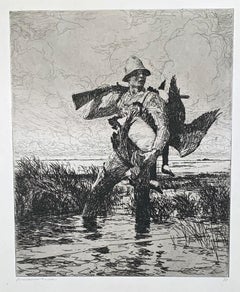
MARSH GUNNER
Located in Portland, ME
Benson, Frank. MARSH GUNNER. Paff 149. Etching, 1918. Edition of 150. Signed in pencil, lower left, and numbered "93" in pencil, lower right. 10 7/8 x 8 7/8 inches (plate), 15 3/4 x ...
Category

1910s Prints and Multiples

Materials

Etching

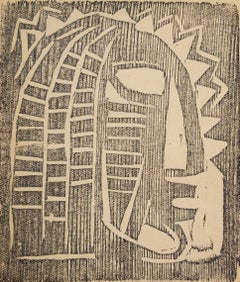
Männlicher Kopf im Profil (Male Head in Profile) /// German Expressionism Modern
Located in Saint Augustine, FL
Artist: Karl Schmidt-Rottluff (German, 1884-1976) Title: "Männlicher Kopf im Profil (Male Head in Profile)" Portfolio: Das Spiel Christa vom Schmerz der Schönheit des Weibes (The Play Christa from the Pain of the Beauty of the Woman) *Issued unsigned Year: 1918 Medium: Original Woodcut Engraving on wove paper Limited edition: Unknown Printer: Fritz Voigt, Berlin, Germany Publisher: Verlag Die Aktion, Berlin, Germany Reference: Schapire No. 219, page 45; Jentsch No. 35. Rifkind No. 2563; Lang No. 300; Reed No. 118 Overall size with attached page: 8.5" x 10.63" Sheet size: 8.5" x 5.38" Image size: 4" x 3.38" Condition: Toning to sheet (as normal). In very good condition Very rare Notes: Provenance: private collection - Oxnard, CA. Comes from a complete originally bound 48 page folio with 9 original woodcut engravings by Schmidt-Rottluff. Text by Alfred Brust. Presently attached to its accompanying page. The cover and title pages in pictures are not included, only for reference/provenance. There is an example of this work in the permanent collection of the Brücke Museum, Berlin, Germany. Biography: Karl Schmidt-Rottluff (born December 1, 1884, Rottluff, near Chemnitz, Germany—died...
Category

Expressionist 1910s Prints and Multiples

Materials

Engraving, Woodcut

Männlicher Kopf von vorn, nach rechts gewandt (Male Head Facing Right)
Located in Saint Augustine, FL
Artist: Karl Schmidt-Rottluff (German, 1884-1976) Title: "Männlicher Kopf von vorn, nach rechts gewandt (Male Head Facing Right)" Portfolio: Das Spiel Christa vom Schmerz der Schönhe...
Category

Expressionist 1910s Prints and Multiples

Materials

Engraving, Woodcut

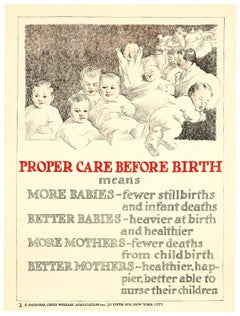
Original "Proper Care Before Birth" means More Babies vintage poster
Located in Spokane, WA
Original “Proper Care Before Birth” vintage poster. Archival linen backed in excellent condition, ready to frame. Size 20.5” x 27”; circa 1917. The Original "Proper Care Before Births" vintage poster is a rare find for collectors of World War 1 memorabilia...
Category

American Realist 1910s Prints and Multiples

Materials

Lithograph

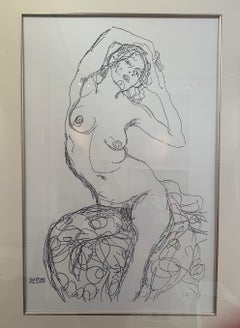
Sitting Nude - Female nude after the original drawing of Gustav Klimt art deco
Located in Hamburg, DE
"Sitting Nude" (1963) is a lithograph based on Gustav Klimt's original drawing of 1914-16. It depicts in his typical art deco style a nude woman posing with her arms over her head. ...
Category

Art Deco 1910s Prints and Multiples

Materials

Lithograph

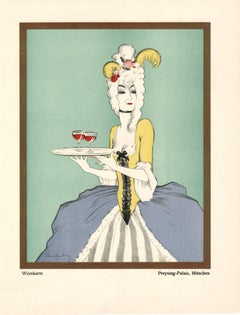
Kostume, Plakate, und Dekorationen, "Preysing-Palais Munich"
Located in Palm Beach, FL
Walter Schnackenberg’s style changed several times during his long and successful career. Having studied in Munich, the artist traveled often to Paris where he fell under the spell o...
Category

Expressionist 1910s Prints and Multiples

Materials

Lithograph

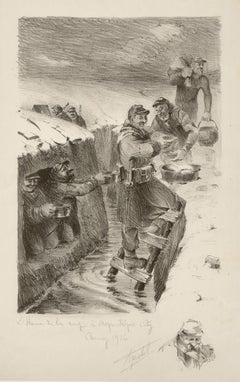
L heure de la soupe a aquatique city, World War I lithograph by Truchet, 1914
Located in Melbourne, Victoria
Scene from the Western Front. French lithograph signed and dated in pencil below the image. Louis Abel-Truchet was a French painter, etcher and lithographer who studied art in Pa...
Category

Other Art Style 1910s Prints and Multiples

Materials

Lithograph

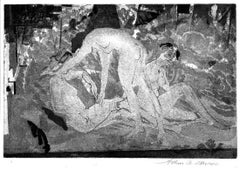
Against Green
Located in New York, NY
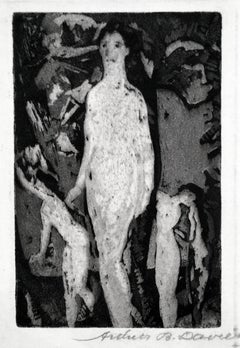
Arthur B. Davies (1862-1928), Against Green (also Three Figure Composition, Figures Against Green), soft ground etching and aquatint, 1918, signed in pencil lower right; also titled ...
Category

American Impressionist 1910s Prints and Multiples

Materials

Etching, Aquatint

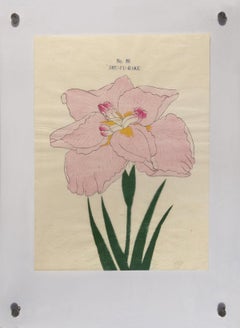
Iris Kaempferi: No. 58 SHU-FU-RAKU
Located in London, GB
Iris Kaempferi: No. 58 SHU-FU-RAKU Tokyo, Yoshinoen-Garden, circa 1910. Hand-coloured woodblock print on handmade rice paper, numbered and captioned at top, outlined in ink. Framed...
Category

Naturalistic 1910s Prints and Multiples

Materials

Wood, Watercolor, Rice Paper

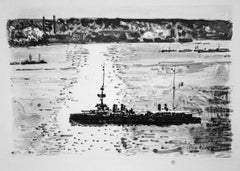
French Cruiser
Located in New York, NY
Childe Hassam (1859-1935), French Cruiser, lithotint, 1918, signed in pencil with the cipher lower right. Reference: Griffith 8. In very good condition, printed in black ink on cream...
Category

American Impressionist 1910s Prints and Multiples

Materials

Lithograph

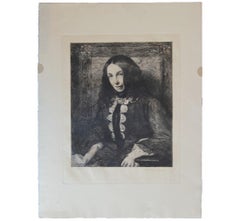
Portrait Etching of English Victorian Poet Elizabeth Barrett Browning
Located in Houston, TX
Etching of a woman dressed in turn of the century attire looking out at the viewer. The work is signed in pencil by the artist. The etching is not framed. Artist Biography: William...
Category

Naturalistic 1910s Prints and Multiples

Materials

Etching

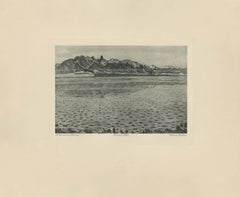
"Stockhorn Mountain Range at Thuner Lake" Copper Plate Heliogravure
Located in Palm Beach, FL
2018 marks the centenary anniversary of Ferdinand Hodler’s death. In that 100 years time, the art world’s esteem of this important artist has proved fickle. It has shifted from extol...
Category

Symbolist 1910s Prints and Multiples

Materials

Paper

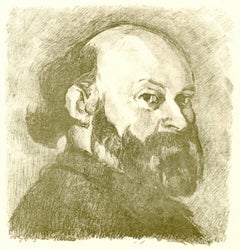
Portrait De Cezanne
Located in Fairlawn, OH
Portrait De Cezanne Lithograph, 1914 Unsigned (as issued in 1914) Edition: Either 100 (per Roger Marx) or 400 impressions on various papers Published in, Cezanne, Bernheim Jeune, 1914 Reference: Roger-Marx 51 ii/II, printed in greenish-grey ink on laid paper Condition: Excellent Image: 9 1/2 x 9" Sheet: 14 3/4 x 11 1/8" Edouard Vuillard French, 1868 - 1940 Vuillard's work straddles two centuries: he was a major post-impressionist in the 1890s, as well as a participant in the renewal of decorative art before and after 1900. Vuillard was one of the central figures of "Les Nabis...
Category

French School 1910s Prints and Multiples

Materials

Lithograph

Summer
Located in Storrs, CT
Summer. 1914. Drypoint. Appleby 46. 6 7/8 x 4 7/8 (sheet 11 5/8 x 9 3/16). Edition 77. A fine impression printed on cream wove paper on the full sheet with deckle edges. Signed in pe...
Category

Modern 1910s Prints and Multiples

Materials

Drypoint

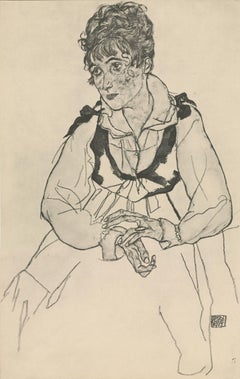
R. Layni, Zeichnungen folio, "The Artist s Wife, Seated" Collotype plate VI
Located in Palm Beach, FL
Egon Schiele (1890 – 1918), AUSTRIA “ART CANNOT BE MODERN, ART IS PRIMORDIALLY ETERNAL.” -SCHIELE Defiantly iconoclastic in life and art, Egon Schiele is esteemed for his masterfu...
Category

Vienna Secession 1910s Prints and Multiples

Materials

Paper

L ile Desert
Located in New York, NY
Jean-Emile Laboureur (1877-1943), L’ile Desert, etching, 1914, signed in pencil lower left and numbered lower right (33/35). Reference: Laboureur 135, only state, from the edition of...
Category

Cubist 1910s Prints and Multiples

Materials

Etching

Tartessians
Located in New York, NY
Arthur B. Davies (1862-1928), Tartessians, soft ground etching with aquatint, 1919-20, signed in pencil lower right. Reference: Czestochowski 96, second state (of 2), total printing ...
Category

American Impressionist 1910s Prints and Multiples

Materials

Etching, Aquatint

A J Meyer Etching Dulwich College London c. 1920 British School print
Located in London, GB
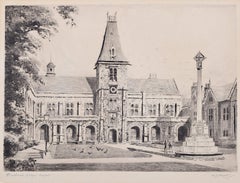
To see our other views of Public Schools, Oxford and Cambridge, scroll down to "More from this Seller" and below it click on "See all from this Seller" - or send us a message if you cannot find the view you want. A J Meyer (British, fl 1900-1930) Dulwich College Etching 22x30cm Sadly little is known of Meyer, an accomplished artist and particularly producer of etchings. He was one of many artists to join the craze for etchings started by Whistler and that died out after the 1929 Wall Street...
Category

Realist 1910s Prints and Multiples

Materials

Etching

STELLA PEREGRINA
Located in Portland, ME
Marc, Franz (German, 1880-1916). STELLA PEREGRINA. FranzHanffstaengl, Munich, 1917. Only edition. Number 25 of the limited edition of 110. Folio (18 x 13 inches), parchment-bac...
Category

Expressionist 1910s Prints and Multiples

Materials

Color

Third Liberty Loan, My Daddy Bought Me a Government Bond original World War 1
Located in Spokane, WA
Original WW1 poster: MY DADDY BOUGHT ME A GOVERNMENT BOND OF THE THIRD LIBERTY LOAN. DID YOURS? Archival linen-backed and in very good condition. Print...
Category

American Modern 1910s Prints and Multiples

Materials

Lithograph

Kostume, Plakate, und Dekorationen, "Lo Hesse"
Located in Palm Beach, FL
Walter Schnackenberg’s style changed several times during his long and successful career. Having studied in Munich, the artist traveled often to Paris where he fell under the spell of the Henri de Toulouse-Lautrec’s colorful and sensuous posters depicting theatrical and decadent subjects. Schnackenberg became a regular contributor of similar compositions to the German magazines Jugend and Simplicissimus before devoting himself to the design of stage scenery and costumes. In the artist’s theatrical work, his mastery of form, ornamentation, and Orientalism became increasingly evident. He excelled at combining fluid Art Nouveau outlines, with spiky Expressionist passages, and the postures and patterns of the mysterious East. In his later years, Schnackenberg explored the unconscious, using surreal subject matter and paler colors that plainly portrayed dreams and visions, some imbued with political connotations. His drawings, illustrations, folio prints, and posters are highly sought today for their exceedingly imaginative qualities, enchanting subject matter, and arresting use of color. SCHNACKENBERG: KOSTUME, PLAKATE UND DEKORATIONEN, a cardboard bound art book consisting of 43 prints of work by Walter Schnackenberg, 30 of which are color lithographs that are signed and some are titled and dated in the plate, as well as black and white prints and photographs with accompanying text by Oskar Bie; lithographs printed at Kunstanstalt Oskar Consee in Munich, other images printed by Gesellschaft Pick & Co. in Munich, the text and cover with color images by Schnackenberg front and verso printed by R. Oldenbourg in Munich; published by Musarion Verlag, Munich, 1920. The majority of Walter Schnackenberg’s artistic output was destroyed by bomb attacks in Munich in 1944. The highly publicized 2013 auction in New York of the recovered pre-war poster collection once belonging to German poster aficionado, Hans Sachs...
Category

Expressionist 1910s Prints and Multiples

Materials

Lithograph

Männlicher Kopf an weibliche (Male Head Leaning against Female) /// Rottluff
Located in Saint Augustine, FL
Artist: Karl Schmidt-Rottluff (German, 1884-1976) Title: "Männlicher Kopf an weibliche (Male Head Leaning against Female)" Portfolio: Das Spiel Christa vom Schmerz der Schönheit des Weibes (The Play Christa from the Pain of the Beauty of the Woman) *Issued unsigned Year: 1918 Medium: Original Woodcut Engraving on wove paper Limited edition: Unknown Printer: Fritz Voigt, Berlin, Germany Publisher: Verlag Die Aktion, Berlin, Germany Reference: Schapire No. 225, page 46; Jentsch No. 35. Rifkind No. 2563; Lang No. 300; Reed No. 118 Sheet size: 8.5" x 5.38" Image size: 6.25" x 3.57" Condition: Toning to sheet (as normal). In very good condition Very rare Notes: Provenance: private collection - Oxnard, CA. Comes from a complete originally bound 48 page folio with 9 original woodcut engravings by Schmidt-Rottluff. Text by Alfred Brust. The cover and title pages in pictures are not included, only for reference/provenance. There is an example of this work in the permanent collection of the Brücke Museum, Berlin, Germany. Biography: Karl Schmidt-Rottluff (born December 1, 1884, Rottluff, near Chemnitz, Germany—died...
Category

Expressionist 1910s Prints and Multiples

Materials

Engraving, Woodcut

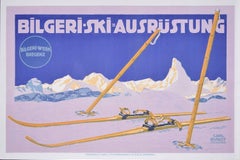
Matterhorn c. 1910 Skiing Original Vintage Poster Bilgeri Ski Carl Kunst Bregenz
By Carl Kunst
Located in London, GB
To see our other original vintage travel posters, many of which have skiing subjects, scroll down to "More from this Seller" and below it click on "See a...
Category

Modern 1910s Prints and Multiples

Materials

Lithograph

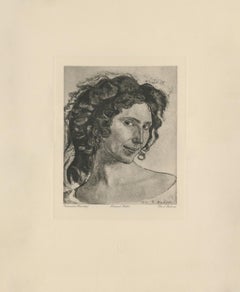
"Head of an Italian Woman" Copper Plate Heliogravure
Located in Palm Beach, FL
2018 marks the centenary anniversary of Ferdinand Hodler’s death. In that 100 years time, the art world’s esteem of this important artist has proved fickle. It has shifted from extol...
Category

Symbolist 1910s Prints and Multiples

Materials

Paper

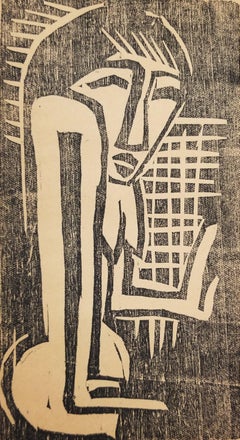
Stehendes nacktes Mädchen im Profil (Standing Naked Girl in Profile) /// Woodcut
Located in Saint Augustine, FL
Artist: Karl Schmidt-Rottluff (German, 1884-1976) Title: "Stehendes nacktes Mädchen im Profil (Standing Naked Girl in Profile)" Portfolio: Das Spiel Christa vom Schmerz der Schönheit des Weibes (The Play Christa from the Pain of the Beauty of the Woman) *Issued unsigned Year: 1918 Medium: Original Woodcut Engraving on wove paper Limited edition: Unknown Printer: Fritz Voigt, Berlin, Germany Publisher: Verlag Die Aktion, Berlin, Germany Reference: Schapire No. 220, page 45; Jentsch No. 35. Rifkind No. 2563; Lang No. 300; Reed No. 118 Sheet size: 8.5" x 5.38" Image size: 6.5" x 3.57" Condition: Toning to sheet (as normal). In very good condition Very rare Notes: Provenance: private collection - Oxnard, CA. Comes from a complete originally bound 48 page folio with 9 original woodcut engravings by Schmidt-Rottluff. Text by Alfred Brust. The cover and title pages in pictures are not included, only for reference/provenance. There is an example of this work in the permanent collection of the Brücke Museum, Berlin, Germany. Biography: Karl Schmidt-Rottluff (born December 1, 1884, Rottluff, near Chemnitz, Germany—died...
Category

Expressionist 1910s Prints and Multiples

Materials

Engraving, Woodcut

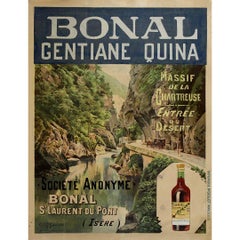
Original vintage poster from 1910 by the Coulange-Lautrec - Bonal Gentiane Quina
Located in PARIS, FR
This original vintage poster, created around 1910 by the artist Coulange-Lautrec, was commissioned to promote Bonal Gentiane Quina, the iconic apéritif rooted in St. Laurent-du-Pont ...
Category

1910s Prints and Multiples

Materials

Linen, Paper, Lithograph

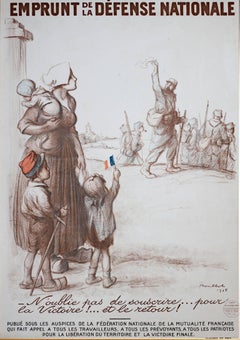
20th century color lithograph poster military wartime figurative print French
Located in Milwaukee, WI
"Emprunt de la Defense Nationale" is an original lithograph poster by Francisque Poulbot. It depicts a mother with three young children saying goodbye to her husband as he leaves for war. This was an advertisement for French people to donate to the war effort during the first world war. 43 1/2" x 30 1/4" art 48" x 34 1/2" frame Emprunt de la Défense Nationale [National Defence Loan] WW1 French...
Category

Modern 1910s Prints and Multiples

Materials

Lithograph

WEIBLICHER AKT MIT BREITKREMPIGEM HUT
Located in Portland, ME
Corinth, Lovis. WEIBLICHER AKT MIT BREITKREMPIGEM HUT (Female Nude with Broad-Brimmed Hat). Schwartz 226A. Etching, 1916. 11 3/4 x 7 3/4 inches, 300 x 198 mm. The earlier version, be...
Category

1910s Prints and Multiples

Materials

Etching

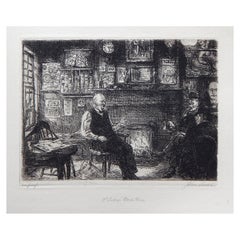
"Girl in the Garden" Copper Plate Heliogravure
Located in Palm Beach, FL
2018 marks the centenary anniversary of Ferdinand Hodler’s death. In that 100 years time, the art world’s esteem of this important artist has proved fickle. It has shifted from extolling his artistic merits during his lifetime to showing something of a feigned disdain- more reflective of the world political order than a true change of heart for Hodler’s work. After years of Hodler being all but a footnote in the annals of art history and generally ignored, finally, the pendulum has righted itself once again. Recent retrospective exhibitions in Europe and the United States have indicated not only a joyful rediscovery of Hodler’s art but a firm conviction that his work and world view hold particular relevance today. DAS WERK FERDINAND HODLERS is not only a collection of printed work reflecting the best of all of his painted work created up to 1914 just before the outbreak of World War I, the portfolio itself is an encapsulation of Hodler’s ethos, Parallelisme. Hodler developed his philosophy of Parallelisme as a unifying approach to art which strips away detail in search of harmony. By means of abstraction, symmetry and repetition, Hodler sought ways to depict Nature’s essence and her fundamental, universal order. He believed these universal laws governing the natural, observable world extend to the spiritual realm. Symbolist in nature with Romantic undertones, his works are equally portraits of these universal concepts and feelings governing all life as they are a visual portrait in the formal sense. Whether his subject is a solitary tree, a moment in battle, mortal fear, despair, the awe inspired by a vast mountain range, a tender moment or even the collective conviction in a belief, Hodler unveils this guiding principle of Parallelisme. Several aspects of Hodler’s portfolio reinforce his tenets of Parallelisme. The Table of Contents clearly preferences a harmonious design over detail. The two columns, consisting of twenty lines each, list the images by order of appearance using their German titles. The abbreviated titles are somewhat cryptic in that they obscure the identities of the sitters. Like the image Hodler presents, they are distillations of the sitter without any extraneous details. This shortening was also done in an effort to maintain a harmonious symmetry of the Table of Contents, themselves, and keep titles to a one-line limit. The twenty-fourth title: “Bildnis des Schweizerischen Gesandten C.” was so long, even with abbreviation, that it required two lines; so, for the sake of maintaining symmetry, the fortieth title: “Bauernmadchen” was omitted from the list. This explains why the images are not numbered. Hodler’s reasoning is not purely esoteric. Symmetry and pattern reach beyond mere formal design principles. Finding sameness and imposing it over disorder goes to the root of Hodler’s identity and his art. A Swiss native, Hodler was bi-lingual and spoke German and French. Each printed image, even number forty, have titles in both of Hodler’s languages. Certainly, there was a market for Hodler’s work among francophones and this inclusion may have been a polite gesture to that end; however, this is the only place in the portfolio which includes French. With German titles at the lower left of each image, Hodler’s name at bottom center and corresponding French titles at the lower right of each image, there is a harmony and symmetry woven into all aspects of the portfolio. This holds true for the page design, as it applies to each printed image and as it describes the Swiss artist himself. Seen in this light, Hodler’s portfolio of printed work is the epitome of Hodler’s Parallelisme. DAS WERK FERDINAND HODLERS is also one of the most significant documents to best tell the story of how Hodler, from Switzerland, became caught between political cross-hairs and how the changing tides of nations directly impacted the artist during his lifetime as well as the accessibility of his art for generations to come. The Munich-based publisher of the portfolio, R. Piper & Co., Verlag, plays a crucial role in this story. Publishing on a wide range of subjects from philosophy and world religion to music, literature and the visual arts; the publisher’s breadth of inquiry within any one genre was equal in scope. Their marketing strategy to publish multiple works on Hodler offers great insight as to what a hot commodity Hodler was at that time. R.Piper & Co.’s Almanach, which they published in 1914 in commemoration of their first ten years in business, clearly illustrates the rapid succession- strategically calculated for achieving the deepest and broadest impact - in which they released three works on Hodler to hit the market by the close of 1914. DAS WERK FERDINAND HODLERS was their premier publication. It preceded C.A. Loosli’s Die Zeichnungen Ferdinand Hodlers, a print portfolio after 50 drawings by Hodler which was released in Autumn of 1914 at the mid-level price-point of 75-150 Marks; and a third less expensive collection of prints after original works by Hodler, which had not been included in either of the first two portfolios, was released at the end of that year entitled Ferdinand Hodler by Dr. Ewald Bender. The title and timing of DAS WERK FERDINAND HODLERS' debut leaves little doubt as to the connection it has with another avant-garde portfolio of art prints, Das Werk Gustav Klimts, released in 5 installments from 1908 -1914 by Galerie Miethke in Vienna. Hodler, himself, was involved in Klimt’s ground-breaking project. As the owner of Klimt’s 1901 painting, “Judith with the Head of Holifernes” which appears as the ninth collotype print in the second installment of Das Werk Gustav Klimts, Hodler was obliged to grant access of the painting to the art printers in Vienna for them to create the collotype sometime before 1908. Hodler had been previously invited in 1904 to take part in what would be the last exhibition of the Vienna Secession before Klimt and others associated with Galerie Miethke broke away. In an interview that same year, Hodler indicated that he respected and was impressed by Klimt. Hodler’s esteem for Klimt went beyond the art itself; he emulated Klimt’s method aimed at increasing his market reach and appeal to a wider audience by creating a print portfolio of his painted work. By 1914, Hodler and his publisher had the benefit of hindsight to learn from Klimt’s Das Werk publication. Responding to the sluggish sales of Klimt’s expensive endeavor, Hodler’s publisher devised the same diversified 1-2-3 strategy for selling Hodler’s Das Werk portfolio as they did with regards to all three works on Hodler they published that year. For their premium tier of DAS WERKS FERDINAND HODLERS, R. Piper & Co. issued an exclusive Museum quality edition of 15 examples on which Hodler signed each page. At a cost of 600 Marks, this was generally on par with Klimt’s asking price of 600 Kronen for his Das Werk portfolio. A middle-tiered Preferred edition of 30, costing somewhat less and with Hodler’s signature only on the Title Page, was also available. The General edition, targeting the largest audience with its much more affordable price of 150 Marks, is distinguishable by its smaller size. Rather than use the subscription format Miethke had chosen for Klimt’s portfolios which proved to have had its challenges, R. Piper & Co. employed a different strategy. In addition to instantly gratifying the buyer with all 40 of the prints comprising DAS WERK FERDINAND HODLERS and the choice among three price points, they advertised in German journals a fourth possibility of ordering single prints from them directly. These printed images are easily discernible from the three complete folio editions. The paper size of the single purchased images is of the larger format like the Museum and Preferred editions, measuring 65 h x 50 w cm; however, the paper itself is the same copper print paper used in the General edition and then mounted on poster board. The publishing house positioned itself to be a direct retailer of Hodler’s art. They astutely recognized the potential for profitability and the importance, therefore, of having proprietary control over his graphic works. R. Piper & Co. owned the exclusive printing rights to Hodler’s best work found in their three publications dating from 1914. That same year, a competing publication out of Weimar entitled Ferdinand Hodler: Ein Deutungsversuch von Hans Muhlestein appeared. Its author, a young scholar, expressed his frustration with the limited availability of printable work by Hodler. In his Author’s Note on page 19, dated Easter, 1914, Muhlestein confirms that the publisher of Hodler’s three works from that same year owned the exclusive reproductive rights to Hodler’s printed original work. He goes further to explain that even after offering to pay to use certain of those images in his book, the publisher refused. Clearly, a lot of jockeying for position in what was perceived as a hot market was occurring in 1914. Instead, their timing couldn’t have been more ill-fated, and what began with such high hopes suddenly found a much different market amid a hostile climate. The onset of WWI directly impacted sales. Many, including Ferdinand Hodler, publicly protested the September invasion by Germany of France in which the Reims Cathedral, re-built in the 13th century, was shelled, destroying priceless stained glass and statuary and burning off the iron roof and badly damaging its wooden interior. Thomas Gaehtgens, Director of the Getty Research Institute describes how the bombing of Reims Cathedral triggered blindingly powerful and deeply-felt ultra-nationalistic responses: “The event profoundly shocked French intellectuals, who for the most part had an intense admiration for German literature, music and art. By relying on press accounts and abstracting from the visual propagandistic content, they were unable to interpret the siege of Reims without turning away from German culture in disgust. Similarly, the German intelligentsia and bourgeoisie were also shocked to find themselves described as vandals and barbarians. Ninety-three writers, scientists, university professors, and artists signed a protest, directed against the French insults, that defended the actions of the German army.” In similar fashion, a flurry of open letters published in German newspapers and journals as well as telegrams and postcards sent directly to Hodler following his outcry in support of Reims reflected the collectively critical reaction to Hodler’s position. Loosli documents that among the list of telegrams Hodler received was one from none other than his publisher in Germany, R.Piper & Co. Allegiances were questioned. The market for Hodler in Germany immediately softened. Matters worsened for the publisher beyond the German backlash to Hodler and his loss of appeal in the home market; with the war in full swing until 1918, there was little chance a German publisher would have much interest coming from outside of Germany and Austria. Following the war and Hodler’s death in 1918, the economy in Germany continued to spiral out and just 5 years later, hyper-inflation had rendered its currency worthless vis-a-vis its value in the pre-war years. Like the economy, Hodler’s reputation was slow to find currency in these difficult times. Even many French art fans had turned sour on Hodler as they considered his long-standing relationship in German and Austrian art circles. Thus, the portfolio’s rarity in Hodler’s lifetime and, consequently, the availability of these printed images from DAS WERK FERDINAND HODLERS since his death has been scarce. In many ways, Hodler and his portfolios were casualties of war. Thwarted from their intended purpose of reaching a wide audience and show-casing Parallelisme, Hodler’s unique approach to art, this important, undated work has been both elusive and shrouded in mystery. Perhaps DAS WERK FERDINAND HODLERS was left undated as a means of affirming the timelessness of Hodler’s art. Digging back into the past, Hodler’s contemporaries, like R. Piper, C.A. Loosli and Hans Muhlestein, indeed provide the keys to unequivocally clarify what has largely been mired in obscurity. Just after Hodler’s death, the May, 1918 issue of the Burlington Review ran a small column which opined hope for better access to R.Piper & Co.’s DAS WERK FERDINAND HODLERS; 100 years later, it is finally possible. Hodler’s voice rings out through these printed works. Once more, his modern approach to depicting portraits, landscapes and grand scale scenes of Swiss history speak to us of what is universal. Engaging with any one of these images is the chance to connect to Hodler’s vision and his world view- weltanschauung in German, vision du monde in French- however one expresses these concepts through language, its message embedded in his work is the same: “We differ from one another, but we are like each other even more. What unifies us is greater and more powerful than what divides us.” Today, Hodler’s art couldn’t be more timely. FERDINAND HODLER (SWISS, 1853-1918) explored Parallelisme through figurative poses evocative of music, dance and ritual. His images of sex, night, desertion and death as well as his many landscapes exploring the universal longing for harmony with Nature are unique and important works embodying a Symbolist paradigm. Truly a Modern Master, Hodler’s influence can be felt in the work of Gustav Klimt and Kolomon Moser and subsequent Expressionist artists such as Egon Schiele. He was born into an impoverished family in Bern, Switzerland in 1853. His entire family succumbed to tuberculosis, and he was orphaned by the age of 13, the only surviving child among his 13 siblings. In the absence of family, the influence and guidance which his art instructors provided Hodler was foundational and profound. Hodler began formal studies in 1872 at the Geneva School of Design. Under Barthelemy Menn, Hodler was drawn to the ordered beauty of Euclidian geometry and Durer’s fundamentals of human proportion that proved to be guiding principles informing his art throughout his life. By the 1880s, Hodler began to enjoy some recognition for his work which put him on a new path towards stability. Remaining in Geneva, he became assistant to the well-known muralist, Edouard Castres. Following his first solo show in 1885, Hodler’s work took on a Symbolist quality. He frequently associated with a group of Swiss Symbolist...
Category

Symbolist 1910s Prints and Multiples

Materials

Paper

Ruhende (vom Rücken)
Located in New York, NY
Drypoint on paper, 1913. Signed by the artist and titled in pencil, in the lower margin. Framed dimension is 11"x14". Catalogue raisonne reference: Petermann 58.
Category

Expressionist 1910s Prints and Multiples

Materials

Drypoint

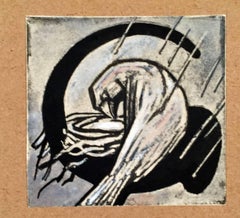
Fear by Orovida Pissarro, 1917 - Etching Print
Located in London, GB
SOLD UNFRAMED Fear by Orovida Pissarro (1893 - 1968) Etching 26 x 19.5 cm (10 ¼ x 7 ⅝ inches) Signed and dated lower right, Orovida 1917 State 2, trial proof no.2 Provenance Priva...
Category

1910s Prints and Multiples

Materials

Etching

"Day" Copper Plate Heliogravure
Located in Palm Beach, FL
2018 marks the centenary anniversary of Ferdinand Hodler’s death. In that 100 years time, the art world’s esteem of this important artist has proved fickle. It has shifted from extolling his artistic merits during his lifetime to showing something of a feigned disdain- more reflective of the world political order than a true change of heart for Hodler’s work. After years of Hodler being all but a footnote in the annals of art history and generally ignored, finally, the pendulum has righted itself once again. Recent retrospective exhibitions in Europe and the United States have indicated not only a joyful rediscovery of Hodler’s art but a firm conviction that his work and world view hold particular relevance today. DAS WERK FERDINAND HODLERS is not only a collection of printed work reflecting the best of all of his painted work created up to 1914 just before the outbreak of World War I, the portfolio itself is an encapsulation of Hodler’s ethos, Parallelisme. Hodler developed his philosophy of Parallelisme as a unifying approach to art which strips away detail in search of harmony. By means of abstraction, symmetry and repetition, Hodler sought ways to depict Nature’s essence and her fundamental, universal order. He believed these universal laws governing the natural, observable world extend to the spiritual realm. Symbolist in nature with Romantic undertones, his works are equally portraits of these universal concepts and feelings governing all life as they are a visual portrait in the formal sense. Whether his subject is a solitary tree, a moment in battle, mortal fear, despair, the awe inspired by a vast mountain range, a tender moment or even the collective conviction in a belief, Hodler unveils this guiding principle of Parallelisme. Several aspects of Hodler’s portfolio reinforce his tenets of Parallelisme. The Table of Contents clearly preferences a harmonious design over detail. The two columns, consisting of twenty lines each, list the images by order of appearance using their German titles. The abbreviated titles are somewhat cryptic in that they obscure the identities of the sitters. Like the image Hodler presents, they are distillations of the sitter without any extraneous details. This shortening was also done in an effort to maintain a harmonious symmetry of the Table of Contents, themselves, and keep titles to a one-line limit. The twenty-fourth title: “Bildnis des Schweizerischen Gesandten C.” was so long, even with abbreviation, that it required two lines; so, for the sake of maintaining symmetry, the fortieth title: “Bauernmadchen” was omitted from the list. This explains why the images are not numbered. Hodler’s reasoning is not purely esoteric. Symmetry and pattern reach beyond mere formal design principles. Finding sameness and imposing it over disorder goes to the root of Hodler’s identity and his art. A Swiss native, Hodler was bi-lingual and spoke German and French. Each printed image, even number forty, have titles in both of Hodler’s languages. Certainly, there was a market for Hodler’s work among francophones and this inclusion may have been a polite gesture to that end; however, this is the only place in the portfolio which includes French. With German titles at the lower left of each image, Hodler’s name at bottom center and corresponding French titles at the lower right of each image, there is a harmony and symmetry woven into all aspects of the portfolio. This holds true for the page design, as it applies to each printed image and as it describes the Swiss artist himself. Seen in this light, Hodler’s portfolio of printed work is the epitome of Hodler’s Parallelisme. DAS WERK FERDINAND HODLERS is also one of the most significant documents to best tell the story of how Hodler, from Switzerland, became caught between political cross-hairs and how the changing tides of nations directly impacted the artist during his lifetime as well as the accessibility of his art for generations to come. The Munich-based publisher of the portfolio, R. Piper & Co., Verlag, plays a crucial role in this story. Publishing on a wide range of subjects from philosophy and world religion to music, literature and the visual arts; the publisher’s breadth of inquiry within any one genre was equal in scope. Their marketing strategy to publish multiple works on Hodler offers great insight as to what a hot commodity Hodler was at that time. R.Piper & Co.’s Almanach, which they published in 1914 in commemoration of their first ten years in business, clearly illustrates the rapid succession- strategically calculated for achieving the deepest and broadest impact - in which they released three works on Hodler to hit the market by the close of 1914. DAS WERK FERDINAND HODLERS was their premier publication. It preceded C.A. Loosli’s Die Zeichnungen Ferdinand Hodlers, a print portfolio after 50 drawings by Hodler which was released in Autumn of 1914 at the mid-level price-point of 75-150 Marks; and a third less expensive collection of prints after original works by Hodler, which had not been included in either of the first two portfolios, was released at the end of that year entitled Ferdinand Hodler by Dr. Ewald Bender. The title and timing of DAS WERK FERDINAND HODLERS' debut leaves little doubt as to the connection it has with another avant-garde portfolio of art prints, Das Werk Gustav Klimts, released in 5 installments from 1908 -1914 by Galerie Miethke in Vienna. Hodler, himself, was involved in Klimt’s ground-breaking project. As the owner of Klimt’s 1901 painting, “Judith with the Head of Holifernes” which appears as the ninth collotype print in the second installment of Das Werk Gustav Klimts, Hodler was obliged to grant access of the painting to the art printers in Vienna for them to create the collotype sometime before 1908. Hodler had been previously invited in 1904 to take part in what would be the last exhibition of the Vienna Secession before Klimt and others associated with Galerie Miethke broke away. In an interview that same year, Hodler indicated that he respected and was impressed by Klimt. Hodler’s esteem for Klimt went beyond the art itself; he emulated Klimt’s method aimed at increasing his market reach and appeal to a wider audience by creating a print portfolio of his painted work. By 1914, Hodler and his publisher had the benefit of hindsight to learn from Klimt’s Das Werk publication. Responding to the sluggish sales of Klimt’s expensive endeavor, Hodler’s publisher devised the same diversified 1-2-3 strategy for selling Hodler’s Das Werk portfolio as they did with regards to all three works on Hodler they published that year. For their premium tier of DAS WERKS FERDINAND HODLERS, R. Piper & Co. issued an exclusive Museum quality edition of 15 examples on which Hodler signed each page. At a cost of 600 Marks, this was generally on par with Klimt’s asking price of 600 Kronen for his Das Werk portfolio. A middle-tiered Preferred edition of 30, costing somewhat less and with Hodler’s signature only on the Title Page, was also available. The General edition, targeting the largest audience with its much more affordable price of 150 Marks, is distinguishable by its smaller size. Rather than use the subscription format Miethke had chosen for Klimt’s portfolios which proved to have had its challenges, R. Piper & Co. employed a different strategy. In addition to instantly gratifying the buyer with all 40 of the prints comprising DAS WERK FERDINAND HODLERS and the choice among three price points, they advertised in German journals a fourth possibility of ordering single prints from them directly. These printed images are easily discernible from the three complete folio editions. The paper size of the single purchased images is of the larger format like the Museum and Preferred editions, measuring 65 h x 50 w cm; however, the paper itself is the same copper print paper used in the General edition and then mounted on poster board. The publishing house positioned itself to be a direct retailer of Hodler’s art. They astutely recognized the potential for profitability and the importance, therefore, of having proprietary control over his graphic works. R. Piper & Co. owned the exclusive printing rights to Hodler’s best work found in their three publications dating from 1914. That same year, a competing publication out of Weimar entitled Ferdinand Hodler: Ein Deutungsversuch von Hans Muhlestein appeared. Its author, a young scholar, expressed his frustration with the limited availability of printable work by Hodler. In his Author’s Note on page 19, dated Easter, 1914, Muhlestein confirms that the publisher of Hodler’s three works from that same year owned the exclusive reproductive rights to Hodler’s printed original work. He goes further to explain that even after offering to pay to use certain of those images in his book, the publisher refused. Clearly, a lot of jockeying for position in what was perceived as a hot market was occurring in 1914. Instead, their timing couldn’t have been more ill-fated, and what began with such high hopes suddenly found a much different market amid a hostile climate. The onset of WWI directly impacted sales. Many, including Ferdinand Hodler, publicly protested the September invasion by Germany of France in which the Reims Cathedral, re-built in the 13th century, was shelled, destroying priceless stained glass and statuary and burning off the iron roof and badly damaging its wooden interior. Thomas Gaehtgens, Director of the Getty Research Institute describes how the bombing of Reims Cathedral triggered blindingly powerful and deeply-felt ultra-nationalistic responses: “The event profoundly shocked French intellectuals, who for the most part had an intense admiration for German literature, music and art. By relying on press accounts and abstracting from the visual propagandistic content, they were unable to interpret the siege of Reims without turning away from German culture in disgust. Similarly, the German intelligentsia and bourgeoisie were also shocked to find themselves described as vandals and barbarians. Ninety-three writers, scientists, university professors, and artists signed a protest, directed against the French insults, that defended the actions of the German army.” In similar fashion, a flurry of open letters published in German newspapers and journals as well as telegrams and postcards sent directly to Hodler following his outcry in support of Reims reflected the collectively critical reaction to Hodler’s position. Loosli documents that among the list of telegrams Hodler received was one from none other than his publisher in Germany, R.Piper & Co. Allegiances were questioned. The market for Hodler in Germany immediately softened. Matters worsened for the publisher beyond the German backlash to Hodler and his loss of appeal in the home market; with the war in full swing until 1918, there was little chance a German publisher would have much interest coming from outside of Germany and Austria. Following the war and Hodler’s death in 1918, the economy in Germany continued to spiral out and just 5 years later, hyper-inflation had rendered its currency worthless vis-a-vis its value in the pre-war years. Like the economy, Hodler’s reputation was slow to find currency in these difficult times. Even many French art fans had turned sour on Hodler as they considered his long-standing relationship in German and Austrian art circles. Thus, the portfolio’s rarity in Hodler’s lifetime and, consequently, the availability of these printed images from DAS WERK FERDINAND HODLERS since his death has been scarce. In many ways, Hodler and his portfolios were casualties of war. Thwarted from their intended purpose of reaching a wide audience and show-casing Parallelisme, Hodler’s unique approach to art, this important, undated work has been both elusive and shrouded in mystery. Perhaps DAS WERK FERDINAND HODLERS was left undated as a means of affirming the timelessness of Hodler’s art. Digging back into the past, Hodler’s contemporaries, like R. Piper, C.A. Loosli and Hans Muhlestein, indeed provide the keys to unequivocally clarify what has largely been mired in obscurity. Just after Hodler’s death, the May, 1918 issue of the Burlington Review ran a small column which opined hope for better access to R.Piper & Co.’s DAS WERK FERDINAND HODLERS; 100 years later, it is finally possible. Hodler’s voice rings out through these printed works. Once more, his modern approach to depicting portraits, landscapes and grand scale scenes of Swiss history speak to us of what is universal. Engaging with any one of these images is the chance to connect to Hodler’s vision and his world view- weltanschauung in German, vision du monde in French- however one expresses these concepts through language, its message embedded in his work is the same: “We differ from one another, but we are like each other even more. What unifies us is greater and more powerful than what divides us.” Today, Hodler’s art couldn’t be more timely. FERDINAND HODLER (SWISS, 1853-1918) explored Parallelisme through figurative poses evocative of music, dance and ritual. His images of sex, night, desertion and death as well as his many landscapes exploring the universal longing for harmony with Nature are unique and important works embodying a Symbolist paradigm. Truly a Modern Master, Hodler’s influence can be felt in the work of Gustav Klimt and Kolomon Moser...
Category

Symbolist 1910s Prints and Multiples

Materials

Paper

Chen Quian. Advertisement for B.S Insurance Co
Located in New York, NY
Artist: Chen Quian. [Advertisement for B.S Insurance Co.] 1912 Color lithograph, Rare. Very early Chinese advertising poster at the end of the Qu...
Category

Qing 1910s Prints and Multiples

Materials

Lithograph

R. Layni, Zeichnungen folio, "Kneeling Female Semi-Nude" Collotype plate XII
Located in Palm Beach, FL
Egon Schiele (1890 – 1918), AUSTRIA “ART CANNOT BE MODERN, ART IS PRIMORDIALLY ETERNAL.” -SCHIELE Defiantly iconoclastic in life and art, Egon Schiele is esteemed for his masterful draftsmanship and precocious insight into the human condition. Part of the first wave of Austrian Modernism, he was swept away by the Viennese fascination with the tension between Life and Death (known in the works of Freud and his later interpreters as Eros and Thanatos). Life, identified with attraction, love, sexuality, and reproduction, and Death, represented by distortion, disease, repulsion, and hysteria, often appeared in the same composition, thereby suggesting the frightening life cycle of the human mind and body. Young throughout his career, Schiele universalized his childhood traumas, thriving libido, insecurities, fears, and longings. His contorted line, jarring contrasts, and flat areas of color, demonstrate an early alliance with Expressionist philosophy and artists who were relentlessly frustrated by conventionality in all its forms. Schiele’s work embodied man’s disorientation and confusion in a seemingly absurd world, a world plagued by disease and war. It continues to be astonishingly relevant today, not just because it helped define Modernism but also because it revealed the dark and immutable aspects of the human condition. Zeichnungen is a fine art print portfolio published by Verlag der Buchhandlung Richard Lanyi, Vienna, 1917, printed by Max Jaffe...
Category

Vienna Secession 1910s Prints and Multiples

Materials

Paper

Still Thinking About These?

All Recently Viewed