1910s Prints and Multiples

to
82
540
116
149
45
74
Overall Width
to
Overall Height
to
218
121
58
21
19
9
7
1
1
95
34
22
22
17
4,816
10,522
57,604
24,953
716
2,284
2,320
2,438
4,984
7,757
13,533
8,032
4,248
3,985
619
297
6
712
349
310
279
208
175
149
144
136
128
89
55
42
39
37
28
26
26
25
22
374
278
213
168
101
82
219
504
366
Period: 1910s
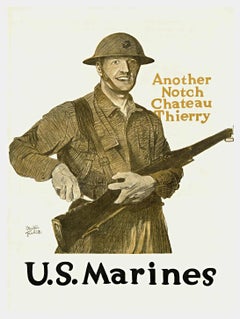
Original U. S. Marines, Another Notch Chateau Thierry vintage World War 1 poster
Located in Spokane, WA
Original WWI "Another Notch Chateau Thierry – U.S. Marines" Linen-Backed Poster by Adolph Treidler, 1918. Archival linen-backed, Grade A condition, no flaws, ready to frame. Adol...
Category

American Realist 1910s Prints and Multiples

Materials

Lithograph

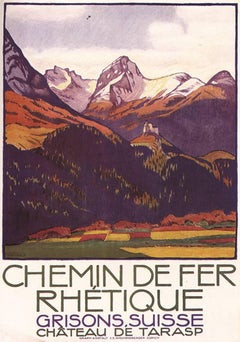
Chemin De Fer Rhetique
Located in New York, NY
Chemin De Fer Rhetique, Grisons, Suisse. Chateau De Tarasp. 1913. Color lithograph Cardinaux created an extensive work of different media, he illu...
Category

Art Deco 1910s Prints and Multiples

Materials

Lithograph

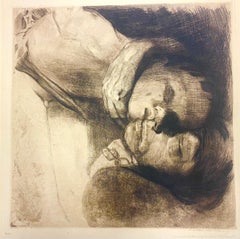
TOD, FRAU, UND KIND (DEATH, WOMAN, AND CHILD
Located in Portland, ME
Kollwitz, Kathe. TOD, FRAU UND KIND (DEATH, WOMAN AND CHILD). Knesebeck 108, Klipstein 113. Etching, drypoint, sandpaper, and soft-ground with the imprint of Ziegler's transfer paper...
Category

1910s Prints and Multiples

Materials

Drypoint, Etching

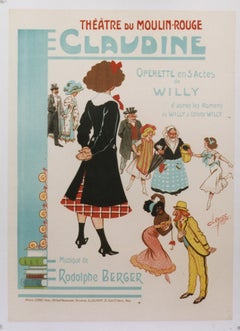
Claudine/Theatre du Moulin Rouge
Located in New York, NY
Freres. Clerice. Claudine 1910.On Linen. Color lithograph poster for the Operette en 3 Actes de Willy. d'après les Romans de Willy & Colette Willy with music by Rodolphe Berger. Ref. Broido No. 21 The Clerice Frères...
Category

Art Nouveau 1910s Prints and Multiples

Materials

Lithograph

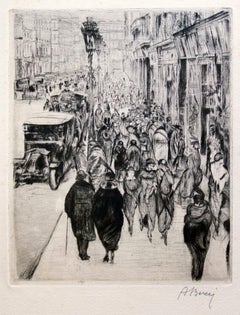
Downtown Paris - Etching by Anselmo Bucci - 1915 ca.
Located in Roma, IT
Hand signed. Very good conditions.
Category

1910s Prints and Multiples

Materials

Drypoint, Etching

Les Bars
Located in Wilton, CT
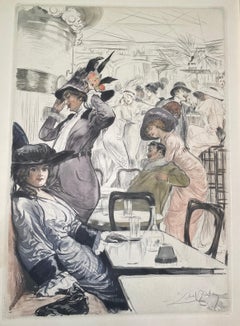
A very fine copy of "Les Bars," an album of ten original etchings by the master Lobel-Riche, representing fashionable women in various Parisian social settings. This album, part of a...
Category

Art Nouveau 1910s Prints and Multiples

Materials

Etching

Les Bars
$8,000 Sale Price
20% Off
Original 1912 Roma Vintage Opera poster by Georges Rochegross
Located in Spokane, WA
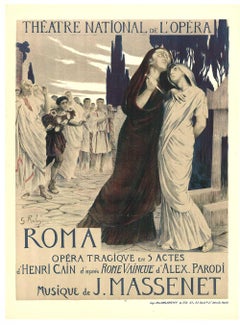
Rare Original 1912 Théâtre National de L'Opéra Paris Poster - ROMA Opera - Rochegrosse Art - Jules Massenet - Classical Theater Collectible. This poster is archival, linen-backed, ...
Category

Art Nouveau 1910s Prints and Multiples

Materials

Lithograph

"Baigneuse Debout, a mi-jambes" original etching
Located in Henderson, NV
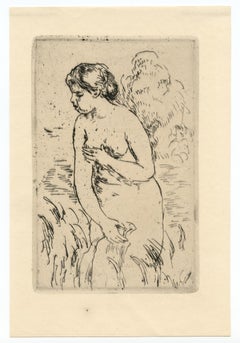
Medium: original etching. Printed in 1910 for Theodore Duret's "Manet & the French Impressionists". Plate size: 6 5/8 x 4 3/8 inches (170 x 110 mm). Sheet size: 8 1/2 x 5 3/4 inches ...
Category

Impressionist 1910s Prints and Multiples

Materials

Etching

Les Bars
Located in Wilton, CT
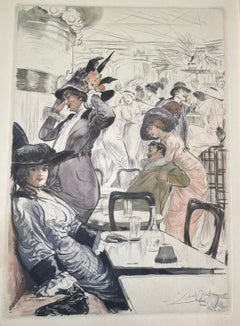
A very fine copy of "Les Bars," an album of ten original etchings by the master Lobel-Riche, representing fashionable women in various Parisian social settings. This album, part of a...
Category

Art Nouveau 1910s Prints and Multiples

Materials

Etching

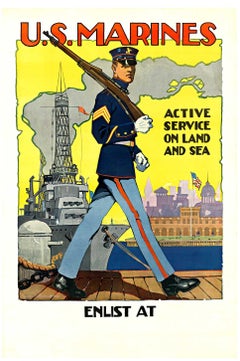
Original U. S. Marines World War 1 antique recruiting poster, linen backed
Located in Spokane, WA
Original U. S. Marines enlistment antique poster. World War I recruitment poster by *Sidney H. Riesenberg* ranks among the most potent visual achievements of U.S. wartime art. Arch...
Category

American Modern 1910s Prints and Multiples

Materials

Lithograph

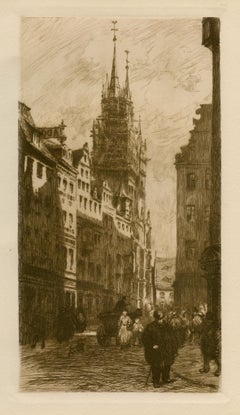
"Une rue a Nuremberg" original etching
By Frank Milton Armington
Located in Henderson, NV
Medium: original etching. Catalogue reference: Sanchez and Seydoux 1912-10. Published in Paris in 1912 for Gazette des Beaux-Arts. This is a fine impression printed in sepia ink on c...
Category

Realist 1910s Prints and Multiples

Materials

Etching

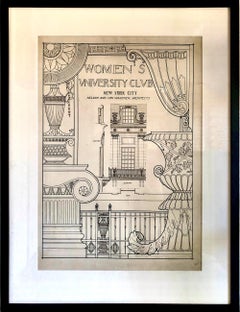
Architectural Drawing, Women’s University Club New York City
Located in San Francisco, CA
On offer is a lithograph of a detailed presentation drawing, likely intended for publication or display, showcasing the ornate architectural details of a proposed building for the Wo...
Category

Other Art Style 1910s Prints and Multiples

Materials

Lithograph

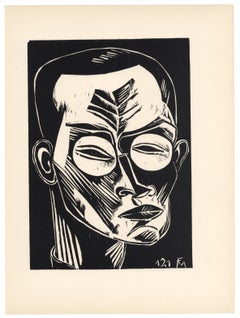
"Self Portrait" original woodcut
Located in Henderson, NV
Medium: original woodcut. Printed in 1920 for the Deutsche Graphiker der Gegenwart portfolio, and published in Leipzig by Klinkhardt & Biermann in an edition of 500. Catalogue refere...
Category

Expressionist 1910s Prints and Multiples

Materials

Woodcut

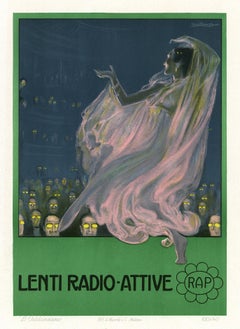
Lenti Radio-Attive, Art Nouveau Ricordi Portfolio advertisement lithograph, 1912
Located in Chicago, IL
Lithograph for Luigi Emilio Caldanzano’s Art Nouveau advertisement for Lenti Radio-Attive, which marketed “radioactive” eyeglass lenses claim...
Category

Art Nouveau 1910s Prints and Multiples

Materials

Lithograph

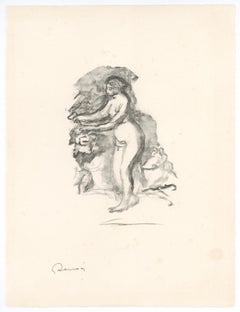
"Femme au cep de vigne" original lithograph
Located in Henderson, NV
Medium: original lithograph. Catalogue references: Delteil 44 or Roger-Marx 19. Printed in Paris by Clot and published in 1919 by Ambroise Vollard for the rare "Douze Lithographies O...
Category

Impressionist 1910s Prints and Multiples

Materials

Lithograph

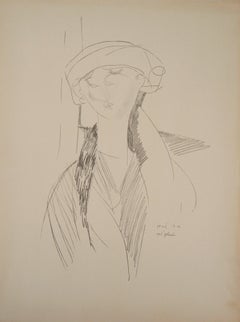
The Poet, Young Woman - Lithograph signed in the plate (Leda 1960)
Located in Paris, IDF
Amedeo MODIGLIANI (1884-1920) (after) The Poet, Young Woman Lithograph and stencil after a drawing from the artist Signed in the plate On Arches vellum 48 x 36 cm (c. 19 x 14,2 in) ...
Category

Modern 1910s Prints and Multiples

Materials

Lithograph

Broad Street (Wall Street)
Located in Myrtle Beach, SC
B.J.O. Nordfeldt, 'Broad Street (Wall Street)', etching, edition not stated, c. 1915. Signed in pencil. A superb impression, with rich burr, selectively wiped plate tone, and inky plate edges, on cream wove paper; the full sheet with margins (3/4 to 1 1/4 inches), in excellent condition. Printed by the artist. Matted to museum standards, unframed. Impressions of this work are in the permanent collections of the Fine Arts Museums of San Francisco, Princeton University, Smithsonian American Art Museum. A view looking down Broad Street past the New York Stock Exchange Building on the right with the columned Federal Hall...
Category

American Impressionist 1910s Prints and Multiples

Materials

Etching

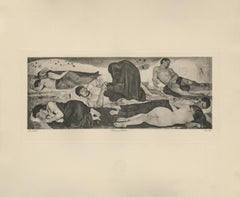
"Night" Copper Plate Heliogravure
Located in Palm Beach, FL
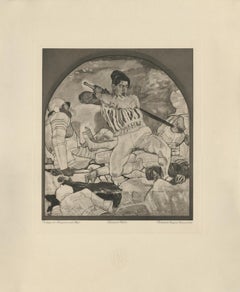
2018 marks the centenary anniversary of Ferdinand Hodler’s death. In that 100 years time, the art world’s esteem of this important artist has proved fickle. It has shifted from extolling his artistic merits during his lifetime to showing something of a feigned disdain- more reflective of the world political order than a true change of heart for Hodler’s work. After years of Hodler being all but a footnote in the annals of art history and generally ignored, finally, the pendulum has righted itself once again. Recent retrospective exhibitions in Europe and the United States have indicated not only a joyful rediscovery of Hodler’s art but a firm conviction that his work and world view hold particular relevance today. DAS WERK FERDINAND HODLERS is not only a collection of printed work reflecting the best of all of his painted work created up to 1914 just before the outbreak of World War I, the portfolio itself is an encapsulation of Hodler’s ethos, Parallelisme. Hodler developed his philosophy of Parallelisme as a unifying approach to art which strips away detail in search of harmony. By means of abstraction, symmetry and repetition, Hodler sought ways to depict Nature’s essence and her fundamental, universal order. He believed these universal laws governing the natural, observable world extend to the spiritual realm. Symbolist in nature with Romantic undertones, his works are equally portraits of these universal concepts and feelings governing all life as they are a visual portrait in the formal sense. Whether his subject is a solitary tree, a moment in battle, mortal fear, despair, the awe inspired by a vast mountain range, a tender moment or even the collective conviction in a belief, Hodler unveils this guiding principle of Parallelisme. Several aspects of Hodler’s portfolio reinforce his tenets of Parallelisme. The Table of Contents clearly preferences a harmonious design over detail. The two columns, consisting of twenty lines each, list the images by order of appearance using their German titles. The abbreviated titles are somewhat cryptic in that they obscure the identities of the sitters. Like the image Hodler presents, they are distillations of the sitter without any extraneous details. This shortening was also done in an effort to maintain a harmonious symmetry of the Table of Contents, themselves, and keep titles to a one-line limit. The twenty-fourth title: “Bildnis des Schweizerischen Gesandten C.” was so long, even with abbreviation, that it required two lines; so, for the sake of maintaining symmetry, the fortieth title: “Bauernmadchen” was omitted from the list. This explains why the images are not numbered. Hodler’s reasoning is not purely esoteric. Symmetry and pattern reach beyond mere formal design principles. Finding sameness and imposing it over disorder goes to the root of Hodler’s identity and his art. A Swiss native, Hodler was bi-lingual and spoke German and French. Each printed image, even number forty, have titles in both of Hodler’s languages. Certainly, there was a market for Hodler’s work among francophones and this inclusion may have been a polite gesture to that end; however, this is the only place in the portfolio which includes French. With German titles at the lower left of each image, Hodler’s name at bottom center and corresponding French titles at the lower right of each image, there is a harmony and symmetry woven into all aspects of the portfolio. This holds true for the page design, as it applies to each printed image and as it describes the Swiss artist himself. Seen in this light, Hodler’s portfolio of printed work is the epitome of Hodler’s Parallelisme. DAS WERK FERDINAND HODLERS is also one of the most significant documents to best tell the story of how Hodler, from Switzerland, became caught between political cross-hairs and how the changing tides of nations directly impacted the artist during his lifetime as well as the accessibility of his art for generations to come. The Munich-based publisher of the portfolio, R. Piper & Co., Verlag, plays a crucial role in this story. Publishing on a wide range of subjects from philosophy and world religion to music, literature and the visual arts; the publisher’s breadth of inquiry within any one genre was equal in scope. Their marketing strategy to publish multiple works on Hodler offers great insight as to what a hot commodity Hodler was at that time. R.Piper & Co.’s Almanach, which they published in 1914 in commemoration of their first ten years in business, clearly illustrates the rapid succession- strategically calculated for achieving the deepest and broadest impact - in which they released three works on Hodler to hit the market by the close of 1914. DAS WERK FERDINAND HODLERS was their premier publication. It preceded C.A. Loosli’s Die Zeichnungen Ferdinand Hodlers, a print portfolio after 50 drawings by Hodler which was released in Autumn of 1914 at the mid-level price-point of 75-150 Marks; and a third less expensive collection of prints after original works by Hodler, which had not been included in either of the first two portfolios, was released at the end of that year entitled Ferdinand Hodler by Dr. Ewald Bender. The title and timing of DAS WERK FERDINAND HODLERS' debut leaves little doubt as to the connection it has with another avant-garde portfolio of art prints, Das Werk Gustav Klimts, released in 5 installments from 1908 -1914 by Galerie Miethke in Vienna. Hodler, himself, was involved in Klimt’s ground-breaking project. As the owner of Klimt’s 1901 painting, “Judith with the Head of Holifernes” which appears as the ninth collotype print in the second installment of Das Werk Gustav Klimts, Hodler was obliged to grant access of the painting to the art printers in Vienna for them to create the collotype sometime before 1908. Hodler had been previously invited in 1904 to take part in what would be the last exhibition of the Vienna Secession before Klimt and others associated with Galerie Miethke broke away. In an interview that same year, Hodler indicated that he respected and was impressed by Klimt. Hodler’s esteem for Klimt went beyond the art itself; he emulated Klimt’s method aimed at increasing his market reach and appeal to a wider audience by creating a print portfolio of his painted work. By 1914, Hodler and his publisher had the benefit of hindsight to learn from Klimt’s Das Werk publication. Responding to the sluggish sales of Klimt’s expensive endeavor, Hodler’s publisher devised the same diversified 1-2-3 strategy for selling Hodler’s Das Werk portfolio as they did with regards to all three works on Hodler they published that year. For their premium tier of DAS WERKS FERDINAND HODLERS, R. Piper & Co. issued an exclusive Museum quality edition of 15 examples on which Hodler signed each page. At a cost of 600 Marks, this was generally on par with Klimt’s asking price of 600 Kronen for his Das Werk portfolio. A middle-tiered Preferred edition of 30, costing somewhat less and with Hodler’s signature only on the Title Page, was also available. The General edition, targeting the largest audience with its much more affordable price of 150 Marks, is distinguishable by its smaller size. Rather than use the subscription format Miethke had chosen for Klimt’s portfolios which proved to have had its challenges, R. Piper & Co. employed a different strategy. In addition to instantly gratifying the buyer with all 40 of the prints comprising DAS WERK FERDINAND HODLERS and the choice among three price points, they advertised in German journals a fourth possibility of ordering single prints from them directly. These printed images are easily discernible from the three complete folio editions. The paper size of the single purchased images is of the larger format like the Museum and Preferred editions, measuring 65 h x 50 w cm; however, the paper itself is the same copper print paper used in the General edition and then mounted on poster board. The publishing house positioned itself to be a direct retailer of Hodler’s art. They astutely recognized the potential for profitability and the importance, therefore, of having proprietary control over his graphic works. R. Piper & Co. owned the exclusive printing rights to Hodler’s best work found in their three publications dating from 1914. That same year, a competing publication out of Weimar entitled Ferdinand Hodler: Ein Deutungsversuch von Hans Muhlestein appeared. Its author, a young scholar, expressed his frustration with the limited availability of printable work by Hodler. In his Author’s Note on page 19, dated Easter, 1914, Muhlestein confirms that the publisher of Hodler’s three works from that same year owned the exclusive reproductive rights to Hodler’s printed original work. He goes further to explain that even after offering to pay to use certain of those images in his book, the publisher refused. Clearly, a lot of jockeying for position in what was perceived as a hot market was occurring in 1914. Instead, their timing couldn’t have been more ill-fated, and what began with such high hopes suddenly found a much different market amid a hostile climate. The onset of WWI directly impacted sales. Many, including Ferdinand Hodler, publicly protested the September invasion by Germany of France in which the Reims Cathedral, re-built in the 13th century, was shelled, destroying priceless stained glass and statuary and burning off the iron roof and badly damaging its wooden interior. Thomas Gaehtgens, Director of the Getty Research Institute describes how the bombing of Reims Cathedral triggered blindingly powerful and deeply-felt ultra-nationalistic responses: “The event profoundly shocked French intellectuals, who for the most part had an intense admiration for German literature, music and art. By relying on press accounts and abstracting from the visual propagandistic content, they were unable to interpret the siege of Reims without turning away from German culture in disgust. Similarly, the German intelligentsia and bourgeoisie were also shocked to find themselves described as vandals and barbarians. Ninety-three writers, scientists, university professors, and artists signed a protest, directed against the French insults, that defended the actions of the German army.” In similar fashion, a flurry of open letters published in German newspapers and journals as well as telegrams and postcards sent directly to Hodler following his outcry in support of Reims reflected the collectively critical reaction to Hodler’s position. Loosli documents that among the list of telegrams Hodler received was one from none other than his publisher in Germany, R.Piper & Co. Allegiances were questioned. The market for Hodler in Germany immediately softened. Matters worsened for the publisher beyond the German backlash to Hodler and his loss of appeal in the home market; with the war in full swing until 1918, there was little chance a German publisher would have much interest coming from outside of Germany and Austria. Following the war and Hodler’s death in 1918, the economy in Germany continued to spiral out and just 5 years later, hyper-inflation had rendered its currency worthless vis-a-vis its value in the pre-war years. Like the economy, Hodler’s reputation was slow to find currency in these difficult times. Even many French art fans had turned sour on Hodler as they considered his long-standing relationship in German and Austrian art circles. Thus, the portfolio’s rarity in Hodler’s lifetime and, consequently, the availability of these printed images from DAS WERK FERDINAND HODLERS since his death has been scarce. In many ways, Hodler and his portfolios were casualties of war. Thwarted from their intended purpose of reaching a wide audience and show-casing Parallelisme, Hodler’s unique approach to art, this important, undated work has been both elusive and shrouded in mystery. Perhaps DAS WERK FERDINAND HODLERS was left undated as a means of affirming the timelessness of Hodler’s art. Digging back into the past, Hodler’s contemporaries, like R. Piper, C.A. Loosli and Hans Muhlestein, indeed provide the keys to unequivocally clarify what has largely been mired in obscurity. Just after Hodler’s death, the May, 1918 issue of the Burlington Review ran a small column which opined hope for better access to R.Piper & Co.’s DAS WERK FERDINAND HODLERS; 100 years later, it is finally possible. Hodler’s voice rings out through these printed works. Once more, his modern approach to depicting portraits, landscapes and grand scale scenes of Swiss history speak to us of what is universal. Engaging with any one of these images is the chance to connect to Hodler’s vision and his world view- weltanschauung in German, vision du monde in French- however one expresses these concepts through language, its message embedded in his work is the same: “We differ from one another, but we are like each other even more. What unifies us is greater and more powerful than what divides us.” Today, Hodler’s art couldn’t be more timely. FERDINAND HODLER (SWISS, 1853-1918) explored Parallelisme through figurative poses evocative of music, dance and ritual. His images of sex, night, desertion and death as well as his many landscapes exploring the universal longing for harmony with Nature are unique and important works embodying a Symbolist paradigm. Truly a Modern Master, Hodler’s influence can be felt in the work of Gustav Klimt and Kolomon Moser...
Category

Symbolist 1910s Prints and Multiples

Materials

Paper

"Retreat from Marignano" set of 3 Copper Plate Prints
Located in Palm Beach, FL
The three prints included in this set are: "Retreat from Marignano", "Retreat from Marignano (left panel)", "Retreat from Marignano (right panel)". 2018 marks the centenary anniversary of Ferdinand Hodler’s death. In that 100 years time, the art world’s esteem of this important artist has proved fickle. It has shifted from extolling his artistic merits during his lifetime to showing something of a feigned disdain- more reflective of the world political order than a true change of heart for Hodler’s work. After years of Hodler being all but a footnote in the annals of art history and generally ignored, finally, the pendulum has righted itself once again. Recent retrospective exhibitions in Europe and the United States have indicated not only a joyful rediscovery of Hodler’s art but a firm conviction that his work and world view hold particular relevance today. DAS WERK FERDINAND HODLERS is not only a collection of printed work reflecting the best of all of his painted work created up to 1914 just before the outbreak of World War I, the portfolio itself is an encapsulation of Hodler’s ethos, Parallelisme. Hodler developed his philosophy of Parallelisme as a unifying approach to art which strips away detail in search of harmony. By means of abstraction, symmetry and repetition, Hodler sought ways to depict Nature’s essence and her fundamental, universal order. He believed these universal laws governing the natural, observable world extend to the spiritual realm. Symbolist in nature with Romantic undertones, his works are equally portraits of these universal concepts and feelings governing all life as they are a visual portrait in the formal sense. Whether his subject is a solitary tree, a moment in battle, mortal fear, despair, the awe inspired by a vast mountain range, a tender moment or even the collective conviction in a belief, Hodler unveils this guiding principle of Parallelisme. Several aspects of Hodler’s portfolio reinforce his tenets of Parallelisme. The Table of Contents clearly preferences a harmonious design over detail. The two columns, consisting of twenty lines each, list the images by order of appearance using their German titles. The abbreviated titles are somewhat cryptic in that they obscure the identities of the sitters. Like the image Hodler presents, they are distillations of the sitter without any extraneous details. This shortening was also done in an effort to maintain a harmonious symmetry of the Table of Contents, themselves, and keep titles to a one-line limit. The twenty-fourth title: “Bildnis des Schweizerischen Gesandten C.” was so long, even with abbreviation, that it required two lines; so, for the sake of maintaining symmetry, the fortieth title: “Bauernmadchen” was omitted from the list. This explains why the images are not numbered. Hodler’s reasoning is not purely esoteric. Symmetry and pattern reach beyond mere formal design principles. Finding sameness and imposing it over disorder goes to the root of Hodler’s identity and his art. A Swiss native, Hodler was bi-lingual and spoke German and French. Each printed image, even number forty, have titles in both of Hodler’s languages. Certainly, there was a market for Hodler’s work among francophones and this inclusion may have been a polite gesture to that end; however, this is the only place in the portfolio which includes French. With German titles at the lower left of each image, Hodler’s name at bottom center and corresponding French titles at the lower right of each image, there is a harmony and symmetry woven into all aspects of the portfolio. This holds true for the page design, as it applies to each printed image and as it describes the Swiss artist himself. Seen in this light, Hodler’s portfolio of printed work is the epitome of Hodler’s Parallelisme. DAS WERK FERDINAND HODLERS is also one of the most significant documents to best tell the story of how Hodler, from Switzerland, became caught between political cross-hairs and how the changing tides of nations directly impacted the artist during his lifetime as well as the accessibility of his art for generations to come. The Munich-based publisher of the portfolio, R. Piper & Co., Verlag, plays a crucial role in this story. Publishing on a wide range of subjects from philosophy and world religion to music, literature and the visual arts; the publisher’s breadth of inquiry within any one genre was equal in scope. Their marketing strategy to publish multiple works on Hodler offers great insight as to what a hot commodity Hodler was at that time. R.Piper & Co.’s Almanach, which they published in 1914 in commemoration of their first ten years in business, clearly illustrates the rapid succession- strategically calculated for achieving the deepest and broadest impact - in which they released three works on Hodler to hit the market by the close of 1914. DAS WERK FERDINAND HODLERS was their premier publication. It preceded C.A. Loosli’s Die Zeichnungen Ferdinand Hodlers, a print portfolio after 50 drawings by Hodler which was released in Autumn of 1914 at the mid-level price-point of 75-150 Marks; and a third less expensive collection of prints after original works by Hodler, which had not been included in either of the first two portfolios, was released at the end of that year entitled Ferdinand Hodler by Dr. Ewald Bender. The title and timing of DAS WERK FERDINAND HODLERS' debut leaves little doubt as to the connection it has with another avant-garde portfolio of art prints, Das Werk Gustav Klimts, released in 5 installments from 1908 -1914 by Galerie Miethke in Vienna. Hodler, himself, was involved in Klimt’s ground-breaking project. As the owner of Klimt’s 1901 painting, “Judith with the Head of Holifernes” which appears as the ninth collotype print in the second installment of Das Werk Gustav Klimts, Hodler was obliged to grant access of the painting to the art printers in Vienna for them to create the collotype sometime before 1908. Hodler had been previously invited in 1904 to take part in what would be the last exhibition of the Vienna Secession before Klimt and others associated with Galerie Miethke broke away. In an interview that same year, Hodler indicated that he respected and was impressed by Klimt. Hodler’s esteem for Klimt went beyond the art itself; he emulated Klimt’s method aimed at increasing his market reach and appeal to a wider audience by creating a print portfolio of his painted work. By 1914, Hodler and his publisher had the benefit of hindsight to learn from Klimt’s Das Werk publication. Responding to the sluggish sales of Klimt’s expensive endeavor, Hodler’s publisher devised the same diversified 1-2-3 strategy for selling Hodler’s Das Werk portfolio as they did with regards to all three works on Hodler they published that year. For their premium tier of DAS WERKS FERDINAND HODLERS, R. Piper & Co. issued an exclusive Museum quality edition of 15 examples on which Hodler signed each page. At a cost of 600 Marks, this was generally on par with Klimt’s asking price of 600 Kronen for his Das Werk portfolio. A middle-tiered Preferred edition of 30, costing somewhat less and with Hodler’s signature only on the Title Page, was also available. The General edition, targeting the largest audience with its much more affordable price of 150 Marks, is distinguishable by its smaller size. Rather than use the subscription format Miethke had chosen for Klimt’s portfolios which proved to have had its challenges, R. Piper & Co. employed a different strategy. In addition to instantly gratifying the buyer with all 40 of the prints comprising DAS WERK FERDINAND HODLERS and the choice among three price points, they advertised in German journals a fourth possibility of ordering single prints from them directly. These printed images are easily discernible from the three complete folio editions. The paper size of the single purchased images is of the larger format like the Museum and Preferred editions, measuring 65 h x 50 w cm; however, the paper itself is the same copper print paper used in the General edition and then mounted on poster board. The publishing house positioned itself to be a direct retailer of Hodler’s art. They astutely recognized the potential for profitability and the importance, therefore, of having proprietary control over his graphic works. R. Piper & Co. owned the exclusive printing rights to Hodler’s best work found in their three publications dating from 1914. That same year, a competing publication out of Weimar entitled Ferdinand Hodler: Ein Deutungsversuch von Hans Muhlestein appeared. Its author, a young scholar, expressed his frustration with the limited availability of printable work by Hodler. In his Author’s Note on page 19, dated Easter, 1914, Muhlestein confirms that the publisher of Hodler’s three works from that same year owned the exclusive reproductive rights to Hodler’s printed original work. He goes further to explain that even after offering to pay to use certain of those images in his book, the publisher refused. Clearly, a lot of jockeying for position in what was perceived as a hot market was occurring in 1914. Instead, their timing couldn’t have been more ill-fated, and what began with such high hopes suddenly found a much different market amid a hostile climate. The onset of WWI directly impacted sales. Many, including Ferdinand Hodler, publicly protested the September invasion by Germany of France in which the Reims Cathedral, re-built in the 13th century, was shelled, destroying priceless stained glass and statuary and burning off the iron roof and badly damaging its wooden interior. Thomas Gaehtgens, Director of the Getty Research Institute describes how the bombing of Reims Cathedral triggered blindingly powerful and deeply-felt ultra-nationalistic responses: “The event profoundly shocked French intellectuals, who for the most part had an intense admiration for German literature, music and art. By relying on press accounts and abstracting from the visual propagandistic content, they were unable to interpret the siege of Reims without turning away from German culture in disgust. Similarly, the German intelligentsia and bourgeoisie were also shocked to find themselves described as vandals and barbarians. Ninety-three writers, scientists, university professors, and artists signed a protest, directed against the French insults, that defended the actions of the German army.” In similar fashion, a flurry of open letters published in German newspapers and journals as well as telegrams and postcards sent directly to Hodler following his outcry in support of Reims reflected the collectively critical reaction to Hodler’s position. Loosli documents that among the list of telegrams Hodler received was one from none other than his publisher in Germany, R.Piper & Co. Allegiances were questioned. The market for Hodler in Germany immediately softened. Matters worsened for the publisher beyond the German backlash to Hodler and his loss of appeal in the home market; with the war in full swing until 1918, there was little chance a German publisher would have much interest coming from outside of Germany and Austria. Following the war and Hodler’s death in 1918, the economy in Germany continued to spiral out and just 5 years later, hyper-inflation had rendered its currency worthless vis-a-vis its value in the pre-war years. Like the economy, Hodler’s reputation was slow to find currency in these difficult times. Even many French art fans had turned sour on Hodler as they considered his long-standing relationship in German and Austrian art circles. Thus, the portfolio’s rarity in Hodler’s lifetime and, consequently, the availability of these printed images from DAS WERK FERDINAND HODLERS since his death has been scarce. In many ways, Hodler and his portfolios were casualties of war. Thwarted from their intended purpose of reaching a wide audience and show-casing Parallelisme, Hodler’s unique approach to art, this important, undated work has been both elusive and shrouded in mystery. Perhaps DAS WERK FERDINAND HODLERS was left undated as a means of affirming the timelessness of Hodler’s art. Digging back into the past, Hodler’s contemporaries, like R. Piper, C.A. Loosli and Hans Muhlestein, indeed provide the keys to unequivocally clarify what has largely been mired in obscurity. Just after Hodler’s death, the May, 1918 issue of the Burlington Review ran a small column which opined hope for better access to R.Piper & Co.’s DAS WERK FERDINAND HODLERS; 100 years later, it is finally possible. Hodler’s voice rings out through these printed works. Once more, his modern approach to depicting portraits, landscapes and grand scale scenes of Swiss history speak to us of what is universal. Engaging with any one of these images is the chance to connect to Hodler’s vision and his world view- weltanschauung in German, vision du monde in French- however one expresses these concepts through language, its message embedded in his work is the same: “We differ from one another, but we are like each other even more. What unifies us is greater and more powerful than what divides us.” Today, Hodler’s art couldn’t be more timely. FERDINAND HODLER (SWISS, 1853-1918) explored Parallelisme through figurative poses evocative of music, dance and ritual. His images of sex, night, desertion and death as well as his many landscapes exploring the universal longing for harmony with Nature are unique and important works embodying a Symbolist paradigm. Truly a Modern Master, Hodler’s influence can be felt in the work of Gustav Klimt and Kolomon Moser and subsequent Expressionist artists such as Egon Schiele. He was born into an impoverished family in Bern, Switzerland in 1853. His entire family succumbed to tuberculosis, and he was orphaned by the age of 13, the only surviving child among his 13 siblings. In the absence of family, the influence and guidance which his art instructors provided Hodler was foundational and profound. Hodler began formal studies in 1872 at the Geneva School of Design. Under Barthelemy Menn, Hodler was drawn to the ordered beauty of Euclidian geometry and Durer’s fundamentals of human proportion that proved to be guiding principles informing his art throughout his life. By the 1880s, Hodler began to enjoy some recognition for his work which put him on a new path towards stability. Remaining in Geneva, he became assistant to the well-known muralist, Edouard Castres. Following his first solo show in 1885, Hodler’s work took on a Symbolist quality. He frequently associated with a group of Swiss Symbolist...
Category

Symbolist 1910s Prints and Multiples

Materials

Paper

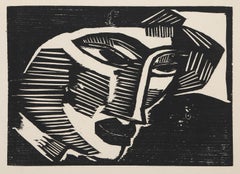
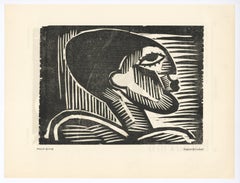
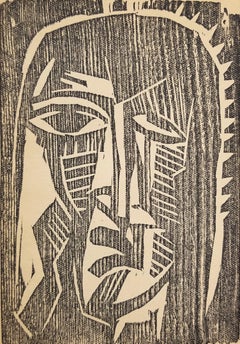
Kopf, Modern Woodcut by Karl Schmidt-Rottluff
Located in Long Island City, NY
Karl Schmidt-Rottluff, German (1884 -1976) - Kopf, Year: 1915, Medium: Woodcut on wove paper, Image Size: 6.75 x 9.5 inches, Size: 10.25 x 13.75 in. (26.04 x 34.93 cm), Descripti...
Category

Modern 1910s Prints and Multiples

Materials

Woodcut

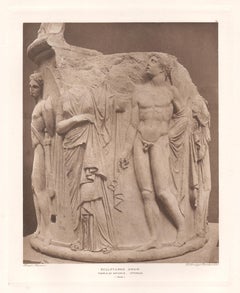
Sculptured Drum, British Museum Greek Roman Classical sculpture photogravure
Located in Melbourne, Victoria
'Sculptured Drum, Temple of Artemis, Ephesus' Photogravure from a collection of photogravures depicting Greek and Roman marbles and bronzes in the British museum. Plate number above...
Category

Other Art Style 1910s Prints and Multiples

Materials

Photogravure

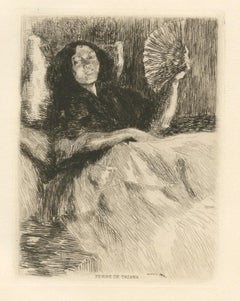
"Femme de Triana" etching
Located in Henderson, NV
Medium: etching. A rich impression printed on laid paper in 1914 by Porcabeuf and published by Henri Floury for the catalogue raisonne "Alexandre Lunois, peintre, graveur et lithogra...
Category

1910s Prints and Multiples

Materials

Etching

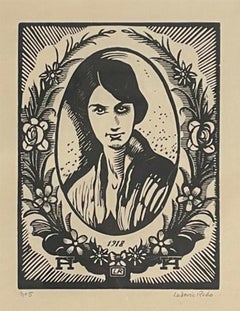
Oval Portrait by Ludovic-Rodo Pissarro - Wood engraving
Located in London, GB
Oval Portrait by Ludovic-Rodo Pissarro (1878 - 1952) Woodcut 15.1 x 11.3 cm (6 x 4¹/₂ inches) Initialled, inscribed and dated 1918 in the plate Signed lower right, Ludovic Rodo and n...
Category

Post-Impressionist 1910s Prints and Multiples

Materials

Woodcut

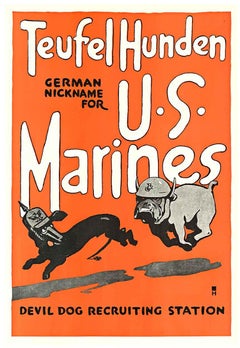
Original U. S. MARINES TEUFEL HUNDEN (Devil Dogs) vintage poster
Located in Spokane, WA
Original World War 1 vintage poster: U. S. MARINES TEUFEL HUNDEN, a unique piece of history and artistry. Archival linen backed in A- condition, ready to frame. No paper loss. ...
Category

American Impressionist 1910s Prints and Multiples

Materials

Lithograph

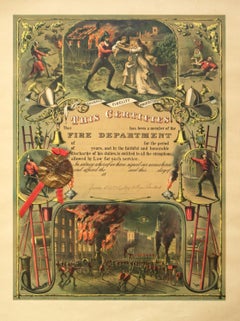
Fire Department Certificate pub. by Currier Ives 1911
Located in Paonia, CO
This is an original certificate of honorable discharge from the Saratoga New York Fire Department. It is signed by the Village President and dated 1911...
Category

Other Art Style 1910s Prints and Multiples

Materials

Lithograph

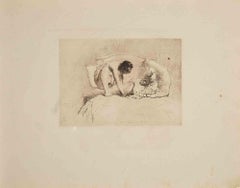
Erotic Scene - Héliogravure by Micheal Von Zichy - 1911
Located in Roma, IT
Erotic scene is an original Héliogravure artwork on ivory-colored paper, realized by Micheal Von Zichy in 1911. Printed in only 300 copies, Leipzig; Privatdruck, from the Catalogue ...
Category

Modern 1910s Prints and Multiples

Materials

Paper, Engraving

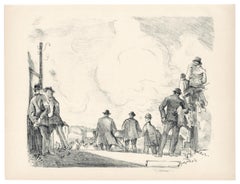
"Rennplatz" original lithograph
Located in Henderson, NV
Medium: original lithograph. This is one of the Berlin Scenes executed by Rudolf Grossmann during the years before World War I and published in Germany by Bruno Cassirer from 1911-14...
Category

Expressionist 1910s Prints and Multiples

Materials

Lithograph

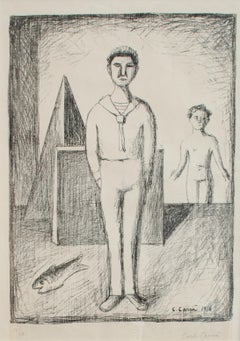
Carlo Carrà 1916 Futurist Lithograph
Located in New York, NY
Carlo Carrà (Italian, 1881-1966) Untitled, 1916 Lithograph Sight: 15 3/4 x 11 1/4 in. Framed: 23 1/2 x 18 1/2 x 1 in. Edition 14/60 Numbered lower left, signed and dated lower right ...
Category

Futurist 1910s Prints and Multiples

Materials

Paper, Ink

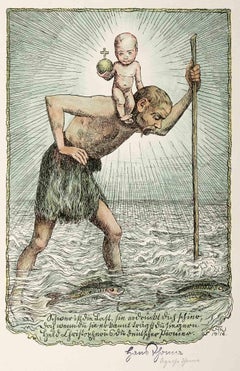
Christophorus II - Lithograph by Hans Thoma - 1916
Located in Roma, IT
Lithograph realized by Hans Thoma in 1916 on light yellow paper. Date and monogrammed in the plate. Hand signed lower right. Very good condition.
Category

Symbolist 1910s Prints and Multiples

Materials

Lithograph

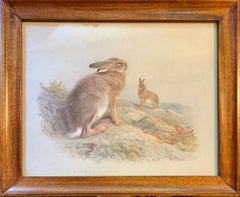
English early 20th century, An Irish Hare and a Mountain hare in a landscape
Located in Woodbury, CT
Wonderful Vintage Archibald Thorburn colored chromolithograph. The colors are amazing, giving the painting a really great appearance . Printed circa 1919, the picture is inscribed ...
Category

Victorian 1910s Prints and Multiples

Materials

Paper

Erotic Scene - Héliogravure by Micheal Von Zichy - 1911
Located in Roma, IT
Erotic scene is an original Héliogravure artwork on ivory-colored paper, realized by Micheal Von Zichy in 1911. Printed in only 300 copies, Leipzig; Privatdruck, from the Catalogue ...
Category

Modern 1910s Prints and Multiples

Materials

Paper, Engraving

Frau und Mädchen (Woman and Girl) /// Max Pechstein German Expressionist Litho
Located in Saint Augustine, FL
Artist: Hermann Max Pechstein (German, 1881-1955) Title: "Frau und Mädchen (Woman and Girl)" Portfolio: Paraphrasen zur Samländischen Ode (Paraphrases of the Samland Ode) *Signed and...
Category

Expressionist 1910s Prints and Multiples

Materials

Lithograph

"Begrabnis" original lithograph
Located in Henderson, NV
Medium: original lithograph. This is one of the Berlin Scenes executed by Rudolf Grossmann during the years before World War I and published in Germany by Bruno Cassirer from 1911-14...
Category

Expressionist 1910s Prints and Multiples

Materials

Lithograph

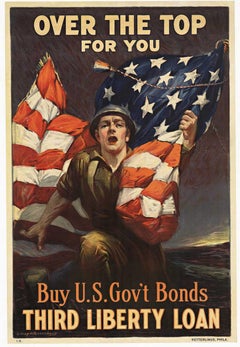
Original Over the Top for You Third Liberty Loan vintage World War 1 lithograph
Located in Spokane, WA
Original vintage poster: Over the Top for You; artist Sidney Riesdenberg, 1917, World War 1 original antique lithograph poster. Very good /...
Category

American Realist 1910s Prints and Multiples

Materials

Lithograph

Dieppe, Quai Kenry IV
Located in London, GB
Etching 19.7cm × 13.2cm (37cm × 29cm framed) Contained within the Sickert Print Catalogue Raisonné (Ruth Bromberg 167 iii/iii), this image is possibly of a female impersonator, from...
Category

1910s Prints and Multiples

Materials

Etching

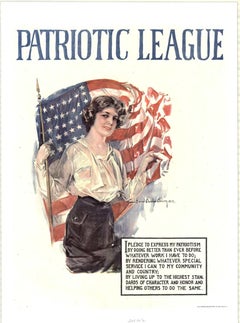
Original Patriotic League vintage poster Christy Girl
Located in Spokane, WA
Original vintage poster: Patriotic League . Original Howard Chandler Christy's 1918 "Patriotic League" authentic World War 1 lithographic poster. Linen-backed and in excellent condition. This Christy girl...
Category

American Realist 1910s Prints and Multiples

Materials

Lithograph

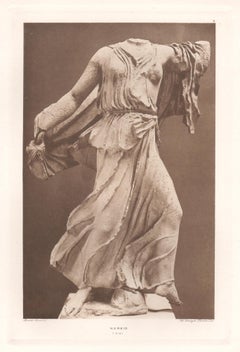
Nereid, British Museum Greek antiquity Classical sculpture photogravure
Located in Melbourne, Victoria
'Nereid' Photogravure from a collection of photogravures depicting Greek and Roman marbles and bronzes in the British museum. Plate number above top right corner of the image. 260...
Category

Other Art Style 1910s Prints and Multiples

Materials

Photogravure

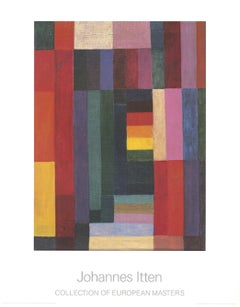
Horizontal - Vertical
By Johannes Itten
Located in Winterswijk, NL
Art print on heavy paper After the original from 1915 In great condition
Category

1910s Prints and Multiples

Materials

Color

"Femme assise sur un canapé" original etching
Located in Henderson, NV
Medium: original etching with drypoint. Catalogue reference: Fiorani 23. This impression on laid paper was printed in 1913 and published by Gazette des Beaux Arts. The image size is ...
Category

1910s Prints and Multiples

Materials

Etching

"Männlicher Kopf" original woodcut
Located in Henderson, NV
Medium: original woodcut. Printed in Germany in 1917 for Die Aktion; this impression is from the deluxe edition of 100 on Bütten laid paper. Catalogue reference: Schapire 202. Image ...
Category

Expressionist 1910s Prints and Multiples

Materials

Woodcut

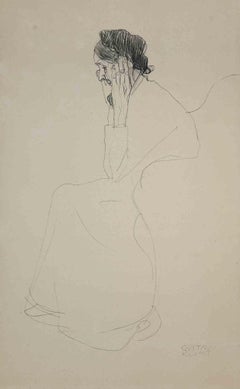
Study of an Old Woman- Vintage Colotype Print After G. Klimt - 1919
Located in Roma, IT
Study of an old woman - Plate 25 is the last collotype from “ Gustav Klimt : Fünfundzwanzig Handzeichnungen” , a limited-edition collection of 25 monochrome and two-color collotype...
Category

Modern 1910s Prints and Multiples

Materials

Black and White

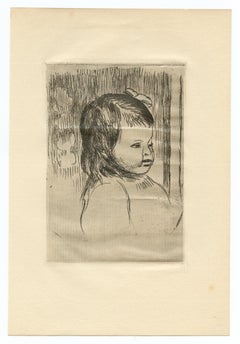
"Buste d enfant, tourné à droite" original etching
Located in Henderson, NV
Medium: original soft ground etching. This is a lifetime impression printed in 1914 on laid paper and published in Berlin by Bruno Cassirer for Theodore Duret's "Die Impressionisten"...
Category

Impressionist 1910s Prints and Multiples

Materials

Etching

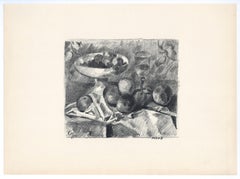
"Nature morte" original lithograph
Located in Henderson, NV
Medium: original lithograph. Catalogue reference: Cailler 135. This is an interpretation by Maurice Denis of one of Paul Cezannes's still life compositions, printed in 1914 and publi...
Category

1910s Prints and Multiples

Materials

Lithograph

"Der Heilige Georg" original etching
Located in Henderson, NV
Medium: original etching and drypoint. The English translation of the German title is "The Hug". Published in Leipzig, Germany by Zeitschrift fur bildende Kunst in 1915. The plate me...
Category

1910s Prints and Multiples

Materials

Etching

Erotic Scene - Héliogravure by Micheal Von Zichy - 1911
Located in Roma, IT
Erotic scene is an original Héliogravure artwork on ivory-colored paper, realized by Micheal Von Zichy in 1911. Printed in only 300 copies, Leipzig; Privatdruck, from the Catalogue ...
Category

Modern 1910s Prints and Multiples

Materials

Paper, Engraving

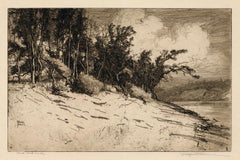
“Skogskanten” (Winter Landscape with Spruce Trees)
Located in Stockholm, SE
Oskar Bergman (Stockholm 1879–1963 Saltsjöbaden) “Skogskanten” (Winter Landscape with Spruce Trees) signed "Oskar Bergman" in pencil drypoint etching image size: 19.5 x 29.5 cm (7 ...
Category

Naturalistic 1910s Prints and Multiples

Materials

Paper, Drypoint, Etching

Fille au Pigeon, Etching Aquatint by Georges Manzana Pissarro
Located in London, GB
Fille au Pigeon by Georges Manzana Pissarro (1871-1961) Etching & aquatint 36 x 13.8 cm (14 ⅛ x 5 ⅛ inches) Signed lower left Provenance Private Collection, London Exhibition Fort ...
Category

Art Deco 1910s Prints and Multiples

Materials

Etching, Aquatint

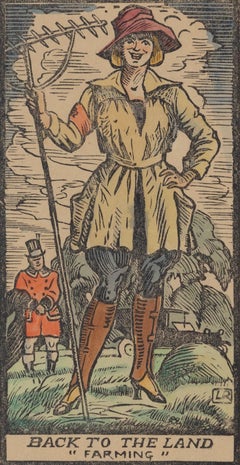
Back to the Land “Farming” by Ludovic-Rodo Pissarro - Colour woodcut
Located in London, GB
Back to the Land “Farming” by Ludovic-Rodo Pissarro (1878-1952) Colour wood engraving 19.3 x 10.5 cm (7 ⁵/₈ x 4 ¹/₈ inches) Initialed and titled in the plate and numbered, 4th state ...
Category

1910s Prints and Multiples

Materials

Color, Woodcut

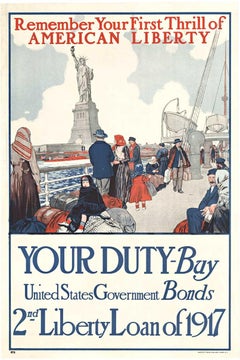
Original Remember Your First Thrill of American Liberty 1917 vintage poster
Located in Spokane, WA
Original poster: Rembember Your First Thrill of Ameridan Liberty YOUR DUTY Buy United States Government Bonds 2nd Liberty Loan of 1917. Linen backed and ready to frame. Poste...
Category

American Realist 1910s Prints and Multiples

Materials

Lithograph

"Derby Day" 48 Framed Playing Cards/ Jockey/ Horse Racing"
Located in Bristol, CT
Art Sz: 19 1/2"H x 21 1/2"W Frame Sz: 25 1/2"H x 26 7/8"W Each card measures 2 1/4" x 3 1/2" The Parker Games Co Ltd London Derby Day race game published by Parker Games’ English...
Category

1910s Prints and Multiples

Materials

Cardboard

R. Layni, Zeichnungen folio, "Male Nude in Red Loincloth" Collotype plate II
Located in Palm Beach, FL
After Egon Schiele (1890 – 1918), AUSTRIA “ART CANNOT BE MODERN, ART IS PRIMORDIALLY ETERNAL.” -SCHIELE Defiantly iconoclastic in life and art, Egon Schiele is esteemed for his mas...
Category

Vienna Secession 1910s Prints and Multiples

Materials

Paper

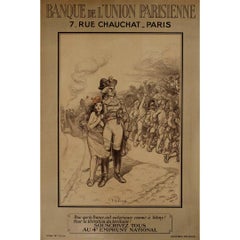
1918 original poster by Adolphe Willette, for the Banque de l Union Parisienne
Located in PARIS, FR
The 1918 original poster by Adolphe Willette, created for the Banque de l'Union Parisienne, is a compelling piece of wartime propaganda, urging citizens to contribute to the fourth national loan (4e Emprunt National). This poster, titled Pour que la France soit victorieuse comme à Valmy! (So that France may be victorious like at Valmy!), is a poignant call to action, blending historical reference with patriotic fervor to inspire public support during the final year of World War I. Adolphe Willette, a prominent French painter, illustrator, and political cartoonist, was known for his evocative and often satirical works. During the war, artists like Willette played a crucial role in shaping public sentiment and encouraging national unity through their art. This particular poster exemplifies his ability to harness the power of visual storytelling to evoke a sense of duty and pride in the French populace. The poster references the Battle of Valmy...
Category

1910s Prints and Multiples

Materials

Paper, Lithograph

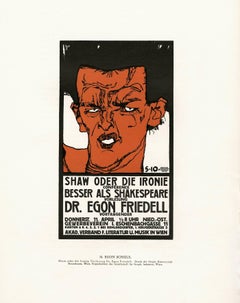
Ottokar Mascha Folio, plate 18: "Shaw Oder Die Ironie Poster" by Egon Schiele
Located in Palm Beach, FL
after EGON SCHIELE (1890-1918) SHAW ODER DIE IRONIE POSTER, C. 1912, (In Mascha, no. 18) Schiele’s poster is an advertisement for a lecture to be given ...
Category

Vienna Secession 1910s Prints and Multiples

Materials

Lithograph

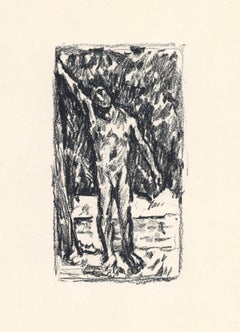
"Baigneur" original lithograph
Located in Henderson, NV
Medium: original lithograph. Catalogue reference: Bouvet 82. This is an interpretation by Pierre Bonnard of one of Paul Cezannes's compositions, printed in 1914 and published in Pari...
Category

1910s Prints and Multiples

Materials

Lithograph

Black Hawk Country — Early 20th-Century American Impressionism
Located in Myrtle Beach, SC
Ralph M. Pearson, 'Black Hawk Country', etching, second state, edition not stated, 1912. Signed, and titled in pencil. Inscribed 'Rock River Series Second...
Category

American Impressionist 1910s Prints and Multiples

Materials

Etching

Weiblicher Kopf (Female Head) /// German Expressionism Rottluff Woodcut Modern
Located in Saint Augustine, FL
Artist: Karl Schmidt-Rottluff (German, 1884-1976) Title: "Weiblicher Kopf (Female Head)" Portfolio: Das Spiel Christa vom Schmerz der Schönheit des Weibes (The Play Christa from the Pain of the Beauty of the Woman) *Issued unsigned Year: 1918 Medium: Original Woodcut Engraving on wove paper Limited edition: Unknown Printer: Fritz Voigt, Berlin, Germany Publisher: Verlag Die Aktion, Berlin, Germany Reference: Schapire No. 224, page 46; Jentsch No. 35. Rifkind No. 2563; Lang No. 300; Reed No. 118 Overall size with attached page: 8.5" x 10.63" Sheet size: 8.5" x 5.38" Image size: 4.88" x 3.5" Condition: Toning to sheet (as normal). In very good condition Very rare Notes: Provenance: private collection - Oxnard, CA. Comes from a complete originally bound 48 page folio with 9 original woodcut engravings by Schmidt-Rottluff. Text by Alfred Brust. Presently attached to its accompanying page. The cover and title pages in pictures are not included, only for reference/provenance. There is an example of this work in the permanent collection of the Brücke Museum, Berlin, Germany. Biography: Karl Schmidt-Rottluff (born December 1, 1884, Rottluff, near Chemnitz, Germany—died...
Category

Expressionist 1910s Prints and Multiples

Materials

Engraving, Woodcut

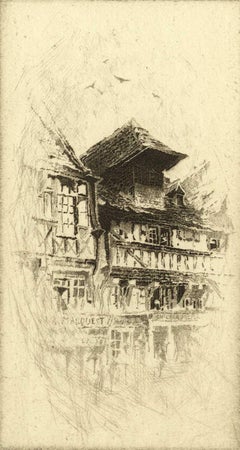
A Gable in the Grande Rue, Lisieux
Located in New Orleans, LA
This image is the 3rd etching created by Arms. It was printed byGrederick Reynolds in an edition of 116. Referenced as Fletcher #3 the image is the second in his Gable series. Lis...
Category

American Modern 1910s Prints and Multiples

Materials

Etching

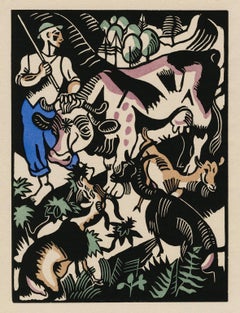
Der Hirte (The Shepherd) — original hand-coloring
Located in Myrtle Beach, SC
Richard Seewald, 'Der Hirte (The Shepherd)', woodcut with hand coloring, c. 1919. Unsigned as published in 'Genius', Vol 1, no. 1, 1919. A fine, richly...
Category

Expressionist 1910s Prints and Multiples

Materials

Woodcut

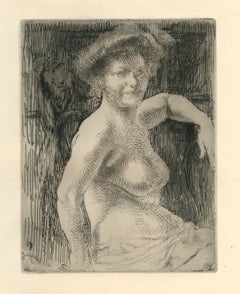
"Femme nue a sa toilette" original etching
Located in Henderson, NV
Medium: original etching. Catalogue reference: Delteil 166. Printed in Paris and published in 1911 by Gazette des Beaux Arts. Plate size: 5 1/2 x 4 1/4 inches (140 x 109 mm). A rich,...
Category

1910s Prints and Multiples

Materials

Etching

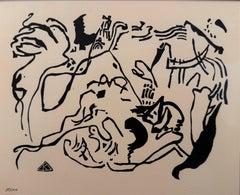
Regards sur le passé -Kandinsky original wood engraving abstract expressionist
Located in Hamburg, DE
"Ragards sur le passé" - is an original woodcut engraving of Wassilij Kandinsky which was edited by Nina Kandinsky from his work from 1912. The work is in the artist's characterist...
Category

Abstract Expressionist 1910s Prints and Multiples

Materials

Woodcut

Still Thinking About These?

All Recently Viewed