Cardboard Still-life Prints
to
1
Overall Width
to
Overall Height
to
1
6
1
1
1
1
1
1
1
1
15
13
3
1
1
1
Artist: Leo Guida
Medium: Cardboard
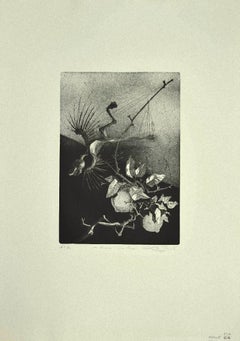
A Lemon, Two Lemons - Original Etching on Cardboard by Leo Guida - 1980s
By Leo Guida
Located in Roma, IT
A Lemon, Two Lemons is an original Contemporary artwork realized in the 1980s by the italian artist Leo Guida.
Original Etching on cardboard.
Numbered titled and hand-signed in pen...
Category
1980s Contemporary Cardboard Still-life Prints
Materials
Cardboard, Etching
Related Items
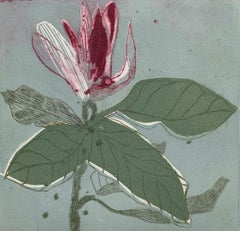
Magnolia 10 - Contemporary Figurative Drypoint Etching Print, Flower, Floral
Located in Warsaw, PL
MARTA WAKUŁA-MAC: Master of Arts in Fine Art Education- Diploma in Fine Art Printmaking at the Institute of Art, Pedagogical University, Krakow, 2003. Member of Graphic Studio Dubl...
Category
2010s Contemporary Cardboard Still-life Prints
Materials
Paper, Drypoint, Etching
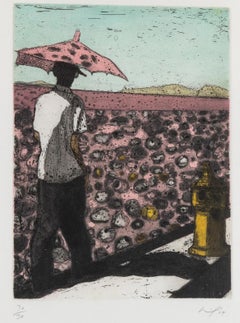
Peter Doig
Lapeyrouse Wall
Limited Edition Signed Etching Print
By Peter Doig
Located in San Rafael, CA
Peter Doig (British, b. 1959).
Lapeyrouse Wall, 2004
Etching and aquatint printed in colors on wove paper
Signed and dated in pencil by the artist
Edition 30/30
Published by the arti...
Category
Early 2000s Contemporary Cardboard Still-life Prints
Materials
Etching

$4,800
H 23 in W 16 in D 1 in
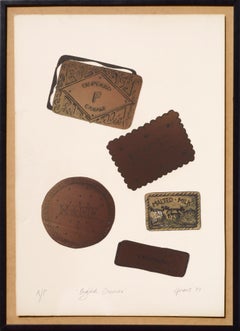
"English Cremes", Biscuit Lover
s Limited Edition Screen Print, A/P
Located in Soquel, CA
This charming large-scale 1973 screen print depicting various English cookies in sharp, masterful detail by Marc Foster Grant (American, b. 1947) is perfect for a bakery or biscuit l...
Category
1970s Pop Art Cardboard Still-life Prints
Materials
Paper, Foam Board, Screen
$760 Sale Price
20% Off
H 40.5 in W 28.5 in D 1 in
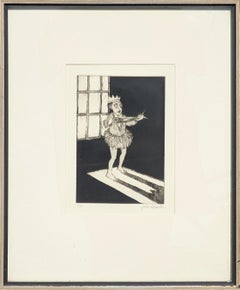
"Momma Always Wanted a Dancer" Black
White Surreal Etching of a Child
Fish
Located in Houston, TX
Black and white surreal aquatint and etching of a child by Texas artist John Alexander. The work features a child-like figure dressed in a tutu and crown holding a fish in outstretch...
Category
1990s Surrealist Cardboard Still-life Prints
Materials
Paper, Etching, Aquatint
$4,500
H 20.25 in W 16.63 in D 1.63 in
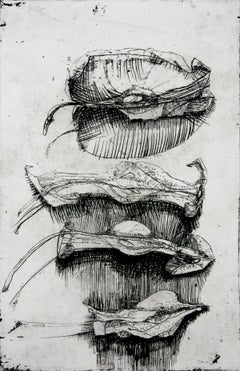
4 cores - XXI Century, Contemporary Etching Print, Figurative, Still life
Located in Warsaw, PL
ZDZISŁAW WIATR (born 1960)
He graduated from the Academy of Fine Arts in Cracow, at the Faculty of Graphic Arts in Katowice, where in 1986 he received a diploma with the honourable m...
Category
21st Century and Contemporary Contemporary Cardboard Still-life Prints
Materials
Paper, Etching
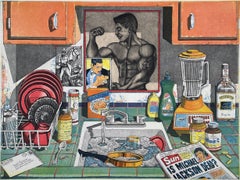
Letter From Gloria
Located in Palm Springs, CA
Signed, titled and numbered #15/30. This is one in a series of prints related to letters and notes from a teen age friend. The other prints in the series are Chocolat Kisses and The ...
Category
21st Century and Contemporary Contemporary Cardboard Still-life Prints
Materials
Etching, Aquatint
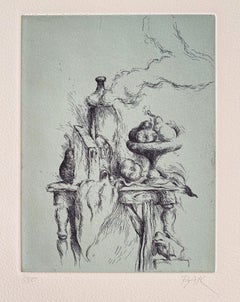
Samuel Bak Surrealist Etching Israeli Bezalel Artist "Hidden Pear", Fruit Bowl
By Samuel Bak
Located in Surfside, FL
HIDDEN PEAR, color etching, signed in pencil, numbered 7/50, Jerusalem Print workshop blind stamp, image 7 ½ x 5 ½”, sheet 15 x 10 ¼”.
Samuel Bak (born 12 August 1933) is a Polish- American painter and writer who survived the Holocaust and immigrated to Israel in 1948. Since 1993, he has lived in the United States.
Samuel Bak was born in Wilno, Poland, Bak was recognized from an early age as having an artistic talent. He describes his family as secular, but proud of their Jewish identity.
By 1939 when Bak was six years old, the war began and Wilno was transferred from Poland to Lithuania. When Wilno was occupied by the Germans on June 24, 1941, Bak and his family were forced to move into the ghetto. At the age of nine, he held his first exhibition inside the Ghetto. Bak and his mother sought refuge in a Benedictine convent where a Catholic nun named Maria Mikulska tried to help them. After returning to the ghetto, they were deported to a forced labour camp, but took shelter again in the convent where they remained in hiding until the end of the war.
By the end of the war, Samuel and his mother were the only members of his extensive family to survive. His father, Jonas, was shot by the Germans in July 1944, only a few days before Samuel's own liberation. As Bak described the situation, "when in 1944 the Soviets liberated us, we were two among two hundred of Vilna's survivors--from a community that had counted 70 or 80 thousand." Bak and his mother as pre-war Polish citizens were allowed to leave Soviet-occupied Wilno and travel to central Poland, at first settling briefly in Lodz. They soon left Poland and traveled into the American occupied zone of Germany. From 1945 to 1948, he and his mother lived in Displaced Persons camps in Germany. He spent most of this period at the Landsberg am Lech DP camp in Germany. It was there he painted a self-portrait shortly before repudiating his Bar Mitzvah ceremony. Bak also studied painting in Munich during this period, and painted "A Mother and Son", 1947, which evokes some of his dark memories of the Holocaust and escape from Soviet-occupied Poland. In 1948, Bak and his mother immigrated to Israel. In 1952, he studied art at the Bezalel Academy of Arts and Design in Jerusalem. After serving in the Israel Defense Forces, he continued his studies in Paris (from 1956 at the École nationale supérieure des Beaux-Arts) and spent various periods of time in Rome, Paris, Switzerland and Israel before settling permanently in the United States. In 2001, Bak returned to Vilnius for the first time and has since visited his hometown several times. Samuel Bak is a conceptual artist with elements of post-modernism as he employs different styles and visual vernaculars, i.e. surrealism (Salvador Dali, Rene Magritte), analytical cubism (Picasso), pop art (Andy Warhol, Roy Lichtenstein) and quotations from the old masters. The artist never paints direct scenes of mass death. Instead, he employs allegory, metaphor and certain artistic devices such as substitution: toys instead of the murdered children who played with them, books, instead of the people who read them. Further devices are quotations of iconographical prototypes, i.e. Michelangelo's "Creation of Adam" on the Sistine Ceiling or Albrecht Dürer's famous engraving entitled "Melencholia" . In the late 1980s Bak opened up about his paintings, stating they convey “a sense of a world that was shattered.” He turns these prototypes into ironical statements. Irony in the art of Samuel Bak does not mean parody or derision, but rather disenchantment, and the attempt to achieve distance from pain. Recurring symbols are: the Warsaw Ghetto Child, Crematorium Chimneys or vast backgrounds of Renaissance landscape that symbolize the indifference of the outside world. These form a disturbing contrast with the broken and damaged images in the foreground. Samuel Bak's paintings cause discomfort, they are a warning against complacency, a bulwark against collective amnesia with reference to all acts of barbarism, worldwide and throughout the ages, through his personal experience of genocide.
In Bak's piece entitled Trains Bak creates a vast grey landscape with large mounts creating the structure of a train. Massive taper candles burn in the distance further down the train tracks, surrounding an eruption. The smoke from the candles and volcano pour into a sky of dark ominous clouds that lurk over the landscape. Here Bak has created a whole new meaning for “trains.” Many of Bak’s pieces incorporate aspects of Jewish culture and the holocaust with a dark and creative twist, such as Shema Israel...
Category
20th Century Surrealist Cardboard Still-life Prints
Materials
Etching
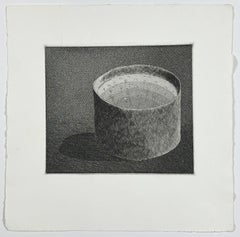
The pot boiling by David Hockney (Six Fairy Tales from the Brothers Grimm)
Located in New York, NY
From David Hockney’s celebrated Six Fairy Tales from the Brothers Grimm portfolio, an image from the story of ‘Fundevogel’. One of just a few in the series that depicts a single form with such complexity, drawn directly on the plate by Hockney. This is certainly an ode to Giorgio Morandi’s etchings...
Category
1960s Cardboard Still-life Prints
Materials
Etching, Aquatint
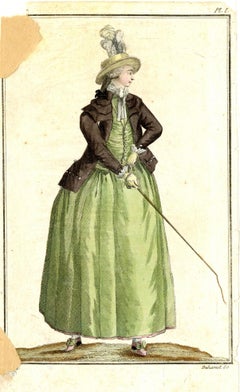
Group of 19th
20th century hand colored fashion plates.
Located in Middletown, NY
19th century European
Group of 13 hand-colored English and Continental fashion plates and costume designs.
Each an etching with hand coloring in watercolor. Various sizes and condit...
Category
19th Century English School Cardboard Still-life Prints
Materials
Watercolor, Handmade Paper, Etching
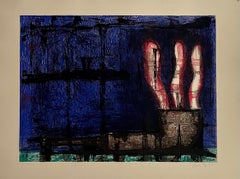
Boston Modernist Color Etching Smoking Pipe Aaron Fink Pop Art Print Americana
By Aaron Fink
Located in Surfside, FL
Aaron Fink (American, b. 1955)
Etching on paper titled "Untitled (Colored Pipe),"
Depicting an abstracted pipe with bright pink smoke floating from the bowl.
Hand signed in pencil...
Category
1980s Contemporary Cardboard Still-life Prints
Materials
Etching
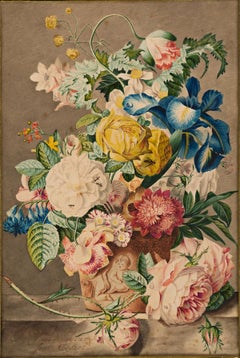
Bouquet of Flowers
By Cornelis Ploos van Amstel
Located in New York, NY
A supberb impression of this extremely scarce and early color etching after Jan van Huysum. With the artist's ink stamp.
Category
1770s Dutch School Cardboard Still-life Prints
Materials
Color, Etching
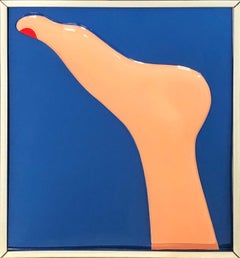
SEASCAPE (FOOT)
Located in Aventura, FL
Screen printed vacuum-formed plexiglass multiple in colors mounted to a card support. Artist signature, date and edition lower left front. Edition 12/101.
Artwork is in excellent condition. All reasonable offers will be considered.
About the Artist: Tom Wesselmann (1931–2004) was an American Pop artist best known for his collages, sculptures, and screenprints that stylized the female figure. Often isolating segments of the body—red lips with a cigarette, a single nipple, or a stylish shoe—his artworks aim was to seize a viewer’s attention. “The prime mission of my art, in the beginning, and continuing still, is to make figurative art as exciting as abstract art,” he once said of his work. Born on February 23, 1931 in Cincinnati, OH, he was drafted into the US Army to serve in the Korean War in 1952. Returning home after the war, he studied drawing at the Art Academy of Cincinnati before working as an illustrator of comic strips and men’s magazines...
Category
1960s Pop Art Cardboard Still-life Prints
Materials
Screen, Plexiglass, Cardboard
Cardboard still-life prints for sale on 1stDibs.
Find a wide variety of authentic Cardboard still-life prints available on 1stDibs. While artists have worked in this medium across a range of time periods, art made with this material during the 21st Century is especially popular. There are many well-known artists whose body of work includes ceramic sculptures. Popular artists on 1stDibs associated with pieces like this include Siergiej Timochow, Leo Guida, and Tom Wesselmann. Frequently made by artists working in the Contemporary, Pop Art, all of these pieces for sale are unique and many will draw the attention of guests in your home. Not every interior allows for large Cardboard still-life prints, so small editions measuring 0.1 inches across are also available
More Ways To Browse
Maurice Martin
Mauricio Battifora
Melvin Charles Warren
Men In Suits Painting
Men Playing Chess
Mexican Boat Paintings
Michael Bergt
Michael Clement
Michael Daly
Michael Easton
Michael Eisemann
Michiel Schrijver
Mick Jagger Poster Vintage
Midcentury Beach Umbrella
Midwest Landscape Painting
Miguel Dominguez
Miles Davis Poster
Misty Loch