Victorian Prints and Multiples
to
22
377
90
18
3
5
Overall Width
to
Overall Height
to
21,202
19,035
10,760
6,351
5,259
2,722
1,567
1,444
1,155
913
913
434
354
193
27
25
21
16
11
25
310
155
3
4
1
1
1
1
25
287
205
1
182
101
87
84
58
46
34
32
31
27
27
26
25
21
15
14
14
13
13
13
328
98
84
76
45
43
24
118
65
Style: Victorian
Doria
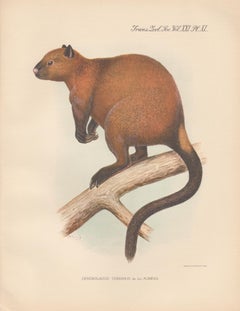
s Tree Kangaroo, New Guinea natural history animal lithograph, 1936
Located in Melbourne, Victoria
'Dendrolaugus Dorianus ab. loc. Aureus'
Tree kangaroo native to New Guinea.
From 'On the Genus Dendrolagus' by Lionel Walter Rothschild and Guy Dollman, published in 'Transaction...
Category
Early 20th Century Victorian Prints and Multiples
Materials
Lithograph
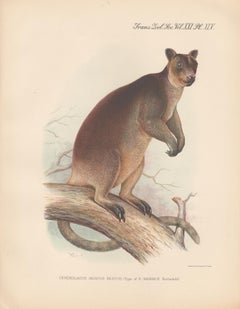
Dendrolaugus Inustus Tree Kangaroo, New Guinea, natural history lithograph, 1936
Located in Melbourne, Victoria
'Dendrolaugus Inustus Inustus (Type of D Maximus Rothschild)'
Tree kangaroo native of New Guinea.
From 'On the Genus Dendrolagus' by Lionel Walter Rothschild and Guy Dollman, publi...
Category
Early 20th Century Victorian Prints and Multiples
Materials
Lithograph
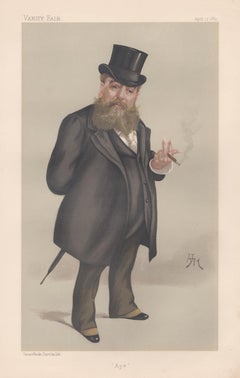
Carlo Pellegrini, Vanity Fair artist portrait chromolithograph 1889
Located in Melbourne, Victoria
'Ape'
Vanity Fair portrait of Carlo Pellegrini (1839-1889), nicknamed 'Ape', who was an artist who served from 1869 to 1889 as a caricaturist for Va...
Category
Late 19th Century Victorian Prints and Multiples
Materials
Lithograph
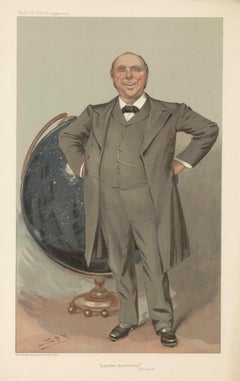
Robert Ball, astronomer, Vanity Fair portrait chromolithograph, 1905
Located in Melbourne, Victoria
'Popular Astronomy'
Vanity Fair portrait of Irish astronomer Sir Robert Stawell Ball (1840-1913). In 1867 he became Professor of Applied Mathema...
Category
Late 19th Century Victorian Prints and Multiples
Materials
Lithograph
Samuel Pope QC, Vanity Fair legal chromolithograph of a judge, 1885
Located in Melbourne, Victoria
'Jumbo'
Vanity Fair legal portrait of Mr Samuel Pope QC, an Irish barrister.
Accompanied by original descriptive text.
380mm by 260mm (sheet)
Category
Late 19th Century Victorian Prints and Multiples
Materials
Lithograph
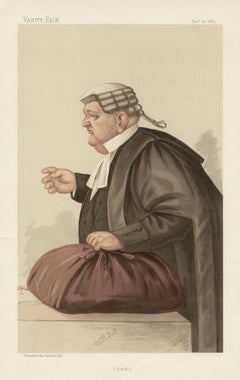
Henry Searle, rower, Vanity Fair rowing portrait chromolithograph, 1889
Located in Melbourne, Victoria
'H Searle, Professional Champion Sculler of the World'.
Vanity Fair rowing portrait of Henry Searle (1866-1889), an Australian sculler who raced in...
Category
Late 19th Century Victorian Prints and Multiples
Materials
Lithograph
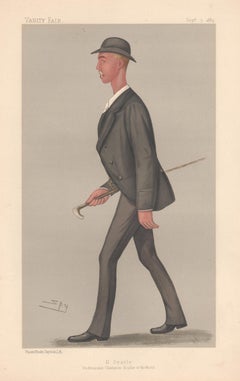
Large Classical Bird Color Print after John James Audubon - Baltimore Oriole
Located in Cirencester, Gloucestershire
Classical Bird print,
after John James Audubon,
printed by Harry N. Abrams, Publishers, New York
unframed, 17 x 14 inches color print on pap...
Category
20th Century Victorian Prints and Multiples
Materials
Color
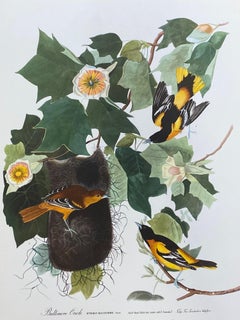

Shells, French 18th century natural history marine sea shell engraving
Located in Melbourne, Victoria
18th century natural history engraving depicting shells by Robert Benard after Henry Joseph Redoute.
Henry Redoute was the bro...
Category
Late 18th Century Victorian Prints and Multiples
Materials
Engraving

Suggestions in Floral Design, Frederick Hulme, 19th century chromolithograph
By Frederick William Hulme
Located in Melbourne, Victoria
Chromolithograph, 1878. The gold colour is actually metallic and shiny.
From Frederick William Hulme's 'Suggestions in Floral Design', a late Victorian pattern book for interior des...
Category
19th Century Victorian Prints and Multiples
Materials
Lithograph
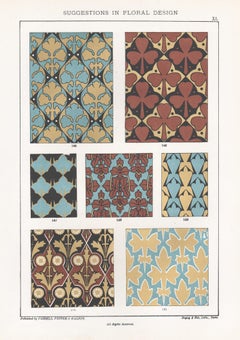
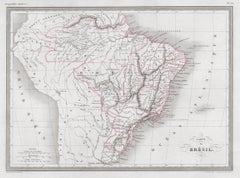
Carte du Bresil, antique 1860s engraved map of Brazil
Located in Melbourne, Victoria
'Carte du Bresil'
Engraving with original outline colouring, circa 1860, by Alexandre Vuillemin, published in Paris.
31cm by 41cm (sheet)
21.5cm by 31.5cm (image)
Category
Late 19th Century Victorian Prints and Multiples
Materials
Lithograph
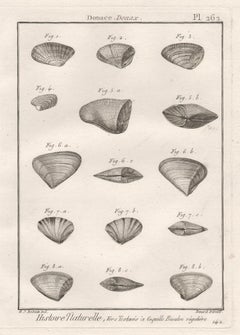
Shells, French 18th century natural history marine sea shell engraving
Located in Melbourne, Victoria
18th century natural history engraving depicting shells by Robert Benard after Henry Joseph Redoute.
Henry Redoute was the bro...
Category
Late 18th Century Victorian Prints and Multiples
Materials
Engraving
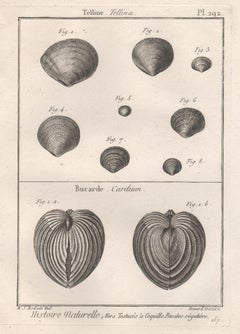
Shells, French 18th century natural history marine sea shell engraving
Located in Melbourne, Victoria
18th century natural history engraving depicting shells by Robert Benard after Henry Joseph Redoute.
Henry Redoute was the bro...
Category
Late 18th Century Victorian Prints and Multiples
Materials
Engraving
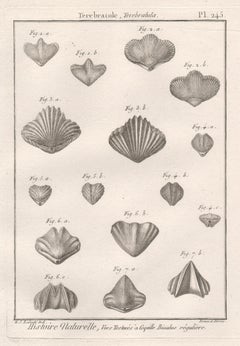
Shells, French 18th century natural history marine sea shell engraving
Located in Melbourne, Victoria
18th century natural history engraving depicting shells by Robert Benard after Henry Joseph Redoute.
Henry Redoute was the bro...
Category
Late 18th Century Victorian Prints and Multiples
Materials
Engraving
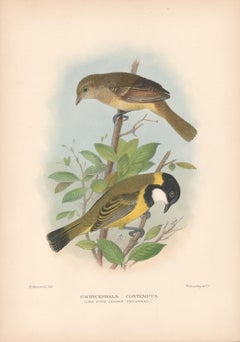
Lord Howe Island Thickhead, Bird lithograph with hand-colouring, 1928
Located in Melbourne, Victoria
'Pachycephala Contempta - Lord Howe Island Thickhead'
Limited edition lithograph with original hand colouring by Henrik Gronvold. From Mathews 'The Birds of...
Category
Early 20th Century Victorian Prints and Multiples
Materials
Lithograph
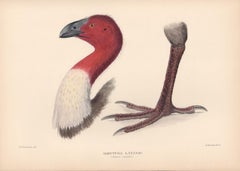
Brush-Turkey, Bird lithograph with hand-colouring, 1928
Located in Melbourne, Victoria
'Pterodroma Brevirostris (Kerguelen Pulmar)'
Limited edition lithograph with original hand colouring by Henrik Gronvold. From Mathews 'The Birds of Norfolk and Lord Howe...
Category
Early 20th Century Victorian Prints and Multiples
Materials
Lithograph
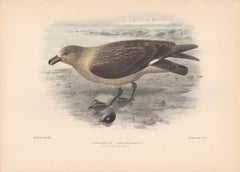
South Polar Skua, Sea Bird lithograph with hand-colouring, 1928
Located in Melbourne, Victoria
'Catharacta Maccormicki (South Polar Skua)'
Limited edition lithograph with original hand colouring by Henrik Gronvold. From Mathews 'The Birds of Norfolk and Lord Howe...
Category
Early 20th Century Victorian Prints and Multiples
Materials
Lithograph
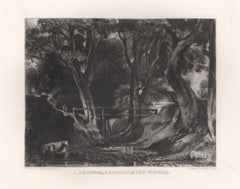
A Dell, Helmingham Park, Suffolk. Mezzotint by Lucas after John Constable, 1855
By David Lucas
Located in Melbourne, Victoria
'A Dell, Helmingham Park, Suffolk'
Mezzotint on steel by David Lucas (1802-1881) after John Constable (1776–1836).
From 'English Landscape Scenery', 1855. John Constable RA was an English Romantic...
Category
Mid-19th Century Victorian Prints and Multiples
Materials
Mezzotint
Kerguelen Pulmar, Bird lithograph with hand-colouring, 1928
Located in Melbourne, Victoria
'Pterodroma Brevirostris (Kerguelen Pulmar)'
Limited edition lithograph with original hand colouring by Henrik Gronvold. From Mathews 'The Birds of Norfolk and Lord Howe...
Category
Early 20th Century Victorian Prints and Multiples
Materials
Lithograph
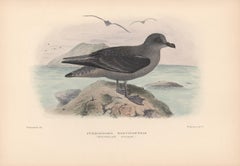
At Smithfield Market, tinted lithograph of cattle, by Thomas Sydney Cooper, 1837
Located in Melbourne, Victoria
'At Smithfield Market'
Tinted lithograph with white highlights by Thomas Sidney Cooper, from 'Thirty-Four Subjects of Cattle', published in 1837 by Thos. McLean, Ackermann and Tilt....
Category
1830s Victorian Prints and Multiples
Materials
Lithograph
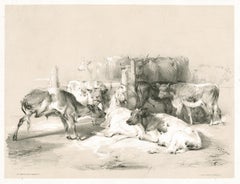
On the Stour, tinted lithograph of cattle, by Thomas Sydney Cooper, 1837
Located in Melbourne, Victoria
'At Smithfield Market'
Tinted lithograph with white highlights by Thomas Sidney Cooper, from 'Thirty-Four Subjects of Cattle', published in 1837 by Thos. McLean, Ackermann and Tilt....
Category
1830s Victorian Prints and Multiples
Materials
Lithograph
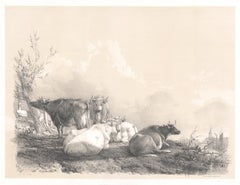
Samuel Loates, jockey, Vanity Fair horse racing portrait chromolithograph, 1896
Located in Melbourne, Victoria
'Sam Loates'
Vanity Fair portrait of Samuel "Sam" Loates (1865 - 1932) was a British Thoroughbred horse racing jockey who was the Champion Jockey of 1899.
395mm by 265mm (sheet)
Category
Late 19th Century Victorian Prints and Multiples
Materials
Lithograph
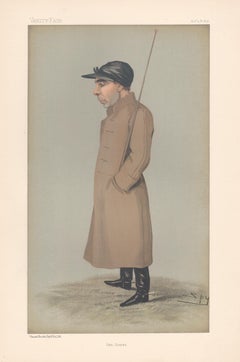
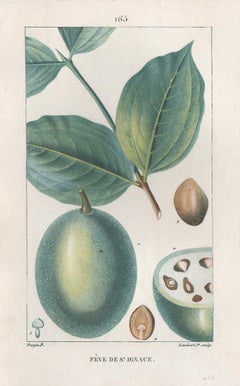
Feve de St Ignace (Strychnos ignatii), French botanical flower engraving, 1818
Located in Melbourne, Victoria
French botanical flower engraving, 1818.
Colour-printed stipple engraving by J Lambert after Pierre Turpin (1775-1840)
From Francois Pierre Chaumeton's 'Flore Medicale' which portrayed a variety of flowers, trees and herbs which could be used for treating illnesses. The engravings were produced during the great period of French colour printing using the stipple-engraving process pioneered by the great botanical artist Pierre-Jospeh Redoute. The artist is the celebrated Pierre Jean Francois Turpin...
Category
Early 19th Century Victorian Prints and Multiples
Materials
Engraving
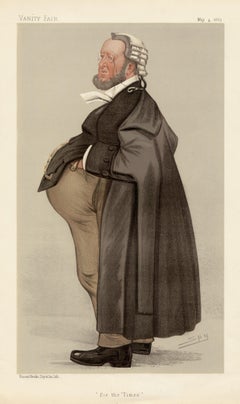
For the
Times
, Vanity Fair legal chromolithograph of a judge, 1889
Located in Melbourne, Victoria
Vanity Fair legal portrait of John Patrick Murphy QC.
380mm by 260mm (sheet)
Category
Late 19th Century Victorian Prints and Multiples
Materials
Lithograph
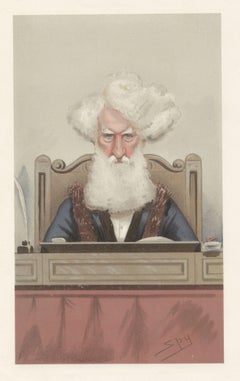
City Justice, Vanity Fair legal chromolithograph of a judge, 1880
Located in Melbourne, Victoria
Vanity Fair legal portrait of Alderman Sir Robert Walter Carden KNT. MP.
380mm by 260mm (sheet)
Category
Late 19th Century Victorian Prints and Multiples
Materials
Lithograph
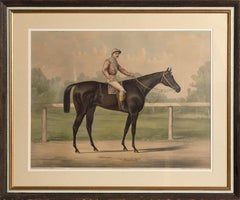
The Grand Racer Kingston by Spendthrift, Lithograph by Currier
Ives 1891
By Currier
Ives
Located in Long Island City, NY
Artist: Currier & Ives after Chaz Zellinsky after J. Cameron
Title: The Grand Racer Kingston by Spendthrift
Year: 1891
Medium: Hand-colored Lithograph
Image Size: 19 x 26 inches
Fram...
Category
Late 19th Century Victorian Prints and Multiples
Materials
Lithograph
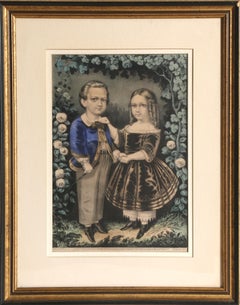
Boy and Girl, Hand-Colored Lithograph by Currier
Ives
By Currier
Ives
Located in Long Island City, NY
Artist: Currier and Ives
Title: Boy and Girl
Year: circa 1863
Medium: Hand-colored lithograph
Size: 11 x 8 in. (27.94 x 20.32 cm)
Frame Size: 16 x 14 inches
Category
1860s Victorian Prints and Multiples
Materials
Lithograph
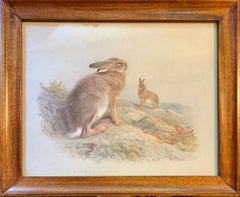
English early 20th century, An Irish Hare and a Mountain hare in a landscape
Located in Woodbury, CT
Wonderful Vintage Archibald Thorburn colored chromolithograph.
The colors are amazing, giving the painting a really great appearance .
Printed circa 1919, the picture is inscribed ...
Category
1910s Victorian Prints and Multiples
Materials
Paper
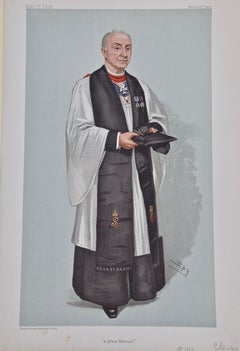
Vanity Fair Caricature, Rev. Edgar Sheppard "A Great Marrier" by Spy
Located in Alamo, CA
Vanity Fair color chromolithograph caricature of Rev. Edgar Sheppard "A Great Marrier" by Spy (Leslie Ward) March 14, 1904 from the "Clergymen" series....
Category
Late 19th Century Victorian Prints and Multiples
Materials
Lithograph
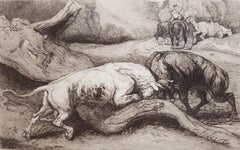
Bulls Fighting /// Antique Victorian Animal Landscape Etching Landscape Horse
By James Ward
Located in Saint Augustine, FL
Artist: (after) James Ward (English, 1769-1859)
Title: "Bulls Fighting"
Portfolio: The Portfolio
*Signed by Wise in pencil lower right. It is also signed in the plate (printed signat...
Category
1870s Victorian Prints and Multiples
Materials
Laid Paper, Etching, Intaglio
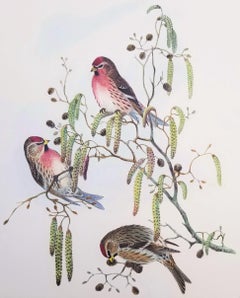
Aegiothus Linaria (Common Redpoll) /// John Gould Ornithology Bird Lithograph
By John Gould
Located in Saint Augustine, FL
Artist: John Gould (English, 1804-1881)
Title: "Aegiothus Linaria (Common Redpoll)" (Vol. 3, Plate 51)
Portfolio: The Birds of Great Britain
Year: 1862-1873
Medium: Original Hand-Colored Lithograph on wove paper
Limited edition: approx. 750
Printer: Walter or Walter & Cohn, London, UK
Publisher: Taylor and Francis, John Gould, London, UK
Reference: Sauer No. 23; Ayer/Zimmer page 261; Wood page 365; Nissen No. IVB 372; Sitwell page 78
Sheet size: 21.63" x 14.75"
Image size: 13.75" x 10.5"
Condition: Faint UV stain to sheet. Remnants of mounting tape from previous framing on verso. Has been professionally stored away for decades. In excellent condition with strong colors
Very rare
Notes:
Provenance: private collection - Aspen, CO. Lithography and hand-coloring by John Gould and English artist Henry Constantine Richter (1821-1902). Comes from Gould's five volume "The Birds of Great Britain", (1862-1873) (First edition), which consists of 367 hand-colored lithographs. Other contributing lithographers were German artist Joseph Wolf (1820-1899) and Irish artist William Hart (1830-1908). "The Birds of Great Britain" is recognized as Gould's greatest work. Gold gilded edges as issued.
The common redpoll or mealy redpoll is a species of bird in the finch family. It breeds somewhat further south than the Arctic redpoll, also in habitats with thickets or shrubs.
Biography:
John Gould FRS (14 September 1804 – 3 February 1881) was an English ornithologist and bird artist. He published a number of monographs on birds, illustrated by plates that he produced with the assistance of his wife, Elizabeth Gould, and several other artists including Edward Lear, Henry Constantine Richter, Joseph Wolf and William Matthew Hart. He has been considered the father of bird study in Australia and the Gould League in Australia is named after him. His identification of the birds now nicknamed "Darwin's finches" played a role in the inception of Darwin's theory of evolution by natural selection. Gould's work is referenced in Charles Darwin's book, "On the Origin of Species".
Category
1860s Victorian Prints and Multiples
Materials
Watercolor, Lithograph
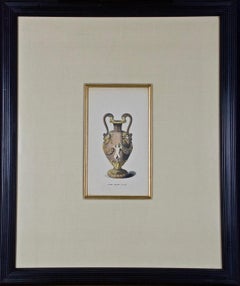
A Set of Two Hand-Colored Engravings of an Ancient Roman Vase and a Tazza (Cup)
Located in Alamo, CA
This is a pair of framed hand-colored engravings of an ancient vase in the Palizzy Wares style and a silver gilt tazza (cup) with a cover, both from the 16th century. These were engraved under the supervision of Philip De La Motte...
Category
Mid-19th Century Victorian Prints and Multiples
Materials
Engraving
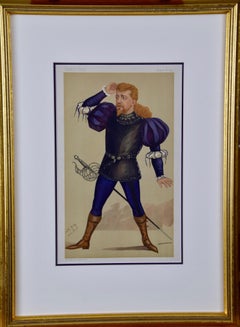
Hand Colored 19th c. Vanity Fair Caricature of an Opera Singer, "Polish Tenor"
Located in Alamo, CA
A hand colored Vanity Fair caricature of a 19th century opera singer, M Jean de Reszke, entitled 'Polish Tenor'. The print was created by the most famou...
Category
1890s Victorian Prints and Multiples
Materials
Lithograph
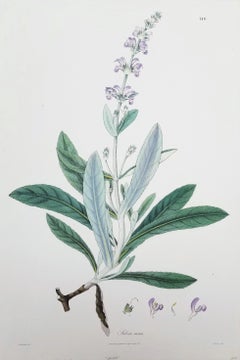
Salvia cana (Woolly Sage) /// Botanical Botany Flowers Plants Science Art Print
Located in Saint Augustine, FL
Artist: Nathaniel Wallich (Danish, 1786-1854)
Title: "Salvia cana (Woolly Sage)" (Plate 116)
Portfolio: Plantae Asiaticae Rariores; or, Descriptions and Figures of a Select Number of Unpublished East Indian Plants
Year: 1830-1832
Medium: Original Hand-Colored Lithograph on J. Whatman paper
Limited edition: 254
Printer: Engelmann, Graf, Coindet & Co., London, UK
Publisher: Richard Taylor for Treuttel & Würtz, London, UK
Reference: Nissen BBI No. 2099; Pritzel No. 9957; Stafleu-Cowan No. 16583; Dunthorne No. 326
Sheet size: 21.13" x 14.25"
Condition: Some scattered tiny handling creases to sheet. Has been professionally stored away for decades. In excellent condition with strong colors
Rare
Notes:
Provenance: private collection - Aspen, CO. Lithography by Maltese artist...
Category
1830s Victorian Prints and Multiples
Materials
Watercolor, Lithograph
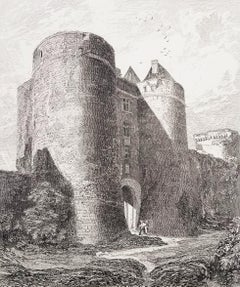
Entrance to the Castle at Tancarville /// John Sell Cotman Architectural Etching
Located in Saint Augustine, FL
Artist: John Sell Cotman (English, 1782-1842)
Title: "Entrance to the Castle at Tancarville" (Vol. 2, Plate 86)
Portfolio: Architectural Antiquities of Normandy
Year: 1822
Medium: Or...
Category
1820s Victorian Prints and Multiples
Materials
Etching, Intaglio
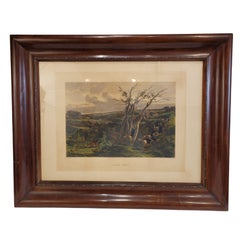
Victorian English engraving “Dead beat”, J. Harris and William J. Shayer
Located in Valladolid, ES
Amazing print on paper by William J. Shayer, engraved by J. Harris, created in 1864, belonging to the realist movement, entitled “Dead Beat”.
The work depicts a typical Victorian E...
Category
1860s Victorian Prints and Multiples
Materials
Animal Skin, Paper
19th century color lithograph portraits ship seascape patriotic flags military
Located in Milwaukee, WI
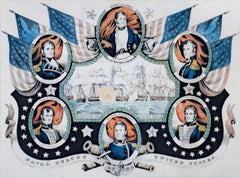
The present hand-colored lithograph is an excellent example of patriotic mid-nineteenth century American imagery. The print shows the battle and several of the major figures involved in the Battle of Lake Erie: At the center is a view of several frigates on the lake, embroiled in conflict. Above the battle is the quotation: "We have met the enemy and they are ours." Surrounding are laurel-lined roundels with portraits of Oliver Hazard Perry (1785-1819), Stephen Dicateur (1779-1820), Johnston Blakeley (1871-1814), William Bainbridge (1774-1833), David Porter (1780-1843), and James Lawrence (1781-1813) - all of these framed by American flags, banners and cannons. This print shows that the Battle of Lake Erie, part of the War of 1812, still held resonance for American audiences several decades later and was part of the larger narrative of the founding of the country.
9.5 x 13.5 inches, artwork
20 x 23.38 inches, frame
Entitled in the image
Signed in the stone, lower left "Lith. and Pub. by N. Currier"
Inscribed lower right "2 Spruce N.Y." and "No. 1"
Copyrighted lower center "Entered according to Act of Congress in the year 1846 by N. Currier in the Clerk's office of the Southern District of N.Y."
Framed to conservation standards using 100 percent rag matting and housed in a gold gilded moulding.
Nathaniel Currier was a tall introspective man with a melancholy nature. He could captivate people with his piercing stare or charm them with his sparkling blue eyes. Nathaniel was born in Roxbury, Massachusetts on March 27th, 1813, the second of four children. His parents, Nathaniel and Hannah Currier, were distant cousins who lived a humble yet spartan life. When Nathaniel was eight years old, tragedy struck. Nathaniel’s father unexpectedly passed away leaving Nathaniel and his eleven-year-old brother Lorenzo to provide for the family. In addition to their mother, Nathaniel and Lorenzo had to care for six-year-old sister Elizabeth and two-year-old brother Charles. Nathaniel worked a series of odd jobs to support the family, and at fifteen, he started what would become a life-long career when he apprenticed in the Boston lithography shop of William and John Pendleton.
A Bavarian gentleman named Alois Senefelder invented lithography just 30 years prior to young Nat Currier’s apprenticeship. While under the employ of the brothers Pendleton, Nat was taught the art of lithography by the firm’s chief printer, a French national named Dubois, who brought the lithography trade to America.
Lithography involves grinding a piece of limestone flat and smooth then drawing in mirror image on the stone with a special grease pencil. After the image is completed, the stone is etched with a solution of aqua fortis leaving the greased areas in slight relief. Water is then used to wet the stone and greased-ink is rolled onto the raised areas. Since grease and water do not mix, the greased-ink is repelled by the moisture on the stone and clings to the original grease pencil lines. The stone is then placed in a press and used as a printing block to impart black on white images to paper.
In 1833, now twenty-years old and an accomplished lithographer, Nat Currier left Boston and moved to Philadelphia to do contract work for M.E.D. Brown, a noted engraver and printer. With the promise of good money, Currier hired on to help Brown prepare lithographic stones of scientific images for the American Journal of Sciences and Arts. When Nat completed the contract work in 1834, he traveled to New York City to work once again for his mentor John Pendleton, who was now operating his own shop located at 137 Broadway. Soon after the reunion, Pendleton expressed an interest in returning to Boston and offered to sell his print shop to Currier. Young Nat did not have the financial resources to buy the shop, but being the resourceful type he found another local printer by the name of Stodart. Together they bought Pendleton’s business.
The firm ‘Currier & Stodart’ specialized in "job" printing. They produced many different types of printed items, most notably music manuscripts for local publishers. By 1835, Stodart was frustrated that the business was not making enough money and he ended the partnership, taking his investment with him. With little more than some lithographic stones, and a talent for his trade, twenty-two year old Nat Currier set up shop in a temporary office at 1 Wall Street in New York City. He named his new enterprise ‘N. Currier, Lithographer’
Nathaniel continued as a job printer and duplicated everything from music sheets to architectural plans. He experimented with portraits, disaster scenes and memorial prints, and any thing that he could sell to the public from tables in front of his shop. During 1835 he produced a disaster print Ruins of the Planter's Hotel, New Orleans, which fell at two O’clock on the Morning of the 15th of May 1835, burying 50 persons, 40 of whom Escaped with their Lives. The public had a thirst for newsworthy events, and newspapers of the day did not include pictures. By producing this print, Nat gave the public a new way to “see” the news. The print sold reasonably well, an important fact that was not lost on Currier.
Nat met and married Eliza Farnsworth in 1840. He also produced a print that same year titled Awful Conflagration of the Steamboat Lexington in Long Island Sound on Monday Evening, January 18, 1840, by which melancholy occurrence over One Hundred Persons Perished. This print sold out very quickly, and Currier was approached by an enterprising publication who contracted him to print a single sheet addition of their paper, the New York Sun. This single page paper is presumed to be the first illustrated newspaper ever published.
The success of the Lexington print launched his career nationally and put him in a position to finally lift his family up. In 1841, Nat and Eliza had their first child, a son they named Edward West Currier. That same year Nat hired his twenty-one year old brother Charles and taught him the lithography trade, he also hired his artistically inclined brother Lorenzo to travel out west and make sketches of the new frontier as material for future prints. Charles worked for the firm on and off over the years, and invented a new type of lithographic crayon which he patented and named the Crayola. Lorenzo continued selling sketches to Nat for the next few years.
In 1843, Nat and Eliza had a daughter, Eliza West Currier, but tragedy struck in early 1847 when their young daughter died from a prolonged illness. Nat and Eliza were grief stricken, and Eliza, driven by despair, gave up on life and passed away just four months after her daughter’s death.
The subject of Nat Currier’s artwork changed following the death of his wife and daughter, and he produced many memorial prints and sentimental prints during the late 1840s. The memorial prints generally depicted grief stricken families posed by gravestones (the stones were left blank so the purchasers could fill in the names of the dearly departed). The sentimental prints usually depicted idealized portraits of women and children, titled with popular Christian names of the day.
Late in 1847, Nat Currier married Lura Ormsbee, a friend of the family. Lura was a self-sufficient woman, and she immediately set out to help Nat raise six-year-old Edward and get their house in order. In 1849, Lura delivered a son, Walter Black Currier, but fate dealt them a blow when young Walter died one year later. While Nat and Lura were grieving the loss of their new son, word came from San Francisco that Nat’s brother Lorenzo had also passed away from a brief illness. Nat sank deeper into his natural quiet melancholy. Friends stopped by to console the couple, and Lura began to set an extra place at their table for these unexpected guests. She continued this tradition throughout their lives.
In 1852, Charles introduced a friend, James Merritt Ives, to Nat and suggested he hire him as a bookkeeper. Jim Ives was a native New Yorker born in 1824 and raised on the grounds of Bellevue Hospital where his father was employed as superintendent. Jim was a self-trained artist and professional bookkeeper. He was also a plump and jovial man, presenting the exact opposite image of his new boss.
Jim Ives met Charles Currier through Caroline Clark, the object of Jim’s affection. Caroline’s sister Elizabeth was married to Charles, and Caroline was a close friend of the Currier family. Jim eventually proposed marriage to Caroline and solicited an introduction to Nat Currier, through Charles, in hopes of securing a more stable income to support his future wife.
Ives quickly set out to improve and modernize his new employer’s bookkeeping methods. He reorganized the firm’s sizable inventory, and used his artistic skills to streamline the firm’s production methods. By 1857, Nathaniel had become so dependent on Jims’ skills and initiative that he offered him a full partnership in the firm and appointed him general manager. The two men chose the name ‘Currier & Ives’ for the new partnership, and became close friends.
Currier & Ives produced their prints in a building at 33 Spruce Street where they occupied the third, fourth and fifth floors. The third floor was devoted to the hand operated printing presses that were built by Nat's cousin, Cyrus Currier, at his shop Cyrus Currier & Sons in Newark, NJ. The fourth floor found the artists, lithographers and the stone grinders at work. The fifth floor housed the coloring department, and was one of the earliest production lines in the country. The colorists were generally immigrant girls, mostly German, who came to America with some formal artistic training. Each colorist was responsible for adding a single color to a print. As a colorist finished applying their color, the print was passed down the line to the next colorist to add their color. The colorists worked from a master print displayed above their table, which showed where the proper colors were to be placed. At the end of the table was a touch up artist who checked the prints for quality, touching-in areas that may have been missed as it passed down the line. During the Civil War, demand for prints became so great that coloring stencils were developed to speed up production.
Although most Currier & Ives prints were colored in house, some were sent out to contract artists. The rate Currier & Ives paid these artists for coloring work was one dollar per one hundred small folios (a penny a print) and one dollar per one dozen large folios. Currier & Ives also offered uncolored prints to dealers, with instructions (included on the price list) on how to 'prepare the prints for coloring.' In addition, schools could order uncolored prints from the firm’s catalogue to use in their painting classes.
Nathaniel Currier and James Merritt Ives attracted a wide circle of friends during their years in business. Some of their more famous acquaintances included Horace Greeley, Phineas T. Barnum, and the outspoken abolitionists Rev. Henry Ward, and John Greenleaf Whittier (the latter being a cousin of Mr. Currier).
Nat Currier and Jim Ives described their business as "Publishers of Cheap and Popular Pictures" and produced many categories of prints. These included Disaster Scenes, Sentimental Images, Sports, Humor, Hunting Scenes, Politics, Religion, City and Rural Scenes, Trains, Ships, Fire Fighters, Famous Race Horses, Historical Portraits, and just about any other topic that satisfied the general public's taste. In all, the firm produced in excess of 7500 different titles, totaling over one million prints produced from 1835 to 1907.
Nat Currier retired in 1880, and signed over his share of the firm to his son Edward. Nat died eight years later at his summer home 'Lion’s Gate' in Amesbury, Massachusetts. Jim Ives remained active in the firm until his death in 1895, when his share of the firm passed to his eldest son, Chauncey.
In 1902, faced will failing health from the ravages of Tuberculosis, Edward Currier sold his share of the firm to Chauncey Ives...
Category
1850s Victorian Prints and Multiples
Materials
Watercolor, Lithograph
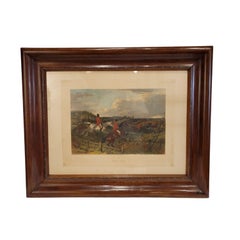
Victorian engraving of horses “Full cry”, J. Harris and William J. Shayer, Engla
Located in Valladolid, ES
Amazing print on paper by the artist William J. Shayer, engraved by J. Harris, created in 1864, belonging to the Realist movement, entitled “Full Cry”.
The work depicts a typical Vi...
Category
1860s Victorian Prints and Multiples
Materials
Paper
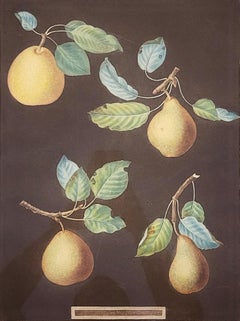
Pears (Bergamot de Chantilly, Bouchee, Winter Sweet Sugar Pear, Bishop
s Thumb)
Located in Saint Augustine, FL
Artist: George Brookshaw (English, 1751-1823)
Title: "Pears (Bergamot de Chantilly, Bouchee, Winter Sweet Sugar Pear, Bishop's Thumb)" (Plate LXXIX)
Portfolio: Pomona Britannica, or A Collection of the Most Esteemed Fruits
Year: 1808 (First edition)
Medium: Original Aquatint and Stipple Engraving with Printed and Hand-Coloring on wove paper
Limited edition: Unknown
Printer: T. Bensley, London, UK
Publisher: George Brookshaw, London, UK
Reference: Dunthorne No. 50; "Great Flower Books" - No. 81; Nissen BBI No. 244; "An Oak Spring Pomona" No. 40a; Prideaux No. 295
Framing: Recently framed in a wood and gold moulding with 100% cotton rag matting and Museum Glass
Framed size: 28.5" x 24.44"
Sheet size: approx. 22.25" x 17.5"
Image size: 16.25" x 12.25"
Condition: Some minor scuffing to image. In excellent condition
Rare
Notes:
Provenance: private collection - Orlando, FL; acquired from The Old Print Shop, New York, NY retaining their original gallery label upper center on verso. Comes from Brookshaw's famous book volume "Pomona Britannica", (1804-1812) which consists of 90 aquatint engravings some with stipple printed...
Category
Early 1800s Victorian Prints and Multiples
Materials
Watercolor, Engraving, Aquatint
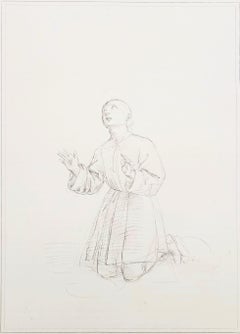
A Youth at His Devotions /// after Raphael Raffaello Sanzio Renaissance Italian
Located in Saint Augustine, FL
Artist: William Young Ottley (English, 1771-1836)
Title: "A Youth at His Devotions"
Portfolio: The Italian School of Design: Being a Series of Fac-Similes of Original Drawings, By th...
Category
1810s Victorian Prints and Multiples
Materials
Etching, Intaglio
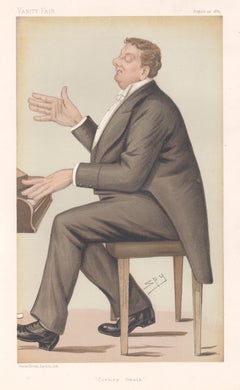
Corney Grain, Vanity Fair caricature portrait, 1885
Located in Melbourne, Victoria
'Corney Grain'
Chromolithograph. 1885.
Vanity Fair portrait of Corney Grain (1844-1895) playing the piano. Corney Grain was a British barrister turned actor, entertainer, and music...
Category
Early 20th Century Victorian Prints and Multiples
Materials
Lithograph
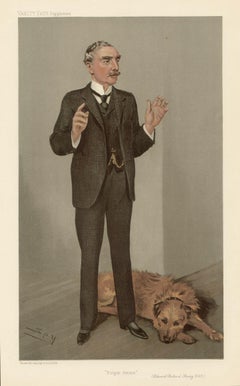
Finger Prints
, Sir Edward Richard Henry, Vanity Fair caricature portrait, 1895
Located in Melbourne, Victoria
'Finger Prints'
Chromolithograph. 1905.
Vanity Fair portrait of Sir Edward Richard Henry, 1st Baronet GCVO KCB CSI KPM (1850-1931) who was the Commissioner of Police of the Metropo...
Category
Early 20th Century Victorian Prints and Multiples
Materials
Lithograph
St Jean D
Acre. David Roberts Holy Land lithograph, 1843.
Located in Melbourne, Victoria
'St Jean D'Acre', tinted lithograph by Louis Haghe (1806-1885) after David Roberts RA.
David Roberts (1796-1864) traveled throughout Egypt and the Holy Land in the late 1830s produc...
Category
Mid-19th Century Victorian Prints and Multiples
Materials
Lithograph
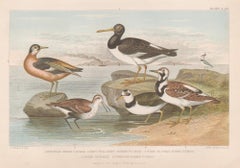
Sea Birds, English antique bird engraving print, 1879
Located in Melbourne, Victoria
Sea Birds
Wood-engraving with original colouring. 1879.
160mm by 245mm (sheet).
Key below the image. From Oliver Goldsmith's 'A History of the Earth and Animated Nature'.
Category
Late 19th Century Victorian Prints and Multiples
Materials
Engraving
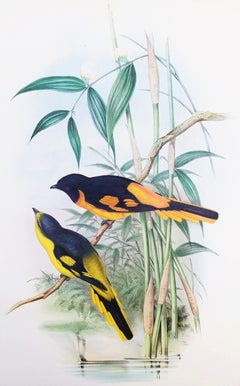
Pericrocotus Flammeus (Orange Minivet) /// John Gould Ornithology Animal Bird
By John Gould
Located in Saint Augustine, FL
Artist: John Gould (English, 1804-1881)
Title: "Pericrocotus Flammeus (Orange Minivet)" (Vol. 2, Plate 8)
Portfolio: The Birds of Asia
Year: 1850-1883
Medium: Original Hand-Colored Lithograph on wove paper
Limited edition: approx. 235
Printer: Hullmandel & Walton, T. Walter or Walter & Cohn, London, UK
Publisher: Taylor and Francis, John Gould, London, UK
Reference: Anker No. 178; Nissen No. IVB 368; Sauer No. 17, Zimmer page 258; Wood page 365; Sitwell page 102
Sheet size: 21.38" x 14.57"
Image size: 16.25" x 10"
Condition: Faint UV stain to sheet and light toning at edges. Remnants of mounting tape from previous framing at top edge on verso. Has been professionally stored away for decades. In excellent condition with strong colors
Very rare
Notes:
Provenance: private collection - Aspen, CO. Lithography and hand-coloring by John Gould and English artist Henry Constantine Richter (1821-1902). Comes from Gould's seven volume "The Birds of Asia", (1850-1883) (First edition), which consists of 530 hand-colored lithographs. Other contributing lithographers were German artist Joseph Wolf (1820-1899) and Irish artist William Hart (1830-1908). "The Birds of Asia" was Gould's last work before his death. Gold gilded edges as issued.
The orange minivet is a brightly colored bird in the cuckooshrike family, Campephagidae. It is found all along the Western Ghats and west coast of India and Sri Lanka.
Biography:
John Gould FRS (14 September 1804 – 3 February 1881) was an English ornithologist and bird artist. He published a number of monographs on birds, illustrated by plates that he produced with the assistance of his wife, Elizabeth Gould, and several other artists including Edward Lear, Henry Constantine Richter, Joseph Wolf and William Matthew Hart. He has been considered the father of bird study in Australia and the Gould League in Australia is named after him. His identification of the birds now nicknamed "Darwin's finches" played a role in the inception of Darwin's theory of evolution by natural selection. Gould's work is referenced in Charles Darwin's book, "On the Origin of Species".
Category
1850s Victorian Prints and Multiples
Materials
Watercolor, Lithograph
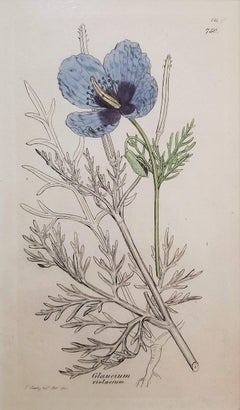
Glaucium Violaccum (Violet Horned-Poppy) /// James Sowerby Botanical Flower Art
Located in Saint Augustine, FL
Artist: James Sowerby (English, 1757-1822)
Title: "Glaucium Violaccum (Violet Horned-Poppy)" (Vol. 3, Plate 201)
Portfolio: English Botany; or, Coloured Figures of British Plants
Year: 1794 (First edition)
Medium: Original Hand-Colored Engraving on cream wove paper
Limited edition: Unknown
Printer: J. Davis...
Category
1790s Victorian Prints and Multiples
Materials
Watercolor, Engraving, Intaglio
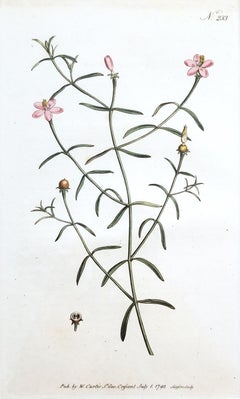
Chironia Baccifera Berry-Bearing Chironia /// English Botanical Flower Engraving
Located in Saint Augustine, FL
Artist: William Curtis (English, 1746-1799)
Title: "Chironia Baccifera Berry-Bearing Chironia" (Vol. 7, Plate 233)
Portfolio: The Botanical Magazine; or, Flower-Garden Displayed
Year...
Category
1790s Victorian Prints and Multiples
Materials
Watercolor, Engraving, Intaglio
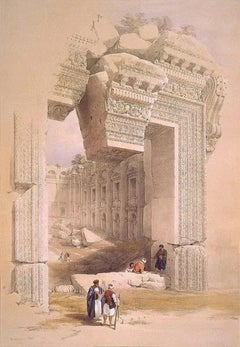
The Doorway, Baalbec
Located in London, GB
David Roberts RA
The Doorway, Baalbec
1796 - 1864
Subscription and first edition lithograph available
Full plate 81
Presented in a acid free mount
Hand coloured lithograph printed i...
Category
19th Century Victorian Prints and Multiples
Materials
Lithograph
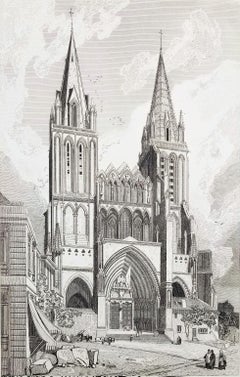
Cathedral Church of Notre Dame, at Séez /// John Sell Cotman Architectural Print
Located in Saint Augustine, FL
Artist: John Sell Cotman (English, 1782-1842)
Title: "Cathedral Church of Notre Dame, at Séez (West Front)" (Vol. 2, Plate 99)
Portfolio: Architectural Antiquities of Normandy
Year: ...
Category
1820s Victorian Prints and Multiples
Materials
Etching, Intaglio
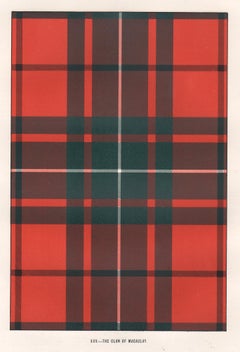
The Clan of Macauley (Tartan), Scottish Scotland art design lithograph print
Located in Melbourne, Victoria
The Clan of Macauley (Tartan)
Chromolithograph. 1886. From 'The Tartans of the Clans of Scotland', by James Grant, 1886.
365mm by 265mm (sheet).
Accompanied by a sheet of descri...
Category
Late 19th Century Victorian Prints and Multiples
Materials
Lithograph
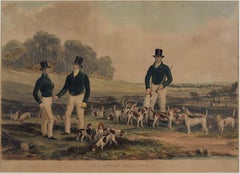
The Merry Beaglers engraving by John Harris after Harry Hall
s 1845 painting
Located in London, GB
John Harris after Harry Hall
The Merry Beaglers
c. 1845
48x65cm
Aquatint with hand colouring
The most famous beagling print there is, after the 1845 pa...
Category
1840s Victorian Prints and Multiples
Materials
Aquatint
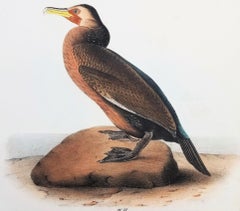
Townsend
s Cormorant /// John James Audubon Ornithology Bird Art Natural History
Located in Saint Augustine, FL
Artist: John James Audubon (American, 1785-1851)
Title: "Townsend's Cormorant" (Plate 418, No. 84)
Portfolio: The Birds of America, First Royal Octavo Edition
Year: 1840-1844
Medium: Original Hand-Colored Lithograph on wove paper
Limited edition: approx. 1,200
Printer: John T. Bowen, Philadelphia, PA
Publisher: John James Audubon and J.B. Chevalier, New York, NY and Philadelphia, PA
Sheet size: 10.13" x 6.5"
Image size: 4.38" x 5"
Condition: Light toning to sheet. Some light foxing and small areas of discoloration. Remnants of mounting tape from previous framing on verso. The white background was recently also hand-colored. In otherwise good condition with strong colors
Notes:
Provenance: private collection - Nashville, TN; acquired from a gallery in Nashville, TN. Lithography and hand-coloring by American artist John T. Bowen (1801-c.1856). Comes from Audubon's famous seven volume portfolio "The Birds of America", First Royal Octavo Edition (1840-1844), which consists of 500 hand-colored lithographs.
Based on a composition probably painted in London in 1838, from a specimen obtained near the mouth of the Columbia River.
Brandt's cormorant is a strictly marine bird of the cormorant family of seabirds that inhabits the Pacific coast of North America. It ranges, in the summer, from Alaska to the Gulf of California, but the population north of Vancouver Island migrates south during the winter.
To make 'The Birds of America' more affordable and widely available, in 1839 John James Audubon began the first octavo edition, a smaller version of the folio which was printed and hand-colored by J. T. Bowen in Philadelphia. Employing a new invention, the camera lucida, the images were reduced in size, rendered in intermediate drawings by John James Audubon and his son John Woodhouse, and then drawn onto lithographic stones. These miniatures exhibit a remarkable amount of attention to quality and detail, as well as a meticulous fidelity to the larger works. Some compositional changes were made in order to accommodate the smaller format. Like the Havell edition, John James Audubon’s first...
Category
1840s Victorian Prints and Multiples
Materials
Watercolor, Lithograph
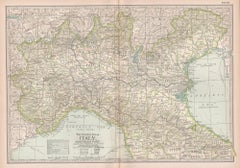
Italy, Northern Part. Century Atlas antique vintage map
Located in Melbourne, Victoria
'The Century Atlas. Italy, Northern Part.'
Original antique map, 1903.
Central fold as issued. Map name and number printed on the reverse corners.
Sheet 29.5cm by 40cm.
Category
Early 20th Century Victorian Prints and Multiples
Materials
Lithograph
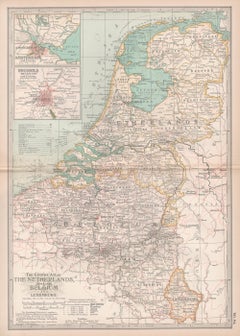
The Netherlands (Holland), Belgium and Luxemburg. Century Atlas antique map
Located in Melbourne, Victoria
'The Century Atlas. The Netherlands (Holland), Belgium and Luxemburg.'
Original antique map, 1903.
Inset maps of 'Amsterdam' and 'Brussels'.
Central fold as issued. Map name and num...
Category
Early 20th Century Victorian Prints and Multiples
Materials
Lithograph
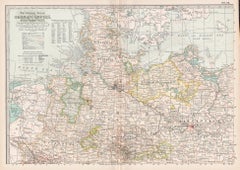
German Empire, Northern Part. Century Atlas antique vintage map
Located in Melbourne, Victoria
'The Century Atlas. German Empire, Northern Part.'
Original antique map, 1903.
Central fold as issued. Map name and number printed on the reverse corne...
Category
Early 20th Century Victorian Prints and Multiples
Materials
Lithograph
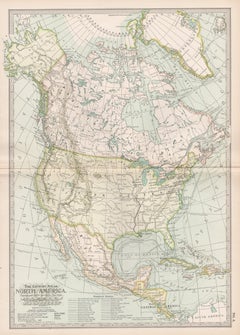
North America. Century Atlas antique vintage map
Located in Melbourne, Victoria
'The Century Atlas. North America'
Original antique map, 1903.
Central fold as issued. Map name and number printed on the reverse corners.
Sheet 40cm by 29.5cm.
Category
Early 20th Century Victorian Prints and Multiples
Materials
Lithograph
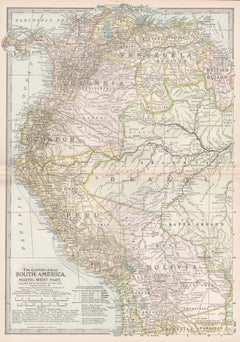
South America, North-West Part. Century Atlas antique vintage map
Located in Melbourne, Victoria
'The Century Atlas. South America, North-West Part'
Original antique map, 1903.
Central fold as issued. Map name and number printed on the reverse corners.
Sheet 40cm by 29.5cm.
Category
Early 20th Century Victorian Prints and Multiples
Materials
Lithograph
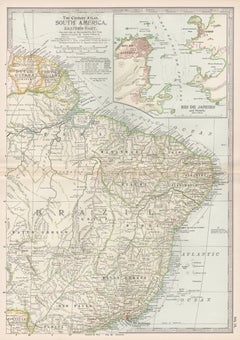
South America, Eastern Part. Century Atlas antique vintage map
Located in Melbourne, Victoria
'The Century Atlas. South America. Eastern Part'
Original antique map, 1903.
Inset map 'Rio de Janeiro and Vicinity'.
Central fold as issued. Map name and number printed on the rev...
Category
Early 20th Century Victorian Prints and Multiples
Materials
Lithograph
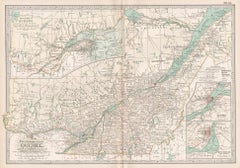
Quebec. Canada. Century Atlas antique vintage map
Located in Melbourne, Victoria
'The Century Atlas. Quebec'
Original antique map, 1903.
Inset maps 'Sketch Map of Quebec', Quebec and Vicinity; and 'Montreal and Vicinity'.
Central fo...
Category
Early 20th Century Victorian Prints and Multiples
Materials
Lithograph
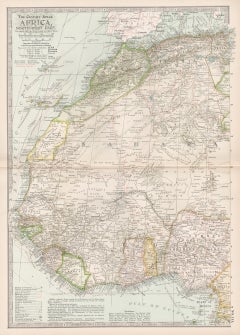
Africa. North-West Part. Century Atlas antique vintage map
Located in Melbourne, Victoria
'The Century Atlas. Africa. Southern Part'
Original antique map, 1903.
Central fold as issued. Map name and number printed on the reverse corners.
Sheet 40cm by 29.5cm.
Category
Early 20th Century Victorian Prints and Multiples
Materials
Lithograph
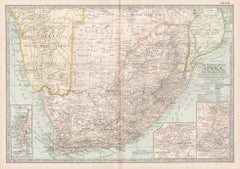
Africa. Southern Part. Century Atlas antique vintage map
Located in Melbourne, Victoria
'The Century Atlas. Africa. Southern Part'
Original antique map, 1903.
Inset maps of 'Cape Town', 'Johannesburg' and 'Ladysmith'.
Central fold as issued. Map name and number printe...
Category
Early 20th Century Victorian Prints and Multiples
Materials
Lithograph
Victorian prints and multiples for sale on 1stDibs.
Find a wide variety of authentic Victorian prints and multiples available for sale on 1stDibs. Works in this style were very popular during the 21st Century and Contemporary, but contemporary artists have continued to produce works inspired by this movement. If you’re looking to add prints and multiples created in this style to introduce contrast in an otherwise neutral space in your home, the works available on 1stDibs include elements of blue, purple and other colors. Many Pop art paintings were created by popular artists on 1stDibs, including Sir Leslie Ward, John James Audubon, George Cruikshank, and Philippe Benoist. Frequently made by artists working with Lithograph, and Engraving and other materials, all of these pieces for sale are unique and have attracted attention over the years. Not every interior allows for large Victorian prints and multiples, so small editions measuring 4.34 inches across are also available. Prices for prints and multiples made by famous or emerging artists can differ depending on medium, time period and other attributes. On 1stDibs, the price for these items starts at $65 and tops out at $30,458, while the average work sells for $173.
More Ways To Browse
Andy Warhol Coke
Andy Warhol Fish
Andy Warhol Flowers Poster
Andy Warhol Movie Poster
Architecture Prints Georgian
Bearbrick Pink
Dali Milky Way
Frank Romero On Sale
Gilles Aillaud
Gregory Colbert
Gretchen Dow Simpson
Gwenda Morgan
Jean Cocteau 1957
Jim Webb
Kaws Set 2 Clean Slate
Ken Rush
Lebanon Poster
Lebanon Vintage Poster