Vienna Secession Prints and Multiples
to
3
65
112
1
2
2
Overall Width
to
Overall Height
to
21,187
18,705
10,666
6,321
5,204
2,718
1,557
1,458
1,384
891
875
428
343
199
46
28
19
15
11
26
155
1
76
27
29
23
99
83
136
73
59
59
53
30
25
24
13
12
12
12
11
11
9
8
7
7
5
5
142
47
5
3
2
15
180
2
Style: Vienna Secession
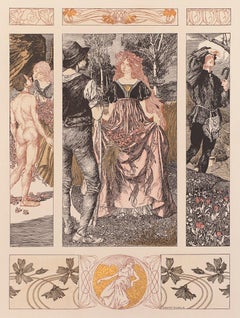
Spring by Robert Engels, Medieval Art Nouveau lithograph with gold ink, 1897
Located in Chicago, IL
Allegorien-Neue Folge was a serialized folio published in installments between 1895 and 1900. Martin Gerlach, its publisher, was inspired by the rise of modernist design in Vienna an...
Category
1890s Vienna Secession Prints and Multiples
Materials
Lithograph
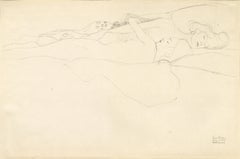
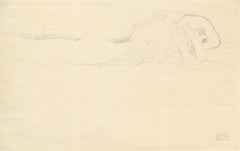
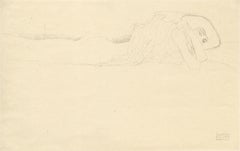
Gustav Klimt "Study for Water Serpents" collotype from Funfundzwanzig folio
By Gustav Klimt
Located in Palm Beach, FL
Title page numbered: 263/450
Category
1910s Vienna Secession Prints and Multiples
Materials
Paper
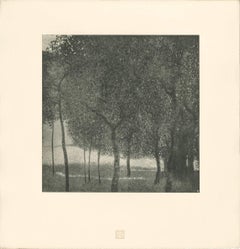
H.O. Miethke Das Werk folio "Fruit Trees" collotype print
Located in Palm Beach, FL
DAS WERK GUSTAV KLIMTS, a portfolio of 50 prints, ten of which are multicolor collotypes on chine colle paper laid down on hand-made heavy cream wove paper with deckled edges; under ...
Category
Early 1900s Vienna Secession Prints and Multiples
Materials
Paper
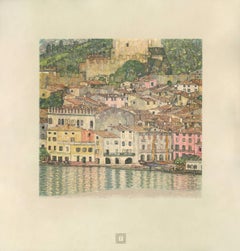
Max Eisler Eine Nachlese folio “Malcesine on Lake Garda" collotype print
Located in Palm Beach, FL
After Gustav Klimt, Max Eisler #7, Malcesine am Gardasee; multi-color collotype after 1913 painting in oil on canvas. The original was destroyed by fire ...
Category
1930s Vienna Secession Prints and Multiples
Materials
Paper
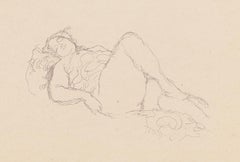
"Smiling Woman Reclined" by Gustav Klimt - Original Print from Courtesans Folio
By Gustav Klimt
Located in Palm Beach, FL
Plate #14 from Gustav Klimt's 1907 "Dialogues of the Courtesans" portfolio, consisting of 15 collotypes on cream japon paper. The drawings in this folio are said to be studies for Klimt's well-known Water Serpents paintings...
Category
Early 1900s Vienna Secession Prints and Multiples
Materials
Paper
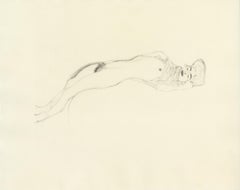
Reclining nude, Gustav Klimt Handzeichnungen (Sketch), Thyrsos Verlag, 1922
Located in Chicago, IL
Original collotype lithograph of a reclining nude drawing from Gustav Kilmt’s handzeichnungen (sketch) in 1922 by Thyrsos Verlag, Leipzig and Vienna, in an edition of 375. This artwo...
Category
1920s Vienna Secession Prints and Multiples
Materials
Paper, Lithograph
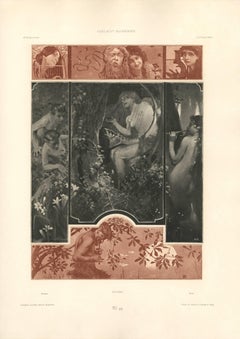
Gerlach
s Allegorien Plate #44: "Music" Lithograph
Located in Palm Beach, FL
Koloman Moser
(1868 –1918), AUSTRIAN
Instead of applying his flair and art education solely to painting, Koloman Moser embodied the idea of Gesamt Kunstwerk (all-embracing art work) by designing architecture, furniture, jewelry, graphics, and tapestries meant to coordinate every detail of an environment. His work transcended the imitative decorative arts of earlier eras and helped to define Modernism for generations to come. Moser achieved a remarkable balance between intellectual structure (often geometric) and hedonistic luxury.
Collaborating with Gustav Klimt and Josef Hoffmann, the artist was an editor and active contributor to Ver Sacrum, (Sacred Spring), the journal of the Viennese Secession that was so prized for its aesthetics and high quality production that it was considered a work of art. The magazine featured drawings and designs in the Jugendstil style (Youth) along with literary contributions from distinguished writers from across Europe. It quickly disseminated both the spirit and the style of the Secession.
In 1903 Moser and Hoffmann founded and led the Wiener Werkstatte (Viennese Workshop) a collective of artisans that produced elegant decorative arts items, not as industrial prototypes but for the purpose of sale to the public. The plan, as idealistic then as now, was to elevate the lives of consumers by means of beautiful and useful interior surroundings.
Moser’s influence has endured throughout the century. His design sensibility is evident from the mid-century modern furniture of the 1950s and ‘60s to the psychedelic rock posters...
Category
1890s Vienna Secession Prints and Multiples
Materials
Lithograph
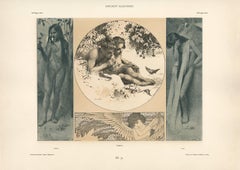
Gerlach
s Allegorien Plate #30: "Love" Lithograph
Located in Palm Beach, FL
Koloman Moser
(1868 –1918), AUSTRIAN
Instead of applying his flair and art education solely to painting, Koloman Moser embodied the idea of Gesamt Kunstwerk (all-embracing art w...
Category
1890s Vienna Secession Prints and Multiples
Materials
Lithograph
Gustav Klimt "2nd Study for Water Serpents" collotype from Funfundzwanzig folio
By Gustav Klimt
Located in Palm Beach, FL
Title page numbered: 263/450
Category
1910s Vienna Secession Prints and Multiples
Materials
Paper
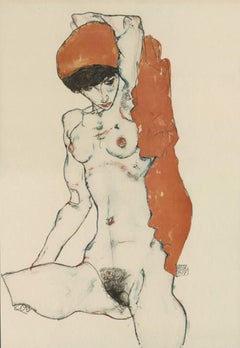
E. Strache, Handzeichnungen, "Seated Female Nude w/Orange Drapery" Collotype
Located in Palm Beach, FL
“ART CANNOT BE MODERN, ART IS PRIMORDIALLY ETERNAL.” -SCHIELE
Defiantly iconoclastic in life and art, Egon Schiele is esteemed for his masterful draftsmanship and precocious insight...
Category
1920s Vienna Secession Prints and Multiples
Materials
Paper
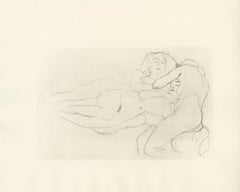
"Three Women Asleep" by Gustav Klimt - Original Print from Courtesans Folio
By Gustav Klimt
Located in Palm Beach, FL
Plate #13 from Gustav Klimt's 1907 "Dialogues of the Courtesans" portfolio, consisting of 15 collotypes on cream japon paper. The drawings in this folio are said to be studies for Klimt's well-known Water Serpents paintings...
Category
Early 1900s Vienna Secession Prints and Multiples
Materials
Paper
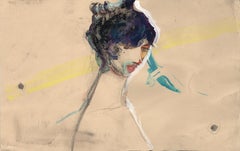
portrait Angie
Located in London, London
"Angie"
Portrait, limited edition, print on paper, hand signed,
black hair, red lips,
50x70cm
5/30
Is it a good investment?
1. There is nothing like this on the contemporary art m...
Category
21st Century and Contemporary Vienna Secession Prints and Multiples
Materials
Paper, Color, Digital

$1,062 Sale Price
53% Off
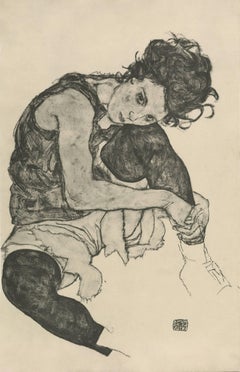
R. Layni, Zeichnungen folio, "Seated Woman with Bent Knee" Collotype plate I
Located in Palm Beach, FL
After Egon Schiele (1890 – 1918), AUSTRIA
“ART CANNOT BE MODERN, ART IS PRIMORDIALLY ETERNAL.” -SCHIELE
Defiantly iconoclastic in life and art, Egon Schiele is esteemed for his mas...
Category
1910s Vienna Secession Prints and Multiples
Materials
Paper
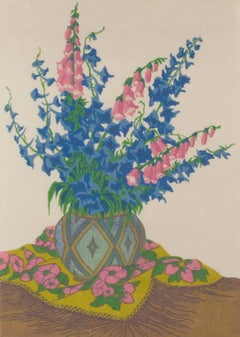
Rittersporn und Fingerhut (Larkspur and Foxglove)
Located in Fairlawn, OH
Rittersporn und Fingerhut
(Larkspur and Foxglove)
Color woodcut, printed on wove paper with mica flecks, 1916
Signed lower right (see photo)
Inscribed lower left (see photo)
Reference: Merx 276
Condition: good-very good
One spot of staining on the far left edge of the composition (see photo)
Color very fresh and vibrant
Full sheet as issued
Image size: 19 x 13 3/8 inches
Carl Thiemann...
Category
1910s Vienna Secession Prints and Multiples
Materials
Woodcut
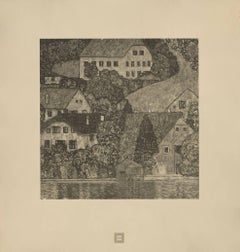
Max Eisler Eine Nachlese folio "Houses in Unterach on Lake Attersee" collotype
Located in Palm Beach, FL
After Gustav Klimt, Max Eisler Plate #29, Am Attersee; brown-toned monochrome collotype after the 1915-16 painting in oil on canvas.
GUSTAV KLIMT EINE NACHLESE (GUSTAV KLIMT AN AFTERMATH), a portfolio of 30 collotypes prints, 15 are multi-color and 15 are monochrome, on chine colle paper laid down on heavy cream-wove paper with deckled edges; Max Eisler, Editor-Publisher; Osterreichischer Staatsdruckerei (Austrian State Printing Office), Printer; in a limited edition of 500 numbered examples of which: 200 were printed in German, 150 were printed in French and 150 were printed in English; Vienna, 1931.
2018 marks the 100th anniversary of Gustav Klimt’s death. It is a fitting time to reflect upon the enduring legacy and deep impact of his art. Recognizing this need for posterity with uncanny foresight, the publication of Gustav Klimt: An Aftermath (Eine Nachlese) provides a rare collection of work after Klimt which has proven to be an indispensable tool for Klimt scholarship as well as a source for pure visual delight.
Approximately 25 percent of the original works featured in the Aftermath portfolio have since been lost. Of those 30, six were destroyed by fire on 8 May 1945. On that fateful final day of WWII, the retreating Feldherrnhalle, a tank division of the German Army, set fire to the Schloss Immendorf which was a 16th century castle in Lower Austria used between 1942-1945 to store objects of art. All three of Klimt’s Faculty Paintings: Philosophy, Medicine and Jurisprudence (1900-1907), originally created for the University of Vienna, were on premises at that time. Also among the inventory of Klimt paintings in storage there was art which had been confiscated by the Nazis. One of the most significant confiscated collections was the Lederer collection which featured many works by Gustav Klimt such as Girlfriends II and Garden Path with Chickens. In many instances, Aftermath is our only link to these lost treasures.
Max Eisler (1881-1937), the publisher of the 1931 Aftermath portfolio, was an art historian at Vienna University specializing in modern and contemporary arts and crafts whose 1920 book on Klimt was the first Klimt monograph. He saw An Aftermath as filling-in important gaps left by the earlier print portfolios which had only featured Klimt up to 1913 and which had glossed over major art projects such as the Tree of Life frieze for the Palais Stoclet. And whereas only 10 of the 50 prints from the earlier portfolios published by H.O. Miethke were made in intricate multi-color images, Eisler augmented the earlier format by featuring half of the 30 images in stunning multi-colored collotypes. Understanding the fragile nature of the collotype printing process also reinforces this project’s distinctive and exceptional characteristics. Fragile collotype plates can not be reused. As such, this necessitates the completion of a run on the first go and also dictates a limited production number. Printed by hand, the collotypes required deft handling by the printer, Osterreichische Staatsdruckerei. A complicated and lengthy process involving gelatin colloids mixed with dichromates, the creation of 16 color separation thin glass filters to achieve the light-sensitive internegative images which could faithfully capture all of the painting’s tonal gradations and colors, exposure to actinic light, and delicate chine collie papers which allowed for greater color saturation, the printer’s collaborative role in capturing and transmitting Klimt’s nuanced paint strokes is nothing short of remarkable.
The Österreichische Staatsdruckerei (Austrian State Printing Office), was the successor to the KK Hof -und Staatsdruckerei which was founded by Emperor Franz I in 1804 and whose collotype printing innovations of Klimt’s art...
Category
1930s Vienna Secession Prints and Multiples
Materials
Archival Paper
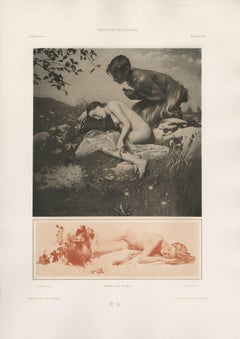
Gerlach
s Allegorien Plate #35: "Love
Wine" Lithograph
Located in Palm Beach, FL
Koloman Moser
(1868 –1918), AUSTRIAN
Instead of applying his flair and art education solely to painting, Koloman Moser embodied the idea of Gesamt Kunstwerk (all-embracing art work) by designing architecture, furniture, jewelry, graphics, and tapestries meant to coordinate every detail of an environment. His work transcended the imitative decorative arts of earlier eras and helped to define Modernism for generations to come. Moser achieved a remarkable balance between intellectual structure (often geometric) and hedonistic luxury.
Collaborating with Gustav Klimt and Josef Hoffmann, the artist was an editor and active contributor to Ver Sacrum, (Sacred Spring), the journal of the Viennese Secession that was so prized for its aesthetics and high quality production that it was considered a work of art. The magazine featured drawings and designs in the Jugendstil style (Youth) along with literary contributions from distinguished writers from across Europe. It quickly disseminated both the spirit and the style of the Secession.
In 1903 Moser and Hoffmann founded and led the Wiener Werkstatte (Viennese Workshop) a collective of artisans that produced elegant decorative arts items, not as industrial prototypes but for the purpose of sale to the public. The plan, as idealistic then as now, was to elevate the lives of consumers by means of beautiful and useful interior surroundings.
Moser’s influence has endured throughout the century. His design sensibility is evident from the mid-century modern furniture of the 1950s and ‘60s to the psychedelic rock posters...
Category
1890s Vienna Secession Prints and Multiples
Materials
Lithograph
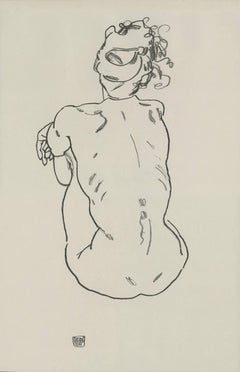
E. Strache, Handzeichnungen folio, "Female Nude, Back View" Collotype plate
Located in Palm Beach, FL
after Egon Schiele (1890 – 1918), AUSTRIA
“ART CANNOT BE MODERN, ART IS PRIMORDIALLY ETERNAL.” -SCHIELE
Defiantly iconoclastic in life and art, Egon Schiele is esteemed for his mas...
Category
1920s Vienna Secession Prints and Multiples
Materials
Paper
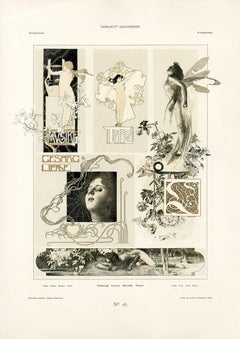
Gerlach
s Allegorien Plate #20: "Song, Love, Music, Dance" Lithograph
Located in Palm Beach, FL
Koloman Moser
(1868 –1918), AUSTRIAN
Instead of applying his flair and art education solely to painting, Koloman Moser embodied the idea of Gesamt Kunstwerk (all-embracing art w...
Category
1890s Vienna Secession Prints and Multiples
Materials
Lithograph
Astronomy, Plate 120 from Gerlach
s Allegorien, Vienna Secession lithograph
By Hanus Schwaiger
Located in Chicago, IL
Allegorien-Neue Folge was a serialized publication of artworks by a group of Viennese artists and students beginning in 1897. Martin Gerlach, its publisher, was inspired by the new rise of modernist design in Vienna and selected those who were demonstrating a new command of the style to contribute works to the series, including Gustav Klimt, Koloman Moser, Carl Otto Czeschka, and Hanus Schwaiger. Each plate explores a different theme or collection of topics, such as dance, astronomy, electricity, and graphic arts, which brought a new aesthetic of design to the traditional allegory genre.
Stone lithograph of Hanus Schwaiger’s Astronomie, published as Plate 102 in Gerlach’s Allegorien...
Category
1890s Vienna Secession Prints and Multiples
Materials
Lithograph
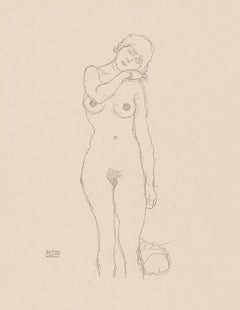
Standing nude, Gustav Klimt Handzeichnungen (Sketch), Thyrsos Verlag, 1922
Located in Chicago, IL
Original collotype lithograph of a figure drawing from Gustav Kilmt’s handzeichnungen (sketch) in 1922 by Thyrsos Verlag, Leipzig and Vienna, in an edition of 375. This artwork is pr...
Category
1920s Vienna Secession Prints and Multiples
Materials
Paper, Lithograph
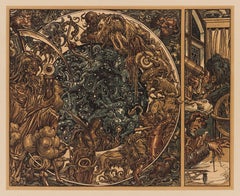
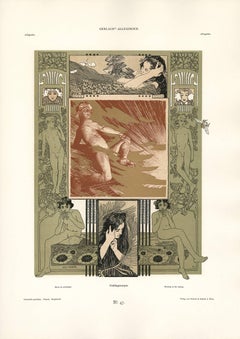
Gerlach
s Allegorien Plate #47: "Morning in the Spring" Lithograph
Located in Palm Beach, FL
Koloman Moser
(1868 –1918), AUSTRIAN
Instead of applying his flair and art education solely to painting, Koloman Moser embodied the idea of Gesamt Kunstwerk (all-embracing art work) by designing architecture, furniture, jewelry, graphics, and tapestries meant to coordinate every detail of an environment. His work transcended the imitative decorative arts of earlier eras and helped to define Modernism for generations to come. Moser achieved a remarkable balance between intellectual structure (often geometric) and hedonistic luxury.
Collaborating with Gustav Klimt and Josef Hoffmann, the artist was an editor and active contributor to Ver Sacrum, (Sacred Spring), the journal of the Viennese Secession that was so prized for its aesthetics and high quality production that it was considered a work of art. The magazine featured drawings and designs in the Jugendstil style (Youth) along with literary contributions from distinguished writers from across Europe. It quickly disseminated both the spirit and the style of the Secession.
In 1903 Moser and Hoffmann founded and led the Wiener Werkstatte (Viennese Workshop) a collective of artisans that produced elegant decorative arts items, not as industrial prototypes but for the purpose of sale to the public. The plan, as idealistic then as now, was to elevate the lives of consumers by means of beautiful and useful interior surroundings.
Moser’s influence has endured throughout the century. His design sensibility is evident from the mid-century modern furniture of the 1950s and ‘60s to the psychedelic rock posters...
Category
1890s Vienna Secession Prints and Multiples
Materials
Paper
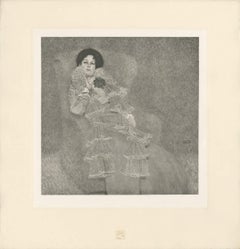
H.O. Miethke Das Werk folio "Portrait of Marie Henneberg" collotype print
Located in Palm Beach, FL
DAS WERK GUSTAV KLIMTS, a portfolio of 50 prints, ten of which are multicolor collotypes on chine colle paper laid down on hand-made heavy cream wove paper with deckled edges; under ...
Category
Early 1900s Vienna Secession Prints and Multiples
Materials
Paper
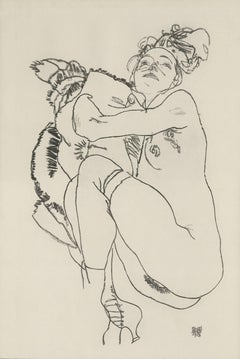
E. Strache, Handzeichnungen folio, "Reclining Female Nude Glancing Up" Collotype
Located in Palm Beach, FL
after Egon Schiele (1890 – 1918), AUSTRIA
“ART CANNOT BE MODERN, ART IS PRIMORDIALLY ETERNAL.” -SCHIELE
Defiantly iconoclastic in life and art, Egon Schiele is esteemed for his mas...
Category
1920s Vienna Secession Prints and Multiples
Materials
Paper
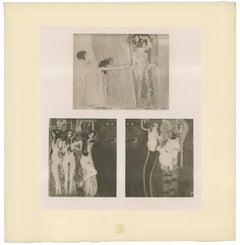
H.O. Miethke Das Werk folio "Beethovan Frieze 1
2" set of collotype prints
Located in Palm Beach, FL
DAS WERK GUSTAV KLIMTS, a portfolio of 50 prints, ten of which are multicolor collotypes on chine colle paper laid down on hand-made heavy cream wove paper with deckled edges; under ...
Category
Early 1900s Vienna Secession Prints and Multiples
Materials
Paper
R. Layni, Zeichnungen folio, "Reclining Nude w/Green Stockings" Collotype PL XI
Located in Palm Beach, FL
Egon Schiele (1890 – 1918), AUSTRIA
“ART CANNOT BE MODERN, ART IS PRIMORDIALLY ETERNAL.” -SCHIELE
Defiantly iconoclastic in life and art, Egon Schiele is esteemed for his masterful...
Category
1910s Vienna Secession Prints and Multiples
Materials
Paper
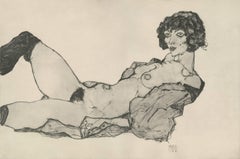
E. Strache, Handzeichnungen folio, "Female Nude, Walking" Collotype plate
Located in Palm Beach, FL
after Egon Schiele (1890 – 1918), AUSTRIA
“ART CANNOT BE MODERN, ART IS PRIMORDIALLY ETERNAL.” -SCHIELE
Defiantly iconoclastic in life and art, Egon Schiele is esteemed for his mas...
Category
1920s Vienna Secession Prints and Multiples
Materials
Paper
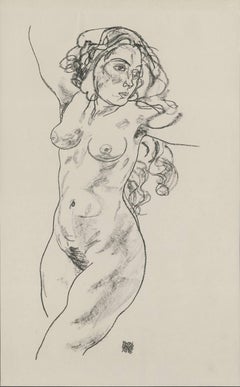
H.O. Miethke Das Werk folio "Portrait of Adele Bloch-Bauer II" collotype print
Located in Palm Beach, FL
DAS WERK GUSTAV KLIMTS, a portfolio of 50 prints, ten of which are multicolor collotypes on chine colle paper laid down on hand-made heavy cream wove paper with deckled edges; under ...
Category
Early 1900s Vienna Secession Prints and Multiples
Materials
Paper
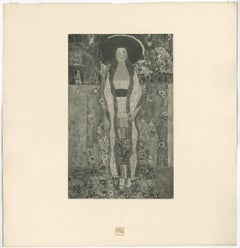
Death and Life by Gustav Klimt, Das Werk lifetime collotype, 1908-1912
By Gustav Klimt
Located in Chicago, IL
Original collotype created from Gustav Klimt’s Death and Life, painted in 1908. Published and edited by Verlag H.O. Miethke and printed by k.k. Hof- und St...
Category
Early 1900s Vienna Secession Prints and Multiples
Materials
Paper
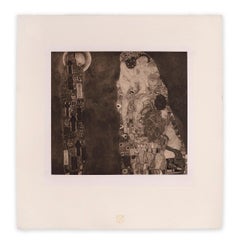
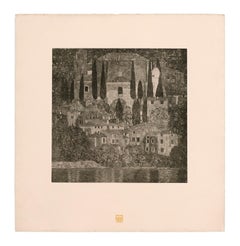
Church in Cassone by Gustav Klimt, Das Werk lifetime collotype, 1908-1912
By Gustav Klimt
Located in Chicago, IL
Original collotype created from Gustav Klimt’s Church in Cassone, painted in 1913. Published and edited by Verlag H.O. Miethke and printed by k.k. Hof- und Staatsdruckerei, Vienna, in an edition of 300.
Between 1908 and 1914, H.O. Miethke published Das Werk Gustav Klimts...
Category
Early 1900s Vienna Secession Prints and Multiples
Materials
Paper
Seated woman, Gustav Klimt Handzeichnungen (Sketch) collotype lithograph, 1922
Located in Chicago, IL
Original 1922 collotype lithograph of a woman draped in fabric, created from Gustav Kilmt’s handzeichnungen (sketch). Published by Thyrsos Verlag, Leipzig and Vienna, in an edition o...
Category
1920s Vienna Secession Prints and Multiples
Materials
Paper, Lithograph

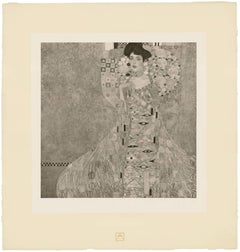
H.O. Miethke Das Werk folio "Portrait of Adele Bloch-Bauer" collotype print
Located in Palm Beach, FL
This listing is for a single print, pictured, from the Das Werk portfolio by Gustav Klimt and k.k. Hof-und Staatsdruckerei, published by H.O. Miethke. Gu...
Category
Early 1900s Vienna Secession Prints and Multiples
Materials
Paper
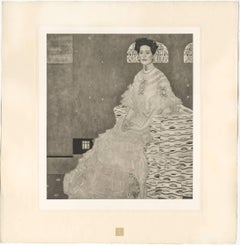
H.O. Miethke Das Werk folio "Portrait of Fritza Riedler" collotype print
Located in Palm Beach, FL
DAS WERK GUSTAV KLIMTS, a portfolio of 50 prints, ten of which are multicolor collotypes on chine colle paper laid down on hand-made heavy cream wove paper with deckled edges; under ...
Category
Early 1900s Vienna Secession Prints and Multiples
Materials
Paper
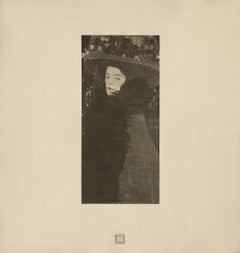
Max Eisler Eine Nachlese folio "Lady in a Feathered Hat" collotype
Located in Palm Beach, FL
After Gustav Klimt, Max Eisler Plate #2, Dame mit Blumenhut (aka The Violet Hat); sepia monochrome collotype after the 1909 painting in oil on canvas.
...
Category
1930s Vienna Secession Prints and Multiples
Materials
Paper
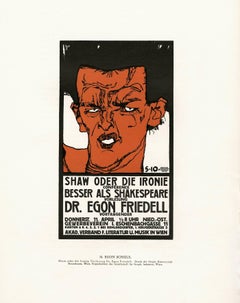
Ottokar Mascha Folio, plate 18: "Shaw Oder Die Ironie Poster" by Egon Schiele
By Egon Schiele
Located in Palm Beach, FL
after EGON SCHIELE (1890-1918) SHAW ODER DIE IRONIE POSTER, C. 1912, (In Mascha, no. 18) Schiele’s poster is an advertisement for a lecture to be given ...
Category
1910s Vienna Secession Prints and Multiples
Materials
Lithograph
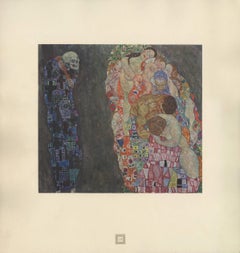
Max Eisler Eine Nachlese folio “Allegory of Life and Death” collotype print
Located in Palm Beach, FL
After Gustav Klimt, Max Eisler #18, Der Tod und das Leben; multi-color collotype after original painting (1910-1916) in oil on canvas.
GUSTAV KLIMT EINE NACHLESE (GUSTAV KLIMT AN AF...
Category
1930s Vienna Secession Prints and Multiples
Materials
Paper
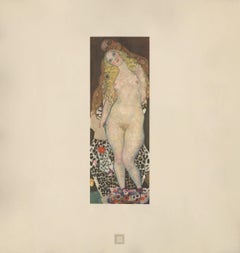
Max Eisler Eine Nachlese folio “Adam
Eve” collotype print
Located in Palm Beach, FL
After Gustav Klimt, Max Eisler #20, Adam und Eva; multi-color collotype after unfinished 1917/18 painting in oil on canvas.
GUSTAV KLIMT EINE NACHLESE (GUSTAV KLIMT AN AFTERMATH), a...
Category
1930s Vienna Secession Prints and Multiples
Materials
Paper
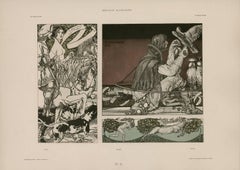
Gerlach
s Allegorien Plate #85: "Hunting" Lithograph by Carl Otto Czeschka
Located in Palm Beach, FL
after Carl Otto Czeschka, (1878-1960), Austrian
A leading member of the Vienna Secession and later the Wiener Werkstätte (Viennese Workshop), Carl Otto Czeschka was a vital figu...
Category
1890s Vienna Secession Prints and Multiples
Materials
Lithograph
Gustav Klimt "Water Serpent Study" collotype from Funfundzwanzig Handzeichnungen
By Gustav Klimt
Located in Palm Beach, FL
Title page numbered: 263/450. Collotype is presented in a handmade, gold-leaf frame.
Category
1910s Vienna Secession Prints and Multiples
Materials
Paper
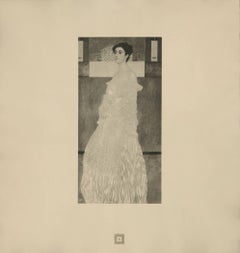
Max Eisler Eine Nachlese folio "Portrait of Baroness Wittgenstein" collotype
Located in Palm Beach, FL
After Gustav Klimt, Max Eisler Plate #4, Bildnis Baronin Wittgenstein; dark grey monochrome collotype after the 1905 painting in oil on canvas.
GUSTAV KLIMT EINE NACHLESE (GUSTAV KLIMT AN AFTERMATH), a portfolio of 30 collotypes prints, 15 are multi-color and 15 are monochrome, on chine colle paper laid down on heavy cream-wove paper with deckled edges; Max Eisler, Editor-Publisher; Osterreichischer Staatsdruckerei (Austrian State Printing Office), Printer; in a limited edition of 500 numbered examples of which: 200 were printed in German, 150 were printed in French and 150 were printed in English; Vienna, 1931.
2018 marks the 100th anniversary of Gustav Klimt’s death. It is a fitting time to reflect upon the enduring legacy and deep impact of his art. Recognizing this need for posterity with uncanny foresight, the publication of Gustav Klimt: An Aftermath (Eine Nachlese) provides a rare collection of work after Klimt which has proven to be an indispensable tool for Klimt scholarship as well as a source for pure visual delight.
Approximately 25 percent of the original works featured in the Aftermath portfolio have since been lost. Of those 30, six were destroyed by fire on 8 May 1945. On that fateful final day of WWII, the retreating Feldherrnhalle, a tank division of the German Army, set fire to the Schloss Immendorf which was a 16th century castle in Lower Austria used between 1942-1945 to store objects of art. All three of Klimt’s Faculty Paintings: Philosophy, Medicine and Jurisprudence (1900-1907), originally created for the University of Vienna, were on premises at that time. Also among the inventory of Klimt paintings in storage there was art which had been confiscated by the Nazis. One of the most significant confiscated collections was the Lederer collection which featured many works by Gustav Klimt such as Girlfriends II and Garden Path with Chickens...
Category
1930s Vienna Secession Prints and Multiples
Materials
Paper
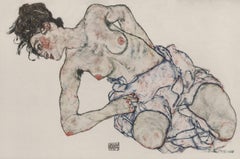
E. Strache, Handzeichnungen folio, "Kneeling Female, Semi-Nude" Collotype plate
Located in Palm Beach, FL
after Egon Schiele (1890 – 1918), AUSTRIA
“ART CANNOT BE MODERN, ART IS PRIMORDIALLY ETERNAL.” -SCHIELE
Defiantly iconoclastic in life and art, Egon Schiele is esteemed for his mas...
Category
1920s Vienna Secession Prints and Multiples
Materials
Paper
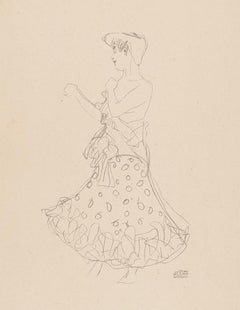
Woman undressing, Gustav Klimt Handzeichnungen (Sketch), Thyrsos Verlag, 1922
Located in Chicago, IL
Original collotype lithograph of a woman undressing from Gustav Kilmt’s handzeichnungen (sketch) in 1922 by Thyrsos Verlag, Leipzig and Vienna, in an edition of 375.
Klimt’s mastery of depth is most evident in the gentleness of his linework. Without the aid of shadow or the subtlety of values, the gestures of line allow the viewer a sense of a three-dimensional person or object. The meticulous lithographic process used to create Klimt’s Handzeichnungen portfolio ensures exceptionally crisp markings bearing a strong resemblance to the original sketches. This series showcases the quintessence behind Klimt’s signature visual style. This artwork arrives accompanied by a certificate of authenticity.
Century Guild has curated collections of Gustav Klimt’s printed...
Category
1920s Vienna Secession Prints and Multiples
Materials
Paper, Lithograph
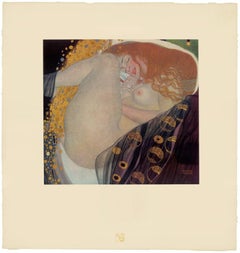
H.O. Miethke Das Werk folio "Danaë" collotype print
Located in Palm Beach, FL
Danaë, no. 2 from the fourth installment of Das Werk Gustav Klimts
Danae originates from Greek mythology. She is the daughter of the King of Argos. Because a...
Category
Early 1900s Vienna Secession Prints and Multiples
Materials
Paper
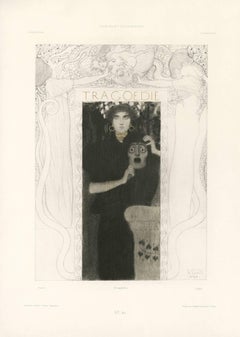
Gerlach
s Allegorien, plate #66: "Tragedy" Lithograph, Gustav Klimt.
By Gustav Klimt
Located in Palm Beach, FL
Gustav Klimt created this image for inclusion in Gerlach & Schenk’s Allegorien the year before he formed the Vienna Secession. While this design is similar to his other inclusions, L...
Category
1890s Vienna Secession Prints and Multiples
Materials
Lithograph
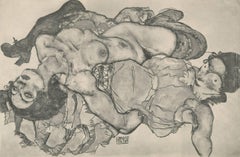
R. Layni, Zeichnungen folio, "Two Girls, Lying Entwined" Collotype plate VIII
Located in Palm Beach, FL
Egon Schiele (1890 – 1918), AUSTRIA
“ART CANNOT BE MODERN, ART IS PRIMORDIALLY ETERNAL.” -SCHIELE
Defiantly iconoclastic in life and art, Egon Schiele is esteemed for his masterful...
Category
1910s Vienna Secession Prints and Multiples
Materials
Paper
R. Layni, Zeichnungen folio, "Male Nude in Red Loincloth" Collotype plate II
Located in Palm Beach, FL
After Egon Schiele (1890 – 1918), AUSTRIA
“ART CANNOT BE MODERN, ART IS PRIMORDIALLY ETERNAL.” -SCHIELE
Defiantly iconoclastic in life and art, Egon Schiele is esteemed for his mas...
Category
1910s Vienna Secession Prints and Multiples
Materials
Paper

Bust of a Woman, Gustav Klimt Handzeichnungen (Sketch), Thyrsos Verlag, 1922
Located in Chicago, IL
Original collotype lithograph of Gustav Kilmt’s Bust of a Woman, published in the 1922 Handzeichnungen portfolio by Thyrsos Verlag, Leipzig and Vienna, in an edition of 375. This art...
Category
1920s Vienna Secession Prints and Multiples
Materials
Paper, Lithograph

Beethoven Frieze (detail) by Gustav Klimt, Das Werk collotype, 1908-1912
By Gustav Klimt
Located in Chicago, IL
Original collotype created from a detail of Gustav Klimt’s Beethoven Frieze. Published and edited by Verlag H.O. Miethke and printed by k.k. Hof- und Staatsdruckerei, Vienna, in an e...
Category
Early 1900s Vienna Secession Prints and Multiples
Materials
Paper
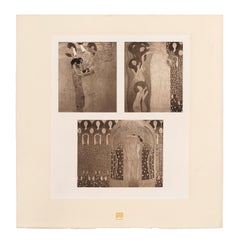
H.O. Miethke Das Werk folio "The Hope II" collotype print
Located in Palm Beach, FL
DAS WERK GUSTAV KLIMTS, a portfolio of 50 prints, ten of which are multicolor collotypes on chine colle paper laid down on hand-made heavy cream wove paper with deckled edges; under ...
Category
Early 1900s Vienna Secession Prints and Multiples
Materials
Paper
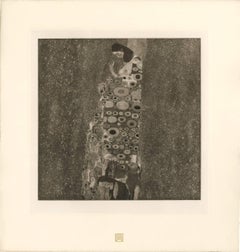
Max Eisler Eine Nachlese folio "Gastein" collotype
Located in Palm Beach, FL
After Gustav Klimt, Max Eisler Plate #21, Gastein; grey-green monochrome collotype after the 1917 painting in oil on canvas. Original destroyed by fire May 1945.
GUSTAV KLIMT EINE NACHLESE (GUSTAV KLIMT AN AFTERMATH), a portfolio of 30 collotypes prints, 15 are multi-color and 15 are monochrome, on chine colle paper laid down on heavy cream-wove paper with deckled edges; Max Eisler, Editor-Publisher; Osterreichischer Staatsdruckerei (Austrian State Printing Office), Printer; in a limited edition of 500 numbered examples of which: 200 were printed in German, 150 were printed in French and 150 were printed in English; Vienna, 1931.
2018 marks the 100th anniversary of Gustav Klimt’s death. It is a fitting time to reflect upon the enduring legacy and deep impact of his art. Recognizing this need for posterity with uncanny foresight, the publication of Gustav Klimt: An Aftermath (Eine Nachlese) provides a rare collection of work after Klimt which has proven to be an indispensable tool for Klimt scholarship as well as a source for pure visual delight.
Approximately 25 percent of the original works featured in the Aftermath portfolio have since been lost. Of those 30, six were destroyed by fire on 8 May 1945. On that fateful final day of WWII, the retreating Feldherrnhalle, a tank division of the German Army, set fire to the Schloss Immendorf which was a 16th century castle in Lower Austria used between 1942-1945 to store objects of art. All three of Klimt’s Faculty Paintings: Philosophy, Medicine and Jurisprudence (1900-1907), originally created for the University of Vienna, were on premises at that time. Also among the inventory of Klimt paintings in storage there was art which had been confiscated by the Nazis. One of the most significant confiscated collections was the Lederer collection which featured many works by Gustav Klimt such as Girlfriends II and Garden Path with Chickens. In many instances, Aftermath is our only link to these lost treasures.
Max Eisler (1881-1937), the publisher of the 1931 Aftermath portfolio, was an art historian at Vienna University specializing in modern and contemporary arts and crafts whose 1920 book on Klimt was the first Klimt monograph. He saw An Aftermath as filling-in important gaps left by the earlier print portfolios which had only featured Klimt up to 1913 and which had glossed over major art projects such as the Tree of Life frieze for the Palais Stoclet. And whereas only 10 of the 50 prints from the earlier portfolios published by H.O. Miethke were made in intricate multi-color images, Eisler augmented the earlier format by featuring half of the 30 images in stunning multi-colored collotypes. Understanding the fragile nature of the collotype printing process also reinforces this project’s distinctive and exceptional characteristics. Fragile collotype plates can not be reused. As such, this necessitates the completion of a run on the first go and also dictates a limited production number. Printed by hand, the collotypes required deft handling by the printer, Osterreichische Staatsdruckerei. A complicated and lengthy process involving gelatin colloids mixed with dichromates, the creation of 16 color separation thin glass filters to achieve the light-sensitive internegative images which could faithfully capture all of the painting’s tonal gradations and colors, exposure to actinic light, and delicate chine collie papers which allowed for greater color saturation, the printer’s collaborative role in capturing and transmitting Klimt’s nuanced paint strokes is nothing short of remarkable.
The Österreichische Staatsdruckerei (Austrian State Printing Office), was the successor to the KK Hof -und Staatsdruckerei which was founded by Emperor Franz I in 1804 and whose collotype printing innovations of Klimt’s art...
Category
1930s Vienna Secession Prints and Multiples
Materials
Paper
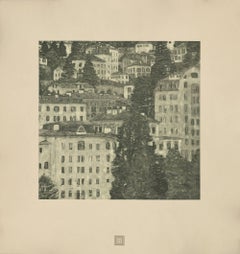
Max Eisler Eine Nachlese folio "Baby" collotype
Located in Palm Beach, FL
After Gustav Klimt, Max Eisler Plate #25, Baby; black & white collotype after the 1917 painting in oil on canvas.
GUSTAV KLIMT EINE NACHLESE (GUSTAV KLIMT ...
Category
1930s Vienna Secession Prints and Multiples
Materials
Paper
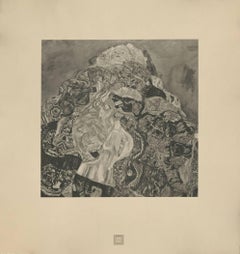
The Thirst, Plate 52 from Gerlach
s Allegorien, Vienna Secession lithograph
Located in Chicago, IL
Wilhelm List, a friend and follower of Gustav Klimt, was a founder and leading member of the Vienna Secession and contributor to its official magazine, Ver Sacrum...
Category
1890s Vienna Secession Prints and Multiples
Materials
Lithograph
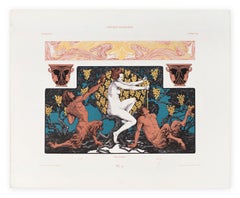
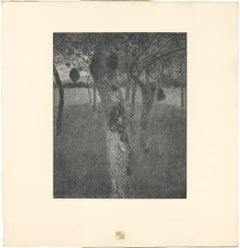
H.O. Miethke Das Werk folio "Orchard in the Evening" collotype print
Located in Palm Beach, FL
DAS WERK GUSTAV KLIMTS, a portfolio of 50 prints, ten of which are multicolor collotypes on chine colle paper laid down on hand-made heavy cream wove paper with deckled edges; under ...
Category
Early 1900s Vienna Secession Prints and Multiples
Materials
Paper
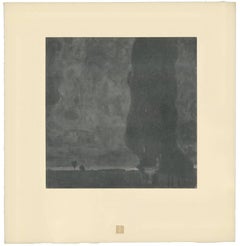
H.O. Miethke Das Werk folio "The Great Poplar II (Thunderstorm)" collotype print
Located in Palm Beach, FL
DAS WERK GUSTAV KLIMTS, a portfolio of 50 prints, ten of which are multicolor collotypes on chine colle paper laid down on hand-made heavy cream wove paper with deckled edges; under ...
Category
Early 1900s Vienna Secession Prints and Multiples
Materials
Paper
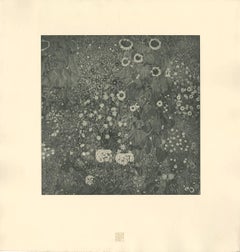
H.O. Miethke Das Werk folio "Farm Garden With Sunflowers" collotype print
Located in Palm Beach, FL
DAS WERK GUSTAV KLIMTS, a portfolio of 50 prints, ten of which are multicolor collotypes on chine colle paper laid down on hand-made heavy cream wove paper with deckled edges; under ...
Category
Early 1900s Vienna Secession Prints and Multiples
Materials
Paper
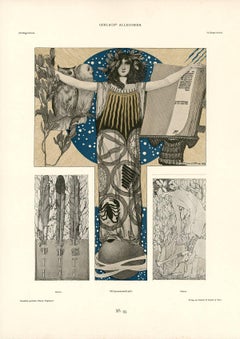
Gerlach
s Allegorien Plate #93: "Science" Lithograph by Carl Otto Czeschka
Located in Palm Beach, FL
after Carl Otto Czeschka, (1878-1960), Austrian
A leading member of the Vienna Secession and later the Wiener Werkstätte (Viennese Workshop), Carl Otto Czeschka was a vital figu...
Category
1890s Vienna Secession Prints and Multiples
Materials
Lithograph
Standing nude, Gustav Klimt Handzeichnungen (Sketch), Thyrsos Verlag, 1922
Located in Chicago, IL
Original collotype lithograph of a figure drawing from Gustav Kilmt’s handzeichnungen (sketch) in 1922 by Thyrsos Verlag, Leipzig and Vienna, in an edition of 375. This artwork is pr...
Category
1920s Vienna Secession Prints and Multiples
Materials
Paper, Lithograph
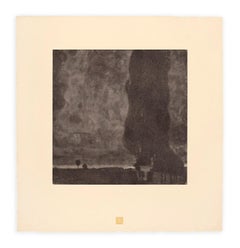
Thunderstorm (The Large Poplar II) by Gustav Klimt, Das Werk lifetime collotype
By Gustav Klimt
Located in Chicago, IL
Original collotype created from Gustav Klimt’s Approaching Thunderstorm (The Large Poplar II), painted in 1903. Published and edited by Verlag H.O. Miethke and printed by k.k. Hof- und Staatsdruckerei, Vienna, in an edition of 300.
Between 1908 and 1914, H.O. Miethke published Das Werk Gustav Klimts, a folio of collotypes representing Gustav Klimt’s most notable works leading up to 1913. Klimt’s original oil paintings were painstakingly reproduced as collotypes on a handmade, deckled-edge cream wove paper using a complex gravure process overseen by master technicians as well as the artist himself. Each image presented in the folio was assigned its own unique signet, which was designed by Klimt and struck below the image using a technique similar to letterpress. The signet corresponded to a matching signet in the justification page which detailed the piece’s size, location, and owner.
Published under the artist’s direct supervision, this series allowed Klimt, who had completely divorced himself from public commissions following the outcry from his University of Vienna paintings, to more effectively present his artworks to institutions and patrons across the world. A testament to the masterful design and printmaking demonstrated by Das Werk Gustav Klimts, Emperor Franz Joseph himself purchased the first copy of the folio.
Klimt’s The Swamp...
Category
Early 1900s Vienna Secession Prints and Multiples
Materials
Paper
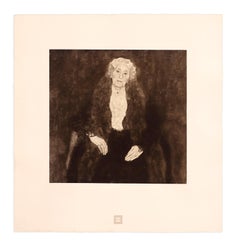
Portrait of Charlotte Pulitzer, Gustav Klimt An Aftermath collotype, 1931
Located in Chicago, IL
Original 1931 collotype created from Gustav Kilmt’s Portrait of Charlotte Pulitzer, oil on canvas, 1915. Published by Max Eisler and printed by Österreichischer Staatsdruckerei (Austrian State Printing Office), Vienna, in an edition of 500.
In 1931, Max Eisler published the most notable posthumous collection of Gustav Klimt works to date. Using a complex gravure process, Klimt’s original...
Category
1930s Vienna Secession Prints and Multiples
Materials
Paper
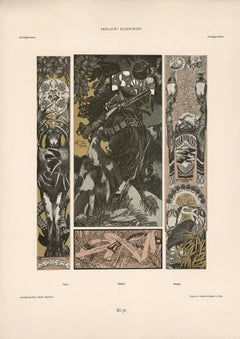
Gerlach
s Allegorien Plate #78: "Hunting" Lithograph by Carl Otto Czeschka
Located in Palm Beach, FL
after Carl Otto Czeschka, (1878-1960), Austrian
A leading member of the Vienna Secession and later the Wiener Werkstätte (Viennese Workshop), Carl Otto Czeschka was a vital figu...
Category
1890s Vienna Secession Prints and Multiples
Materials
Lithograph
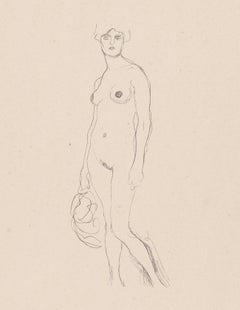
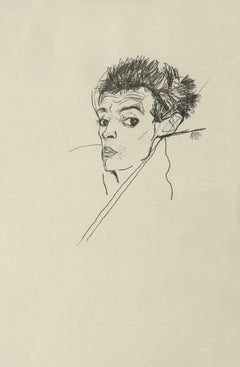
E. Strache, Handzeichnungen folio, "Self-Portrait" Collotype plate
Located in Palm Beach, FL
after Egon Schiele (1890 – 1918), AUSTRIA
“ART CANNOT BE MODERN, ART IS PRIMORDIALLY ETERNAL.” -SCHIELE
Defiantly iconoclastic in life and art, Egon Schiele is esteemed for his mas...
Category
1920s Vienna Secession Prints and Multiples
Materials
Paper
Vienna Secession prints and multiples for sale on 1stDibs.
Find a wide variety of authentic Vienna Secession prints and multiples available for sale on 1stDibs. Works in this style were very popular during the 21st Century and Contemporary, but contemporary artists have continued to produce works inspired by this movement. If you’re looking to add prints and multiples created in this style to introduce contrast in an otherwise neutral space in your home, the works available on 1stDibs include elements of orange and other colors. Many Pop art paintings were created by popular artists on 1stDibs, including Gustav Klimt
K.K. Hof-und Staatsdruckerei, (after) Gustav Klimt, (after) Egon Schiele, and Gustav Klimt. Frequently made by artists working with Paper, and Lithograph and other materials, all of these pieces for sale are unique and have attracted attention over the years. Not every interior allows for large Vienna Secession prints and multiples, so small editions measuring 3 inches across are also available. Prices for prints and multiples made by famous or emerging artists can differ depending on medium, time period and other attributes. On 1stDibs, the price for these items starts at $250 and tops out at $125,000, while the average work sells for $3,500.
Still Thinking About These?
All Recently ViewedMore Ways To Browse
Andy Warhol Coke
Andy Warhol Fish
Andy Warhol Flowers Poster
Andy Warhol Movie Poster
Architecture Prints Georgian
Bearbrick Pink
Dali Milky Way
Frank Romero On Sale
Gilles Aillaud
Gregory Colbert
Gretchen Dow Simpson
Gwenda Morgan
Jean Cocteau 1957
Jim Webb
Kaws Set 2 Clean Slate
Ken Rush
Lebanon Poster
Lebanon Vintage Poster