Men Figurative Sculptures
to
159
1,038
443
350
146
304
Overall Width
to
Overall Height
to
74
284
671
1,250
39
25
47
65
24
19
38
52
60
71
24
977
161
70
43
40
23
20
17
11
6
4
3
2
2
4,029
2,356
2,282
1,661
1,654
1,321
789
753
681
518
405
356
354
294
282
273
272
254
200
174
1,659
1,537
265
213
195
42
40
39
37
33
2
12
1,158
956
Art Subject: Men
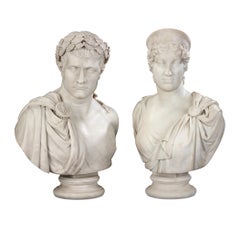
Pair of Carrara Marble Busts of the Emperor Napoleon and Empress Marie Louise
Located in New Orleans, LA
"I am a true Roman Emperor; I am of the best race of the Caesars—those who are founders." –Napoleon Bonaparte, 1812
Among the most iconic and celebrated figures in history, Napoleon...
Category
19th Century Figurative Sculptures
Materials
Marble
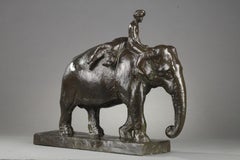
Return from the Tiger hunt
Located in PARIS, FR
"Return from the Hunt"
also named '"Return from the Tiger hunt"
by Roger GODCHAUX (1878-1958)
Remarkable bronze group with a nuanced dark greenish brown patina
Signed on the base "...
Category
1930s Art Deco Figurative Sculptures
Materials
Bronze
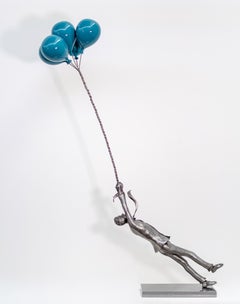
Clear Skies Ahead - surreal, figurative, steel and fiberglass sculpture
Located in Bloomfield, ON
This figurative indoor sculpture of a male is hand forged in steel.
The uniquely beautiful sculptural work of multidisciplinary artist Derya Ozparlak has been exhibited in collectio...
Category
2010s Contemporary Figurative Sculptures
Materials
Steel
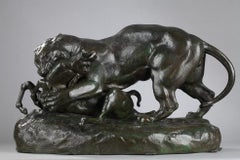
Tiger surprising an antelope
Located in PARIS, FR
Antoine-Louis BARYE (1796-1875)
Tiger surprising an antelope
Bronze with nuanced dark greenish brown patina
Signed on the base " Barye "
Cast by Barye's own workshop (conducted in t...
Category
1870s French School Figurative Sculptures
Materials
Bronze
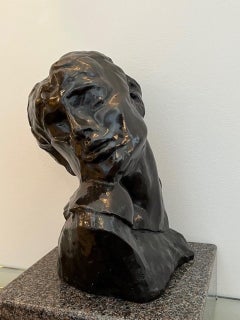
Head of Lust (Tete de la Luxure)
Located in New York, NY
Originally conceived in 1880-82 for the tympanum of the Gates of Hell, where she is cradled in the arms of L'homme qui tombe, as well as crouching in slightly varied form to the lef...
Category
1880s Impressionist Figurative Sculptures
Materials
Bronze
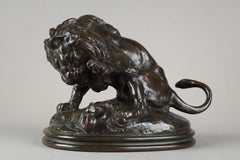
Lion and snake
Located in PARIS, FR
Lion and snake n°3
by Antoine-Louis Barye (1796-1875)
Bronze sculpture with a nuanced dark greenish brown patina
signed "Barye" on the base
old edition cast – probably from the Bary...
Category
1860s French School Figurative Sculptures
Materials
Bronze
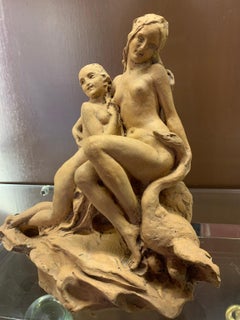
Terracotta figurativa italiana a tema mitologico dei primi del Novecento
Located in Florence, IT
Piccola terracotta a soggetto mitologico firmata sul retro sulla base "Zambini", che per la grafia (in particolare la Z che ricorda una F) permette di identificar...
Category
Early 20th Century Renaissance Nude Sculptures
Materials
Terracotta
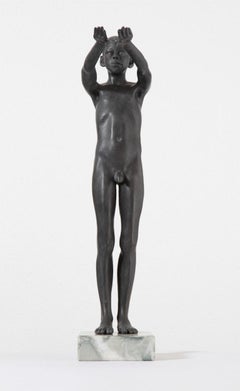
Volo Standing Male Nude Sculpture Figure Bronze Boy - In Stock
Located in Utrecht, NL
Volo Standing Male Nude Sculpture Figure Bronze Boy - In Stock
Volo is a standing male nude figure in bronze, a boy reaching, in brown patina. This sculpture is suitable for indoors ...
Category
21st Century and Contemporary Contemporary Nude Sculptures
Materials
Bronze
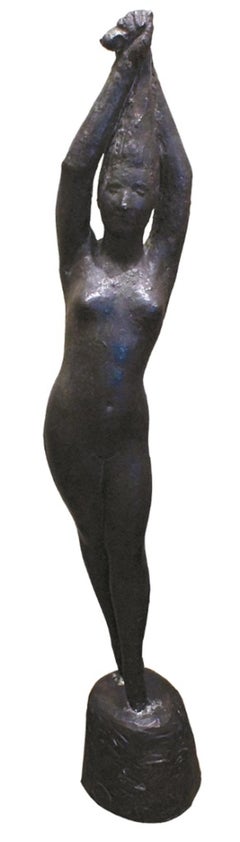
The Dancer - Sculpture by Giacomo Manzù - 1957
Located in Roma, IT
The Dancer is a sculpture realized by Giacomo Manzù in 1957. Unique piece.
Exhibitions:
Manzù. L’Uomo e l’Artista, Palazzo Venezia, Roma 2002-2003
Manzù-Marino. Gli ultimi moderni,...
Category
1950s Modern Figurative Sculptures
Materials
Bronze
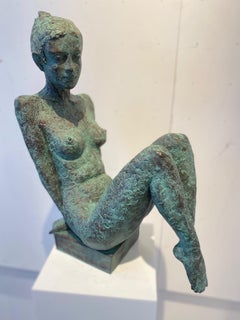
At the Water (Am Wasser) contemporary bronze sculpture, nude female lifted legs
Located in Hamburg, DE
"At the Water" is a larger free-standing bronze sculpture, suitable both for the inside and outside. Edition 18, signed, numbered and dated on the bottom. Certificate.
The sculptress Susanne Kraisser is to be considered as part of the great modern figurative tradition. She was born in 1977 in Rosenheim, Southern Germany. She studied both at the Academy of Fine Arts Nuremberg and the University of Arts in Bremen. She graduated with distinction in 2007 in Nuremberg and received her Diploma with distinction in 2008 in Bremen. She has won numerous awards and exhibits nationally as well as internationally.
Artist Statement: For me, sculpture is particularly shape and material, volume and size, space, movement and statics.
I focus on the ‘female body’, presenting it either as an intimate miniature or on a monumental scale – each time as a solitary figure.
In terms of content, my work focuses on identifying and combining polarities, such as instability and strength, fragility and solidity, activity and passivity, movement and statics, balance and volume, and dependence and autarchy.
I work predominantly with the materials bronze, aluminium and wood. The small miniatures are made from wax and are then cast in bronze as part of what is known as the wax smelting process. Large-scale pieces are similarly cast in aluminium or created directly out of wood. The various work processes and tools determine the appearance of the surface; for wax, it’s my hands, and for wood, it’s my chainsaw.
Each material is a new challenge for me. My previous wood-sculpting studies involved respecting the material’s limits to create craft of solid quality in keeping with the material.
But this is where the intense discussion and its limit become clear. I fight with the material, and a lot of things go wrong. It becomes my opponent, whose limits I test out and reset if necessary. Cautious movements requiring a lot of physical tension are maintained without losing their inner dynamics.
Amidst the often harmonious external form is a harsh dissonance evidenced by the rough, fragmented design...
Category
21st Century and Contemporary Contemporary Figurative Sculptures
Materials
Bronze
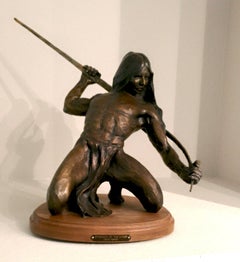
Strength of the Maker maquette 21" high bronze
By Denny Haskew
Located in Loveland, CO
"Strength of the Maker" by Denny Haskew
Figurative Bronze with wood base, ed/25 21x21x14"
Signed and numbered 12/25.
This is a sold-out limited edition available on the secondary ma...
Category
1990s Contemporary Figurative Sculptures
Materials
Bronze
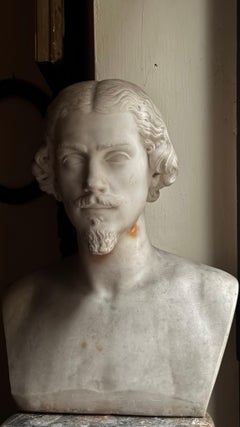
Italian Mid 19th century White Carrara Marble bust. Portrait of young male.
Located in Firenze, IT
Italian Portrait White Marble Bust in a Heroic Attitude.
Carrara statuary Marble.
Tuscan school.
Circa 1850.
Bust depicting a young man with bare shoulders.
This model draws inspira...
Category
Mid-19th Century Academic Figurative Sculptures
Materials
Marble

$3,607 Sale Price
20% Off
Awakening 2/49
Located in Napa, CA
Lorri Acott is a critically acclaimed American sculptor whose impressionistic figurative works are held in prominent private and public collections throughout the United States and ...
Category
2010s Contemporary Figurative Sculptures
Materials
Bronze
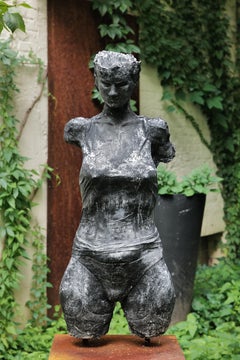
Life Size Female Torso – Contemporary Figurative Sculpture by Zura
Located in Brooklyn, NY
Zura – Life‑Size Female Figure (2023), Plaster
Dimensions: 39 × 16 × 12 in │ 99 × 41 × 30 cm
Medium: Hand-modeled plaster (also available in bronze)
Signature: Hand-signed by the art...
Category
21st Century and Contemporary Contemporary Figurative Sculptures
Materials
Bronze
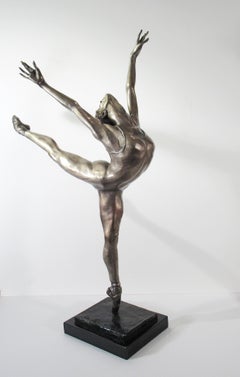
Arabesque, Ballet Dancer
Located in San Francisco, CA
This sculpture titled "Arabesque (Ballet Dancer)" 2001 is a cast bronze sculpture with silver patina by noted contemporary American artist Rebecca Clark. Signature, date and numbering /500 are impressed in the bronze on the deck. The sculpture size without the marble base is 28.25 x 17.75 x 13 inches, with the marble base is 29.5 x 17.75 x 13 inches. It is in mint condition.
About the artist:
Rebecca A. Clark is a Fine Artist and Creative Director with over 20 years of professional experience working in the fine art field in New York City. Her masterful artworks are collected by prominent art collectors worldwide. Rebecca specializes in figurative bronze sculptures, oil paintings, drawings and monumental works of art that embody dynamic strength and classic iconic beauty.
Her artworks range from sensuous figurative sculptures to magnificent heroic size monuments. Commissioned works include “Battling Stallions”, her 18 ft. tall monumental bronze sculpture at the luxury gated development “Le Chevalier” in Barrington Heights, West Linn, Oregon, as well as her elegant 9 ft. tall ballerina bronze sculpture titled “Arabesque” on public display at the Oregon Ballet Theatre. Exclusive custom created works of art portray diverse concepts and themes for private and corporate collectors. Signature series include: Heroic series (Honoring American military Heroes), Inspirational, Classic Nudes and Romantic among other series and sculpture projects in development.
Rebecca was born an artist and has always had the desire to achieve excellence in all of her endeavors. From a very early age she was immersed in imaginative creative works such as building models of futuristic cities, paintings, sculptures and a multitude of drawings. In 1981, at the age of 17, Rebecca moved from Lake Oswego, Oregon to New York City to pursue a career in fine art and design at the Parsons School of Design. Shortly after she arrived, Rebecca began her professional artistic career assisting the renowned illustrator Antonio Lopez. At age 18, Rebecca was hired by the famed designer Halston, and began working directly with him as a fashion designer and illustrator. Subsequently, she was discovered by the Ford Models agency and traveled around the world as a top international fashion model. Rebecca worked with renowned fashion photographers such as Richard Avedon, Bruce Weber, Steven Meisel, Patrick Demarchelier and others. Rebecca is experienced in working with the major media, including international publications such as Vogue, Harpers Bazaar, Elle, The New York Times and Glamour, among others, as well as in television. She was featured in a national Diet Slice-Style television commercial that was shown during halftime at the 1987 Super Bowl. Rebecca also appeared in top fashion shows in New York City and Paris, France and in international advertising campaigns such as Revlon’s “The Most Unforgettable Women In The World” ads photographed by Richard Avedon.
In 1991, Rebecca left a prestigious modeling career to return to her true creative passion. She began creating a series of beautiful and universally appealing fine bronze sculptures and many commissioned works. In 1998, she began oil painting and studied at the New York Academy of Art, while creating oil paintings depicting the classic nude, equine, inspirational themes and portrait commissions for select art collectors. In 2001, Rebecca developed several digital film projects through her studies in the Film Directors Program at New York University. From 2001 to the present, she continues to create bronze sculptures, drawings, and oil paintings for private art collectors.
In 2011, Rebecca was officially endorsed and directed by the National Special Forces Association to create The National Special Forces Green Beret...
Category
21st Century and Contemporary American Realist Figurative Sculptures
Materials
Bronze
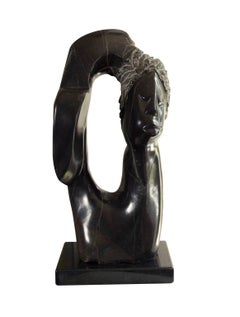
"Mermaid, " Carved Springstone by Farai Darare
By Farai Darare
Located in Milwaukee, WI
"Mermaid" is a unique springstone sculpture by the Shona artist Farai Darare. It depicts a woman's face and an abstracted body that loops around to frame an oval of negative space. This piece is expertly carved to showcase two textures from the same stone. This sculpture weighs 30 pounds (approximately 13.6 kg).
16 3/4" x 8" x 5 1/4" art
30 lbs
Farai Walter Darare started working as a washer and polisher for his father's sculptures when he was seven years old. He worked and studied under the renowned Shona sculptors Chikumbirike, Runyanga, Muropa, and his father Casper Darare...
Category
Early 2000s Figurative Sculptures
Materials
Stone
The Blacksmith of Solingen / - The Double-edged Sword -
Located in Berlin, DE
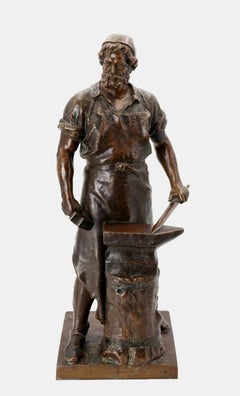
Wilhelm Albermann (1835 Werden an der Ruhr - 1913 Cologne), The Blacksmith of Solingen, after 1895. Bronze-color patinated zinc cast on plinth, 47 cm (height) x 20 cm (width) x 16 cm (depth), weight 5.5 kg. Signed “Albermann.” on the plinth and identified as a cast by “AKT.[TIEN] GES.[ELLSCHAFT] GLADENBECK BERLIN”. Dedication on the front: “Mr. Ing. F. Kuhlmann to the wedding. Management and officials of the Hannoversche Waggonfabrik. Aircraft construction department".
- The zinc showing through in spots, the patina somewhat stained, the right upper arm under the sleeve retouched in black.
- The Double-edged Sword -
The figure is a reduction of Wilhelm Albermann's 1895 fountain figure of the armourer of Solingen, who has always been identified with the historical blacksmith Peter Hahn. In 1839, Karl Simrock wrote the poem “The Blacksmith of Solingen" and thus coined the legendary figure. The first and penultimate verses read:
A blacksmith spoke to Solingen
With every bayonet,
That came to his diligence:
"Oh, that Fritz had it!"
The war took its course,
Many battles were fought,
Which often made him fearful and anxious
In his soul.
The blacksmith had given up his trade to fight for Frederick the Great. Not least because of his strength and will to fight, the battles were won. With his fountain sculpture, Albermann has given the legendary blacksmith a figurative form and at the same time created a landmark for the city of Solingen, which was once famous for the art of sword forging and today still stands for the production of high-quality knives. During the bombing raid in November 1944, the fountain was destroyed along with the entire old town of Solingen. Only the head remained.
The broad-shouldered blacksmith stands securely behind his anvil, his leather apron tied around him, and has just finished a sword blade with his own "weapon" - the blacksmith's hammer. His entire body shows the strength with which he wields the hammer, but also the strain of this activity, as evidenced by the wide open shirt, the somewhat 'untidy' apron, and especially the furrowed face.
However, the blacksmith does not look at the finished work, but resolutely and at the same time thoughtfully into the distance, in line with the quoted verse from Simrock's poem that the battles "often made him fearful and anxious in his soul". There is certainly something melancholy in his gaze, fed by the knowledge of the necessity of forging swords and taking up arms and their deadly use - experiences Albermann had to make during his own war missions. The flowing full beard gives his gaze into the distance an almost prophetic character.
In keeping with the craft of the perfectly formed art of blacksmithing, the detailed casting reproduces the respective materials depicted in perfect form: the leather apron convincingly conveys the impression of leather and lies - also in the back view - like a second formed layer over the body, while the shirt and trousers illustrate their own textile qualities.
Due to its masterful execution and profound content, the “Blacksmith of Solingen”, which has survived in its cast reproductions, remains Albermann's most famous work to this day.
About the artist
The son of a carpenter, Wilhelm Albermann began an apprenticeship as a joiner, but then followed his artistic calling and trained as a sculptor in Elberfeld. In 1855, at the age of twenty, he was drafted into the army in Berlin, where he served until 1857. Albermann attended the Berlin Art Academy on the side and began regular studies after his service. While still a student, he completed commissioned works for his teachers August Fischer and Hugo Hagen. His first independent commissions followed, enabling him to establish a flourishing sculpture studio in Cologne in 1865. His artistic activities were repeatedly interrupted by military service, and he took part in the German-Danish War in 1864, the war against Austria in 1866, and the Franco-Prussian War in 1870/71. After his last war service, Albermann, already a respected artist, founded a commercial drawing school at the request of the city government, where he taught the modeling class and served as director until 1896. In 1890 he also worked for the "Society for the Promotion of Sculpture in the Rhineland and Westphalia".
Albermann was one of the most prolific sculptors in Cologne in the second half of the 19th century. He created numerous monuments, fountains, tomb sculptures, architectural ornaments, and domestic statues. At its peak, his workshop employed up to thirty sculptors and stonemasons at a time.
GERMAN VERSION
Wilhelm Albermann (1835 Werden an der Ruhr - 1913 Köln), Der Schmied von Solingen, nach 1895. Bronzefarben patinierter Zinkguss auf gegossener Plinthe, 47 cm (Höhe) x 20 cm (Breite) x 16 cm (Tiefe), Gewicht 5,5 kg. Auf der Plinthe mit „Albermann.“ signiert und als Guss der „AKT.[TIEN] GES.[ELLSCHAFT] GLADENBECK BERLIN“ ausgewiesen. Schauseitige Widmung: „Herrn Ing. F. Kuhlmann zur Vermählung. Direktion und Beamte der Hannoverschen Waggonfabrik. Abt. Flugzeugbau“.
- Punktuelles Durchscheinen des Zinks, Patina etwas fleckig, der rechte Oberarm unter dem Ärmel schwarz retuschiert.
- Die Zweischneidigkeit des Schwertes -
Die Figur ist eine Reduktion von Wilhelm Albermanns 1895 geschaffener Brunnenfigur des Waffenschmieds von Solingen, der seit jeher mit dem historischen Schmied Peter Hahn identifiziert wurde. 1839 hatte Karl Simrock das Gedicht „Der Schmied von Solingen“ verfasst und damit die legendäre Figur geprägt. Die erste und die vorletzte Strophe lauten:
Zu Solingen sprach ein Schmied
Bei jedem Bajonette,
Das seinem Fleiß geriet:
»Ach, daß der Fritz es hätte!«
Der Krieg ging seinen Gang,
Man schlug noch viele Schlachten,
Die oft ihm angst und bang'
In seiner Seele machten.
Der Schmied hatte sein Handwerk ruhen lassen, um selbst für Friedrich den Großen zu kämpfen. Nicht zuletzt durch seine Kraft und seinen Kampfeswillen verliefen die Schlachten siegreich. Dem legendären Schmied verlieht Albermann mit seiner Brunnenskulptur eine bildliche Gestalt und schuf damit zugleich ein Wahrzeichen der Stadt Solingen, die einst für die Kunst des Schwerterschmiedens berühmt war und bis heute für die Herstellung qualitätvoller Messer einsteht. Beim Bombenangriff im November 1944 wurde mit der gesamten Solinger Altstadt auch der Brunnen zerstört. Einzig der Kopf blieb erhalten.
Mit sicherem Stand und umgebundener Lederschürze steht der breitschultrige Schmied hinter seinem Amboss und hat gerade mit seiner eigenen ‚Waffe‘ – dem Schmiedehammer – eine Schwertklinge fertiggestellt. Seinem gesamten Körper ist die Kraft abzulesen, mit der er den Hammer führt, aber auch die Anstrengung dieser Tätigkeit, wovon das weit geöffnete Hemd, die etwas ‚unordentlich‘ arrangierte Schürze und vor allem das zerfurchte Gesicht zeugen.
Der Schmied schaut aber nicht auf das vollendete Werk, sondern entschlossen und zugleich sinnierend in die Ferne, entsprechend der zitierten Zeile von Simrocks Gedicht, dass die Schlachten „oft ihm angst und bang‘ in seiner Seele machten“. Der Blick hat durchaus etwas Melancholisches, dass sich aus dem Wissen um die Notwendigkeit, Schwerter zu schmieden und zu den Waffen zu greifen und deren tödlichem Einsatz speist – Erfahrungen, die Albermann bei seinen eigenen Kriegseinsätze machen musste. Der wallende Vollbart verleiht dem in die Ferne schauenden Blick einen beinahe prophetischen Charakter.
Dem Handwerk der formvollendenden Schmiedekunst entsprechend, gibt der detaillierte Guss die jeweils dargestellten Materialien in vollendeter Ausformung wieder: Die Lederschürze vermittelt überzeugend den Eindruck des Leders und liegt – auch in der Rückenansicht – wie eine zweite ausgeformte Schicht über dem Körper, während das Hemd und die Hose...
Category
1890s Realist Figurative Sculptures
Materials
Metal
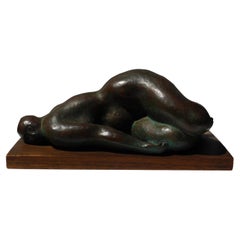
Francisco Zuniga Bronze Sculpture, 1964, "Desnudo Acostada"
Located in Phoenix, AZ
Francisco Zuniga bronze sculpture, Nude Lying Down. Edition: 3.
#377 in the Zuniga catalog raisonne. Titled: "Desnudo Acostado".
Measures: 6 7/8" H x 18" L x 19" W not including the...
Category
1960s Figurative Sculptures
Materials
Bronze
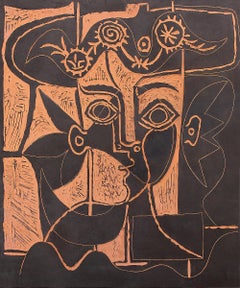
Grande Tête De Femme Au Chapeau Orné (Woman’s Big Head with Decked Hat)
Located in Palo Alto, CA
Created in 1964, this red earthenware clay big rectangular plaque printed with engobe pad is #15 from the edition of 50. This work is stamped with the 'MADOURA PLEIN FEU’ and ‘EMPREINTE ORIGINALE DE PICASSO’ stamps on the reverse.
Pablo Picasso Grande Tête De Femme Au Chapeau Orné (Woman’s Big Head with Decked Hat), 1964 A.R. 518 is a remarkable and beautiful work. It represents Picasso’s most important relationships at the time, namely his artistic partnership with the Ramiés and his romance with Jacqueline Roque. It is also notably one of two ceramic works Picasso has ever made of this scale. Picasso takes immense care in depicting this portrait of his greatest muse Jacqueline; its wonderful texture and delicate variations in line weight are testaments to the artist’s innate creative skill.
Composed of a simple linear carved design in an earth tone clay plaque...
Category
1960s Modern Figurative Sculptures
Materials
Ceramic
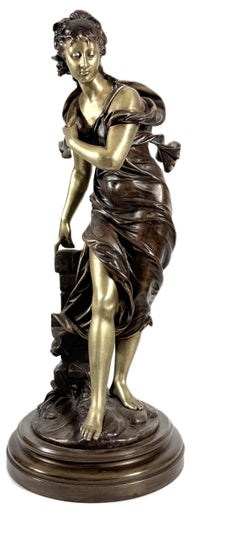
French antique bronze sculpture by Eutrope Bouret
Located in Berlin, DE
This is an outstanding bronze statue of Eutrope Bouret, signed on the base, by the very well-known French artist Eutrope Bouret (1833-1906).
French antique bronze sculpture by Eutro...
Category
19th Century Art Nouveau Figurative Sculptures
Materials
Bronze
Life-Size Art Deco Diana Bronze
By Hans Harry Liebmann
Located in Miami, FL
This is a rare statement piece that commands that eye. It is of museum quality will be the centerpiece of any space. Masterfully crafted details of the human form are finely rendered in a pre-art deco style. Hans Harry Liebmann...
Category
1910s Art Deco Nude Sculptures
Materials
Bronze

Untitled, Neptune, Series Stand - Contemporary Photography - Painting Object
Located in Salzburg, AT
Individual technique on grey military blanket
Magdalena Peszkowska born in 1980 in Gdańsk, Poland. Studied in Department of Painting at Academy of F...
Category
2010s Contemporary Figurative Sculptures
Materials
Textile, Mixed Media, Acrylic, Monoprint, Other Medium
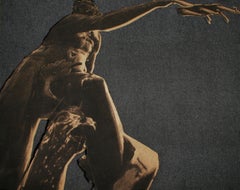
Amazone
Located in Berlin, DE
ALBERT-ERNEST CARRIER-BELLEUSE
French
1824 - 1887
signed: A. CARRIER
Bronze Marmor
Albert-Ernest Carrier-Belleuse (1824–1887) was a prominent French sculptor of the 19th centur...
Category
1870s Art Nouveau Figurative Sculptures
Materials
Bronze
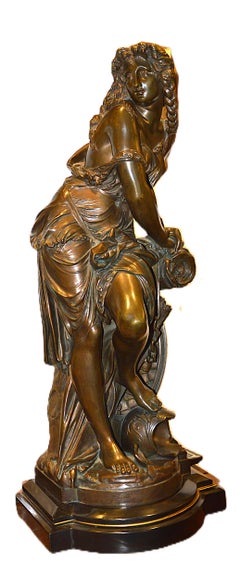
New York Times Sunday Styles with Gigi
By Paul Rousso
Located in Montreal, Quebec
A native of Charlotte, North Carolina, Paul Rousso attended the Cleveland Institute of Art in Ohio and went on to earn his BFA from the California College of the Arts in 1981. In his...
Category
2010s Contemporary Figurative Sculptures
Materials
Polystyrene
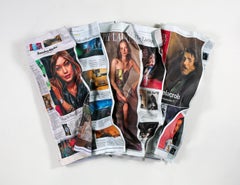
Early 20th Century Ceramic Sculpture of a Polo Player and Horse
By Waylande Gregory
Located in Beachwood, OH
Waylande Gregory (American, 1905-1971)
Polo Player, c. 1930s
Ceramic
Inscribed signature on bottom
11 x 8.5 inches
Waylande Gregory was considered a major American sculptor during the 1930's, although he worked in ceramics, rather than in the more traditional bronze or marble. Exhibiting his ceramic works at such significant American venues for sculpture as the Whitney Museum of American Art in New York City and at the venerable Pennsylvania Academy of the Fine Arts in Philadelphia, he also showed his ceramic sculptures at leading New York City galleries. Gregory was the first modern ceramist to create large scale ceramic sculptures, some measuring more than 70 inches in height. Similar to the technique developed by the ancient Etruscans, he fired his monumental ceramic sculptures only once.
Gregory was born in 1905 in Baxter Springs, Kansas and was something of a prodigy. Growing up on a ranch near a Cherokee reservation, Gregory first became interested in ceramics as a child during a native American burial that he had witnessed. He was also musically inclined. In fact, his mother had been a concert pianist and had given her son lessons. At eleven, he was enrolled as a student at the Kansas State Teacher's College, where he studied carpentry and crafts, including ceramics.
Gregory's early development as a sculptor was shaped by the encouragement and instruction of Lorado Taft, who was considered both a major American sculptor as well as a leading American sculpture instructor. In fact, Taft's earlier students included such significant sculptors as Bessie Potter Vonnoh and Janet Scudder. But, Taft and his students had primarily worked in bronze or stone, not in clay; and, Gregory's earliest sculptural works were also not in ceramics. In 1924, Gregory moved to Chicago where he caught the attention of Taft. Gregory was invited by Taft to study with him privately for 18 months and to live and work with him at his famed "Midway Studios." The elegant studio was a complex of 13 rooms that overlooked a courtyard. Taft may have been responsible for getting the young man interested in creating large scale sculpture. However, by the 1920's, Taft's brand of academic sculpture was no longer considered progressive. Instead, Gregory was attracted to the latest trends appearing in the United States and Europe. In 1928 he visited Europe with Taft and other students.
"Kid Gregory," as he was called, was soon hired by Guy Cowan, the founder of the Cowan Pottery in Cleveland, Ohio, to become the company's only full time employee. From 1928 to 1932, Gregory served as the chief designer and sculptor at the Cowan Pottery. Just as Gregory learned about the process of creating sculpture from Taft, he literally learned about ceramics from Cowan. Cowan was one of the first graduates of Alfred, the New York School of Clayworking and Ceramics. Alfred had one of the first programs in production pottery. Cowan may have known about pottery production, but he had limited sculptural skills, as he was lacking training in sculpture. The focus of the Cowan Pottery would be on limited edition, table top or mantle sculptures. Two of the most successful of these were Gregory's "Nautch Dancer," (fig. 1) and his "Burlesque Dancer," (fig. 2). He based both sculptures on the dancing of Gilda Gray, a Ziegfield Follies girl.
Gilda Gray was of Polish origin and came to the United States as a child. By 1922, she would become one of the most popular stars in the Follies. After losing her assets in the stock market crash of 1929, she accepted other bookings outside of New York, including Cleveland, which was where Gregory first saw her onstage. She allowed Gregory to make sketches of her performances from the wings of the theatre. She explained to Gregory, "I'm too restless to pose." Gray became noted for her nautch dance, an East Indian folk dance. A nautch is a tight, fitted dress that would curl at the bottom and act like a hoop. This sculpture does not focus on Gray's face at all, but is more of a portrait of her nautch dance. It is very curvilinear, really made of a series of arches that connect in a most feminine way.
Gregory created his "Burlesque Dancer" at about the same time as "Nautch Dancer." As with the "Nautch Dancer," he focused on the movements of the body rather than on a facial portrait of Gray. Although Gregory never revealed the identity of his model for "Burlesque Dancer," a clue to her identity is revealed in the sculpture's earlier title, "Shimmy Dance." The dancer who was credited for creating the shimmy dance was also Gilda Gray. According to dance legend, Gray introduced the shimmy when she sang the "Star Spangled Banner" and forgot some of the lyrics, so, in her embarrassment, started shaking her shoulders and hips but she did not move her legs. Such movement seems to relate to the "Burlesque Dancer" sculpture, where repeated triangular forms extend from the upper torso and hips. This rapid movement suggests the influence of Italian Futurism, as well as the planar motion of Alexander Archipenko, a sculptor whom Gregory much admired.
The Cowan Pottery was a victim of the great depression, and in 1932, Gregory changed careers as a sculptor in the ceramics industry to that of an instructor at the Cranbrook Academy in Bloomfield Hills, Michigan. Cranbrook was perhaps the most prestigious place to study modern design in America. Its faculty included the architect Eliel Saarinen and sculptor Carl Milles.
Although Gregory was only at Cranbrook for one and one half years, he created some of his finest works there, including his "Kansas Madonna" (fig. 3). But, after arriving at Cranbrook, the Gregory's had to face emerging financial pressures. Although Gregory and his wife were provided with complimentary lodgings, all other income had to stem from the sale of artworks and tuition from students that he, himself, had to solicit. Gregory had many people assisting him with production methods at the Cowan Pottery, but now worked largely by himself. And although he still used molds, especially in creating porcelain works, many of his major new sculptures would be unique and sculpted by hand, as is true of "Kansas Madonna." The scale of Gregory's works were getting notably larger at Cranbrook than at Cowan.
Gregory left the surface of "Kansas Madonna" totally unglazed. Although some might object to using a religious title to depict a horse nursing its colt, it was considered one of Gregory's most successful works. In fact, it had a whole color page illustration in an article about ceramic sculpture titled, "The Art with the Inferiority Complex," Fortune Magazine, December, 1937. The article notes the sculpture was romantic and expressive and the sculpture was priced at $1,500.00; the most expensive sculpture in the article. Gregory was from Kansas, and "Kansas Madonna" should be considered a major sculptural document of Regionalism.
Gregory and his wife Yolande moved to New Jersey in the summer of 1933. And the artist began construction on his new home in the Watchung Mountains of Bound Brook (Warren today) in 1938. His enormous, custom kiln was probably constructed at the start of 1938. Gregory's new sculptures were the largest ceramic sculptures in western art, in modern times. To create these works of ceramic virtuosity, the artist developed a "honeycomb" technique, in which an infrastructure of compartments was covered by a ceramic "skin."
Science and atomic energy were a theme in Gregory's most significant work, the "Fountain of the Atom" (fig. 4), at the 1939 New York's World Fair. This major work included twelve monumental ceramic figures at the fairground entrance from the newly constructed railway entrance, giving the work great visibility and prominence. The framework of the fountain itself was of steel and glass bricks. It consisted of a bluish green pool which was sixty five feet in diameter. Above it were two concentric circular tiers, or terraces, as Gregory called them; the first wider than the second. On the first terrace were eight "Electrons," comprised of four male and four female terra cotta figures, each approximately 48 inches high. These relate to the valance shell of the atom. Above them on a narrower terrace, were the much larger and heavier terra cotta figures depicting the four elements, each averaging about 78 inches in height and weighing about a ton and a half. Of the four, "Water" and "Air" were male, while "Earth" and "Fire" were female. This terrace represents the nucleus of the atom. In the center of the fountain, above the "Elements," was a central shaft comprised of sixteen glass tubes from which water tumbled down from tier to tier. At the top, a colorful flame burned constantly. The glass block tiers were lit from within, the whole creating a glowing and gurgling effect. Since the fair was temporary, the figures could be removed after its closing. But the credit for the design of the structure of the fountain belongs to collaborator Nembhard Culin, who was responsible for several other structures on the fair grounds as well.
Although Gregory created a figure of "Fire" for the "Fountain of the Atom," he also executed a second, slightly smaller but more defined version which he exhibited at various locations (including Cranbrook, Baltimore Museum, etc.) in 1940-1941, during the second year of the fair (fig.5). Measuring 61 inches in height, "Fire" may be a metaphor for sexual energy, as well as atomic energy. Gregory stated, "Fire is represented by an aquiline female figure being consumed in endless arabesques of flame."
Portraiture was also a significant focus of Gregory's sculpture. Gregory produced many commissioned portraits of local people as well as celebrities. He created Albert Einstein's portrait from life (fig. 6, ca. 1940) after Einstein had seen Gregory's "Fountain of the Atom." He also sculpted some of the leading figures in entertainment, including 2 sculptures of Henry Fonda, who became a personal friend.
Gregory also sculpted a series of idealized female heads, both in terra cotta and in porcelain. These include "Girl with Olive" (ca. 1932) and "Cretan Girl;"(ca. 1937) both are very reductive and almost abstract works that call to mind Constantine Brancusi's "Mademoiselle Pogany" (1912, Philadelphia Museum of Art). But perhaps one of his most original female heads is "Head of a Child" (fig. 7, ca. 1933), a sensitive white glazed terra cotta portrayal with elaborately crafted braded hair, was originally created as one of a pair.
Gregory also produced sculptural works for the Works Progress Administration. The WPA was a work relief project that greatly helped artists during the great depression. Founded by the Federal Government in 1935, an estimated 2500 murals were produced. Among these public works were the iconic post office murals. But, among the painted murals were also sculptural relief murals including Gregory's "R.F.D.," 1938, for the Columbus, Kansas Post Office. But, Gregory's largest WPA relief...
Category
1930s Figurative Sculptures
Materials
Ceramic
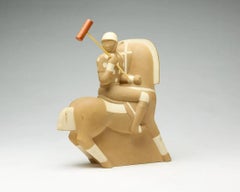
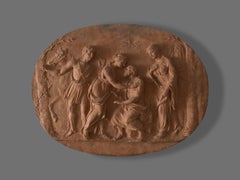
Oedipus before the Temple of the Furies at Colonus
Located in London, GB
Terracotta
19 x 25 ½ inches; 480 x 650 mm
Signed and dated: ‘W Tyler Excu. 1765’
Collections:
Cyril Humphris, London;
Humphris sale, Sotheby's, New York, 10-11 January 1995, lot 74...
Category
18th Century Old Masters Figurative Sculptures
Materials
Terracotta
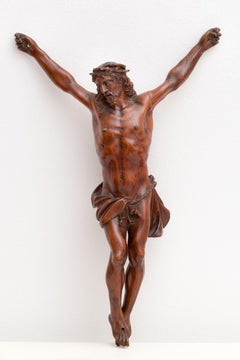
ANTIQUE ITALIAN 18TH CENTURY BOXWOOD SCULPTURE OF CHRIST
Located in Milan, IT
Boxwood figure of Christ
Category
18th Century Figurative Sculptures
Materials
Wood
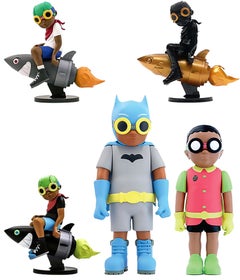
Hebru Brantley Flyboy set of 4 works (Hebru Brantley art toys)
Located in NEW YORK, NY
Hebru Brantley Art Toy collection: 2018/2022. Set of 4: Hebru Brantley art toys, each new in original packaging: Composed of three 2017 Hebru Brantley Flyboy's & one Hebru Brantley F...
Category
21st Century and Contemporary Pop Art Figurative Sculptures
Materials
Resin, Vinyl
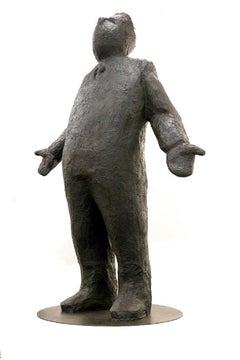
WTF
By Jim Rennert
Located in Greenwich, CT
8.5 ft. version of Jim Rennert's sculpture "WTF."
Edition of 3
American, b. 1958
Jim Rennert was born in 1958, and grew up in Las Vegas, Nevada, and Salt Lake City, Utah. After ten...
Category
2010s Contemporary Figurative Sculptures
Materials
Bronze
$250,000
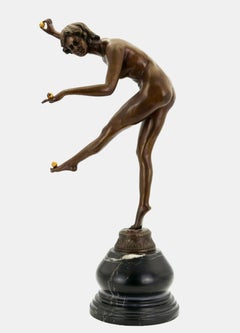
Juggler / - Artistic naturalness -
Located in Berlin, DE
Claire Jeanne Robertine Colinet (1880 Brussels - 1950 Asnières-sur-Seine), Juggler, around 1920. Brownish patinated bronze with gilded balls on a round, multi-profiled stone base (10...
Category
1920s Art Deco Nude Sculptures
Materials
Bronze
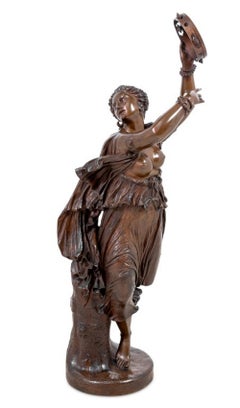
Jean Clesinger "Zingara" Patinated Bronze
Located in Astoria, NY
Jean Baptiste Clesinger (French, 1814-1883) "Zingara" Patinated Bronze Sculpture, 1857, cast by F. Barbedienne, the Neapolitan dancer upholding a tambourine, signed "J Clesinger, Rom...
Category
Late 19th Century Pre-Raphaelite Figurative Sculptures
Materials
Bronze
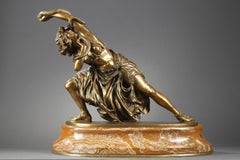
Dance of Carthage
Located in PARIS, FR
Dance of Carthage
by Claire-Jeanne-Roberte COLINET (1880-1950)
A bronze sculpture with gilded patina
Signed on the base " Cl.J.R. Colinet "
Old Per...
Category
1920s Art Deco Figurative Sculptures
Materials
Bronze
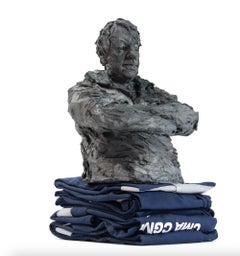
Blue solo by Cécile Raynal - Male Portrait, Sandstone Sculpture
Located in Paris, FR
Blue Solo (with Jean Pierre) is a smoke sandstone sculpture by French contemporary artist Cécile Raynal, dimensions are 50 × 27 × 31 cm (19.7 × 10.6 × 12.2 in). The sculpture is a un...
Category
2010s Contemporary Figurative Sculptures
Materials
Sandstone, Steel
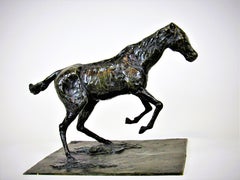
Edgard Degas: Horse Clearing an Obstacle (work 48 /certified by Comité Degas)
By Edgar Degas
Located in Gent, VOV
Horse Clearing an Obstacle (work number 48)
Bronze with dark brown green patina bearing the stamp of the signature "Degas",
Numbered IV/IX and dated 1998
Posthumous lost wax casting as of 1998.
Stamp of Valsuani.
Signed Degas
The work is a sought-after rarity in terms of Degas’ sculptures. This bronze is distinguished by the fact that it is a Valsuani bronze, meaning it faithfully records Degas’ wax version’s as it appeared at the time of its creation. Most Degas' bronzes that are found on the market were cast by Hébrard – these serialized bronzes are surmoulages, or “aftercasts,” that were cast from the modèle bronzes currently in the Norton Simon Museum (Pasadena). Because these Hebrard bronzes...
Category
1880s Impressionist Figurative Sculptures
Materials
Bronze
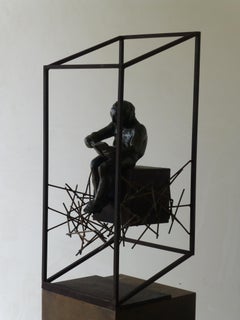
Amancio. El Lector original sculpture bronze iron.
Located in CORAL GABLES - MIAMI, FL
El Lector original sculpture bronze iron.
by the Spanish artist AMANCIO GONZALEZ
bronze.
Fantastic piece of art representing Spanish sculpture
AMANCIO Gonzalez ( Leon 1965 )
Amanc...
Category
21st Century and Contemporary Contemporary Figurative Sculptures
Materials
Bronze, Iron
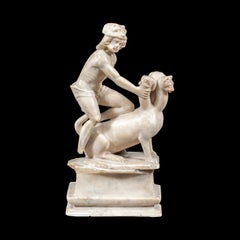
Baroque Roman sculptor - 17th century alabaster sculpture - Hercules Cerberus
Located in Varmo, IT
Alabaster sculpture - Hercules and Cerberus. Rome, 17th century.
18 x 9.5 x h 37 cm.
Made entirely of carved alabaster. Separate alabaster base, missing left foot and arm, and othe...
Category
Mid-17th Century Baroque Figurative Sculptures
Materials
Alabaster
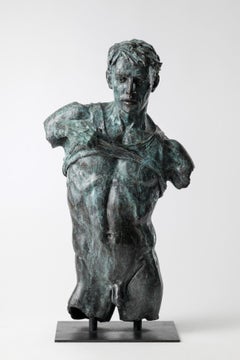
$2,373 Sale Price
28% Off
Demian Undressing
Located in London, GB
Bronze
Numbered 1/10
66cm × 26cm × 36cm (incl. base)
Ian Rank-Broadley is one of the foremost sculptors working today. His effigy of the late Queen Elizabeth II appears on all UK an...
Category
2010s English School Figurative Sculptures
Materials
Bronze
19th century French Bronze of a naked woman standing up.
Located in Woodbury, CT
Well modeled 19th century French bronze of a standing naked woman.
Signed Cartinet, this piece is a wonderful example of the skill of a Sculptor.
The piece retains all its origina...
Category
1890s Victorian Nude Sculptures
Materials
Bronze
$1,200 Sale Price
29% Off
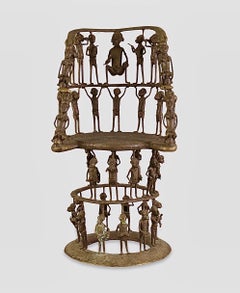
Rare African Solid Benin Bronze Ceremonial Throne Chair Multi Figure Sculpture
Located in Surfside, FL
Handmade Benin sculptural tribal bronze figural judgement throne chair. The base of the chair with two tiers of standing figures. The back of the chair with two more tiers of standin...
Category
Early 20th Century Tribal Nude Sculptures
Materials
Bronze
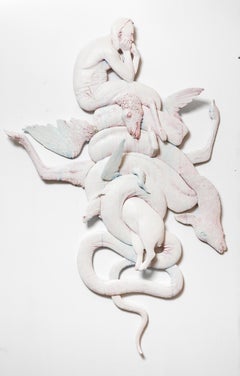
"I Worry About My Kids" Plaster Wall-Mounted Man Atop Snake with Lamb, and Bird
Located in Philadelphia, PA
"I Worry About My Kids" is an original piece byJedediah Morfit made from fiberglass reinforced plaster, mixed media, and paint.This piece measures 62"h x 40"w x 5"d and comes with a ...
Category
21st Century and Contemporary Contemporary Figurative Sculptures
Materials
Fiberglass, Plaster, Paint, Mixed Media
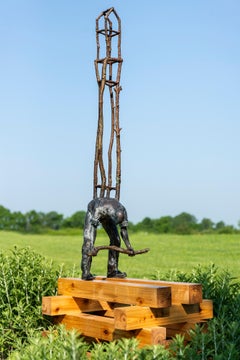
Shelter - surrealist, contemporary, figurative, bronze, outdoor sculpture
Located in Bloomfield, ON
This contemporary outdoor figurative metal sculpture is by Roch Smith.
Canadian artist Roch Smith’s playful and thoughtful visual language often tackles big life themes in an imagin...
Category
2010s Contemporary Figurative Sculptures
Materials
Bronze
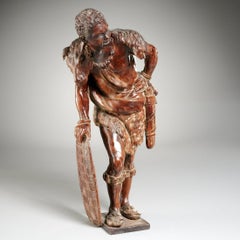
Orientalist African Hunter Leaning on His Shield 19th cent. Black Forest, German
Located in SANTA FE, NM
Orientalist African Hunter Leaning on His Shield
Black Forest, School Switzerland 19th century
Carved Wood
21 inches
This is an exceptionally beautifu...
Category
19th Century Academic Figurative Sculptures
Materials
Wood
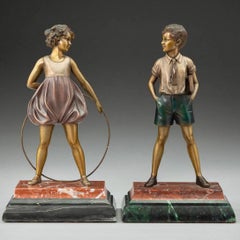
Ferdinand Preiss Hoop Girl And Sonny Boy Painted Bronze Figures
Located in Dallas, TX
Ferdinand Preiss (German, 1882 - 1943) Hoop Girl & Sonny Boy Cold-painted bronze
Circa 1930, Art Deco Period
Dimensions: 8.18 Inches Tall x 4.65 Inches wide x 2.75 inches deep.
...
Category
1930s Art Deco Figurative Sculptures
Materials
Marble, Bronze
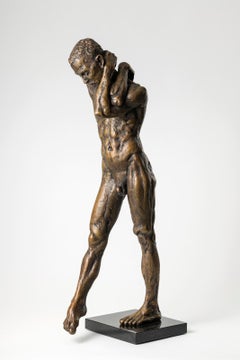
Folded Arms Study (Full Figure)
Located in London, GB
Bronze
Numbered 5/9
87cm × 44cm × 21cm (incl. base)
Pratley is a Sculptor working from life models in his West London studio. His inspirations range from ancient Greek masterpieces ...
Category
2010s English School Nude Sculptures
Materials
Bronze
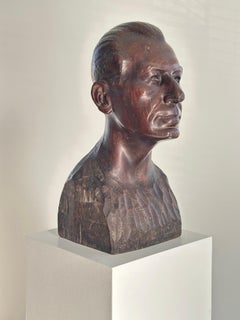
Portrait of a Man
Located in Wilton Manors, FL
Francisco Vazquez Diaz, known as Compostela (1898-1988). Portrait of a Man, 1949. Carved mahogany, measuring 18.75 inches h, 8.5 inches w, 11 in...
Category
Mid-20th Century Realist Figurative Sculptures
Materials
Mahogany
$8,000 Sale Price
60% Off
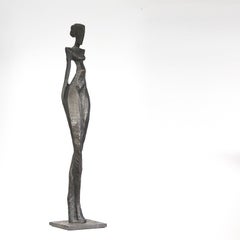
Evi by Nando Kallweit. Elegant limited edition bronze sculpture, Edition of 25
Located in Coltishall, GB
Evi is an elegant figurative bronze sculpture by Nando Kallweit.
Nando carved the marque for the body from a piece of oak using a small chain saw. The marque is then used to make th...
Category
21st Century and Contemporary Contemporary Figurative Sculptures
Materials
Bronze
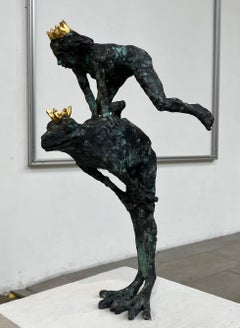
Leapfrog by Helle Crawford, Contemporary frog bronze animal sculpture
Located in DE
Even though Helle Rask Crawford often refers to classic myths in her sculptures, sh is not a classical sculptor in the neoclassical sense. Rather, Helle Crawford could be defined as ...
Category
2010s Contemporary Nude Sculptures
Materials
Gold, Bronze
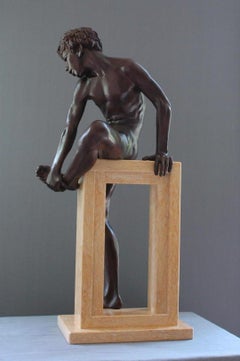
Finis Saltationis Bronze Sculpture Nude Boy Male Figure Marble Stone
Located in Utrecht, NL
Finis Saltationis Bronze Sculpture Nude Boy Male Figure Marble Stone
This sculpture need to be ordered. We will cast a b...
Category
21st Century and Contemporary Contemporary Nude Sculptures
Materials
Marble, Bronze
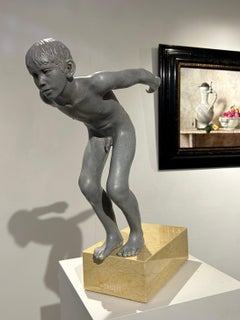
Insilit Bronze Marble Stone Nude Contemporary Sculpture Boy Jumping In Stock
Located in Utrecht, NL
Insilit Bronze Marble Stone Nude Contemporary Sculpture Boy Jumping In Stock - Sizes of sculpture, without Stone pedestal : 40 x 32 x 22 cm
Wim van der Kant (1949, Kampen) is a sel...
Category
21st Century and Contemporary Contemporary Nude Sculptures
Materials
Marble, Bronze
Dancer, bronze, 40x46x12 cm
Located in Riga, LV
Ferdinand Preiss(1882-1943)
Category
Early 19th Century Realist Figurative Sculptures
Materials
Marble, Bronze
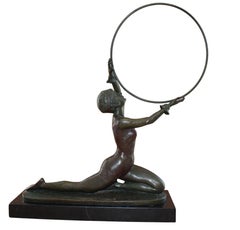
$2,660 Sale Price
20% Off
Listen
By Jim Rennert
Located in Greenwich, CT
American, b. 1958
Jim Rennert was born in 1958, and grew up in Las Vegas, Nevada, and Salt Lake City, Utah. After ten trying years of working in business, Rennert was inspired to ex...
Category
2010s Contemporary Figurative Sculptures
Materials
Bronze
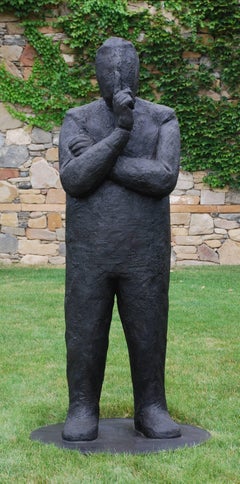
$125,000
Ouvrir les Frontières pour Mr. Olingou
Located in Atlanta, GA
The universal theme of travel has always inspired Bruno Catalano. Since he started to knead clay, hundreds of “Travellers” went out of his feverish hand...
Category
21st Century and Contemporary Modern Figurative Sculptures
Materials
Bronze
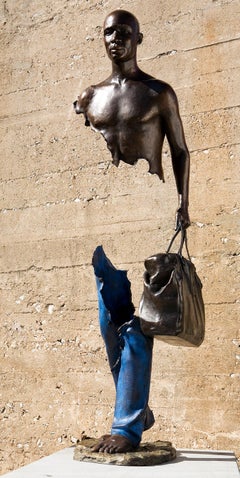
Richard Shiloh Bronze Sculpture Seated Male Dancer
Located in Phoenix, AZ
Well done bronze by Polish/Israeli artist Richard Shiloh (1946-2012).
Title: Dancer on the Bar. Created circa: 1970's - 1980's.
Measures: 13 1/2"h x 7"w. Edition size 5 of 8.
The work is in excellent condition with no damage.
The signature, edition size and foundry mark are seen on the base.
Richard Shiloh is an internationally recognized Israeli figural...
Category
Late 20th Century Figurative Sculptures
Materials
Bronze
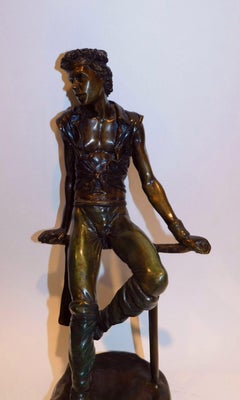
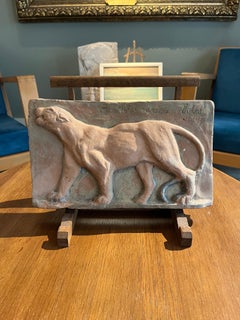
Panther - Sculpture in low Relief
By Louis Vidal
Located in PARIS, FR
Louis Vidal, or Vidal l'aveugle (Vidal the blind)
(1831 - 1892)
Panther
Sculptuer, low relief, terracotta
17,5 x 28,7 x 3 cm
Inscription and signature on the top : "Panthère, Vidal ...
Category
19th Century Figurative Sculptures
Materials
Terracotta
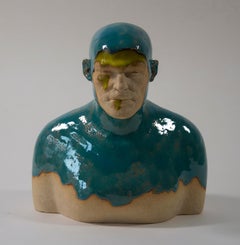
Turquoise Swimmer - Contemporary Handmade Glazed Ceramics Sculpture , Portrait
Located in Salzburg, AT
The sculpture is signed below, inside
Tomasz Bielak born in Lublin in 1967. He graduated of The Academy of Fine Arts, Painting and Graphics Design Department in Gdańsk, in 1994....
Category
2010s Contemporary Figurative Sculptures
Materials
Ceramic
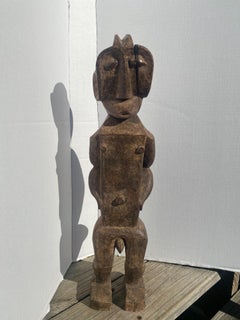
MUMUYE FIGURE
Located in Three Oaks, MI
Within Nigeria's Benue River Valley region, such representations have been associated with a range of functions, including reinforcement of the status of male elders and used by heal...
Category
Early 20th Century Tribal Figurative Sculptures
Materials
Wood
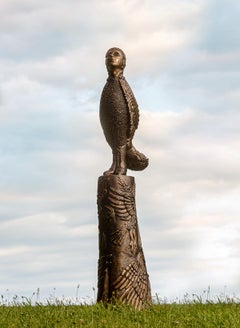
$760 Sale Price
36% Off
Leslie Fry_Arise_2022_Sculpture_Cast Bronze_Feminist
Located in Darien, CT
Leslie's public projects respond to site, history and the body. Figures are female or hermaphroditic, of imaginary descent, often melded with animal, architecture and plant forms. I ...
Category
2010s Feminist Figurative Sculptures
Materials
Bronze
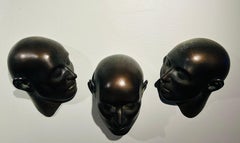
"Faces (1/1)" (2023), Bronze Wall Installation by Bill Starke
By Bill Starke
Located in Denver, CO
"Faces" is a single edition bronze wall sculpture created by Bill Starke, depicting three finely carved human heads from differing perspectives.
"Faces" is a single edition install...
Category
2010s Realist Figurative Sculptures
Materials
Bronze
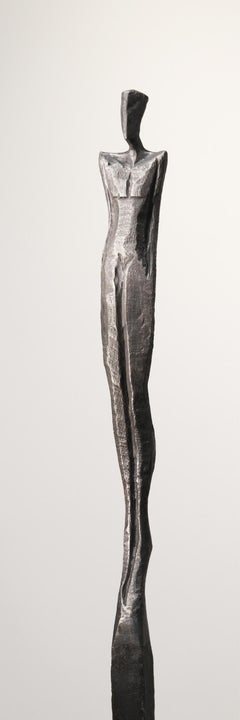
Edward III by Nando Kallweit. Tall, elegant bronze sculpture of human figure.
Located in Coltishall, GB
Edward III is a tall, elegant bronze sculpture of a human figure.
Nando Kallweit is a German sculptor working in bronze and oak. Kallweit carves the original piece from a piece o...
Category
21st Century and Contemporary Other Art Style Figurative Sculptures
Materials
Bronze
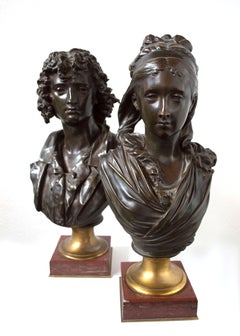
Pair of 19th Century Busts by Albert Ernest Carrier-Belleuse
Located in Santa Fe, NM
Signed: A. Carrier-Belluese
Two large bronze matching busts of an unknown male and female
22 x 10 x 11" male
23 x 10 x 9" female
Both show signs of wear with their age but are in fa...
Category
19th Century Baroque Figurative Sculptures
Materials
Marble, Bronze
$6,000 Sale Price
50% Off
More Ways To Browse
Public Health Posters
R John Foster
R Scott Paintings
Raul Viviani
Raynald Leclerc
Reginald Gammon
Rembrandt Three Trees
Rene Mels
Richard Bennett
Richard Cronin
Richard Grosvenor
Roal English Paintings
Robert Antoine Pinchon
Robert Catapano
Robert Hamilton Painting
Robert Roche Saratoga
Robert Schlegel
Robert Sword