Mid-20th Century Sculptures

to
123
566
158
113
37
82
Overall Width
to
Overall Height
to
225
663
3,955
17,399
84
46
126
139
70
173
279
383
561
528
79
261
97
79
37
30
23
18
18
5
4
2
277
200
178
135
130
106
74
60
52
51
49
45
42
38
27
23
18
18
18
18
402
268
260
167
101
134
17
13
12
12
1
6
632
308
Period: Mid-20th Century
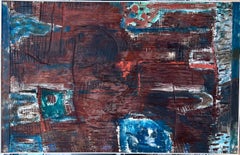
American Modernist Abstract Expressionist Oil Painting Carving William Pellicone
Located in Surfside, FL
William Pellicone (American 1915-2004) Mixed media, pyrography, oil on wood carving painting. Dated 1958 Title - Enthymeme #14. Oil painting on carved and burnt distressed wood panel. Inscribed verso Enthymeme Wm. Pellicone #14, 9-4-58. Label on reverse with a typed definition for Enthymeme. Dimensions: 27 inches high, 42.5 inches wide. Metal wrap frame. Provenance: from a Shelter Island NY home that was designed by architect Henry J. Gazon - A.I.A. built in 1959. William Pellicone (1915-2004) was an American painter known for his abstract compositions and use of vibrant colors. He was born in New York City and studied at the Art Students League and the Brooklyn Museum Art School. Pellicone's early work was influenced by the Social Realist movement of the 1930s and 1940s, with his paintings often featuring realistic depictions of urban scenes and working-class people. However, in the 1950s he shifted towards abstraction, exploring the interplay of color and form. Pellicone's mature style was characterized by his use of vibrant, saturated colors, often applied in thick layers of paint. His paintings often featured geometric shapes and organic forms, with a strong sense of movement and energy. In addition to his painting, Pellicone was also a respected teacher and arts administrator. He taught at the New York Institute of Technology and the State University of New York, and served as the director of the Islip Art Museum on Long Island. Pellicone's artwork was exhibited widely during his lifetime, and he was the recipient of numerous awards and honors, including a National Endowment for the Arts grant in 1977. Today, his paintings can be found in the collections of museums and galleries around the world, including the Smithsonian American Art Museum in Washington, D.C. and the Metropolitan Museum of Art in New York. William Pellicone (Born 1915) is active/lives in New York. William Pellicone is known for Abstract expressionist, landscape and non-objective art. An American artist, sculptor, architect. He exhibited at Pennsylvania Academy Fine Arts...
Category

Abstract Expressionist Mid-20th Century Sculptures

Materials

Wood, Oil

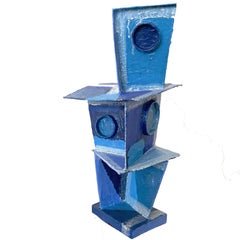
Blue Tone Tower : Modernist Vibrant Blues Cubist Sculpture by Bill Low
Located in Hudson, NY
Cubist style abstract mixed-media sculpture titled 'Blue Tone Tower' was created using various materials including wood, papier-mache, and paint by Bill Low ...
Category

Cubist Mid-20th Century Sculptures

Materials

Wood, Paint, Paper

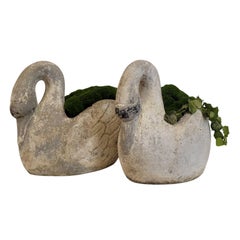
Pair of Antique Concrete Swan Planters, France.
Located in Valladolid, ES
A pair of planters in the shape of beautiful swans, made of concrete, from the first quarter of the 20th century. The pieces exhibit a beautiful patina typical of the period and thei...
Category

Art Nouveau Mid-20th Century Sculptures

Materials

Concrete

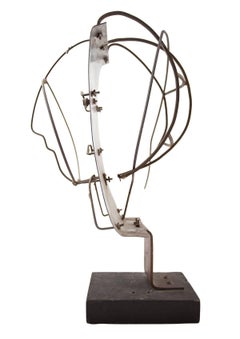
Modernist Sculpture Figural Portrait Bust Brutalist Wire Work
Located in Surfside, FL
This piece is unsigned. Irving Lehman (1900-1983) was an American Jewish painter, sculptor, engraver, and designer. Born in Kiev in then Russia, Lehman studied at the Art Students Le...
Category

Modern Mid-20th Century Sculptures

Materials

Steel

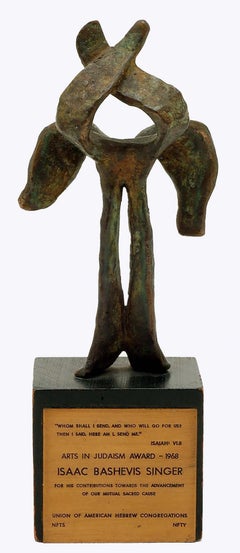
Nathaniel Kaz - Sculpture for Isaac Bashevis Singer Arts in Judaism Award Signed
By Nathaniel Kaz
Located in New York, NY
Nathaniel Kaz Bronze Sculpture to Isaac Bashevis Singer for Arts in Judaism Award, 1966 Bronze, Square wooden base, Metal tag Signed and dated "66" to back of bronze portion of the w...
Category

Abstract Expressionist Mid-20th Century Sculptures

Materials

Metal, Bronze

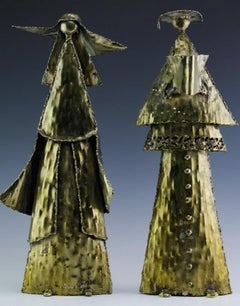
Marcello Fantoni Firenze Raymor Pair Figures Welded Brutalist Italian Sculpture
Located in Surfside, FL
Marcello Fantoni brutalist welded torch cut metal figurines. Signed on base. Metal label reads "Fantoni Firenze Italy Raymor". Italian Mid century modern Sculptural pair of students. Marcello Fantoni (1915-2011) sculptor, ceramicist, metalworker, multimedia artist and designer Born in Florence in 1915, Marcello Fantoni began studying ceramic art at age 12 at the Art Institute of Florence with ceramicist Carlo Guerrini, artistic director of the famed Cantagalli Factory. He continued years of training in ceramics and the arts, including sculpture with Libero Andreotti and Bruno Innocenti, and figurative art with Gianni Vagnetti, graduating as a maestro of art in 1934. After a stint as art director for a ceramics factory in Perugia, in 1936 he opened the Fantoni Ceramic Studio in Florence. Here he produced ceramic series as well as unique mod pieces, sculptures and furnishings. In 1937 Fantoni’s pieces were exhibited in the Florence National Arts and Crafts Exhibit where their unique combination of rustic forms decorated with African and marine motifs and painted figures garnered considerable acclaim. By the start of World War II Fantoni’s melding of ancient Italian pottery techniques with decidedly Modernist elements had won him artistic and commercial success both in Italy and abroad. Having participated in the resistance, after the War Fantoni worked for the 500-year old Maiolica factory in Deruta, Umbria, renowned for its signature tin-glazed pottery. In the 1950s he refocused on his Florence studio, dedicating himself to larger sculptural pieces and working on many collaborations. He also expanded his experimenting with materials, forms, drawing from varied influences – Primitivism, Novecento style, Cubism and Abstract Expressionism. Fantoni gave special emphasis to ancient Etruscan ceramic techniques, glazes and colors, heightening the timeless appeal of his pieces. As well as clay, he also worked in metals to great effect. Whether created as a series or as a unique piece, every Fantoni piece was ultimately rendered unique by his hand-painting it. The extraordinary diversity of shapes and textures notwithstanding, one the most identifiable qualities of his creations was his painting style. Through the 50s and 60s he made many cubist-inspired vases and ewers painted in colors bordered by sgraffito lines scratched through the paint in a manner evoking Picasso and Braque. Along with figurative and abstract works, the 60s also saw Fantoni creating brutalist pieces with edgy, angular shapes, while in later life, his work took a minimalist turn. In 1970 Fantoni founded the International School of Ceramic Art, dedicated to teaching ceramic arts and experimentation. (Many of his students and employees would go on to become noteworthy artisans and artists in their own right.) Maintaining great versatility throughout his career, Fantoni completed projects for public and private buildings, churches, schools, theaters, cinemas, and ships. His works, meanwhile, were collected by important museums worldwide. When Marcello Fantoni died in Florence in 2011 at the age of 95, his obituary in the Italian newspaper La Nazione hailed him “The master of beauty.” Museums and Exhibitions MoMA New York, Metropolitan Museum of Art of New York, Brooklyn Museum, Museum of Fine Art of Boston, Victoria and Albert Museum of London, Royal Scottish Museum of Edinburg, Museums of Modern Art of Tokyo and Kyoto, International Museum of Ceramics in Faenza, National Bargello Museum and Gabinetto Disegni e Stampe of the Uffizi in Florence. “Materia e colore, l’arte di Marcello Fantoni”, Loggia della Limonaia di Palazzo Medici Riccardi di Firenze, 2015 "Marcello Fantoni, A Beautiful Form with Beautiful Color", Archaeological Museum of Fiesole, 2005 "Ceramics as Art, Marcello Fantoni Ceramist and Sculptor", Salone delle Regie Poste, Florence, Marcello Fantoni’s work fused painting, Primitivism, tradition, Modern art, the revival of craft, and the base material of clay itself. Some aspects of Marcello Fantoni’s ceramics – their spikey and angular shapes, with their forms reduced to multiple flat planes of colour bordered by inscribed sgraffito lines – suggest inspiration from Cubist painters Pablo Picasso and Georges Braque. Publications Marcello Fantoni: Ceramista in Firenze Dal 1929 by Antonio Paolucci, Edizioni della Bezuga, 1999 Marcello Fantoni, Ceramica come Arte, Published by Octavo, 2000 Marcello Fantoni Mostra al Museo Archeologico di Fiesole Select Fairs where his work has been exhibited: 2017 Maison Gerard at The Salon Art + Design 2017, Maison Gerard 2016 Patrick Parrish Gallery at The Salon Art + Design 2016, Patrick Parrish Gallery 2015 Galleria Rossella...
Category

Modern Mid-20th Century Sculptures

Materials

Metal

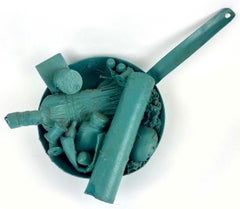
1967 Pop Art, May Wilson, Surrealist Feminist Junk Assemblage Painted Sculpture
By May Wilson
Located in Surfside, FL
May Wilson (1905–1986) was an American artist and figure in the 1960s New York City avant-garde art world. A pioneer of the feminist and mail art movement, she is best known for her Surrealist junk assemblages and her "Ridiculous Portrait" photo collages. Wilson was born in Baltimore, Maryland, into an underprivileged family. Her father died when she was young. She was reared by her Irish Catholic mother, who sewed piecework at home. Wilson left school after the ninth grade to become a stenographer/secretary to help support her family. When she turned 20, she married a young lawyer, William S. Wilson, Jr., and give birth to her first child. She continued to work until the birth of her second child, after which she devoted her energies primarily to mothering and homemaking. In 1942, the couple had prospered enough to move to Towson, Maryland, where she began to take correspondence courses in art and art history from several schools, including the University of Chicago. In 1948, after the marriage of their daughter, the couple moved to a gentleman's farm north of Towson, where she pursued painting and gave private art lessons to neighbors. She exhibited her paintings, scenes of everyday life painted in a flat, purposefully primitive manner in local galleries and restaurants. In 1952 and 1958, she won awards for work submitted to juried exhibitions at the Baltimore Museum of Art. In 1956, her son, the writer Williams S. Wilson, gave to Ray Johnson, the founder of the New York Correspondence School, his mother's address. This began a friendship and artistic collaboration between Johnson and Wilson, which would last the remainder of her life. Wilson became an integral part of Johnson's mail art circle and was initiated into the New York avant-garde through letters and small works that she exchanged with Robert Watts, George Brecht, Ad Reinhardt, Leonard Cohen, Arman, and many others. When her marriage dissolved, she moved to New York City in the spring of 1966, aged 61, taking up residence first in the Chelsea Hotel and then in a studio next door, where she threw legendary soirées and became known as the "Grandma Moses of the Underground". By the time she arrived, Wilson was already working with photomontage collage techniques. Encouraged by Johnson, who had sent her magazines through the mail, she scissored patterns into images of pin-up girls and muscle men until they resembled doilies or snowflakes, as Wilson called them. She decorated her hotel room and later her studio on West 23rd Street with these and other manipulated, found object images. Around this time, she also began her series of neo Dada "Ridiculous Portraits", for which she would ride the subway to Times Square, where she made exaggerated faces in photo booths. She then would cut and paste her photo-booth face onto postcards, along with Old Master reproductions, fashion shoots, and softcore Playboy magazine pornography. Long before artists such as Cindy Sherman and Yasumasa Morimura embarked on similar critical projects, Wilson's "Ridiculous Portraits" sent up the ubiquitous sexism and ageism that exists in popular and fine-art images of women. At the age of 70, she converted a nude photograph of herself into a stamp that she pasted on envelopes. Her collages and humorous self-portraits were made as gifts and mail-art items for her friends and were not widely known until after her death. Her work was contemporaneous with the Arte Povera artists Jannis Kounellis and ‎Michelangelo Pistoletto. She was also an innovator of junk art assemblages that incorporated real objects, such as high-heel shoes, bed sheets, sauce pans, toasters, liquor bottles, ice trays, and wrapped baby dolls. Her sculptures were inspired by Surrealist and Dada practices and are similar in spirit to Yayoi Kusama's contemporary accumulations. Wilson was the subject of a 1969 experimental documentary by Amalie R. Rothschild, "Woo Hoo? May Wilson". Since her death, May Wilson's work has been featured in numerous exhibitions and retrospectives at the Baltimore Museum of Art, Maryland; Gracie Mansion Gallery, New York; the Morris Museum, Morristown, N.J.; the Pavel Zoubok Gallery, New York City; and The University of the Arts, Philadelphia. Selected Exhibitions 2010 "Seductive Subversion: Women Pop Artists, 1958-1968", University of the Arts, Philadelphia (traveling exhibition) 2008 "1968/2008: The Culture of Collage", Pavel Zoubok Gallery, New York, City 2008 "Ridiculous Portrait: The Art of May Wilson", Morris Museum, Morristown, New Jersey 2008 "Woo Who? May Wilson", Pavel Zoubok Gallery, New York City 1995 [Retrospective], The Baltimore Museum of Art, Maryland 2001 "May Wilson: Ridiculous Portraits and Snowflakes", Gracie Mansion Gallery, New York, City 2001 "Inside Out: Outside In-The Correspondence of Ray Johnson and May Wilson", Sonoma Museum of Visual Art, California 1991 "May Wilson: The New York Years", Gracie Mansion Gallery, New York City 1973 "Sneakers", Kornblee Gallery, New York City 1973 "Small Works: Selections from the Richard Brown Baker Collection of Contemporary Art", RISD Museum, Providence, Rhode Island 1971 Corcoran Gallery of Art, Washington, D.C. 1970 "Sculpture Annual 1970", Whitney Museum of American Art, New York City 1965 The Baltimore Museum of Art, Baltimore, Maryland 1962 The Johns Hopkins University, Baltimore, Maryland 1957 Bookshop Gallery, Baltimore, Maryland Public collections Whitney Museum of American Art (New York City) The Baltimore Museum of Art (Baltimore, Maryland) Brooklyn Museum (Brooklyn, New York) References William S. Wilson, "May Wilson: Constructing Woman (1905-1986)", in Ann Aptaker, ed., Ridiculous Portrait: The Art of May Wilson, ed. Ann Aptaker, Morristown, N.J.: Morris Museum, Camhi, Leslie, "Late Bloomer", Village Voice, December 18, 2001 Giles, Gretchen, "Cosmic Litterers: Artists Ray Johnson and May Wilson: Taking the Cake", "Northern California Bohemian," June 14–20, 2001 McCarthy, Gerard, "May Wilson: Homespun Rebel", Art in America, vol. 96, no. 8, September 2008, pp. 142–47 Sachs, Sid and Kalliopi Minioudaki, Seductive Subversion: Women Pop Artists, 1958-1968. Philadelphia: The University of the Arts, 2010, ISBN 978-0789210654 Wilson, William S. Art is a Jealous Lover: May Wilson: 1905-1986, andy warhol...
Category

Surrealist Mid-20th Century Sculptures

Materials

Metal

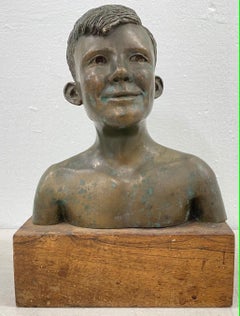
Rex Dietderich "Frank, Age 14" Original Bronze Sculpture c.1970
Located in San Francisco, CA
Rex Dietderich (American, 20th C.) "Frank, Age 14" Original Bronze Sculpture C.1970s The walnut base measures 7" wide x 3.5" deep x 2.5" high The bronze bust measures 7" wide x 4" ...
Category

Impressionist Mid-20th Century Sculptures

Materials

Bronze

Polo (Wall Plaque)
Located in Fairlawn, OH
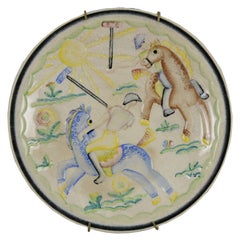
Polo (Wall Plaque) Polychromed ceramic, c. 1930-1931 Signed with the artist's initials: VS recto Cowan Pottery stamp verso References And Exhibitions: Designed by the artist while working for Cowan Pottery in 1930. One of Cowan's clients, an interior designer, requested plates decorated with different outdoor activities. Others in the series included "Swimming," "Tennis," "Golf," and "The Hunt." Condition: with the usual craquelure Size: 11 1/4 inches in diameter Industrial design democratizes high style, and Mr. Schreckengost was widely considered among the most democratic industrial designers. He made, quite literally, the stuff of life — things found routinely in homes, backyards and garages in this country and around the world. He designed bicycles for Sears and everyday china for American Limoges. He designed children’s toys and pedal cars; flashlights, furniture and fans; lawn chairs, lawn mowers...
Category

American Modern Mid-20th Century Sculptures

Materials

Ceramic

Kusama Plush Pumpkin (Kusama yellow black pumpkin)
Located in NEW YORK, NY
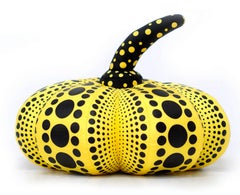
Yayoi Kusama Yellow & Black Pumpkin (plush): An iconic, vibrantly colored pop art piece - this large Kusama plush pumpkin features the universal polka dot patterns and bold colors fo...
Category

Contemporary Mid-20th Century Sculptures

Materials

Nylon

Judaica Silvered Copper Repousse Sculpture Relief Plaque Shtetl Yeshiva Bochur
Located in Surfside, FL
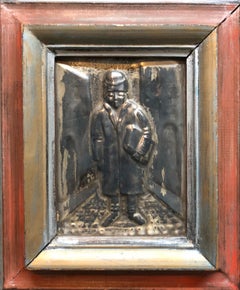
Arieh Merzer was a prominent Israeli artist and metal worker. Arie Merzer, an artist who worked in hand-hammered copper, was born in Warsaw, Poland in 1905, the scion of a large Has...
Category

Mid-20th Century Sculptures

Materials

Metal

"Carved Horse Head, " Bas-relief Mahogany Wall Sculpture by Marshall Shields
Located in Milwaukee, WI
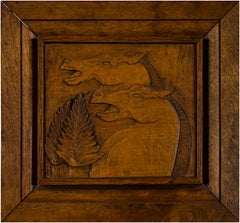
"Carved Horse Head" is a bas relief sculpture hand-carved from mahogany by Marshall "Buster" Shields. In features two horses in profile, one behind the other, rearing back with their...
Category

Modern Mid-20th Century Sculptures

Materials

Mahogany

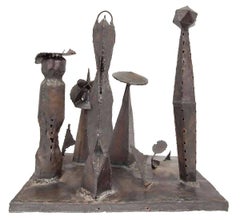
Mid Century Modern Brutalist Welded Expressionist Sculpture After Paul Evans
Located in Surfside, FL
In this bronze sculpture the artist (unknown) has welded together a group of totems or monuments into a unified piece. T Neo-Dada Abstract Sculpture: Assemblages In contrast, abstra...
Category

Abstract Expressionist Mid-20th Century Sculptures

Materials

Metal

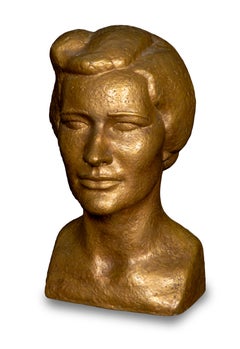
Art Deco Bronze Bust of Helen Coolidge Wooding by Burr Miller 1939
Located in Long Island City, NY
Artist: Burr Miller (1904-1958) Title: Bust of Helen Coolidge Woodring Year: 1939 Medium: Patinated Bronze, signed, titled, and dated on verso Size: 14.5 x 7.5 x 9 in. (36.83 x 19.05...
Category

Art Deco Mid-20th Century Sculptures

Materials

Bronze

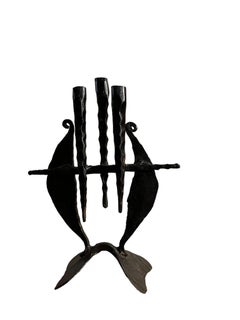
Brutalist Hand Forged Iron Sculpture Candelabra Candle Stick Israeli Art Palombo
Located in Surfside, FL
Hand Forged Iron Sconce Candelabra Holocaust Memorial Judaic table Sconce Sculpture David Palombo was an Israeli sculptor and painter. He was born in Turkey to a traditional family and immigrated to the Land of Israel with his parents in 1923. They lived in the Nahalat Shiva neighborhood of Jerusalem. In 1940 he began his studies at Bezalel Academy of Arts and Design, and from 1942 was a student of sculptor Ze’ev Ben-Zvi. For a period of time, Palombo was an assistant at Ben-Zvi’s studio and also taught at Bezalel. During this period he was also a member of the “Histadrut HaNoar HaOved VeHaLomed” (The General Federation of Students and Young Workers in Israel). In the 1940s he took art lessons at night. In 1948 he went to Paris, where he visited the studio of the sculptor Constantin Brancusi whose work influenced him. Around 1958 he married the artist Shulamit Sirota. In 1960 he quit his job to devote himself to art. In 1964 he married for the second time to the artist Yona Palombo. The two of them went to live in an abandoned home on Mount Zion in Jerusalem. In 1966 he was killed when the motorcycle on which he was riding ran into a chain stretched across the street to prevent the desecration of Shabbat. His widow opened a museum in their home that was active until the year 2000. Work by Palombo is included in the Judaic collection of the Jewish Museum (a well known Hanukkah menorah). Palombo executed the impressive metal gates of the Tent of Remembrance at the Yad Vashem, the memorial to the martyrs of the holocaust, as well as the gates to the Knesset Building the United Nations Educational Scientific and Cultural Organization (Unesco award) awarded him a scholarship for study in Japan. He worked in marble, granite, bronze, iron and steel. as well as with glass mosaic tiles. Palombo’s early works, in the 1950s, were influenced by modernist sculptors such as Brancusi. These works were composed of abstract images from nature and were carved out of stone or wood. At the end of the 1950s he began making metal sculptors, using the technique of welding. His work took on a more abstract and expressive character. Education 1940 Painting with Isidor Ascheim, New Bezalel School for Arts and Crafts, Jerusalem 1942 Sculpture with Zeev Ben Zvi, Jerusalem 1956 Mosaic, Ravenna, Italy 1958 Welding Course Awards And Prizes 1966 UNESCO Award Exhibitions: Sculpture in Israel, 1948-1958 Mishkan Museum of Art, Kibbutz Ein Harod Artists: Zvi Aldouby, Yitzhak Danziger, Arieh Merzer, Dov Feigin, Aaron Priver, David Palumbo, Menashe Kadishman, Kosso Eloul, Yehiel Shemi, Zahara Schatz. The Spring Exhibition of Jerusalem Artists, Artists' House, Jerusalem Artists: Palombo, David Bezalel Schatz, Mordechai Levanon, Fima, Ludwig Blum 12 Artists, The Bezalel National Museum, Jerusalem Avraham Ofek, Aviva Uri, Avigdor Arikha, Yosl Bergner, Lea Nikel, Palombo, Ruth Zarfati...
Category

Arte Povera Mid-20th Century Sculptures

Materials

Iron

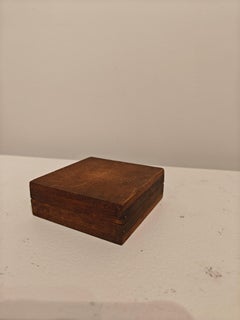
"Make 300 Holes with Any Implement: This Is My Gift" Takako Saito, Concept Art
Located in New York, NY
Takako Saito Make 300 Holes with Any Implement: This Is My Gift , 1965 Wood box containing wood frame with paper and stamped ink 3 3/8 × 3 3/8 × 1 1/4 Takako Saito is a Japanese ar...
Category

Conceptual Mid-20th Century Sculptures

Materials

Wood, Paper, Ink

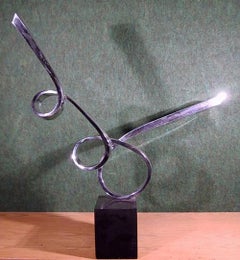
Abstract Polished Chrome Sculpture by Chinni
Located in Long Island City, NY
This chrome sculpture by Peter Chinni, from 1968, is an modern abstract expressionist work. The reflective surface of the twist adds an element of i...
Category

Abstract Expressionist Mid-20th Century Sculptures

Materials

Metal

The Princeton Tiger
Located in New York, NY
Provenance: The artist; thence by descent to his granddaughter: Rhoda Knight Kalt; from whom acquired by: Private Collection, Pennsylvania, 1995–2025. Literature: Richard Milner, Ch...
Category

Mid-20th Century Sculptures

Materials

Plaster

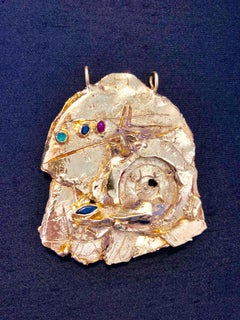
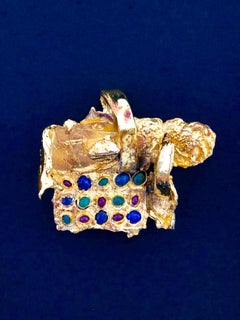
Gold Gilt Bronze Sculpture Necklace Art Israeli Tumarkin Abstract Surrealist
Located in Surfside, FL
Measures about 4 X 3.75 inches. Box frame is 17 X 13 inches. Signed by artist verso. From the literature that I have seen I believe the edition size was limited to 10, I do not know ...
Category

Modern Mid-20th Century Sculptures

Materials

Gold, Bronze

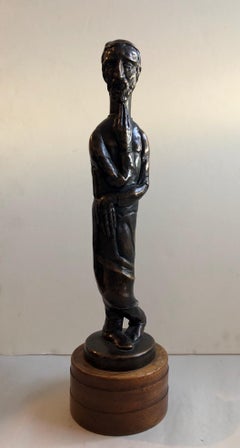
Art Deco Expressionist Bronze Judaica Rabbi Sculpture Los Angeles Modernist
By Peter Krasnow
Located in Surfside, FL
Bronze Jewish Rabbi. Original Patina. Art-deco wood carved base. It is signed with initials P.K. and marked "Calif Art Bronze Fdry LA" (California Art Bronze Foundry Los Angeles). it is not dated. PETER KRASNOW (1886-1979), Russian-Ukrainian, American artist painter and sculptor, born Feivish Reisberg, was a California modernist and colorist artist known for his abstract wood sculptures and architectonic hard-edge paintings and drawings which were often based on Hebrew calligraphy and other subjects related to his Jewish heritage...
Category

Expressionist Mid-20th Century Sculptures

Materials

Bronze

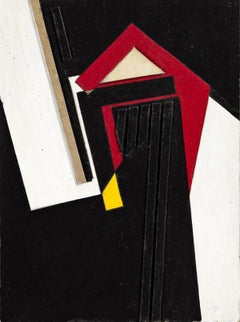
"Untitled, " Seymour Fogel, Geometric Abstraction, Texas Hard-Edge
Located in New York, NY
Seymour Fogel Untitled Oil on illustration board construction 10 x 7 1/2 inches Provenance: Estate of the artist Charles and Faith McCracken Larry and Trish Heichel Private Collection Seymour Fogel was born in New York City on August 24, 1911. He studied at the Art Students League and at the National Academy of Design under George Bridgeman and Leon Kroll. When his formal studies were concluded in the early 1930s he served as an assistant to Diego Rivera who was then at work on his controversial Rockefeller Center mural. It was from Rivera that he learned the art of mural painting. Fogel was awarded several mural commissions during the 1930s by both the Works Progress Administration (WPA) and the Treasury Section of Fine Arts, among them his earliest murals at the Abraham Lincoln High School in Brooklyn, New York in 1936, a mural in the WPA Building at the 1939-1940 New York World's Fair, a highly controversial mural at the U.S. Post Office in Safford, Arizona (due to his focus on Apache culture) in 1941 and two murals in what was then the Social Security Building in Washington, D.C., also in 1941. Fogel's artistic circle at this time included Phillip Guston, Ben Shahn, Franz Kline, Rockwell Kent and Willem de Kooning. In 1946 Fogel accepted a teaching position at the University of Texas at Austin and became one of the founding artists of the Texas Modernist Movement. At this time he began to devote himself solely to abstract, non-representational art and executed what many consider to be the very first abstract mural in the State of Texas at the American National Bank in Austin in 1953. He pioneered the use of Ethyl Silicate as a mural medium. Other murals and public works of art done during this time (the late 1940s and 1950s) include the Baptist Student Center at the University of Texas (1949), the Petroleum Club in Houston (1951) and the First Christian Church, also in Houston (1956), whose innovative use of stained glass panels incorporated into the mural won Fogel a Silver Medal from the Architectural League of New York in 1958. Fogel relocated to the Connecticut-New York area in 1959. He continued the Abstract Expressionism he had begun exploring in Texas, and began experimenting with various texturing media for his paintings, the most enduring of which was sand. In 1966 he was awarded a mural at the U.S. Federal Building in Fort Worth, Texas. The work, entitled "The Challenge of Space", was a milestone in his artistic career and ushered in what has been termed the Transcendental/Atavistic period of his art, a style he pursued up to his death in 1984. Painted and raw wood sculpture...
Category

Abstract Geometric Mid-20th Century Sculptures

Materials

Oil, Board

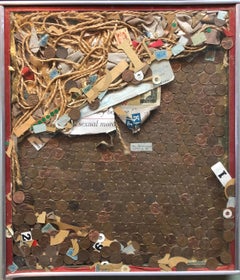
Assemblage Collage Painting/Sculpture with Pennies and Scrap Civil Rights Artist
By William R. Christopher
Located in Surfside, FL
Titled "In G-d We Trust" signed dated and titled verso. there is also a gallery label. Mixed Media wall hanging in a pop art style. Background of pennies and then the foreground is l...
Category

American Modern Mid-20th Century Sculptures

Materials

Mixed Media

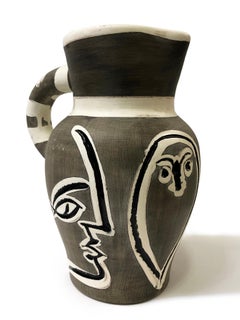
Pichet Gravé Gris (Ceramic Pitcher)
Located in Aventura, FL
White earthenware ceramic pitcher painted in black, white and grey patina with knife engraving and partial brushed glaze. Inscribed 'Edition Picasso' in black and with the Edition P...
Category

Cubist Mid-20th Century Sculptures

Materials

Earthenware, Ceramic

Trapeze Artists
By Gérard Koch
Located in Long Island City, NY
Artist: Gerard Koch, French (1926 - ) Title: Trapeze Artists Year: circa 1962 Medium: Bronze Sculpture Size: 18 in. x 34 in. x 7 in. (45.72 cm x 86.36 ...
Category

Expressionist Mid-20th Century Sculptures

Materials

Bronze

Gold Gilt Bronze Sculpture Brooch Art Israeli Tumarkin Abstract Surrealist
Located in Surfside, FL
Measures about 4 X 3.75 inches. Box frame is 17 X 13 inches. Signed by artist verso. From the literature that I have seen I believe the edition size was limited to 10, I do not know ...
Category

Modern Mid-20th Century Sculptures

Materials

Gold, Bronze

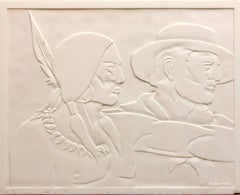
Rare Milk Glass Carved Sculpture Panel Cowboy Indian WPA Artist Americana
By Abraham Harriton
Located in Surfside, FL
This is a carved glass panel. I belive this is milk glass. it is a classic Americana scene of a cowboy or frontier trapper and an Indian or Native American with a feathered headdress...
Category

Realist Mid-20th Century Sculptures

Materials

Glass

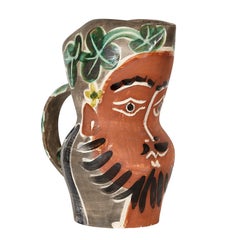
Pablo Picasso Le barbu (A. R. 217) Bearded Man Pitcher
Located in Miami, FL
PABLO PICASSO (1881-1973) Le barbu (A. R. 217) Terre de faïence pitcher, painted in colors and partially glazed, 1953, from the edition of 500, inscribed 'Edition Picasso' and 'Mado...
Category

Modern Mid-20th Century Sculptures

Materials

Ceramic

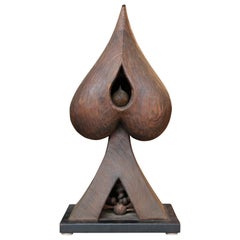
Modern Abstract Texas Surrealist Carved Wooden Spade Sculpture
Located in Houston, TX
Modern surrealist abstract wooden sculpture by Texas artist Roy Fridge. The work features a prominent spade shape with two open recesses. The top opening exposes a teardrop shape and the bottom shows more machine-like forms. Currently mounted onto a stable, black base. Artist Biography: A native of Beeville, Fridge was an only child who made his own toys. After serving in the U.S. Navy, he graduated from Baylor University in Waco with a degree in filmmaking. In the 1960s, he and his best friends, sculptors Jim Love and Dave McManaway, became known as the "unholy trio" of Texas contemporary art. In 1963, Fridge left a career in television advertising and "ran away to the beach." He settled in the sleepy town of Port Aransas...
Category

Modern Mid-20th Century Sculptures

Materials

Wood

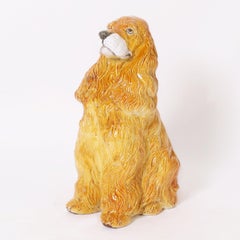
Vintage Italian Glazed Terra Cotta Dog or Cocker Spaniel
Located in Palm Beach, FL
Charming mid century Italian life size cocker spaniel sculpture or figure crafted in terra cotta, hand decorated and glazed.
Category

Other Art Style Mid-20th Century Sculptures

Materials

Terracotta

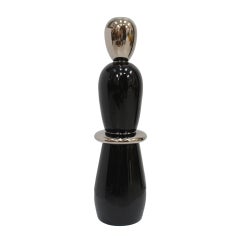
Silver Black Totem Designed by Alessandro Mendini. Italy
Located in Madrid, MD
Totem designed by Alessandro Mendini (1931-2019), crafted in ceramic with a high-gloss glaze. This unique piece is composed of four independent sections, allowing it to be fully deta...
Category

Post-Modern Mid-20th Century Sculptures

Materials

Porcelain

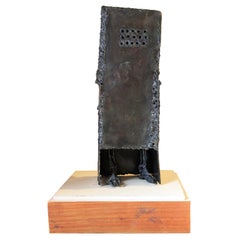
Modern Brutalist Metal Sculpture of an Abstract Skeletal Figure in a Locker
Located in Houston, TX
Modern abstract brutalist metal sculpture by Houston artist Bob Fowler. The work features a skeletal figure welded in a box or locker. Firmly attached to a white and natural wood bas...
Category

Modern Mid-20th Century Sculptures

Materials

Metal

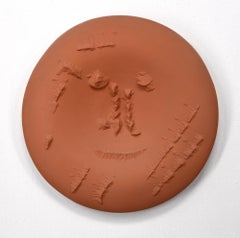
Visage de face (Full-face Face), A.R. 508
Located in Palo Alto, CA
Created in 1963, ceramic Visage de face (Full-face Face) A.R. 508 is a round plate of red earthenware clay from the edition of 100. This work is stamped with the 'MADOURA PLEIN FEU' ...
Category

Modern Mid-20th Century Sculptures

Materials

Ceramic, Clay, Earthenware

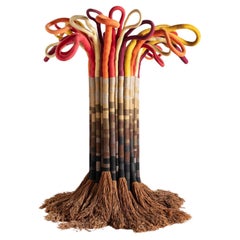
Large Scale Freestanding Fiber Art Sculpture by Jane Knight Titled The Tree
Located in Dallas, TX
This monumental abstract fiber art sculpture was created in the mid-1960s by renowned Detroit artist, Jane Knight. She is best known for her elaborate large-scale wall textile installations...
Category

Mid-20th Century Sculptures

Materials

Wool

Petite Femme Chiffonnèe
Located in Villafranca Di Verona, IT
Numbered and limited to 8 copies Artwork signed Authenticity: Sold with certificate of Authenticity Invoice from the gallery Sculpture: bronze, metal, bronze patina Display: The sc...
Category

Other Art Style Mid-20th Century Sculptures

Materials

Metal, Bronze

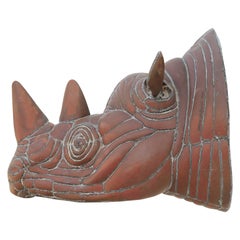
Modern Abstract Rhino Head Metal Sculpture
Located in Houston, TX
Abstract metal rhino head metal sculpture by Mexican artist and sculptor. Signed and editioned by artist at the left side. Artist Biography: Sergio Bustam...
Category

Abstract Mid-20th Century Sculptures

Materials

Metal

20th Century Carved Exotic Wood Oriental Sculpture Fisherman and Fish, 1960s
Located in Vicoforte, IT
Oriental sculpture from the mid-20th century. Finely carved and crafted exotic wooden object depicting a fisherman with fish, of good quality. Sculpture made from a single wooden blo...
Category

Mid-20th Century Sculptures

Materials

Wood

20th Century Plaster French Art Deco Style Sailor Sculpture, 1940s
Located in Vicoforte, IT
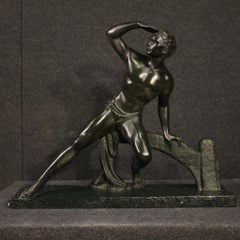
French sculpture from the mid-20th century. Plaster work depicting a Sailor in Art Deco style, copy of the famous Meurice ceramic, Ideal Man scanning the...
Category

Mid-20th Century Sculptures

Materials

Chalk

Woman with Lowered Head
Located in New York, NY
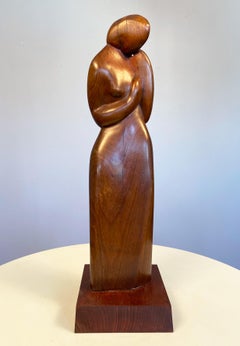
Joseph Goethe was one of our finest American modernist carvers in wood. He loved to use exotic and or beautiful woods to inspire his compositions which ranged from figurative, to an...
Category

American Modern Mid-20th Century Sculptures

Materials

Mahogany

Antonio de Fillipo Bronze Sculpture, Great Dane
Located in Phoenix, AZ
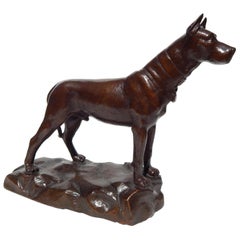
This wonderful bronze by Antonio de Fillipo (1900-1993) depicts the regal Great Dane. It bears a warm, satiny patina and is in excellent condition. The dog stands 10" high x 13" long...
Category

Mid-20th Century Sculptures

Materials

Bronze

"Untitled #2 (Tupperware)" Red, Yellow, White Realistic Beeswax Cup Sculpture
Located in Houston, TX
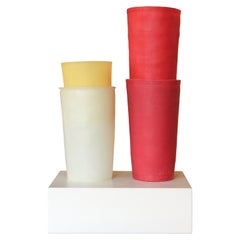
Modern collection of realistically rendered tupperware cups made out of beeswax and pigment by California artist George Stoll. The piece features a set of...
Category

Pop Art Mid-20th Century Sculptures

Materials

Wax, Pigment

Mid-Century Glazed Terra Cotta Dachshund or Dog Sculpture
Located in Palm Beach, FL
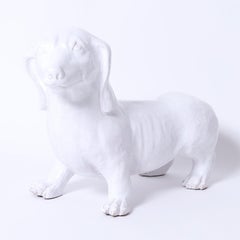
Italian terra cotta dachshund or doggy with a white glaze and realistic form ready to be rescued.
Category

Other Art Style Mid-20th Century Sculptures

Materials

Terracotta, Glaze

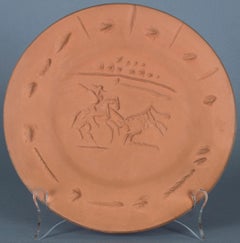
Picador, 1953 A.R. 200
Located in Palo Alto, CA
Capturing the moment in which the picador stabs the charging bull with his lance, Picasso creates an image of action and suspense in Pablo Picasso ceramic Picador...
Category

Modern Mid-20th Century Sculptures

Materials

Earthenware

Untitled
By Tony Rosenthal
Located in New York, NY
This stunning Mid Century Modern welded bronze sculpture was realized by the esteemed 20th Century artist Tony Rosenthal circa 1965. Signed and dated by the artist (and with an inclu...
Category

Abstract Expressionist Mid-20th Century Sculptures

Materials

Bronze

Maquette for Laureate (unique sculpture)
Located in New York, NY
Seymour Lipton Maquette for Laureate, ca. 1968-1969 Nickel silver on monel metal Unique 18 × 8 1/2 × 7 inches Marlborough-Gerson Gallery, New York Acquired from the above by the previous owner, 1969 thence by descent Christie's New York: Monday, June 30, 2008 [Lot 00199] Acquired from the above Christie's sale This unique sculpture by important Abstract Expressionist sculptor Seymour Lipton is a maquette of the monumental sculpture "Laureate" - one of Lipton's most iconic and influential works located on the Riverwalk in downtown Milwaukee, Wisconsin. Laureate is a masterpiece that was commissioned by the Allen-Bradley Company in memory of Harry Lynde Bradley and as an enhancement for the newly constructed Performing Arts Center. It is located on the east bank of the Milwaukee River at 929 North Water Street. The Bradley family in Milwaukee were renowned patrons of modernist sculpture, known for their excellent taste who also founded an eponymous sculpture park. For reference only is an image of the monumental "Laureate" one of Milwaukee's most beloved public sculptures. According to the Smithsonian, which owns a different unique variation of this work, "The full-size sculpture Laureate was commissioned by the Marcus Center for the Performing Arts in Milwaukee. In the initial drawings, Seymour Lipton combined details from the architectural plan with a wide variety of images, ranging from musical instruments to a lighthouse on the island of Tobago. He transformed the basic shapes from these sketches into a welded sculpture, which evokes a figure composed of columns, harp strings, and coiled rope. Lipton created this piece to celebrate achievement in the arts. The dramatic silhouette commands your attention, reflecting the title Laureate, which means worthy of honor and distinction. The final version of the piece is over twelve feet high and stands out against the pale, flat buildings of the arts center.,," Provenance Marlborough-Gerson Gallery, New York Acquired from the above by the previous owner, 1969 thence by descent Christie's New York: Monday, June 30, 2008 [Lot 00199] Acquired from the above Christie's sale About Seymour Lipton: Born in New York City in 1903, Seymour Lipton (1903-1986) grew up in a Bronx tenement at a time when much of the borough was still farmland. These rural surroundings enabled Lipton to explore the botanical and animal forms that would later become sources for his work. Lipton’s interest in the dialogue between artistic creation and natural phenomena was nurtured by a supportive family and cultivated through numerous visits to New York’s Museum of Natural History as well as its many botanical gardens and its zoos. In the early 1920s, with the encouragement of his family, Lipton studied electrical engineering at Brooklyn Polytechnic Institute and pursued a liberal arts education at City College. Ultimately, like fellow sculptor Herbert Ferber, Lipton became a dentist, receiving his degree from Columbia University in 1927. In the late 1920s, he began to explore sculpture, creating clay portraits of family members and friends. In addition to providing him with financial security, dentistry gave Lipton a foundation in working with metal, a material he would later use in his artwork. In the early 1930s, though, Lipton’s primary sculptural medium was wood. Lipton led a comfortable life, but he was also aware of the economic and psychological devastation the Depression had caused New York. In response, he generally worked using direct carving techniques—a form of sculpting where the artist “finds” the sculpture within the wood in the process of carving it and without the use of models and maquettes. The immediacy of this practice enabled Lipton to create a rich, emotional and visual language with which to articulate the desperation of the downtrodden and the unwavering strength of the disenfranchised. In 1935, he exhibited one such early sculpture at the John Reed Club Gallery in New York, and three years later, ACA Gallery mounted Lipton’s first solo show, which featured these social-realist-inspired wooden works. In 1940, this largely self-taught artist began teaching sculpture at the New School for Social Research, a position he held until 1965. In the 1940s, Lipton began to devote an increasing amount of time to his art, deviating from wood and working with brass, lead, and bronze. Choosing these metals for their visual simplicity, which he believed exemplified the universal heroism of the “everyman,” Lipton could also now explore various forms of abstraction. Lipton’s turn towards increasing abstraction in the 1940s allowed him to fully develop his metaphorical style, which in turn gave him a stronger lexicon for representing the horrors of World War II and questioning the ambiguities of human experience. He began his metal work with cast bronze sculptures, but, in 1946, he started welding sheet metal and lead. Lipton preferred welding because, as direct carving did with wood, this approach allowed “a more direct contact with the metal.”[ii] From this, Lipton developed the technique he would use for the remainder of his career: “He cut sheet metal, manipulated it to the desired shapes, then joined, soldered, or welded the pieces together. Next, he brazed a metal coating to the outside to produce a uniform texture.”[iii] In 1950, Lipton arrived at his mature style of brazing on Monel metal. He also began to draw extensively, exploring the automatism that abstract expressionist painters were boasting at the time. Like contemporaries such as Jackson Pollock, Lipton was strongly influenced by Carl Jung’s work on the unconscious mind and the regenerative forces of nature. He translated these two-dimensional drawings into three-dimensional maquettes that enabled him to revise his ideas before creating the final sculpture.The forms that Lipton produced during this period were often zoomorphic, exemplifying the tension between the souls of nature and the automatism of the machine. In the years following the 1950s, Lipton’s optimism began to rise, and the size of his work grew in proportion. The oxyacetylene torch—invented during the Second World War—allowed him to rework the surfaces of metal sculptures, thus eliminating some of the risks involved with producing large-scale finished works. In 1958, Lipton was awarded a solo exhibition at the Venice Biennale and was thus internationally recognized as part of a small group of highly regarded avant-garde constructivist sculptors. In 1960, he received a prestigious Guggenheim Award, which was followed by several prominent public commissions, including his heroic Archangel, currently residing in Lincoln Center’s David Geffen Hall. A number of important solo exhibitions of his work followed at The Phillips Collection in Washington, DC (1964); the Milwaukee Art Center and University of Wisconsin, Milwaukee (1969); the Virginia Museum of Fine Arts in Richmond (1972); the Everson Museum in Syracuse, NY (1973); the Herbert E. Johnson Museum of Art of Cornell University in Ithaca, NY (1973); the National Collection of Fine Arts, Smithsonian Institution (now the Smithsonian American Art Museum) in Washington, DC (1978); and a retrospective in 1979 at The Jewish Museum in New York. In 1982 and 1984 alone, two exhibitions of his sculpture, organized respectively by the Mint Museum (Charlotte, NC) and the Hillwood Art Gallery of Long Island University (Greenvale, NY), traveled extensively across museums and university galleries around the nation. In 2000, the traveling exhibition An American Sculptor: Seymour Lipton was first presented by the Palmer Museum of Art of Pennsylvania State University in University Park. Most recently, in 2009, the Ackland Art Museum in Chapel Hill, NC mounted The Guardian and the Avant-Garde: Seymour Lipton’s Sentinel II in Context. Since 2004, Michael Rosenfeld Gallery has been the exclusive representative of the Estate of Seymour Lipton and has presented two solo exhibitions of his work—Seymour Lipton: Abstract Expressionist Sculptor (2005) and Seymour Lipton: Metal (2008). In 2013, Michael Rosenfeld Gallery presented Abstract Expressionism, In Context: Seymour Lipton, which included twelve major sculptures by the artist, along with works by Charles Alston, Norman Bluhm, Beauford Delaney, Willem de Kooning, Jay DeFeo, Michael Goldberg, Adolph Gottlieb, Hans Hofmann, Lee Krasner, Norman Lewis, Conrad Marca-Relli, Boris Margo, Alfonso Ossorio, Richard Pousette-Dart, Milton Resnick, Charles Seliger...
Category

Abstract Expressionist Mid-20th Century Sculptures

Materials

Metal, Silver

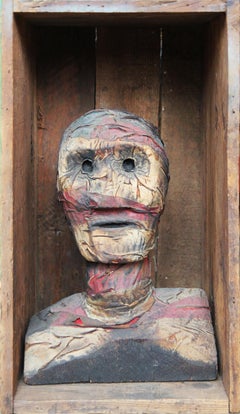
Modern Texas Mixed Media Sculpture of a Mummified Portrait Bust in a Box / Crate
Located in Houston, TX
Modern mixed media sculpture by Texas artist Roy Fridge. The work features a mummified portrait bust encased in a red, white, and blue flag placed in a wooden box or crate. Artist Biography: A native of Beeville, Fridge was an only child who made his own toys. After serving in the U.S. Navy, he graduated from Baylor University in Waco with a degree in filmmaking. In the 1960s, he and his best friends, sculptors Jim Love and Dave McManaway, became known as the "unholy trio" of Texas contemporary art. In 1963, Fridge left a career in television advertising and "ran away to the beach." He settled in the sleepy town of Port Aransas...
Category

Modern Mid-20th Century Sculptures

Materials

Mixed Media

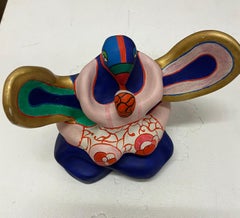
Tantric couple
Located in PARIS, FR
Rare and beautiful sculpture by Niki de Saint Phalle, certificate by Niki de Saint Phalle Foundation. Some small lacks of gilding on the wings of the bird.
Category

French School Mid-20th Century Sculptures

Materials

Resin, Paint

Welded Brushed Steel Sculpture - geometric abstraction (Unique, signed)
By Michael Todd
Located in New York, NY
Michael Todd Welded Brushed Steel Sculpture - geometric abstraction, 1968 Welded Brushed Steel Hand signed and dated 1968 in marker on surface....
Category

Abstract Geometric Mid-20th Century Sculptures

Materials

Steel

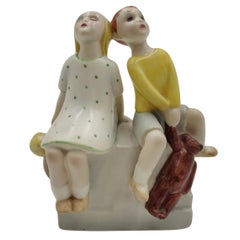
Decorated "Bambini" pottery, 1930s, Manifattura Lenci, Italy
Located in Vicenza, VI
Lenci is a company founded in 1919, in Turin, by Enrico Scavini. Initially it was involved in the production of dolls, furniture and baby furniture, but also in a particular fabric n...
Category

Other Art Style Mid-20th Century Sculptures

Materials

Ceramic

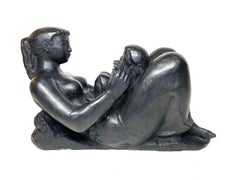
Maternitè allongee (petite)
Located in Villafranca Di Verona, IT
Numbered and limited to 8 copies Artwork signed Authenticity: Sold with certificate of Authenticity Invoice from the gallery Sculpture: bronze, metal, bronze patina Display: The s...
Category

Other Art Style Mid-20th Century Sculptures

Materials

Metal, Bronze

Sheeba
Located in Indianapolis, IN
Embossed monogram signature. Referenced in "Beyond Time; The Art of Alfred Van Loen" SunStorm c.1993, p. 38. Van Loen was a highly influential modern artist and teacher of German de...
Category

Modern Mid-20th Century Sculptures

Materials

Plaster, Wood

Sculpture of female head done by Werkstatte Hagenauer Wien
Located in Houston, TX
Sculpture of female head, silvered plated brass. Inscribed on the bottom, "Werkstätte Hagenauer Wien" Austria, c. 1930s 16"h x 10.5"w x 3.5"d
Category

Art Deco Mid-20th Century Sculptures

Materials

Brass

Opus 531
Located in Zug, CH
A unique cast in silver of a Robert Klippel Opus.
Category

Abstract Mid-20th Century Sculptures

Materials

Silver

Harry Bertoia Melt Pressed Bronze Figural Sculpture, 1970s
Located in Dallas, TX
A figurative vertical form with two protrusions on top constructed of melt pressed bronze (heated numerous times, squeezed, and shaped. Includes provenance and hand-signed COA from t...
Category

Mid-20th Century Sculptures

Materials

Bronze

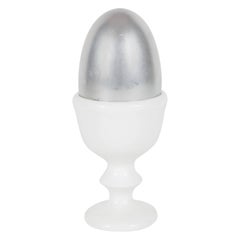
Pop Art Sculpture of a Silver Egg by Herbert Distel, circa 1968
By Herbert Distel
Located in New York, NY
This sculpture, in the form of a silver electroplated egg with a white porcelain holder, represents esteemed Swiss artist Herbert Distel's most iconic form. He created a 22-ton egg d...
Category

Pop Art Mid-20th Century Sculptures

Materials

Silver

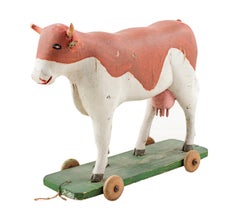
"Cow Pull Toy - Folk Art, " Carved and Painted Wood created circa 1930
Located in Milwaukee, WI
"Cow Pull Toy" is a carved and painted wood sculpture by an unknown folk artist. The sculpture is 9 1/4" long and 7 1/4" high.
Category

Folk Art Mid-20th Century Sculptures

Materials

Wood

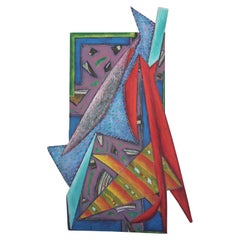
Large Sculptural Cubist Abstract Painting
Located in Houston, TX
Large colorful sculptural abstract painting by Texas artist Patrick Cronin. Painted with acrylic paint and mixed media, dated 1986.
Category

Abstract Mid-20th Century Sculptures

Materials

Mixed Media

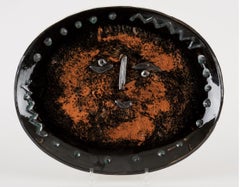
Visage dans un ovale, Multiple, Picasso, 1950 s, Portrait, Abstract, Design
Located in Geneva, CH
Visage dans un ovale, Multiple, Picasso, 1950's, Portrait, Abstract, Design Visage dans un ovale Ed. 100 pcs 08.04.1955 White earthenware clay, engobe ground engraved by knife under...
Category

Post-War Mid-20th Century Sculptures

Materials

Ceramic, Earthenware

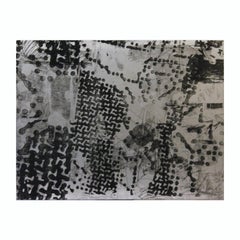
Abstract Geometric Modern Metal Etching
Located in Houston, TX
Modern geometric etching on a metal sheet in an abstract style. The piece is not framed. Artist Biography: Dick Wray, a native Houstonian, born in Heights Hospital in 1933 was prima...
Category

Abstract Mid-20th Century Sculptures

Materials

Metal

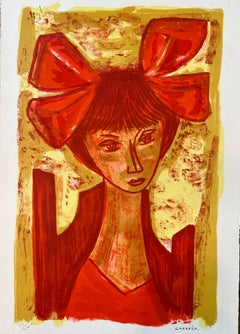
Portrait
Located in Belgrade, MT
This lithograph is a piece of my private collection from artists of the 20th Century. It is original, signed by artist and numbered 217/220. It is vibrant in color and in very good...
Category

Abstract Expressionist Mid-20th Century Sculptures

Materials

Plate Glass, Oil, Lithograph, Watercolor
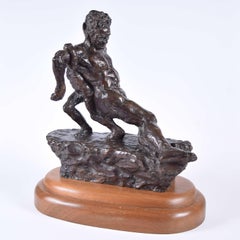
Fredda Brilliant, The Young Atlas bronze sculpture
Located in London, GB
Fredda Brilliant (1903-1999) 'The Young Atlas' Bronze 52.5 x 41.5 x 27.5; 16kg Fredda Brilliant was a Polish sculptor and actress, born in Łódź, Pola...
Category

Mid-20th Century Sculptures

Materials

Bronze

Read More

At Hosfelt Gallery, Bertoia Masterworks Complement Dynamic Contemporary Art

For nearly three decades, San Francisco–based Todd Hosfelt has curated against the grain — with a show on the legendary modernist Harry Bertoia the latest case in point.

This Weathered-Steel Sculpture Distills a Form of Protest into a Minimalist Monument

Part of Alejandro Vega Beuvrin’s “Barricada” series, the work is a subversive tribute to the street smarts of citizen activists.

How the Chunky, Funky Ceramics of 5 Mid-Century American Artists Balanced Out Slick Modernism

Get to know the innovators behind the pottery countercultural revolution.

Art Brings the Drama in These Intriguing 1stDibs 50 Spaces

The world’s top designers explain how they display art to elicit the natural (and supernatural) energy of home interiors.

Chryssa’s 1962 Neon Sculpture Was Way ahead of the Art-World Curve

By working with lettering, neon and Pop imagery, Chryssa pioneered several postmodern themes at a time when most male artists detested commercial mediums.

How to Spot a Fake KAWS Figure

KAWS art toys have developed an avid audience in recent decades, and as in any robust collectible market, counterfeiters have followed the mania. Of course, you don’t have to worry about that on 1stDibs, where all our sellers are highly vetted.

A Giant Wedding Cake Has Us Looking at Portuguese Tiles in a New Light

At Waddesdon Manor, artist Joana Vasconcelos has installed a three-tiered patisserie inspired by the narrative tile work of her homeland. We take a look at the cake sculpture and how Portuguese tiles have been used in architecture from the 17th century to today.

These Soft Sculptures Are Childhood Imaginary Friends Come to Life

Miami artist and designer Gabriela Noelle’s fantastical creations appeal to the Peter Pan in all of us.