Expressionist Art

EXPRESSIONIST STYLE

While “expressionist” is used to describe any art that avoids naturalism and instead employs a bold use of flattened forms and intense brushwork, Expressionist art formally describes early-20th-century work from Europe that drew on Symbolism and confronted issues such as urbanization and capitalism. Expressionist artists experimented in paintings and prints with skewed perspectives, abstraction and unconventional, bright colors to portray how isolating and anxious the world felt rather than how it appeared. 

Between 1905 and 1920, Austrian and German artists, in particular, were inspired by Postimpressionists such as Paul Gauguin and Vincent van Gogh in their efforts to strive for a new authenticity in their work. In its geometric patterns and decorative details, Expressionist art was also marked by eclectic sources like German and Russian folk art as well as tribal art from Africa and Oceania, which the movement’s practitioners witnessed at museums and world’s fairs.

Groups of artists came together to share and promote the themes now associated with Expressionism, such as Die Brücke (The Bridge) in Dresden, which included Erich Heckel, Ernst Ludwig Kirchner and Karl Schmidt-Rottluff and investigated alienation and the dissolution of society in vivid color. In Munich, Der Blaue Reiter (The Blue Rider), a group led by Wassily Kandinsky and Franz Marc, instilled Expressionism with a search for spiritual truths. In his iconic painting The Scream, prolific Norwegian painter Edvard Munch conveyed emotional turmoil through his depiction of environmental elements, such as the threatening sky.

Expressionism shifted around the outbreak of World War I, with artists using more elements of the grotesque in reaction to the escalation of unrest and violence. Printmaking was especially popular, as it allowed artists to widely disseminate works that grappled with social and political issues amid this time of upheaval. Although the art movement ended with the rise of Nazi Germany, where Expressionist creators were labeled “degenerate,” the radical ideas of these artists would influence Neo-Expressionism that emerged in the late 1970s with painters like Jean-Michel Basquiat and Francesco Clemente.

​​Find a collection of authentic Expressionist paintings, sculptures, prints and more art on 1stDibs.

to
1,451
1,746
1,093
1,089
882
953
Overall Width
to
Overall Height
to
1
49
2,595
3,124
101
138
265
113
67
193
341
283
266
179
1
113,953
65,211
54,693
27,041
14,920
9,323
6,482
4,183
3,054
2,599
2,318
2,252
718
3,059
1,997
613
2,648
1,648
1,633
1,025
749
486
445
414
359
348
303
289
262
255
192
167
148
109
108
103
3,644
2,163
1,846
1,775
1,331
149
80
76
53
46
1,180
452
2,809
2,236
Style: Expressionist
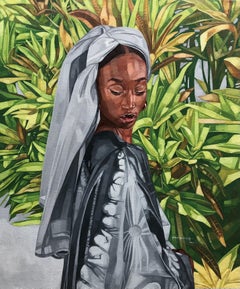
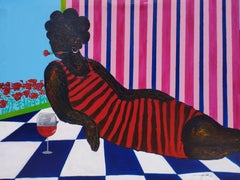
Lady In White 1 - 21st Century Contemporary, Figurative, Portrait, Women, Modern
Located in Ibadan, Oyo
She holds on to her integrity and purity. Lady in white captures a desire to be hidden, but her presence is revealed through her unquenched innermost beauty. Lady in white captures h...
Category

21st Century and Contemporary Expressionist Art

Materials

Canvas, Acrylic

Tableau n°84 by Jean Krillé - Oil on wood 75x100 cm
Located in Geneva, CH
Of Germanic descent, the painter Jean Krillé was born in 1923 in Switzerland. His father, writer and poet, oriented him towards art and culture. From the age of 16, he enrolled at th...
Category

Late 20th Century Expressionist Art

Materials

Oil

Chief American Horse - Oglalla Sioux, Lithograph by Leonard Baskin
Located in Long Island City, NY
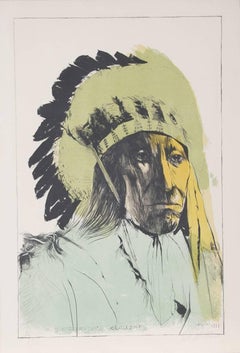
Artist: Leonard Baskin Title: Chief American Horse - Oglalla Sioux Year: 1973 Medium: Lithograph, Signed and Numbered in pencil Edition: 100 Size: 41 x 30 inches
Category

1970s Expressionist Art

Materials

Lithograph

The Family, Alice Neel
Located in Fairfield, CT
Artist: Alice Neel (1900-1984) Title: The Family Year: 1982 Medium: Lithograph on Arches paper Edition: 57/175, plus proofs Size: 31.25 x 27 inches Condition: Excellent Inscription: ...
Category

1980s Expressionist Art

Materials

Lithograph

Oil painting on canvas " Rough sea with coastline on the horizon " by Schubring
By Richard Schubring
Located in Gavere, BE
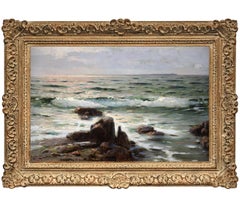
Schubring, Richard (1853-1902) Rough sea with coastline on the horizon Oil on canvas. Signed and dated lower right. “1895” Richard SCHUBRING is an artist born in 1853 and deceased...
Category

1890s Expressionist Art

Materials

Gold Leaf

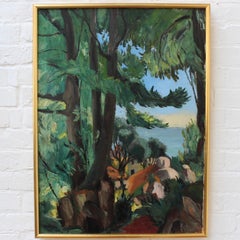
Scilla in the morning park
Located in Zofingen, AG
I poured my heart into capturing the delicate dance of morning light filtering through the trees, awakening the blue blooms below. This original oil painting embraces both vibrant ex...
Category

2010s Expressionist Art

Materials

Canvas, Oil, Cardboard

1970’s Huge French Expressionist Green Landscape Avenue of Trees, signed oil
Located in Cirencester, Gloucestershire
The Avenue of Trees French Expressionist School, signed front and back Dated 1974 oil on canvas, framed framed: 37 x 44 inches canvas: 32 x 39 inches private collection, France the p...
Category

Late 20th Century Expressionist Art

Materials

Canvas, Oil

Woman posing oil on canvas painting
Located in Sitges, Barcelona
Technical Sheet - Title: *The Secret in Her Eyes* - Artist: Rosendo González Carbonell - Technique: Oil on canvas - Dimensions: 24 x 20 inches - Framing: Unframed - Style: Romantic realism...
Category

1980s Expressionist Art

Materials

Canvas, Oil

La Dolce Vita (The Sweet Life) - 21st Century, Contemporary, Figurative, Africa
Located in Ibadan, Oyo
Shipping Procedure Ships in a well-protected tube from Nigeria This work is unique, not a print or other type of copy. Accompanied by a Certificate of Authenticity. About Artist Ola...
Category

21st Century and Contemporary Expressionist Art

Materials

Canvas, Acrylic

Marc Chagall, Eve Cursed by God, from Drawings for the Bible, 1956
Located in Southampton, NY
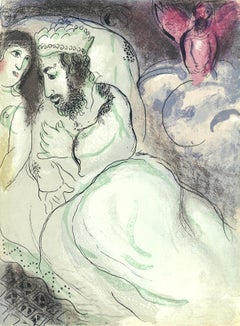
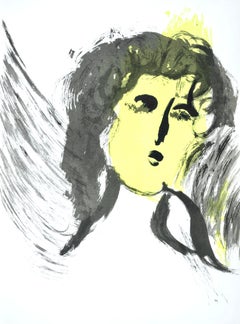
This exquisite lithograph by Marc Chagall (1887–1985), titled Eve maudite par Dieu (Eve Cursed by God), from Marc Chagall, Dessins Pour La Bible (Drawings for the Bible), Verve: Revue Artistique et Litteraire, Vol. VIII, No. 33–34, originates from the September 1956 issue published by Editions de la revue Verve, Paris, under the direction of Teriade, Editeur, Paris, and printed by Mourlot Freres, Paris, 1956. This emotionally charged composition depicts the moment of divine judgment following the fall of man, capturing both the sorrow and the spiritual gravity of Eve’s curse. Through his luminous lines and expressive symbolism, Chagall transforms this ancient scene into a universal meditation on loss, forgiveness, and the eternal bond between humanity and the divine. The work exemplifies Chagall’s mastery of merging sacred narrative and human emotion, rendered with poetic tenderness and transcendent light. The piece forms part of Chagall’s celebrated series of lithographs and drawings created for Dessins Pour La Bible, a monumental project uniting art, scripture, and mysticism in one of the artist’s most important achievements. Executed as a lithograph on velin du Marais paper, this work measures 14 x 10.5 inches (35.56 x 26.67 cm). Unsigned and unnumbered as issued. The edition exemplifies the superb craftsmanship of the Mourlot Freres atelier, renowned for its collaborations with the greatest modern masters of the 20th century. Artwork Details: Artist: Marc Chagall (1887–1985) Title: Eve maudite par Dieu (Eve Cursed by God), from Marc Chagall, Dessins Pour La Bible (Drawings for the Bible), Verve: Revue Artistique et Litteraire, Vol. VIII, No. 33–34, September 1956 Medium: Lithograph on velin du Marais paper Dimensions: 14 x 10.5 inches (35.56 x 26.67 cm) Inscription: Unsigned and unnumbered as issued Date: 1956 Publisher: Editions de la revue Verve, Paris, under the direction of Teriade, Editeur, Paris Printer: Mourlot Freres, Paris Catalogue raisonne references: Cain, Julien, and Fernand Mourlot. Chagall Lithographe. Andre Sauret, Editeur, 1960, illustrations 117–46. Cramer, Patrick, and Meret Meyer. Marc Chagall: Catalogue Raisonne Des Livres Illustrés. P. Cramer ed., 1995, illustration 25. Condition: Well preserved, consistent with age and medium Provenance: From Marc Chagall, Dessins Pour La Bible (Drawings for the Bible), Verve: Revue Artistique et Litteraire, Vol. VIII, No. 33–34, published by Editions de la revue Verve, Paris, 1956 Notes: Excerpted from the album (translated from French), This double issue of Verve is dedicated to the full reproduction in heliogravure of the one hundred-five plates etched by Marc Chagall, between 1930 and 1955, for the illustration of the Bible. The artist composed especially for the present work, sixteen lithographs in color and twelve in black, as well as the cover and the title page. This volume was completed and printed on September 10, 1956, by the Master Printers Draeger Freres for heliogravure, and by Mourlot Freres for lithography. About the Publication: Marc Chagall, Dessins Pour La Bible (Drawings for the Bible), published as Verve Vol. VIII, No. 33–34 in September 1956, represents one of the crowning achievements of Chagall’s lifelong dialogue with the sacred. Conceived and directed by the visionary publisher Teriade and printed by the master lithographers Mourlot Freres, the issue features thirty-four color lithographs and numerous black-and-white drawings inspired by biblical figures and stories. Chagall’s works for this edition unite text and image in a luminous meditation on divine creation, moral struggle, and spiritual renewal, imbued with his signature dreamlike symbolism and radiant color. Produced in postwar Paris, this landmark publication reaffirmed the enduring union of art and faith, establishing Dessins Pour La Bible as one of the most important illustrated works of the 20th century. About the Artist: Marc Chagall (1887–1985) was a Belarus-born French painter, printmaker, and designer whose visionary imagination, radiant color, and deeply poetic symbolism made him one of the most beloved and influential artists of the 20th century. Rooted in the imagery of his Jewish heritage and the memories of his childhood in Vitebsk, Chagall’s art wove together themes of faith, love, folklore, and fantasy with a dreamlike modern sensibility. His unique style—merging elements of Cubism, Fauvism, Expressionism, and Surrealism—defied categorization, transforming ordinary scenes into lyrical meditations on memory and emotion. Influenced by Russian icon painting, medieval religious art, and the modern innovations of artists such as Pablo Picasso, Henri Matisse, and Georges Braque, Chagall developed a profoundly personal visual language filled with floating figures, vibrant animals, musicians, and lovers that symbolized the transcendent power of imagination and love. During his early years in Paris, he became an integral part of the Ecole de Paris circle, forming friendships with Amedeo Modigliani, Fernand Leger, and Sonia Delaunay, and his creative spirit resonated with that of his peers and successors—Alexander Calder, Alberto Giacometti, Salvador Dali, Joan Miro, Wassily Kandinsky, Marcel Duchamp, and Man Ray—artists who, like Chagall, sought to push the boundaries of perception, emotion, and form. Over a prolific career that spanned painting, printmaking, stained glass, ceramics, and stage design, Chagall brought an unparalleled poetic sensibility to modern art, infusing even the most abstract subjects with human warmth and spiritual depth. His works are held in the most prestigious museums around the world, including the Museum of Modern Art, the Centre Pompidou, the Tate, and the Guggenheim, where they continue to inspire generations of artists and collectors. The highest price ever paid for a Marc Chagall artwork is approximately $28.5 million USD, achieved in 2017 at Sotheby’s New York for Les Amoureux (1928). Marc Chagall Eve...
Category

1950s Expressionist Art

Materials

Lithograph

Just Hold My Hands -21st Century, Contemporary, Figurative, Love Portrait Couple
Located in Ibadan, Oyo
Shipping Procedure Ships in a well-protected tube from Nigeria This work is unique; it is not a print or other type of copy. Accompanied by a Certificate of Authenticity. About Arti...
Category

21st Century and Contemporary Expressionist Art

Materials

Canvas, Oil, Acrylic

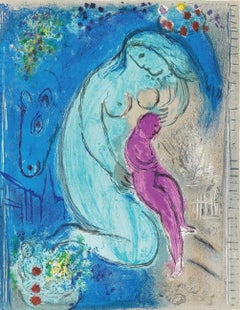
Marc Chagall, Flower Quay, from Derriere le miroir, 1954
Located in Southampton, NY
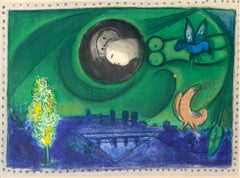
This exquisite lithograph by Marc Chagall (1887–1985), titled Quai de fleurs (Flower Quay), from the folio Derriere le miroir, No. 67–68, originates from the 1954 edition published b...
Category

1950s Expressionist Art

Materials

Lithograph

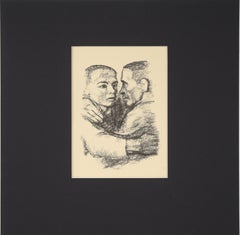
"Brotherhood" lithograph by Käthe Kollwitz
Located in Soquel, CA
Bold print of "Brotherhood" by Kathe Kollwitz (German, 1867-1945). This piece is one of the Lithographic reproductions of the original lithographs, plate 3 from a series of 10, print...
Category

1940s Expressionist Art

Materials

Paper, Ink, Lithograph

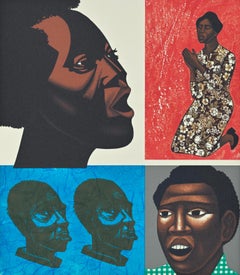
You Become What You Think About - 21st Century, Contemporary, Portrait, Women
Located in Ibadan, Oyo
Shipping Procedure Ships in a well-protected tube from Nigeria This work is unique, not a print or other type of copy. Accompanied by a Certificate of Authenticity. About Artist Eli...
Category

21st Century and Contemporary Expressionist Art

Materials

Canvas, Oil, Acrylic

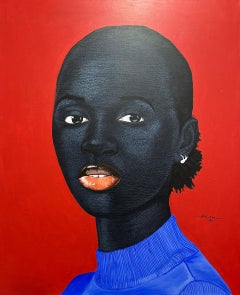
Untitled 5 - 21st Century, Contemporary, Figurative Portrait, Modern, Women
Located in Ibadan, Oyo
Shipping Procedure Ships in a well-protected tube This work is unique, not a print or other type of copy. Accompanied by a Certificate of Authenticity. About Artist Born in 1993 in...
Category

21st Century and Contemporary Expressionist Art

Materials

Canvas, Acrylic

Nude in Interior (Woman on Top) large oil painting Paula Craioveanu 39x27in
Located in Forest Hills, NY
"Nude in Interior - Woman on Top" - original large art by Paula Craioveanu Original, large, unique painting, oil on canvas, 39x27in / 100x70cm . Shipped as it is stretched ready for ...
Category

2010s Expressionist Art

Materials

Canvas, Oil

Max Eisler Eine Nachlese folio "Girlfriends II" collotype print
Located in Palm Beach, FL
After Gustav Klimt, Max Eisler #1, Die Freundinnen II; multi-color collotype after 1916/17 painting in oil on canvas which was destroyed by fire in May 1945 at Immendorf Castle Lower Austria. Eisler’s choice to begin his 1931 portfolio of works by Klimt with Girlfriends II was both bold and prescient. Just 14 years later, the painting was tragically destroyed in a fire. With such a loss, this rare and exquisite image is all the more valuable by virtue of having been made in color. In works from his late period, Klimt continued his fascination with exploring female dynamics and their various forms of love. Girlfriends II is a fine example of how space, color and ornament play a noticeable role in the evolution of his symbolic language. Wide swaths of space in the background as well as the two female forms create the structure. Klimt’s strong brushstrokes show a painterly quality and a new move toward abstraction which feels very far away from his earlier work. Nor should Klimt’s economy of line be overlooked. His draughtsmanship is what infuses the female bodies with movement, emotion and a profundity of life. Both women confront the viewer’s gaze unselfconsciously, as if they are modern-day Viennese women stepping out of a Klimtesque ukiyo-e print. Characteristic of this late period, Klimt uses ornament...
Category

1930s Expressionist Art

Materials

Paper

Giner Bueno Reparando redes original painting
Located in CORAL GABLES - MIAMI, FL
Giner Bueno (1935-2000) Reparando Las Redes Painter from Alicante, son of the painter Luis Giner Valls. He studied at the School of Arts and Crafts of Valencia and finished his stu...
Category

1990s Expressionist Art

Materials

Canvas, Acrylic

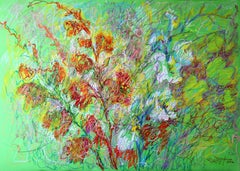
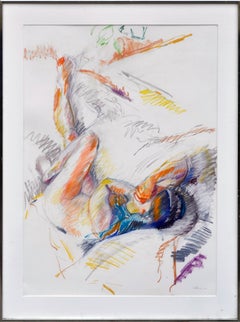
Drawing, Pastel, Ink And Colored Pencils. "Free Spirits"
Located in Bogotá, Bogotá
Pastel, Pencil, petal flowers, Color and Ink on Paper. The base of this drawing is Fabriano paper of 120g /m2. I use natural dyes of flowers, herbs, leaves, bark of trees as the fir...
Category

2010s Expressionist Art

Materials

Paper, Pastel, Ink, Pencil, Color Pencil

"Death Takes The Children" lithograph by Käthe Kollwitz
Located in Soquel, CA
Bold print of "Death Takes the Children" by Kathe Kollwitz (German, 1867-1945). This piece is one of the Lithographic reproductions of the original lithographs, plate 9 from a series...
Category

1940s Expressionist Art

Materials

Paper, Ink, Lithograph

Tree Landscape - Oil on Panel 1940´s
Located in Stockholm, SE
A vibrant painting depicting an avenue lined with poplar trees in fall colors, prominently featuring a very large, centrally placed yellow poplar. Possibly an American poplar. The artist, Agda Holst, has employed a diverse palette of colors to the poplars, creating a dynamic and colorful composition. This oil on panel is signed and dated by Holst in 1948. The work exemplifies her use of color and form, characteristics that defined her artistic practice throughout her career. Agda Holst was a Swedish modernist painter known for her precise study of form, stylized compositions, and ability to merge structured geometry with expressive color. Her works, often still lifes, portraits, and figure studies, reflect a balance between naturalistic representation and modernist influences such as Cubism and New Objectivity. Holst's artistic journey began in 1907 at the Académie Colarossi in Paris, where she studied under Christian Krohg. Seeking further refinement, she moved to Munich between 1910 and 1911, studying with Julius Exter, known for his teachings in portrait and genre painting. In 1911–1912, she returned to Paris to study under Kees van Dongen, whose bold use of color and strong contrasts left a lasting impression on her work. The early 1920s marked another period of study in Paris, this time under André Lhote, who instilled in her a structured approach to composition and geometric clarity. Holst’s first public exhibition took place in 1916, when she displayed paintings in a bookstore...
Category

1940s Expressionist Art

Materials

Oil, Panel

Sailors in the Port of Nice
Located in London, GB
'Sailors in the Port of Nice', mixed media - gouache, pastel and oil on paper, by Alfred Salvignol (circa 1950s). The Port of Nice is one of the key hubs of Nice and, in fact, of the entire French Riviera, standing out as one of the main harbours for the boats which sail across the Mediterranean Sea. It accommodates both the ships operated by ferry companies and the private yachts of visitors who come to Nice by sea. The artist here depicts a group of crusty sailors watching...
Category

1950s Expressionist Art

Materials

Paper, Pastel, Oil, Gouache

Lion
Located in Zofingen, AG
"Lion" depicts the majestic presence and serene strength of the lion, a symbol of power and dignity. An expressive palette and textural brushstrokes...
Category

2010s Expressionist Art

Materials

Canvas, Oil

Beautful sea
Located in Zofingen, AG
In this painting, I captured the vibrant essence of the ocean's spirit. Using oil paints, I melded expressionism with realism to convey the raw, untamed beauty of the sea. The stroke...
Category

2010s Expressionist Art

Materials

Canvas, Oil, Linen

Beautful sea
Beautful sea
$713 Sale Price
20% Off
German Expressionist drawing by Carl Hofer of one of his models
Located in Petworth, West Sussex
Carl Hofer (German, 1875 – 1955) Das Modell (The artist’s model) Black crayon on paper Signed with monogram ‘CH’ (lower right) 18 x 14.1/8 in. (45.8 x 36 cm.) Provenance: These works come from the artist’s second wife Elizabeth and from then by descent. Carl Hofer was a German expressionist painter and the director of the Berlin Academy of Fine Arts. One of the most important painters of the Expressionist movement, his work was among those that was considered degenerate art by the Nazis. He studied in Karlsruhe under Hans Thoma. He first visited Paris in 1899 making acquaintance with Julius Meier-Graefe. In 1902 he studied in Stuttgardt and became friends with the sculptor Hermann Haller...
Category

20th Century Expressionist Art

Materials

Paper, Crayon

French Expressionist Landscape, The Abri at L Olivette, Cap d Antibes
Located in Cotignac, FR
A French Expressionist oil on canvas landscape of countryside at L'Olivette, Cap d'Antibes on the French Riviera, by Germain Bonel. The painting is signed bottom right and signed, dated and titled to the back of the canvas. A strong and impactful composition of the trees and forest leading down to the sea wall and then the Mediterranean beyond at the Port (or 'Abri' as it is also known) of l'Olivette on the west coast of Cap d'Antibes, the iconic location in the South of France. This former small traditional fishing port from the beginning of the twentieth century is now converted into a picturesque little marina on Cap d'Antibes, with its rocky cove, its beach, its pine forest, its umbrella pines, olive trees, fig trees, and agaves and its famous 'Villa Aujourd'hui' a modernist residence built by American architect Barry Dierks (1899-1960) in 1938 for socialite Mrs. Audrey Chadwick. L'Olivette has a privileged panoramic view of the Gulf of Juan, and the coastal shores of Cap d'Antibes, Juan-les-Pins, Golfe-Juan, and the Pointe Croisette of Cannes. Germain Bonel (5 August 1913 – 2002) was a French painter of Catalan origin. From 1967 to 1983, he was a professor of drawing and painting at the Perpignan School of Fine Arts. From 1969 to 1978, he also taught art in the schools of Saint-Cyprien-village and Saint-Cyprien-Plage. Germain Bonel's painting is both expressionist and decorative. Georges-Henry Gourrier said of him: "Germain Bonel's painting expresses [quite naturally] the singular beauty of forms, the radiant force of colour, the deepening of matter and the tenderness of the things of life. His work appears to be a painting of plenitude." From 1941 to 1945, Germain Bonel studied drawing at the Municipal School of Fine Arts in Perpignan. He won first prize in 1945. Out of competition, he continued his studies at the same school from 1945 to 1948 and he regularly exhibited his works at the annual exhibition held at the Salle Arago in Perpignan. Germain Bonel met François Desnoyer in 1950 and introduced him to the Catalan artistic milieu. He was admitted to the Salon d'Automne in Paris in 1951 and exhibited until 1961, when he became a member of the salon. As early as 1951 a commentary said, "with the canvas hanging...
Category

Mid-20th Century Expressionist Art

Materials

Canvas, Oil

Bubbleworld, Painting, Acrylic on Canvas
Located in Yardley, PA
Light entering shallow coral reefs where life is plenty, harmonious and colorful, the idea behind Jorge Calero´s artwork relies on a lyric, joyful, and enlighted vision of optimisti...
Category

2010s Expressionist Art

Materials

Acrylic

Head of A Man, Expressionist Lithograph by Alberto Giacometti
Located in Long Island City, NY
Alberto Giacometti, Swiss (1901 - 1966) - Head of A Man from Derriere Le Miroir no. 127, Year: 1961, Medium: Lithograph, Edition: ~2500, Size: 15 x 11 in. (38.1 x 27.94 cm), Publ...
Category

1960s Expressionist Art

Materials

Lithograph

"Untitled": Lithograph from One Cent Life
Located in Austin, TX
Artist: Pierre Alechinsky Title: "Untitled": Lithograph from One Cent Life Year: 1964 Medium: 2 page lithograph, as printed from One Cent Life As printed with Walasse Ting poem, fro...
Category

1960s Expressionist Art

Materials

Lithograph

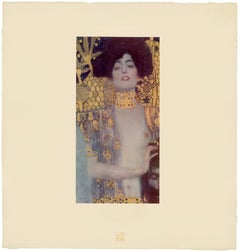
H.O. Miethke Das Werk folio "Judith I" collotype print
Located in Palm Beach, FL
Judith I, no. 9 from the second installment of Das Werk Gustav Klimts Much like his treatment of the Classical personage, Danae, from Greek mythology, Klimt’s depiction of Judith takes an Old Testament character, a heroine who avenges the death of her husband by killing an Assyrian king, and firmly positions her in his present-day Vienna. His multicolored collotype rips the canvas from its gilded frame which directly references the subject with its title: “Judith und Holofernes”. Now in print form, Judith, holding the severed head of a male in murky shadow, is the ultimate Viennese femme fatale. Her likeness is unmistakably similar to a former lover of Klimt’s and famous Viennese soprano, Anna von Mildenburg. Though his allusion to ancient Assyria is apt, Klimt literally lifted the gold patterned background’s design motif from a relief detail from Sennacherib’s Palace displayed in a London museum. His context then is contemporary. In a sensual and sexually powerful tour de force, Klimt’s Judith...
Category

Early 1900s Expressionist Art

Materials

Paper, Ink

Max Eisler Eine Nachlese folio “Hygieia” collotype print
Located in Palm Beach, FL
After Gustav Klimt, Max Eisler #10, Ausschnitt aus dem Bilde “Medizin”; multi-color collotype detail from Medicine, one of the faculty paintings for the Uni...
Category

1930s Expressionist Art

Materials

Paper

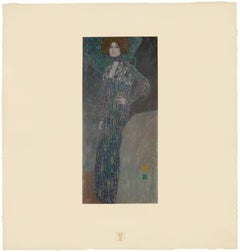
Max Eisler Eine Nachlese folio “Portrait of Baroness Bachofen-Echt” collotype
Located in Palm Beach, FL
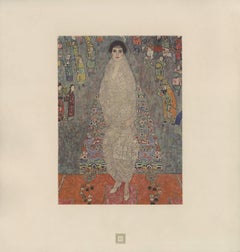
After Gustav Klimt, Max Eisler #22, Bildnis Baronin Bachofen-Echt; multi-color collotype after 1914-1916 painting in oil on canvas. GUSTAV KLIMT EINE NACHLESE (GUSTAV KLIMT AN AFTERMATH), a portfolio of 30 collotypes prints, 15 are multi-color and 15 are monochrome, on chine colle paper laid down on heavy cream-wove paper with deckled edges; Max Eisler, Editor-Publisher; Osterreichischer Staatsdruckerei (Austrian State Printing Office), Printer; in a limited edition of 500 numbered examples of which: 200 were printed in German, 150 were printed in French and 150 were printed in English; Vienna, 1931. 2018 marks the 100th anniversary of Gustav Klimt’s death. It is a fitting time to reflect upon the enduring legacy and deep impact of his art. Recognizing this need for posterity with uncanny foresight, the publication of Gustav Klimt: An Aftermath (Eine Nachlese) provides a rare collection of work after Klimt which has proven to be an indispensable tool for Klimt scholarship as well as a source for pure visual delight. Approximately 25 percent of the original works featured in the Aftermath portfolio have since been lost. Of those 30, six were destroyed by fire on 8 May 1945. On that fateful final day of WWII, the retreating Feldherrnhalle, a tank division of the German Army, set fire to the Schloss Immendorf which was a 16th century castle in Lower Austria used between 1942-1945 to store objects of art. All three of Klimt’s Faculty Paintings: Philosophy, Medicine and Jurisprudence (1900-1907), originally created for the University of Vienna, were on premises at that time. Also among the inventory of Klimt paintings in storage there was art which had been confiscated by the Nazis. One of the most significant confiscated collections was the Lederer collection which featured many works by Gustav Klimt such as Girlfriends II and Garden Path with Chickens...
Category

1930s Expressionist Art

Materials

Archival Paper

A Girl Running Through Puddles
Located in Zofingen, AG
This original oil painting captures a girl running through puddles under a vibrant red umbrella. The artist's passion comes alive through bold strokes that create a beautiful contras...
Category

2010s Expressionist Art

Materials

Canvas, Oil, Cardboard

Giner Bueno Jugando en la playa original painting
Located in CORAL GABLES - MIAMI, FL
Giner Bueno (1935-2000) Jugando en la playa Painter from Alicante, son of the painter Luis Giner Valls. He studied at the School of Arts and Crafts of Valencia and finished his stu...
Category

1990s Expressionist Art

Materials

Canvas, Acrylic

Rare Welded Menorah Judaica Jewish Brutalist Candelabra Sculpture Chaim Hendin
By Chaim Hendin
Located in Surfside, FL
In this Menorah Chaim Hendin takes a personal approach, and turns it into a more anatomical, almost pelvic, looking piece of artwork. The sculpture is rich in texture and the candle ...
Category

1970s Expressionist Art

Materials

Marble, Bronze

Fortitude
Located in Ibadan, Oyo
Shipping Procedure Ships in a well-protected tube. This work is unique, not a print or other type of copy. Accompanied by a Certificate of Authenticity. A difficult time can be more...
Category

21st Century and Contemporary Expressionist Art

Materials

Canvas, Acrylic

Marc Chagall, The Horseman and the Bird, from Tales of Boccaccio, 1950
Located in Southampton, NY
This exquisite lithograph by Marc Chagall (1887–1985), titled Le Cavalier et l’oiseau (The Horseman and the Bird), from Contes de Boccace, peintures du manuscrit des ducs de Bourgogn...
Category

1950s Expressionist Art

Materials

Lithograph

H.O. Miethke Das Werk folio "Pallas Athene" collotype print
Located in Palm Beach, FL
Pallas Athene, no. 9 from the third installment of Das Werk Gustav Klimts The Klimt-led Vienna Secession which rebelled against the Academic State-run e...
Category

Early 1900s Expressionist Art

Materials

Paper

Max Eisler Eine Nachlese folio “The Embrace (Fulfillment)” collotype print
Located in Palm Beach, FL
After Gustav Klimt, Max Eisler #17, Aus dem Stoclet-Fries: Die Umarmung; multi-color collotype after the cartoon for the 1910-1911 mosaic frieze on the east wall of the dining hall o...
Category

1930s Expressionist Art

Materials

Paper

"The Battle of the Golden Spurs" Avante Garde Print
Located in Soquel, CA
"The Battle of the Golden Spurs" Avante Garde Print This print of the massive Bataille des Éperons d’Or, or Battle of the Golden Spurs, is considered one of Jame's Ensor's (Belgian ...
Category

1890s Expressionist Art

Materials

Paper, Ink, Etching

Mid-Century French Expressionist Oil, Anniversary Flowers and Champagne .
Located in Cotignac, FR
Mid Century Expressionist oil on canvas tablescape of flowers and Champagne. This wonderfully energetic painting straddles the line between impressionism and expressionism. The form...
Category

Late 20th Century Expressionist Art

Materials

Acrylic, Oil, Canvas

"Couple Making Love" by Gustav Klimt - Original Print from Courtesans Folio
Located in Palm Beach, FL
Plate #4 from Gustav Klimt's 1907 "Dialogues of the Courtesans" portfolio, consisting of 15 collotypes on cream japon paper. The drawings in this folio are said to be studies for Kli...
Category

Early 1900s Expressionist Art

Materials

Paper

"Le Tisserand" original etching
Located in Henderson, NV
Medium: original etching. This impression on laid paper was published in Paris in 1898 by Gazette des Beaux Arts. Image size: 5 1/2 x 7 5/8 inches (142 x 195 mm). Not signed. Condit...
Category

1890s Expressionist Art

Materials

Etching

Art Nouveau Poster "Marmorhouse (Der Teufel und Die Circe) by Josef Fenneker
Located in Palm Beach, FL
The painter, graphic artist, production and set designer, Josef Fenneker, is one of the most important representatives of artistic film posters of the 1910s and 1920s. He was commissioned primarily by Berlin’s Marmorhaus cinema, which was located on Kurfürstendamm and known for its first releases, as well as by Berlin film production...
Category

1920s Expressionist Art

Materials

Lithograph

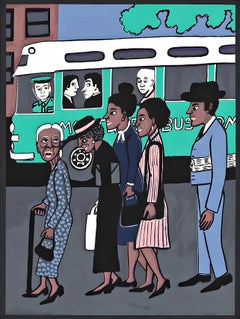
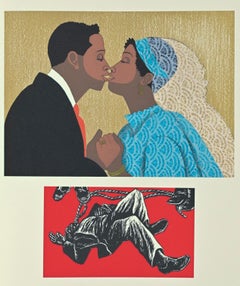
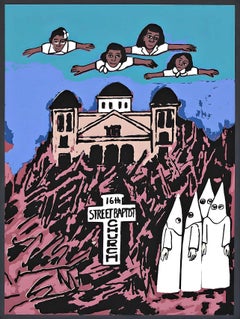
Faith Ringgold, For Whites Only, from Letter from Birmingham City Jail, 2007
Located in Southampton, NY
This exquisite silkscreen by Faith Ringgold (1930–2024), titled For Whites Only, from the folio Letter from Birmingham City Jail, originates from the 2007 edition published by The Li...
Category

Early 2000s Expressionist Art

Materials

Screen

Blue Pond 30X30
Located in Zofingen, AG
In this piece, I poured my emotions into the delicate balance between tranquility and fleeting movement. The shimmering water lilies float gently, capturing the quiet moments of refl...
Category

2010s Expressionist Art

Materials

Canvas, Oil

R. Poch Felix in blue 131 acrylic painting
Located in CORAL GABLES - MIAMI, FL
130 x 100 cm acrylic painting Born in Badalona (Barcelona). Photographer and advertising film director. Founding partner of the advertising production company La Cosa de las Pelicu...
Category

2010s Expressionist Art

Materials

Acrylic

Large Bronze Sculpture "Virtuoso" Figure American Boston Figural Modernist
Located in Surfside, FL
Aronson, David 1923- David Aronson, son of a rabbi, was born in Lithuania in 1923 and immigrated to America at the age of five. He settled in Boston, Massachusetts where he studied at the school of the Museum of Fine Arts under Karl Zerbe, a German painter well known in the early 1900s. Aronson later taught at the school of the Museum of Fine Arts for fourteen years and founded the School of Fine Art at Boston University where he is today a professor emeritus. An internationally renowned sculptor & painter, Aronson has won acclaim for his interpretation of themes from the Hebrew Talmud and Kabala. His best known works include bronze castings, encaustic paintings, and pastels. His work is included in many important public and private collections, and has been shown in several museum retrospectives around the country. He is considered to be one of the most important 20th century American artists. At twenty-two David Aronson had his first one-man show at New York's Niveau Gallery. The next year, six of his Christological paintings were included in the Fourteen Americans exhibition at Manhattan's Museum of Modern Art where Aronson’s work was included alongside abstract expressionists Arshile Gorky, Robert Motherwell and Isamu Noguchi. In the 1950s, Aronson turned more toward his Jewish heritage for the inspiration for his art. Folklore as well as Kabalistic and other transcendental writings influenced his work greatly. The Golem (a legendary figure, brought to life by the Maharal of Prague out of clay to protect the Jewish community during times of persecution) and the Dybbuk (an evil spirit that lodges itself in the soul of a living person until exorcised) frequently appear in his work. In the sixties, Aronson turned to sculpture. His work during this period is best exemplified by a magnificent 8’ x 4’ bronze door which now stands at the entrance to Frank Lloyd Wright's Johnson Foundation Conference Center for the Arts in Racine, Wisconsin. In the seventies and eighties, Aronson continued his work in pastel drawings, paintings, and sculptures, often exploring religion and the frailties of man's nature. During this time, in addition to a traveling retrospective exhibition and many one-man shows in New York, Los Angeles, Chicago, and Boston at the Pucker-Safrai Gallery on Newbury Street, Aronson won many awards and became a member of the National Academy of Design in New York. Two years ago he retired from teaching to work full-time in his studio in Sudbury, Massachusetts. included in the catalog Contemporary Religious Imagery in American Art Catalog for an exhibition held at the Ringling Museum of Art, March 1-31, 1974. Artists represented: David Aronson, Leonard Baskin, Max Beckmann, Hyman Bloom, Fernando Botero, Paul Cadmus, Marvin Cherney, Arthur G. Dove, Philip Evergood, Adolph Gottlieb, Jonah Kinigstein, Rico Lebrun, Jack Levine, Louise Nevelson, Barnett Newman, Abraham Rattner, Ben Shahn, Mark Tobey, Max Weber, William Zorach and others. Selected Awards 1990, Certificate of Merit, National Academy of Design 1976, Purchase Prize, National Academy of Design 1976, Joseph Isidore Gold Medal, National Academy of Design 1976, Purchase Prize in Drawing, Albrecht Art Museum 1975, Isaac N. Maynard Prize for Painting, National Academy of Design 1973, Samuel F. B. Morse Gold Medal, National Academy of Design 1967, Purchase Prize, National Academy of Fine Arts 1967, Adolph and Clara Obrig Prize, National Academy of Design 1963, Gold Medal, Art Directors Club of Philadelphia 1961, 62, 63, Purchase Prize, National Institute of Arts and Letters 1960, John Siimon Guggenheim Fellowship 1958, Grant in Art, National Institute of Arts and Letters 1954, First Prize, Tupperware Annual Art Fund Award 1954, Grand Prize, Third Annual Boston Arts Festival 1953, Second Prize, Second Annual Boston Arts Festival 1952, Grand Prize, First Annual Boston Arts Festival 1946, Traveling Fellowship, School of the Museum of Fine Arts 1946, Purchase Prize, Virginia Museum of Fine Arts 1944, First Popular Prize, Institute of Contemporary Art 1944, First Judge's Prize, Institute of Contemporary Art Selected Public Collections Art Institute of Chicago Virginia Museum of Fine Arts Bryn Mawr College Brandeis University Tupperware Museum, Orlando, Florida DeCordova Museum Museum of Modern Art Print Collection, New York Atlanta University Atlanta Art...
Category

20th Century Expressionist Art

Materials

Bronze

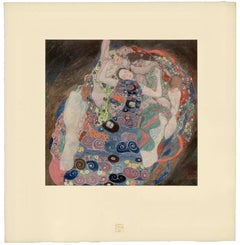
H.O. Miethke Das Werk folio "The Virgins" collotype print
Located in Palm Beach, FL
The Virgins, no. 2 from the fifth installment of Das Werk Gustav Klimts The Virgins speaks to a new chapter of Klimt’s artistic development. That it was sel...
Category

Early 1900s Expressionist Art

Materials

Paper

Echoes of the Mind 2 - 21st Century, Contemporary, Figurative Portrait, Floral
Located in Ibadan, Oyo
Shipping Procedure Ships in a well-protected tube from Nigeria This work is unique, not a print or other type of copy. Accompanied by a Certificate of Authenticity. About Artist Bey...
Category

21st Century and Contemporary Expressionist Art

Materials

Canvas, Oil

Oil painting on board "Rough sea with steamer on the horizon" by S.A.Vinogradoff
Located in Gavere, BE
Sergey VINOGRADOV ( 1869 - 1938 ) Rough sea with steamer on the horizon Sergei Arsenievich Vinogradov ( Russian: 1869–1938 ) was a Russian-Soviet Impressionist painter; known for l...
Category

1920s Expressionist Art

Materials

Gold Leaf

Marc Chagall, Untitled, from The Lithographs of Chagall, 1969
Located in Southampton, NY
This exquisite lithograph by Marc Chagall (1887–1985), titled Sans titre (Untitled), from the album The Lithographs of Chagall, Volume III, originates from the 1969 edition published...
Category

1960s Expressionist Art

Materials

Lithograph

Fanny Rabel Figurative Oil Painting Soulful, Prayerful
Located in Detroit, MI
SALE ONE WEEK ONLY UNTITLED by Fanny Rabel a Mexican artist who was born in Poland in 1922 is a soul wrenching work depicting among other things, the children killed by Nazi bombing in Spain during the Second World War. The lavender and purple surrounding the seated female figure and the kneeling child suggest both grief for the innocents' deaths and the prayers being offered for an end to the carnage. The bright gold and red can be read as either explosions or the hopeful light of redemption after death. Like Picasso's Guernica from 1937, this painting from 1965 can stand as a powerful anti-war statement. Numerous key galleries and museums such as Morton Auctions, Cerro de Mayka have featured Fanny Rabel's work in the past. Her anti-Nazi and anti-Fascism politics resulted in her participation in a mural called Retrato de la Burguesía in 1940 for the Sindicato Mexicano de Electricistas building on Alfonso Caso Street in Mexico City. Rabel met a group of exiled Spaniards in Mexico along with Antonio Pujol, who invited her to take part in a mural project headed by him, David Alfaro Siqueiros, Joseph Renau, Luis Arenal, Antonio Rodríguez Luna and Miguel Prieto. The artist died in 2008. Fanny Rabel born August 27, 1922, in Poland born Fanny Rabinovich, was a Polish-born Mexican artist who is considered to be the first modern female muralist and one of the youngest associated with the Mexican muralism of the early to the mid-20th century. She and her family arrived in Mexico in 1938 from Europe and she studied art at the Escuela Nacional de Pintura, Escultura y Grabado "La Esmeralda", where she met and became friends with Frida Kahlo. She became the only female member of “Los Fridos” a group of students under Kahlo’s tutelage. She also worked as an assistant and apprentice to Diego Rivera and David Alfaro Siqueiros, painting several murals of her own during her career. The most significant of these is "Ronda en el tiempo" at the Museo Nacional de Antropología in Mexico City. She also created canvases and other works, with children often featured in her work, and was one of the first of her generation to work with ecological themes in a series of works begun in 1979. She is considered to be the first female muralist in Mexico. She was an assistant to Diego Rivera while he worked on the frescos for the National Palace and an apprentice to David Alfaro Siqueiros. Her most important mural is Ronda en el tiempo located in the Museo Nacional de Antropología, which was created from 1964 to 1965. She also created murals at the Unidad de Lavaderos Público de Tepalcatitlán (1945), Sobrevivencia, Alfabetización in Coyoacán in 1952 Sobrevivencia de un pueblo at the Centro Deportivo Israelita (1957) Hacia la salud for the Hospital Infantil de México (1982), La familia mexicana at the Registro Público de la Propiedad (1984) (which Rabel preferred to title Abolición de la propiedad privada) and at the Imprenta Artgraf. In collaboration with other artists, she participated in the creation of the murals at the La Rosita pulque bar (disappeared) and at the Casa de la Madre Soltera. She entered the Escuela Nacional de Pintura, Escultura y Grabado "La Esmeralda" shortly after it was established in 1942, taking classes with José Chávez Morado, Feliciano Peña and Frida Kahlo, with whom she became close friends. She changed her last name from Rabinovich to Rabel during her career. Rabel married urologist Jaime Woolrich and had two children Abel and Paloma Woolrich, both of whom became actors. The first exhibition of her work was in 1945 with twenty-four oils, thirteen drawings, and eight engravings at the Liga Popular Israelita with Frida Kahlo writing the presentation. In 1955, she had an individual exhibition at the Salón de la Plástica Mexicana. She had a large exhibition at the Museum of the Palacio de Bellas Artes to commemorate a half-century of her work. Her last exhibition was in 2007 at the Universidad Autónoma Metropolitana. Her work can be found in collections in over fifteen countries including those of the New York Public Library, the Library of Congress in Washington, D.C., the Royal Academy of Denmark, the National Library in Paris, the Casa de las Américas in Havana, the Benemérita Universidad Autónoma de Puebla and the Museo de Arte Moderno in Mexico City. A retrospective of her work after her death called Retrospectiva in Memoriam, Fanny Rabel (1922-2008) was held at the Museum of the Universidad Popular Autónoma del Estado de Puebla . She is considered to be the first modern female muralist in Mexico although she also did significant work in painting, engraving, drawing, and ceramic sculpture. Her work has been classified as poetic Surrealism, Neo-expressionism and is also considered part of the Escuela Mexicana de Pintura (the dominant art movement of the early to mid 20th century in Mexico) as one of the youngest muralists to be associated with it along with Arnold Belkin and José Hernández Delga. Rabel was more drawn to depicting mankind’s pain rather than happiness, sharing other Mexican muralists' concerns about social injustice. However, she stated to Leopoldo Méndez that she could not create combative works, with clenched fists and fierce faces, and she wanted to leave the Taller de Gráfica Popular. Méndez convinced her to stay, saying that more tender images are important to political struggle as well. Children with Mexican faces...
Category

1960s Expressionist Art

Materials

Oil, Canvas

French Expressionism "A Vase of Flowers" Gen Paul (French, 1895-1975)
Located in SANTA FE, NM
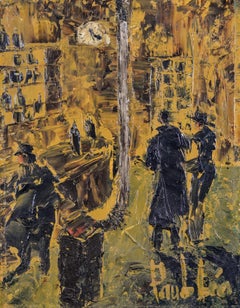
"A Vase of Flowers" Eugene Paul aka Gen Paul (French, 1895-1975) Oil crayon on paper 20 1/2 x 14 (28 x 21 1/2 frame) inches "Gen Paul is undoubtedly the greatest representative, and...
Category

1960s Expressionist Art

Materials

Paper, Oil Crayon

Barcelona and Its People oil painting Spain
Located in Sitges, Barcelona
Title: Barcelona and Its People Artist: Josep Maria Martínez Lozano (1923–2006) Year: 1979 Technique: Oil on canvas mounted on board Dimensions: 29.13 x 21.65 in Condition: Unfr...
Category

1970s Expressionist Art

Materials

Canvas, Oil, Board

Far in Mind, female nude colorful reclining direct gaze
Located in Brooklyn, NY
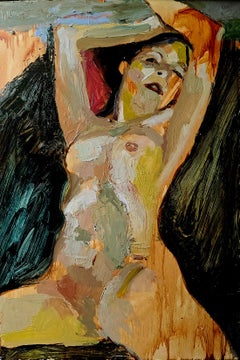
An expressionist, colorful and direct oil painting of a nude female figure, strecthing back against an an abstract background. Aesthetically sensuous with active brushstrokes applie...
Category

2010s Expressionist Art

Materials

Oil, Board

Torero and Bull bullfighter bullfighting oil painting
Located in Sitges, Barcelona
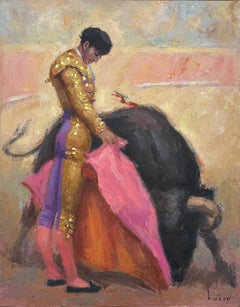
Title: Torero and Bull Artist: José María Tuser Vázquez (1919-1986) Technique: Oil on canvas mounted on board Dimensions: 18.9 x 15 inches Framing: Unframed Art Movement: Costumbrismo, Figurative Expressionism Theme: Bullfighting Date of Creation: Second half of the 20th century DESCRIPTION The painting Torero and Bull depicts a classic bullfighting scene, where a matador, elegantly dressed in a golden and violet traje de luces, performs a pass with the cape while the bull, wounded with banderillas, bows toward the ground. The composition conveys dynamism and tension, emphasizing the drama of the moment with loose and expressive brushstrokes. The background is rendered in warm, diffused tones, contrasting with the deep black of the bull and the vivid hues of the cape. The thick brushwork and vibrant oil application enhance the sense of movement and emotion in the scene, a distinctive feature of Tuser Vázquez’s bullfighting paintings. ARTIST'S BIOGRAPHY José María Tuser Vázquez (Barcelona, 1919 - 1986) was a Spanish painter specializing in bullfighting themes. He trained at the School of Arts and Crafts in Barcelona, where he developed a strong foundation in drawing and painting. From 1947 onwards, he dedicated his artistic production to tauromaquia, creating posters, illustrations, and paintings that captured the intensity of the bullfighting spectacle. He was a regular contributor to the magazine El Ruedo and designed a series of postcards featuring traditional Spanish costumes for Editorial Artigas in the 1940s. His work has been auctioned numerous times and is highly valued by collectors of bullfighting art...
Category

1960s Expressionist Art

Materials

Canvas, Oil, Board

Nordjyllands Kunstmuseum (The Brooch. Eva Mudocci) Poster /// Edvard Munch Litho
Located in Saint Augustine, FL
Artist: (after) Edvard Munch (Norwegian, 1863-1944) Title: "Nordjyllands Kunstmuseum (The Brooch. Eva Mudocci)" Year: 1973 Medium: Original Lithograph, Exhibition Poster on heavy wove paper Limited edition: Unknown Printer: Unknown Publisher: Nordjyllands Kunstmuseum, Aalborg, Denmark Sheet size: 35" x 21.5" Image size: 24.75" x 19" Condition: Some minor handling creases. Light toning at edges. In otherwise excellent condition Rare Notes: Printed in four colors: black, black, tan, and red-orange. Produced for a special posthumous exhibition of Munch's work at the Nordjyllands Kunstmuseum, Aalborg, Denmark from August 16 - October 21, 1973. The image featured on this poster is Munch's 1903 lithograph edition "The Brooch. Eva Mudocci", (Woll No. 244, page 208-209). Edvard Munch would build a strong relationship with Eva Mudocci which lasted many years. They were connected through both romance and also friendship, with the two alternating in importance over time. There was a great mutual respect for each other, with Mudocci being a highly talented violinist from the UK who would regularly tour throughout Europe. They first got together in Paris...
Category

1970s Expressionist Art

Materials

Lithograph

"Homenaje de Camilla Claudel 5, " Conte Crayon and Pencil on Alcantara, 1992
Located in Long Island City, NY
Artist: Roberto Estopiñan, Cuban (1921 - 2015) Title: Homenaje de Camilla Claudel 5 Year: 1992 Medium: Conte Crayon and Pencil Drawing on Alcantara h...
Category

1990s Expressionist Art

Materials

Conté, Handmade Paper, Pencil

Ural Owl 1975 - Expressionist art animal watercolour gouache bird painting
Located in Hagley, England
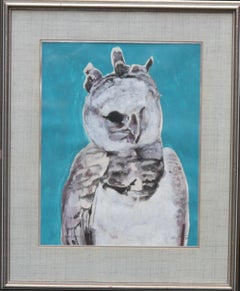
This stunning vibrant animal painting is by Aubrey Williams, Guyanese artist. It is a watercolour/gouache painting of an Ural Owl and painted in 1975. Williams has recently been reas...
Category

1970s Expressionist Art

Materials

Watercolor

Expressionist art for sale on 1stDibs.

Find a wide variety of authentic Expressionist art available for sale on 1stDibs. Works in this style were very popular during the 21st Century and Contemporary, but contemporary artists have continued to produce works inspired by this movement. If you’re looking to add art created in this style to introduce contrast in an otherwise neutral space in your home, the works available on 1stDibs include elements of orange, blue, purple, green and other colors. Many Pop art paintings were created by popular artists on 1stDibs, including Iryna Kastsova, George Grosz, Stephen Basso, and Marc Chagall. Frequently made by artists working with Paint, and Oil Paint and other materials, all of these pieces for sale are unique and have attracted attention over the years. Not every interior allows for large Expressionist art, so small editions measuring 1 inches across are also available.

Recently Viewed

View All