Hudson River School Art

to
36
93
51
51
34
26
Overall Width
to
Overall Height
to
2
220
27
6
6
1
3
1
2
1
2
114,822
65,229
57,635
27,259
14,960
9,481
6,335
5,779
4,201
3,070
2,601
2,338
2,222
652
186
66
1
80
78
62
31
29
25
24
22
20
18
17
16
14
11
9
9
9
8
7
7
237
222
152
144
35
7
4
4
4
4
195
2
251
4
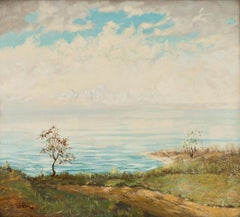
Style: Hudson River School
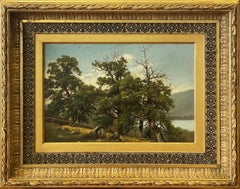
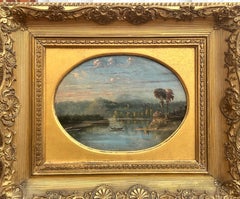
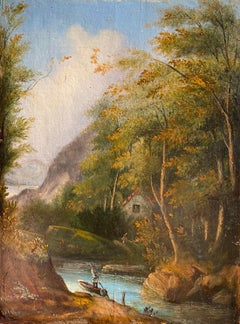
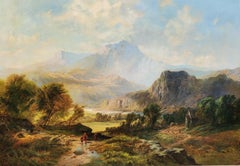
View on the Hudson, the Catskills in the Distance
Located in New York, NY
Signed lower right: F.A. SILVA.
Category

Late 19th Century Hudson River School Art

Materials

Canvas, Oil

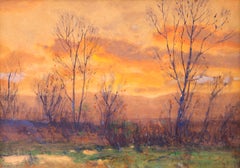
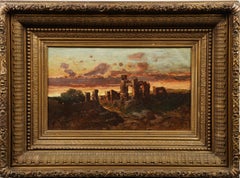
Sunset Along the Front Range, Colorado, 1900s Traditional Landscape Painting
Located in Denver, CO
This stunning, original signed landscape watercolor on paper painting by Charles Partridge Adams (1858-1942) captures the breathtaking beauty of a Colorado sunset along the Front Ran...
Category

Early 20th Century Hudson River School Art

Materials

Watercolor

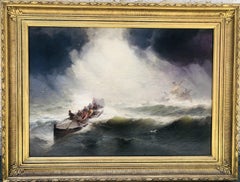
19th C New Jersey Surfmen Rescuing Foundering Ship - GW Nicholson
Located in Exton, PA
Fine late 19th C oil painting on cradled wood panel by George Washington Nicholson. The painting is in very good cleaned condition and shows Surfmen rescuing a ship in distress. This...
Category

1870s Hudson River School Art

Materials

Oil

“Near Mount Shasta, California”
Located in Southampton, NY
Original pastel on archival paper by the well known Hudson River artist, George Douglas Brewerton. A Northern California scene near Mount Shasta. Signed lower left and dated 1876. Recently professionally matted and framed in new antique silver style gallery frame. Overall framed measurements are 27 by 36 inches. Under glass. Condition is excellent. Provenance: A Pennsylvania collector. George Douglas Brewerton received lessons in art from Prof. Robert W. Weir at West Point where his father was Superintendent. In 1874, he was detailed to San Francisco as an officer in the Stevenson Regiment. In 1848, he underwent many adventures in Western deserts and mountains with Kit Carson, who crossed the country with news of the California Gold Rush. After serving as an aide to Gen. Rufus Saxton during the Civil War, Brewerton called himself “Colonel,” although he never received an army commission...
Category

1870s Hudson River School Art

Materials

Pastel, Archival Paper

Antique American Hudson River School Coastal Beach Landscape Oil Painting
Located in Buffalo, NY
Impressive early American modernist abstract oil painting. Framed. Oil on canvas. Signed. Image size, 9.25H by 15L. Artist Bio: This following biography was researched, compiled...
Category

1870s Hudson River School Art

Materials

Canvas, Oil

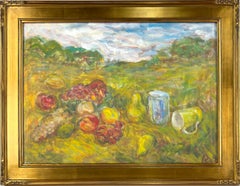
Picnic in the Vineyard Spring Contemporary French Impressionist Style Landscape
By Alexandr Rapoport
Located in Soquel, CA
Spring Picnic in the Vineyard, Contemporary Impressionist Landscape Beautiful oil painting of a variety of fruits with cups in a field of grass by Alexander Rapoport (Russian-Ameri...
Category

21st Century and Contemporary Hudson River School Art

Materials

Canvas, Oil, Illustration Board

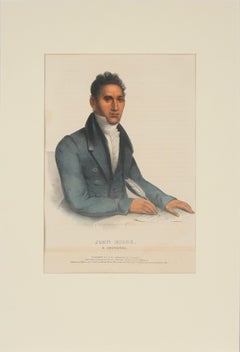
John Ridge, A Cherokee Indian Interpreter Lithograph with Applied Watercolor
Located in Soquel, CA
1838 John Ridge A Cherokee Indian and Interpreter Lithograph with Applied Watercolor The lithograph depicts John Ridge, a Cherokee interpreter, by Charles Bird King (American, 1785 - 1862), published 1838. Compared to other indian portraits in tribal regalia, King's rendering of John Ridge appears to be different. King portrayed John Ridge in Anglo-American clothing, sitting at a desk with a document and pen in hand—hinting at Ridge’s education and career as tribal leader and politician. King was known for his realistic and sensitive renderings of his sitters, and his ability to capture their physical features and attire with dignity and attention to detail. Condition: Good; tonal aging due to age; previous mat tonal aging marks Presented in new conservation mat Paper size: 19.75"H X 14"W Image size: 15"H x 10"W Mat size:24"H x 16"W John Ridge received his education at Foreign Mission School in Cornwall, Connecticut and served as clerk of the Cherokee National Council. When King painted...
Category

1840s Hudson River School Art

Materials

Watercolor, Laid Paper, Lithograph

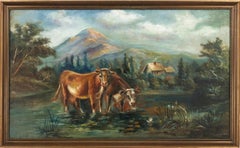
Large Scale Early 20th Century Bucolic Mt. Hood Landscape Oil Painting
Located in Soquel, CA
Gorgeous landscape with two cows drinking water in a pond with Mt. Hood in background by listed artist William M. Lemos (American, 1861-1942). Signed "W.M. Lemos" lower right. Presented in vintage gilt-toned frame that shows wear (included as-is). Condition: Good: previously owned and used, with little or no signs of wear and is in good condition. No structural issues. Image size: 29"H x 49"W. Born in New York, Professor Lemos moved to San Francisco in 1887 where he established a studio at 106 Geary Street. He later moved to Santa Cruz in 1896, where he settled, painting murals for many local businessmen and the Santa Cruz Beach Boardwalk. As a boy Lemos earned money by wandering the streets and painting on request. Arriving in San Francisco in 1887, he established a studio at 106 Geary. With his wife Mabel, he worked in Los Angeles for a few years in the 1890s. After settling in Santa Cruz in 1896, he painted murals for many local businessmen. When the original Beach Casino was built there at the Boardwalk in 1904, Lemos was the first concessionaire and worked there for nearly 40 years. On his platform in the Casino, Lemos did paintings of redwoods, still lifes, forest fires, beach scenes, and marines. Many of his oils were done on redwood slabs which were popular with the tourists; in the early days these paintings sold for one dollar and up depending on the size of the work. After his vision failed and he was unable to paint, his last years were mostly spent fishing off the Municipal Pier with a friend who baited his hook for him because he could no longer see. In the March 27, 1941 Santa Cruz Sentinel News Lemos reminisced, "Them were the days when the Boardwalk was only twelve feet long and when business got slow I picked up my shotgun and went across the street and shot ducks where the Casa del Rey Hotel now stands." Exhibited: Calif. State Fair, 1885; Mechanics' Inst. (SF), 1889. In: Santa Cruz City Museum; Wawona Hotel (Yosemite). Edan Hughes, "Artists in California, 1786-1940" His mother was Julia Lemos, a Chicago artist famous for her depiction of the Chicago fire, “Two of Julia’s children became successful artists. Her eldest son, William, was a naïve still life, landscape, and mural painter. As a young boy in New York, he would wander the streets, earning money for the family, by ‘painting on request.’ At age 26, William moved to San Francisco, California. He opened an art studio and kept it running until he moved to Santa Cruz with his wife, Mabel, in 1896. During this period, he worked as a fresco artist painting ‘murals for many local businessmen.’ Exhibited California State Fair, Sacramento, 32nd annual, per Sacramento Daily Union, September 9, 1885. and article goes on to say “William Lemos and wife, Sacramento – Art school exhibits in which are shown such a variety of designs in decorative art, flower painting, and ornamentation, that one must give time to the examination.” Exhibited Mechanics Institute, San Francisco, 1889. “Lemos and his wife were in Fresno California 1890...
Category

Early 20th Century Hudson River School Art

Materials

Canvas, Oil, Stretcher Bars

"View of Upper Ausable Lake" John Bunyan Bristol, Glowing Atmospheric Landscape
Located in New York, NY
John Bunyan Bristol View of Upper Ausable Lake Signed lower right Oil on canvas 18 x 30 inches Provenance Wynant D. Vanderpoel III (1939-2018), New York and Palm Beach Estate of the...
Category

1870s Hudson River School Art

Materials

Canvas, Oil

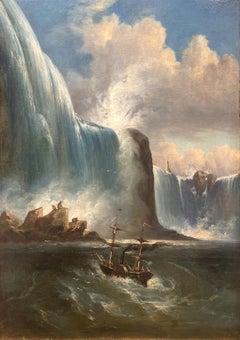
"Niagara Falls" Victor de Grailly, Hudson River School, New York Landscape
By Victor de Grailly
Located in New York, NY
Victor de Grailly Niagara Falls, circa 1840-45 Oil on canvas 28 7/8 x 21 1/4 inches Provenance: Mark Borghi Fine Art, New York Private Collection, Nyack, New York Little is known a...
Category

1840s Hudson River School Art

Materials

Canvas, Oil

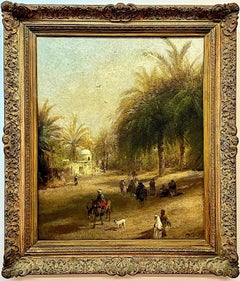
"Outskirt Village Near Tangier, North Africa"
By Hermann Ottomar Herzog
Located in San Francisco, CA
Both romantic and realistic, this timeless work by Herman Herzog was painted more than a century ago near Morocco’s Atlantic coast city of Tangiers, a sentinel to the Strait of Gibra...
Category

Early 20th Century Hudson River School Art

Materials

Canvas, Oil

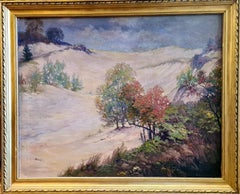
Hudson River School Large American Impressionist Landscape Wisconsin in the Snow
Located in Cotignac, FR
A large scale American Hudson River School Impressionist landscape of a snow scene, most probably Wisconsin, by Leroy Ferdinand Jonas. The painting is signed and dated bottom right and presented in a fine gilt frame. An imposing view of a snowy landscape most probably the artist's native Wisconsin. Jonas has captured the grandeur of the scene with the contrast between the thick lush snow and the rich colours of the foliage and leaves on the trees. His impasto technique is very characteristic of the American Impressionists as is the subject and sense of scale. A really beautiful painting which because of its scale would be a statement piece in any room. LeRoy Jonas was born in the town of Texas, Marathon County, Wisconsin, on April 18, 1897, son of Johann F. and Marie (Borchardt) Jonas. He was educated in Wausau public schools and attended the Chicago Art Institute, where he studied under John Norton, noted for his murals, Leopold Seifert, noted for his portraits, and William Wilmovsky, a landscape artist. He worked as a commercial artist and Conservator of Fine Arts there. Upon graduating, he painted for a while in Door County, Wisconsin and was then awarded a scholarship to study under Leon Lundmark...
Category

Early 20th Century Hudson River School Art

Materials

Canvas, Oil

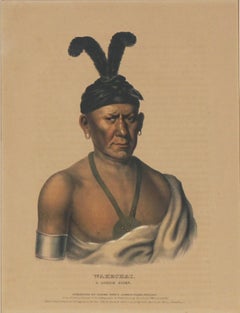
Wakechai (Crouching Eagle) A Saukie Chief Lithograph with Applied Watercolor
Located in Soquel, CA
1842 Wakechai (Crouching Eagle) A Saukie Indian Chief Lithograph with Applied Watercolor The lithograph depicts Wakechai, also known as Crouching Eagle, who was a member of the Sauk and Fox delegation. King renders Wakechai with exceptional detail. The Saukie Chief is adorned with fine accoutrements such as a white fur robe...
Category

1840s Hudson River School Art

Materials

Watercolor, Laid Paper, Lithograph

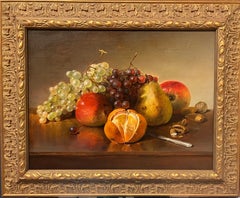
Fruit Still Life
Located in Fredericksburg, VA
Edward L. Custer (1837–1881) was an American painter known for his landscape paintings, genre scenes, and still lifes often imbued with a romantic and idyllic quality. Custer's paint...
Category

Late 19th Century Hudson River School Art

Materials

Canvas, Oil

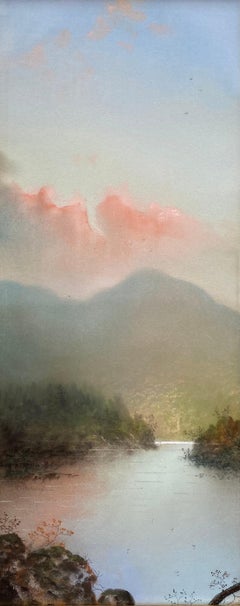
“View of Mount Shasta, California”
Located in Southampton, NY
Original pastel on heavy card stock (made in Paris) by the well known Hudson River artist, George Douglas Brewerton. A view of Mount Shasta in Northern California. Signed lower left. Circa 1880. Condition is excellent. The artwork is housed in its original scroll decorated frame. Overall framed measurements are 33.25 by 19 inches. Provenance: A East Coast Florida estate. George Douglas Brewerton received lessons in art from Prof. Robert W. Weir at West Point where his father was Superintendent. In 1874, he was detailed to San Francisco as an officer in the Stevenson Regiment. In 1848, he underwent many adventures in Western deserts and mountains with Kit Carson, who crossed the country with news of the California Gold Rush. After serving as an aide to Gen. Rufus Saxton during the Civil War, Brewerton called himself “Colonel,” although he never received an army commission...
Category

1870s Hudson River School Art

Materials

Pastel, Archival Paper

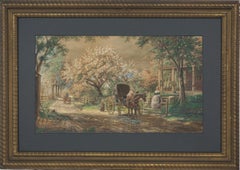
Rare 19th Century Watercolor and Platinotype -- Coming Home
By Edward Lamson Henry
Located in Soquel, CA
Rare 19th Century Watercolor and Platinotype -- Coming Home Wonderful and rare 19th Century watercolor and platinotype (Watercolor over Platinum photograph) attributed to Edward Lamson Henry...
Category

Late 19th Century Hudson River School Art

Materials

Watercolor, Paper, Platinum

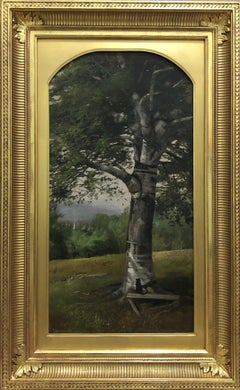
Tree Study, Lake George
Located in New York, NY
A remarkably fresh, naturalistic and rare depiction of the environs of Lake George! It is possibly from the late 1860’s, after the Civil War when his work became more naturalist in m...
Category

Mid-19th Century Hudson River School Art

Materials

Canvas, Oil

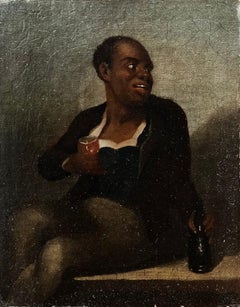
Portrait of African American Man Drinking titled "Evening Revelry"
Located in Fredericksburg, VA
This expressive painting by Francis William Edmunds offers a compelling glimpse into 19th-century American genre painting, a field in which Edmunds was a recognized master. Known for...
Category

Mid-19th Century Hudson River School Art

Materials

Canvas, Oil

Oil Landscape of West on Snake River
By Cyrenius Hall
Located in Fredericksburg, VA
Cyrenius Hall was an artist who painted Western landscapes in a luminous style. He first went to Portland, Oregon in 1853 and 1854 over the Oregon Trail. From there he executed views...
Category

Early 19th Century Hudson River School Art

Materials

Canvas, Oil

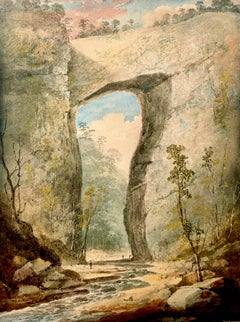
Watercolor Landscape of Natural Bridge, Virginia
Located in Fredericksburg, VA
William Guy Wall, a renowned artist of the early 19th century, is celebrated for his exquisite landscape paintings, and particularly with this watercolor. This painting, titled, "Nat...
Category

Early 19th Century Hudson River School Art

Materials

Paper, Watercolor

Autumn Landscape
Located in Milford, NH
A wonderful Autumn landscape likely of the Hudson River Valley by the revered American artist William Louis Sonntag (1822-1900). Sonntag was born near Pittsburgh, PA and moved to Cincinnati, OH in the 1840’s to study art. He studied for a brief time with G. Frankenstein at the Cincinnati Academy of Fine Art and his idealized paintings of American wilderness and visionary paintings of imagined European ruins were commercially successful. He traveled twice to Europe in the 1850’s to improve his skills, eventually settling in New York City. He joined the National Academy of Design, where he exhibited his works for forty years. His mature works identify him with the Hudson River School of landscape painters. A romantic and naturalistic painter of his surroundings, Sonntag also created idealized paintings of Roman ruins, recalling his European trips of earlier years. Sonntag was an Associate (1860) and Academician (1861) at the National Academy of Design, and a member of the American Watercolor Society, Artists Fund Society, and the American Art Union...
Category

19th Century Hudson River School Art

Materials

Canvas, Oil

Southern Landscape Oil Painting Hudson River School
Located in Fredericksburg, VA
Copyright 2023 Michael F. Meyer All rights Reserved. This painting, signed RSD on right side, has been verified by the late expert on Robert S. Duncanson, Joseph Ketner and comes with an authentication letter. This painting has exhibited and is published in Robert S. Duncanson and His Courageous Southern Travels. This painting is one of the many beautiful southern landscape scenes that Robert S. Duncanson painted in his courageous travels south. "Robert S. Duncanson born in 1819, was an African American Hudson River School artist who painted the south before the Civil War, until his death in 1872. Although widely famous during his lifetime, this forgotten artist’s courageous journey through the antebellum south has never before been exhibited or researched until now. His brilliance was in creating captivating landscape paintings that come alive to the viewer, by focusing on the minute details of nature and of the stories he wished to communicate. Robert Duncanson...
Category

Mid-19th Century Hudson River School Art

Materials

Canvas, Oil

Antique American Sunset Landscape Hudson River School Framed Oil Painting
Located in Buffalo, NY
Important framed 19th century Hudson River School landscape. Possibly estate stamped. Housed in an impressive period frame. Oil on canvas.
Category

1860s Hudson River School Art

Materials

Canvas, Oil

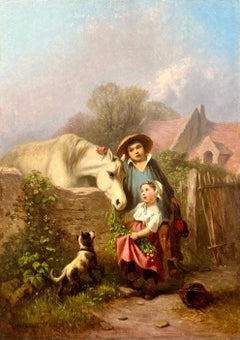
Children Feeding the Horse
Located in Fredericksburg, VA
This captivating artwork, titled "Children Feeding the Horse", is masterfully executed in rich tones. It depicts two children tenderly feeding a gentle white horse against a familiar...
Category

Mid-19th Century Hudson River School Art

Materials

Oil, Panel

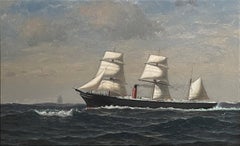
"Ship Portrait, " William Edward Norton, Seascape Maritime Painting, New England
Located in New York, NY
William Edward Norton (1843 - 1916) Ship Portrait, 1876 Oil on canvas 10 x 16 inches Signed and dated lower left Born in Boston, William Norton became a noted marine painter, stirred by his youth when he sailed on family-owned ships. He studied at the Lowell Institute in Boston, and with George Inness, and then established a studio in Boston. In the early 1870s, he went to Paris and became a student with Chevreuse and A. Vollon, and then he settled in London where he exhibited throughout the last quarter of the 19th century. His reputation there was based on his scenes of the Thames River, and ocean and coastal views. In 1901, he and his wife returned to the United States and settled in New York City. He also painted at Monhegan Island, Maine, where a treacherous ledge on the southern side of the island is named "Norton's Ledge" for him. He was a member of the Boston Art Club with whom he exhibited from 1873 to 1909. He also exhibited with the Pennsylvania Academy, the Royal Academy in London, the Paris Salon, the 1893 Chicago Exposition...
Category

1870s Hudson River School Art

Materials

Canvas, Oil

“Worcester, Massachusetts”
Located in Southampton, NY
Oil on wood panel painting of a Worcester, Massachusetts view by local resident artist Mabel Blake. Signed M. Blake lower left. Circa 1880. Condition is good. The bucolic scene depicts a man in a boat...
Category

1880s Hudson River School Art

Materials

Oil, Board

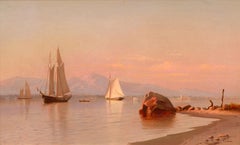
"Building the Allegheny Railroad, Pennsylvania" Alfred Wall, Scalp Level School
Located in New York, NY
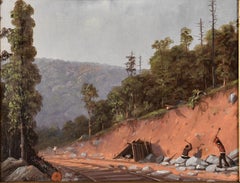
Alfred S. Wall (American, 1825-1896) Untitled (Building the Railroad), 1859 Oil on canvas 14 1/2 x 18 1/2 inches Signed and dated lower left For Christmas, 2008, the Pittsburgh Post-Gazette featured Alfred Wall's painting, Old Saw Mill from the collection of the Westmoreland Museum of American Art in Greensburg, PA. It was painted in 1851 in the town of Lilly, Pennsylvania in the Allegheny Mountains. The newspaper description stated that "though the saw mill is long gone, it still conveys all the warmth and coziness of this time of year. The article, written by Patricia Lowry, continued: At first glance, Alfred S. Wall's painting of a saw mill in snowy woods triggers nostalgia for the coziness of a log cabin, the smell of a wood-burning fire and the warming of chilled hands and feet beside it. But as sentimental as it seems on the surface, Mr. Wall's painting has a deeper and unexpected context. This is more than a painting about sled-riding children and early industry planted in the middle of virgin forest. Intended or not, this is a painting about conquering the great divide of the Allegheny Mountains. For the third consecutive year, the Post-Gazette features a winter-scene painting on the cover of the Christmas Day newspaper. This year's painting, Old Saw Mill, was selected by co-publisher and editor-in-chief John Robinson Block and executive editor David Shribman during a visit to the Westmoreland Museum of American Art in Greensburg. Mr. Wall, listed as a portrait painter in the 1850 census, was about 26 when he painted Old Saw Mill in 1851. The self-taught artist was born in Mount Pleasant, Westmoreland County, to William and Lucy Wall, who'd emigrated from England around 1820. An artistic sensibility ran in the family: William was a sculptor who carved ornate tombstones here; Alfred's children, A. Bryan and Bessie, were landscape painters, as was Alfred's older brother, William Coventry Wall. For more than a century the Walls formed a prominent art dynasty in Pittsburgh, and Alfred, eventually a partner in the city's most prestigious art gallery, was well known as a painter, dealer and restorer. In Old Saw Mill, two wood cutters, each holding an axe, meet outside the mill; one points in the direction of the forest. On the other side of the stream, one child pulls another down the hillside on a sled. Just behind the hill's slope, the roof of a building appears, perhaps the home of the sawyer. The luminous, late afternoon light comes from the northwest, casting lengthening shadows on the snow under a darkening sky. The saw mill in "Old Saw Mill" likely would have been impossible to track down had Mr. Wall, presumably, not written on the back of the painting: "old saw mill near Jct. 4, Portage RR, Pa." "There was no Junction 4," said Mike Garcia, park ranger at the Allegheny Portage Railroad National Historic Site, about 90 miles east of Pittsburgh near Gallitzen, Cambria County. "But there was an Inclined Plane No. 4 at Lilly, and there was a saw mill there." In fact, there were at least six saw mills at Lilly over the years, said longtime resident Jim Salony, president of the Lilly-Washington Historical Society. But when he saw an image of the painting, Mr. Salony had no trouble coming up with a location. While there are no known photographs of the saw mill, he believes it stood near the intersection of Portage and Washington streets, next to Bear Rock Run. Mr. Salony, retired academic dean at Mount Aloysius College, didn't know exactly when the mill was torn down, but it's been gone since at least the late 1800s. He was pleased to learn of the painting, even though that knowledge came too late for inclusion in a new book about Lilly, The Spirit of a Community, for which he served as primary author and editor. It runs to more than 700 pages. For a little town -- population 869 last year -- Lilly has a lot of history. Nestled in a bowl on the western slope of the Allegheny Mountains about 3 miles south of Cresson, Lilly was first settled in 1806 by Joseph Meyer and his family, who named their 332-acre land patent Dundee. Although the Meyers had left by 1811, other settlers followed, but the community didn't flourish until the 1830s, when the Allegheny Portage Railroad began its 23-year-run through the town. For 200 years the Alleghenies had stood as an impediment to trade and travel between Pittsburgh and the east. A canal from Philadelphia to Pittsburgh would change that and compete with New York's Erie Canal. But a portage railroad would have to be built, on which teams of horses would lead the canal boats over the mountains. Engineer Sylvester Welch began his surveying from the small settlement at Lilly. The railroad would require 10 inclined planes, some quite steep, between Hollidaysburg and Johnstown. To build it, trees had to be cut along a 120-foot-wide right-of-way for 36 miles, along which track and engine houses had to be built. William Brown, who owned the saw mill on Bear Rock Run, built at least one of the engine houses at Inclined Plane No. 4; an 1834 contract also included fencing the dwelling lots at the head and foot of the plane. Lilly is located at what was the foot of Inclined Plane No. 4., giving the community one of its early informal names, Foot of Four. Named in 1883 for Richard Lilly, who'd completed the grist mill there, Lilly had another early name: Hemlock, so dubbed by a Portage Railroad traveler who smelled the bark stripped from the trees at the saw mill. Because there isn't another Allegheny Portage Railroad location like it, where a cut in the mountains opens into a bowl, Mr. Salony thinks it was Lilly that Charles Dickens wrote about following his trip from Harrisburg to Pittsburgh on the Pennsylvania Canal in late March 1842, describing what he saw after emerging from "the bottom of the cut": "It was very pretty while traveling, to look down into a valley full of light and softness, catching glimpses through the tree-tops of scattered cabins; children running to the doors; dogs bursting out to bark, who we could see without hearing; terrified pigs scampering homeward; families sitting out in their rude gardens; cows gazing upward with a stupid indifference; men in their shirt-sleeves looking on at their unfinished houses, planning out to-morrow's work; and we riding onward, high above them, like a whirlwind." To get to Lilly, Mr. Wall may have taken the Pennsylvania Canal from his home in Allegheny City, now the North Side. He'd married young, at 21, to Sarah Carr in 1846, the same year he began his career as an artist. By 1880 they were living in a brick townhouse at 104 (later 814) Arch St., now demolished. Across the river in Pittsburgh he shared a studio at 67 Fourth Ave. with his brother William; they later moved to Burke's Building, today the city's oldest office building at 209-211 Fourth. But often they worked outdoors, sometimes as part of the colony of artists that grew up around painter George Hetzel beginning in the late 1860s at Scalp Level...
Category

1850s Hudson River School Art

Materials

Canvas, Oil

Bathing at Long Branch-“Oh, Ain’t it Cold”
Located in Fairlawn, OH
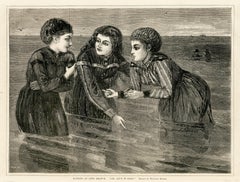
Bathing at Long Branch-“Oh, Ain’t it Cold” Wood engraving, 1871 Signed in the block with the artist's initials "WH", see photo Published in: Every Saturday, Aug. 16, 1871 Condition: ...
Category

1870s Hudson River School Art

Materials

Woodcut

Antique American Hudson River School Colosseum Italian Oil Painting Landscape
Located in Buffalo, NY
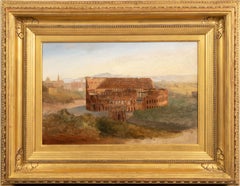
Antique American Hudson River School artist working in Italy. Oil on canvas. Framed nicely. No signature found.
Category

1860s Hudson River School Art

Materials

Canvas, Oil

Mount Washington, New Hampshire
Located in Saratoga Springs, NY
Edmund Darch Lewis (1835-1910) Mount Washington, New Hampshire 50 x 58 inches, signed dated 1859 Description The area near Mount Washington in New Hampshire was visited by m...
Category

1850s Hudson River School Art

Materials

Canvas, Oil

Distant Horizon
Located in Saratoga Springs, NY
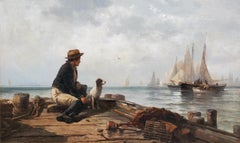
Edward Moran (American, 1829 - 1901) Boy with Dog on Dock Oil on canvas Signed lower left 22 x 36 inches Provenance: Sotheby's Sale no. 3255 Oct. 27-28, 1977 Page 58 Price on reques...
Category

Late 19th Century Hudson River School Art

Materials

Canvas, Oil

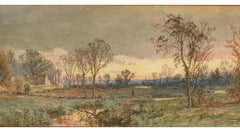
Twilight on the Sawmill River
Located in New York, NY
Signed and dated lower right: J.F. Cropsey 1887
Category

19th Century Hudson River School Art

Materials

Paper, Watercolor

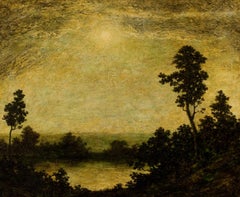
Into the Night
Located in New York, NY
Signed lower left in arrowhead: RA Blakelock.
Category

Late 19th Century Hudson River School Art

Materials

Canvas, Oil

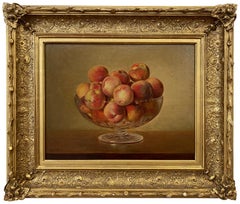
Peaches in Cut Glass Dish
Located in New York, NY
Pristine and purely American in its aesthetic due to the fact that the artist concentrates on one type of fruit. Europeans were much more opulent in their approach to still lifes an...
Category

1870s Hudson River School Art

Materials

Canvas, Oil

Adirondack Stream by Hudson River artist Joseph Antonio Hekking (1830-1903)
Located in New York, NY
Painted by Hudson River School artist Joseph Antonio Hekking (1830-1903), "Adirondack Stream in Fall" is oil on board and measures 8.5 x 6.5 inches. The painting is signed at the low...
Category

19th Century Hudson River School Art

Materials

Oil, Board

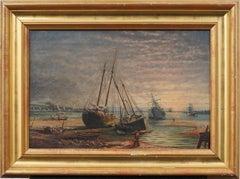
New England Coastal Scene with Figures
Located in New York, NY
Monogramed and dated lower right: JF.K. / ‘64.
Category

Mid-19th Century Hudson River School Art

Materials

Canvas, Oil

Creek Meets River: Hudson River School Landscape Painting of Water and Mountains
Located in Hudson, NY
Modern Luminist, Hudson River School landscape painting on canvas of a creek and river meeting around a forest bend with mountains in the distance "Where Creek Meets River" by Jane Bloodgood-Abrams, painted in 2021 Horizontal landscape painting, 36 x 48 inches unframed with white painted sides wired on reverse for easy hanging Artist's signature is located on lower left This modern Hudson...
Category

2010s Hudson River School Art

Materials

Oil, Panel

Boating, Early Autumn
Located in New York, NY
19th Century Oil Painting on canvas, wooden support Signed JR Meeker (Lower Left) An early autumn landscape of the American South showing two boaters on a lake, painted in the H...
Category

19th Century Hudson River School Art

Materials

Oil

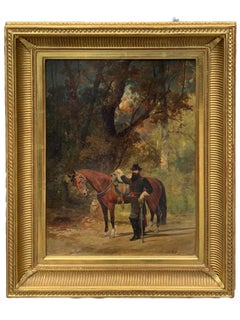
PERIOD American Antique Civil War Portrait of Officer and His Horse
Located in New York, NY
American artist Franklin Briscoe (1844-1903) known for his hirtorical and portrait paintings, paints a Civil War piece; it is a portrait of an officer with his white horse. The brus...
Category

Late 19th Century Hudson River School Art

Materials

Board, Oil

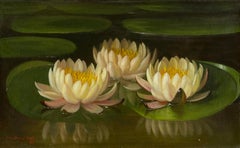
Water Lilies
Located in Bryn Mawr, PA
Water Lilies, 1881 Oil on canvas, 7 1/2 x 12 inches (19.1 x 30.5 cm) Framed dimensions: 16 1/8 x 21 1/8 inches Signed and dated lower left: Geo. Henry Hall '81 George Henry Hall was...
Category

1880s Hudson River School Art

Materials

Canvas, Oil

Antique American Sunset Seascape Giltwood Framed New England Harbor Oil Painting
Located in Buffalo, NY
Antique American sunset seascape oil painting. Oil on board. Signed. Framed. Measuring: 18 by 24 inches overall, and 12.25 by 18 painting alone.. In excellent original condition. Ha...
Category

1850s Hudson River School Art

Materials

Oil, Board

Cows Grazing in Field
Located in Fredericksburg, VA
This serene Hudson River School painting by George Wright captures a peaceful moment of pastoral life, where three cows rest and graze under a wide, luminous sky. The composition gen...
Category

Late 19th Century Hudson River School Art

Materials

Canvas, Oil

Oil Sunset titled "Virginia Sunset"
Located in Fredericksburg, VA
William H. Langworthy (1836–1900) was an American painter known for his contributions to landscape and genre painting during the late 19th century. Little is known about Langworthy's...
Category

Mid-19th Century Hudson River School Art

Materials

Canvas, Oil

"Janetta Falls, New Jersey" Jasper F. Cropsey, Hudson River Wooded Landscape
Located in New York, NY
Jasper F. Cropsey Janetta Falls, New Jersey, circa 1846 Signed J.F. Cropsey Oil on canvas 12½ x 10¾ inches Provenance Private Collection, New York, 1930s Thence by descent to the pr...
Category

1840s Hudson River School Art

Materials

Canvas, Oil

Charles River Meadows, MA
Located in Fredericksburg, VA
"Charles River Meadows, Massachusetts" by Mark E. Slayton is a masterful landscape painting that embodies the beauty characteristic of the Hudson River School. As a prominent artist ...
Category

Mid-19th Century Hudson River School Art

Materials

Canvas, Oil

American 19th Century Coved Picture Frame. Original Gold Gilding
Located in Rochester, NY
Antique American gilt picture frame. Rabbet measures 12.5" x 10.5" Perfect for a 12" x 10" painting.
Category

Mid-19th Century Hudson River School Art

Materials

Gold Leaf

Oil Landscape of a Mountain Sunset
Located in Fredericksburg, VA
Régis François Gignoux (1816–1882) was a French-American landscape painter known for his contributions to the Hudson River School. Gignoux quickly became an integral part of the Amer...
Category

Mid-19th Century Hudson River School Art

Materials

Canvas, Oil

Mountain Stream
By Henry Boese
Located in Fredericksburg, VA
In Mountain Stream, Henry Boese presents a majestic and serene vision of the American wilderness. A crisp, rushing stream flows through the heart of the composition, cascading over r...
Category

Mid-19th Century Hudson River School Art

Materials

Oil, Board

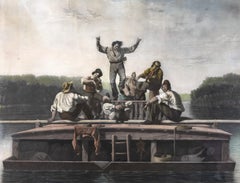
The Jolly Flat Boat Men
By George Caleb Bingham
Located in Missouri, MO
The Jolly Flat Boat Men, 1847 After George Caleb Bingham (American, 1811-1879) Engraved by Thomas Doney (French, active New York 1844-1849) Engraving with Hand-Coloring Published by The American Art-Union, New York (1838-1851) Printed by Powell and Co. 18 x 24 inches 32 x 38 inches with frame In 1847, the American Art-Union purchased Bingham’s painting "The Jolly Flat Boat Men" (1846; National Gallery of Art) directly from the artist. The subscription-based organization, founded in 1838 as the Apollo Association, boasted nearly ten-thousand members at this date. For an annual fee of five dollars, each received a large reproductive engraving and was entered in a lottery to win original artworks exhibited at the Art-Union’s Free Gallery. Aimed at educating the public about contemporary American art, the organization developed an impressive distribution network that reached members in every state. The broad circulation of the Art-Union's print helped to establish Bingham's reputation and made his river scene famous. Born in Augusta County, Virginia in the Shenandoah River Valley, George Caleb Bingham became known for classically rendered western genre, especially Missouri and Mississippi River scenes of boatmen bringing cargo to the American West and politicians seeking to influence frontier life. One of his most famous river genre paintings was The Jolly Flatboatmen completed in several versions in 1846. This first version of this painting is in the Manoogian Collection at the National Gallery of Art. Fame resulted for this work when it was exhibited in New York at the American Art Union whose organizers made an engraving of 10,000 copies and distributed it to all of their members. Paintings such as Country Politician (1849) and County Election (1852) and Stump Speaking (1854) reflected Bingham's political interests. In 1819, as an eight-year old, he moved to Boon's Lick, Missouri with his parents and grandfather who had been farmers and inn keepers in the Shenandoah Valley near Rockingham, Virginia. Reportedly as a child there, he took every opportunity to escape supervision to travel the River and watch the marine activity. His father died in 1827, when his son was sixteen years old. His mother had encouraged his art talent, but art lessons were not easily obtainable. In order to earn money, he apprenticed to a cabinet maker but determined to become an artist. By 1835, he had a modest reputation as a frontier painter and successfully charged twenty dollars per portrait in St. Louis. "His portraits had become standard decorations in prosperous Missouri homes." (Samuels 46). In 1836, he moved to Natchez, Mississippi and there had the same kind of career, only was able to charge forty dollars per portrait. He remained largely self taught until 1837, when he, age 26 and using the proceeds from his portraiture, studied several months at the Pennsylvania Academy of the Fine Arts. He later said that he learned much of his atmospheric style and classically balanced composition by copying paintings in collections in St. Louis and Philadelphia and that among his most admired painters were Thomas Cole, John Vanderlyn, and William Sidney Mount. Between 1856 and 1859, Bingham traveled back and forth to Dusseldorf, Germany, where he studied the work of genre painters. Some critics think these influences were negative on his work because during that time period, he abandoned his luminist style that had brought him so much public affirmation. Bingham credited Chester Harding (1792-1866) as being the earliest and one of the most lasting influences on his work. Harding,a leading portraitists when Bingham was a young man, had a studio in Franklin, near Bingham's home town. In 1822, when Bingham was ten years old, he watched Harding finish a portrait of Daniel Boone. Bingham recalled that watching Harding with the Boone portrait was a lasting inspiration and that it was the first time he had ever seen a painting in progress. Harding suggested to Bingham that he begin doing portraiture by finding subjects in the river men, which, of course, opened the subject matter that established fame and financial success for Bingham. Harding also encouraged Bingham to copy with paint engravings. He later painted two portraits of Boone but, contrary to the assertions of some scholars, he did not do Boone portraits in the company of Harding. Bingham's portraits of Boone are not located, but one of them, a wood signboard for a hotel in Boonville circa 1828 to 1830, showed a likeness of Boone in buckskin dress...
Category

1840s Hudson River School Art

Materials

Engraving

Boston Yacht Club - 1869 - Hudson River School Landscape by Winkworth Allan Gay
Located in Marlow, Buckinghamshire
Signed and dated oil on canvas landscape by Hudson School River painter Winkworth Allan Gay. The work depicts a view of the boats of the Boston Yacht Club in Massachusetts Bay. We be...
Category

1860s Hudson River School Art

Materials

Canvas, Oil

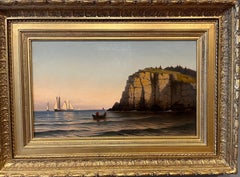
Ocean Landscape of Sailing off the Coast
Located in Fredericksburg, VA
This coastal landscape is done by the famed painted William Frederick De Haas (1830-1880). This painting shows two men in a canoe paddling off the cliff shore in the foreground with ...
Category

19th Century Hudson River School Art

Materials

Canvas, Oil

Hudson River School Watercolor Titled Fishing the Creek
Located in Fredericksburg, VA
David Johnson was born in 1827 in New York City. Beginning in 1845, he studied for two years in the antique school of the National Academy of Design. His classmates and colleagues in...
Category

Late 19th Century Hudson River School Art

Materials

Paper, Watercolor

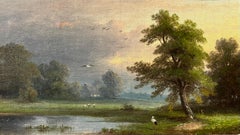
Landscape of Pond and Field After Rain Titled "Cranes After the Rain"
Located in Fredericksburg, VA
This serene landscape by a Hudson River School artist captures the quiet tension between storm and calm, rendered with luminous color and delicate brushwork. A soft sunset glows behi...
Category

Late 19th Century Hudson River School Art

Materials

Oil, Board

Hudson Highlands by Lockwood DeForest (American, 1850-1932)
Located in New York, NY
"Hudson Highlands," by Hudson River School painter Lockwood DeForest (American, 1850-1932) is oil on artists card-stock and measures 9.5 x 14 inches. The work is framed in an elegant, period appropriate frame, and ready to hang. Lockwood de Forest was born in New York in 1850 to a prominent family. He grew up in Greenwich Village and on Long Island at the family summer estate in Cold Spring Harbor. As was customary for a cultivated family in the Gilded Age, the de Forests made frequent trips abroad. Excursions to the great museums, which were prominent on the de Forests agenda, deepened the young Lockwood's familiarity with European painting and sculpture. Though he had begun drawing and painting somewhat earlier, it was during a visit to Rome in 1868 that nineteen-year-old de Forest first began to study art seriously, taking painting lessons from the Italian landscapist Hermann David Salomon Corrodi (1844–1905). More importantly, on the same trip, Lockwood met one of America’s most celebrated painters, (and his maternal great- uncle by marriage) Frederic Edwin Church (1826–1900), who quickly became his mentor. DeForest accompanied Church on sketching trips around Italy and continued this practice when they both returned to America in 1869. Early on in his career, de Forest made a habit of recording the date and often the place of his oil sketches, as to create a visual diary of his travels. Lockwood’s profession as a landscape painter can be primarily attributed to Frederic E. Church and his belief in the young artist’s talent. De Forest often visited Church in the Hudson River community of Catskill where, in addition to sketching trips and afternoons of painting, he assisted with the architectural drawings and planning of Olana. In 1872, de Forest took a studio at the Tenth Street Studio Building in New York. During these formative years de Forest counted among his friend’s artists such as Sanford Robinson Gifford (1823–80), George Henry Yewell (1830–1923), John Frederick Kensett (1816–72), Jervis McEntee (1828–91), and Walter Launt Palmer (1854–1932). Over the next decade de Forest experienced success as a painter. He exhibited for the first time at the National Academy of Design in 1872, and made two more painting trips abroad, in 1875–76 and 1877–78, traveling to the major continental capitals but also the Middle East and North Africa. His trip to the Middle East and the library at Church’s home, Olana, established his interest in design during his mid-twenties. From about 1878 to 1902, landscape painting was overshadowed by his activities and preoccupation with East Indian architecture and décor, a style that became quite fashionable in late nineteenth century America. From 1879-1883, de Forest founded Associated Artists along with Louis Comfort Tiffany, Candace Wheeler...
Category

19th Century Hudson River School Art

Materials

Oil, Board

Hudson River School Style Painting, Signed Brundell
Located in New York, NY
G. Brundell Untitled, c. Early 20th Century Oil on canvas Sight: 10 x 18 in. Framed: 19 7/8 x 27 7/8 x 2 in. Signed lower left
Category

Early 20th Century Hudson River School Art

Materials

Canvas, Oil

"Birch Tree in Maine, " Hudson River School Antique Landscape, White Mountains
Located in New York, NY
Harrison Bird Brown (1831 - 1915) Birch Tree in Maine, New England, 19th Century Oil on canvas 25 x 13 1/8 inches Initialed lower left Provenance: Portland International Galleries, Maine Mr. and Mrs. Walter M. Jeffords, Jr., Saratoga Springs, New York and Lexington, Kentucky (President of Brooklyn Borough Gas Company) Private Collection, Chicago Exhibited: Portland Maine, Portland Museum of Art, 58 Maine Paintings 1820-1920: Selections from the Collection of Mr. and Mrs. Walter M. Jeffords, Jr., May 20 - June 20, 1976, cat. no. 11. The above catalogue listing this vertical landscape will be included with your purchase. "Mr. Brown has succeeded fully in accomplishing that which Mr. John Ruskin, in speaking of J. M. W. Turner's sea views, said no painter had yet accomplished; that is, the representation of the creamy foam which the storm lashes up from the waves along a rocky shore." Harrison Bird Brown was born in 1831 in Portland, Maine, and is best known for his White Mountain landscapes and marine paintings of Maine...
Category

Late 19th Century Hudson River School Art

Materials

Canvas, Oil

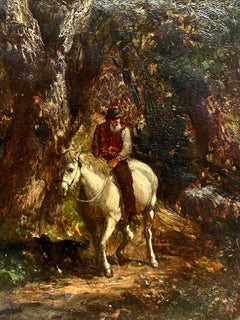
Mountain Horse Ride
Located in Fredericksburg, VA
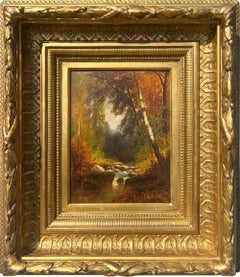
Mountain Horse Ride is a richly atmospheric painting that captures the quiet dignity of rural life. Though unsigned, the work demonstrates a refined handling of figure, animal, and l...
Category

19th Century Hudson River School Art

Materials

Canvas, Oil

"Western Lake Landscape, " John Fery, Hudson River School View
By John Fery
Located in New York, NY
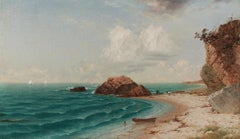
John Fery (1859 - 1934) Western Lake Landscape, circa 1920 Oil on canvas 21 x 23 1/4 inches Signed lower left Provenance: Private Collection, New York Born in Austria, John Fery earned a strong reputation for dramatic paintings of western mountain landscape in the United States. Glacier National Park in northwest Montana was a popular subject for him. He was raised in a prominent, wealthy family that lived on an estate about nineteen miles northeast of Salzburg. His mother was Hungarian, and his father was born in Bohemia. S ome sources have written that he studied art in Dusseldorf, Germany with Peter Jansen, and also in Munich, Venice and Karlsruhe. But his "name does not appear in the records of the major art schools in any of these places, nor is there any record of his name at either the Vienna or Budapest academies." (Merrill 26) It is possible, however, that he received private instruction, and because of the sophistication of his painting, sources think it unlikely that he was self taught. An early interest in wilderness scenery led him to painting American landscapes and hunting scenes. In the mid 1880s, he came to America and lived in the German community in Milwaukee, and then in 1886, brought his family to the United States. His wife, Mary Rose Kraemer (1862-1940), was born in Switzerland, and they had one child born near Munich and two others born in the United States. From 1886 to 1888, they lived in New York, and by 1890, Fery had made his first trip West. He visited Yellowstone Park in 1891, and indicated in his writings that he had been there even earlier. From 1892 to 1893, he led European nobility on hunting expeditions to the American Northwest, made possible by the completion of the Northern Pacific Railroad...
Category

1920s Hudson River School Art

Materials

Canvas, Oil

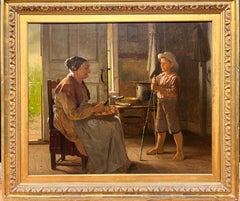
Portrait of Grandmother and Grandson titled "Peeling Apples"
Located in Fredericksburg, VA
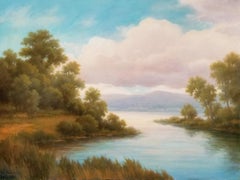
John George Brown (1831–1913) was a prominent British-born American painter, renowned for his genre paintings that vividly depict the everyday life of chi...
Category

Late 19th Century Hudson River School Art

Materials

Canvas, Oil

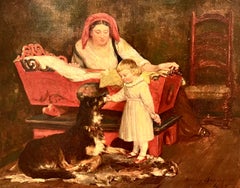
Portrait of Mother, Child, and Dog titled "The Cradle and the Companion"
Located in Fredericksburg, VA
This tender interior scene by Henry Bacon captures a moment of warmth and domestic harmony. A young mother leans gently over a carved red cradle while her daughter, dressed in a whit...
Category

Late 19th Century Hudson River School Art

Materials

Wood, Oil

Hudson River School art for sale on 1stDibs.

Find a wide variety of authentic Hudson River School art available for sale on 1stDibs. Works in this style were very popular during the 21st Century and Contemporary, but contemporary artists have continued to produce works inspired by this movement. If you’re looking to add art created in this style to introduce contrast in an otherwise neutral space in your home, the works available on 1stDibs include elements of blue, orange, purple and other colors. Many Pop art paintings were created by popular artists on 1stDibs, including Ralph Albert Blakelock, Jane Bloodgood-Abrams, Jasper Francis Cropsey, and John Frederick Kensett. Frequently made by artists working with Paint, and Oil Paint and other materials, all of these pieces for sale are unique and have attracted attention over the years. Not every interior allows for large Hudson River School art, so small editions measuring 2 inches across are also available. Prices for art made by famous or emerging artists can differ depending on medium, time period and other attributes. On 1stDibs, the price for these items starts at $400 and tops out at $875,000, while the average work sells for $13,267.

Still Thinking About These?

All Recently Viewed