Terracotta Art Nouveau
Early 20th Century Art Nouveau Busts
Ceramic, Terracotta
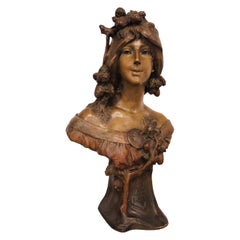
Antique Late 19th Century French Art Nouveau Busts
Terracotta
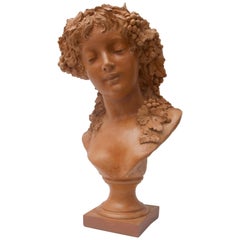

Antique Late 19th Century Czech Art Nouveau Animal Sculptures
Terracotta
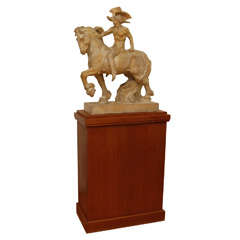
Early 20th Century Austrian Art Nouveau Sculptures
Terracotta
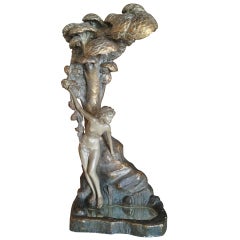
Early 20th Century Italian Art Nouveau Garden Ornaments
Terracotta
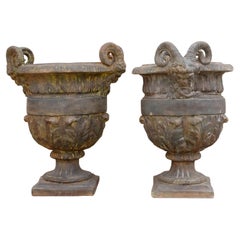
Early 20th Century French Fireplaces and Mantels
Terracotta
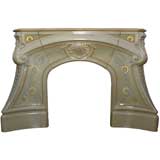
Vintage 1910s Italian Art Nouveau Planters, Cachepots and Jardinières
Ceramic, Terracotta
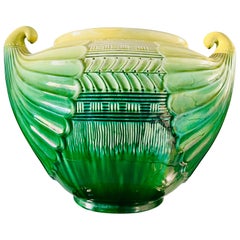
Antique Early 1900s Austrian Art Nouveau Figurative Sculptures
Terracotta
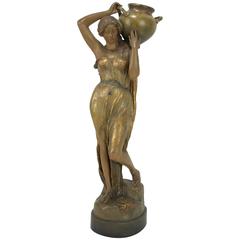
Early 20th Century French Romantic Sculptures
Terracotta
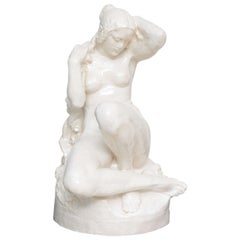
Antique Early 1900s Danish Art Nouveau Table Lamps
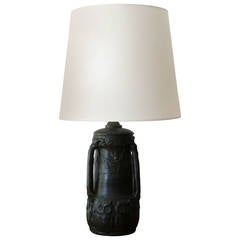
Antique 1890s Italian Art Nouveau Ceramics
Terracotta
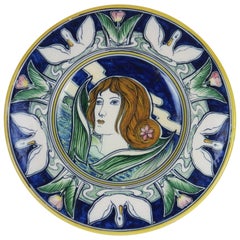
Antique Late 19th Century Austrian Art Nouveau Figurative Sculptures
Terracotta
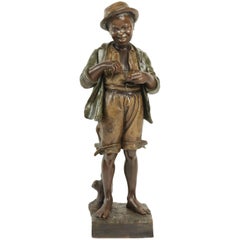
Antique 19th Century French Art Nouveau Sculptures
Terracotta, Paint
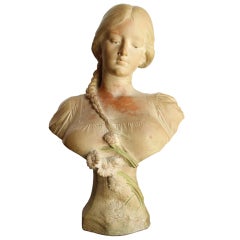
Antique Early 1900s Danish Art Nouveau Decorative Bowls
Terracotta
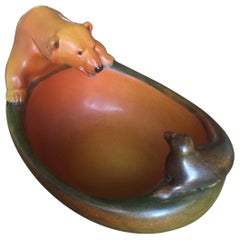
Antique 1890s Austrian Art Nouveau Busts
Terracotta
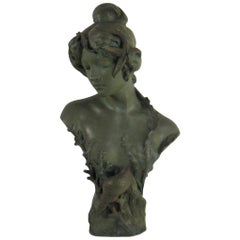
Antique 1890s Austrian Art Nouveau Figurative Sculptures
Terracotta
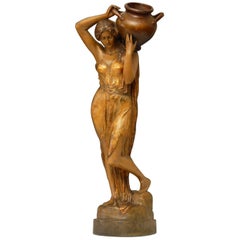
Antique Early 1900s Austrian Art Nouveau Busts
Terracotta
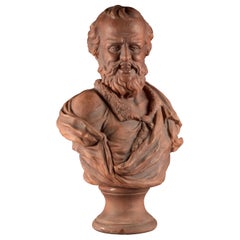
Antique Late 19th Century Danish Art Nouveau Table Lamps
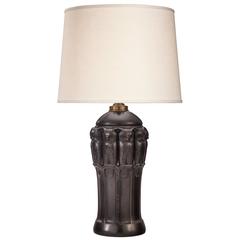
Early 20th Century Danish Art Nouveau Table Lamps
Ceramic
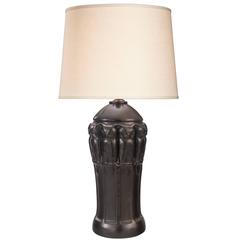
- 1
Terracotta Art Nouveau For Sale on 1stDibs
How Much is a Terracotta Art Nouveau?
A Close Look at Art Nouveau Furniture
In its sinuous lines and flamboyant curves inspired by the natural world, antique Art Nouveau furniture reflects a desire for freedom from the stuffy social and artistic strictures of the Victorian era. The Art Nouveau movement developed in the decorative arts in France and Britain in the early 1880s and quickly became a dominant aesthetic style in Western Europe and the United States.
ORIGINS OF ART NOUVEAU FURNITURE DESIGN
- Emerged during the late 19th century
- Popularity of this modernizing style declined in the early 20th century
- Originated in France and Britain but variants materialized elsewhere
- Informed by Rococo, Pre-Raphaelite art, Japanese art (and Japonisme), Arts and Crafts; influenced modernism, Bauhaus
CHARACTERISTICS OF ART NOUVEAU FURNITURE DESIGN
- Sinuous, organic and flowing lines
- Forms that mimic flowers and plant life
- Decorative inlays and ornate carvings of natural-world motifs such as insects and animals
- Use of hardwoods such as oak, mahogany and rosewood
ART NOUVEAU FURNITURE DESIGNERS TO KNOW
ANTIQUE ART NOUVEAU FURNITURE ON 1STDIBS
Art Nouveau — which spanned furniture, architecture, jewelry and graphic design — can be easily identified by its lush, flowing forms suggested by flowers and plants, as well as the lissome tendrils of sea life. Although Art Deco and Art Nouveau were both in the forefront of turn-of-the-20th-century design, they are very different styles — Art Deco is marked by bold, geometric shapes while Art Nouveau incorporates dreamlike, floral motifs. The latter’s signature motif is the "whiplash" curve — a deep, narrow, dynamic parabola that appears as an element in everything from chair arms to cabinetry and mirror frames.
The visual vocabulary of Art Nouveau was particularly influenced by the soft colors and abstract images of nature seen in Japanese art prints, which arrived in large numbers in the West after open trade was forced upon Japan in the 1860s. Impressionist artists were moved by the artistic tradition of Japanese woodblock printmaking, and Japonisme — a term used to describe the appetite for Japanese art and culture in Europe at the time — greatly informed Art Nouveau.
The Art Nouveau style quickly reached a wide audience in Europe via advertising posters, book covers, illustrations and other work by such artists as Aubrey Beardsley, Henri de Toulouse-Lautrec and Alphonse Mucha. While all Art Nouveau designs share common formal elements, different countries and regions produced their own variants.
In Scotland, the architect Charles Rennie Mackintosh developed a singular, restrained look based on scale rather than ornament; a style best known from his narrow chairs with exceedingly tall backs, designed for Glasgow tea rooms. Meanwhile in France, Hector Guimard — whose iconic 1896 entry arches for the Paris Metro are still in use — and Louis Majorelle produced chairs, desks, bed frames and cabinets with sweeping lines and rich veneers.
The Art Nouveau movement was known as Jugendstil ("Youth Style") in Germany, and in Austria the designers of the Vienna Secession group — notably Koloman Moser, Josef Hoffmann and Joseph Maria Olbrich — produced a relatively austere iteration of the Art Nouveau style, which mixed curving and geometric elements.
Art Nouveau revitalized all of the applied arts. Ceramists such as Ernest Chaplet and Edmond Lachenal created new forms covered in novel and rediscovered glazes that produced thick, foam-like finishes. Bold vases, bowls and lighting designs in acid-etched and marquetry cameo glass by Émile Gallé and the Daum Freres appeared in France, while in New York the glass workshop-cum-laboratory of Louis Comfort Tiffany — the core of what eventually became a multimedia decorative-arts manufactory called Tiffany Studios — brought out buoyant pieces in opalescent favrile glass.
Jewelry design was revolutionized, as settings, for the first time, were emphasized as much as, or more than, gemstones. A favorite Art Nouveau jewelry motif was insects (think of Tiffany, in his famed Dragonflies glass lampshade).
Like a mayfly, Art Nouveau was short-lived. The sensuous, languorous style fell out of favor early in the 20th century, deemed perhaps too light and insubstantial for European tastes in the aftermath of World War I. But as the designs on 1stDibs demonstrate, Art Nouveau retains its power to fascinate and seduce.
There are ways to tastefully integrate a touch of Art Nouveau into even the most modern interior — browse an extraordinary collection of original antique Art Nouveau furniture on 1stDibs, which includes decorative objects, seating, tables, garden elements and more.
- What is Art Nouveau jewelry?1 Answer1stDibs ExpertNovember 2, 2021Art Nouveau jewelry generally featured three main themes: flora, fauna and women. The Art Nouveau movement lasted 15 years and it reached its pinnacle in the year 1900. Art Nouveau jewelers used every “canvas” imaginable, looking beyond brooches and necklaces to belt buckles, fans, tiaras, dog collars (a type of choker necklace), pocket watches, corsages and hair combs. Multicolored gems and enamel could complete this vision better than diamonds. Enameling is most often associated with Art Nouveau jewelry, specifically plique-à-jour. Known as backless enamel, plique-à-jour allows light to come through the rear of the enamel because there is no metal backing. It creates an effect of translucence and lightness. Shop a collection of antique and vintage Art Nouveau jewelry from some of the world’s top jewelers on 1stDibs.
- Where did Art Nouveau originate?1 Answer1stDibs ExpertMay 14, 2024Art Nouveau originated in France and Great Britain, but variants materialized elsewhere. The visual vocabulary of Art Nouveau was particularly influenced by the soft colors and abstract images of nature as portrayed in Japanese art prints, which arrived in large numbers in the West after open trade was forced upon Japan in the 1860s. Impressionist artists were moved by the artistic tradition of Japanese woodblock printmaking and other modes of art and design in the East Asian country. The Art Nouveau style quickly reached a wide audience in Europe via advertising posters, book covers, illustrations and other work by such artists as Aubrey Beardsley, Henri de Toulouse-Lautrec and Alphonse Mucha. While all Art Nouveau designs share common formal elements, different countries and regions produced their own versions. Explore a selection of Art Nouveau furniture, jewelry and art on 1stDibs.
- Why did Art Nouveau end?1 Answer1stDibs ExpertAugust 8, 2024Art Nouveau ended primarily due to world events. When World War I broke out in 1914, artistic production was largely halted in order to free up materials for manufacturing equipment for the war effort. By the time the 1919 Treaty of Versailles brought about the end of the war, interest in Art Nouveau had waned. Designers and artists became interested in new forms and styles, such as Art Deco. On 1stDibs, explore a diverse assortment of Art Nouveau furniture, decorative objects, jewelry and art.
- What is Art Nouveau furniture?1 Answer1stDibs ExpertAugust 15, 2019
Art Nouveau furniture was a style of furniture that emerged at the end of the 19th century and was characterized by its complex curved lines. The curved details in the furniture were typically carved by hand and finished with lacquer. The unmistakable gloss that is associated with Art Nouveau comes from the thick coat of varnish applied to the furniture as the final step of the production process.
- 1stDibs ExpertFebruary 27, 2024Art Nouveau was influenced by a few things. The soft colors and abstract images of nature seen in Japanese woodblock prints, which arrived in large numbers in the West after open trade was forced upon Japan in the 1860s, were a major source of inspiration. Also, Pre-Raphaelite art and the Arts and Crafts and Rococo styles had an influence on Art Nouveau designers. On 1stDibs, find a wide range of Art Nouveau furniture and decorative objects.
- 1stDibs ExpertAugust 15, 2019
The main difference between Art Nouveau and Art Deco is that the former is detailed and ornate, and the latter is sharp and geometrical. When the movement started at the end of the 19th century, Art Nouveau was heavily influenced by nature and the curved lines of flowers. Art Deco, which became popular in the beginning of the 20th century, was inspired by the geometric abstraction of cubism.
- 1stDibs ExpertAugust 20, 2024To identify Art Nouveau jewelry, first consider its overall shape and themes. Flora, fauna and female figures were the three main themes in Art Nouveau jewelry. Winged creatures, such as insects and birds, were also popular subjects. Next, examine the materials and techniques. Art Nouveau jewelers distinguished themselves from their predecessors through the use of their unorthodox materials and methods. Prior to the 20th century, artisans working with jewelry prioritized precious metals and diamonds. This was not true for Art Nouveau creators. Enameling is most often associated with Art Nouveau jewelry, specifically plique-à-jour. Known as backless enamel, plique-à-jour allows light to come through the rear of the enamel because there is no metal backing. It creates an effect of translucence and lightness. Art Nouveau jewelers also favored pearls, particularly baroque pearls, for their large size and irregular shape. However, opal was the most popular stone, and Art Nouveau jewelry was primarily set in yellow gold. If you need more help identifying your jewelry, a certified appraiser or knowledgeable dealer can assist you. On 1stDibs, find a wide range of Art Nouveau jewelry.
- 1stDibs ExpertAugust 15, 2019
The Art Nouveau design movement used such materials as cast iron and steel, ceramic and glass. This style of architecture, design, art and jewelry was characterized by its use of long, sinuous lines that are reflected in nature.
- Is stained glass Art Nouveau?1 Answer1stDibs ExpertApril 5, 2022Yes, some stained glass is Art Nouveau. It was during this period that Louis Comfort Tiffany produced his famed stained glass windows and decorative objects. However, the tradition of producing stained glass traces all the way back to the Gothic period. You'll find a selection of stained glass on 1stDibs.
- 1stDibs ExpertApril 5, 2022Alphonse Mucha was a Czech painter who is one of the originators of the Art Nouveau style. His style of painting and design rose in popularity in 1895 and he produced many works, including illustrations, posters and jewelry designs. Find a variety of Alphonso Mucha art and prints on 1stDibs.
- 1stDibs ExpertApril 5, 2024No one person created the Art Nouveau movement. However, the term debuted in an 1884 article in the L'Art Moderne journal, describing the work of a collective of artists known as Les XX. As a result, some people credit the group and its founding members, James Ensor and Théo van Rysselberghe, as helping to define the movement. However, Art Nouveau was heavily informed by work that came before, including Rococo design, Pre-Raphaelite art, Japanese art and the Arts and Crafts movement. Beyond Les XX, a number of creators helped to propel the movement. Among them were Charles Rennie Mackintosh, Louis Majorelle, Émile Gallé, Antoni Gaudí and Tiffany Studios. On 1stDibs, explore a diverse assortment of Art Nouveau furniture and decorative objects.
- 1stDibs ExpertNovember 4, 2024To identify Art Nouveau furniture, first try to locate a maker's mark on the piece. You can then use it to research the maker with the help of information published in trusted online resources. Some makers, such as Charles Rennie Mackintosh, Louis Majorelle and Émile Gallé, are well-known for their Art Nouveau furnishings. If you determine that a maker identified with Art Nouveau produced your piece, it likely reflects the movement's characteristics, especially if it was made during the late 19th or early 20th centuries. You can also look for common features of Art Nouveau furniture, such as sinuous, organic and flowing lines; forms that mimic flowers and plant life; decorative inlays and ornate carvings of natural-world motifs such as insects and animals and the use of hardwoods such as oak, mahogany and rosewood. A certified appraiser or knowledgeable antique dealer can aid you with the identification process. Shop a diverse assortment of Art Nouveau furniture on 1stDibs.