Ararat Rugs Turkish Rugs
to
40
Width
to
Length
to
128
128
128
128
128
128
128
128
128
128
128
128
128
494
239
128
99
83
Creator: Ararat Rugs
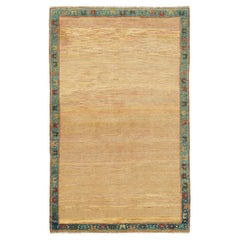
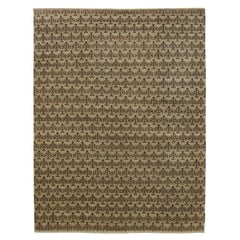
Ararat Rugs the Yellow-Brown Color Rug, Modern Desert Sand Carpet Natural Dyed
By Ararat Rugs
Located in Tokyo, JP
This unique design rug is interpreted by our designers with a mixture of Ararat Rugs’ soft tone natural dyed hand-spun yarns.
This modern carpet looks like the sand in the desert.
C...
Category
21st Century and Contemporary Turkish Revival Ararat Rugs Turkish Rugs
Materials
Wool, Natural Fiber, Organic Material

$1,312 Sale Price
25% Off
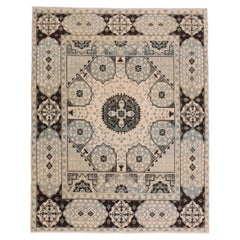
Ararat Rugs Mamluk Carpet with Cup Motif, Antique Revival Rug, Natural Dyed
By Ararat Rugs
Located in Tokyo, JP
The source of the rug comes from the book Renaissance of Islam, Art of the Mamluks, Esin Atil, Smithsonian Institution Press, Washington D.C., 1981 nr.125. This a rug with a cup motif design late 15th-century rug from Mamluk Sultane of Cairo, Egypt. It is exhibited at the Washington D.C. The Textile Museum, R.16.1.2 . The layout of this rug is characteristic of the smaller, almost square Mamluk carpet. A wide border encloses the field, divided into horizontal units consisting of a central square flanked above and below by rectangular panels. The height of the rectangular panels is approximately one-third that of the square and is equal to the width of the border. The corners of the central square are cut into triangles, creating an octagon with green ground. The octagon contains a blue polylobed medallion, which encloses an eight-pointed star with a multipetaled rosette in the core. The area between the star and the lobed medallion has floral motifs springing outward from the arms of the star. The angles of the octagon bear eight isolated and irregular polygons with a red ground; each of these units is adorned with a multipetaled rosette enclosed by a square with papyrus motifs springing from its sides and corners. The field of the octagon is filled with similar papyrus sprays, some of which appear to grow from the eight stemmed cups placed between the polygons. The triangles in the corner bear a checkerboard pattern with a stylized lotus blossom (or fleur-de-lis) in each segment. The compositional layout of the rug is reminiscent of the illuminated frontispieces, which reveal similar proportions and internal divisions. Radiating designs of geometric components filled with floral motifs are a characteristic feature of Mamluk art...
Category
21st Century and Contemporary Turkish Revival Ararat Rugs Turkish Rugs
Materials
Wool, Natural Fiber, Organic Material
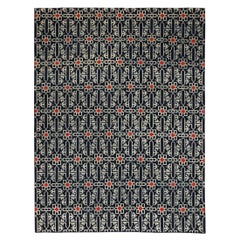
Ararat Rugs the Alaeddin Mosque Flowers and Stars Lattice Carpet Natural Dye Rug
By Ararat Rugs
Located in Tokyo, JP
The source of the carpet comes from the book Orient Stars Collection, Anatolian Tribal Rugs 1050-1750, Michael Franses, Hali Publications Ltd, 2021, fig.23. This 13th-century carpet is from probably the Konya region, central Anatolia, circa 1200-1300 (C 1290-1420). It is exhibited at the Museum of Turkish and Islamic Arts...
Category
21st Century and Contemporary Turkish Revival Ararat Rugs Turkish Rugs
Materials
Wool, Natural Fiber, Organic Material
$3,825 Sale Price
25% Off
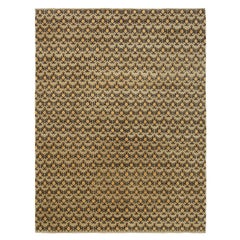
Ararat Rugs the Alaeddin Mosque Clouds Carpet Seljuk Revival Rug Natural Dyed
By Ararat Rugs
Located in Tokyo, JP
The source of the carpet comes from the book Orient Stars Collection, Anatolian Tribal Rugs 1050-1750, Michael Franses, Hali Publications Ltd, 2021 fig.27. This 13th-century carpet is from probably the Konya region, central Anatolia, circa 1200-1300 (C 1290-1420). It is exhibited at the Museum of Turkish and Islamic Arts...
Category
21st Century and Contemporary Turkish Revival Ararat Rugs Turkish Rugs
Materials
Wool, Natural Fiber, Organic Material
Ararat Rugs the Alaeddin Mosque Clouds Carpet Seljuk Revival Rug Natural Dyed
By Ararat Rugs
Located in Tokyo, JP
The source of the carpet comes from the book Orient Stars Collection, Anatolian Tribal Rugs 1050-1750, Michael Franses, Hali Publications Ltd, 2021 fig.27. This 13th-century carpet is from probably the Konya region, central Anatolia, circa 1200-1300 (C 1290-1420). It is exhibited at the Museum of Turkish and Islamic Arts...
Category
21st Century and Contemporary Turkish Revival Ararat Rugs Turkish Rugs
Materials
Wool, Natural Fiber, Organic Material
$2,925 Sale Price
25% Off
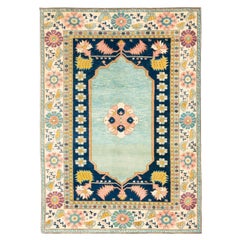
Ararat Rugs Anatolian Medallion Rug, 18th Century Revival Carpet, Natural Dyed
By Ararat Rugs
Located in Tokyo, JP
The source of the rug comes from the book Orient Star – A Carpet Collection, E. Heinrich Kirchheim, Hali Publications Ltd, 1993, no. 166. This is similar t...
Category
21st Century and Contemporary Turkish Oushak Ararat Rugs Turkish Rugs
Materials
Wool, Natural Fiber, Organic Material
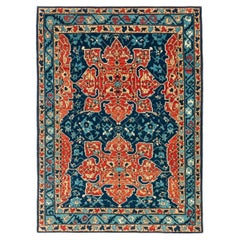
Ararat Rugs Star Ushak Carpet 16th Century Museum Piece Revival Rug Natural Dyed
By Ararat Rugs
Located in Tokyo, JP
The source of the carpet comes from the book How to Read – Islamic carpets, Walter B. Denny, The Metropolitan Museum of Art, New York 2014 fig.46-47 and Oriental Rugs, Volume 4 Turkish, Kurt Zipper and Claudia Fritzsche, Antique Collectors’ Club, 1989 nr.82. This 16th century deeply serrated eight-lobbed starlike medallion rug is from central Anatolia. Similar designs are exhibited at various museums. The town of Ushak, north of Denizli, is probably one of the most important and renowned carpet centers. Carpets have survived since the 16th century and can be seen in several museums. In the 17th century, great quantities of Ushak carpets were made for the royal houses of Europe, often incorporating crests; many Christian churches, not only in Transylvania, were often decorated with very large pieces. According to their structure and patterning, there are several types of Ushak carpets: the star Ushak, the medallion Ushak, the ‘bird’ carpet (with a white background, the name relates to the shapes of the field motifs), and ‘Chintamani’ carpets (often with a white background and three-ball pattern, mostly in connection with cloud bands). Many great painters have ensured the survival of Ushak carpet designs by including them in their works. Two representatives of the Ushak group take their name from such renowned artists: pieces with plaited band medallions in several variations are named ‘Holbein’ carpets after Hans Holbein, the younger; ‘Lotto’ carpets...
Category
21st Century and Contemporary Turkish Oushak Ararat Rugs Turkish Rugs
Materials
Wool, Natural Fiber, Organic Material
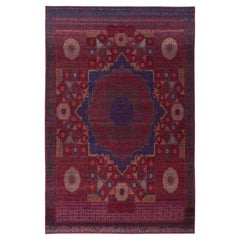
Ararat Rugs Mamluk Carpet with Central Star 16th Century Revival - Natural Dyed
By Ararat Rugs
Located in Tokyo, JP
The source of the rug comes from the book Völker, Angela, Die orientalischen Knüpfteppiche das MAK, Vienna: Böhlau, 2001: 42–5. This rug with the central star was designed in the early 16th-century rug by Mamluk Sultane of Cairo, Egypt. It is exhibited at MAK – Museum of Applied Arts, Vienna Austria. As its impressive size, materials, and design quality suggest, the carpet is a product of an accomplished court workshop and likely dates from the late period of the last Mamluk dynasty. The quantity of the colors used speaks for an earlier date around 1500; the delicate vegetal border with leaf tendrils and the characteristic umbrella leaves...
Category
21st Century and Contemporary Turkish Revival Ararat Rugs Turkish Rugs
Materials
Wool, Natural Fiber, Organic Material
Ararat Rugs turkish rugs for sale on 1stDibs.
Ararat Rugs turkish rugs are available for sale on 1stDibs. These distinctive items are frequently made of organic material and are designed with extraordinary care. Prices for Ararat Rugs turkish rugs can differ depending upon size, time period and other attributes — on 1stDibs, these items begin at $120 and can go as high as $33,000, while a piece like these, on average, fetch $825.