Bazaar Sas
to
11
279
136
102
76
41
40
30
16
16
14
7
7
6
4
4
3
2
2
1
1
1
1
1
1
1
1
1
6
5
5
4
3
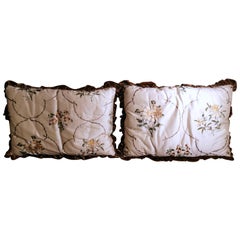
Pair of Pillows Italian Embroidered Silk and Velvet Back
Located in Prato, Tuscany
We kindly suggest you read the whole description, because with it we try to give you detailed technical and historical information to guarantee the authenticity of our objects.
Refined pair of embroidered silk cushions...
Category
Late 20th Century Italian Mid-Century Modern Pillows and Throws
Materials
Silk, Velvet
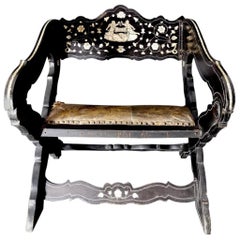
Spanish Ancient Ebony Chair with Cordova Leather
Located in Prato, Tuscany
We kindly suggest you read the whole description, because with it we try to give you detailed technical and historical information to guarantee the authenticity of our objects.
Rare and unique wooden...
Category
Antique Late 18th Century Spanish Spanish Colonial Chairs
Materials
Leather, Ebony
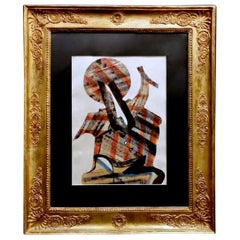
Empire Frame Gold Leaf France with Russian Constructivism Painting
Located in Prato, Tuscany
We kindly suggest you read the whole description, because with it we try to give you detailed technical and historical information to guarantee the authenticity of our objects.
Our owner Beatrice Tronci, passionate art collector and established interior design, wanted to propose an article with a daring but engaging temporal contrast; a French gold leaf frame of 1855 and inside a painting of Russian Constructivism...
Category
Antique Mid-19th Century French Napoleon III Paintings
Materials
Wood, Paper
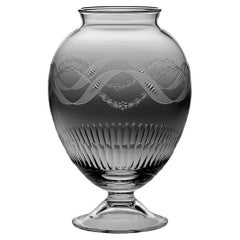
Neoclassical Style Italian Crystal Vase With Festoon Engravings
Located in Prato, Tuscany
Before describing the object under consideration we must make an important clarification; the artifact, one of many that we will publish over time, is part of the museum collection of a historic Florentine crystal grinder that unfortunately closed recently. It is the Marcello Galgani & Son company, whose completely manual and artisanal work has not withstood the disproportionate advance of mass-produced mechanical processes! Marcello Galgani began his craft as a grinder and restorer in 1960; as the years went by, Marcello mastered and became familiar with particular techniques and shapes, resulting in the production of objects that manage to retain the freshness of grinding and engraving, the warmth and softness of light, and the inimitable flavor of unique artifacts. After several years, his son Lorenzo, who grew up among crystals, also entered the business and immediately became passionate about this ancient craft with skill and ability. Stimulated by the aesthetic sense of the past, father and son, set up a workshop in which the shapes they researched and created themselves are mouth-blown by traditional Tuscan glassmakers in Empoli, then ground and engraved using ancient sixteenth-century techniques, with motifs born of the Galgani's inexhaustible imagination or culturally inspired by designs of objects seen and studied in Florentine museums (Uffizi, Galleria Palatina, Museo degli Argenti, etc.). Marcello and Lorenzo Galgani were also Masters in the difficult art of restoration, bringing rare and precious objects back to life. As mentioned the company recently closed and disposed of all its last production, only Marcello's old private museum collection remained, which includes unique and special objects created over time, a collection that the craftsman made available to us for a planned sale. All of the objects were made entirely by hand with old grinding wheels, but there were mainly two tools that allowed the creation of masterpieces: the right hand and the left hand of the master craftsman. Ancient glassmaking techniques were used for all the ground and engraved products: first the object was ground with an emery wheel fed continuously by a jet of abrasive sand and water, then re-polished with a very fine-grained sandstone wheel also fed with water; the engravings were done freehand using as many as 10-15 small stone wheels for each design (flowers, branches, animals, etc. ); then the object was polished and shined; we must make, at this point, an important clarification on these last two operations: towards the end of the 1960s acid crystal polishing was devised, the object was immersed and rotated in a solution of sulfuric acid, fluoridic acid and water and in a short time all the defects left by the previous processes were eliminated, it was a fast, industrial operation that allowed to lower costs considerably, with discrete but not excellent results. But for Galgani's products polishing is done with a cork bark wheel wet with water and pumice, to make the surfaces more transparent. Finally, polishing was achieved with a felt wheel wet with a paste of water, iron oxide, and cerium oxide. This series of processes takes an average of two days of work( sometimes much longer) for each object, each engraving or grinding is the result of the creative inventiveness of the two craftsmen, inventiveness that transforms crystal into a material reality of the highest aesthetic value and inestimable value. All objects in the entire collection have never been used; they were part of the exhibition. Large oval crystal vase...
Category
Late 20th Century Italian Neoclassical Vases
Materials
Crystal
Beaux-Art Style 6 French Ground Crystal Liqueur Glasses
Located in Prato, Tuscany
We kindly suggest you read the whole description, because with it we try to give you detailed technical and historical information to guarantee the authenticity of our objects.
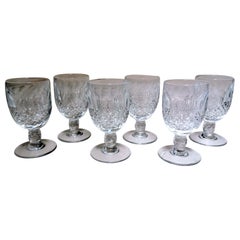
Set of 6 French ground crystal liqueur glasses; crystal with a lead content of 30% was used in their execution; the high lead content, replacing calcium, found in ordinary glass, gives the crystal considerable hardness, exceptional transparency and a high refractive index; with the techniques of cutting, grinding and polishing, scrupulously performed by hand, extraordinary plays of light and reflections have been created; the shape of the glasses is classic but very refined and elegant, they have simple and delicate grinding, they have also been ground with precise and dense faceting to enhance the diamond refraction of light; were made in the Beaux...
Category
Early 20th Century French Beaux Arts Crystal Serveware
Materials
Crystal
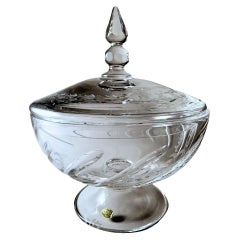
Italian Cut And Ground Crystal Table Centerpiece With Lid
Located in Prato, Tuscany
Before describing the object under consideration we must make an important clarification; the artifact, one of many that we will publish over time, is part of the museum collection o...
Category
Late 20th Century Italian Rococo Revival Centerpieces
Materials
Crystal
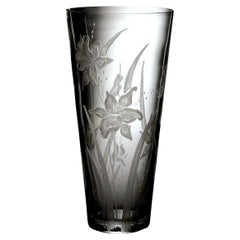
Italian Cut And Ground Crystal Vase With Flower Decoration
Located in Prato, Tuscany
Before describing the object under consideration we must make an important clarification; the artifact, one of many that we will publish over time, is part of the museum collection o...
Category
Late 20th Century Italian Mid-Century Modern Vases
Materials
Crystal
Neoclassical Style Large Italian Crystal Vase with 18th Century Engravings
Located in Prato, Tuscany
Before describing the object under consideration, we must make an important clarification; the artifact, one of many that we will publish over time, is part of the museum collection of a historic Florentine crystal grinder that unfortunately closed recently. It is the Marcello Galgani & Son company, whose completely manual and artisanal work has not withstood the disproportionate advance of mass-produced mechanical processes! Marcello Galgani began his craft as a grinder and restorer in 1960; as the years went by, Marcello mastered and became familiar with particular techniques and shapes, resulting in the production of objects that manage to retain the freshness of grinding and engraving, the warmth and softness of light, and the inimitable flavor of unique artifacts. After several years, his son Lorenzo, who grew up among crystals, also entered the business and immediately became passionate about this ancient craft with skill and ability. Stimulated by the aesthetic sense of the past, father and son, set up a workshop in which the shapes they researched and created themselves are mouth-blown by traditional Tuscan glassmakers in Empoli, then ground and engraved using ancient sixteenth-century techniques, with motifs born from the Galgani's inexhaustible imagination or culturally inspired by designs of objects seen and studied in Florentine museums (Uffizi, Galleria Palatina, Museo degli Argenti, etc.). Marcello and Lorenzo Galgani were also Masters in the difficult art of restoration, bringing rare and precious objects back to life. As mentioned the company recently closed and disposed of all its last production, and only Marcello's old private museum collection remained, which includes unique and special objects created over time, a collection that the craftsman made available to us for a planned sale. All of the objects were made entirely by hand with old grinding wheels, but there were mainly two tools that allowed the creation of masterpieces: the right hand and the left hand of the master craftsman. Ancient glassmaking techniques were used for all the ground and engraved products: first, the object was ground with an emery wheel fed continuously by a jet of abrasive sand and water, then re-polished with a very fine-grained sandstone wheel also fed with water; the engravings were done freehand using as many as 10-15 small stone wheels for each design (flowers, branches, animals, etc. ); then the object was polished and shined; we must make, at this point, an important clarification on these last two operations: towards the end of the 1960s acid crystal polishing was devised, the object was immersed and rotated in a solution of sulfuric acid, fluoridic acid and water and in a short time all the defects left by the previous processes were eliminated, it was a fast, industrial operation that allowed to lower costs considerably, with discrete but not excellent results. But for Galgani's products polishing is done with a cork bark wheel wet with water and pumice, to make the surfaces more transparent, and finally polishing was achieved with a felt wheel wet with a paste of water, iron oxide, and cerium oxide. This series of processes takes an average of two days of work( sometimes much longer) for each object, each engraving or grinding is the result of the creative inventiveness of the two artisans, inventiveness that transforms crystal into reality material of the highest aesthetic value and inestimable value. All the items in the entire collection have never been used; they were part of the exhibition. Large crystal vase with base; the decorations, graceful and delicate, are in Neoclassical style. The object is "one-of-a-kind" signed by the Master; it was created in Marcello Galgani's workshop in 1981 and made with the techniques (grinding, engraving, and polishing) we explained in the description; for the shape, the Master was inspired by a vase found in a painting, preserved in the Uffizi Gallery in Florence by the 16th-century painter Jacopo Ligozzi...
Category
Late 20th Century Italian Neoclassical Vases
Materials
Crystal
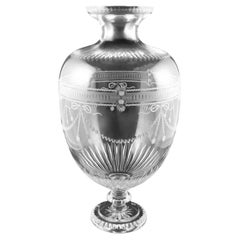
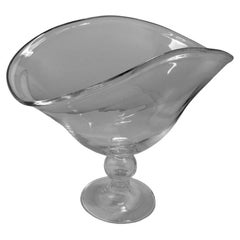
Art Deco Italian Crystal Table Centerpiece Completely Smooth
Located in Prato, Tuscany
Before describing the object under consideration, we must make an important clarification; the artifact, one of many that we will publish over time, is part of the museum collection ...
Category
Late 20th Century Italian Art Deco Centerpieces
Materials
Crystal
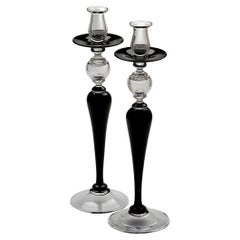
Art Deco Style Pair of Black Crystal Italian Candlesticks
Located in Prato, Tuscany
Before describing the object under consideration, we must make an important clarification; the artifact, one of many that we will publish over time, is part of the museum collection ...
Category
Late 20th Century Italian Art Deco Candlesticks
Materials
Crystal
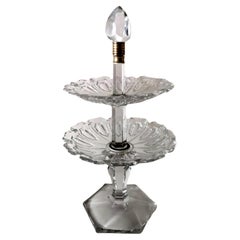
Baccarat Art Deco French Crystal Table Centerpiece.
By Baccarat
Located in Prato, Tuscany
We kindly suggest that you read the entire description, as we try to give you detailed technical and historical information to guarantee the authenticity of our objects.
Rare and exceptional French crystal centerpiece...
Category
Early 20th Century French Art Deco Centerpieces
Materials
Crystal
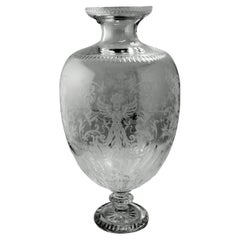
Baroque Style Large Italian Crystal Vase With Grotesque Engravings
Located in Prato, Tuscany
Before describing the object under consideration, we must make an important clarification; the artifact, one of many that we will publish over time, is part of the museum collection of a historic Florentine crystal grinder that unfortunately closed recently. It is the Marcello Galgani & Son company, whose completely manual and artisanal work has not withstood the disproportionate advance of mass-produced mechanical processes! Marcello Galgani began his craft as a grinder and restorer in 1960; as the years went by, Marcello mastered and became familiar with particular techniques and shapes, resulting in the production of objects that manage to retain the freshness of grinding and engraving, the warmth and softness of light, and the inimitable flavor of unique artifacts. After several years, his son Lorenzo, who grew up among crystals, also entered the business and immediately became passionate about this ancient craft with skill and ability. Stimulated by the aesthetic sense of the past, father and son, set up a workshop in which the shapes they researched and created themselves are mouth-blown by traditional Tuscan glassmakers in Empoli, then ground and engraved using ancient sixteenth-century techniques, with motifs born from the Galgani's inexhaustible imagination or culturally inspired by designs of objects seen and studied in Florentine museums (Uffizi, Galleria Palatina, Museo degli Argenti, etc.). Marcello and Lorenzo Galgani were also Masters in the difficult art of restoration, bringing rare and precious objects back to life. As mentioned the company recently closed and disposed of all its last production, and only Marcello's old private museum collection remained, which includes unique and special objects created over time, a collection that the craftsman made available to us for a planned sale. All of the objects were made entirely by hand with old grinding wheels, but there were mainly two tools that allowed the creation of masterpieces: the right hand and the left hand of the master craftsman. Ancient glassmaking techniques were used for all the ground and engraved products: first, the object was ground with an emery wheel fed continuously by a jet of abrasive sand and water, then re-polished with a very fine-grained sandstone wheel also fed with water; the engravings were done freehand using as many as 10-15 small stone wheels for each design (flowers, branches, animals, etc. ); then the object was polished and shined; we must make, at this point, an important clarification on these last two operations: towards the end of the 1960s acid crystal polishing was devised, the object was immersed and rotated in a solution of sulfuric acid, fluoridic acid and water and in a short time all the defects left by the previous processes were eliminated, it was a fast, industrial operation that allowed to lower costs considerably, with discrete but not excellent results. But for Galgani's products polishing is done with a cork bark wheel wet with water and pumice, to make the surfaces more transparent, and finally polishing was achieved with a felt wheel wet with a paste of water, iron oxide, and cerium oxide. This series of processes takes an average of two days of work( sometimes much longer) for each object, each engraving or grinding is the result of the creative inventiveness of the two artisans, inventiveness that transforms crystal into reality material of the highest aesthetic value and inestimable value. All the items in the entire collection have never been used; they were part of the exhibition. Large crystal vase; the decorations, in baroque style represent a series of "grotesques" The object is "a unique piece" signed by the Master, it was created in Marcello Galgani's workshop in 1983 and made with the techniques (grinding, engraving and polishing) that we explained in the description; for the shape, the Master was inspired by a vase present in a painting, preserved in the Uffizi Gallery in Florence by the sixteenth-century painter Jacopo Ligozzi...
Category
Late 20th Century Italian Baroque Vases
Materials
Crystal
Barovier
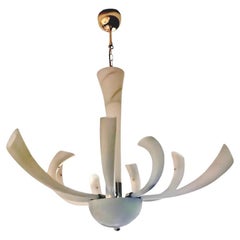
Toso Chandelier Mod. "Fireworks" Murano Glass Opaline With Gold
By Barovier&Toso
Located in Prato, Tuscany
We kindly suggest that you read the entire description, as with it we try to give you detailed technical and historical information to guarantee the authenticity of our objects.
Icon...
Category
Late 20th Century Italian Modern Chandeliers and Pendants
Materials
Murano Glass, Opaline Glass

$3,431 Sale Price
42% Off
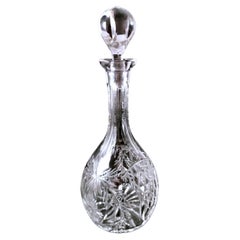
Biedermeier Style Bohemian Hand-Cut And Ground Crystal Liquor Bottle.
Located in Prato, Tuscany
We kindly suggest that you read the entire description, as we try to give you detailed technical and historical information to guarantee the authenticity of our objects. Bottle from ...
Category
Early 20th Century Czech Biedermeier Crystal Serveware
Materials
Crystal
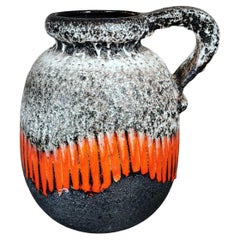
Fat Lava Style German Colored and Glazed Ceramic Pitcher with Handle
Located in Prato, Tuscany
We kindly suggest you read the whole description, because with it we try to give you detailed technical and historical information to guarantee the authenticity of our objects.
Parti...
Category
Late 20th Century German Mid-Century Modern Ceramics
Materials
Ceramic
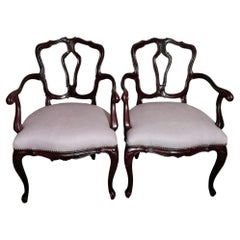
Louis Philippe Style Pair Of Chairs With Italian Armrests Model King
Located in Prato, Tuscany
Fascinating and rare pair of Italian chairs with armrests model "King" or "Antique Master"; they are made of the best quality walnut; the comfortable backrest has an elaborate and re...
Category
Antique Late 19th Century Italian Louis Philippe Chairs
Materials
Linen, Walnut
$1,624 Sale Price / set
20% Off
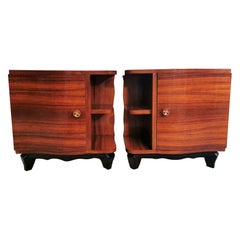
Art Deco Pair Of Italian Wooden Nightstands
Located in Prato, Tuscany
We kindly suggest you read the whole description, because with it we try to give you detailed technical and historical information to guarantee the authenticity of our objects.
Pecul...
Category
Mid-20th Century Italian Art Deco Night Stands
Materials
Wood
$2,986 / set
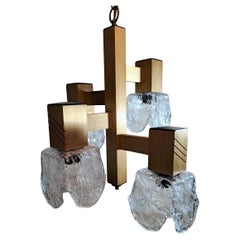
Sciolari Gaetano Style Space Age Chandelier In Aluminum And Half Crystal
By Gaetano Sciolari
Located in Prato, Tuscany
We kindly suggest that you read the whole description, as with it we try to give you detailed technical and historical information to guarantee the authenticity of our objects.
Origi...
Category
Mid-20th Century Italian Space Age Chandeliers and Pendants
Materials
Aluminum
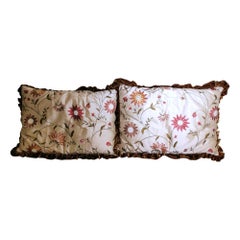
Pair of Pillows Italian Embroidered Silk and Velvet Back
Located in Prato, Tuscany
We kindly suggest you read the whole description, because with it we try to give you detailed technical and historical information to guarantee the authenticity of our objects.
Refined pair of embroidered silk cushions...
Category
Late 20th Century Italian Mid-Century Modern Pillows and Throws
Materials
Silk, Velvet
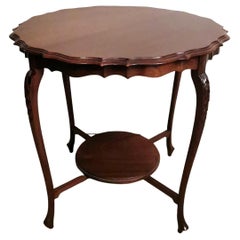
Chippendale Style English Wood Coffee Table
By Thomas Chippendale
Located in Prato, Tuscany
We kindly suggest you read the whole description, because with it we try to give you detailed technical and historical information to guarantee the authenticity of our objects.
Pecul...
Category
Early 20th Century British Chippendale Coffee and Cocktail Tables
Materials
Wood
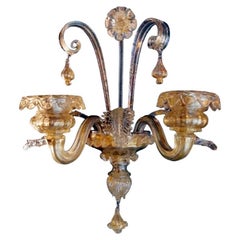
Murano Glass Wall Sconce Italian Art Nouveau Style Blown Glass and Gold
Located in Prato, Tuscany
We kindly suggest that you read the whole description, as with it we try to give you detailed technical and historical information to guarantee the authenticity of our objects.
Valuable and precious Murano glass wall sconce made in a graceful Art Nouveau style; it is an authentic classic Venetian wall...
Category
Mid-20th Century Italian Art Nouveau Wall Lights and Sconces
Materials
Murano Glass
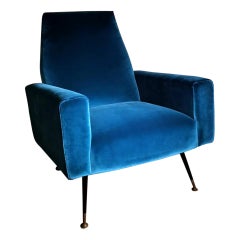
Vintage Italian Armchair Upholstered and Covered in Velvet Ottanio Color
Located in Prato, Tuscany
We kindly suggest you read the whole description, because with it we try to give you detailed technical and historical information to guarantee the authenticity of our objects.
Comfo...
Category
Mid-20th Century Italian Mid-Century Modern Armchairs
Materials
Brass
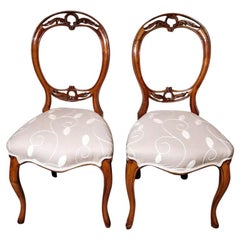
Victorian English Walnut Pair of Chairs With Balloon Back
Located in Prato, Tuscany
We kindly suggest you read the whole description, because with it we try to give you detailed technical and historical information to guarantee the authenticity of our objects.
Particular pair of chairs in walnut wood; the seat is wide and very comfortable and the covering has been redone over time with a delicate embroidered cotton, the front legs are "cabriole" that is a design shaped in two curves, the upper one convex and the lower one concave; a shape known by the ancient Chinese and Greeks, back in fashion in Europe at the end of the 17th century, when it was incorporated into the more curvilinear styles introduced in England, France and Holland, The most interesting part of the chair is the elegant and harmonious "ballon back...
Category
Antique Late 19th Century English Victorian Chairs
Materials
Cotton, Walnut
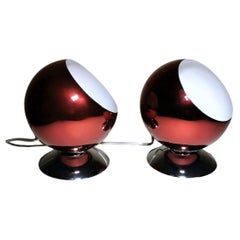
Space Age Design Eye Ball Gepo Pair of Dutch Colored Aluminum Abat-Jour
By Gepo
Located in Prato, Tuscany
We kindly suggest you read the whole description, because with it we try to give you detailed technical and historical information to guarantee the authenticity of our objects.
Icon...
Category
Late 20th Century Dutch Space Age Table Lamps
Materials
Aluminum
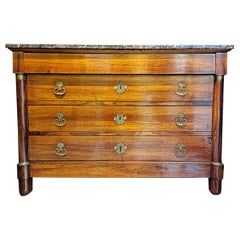
Late Empire French Walnut Chest of Drawers with Bronze Handles
Located in Prato, Tuscany
We kindly suggest you read the whole description, because with it we try to give you detailed technical and historical information to guarantee the authenticity of our objects.
Frenc...
Category
Antique Late 19th Century French Empire Commodes and Chests of Drawers
Materials
Marble, Bronze
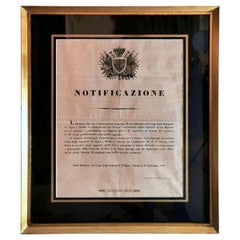
Ancient Document of the Grand Duchy of Tuscany Leopold II, Italy
Located in Prato, Tuscany
We kindly suggest you read the whole description, because with it we try to give you detailed technical and historical information to guarantee the authenticity of our objects.
The ancient, original document of the Grand Duchy of Tuscany was framed, in recent times, by a skilled Florentine master craftsman who used a frame in precious wood and painted gold. The "Notification" was a public notice issued by the authority to bring to the attention of the population or of the institutions or persons concerned a legislative situation, an administrative act, or a declaration of intent by the authority itself. In 1838 (the year of our document) Italy, still divided into Kingdoms, States, Ducats, was pervaded by a certain form of reformism; the different dukes, princes, etc. flaunting modernism, various programs begin to develop the economy, make the administration efficient, change some laws, intervene in the territory with infrastructures, such as roads, canals, and railways. For this reason, more professionalism, experience, and technical preparation were required for all operators who had to contribute to this change. In the Grand Duchy of Tuscany, the Grand Duke Leopold II...
Category
Antique Mid-19th Century Italian Other Prints
Materials
Wood, Paper
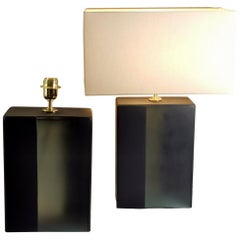
Murano Italy Pair of Glass Lamps
Located in Prato, Tuscany
We kindly suggest you read the whole description, because with it we try to give you detailed technical and historical information to guarantee the authenticity of our objects.
20th-...
Category
Vintage 1970s Italian Mid-Century Modern Table Lamps
Materials
Glass
$2,389 Sale Price / set
20% Off