Galerie Fledermaus Figurative Prints
to
71
88
35
3
7
Overall Width
to
Overall Height
to
129
20
43
34
28
17
14
38
166
42
74
36
14
124
80
191
114
73
68
62
49
32
29
27
27
25
24
21
15
11
11
10
8
7
6
138
65
4
1
1
26
204
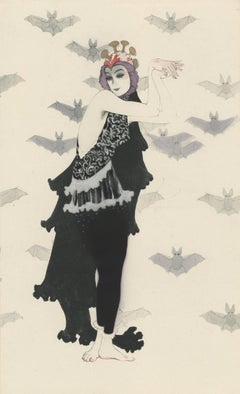
Ballet und Pantomime "Tschaikiun I", print #3.
By Walter Schnackenberg
Located in Palm Beach, FL
Walter Schnackenberg’s style changed several times during his long and successful career. Having studied in Munich, the artist traveled often to Paris where he fell under the spell o...
Category
1920s Art Deco Figurative Prints
Materials
Paper
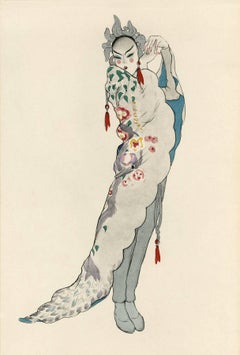

Ballet und Pantomime "Der Paradiesvogel" (Bird of Paradise) plate #1.
By Walter Schnackenberg
Located in Palm Beach, FL
Walter Schnackenberg’s style changed several times during his long and successful career. Having studied in Munich, the artist traveled often to Paris where he fell under the spell o...
Category
1920s Art Deco Figurative Prints
Materials
Paper
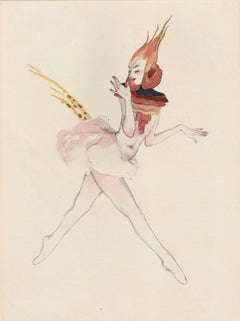
Ballet und Pantomime "Die Nacht" (The Night), plate #2.
By Walter Schnackenberg
Located in Palm Beach, FL
Walter Schnackenberg’s style changed several times during his long and successful career. Having studied in Munich, the artist traveled often to Paris where he fell under the spell o...
Category
1920s Art Deco Figurative Prints
Materials
Paper
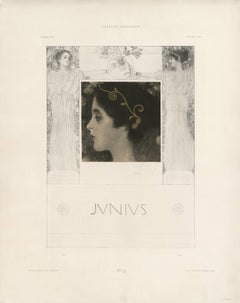
Gerlach
s Allegorien Folio, plate #53: "Junius" Lithograph, Gustav Klimt.
By Gustav Klimt
Located in Palm Beach, FL
Contributors to Gerlach & Schenk’s publications valued design and innovation in the graphic arts just as much as they examined allegories as subject matter for exploration. Here, Gus...
Category
1890s Vienna Secession Figurative Prints
Materials
Lithograph
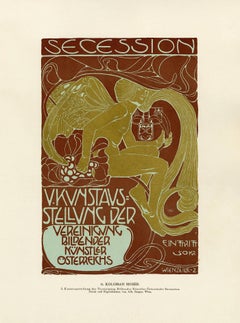
Ottokar Mascha Folio: plate 11 "5th Secession Exhibition Poster" by Kolo Moser
By Koloman Moser
Located in Palm Beach, FL
after KOLOMAN MOSER (1868-1918) 5TH SECESSION EXHIBITION POSTER, 1899, (In Mascha, no. 11) A pivotal figure in early-20th century Austrian ...
Category
1910s Vienna Secession Figurative Prints
Materials
Lithograph
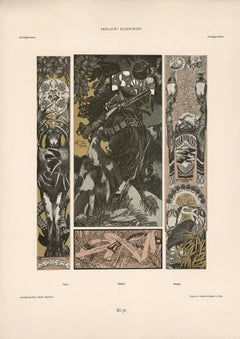
Gerlach
s Allegorien Plate #78: "Hunting" Lithograph by Carl Otto Czeschka
By Carl Otto Czeschka
Located in Palm Beach, FL
after Carl Otto Czeschka, (1878-1960), Austrian
A leading member of the Vienna Secession and later the Wiener Werkstätte (Viennese Workshop), Carl Otto Czeschka was a vital figu...
Category
1890s Vienna Secession Figurative Prints
Materials
Lithograph
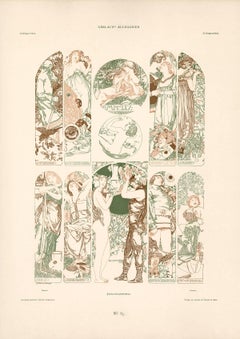
Gerlach
s Allegorien Plate #83: "Seasons" Lithograph by Carl Otto Czeschka
By Carl Otto Czeschka
Located in Palm Beach, FL
after Carl Otto Czeschka, (1878-1960), Austrian
A leading member of the Vienna Secession and later the Wiener Werkstätte (Viennese Workshop), Carl Otto Czeschka was a vital f...
Category
1890s Vienna Secession Figurative Prints
Materials
Lithograph
Gerlach
s Allegorien Plate #85: "Hunting" Lithograph by Carl Otto Czeschka
By Carl Otto Czeschka
Located in Palm Beach, FL
after Carl Otto Czeschka, (1878-1960), Austrian
A leading member of the Vienna Secession and later the Wiener Werkstätte (Viennese Workshop), Carl Otto Czeschka was a vital figu...
Category
1890s Vienna Secession Figurative Prints
Materials
Lithograph
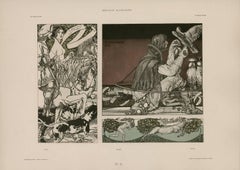
Gerlach
s Allegorien Plate #93: "Science" Lithograph by Carl Otto Czeschka
By Carl Otto Czeschka
Located in Palm Beach, FL
after Carl Otto Czeschka, (1878-1960), Austrian
A leading member of the Vienna Secession and later the Wiener Werkstätte (Viennese Workshop), Carl Otto Czeschka was a vital figu...
Category
1890s Vienna Secession Figurative Prints
Materials
Lithograph
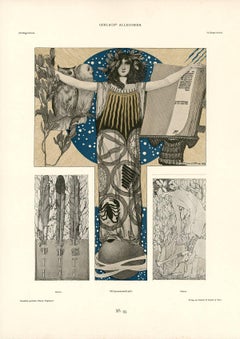
Gerlach
s Allegorien Plate #78: "Astronomy, The Creation, The Lie" Lithograph
By Carl Otto Czeschka
Located in Palm Beach, FL
after Carl Otto Czeschka, (1878-1960), Austrian
A leading member of the Vienna Secession and later the Wiener Werkstätte (Viennese Workshop), Carl Otto Czeschka was a vital figu...
Category
1890s Vienna Secession Figurative Prints
Materials
Lithograph
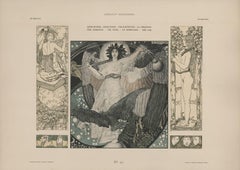
Gerlach
s Allegorien Plate #78: "Dance
Wine" Lithograph by Carl Otto Czeschka
By Carl Otto Czeschka
Located in Palm Beach, FL
after Carl Otto Czeschka, (1878-1960), Austrian
A leading member of the Vienna Secession and later the Wiener Werkstätte (Viennese Workshop), Carl Otto Czeschka was a vital figu...
Category
1890s Vienna Secession Figurative Prints
Materials
Lithograph
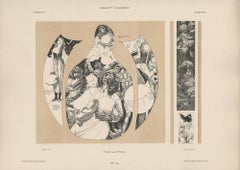
Gerlach
s Allegorien Plate #114: "Vignettes" Lithograph by Carl Otto Czeschka
By Carl Otto Czeschka
Located in Palm Beach, FL
after Carl Otto Czeschka, (1878-1960), Austrian
A leading member of the Vienna Secession and later the Wiener Werkstätte (Viennese Workshop), Carl Otto Czeschka was a vital figu...
Category
1890s Vienna Secession Figurative Prints
Materials
Lithograph
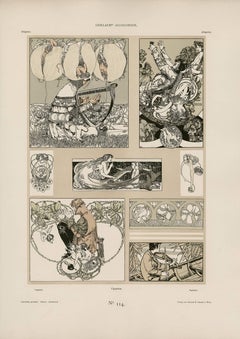
Gerlach
s Allegorien Plate #116: "Force, Thirst, Love" Lithograph
By Carl Otto Czeschka
Located in Palm Beach, FL
after Carl Otto Czeschka, (1878-1960), Austrian
A leading member of the Vienna Secession and later the Wiener Werkstätte (Viennese Workshop), Carl Otto Czeschka was a vital figu...
Category
1890s Vienna Secession Figurative Prints
Materials
Lithograph
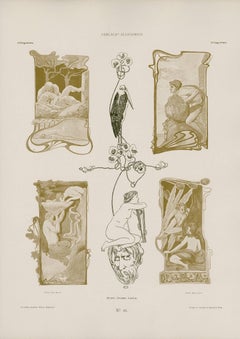
Gerlach
s Allegorien Plate #98: "Poetry" Lithograph by Carl Otto Czeschka
By Carl Otto Czeschka
Located in Palm Beach, FL
after Carl Otto Czeschka, (1878-1960), Austrian
A leading member of the Vienna Secession and later the Wiener Werkstätte (Viennese Workshop), Carl Otto Czeschka was a vital figu...
Category
1890s Vienna Secession Figurative Prints
Materials
Lithograph
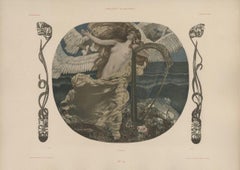
Gerlach
s Allegorien Plate #47: "Morning in the Spring" Lithograph
By Koloman Moser
Located in Palm Beach, FL
Koloman Moser
(1868 –1918), AUSTRIAN
Instead of applying his flair and art education solely to painting, Koloman Moser embodied the idea of Gesamt Kunstwerk (all-embracing art work) by designing architecture, furniture, jewelry, graphics, and tapestries meant to coordinate every detail of an environment. His work transcended the imitative decorative arts of earlier eras and helped to define Modernism for generations to come. Moser achieved a remarkable balance between intellectual structure (often geometric) and hedonistic luxury.
Collaborating with Gustav Klimt and Josef Hoffmann, the artist was an editor and active contributor to Ver Sacrum, (Sacred Spring), the journal of the Viennese Secession that was so prized for its aesthetics and high quality production that it was considered a work of art. The magazine featured drawings and designs in the Jugendstil style (Youth) along with literary contributions from distinguished writers from across Europe. It quickly disseminated both the spirit and the style of the Secession.
In 1903 Moser and Hoffmann founded and led the Wiener Werkstatte (Viennese Workshop) a collective of artisans that produced elegant decorative arts items, not as industrial prototypes but for the purpose of sale to the public. The plan, as idealistic then as now, was to elevate the lives of consumers by means of beautiful and useful interior surroundings.
Moser’s influence has endured throughout the century. His design sensibility is evident from the mid-century modern furniture of the 1950s and ‘60s to the psychedelic rock posters...
Category
1890s Vienna Secession Figurative Prints
Materials
Paper
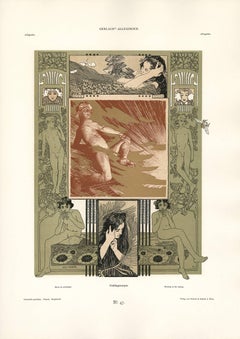
Gerlach
s Allegorien Plate #37: "Music" Lithograph
By Koloman Moser
Located in Palm Beach, FL
Koloman Moser
(1868 –1918), AUSTRIAN
Instead of applying his flair and art education solely to painting, Koloman Moser embodied the idea of Gesamt Kunstwerk (all-embracing art w...
Category
1890s Vienna Secession Figurative Prints
Materials
Lithograph
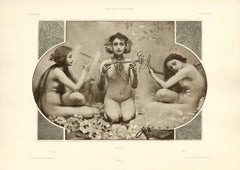
Gerlach
s Allegorien Plate #30: "Love" Lithograph
By Koloman Moser
Located in Palm Beach, FL
Koloman Moser
(1868 –1918), AUSTRIAN
Instead of applying his flair and art education solely to painting, Koloman Moser embodied the idea of Gesamt Kunstwerk (all-embracing art w...
Category
1890s Vienna Secession Figurative Prints
Materials
Lithograph
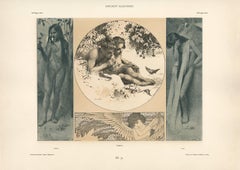
Gerlach
s Allegorien Plate #35: "Love
Wine" Lithograph
By Koloman Moser
Located in Palm Beach, FL
Koloman Moser
(1868 –1918), AUSTRIAN
Instead of applying his flair and art education solely to painting, Koloman Moser embodied the idea of Gesamt Kunstwerk (all-embracing art work) by designing architecture, furniture, jewelry, graphics, and tapestries meant to coordinate every detail of an environment. His work transcended the imitative decorative arts of earlier eras and helped to define Modernism for generations to come. Moser achieved a remarkable balance between intellectual structure (often geometric) and hedonistic luxury.
Collaborating with Gustav Klimt and Josef Hoffmann, the artist was an editor and active contributor to Ver Sacrum, (Sacred Spring), the journal of the Viennese Secession that was so prized for its aesthetics and high quality production that it was considered a work of art. The magazine featured drawings and designs in the Jugendstil style (Youth) along with literary contributions from distinguished writers from across Europe. It quickly disseminated both the spirit and the style of the Secession.
In 1903 Moser and Hoffmann founded and led the Wiener Werkstatte (Viennese Workshop) a collective of artisans that produced elegant decorative arts items, not as industrial prototypes but for the purpose of sale to the public. The plan, as idealistic then as now, was to elevate the lives of consumers by means of beautiful and useful interior surroundings.
Moser’s influence has endured throughout the century. His design sensibility is evident from the mid-century modern furniture of the 1950s and ‘60s to the psychedelic rock posters...
Category
1890s Vienna Secession Figurative Prints
Materials
Lithograph
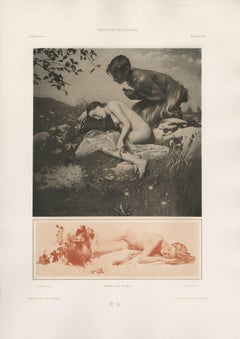
Gerlach
s Allegorien Plate #44: "Music" Lithograph
By Koloman Moser
Located in Palm Beach, FL
Koloman Moser
(1868 –1918), AUSTRIAN
Instead of applying his flair and art education solely to painting, Koloman Moser embodied the idea of Gesamt Kunstwerk (all-embracing art work) by designing architecture, furniture, jewelry, graphics, and tapestries meant to coordinate every detail of an environment. His work transcended the imitative decorative arts of earlier eras and helped to define Modernism for generations to come. Moser achieved a remarkable balance between intellectual structure (often geometric) and hedonistic luxury.
Collaborating with Gustav Klimt and Josef Hoffmann, the artist was an editor and active contributor to Ver Sacrum, (Sacred Spring), the journal of the Viennese Secession that was so prized for its aesthetics and high quality production that it was considered a work of art. The magazine featured drawings and designs in the Jugendstil style (Youth) along with literary contributions from distinguished writers from across Europe. It quickly disseminated both the spirit and the style of the Secession.
In 1903 Moser and Hoffmann founded and led the Wiener Werkstatte (Viennese Workshop) a collective of artisans that produced elegant decorative arts items, not as industrial prototypes but for the purpose of sale to the public. The plan, as idealistic then as now, was to elevate the lives of consumers by means of beautiful and useful interior surroundings.
Moser’s influence has endured throughout the century. His design sensibility is evident from the mid-century modern furniture of the 1950s and ‘60s to the psychedelic rock posters...
Category
1890s Vienna Secession Figurative Prints
Materials
Lithograph
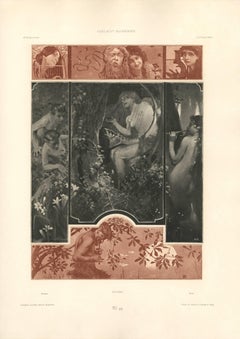
Gerlach
s Allegorien Plate #51: "Summer" Lithograph
By Koloman Moser
Located in Palm Beach, FL
Koloman Moser
(1868 –1918), AUSTRIAN
Instead of applying his flair and art education solely to painting, Koloman Moser embodied the idea of Gesamt Kunstwerk (all-embracing art w...
Category
1890s Vienna Secession Figurative Prints
Materials
Lithograph
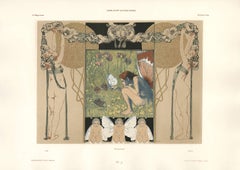
Gerlach
s Allegorien Plate #75: "Hunting, Fishing, Rowing, Cycling"
By Koloman Moser
Located in Palm Beach, FL
Koloman Moser
(1868 –1918), AUSTRIAN
Instead of applying his flair and art education solely to painting, Koloman Moser embodied the idea of Gesamt Kunstwerk (all-embracing art work) by designing architecture, furniture, jewelry, graphics, and tapestries meant to coordinate every detail of an environment. His work transcended the imitative decorative arts of earlier eras and helped to define Modernism for generations to come. Moser achieved a remarkable balance between intellectual structure (often geometric) and hedonistic luxury.
Collaborating with Gustav Klimt and Josef Hoffmann, the artist was an editor and active contributor to Ver Sacrum, (Sacred Spring), the journal of the Viennese Secession that was so prized for its aesthetics and high quality production that it was considered a work of art. The magazine featured drawings and designs in the Jugendstil style (Youth) along with literary contributions from distinguished writers from across Europe. It quickly disseminated both the spirit and the style of the Secession.
In 1903 Moser and Hoffmann founded and led the Wiener Werkstatte (Viennese Workshop) a collective of artisans that produced elegant decorative arts items, not as industrial prototypes but for the purpose of sale to the public. The plan, as idealistic then as now, was to elevate the lives of consumers by means of beautiful and useful interior surroundings.
Moser’s influence has endured throughout the century. His design sensibility is evident from the mid-century modern furniture of the 1950s and ‘60s to the psychedelic rock posters...
Category
1890s Vienna Secession Figurative Prints
Materials
Lithograph
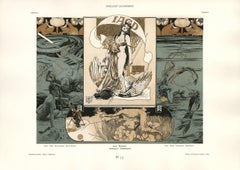
Gerlach
s Allegorien Plate #89: "Bookplate Spring" Lithograph
By Koloman Moser
Located in Palm Beach, FL
Koloman Moser
(1868 –1918), AUSTRIAN
Instead of applying his flair and art education solely to painting, Koloman Moser embodied the idea of Gesamt Kunstwerk (all-embracing art work) by designing architecture, furniture, jewelry, graphics, and tapestries meant to coordinate every detail of an environment. His work transcended the imitative decorative arts of earlier eras and helped to define Modernism for generations to come. Moser achieved a remarkable balance between intellectual structure (often geometric) and hedonistic luxury.
Collaborating with Gustav Klimt and Josef Hoffmann, the artist was an editor and active contributor to Ver Sacrum, (Sacred Spring), the journal of the Viennese Secession that was so prized for its aesthetics and high quality production that it was considered a work of art. The magazine featured drawings and designs in the Jugendstil style (Youth) along with literary contributions from distinguished writers from across Europe. It quickly disseminated both the spirit and the style of the Secession.
In 1903 Moser and Hoffmann founded and led the Wiener Werkstatte (Viennese Workshop) a collective of artisans that produced elegant decorative arts items, not as industrial prototypes but for the purpose of sale to the public. The plan, as idealistic then as now, was to elevate the lives of consumers by means of beautiful and useful interior surroundings.
Moser’s influence has endured throughout the century. His design sensibility is evident from the mid-century modern furniture of the 1950s and ‘60s to the psychedelic rock posters...
Category
1890s Vienna Secession Figurative Prints
Materials
Lithograph
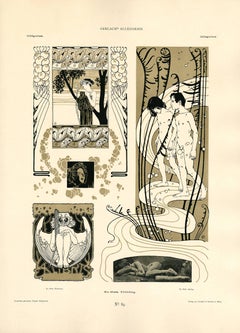
Gerlach
s Allegorien Plate #94: "Heads" Lithograph
By Koloman Moser
Located in Palm Beach, FL
Koloman Moser
(1868 –1918), AUSTRIAN
Instead of applying his flair and art education solely to painting, Koloman Moser embodied the idea of Gesamt Kunstwerk (all-embracing art work) by designing architecture, furniture, jewelry, graphics, and tapestries meant to coordinate every detail of an environment. His work transcended the imitative decorative arts of earlier eras and helped to define Modernism for generations to come. Moser achieved a remarkable balance between intellectual structure (often geometric) and hedonistic luxury.
Collaborating with Gustav Klimt and Josef Hoffmann, the artist was an editor and active contributor to Ver Sacrum, (Sacred Spring), the journal of the Viennese Secession that was so prized for its aesthetics and high quality production that it was considered a work of art. The magazine featured drawings and designs in the Jugendstil style (Youth) along with literary contributions from distinguished writers from across Europe. It quickly disseminated both the spirit and the style of the Secession.
In 1903 Moser and Hoffmann founded and led the Wiener Werkstatte (Viennese Workshop) a collective of artisans that produced elegant decorative arts items, not as industrial prototypes but for the purpose of sale to the public. The plan, as idealistic then as now, was to elevate the lives of consumers by means of beautiful and useful interior surroundings.
Moser’s influence has endured throughout the century. His design sensibility is evident from the mid-century modern furniture of the 1950s and ‘60s to the psychedelic rock posters...
Category
1890s Vienna Secession Figurative Prints
Materials
Lithograph
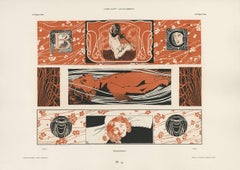
Gerlach
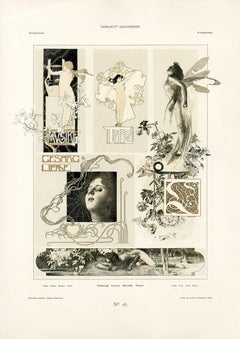
s Allegorien Plate #20: "Song, Love, Music, Dance" Lithograph
By Koloman Moser
Located in Palm Beach, FL
Koloman Moser
(1868 –1918), AUSTRIAN
Instead of applying his flair and art education solely to painting, Koloman Moser embodied the idea of Gesamt Kunstwerk (all-embracing art w...
Category
1890s Vienna Secession Figurative Prints
Materials
Lithograph