Galerie Harmonia Art
to
716
104
102
10
31
Overall Width
to
Overall Height
to
899
64
2
28
33
82
178
335
168
48
19
453
196
177
29
29
20
1
1
821
123
3
481
328
290
164
154
115
111
100
58
29
22
21
19
18
18
17
17
17
16
16
571
230
32
30
17
116
82
55
43
42
965
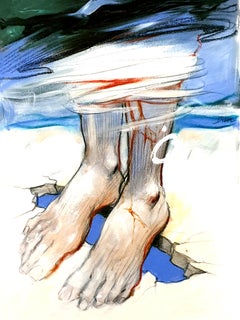
Enki Bilal - Feet - Original Lithograph
By Enki Bilal
Located in Collonge Bellerive, Geneve, CH
Enki Bilal - Feet - Original Lithograph
Publisher: Amis du Livre
Edition: 240
2012
Dimensions: 42 x 30 cm.
Unsigned and unnumbered as issued
Category
2010s Contemporary Figurative Prints
Materials
Lithograph, Pigment

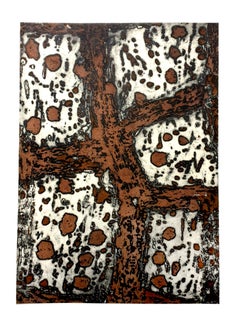
Zoran Music (after) - Composition - Pochoir
Located in Collonge Bellerive, Geneve, CH
Zoran Music (after)- Composition - Pochoir
1959
Dimensions: 32 x 24 cm
From the art review XXe siècle
Unsigned and unumbered as issued
Category
1950s Surrealist Abstract Prints
Materials
Etching
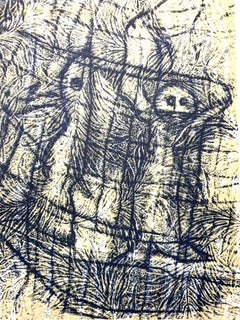
Max Ernst - Composition - Original Lithograph
By Max Ernst
Located in Collonge Bellerive, Geneve, CH
Max Ernst - Composition - Original Lithograph
1958
Dimensions: 32 x 24 cm
XXe siècle
Unsigned and unnumbered, as issued
Max Ernst was born in Bruhl, a place near Cologne, in Germany. He was raised in a strict Catholic family, and both of his parents were disciplinarians who were dedicated to training their children into God-fearing and talented individuals. Although his father was deaf, Ernst learned so much from him, particularly when it comes to painting. In fact, much of his early years were lived under the inspiration of his father who was also a teacher. He was the one who introduced painting to Ernst at an early age.
In 1914, Ernst attended the University of Bonn where he studied philosophy. However, he eventually dropped out of school because he was more interested in the arts. He claimed that his primary sources of interest included anything that had something to do with painting. Moreover, he became fascinated with psychology, among other subjects in school.
Primarily, Ernst's love for painting was the main reason why he became deeply interested with this craft and decided to pursue it later on in his life. During his early years, he became familiar with the works of some of the greatest artists of all time including Claude Monet, Paul Cezanne and Vincent van Gogh. He was also drawn to themes such as fantasy and dream imagery, which were among the common subjects of the works of Giorgio de Chirico.
During World War I, Ernst was forced to join the German Army, and he became a part of the artillery division that exposed him greatly to the drama of warfare. A soldier in the War, Ernst emerged deeply traumatized and highly critical of western culture. These charged sentiments directly fed into his vision of the modern world as irrational, an idea that became the basis of his artwork. Ernst's artistic vision, along with his humor and verve come through strongly in his Dada and Surrealists works; Ernst was a pioneer of both movements.
It was Ernst's memories of the war and his childhood that helps him create absurd, yet interesting scenes in his artworks. Soon, he took his passion for the arts seriously when he returned to Germany after the war. With Jean Arp, a poet and artist, Ernst formed a group for artists in Cologne. He also developed a close relationship with fellow artists in Paris who propagated Avant-Garde artworks.
In 1919, Ernst started creating some of his first collages, where he made use of various materials including illustrated catalogs and some manuals that produced a somewhat futuristic image. His unique masterpieces allowed Ernst to create his very own world of dreams and fantasy, which eventually helped heal his personal issues and trauma. In addition to painting and creating collages, Ernst also edited some journals. He also made a few sculptures that were rather queer in appearance.
In 1920s, influenced by the writings of psychologist Sigmund Freud, the literary, intellectual, and artistic movement called Surrealism sought a revolution against the constraints of the rational mind; and by extension, they saw the rules of a society as oppressive. Surrealism also embraces a Marxist ideology that demands an orthodox approach to history as a product of the material interaction of collective interests, and many renown Surrealism artists later on became 20th century Counterculture symbols such as Marxist Che Guevara. In 1922 Ernst moved to Paris, where the surrealists were gathering around Andre Breton. In 1923 Ernst finished Men Shall Know Nothing of This, known as the first Surrealist painting. Ernst was one of the first artists who apply The Interpretation of Dreams by Freud to investigate his deep psyche in order to explore the source of his own creativity. While turning inwards unto himself, Ernst was also tapping into the universal unconscious with its common dream imagery.
Despite his strange styles, Ernst gained quite a reputation that earned him some followers throughout his life. He even helped shape the trend of American art during the mid-century, thanks to his brilliant and extraordinary ideas that were unlike those of other artists during his time. Ernst also became friends with Peggy Guggenheim, which inspired him to develop close ties with the abstract expressionists.
When Ernst lived in Sedona, he became deeply fascinated with the Southwest Native American navajo art. In fact, the technique used in this artwork inspired him and paved the way for him to create paintings that depicted this style. Thus, Ernst became a main figure of this art technique, including the rituals and spiritual traditions included in this form of art. Pollock, aside from the other younger generations of abstract expressionists, was also inspired by sand painting of the Southwest...
Category
1960s Surrealist Animal Prints
Materials
Lithograph
Leonor Fini - Dancing - Original Handsigned Lithograph
By Leonor Fini
Located in Collonge Bellerive, Geneve, CH
Leonor Fini - Dancing - Original Handsigned Lithograph
Les Elus de la Nuit
1986
Conditions: excellent
Handsigned and Numbered
Edition: 230
Dimensions: 38 x 28 cm
Editions: Trinckvel...
Category
1980s Modern Nude Prints
Materials
Lithograph
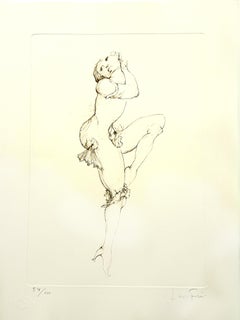
Tsuhugaru Foujita - Fear - Original Drawing
By Léonard Tsugouharu Foujita
Located in Collonge Bellerive, Geneve, CH
Tsuhugaru Foujita - Fear - Original Drawing
14 x 11.9 cm
Ballpoint pen ink on paper
Provenance: Succession Kimiyo Foujita
Léonard Foujita (French/Japanese, 1886–1968)
Léonard T...
Category
Mid-20th Century Modern Figurative Drawings and Watercolors
Materials
Ink
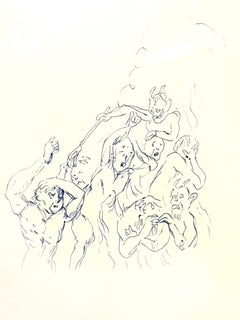
Jean Fautrier - Naked Annabelle - Original Lithograph
By Jean Fautrier
Located in Collonge Bellerive, Geneve, CH
Jean Fautrier - Naked Annabelle - Original Lithograph
1957
Dimensions: 32 x 24 cm
Signed in the plate
From the art review XXe siecle
Unumbered as issued
Category
1950s Abstract Geometric Figurative Prints
Materials
Lithograph
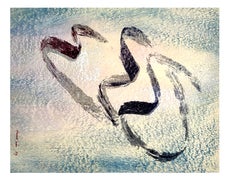
Jean Arp (after) - Composition - Pochoir
By Jean Arp
Located in Collonge Bellerive, Geneve, CH
Jean Arp (after) - Composition - Pochoir
1958
Dimensions: 32 x 24 cm
From the art revue XXe siècle
Unsigned and unumbered as issued
Category
1930s Surrealist Abstract Prints
Materials
Stencil
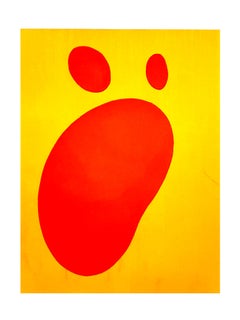
Jean Bazaine (after) - Lithograph
By Jean Bazaine
Located in Collonge Bellerive, Geneve, CH
Jean Bazaine (after) - Lithograph
1958
Dimensions: 32 x 24 cm
Signed in the plate
From the art revue XXe siecle
Unumbered as issued
Category
1970s Abstract Geometric Figurative Prints
Materials
Lithograph
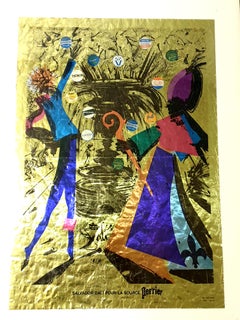
Salvador Dali - Perrier - Poster
By Salvador Dalí
Located in Collonge Bellerive, Geneve, CH
Salvador Dali - Perrier - Vintage Lithographic Poster
On Golden paper
Signed in the plate
1970
Dimensions: 60 x 42 cm
Reference: Field page 233
Some folding
Category
1970s Surrealist More Art
Materials
Lithograph
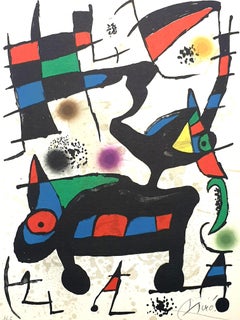
Joan Miro - “Plate I” from “Oda à Joan Miró” - Lithograph
By Joan Miró
Located in Collonge Bellerive, Geneve, CH
“Plate I,” from “Oda à Joan Miró,” by Joan Brossa Lithograph in colors, 1973 Signed in pencil and inscribed “H.C.” (presumably one of 10; the total edition was 525) Published by La...
Category
1960s Abstract Abstract Prints
Materials
Lithograph
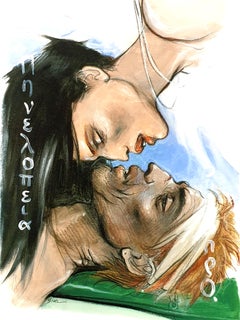
Enki Bilal - The Kiss - Original Lithograph
By Enki Bilal
Located in Collonge Bellerive, Geneve, CH
Enki Bilal - The Kiss - Original Lithograph
Publisher: Amis du Livre
Edition: 240
2012
Dimensions: 42 x 30 cm.
Unsigned and unnumbered as issued
Category
2010s Contemporary Figurative Prints
Materials
Lithograph, Pigment
Enki Bilal - Ulysses and Penelope - Original Lithograph
By Enki Bilal
Located in Collonge Bellerive, Geneve, CH
Enki Bilal - Ulysses and Penelope - Original Lithograph
Publisher: Amis du Livre
Edition: 240
2012
Dimensions: 42 x 30 cm.
Unsigned and unnumbered as issued
Category
2010s Contemporary Figurative Prints
Materials
Lithograph, Pigment

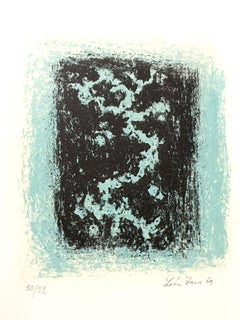
Léon Zack - Snow - Original Handsigned Lithograph
By Léon Zack
Located in Collonge Bellerive, Geneve, CH
Léon Zack - Snow - Original Handsigned Lithograph
1969
Handsigned in pencil and numbered
Edition of 22
32.5 x 25 cm
Léon Zack (1892-1980)
Léon Zack was a Ru...
Category
1960s Abstract Expressionist Abstract Prints
Materials
Lithograph
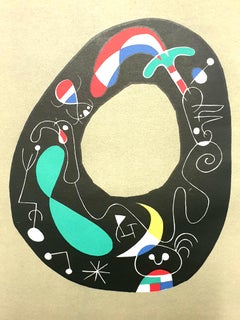
Joan Miro -
By Joan Miró
Located in Collonge Bellerive, Geneve, CH
From Joan Miro by Jacques Prévert and Georges Ribemont-Dessaignes.
Unknown publication size
Plate I, from Joan Miro by Jacques Prévert and Georges Ribemont...
Category
1950s Abstract Abstract Prints
Materials
Lithograph
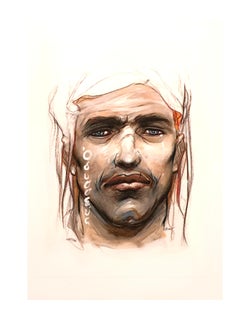
Enki Bilal - Ulysses - Original Lithograph
By Enki Bilal
Located in Collonge Bellerive, Geneve, CH
Enki Bilal - Ulysses - Original Lithograph
Publisher: Amis du Livre
Edition: 240
2012
Dimensions: 42 x 30 cm.
Unsigned and unnumbered as issued
Category
2010s Contemporary Figurative Prints
Materials
Lithograph, Pigment
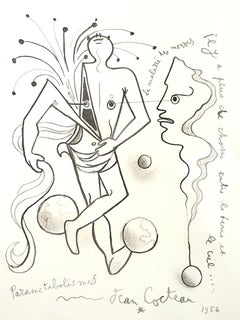
Jean Cocteau - Parametabolismes - Original Lithograph
By Jean Cocteau
Located in Collonge Bellerive, Geneve, CH
Jean Cocteau - Parametabolismes - Original Lithograph
Signed "Jean Cocteau" in the plate and dated 1956 in the plate.
39 x 29 cm
Edition: 500
Hand numbered
Stamp signed lower right
Category
1950s Modern Nude Prints
Materials
Lithograph
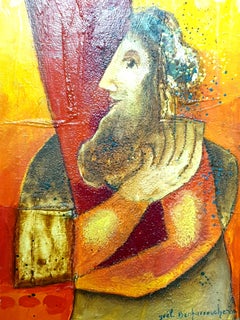
Yoel Benharrouche - The Wise Man of Time - Oil on Canvas
By Yoel Benharrouche
Located in Collonge Bellerive, Geneve, CH
Yoel Benharrouche
Oil on Canvas
Title: The Wise Man of Time
Dimensions: 33 x 24 cm
Framed dimensions: 73 x 63 cm
Signed
"Spirit must meet with matter. Th...
Category
21st Century and Contemporary Contemporary Figurative Paintings
Materials
Oil
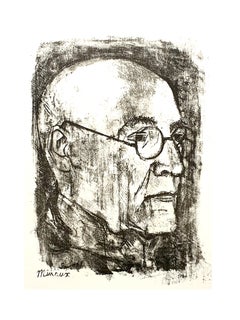
Andre Minaux - Portrait - Original Lithograph
By Andre Minaux
Located in Collonge Bellerive, Geneve, CH
Andre Minaux - Portrait - Original Lithograph
1951
Signed in the plate
Dimensions: 22 x 16 cm
Publisher: Sauret.
Frontispice of The Counterfeiters
Unumbe...
Category
1950s Abstract Expressionist Abstract Prints
Materials
Lithograph
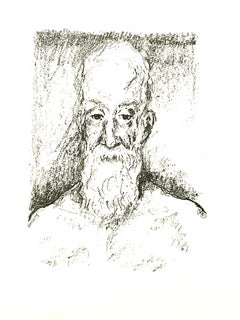
Kees van Dongen - Portrait - Original Lithograph
By Kees van Dongen
Located in Collonge Bellerive, Geneve, CH
Kees van Dongen - Portrait - Original Lithograph
1950
Signed in the plate
Dimensions: 22 x 16 cm
Publisher: Sauret.
From The Gods Are Athirst
Category
1950s Abstract Expressionist Abstract Prints
Materials
Lithograph
Maurice de Vlaminck - Portrait - Original Lithograph
By Maurice de Vlaminck
Located in Collonge Bellerive, Geneve, CH
Maurice de Vlaminck - Portrait - Original Lithograph
1956
Signed in the plate
Dimensions: 22 x 16 cm
Publisher: Sauret.
Frontispice of The Hunger
Category
1950s Abstract Expressionist Abstract Prints
Materials
Lithograph
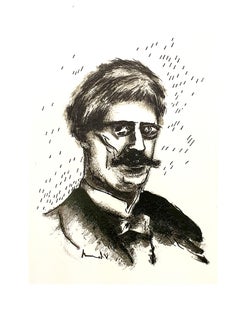
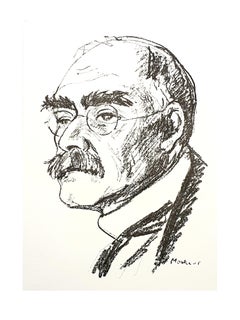
Maurice Mourlot - Portrait - Original Lithograph
By Maurice Mourlot
Located in Collonge Bellerive, Geneve, CH
Maurice Mourlot - Portrait - Original Lithograph
1956
Signed in the plate
Dimensions: 22 x 16 cm
Publisher: Sauret.
Frontispice of Kim
Category
1950s Abstract Expressionist Abstract Prints
Materials
Lithograph
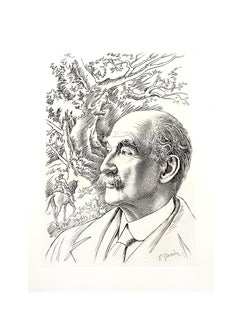
Pierre Gandon - Portrait - Original Lithograph
By Pierre Gandon
Located in Collonge Bellerive, Geneve, CH
Pierre Gandon - Portrait - Original Lithograph
1956
Signed in the plate
Dimensions: 22 x 16 cm
Publisher: Sauret.
Frontispice from Tess of the d'Urbervilles
Category
1950s Abstract Expressionist Abstract Prints
Materials
Lithograph
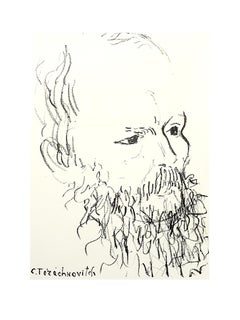
Constantin Terechkovitch - Portrait - Original Lithograph
By Constantin Terechkovitch
Located in Collonge Bellerive, Geneve, CH
Constantin Terechkovitch - Portrait - Original Lithograph
1957
Signed in the plate
Dimensions: 22 x 16 cm
Publisher: Sauret
Frontispice of The Brothers Karamazov
Category
1950s Abstract Expressionist Abstract Prints
Materials
Lithograph
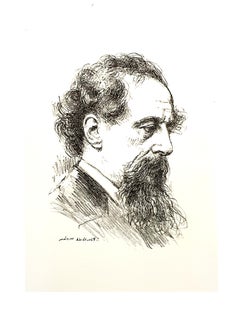
Berthold Mahn - Portrait - Original Lithograph
Located in Collonge Bellerive, Geneve, CH
Berthold Mahn - Portrait - Original Lithograph
1956
Signed in the plate
Dimensions: 22 x 16 cm
Publisher: Sauret.
Frontispice of "Great Expectations"
Un...
Category
1950s Abstract Expressionist Abstract Prints
Materials
Lithograph
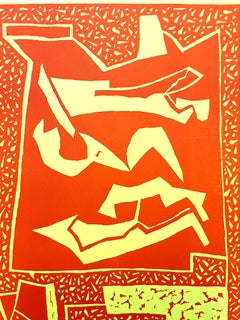
Alberto Magnelli (after) - Composition
By Alberto Magnelli
Located in Collonge Bellerive, Geneve, CH
Alberto Magnelli (after)
Untitled (Composition)
Linoleum cut (after the original) on yellow wove paper
32 x 24 cm
1959
From XXe siècle (No. 13)
Published in Paris by San Lazzaro, th...
Category
1950s Abstract Geometric Abstract Prints
Materials
Linocut
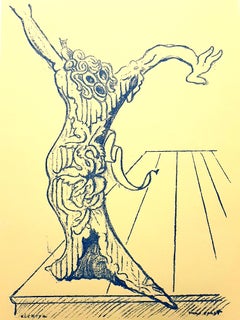
Max Ernst - Elektra - Lithograph
By Max Ernst
Located in Collonge Bellerive, Geneve, CH
Max Ernst - Elektra
Lithograph
1939
Dimensions: 32 x 24 cm
Signed in the plate
From XXe siècle
Unsigned and unumbered as issued
Category
1930s Surrealist Animal Prints
Materials
Lithograph
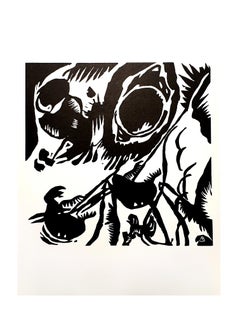
Wassily Kandinsky - Composition - Woodcut
By Wassily Kandinsky
Located in Collonge Bellerive, Geneve, CH
Wassily Kandinsky - Composition - Original Woodcut
Condition: excellent
32 x 24 cm
1959
Published by XXe siècle, San Lazzaro
Printed signature (monogram) in the plate
Unnumbered as i...
Category
1960s Abstract Geometric Animal Prints
Materials
Woodcut
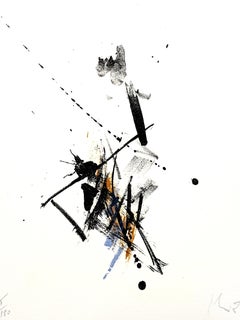
Jean Miotte - Abstract Composition - Original Signed Lithograph
By Jean Miotte
Located in Collonge Bellerive, Geneve, CH
Jean Miotte - Original Signed Lithograph
Title: Abstract Composition
Dimensions: 20 x 16 cm
Edition: 85/180
Signed and Numbered in pencil
Jean Miotte, 1926 - 2016
Miotte came of ar...
Category
1970s Abstract Expressionist Abstract Prints
Materials
Lithograph
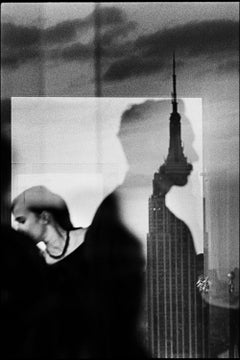
Original Photography Signed by Cyrille Druart
By Cyrille Druart
Located in Collonge Bellerive, Geneve, CH
Black and white original photography by Cyrille Druart
Edition: I/V
Dimensions: 120 x 90 cm
Signed and numbered
Cyrille Druart is a French photograph and architect, a book about ...
Category
2010s Black and White Photography
Materials
Photographic Film
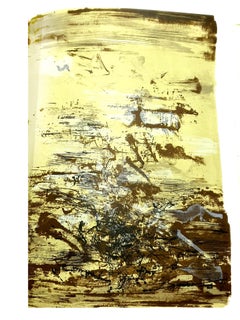
Zao Wou-ki - Original Lithograph - Abstract Composition
By Zao Wou-Ki
Located in Collonge Bellerive, Geneve, CH
Zao Wou-ki - Original Lithograph
1962
From La tentation de l’Occident
Dimensions: 39 x 28.5 cm
Publisher: Les Bibliophiles Comtois
Edition of 170
Reference: Jørgen Ågerup 137 - 146...
Category
1960s Abstract Expressionist Abstract Prints
Materials
Lithograph
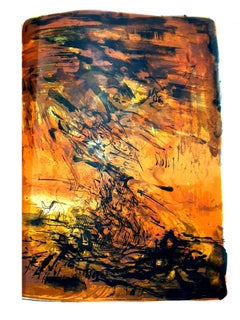
Zao Wou-ki - Original Lithograph - Abstract Composition
By Zao Wou-Ki
Located in Collonge Bellerive, Geneve, CH
Zao Wou-ki - Original Lithograph
1962
From La tentation de l’Occident
Dimensions: 39 x 28.5 cm
Publisher: Les Bibliophiles Comtois
Edition of 170
Reference: Jørgen Ågerup 137 - 146...
Category
1960s Abstract Expressionist Abstract Prints
Materials
Lithograph
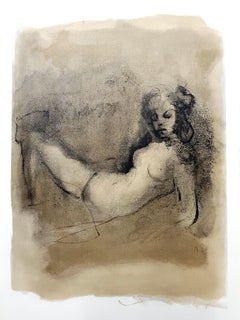
Leonor Fini - Thinking - Original Lithograph
By Leonor Fini
Located in Collonge Bellerive, Geneve, CH
Leonor Fini - Thinking - Original Lithograph
The Flowers of Evil
1964
Conditions: excellent
Edition: 500
Dimensions: 46 x 34 cm
Editions: Le Cercle du Livre Précieux, Paris
Unsigne...
Category
1960s Modern Nude Prints
Materials
Lithograph
Zao Wou-ki - Original Lithograph - Abstract Composition
By Zao Wou-Ki
Located in Collonge Bellerive, Geneve, CH
Zao Wou-ki - Original Lithograph
1962
From La tentation de l’Occident
Dimensions: 39 x 28.5 cm
Publisher: Les Bibliophiles Comtois
Edition of 170
Reference: Jørgen Ågerup 137 - 146...
Category
1960s Abstract Expressionist Abstract Prints
Materials
Lithograph
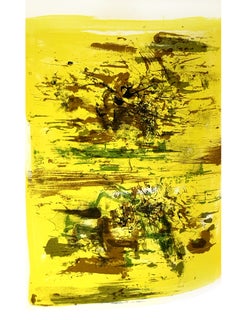
Jean Miotte - Abstract Composition - Original Signed Lithograph
By Jean Miotte
Located in Collonge Bellerive, Geneve, CH
Jean Miotte - Rare Original Signed Lithograph
Title: Abstract Composition
Dimensions: 76 x 56 cm
Edition: 64/99
Signed and Numbered in pencil
Category
1990s Abstract Expressionist Abstract Prints
Materials
Aquatint
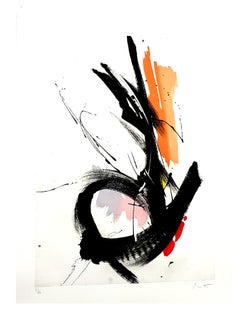
Jean Jansem - Original Etching
By Jean Jansem
Located in Collonge Bellerive, Geneve, CH
Jean Jansem - Original Etching
Title: Loneliness
Dimensions: 40 x 30 cm
Edition of 175
Paper: vélin de Rives
1974
Unsigned and unumbered as issued
Category
1970s Modern Figurative Prints
Materials
Etching
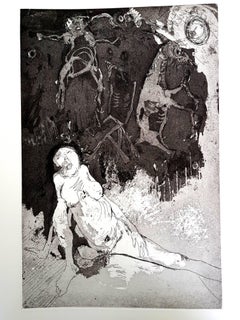
Leonor Fini - Walking on Death - Original Lithograph
By Leonor Fini
Located in Collonge Bellerive, Geneve, CH
Leonor Fini - Walking on Death - Original Lithograph
The Flowers of Evil
1964
Conditions: excellent
Edition: 500
Dimensions: 46 x 34 cm
Editions: Le Cercle du Livre Précieux, Paris...
Category
1960s Modern Nude Prints
Materials
Lithograph
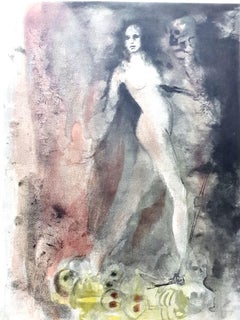
Jean Miotte - Abstract Composition - Original Signed Lithograph
By Jean Miotte
Located in Collonge Bellerive, Geneve, CH
Jean Miotte - Rare Original Signed Lithograph
Title: Abstract Composition
Dimensions: 76 x 56 cm
Edition: 64/99
Signed and Numbered in pencil
Jean Miotte, 1926 - 2016
Miotte came o...
Category
1990s Abstract Expressionist Abstract Prints
Materials
Aquatint
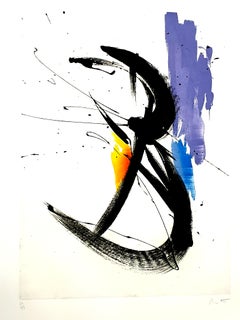
Zao Wou-ki - Original Lithograph - Abstract Composition
By Zao Wou-Ki
Located in Collonge Bellerive, Geneve, CH
Zao Wou-ki - Original Lithograph
1962
From La tentation de l’Occident
Dimensions: 39 x 28.5 cm
Publisher: Les Bibliophiles Comtois
Edition of 170
Reference: Jørgen Ågerup 137 - 146...
Category
1960s Abstract Expressionist Abstract Prints
Materials
Lithograph
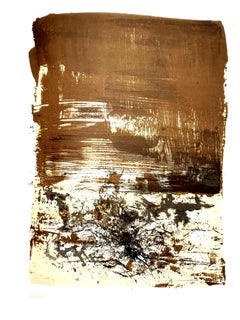
Zao Wou-ki - Original Lithograph - Abstract Composition
By Zao Wou-Ki
Located in Collonge Bellerive, Geneve, CH
Zao Wou-ki - Original Lithograph
1962
From La tentation de l’Occident
Dimensions: 39 x 28.5 cm
Publisher: Les Bibliophiles Comtois
Edition of 170
Reference: Jørgen Ågerup 137 - 146...
Category
1960s Abstract Expressionist Abstract Prints
Materials
Lithograph
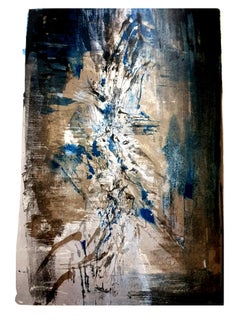
Marc Chagall - The Candlestick - Original Lithograph
By Marc Chagall
Located in Collonge Bellerive, Geneve, CH
The Candlestick, from Jean Leymarie, Vitraux pour Jérusalem (Jerusalem Windows), André Sauret, Monte Carlo, 1962 (see M. 366-72; see C. books 55). Unsigned and unnumbered, as issue...
Category
1960s Surrealist Figurative Prints
Materials
Lithograph
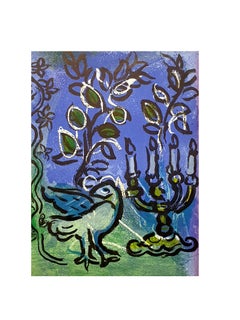
Marc Chagall - The Ballet, Frontispiece
By Marc Chagall
Located in Collonge Bellerive, Geneve, CH
The Ballet, Frontispiece for the book “Daphnis and Chloe” Lithograph in colors, 1969. Unsigned and unnumbered, as issued from an edition of 10,000.
Printed ...
Category
1960s Surrealist Figurative Prints
Materials
Lithograph

Maria Elena Vieira da Silva - The Man - Original Handsigned Etching
By Maria Elena Vieira da Silva
Located in Collonge Bellerive, Geneve, CH
Maria Elena Vieira da Silva - The Man - Original Handsigned Etching
1974
Handsigned and numbered
Edition of 100.
Dimensions: 33 x 22 cm
Category
1970s Modern Abstract Prints
Materials
Etching
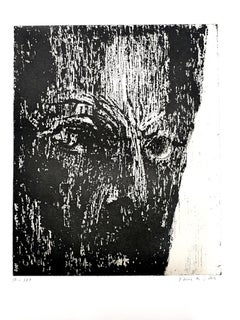
Kees van Dongen - Montmartre 1900 - Original Lithograph
By Kees van Dongen
Located in Collonge Bellerive, Geneve, CH
Kees van Dongen
Title: Montmartre 1900
Original Lithograph
Edition of 180
Dimensions: 39 x 30 cm
References: Juffermans JL 34
Information :
This lithograph was created for the portf...
Category
1950s Impressionist Figurative Prints
Materials
Lithograph

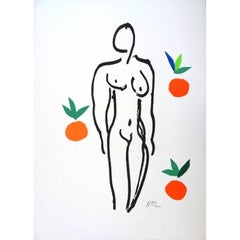
after Henri Matisse - Nude With Oranges - Lithograph
By Henri Matisse
Located in Collonge Bellerive, Geneve, CH
after Henri Matisse - Nude With Oranges
Edition of 200
printed signature, as issued
76 x 56 cm
Posthumous edition after the original drawing with the stamp of the Succession Matisse ...
Category
Mid-20th Century Modern Figurative Prints
Materials
Lithograph
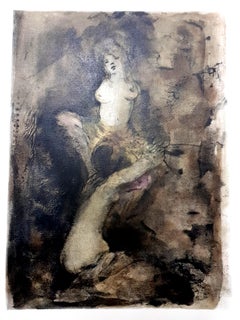
Leonor Fini - Pleasure - Original Lithograph
By Leonor Fini
Located in Collonge Bellerive, Geneve, CH
Leonor Fini - Pleasure - Original Lithograph
The Flowers of Evil
1964
Conditions: excellent
Edition: 500
Dimensions: 46 x 34 cm
Editions: Le Cercle du Livre Précieux, Paris
Unsigne...
Category
1960s Modern Nude Prints
Materials
Lithograph
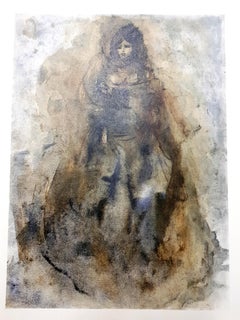
Leonor Fini - Sadness - Original Lithograph
By Leonor Fini
Located in Collonge Bellerive, Geneve, CH
Leonor Fini - Sadness - Original Lithograph
The Flowers of Evil
1964
Conditions: excellent
Edition: 500
Dimensions: 46 x 34 cm
Editions: Le Cercle du Livre Précieux, Paris
Unsigned...
Category
1960s Modern Nude Prints
Materials
Lithograph
Jean Jansem - Original Etching
By Jean Jansem
Located in Collonge Bellerive, Geneve, CH
Jean Jansem - Original Etching
Title: Loneliness
Dimensions: 40 x 30 cm
Edition of 175
Paper: vélin de Rives
1974
Unsigned and unumbered as issued
Category
1970s Modern Figurative Prints
Materials
Etching
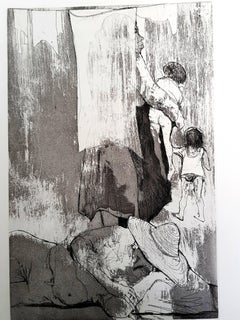
André Derain - Ovid
s Heroides - Original Etching
By André Derain
Located in Collonge Bellerive, Geneve, CH
André Derain - Ovid's Heroides
Original Etching
Edition of 134
Dimensions: 32 x 25 cm
Ovide [Marcel Prevost], Héroïdes, Paris, Société des Cent-une, 1938...
Category
1930s Modern Nude Prints
Materials
Etching
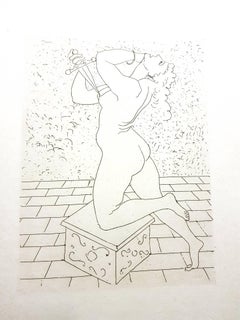
André Derain - Ovid
s Heroides - Original Etching
By André Derain
Located in Collonge Bellerive, Geneve, CH
André Derain - Ovid's Heroides
Original Etching
Edition of 134
Dimensions: 32 x 25 cm
Ovide [Marcel Prevost], Héroïdes, Paris, Société des Cent-une, 1938...
Category
1930s Modern Nude Prints
Materials
Etching
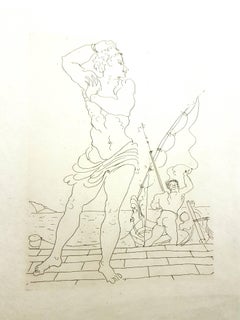
Raoul Dufy (after) - Autoportrait - Lithograph
By Raoul Dufy
Located in Collonge Bellerive, Geneve, CH
(after) Raoul Dufy
Lithograph after a watercolor, published in the book "Lettre à mon peintre Raoul Dufy." Paris, Librairie Académique Perrin, 1965.
Printed signature
Dimensions: ...
Category
1940s Fauvist Animal Prints
Materials
Lithograph
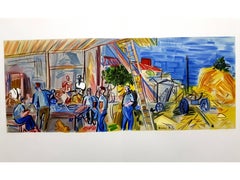
Jean Gabriel Domergue - Women
s Love - Original Etching
By Jean-Gabriel Domergue
Located in Collonge Bellerive, Geneve, CH
Original Etching by Jean-Gabriel Domergue
Dimensions: 33 x 25 cm
1924
Edition of 100
This artwork is part of the famous portfolio The Afternoon of a Faun.
Unsigned and unnumbered as ...
Category
1920s Impressionist Nude Prints
Materials
Lithograph
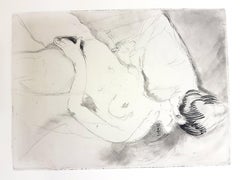
Leonor Fini - Disagreement - Original Lithograph
By Leonor Fini
Located in Collonge Bellerive, Geneve, CH
Leonor Fini - Disagreement - Original Lithograph
The Flowers of Evil
1964
Conditions: excellent
Edition: 500
Dimensions: 46 x 34 cm
Editions: Le Cercle du Livre Précieux, Paris
Uns...
Category
1960s Modern Nude Prints
Materials
Lithograph
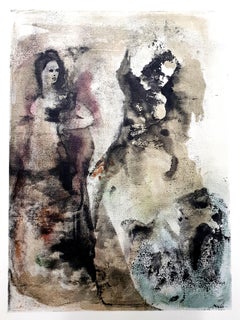
Leonor Fini - Rejection - Original Lithograph
By Leonor Fini
Located in Collonge Bellerive, Geneve, CH
Leonor Fini - Rejection - Original Lithograph
The Flowers of Evil
1964
Conditions: excellent
Edition: 500
Dimensions: 46 x 34 cm
Editions: Le Cercle du Livre Précieux, Paris
Unsign...
Category
1960s Modern Nude Prints
Materials
Lithograph
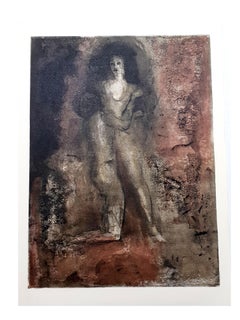
Eduardo Arroyo - Homage to Le Corbusier - Original Lithograph
By Eduardo Arroyo
Located in Collonge Bellerive, Geneve, CH
Eduardo Arroyo - Homage to Le Corbusier - Original Lithograph
1984
Conditions: excellent
Edition: 495
Dimensions: 37,3 x 58 cm
Editions: Trinckvel
Category
1980s Modern Landscape Prints
Materials
Lithograph
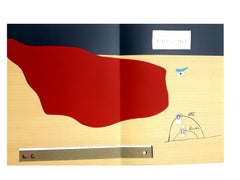
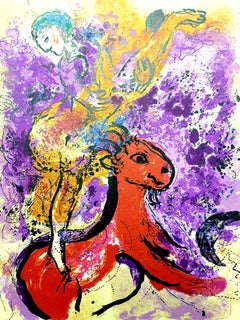
Marc Chagall - The Red Rider - Original Lithograph
By Marc Chagall
Located in Collonge Bellerive, Geneve, CH
Marc Chagall - Original Lithograph
The Red Rider
From the unsigned, unnumbered lithograph printed in the literary review XXe Siecle
1957
See Mourlot 191
Dimensions: 32 x 24 cm
Publisher: G. di San Lazzaro.
Marc Chagall (born in 1887)
Marc Chagall was born in Belarus in 1887 and developed an early interest in art. After studying painting, in 1907 he left Russia for Paris, where he lived in an artist colony on the city’s outskirts. Fusing his own personal, dreamlike imagery with hints of the fauvism and cubism popular in France at the time, Chagall created his most lasting work—including I and the Village (1911)—some of which would be featured in the Salon des Indépendants exhibitions. After returning to Vitebsk for a visit in 1914, the outbreak of WWI trapped Chagall in Russia. He returned to France in 1923 but was forced to flee the country and Nazi persecution during WWII. Finding asylum in the U.S., Chagall became involved in set and costume design before returning to France in 1948. In his later years, he experimented with new art forms and was commissioned to produce numerous large-scale works. Chagall died in St.-Paul-de-Vence in 1985.
The Village
Marc Chagall was born in a small Hassidic community on the outskirts of Vitebsk, Belarus, on July 7, 1887. His father was a fishmonger, and his mother ran a small sundries shop in the village. As a child, Chagall attended the Jewish elementary school, where he studied Hebrew and the Bible, before later attending the Russian public school. He began to learn the fundamentals of drawing during this time, but perhaps more importantly, he absorbed the world around him, storing away the imagery and themes that would feature largely in most of his later work.
At age 19 Chagall enrolled at a private, all-Jewish art school and began his formal education in painting, studying briefly with portrait artist Yehuda Pen. However, he left the school after several months, moving to St. Petersburg in 1907 to study at the Imperial Society for the Protection of Fine Arts. The following year, he enrolled at the Svanseva School, studying with set designer Léon Bakst, whose work had been featured in Sergei Diaghilev's Ballets Russes. This early experience would prove important to Chagall’s later career as well.
Despite this formal instruction, and the widespread popularity of realism in Russia at the time, Chagall was already establishing his own personal style, which featured a more dreamlike unreality and the people, places and imagery that were close to his heart. Some examples from this period are his Window Vitebsk (1908) and My Fianceé with Black Gloves (1909), which pictured Bella Rosenfeld, to whom he had recently become engaged.
The Beehive
Despite his romance with Bella, in 1911 an allowance from Russian parliament member and art patron Maxim Binaver enabled Chagall to move to Paris, France. After settling briefly in the Montparnasse neighborhood, Chagall moved further afield to an artist colony known as La Ruche (“The Beehive”), where he began to work side by side with abstract painters such as Amedeo Modigliani and Fernand Léger as well as the avant-garde poet Guillaume Apollinaire. At their urging, and under the influence of the wildly popular fauvism and cubism, Chagall lightened his palette and pushed his style ever further from reality. I and the Village (1911) and Homage to Apollinaire (1912) are among his early Parisian works, widely considered to be his most successful and representative period.
Though his work stood stylistically apart from his cubist contemporaries, from 1912 to 1914 Chagall exhibited several paintings at the annual Salon des Indépendants exhibition, where works by the likes of Juan Gris, Marcel Duchamp and Robert Delaunay were causing a stir in the Paris art world. Chagall’s popularity began to spread beyond La Ruche, and in May 1914 he traveled to Berlin to help organize his first solo exhibition, at Der Sturm Gallery. Chagall remained in the city until the highly acclaimed show opened that June. He then returned to Vitebsk, unaware of the fateful events to come.
War, Peace and Revolution
In August 1914 the outbreak of World War I precluded Chagall’s plans to return to Paris. The conflict did little to stem the flow of his creative output, however, instead merely giving him direct access to the childhood scenes so essential to his work, as seen in paintings such as Jew in Green (1914) and Over Vitebsk (1914). His paintings from this period also occasionally featured images of the war’s impact on the region, as with Wounded Soldier (1914) and Marching (1915). But despite the hardships of life during wartime, this would also prove to be a joyful period for Chagall. In July 1915 he married Bella, and she gave birth to a daughter, Ida, the following year. Their appearance in works such as Birthday (1915), Bella and Ida by the Window (1917) and several of his “Lovers” paintings give a glimpse of the island of domestic bliss that was Chagall’s amidst the chaos.
To avoid military service and stay with his new family, Chagall took a position as a clerk in the Ministry of War Economy in St. Petersburg. While there he began work on his autobiography and also immersed himself in the local art scene, befriending novelist Boris Pasternak, among others. He also exhibited his work in the city and soon gained considerable recognition. That notoriety would prove important in the aftermath of the 1917 Russian Revolution when he was appointed as the Commissar of Fine Arts in Vitebsk. In his new post, Chagall undertook various projects in the region, including the 1919 founding of the Academy of the Arts. Despite these endeavors, differences among his colleagues eventually disillusioned Chagall. In 1920 he relinquished his position and moved his family to Moscow, the post-revolution capital of Russia.
In Moscow, Chagall was soon commissioned to create sets and costumes for various productions at the Moscow State Yiddish Theater, where he would paint a series of murals titled Introduction to the Jewish Theater as well. In 1921, Chagall also found work as a teacher at a school for war orphans. By 1922, however, Chagall found that his art had fallen out of favor, and seeking new horizons he left Russia for good.
Flight
After a brief stay in Berlin, where he unsuccessfully sought to recover the work exhibited at Der Sturm before the war, Chagall moved his family to Paris in September 1923. Shortly after their arrival, he was commissioned by art dealer and publisher Ambroise Vollard to produce a series of etchings for a new edition of Nikolai Gogol's 1842 novel Dead Souls. Two years later Chagall began work on an illustrated edition of Jean de la Fontaine’s Fables, and in 1930 he created etchings for an illustrated edition of the Old Testament, for which he traveled to Palestine to conduct research.
Chagall’s work during this period brought him new success as an artist and enabled him to travel throughout Europe in the 1930s. He also published his autobiography, My Life (1931), and in 1933 received a retrospective at the Kunsthalle in Basel, Switzerland. But at the same time that Chagall’s popularity was spreading, so, too, was the threat of Fascism and Nazism. Singled out during the cultural "cleansing" undertaken by the Nazis in Germany, Chagall’s work was ordered removed from museums throughout the country. Several pieces were subsequently burned, and others were featured in a 1937 exhibition of “degenerate art” held in Munich. Chagall’s angst regarding these troubling events and the persecution of Jews in general can be seen in his 1938 painting White Crucifixion.
With the eruption of World War II, Chagall and his family moved to the Loire region before moving farther south to Marseilles following the invasion of France. They found a more certain refuge when, in 1941, Chagall’s name was added by the director of the Museum of Modern Art (MOMA) in New York City to a list of artists and intellectuals deemed most at risk from the Nazis’ anti-Jewish campaign. Chagall and his family would be among the more than 2,000 who received visas and escaped this way.
Haunted Harbors
Arriving in New York City in June 1941, Chagall discovered that he was already a well-known artist there and, despite a language barrier, soon became a part of the exiled European artist community. The following year he was commissioned by choreographer Léonide Massine to design sets and costumes for the ballet Aleko, based on Alexander Pushkin’s “The Gypsies” and set to the music of Pyotr Ilyich Tchaikovsky.
But even as he settled into the safety of his temporary home, Chagall’s thoughts were frequently consumed by the fate befalling the Jews of Europe and the destruction of Russia, as paintings such as The Yellow Crucifixion...
Category
1950s Surrealist Figurative Prints
Materials
Lithograph
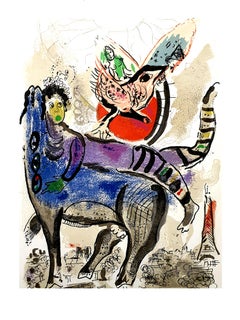
Marc Chagall - La Vache Bleue (Blue Cow) - Original Lithograph
By Marc Chagall
Located in Collonge Bellerive, Geneve, CH
Marc Chagall - Original Lithograph
La Vache Bleue (The Blue Cow)
From the unsigned, unnumbered lithograph printed in the literary review XXe Siecle
1967
See Mourlot 488
Dimensions: 32 x 24 cm
Publisher: G. di San Lazzaro.
Marc Chagall (born in 1887)
Marc Chagall was born in Belarus in 1887 and developed an early interest in art. After studying painting, in 1907 he left Russia for Paris, where he lived in an artist colony on the city’s outskirts. Fusing his own personal, dreamlike imagery with hints of the fauvism and cubism popular in France at the time, Chagall created his most lasting work—including I and the Village (1911)—some of which would be featured in the Salon des Indépendants exhibitions. After returning to Vitebsk for a visit in 1914, the outbreak of WWI trapped Chagall in Russia. He returned to France in 1923 but was forced to flee the country and Nazi persecution during WWII. Finding asylum in the U.S., Chagall became involved in set and costume design before returning to France in 1948. In his later years, he experimented with new art forms and was commissioned to produce numerous large-scale works. Chagall died in St.-Paul-de-Vence in 1985.
The Village
Marc Chagall was born in a small Hassidic community on the outskirts of Vitebsk, Belarus, on July 7, 1887. His father was a fishmonger, and his mother ran a small sundries shop in the village. As a child, Chagall attended the Jewish elementary school, where he studied Hebrew and the Bible, before later attending the Russian public school. He began to learn the fundamentals of drawing during this time, but perhaps more importantly, he absorbed the world around him, storing away the imagery and themes that would feature largely in most of his later work.
At age 19 Chagall enrolled at a private, all-Jewish art school and began his formal education in painting, studying briefly with portrait artist Yehuda Pen. However, he left the school after several months, moving to St. Petersburg in 1907 to study at the Imperial Society for the Protection of Fine Arts. The following year, he enrolled at the Svanseva School, studying with set designer Léon Bakst, whose work had been featured in Sergei Diaghilev's Ballets Russes. This early experience would prove important to Chagall’s later career as well.
Despite this formal instruction, and the widespread popularity of realism in Russia at the time, Chagall was already establishing his own personal style, which featured a more dreamlike unreality and the people, places and imagery that were close to his heart. Some examples from this period are his Window Vitebsk (1908) and My Fianceé with Black Gloves (1909), which pictured Bella Rosenfeld, to whom he had recently become engaged.
The Beehive
Despite his romance with Bella, in 1911 an allowance from Russian parliament member and art patron Maxim Binaver enabled Chagall to move to Paris, France. After settling briefly in the Montparnasse neighborhood, Chagall moved further afield to an artist colony known as La Ruche (“The Beehive”), where he began to work side by side with abstract painters such as Amedeo Modigliani and Fernand Léger as well as the avant-garde poet Guillaume Apollinaire. At their urging, and under the influence of the wildly popular fauvism and cubism, Chagall lightened his palette and pushed his style ever further from reality. I and the Village (1911) and Homage to Apollinaire (1912) are among his early Parisian works, widely considered to be his most successful and representative period.
Though his work stood stylistically apart from his cubist contemporaries, from 1912 to 1914 Chagall exhibited several paintings at the annual Salon des Indépendants exhibition, where works by the likes of Juan Gris, Marcel Duchamp and Robert Delaunay were causing a stir in the Paris art world. Chagall’s popularity began to spread beyond La Ruche, and in May 1914 he traveled to Berlin to help organize his first solo exhibition, at Der Sturm Gallery. Chagall remained in the city until the highly acclaimed show opened that June. He then returned to Vitebsk, unaware of the fateful events to come.
War, Peace and Revolution
In August 1914 the outbreak of World War I precluded Chagall’s plans to return to Paris. The conflict did little to stem the flow of his creative output, however, instead merely giving him direct access to the childhood scenes so essential to his work, as seen in paintings such as Jew in Green (1914) and Over Vitebsk (1914). His paintings from this period also occasionally featured images of the war’s impact on the region, as with Wounded Soldier (1914) and Marching (1915). But despite the hardships of life during wartime, this would also prove to be a joyful period for Chagall. In July 1915 he married Bella, and she gave birth to a daughter, Ida, the following year. Their appearance in works such as Birthday (1915), Bella and Ida by the Window (1917) and several of his “Lovers” paintings give a glimpse of the island of domestic bliss that was Chagall’s amidst the chaos.
To avoid military service and stay with his new family, Chagall took a position as a clerk in the Ministry of War Economy in St. Petersburg. While there he began work on his autobiography and also immersed himself in the local art scene, befriending novelist Boris Pasternak, among others. He also exhibited his work in the city and soon gained considerable recognition. That notoriety would prove important in the aftermath of the 1917 Russian Revolution when he was appointed as the Commissar of Fine Arts in Vitebsk. In his new post, Chagall undertook various projects in the region, including the 1919 founding of the Academy of the Arts. Despite these endeavors, differences among his colleagues eventually disillusioned Chagall. In 1920 he relinquished his position and moved his family to Moscow, the post-revolution capital of Russia.
In Moscow, Chagall was soon commissioned to create sets and costumes for various productions at the Moscow State Yiddish Theater, where he would paint a series of murals titled Introduction to the Jewish Theater as well. In 1921, Chagall also found work as a teacher at a school for war orphans. By 1922, however, Chagall found that his art had fallen out of favor, and seeking new horizons he left Russia for good.
Flight
After a brief stay in Berlin, where he unsuccessfully sought to recover the work exhibited at Der Sturm before the war, Chagall moved his family to Paris in September 1923. Shortly after their arrival, he was commissioned by art dealer and publisher Ambroise Vollard to produce a series of etchings for a new edition of Nikolai Gogol's 1842 novel Dead Souls. Two years later Chagall began work on an illustrated edition of Jean de la Fontaine’s Fables, and in 1930 he created etchings for an illustrated edition of the Old Testament, for which he traveled to Palestine to conduct research.
Chagall’s work during this period brought him new success as an artist and enabled him to travel throughout Europe in the 1930s. He also published his autobiography, My Life (1931), and in 1933 received a retrospective at the Kunsthalle in Basel, Switzerland. But at the same time that Chagall’s popularity was spreading, so, too, was the threat of Fascism and Nazism. Singled out during the cultural "cleansing" undertaken by the Nazis in Germany, Chagall’s work was ordered removed from museums throughout the country. Several pieces were subsequently burned, and others were featured in a 1937 exhibition of “degenerate art” held in Munich. Chagall’s angst regarding these troubling events and the persecution of Jews in general can be seen in his 1938 painting White Crucifixion.
With the eruption of World War II, Chagall and his family moved to the Loire region before moving farther south to Marseilles following the invasion of France. They found a more certain refuge when, in 1941, Chagall’s name was added by the director of the Museum of Modern Art (MOMA) in New York City to a list of artists and intellectuals deemed most at risk from the Nazis’ anti-Jewish campaign. Chagall and his family would be among the more than 2,000 who received visas and escaped this way.
Haunted Harbors
Arriving in New York City in June 1941, Chagall discovered that he was already a well-known artist there and, despite a language barrier, soon became a part of the exiled European artist community. The following year he was commissioned by choreographer Léonide Massine to design sets and costumes for the ballet Aleko, based on Alexander Pushkin’s “The Gypsies” and set to the music of Pyotr Ilyich Tchaikovsky.
But even as he settled into the safety of his temporary home, Chagall’s thoughts were frequently consumed by the fate befalling the Jews of Europe and the destruction of Russia, as paintings such as The Yellow Crucifixion...
Category
1960s Surrealist Figurative Prints
Materials
Lithograph
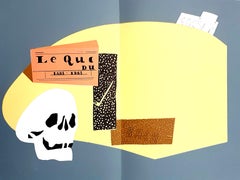
Eduardo Arroyo - Homage to Braque - Original Lithograph
By Eduardo Arroyo
Located in Collonge Bellerive, Geneve, CH
Eduardo Arroyo - Homage to Braque - Original Lithograph
1984
Conditions: excellent
Edition: 495
Dimensions: 37,3 x 58 cm
Editions: Trinckvel
Category
1980s Modern Landscape Prints
Materials
Lithograph
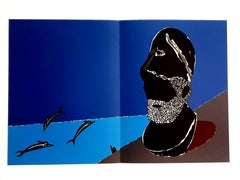
Eduardo Arroyo - Greek Homage - Original Lithograph
By Eduardo Arroyo
Located in Collonge Bellerive, Geneve, CH
Eduardo Arroyo - Greek Homage - Original Lithograph
1984
Conditions: excellent
Edition: 495
Dimensions: 37,3 x 58 cm
Editions: Trinckvel.
Category
1980s Modern Landscape Prints
Materials
Lithograph
Leonor Fini - Walking Dead - Original Lithograph
By Leonor Fini
Located in Collonge Bellerive, Geneve, CH
Leonor Fini - Walking Dead - Original Lithograph
The Flowers of Evil
1964
Conditions: excellent
Edition: 500
Dimensions: 46 x 34 cm
Editions: Le Cercle ...
Category
1960s Modern Nude Prints
Materials
Lithograph
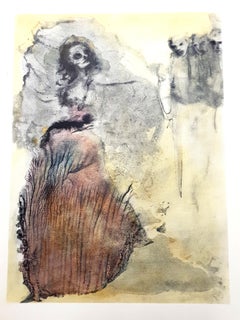
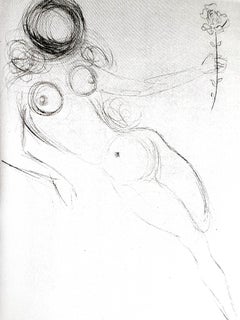
Salvador Dali - Nude with Flower - Original Etching on Silk
By Salvador Dalí
Located in Collonge Bellerive, Geneve, CH
Salvador Dali - Nude with Flower - from "Les Amours de Cassandre"
Original Etching
From the suite on Silk made for editions 9 to 34
Dimensions: 38,5 ...
Category
1960s Surrealist Nude Prints
Materials
Etching