Galerie Harmonia Prints and Multiples
to
696
96
94
6
2
Overall Width
to
Overall Height
to
443
194
166
29
20
15
1
1
116
81
55
43
42
876
17
2
28
32
81
176
334
154
48
16
783
109
1
447
326
276
155
152
115
101
93
52
28
20
18
17
17
16
16
15
15
14
14
569
230
32
30
14
894
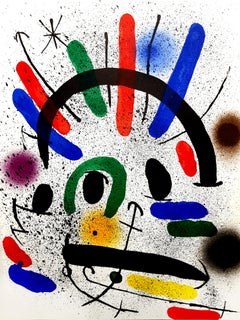
Joan Miro - Original Abstract Lithograph
By Joan Miró
Located in Collonge Bellerive, Geneve, CH
Joan Miro Miro Original Abstract Lithograph
Artist: Joan Miro
Medium: Original lithograph on Rives vellum
Portfolio: Miro Lithographe V
Year: 1981
E...
Category
1970s Abstract Abstract Prints
Materials
Lithograph
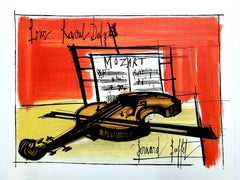
Bernard Buffet - Homage to Dufy - Lithograph
By Bernard Buffet
Located in Collonge Bellerive, Geneve, CH
(after) Bernard Buffet
Lithograph after a watercolor, published in the book "Lettre à mon peintre Raoul Dufy." Paris, Librairie Académique Perrin, 1965.
Printed signature
Dimension...
Category
1940s Fauvist Animal Prints
Materials
Lithograph
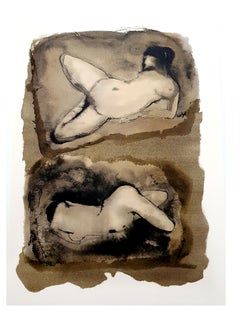
Leonor Fini - Duo - Original Lithograph
By Leonor Fini
Located in Collonge Bellerive, Geneve, CH
Leonor Fini - Duo - Original Lithograph
The Flowers of Evil
1964
Conditions: excellent
Edition: 500
Dimensions: 46 x 34 cm
Editions: Le Cercle du Livre Précieux, Paris
Unsigned and...
Category
1960s Modern Nude Prints
Materials
Lithograph
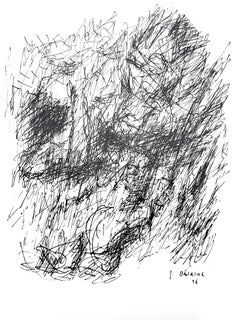
Jean Bazaine - Original Lithograph
By Jean Bazaine
Located in Collonge Bellerive, Geneve, CH
Jean Bazaine - Original Lithograph
1956
Dimensions: 38 x 28 cm
Revue DLM 10 ans d'éditions
Edition: Maeght
Category
1970s Abstract Geometric Figurative Prints
Materials
Lithograph
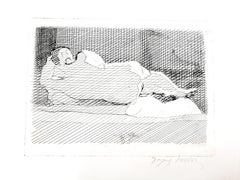
Jacques Villon - Sleeping Nude - Original Etching
By Jacques Villon
Located in Collonge Bellerive, Geneve, CH
Jacques Villon - Sleeping Nude - Original Etching
Circa 1950
Signed in pencil
Edition of 45.
Dimensions : 32.7 x 25 cm
Category
1950s Modern Nude Prints
Materials
Etching
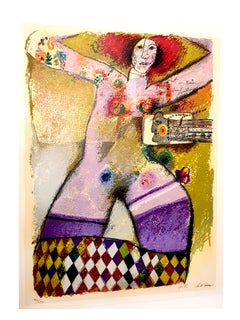
Théo Tobiasse - A train - Original Lithograph
By Théo Tobiasse
Located in Collonge Bellerive, Geneve, CH
Théo Tobiasse
Title: C'est un train portant un parfum d'odalisque
Signed and Numbered
Dimensions: 57 x 76 cm
Information : Edition of 175
Condition : Excellent
Category
1980s Surrealist Figurative Prints
Materials
Lithograph
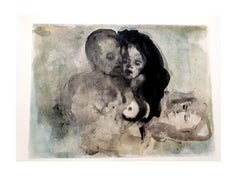
Leonor Fini - Lovers - Original Lithograph
By Leonor Fini
Located in Collonge Bellerive, Geneve, CH
Leonor Fini - Lovers - Original Lithograph
The Flowers of Evil
1964
Conditions: excellent
Edition: 500
Dimensions: 46 x 34 cm
Editions: Le Cercle du Livre Précieux, Paris
Unsigned ...
Category
1960s Modern Nude Prints
Materials
Lithograph
Marc Chagall - Hommage à Julien Cain - Original Lithograph
By Marc Chagall
Located in Collonge Bellerive, Geneve, CH
Marc Chagall - Original Lithograph
Frontispiece for André Dunoyer de Segonzac, and Julien Cain. "Humanisme Actif: Mélanges d'Art et de Littérature Offerts à Julien Cain." Paris: H...
Category
1960s Surrealist Figurative Prints
Materials
Lithograph

Jean Jansem - Original Etching
By Jean Jansem
Located in Collonge Bellerive, Geneve, CH
Jean Jansem - Original Etching
Title: Loneliness
Dimensions: 40 x 30 cm
Edition of 175
Paper: vélin de Rives
1974
Unsigned and unumbered as issued
Category
1970s Modern Figurative Prints
Materials
Etching
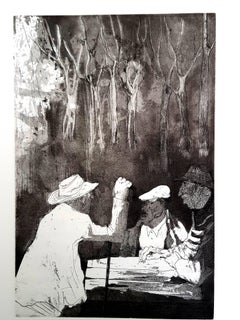
Antoni Clavé - Original Lithograph - For Pushkin
s Queen of Spades
By Antoni Clavé
Located in Collonge Bellerive, Geneve, CH
Antoni Clavé - Original Lithograph - For Alexander Pushkin's Queen of Spades
Dimensions: 325 x 247 mm.
1946
Original lithograph of Antoni Clavé
Edit...
Category
1940s Modern Figurative Prints
Materials
Lithograph
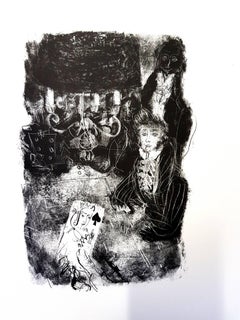
Raoul Dufy (after) - Autoportrait - Lithograph
By Raoul Dufy
Located in Collonge Bellerive, Geneve, CH
(after) Raoul Dufy
Lithograph after a watercolor, published in the book "Lettre à mon peintre Raoul Dufy." Paris, Librairie Académique Perrin, 1965.
Printed signature
Dimensions: ...
Category
1940s Fauvist Animal Prints
Materials
Lithograph
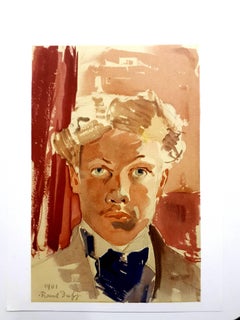
Max Ernst - The Soldier - Original Lithograph
By Max Ernst
Located in Collonge Bellerive, Geneve, CH
Max Ernst (1891-1976)
Georges Ribemont-Dessaignes, La Ballade du Soldat, Pierre Chave, Vence, 1972
Colour lithographs on Arches paper
1972
Edition : 199
Dimensions: 40 x 30 cm
Refe...
Category
1970s Modern Figurative Prints
Materials
Lithograph
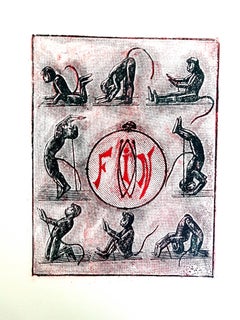
Marc Chagall - Green River - Original Lithograph
By Marc Chagall
Located in Collonge Bellerive, Geneve, CH
Marc Chagall
Original Lithograph
Double-page spread from the 1974 book "Chagall" by André Pieyre de Mandiargues.
Unsigned, edition of approximately 10,000
Published by Maeght
1974
D...
Category
1960s Surrealist Figurative Prints
Materials
Lithograph
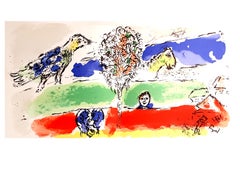
Théo Tobiasse - A Man Talking About Mornings - Original Lithograph
By Théo Tobiasse
Located in Collonge Bellerive, Geneve, CH
Théo Tobiasse
Title: Un Homme Raconte les Matins
Signed and Numbered
Dimensions: 57 x 76 cm
Information : Edition of 175
Condition : Excellent
Category
1980s Surrealist Figurative Prints
Materials
Lithograph
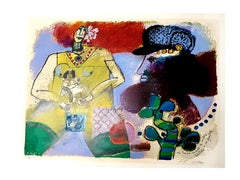
Jacques Villon - Cubist Landscape - Original Etching
By Jacques Villon
Located in Collonge Bellerive, Geneve, CH
Jacques Villon - Cubist Landscape - Original Etching
Circa 1950
Signed in pencil
Jacques Villon (1875 - 1963)
Jacques Villon was born Gaston Duchamp on July 31, 1875, in Damville,...
Category
1950s Modern Landscape Prints
Materials
Etching
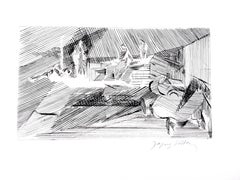
Jacques Villon - Two Cubist Vases - Original Etching
By Jacques Villon
Located in Collonge Bellerive, Geneve, CH
Jacques Villon - Two Cubist Vases - Original Etching
1950
Signed in pencil
Edition of 40
Jacques Villon (1875 - 1963)
Jacques Villon was born Gaston Duchamp on July 31, 1875, in Da...
Category
1950s Modern Interior Prints
Materials
Etching
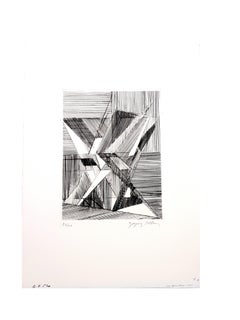
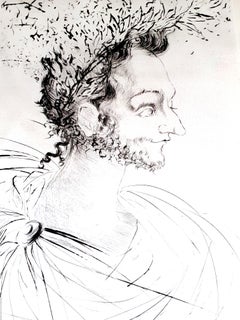
Salvador Dali - The Crown - Original Etching on Silk
By Salvador Dalí
Located in Collonge Bellerive, Geneve, CH
Salvador Dali - The Crown- from "Les Amours de Cassandre"
Original Etching
From the suite on Silk made for editions 9 to 34
Dimensions: 38,5 x ...
Category
1960s Surrealist Nude Prints
Materials
Etching
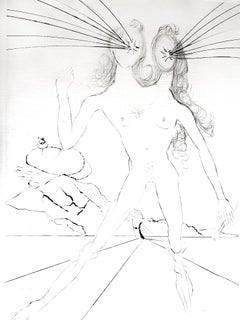
Salvador Dali - Bicephale - Original Etching on Silk
By Salvador Dalí
Located in Collonge Bellerive, Geneve, CH
Salvador Dali - Bicephale - from "Les Amours de Cassandre"
Original Etching
From the suite on Silk made for editions 9 to 34
Dimensions: 38,5 x...
Category
1960s Surrealist Nude Prints
Materials
Etching
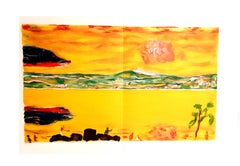
Pierre Bonnard - Sunset on the Mediterranean - Original Lithograph
By Pierre Bonnard
Located in Collonge Bellerive, Geneve, CH
Pierre Bonnard - Sunset on the Mediterranean
Original Lithograph
Dimensions: 36 x 54 cm
Verve . Revue Artistique et Litteraire. Vol. II, No 8.
Printed by Mourlot at the start of Worl...
Category
1940s Modern Figurative Prints
Materials
Lithograph
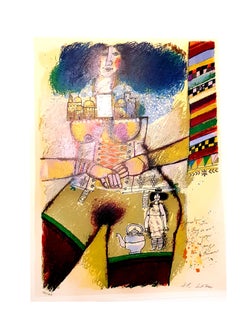
Théo Tobiasse - Jerusalem Inside - Original Lithograph with Collage
By Théo Tobiasse
Located in Collonge Bellerive, Geneve, CH
Théo Tobiasse
Title: Jerusalem roule le long de ma gorge
Signed and Numbered
Dimensions: 57 x 76 cm
Information : Edition of 175
Condition : Excellent
Category
1980s Surrealist Figurative Prints
Materials
Lithograph
Théo Tobiasse - Abraham Sacrifice - Original Lithograph with collage
By Théo Tobiasse
Located in Collonge Bellerive, Geneve, CH
Théo Tobiasse
Title: Le Sacrifice d'Abraham
Signed and Numbered
Dimensions: 57 x 76 cm
Information : Edition of 175
Condition : Excellent
Category
1980s Surrealist Figurative Prints
Materials
Lithograph
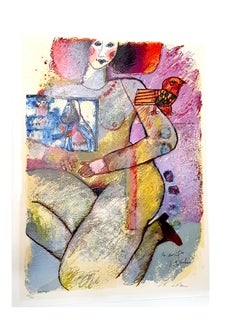
Marc Chagall - Homage to Marc Chagall - Original Lithograph
By Marc Chagall
Located in Collonge Bellerive, Geneve, CH
Marc Chagall
Original Lithograph
1969
From the revue XXe Siecle, edition of 12,000
Unsigned, as issued
Dimensions: 32 x 24
Condition : Excellent
Reference: Mourlot 572
Marc Chagall (born in 1887)
Marc Chagall was born in Belarus in 1887 and developed an early interest in art. After studying painting, in 1907 he left Russia for Paris, where he lived in an artist colony on the city’s outskirts. Fusing his own personal, dreamlike imagery with hints of the fauvism and cubism popular in France at the time, Chagall created his most lasting work—including I and the Village (1911)—some of which would be featured in the Salon des Indépendants exhibitions. After returning to Vitebsk for a visit in 1914, the outbreak of WWI trapped Chagall in Russia. He returned to France in 1923 but was forced to flee the country and Nazi persecution during WWII. Finding asylum in the U.S., Chagall became involved in set and costume design before returning to France in 1948. In his later years, he experimented with new art forms and was commissioned to produce numerous large-scale works. Chagall died in St.-Paul-de-Vence in 1985.
The Village
Marc Chagall was born in a small Hassidic community on the outskirts of Vitebsk, Belarus, on July 7, 1887. His father was a fishmonger, and his mother ran a small sundries shop in the village. As a child, Chagall attended the Jewish elementary school, where he studied Hebrew and the Bible, before later attending the Russian public school. He began to learn the fundamentals of drawing during this time, but perhaps more importantly, he absorbed the world around him, storing away the imagery and themes that would feature largely in most of his later work.
At age 19 Chagall enrolled at a private, all-Jewish art school and began his formal education in painting, studying briefly with portrait artist Yehuda Pen. However, he left the school after several months, moving to St. Petersburg in 1907 to study at the Imperial Society for the Protection of Fine Arts. The following year, he enrolled at the Svanseva School, studying with set designer Léon Bakst, whose work had been featured in Sergei Diaghilev's Ballets Russes. This early experience would prove important to Chagall’s later career as well.
Despite this formal instruction, and the widespread popularity of realism in Russia at the time, Chagall was already establishing his own personal style, which featured a more dreamlike unreality and the people, places and imagery that were close to his heart. Some examples from this period are his Window Vitebsk (1908) and My Fianceé with Black Gloves (1909), which pictured Bella Rosenfeld, to whom he had recently become engaged.
The Beehive
Despite his romance with Bella, in 1911 an allowance from Russian parliament member and art patron Maxim Binaver enabled Chagall to move to Paris, France. After settling briefly in the Montparnasse neighborhood, Chagall moved further afield to an artist colony known as La Ruche (“The Beehive”), where he began to work side by side with abstract painters such as Amedeo Modigliani and Fernand Léger as well as the avant-garde poet Guillaume Apollinaire. At their urging, and under the influence of the wildly popular fauvism and cubism, Chagall lightened his palette and pushed his style ever further from reality. I and the Village (1911) and Homage to Apollinaire (1912) are among his early Parisian works, widely considered to be his most successful and representative period.
Though his work stood stylistically apart from his cubist contemporaries, from 1912 to 1914 Chagall exhibited several paintings at the annual Salon des Indépendants exhibition, where works by the likes of Juan Gris, Marcel Duchamp and Robert Delaunay were causing a stir in the Paris art world. Chagall’s popularity began to spread beyond La Ruche, and in May 1914 he traveled to Berlin to help organize his first solo exhibition, at Der Sturm Gallery. Chagall remained in the city until the highly acclaimed show opened that June. He then returned to Vitebsk, unaware of the fateful events to come.
War, Peace and Revolution
In August 1914 the outbreak of World War I precluded Chagall’s plans to return to Paris. The conflict did little to stem the flow of his creative output, however, instead merely giving him direct access to the childhood scenes so essential to his work, as seen in paintings such as Jew in Green (1914) and Over Vitebsk (1914). His paintings from this period also occasionally featured images of the war’s impact on the region, as with Wounded Soldier (1914) and Marching (1915). But despite the hardships of life during wartime, this would also prove to be a joyful period for Chagall. In July 1915 he married Bella, and she gave birth to a daughter, Ida, the following year. Their appearance in works such as Birthday (1915), Bella and Ida by the Window (1917) and several of his “Lovers” paintings give a glimpse of the island of domestic bliss that was Chagall’s amidst the chaos.
To avoid military service and stay with his new family, Chagall took a position as a clerk in the Ministry of War Economy in St. Petersburg. While there he began work on his autobiography and also immersed himself in the local art scene, befriending novelist Boris Pasternak, among others. He also exhibited his work in the city and soon gained considerable recognition. That notoriety would prove important in the aftermath of the 1917 Russian Revolution when he was appointed as the Commissar of Fine Arts in Vitebsk. In his new post, Chagall undertook various projects in the region, including the 1919 founding of the Academy of the Arts. Despite these endeavors, differences among his colleagues eventually disillusioned Chagall. In 1920 he relinquished his position and moved his family to Moscow, the post-revolution capital of Russia.
In Moscow, Chagall was soon commissioned to create sets and costumes for various productions at the Moscow State Yiddish Theater, where he would paint a series of murals titled Introduction to the Jewish Theater as well. In 1921, Chagall also found work as a teacher at a school for war orphans. By 1922, however, Chagall found that his art had fallen out of favor, and seeking new horizons he left Russia for good.
Flight
After a brief stay in Berlin, where he unsuccessfully sought to recover the work exhibited at Der Sturm before the war, Chagall moved his family to Paris in September 1923. Shortly after their arrival, he was commissioned by art dealer and publisher Ambroise Vollard to produce a series of etchings for a new edition of Nikolai Gogol's 1842 novel Dead Souls. Two years later Chagall began work on an illustrated edition of Jean de la Fontaine’s Fables, and in 1930 he created etchings for an illustrated edition of the Old Testament, for which he traveled to Palestine to conduct research.
Chagall’s work during this period brought him new success as an artist and enabled him to travel throughout Europe in the 1930s. He also published his autobiography, My Life (1931), and in 1933 received a retrospective at the Kunsthalle in Basel, Switzerland. But at the same time that Chagall’s popularity was spreading, so, too, was the threat of Fascism and Nazism. Singled out during the cultural "cleansing" undertaken by the Nazis in Germany, Chagall’s work was ordered removed from museums throughout the country. Several pieces were subsequently burned, and others were featured in a 1937 exhibition of “degenerate art” held in Munich. Chagall’s angst regarding these troubling events and the persecution of Jews in general can be seen in his 1938 painting White Crucifixion.
With the eruption of World War II, Chagall and his family moved to the Loire region before moving farther south to Marseilles following the invasion of France. They found a more certain refuge when, in 1941, Chagall’s name was added by the director of the Museum of Modern Art (MOMA) in New York City to a list of artists and intellectuals deemed most at risk from the Nazis’ anti-Jewish campaign. Chagall and his family would be among the more than 2,000 who received visas and escaped this way.
Haunted Harbors
Arriving in New York City in June 1941, Chagall discovered that he was already a well-known artist there and, despite a language barrier, soon became a part of the exiled European artist community. The following year he was commissioned by choreographer Léonide Massine to design sets and costumes for the ballet Aleko, based on Alexander Pushkin’s “The Gypsies” and set to the music of Pyotr Ilyich Tchaikovsky.
But even as he settled into the safety of his temporary home, Chagall’s thoughts were frequently consumed by the fate befalling the Jews of Europe and the destruction of Russia, as paintings such as The Yellow Crucifixion...
Category
1960s Surrealist Figurative Prints
Materials
Lithograph
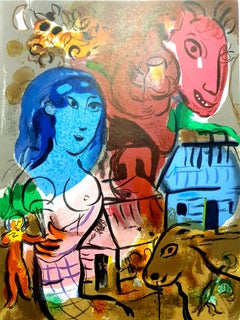
Le Jeu des Acrobates, original lithograph from "Chagall Lithographe II"
By Marc Chagall
Located in Collonge Bellerive, Geneve, CH
Marc Chagall
Original Lithograph
1963
Dimensions: 32 x 24 cm
As published in Chagall Lithographe 1957-1962. VOLUME II.
Unsigned, as issued, from the edition of several thousand
Condition : Excellent
Reference: Mourlot/Gauss 401
Marc Chagall (born in 1887)
Marc Chagall was born in Belarus in 1887 and developed an early interest in art. After studying painting, in 1907 he left Russia for Paris, where he lived in an artist colony on the city’s outskirts. Fusing his own personal, dreamlike imagery with hints of the fauvism and cubism popular in France at the time, Chagall created his most lasting work—including I and the Village (1911)—some of which would be featured in the Salon des Indépendants exhibitions. After returning to Vitebsk for a visit in 1914, the outbreak of WWI trapped Chagall in Russia. He returned to France in 1923 but was forced to flee the country and Nazi persecution during WWII. Finding asylum in the U.S., Chagall became involved in set and costume design before returning to France in 1948. In his later years, he experimented with new art forms and was commissioned to produce numerous large-scale works. Chagall died in St.-Paul-de-Vence in 1985.
The Village
Marc Chagall was born in a small Hassidic community on the outskirts of Vitebsk, Belarus, on July 7, 1887. His father was a fishmonger, and his mother ran a small sundries shop in the village. As a child, Chagall attended the Jewish elementary school, where he studied Hebrew and the Bible, before later attending the Russian public school. He began to learn the fundamentals of drawing during this time, but perhaps more importantly, he absorbed the world around him, storing away the imagery and themes that would feature largely in most of his later work.
At age 19 Chagall enrolled at a private, all-Jewish art school and began his formal education in painting, studying briefly with portrait artist Yehuda Pen. However, he left the school after several months, moving to St. Petersburg in 1907 to study at the Imperial Society for the Protection of Fine Arts. The following year, he enrolled at the Svanseva School, studying with set designer Léon Bakst, whose work had been featured in Sergei Diaghilev's Ballets Russes. This early experience would prove important to Chagall’s later career as well.
Despite this formal instruction, and the widespread popularity of realism in Russia at the time, Chagall was already establishing his own personal style, which featured a more dreamlike unreality and the people, places and imagery that were close to his heart. Some examples from this period are his Window Vitebsk (1908) and My Fianceé with Black Gloves (1909), which pictured Bella Rosenfeld, to whom he had recently become engaged.
The Beehive
Despite his romance with Bella, in 1911 an allowance from Russian parliament member and art patron Maxim Binaver enabled Chagall to move to Paris, France. After settling briefly in the Montparnasse neighborhood, Chagall moved further afield to an artist colony known as La Ruche (“The Beehive”), where he began to work side by side with abstract painters such as Amedeo Modigliani and Fernand Léger as well as the avant-garde poet Guillaume Apollinaire. At their urging, and under the influence of the wildly popular fauvism and cubism, Chagall lightened his palette and pushed his style ever further from reality. I and the Village (1911) and Homage to Apollinaire (1912) are among his early Parisian works, widely considered to be his most successful and representative period.
Though his work stood stylistically apart from his cubist contemporaries, from 1912 to 1914 Chagall exhibited several paintings at the annual Salon des Indépendants exhibition, where works by the likes of Juan Gris, Marcel Duchamp and Robert Delaunay were causing a stir in the Paris art world. Chagall’s popularity began to spread beyond La Ruche, and in May 1914 he traveled to Berlin to help organize his first solo exhibition, at Der Sturm Gallery. Chagall remained in the city until the highly acclaimed show opened that June. He then returned to Vitebsk, unaware of the fateful events to come.
War, Peace and Revolution
In August 1914 the outbreak of World War I precluded Chagall’s plans to return to Paris. The conflict did little to stem the flow of his creative output, however, instead merely giving him direct access to the childhood scenes so essential to his work, as seen in paintings such as Jew in Green (1914) and Over Vitebsk (1914). His paintings from this period also occasionally featured images of the war’s impact on the region, as with Wounded Soldier (1914) and Marching (1915). But despite the hardships of life during wartime, this would also prove to be a joyful period for Chagall. In July 1915 he married Bella, and she gave birth to a daughter, Ida, the following year. Their appearance in works such as Birthday (1915), Bella and Ida by the Window (1917) and several of his “Lovers” paintings give a glimpse of the island of domestic bliss that was Chagall’s amidst the chaos.
To avoid military service and stay with his new family, Chagall took a position as a clerk in the Ministry of War Economy in St. Petersburg. While there he began work on his autobiography and also immersed himself in the local art scene, befriending novelist Boris Pasternak, among others. He also exhibited his work in the city and soon gained considerable recognition. That notoriety would prove important in the aftermath of the 1917 Russian Revolution when he was appointed as the Commissar of Fine Arts in Vitebsk. In his new post, Chagall undertook various projects in the region, including the 1919 founding of the Academy of the Arts. Despite these endeavors, differences among his colleagues eventually disillusioned Chagall. In 1920 he relinquished his position and moved his family to Moscow, the post-revolution capital of Russia.
In Moscow, Chagall was soon commissioned to create sets and costumes for various productions at the Moscow State Yiddish Theater, where he would paint a series of murals titled Introduction to the Jewish Theater as well. In 1921, Chagall also found work as a teacher at a school for war orphans. By 1922, however, Chagall found that his art had fallen out of favor, and seeking new horizons he left Russia for good.
Flight
After a brief stay in Berlin, where he unsuccessfully sought to recover the work exhibited at Der Sturm before the war, Chagall moved his family to Paris in September 1923. Shortly after their arrival, he was commissioned by art dealer and publisher Ambroise Vollard to produce a series of etchings for a new edition of Nikolai Gogol's 1842 novel Dead Souls. Two years later Chagall began work on an illustrated edition of Jean de la Fontaine’s Fables, and in 1930 he created etchings for an illustrated edition of the Old Testament, for which he traveled to Palestine to conduct research.
Chagall’s work during this period brought him new success as an artist and enabled him to travel throughout Europe in the 1930s. He also published his autobiography, My Life (1931), and in 1933 received a retrospective at the Kunsthalle in Basel, Switzerland. But at the same time that Chagall’s popularity was spreading, so, too, was the threat of Fascism and Nazism. Singled out during the cultural "cleansing" undertaken by the Nazis in Germany, Chagall’s work was ordered removed from museums throughout the country. Several pieces were subsequently burned, and others were featured in a 1937 exhibition of “degenerate art” held in Munich. Chagall’s angst regarding these troubling events and the persecution of Jews in general can be seen in his 1938 painting White Crucifixion...
Category
1960s Surrealist Figurative Prints
Materials
Lithograph
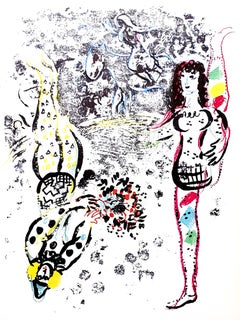
Raoul Dufy - Cuisine - Original Etching
By Raoul Dufy
Located in Collonge Bellerive, Geneve, CH
Raoul Dufy - Cuisine - Original Etching
Dimensions: 13 x 10".
Edition of 200
1940
Edition Les Bibliophiles du Palais, Paris
Unsigned and unumbered as issued
Category
1940s Modern Portrait Prints
Materials
Etching
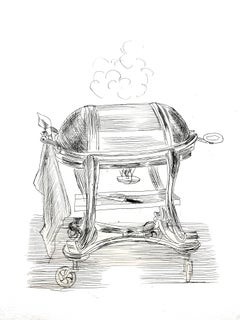
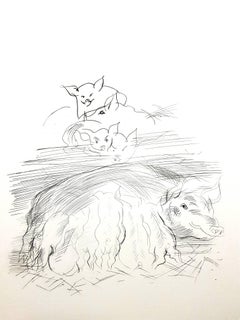
Raoul Dufy - Farm Pigs - Original Etching
By Raoul Dufy
Located in Collonge Bellerive, Geneve, CH
Raoul Dufy - Farm Pigs - Original Etching
Dimensions: 13 x 10".
Edition of 200
1940
Edition Les Bibliophiles du Palais, Paris
Unsigned and unumbered as issued
Category
1940s Modern Portrait Prints
Materials
Etching
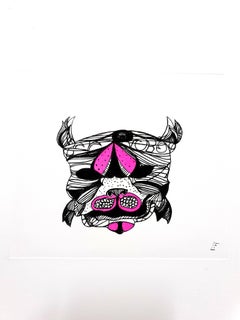
Leonor Fini - Purple Surrealist Cat - Original Etching
By Leonor Fini
Located in Collonge Bellerive, Geneve, CH
Leonor Fini - Cats - Original Engraving
Mme.Helvetius' Cats
Original etching created in 1985, Printed Signature (LF).
Conditions: excellent
Edition: 100
Support: Arches paper.
Dimensions: Paper dimensions: 44 x 28 cm
Editions: Moret, Paris.
Leonor Fini is considered one of the most important women artists of the mid-twentieth century, along with Leonora Carrington, Frida Kahlo, Meret Oppenheim, Remedios Varo, and Dorothea Tanning – most of whom Fini knew well. Her career, which spanned some six decades, included painting, graphic design, book illustration, product design (the renowned torso-shaped perfume bottle for Schiaparelli’s Shocking), and set and costume design for theatre, ballet, opera, and film. In this compellingly readable, exhaustively researched account, author Peter Webb brings Fini’s provocative art and unconventional personal life, as well as the vibrant avant-garde world in which she revolved, vividly in life.
Born in Buenos Aires in 1907 (August 30 – January 18, 1996, Paris) to Italian and Argentine parents, Leonor grew up in Trieste, Italy, raised by her strong-willed, independent mother, Malvina. She was a virtually self-taught artist, learing anatomy directly from studying cadavers in the local morgue and absorbing composition and technique from the Old Masters through books and visits to museums.
Fini’s fledging attempts at painting in Trieste let her to Milan, where she participated in her first group exhibition in 1929, and then to Paris in 1931.
Her vivacious personality and flamboyant attire instantly garnered her a spotlight in the Parisian art world and she soon developed close relationships with the leading surrealist writers and painters, including Paul Eluard, Salvador Dali, Man Ray, and Max Ernst, who became her lover for a time. The only surrealist she could not abide because of his misogyny was André Breton. Although she repeatedly exhibited with them, she never considered herself a surrealist. The American dealer Julien Levy,
very much impressed by Fini’s painting and smitten by her eccentric charms, invited her to New York in 1936, where she took part in a joint gallery exhibition with Max Ernst and met many American surrealists, including Joseph Cornell and Pavel Tchelitchew. Her work was included in MoMA’s pivotal Fantastic Art, Dada and Surrealism exhibition, along with De Chirico, Dali, Ernst, and Yves Tanguy.
In 1939 in Paris she curated an exhibition of surrealist furniture for her childhood friend Leo Castelli for the opening of his first gallery.
Introductions to her exhibition catalogues were written by De Chirico, Ernst, and Jean Cocteau.
A predominant theme of Fini’s art is the complex relationship between the sexes, primarily the interplay between the dominant female and the passive, androgynous male. In many of her most powerful works, the female takes the form of a sphinx, often with the face of the artist. Fini was also an accomplished portraitist; among her subjects were Stanislao Lepri...
Category
1980s Modern Animal Prints
Materials
Etching
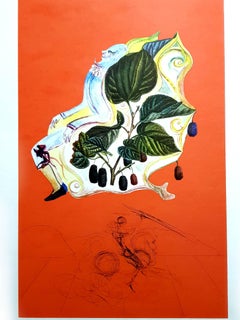
Salvador Dali - Wild Blackberries
By Salvador Dalí
Located in Collonge Bellerive, Geneve, CH
Framed Salvador Dali's Lithograph
Wild Blackberries
1970
Dimensions: P. 57 x 37 cm
Sheet: 75 x 56 cm
Handsigned, EA (Epreuve d'Artiste)
Excellent Co...
Category
1970s Surrealist Still-life Prints
Materials
Lithograph

Price Upon Request
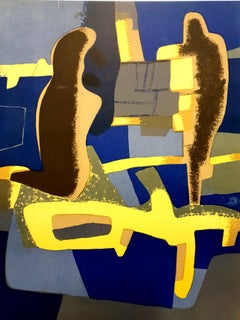
Maurice Estève - Composition - Original Lithograph
By Maurice Estève
Located in Collonge Bellerive, Geneve, CH
Maurice Estève - Composition - Original Lithograph
Colorful Abstraction
1969
From the art review XXe Siecle
Dimensions: 32 x 24 inches
Edition: G. di Sa...
Category
1960s Modern Figurative Prints
Materials
Lithograph
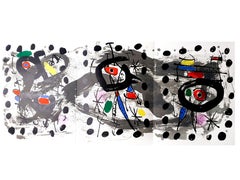
Joan Miro - Moon Bird, Sun Bird - Original Lithograph
By Joan Miró
Located in Collonge Bellerive, Geneve, CH
Joan Miro - Moon Bird, Sun Bird - Original Lithograph
1967
Deluxe fold-out from the journal XXe Siecle
Unsigned, as issued
Dimensions: 32 x 70 cm
Publisher...
Category
1960s Abstract Abstract Prints
Materials
Lithograph
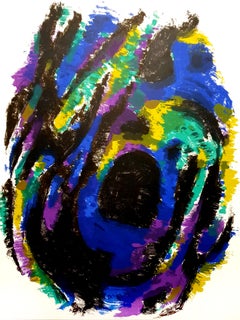
Alfred Manessier - Original Lithograph
By Alfred Manessier
Located in Collonge Bellerive, Geneve, CH
Alfred Manessier - Original Lithograph
Colorful Abstraction
1962
From XXe Siecle
Dimensions: 32 x 24
Edition: G. di San Lazzaro.
Unsigned and unumbered as issued
Category
1960s Modern Figurative Prints
Materials
Lithograph
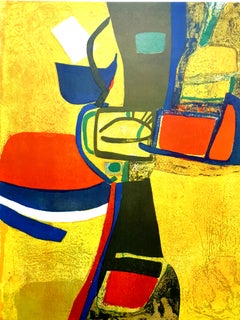
Maurice Estève - Composition - Original Lithograph
By Maurice Estève
Located in Collonge Bellerive, Geneve, CH
Maurice Estève - Composition - Original Lithograph
Colorful Abstraction
1965
From the art review XXe Siecle
Dimensions: 32 x 24 inches
Edition: G. di Sa...
Category
1960s Modern Figurative Prints
Materials
Lithograph
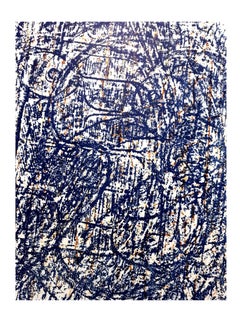
Max Ernst - Abstract Birds - Original Lithograph
By Max Ernst
Located in Collonge Bellerive, Geneve, CH
Max Ernst - Birds - Original Lithograph
Birds, 1962
Dimensions: 32 x 24 cm
From the art review XXe siècle
Unsigned and unumbered as issued
Category
1960s Surrealist Animal Prints
Materials
Lithograph
Leonor Fini - Cats - Original Etching
By Leonor Fini
Located in Collonge Bellerive, Geneve, CH
Leonor Fini - Cats - Original Engraving
Mme.Helvetius' Cats
Original etching created in 1985, Printed Signature (LF).
Conditions: excellent
Edition: 100
Support: Arches paper.
Dimensions: Paper dimensions: 44 x 28 cm
Editions: Moret, Paris.
Leonor Fini is considered one of the most important women artists of the mid-twentieth century, along with Leonora Carrington, Frida Kahlo, Meret Oppenheim, Remedios Varo, and Dorothea Tanning – most of whom Fini knew well. Her career, which spanned some six decades, included painting, graphic design, book illustration, product design (the renowned torso-shaped perfume bottle for Schiaparelli’s Shocking), and set and costume design for theatre, ballet, opera, and film. In this compellingly readable, exhaustively researched account, author Peter Webb brings Fini’s provocative art and unconventional personal life, as well as the vibrant avant-garde world in which she revolved, vividly in life.
Born in Buenos Aires in 1907 (August 30 – January 18, 1996, Paris) to Italian and Argentine parents, Leonor grew up in Trieste, Italy, raised by her strong-willed, independent mother, Malvina. She was a virtually self-taught artist, learing anatomy directly from studying cadavers in the local morgue and absorbing composition and technique from the Old Masters through books and visits to museums.
Fini’s fledging attempts at painting in Trieste let her to Milan, where she participated in her first group exhibition in 1929, and then to Paris in 1931.
Her vivacious personality and flamboyant attire instantly garnered her a spotlight in the Parisian art world and she soon developed close relationships with the leading surrealist writers and painters, including Paul Eluard, Salvador Dali, Man Ray, and Max Ernst, who became her lover for a time. The only surrealist she could not abide because of his misogyny was André Breton. Although she repeatedly exhibited with them, she never considered herself a surrealist. The American dealer Julien Levy,
very much impressed by Fini’s painting and smitten by her eccentric charms, invited her to New York in 1936, where she took part in a joint gallery exhibition with Max Ernst and met many American surrealists, including Joseph Cornell and Pavel Tchelitchew. Her work was included in MoMA’s pivotal Fantastic Art, Dada and Surrealism exhibition, along with De Chirico, Dali, Ernst, and Yves Tanguy.
In 1939 in Paris she curated an exhibition of surrealist furniture for her childhood friend Leo Castelli for the opening of his first gallery.
Introductions to her exhibition catalogues were written by De Chirico, Ernst, and Jean Cocteau.
A predominant theme of Fini’s art is the complex relationship between the sexes, primarily the interplay between the dominant female and the passive, androgynous male. In many of her most powerful works, the female takes the form of a sphinx, often with the face of the artist. Fini was also an accomplished portraitist; among her subjects were Stanislao Lepri...
Category
1980s Modern Animal Prints
Materials
Etching
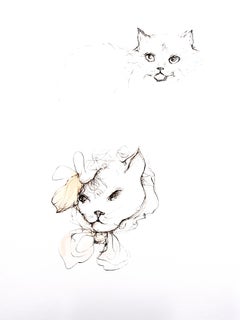
Marino Marini - Original Lithograph
By Marino Marini
Located in Collonge Bellerive, Geneve, CH
Marino Marini - Knight - Original Lithograph
1970
Dimensions: 32 x 24 cm
From the art review XXe siècle
Unsigned and unumbered as issued
Category
1970s Surrealist Animal Prints
Materials
Lithograph
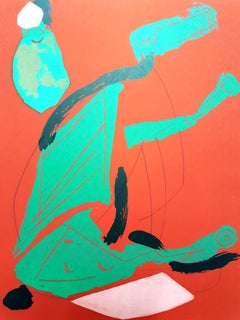
César - Original Lithograph
By César Baldaccini
Located in Collonge Bellerive, Geneve, CH
César - Original Lithograph
1961
Dimensions: 32 x 24 cm
From the art review XXe siècle
Unsigned and unnumbered as issued
Category
1980s Realist Abstract Prints
Materials
Lithograph
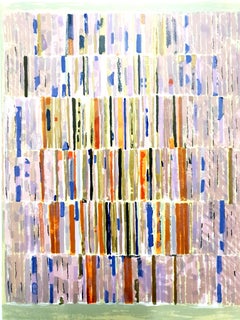
Jean Arp - Original Lithograph
By Jean Arp
Located in Collonge Bellerive, Geneve, CH
Jean Arp - Original Lithograph
1962
Dimensions: 32 x 24 cm
From the art review XXe siècle
Unsigned and unumbered as issued
Category
1960s Surrealist Animal Prints
Materials
Lithograph
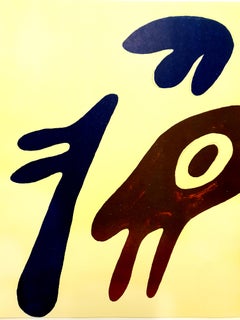
Marino Marini - Knight - Original Lithograph
By Marino Marini
Located in Collonge Bellerive, Geneve, CH
Marino Marini - Knight - Original Lithograph
1967
Dimensions: 32 x 24 cm
From the art review XXe siècle
Unsigned and unumbered as issued
Category
1960s Surrealist Animal Prints
Materials
Lithograph
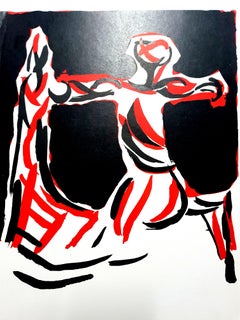
Emilio Vedova - Original Lithograph
By Emilio Vedova
Located in Collonge Bellerive, Geneve, CH
Emilio Vedova - Original Lithograph
Abstraction
1961
From the art revue XXe Siecle
Dimensions: 32 x 24
Edition: G. di San Lazzaro.
Unsigned and unumbered as issued
Category
1960s Modern Figurative Prints
Materials
Lithograph
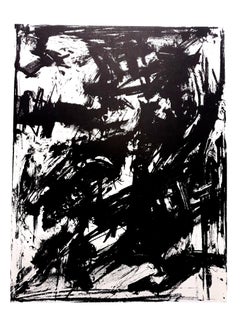
Joan Miro - Original Colorful Lithograph
By Joan Miró
Located in Collonge Bellerive, Geneve, CH
Joan Miro - Moon Bird, Sun Bird - Original Lithograph
1964
From the journal "XXe Siecle"
Unsigned edition of unknown size
Dimensions: 32 x 24 cm
Publisher: G. di San Lazzaro.
Refere...
Category
1960s Abstract Abstract Prints
Materials
Lithograph
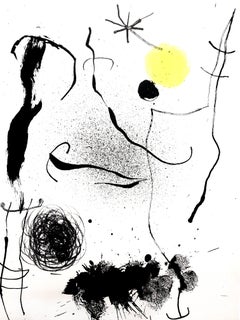
Georges Braque - Original Lithograph
By Georges Braque
Located in Collonge Bellerive, Geneve, CH
Georges Braque - Original Lithograph
1963
Dimensions: 32 x 24 cm
Andre Sauret, Monte Carlo
The father of Cubism
Three Cubist that distinguishes art historian periods were initiated and developed by Georges Braque: The Cubist Cézanne (1907-1909), Executive (1909-1912) and synthetic (1912-1922).
Post-Impressionist and fawn, Braque no longer adheres to the contingency of a decorative way or the other. Cézanne’s paintings exhibited at the Grand Palais during the retrospective of 1907 are a revelation: Cézanne sought and invented a pictorial language. In his footsteps, Braque went to the South with the reasons of the Master. He returned with Estaque landscapes and surprising Ciotat it keeps Cezanne geometric model and retains the “passages” continuity from one surface to another to create the sensation of “turning around” of the object represented. But he wants to go after the consequences of the vision of Cezanne. In his paintings Houses in L’Estaque (1908) it simplifies the volumes of houses, neglects detail by removing doors and windows: the plastic rhythm that builds the table. Large Nude , a masterpiece of the period, can be considered the first work of Cézanne cubism .
Systematizing and deepening Braque discoveries open the door analytical cubism. In 1909, his painting became more cerebral than sensual. The pattern is recreated in the two-dimensionality of the canvas, leaving aside any illusionistic perspective. In Still Life with Violin, objects are analyzed facets according to their characteristic elements, each facet referring to a particular view of the object. There are so many facets of points selected view: Table reflects the knowledge of the object and the ubiquity of the eye. Moreover, Braque is looking for the essence of the objects in the world rather than their contingency, which explains the absence of light source and use of muted colors (gray, ocher), contingent aspects of the object . But formal logic has stepped facets, erased any anecdote to the object and ultimately led to his painting a hermetic more marked on the edge of abstraction (see the series of Castle Roche-Guyon ).
Braque, anxious to keep the concrete and refusing at all costs that the logic of Cubism takes the paintings to abstract, reintroduced signs of reality in his paintings in 1912 marks the beginning of Synthetic Cubism. Historians speak of “signs of real” rather than reality because what interests Braque, this is not to put reality into a table, but to create a painting which, by its language, refers to the real. To do this, he invented two major techniques XX th century inclusions and contributions. The inclusions consist of painting objects that have no real depth, materials (wallpaper in Nature morte aux playing cards faux wood is a pictorial inclusion) or letters (calligraphic inclusion in Portuguese ), made first brush and a few months later stencil. Contributions are defined in contrast with the collage on canvas of foreign materials: glued or sand paper, sawdust, etc.. Regarding the collages, Braque used for the first time in September 1912 a piece of adhesive paper imitating faux wood Compote and Glass , then the packet envelope of tobacco Bock in 1912-1913, or an advertisement in Damier , 1913). Inputs and inclusions refer to an external object in the table, without “emulate” this object. Away from their appearances, objects are represented in closest essence of the objects in the real world sense.
This is also the time of Synthetic Cubism that Braque invented paper sculpture. There are, unfortunately, and no one is living proof of a photograph makes it possible to realize: Paper and paperboard.
Métamorphoses period(1961-1963).
In 1961, Georges Braque worked on a Greek head for the Louvre, which obsesses him, and he wishes to free his mind. He tried several times to bring out the paint and the result was unsatisfactory. He thinks the ultimate metamorphosis its Greek head projected in three dimensions. He calls in his studio of Baron Heger Loewenfeld, master lapidary, and he communicates his enthusiasm during the “fateful encounter.” Nine months later, in honor of the eighty years of Georges Braque, Heger Loewenfeld offers the Master of the ring Circe: the famous Greek head finally exorcised, carved in an onyx. Braque Loewenfeld then asked to identify other issues that haunt him.
From dated and signed by Georges Braque, Heger gouaches Loewenfeld shapes works in the fields of jewelery, lapidary art...
Category
1960s Modern Figurative Prints
Materials
Lithograph
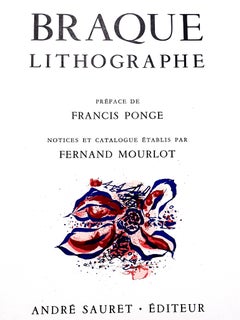
César - Original Lithograph
By César Baldaccini
Located in Collonge Bellerive, Geneve, CH
César - Original Lithograph
1963
Dimensions: 32 x 24 cm
From the art review XXe siècle
Unsigned and unnumbered as issued
Category
1980s Realist Abstract Prints
Materials
Lithograph
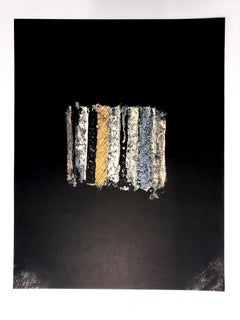
Zao Wou-ki - Original Lithograph - Abstract Composition
By Zao Wou-Ki
Located in Collonge Bellerive, Geneve, CH
Zao Wou-ki - Lithograph
1971
Dimensions: 32 x 24 cm
Edition: G. di San Lazzaro.
From the art review XXe siècle
Unsigned and unnumbered as issued
Category
1970s Abstract Expressionist Abstract Prints
Materials
Lithograph
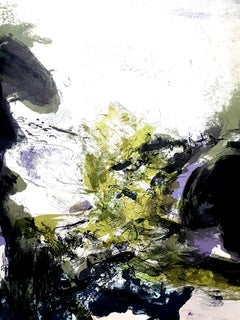
Marc Chagall - Original Lithograph
By Marc Chagall
Located in Collonge Bellerive, Geneve, CH
Marc Chagall
Original Lithograph
1963
Dimensions: 32 x 24 cm
Unsigned, as published in "Chagall Lithographe 1957-1962. VOLUME II"
Edition of several thousand
Condition : Excellent
M...
Category
1960s Surrealist Figurative Prints
Materials
Lithograph
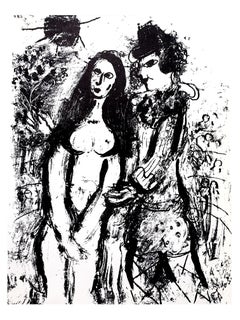
Bernard Buffet - Iris Still Life - Original Lithograph
By Charles Sorlier
Located in Collonge Bellerive, Geneve, CH
Bernard Buffet - Iris Still Life - Original Lithograph
Dimensions: 32 x 24 cm
Edition : 6000
Paris, Michèle Trinckvel, Draeger, 1979,
Unsigned and unumbered as issued
Category
1970s Modern Portrait Prints
Materials
Lithograph
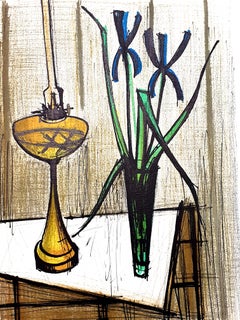
Georges Braque - Original Lithograph
By Georges Braque
Located in Collonge Bellerive, Geneve, CH
Georges Braque - Original Lithograph
1963
Dimensions: 32 x 24 cm
Andre Sauret, Monte Carlo
The father of Cubism
Three Cubist that distinguishes art historian periods were initiated and developed by Georges Braque: The Cubist Cézanne (1907-1909), Executive (1909-1912) and synthetic (1912-1922).
Post-Impressionist and fawn, Braque no longer adheres to the contingency of a decorative way or the other. Cézanne’s paintings exhibited at the Grand Palais during the retrospective of 1907 are a revelation: Cézanne sought and invented a pictorial language. In his footsteps, Braque went to the South with the reasons of the Master. He returned with Estaque landscapes and surprising Ciotat it keeps Cezanne geometric model and retains the “passages” continuity from one surface to another to create the sensation of “turning around” of the object represented. But he wants to go after the consequences of the vision of Cezanne. In his paintings Houses in L’Estaque (1908) it simplifies the volumes of houses, neglects detail by removing doors and windows: the plastic rhythm that builds the table. Large Nude , a masterpiece of the period, can be considered the first work of Cézanne cubism .
Systematizing and deepening Braque discoveries open the door analytical cubism. In 1909, his painting became more cerebral than sensual. The pattern is recreated in the two-dimensionality of the canvas, leaving aside any illusionistic perspective. In Still Life with Violin, objects are analyzed facets according to their characteristic elements, each facet referring to a particular view of the object. There are so many facets of points selected view: Table reflects the knowledge of the object and the ubiquity of the eye. Moreover, Braque is looking for the essence of the objects in the world rather than their contingency, which explains the absence of light source and use of muted colors (gray, ocher), contingent aspects of the object . But formal logic has stepped facets, erased any anecdote to the object and ultimately led to his painting a hermetic more marked on the edge of abstraction (see the series of Castle Roche-Guyon ).
Braque, anxious to keep the concrete and refusing at all costs that the logic of Cubism takes the paintings to abstract, reintroduced signs of reality in his paintings in 1912 marks the beginning of Synthetic Cubism. Historians speak of “signs of real” rather than reality because what interests Braque, this is not to put reality into a table, but to create a painting which, by its language, refers to the real. To do this, he invented two major techniques XX th century inclusions and contributions. The inclusions consist of painting objects that have no real depth, materials (wallpaper in Nature morte aux playing cards faux wood is a pictorial inclusion) or letters (calligraphic inclusion in Portuguese ), made first brush and a few months later stencil. Contributions are defined in contrast with the collage on canvas of foreign materials: glued or sand paper, sawdust, etc.. Regarding the collages, Braque used for the first time in September 1912 a piece of adhesive paper imitating faux wood Compote and Glass , then the packet envelope of tobacco Bock in 1912-1913, or an advertisement in Damier , 1913). Inputs and inclusions refer to an external object in the table, without “emulate” this object. Away from their appearances, objects are represented in closest essence of the objects in the real world sense.
This is also the time of Synthetic Cubism that Braque invented paper sculpture. There are, unfortunately, and no one is living proof of a photograph makes it possible to realize: Paper and paperboard.
Métamorphoses period(1961-1963).
In 1961, Georges Braque worked on a Greek head for the Louvre, which obsesses him, and he wishes to free his mind. He tried several times to bring out the paint and the result was unsatisfactory. He thinks the ultimate metamorphosis its Greek head projected in three dimensions. He calls in his studio of Baron Heger Loewenfeld, master lapidary, and he communicates his enthusiasm during the “fateful encounter.” Nine months later, in honor of the eighty years of Georges Braque, Heger Loewenfeld offers the Master of the ring Circe: the famous Greek head finally exorcised, carved in an onyx. Braque Loewenfeld then asked to identify other issues that haunt him.
From dated and signed by Georges Braque, Heger gouaches Loewenfeld shapes works in the fields of jewelery, lapidary art...
Category
1960s Modern Figurative Prints
Materials
Lithograph
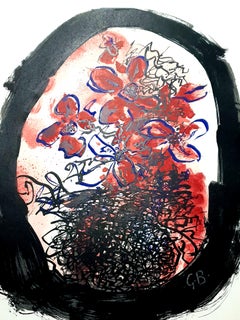
Pierre Bonnard - The Sun - Original Lithograph
By Pierre Bonnard
Located in Collonge Bellerive, Geneve, CH
Pierre Bonnard - The Sun
Original Lithograph
Dimensions: 32 x 24 cm
Verve . Revue Artistique et Litteraire. Vol. V, Nos 17 et 18.
Signed in the plate
Unumbered as issued
Category
1940s Modern Figurative Prints
Materials
Lithograph
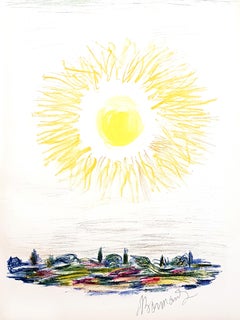
Joan Miro - Original Lithograph - Frontispiece for "Prints from Mourlot Press"
By Joan Miró
Located in Collonge Bellerive, Geneve, CH
Joan Miro - 1964
Dimensions: 30 x 20 cm
Edition of 200 (one of the 200 on Vélin de Rives) reserved for collaborators, there was also a larger edition of 2000
From "Prints from the Mo...
Category
1960s Modern Abstract Prints
Materials
Lithograph
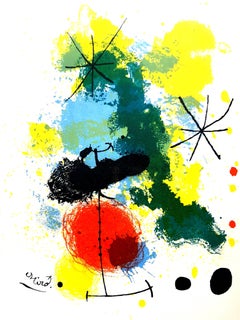
Henry Moore - Original Lithograph
By Henry Moore
Located in Collonge Bellerive, Geneve, CH
Henry Moore - Original Lithograph
1977
Dimensions: 32 x 24 cm
From the art review XXe siècle
Unsigned and unumbered as issued
Category
1970s Surrealist Animal Prints
Materials
Lithograph
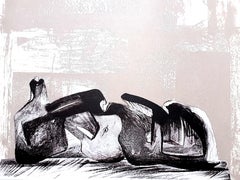
After Alberto Magnelli - Sorlier Lithograph
By Alberto Magnelli
Located in Collonge Bellerive, Geneve, CH
Alberto Magnelli (After)
Lithograph, Charles Sorlier
32 x 24 cm
1971
XXe siècle, San Lazzaro
Signed in the plate
Unumbered as issued
Category
1970s Abstract Geometric Abstract Prints
Materials
Lithograph
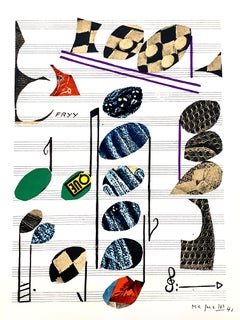
Bernard Buffet - House of Cards - Original Lithograph
By Bernard Buffet
Located in Collonge Bellerive, Geneve, CH
Bernard Buffet - House of Cards - Original Lithograph
Dimensions: 32 x 24 cm
Edition : 6000
Paris, Michèle Trinckvel, Draeger, 1979,
Unsigned and unumb...
Category
1970s Modern Interior Prints
Materials
Lithograph

Marino Marini - Knight - Original Lithograph
By Marino Marini
Located in Collonge Bellerive, Geneve, CH
Marino Marini - Knight - Original Lithograph
1968
Dimensions: 32 x 48 cm
From the art review XXe siècle
Unsigned and unumbered as issued
Category
1960s Surrealist Animal Prints
Materials
Lithograph
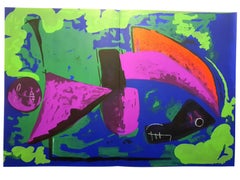
Alfred Manessier - Lithograph
By Alfred Manessier
Located in Collonge Bellerive, Geneve, CH
Alfred Manessier - Lithograph
1962
From the art periodical XXe Siecle (no. 20)
Dimensions: 32 x 24
Edition: G. di San Lazzaro.
Unsigned and unnumbered as issued
Category
1960s Modern Figurative Prints
Materials
Lithograph
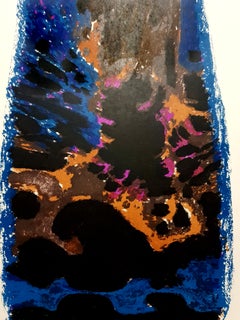
Max Ernst - Birds - Original Lithograph
By Max Ernst
Located in Collonge Bellerive, Geneve, CH
Max Ernst - Birds - Original Lithograph
Birds, 1964
Dimensions: 32 x 24 cm
From the art review XXe siècle
Unsigned and unumbered as issued
Category
1960s Surrealist Animal Prints
Materials
Lithograph
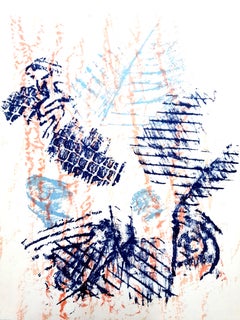
Maurice Estève - Composition - Original Lithograph
By Maurice Estève
Located in Collonge Bellerive, Geneve, CH
Maurice Estève - Composition - Original Lithograph
Colorful Abstraction
1969
From the art review XXe Siecle
Dimensions: 32 x 24 inches
Edition: G. di Sa...
Category
1960s Modern Figurative Prints
Materials
Lithograph
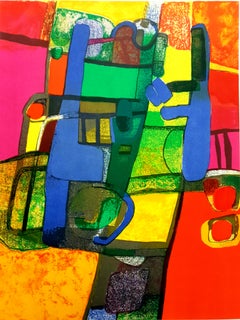
Giuseppe Capogrossi - Original Lithograph
By Guiseppe Capogrossi
Located in Collonge Bellerive, Geneve, CH
Giuseppe Capogrossi - Original Lithograph
Colorful Abstraction
1969
From the art revue XXe Siecle
Dimensions: 19 x 12.25 inches
Edition: G. di San ...
Category
1960s Modern Figurative Prints
Materials
Lithograph
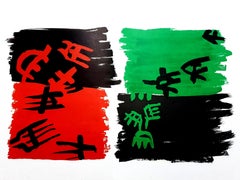
Joan Miro - Original Lithograph
By Joan Miró
Located in Collonge Bellerive, Geneve, CH
Joan Miro - Original Lithograph
1976
Dimensions: 32 x 25 cm
Revue XXe Siècle
Reference : Mourlot 1106
Edition: Cahiers d'art published under the direction of G. di San Lazzaro.
Unsi...
Category
1970s Abstract Geometric Abstract Prints
Materials
Lithograph
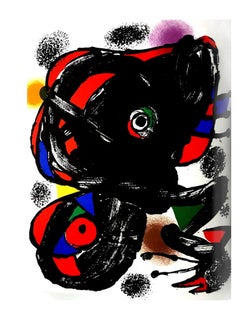
Joan Miro - a plate from L
Issue Dérobée
By Joan Miró
Located in Collonge Bellerive, Geneve, CH
Joan Miro - a plate from L'Issue Dérobée
Etching, aquatint and drypoint in colors
1974
Dimensions: 36 x 54 cm
Edition: 220
Jacques Dupin, L'Issue Dérobée, Maeght Editeur, Paris, 19...
Category
1970s Modern Abstract Prints
Materials
Lithograph
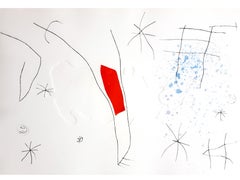
Leonor Fini - Cats - Original Etching
By Leonor Fini
Located in Collonge Bellerive, Geneve, CH
Leonor Fini - Cats - Original Engraving
Mme.Helvetius' Cats
Original etching created in 1985, Printed Signature (LF).
Conditions: excellent
Edition: 100
Support: Arches paper.
Dimensions: Paper dimensions: 44 x 28 cm
Editions: Moret, Paris.
Leonor Fini is considered one of the most important women artists of the mid-twentieth century, along with Leonora Carrington, Frida Kahlo, Meret Oppenheim, Remedios Varo, and Dorothea Tanning – most of whom Fini knew well. Her career, which spanned some six decades, included painting, graphic design, book illustration, product design (the renowned torso-shaped perfume bottle for Schiaparelli’s Shocking), and set and costume design for theatre, ballet, opera, and film. In this compellingly readable, exhaustively researched account, author Peter Webb brings Fini’s provocative art and unconventional personal life, as well as the vibrant avant-garde world in which she revolved, vividly in life.
Born in Buenos Aires in 1907 (August 30 – January 18, 1996, Paris) to Italian and Argentine parents, Leonor grew up in Trieste, Italy, raised by her strong-willed, independent mother, Malvina. She was a virtually self-taught artist, learing anatomy directly from studying cadavers in the local morgue and absorbing composition and technique from the Old Masters through books and visits to museums.
Fini’s fledging attempts at painting in Trieste let her to Milan, where she participated in her first group exhibition in 1929, and then to Paris in 1931.
Her vivacious personality and flamboyant attire instantly garnered her a spotlight in the Parisian art world and she soon developed close relationships with the leading surrealist writers and painters, including Paul Eluard, Salvador Dali, Man Ray, and Max Ernst, who became her lover for a time. The only surrealist she could not abide because of his misogyny was André Breton. Although she repeatedly exhibited with them, she never considered herself a surrealist. The American dealer Julien Levy,
very much impressed by Fini’s painting and smitten by her eccentric charms, invited her to New York in 1936, where she took part in a joint gallery exhibition with Max Ernst and met many American surrealists, including Joseph Cornell and Pavel Tchelitchew. Her work was included in MoMA’s pivotal Fantastic Art, Dada and Surrealism exhibition, along with De Chirico, Dali, Ernst, and Yves Tanguy.
In 1939 in Paris she curated an exhibition of surrealist furniture for her childhood friend Leo Castelli for the opening of his first gallery.
Introductions to her exhibition catalogues were written by De Chirico, Ernst, and Jean Cocteau.
A predominant theme of Fini’s art is the complex relationship between the sexes, primarily the interplay between the dominant female and the passive, androgynous male. In many of her most powerful works, the female takes the form of a sphinx, often with the face of the artist. Fini was also an accomplished portraitist; among her subjects were Stanislao Lepri...
Category
1980s Modern Animal Prints
Materials
Etching
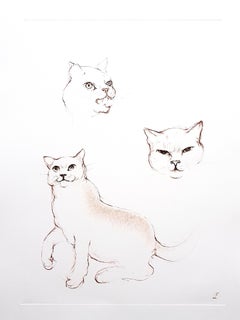
Joan Miro - L
Issue Dérobée - Original Aquatint
By Joan Miró
Located in Collonge Bellerive, Geneve, CH
Joan Miro - L'Issue Dérobée - Original Aquatint
1974
Dimensions: 36 x 54 cm
Edition: 220
Jacques Dupin, L'Issue Dérobée, Maeght Editeur, Paris, 1974 (C. books 187)
Biography
Joa...
Category
1970s Modern Abstract Prints
Materials
Lithograph
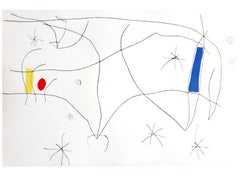
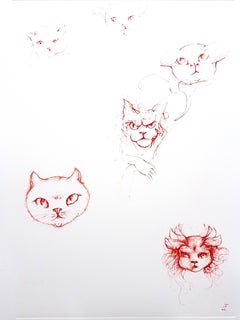
Leonor Fini - Red Cats - Original Etching
By Leonor Fini
Located in Collonge Bellerive, Geneve, CH
Leonor Fini - Cats - Original Engraving
Mme.Helvetius' Cats
Original etching created in 1985, Printed Signature (LF).
Conditions: excellent
Edition: 100
Support: Arches paper.
Dimensions: Paper dimensions: 44 x 28 cm
Editions: Moret, Paris.
Leonor Fini is considered one of the most important women artists of the mid-twentieth century, along with Leonora Carrington, Frida Kahlo, Meret Oppenheim, Remedios Varo, and Dorothea Tanning – most of whom Fini knew well. Her career, which spanned some six decades, included painting, graphic design, book illustration, product design (the renowned torso-shaped perfume bottle for Schiaparelli’s Shocking), and set and costume design for theatre, ballet, opera, and film. In this compellingly readable, exhaustively researched account, author Peter Webb brings Fini’s provocative art and unconventional personal life, as well as the vibrant avant-garde world in which she revolved, vividly in life.
Born in Buenos Aires in 1907 (August 30 – January 18, 1996, Paris) to Italian and Argentine parents, Leonor grew up in Trieste, Italy, raised by her strong-willed, independent mother, Malvina. She was a virtually self-taught artist, learing anatomy directly from studying cadavers in the local morgue and absorbing composition and technique from the Old Masters through books and visits to museums.
Fini’s fledging attempts at painting in Trieste let her to Milan, where she participated in her first group exhibition in 1929, and then to Paris in 1931.
Her vivacious personality and flamboyant attire instantly garnered her a spotlight in the Parisian art world and she soon developed close relationships with the leading surrealist writers and painters, including Paul Eluard, Salvador Dali, Man Ray, and Max Ernst, who became her lover for a time. The only surrealist she could not abide because of his misogyny was André Breton. Although she repeatedly exhibited with them, she never considered herself a surrealist. The American dealer Julien Levy,
very much impressed by Fini’s painting and smitten by her eccentric charms, invited her to New York in 1936, where she took part in a joint gallery exhibition with Max Ernst and met many American surrealists, including Joseph Cornell and Pavel Tchelitchew. Her work was included in MoMA’s pivotal Fantastic Art, Dada and Surrealism exhibition, along with De Chirico, Dali, Ernst, and Yves Tanguy.
In 1939 in Paris she curated an exhibition of surrealist furniture...
Category
1980s Modern Animal Prints
Materials
Etching