J Gold Fine Art
to
1
117
115
107
63
52
Overall Width
to
Overall Height
to
7
31
373
43
9
5
10
5
19
9
35
28
50
35
2
117
110
52
45
10
9
7
6
4
1
1
231
206
14
235
125
78
67
54
52
44
42
36
35
31
26
19
17
17
13
12
11
10
10
270
196
140
138
104
9
8
6
6
6
300
454
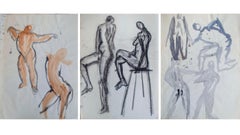
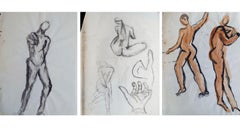
Group of 3 Figure Drawings by Attributed to Ross Bleckner
By Ross Bleckner
Located in New York, NY
Attributed to Ross Bleckner (American, b. 1949)
Group of 3 Double Sided Drawings
Watercolor and graphite on paper
All approx. 24 x 18 in.
Ross Bleckner grew up in Hewlett, Long Island, New York; drawing all the time without being aware that other artists existed. He was the middle child between two sisters; his father manufactures electronic parts He attended New York University where Sol Lewitt, Chuck Close and others were his teachers. He graduated in 1972, then spent a year at the California Institute of Arts. His contacts in the next few years were very fortuitous; Sol Lewitt and Chuck Close, Carl Andre, David Salle, Julian Schnabel, etc.
Bleckner is on the nervous side, beset by self-doubt, insomnia, and gloom. He is unpretentious, although he is bluntly handsome, with olive complexion, and a compact build. He is "10 percent that is superficial and 90 percent that has to do with the depths and that is threatened by living. He is a very complicated individual. He is a very, very morose, deeply feeling, hardworking artist- he takes a lot from within himself - but always, no matter how successful he is, he feels he is going to fall into those depths." 1
Bleckner first exhibited his work in New York in 1974. The following year he was given his first one-man show; he was included in the 1975 Whitney Biennial.. Since about 1985 has addressed many of his paintings to the subject of AIDS- both documenting it as a historical phenomenon and commemorating specific individuals who have died.
Written and submitted by Jean Ershler Schatz, artist and researcher from Laguna Woods, California.
Bio sourced from the Archives of askArt.
Sources include:
Ross Bleckner's Mood Indigo by Lisa Liebmann, in ARTnews, May 1993...
Category
Late 20th Century Contemporary Figurative Drawings and Watercolors
Materials
Paper, Watercolor, Graphite
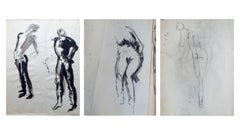
Ross Bleckner Group of 3 Figure Drawings (attrb.)
By Ross Bleckner
Located in New York, NY
Attributed to Ross Bleckner (American, b. 1949)
Group of 3 Double Sided Drawings
Watercolor and graphite on paper
Largest: 24 x 18 in.
Smallest: 22 3/4 x 18 in.
Ross Bleckner grew up in Hewlett, Long Island, New York; drawing all the time without being aware that other artists existed. He was the middle child between two sisters; his father manufactures electronic parts He attended New York University where Sol Lewitt, Chuck Close and others were his teachers. He graduated in 1972, then spent a year at the California Institute of Arts. His contacts in the next few years were very fortuitous; Sol Lewitt and Chuck Close, Carl Andre, David Salle, Julian Schnabel, etc.
Bleckner is on the nervous side, beset by self-doubt, insomnia, and gloom. He is unpretentious, although he is bluntly handsome, with olive complexion, and a compact build. He is "10 percent that is superficial and 90 percent that has to do with the depths and that is threatened by living. He is a very complicated individual. He is a very, very morose, deeply feeling, hardworking artist- he takes a lot from within himself - but always, no matter how successful he is, he feels he is going to fall into those depths." 1
Bleckner first exhibited his work in New York in 1974. The following year he was given his first one-man show; he was included in the 1975 Whitney Biennial.. Since about 1985 has addressed many of his paintings to the subject of AIDS- both documenting it as a historical phenomenon and commemorating specific individuals who have died.
Written and submitted by Jean Ershler Schatz, artist and researcher from Laguna Woods, California.
Bio sourced from the Archives of askArt.
Sources include:
Ross Bleckner's Mood Indigo by Lisa Liebmann, in ARTnews, May 1993...
Category
Late 20th Century Contemporary Figurative Drawings and Watercolors
Materials
Watercolor, Graphite, Paper

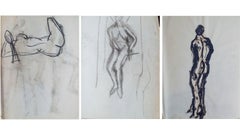
Ross Bleckner Group of 3 Double Sided Figure Drawings (attrb.)
By Ross Bleckner
Located in New York, NY
Attributed to: Ross Bleckner (American, b. 1949)
Group of 3 Double Sided Drawings
Watercolor and graphite on paper
Largest: 24 x 18 in.
Smallest: 23 1/4 x 18 in.
Ross Bleckner grew up in Hewlett, Long Island, New York; drawing all the time without being aware that other artists existed. He was the middle child between two sisters; his father manufactures electronic parts He attended New York University where Sol Lewitt, Chuck Close and others were his teachers. He graduated in 1972, then spent a year at the California Institute of Arts. His contacts in the next few years were very fortuitous; Sol Lewitt and Chuck Close, Carl Andre, David Salle, Julian Schnabel, etc.
Bleckner is on the nervous side, beset by self-doubt, insomnia, and gloom. He is unpretentious, although he is bluntly handsome, with olive complexion, and a compact build. He is "10 percent that is superficial and 90 percent that has to do with the depths and that is threatened by living. He is a very complicated individual. He is a very, very morose, deeply feeling, hardworking artist- he takes a lot from within himself - but always, no matter how successful he is, he feels he is going to fall into those depths." 1
Bleckner first exhibited his work in New York in 1974. The following year he was given his first one-man show; he was included in the 1975 Whitney Biennial.. Since about 1985 has addressed many of his paintings to the subject of AIDS- both documenting it as a historical phenomenon and commemorating specific individuals who have died.
Written and submitted by Jean Ershler Schatz, artist and researcher from Laguna Woods, California.
Bio sourced from the Archives of askArt.
Sources include:
Ross Bleckner's Mood Indigo by Lisa Liebmann, in ARTnews, May 1993...
Category
Late 20th Century Contemporary Figurative Drawings and Watercolors
Materials
Paper, Watercolor, Graphite
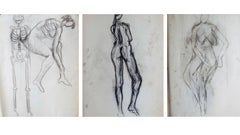
Group of 3 Double Sided Figure Drawings by Ross Bleckner (attrb.)
By Ross Bleckner
Located in New York, NY
Attributed to Ross Bleckner (American, b. 1949)
Group of 3 Double Sided Drawings
Ink and graphite on paper
Largest: 23 1/2 x 17 1/4 in.
Smallest: 22 7/8 x 18 in.
Ross Bleckner grew up in Hewlett, Long Island, New York; drawing all the time without being aware that other artists existed. He was the middle child between two sisters; his father manufactures electronic parts He attended New York University where Sol Lewitt, Chuck Close and others were his teachers. He graduated in 1972, then spent a year at the California Institute of Arts. His contacts in the next few years were very fortuitous; Sol Lewitt and Chuck Close, Carl Andre, David Salle, Julian Schnabel, etc.
Bleckner is on the nervous side, beset by self-doubt, insomnia, and gloom. He is unpretentious, although he is bluntly handsome, with olive complexion, and a compact build. He is "10 percent that is superficial and 90 percent that has to do with the depths and that is threatened by living. He is a very complicated individual. He is a very, very morose, deeply feeling, hardworking artist- he takes a lot from within himself - but always, no matter how successful he is, he feels he is going to fall into those depths." 1
Bleckner first exhibited his work in New York in 1974. The following year he was given his first one-man show; he was included in the 1975 Whitney Biennial.. Since about 1985 has addressed many of his paintings to the subject of AIDS- both documenting it as a historical phenomenon and commemorating specific individuals who have died.
Written and submitted by Jean Ershler Schatz, artist and researcher from Laguna Woods, California.
Bio sourced from the Archives of askArt.
Sources include:
Ross Bleckner's Mood Indigo by Lisa Liebmann, in ARTnews, May 1993...
Category
Late 20th Century Contemporary Figurative Drawings and Watercolors
Materials
Paper, Watercolor, Graphite
Group of 3 Figure Drawings by Ross Bleckner (attrb.)
By Ross Bleckner
Located in New York, NY
Attributed to Ross Bleckner (American, b. 1949)
Group of 3 Double Sided Drawings
Watercolor and graphite on paper
Largest: 24 x 18 in.
Smallest: 23 1/4 x 18 in.
Ross Bleckner grew up in Hewlett, Long Island, New York; drawing all the time without being aware that other artists existed. He was the middle child between two sisters; his father manufactures electronic parts He attended New York University where Sol Lewitt, Chuck Close and others were his teachers. He graduated in 1972, then spent a year at the California Institute of Arts. His contacts in the next few years were very fortuitous; Sol Lewitt and Chuck Close, Carl Andre, David Salle, Julian Schnabel, etc.
Bleckner is on the nervous side, beset by self-doubt, insomnia, and gloom. He is unpretentious, although he is bluntly handsome, with olive complexion, and a compact build. He is "10 percent that is superficial and 90 percent that has to do with the depths and that is threatened by living. He is a very complicated individual. He is a very, very morose, deeply feeling, hardworking artist- he takes a lot from within himself - but always, no matter how successful he is, he feels he is going to fall into those depths." 1
Bleckner first exhibited his work in New York in 1974. The following year he was given his first one-man show; he was included in the 1975 Whitney Biennial.. Since about 1985 has addressed many of his paintings to the subject of AIDS- both documenting it as a historical phenomenon and commemorating specific individuals who have died.
Written and submitted by Jean Ershler Schatz, artist and researcher from Laguna Woods, California.
Bio sourced from the Archives of askArt.
Sources include:
Ross Bleckner's Mood Indigo by Lisa Liebmann, in ARTnews, May 1993...
Category
Late 20th Century Contemporary Figurative Drawings and Watercolors
Materials
Paper, Watercolor, Graphite
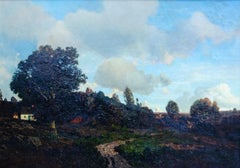
Countryside Landscape by Henry Pember Smith
By Henry Pember Smith
Located in New York, NY
Henry Pember Smith (American, 1854-1907)
Landscape c. Late 19th/Early 20th Century
Oil on board
20 1/8 x 28 in.
Framed: 30 1/8 x 38 in.
BIOGRAPHY
Born in Waterford, Connecticut, He...
Category
Late 19th Century American Impressionist Landscape Paintings
Materials
Oil, Board
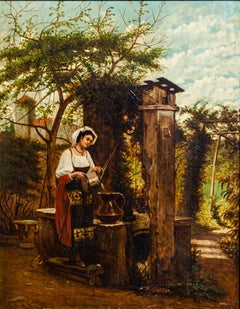
Eugene Meeks English oil painting of a woman at a well titled "Roma", dated 1871
Located in New York, NY
Antique Guy Meeks oil painting of a woman at a well.
Signed lower right: G Meeks, Roma, 1871
Framed dimensions: 24 1/2 x 21 in.
Category
Early 20th Century American Realist Figurative Paintings
Materials
Canvas, Oil
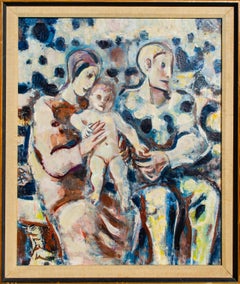
Pedro Gasto Vilanova - Modernist painting of a family, dated
44
Located in New York, NY
Pedtro Gasto Vilanova (Spanish, 1908-1997)
Untitled (Family), 1944
Oil on canavas
21 7/8 x 18 3/8 in.
Framed: 24 3/4 x 21 1/3 in.
Signed and dated on left side.
Inscribed verso: PAG...
Category
1940s Abstract Geometric Portrait Paintings
Materials
Canvas, Oil
Watercolor by Hungarian artist Ede Halápy, titled "Tavassfal" or "Spring Wall"
Located in New York, NY
Ede Halápy (Hungarian, 1891-1962)
Tavasfall (Spring wall), c. 1940
Watercolor on paper
Sight size: 11 1/4 x 10 1/2 in.
Framed: 22 1/4 x 21 1/2 in.
Signed lower right: Halápy
Hungar...
Category
Mid-20th Century Impressionist Landscape Drawings and Watercolors
Materials
Watercolor, Archival Paper
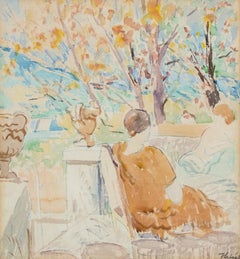
Seascape Watercolor Painting by George Howell Gay (American, 1858-1931)
By George Howell Gay
Located in New York, NY
George Howell Gay (American, 1858-1931)
Untitled Seascape, c. late 19th-early 20th century
Watercolor on board
12 x 17 3/4 in.
Framed: 16 1/4 x 22 1/4 in.
Signed lower right: Geo Howell Gay
George H. Gay was well known for his watercolor landscapes, seascapes and paintings of rivers and ships, mostly along the shores of New England. Gay also painted snowscapes, but these are scarcer. It is unusual to find an oil painting by this artist, as he worked mainly in watercolor. Some of his works display a tonalist aesthetic.
He was born in Milwaukee, Wisconsin on July 2, 1858, and lived in Chicago and then in 1889, settled in Bronxville, New York. Gay was a pupil of Paul Brown and Henry Elkins in Chicago.
He is known to have exhibited at the National Academy of Design in 1890; Boston Art...
Category
Early 20th Century American Realist Landscape Paintings
Materials
Watercolor, Board
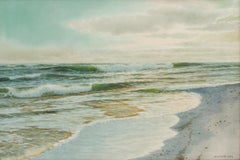
Henry Winzenreid Modernist Lithograph of Steamboats and Factories
Located in New York, NY
Henry Winzenreid (American, 1892-1981)
Untitled (Steamboats and Factories), 20th century
Lithograph
Sight size: 10 x 14 in.
Framed: 17 1/8 x 21 1/4 in.
Signed lower right: AP/60 Wi...
Category
20th Century American Realist Landscape Prints
Materials
Lithograph
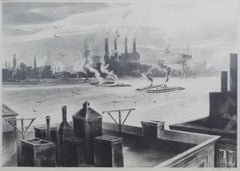
Original Herman Palmer - Two Animals Resting
Located in New York, NY
Herman Palmer (American, 1894-1946)
Two Animals, 20th century
Mixed media on board
Sight size: 11 1/2 x 14 3/4 in.
Framed: 18 1/4 x 21 in.
Signed lower right: Herman Palmer
Herman...
Category
Early 20th Century American Impressionist Mixed Media
Materials
Mixed Media
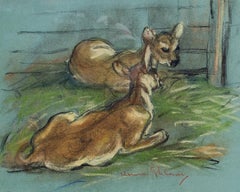
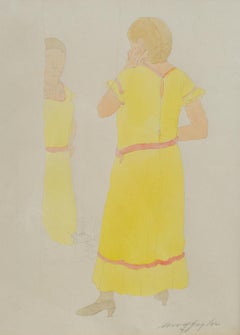
Samuel Wood Gaylor American Modernist Watercolor
Located in New York, NY
Samuel Wood Gaylor (American, 1883 - 1957)
Untitled (Woman in Mirror), 1930
Watercolor on paper
Sight size: 14 1/4 x 10 1/4 in.
Framed: 20 3/4 x 16 1/4 in...
Category
1930s American Modern Portrait Drawings and Watercolors
Materials
Paper, Watercolor
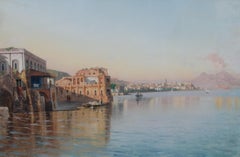
Italian Coastal Scene by Giovanni Battista (1860-1925)
Located in New York, NY
Giovanni Battista (Italian, 1860-1925)
Untitled (Italian Coast, likely Naples), c. 19th century
Watercolor
Sight size: 13 1/4 x 20
Framed: 22 1/2 x 29 1/2 in.
Signed lower left: G. ...
Category
19th Century Italian School Landscape Drawings and Watercolors
Materials
Watercolor
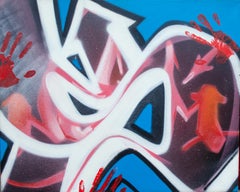
Original Art by Tats Cru Inc., Bronx-Based Graffiti Collective
Located in New York, NY
Tats Cru, Inc. / Nosm
Untitled, 2004
Acrylic and spray paint on canvas
24 x 30 in.
Signed verso
Tats Cru, Inc. is a group of Bronx-based graffiti artists turned professional muralists.[1] The current members of Tats Cru are Bio, BG183, Nicer, HOW, and NOSM. Tats Cru were founded by Brim, Bio, BG183 and Nicer.
Over the last two decades, Tats Cru has produced various advertisements for clients ranging from neighborhood businesses and institutions to large corporations like Coca-Cola and Sony.[2][3]
Tats Cru is also a major producer of New York City-style memorial murals, and have created artwork for many musicians including Nicki Minaj, Missy Elliott...
Category
Early 2000s Abstract Abstract Paintings
Materials
Canvas, Spray Paint, Acrylic
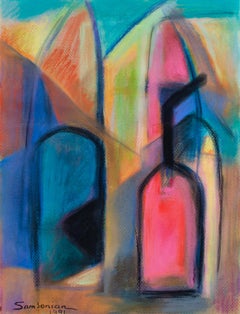
Fauvist Pastel by Iranian American modernist Simon Samsonian
Located in New York, NY
Simon Samsonian (1912-2003)
Untitled, 1991
Poster color and pastel on paper
Sight size: 19 1/2 x 14 3/4 in.
Framed: 28 1/4 x 22 1/4 in.
Signed lower le...
Category
1990s Abstract Abstract Drawings and Watercolors
Materials
Paper, Pastel
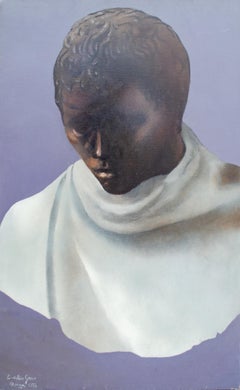
Original Emilio Greco Painting, titled "Roma", 1972
By Emilio Greco
Located in New York, NY
Emilio Greco (Italian, 1913-1995)
Roma, 1972
Oil on canvas
45 1/2 x 28 3/4 in.
Signed and inscribed lower left: Emilio Greco, Roma, 1972
Emilio Greco, (born Oct. 11, 1913, Catania, Italy—died April 5, 1995, Rome), Italian sculptor of bronze and marble figurative works, primarily female nudes and portraits.
At the age of 13, Greco was apprenticed to a stonemason, and he later studied at the Academy of Art in Palermo. Though he began exhibiting in Rome in 1943, he was not well-established until after World War II. His first solo exhibition was held in 1946, and in 1948 he became a teaching assistant at the Artistic Secondary School in Rome.
His subject matter varied little throughout his career. In their refined, elongated forms and assertive balance, his sculpted figures...
Category
1970s Modern Portrait Paintings
Materials
Canvas, Oil
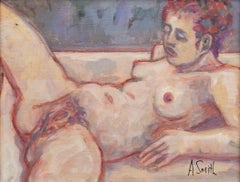
Nude Portrait by WPA Artist Arthur Smith
By Arthur Smith
Located in New York, NY
Arthur Smith (American, 1897-1972)
Untitled (Nude), 20th century
Oil on board
11 1/8 x 14 in.
Framed: 17 x 20 in.
Signed lower right: A Smith
Arthur Sm...
Category
20th Century Modern Nude Paintings
Materials
Oil, Board
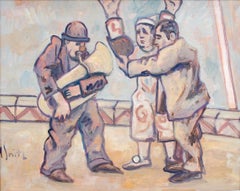
American Circus Scene by WPA Artist Arthur Smith
By Arthur Smith
Located in New York, NY
Arthur Smith (American, 1897-1972)
Untitled (Circus Figures), 20th century
Oil on board
16 x 19 3/4 in.
Framed: 20 x 24 in.
Signed lower left: A Smith
...
Category
20th Century Modern Nude Paintings
Materials
Oil, Board
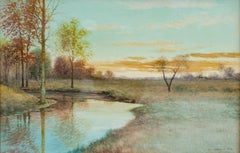
New England Watercolor by American Artist George Howell Gay
By George Howell Gay
Located in New York, NY
George Howell Gay (American, 1858-1931)
Untitled Landscape, c. late 19th-early 20th century
Watercolor on board
12 x 17 3/4 in.
Framed: 16 1/4 x 22 1/4 in.
Signed lower right: Geo Howell Gay
George H. Gay was well known for his watercolor landscapes, seascapes and paintings of rivers and ships, mostly along the shores of New England. Gay also painted snowscapes, but these are scarcer. It is unusual to find an oil painting by this artist, as he worked mainly in watercolor. Some of his works display a tonalist aesthetic.
He was born in Milwaukee, Wisconsin on July 2, 1858, and lived in Chicago and then in 1889, settled in Bronxville, New York. Gay was a pupil of Paul Brown and Henry Elkins in Chicago.
He is known to have exhibited at the National Academy of Design in 1890; Boston Art...
Category
Early 20th Century American Realist Landscape Paintings
Materials
Watercolor, Board
Beautiful large impressionist pastel by Francesco Spicuzza
By Francesco Spicuzza
Located in New York, NY
Francesco Spicuzza (American, 1883-1962)
Untitled Landscape, 20th century
Pastel on paper
Sight size: 24 x 30 in.
Framed: 26 1/4 x 32 3/8 in.
Signed lower right: Spicuzza
Italian-born Francesco Spicuzza was primarily a Wisconsin painter who did portraits, still-lives and local landscapes. He spent the first part of his life in near-poverty to become a painter. An eternal optimist, in 1917, the artist reported: "I am happy and my only ambition now is to paint better and better until I shall have reached the measure of the best of which I am capable." (Spicuzza, 1917, p. 22). His predilection for beach scenes germinated early: reportedly, the five-year-old boy first drew the outlines of his father's fishing boat in the sand on the seashore near their home in Sicily. After setting himself up as a fruit peddler in Milwaukee, Spicuzza's father sent for his family when Francesco was eight years old. For the following six years the boy was unable to attend school because of his job in his father's fruit and vegetable business. The poor lad suffered a caved-in shoulder from carrying a heavy wooden crate.
The young Spicuzza was aided by moral and financial support from a sympathetic Milwaukee businessman named John Cramer, publisher and editor of the Evening Wisconsin, who raised Spicuzza's salary as a newspaper assembler so that he could attend school. In 1899 or 1900, Spicuzza began studying drawing and anatomy under Robert Schade (1861-1912), a painter of panoramas who had been trained in Munich under Carl Theodor von Piloty. Spicuzza was also taught by Alexander Mueller (1872-1935), a product of the Weimar and Munich academies. Mueller realized Spicuzza was a colorist and encouraged that orientation (Madle, 1961). Spicuzza found it beneficial to accept an apprenticeship in a lithographic studio for $8 a week, which demanded most of his time. During the St. Louis Universal Exposition in 1904, still a struggling student, Spicuzza attended the fair, thanks to Cramer. It was not long before Spicuzza received a twenty-five dollar portrait commission, and this inaugural success led to new commissions and allowed him to continue as a painter.
The earliest influences in his work appear to be from Edward H. Potthast and Maurice Prendergast, though Spicuzza never mentioned either artist. Already in August 1910, Spicuzza was described in a newspaper as "one of the most talented of Milwaukee's rising workers." He undoubtedly received lasting inspiration from his one summer study period in 1911 with John F. Carlson at the Art Students League's Summer School in Woodstock, New York. Certainly Spicuzza would have picked up spontaneity in handling the brush from Carlson. Although he executed numerous still-lives and an occasional religious work, Spicuzza is best known for his Milwaukee beach scenes populated with frolicking bathers in multi-colored attire, not unlike the images of Potthast, who used a similar technique. Many of these are small, preparatory works on canvas board executed between 1910 and 1915. Frequently with even greater animation than Potthast, Spicuzza produced moving images of youthful energy and uninhibited child's play. These beach genre scenes reflect the attitude of American impressionists who depicted the more pleasant side of life.
Spicuzza manipulated a successful balance of rich pigment applied in varying degrees of impasto texture with subtle nuances of hue. Working all'aperto, he sought "the soft enticing shades of yellow, blue, green, pink and lavender . . . to get the effects of bright glistening summer air." (L.E.S., n.d.). As a painter whose color not only derived from direct observation but also from a personal theory of color symbolism, Spicuzza traded the linear approach of lithography for dynamic patches of brilliant color. Like Prendergast, he would often tilt the angle of the picture plane to bring the viewer's position above the scene.
Spicuzza was unable to enter the 1913 Armory Show or the Panama-Pacific International Exposition two years later but he did submit work to the annual exhibitions of the Pennsylvania Academy of the Fine Arts and those of the Art Institute of Chicago. His first important award was the bronze medal presented by the St. Paul Institute in 1913, which was followed by the silver medal two years later. Before long, Spicuzza had acquired a greater sense of security in his profession and was described by a writer in International Studio (April 1917) as "an independent artist with an assured future. His pastels and water-colours are poetic and joyous bits of nature with a genuine out-of-door feeling." In 1918, his Spirit of Youth, exhibited at the National Academy of Design, sold for $112.50. Four years later, the artist achieved his greatest local recognition by winning the gold medal from the Milwaukee Art Institute.
Spicuzza spent a great deal of time painting en plein air and by 1925 he began summering at Big Cedar Lake, near West Bend, Wisconsin to gather his subject matter. Easter Morning (1926) owes something to the Symbolist movement, with its figure of Christ appearing over a seascape. During the difficult era of the Depression, patrons came to Spicuzza's aid and during the 40s, he taught housewives, businessmen and students at the Milwaukee Art Institute, the Milwaukee Art Center, and in his private studio. In the following decade, although his kind of art was no longer popular in the "make-it-or-break-it" New York gallery world, Spicuzza enjoyed regular patronage and sales. His beach scenes became more static and he would experiment with modernist techniques. Spicuzza died at the age of seventy-eight.
Sources:
L.E.S., "Do Colors Change a Person's disposition? Experiments of a Milwaukee Artist...
Category
20th Century American Modern Landscape Drawings and Watercolors
Materials
Paper, Pastel
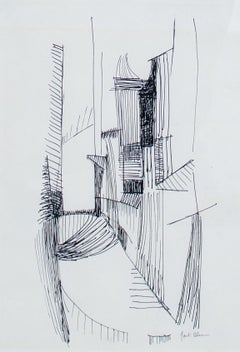
1960s Illegibly signed surrealist ink drawing
Located in New York, NY
Unknown Artist
Untitled, c. 1960s
Ink on paper
Sight size: 10 x 7 in.
Framed: 15 1/4 x 12 1/4 in.
Signed illegibly lower right: Jack Bl...?
Category
1960s Surrealist Abstract Drawings and Watercolors
Materials
Paper, Ink
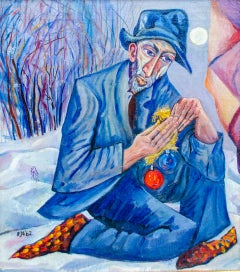
Modern Surrealist Winter Painting by Richard Ericson
By Richard Ericson
Located in New York, NY
Richard Joseph Ericson (American, 1922-2010)
Untitled, 1962
Oil on canvas
18 x 16 in.
Framed: 20 x 18 in.
Signed lower left: RJE '62
Richard Joseph Ericson (b. October 22, 1922-d. November 21, 2010), born in Chicago, Illinois. Son of Claire (b. 1899) and Arthur Ericson (b. 1899). His father was an accountant for a food products company and the family moved to Mount Vernon, Westchester County, New York, when he was a young child.
Ericson, a twin, first began to draw at age five and took up painting in oils at age twelve. He studied at the Art Students League in New York City in 1941, where he received an honorable mention during the annual scholarship competition held that year. During this period he worked as a commercial artist.
After America's entry in World War II Ericson enlisted in the Army in 1942, where he served as a warrant officer. He saw service in North Africa, France, and Germany. While overseas, he did many drawings of the places in which he was stationed. He eventually found himself guarding Italian prisoners of war who had been captured in Sicily and southern Italy. While performing his duties during 1943 and 1944 he found time to paint several important, large scale portraits of the prisoners who were happy to pose for him. As the war concluded he was able to visit Holland to study.
After nearly three years overseas, Ericson returned to America and traveled back to his home town of Chicago where he furthered his studies at the Art Institute of Chicago.
He married in 1948 and moved his young family to Mexico, where he attended Mexico City College. He studied art and exhibited while living there, receiving his Master of Arts degree, cum laude, in 1953.
For a time after his return to the United States he taught art in Dutchess County, New York, where he and his wife built their own house by hand. Eventually the family, which would come to include seven sons, settled in Hicksville, Long Island, New York. Ericson joined the staff of Hicksville High School as the art teacher in 1962, a position he would hold until his retirement in 1983.
As a teacher, Ericson was open to all fields and styles of art, constantly experimenting and experiencing new forms and styles. He had started printmaking in the late 1940's and continued to work in this medium for many years, producing mezzotints, etchings, and wood block prints. He also continued to paint, creating portraits, scenes in southern Dutchess County, and Long Island landscapes - for which he would become well known.
Ericson grew to love the area in which he lived, and depicted it quite often in his paintings. He became enamored with the historic village of Cold Spring...
Category
1960s American Modern Portrait Paintings
Materials
Canvas, Oil
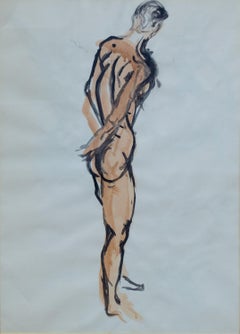
Ross Bleckner Watercolor Figure Painting
By Ross Bleckner
Located in New York, NY
Ross Bleckner (American, b. 1949)
Untitled, c. 1970
Watercolor on paper
Sight size: 21 x 15 in.
Framed: 31 2/3 x 25 3/4 in.
Signed verso: Ross B/ho
Ross Bleckner grew up in Hewlett, Long Island, New York; drawing all the time without being aware that other artists existed. He was the middle child between two sisters; his father manufactures electronic parts He attended New York University where Sol Lewitt, Chuck Close and others were his teachers. He graduated in 1972, then spent a year at the California Institute of Arts. His contacts in the next few years were very fortuitous; Sol Lewitt and Chuck Close, Carl Andre, David Salle, Julian Schnabel, etc.
Bleckner is on the nervous side, beset by self-doubt, insomnia, and gloom. He is unpretentious, although he is bluntly handsome, with olive complexion, and a compact build. He is "10 percent that is superficial and 90 percent that has to do with the depths and that is threatened by living. He is a very complicated individual. He is a very, very morose, deeply feeling, hardworking artist- he takes a lot from within himself - but always, no matter how successful he is, he feels he is going to fall into those depths." 1
Bleckner first exhibited his work in New York in 1974. The following year he was given his first one-man show; he was included in the 1975 Whitney Biennial.. Since about 1985 has addressed many of his paintings to the subject of AIDS- both documenting it as a historical phenomenon and commemorating specific individuals who have died.
Written and submitted by Jean Ershler Schatz, artist and researcher from Laguna Woods, California.
Bio sourced from the Archives of askArt.
Sources include:
Ross Bleckner's Mood Indigo by Lisa Liebmann, in ARTnews, May 1993...
Category
1970s Contemporary Figurative Drawings and Watercolors
Materials
Canvas, Oil
Ross Bleckner Abstract Oil Painting
By Ross Bleckner
Located in New York, NY
Ross Bleckner (American, b. 1949)
Untitled, c. 1970
Oil on canvas
43 x 34 in.
Signed verso: Ross B/ho
Ross Bleckner grew up in Hewlett, Long Island, New York; drawing all the time without being aware that other artists existed. He was the middle child between two sisters; his father manufactures electronic parts He attended New York University where Sol Lewitt, Chuck Close and others were his teachers. He graduated in 1972, then spent a year at the California Institute of Arts. His contacts in the next few years were very fortuitous; Sol Lewitt and Chuck Close, Carl Andre, David Salle, Julian Schnabel, etc.
Bleckner is on the nervous side, beset by self-doubt, insomnia, and gloom. He is unpretentious, although he is bluntly handsome, with olive complexion, and a compact build. He is "10 percent that is superficial and 90 percent that has to do with the depths and that is threatened by living. He is a very complicated individual. He is a very, very morose, deeply feeling, hardworking artist- he takes a lot from within himself - but always, no matter how successful he is, he feels he is going to fall into those depths." 1
Bleckner first exhibited his work in New York in 1974. The following year he was given his first one-man show; he was included in the 1975 Whitney Biennial.. Since about 1985 has addressed many of his paintings to the subject of AIDS- both documenting it as a historical phenomenon and commemorating specific individuals who have died.
Written and submitted by Jean Ershler Schatz, artist and researcher from Laguna Woods, California.
Bio sourced from the Archives of askArt.
Sources include:
Ross Bleckner's Mood Indigo by Lisa Liebmann, in ARTnews, May 1993...
Category
1970s Contemporary Abstract Paintings
Materials
Canvas, Oil
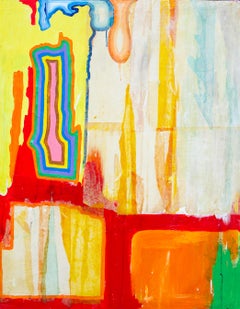
Original Jane Wooster Scott Watercolor - Cat House
By Jane Wooster Scott
Located in New York, NY
Jane Wooster Scott (American, b. 1920)
Untitled (Cat House), 20th century
Watercolor on paper
Sight size: 10 x 14 in.
Framed: 17 x 20 3/4 in.
Signed lower le...
Category
20th Century Folk Art Animal Drawings and Watercolors
Materials
Paper, Watercolor
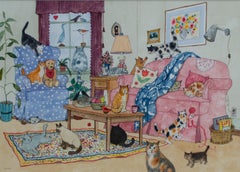
American Primitive Folk Artist Jane Wooster Scott Original Watercolor
By Jane Wooster Scott
Located in New York, NY
Jane Wooster Scott (American, b. 1920)
Untitled (Cats), 20th century
Watercolor on paper
Sight size: 10 x 14 in.
Framed: 17 x 20 3/4 in.
Signed lower left: Wooster
In the "Guinness Book of Records" as one of the most reproduced artists in America, Jane Wooster Scott began copying work by folk artists such as Grandma Moses and gradually evolved into her own style. A turning point for her career was a joint showing at the Ankrum Gallery in Los Angeles with her comedian friend, Jonathan Winters. It was mostly a business crowd, and she sold 40 paintings in an hour.
Scott grew up in the Philadelphia area and moved West following her dream to be a movie star. She quickly learned that goal was not for her, but became the host of a talk show where she interviewed movie stars. Then she married and quit that work, becoming a full-time mother.
Currently (2002) she resides in homes in Los Angeles and Sun Valley...
Category
20th Century Folk Art Animal Drawings and Watercolors
Materials
Paper, Watercolor
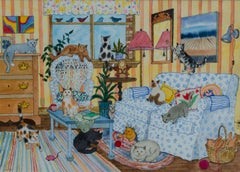
Contemporary Conceptual painting by Daniel Lergon
Located in New York, NY
Daniel Lergon (German, b. 1978)
Untitled, 2012
Lacquer on retroflective fabric
47 1/2 x 39 1/4 in.
Signed verso: Daniel Legon 2012
Provenance:
Galerie...
Category
2010s Contemporary Abstract Paintings
Materials
Lacquer
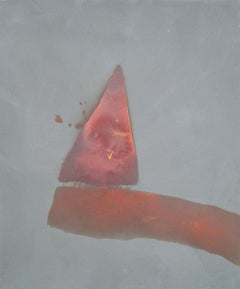
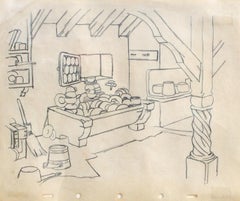
Unknown American Modernism School - Drawing of a Kitchen Interior
Located in New York, NY
Unknown American Modernism School
Untitled (Kitchen), c. 1930
Pencil on paper
Sight size: 10 x 12 in.
Framed: 16 3/4 x 20 3/4 in.
Category
1930s American Modern Figurative Drawings and Watercolors
Materials
Paper, Pencil
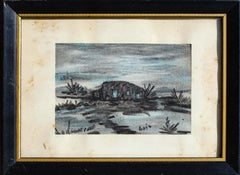
Two Navajo Colored Pencil drawings by Lois Rogers, New Mexico
Located in New York, NY
Two Navajo Colored Pencil drawings by Lois Rogers, New Mexico.
Sight size: 3 x 4 2/3 in.
Framed: 5 3/4 x 7 1/8 in.
Both signed lower right, and inscribed verso: colored pencil, Lo...
Category
1950s Landscape Drawings and Watercolors
Materials
Paper, Color Pencil
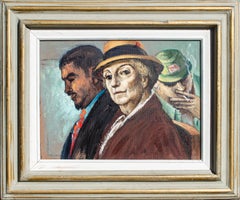
Unique Painting By Albert Pels WPA Artist!
By Albert Pels
Located in New York, NY
Albert Pels (1910-1998)
Painting of a group of figures, c. 20th century.
12 x 16 in.
Framed dimensions: 19 1/2 x 23 1/4 in.
Albert Pels was an art educator and painter of figures, genre scenes, urban and rural images, and illustration. He also did murals and worked in the mediums of oil, fresco, and watercolor. He was born on May 7, 1910, in Cincinnati, Ohio and died at the age of eighty-eight on January 25, 1998 in New York City. Albert Pels was the son of Samuel and Frieda Pels. He had two children, Joan Barbara and Richard J.A. with his first wife Gertrude Ethel Jaeckel. He later married Yolanda Zemfler, a painter of impressionist art.
While in Ohio, Pels attended the Cincinnati Art Academy in 1931 where he won several scholarships. After moving to New York, he continued his education at the Art Students League, Beaux Arts and the American School. At the Art Students League, Pels studied under Thomas Hart Benton, Kenneth Hayes Miller, and Alexander Brook. Under the tutelage of these mentors, Pels evolved his technique and style.
Pels was a member of the National Society of Mural Painters, the Salmagundi Club, and the Society of Independent Artists. He was on the board of directors of the Arts Students League in 1939, as well as, on the board the WPA Artists...
Category
20th Century American Realist Figurative Paintings
Materials
Canvas, Oil
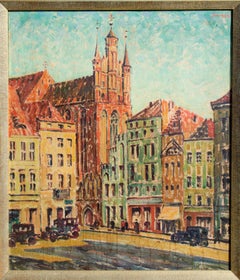
Beautiful illegibly signed Eastern European oil painting of a City
Located in New York, NY
Here is a beautiful European painting illegibly signed - a true mystery work.
Category
20th Century Modern Figurative Paintings
Materials
Oil
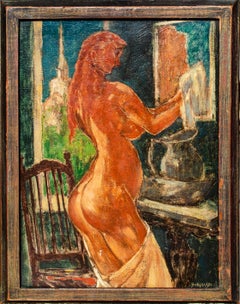
Modernist Nude Portrait by Henri Burkhard
By Henri Burkhard
Located in New York, NY
Henri Burkhard, Born in New York in 1892, began his studies at the Art Students league in New York and then pursued international studies at the Académie Julian, Acadêmie Colarissi, and Académie de la Grande Chaumière, Pariss.
Once the artist returned to New York, he began to exhibit frequently frequently at the Whitney Museum of American Art in 1926-36; the Corcoran Gallery, Art Institute of Chicago, and the Pennsylvania Academy of Fine Arts in the 1930's. Works by the artist have been handled and sold over the last hundred years at major American auction houses and dealers, such as Heritage...
Category
1930s Fauvist Nude Paintings
Materials
Oil, Wood Panel
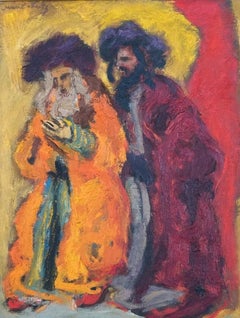
Rabbis
By Mane Katz
Located in New York, NY
MANE-KATZ
RABBIS, c. 1935
Oil on canvas
18 H. x 14 W. 1/2 in. (45.5 x 35.8 cm.)
Signed
PROVENANCE
Dominion Gallery, Montreal
Christies, New York, November 04, 1982. Lot 177: $11,000
Private Collection, New Jersey, 1982-2021
Estate of the above, 2021.
Raised in an orthodox Jewish family in Russia, Mane-Katz was born in the Ukraine and became an early 20th-century artist, known especially for portraits and paintings with Jewish themes. From childhood, he had been influenced by stories of Jewish mysticism, which was reflected in his paintings.
He had a peripatetic life between Russia, France, Israel, and America. He first studied art in Kiev at the Beaux Arts Academy, and in 1913, went to Paris where he associated with Chaim Soutine and Marc Chagall and continued his art studies there at the Beaux Arts Academy.
During World War I, he tried to join the Foreign Legion but was rejected because he was too short. He went back in Russia again, this time joining the Soviet Revolution but rejected the cause because he was so horrified by Josef Stalin. He worked briefly for the Russian ballets, and in 1921, he returned to Paris where in 1927 he took French citizenship. For the next twelve years, he traveled widely, showing his art work and doing many paintings.
In 1939, as World War II was breaking out, he was drafted by the French and then was taken prisoner by the Germans. He escaped and went to the United States and remained there until 1945, exhibiting his paintings at Katia Granoff Gallery and Wildenstein Gallery. After the war, he returned to Paris where he had exhibited in the Salons. In Paris to the end of his career, he worked happily, painting hundreds of portraits of rabbis...
Category
Early 20th Century Fauvist Figurative Paintings
Materials
Canvas, Oil
$12,500