Keith Sheridan, LLC Prints and Multiples
to
43
320
25
3
Overall Width
to
Overall Height
to
151
24
18
16
13
11
7
6
1
16
13
12
12
9
10
15
322
1
4
13
75
86
75
11
11
14
5
2
6
188
152
2
169
87
81
62
46
45
25
23
22
16
16
15
14
11
10
9
9
9
8
8
105
86
72
49
28
1
348
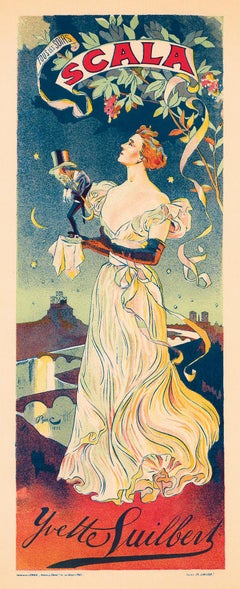
Yvette Guilbert, SCALA
— Fin de Siècle, Paris
Located in Myrtle Beach, SC
BAC (Ferdinand Bach), 'Yvette Guilbert, Tous les Soirs SCALA', vintage color lithograph, 1893. Signed, dated, and titled in the stone.
A superb, richl...
Category
1890s Art Nouveau Figurative Prints
Materials
Lithograph
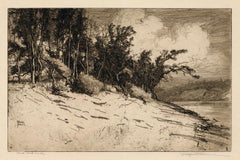
Black Hawk Country
— Early 20th-Century American Impressionism
Located in Myrtle Beach, SC
Ralph M. Pearson, 'Black Hawk Country', etching, second state, edition not stated, 1912. Signed, and titled in pencil. Inscribed 'Rock River Series Second...
Category
1910s American Impressionist Landscape Prints
Materials
Etching
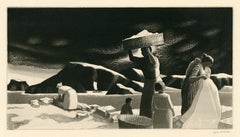
12th Street Walls — 1940s New York City
By Armin Landeck
Located in Myrtle Beach, SC
Armin Landeck, '12th Street Walls', etching, edition 100, first state, 1944, Kraeft 93. Signed in pencil. Initialed in the plate lower left. A superb, early impression, with all the ...
Category
1940s American Realist Landscape Prints
Materials
Drypoint

Humming Birds and Orchids
— Vintage White Line Color Woodcut
Located in Myrtle Beach, SC
Wuanita Smith, 'Humming Birds and Orchids', white-line color woodcut, circa 1930, edition 50. Signed and titled in pencil. Annotated '50 edition', 'no 5'...
Category
1930s American Modern Figurative Prints
Materials
Woodcut

Tropical Wash Day
— Mid-Century Modernism
Located in Myrtle Beach, SC
'Tropical Wash Day', aquatint, edition 100, 1946. Signed in pencil. Signed and dated in the plate, lower left. A superb, richly-inked impression, on heavy cream wove paper, with full...
Category
1940s American Modern Figurative Prints
Materials
Aquatint
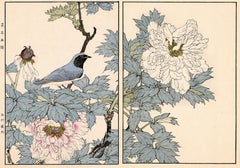
Tree Peony and Blue and White Flycatcher — 19th century woodblock print
Located in Myrtle Beach, SC
Imao Keinen, 'Tree Peony and Blue and White Flycatcher' from the series 'Birds and Flowers of the Four Seasons', color woodblock Oban dipty...
Category
1880s Naturalistic Figurative Prints
Materials
Woodcut

$440 Sale Price
20% Off
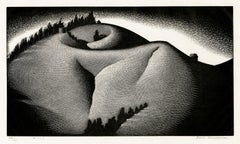
Hill
— American Modernism, California
By Paul Landacre
Located in Myrtle Beach, SC
Paul Landacre, 'Hill', wood engraving, 1936, edition 60 (only 54 printed); only 2 impressions printed in a second edition of 150. Signed, titled, and numbered '49/60' in pencil. Wien...
Category
1930s American Modern Landscape Prints
Materials
Woodcut
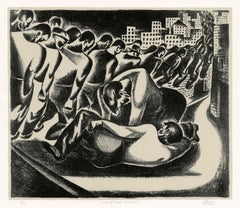
Unemployed Marchers
— American Modernism, WPA
By Leon Bibel
Located in Myrtle Beach, SC
Leon Bibel, 'Unemployed Marchers', 2-color lithograph, c. 1938, edition 25. Signed, titled, and numbered '2/25' in pencil. A fine, richly-inked impression on off-white, wove paper, w...
Category
1930s American Modern Figurative Prints
Materials
Lithograph
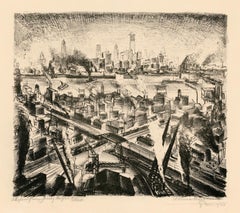
Skyline from Jersey Heights
— 1930s Modernism
By Adriaan Lubbers
Located in Myrtle Beach, SC
Adriaan Lubbers, 'Skyline from Jersey Heights', lithograph, 1930, edition 25. Signed, titled, and numbered '4/XXV' in pencil. Dated 'Paris 1930' in pencil. A fine impression, on crea...
Category
1930s Modern Figurative Prints
Materials
Lithograph
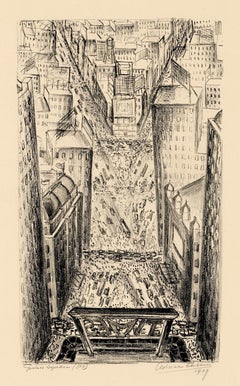
Times Square
— 1920s Modernism
By Adriaan Lubbers
Located in Myrtle Beach, SC
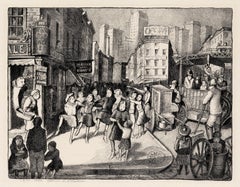
Adriaan Lubbers, 'Times Square', lithograph, 1929, edition 50. Signed, dated, titled, and editioned '(50)' in pencil. A fine impression, on cream wove paper, with full margins (2 1/2...
Category
1920s Modern Figurative Prints
Materials
Lithograph
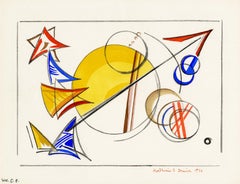
Variation 8, Vol. I
— from the series
1 to 40 Variations
By Katherine S. Dreier
Located in Myrtle Beach, SC
Katherine S. Dreier, 'Variation 8, Vol. 1' from '1 to 40 Variations', lithograph with pochoir and hand-coloring, 1934, edition 65. Stenciled signature and date, lower right. Annotate...
Category
1930s American Modern Abstract Prints
Materials
Lithograph
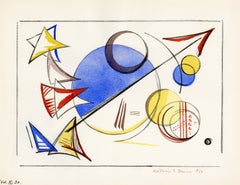
Variation 30, Vol. II
— from the series
1 to 40 Variations
By Katherine S. Dreier
Located in Myrtle Beach, SC
Katherine S. Dreier, 'Variation 30, Vol. II' from '1 to 40 Variations', lithograph with pochoir and hand-coloring, 1934, edition 65. Stenciled signature and date, lower right. Annota...
Category
1930s American Modern Abstract Prints
Materials
Lithograph
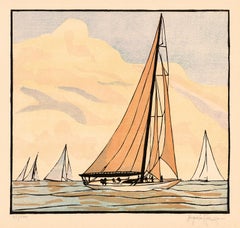
The Yankee
— America
s Cup, 1934
By Jacques La Grange
Located in Myrtle Beach, SC
Jacques La Grange, 'The Yankee', color woodcut, edition 500, 1934. Signed and numbered '25/500' in pencil. A fine impression, with fresh colors, on cream wove paper, with margins (1 1/8 to 1 1/4 inches), in excellent condition. A work from La Grange’s celebrated series of woodcuts 'Drama and Color in the America's Cup Races'. Image size 10 x 10 11/16 inches (254 x 271 mm); sheet size 12 1/4 x 13 1/4 inches (311 x 337 mm). Archivally matted to museum standards, unframed.
When the artist created this print in 1934, the 'Yankee' was one of the most promising yachts eligible for the America's Cup but ultimately 'Rainbow' was chosen to defend against England's 'Endeavor' in that year's race. The 'Endeavor' was built for Thomas Sopwith who used his aviation design expertise to ensure the yacht was the most advanced of its day with a steel hull and mast. She was launched in 1934 and won many races in her first season but the Cup challenge was blighted by a strike of Sopwith's professional crew prior to departing for America. Forced to rely mainly on keen amateurs, who lacked the necessary experience, the campaign failed. 'Rainbow' won the series 4–2. This was one of the most contentious of the America's Cup battles and prompted the headline "Britannia rules the waves and America waives the rules."
ABOUT THE ARTIST
Jacques La Grange was born in Clanwilliam (near Cape Town) in South Africa in 1895. He studied at London University and later immigrated to the United States. La Grange established himself as a painter, illustrator, and printmaker specializing in nautical subjects. He and his wife, Helen La Grange, published 'Drama and Color in the America's Cup Races' in 1934 and 'Clipper Ships of America and Great Britain 1833-1869', in 1936. Both were deluxe hardcover limited edition volumes with signed original color woodblock prints. La Grange had solo exhibitions at the Buchanan Gallery in 1929; the Babcock Gallery and the 56th Street Gallery, New York, in 1930; and at the Nicholas Roerich...
Category
1930s American Modern Figurative Prints
Materials
Woodcut
$560 Sale Price
20% Off
Vague Lumineuse
(Luminescent Wave) — Late 19th Century Surrealism
Located in Myrtle Beach, SC
Théophile Pierre Wagner, 'Vague Lumineuse' (Luminescent Wave), lithograph, edition not stated but small, c. 1895. Signed and titled in pencil. Initialed in the stone, lower left. A f...
Category
1890s Surrealist Nude Prints
Materials
Lithograph
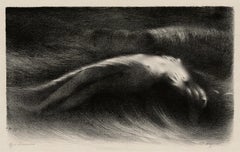
Rendez-Vous — Early 20th-Century Modernism
By Boris Lovet-Lorski
Located in Myrtle Beach, SC
Boris Lovet-Lorski, Untitled (Rendez-Vous), lithograph, edition 250, 1929. Signed in pencil. Signed in the stone, lower right. From a suite of 10 lithographs published by the artist ...
Category
1920s American Modern Nude Prints
Materials
Lithograph
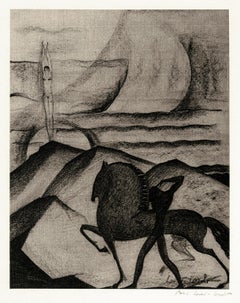
Broken Carousel
— Mid-Century American Symbolism
By Benton Murdoch Spruance
Located in Myrtle Beach, SC
'Broken Carousel', color lithograph, 1950, edition 35, Fine and Looney 285. Signed, titled, and numbered '18/35' in pencil. Initialed in the stone, lower right. A fine, richly-inked ...
Category
1950s American Modern Figurative Prints
Materials
Lithograph
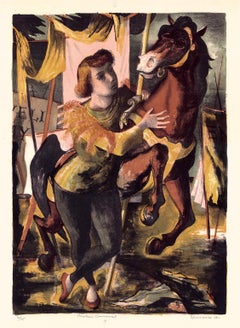
Le Paradis Terrestre
(Paradise on Earth) — French Symbolism
By Edouard Goerg
Located in Myrtle Beach, SC
Edouard Goerg, 'Le Paradis Terrestre' (Paradise on Earth), etching, 1931, edition 40. Signed, titled, and numbered '3/40' in pencil. A fine richly-inked impression, on heavy, cream w...
Category
1930s Symbolist Figurative Prints
Materials
Etching
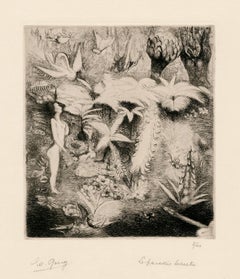
Hurdy Gurdy Ballet
— New York City American Scene, Ashcan School
By Glenn O. Coleman
Located in Myrtle Beach, SC
Glenn O. Coleman, 'Hurdy Gurdy Ballet', lithograph 1928, edition 50. Signed, dated, and numbered '14/50' in pencil. Titled in the bottom left margin, in an...
Category
1920s Ashcan School Figurative Prints
Materials
Lithograph
$3,840 Sale Price
20% Off
Harbor with Sailboats — Early 20th-Century Modernism
By George Josimovich
Located in Myrtle Beach, SC
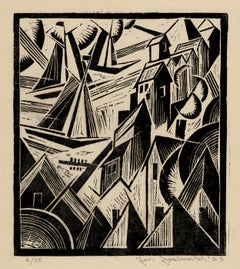
George Josimovich, Untitled (Harbor with Sailboats) ', linocut, 1923, edition 35. Signed, dated, and annotated '4/35' in pencil. Initialed 'G J' in ...
Category
1920s American Modern Figurative Prints
Materials
Linocut
Commuters
— Early 20th-Century Modernism
By George Josimovich
Located in Myrtle Beach, SC
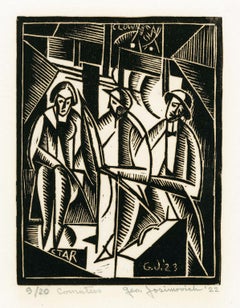
George Josimovich, 'Commuters', linocut, 1922-23, edition 20. Signed, dated '22, titled, and annotated '9/20' in pencil. Initialed in the block 'G.J....
Category
1920s American Modern Figurative Prints
Materials
Linocut
Carp and Water Chestnut
— Showa lifetime impression
By Ohara Koson
Located in Myrtle Beach, SC
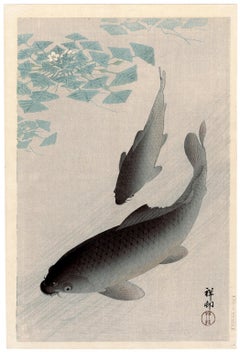
Ohara Koson (1877-1945), 'Carp and Water Chestnut', color woodblock print, 1926. A fine impression, with fresh colors, on cream Japan paper; the full sheet, in excellent condition.
Signed 'Koson' with the artist’s red seal 'Koson'. Published by Watanabe Shozaburo. With the Watanabe 'C' seal in the lower right margin, indicating a lifetime impression printed between 1929-1942.
Image size 13 1/2 x 7 1/4 inches (343 x 184 mm); sheet size 14 1/2 x 7 1/2 inches (368 x 191 mm). Archivally sleeved, unmatted.
Literature: 'Crows, Cranes, and Camellias: The Natural World of Ohara Koson', Newland, Amy R.: Jan Perree & Robert Schaap, Leiden: Hotei Publishing, 2001. S39.1, pl 169.
Collections: National Museum of Asian Art (Smithsonian), Smart Museum of Chicago (University of Chicago).
In Japanese art, the carp represents good luck and good fortune.
ABOUT THE ARTIST
Koson Ohara...
Category
1920s Showa Animal Prints
Materials
Woodcut
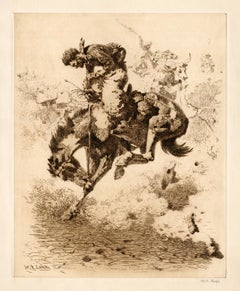
Foul Rope (Left)
— Early American Southwest Rodeo
By William Robinson Leigh
Located in Myrtle Beach, SC
William Robinson Leigh, 'Foul Rope (Left)', etching, c. 1920, edition unknown but small. Signed in pencil and signed in the plate, lower left. A superb, richly-inked impression, in dark brown ink, on buff wove Umbria paper, the full sheet with margins (1 1/2 to 2 3/4 inches); slight toning at the sheet edges, otherwise in excellent condition. Very scarce. Archivally matted to museum standards, unframed.
Image size 14 7/8 x 11 15/16 inches (378 x 303 mm); sheet size 20 3/8 x 15 3/8 inches (518 x 391 mm).
ABOUT THE ARTIST
Born near Falling Waters, West Virginia, on a plantation a year after the Civil War and raised in Baltimore, William Robinson Leigh (1866 - 1955) became one of the foremost painters of the American West. His career spanning some seventy-five years, Leigh created some of the most iconic depictions of the Western landscape, with admirers referring to him as ‘The Sagebrush Rembrandt.’
The son of impoverished Southern aristocrats, Leigh received his first art training at age 14 from Hugh Newell at the Maryland Institute, where he was regarded as the best student in his class. From 1883 to 1895, he studied in Europe, mainly at the Royal Academy in Munich with Ludwig Loefftz. From 1891 to 1896, he painted six cycloramas or murals in the round, a giant German panorama.
In 1896, Leigh began working as a magazine illustrator for Scribner's and Collier's Weekly Magazine in New York City. He also painted portraits, landscapes, and genre scenes.
Leigh's trips to the Southwest began in 1906 when he agreed to paint the Grand Canyon with William Simpson, Santa Fe Railway advertising manager, in exchange for free transportation West. In 1907, he completed his Grand Canyon painting, which led to more commissions and an extensive painting trip through Arizona and New Mexico. These travels inspired him to paint western subjects for the next 50 years, and his primary interests were the Hopi and Navajo Indians.
In 1910, he traveled to Wyoming, where he painted in Yellowstone Park and created sketches, many of which he later converted into large canvases such as ‘Lower Falls of the Yellowstone’ (1915) and ‘Grand Canyon of the Yellowstone’ (1911).
In 1926, he traveled to Africa at the invitation of Carl Akeley for the American Museum of Natural History, and from this experience, wrote and illustrated 'Frontiers of Enchantment: An Artist's Adventures in Africa'. In 1933, he wrote and illustrated 'The Western Pony'. His adventures were chronicled in several popular magazines, including Life, the Saturday Evening Post, and Colliers.
For many years, Grand Central Art Galleries at the Biltmore Hotel handled his work exclusively in New York. In 1953, Leigh was elected an associate member of the National Academy of Design and became a full Academician in 1955.
In March 1999, the Historical Center of Cody, Wyoming, held an exhibition of his field sketches and finished works depicting his experiences near Cody early in the century. Between 1910 and 1921, when he often painted in the Carter Mountain vicinity, these years were considered pivotal to his artistic development and devotion to the Western landscape.
Leigh's work is held in many museum collections of American Western art...
Category
1920s Realist Animal Prints
Materials
Etching
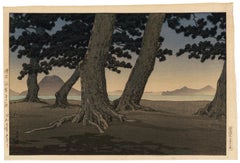
The Beach at Kaiganji in Sanuki Province
— Lifetime Impression
By Kawase Hasui
Located in Myrtle Beach, SC
Kawase Hasui, 'The Beach at Kaiganji in Sanuki Province (Sanuki Kaiganji no hama),' from the series Collected Views of Japan II, Kansai Edition (Nihon fûkei shû II Kansai hen), woodblock print, 1934. A very fine, atmospheric impression, with fresh colors; the full sheet, in excellent condition. Signed 'Hasui' with the artist’s seal 'Kawase', lower left. Published by Watanabe Shozaburo with the Watanabe ‘D’ seal indicating an early impression printed between 1931 - 1941. Stamped faintly 'Made in Japan' in the bottom center margin, verso.
Horizontal ôban; image size 9 3/8 x 14 1/4 inches (238 x 362 mm); sheet size approximately 10 5/16 x 15 1/2 inches ( 262 x 394 mm).
Collections: Art Institute of Chicago; Austrian Museum of Applied Arts (Vienna); Honolulu Museum of Art; Museum of Fine Arts, Boston; National Museum in Warsaw; University of Wisconsin-Madison.
ABOUT THE ARTIST
“I do not paint subjective impressions. My work is based on reality...I can not falsify...(but) I can simplify…I make mental impressions of the light and color at the time of sketching. While coloring the sketch, I am already imagining the effects in a woodblock print.” — Kawase Hasui
Hasui Kawase...
Category
1930s Showa Landscape Prints
Materials
Woodcut
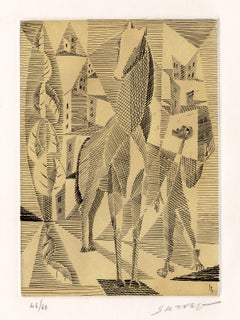
Le Cheval (The Horse) — Mid-Century Cubism
By Léopold Survage
Located in Myrtle Beach, SC
Léopold Survage, 'Le Cheval' (The Horse), color etching, edition 60, 1953. Signed and numbered '46/60' in pencil. Initialed in the plate, lower right. A superb, richly-inked impressi...
Category
1950s Surrealist Figurative Prints
Materials
Etching
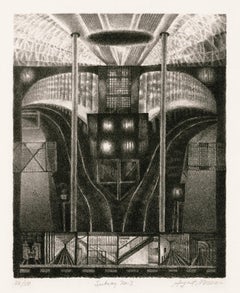
Subway No. 3
— Mid-century Modernism, New York City
By August Mosca
Located in Myrtle Beach, SC
August Mosca, 'Subway No. 3', lithograph, c. 1946-56, edition 50. Signed, titled and numbered '28/50' in pencil. A fine, richly-inked impression on off-white, wove paper; the full sh...
Category
Mid-20th Century American Modern Abstract Prints
Materials
Lithograph
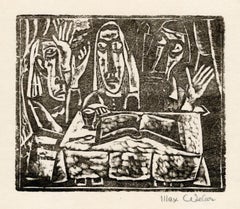
Feast of Passover
— American Expressionism
By Max Weber
Located in Myrtle Beach, SC
Max Weber, Untitled 'Feast of Passover', woodcut, 1920, edition proofs—this impression from the edition of 25 printed in 1956, Rubenstein 30. Signed in pencil...
Category
1920s Expressionist Figurative Prints
Materials
Woodcut
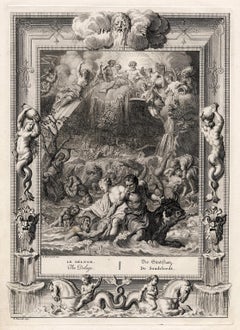
The Deluge
from
The Temple of the Muses
— 18th Century Engraving
By Bernard Picart
Located in Myrtle Beach, SC
Bernard Picart, 'The Deluge' from 'The Temple of the Muses', engraving, 1730. Signed in the plate and dated
'1730' lower left. Titled in French, English, German, and Dutch. A superb...
Category
1730s Baroque Figurative Prints
Materials
Engraving
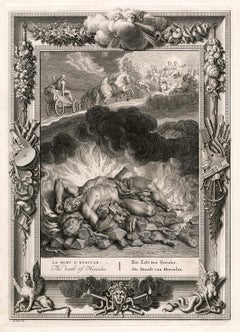
The Death of Hercules
from
The Temple of the Muses
— 18th Century Engraving
By Bernard Picart
Located in Myrtle Beach, SC
Bernard Picart, 'The Death of Hercules' from 'The Temple of the Muses', engraving, 1730. Signed in the plate, lower left. Titled in French, English, German, and Dutch. A superb, rich...
Category
1730s Baroque Figurative Prints
Materials
Engraving
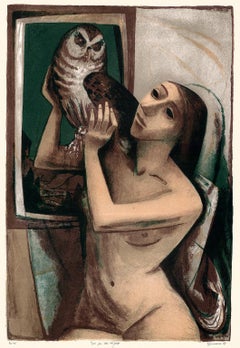
Eyes for the Night
— Mid-Century American Surrealism
By Benton Murdoch Spruance
Located in Myrtle Beach, SC
Benton Spruance, 'Eyes for the Night', color lithograph, 1948, edition 35, Fine and Looney 261. Signed, dated, and titled, and annotated 'Ed 35' in pencil. A fine impression with fresh colors, on cream wove paper; the full sheet with margins (1 to 1 3/8 inches), in excellent condition. Printed by master lithographer Theodore Cuno. Archivally matted to museum standards, unframed.
Image size 19 x 13 inches; sheet size 21 1/8 x 15 1/4 inches.
Selected by the artist for his retrospective exhibition 'Benton Spruance: Lithographs...
Category
1940s American Modern Figurative Prints
Materials
Lithograph
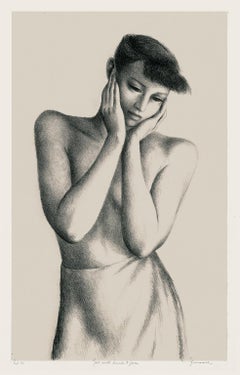
Girl with Hands to Face
— Mid-century Modernism
By Benton Murdoch Spruance
Located in Myrtle Beach, SC
Benton Spruance, 'Girl with Hands to Face', two-color lithograph, 1940, edition 30, Fine and Looney 180. Signed, titled, and annotated 'Ed. 30' in pencil. A superb impression, on cr...
Category
1940s American Modern Figurative Prints
Materials
Lithograph
$960 Sale Price
20% Off
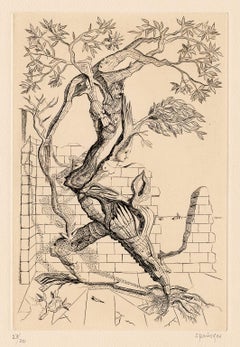
Arbre-Homme
(Tree-Man) —Mid-Century European Surrealism
By Ferdinand Springer
Located in Myrtle Beach, SC
Ferdinand Springer, 'Arbre-Homme', engraving, 1945, edition 23. Signed and numbered '23/20' in pencil.
A fine, richly-inked impression, on heavy, b...
Category
1940s Surrealist Figurative Prints
Materials
Engraving
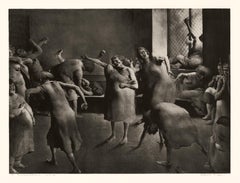
Psychopathic Ward
— Socially-Conscious Realism
By Robert Riggs
Located in Myrtle Beach, SC
Robert Riggs, 'Psychopathic Ward', 2-color lithograph, c. 1940, edition c. 50, Beall 60, Bassham 78. Signed, titled, and numbered '14' in pencil. Signed in the stone, lower right. A ...
Category
1940s Realist Figurative Prints
Materials
Lithograph
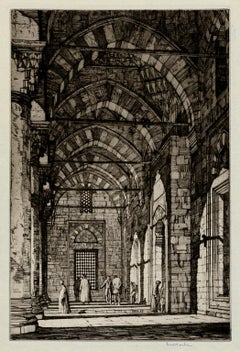
Mosque of the Sultan Bayazid, Constantinople — Vintage Realism
By Louis Conrad Rosenberg
Located in Myrtle Beach, SC
Louis Conrad Rosenberg, 'Mosque of the Sultan Bayazid, Constantinople', etching, 1927. Signed in pencil. Initialed and dated in the plate, lower left. A fine, richly-inked impression...
Category
1920s American Realist Figurative Prints
Materials
Drypoint
Search
— Australian Romanticism
Located in Myrtle Beach, SC
Thomas Balfour Garrett, 'Search', monotype in colors, c. 1910, a unique impression. Signed and titled in pencil. A superb, painterly impression with fresh colors on off-white, wove p...
Category
1910s Romantic Figurative Prints
Materials
Monotype
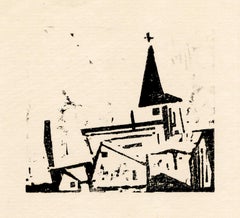
Church with Star
– Artist
s Personal Letterhead, Bauhaus Modernism
By Lyonel Feininger
Located in Myrtle Beach, SC
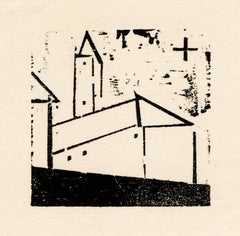
Lyonel Feininger, 'Church with Star (Kirche mit Stern)', woodcut, 1936, one of a small but unknown number of letterhead proofs; Prasse W265. Annotated 'W 265' (Feininger catalogue number) and inventory no. '2808' in pencil, in the bottom right sheet corner. A fine impression, on cream, laid letterhead stock; hinge remains on the left and right top sheet edges, verso, in excellent condition. Very scarce.
Image size 2 3/8 x 2 3/8 inches; sheet size 10 1/16 x 7 1/16 inches. Archivally sleeved, unmatted.
ABOUT THE ARTIST
Lyonel Feininger (1871-1956) was born in New York City into a musical family—his father was a violinist and composer, his mother was a singer and pianist. He studied violin with his father, and by the age of 12, he was performing in public, but he also drew incessantly, most notably the steamboats and sailing ships on the Hudson and East Rivers, and the landscape around Sharon, Conn., where he spent time on a farm owned by a family friend. At the age of 16 he left New York to study music and art in Germany, from where his parents emigrated. Drawn more to the visual arts, he attended schools in Hamburg, Berlin, and Paris from 1887 to 1892.
After completing his studies, Feininger began his artistic career as a cartoonist and illustrator, his originality leading him to great success. In 1906, after working for a dozen years in Germany, he was offered a job as a cartoonist at the Chicago Tribune, the largest circulation newspaper in the Midwest. He worked there for a year, inventing what became the standard design for the comic strip: in the words of John Carlin, “an overall pattern. . . that allowed the page to be read both as a series of elements one after the other, like language and as a group of juxtaposed images, like visual art.” His originality did not end there: he went on to become one of the great abstract painters. Like Kandinsky, music was his model, but Kandinsky only knew music from the outside—as a listener (inspired initially by Wagner, then by Schoenberg)—while Feininger knew it from the inside. He lived in Paris from 1906 to 1908, during which time he met and was influenced by the work of progressive painters Robert Delaunay and Jules Pascin, as well as that of Paul Cezanne and Vincent van Gogh. He began painting full-time, developing his distinctive Iyrical style based on Cubist and Expressionist idioms and a concern for the emotive qualities of light and color. He exhibited with the Der Blaue Reiter group in 1913, and in 1917, he had his first solo exhibition at Galerie Der Sturm in Berlin.
One year after his solo exhibition, in 1918, Feininger began making woodcuts. He became enamored with the medium, producing an impressive 117 in his first year of exploring the printmaking medium. In 1919 at the invitation of the architect Walter Gropius, he was appointed the first master at the newly formed Staatliches Bauhaus in Weimar. His woodcut of a cathedral crowned...
Category
1930s Bauhaus Figurative Prints
Materials
Woodcut
Church with House and Tree
– Artist
s Personal Letterhead, 1940s Modernism
By Lyonel Feininger
Located in Myrtle Beach, SC
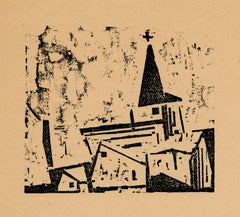
Lyonel Feininger, 'Church with House and Tree (Kirche mit Haus und Baum)', woodcut, 1936, one of a small but unknown number of letterhead proofs; Prasse W290 IV. Annotated 'PW 290 state IV / IV 3669', in pencil, in the bottom right sheet corner. With the artist's typed address and date adjacent to the letterhead image: 'Falls Village, Connecticut September 26th, 1940'.
A fine impression, on buff, wove letterhead stock; several small losses, and tears, in the sheet edges (not affecting the image area); a crease in the bottom right sheet edge, otherwise in good condition. Very scarce.
Image size: 2 3/8 x 2 3/4 inches; sheet size 11 x 8 5/8 inches. Archivally sleeved, unmatted.
Feininger moved from Germany to New York City in 1938 and began spending his summers in Falls Village in 1940.
Exhibited: 'Lyonel Feininer, Woodcuts Used As Letterheads'; Associated American Artists; Feb 4 - March 2, 1974; New York, NY.
ABOUT THE ARTIST
Lyonel Feininger (1871-1956) was born in New York City into a musical family—his father was a violinist and composer, his mother was a singer and pianist. He studied violin with his father, and by the age of 12, he was performing in public, but he also drew incessantly, most notably the steamboats and sailing ships on the Hudson and East Rivers, and the landscape around Sharon, Conn., where he spent time on a farm owned by a family friend. At the age of 16 he left New York to study music and art in Germany, from where his parents emigrated. Drawn more to the visual arts, he attended schools in Hamburg, Berlin, and Paris from 1887 to 1892.
After completing his studies, Feininger began his artistic career as a cartoonist and illustrator, his originality leading him to great success. In 1906, after working for a dozen years in Germany, he was offered a job as a cartoonist at the Chicago Tribune, the largest circulation newspaper in the Midwest. He worked there for a year, inventing what became the standard design for the comic strip: in the words of John Carlin, “an overall pattern. . . that allowed the page to be read both as a series of elements one after the other, like language and as a group of juxtaposed images, like visual art.” His originality did not end there: he went on to become one of the great abstract painters. Like Kandinsky, music was his model, but Kandinsky only knew music from the outside—as a listener (inspired initially by Wagner, then by Schoenberg)—while Feininger knew it from the inside. He lived in Paris from 1906 to 1908, during which time he met and was influenced by the work of progressive painters Robert Delaunay and Jules Pascin, as well as that of Paul Cezanne and Vincent van Gogh. He began painting full-time, developing his distinctive Iyrical style based on Cubist and Expressionist idioms and a concern for the emotive qualities of light and color. He exhibited with the Der Blaue Reiter group in 1913, and in 1917, he had his first solo exhibition at Galerie Der Sturm in Berlin.
One year after his solo exhibition, in 1918, Feininger began making woodcuts. He became enamored with the medium, producing an impressive 117 in his first year of exploring the printmaking medium. In 1919 at the invitation of the architect Walter Gropius, he was appointed the first master at the newly formed Staatliches Bauhaus in Weimar. His woodcut of a cathedral crowned...
Category
1930s Bauhaus Figurative Prints
Materials
Woodcut
Three Masted Ship, 2
– Artist
s Personal Letterhead, Bauhaus Modernism
By Lyonel Feininger
Located in Myrtle Beach, SC
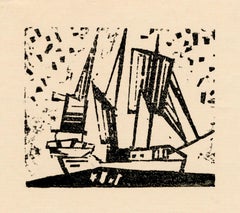
Lyonel Feininger, 'Three Masted Ship, 2 (Dreimastiges Schiff, 2)', woodcut, 1937, one of a small but unknown number of letterhead proofs; Prasse W296. Feininger estate stamp and inventory no. 'W 865' in pencil, bottom left sheet corner. Annotated 'W 296' and 'on block : 3702a' in pencil, bottom right sheet corner.
A fine impression, on cream, laid, letterhead stock; hinge remains on the left and right top sheet edges, verso, in excellent condition. Very scarce.
Image size 2 1/4 x 2 11/16 inches; sheet size 10 x 6 3/4 inches. Archivally sleeved, unmatted.
Exhibited: 'Lyonel Feininer, Woodcuts Used As Letterheads'; Associated American Artists; Feb 4 - March 2, 1974; New York, NY.
ABOUT THE ARTIST
Lyonel Feininger (1871-1956) was born in New York City into a musical family—his father was a violinist and composer, his mother was a singer and pianist. He studied violin with his father, and by the age of 12, he was performing in public, but he also drew incessantly, most notably the steamboats and sailing ships on the Hudson and East Rivers, and the landscape around Sharon, Conn., where he spent time on a farm owned by a family friend. At the age of 16 he left New York to study music and art in Germany, from where his parents emigrated. Drawn more to the visual arts, he attended schools in Hamburg, Berlin, and Paris from 1887 to 1892.
After completing his studies, Feininger began his artistic career as a cartoonist and illustrator, his originality leading him to great success. In 1906, after working for a dozen years in Germany, he was offered a job as a cartoonist at the Chicago Tribune, the largest circulation newspaper in the Midwest. He worked there for a year, inventing what became the standard design for the comic strip: in the words of John Carlin, “an overall pattern. . . that allowed the page to be read both as a series of elements one after the other, like language and as a group of juxtaposed images, like visual art.” His originality did not end there: he went on to become one of the great abstract painters. Like Kandinsky, music was his model, but Kandinsky only knew music from the outside—as a listener (inspired initially by Wagner, then by Schoenberg)—while Feininger knew it from the inside. He lived in Paris from 1906 to 1908, during which time he met and was influenced by the work of progressive painters Robert Delaunay and Jules Pascin, as well as that of Paul Cezanne and Vincent van Gogh. He began painting full-time, developing his distinctive Iyrical style based on Cubist and Expressionist idioms and a concern for the emotive qualities of light and color. He exhibited with the Der Blaue Reiter group in 1913, and in 1917, he had his first solo exhibition at Galerie Der Sturm in Berlin.
One year after his solo exhibition, in 1918, Feininger began making woodcuts. He became enamored with the medium, producing an impressive 117 in his first year of exploring the printmaking medium. In 1919 at the invitation of the architect Walter Gropius, he was appointed the first master at the newly formed Staatliches Bauhaus in Weimar. His woodcut of a cathedral crowned...
Category
1930s Bauhaus Figurative Prints
Materials
Woodcut
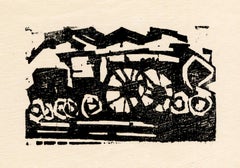
Little Locomotive
– Artist
s Personal Letterhead, Bauhaus Modernism
By Lyonel Feininger
Located in Myrtle Beach, SC
Lyonel Feininger, 'Little Locomotive (Kleine Lokomotive)', woodcut, 1936, one of a small but unknown number of letterhead proofs; Prasse W158. Annotated 'W 158' (Feininger catalogue number) and '1936' in pencil, in the bottom right sheet corner.
A fine impression, on cream, laid letterhead stock; hinge remains on the left and right top sheet edges, verso, in excellent condition. Very scarce.
Image size 2 1/4 x 3 5/16 inches; sheet size 10 x 7 inches. Archivally sleeved, unmatted.
Exhibited: 'Lyonel Feininer, Woodcuts Used As Letterheads'; Associated American Artists; Feb 4 - March 2, 1974; New York, NY.
Collections: Cleveland Museum of Art, Museum of Modern Art, Staatliche Museen zu Berlin (East Berlin KK).
ABOUT THE ARTIST
Lyonel Feininger (1871-1956) was born in New York City into a musical family—his father was a violinist and composer, his mother was a singer and pianist. He studied violin with his father, and by the age of 12, he was performing in public, but he also drew incessantly, most notably the steamboats and sailing ships on the Hudson and East Rivers, and the landscape around Sharon, Conn., where he spent time on a farm owned by a family friend. At the age of 16 he left New York to study music and art in Germany, from where his parents emigrated. Drawn more to the visual arts, he attended schools in Hamburg, Berlin, and Paris from 1887 to 1892.
After completing his studies, Feininger began his artistic career as a cartoonist and illustrator, his originality leading him to great success. In 1906, after working for a dozen years in Germany, he was offered a job as a cartoonist at the Chicago Tribune, the largest circulation newspaper in the Midwest. He worked there for a year, inventing what became the standard design for the comic strip: in the words of John Carlin, “an overall pattern. . . that allowed the page to be read both as a series of elements one after the other, like language and as a group of juxtaposed images, like visual art.” His originality did not end there: he went on to become one of the great abstract painters. Like Kandinsky, music was his model, but Kandinsky only knew music from the outside—as a listener (inspired initially by Wagner, then by Schoenberg)—while Feininger knew it from the inside. He lived in Paris from 1906 to 1908, during which time he met and was influenced by the work of progressive painters Robert Delaunay and Jules Pascin, as well as that of Paul Cezanne and Vincent van Gogh. He began painting full-time, developing his distinctive Iyrical style based on Cubist and Expressionist idioms and a concern for the emotive qualities of light and color. He exhibited with the Der Blaue Reiter group in 1913, and in 1917, he had his first solo exhibition at Galerie Der Sturm in Berlin.
One year after his solo exhibition, in 1918, Feininger began making woodcuts. He became enamored with the medium, producing an impressive 117 in his first year of exploring the printmaking medium. In 1919 at the invitation of the architect Walter Gropius, he was appointed the first master at the newly formed Staatliches Bauhaus in Weimar. His woodcut of a cathedral crowned...
Category
1930s Bauhaus Figurative Prints
Materials
Woodcut
Church with House and Tree
– Artist
s Personal Letterhead, Bauhaus Modernism
By Lyonel Feininger
Located in Myrtle Beach, SC
Lyonel Feininger, 'Church with House and Tree (Kirche mit Haus und Baum)', woodcut, 1936, one of a small but unknown number of letterhead proofs; Prasse W290 V. Inscribed 'J. F. note paper', in pencil, in the artist’s hand; with the Feininger estate stamp and catalog no. 'W 859' in pencil. Annotated 'W.290 V state 3609' in pencil, in the bottom right sheet corner.
A fine impression, on cream, laid letterhead stock; hinge remains on the left and right top sheet edges, verso, in excellent condition. Very scarce.
Image size 2 3/8 x 2 3/4 inches; sheet size 10 x 7 5/16 inches. Archivally sleeved, unmatted.
Exhibited: 'Lyonel Feininer, Woodcuts Used As Letterheads'; Associated American Artists; Feb 4 - March 2, 1974; NY, NY.
ABOUT THE ARTIST
Lyonel Feininger (1871-1956) was born in New York City into a musical family—his father was a violinist and composer, his mother was a singer and pianist. He studied violin with his father, and by the age of 12, he was performing in public. Still, he also drew incessantly, most notably the steamboats and sailing ships on the Hudson and East Rivers, and the landscape around Sharon, Conn., where he spent time on a farm owned by a family friend. At the age of 16 he left New York to study music and art in Germany, from where his parents emigrated. Drawn more to the visual arts, he attended schools in Hamburg, Berlin, and Paris from 1887 to 1892.
After completing his studies, Feininger began his artistic career as a cartoonist and illustrator, his originality leading him to great success. In 1906, after working for a dozen years in Germany, he was offered a job as a cartoonist at the Chicago Tribune, the largest circulation newspaper in the Midwest. He worked there for a year, inventing what became the standard design for the comic strip: in the words of John Carlin, “an overall pattern. . . that allowed the page to be read both as a series of elements one after the other, like language and as a group of juxtaposed images, like visual art.” His originality did not end there: he went on to become one of the great abstract painters. Like Kandinsky, music was his model, but Kandinsky only knew music from the outside—as a listener (inspired initially by Wagner, then by Schoenberg)—while Feininger knew it from the inside. He lived in Paris from 1906 to 1908, during which time he met and was influenced by the work of progressive painters Robert Delaunay and Jules Pascin, as well as that of Paul Cezanne and Vincent van Gogh. He began painting full-time, developing his distinctive Iyrical style based on Cubist and Expressionist idioms and a concern for the emotive qualities of light and color. He exhibited with the Der Blaue Reiter group in 1913, and in 1917, he had his first solo exhibition at Galerie Der Sturm in Berlin.
One year after his solo exhibition, in 1918, Feininger began making woodcuts. He became enamored with the medium, producing an impressive 117 in his first year of exploring the printmaking medium. In 1919 at the invitation of the architect Walter Gropius, he was appointed the first master at the newly formed Staatliches Bauhaus in Weimar. His woodcut of a cathedral crowned...
Category
1930s Bauhaus Figurative Prints
Materials
Woodcut
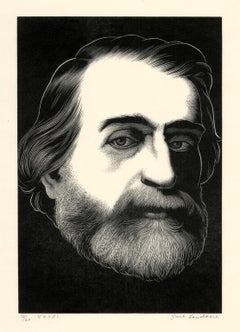
Verdi
— American Modernism - Italian Opera Composer
By Paul Landacre
Located in Myrtle Beach, SC
Paul Landacre, 'Verdi', wood engraving, 1936, edition 60, (only 14 printed), Wien 188. Signed, titled, and numbered '10/60' in pencil. A fine impression, on cream, laid Japan paper, ...
Category
1930s American Modern Portrait Prints
Materials
Woodcut
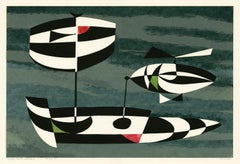
Flyable Objects Identified
— Mid-Century Modernism
By Edward August Landon
Located in Myrtle Beach, SC
Edward Landon, 'Flyable Objects Identified', color serigraph, 1969, edition 30, Ryan 83. Signed, titled, and annotated 'Edition 30' in pencil. A fine impression, with fresh colors, o...
Category
Mid-20th Century American Modern Abstract Prints
Materials
Screen
Evening
—Mid-Century American Surrealism
By Edward August Landon
Located in Myrtle Beach, SC
Edward Landon, 'Evening', color serigraph, 1958, edition 25, Ryan 71. Signed, titled, and annotated 'Ed. 25' in pencil. A fine impression, with fresh colors, on cream wove paper; the...
Category
Mid-20th Century Surrealist Abstract Prints
Materials
Screen

$680 Sale Price
20% Off
Tanks
Trees — Mid-century American Surrealism
Located in Myrtle Beach, SC
Karl Eugene Fortess, 'Tanks & Trees', lithograph, c. 1940, edition 100. Signed, titled, and numbered '100/P' in pencil. Inscribed 'For Usui - K.' in the bottom left margin. A fine, richly-inked impression, on cream wove paper, with full margins (1 1/2 to 2 1/2 inches); a slight crease across the top right sheet corner, well away from the image; otherwise in excellent condition. Image size 13 1/8 x 10 inches; sheet size 17 3/8 x 13 3/16 inches. Matted to museum standards, unframed.
Provenance: Estate of Francis Pratt.
Francis and her husband Bumpei Usui...
Category
1940s Surrealist Figurative Prints
Materials
Lithograph
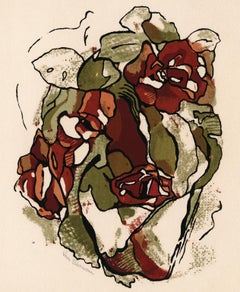
Crown of Roses
— Mid-century Modernism
By Mary Van Blarcom
Located in Myrtle Beach, SC
Mary Van Blarcom, 'Crown of Roses', color serigraph, c. 1945, edition not stated but small. Signed in pencil beneath the image, lower left. Titled in pencil, bottom left sheet corner. A rich painterly impression, with fresh colors, on cream laid paper, with full margins (3/8 to 7/8 inch), in excellent condition. Matted to museum standards, unframed.
Image size 8 13/16 x 12 11/16 inches; sheet size 9 1/2 x 8 5/16 inches.
ABOUT THE ARTIST
Painter, printmaker, and craftsperson, Mary Van Blarcom was born in Newark, New Jersey, and studied at Wellesley College. She was a member of the National Serigraph Society, where she served on the board of trustees from 1945 through 1952 and was 1st vice-president from 1949-51. She was also a member of the National Association of Women Artists, the Artists Equity Association, the American Color Print Society, the New Jersey Artists Association (Director), and Artists of Today.
Van Blarcom exhibited actively throughout the 1940s at many prominent art organizations, including Montclair Art Museum, 1941-45 and 1947-51 (prize, 1948); Society of Independent Artists, 1942-44; Artists of Today, 1942-46; Elisabeth Ney Museum, 1943; Northwest Printmakers, 1944, 1946-49; Laguna Beach Art Association, 1945-47, 1949; National Association of Women Artists, 1945-50, (prize, 1946); Library of Congress, 1946-47; Museum of Modern Art Traveling Exhibition, 1945-47; Carnegie Institute, 1947; Serigraph Gallery, 1946, 1951 (solo); American Color Print Society, 1947-52; Newark Museum, 1947-48, 1951; California State Library, 1947, 1949; National Serigraph Society, 1949 (prize), 1950 (prize); University of Chile, 1950; New Jersey State Museum, 1950; Philadelphia Art Alliance, 1951; and the Main Gallery, NY, 1952.
Van Blarcom’s work is represented in the collections of the Newark Public Library, the U.S. Library of Congress; the American Association of University Women; the New York Public Library; Tel-Aviv Museum, Alabama Polytechnic Institute, Princeton Print Club...
Category
1940s American Modern Figurative Prints
Materials
Screen
$320 Sale Price
20% Off
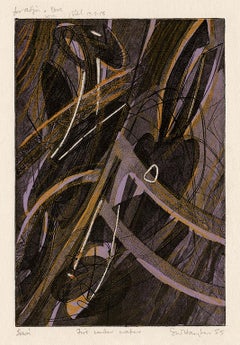
Feu sous L
eau
(Fire Under Water) —Mid-century Modernism, Atelier 17
By Stanley William Hayter
Located in Myrtle Beach, SC
Stanley William Hayter, 'Feu sous L'eau (Fire Under Water)', color engraving, soft-ground etching and scorper with yellow silkscreen, 1955, edition 50 plus 10 artist proofs, Black & Moorhead 221. Signed, titled 'Fire Under Water', dated and annotated 'Essai' in pencil. Dedicated in the artist’s hand 'for Adja & Dove WH Bill 17–5–55' in the top margin. A superb, richly inked impression with fresh colors, on heavy, cream wove paper; wide margins (2 1/2 to 3 7/8 inches), in excellent condition. One of 10 artist’s proofs. Image size 10 3/16 x 7 inches; sheet size 18 1/8 x 12 1/4 inches. Matted to museum standards, unframed.
ABOUT THIS WORK
In 1950 Hayter returned to Paris and reopened Atelier 17. Works such as 'Fire Under Water' reveal newfound influences, such as that of the Ardèche area of southern France, where he acquired a house in 1951 and frequently visited. Hayter took great interest in the flowing Escoutay River, an experience that parallels the artist and co-director of Atelier 17 Krishna Reddy’s interest in depicting water. While some forms in this print evoke the natural world, the palette of contrasting tones of purple, yellow, black, and white reflects Hayter’s belief in using color intuitively to express emotions and evoke feelings. The sharp white relief lines from the paper and the textural effects realized through soft-ground etching operate in tandem with the sweeping curves and bold colors to give the composition a sense of vitality and dynamism.
—edited from the Metropolitan Museum of Art
Published by 'La Jeune Gravure Contemporaine', Paris.
Impressions of this work are in the following collections: British Museum, Metropolitan Museum of Art, National Gallery of Art.
ABOUT THE ARTIST
Stanley William Hayter (1901-1988) was a British painter and printmaker associated in the 1930s with Surrealism and from 1940 onward with Abstract Expressionism. Regarded as one of the most significant printmakers of the 20th century, Hayter founded the legendary Atelier 17 studio in Paris, now known as Atelier Contrepoint. Among the artists he is credited with influencing are Pablo Picasso, Alberto Giacometti, Joan Miró, Alexander Calder, and Marc Chagall.
The hallmark of the workshop was its egalitarian structure, breaking sharply with the traditional French engraving studios by insisting on a cooperative approach to labor and technical discoveries. In 1929 Hayter was introduced to Surrealism by Yves Tanguy and André Masson, who, with other Surrealists, worked with Hayter at Atelier 17. The often violent imagery of Hayter’s Surrealist period was stimulated in part by his passionate response to the Spanish Civil War and the rise of Fascism. He organized portfolios of graphic works to raise funds for the Spanish cause, including Solidarité (Paris, 1938), a portfolio of seven prints, one of them by Picasso. Hayter frequently exhibited with the Surrealists during the 1930s but left the movement when Paul Eluard was expelled. Eluard’s poem Facile Proie (1939) was written in response to a set of Hayter’s engravings. Other writers with whom Hayter collaborated included Samuel Beckett and Georges Hugnet.
Hayter joined the exile of the Parisian avant-garde in 1939, moving with his second wife, the American sculptor Helen Phillips...
Category
1950s Abstract Expressionist Abstract Prints
Materials
Engraving, Etching
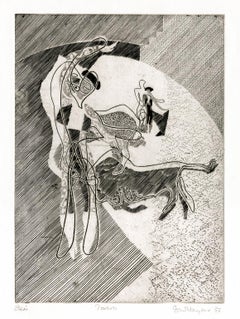
Torero
— rare, early modernist engraving – Atelier 17
By Stanley William Hayter
Located in Myrtle Beach, SC
Stanley William Hayter, 'Torero', engraving, 1932, edition 30, only 16 known impressions, trial proof, Black & Moorhead 71. Signed, titled, dated, and inscribed 'Essai' (test) in pencil. A superb impression with rich burr, on heavy BFK Rives cream, wove paper; full margins (2 1/4 to 6 1/4 inches). A short repaired tear (3/8 inch) in the left-center sheet edge, well away from the image; otherwise, in excellent condition. Scarce.
Image size 10 9/16 x 7 5/8 inches; sheet size 15 1/2 x 11 1/2 inches. Matted to museum standards, unframed.
ABOUT THE ARTIST
Stanley William Hayter (1901-1988) was a British painter and printmaker associated in the 1930s with Surrealism and from 1940 onward with Abstract Expressionism. Regarded as one of the most significant printmakers of the 20th century, Hayter founded the legendary Atelier 17...
Category
1930s Modern Abstract Prints
Materials
Engraving
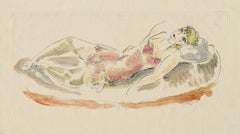
Colored Drawing No. 6 (Reclining Woman)
By Konrad Cramer
Located in Myrtle Beach, SC
Konrad Cramer, 'Colored Drawing No. 6' (Reclining Woman), monotype, 1931. Signed and dated in pencil beneath the image, lower right. Annotated 'Colored D' (drawing), No 6' in pencil, lower left sheet corner.
A fine, spontaneous work, on cream laid paper, with full margins (1 1/8 to 1 3/4 inches); original brown paper hinges in the top left and right sheet corners, in excellent condition. Image size 5 3/8 x 10 7/8 inches; sheet size 8 1/2 x 13 7/8 inches. Matted to museum standards, unframed.
A monotype is the printmaking technique of drawing or painting on a smooth, non-absorbent surface. The surface or matrix can vary from a copper etching plate...
Category
1930s American Modern Prints and Multiples
Materials
Monotype
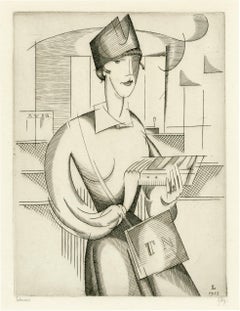
La Receveuse (Bill Collector) —French Cubism
By Jean-Emile Laboureur
Located in Myrtle Beach, SC
Jean-Emile Laboureur, 'La Receveuse', engraving, 1919, edition 8, first state of two (artist's proof). Laboureur, Godefroy 190.
Signed and numbered '3/8 ép' in pencil. Initialed and...
Category
1910s Cubist Figurative Prints
Materials
Engraving
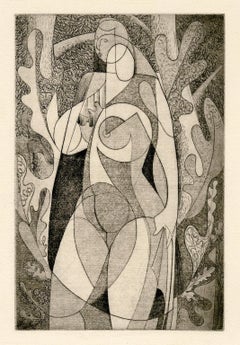
Modernist Nude — Atelier 17
Located in Myrtle Beach, SC
Russell T. Limbach, 'Untitled (Modernist Nude)', etching and aquatint, no known edition, c. 1930. Signed in pencil. A fine impression, on cream wove paper, with full margins (1 7/8 to 2 3/4 inches), in excellent condition. Image size 8 15/16 x 5 15/16 inches; sheet size 13 3/8 x 10 1/4 inches. Extremely rare. Matted to museum standards, unframed.
Probably created when Limbach was in Paris (1928-1934), where he was exposed to modernist printmaking explorations at Stanley William Hayter’s 'Atelier 17'.
ABOUT THE ARTIST
Born in Massillon, Ohio, Russell Limbach...
Category
1930s American Modern Nude Prints
Materials
Etching
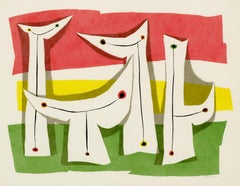
Forms in White
– Mid-Century Abstraction
By Edward August Landon
Located in Myrtle Beach, SC
Edward Landon, 'Forms in White', color serigraph, 1950, edition 30, Ryan 85. Signed in pencil. Dated, titled, annotated 'ED. 30' and '5 COLORS' in the screen, bottom center sheet edg...
Category
Mid-20th Century Abstract Abstract Prints
Materials
Screen
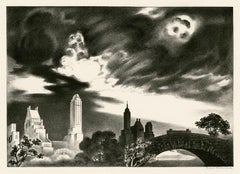
Angry Skies (Andante Cantabile) — Central Park, New York City
By Louis Lozowick
Located in Myrtle Beach, SC
Louis Lozowick, 'Angry Skies (Andante Cantabile)', lithograph, 1935; edition 10, AAA 250; Flint 123. Signed in pencil. Signed in the stone, lower left. A fine, richly-inked impressio...
Category
1930s American Modern Landscape Prints
Materials
Lithograph
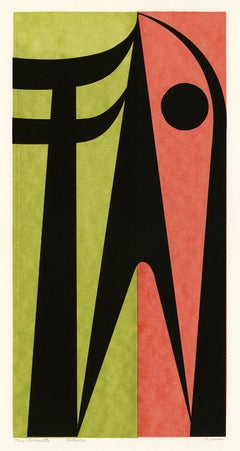
Time Silhouette
—Mid-Century Modernism
By Edward August Landon
Located in Myrtle Beach, SC
Edward Landon, 'Time Silhouette', color serigraph, 1969, edition 30, Ryan 201. Signed, titled, and annotated 'Edition 30' in pencil. A fine impression, with fresh colors, on cream wo...
Category
Mid-20th Century American Modern Abstract Prints
Materials
Screen
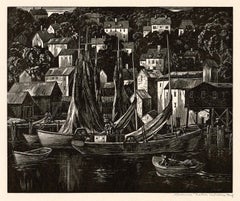
Tranquil Harbor (Gloucester, Massachusetts) — 1950s Cape Ann Regionalism
By Lawrence Wilbur
Located in Myrtle Beach, SC
Lawrence Nelson Wilbur (1897-1988), 'Tranquil Harbor' (Gloucester, Massachusetts), wood engraving, edition 55, 1958. Signed in pencil, and signe...
Category
1950s American Modern Landscape Prints
Materials
Woodcut
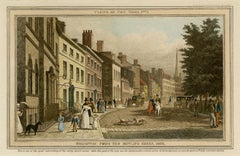
Broadway from the Bowling Green, 1828 — early New York City, hand-coloring
Located in Myrtle Beach, SC
J. R. Hutchinson, 'Broadway from the Bowling Green, 1828', hand-colored etching, 1828. Signed and dated in the plate, beneath the image, lower right. Ann...
Category
1820s Realist Figurative Prints
Materials
Etching
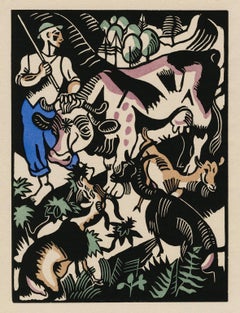
Der Hirte (The Shepherd) — original hand-coloring
Located in Myrtle Beach, SC
Richard Seewald, 'Der Hirte (The Shepherd)', woodcut with hand coloring, c. 1919. Unsigned as published in 'Genius', Vol 1, no. 1, 1919. A fine, richly...
Category
1910s Expressionist Figurative Prints
Materials
Woodcut
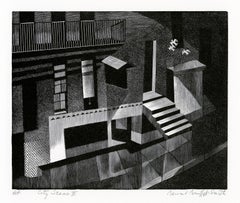
City Scene II — Mid-Century Modernism, Precisionism
By Bernard Brussel-Smith
Located in Myrtle Beach, SC
Bernard Brussel-Smith, 'City Scene II', wood engraving, 1949, artist's proof, edition 100. Signed, titled, and annotated 'A.P.' in pencil. A superb, richly-inked impression, on whit...
Category
1940s American Modern Figurative Prints
Materials
Woodcut
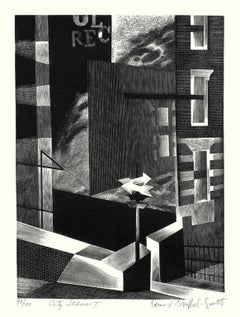
City Scene I — Mid-Century Modernism, Precisionism
By Bernard Brussel-Smith
Located in Myrtle Beach, SC
Bernard Brussel-Smith, 'City Scene I', wood engraving, 1949, edition 100. Signed, titled, and numbered '93/100' in pencil. A superb, richly-inked impression, on white wove paper, wi...
Category
1940s American Modern Figurative Prints
Materials
Woodcut
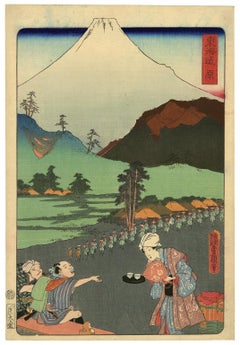
Tokaido
— Mt. Fuji Rising – Mid-Nineteenth Century Woodblock Print
By Utagawa Kunisada (Toyokuni III)
Located in Myrtle Beach, SC
Utagawa Kunisada (Tokoyuni III), 'Tokaido', color woodblock, 1863. Signed in the cartouche, lower right. A fine impression, with rich, fresh colors and pronounced woodgrain, the full...
Category
1860s Edo Figurative Prints
Materials
Woodcut
Petrouchka
s Predicament
— Mid-century American Surrealism
By Robert Vale Faro
Located in Myrtle Beach, SC
Robert Vale Faro, 'Petrouchka's Predicament', color lithograph, 1946, edition 20. Signed, dated, titled, and numbered '115' and '14/20' in pen. A fine, richly-inked impression, with fresh colors, on heavy, off-white wove paper; full margins (1 1/4 to 2 1/2 inches), in excellent condition. Image size 21 3/4 x 13 3/4 inches; sheet size 24 3/4 x 16 1/4 inches. Scarce. Matted to museum standards, unframed.
'Petrouchka', a ballet with music by the Russian composer Igor Stravinsky and choreography by Michel Fokine, is based on the legend of Russian folklore. 'Petrouchka', a puppet made of straw with a bag of sawdust as his body, comes to life and has the capacity to love, a story conceptually resembling that of Pinocchio.
ABOUT THE ARTIST
Robert Vale Faro (1902-1988) was a well-known modernist architect and artist associated with the Chicago Bauhaus. He received his degree in architecture and design from the Armour Institute in Chicago and worked at L'Ecole des Beaux-Arts, Paris, from 1924-27, where he was influenced by Harry Kurt Bieg and Le Corbusier. Upon his return to Chicago, Faro worked with the important modernist Chicago architects George and William Keck under Louis Sullivan.
Faro founded the avant-garde printmaking group Vanguard in 1945. The group counted Atelier 17 artists Stanley William Hayter, Sue Fuller...
Category
1940s American Modern Abstract Prints
Materials
Lithograph
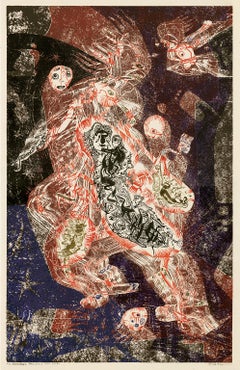
Child Reaching
— 1940s American Modernism
By Will Barnet
Located in Myrtle Beach, SC
Will barnet, 'Child Reaching', woodcut, 1940, edition 25, Cole 82. Signed and titled in pencil. A fine, black impression, on fibrous Japan paper, with full margins (5/8 to 1 3/4 inch...
Category
1940s American Modern Figurative Prints
Materials
Woodcut