Keith Sheridan, LLC Figurative Prints
to
20
169
13
1
Overall Width
to
Overall Height
to
81
16
9
5
3
3
1
13
9
6
6
6
9
11
162
1
2
7
44
56
33
3
4
4
1
6
108
70
2
118
63
57
47
34
31
20
18
13
10
9
8
7
7
6
6
6
6
5
5
58
53
34
26
11
183
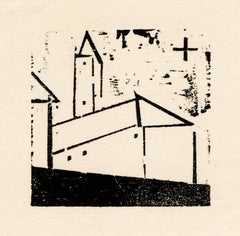
Church with Star
– Artist
s Personal Letterhead, Bauhaus Modernism
By Lyonel Feininger
Located in Myrtle Beach, SC
Lyonel Feininger, 'Church with Star (Kirche mit Stern)', woodcut, 1936, one of a small but unknown number of letterhead proofs; Prasse W265. Annotated 'W 265' (Feininger catalogue number) and inventory no. '2808' in pencil, in the bottom right sheet corner. A fine impression, on cream, laid letterhead stock; hinge remains on the left and right top sheet edges, verso, in excellent condition. Very scarce.
Image size 2 3/8 x 2 3/8 inches; sheet size 10 1/16 x 7 1/16 inches. Archivally sleeved, unmatted.
ABOUT THE ARTIST
Lyonel Feininger (1871-1956) was born in New York City into a musical family—his father was a violinist and composer, his mother was a singer and pianist. He studied violin with his father, and by the age of 12, he was performing in public, but he also drew incessantly, most notably the steamboats and sailing ships on the Hudson and East Rivers, and the landscape around Sharon, Conn., where he spent time on a farm owned by a family friend. At the age of 16 he left New York to study music and art in Germany, from where his parents emigrated. Drawn more to the visual arts, he attended schools in Hamburg, Berlin, and Paris from 1887 to 1892.
After completing his studies, Feininger began his artistic career as a cartoonist and illustrator, his originality leading him to great success. In 1906, after working for a dozen years in Germany, he was offered a job as a cartoonist at the Chicago Tribune, the largest circulation newspaper in the Midwest. He worked there for a year, inventing what became the standard design for the comic strip: in the words of John Carlin, “an overall pattern. . . that allowed the page to be read both as a series of elements one after the other, like language and as a group of juxtaposed images, like visual art.” His originality did not end there: he went on to become one of the great abstract painters. Like Kandinsky, music was his model, but Kandinsky only knew music from the outside—as a listener (inspired initially by Wagner, then by Schoenberg)—while Feininger knew it from the inside. He lived in Paris from 1906 to 1908, during which time he met and was influenced by the work of progressive painters Robert Delaunay and Jules Pascin, as well as that of Paul Cezanne and Vincent van Gogh. He began painting full-time, developing his distinctive Iyrical style based on Cubist and Expressionist idioms and a concern for the emotive qualities of light and color. He exhibited with the Der Blaue Reiter group in 1913, and in 1917, he had his first solo exhibition at Galerie Der Sturm in Berlin.
One year after his solo exhibition, in 1918, Feininger began making woodcuts. He became enamored with the medium, producing an impressive 117 in his first year of exploring the printmaking medium. In 1919 at the invitation of the architect Walter Gropius, he was appointed the first master at the newly formed Staatliches Bauhaus in Weimar. His woodcut of a cathedral crowned...
Category
1930s Bauhaus Figurative Prints
Materials
Woodcut
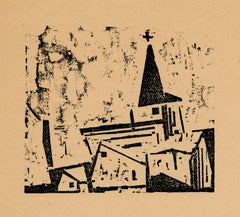
Church with House and Tree
– Artist
s Personal Letterhead, 1940s Modernism
By Lyonel Feininger
Located in Myrtle Beach, SC
Lyonel Feininger, 'Church with House and Tree (Kirche mit Haus und Baum)', woodcut, 1936, one of a small but unknown number of letterhead proofs; Prasse W290 IV. Annotated 'PW 290 state IV / IV 3669', in pencil, in the bottom right sheet corner. With the artist's typed address and date adjacent to the letterhead image: 'Falls Village, Connecticut September 26th, 1940'.
A fine impression, on buff, wove letterhead stock; several small losses, and tears, in the sheet edges (not affecting the image area); a crease in the bottom right sheet edge, otherwise in good condition. Very scarce.
Image size: 2 3/8 x 2 3/4 inches; sheet size 11 x 8 5/8 inches. Archivally sleeved, unmatted.
Feininger moved from Germany to New York City in 1938 and began spending his summers in Falls Village in 1940.
Exhibited: 'Lyonel Feininer, Woodcuts Used As Letterheads'; Associated American Artists; Feb 4 - March 2, 1974; New York, NY.
ABOUT THE ARTIST
Lyonel Feininger (1871-1956) was born in New York City into a musical family—his father was a violinist and composer, his mother was a singer and pianist. He studied violin with his father, and by the age of 12, he was performing in public, but he also drew incessantly, most notably the steamboats and sailing ships on the Hudson and East Rivers, and the landscape around Sharon, Conn., where he spent time on a farm owned by a family friend. At the age of 16 he left New York to study music and art in Germany, from where his parents emigrated. Drawn more to the visual arts, he attended schools in Hamburg, Berlin, and Paris from 1887 to 1892.
After completing his studies, Feininger began his artistic career as a cartoonist and illustrator, his originality leading him to great success. In 1906, after working for a dozen years in Germany, he was offered a job as a cartoonist at the Chicago Tribune, the largest circulation newspaper in the Midwest. He worked there for a year, inventing what became the standard design for the comic strip: in the words of John Carlin, “an overall pattern. . . that allowed the page to be read both as a series of elements one after the other, like language and as a group of juxtaposed images, like visual art.” His originality did not end there: he went on to become one of the great abstract painters. Like Kandinsky, music was his model, but Kandinsky only knew music from the outside—as a listener (inspired initially by Wagner, then by Schoenberg)—while Feininger knew it from the inside. He lived in Paris from 1906 to 1908, during which time he met and was influenced by the work of progressive painters Robert Delaunay and Jules Pascin, as well as that of Paul Cezanne and Vincent van Gogh. He began painting full-time, developing his distinctive Iyrical style based on Cubist and Expressionist idioms and a concern for the emotive qualities of light and color. He exhibited with the Der Blaue Reiter group in 1913, and in 1917, he had his first solo exhibition at Galerie Der Sturm in Berlin.
One year after his solo exhibition, in 1918, Feininger began making woodcuts. He became enamored with the medium, producing an impressive 117 in his first year of exploring the printmaking medium. In 1919 at the invitation of the architect Walter Gropius, he was appointed the first master at the newly formed Staatliches Bauhaus in Weimar. His woodcut of a cathedral crowned...
Category
1930s Bauhaus Figurative Prints
Materials
Woodcut
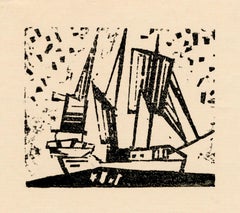
Three Masted Ship, 2
– Artist
s Personal Letterhead, Bauhaus Modernism
By Lyonel Feininger
Located in Myrtle Beach, SC
Lyonel Feininger, 'Three Masted Ship, 2 (Dreimastiges Schiff, 2)', woodcut, 1937, one of a small but unknown number of letterhead proofs; Prasse W296. Feininger estate stamp and inventory no. 'W 865' in pencil, bottom left sheet corner. Annotated 'W 296' and 'on block : 3702a' in pencil, bottom right sheet corner.
A fine impression, on cream, laid, letterhead stock; hinge remains on the left and right top sheet edges, verso, in excellent condition. Very scarce.
Image size 2 1/4 x 2 11/16 inches; sheet size 10 x 6 3/4 inches. Archivally sleeved, unmatted.
Exhibited: 'Lyonel Feininer, Woodcuts Used As Letterheads'; Associated American Artists; Feb 4 - March 2, 1974; New York, NY.
ABOUT THE ARTIST
Lyonel Feininger (1871-1956) was born in New York City into a musical family—his father was a violinist and composer, his mother was a singer and pianist. He studied violin with his father, and by the age of 12, he was performing in public, but he also drew incessantly, most notably the steamboats and sailing ships on the Hudson and East Rivers, and the landscape around Sharon, Conn., where he spent time on a farm owned by a family friend. At the age of 16 he left New York to study music and art in Germany, from where his parents emigrated. Drawn more to the visual arts, he attended schools in Hamburg, Berlin, and Paris from 1887 to 1892.
After completing his studies, Feininger began his artistic career as a cartoonist and illustrator, his originality leading him to great success. In 1906, after working for a dozen years in Germany, he was offered a job as a cartoonist at the Chicago Tribune, the largest circulation newspaper in the Midwest. He worked there for a year, inventing what became the standard design for the comic strip: in the words of John Carlin, “an overall pattern. . . that allowed the page to be read both as a series of elements one after the other, like language and as a group of juxtaposed images, like visual art.” His originality did not end there: he went on to become one of the great abstract painters. Like Kandinsky, music was his model, but Kandinsky only knew music from the outside—as a listener (inspired initially by Wagner, then by Schoenberg)—while Feininger knew it from the inside. He lived in Paris from 1906 to 1908, during which time he met and was influenced by the work of progressive painters Robert Delaunay and Jules Pascin, as well as that of Paul Cezanne and Vincent van Gogh. He began painting full-time, developing his distinctive Iyrical style based on Cubist and Expressionist idioms and a concern for the emotive qualities of light and color. He exhibited with the Der Blaue Reiter group in 1913, and in 1917, he had his first solo exhibition at Galerie Der Sturm in Berlin.
One year after his solo exhibition, in 1918, Feininger began making woodcuts. He became enamored with the medium, producing an impressive 117 in his first year of exploring the printmaking medium. In 1919 at the invitation of the architect Walter Gropius, he was appointed the first master at the newly formed Staatliches Bauhaus in Weimar. His woodcut of a cathedral crowned...
Category
1930s Bauhaus Figurative Prints
Materials
Woodcut
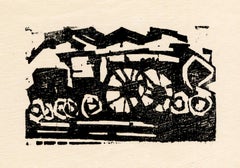
Little Locomotive
– Artist
s Personal Letterhead, Bauhaus Modernism
By Lyonel Feininger
Located in Myrtle Beach, SC
Lyonel Feininger, 'Little Locomotive (Kleine Lokomotive)', woodcut, 1936, one of a small but unknown number of letterhead proofs; Prasse W158. Annotated 'W 158' (Feininger catalogue number) and '1936' in pencil, in the bottom right sheet corner.
A fine impression, on cream, laid letterhead stock; hinge remains on the left and right top sheet edges, verso, in excellent condition. Very scarce.
Image size 2 1/4 x 3 5/16 inches; sheet size 10 x 7 inches. Archivally sleeved, unmatted.
Exhibited: 'Lyonel Feininer, Woodcuts Used As Letterheads'; Associated American Artists; Feb 4 - March 2, 1974; New York, NY.
Collections: Cleveland Museum of Art, Museum of Modern Art, Staatliche Museen zu Berlin (East Berlin KK).
ABOUT THE ARTIST
Lyonel Feininger (1871-1956) was born in New York City into a musical family—his father was a violinist and composer, his mother was a singer and pianist. He studied violin with his father, and by the age of 12, he was performing in public, but he also drew incessantly, most notably the steamboats and sailing ships on the Hudson and East Rivers, and the landscape around Sharon, Conn., where he spent time on a farm owned by a family friend. At the age of 16 he left New York to study music and art in Germany, from where his parents emigrated. Drawn more to the visual arts, he attended schools in Hamburg, Berlin, and Paris from 1887 to 1892.
After completing his studies, Feininger began his artistic career as a cartoonist and illustrator, his originality leading him to great success. In 1906, after working for a dozen years in Germany, he was offered a job as a cartoonist at the Chicago Tribune, the largest circulation newspaper in the Midwest. He worked there for a year, inventing what became the standard design for the comic strip: in the words of John Carlin, “an overall pattern. . . that allowed the page to be read both as a series of elements one after the other, like language and as a group of juxtaposed images, like visual art.” His originality did not end there: he went on to become one of the great abstract painters. Like Kandinsky, music was his model, but Kandinsky only knew music from the outside—as a listener (inspired initially by Wagner, then by Schoenberg)—while Feininger knew it from the inside. He lived in Paris from 1906 to 1908, during which time he met and was influenced by the work of progressive painters Robert Delaunay and Jules Pascin, as well as that of Paul Cezanne and Vincent van Gogh. He began painting full-time, developing his distinctive Iyrical style based on Cubist and Expressionist idioms and a concern for the emotive qualities of light and color. He exhibited with the Der Blaue Reiter group in 1913, and in 1917, he had his first solo exhibition at Galerie Der Sturm in Berlin.
One year after his solo exhibition, in 1918, Feininger began making woodcuts. He became enamored with the medium, producing an impressive 117 in his first year of exploring the printmaking medium. In 1919 at the invitation of the architect Walter Gropius, he was appointed the first master at the newly formed Staatliches Bauhaus in Weimar. His woodcut of a cathedral crowned...
Category
1930s Bauhaus Figurative Prints
Materials
Woodcut
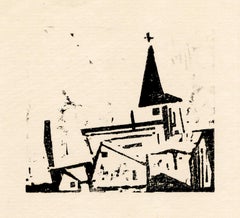
Church with House and Tree
– Artist
s Personal Letterhead, Bauhaus Modernism
By Lyonel Feininger
Located in Myrtle Beach, SC
Lyonel Feininger, 'Church with House and Tree (Kirche mit Haus und Baum)', woodcut, 1936, one of a small but unknown number of letterhead proofs; Prasse W290 V. Inscribed 'J. F. note paper', in pencil, in the artist’s hand; with the Feininger estate stamp and catalog no. 'W 859' in pencil. Annotated 'W.290 V state 3609' in pencil, in the bottom right sheet corner.
A fine impression, on cream, laid letterhead stock; hinge remains on the left and right top sheet edges, verso, in excellent condition. Very scarce.
Image size 2 3/8 x 2 3/4 inches; sheet size 10 x 7 5/16 inches. Archivally sleeved, unmatted.
Exhibited: 'Lyonel Feininer, Woodcuts Used As Letterheads'; Associated American Artists; Feb 4 - March 2, 1974; NY, NY.
ABOUT THE ARTIST
Lyonel Feininger (1871-1956) was born in New York City into a musical family—his father was a violinist and composer, his mother was a singer and pianist. He studied violin with his father, and by the age of 12, he was performing in public. Still, he also drew incessantly, most notably the steamboats and sailing ships on the Hudson and East Rivers, and the landscape around Sharon, Conn., where he spent time on a farm owned by a family friend. At the age of 16 he left New York to study music and art in Germany, from where his parents emigrated. Drawn more to the visual arts, he attended schools in Hamburg, Berlin, and Paris from 1887 to 1892.
After completing his studies, Feininger began his artistic career as a cartoonist and illustrator, his originality leading him to great success. In 1906, after working for a dozen years in Germany, he was offered a job as a cartoonist at the Chicago Tribune, the largest circulation newspaper in the Midwest. He worked there for a year, inventing what became the standard design for the comic strip: in the words of John Carlin, “an overall pattern. . . that allowed the page to be read both as a series of elements one after the other, like language and as a group of juxtaposed images, like visual art.” His originality did not end there: he went on to become one of the great abstract painters. Like Kandinsky, music was his model, but Kandinsky only knew music from the outside—as a listener (inspired initially by Wagner, then by Schoenberg)—while Feininger knew it from the inside. He lived in Paris from 1906 to 1908, during which time he met and was influenced by the work of progressive painters Robert Delaunay and Jules Pascin, as well as that of Paul Cezanne and Vincent van Gogh. He began painting full-time, developing his distinctive Iyrical style based on Cubist and Expressionist idioms and a concern for the emotive qualities of light and color. He exhibited with the Der Blaue Reiter group in 1913, and in 1917, he had his first solo exhibition at Galerie Der Sturm in Berlin.
One year after his solo exhibition, in 1918, Feininger began making woodcuts. He became enamored with the medium, producing an impressive 117 in his first year of exploring the printmaking medium. In 1919 at the invitation of the architect Walter Gropius, he was appointed the first master at the newly formed Staatliches Bauhaus in Weimar. His woodcut of a cathedral crowned...
Category
1930s Bauhaus Figurative Prints
Materials
Woodcut
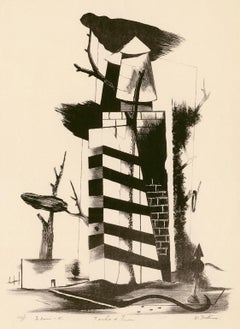
Tanks
Trees — Mid-century American Surrealism
Located in Myrtle Beach, SC
Karl Eugene Fortess, 'Tanks & Trees', lithograph, c. 1940, edition 100. Signed, titled, and numbered '100/P' in pencil. Inscribed 'For Usui - K.' in the bottom left margin. A fine, richly-inked impression, on cream wove paper, with full margins (1 1/2 to 2 1/2 inches); a slight crease across the top right sheet corner, well away from the image; otherwise in excellent condition. Image size 13 1/8 x 10 inches; sheet size 17 3/8 x 13 3/16 inches. Matted to museum standards, unframed.
Provenance: Estate of Francis Pratt.
Francis and her husband Bumpei Usui...
Category
1940s Surrealist Figurative Prints
Materials
Lithograph
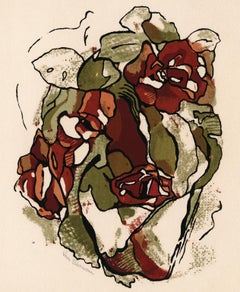
Crown of Roses
— Mid-century Modernism
By Mary Van Blarcom
Located in Myrtle Beach, SC
Mary Van Blarcom, 'Crown of Roses', color serigraph, c. 1945, edition not stated but small. Signed in pencil beneath the image, lower left. Titled in pencil, bottom left sheet corner. A rich painterly impression, with fresh colors, on cream laid paper, with full margins (3/8 to 7/8 inch), in excellent condition. Matted to museum standards, unframed.
Image size 8 13/16 x 12 11/16 inches; sheet size 9 1/2 x 8 5/16 inches.
ABOUT THE ARTIST
Painter, printmaker, and craftsperson, Mary Van Blarcom was born in Newark, New Jersey, and studied at Wellesley College. She was a member of the National Serigraph Society, where she served on the board of trustees from 1945 through 1952 and was 1st vice-president from 1949-51. She was also a member of the National Association of Women Artists, the Artists Equity Association, the American Color Print Society, the New Jersey Artists Association (Director), and Artists of Today.
Van Blarcom exhibited actively throughout the 1940s at many prominent art organizations, including Montclair Art Museum, 1941-45 and 1947-51 (prize, 1948); Society of Independent Artists, 1942-44; Artists of Today, 1942-46; Elisabeth Ney Museum, 1943; Northwest Printmakers, 1944, 1946-49; Laguna Beach Art Association, 1945-47, 1949; National Association of Women Artists, 1945-50, (prize, 1946); Library of Congress, 1946-47; Museum of Modern Art Traveling Exhibition, 1945-47; Carnegie Institute, 1947; Serigraph Gallery, 1946, 1951 (solo); American Color Print Society, 1947-52; Newark Museum, 1947-48, 1951; California State Library, 1947, 1949; National Serigraph Society, 1949 (prize), 1950 (prize); University of Chile, 1950; New Jersey State Museum, 1950; Philadelphia Art Alliance, 1951; and the Main Gallery, NY, 1952.
Van Blarcom’s work is represented in the collections of the Newark Public Library, the U.S. Library of Congress; the American Association of University Women; the New York Public Library; Tel-Aviv Museum, Alabama Polytechnic Institute, Princeton Print Club...
Category
1940s American Modern Figurative Prints
Materials
Screen
$320 Sale Price
20% Off
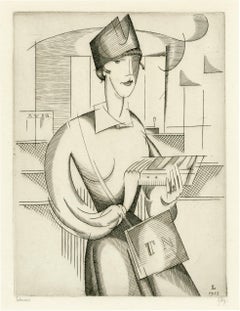
La Receveuse (Bill Collector) —French Cubism
By Jean-Emile Laboureur
Located in Myrtle Beach, SC
Jean-Emile Laboureur, 'La Receveuse', engraving, 1919, edition 8, first state of two (artist's proof). Laboureur, Godefroy 190.
Signed and numbered '3/8 ép' in pencil. Initialed and...
Category
1910s Cubist Figurative Prints
Materials
Engraving
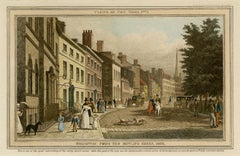
Broadway from the Bowling Green, 1828 — early New York City, hand-coloring
Located in Myrtle Beach, SC
J. R. Hutchinson, 'Broadway from the Bowling Green, 1828', hand-colored etching, 1828. Signed and dated in the plate, beneath the image, lower right. Ann...
Category
1820s Realist Figurative Prints
Materials
Etching
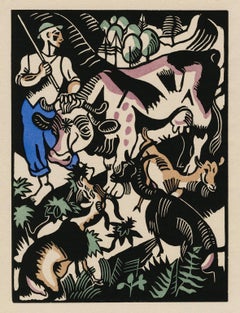
Der Hirte (The Shepherd) — original hand-coloring
Located in Myrtle Beach, SC
Richard Seewald, 'Der Hirte (The Shepherd)', woodcut with hand coloring, c. 1919. Unsigned as published in 'Genius', Vol 1, no. 1, 1919. A fine, richly...
Category
1910s Expressionist Figurative Prints
Materials
Woodcut
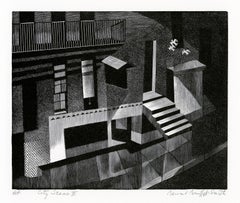
City Scene II — Mid-Century Modernism, Precisionism
By Bernard Brussel-Smith
Located in Myrtle Beach, SC
Bernard Brussel-Smith, 'City Scene II', wood engraving, 1949, artist's proof, edition 100. Signed, titled, and annotated 'A.P.' in pencil. A superb, richly-inked impression, on whit...
Category
1940s American Modern Figurative Prints
Materials
Woodcut
City Scene I — Mid-Century Modernism, Precisionism
By Bernard Brussel-Smith
Located in Myrtle Beach, SC
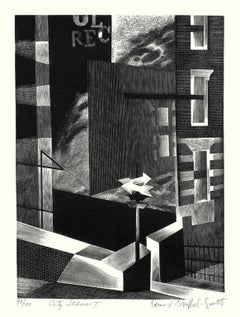
Bernard Brussel-Smith, 'City Scene I', wood engraving, 1949, edition 100. Signed, titled, and numbered '93/100' in pencil. A superb, richly-inked impression, on white wove paper, wi...
Category
1940s American Modern Figurative Prints
Materials
Woodcut
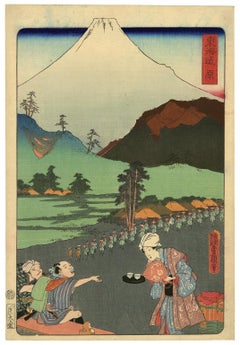
Tokaido
— Mt. Fuji Rising – Mid-Nineteenth Century Woodblock Print
By Utagawa Kunisada (Toyokuni III)
Located in Myrtle Beach, SC
Utagawa Kunisada (Tokoyuni III), 'Tokaido', color woodblock, 1863. Signed in the cartouche, lower right. A fine impression, with rich, fresh colors and pronounced woodgrain, the full...
Category
1860s Edo Figurative Prints
Materials
Woodcut
Child Reaching
— 1940s American Modernism
By Will Barnet
Located in Myrtle Beach, SC
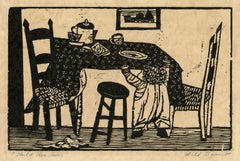
Will barnet, 'Child Reaching', woodcut, 1940, edition 25, Cole 82. Signed and titled in pencil. A fine, black impression, on fibrous Japan paper, with full margins (5/8 to 1 3/4 inch...
Category
1940s American Modern Figurative Prints
Materials
Woodcut
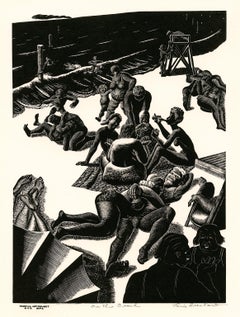
On the Beach (Coney Island, New York) — 1930s Graphic Modernism, WPA
By Lou Barlow
Located in Myrtle Beach, SC
Lou Barlow (Louis Breslow), 'On the Beach' (Coney Island) wood engraving, c. 1937, edition c. 25. Signed and titled in pencil. Stamped 'FEDERAL ART PROJECT NYC WPA' in the bottom left margin. A fine, richly-inked impression, with all the fine lines printing clearly, on cream wove paper, with full margins (1 1/2 to 3 inches), in excellent condition. Matted to museum standards, unframed. Scarce.
Image size 11 x 8 1/8 inches; sheet size 16 x 11 3/8 inches.
Created during the Great Depression for the Works Progress Administration (WPA), Federal Art Project, New York City.
Impressions of this work are in the permanent collections of the Amon Carter Museum of Art, Illinois State Museum, and the New York Public Library.
ABOUT THE IMAGE
Due to Coney Island's proximity to Manhattan, Brooklyn, and other New York boroughs, it began attracting vacationers in the 1830s and 1840s. Most of the vacationers were wealthy and went by carriage roads and steamship services that reduced travel time from a formerly half-day journey to two hours. By the late 1870s, the development of Coney Island's amusement park attractions and hotels drew people from all social classes. When the Brooklyn Rapid Transit Company electrified the steam railroads and connected Brooklyn to Manhattan via the Brooklyn Bridge at the beginning of the 20th century, Coney Island turned rapidly from a resort to an accessible location for day-trippers seeking to escape the summer heat in New York City's tenements. In 1915, the Sea Beach Line was upgraded to a subway line, and the opening of the Stillwell Avenue station in 1919 ushered in Coney Island's busiest era. On the peak summer days, over a million people would travel to Coney Island. In 1937, New York City purchased a 400-foot-wide strip of land along the shoreline to allow the boardwalk to be moved 300 feet inland. At this point, Coney Island was so crowded on summer weekends that parks commissioner Robert Moses...
Category
1930s American Modern Figurative Prints
Materials
Woodcut
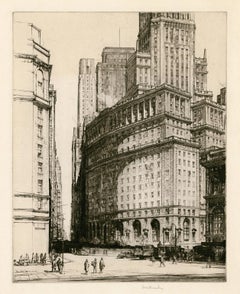
Bowling Green, New York
By Louis Conrad Rosenberg
Located in Myrtle Beach, SC
Louis Conrad Rosenberg, 'Bowling Green, New York', etching, 1940. Signed in pencil. A superb, richly-inked impression, with all the fine lines printing c...
Category
1940s American Realist Figurative Prints
Materials
Drypoint
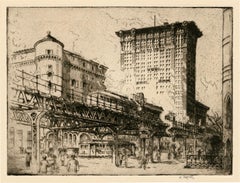
The Elevated, East 42nd Street, New York
— 1910 American Realism
By William Monk
Located in Myrtle Beach, SC
William Monk, 'The Elevated, East 42nd Street, New York', etching, 1910. Signed in pencil and titled in the bottom right sheet corner. Signed in the plate, lower right. A superb, ric...
Category
1910s American Realist Figurative Prints
Materials
Etching

$1,200 Sale Price
20% Off
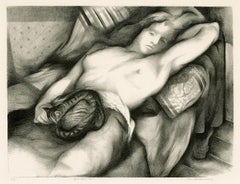
Girl and Cat
— 1930s American Modernism
By Benton Murdoch Spruance
Located in Myrtle Beach, SC
'Girl and Cat', lithograph, 1935, edition 33, Fine and Looney 121. Signed, titled, dated, and numbered '5/33' in pencil. A superb, richly-inked impression...
Category
1930s American Modern Figurative Prints
Materials
Lithograph
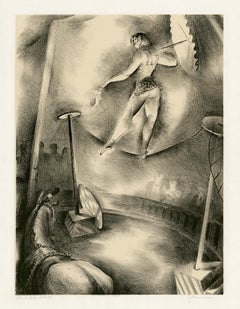
Slack Rope Artist
By Benton Murdoch Spruance
Located in Myrtle Beach, SC
Benton Spruance, 'Slack Rope Artist', lithograph, 1930, edition 30, Fine and Looney 35. Signed and titled in pencil. Numbered '2' in the bottom right margin. A fine impression, with ...
Category
1930s American Modern Figurative Prints
Materials
Lithograph
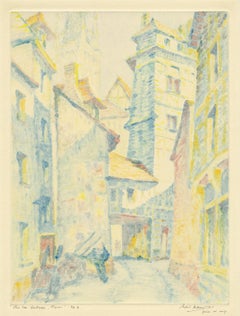
Rue du Hallage - Rouen
— 1920s British Impressionism
By Sybil Andrews
Located in Myrtle Beach, SC
Sybil Andrews, 'Rue du Hallage - Rouen', color monotype, c. 1925, edition 3, proof 3. Signed 'Sybil Andrews pinx et imp' annotated 'No 3' and titled in pencil. Printed by the artist....
Category
1920s Post-Impressionist Figurative Prints
Materials
Monotype
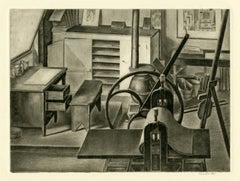
Studio Interior No. 1 — 1930s Masterwork
By Armin Landeck
Located in Myrtle Beach, SC
Armin Landeck, 'Studio Interior No. 1', 1935, drypoint, edition 100, Kraeft 56. Signed in pencil. Signed in the plate, lower right. A fine, richly-inked impression, on cream laid pap...
Category
1930s American Realist Figurative Prints
Materials
Drypoint
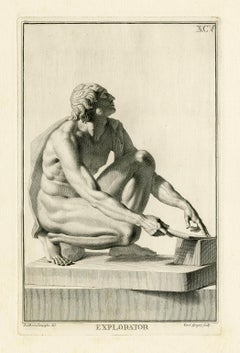
Explorator
Located in Myrtle Beach, SC
Giovanni Domenico Campiglia, 'Explorator', engraving, 1734, edition unknown, scarce. Signed 'Dom. Campiglia del.' in the matrix, lower left. A fine impression, on handmade antique, l...
Category
1730s Realist Nude Prints
Materials
Engraving
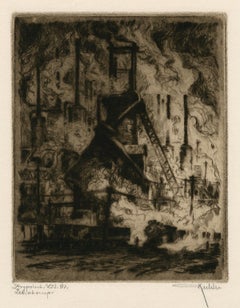
The Furnace
— American Expressionism
By Otto Kuhler
Located in Myrtle Beach, SC
Otto Kuhler, 'The Furnace', drypoint, edition 26, 1924, Kennedy 5. Signed and annotated 'Drypoint. Ltd Ed. Del. et imp.' in pencil. Titled in pencil, in the bottom center sheet edge....
Category
1920s American Modern Figurative Prints
Materials
Drypoint
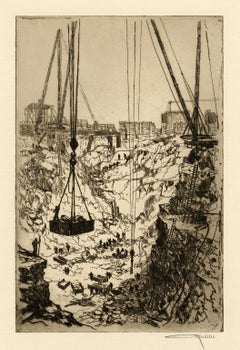
Bedrock
— Construction of the New Yorker Hotel
By Otto Kuhler
Located in Myrtle Beach, SC
Otto Kuhler, 'Bedrock', etching, 1928, edition 25, Kennedy 29. Signed and titled in pencil. A superb, richly-inked impression in brown/black ink, with skilfully wiped plate tone; on ...
Category
1920s American Realist Figurative Prints
Materials
Etching
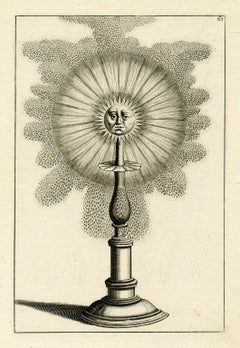
Architectura Curiosa Nova, Sunburst Garden Fountain
By Georg Andreas Böckler
Located in Myrtle Beach, SC
George Andreas Böckler, 'SunBurst Garden Fountain', antique copperplate engraving, 1664, from the book 'Architectura Curiosa Nova'. A fine, richly inked...
Category
1660s Realist Figurative Prints
Materials
Engraving
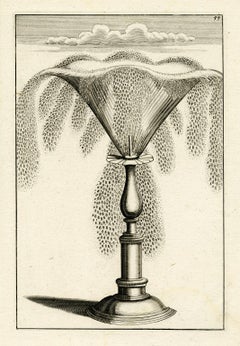
Architectura Curiosa Nova, Chalice Garden Fountain
By Georg Andreas Böckler
Located in Myrtle Beach, SC
George Andreas Böckler, 'Chalice Garden Fountain', antique copperplate engraving, 1664, from the book 'Architectura Curiosa Nova'. A fine, richly inked ...
Category
1660s Realist Figurative Prints
Materials
Engraving
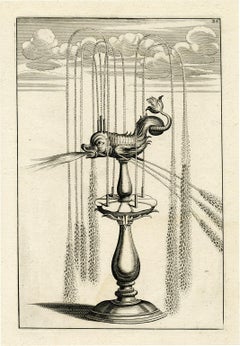
Architectura Curiosa Nova, Dragon Fish Garden Fountain
By Georg Andreas Böckler
Located in Myrtle Beach, SC
George Andreas Böckler, 'Dragon Fish Garden Fountain', antique copperplate engraving, 1664, from the book 'Architectura Curiosa Nova'. A fine, richly in...
Category
1660s Realist Figurative Prints
Materials
Engraving
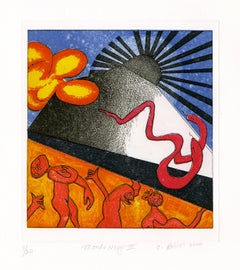
Mondo Negro III
— African American artist
By Camille Billops
Located in Myrtle Beach, SC
Camille Billops, 'Mondo Negro III', color etching, 2000, edition 20. Signed, dated, titled, and numbered '7/20' in pencil. A superb, richly-inked impre...
Category
Early 2000s Contemporary Figurative Prints
Materials
Etching
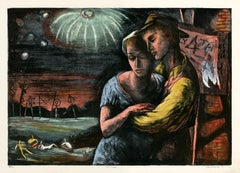
Set Pieces: Vanity of Trust
— Mid-Century American Modernism
By Benton Murdoch Spruance
Located in Myrtle Beach, SC
'Set Pieces: Vanity of Trust', color lithograph, 1949, edition 40, Fine and Looney 279. Signed, titled, dated and numbered '23/40' in pencil. A fine, impression with fresh colors, on...
Category
1940s American Modern Figurative Prints
Materials
Lithograph
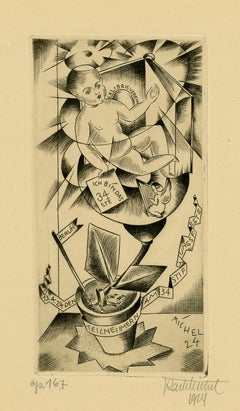
Ex Libris Verein
— 1920s German Expressionism
By Karl Michel
Located in Myrtle Beach, SC
Karl Michel, 'Ex Libris Verein' (New Year's Ex Libris Club Announcement), etching, 1924. Signed, dated, and numbered 'op. 167' in pencil. Signed and dated in...
Category
1920s Expressionist Figurative Prints
Materials
Etching
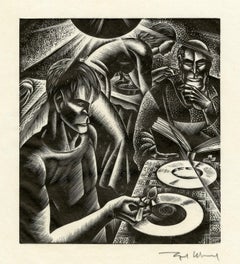
Wild Pilgrimage
(Contemplation) —
Story Without Words
Graphic Modernism
By Lynd Ward
Located in Myrtle Beach, SC
Lynd Ward, 'Wild Pilgrimage', No. 26, wood engraving, 1932, edition not stated but very small. Signed in pencil. A fine, black impression, with full margins (1 1/16 to 3 3/16 inches), on tissue-thin cream Japan paper, in very good condition. A scarce, artist-printed, hand-signed proof impression before the published edition. Matted to museum standards, unframed.
Created by Lynd Ward for his narrative book of illustrations without words, 'Wild Pilgrimage', published by Harrison Smith...
Category
1930s American Modern Figurative Prints
Materials
Woodcut
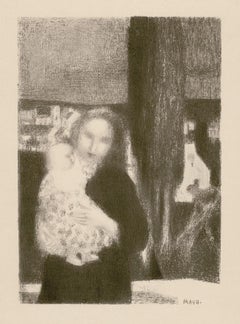
Untitled (Mother and Child)
By Maurice Denis
Located in Myrtle Beach, SC
Maurice Denis, Untitled (Mother and Child), lithograph, 1897, edition not stated. Signed in the stone, lower right. Annotated in linotype 'MAURICE DENIS, ORIGINAL LITHOGRAPHIE PAN III' in the lower left sheet corner. A fine, atmospheric impression, in warm, dark gray ink, on buff wove paper, with full margins (2 1/2 to 1 3/4 inches); a small discoloration in the bottom left sheet corner, otherwise in good condition. Image size 8 5/8 x 6 7/8 inches; sheet size 13 7/8 x 10 5/8 inches. As published in 'Pan', the leading German magazine of the period devoted to art and literature. Matted to museum standards, unframed.
Collection: Los Angeles County Museum of Art.
Reproduced: German Expressionist Prints...
Category
1890s Symbolist Figurative Prints
Materials
Lithograph
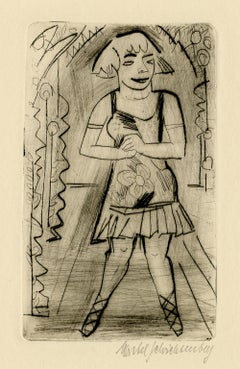
Varietesoubrette, Schwalbennest
also Dancer — 1920s German Expressionism
Located in Myrtle Beach, SC
Martel Schwichtenberg (1896-1945), 'Varietésoubrette, Schwalbennest (Variety Soubrette, Swallow’s Nest), drypoint, 1922. Signed in pencil. A fine, richly-inked impression; the full sheet of cream wove paper, with wide margins (3 3/4 to 5 1/4 inches), in excellent condition. Image size 7 3/16 x 4 5/16 inches; sheet size 16 3/8 x 12 1/8 inches. Archivally matted to museum standards, unframed.
Published in Die Schaffenden...
Category
1920s Bauhaus Figurative Prints
Materials
Drypoint
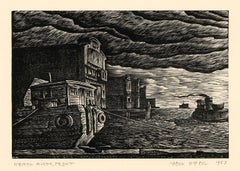
North River Front (Hudson River)
By John DePol
Located in Myrtle Beach, SC
John DePol, 'North River Front', chiaroscuro wood engraving, 1953, edition not stated. Signed, dated, and titled in pencil. Signed in the block, lower left...
Category
Mid-20th Century American Modern Figurative Prints
Materials
Woodcut
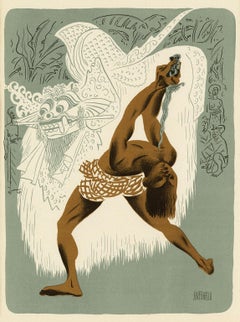
Kris Dancer, Bali
By Albert Al Hirschfeld
Located in Myrtle Beach, SC
Al Hirschfeld, 'Kris Dancer, Bali', color lithograph, 1941, edition 1,000. Signed in the stone, lower right. A fine, clean impression, with fresh colors, on cream wove paper, the ful...
Category
1940s American Modern Figurative Prints
Materials
Lithograph
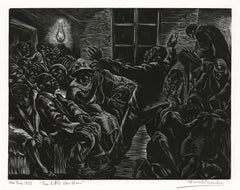
Run Little Chillun
also
Revival
— African American Subject
Located in Myrtle Beach, SC
Isac Friedlander, 'Run Little Chillun' also 'Revival', wood engraving, 1933, edition 50. Signed, titled and annotated 'New York 1933' in pencil. A sup...
Category
1930s American Modern Figurative Prints
Materials
Woodcut
George Washington Bridge (Under Construction)
— 1920s New York City
By Otto Kuhler
Located in Myrtle Beach, SC
Otto Kuhler, 'George Washington Bridge' (under construction) also titled 'The Cables That Hold it All', etching, 1928, edition unknown. An uns...
Category
1920s American Modern Figurative Prints
Materials
Etching

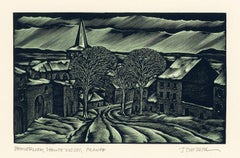
Domjulien, Haute Vosges, France
By John DePol
Located in Myrtle Beach, SC
John DePol, 'Domjulien, Haute Vosges, France', chiaroscuro wood engraving, 1971, edition 140. Signed, dated, titled and numbered '15/140' in pencil. Signed in the block, lower right....
Category
1970s American Modern Figurative Prints
Materials
Woodcut
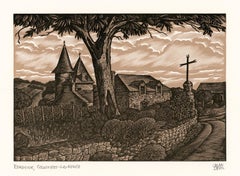
Roadside, Collonges-La Rouge
By John DePol
Located in Myrtle Beach, SC
John DePol, 'Roadside, Collonges-La Rouge', chiaroscuro wood engraving, 1980, edition 160 in 1983. Signed, dated, and titled in pencil. Signed in the block, l...
Category
1980s American Modern Figurative Prints
Materials
Woodcut
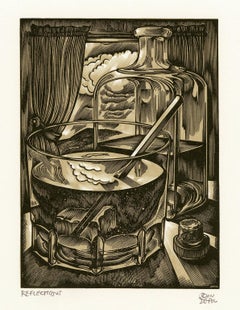
Reflections
By John DePol
Located in Myrtle Beach, SC
John DePol, 'Reflections', chiaroscuro wood engraving, 1979, edition 160 in 1983. Signed, dated and titled in pencil. Signed in the block, lower right. A superb impression, on cream ...
Category
1970s American Modern Figurative Prints
Materials
Woodcut
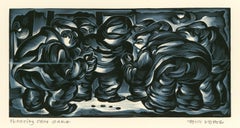
Floating Crap Game
By John DePol
Located in Myrtle Beach, SC
John DePol, 'Floating Crap Game, chiaroscuro wood engraving, 1958, edition 145. Signed, titled, numbered 'Ed. 145' and dated '3/1958'. Signed in the block, lower right. A fine, rich ...
Category
Mid-20th Century American Modern Figurative Prints
Materials
Woodcut
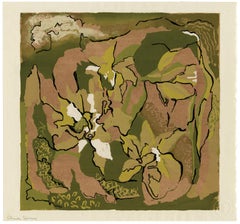
China Spring
— Mid-Century Floral Abstraction
By Mary Van Blarcom
Located in Myrtle Beach, SC
Mary Van Blarcom, 'China Spring', color serigraph, c. 1945, edition not stated but small. Signed in pencil in the image, lower right. Titled in pencil, bottom left sheet edge. A rich, painterly impression, with fresh colors, on cream laid paper; with full margins (9/16 to 1 5/16 inches), in excellent condition. Matted to museum standards, unframed.
Image size 10 3/4 x 10 3/4 inches; sheet size 11 15/16 x 12 5/8 inches.
ABOUT THE ARTIST
Painter, printmaker, and craftsperson, Mary Van Blarcom was born in Newark, New Jersey, and studied at Wellesley College. She was a member of the National Serigraph Society where she served on the board of trustees from 1945 through 1952 and was 1st vice-president from 1949-51. She was also a member of the National Association of Women Artists, the Artists Equity Association, the American Color Print Society, the New Jersey Artists Association (Director), and Artists of Today.
Van Blarcom exhibited actively throughout the 1940s at many prominent art organizations including: Montclair Art Museum, 1941-45 and 1947-51 (prize, 1948); Society of Independent Artists, 1942-44; Artists of Today, 1942-46; Elisabeth Ney Museum, 1943; Northwest Printmakers, 1944, 1946-49; Laguna Beach Art Association, 1945-47, 1949; National Association of Women Artists, 1945-50, (prize, 1946); Library of Congress, 1946-47; Museum of Modern Art Traveling Exhibition, 1945-47; Carnegie Institute, 1947; Serigraph Gallery, 1946, 1951 (solo); American Color Print Society, 1947-52; Newark Museum, 1947-48, 1951; California State Library, 1947, 1949; National Serigraph Society, 1949 (prize), 1950 (prize); University of Chile, 1950; New Jersey State Museum, 1950; Philadelphia Art Alliance, 1951; and the Main Gallery, NY, 1952.
Van Blarcom’s work is in the collections of the Newark Public Library, U.S. Library of Congress; the American Association of University Women; New York Public Library; Tel-Aviv Museum, Alabama Polytechnic Institute, Princeton Print Club...
Category
1940s American Modern Figurative Prints
Materials
Screen
$360 Sale Price
20% Off
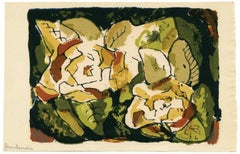
Gardenias
— Mid-Century Floral Abstraction
By Mary Van Blarcom
Located in Myrtle Beach, SC
Mary Van Blarcom, 'Gardenias', color serigraph, c. 1945, edition small. Signed 'Van B' in pencil in the image, lower right. Titled in pencil, bottom left sheet corner. A rich, painterly impression, with fresh colors, on cream wove paper; the full sheet with margins (5/16 to 1 1/16 inches), in excellent condition. Image size 6 x 8 3/8 inches; sheet size 6 7/8 x 10 1/4 inches. Matted to museum standards, unframed.
ABOUT THE ARTIST
Painter, printmaker and craftsperson, Mary Van Blarcom was born in Newark, New Jersey and studied at Wellesley College. She was a member of the National Serigraph Society where she served on the board of trustees from 1945 through 1952 and was 1st vice-president from 1949-51. She was also a member of the National Association of Women Artists, the Artists Equity Association, the American Color Print Society, the New Jersey Artists Association (Director), and Artists of Today.
Van Blarcom exhibited actively throughout the 1940’s at many prominent art organizations including: Montclair Art Museum, 1941-45 and 1947-51 (prize, 1948); Society of Independent Artists, 1942-44; Artists of Today, 1942-46; Elisabeth Ney Museum, 1943; Northwest Printmakers, 1944, 1946-49; Laguna Beach Art Association, 1945-47, 1949; National Association of Women Artists, 1945-50, (prize, 1946); Library of Congress, 1946-47; Museum of Modern Art travelling exhibition, 1945-47; Carnegie Institute, 1947; Serigraph Gallery, 1946, 1951 (solo); American Color Print Society, 1947-52; Newark Museum, 1947-48, 1951; California State Library, 1947, 1949; National Serigraph Society, 1949 (prize), 1950 (prize); University of Chile, 1950; New Jersey State Museum, 1950; Philadelphia Art Alliance, 1951; and the Main Gallery, NY, 1952.
Van Blarcom’s work is in the collections of the Newark Public Library, U.S. Library of Congress; the American Association of University Women; New York Public Library; Tel-Aviv Museum, Alabama Polytechnic Institute, Princeton Print Club...
Category
1940s American Modern Figurative Prints
Materials
Screen
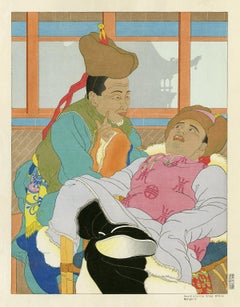
A Very Funny Story, Mongols
— Mid-Century Woodblock Print
By Paul Jacoulet
Located in Myrtle Beach, SC
Paul Jacoulet, 'Une Histoire très Drôle, Mongols', color woodblock print, 1949. A fine impression, with fresh colors, on the artist's handmade, personally watermarked Japan paper, in...
Category
1940s Showa Figurative Prints
Materials
Woodcut
Dancing
—
les années folles
Paris Masterwork, 1928
By Yasuo Kuniyoshi
Located in Myrtle Beach, SC
Yasuo Kuniyoshi, 'Dancing', lithograph, 1928, edition 30, Davis L-29. Signed, dated, and numbered '8/30' in pencil. A superb, richly-inked impression, printed on cream chine appliqué on heavy off-white wove backing; the full sheet with wide margins (1 3/8 to 4 7/8 inches), in excellent condition. Printed by Desjobert, Paris. Scarce. Matted to museum standards, unframed.
Impressions of this work are in the collections of the Museum of Modern Art, Whitney Museum of Modern Art, and Yasuo Kuniyoshi Museum (Japan).
ABOUT THIS WORK
The French economy boomed from 1921 until the Great Depression reached Paris in 1931. This period called 'Les années folles' or the 'Crazy Years', saw Paris reestablished as a capital of art, music, literature, and cinema. Paris in the 1920s and 1930s was the home and meeting place of some of the world's most prominent painters, sculptors, composers, dancers, poets, and writers. For those in the arts, it was, as Ernest Hemingway described it, "A moveable feast". Paris was home to an exceptional number of galleries, art dealers, and a network of wealthy patrons who offered commissions and held salons.
Pablo Picasso, perhaps the most famous artist in Paris, shared renown with a remarkable group of others, including the Romanian sculptor Constantin Brâncuși, the Belgian René Magritte, the Italian Amedeo Modigliani, the Russian émigré Marc Chagall, the Catalan and Spanish artists Salvador Dalí, Joan Miró, Juan Gris, and the German surrealist...
Category
1920s American Modern Nude Prints
Materials
Lithograph
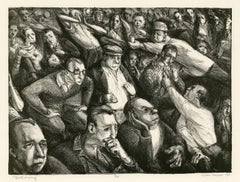
Ninth Inning
Located in Myrtle Beach, SC
Sylvia Mayzer Rantz, 'Ninth Inning', lithograph, 1949, edition 24. Signed, dated, titled, and numbered '9/24' in pencil. A fine, richly-inked impression, on cream wove paper. The ful...
Category
1940s American Realist Figurative Prints
Materials
Lithograph
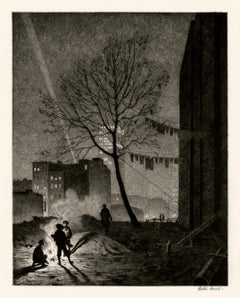
Tree, Manhattan
— Classic American Realism
By Martin Lewis
Located in Myrtle Beach, SC
Martin Lewis, 'Tree, Manhattan', drypoint, 1930, edition 91 (including 10 trial proofs), McCarron 87. Signed in pencil. A superb, atmospheric impression, in warm black ink, on cream...
Category
1930s American Realist Figurative Prints
Materials
Drypoint
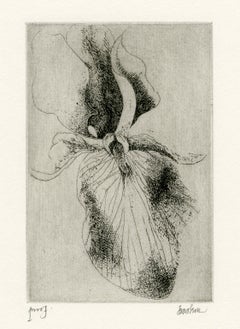
Iris (5)
By Leonard Baskin
Located in Myrtle Beach, SC
Leonard Baskin, 'Iris ( 5 )', etching, 1988, artist proof before the edition of 10, outside the book edition. Signed and annotated 'proof' in pencil. A fine impression, with expertly...
Category
1980s Impressionist Figurative Prints
Materials
Etching
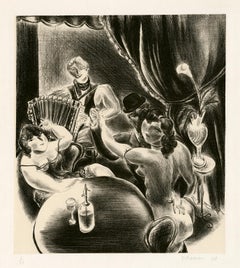
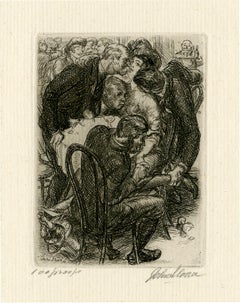
New Year’s Eve and Adam
By John Sloan
Located in Myrtle Beach, SC
John Sloan, 'New Year's Eve and Adam', etching, 1918, edition 100, (only 85 printed), Morse 190. Signed, titled and annotated '100 proofs' in pencil. Signed and dated in the plate, l...
Category
1910s Ashcan School Figurative Prints
Materials
Etching
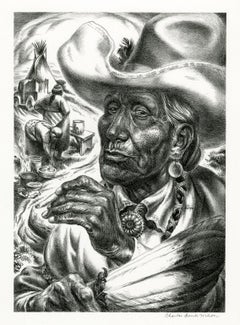
Old Injun
By Charles Banks Wilson
Located in Myrtle Beach, SC
Charles Banks Wilson, 'Old Injun', lithograph, 1948, edition 250, Hunt 39. Signed in pencil. A fine, richly-inked impression, on off-white wove paper, with full margins (1 3/4 to 2 inches), in excellent condition. Published by Associated American Artists.
Impressions of this work are in the permanent collections of the following institutions: Ackland Art Museum, Georgetown University...
Category
1940s American Realist Figurative Prints
Materials
Lithograph
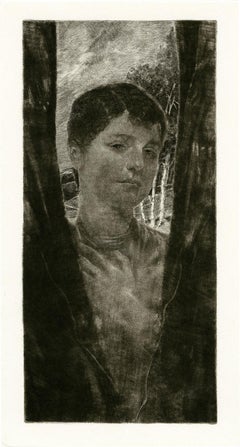
Erinnerung (Remembrance)
— Turn-of-the Century Romanticism
By Max Klinger
Located in Myrtle Beach, SC
Max Klinger, 'Erinnerung' (Remembrance), original etching with aquatint, 1896. A fine, richly inked impression on off-white, wove paper, with full margins (1 3/4 to 3 1/8 inches), in...
Category
1890s Post-Impressionist Figurative Prints
Materials
Etching, Aquatint
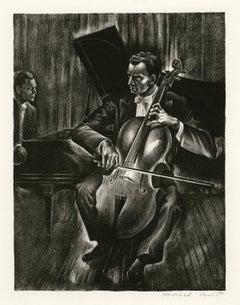
Duet — Cellist and Pianist, 1930s Lithograph
Located in Myrtle Beach, SC
Herschel Levit 'Duet', lithograph, c. 1937. Signed in pencil. A fine, richly inked impression, on cream wove paper, with full margins (1 1/2 x 2 inches)...
Category
1930s American Realist Figurative Prints
Materials
Lithograph
$600 Sale Price
20% Off
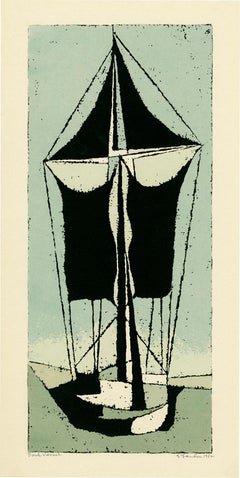
Dark Vessel
— Mid-Century Modern
By Edward August Landon
Located in Myrtle Beach, SC
Edward Landon, 'Dark Vessel', color serigraph, 1952, edition 50, Ryan 51. Signed, dated, and titled in pencil. A superb impression, with fresh colors, on c...
Category
Mid-20th Century American Modern Figurative Prints
Materials
Screen
$600 Sale Price
20% Off
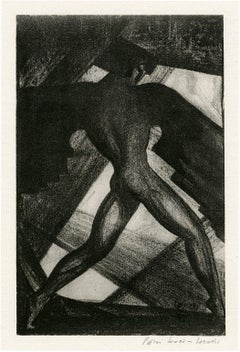
Untitled (Nike) — 1920s Modernism
By Boris Lovet-Lorski
Located in Myrtle Beach, SC
Boris Lovet-Lorski, Untitled (Nike), lithograph, edition 250, 1929. Signed and numbered 1 in pencil. Number 1 of Volume 1, a series of 10 lithographs in each of 2 portfolios, publish...
Category
1920s Art Deco Figurative Prints
Materials
Lithograph
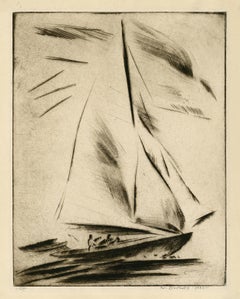
New Rochelle - Before the Wind
By Werner Drewes
Located in Myrtle Beach, SC
'New Rochelle - Before the Wind', drypoint, 1931, edition 30 (only a few impressions printed), Rose l.163. Signed, dated '1932' and numbered '1 – XXX' in ...
Category
1930s Modern Figurative Prints
Materials
Drypoint
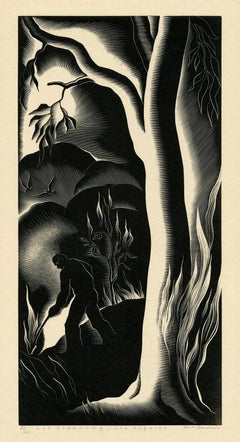
Lot Cleaning, Los Angeles
— 1930s Modernism
By Paul Landacre
Located in Myrtle Beach, SC
'Lot Cleaning, Los Angeles', wood engraving, edition 60, Zeitlin & Ver Brugge 69. Signed, titled and numbered '51/60' in pencil. A brilliant, black impression, on Kitakata Japan pape...
Category
1930s American Modern Figurative Prints
Materials
Woodcut
Theater
— 1920s German Expressionism
Located in Myrtle Beach, SC
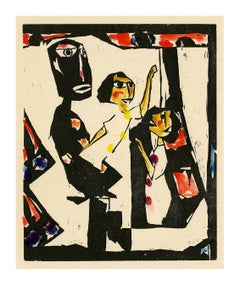
A German Expressionist woodcut, with original hand-coloring in watercolor, depicting a parent and child watching a theatrical production; ...
Category
1920s Expressionist Figurative Prints
Materials
Woodcut
From the Sea
— Mid-Century American Modernism
By Benton Murdoch Spruance
Located in Myrtle Beach, SC
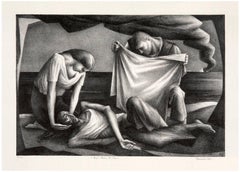
Benton Spruance, 'From the Sea' also 'From the Sea — Pieta', lithograph, editions 30, 35, 1943. A superb, richly inked impression, on off-white wove paper; the full sheet, with decke...
Category
1940s American Modern Figurative Prints
Materials
Lithograph
Le Tir Forain
(Fairground Shooting) — 1920s French Cubism
By Jean-Emile Laboureur
Located in Myrtle Beach, SC
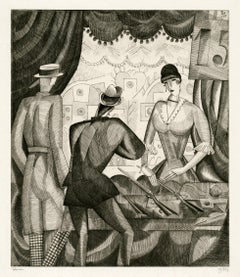
Le Tir Forain, engraving, edition 108, 1920-21, Sylvain Laboureur 191. Signed and numbered '19/85 ép' in pencil. Initialed 'L' and dated 1920 in the matrix,...
Category
1920s Cubist Figurative Prints
Materials
Engraving
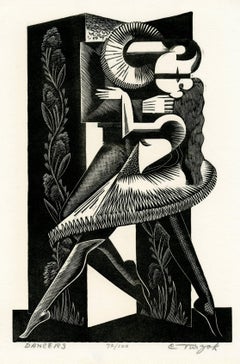
Dancers
— 1930s American Modernism
By Charles Turzak
Located in Myrtle Beach, SC
Charles Turzak, 'Dancers', 1939, wood engraving, edition 100. Signed, titled, and numbered 72/100 in pencil. A fine, richly-inked impression, on off-white Japan paper, with full marg...
Category
Mid-20th Century Art Deco Figurative Prints
Materials
Woodcut