La Galerie d Art Moderne à Southampton Figurative Prints
to
3,001
2,386
557
54
6
1
Overall Width
to
Overall Height
to
1,476
544
317
315
67
54
52
4
3
177
169
102
83
56
1
2,953
50
2
353
146
407
839
676
308
154
68
2,360
638
6
1,524
1,067
818
624
501
400
358
318
230
131
119
116
57
56
51
50
45
40
38
35
2,414
274
252
207
73
3,004
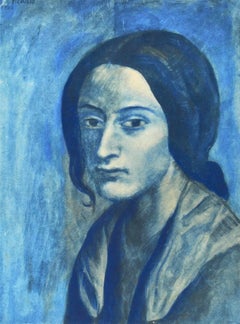
Pablo Picasso, Woman with the Lock of Hair, The Blues of Barcelona, 1963 (after)
By Pablo Picasso
Located in Southampton, NY
This exquisite lithograph and pochoir after Pablo Picasso (1881–1973), titled Femme a la meche (Woman with the Lock of Hair), from the folio Les Bleus de Barcelone, 12 aquarelles et ...
Category
1960s Modern Figurative Prints
Materials
Lithograph, Stencil

$7,596 Sale Price
20% Off
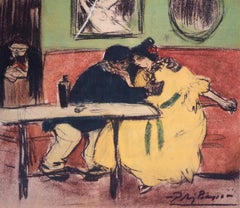
Pablo Picasso, The Divan, The Blues of Barcelona, 1963 (after)
By Pablo Picasso
Located in Southampton, NY
This exquisite lithograph and pochoir after Pablo Picasso (1881–1973), titled Le divan (The Divan), from the folio Les Bleus de Barcelone, 12 aquarelles et pastels (The Blues of Barc...
Category
1960s Modern Figurative Prints
Materials
Lithograph, Stencil
$7,596 Sale Price
20% Off
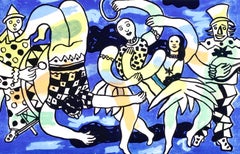
Fernand Leger, Plate 84-85, from Circus, 1950
By Fernand Léger
Located in Southampton, NY
This exquisite lithograph by Fernand Leger (1881–1955), titled Planche 84-85 (Plates 84-85), from the album Cirque, Lithographies Originales (Circus, Original Lithographs), originate...
Category
1950s Modern Landscape Prints
Materials
Lithograph
$2,556 Sale Price
20% Off
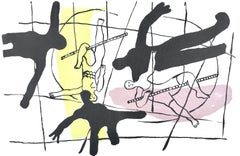
Fernand Leger, Plate 52-53, from Circus, 1950
By Fernand Léger
Located in Southampton, NY
This exquisite lithograph by Fernand Leger (1881–1955), titled Planche 52–53 (Plates 52–53), from the album Cirque, Lithographies Originales (Circus, Original Lithographs), originate...
Category
1950s Modern Landscape Prints
Materials
Lithograph
$2,556 Sale Price
20% Off
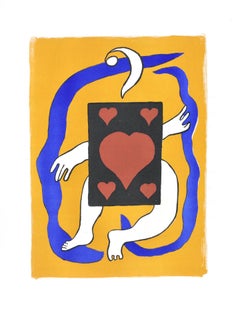
Fernand Leger, Plate 90, from Circus, 1950
By Fernand Léger
Located in Southampton, NY
This exquisite lithograph by Fernand Leger (1881–1955), titled Planche 90 (Plate 90), from the album Cirque, Lithographies Originales (Circus, Original Lithographs), originates from ...
Category
1950s Modern Landscape Prints
Materials
Lithograph
$1,996 Sale Price
20% Off
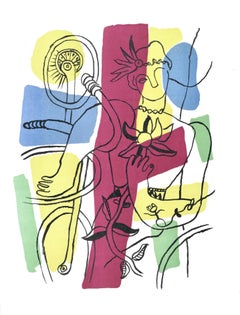
Fernand Leger, Frontispiece, from Circus, 1950
By Fernand Léger
Located in Southampton, NY
This exquisite lithograph by Fernand Leger (1881–1955), titled Frontispice (Frontispiece), from the album Cirque, Lithographies Originales (Circus, Original Lithographs), originates ...
Category
1950s Modern Landscape Prints
Materials
Lithograph
$1,996 Sale Price
20% Off
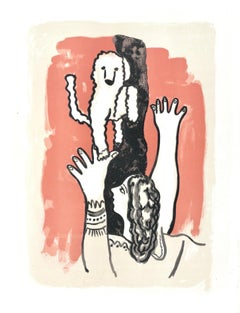
Fernand Leger, Plate 31, from Circus, 1950
By Fernand Léger
Located in Southampton, NY
This exquisite lithograph by Fernand Leger (1881–1955), titled Planche 31 (Plate 31), from the album Cirque, Lithographies Originales (Circus, Original Lithographs), originates from ...
Category
1950s Modern Landscape Prints
Materials
Lithograph
$1,996 Sale Price
20% Off
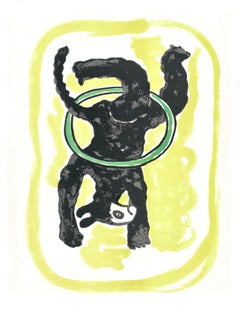
Fernand Leger, Plate 26, from Circus, 1950
By Fernand Léger
Located in Southampton, NY
This exquisite lithograph by Fernand Leger (1881–1955), titled Planche 25 (Plate 26), from the album Cirque, Lithographies Originales (Circus, Original Lithographs), originates from ...
Category
1950s Modern Landscape Prints
Materials
Lithograph
$1,996 Sale Price
20% Off
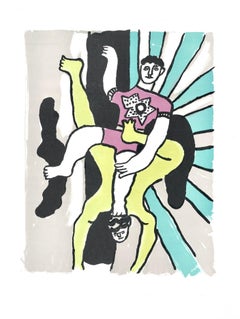
Fernand Leger, Plate 47, from Circus, 1950
By Fernand Léger
Located in Southampton, NY
This exquisite lithograph by Fernand Leger (1881–1955), titled Planche 47 (Plate 47), from the album Cirque, Lithographies Originales (Circus, Original Lithographs), originates from ...
Category
1950s Modern Landscape Prints
Materials
Lithograph
$1,996 Sale Price
20% Off
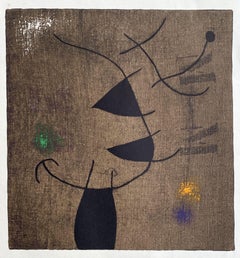
Joan Miro, Woman and Bird II/X, from Women, 1965
By Joan Miró
Located in Southampton, NY
This exquisite heliogravure by Joan Miro (1893–1983), titled Femme et Oiseau II/X (Woman and Bird II/X), from the folio Joan Miro, Femmes (Women), originates from the 1965 edition pu...
Category
1960s Modern Abstract Prints
Materials
Lithograph
$1,756 Sale Price
20% Off
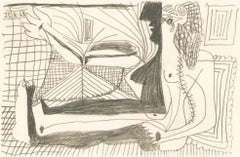
Pablo Picasso, 25.4.64., The Taste of Happiness, 1970 (after)
By Pablo Picasso
Located in Southampton, NY
This exquisite lithograph after Pablo Picasso (1881–1973), titled 25.4.64., from the folio Le Gout du Bonheur, trois carnets d`atelier (The Taste of Happiness, Three Studio Sketchboo...
Category
1970s Cubist Figurative Prints
Materials
Lithograph
$796 Sale Price
20% Off
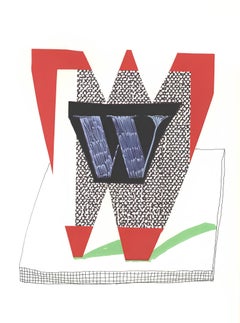
David Hockney, Letter W, from Hockney
s Alphabet, 1991
By David Hockney
Located in Southampton, NY
This exquisite lithograph by David Hockney (born 1937), titled Letter W, from the folio Hockney's Alphabet, Drawings by David Hockney, originates from the 1991 edition published by A...
Category
1990s Contemporary Figurative Prints
Materials
Lithograph
$1,196 Sale Price
20% Off
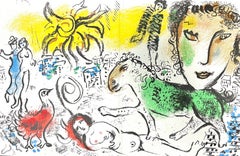
Marc Chagall, Sun Over the City, from XXe siecle, 1973
By Marc Chagall
Located in Southampton, NY
This exquisite lithograph by Marc Chagall (1887–1985), titled Soleil sur la ville (Sun Over the City), from the album Chagall Monumental Works, Special Issue of the XXe Siecle Review...
Category
1970s Expressionist Landscape Prints
Materials
Lithograph
$796 Sale Price
20% Off
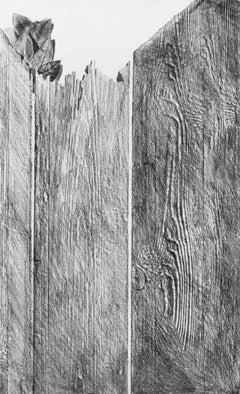
Max Ernst, Shaving the Walls, from Natural History, 1972 (after)
By Max Ernst
Located in Southampton, NY
This exquisite collotype after Max Ernst (1891–1976), titled Rasant les murs (Shaving the Walls), from the album Max Ernst, Histoire Naturelle (Natural History), originates from the ...
Category
1970s Surrealist Landscape Prints
Materials
Lithograph
$716 Sale Price
20% Off
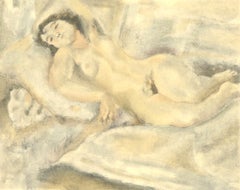
Jules Pascin, Manolita, from Pascin, 1954 (after)
By Jules Pascin
Located in Southampton, NY
This exquisite lithograph after Jules Pascin (1885–1930), titled Manolita, from the album Pascin, originates from the 1954 edition published by Editions du livre, Monte-Carlo, under the direction of Andre Sauret, Editeur, Monte-Carlo, and printed by Mourlot Freres, Paris, March 3, 1954. Manolita captures Pascin’s delicate mastery of line and his profound sensitivity to the human form, embodying the poetic lyricism and emotional intimacy that define his work.
Executed as a lithograph on grand velin Renage paper, this work measures 9.5 x 12.25 inches. Unsigned and unnumbered as issued. The edition exemplifies the refined craftsmanship of Mourlot Freres, Paris, and the exceptional production standards of Editions du livre, Monte-Carlo.
Artwork Details:
Artist: After Jules Pascin (1885–1930)
Title: Manolita, from the album Pascin
Medium: Lithograph on grand velin Renage paper
Dimensions: 9.5 x 12.25 inches (24.1 x 31.1 cm)
Inscription: Unsigned and unnumbered as issued
Date: 1954
Publisher: Editions du livre, Monte-Carlo, under the direction of Andre Sauret, Editeur, Monte-Carlo
Printer: Mourlot Freres, Paris
Condition: Well preserved, consistent with age and medium
Provenance: From the album Pascin, published by Editions du livre, Monte-Carlo, 1954
Notes:
Excerpted from the album (translated from French), This album, published under the direction of Andre Sauret, was completed on March 3, 1954. The color plates were executed in the workshops of Mourlot Freres, lithographes, in Paris. Typography of L'Imprimerie Union. The original etchings attached to the C head examples were printed on Roger Lacouriere's presses. The total edition was drawn in MM examples, decomposing as follows: C examples numbered from I to C with III original etchings, MCM examples from CI to MM.
About the Publication:
Pascin, published in Monte-Carlo in 1954 under the direction of Andre Sauret and printed by Mourlot Freres, Paris, stands as one of the most refined tributes to the artist’s oeuvre within the distinguished postwar series of French art albums. The album combines impeccable lithographic craftsmanship with scholarly presentation, highlighting the poetic subtlety and expressive line central to Pascin’s artistic legacy. Printed on grand velin Renage paper, the publication exemplifies the collaboration between Sauret and Mourlot that defined a generation of fine art editions, uniting artists, printers, and publishers dedicated to preserving the vitality of modern art in print. The album reflects the technical mastery of Mourlot’s atelier—celebrated for its work with Picasso, Matisse, Chagall, Braque, and Léger—while reinforcing Editions du livre’s commitment to producing luxurious, museum-quality publications that captured the spirit and emotion of twentieth-century masters. As a fine art album, Pascin occupies a central place among mid-century European art editions, representing both a celebration of the artist’s humanistic vision and a testament to the collaborative artistry that sustained modern printmaking.
About the Artist:
Jules Pascin (1885–1930) was a Bulgarian-born French painter and draftsman whose exquisite sensitivity, refined draftsmanship, and poetic vision made him one of the most evocative and influential figures of early modern art. Known as “the Prince of Montparnasse,” Pascin became a central figure of the Ecole de Paris and a defining presence in the bohemian world of early 20th-century Paris. Born Julius Mordecai Pincas in Vidin, Bulgaria, to a wealthy Sephardic Jewish family, he studied in Vienna and Munich before moving to Paris in 1905, where he quickly established himself among the leading modernists of his era, including Pablo Picasso, Amedeo Modigliani, Chaim Soutine, Georges Braque, and Marc Chagall. Deeply influenced by Edgar Degas, Henri de Toulouse-Lautrec, and Paul Cezanne, Pascin created paintings and drawings distinguished by their delicate lines, soft tonal harmonies, and psychological depth. His nudes, portraits, and scenes of Parisian cafe life radiate an atmosphere of quiet intimacy and emotional nuance, capturing the fragility and beauty of human existence. Unlike contemporaries such as Picasso, Joan Miro, Salvador Dali, Wassily Kandinsky, Marcel Duchamp, Alexander Calder, Alberto Giacometti, and Man Ray, who pushed toward abstraction and surrealism, Pascin remained devoted to figuration, exploring the subtleties of light, gesture, and emotion with unmatched tenderness. His works express sensuality without artifice, revealing the vulnerability and inner life of his subjects through line and color that seem to breathe with human feeling. His studio became a gathering place for artists and writers such as Ernest Hemingway, Henry Miller, and Anais Nin, who admired his introspection and his ability to translate psychological complexity into visual poetry. Though his life was marked by emotional turbulence and melancholy, his art radiated a timeless empathy that transcended style, influencing later artists including Balthus, Lucian Freud, Francis Bacon, Egon Schiele, and Eric Fischl, who drew inspiration from his fusion of sensuality, sensitivity, and psychological depth. Today, his works are held in major institutions including the Centre Pompidou, Musee d’Orsay, Tate Modern, and the Museum of Modern Art in New York, where they continue to resonate for their humanism and grace. Standing alongside Picasso, Calder, Giacometti, Dali, Miro, Kandinsky, Duchamp, and Man Ray, Jules Pascin helped define the emotional vocabulary of modern painting, and his legacy endures as one of the most intimate and humanist voices of his century. The highest auction record for Jules Pascin was achieved by Portrait de jeune fille en robe rouge sur fond bleu (1928), which sold for $2,950,500 USD at Sotheby’s, New York, on May 8, 2008, confirming his enduring reputation as one of the most refined, psychologically profound, and collectible artists of modern art history.
Jules Pascin Manolita Pascin Editions du livre Monte-Carlo 1954 lithograph...
Category
1950s Modern Figurative Prints
Materials
Lithograph
$716 Sale Price
20% Off
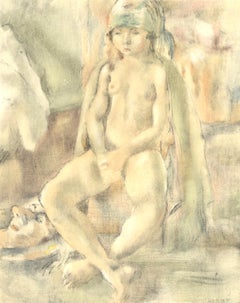
Jules Pascin, Salome, from Pascin, 1954 (after)
By Jules Pascin
Located in Southampton, NY
This exquisite lithograph after Jules Pascin (1885–1930), titled Salome, from the album Pascin, originates from the 1954 edition published by Editions du livre, Monte-Carlo, under the direction of Andre Sauret, Editeur, Monte-Carlo, and printed by Mourlot Freres, Paris, March 3, 1954. Salome captures Pascin’s delicate mastery of line and his profound sensitivity to the human form, embodying the poetic lyricism and emotional intimacy that define his work.
Executed as a lithograph on grand velin Renage paper, this work measures 12.25 x 9.5 inches. Unsigned and unnumbered as issued. The edition exemplifies the refined craftsmanship of Mourlot Freres, Paris, and the exceptional production standards of Editions du livre, Monte-Carlo.
Artwork Details:
Artist: After Jules Pascin (1885–1930)
Title: Salome, from the album Pascin
Medium: Lithograph on grand velin Renage paper
Dimensions: 12.25 x 9.5 inches (31.1 x 24.1 cm)
Inscription: Unsigned and unnumbered as issued
Date: 1954
Publisher: Editions du livre, Monte-Carlo, under the direction of Andre Sauret, Editeur, Monte-Carlo
Printer: Mourlot Freres, Paris
Condition: Well preserved, consistent with age and medium
Provenance: From the album Pascin, published by Editions du livre, Monte-Carlo, 1954
Notes:
Excerpted from the album (translated from French), This album, published under the direction of Andre Sauret, was completed on March 3, 1954. The color plates were executed in the workshops of Mourlot Freres, lithographes, in Paris. Typography of L'Imprimerie Union. The original etchings attached to the C head examples were printed on Roger Lacouriere's presses. The total edition was drawn in MM examples, decomposing as follows: C examples numbered from I to C with III original etchings, MCM examples from CI to MM.
About the Publication:
Pascin, published in Monte-Carlo in 1954 under the direction of Andre Sauret and printed by Mourlot Freres, Paris, stands as one of the most refined tributes to the artist’s oeuvre within the distinguished postwar series of French art albums. The album combines impeccable lithographic craftsmanship with scholarly presentation, highlighting the poetic subtlety and expressive line central to Pascin’s artistic legacy. Printed on grand velin Renage paper, the publication exemplifies the collaboration between Sauret and Mourlot that defined a generation of fine art editions, uniting artists, printers, and publishers dedicated to preserving the vitality of modern art in print. The album reflects the technical mastery of Mourlot’s atelier—celebrated for its work with Picasso, Matisse, Chagall, Braque, and Léger—while reinforcing Editions du livre’s commitment to producing luxurious, museum-quality publications that captured the spirit and emotion of twentieth-century masters. As a fine art album, Pascin occupies a central place among mid-century European art editions, representing both a celebration of the artist’s humanistic vision and a testament to the collaborative artistry that sustained modern printmaking.
About the Artist:
Jules Pascin (1885–1930) was a Bulgarian-born French painter and draftsman whose exquisite sensitivity, refined draftsmanship, and poetic vision made him one of the most evocative and influential figures of early modern art. Known as “the Prince of Montparnasse,” Pascin became a central figure of the Ecole de Paris and a defining presence in the bohemian world of early 20th-century Paris. Born Julius Mordecai Pincas in Vidin, Bulgaria, to a wealthy Sephardic Jewish family, he studied in Vienna and Munich before moving to Paris in 1905, where he quickly established himself among the leading modernists of his era, including Pablo Picasso, Amedeo Modigliani, Chaim Soutine, Georges Braque, and Marc Chagall. Deeply influenced by Edgar Degas, Henri de Toulouse-Lautrec, and Paul Cezanne, Pascin created paintings and drawings distinguished by their delicate lines, soft tonal harmonies, and psychological depth. His nudes, portraits, and scenes of Parisian cafe life radiate an atmosphere of quiet intimacy and emotional nuance, capturing the fragility and beauty of human existence. Unlike contemporaries such as Picasso, Joan Miro, Salvador Dali, Wassily Kandinsky, Marcel Duchamp, Alexander Calder, Alberto Giacometti, and Man Ray, who pushed toward abstraction and surrealism, Pascin remained devoted to figuration, exploring the subtleties of light, gesture, and emotion with unmatched tenderness. His works express sensuality without artifice, revealing the vulnerability and inner life of his subjects through line and color that seem to breathe with human feeling. His studio became a gathering place for artists and writers such as Ernest Hemingway, Henry Miller, and Anais Nin, who admired his introspection and his ability to translate psychological complexity into visual poetry. Though his life was marked by emotional turbulence and melancholy, his art radiated a timeless empathy that transcended style, influencing later artists including Balthus, Lucian Freud, Francis Bacon, Egon Schiele, and Eric Fischl, who drew inspiration from his fusion of sensuality, sensitivity, and psychological depth. Today, his works are held in major institutions including the Centre Pompidou, Musee d’Orsay, Tate Modern, and the Museum of Modern Art in New York, where they continue to resonate for their humanism and grace. Standing alongside Picasso, Calder, Giacometti, Dali, Miro, Kandinsky, Duchamp, and Man Ray, Jules Pascin helped define the emotional vocabulary of modern painting, and his legacy endures as one of the most intimate and humanist voices of his century. The highest auction record for Jules Pascin was achieved by Portrait de jeune fille en robe rouge sur fond bleu (1928), which sold for $2,950,500 USD at Sotheby’s, New York, on May 8, 2008, confirming his enduring reputation as one of the most refined, psychologically profound, and collectible artists of modern art history.
Jules Pascin Salome Pascin Editions du livre Monte-Carlo 1954 lithograph...
Category
1950s Modern Figurative Prints
Materials
Lithograph
$716 Sale Price
20% Off
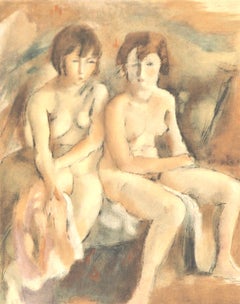
Jules Pascin, Two Nudes, from Pascin, 1954 (after)
By Jules Pascin
Located in Southampton, NY
This exquisite lithograph after Jules Pascin (1885–1930), titled Deux nus (Two Nudes), from the album Pascin, originates from the 1954 edition published by Editions du livre, Monte-Carlo, under the direction of Andre Sauret, Editeur, Monte-Carlo, and printed by Mourlot Freres, Paris, March 3, 1954. Deux nus captures Pascin’s delicate mastery of line and his profound sensitivity to the human form, embodying the poetic lyricism and emotional intimacy that define his work.
Executed as a lithograph on grand velin Renage paper, this work measures 12.25 x 9.5 inches. Signed in the plate and unnumbered as issued. The edition exemplifies the refined craftsmanship of Mourlot Freres, Paris, and the exceptional production standards of Editions du livre, Monte-Carlo.
Artwork Details:
Artist: After Jules Pascin (1885–1930)
Title: Deux nus (Two Nudes), from the album Pascin
Medium: Lithograph on grand velin Renage paper
Dimensions: 12.25 x 9.5 inches (31.1 x 24.1 cm)
Inscription: Signed in the plate and unnumbered as issued
Date: 1954
Publisher: Editions du livre, Monte-Carlo, under the direction of Andre Sauret, Editeur, Monte-Carlo
Printer: Mourlot Freres, Paris
Condition: Well preserved, consistent with age and medium
Provenance: From the album Pascin, published by Editions du livre, Monte-Carlo, 1954
Notes:
Excerpted from the album (translated from French), This album, published under the direction of Andre Sauret, was completed on March 3, 1954. The color plates were executed in the workshops of Mourlot Freres, lithographes, in Paris. Typography of L'Imprimerie Union. The original etchings attached to the C head examples were printed on Roger Lacouriere's presses. The total edition was drawn in MM examples, decomposing as follows: C examples numbered from I to C with III original etchings, MCM examples from CI to MM.
About the Publication:
Pascin, published in Monte-Carlo in 1954 under the direction of Andre Sauret and printed by Mourlot Freres, Paris, stands as one of the most refined tributes to the artist’s oeuvre within the distinguished postwar series of French art albums. The album combines impeccable lithographic craftsmanship with scholarly presentation, highlighting the poetic subtlety and expressive line central to Pascin’s artistic legacy. Printed on grand velin Renage paper, the publication exemplifies the collaboration between Sauret and Mourlot that defined a generation of fine art editions, uniting artists, printers, and publishers dedicated to preserving the vitality of modern art in print. The album reflects the technical mastery of Mourlot’s atelier—celebrated for its work with Picasso, Matisse, Chagall, Braque, and Léger—while reinforcing Editions du livre’s commitment to producing luxurious, museum-quality publications that captured the spirit and emotion of twentieth-century masters. As a fine art album, Pascin occupies a central place among mid-century European art editions, representing both a celebration of the artist’s humanistic vision and a testament to the collaborative artistry that sustained modern printmaking.
About the Artist:
Jules Pascin (1885–1930) was a Bulgarian-born French painter and draftsman whose exquisite sensitivity, refined draftsmanship, and poetic vision made him one of the most evocative and influential figures of early modern art. Known as “the Prince of Montparnasse,” Pascin became a central figure of the Ecole de Paris and a defining presence in the bohemian world of early 20th-century Paris. Born Julius Mordecai Pincas in Vidin, Bulgaria, to a wealthy Sephardic Jewish family, he studied in Vienna and Munich before moving to Paris in 1905, where he quickly established himself among the leading modernists of his era, including Pablo Picasso, Amedeo Modigliani, Chaim Soutine, Georges Braque, and Marc Chagall. Deeply influenced by Edgar Degas, Henri de Toulouse-Lautrec, and Paul Cezanne, Pascin created paintings and drawings distinguished by their delicate lines, soft tonal harmonies, and psychological depth. His nudes, portraits, and scenes of Parisian cafe life radiate an atmosphere of quiet intimacy and emotional nuance, capturing the fragility and beauty of human existence. Unlike contemporaries such as Picasso, Joan Miro, Salvador Dali, Wassily Kandinsky, Marcel Duchamp, Alexander Calder, Alberto Giacometti, and Man Ray, who pushed toward abstraction and surrealism, Pascin remained devoted to figuration, exploring the subtleties of light, gesture, and emotion with unmatched tenderness. His works express sensuality without artifice, revealing the vulnerability and inner life of his subjects through line and color that seem to breathe with human feeling. His studio became a gathering place for artists and writers such as Ernest Hemingway, Henry Miller, and Anais Nin, who admired his introspection and his ability to translate psychological complexity into visual poetry. Though his life was marked by emotional turbulence and melancholy, his art radiated a timeless empathy that transcended style, influencing later artists including Balthus, Lucian Freud, Francis Bacon, Egon Schiele, and Eric Fischl, who drew inspiration from his fusion of sensuality, sensitivity, and psychological depth. Today, his works are held in major institutions including the Centre Pompidou, Musee d’Orsay, Tate Modern, and the Museum of Modern Art in New York, where they continue to resonate for their humanism and grace. Standing alongside Picasso, Calder, Giacometti, Dali, Miro, Kandinsky, Duchamp, and Man Ray, Jules Pascin helped define the emotional vocabulary of modern painting, and his legacy endures as one of the most intimate and humanist voices of his century. The highest auction record for Jules Pascin was achieved by Portrait de jeune fille en robe rouge sur fond bleu (1928), which sold for $2,950,500 USD at Sotheby’s, New York, on May 8, 2008, confirming his enduring reputation as one of the most refined, psychologically profound, and collectible artists of modern art history.
Jules Pascin Deux nus Two Nudes Pascin Editions du livre Monte-Carlo 1954 lithograph...
Category
1950s Modern Figurative Prints
Materials
Lithograph
$716 Sale Price
20% Off
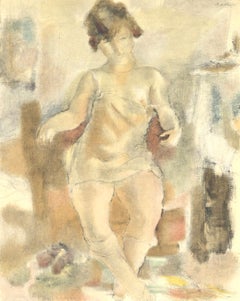
Jules Pascin, Nude with the Pink Blouse, from Pascin, 1954 (after)
By Jules Pascin
Located in Southampton, NY
This exquisite lithograph after Jules Pascin (1885–1930), titled Nu a la chemisette rose (Nude with the Pink Blouse), from the album Pascin, originates from the 1954 edition publishe...
Category
1950s Modern Figurative Prints
Materials
Lithograph
$716 Sale Price
20% Off
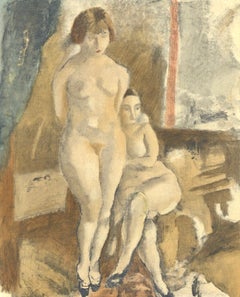
Jules Pascin, The Two Models, from Pascin, 1954 (after)
By Jules Pascin
Located in Southampton, NY
This exquisite lithograph after Jules Pascin (1885–1930), titled Les deux modeles (The Two Models), from the album Pascin, originates from the 1954 edition published by Editions du l...
Category
1950s Modern Figurative Prints
Materials
Lithograph
$716 Sale Price
20% Off
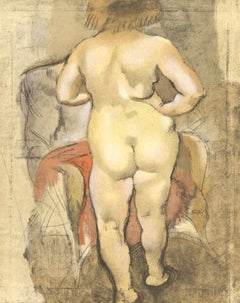
Jules Pascin, Venus from Behind, from Pascin, 1954 (after)
By Jules Pascin
Located in Southampton, NY
This exquisite lithograph after Jules Pascin (1885–1930), titled Venus de dos (Venus from Behind), from the album Pascin, originates from the 1954 edition published by Editions du li...
Category
1950s Modern Figurative Prints
Materials
Lithograph
$716 Sale Price
20% Off
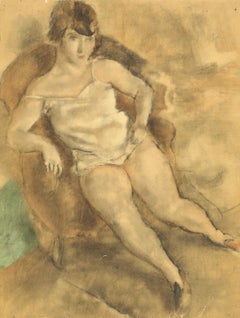
Jules Pascin, Woman in an Armchair, from Pascin, 1954 (after)
By Jules Pascin
Located in Southampton, NY
This exquisite lithograph after Jules Pascin (1885–1930), titled Femme dans un fauteuil (Woman in an Armchair), from the album Pascin, originates from the 1954 edition published by E...
Category
1950s Modern Figurative Prints
Materials
Lithograph
$716 Sale Price
20% Off
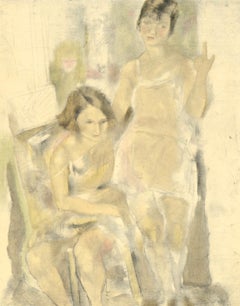
Jules Pascin, Ginette and Mireille, from Pascin, 1954 (after)
By Jules Pascin
Located in Southampton, NY
This exquisite lithograph after Jules Pascin (1885–1930), titled Ginette et Mireille (Ginette and Mireille), from the album Pascin, originates from the 1954 edition published by Edit...
Category
1950s Modern Figurative Prints
Materials
Lithograph
$716 Sale Price
20% Off
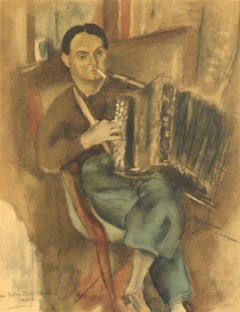
Jules Pascin, Portrait of Pierre Mac Orlan, from Pascin, 1954 (after)
By Jules Pascin
Located in Southampton, NY
This exquisite lithograph after Jules Pascin (1885–1930), titled Portrait de Pierre Mac Orlan (Portrait of Pierre Mac Orlan), from the album Pascin, originates from the 1954 edition ...
Category
1950s Modern Figurative Prints
Materials
Lithograph
$716 Sale Price
20% Off
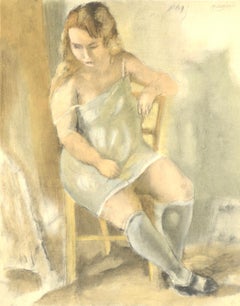
Jules Pascin, Marcelle in the Blue Blouse, from Pascin, 1954 (after)
By Jules Pascin
Located in Southampton, NY
This exquisite lithograph after Jules Pascin (1885–1930), titled Marcelle a la chemise bleue (Marcelle in the Blue Blouse), from the album Pascin, originates from the 1954 edition pu...
Category
1950s Modern Figurative Prints
Materials
Lithograph
$716 Sale Price
20% Off
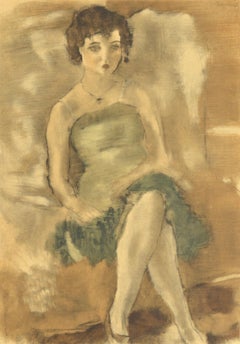
Jules Pascin, The Lady in Green, from Pascin, 1954 (after)
By Jules Pascin
Located in Southampton, NY
This exquisite lithograph after Jules Pascin (1885–1930), titled La Dame en vert (The Lady in Green), from the album Pascin, originates from the 1954 edition published by Editions du...
Category
1950s Modern Figurative Prints
Materials
Lithograph
$716 Sale Price
20% Off
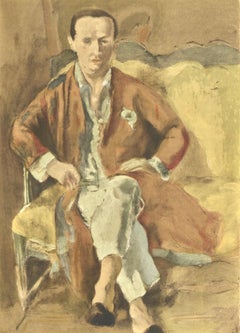
Jules Pascin, Portrait of Daragnes, from Pascin, 1954 (after)
By Jules Pascin
Located in Southampton, NY
This exquisite lithograph after Jules Pascin (1885–1930), titled Portrait de Daragnes (Portrait of Daragnes), from the album Pascin, originates from the 1954 edition published by Edi...
Category
1950s Modern Figurative Prints
Materials
Lithograph
$716 Sale Price
20% Off
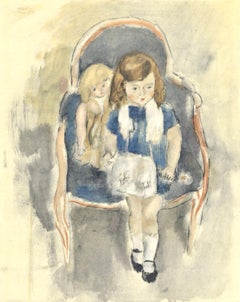
Jules Pascin, Jeanie Warnod, from Pascin, 1954 (after)
By Jules Pascin
Located in Southampton, NY
This exquisite lithograph after Jules Pascin (1885–1930), titled Jeanie Warnod, from the album Pascin, originates from the 1954 edition published by Editions du livre, Monte-Carlo, under the direction of Andre Sauret, Editeur, Monte-Carlo, and printed by Mourlot Freres, Paris, March 3, 1954. Jeanie Warnod captures Pascin’s delicate mastery of line and his profound sensitivity to the human form, embodying the poetic lyricism and emotional intimacy that define his work.
Executed as a lithograph on grand velin Renage paper, this work measures 12.25 x 9.5 inches. Signed in the plate and unnumbered as issued. The edition exemplifies the refined craftsmanship of Mourlot Freres, Paris, and the exceptional production standards of Editions du livre, Monte-Carlo.
Artwork Details:
Artist: After Jules Pascin (1885–1930)
Title: Jeanie Warnod, from the album Pascin
Medium: Lithograph on grand velin Renage paper
Dimensions: 12.25 x 9.5 inches (31.1 x 24.1 cm)
Inscription: Signed in the plate and unnumbered as issued
Date: 1954
Publisher: Editions du livre, Monte-Carlo, under the direction of Andre Sauret, Editeur, Monte-Carlo
Printer: Mourlot Freres, Paris
Condition: Well preserved, consistent with age and medium
Provenance: From the album Pascin, published by Editions du livre, Monte-Carlo, 1954
Notes:
Excerpted from the album (translated from French), This album, published under the direction of Andre Sauret, was completed on March 3, 1954. The color plates were executed in the workshops of Mourlot Freres, lithographes, in Paris. Typography of L'Imprimerie Union. The original etchings attached to the C head examples were printed on Roger Lacouriere's presses. The total edition was drawn in MM examples, decomposing as follows: C examples numbered from I to C with III original etchings, MCM examples from CI to MM.
About the Publication:
Pascin, published in Monte-Carlo in 1954 under the direction of Andre Sauret and printed by Mourlot Freres, Paris, stands as one of the most refined tributes to the artist’s oeuvre within the distinguished postwar series of French art albums. The album combines impeccable lithographic craftsmanship with scholarly presentation, highlighting the poetic subtlety and expressive line central to Pascin’s artistic legacy. Printed on grand velin Renage paper, the publication exemplifies the collaboration between Sauret and Mourlot that defined a generation of fine art editions, uniting artists, printers, and publishers dedicated to preserving the vitality of modern art in print. The album reflects the technical mastery of Mourlot’s atelier—celebrated for its work with Picasso, Matisse, Chagall, Braque, and Léger—while reinforcing Editions du livre’s commitment to producing luxurious, museum-quality publications that captured the spirit and emotion of twentieth-century masters. As a fine art album, Pascin occupies a central place among mid-century European art editions, representing both a celebration of the artist’s humanistic vision and a testament to the collaborative artistry that sustained modern printmaking.
About the Artist:
Jules Pascin (1885–1930) was a Bulgarian-born French painter and draftsman whose exquisite sensitivity, refined draftsmanship, and poetic vision made him one of the most evocative and influential figures of early modern art. Known as “the Prince of Montparnasse,” Pascin became a central figure of the Ecole de Paris and a defining presence in the bohemian world of early 20th-century Paris. Born Julius Mordecai Pincas in Vidin, Bulgaria, to a wealthy Sephardic Jewish family, he studied in Vienna and Munich before moving to Paris in 1905, where he quickly established himself among the leading modernists of his era, including Pablo Picasso, Amedeo Modigliani, Chaim Soutine, Georges Braque, and Marc Chagall. Deeply influenced by Edgar Degas, Henri de Toulouse-Lautrec, and Paul Cezanne, Pascin created paintings and drawings distinguished by their delicate lines, soft tonal harmonies, and psychological depth. His nudes, portraits, and scenes of Parisian cafe life radiate an atmosphere of quiet intimacy and emotional nuance, capturing the fragility and beauty of human existence. Unlike contemporaries such as Picasso, Joan Miro, Salvador Dali, Wassily Kandinsky, Marcel Duchamp, Alexander Calder, Alberto Giacometti, and Man Ray, who pushed toward abstraction and surrealism, Pascin remained devoted to figuration, exploring the subtleties of light, gesture, and emotion with unmatched tenderness. His works express sensuality without artifice, revealing the vulnerability and inner life of his subjects through line and color that seem to breathe with human feeling. His studio became a gathering place for artists and writers such as Ernest Hemingway, Henry Miller, and Anais Nin, who admired his introspection and his ability to translate psychological complexity into visual poetry. Though his life was marked by emotional turbulence and melancholy, his art radiated a timeless empathy that transcended style, influencing later artists including Balthus, Lucian Freud, Francis Bacon, Egon Schiele, and Eric Fischl, who drew inspiration from his fusion of sensuality, sensitivity, and psychological depth. Today, his works are held in major institutions including the Centre Pompidou, Musee d’Orsay, Tate Modern, and the Museum of Modern Art in New York, where they continue to resonate for their humanism and grace. Standing alongside Picasso, Calder, Giacometti, Dali, Miro, Kandinsky, Duchamp, and Man Ray, Jules Pascin helped define the emotional vocabulary of modern painting, and his legacy endures as one of the most intimate and humanist voices of his century. The highest auction record for Jules Pascin was achieved by Portrait de jeune fille en robe rouge sur fond bleu (1928), which sold for $2,950,500 USD at Sotheby’s, New York, on May 8, 2008, confirming his enduring reputation as one of the most refined, psychologically profound, and collectible artists of modern art history.
Jules Pascin Jeanie Warnod Pascin Editions du livre Monte-Carlo 1954 lithograph...
Category
1950s Modern Figurative Prints
Materials
Lithograph
$716 Sale Price
20% Off
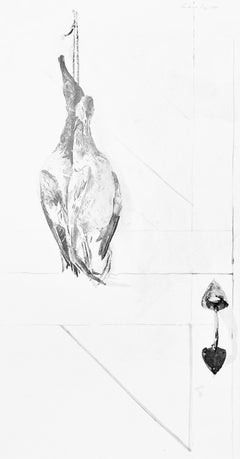
Andrew Wyeth, Canvasbacks, The Four Seasons (after)
By Andrew Wyeth
Located in Southampton, NY
This exquisite lithograph after Andrew Wyeth (1917–2009), titled Canvasbacks, originates from the distinguished 1962 folio The Four Seasons: Paintings and Drawings by Andrew Wyeth. Published and printed by Art in America Company, Inc., New York, the edition reflects Wyeth’s masterful study of nature and mood through his dry-brush technique. The composition captures the serene grace of waterfowl, rendered with Wyeth’s characteristic precision and quiet introspection that bridge realism and emotional depth.
Executed on velin paper, this lithograph measures 17 x 13 inches (43.2 x 33 cm). As issued, it is unsigned and unnumbered, representing the folio’s authentic format. The Four Seasons series was conceived by the editors of Art in America in collaboration with Andrew and Betsy Wyeth, who chose the theme to reflect the central role of seasonal transformation in his art. Each image reveals Wyeth’s profound sensitivity to light, time, and atmosphere—his ability to distill the poetry of the natural world into tangible form.
Artwork Details:
Artist: After Andrew Wyeth (1917–2009)
Title: Canvasbacks, from The Four Seasons, Paintings and Drawings by Andrew Wyeth, 1962
Medium: Lithograph on velin paper
Dimensions: 17 x 13 inches (43.2 x 33 cm)
Inscription: Unsigned and unnumbered, as issued
Date: 1962
Publisher: Art in America Company, Inc., New York
Printer: Art in America Company, Inc., New York
Condition: Well preserved, consistent with age and medium
Provenance: From the 1962 folio The Four Seasons, Paintings and Drawings by Andrew Wyeth, published and printed by Art in America Company, Inc., New York
Notes:
Excerpted from the 1962 folio:
"In 1962 the editors of Art in America proposed to Wyeth a portfolio of images of his recent dry-brush drawings. The artist and his wife suggested the theme, 'The Four Seasons,' because of the essential role played in his work by the cycle of the seasons. The drawings were selected by Andrew and Betsy Wyeth from works in the house and studio at Chadds Ford, supplemented by some owned by friends. With a few exceptions they had never been exhibited or reproduced. The plates were made directly from the originals. In these drawings Wyeth's loving concentration on the object is fully revealed. But as always in his work, this concern with the tangible is balanced by sensibility to mood, to the emotion arising from the actual. They are pervaded with a sense of the season—the exact time of year, the hour of the day, the quality of the light. To the truth and subtlety with which he captures these intangible factors, these drawings owe their poignant poetry."
About the Artist:
Andrew Wyeth (1917–2009) was an American visual artist and one of the best-known painters of the mid-20th century. Although he considered himself an abstractionist, Wyeth’s work is characterized by a meticulous realism imbued with psychological depth and atmosphere. He often painted the landscapes and people surrounding his homes in Chadds Ford, Pennsylvania, and Cushing, Maine, creating an intimate record of American rural life. The son of the celebrated illustrator N. C. Wyeth, Andrew trained under his father before developing his own deeply personal visual language inspired by Winslow Homer, Henry David Thoreau, and King Vidor. His wife, Betsy Wyeth, was both his muse and career manager, while his son Jamie Wyeth continued the family’s artistic legacy.
Among Wyeth’s best-known works is Christina’s World (1948), housed in the Museum of Modern Art, New York—a quintessential image of 20th-century American art. His other notable series include The Helga Pictures and his window studies, each reflecting a profound meditation on solitude, memory, and perception. Wyeth was the first painter to receive both the Presidential Medal of Freedom and the Congressional Gold Medal, and was elected to the French Académie des Beaux-Arts in 1980.
In 2022, Andrew Wyeth's painting Day Dream sold for USD 23.29 million at Christie’s New York, setting a world record for the artist.
Andrew Wyeth lithograph...
Category
1960s American Realist Landscape Prints
Materials
Lithograph
$716 Sale Price
20% Off
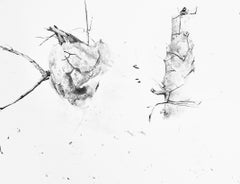
Andrew Wyeth, Storing Up, from The Four Seasons (after)
By Andrew Wyeth
Located in Southampton, NY
This exquisite lithograph after Andrew Wyeth (1917–2009), titled Storing Up, originates from the distinguished 1962 folio The Four Seasons: Pai...
Category
1960s American Realist Landscape Prints
Materials
Lithograph
$716 Sale Price
20% Off
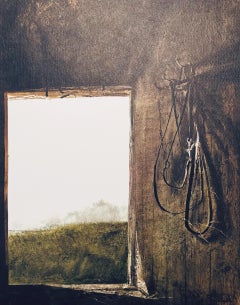
Andrew Wyeth, Burning Off, from The Four Seasons (after)
By Andrew Wyeth
Located in Southampton, NY
This exquisite lithograph after Andrew Wyeth (1917–2009), titled Burning Off, originates from the distinguished 1962 folio The Four Seasons: Paintings and Drawings by Andrew Wyeth. Published and printed by Art in America Company, Inc., New York, the edition captures Wyeth’s poetic meditation on atmosphere and transformation. Burning Off depicts a summer morning’s sea fog gradually lifting from the landscape, revealing the tranquil geometry of field and horizon. Through restrained tonal contrasts and delicate textural nuance, Wyeth conveys both the mystery and stillness of the natural world in transition.
Executed on velin paper, this lithograph measures 17 x 13 inches (43.2 x 33 cm). As issued, it is unsigned and unnumbered, representing the folio’s authentic format. The Four Seasons series was conceived by the editors of Art in America in collaboration with Andrew and Betsy Wyeth, who selected drawings from the artist’s studio and personal collection to embody the cyclical poetry of the seasons. Each image reflects Wyeth’s profound sensitivity to light, time, and emotion—his ability to evoke the spiritual essence of landscape through quiet realism.
Artwork Details:
Artist: After Andrew Wyeth (1917–2009)
Title: Burning Off, from The Four Seasons, Paintings and Drawings by Andrew Wyeth, 1962
Medium: Lithograph on velin paper
Dimensions: 17 x 13 inches (43.2 x 33 cm)
Inscription: Unsigned and unnumbered, as issued
Date: 1962
Publisher: Art in America Company, Inc., New York
Printer: Art in America Company, Inc., New York
Condition: Well preserved, consistent with age and medium
Provenance: From the 1962 folio The Four Seasons, Paintings and Drawings by Andrew Wyeth, published and printed by Art in America Company, Inc., New York
Notes:
Excerpted from the 1962 folio:
"In 1962 the editors of Art in America proposed to Wyeth a portfolio of images of his recent dry-brush drawings. The artist and his wife suggested the theme, 'The Four Seasons,' because of the essential role played in his work by the cycle of the seasons. The drawings were selected by Andrew and Betsy Wyeth from works in the house and studio at Chadds Ford, supplemented by some owned by friends. With a few exceptions they had never been exhibited or reproduced. The plates were made directly from the originals. In these drawings Wyeth's loving concentration on the object is fully revealed. But as always in his work, this concern with the tangible is balanced by sensibility to mood, to the emotion arising from the actual. They are pervaded with a sense of the season—the exact time of year, the hour of the day, the quality of the light. To the truth and subtlety with which he captures these intangible factors, these drawings owe their poignant poetry."
About the Artist:
Andrew Wyeth (1917–2009) was an American visual artist and one of the best-known painters of the mid-20th century. Although he considered himself an abstractionist, Wyeth’s work is characterized by a meticulous realism imbued with psychological depth and atmosphere. He often painted the landscapes and people surrounding his homes in Chadds Ford, Pennsylvania, and Cushing, Maine, creating an intimate record of American rural life. The son of the celebrated illustrator N. C. Wyeth, Andrew trained under his father before developing his own deeply personal visual language inspired by Winslow Homer, Henry David Thoreau, and King Vidor. His wife, Betsy Wyeth, was both his muse and career manager, while his son Jamie Wyeth continued the family’s artistic legacy.
Among Wyeth’s best-known works is Christina’s World (1948), housed in the Museum of Modern Art, New York—a quintessential image of 20th-century American art. His other notable series include The Helga Pictures and his window studies, each reflecting a profound meditation on solitude, memory, and perception. Wyeth was the first painter to receive both the Presidential Medal of Freedom and the Congressional Gold Medal, and was elected to the French Académie des Beaux-Arts in 1980.
In 2022, Andrew Wyeth's painting Day Dream sold for USD 23.29 million at Christie’s New York, setting a world record for the artist.
Andrew Wyeth lithograph...
Category
1960s American Realist Landscape Prints
Materials
Lithograph
$716 Sale Price
20% Off
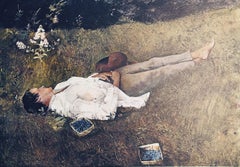
Andrew Wyeth, The Berry Picker, from The Four Seasons (after)
By Andrew Wyeth
Located in Southampton, NY
This exquisite lithograph after Andrew Wyeth (1917–2009), titled The Berry Picker, originates from the distinguished 1962 folio The Four Seasons: Paintings and Drawings by Andrew Wye...
Category
1960s American Realist Landscape Prints
Materials
Lithograph
$716 Sale Price
20% Off
Andrew Wyeth, May Day, from The Four Seasons (after)
By Andrew Wyeth
Located in Southampton, NY
This exquisite lithograph after Andrew Wyeth (1917–2009), titled May Day, originates from the distinguished 1962 folio The Four Seasons: Paintings and Drawings by Andrew Wyeth. Published and printed by Art in America Company, Inc., New York, the edition embodies Wyeth’s lyrical study of springtime renewal and human connection to the land. May Day captures a tender seasonal moment—nature reawakening beneath soft light—rendered with Wyeth’s quiet precision and emotional restraint that elevate the ordinary into the timeless.
Executed on velin paper, this lithograph measures 17 x 13 inches (43.2 x 33 cm). As issued, it is unsigned and unnumbered, representing the folio’s authentic format. The Four Seasons series was conceived by the editors of Art in America in collaboration with Andrew and Betsy Wyeth, who selected drawings from the artist’s studio and private collection to express the cyclical harmony between nature and spirit. Each image reflects Wyeth’s devotion to atmosphere and the fragile poetry of the passing year.
Artwork Details:
Artist: After Andrew Wyeth (1917–2009)
Title: May Day, from The Four Seasons, Paintings and Drawings by Andrew Wyeth, 1962
Medium: Lithograph on velin paper
Dimensions: 17 x 13 inches (43.2 x 33 cm)
Inscription: Unsigned and unnumbered, as issued
Date: 1962
Publisher: Art in America Company, Inc., New York
Printer: Art in America Company, Inc., New York
Condition: Well preserved, consistent with age and medium
Provenance: From the 1962 folio The Four Seasons, Paintings and Drawings by Andrew Wyeth, published and printed by Art in America Company, Inc., New York
Notes:
Excerpted from the 1962 folio:
"In 1962 the editors of Art in America proposed to Wyeth a portfolio of images of his recent dry-brush drawings. The artist and his wife suggested the theme, 'The Four Seasons,' because of the essential role played in his work by the cycle of the seasons. The drawings were selected by Andrew and Betsy Wyeth from works in the house and studio at Chadds Ford, supplemented by some owned by friends. With a few exceptions they had never been exhibited or reproduced. The plates were made directly from the originals. In these drawings Wyeth's loving concentration on the object is fully revealed. But as always in his work, this concern with the tangible is balanced by sensibility to mood, to the emotion arising from the actual. They are pervaded with a sense of the season—the exact time of year, the hour of the day, the quality of the light. To the truth and subtlety with which he captures these intangible factors, these drawings owe their poignant poetry."
About the Artist:
Andrew Wyeth (1917–2009) was an American visual artist and one of the best-known painters of the mid-20th century. Although he considered himself an abstractionist, Wyeth’s work is characterized by a meticulous realism imbued with psychological depth and atmosphere. He often painted the landscapes and people surrounding his homes in Chadds Ford, Pennsylvania, and Cushing, Maine, creating an intimate record of American rural life. The son of the celebrated illustrator N. C. Wyeth, Andrew trained under his father before developing his own deeply personal visual language inspired by Winslow Homer, Henry David Thoreau, and King Vidor. His wife, Betsy Wyeth, was both his muse and career manager, while his son Jamie Wyeth continued the family’s artistic legacy.
Among Wyeth’s best-known works is Christina’s World (1948), housed in the Museum of Modern Art, New York—a quintessential image of 20th-century American art. His other notable series include The Helga Pictures and his window studies, each reflecting a profound meditation on solitude, memory, and perception. Wyeth was the first painter to receive both the Presidential Medal of Freedom and the Congressional Gold Medal, and was elected to the French Académie des Beaux-Arts in 1980.
In 2022, Andrew Wyeth's painting Day Dream sold for USD 23.29 million at Christie’s New York, setting a world record for the artist.
Andrew Wyeth lithograph...
Category
1960s American Realist Landscape Prints
Materials
Lithograph
$716 Sale Price
20% Off
Andrew Wyeth, New Leaves, from The Four Seasons (after)
By Andrew Wyeth
Located in Southampton, NY
This exquisite lithograph after Andrew Wyeth (1917–2009), titled New Leaves, originates from the distinguished 1962 folio The Four Seasons: Paintings and Drawings by Andrew Wyeth. Published and printed by Art in America Company, Inc., New York, the edition exemplifies Wyeth’s quiet observation of nature and the passage of time. New Leaves captures the delicate stir of spring renewal—the subtle emergence of life in the landscape—rendered with Wyeth’s hallmark balance of precision, restraint, and emotional depth.
Executed on velin paper, this lithograph measures 17 x 13 inches (43.2 x 33 cm). As issued, it is unsigned and unnumbered, representing the folio’s authentic format. The Four Seasons series was conceived by the editors of Art in America in collaboration with Andrew and Betsy Wyeth, who selected drawings from the artist’s studio and personal archive to embody the poetic rhythm of the changing seasons. Each composition reveals Wyeth’s mastery of atmosphere, mood, and the quiet intensity of natural experience.
Artwork Details:
Artist: After Andrew Wyeth (1917–2009)
Title: New Leaves, from The Four Seasons, Paintings and Drawings by Andrew Wyeth, 1962
Medium: Lithograph on velin paper
Dimensions: 17 x 13 inches (43.2 x 33 cm)
Inscription: Unsigned and unnumbered, as issued
Date: 1962
Publisher: Art in America Company, Inc., New York
Printer: Art in America Company, Inc., New York
Condition: Well preserved, consistent with age and medium
Provenance: From the 1962 folio The Four Seasons, Paintings and Drawings by Andrew Wyeth, published and printed by Art in America Company, Inc., New York
Notes:
Excerpted from the 1962 folio:
"In 1962 the editors of Art in America proposed to Wyeth a portfolio of images of his recent dry-brush drawings. The artist and his wife suggested the theme, 'The Four Seasons,' because of the essential role played in his work by the cycle of the seasons. The drawings were selected by Andrew and Betsy Wyeth from works in the house and studio at Chadds Ford, supplemented by some owned by friends. With a few exceptions they had never been exhibited or reproduced. The plates were made directly from the originals. In these drawings Wyeth's loving concentration on the object is fully revealed. But as always in his work, this concern with the tangible is balanced by sensibility to mood, to the emotion arising from the actual. They are pervaded with a sense of the season—the exact time of year, the hour of the day, the quality of the light. To the truth and subtlety with which he captures these intangible factors, these drawings owe their poignant poetry."
About the Artist:
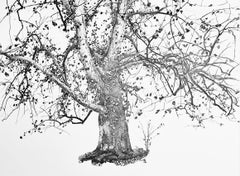
Andrew Wyeth (1917–2009) was an American visual artist and one of the best-known painters of the mid-20th century. Although he considered himself an abstractionist, Wyeth’s work is characterized by a meticulous realism imbued with psychological depth and atmosphere. He often painted the landscapes and people surrounding his homes in Chadds Ford, Pennsylvania, and Cushing, Maine, creating an intimate record of American rural life. The son of the celebrated illustrator N. C. Wyeth, Andrew trained under his father before developing his own deeply personal visual language inspired by Winslow Homer, Henry David Thoreau, and King Vidor. His wife, Betsy Wyeth, was both his muse and career manager, while his son Jamie Wyeth continued the family’s artistic legacy.
Among Wyeth’s best-known works is Christina’s World (1948), housed in the Museum of Modern Art, New York—a quintessential image of 20th-century American art. His other notable series include The Helga Pictures and his window studies, each reflecting a profound meditation on solitude, memory, and perception. Wyeth was the first painter to receive both the Presidential Medal of Freedom and the Congressional Gold Medal, and was elected to the French Académie des Beaux-Arts in 1980.
In 2022, Andrew Wyeth's painting Day Dream sold for USD 23.29 million at Christie’s New York, setting a world record for the artist.
Andrew Wyeth lithograph...
Category
1960s American Realist Landscape Prints
Materials
Lithograph
$716 Sale Price
20% Off
Andrew Wyeth, Spring Sun, from The Four Seasons (after)
By Andrew Wyeth
Located in Southampton, NY
This exquisite lithograph after Andrew Wyeth (1917–2009), titled Spring Sun, originates from the distinguished 1962 folio The Four Seasons: Paintings and Drawings by Andrew Wyeth. Published and printed by Art in America Company, Inc., New York, the edition captures Wyeth’s luminous portrayal of seasonal awakening. Spring Sun evokes the thin sunlight and faint warmth of early spring—the quiet renewal of life after winter’s retreat—rendered with Wyeth’s characteristic restraint, tonal subtlety, and contemplative emotional depth.
Executed on velin paper, this lithograph measures 17 x 13 inches (43.2 x 33 cm). As issued, it is unsigned and unnumbered, representing the folio’s authentic format. The Four Seasons series was conceived by the editors of Art in America in collaboration with Andrew and Betsy Wyeth, who selected drawings from the artist’s studio and personal collection to illustrate the intimate relationship between nature, time, and memory. Each composition distills Wyeth’s gift for transforming the familiar into visual poetry through mastery of texture, light, and mood.
Artwork Details:
Artist: After Andrew Wyeth (1917–2009)
Title: Spring Sun, from The Four Seasons, Paintings and Drawings by Andrew Wyeth, 1962
Medium: Lithograph on velin paper
Dimensions: 17 x 13 inches (43.2 x 33 cm)
Inscription: Unsigned and unnumbered, as issued
Date: 1962
Publisher: Art in America Company, Inc., New York
Printer: Art in America Company, Inc., New York
Condition: Well preserved, consistent with age and medium
Provenance: From the 1962 folio The Four Seasons, Paintings and Drawings by Andrew Wyeth, published and printed by Art in America Company, Inc., New York
Notes:
Excerpted from the 1962 folio:
"In 1962 the editors of Art in America proposed to Wyeth a portfolio of images of his recent dry-brush drawings. The artist and his wife suggested the theme, 'The Four Seasons,' because of the essential role played in his work by the cycle of the seasons. The drawings were selected by Andrew and Betsy Wyeth from works in the house and studio at Chadds Ford, supplemented by some owned by friends. With a few exceptions they had never been exhibited or reproduced. The plates were made directly from the originals. In these drawings Wyeth's loving concentration on the object is fully revealed. But as always in his work, this concern with the tangible is balanced by sensibility to mood, to the emotion arising from the actual. They are pervaded with a sense of the season—the exact time of year, the hour of the day, the quality of the light. To the truth and subtlety with which he captures these intangible factors, these drawings owe their poignant poetry."
About the Artist:
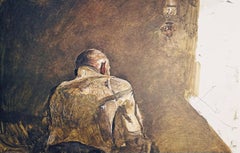
Andrew Wyeth (1917–2009) was an American visual artist and one of the best-known painters of the mid-20th century. Although he considered himself an abstractionist, Wyeth’s work is characterized by a meticulous realism imbued with psychological depth and atmosphere. He often painted the landscapes and people surrounding his homes in Chadds Ford, Pennsylvania, and Cushing, Maine, creating an intimate record of American rural life. The son of the celebrated illustrator N. C. Wyeth, Andrew trained under his father before developing his own deeply personal visual language inspired by Winslow Homer, Henry David Thoreau, and King Vidor. His wife, Betsy Wyeth, was both his muse and career manager, while his son Jamie Wyeth continued the family’s artistic legacy.
Among Wyeth’s best-known works is Christina’s World (1948), housed in the Museum of Modern Art, New York—a quintessential image of 20th-century American art. His other notable series include The Helga Pictures and his window studies, each reflecting a profound meditation on solitude, memory, and perception. Wyeth was the first painter to receive both the Presidential Medal of Freedom and the Congressional Gold Medal, and was elected to the French Académie des Beaux-Arts in 1980.
In 2022, Andrew Wyeth's painting Day Dream sold for USD 23.29 million at Christie’s New York, setting a world record for the artist.
Andrew Wyeth lithograph...
Category
1960s American Realist Landscape Prints
Materials
Lithograph
$716 Sale Price
20% Off
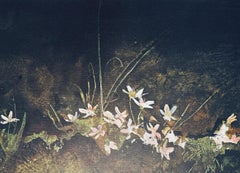
Andrew Wyeth, Quaker Ladies, from The Four Seasons (after)
By Andrew Wyeth
Located in Southampton, NY
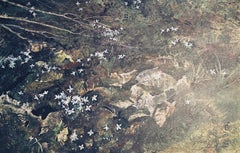
This exquisite lithograph after Andrew Wyeth (1917–2009), titled Quaker Ladies, originates from the distinguished 1962 folio The Four Seasons: Paintings and Drawings by Andrew Wyeth. Published and printed by Art in America Company, Inc., New York, the edition exemplifies Wyeth’s deep reverence for nature and his mastery of tonal subtlety. Quaker Ladies captures the full flowering of spring—an intimate study of delicate wild blossoms rendered with Wyeth’s signature restraint and sensitivity to atmosphere, texture, and light.
Executed on velin paper, this lithograph measures 17 x 13 inches (43.2 x 33 cm). As issued, it is unsigned and unnumbered, representing the folio’s authentic format. The Four Seasons series was conceived by the editors of Art in America in collaboration with Andrew and Betsy Wyeth, who selected drawings from the artist’s studio to express the cyclical beauty of nature’s transformations. Each image demonstrates Wyeth’s ability to translate fleeting seasonal impressions into works of quiet emotional resonance and painterly poetry.
Artwork Details:
Artist: After Andrew Wyeth (1917–2009)
Title: Quaker Ladies, from The Four Seasons, Paintings and Drawings by Andrew Wyeth, 1962
Medium: Lithograph on velin paper
Dimensions: 17 x 13 inches (43.2 x 33 cm)
Inscription: Unsigned and unnumbered, as issued
Date: 1962
Publisher: Art in America Company, Inc., New York
Printer: Art in America Company, Inc., New York
Condition: Well preserved, consistent with age and medium
Provenance: From the 1962 folio The Four Seasons, Paintings and Drawings by Andrew Wyeth, published and printed by Art in America Company, Inc., New York
Notes:
Excerpted from the 1962 folio:
"In 1962 the editors of Art in America proposed to Wyeth a portfolio of images of his recent dry-brush drawings. The artist and his wife suggested the theme, 'The Four Seasons,' because of the essential role played in his work by the cycle of the seasons. The drawings were selected by Andrew and Betsy Wyeth from works in the house and studio at Chadds Ford, supplemented by some owned by friends. With a few exceptions they had never been exhibited or reproduced. The plates were made directly from the originals. In these drawings Wyeth's loving concentration on the object is fully revealed. But as always in his work, this concern with the tangible is balanced by sensibility to mood, to the emotion arising from the actual. They are pervaded with a sense of the season—the exact time of year, the hour of the day, the quality of the light. To the truth and subtlety with which he captures these intangible factors, these drawings owe their poignant poetry."
About the Artist:
Andrew Wyeth (1917–2009) was an American visual artist and one of the best-known painters of the mid-20th century. Although he considered himself an abstractionist, Wyeth’s work is characterized by a meticulous realism imbued with psychological depth and atmosphere. He often painted the landscapes and people surrounding his homes in Chadds Ford, Pennsylvania, and Cushing, Maine, creating an intimate record of American rural life. The son of the celebrated illustrator N. C. Wyeth, Andrew trained under his father before developing his own deeply personal visual language inspired by Winslow Homer, Henry David Thoreau, and King Vidor. His wife, Betsy Wyeth, was both his muse and career manager, while his son Jamie Wyeth continued the family’s artistic legacy.
Among Wyeth’s best-known works is Christina’s World (1948), housed in the Museum of Modern Art, New York—a quintessential image of 20th-century American art. His other notable series include The Helga Pictures and his window studies, each reflecting a profound meditation on solitude, memory, and perception. Wyeth was the first painter to receive both the Presidential Medal of Freedom and the Congressional Gold Medal, and was elected to the French Académie des Beaux-Arts in 1980.
In 2022, Andrew Wyeth's painting Day Dream sold for USD 23.29 million at Christie’s New York, setting a world record for the artist.
Andrew Wyeth lithograph...
Category
1960s American Realist Landscape Prints
Materials
Lithograph
$716 Sale Price
20% Off
Andrew Wyeth, Brinton’s Mill, from The Four Seasons (after)
By Andrew Wyeth
Located in Southampton, NY
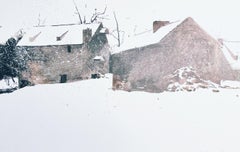
This exquisite lithograph after Andrew Wyeth (1917–2009), titled Brinton’s Mill, originates from the distinguished 1962 folio The Four Seasons: Paintings and Drawings by Andrew Wyeth. Published and printed by Art in America Company, Inc., New York, the edition exemplifies Wyeth’s intimate connection to the Brandywine Valley landscape. Brinton’s Mill, a historic gristmill near Chadds Ford, Pennsylvania—later purchased and restored by Wyeth and his wife Betsy—appears here bathed in the gentle light of seasonal transition, a motif of both personal and regional significance rendered with quiet reverence and precision.
Executed on velin paper, this lithograph measures 17 x 13 inches (43.2 x 33 cm). As issued, it is unsigned and unnumbered, representing the folio’s authentic format. The Four Seasons series was conceived by the editors of Art in America in collaboration with Andrew and Betsy Wyeth, who selected drawings from the artist’s studio to illustrate the cycle of renewal and passage. Each image in the series embodies Wyeth’s profound sensitivity to mood, atmosphere, and the subtle interplay between man and nature.
Artwork Details:
Artist: After Andrew Wyeth (1917–2009)
Title: Brinton’s Mill, from The Four Seasons, Paintings and Drawings by Andrew Wyeth, 1962
Medium: Lithograph on velin paper
Dimensions: 17 x 13 inches (43.2 x 33 cm)
Inscription: Unsigned and unnumbered, as issued
Date: 1962
Publisher: Art in America Company, Inc., New York
Printer: Art in America Company, Inc., New York
Condition: Well preserved, consistent with age and medium
Provenance: From the 1962 folio The Four Seasons, Paintings and Drawings by Andrew Wyeth, published and printed by Art in America Company, Inc., New York
Notes:
Excerpted from the 1962 folio:
"In 1962 the editors of Art in America proposed to Wyeth a portfolio of images of his recent dry-brush drawings. The artist and his wife suggested the theme, 'The Four Seasons,' because of the essential role played in his work by the cycle of the seasons. The drawings were selected by Andrew and Betsy Wyeth from works in the house and studio at Chadds Ford, supplemented by some owned by friends. With a few exceptions they had never been exhibited or reproduced. The plates were made directly from the originals. In these drawings Wyeth's loving concentration on the object is fully revealed. But as always in his work, this concern with the tangible is balanced by sensibility to mood, to the emotion arising from the actual. They are pervaded with a sense of the season—the exact time of year, the hour of the day, the quality of the light. To the truth and subtlety with which he captures these intangible factors, these drawings owe their poignant poetry."
About the Artist:
Andrew Wyeth (1917–2009) was an American visual artist and one of the best-known painters of the mid-20th century. Although he considered himself an abstractionist, Wyeth’s work is characterized by a meticulous realism imbued with psychological depth and atmosphere. He often painted the landscapes and people surrounding his homes in Chadds Ford, Pennsylvania, and Cushing, Maine, creating an intimate record of American rural life. The son of the celebrated illustrator N. C. Wyeth, Andrew trained under his father before developing his own deeply personal visual language inspired by Winslow Homer, Henry David Thoreau, and King Vidor. His wife, Betsy Wyeth, was both his muse and career manager, while his son Jamie Wyeth continued the family’s artistic legacy.
Among Wyeth’s best-known works is Christina’s World (1948), housed in the Museum of Modern Art, New York—a quintessential image of 20th-century American art. His other notable series include The Helga Pictures and his window studies, each reflecting a profound meditation on solitude, memory, and perception. Wyeth was the first painter to receive both the Presidential Medal of Freedom and the Congressional Gold Medal, and was elected to the French Académie des Beaux-Arts in 1980.
In 2022, Andrew Wyeth's painting Day Dream sold for USD 23.29 million at Christie’s New York, setting a world record for the artist.
Andrew Wyeth lithograph...
Category
1960s American Realist Landscape Prints
Materials
Lithograph
$716 Sale Price
20% Off
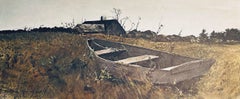
Andrew Wyeth, Teel’s Island, from The Four Seasons (after)
By Andrew Wyeth
Located in Southampton, NY
This exquisite lithograph after Andrew Wyeth (1917–2009), titled Teel’s Island, originates from the distinguished 1962 folio The Four Seasons: Paintings and Drawings by Andrew Wyeth....
Category
1960s American Realist Landscape Prints
Materials
Lithograph
$716 Sale Price
20% Off
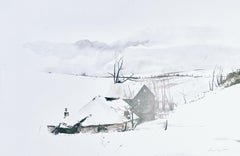
Andrew Wyeth, The Corner, from The Four Seasons (after)
By Andrew Wyeth
Located in Southampton, NY
This exquisite lithograph after Andrew Wyeth (1917–2009), titled The Corner, originates from the distinguished 1962 folio The Four Seasons: Pai...
Category
1960s American Realist Landscape Prints
Materials
Lithograph
$716 Sale Price
20% Off
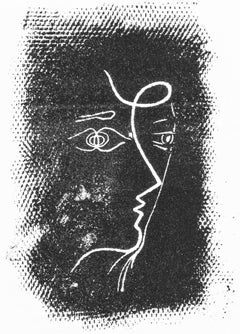
Georges Braque, Profile of a Woman, 1972 (after)
By Georges Braque
Located in Southampton, NY
This exquisite lithograph after Georges Braque (1882–1963), titled Profil de femme (Profile of a Woman), originates from the 1972 edition published by Editions A. C. Mazo et Cie., Pa...
Category
1970s Cubist Abstract Prints
Materials
Lithograph
$1,196 Sale Price
20% Off
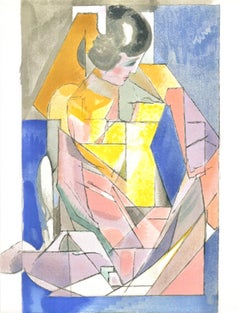
Jacques Villon, Portrait of a Young Girl, 1973 (after)
By Jacques Villon
Located in Southampton, NY
This exquisite lithograph after Jacques Villon (1875–1963), titled Portrait d'une jeune fille (Portrait of a Young Girl), originates from the 1972 edition published by Editions A. C....
Category
1970s Cubist Abstract Prints
Materials
Lithograph
$716 Sale Price
20% Off
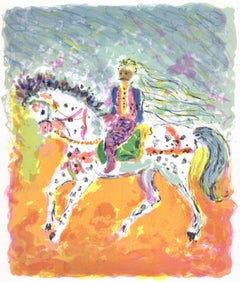
Constantin Terechkovitch, Tunisian Horseman, 1972
Located in Southampton, NY
This exquisite lithograph by Constantin Terechkovitch (1902–1978), titled Cavalier tunisien (Tunisian Horseman), originates from the 1972 edition published by Editions A. C. Mazo et ...
Category
1970s Modern Figurative Prints
Materials
Lithograph
$716 Sale Price
20% Off
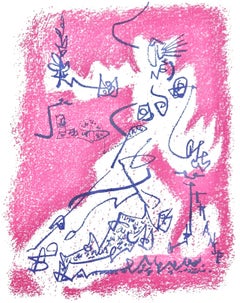
Andre Masson, The Departure, from Memories and Portraits of Artists, 1972
By André Masson
Located in Southampton, NY
This exquisite lithograph by Andre Masson (1896–1987), titled Le depart (The Departure), originates from the 1972 edition published by Editions A. C. Mazo et Cie., Paris, in collabor...
Category
1970s Surrealist Abstract Prints
Materials
Lithograph
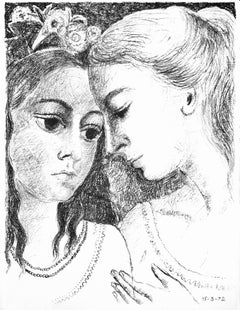
Paul Delvaux, Confidences, from Memories and Portraits of Artists, 1972
By Paul Delvaux
Located in Southampton, NY
This exquisite lithograph by Paul Delvaux (1897–1994), titled Confidences, originates from the 1972 edition published by Editions A. C. Mazo et Cie., Paris, in collaboration with Leo...
Category
1970s Modern Abstract Prints
Materials
Lithograph
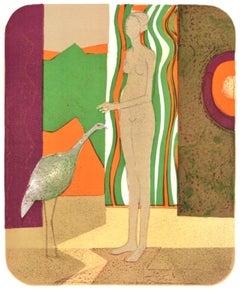
Andre Minaux, The Woman and the Bird, Memories and Portraits of Artists, 1972
By Andre Minaux
Located in Southampton, NY
This exquisite lithograph by Andre Minaux (1923–1986), titled La femme et l'oiseau (The Woman and the Bird), originates from the 1972 edition published by Editions A. C. Mazo et Cie....
Category
1970s Modern Abstract Prints
Materials
Lithograph
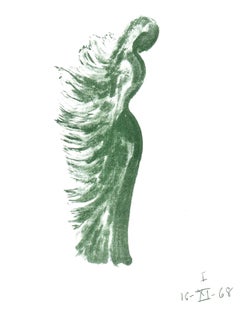
Apel·les Fenosa, Tramontane, from Memories and Portraits of Artists, 1972
Located in Southampton, NY
This exquisite lithograph by Apel·les Fenosa (1899–1988), titled Tramontane, originates from the 1972 edition published by Editions A. C. Mazo et Cie., Paris, in collaboration with L...
Category
1970s Modern Abstract Prints
Materials
Lithograph
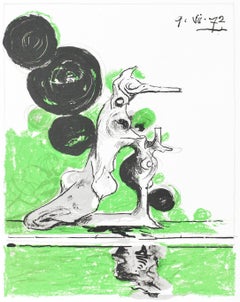
Graham Sutherland, Hybrid, from Memories and Portraits of Artists, 1972
By Graham Sutherland
Located in Southampton, NY
This exquisite lithograph by Graham Sutherland (1903–1980), titled Hybrid, originates from the 1972 edition published by Editions A. C. Mazo et Cie., Paris, in collaboration with Leo...
Category
1970s Modern Abstract Prints
Materials
Lithograph
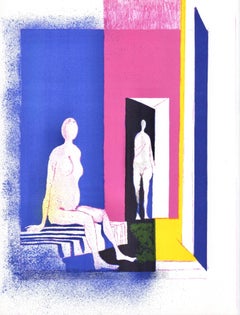
Paul Guiramand, Interior, from Memories and Portraits of Artists, 1972
By Paul Guiramand
Located in Southampton, NY
This exquisite lithograph by Paul Guiramand (1926–2007), titled Intérieur (Interior), originates from the 1972 edition published by Editions A. C. Mazo et Cie., Paris, in collaborati...
Category
1970s Modern Abstract Prints
Materials
Lithograph
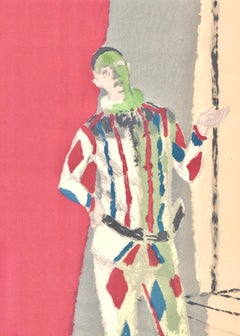
Bernard Cathelin, The Harlequin, from Memories and Portraits of Artists, 1972
By Bernard Cathelin
Located in Southampton, NY
This exquisite lithograph by Bernard Cathelin (1919–2004), titled L’Arlequin (The Harlequin), originates from the 1972 edition published by Editions A. C. Mazo et Cie., Paris, in col...
Category
1970s Modern Abstract Prints
Materials
Lithograph
Alberto Giacometti, Annette, from Prints from the Mourlot Press, 1964
By Alberto Giacometti
Located in Southampton, NY
This exquisite lithograph by Alberto Giacometti (1901–1966), titled Annette, from the album Prints from the Mourlot Press, exhibition sponsored by the French Embassy, circulated by the Traveling Exhibition Service of the National Collection of Fine Arts, Smithsonian Institution 1964–1965, originates from the 1964 edition published by Fernand Mourlot, Paris, in collaboration with the Embassy of France, Washington, D.C., and the Smithsonian Institution, Washington D.C., and printed by Mourlot Freres, Paris, October 27, 1964. This lithograph captures Giacometti’s distinct approach to portraiture, defined by trembling lines and psychological depth that distill the essence of human presence into a study of perception and being. Annette, his wife and muse, appears as both intimate subject and universal archetype, embodying the fragility and endurance that pervade Giacometti’s entire oeuvre.
Executed as a lithograph on velin d'Arches paper, this work measures 10 x 7.5 inches. Unsigned and unnumbered as issued. The edition exemplifies the refined craftsmanship of Mourlot Freres and highlights Giacometti’s mastery of line and form within the existential context of postwar modernism.
Artwork Details:
Artist: Alberto Giacometti (1901–1966)
Title: Annette, from the album Prints from the Mourlot Press
Medium: Lithograph on velin d'Arches paper
Dimensions: 10 x 7.5 inches (25.4 x 19.05 cm)
Inscription: Unsigned and unnumbered as issued
Date: 1964
Publisher: Fernand Mourlot, Paris, in collaboration with the Embassy of France, Washington, D.C., and the Smithsonian Institution, Washington D.C.
Printer: Mourlot Freres, Paris
Condition: Well preserved, consistent with age and medium
Provenance: From the album Prints from the Mourlot Press, published by Fernand Mourlot, Paris, 1964
Notes:
Excerpted from the album, This exhibition is a manifestation of Franco-American friendship and we would be very happy if it is of interest to all those who visit it. I wish to thank Mrs. Annemarie Pope for proposing and organizing this exhibition of the work of the artists who have used our press. We are honored that Mr. Herve Alphand, Ambassador of France to the United States, and Mr. Edouard Morot-Sir, Cultural Counsellor at the French Embassy in New York, will sponsor this exhibition. I express to them my thanks and appreciation. As for the artists themselves, who executed the originals contained in this catalogue, I can only say simply, "Thank you." They are all friends. We would have liked to include not just the twenty-four illustrations in this small book, but many more. During the year 1963, we lost three great artists who were faithful friends of our press. Thanks to Mrs. Georges Braque, Mr. Louis Carre, and Mr. Edouard Dermit, who have been able to pay our respects to Georges Braque, Jacques Villon and Jean Cocteau. The great Henri Matisse is also with us, since Mrs. Du-thuit-Matisse and her brothers have allowed us to use an unpublished original lithograph. Thanks to them all for their generosity. —Fernand Mourlot. The lithography at Mourlot printing press by Jean Adhemar, Curator of prints at the Bibliotheque nationale. Acknowledgments, Fernand Mourlot has long been the acknowledged master printer of France in every field, from lithographs to fine books to posters. The unfailing quality of his work commands the respect of museums, collectors, and most important of all, the artists themselves. Every product of his workshop bears the mark of Mourlot's discipline and craft and can truly be called an ideal collaboration between artist and artisan. The result of years of thoughtful planning, this special exhibition presents an accurate portrait of the Mourlot Press. We are greatly indebted to Fernand Mourlot, who made the selection, supervised the production of the catalogue, and gave endless time and energy to the details of preparation. This album was finished in Paris on 27th October 1964. The original lithographs and the reproductions were printed on the presses of Mourlot. The Imprimerie Nationale, Director Andre Brignole, was responsible for the typography. The edition has been limited to MM examples on Velin d'Arches and CC on Velin de Rives, reserved for the artists, the staff and the friends of the Imprimerie Mourlot.
About the Publication:
Prints from the Mourlot Press, published in Paris by Fernand Mourlot in 1964 in collaboration with the Embassy of France and the Smithsonian Institution, celebrated the profound artistic partnerships that defined 20th-century printmaking. The portfolio accompanied a traveling exhibition organized by the Smithsonian’s National Collection of Fine Arts and presented at major institutions across the United States between 1964 and 1965. Containing twenty-four original lithographs by leading modern artists—including Pablo Picasso, Henri Matisse, Georges Braque, Joan Miro, Marc Chagall, Alexander Calder, Fernand Leger, Alberto Giacometti, and Jean Cocteau—the publication chronicled the collaborative artistry of Mourlot Freres, whose Paris workshop elevated lithography to a fine art. Each plate demonstrated the mastery of color, composition, and craftsmanship that defined postwar printmaking, while the edition itself stood as a symbol of Franco-American cultural exchange.
About the Artist:
Alberto Giacometti (1901–1966) was a Swiss sculptor, painter, and draughtsman whose hauntingly elongated figures and existential vision redefined modern art and made him one of the most influential artists of the 20th century. Born in Borgonovo, Switzerland, into an artistic family—his father, Giovanni Giacometti, was a noted Post-Impressionist—he was immersed in art from an early age before studying in Geneva and moving to Paris in 1922, where he became part of the city’s avant-garde alongside Pablo Picasso, Alexander Calder, Salvador Dali, Joan Miro, Wassily Kandinsky, Marcel Duchamp, and Man Ray. In the 1920s and 1930s, Giacometti explored Cubism and Surrealism, creating symbolic and dreamlike sculptures such as Suspended Ball (1930–31) and The Palace at 4 A.M. (1932), which reflected the influence of Dali, Duchamp, and Man Ray. By the 1940s, he abandoned Surrealism to pursue a deeply personal exploration of the human condition, developing his iconic attenuated figures that embodied both fragility and resilience. His signature sculptures—L’Homme qui marche I (Walking Man I), Femme debout, and Le Chariot—expressed the isolation, endurance, and vulnerability of modern existence, echoing the existential philosophy of Jean-Paul Sartre and Simone de Beauvoir. Giacometti’s figures, stripped of mass yet monumental in spirit, symbolized humanity’s search for meaning in a postwar world, while his paintings and drawings—portraits of his brother Diego, his wife Annette, and his friends—captured the psychological depth of perception with trembling, repetitive lines that blurred the boundary between body and soul. His friendships with Picasso, Calder, Miro, and Kandinsky shaped his understanding of form, motion, and space, while his philosophical engagement with Duchamp and Man Ray deepened his inquiry into the nature of reality and perception. Working obsessively in his modest Montparnasse studio, Giacometti pursued art as an existential act—destroying and rebuilding his figures in an endless search for truth. His influence on postwar art was immense, shaping the work of Henry Moore, Francis Bacon, Louise Bourgeois, Lucian Freud, and later contemporary sculptors such as Antony Gormley and Anselm Kiefer. His aesthetic also resonated beyond sculpture, influencing fashion, photography, and architecture through his vision of form, isolation, and proportion. Giacometti’s work is represented in major museum collections including MoMA, the Tate Modern, and the Centre Pompidou, and continues to inspire artists, collectors, and thinkers worldwide. Standing alongside Pablo Picasso, Alexander Calder, Salvador Dali, Joan Miro, Wassily Kandinsky, Marcel Duchamp, and Man Ray, Giacometti remains a towering figure in modern art—a sculptor-philosopher who transformed the human form into a universal symbol of resilience and reflection. His highest auction record was achieved by L’Homme qui marche I (Walking Man I), which sold for 141.3 million USD at Sotheby’s, London, on February 3, 2010, reaffirming Alberto Giacometti’s enduring legacy as one of the most visionary, profound, and collectible artists in the history of modern art.
Alberto Giacometti Annette...
Category
1960s Modern Abstract Prints
Materials
Lithograph
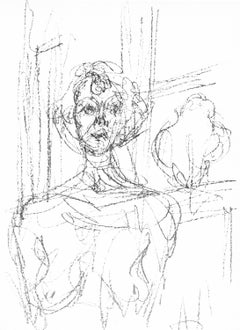
Akira Kito, Child, from Prints from the Mourlot Press, 1964
Located in Southampton, NY
This exquisite lithograph by Akira Kito (1909–1995), titled Enfant (Child), from the album Prints from the Mourlot Press, exhibition sponsored by the French Embassy, circulated by th...
Category
1960s Modern Abstract Prints
Materials
Lithograph
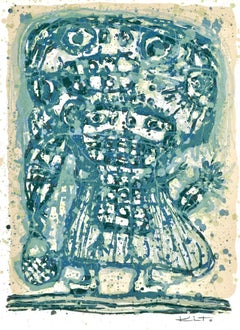
$716 Sale Price
20% Off
Alexander Calder, Card Players III, from Derriere le Miroir, 1975
By Alexander Calder
Located in Southampton, NY
This exquisite lithograph by Alexander Calder (1898–1976), titled Joueurs de cartes III (Card Players III), originates from the historic 1975 folio Derriere le Miroir, No. 212. Publi...
Category
1970s Surrealist Figurative Prints
Materials
Lithograph
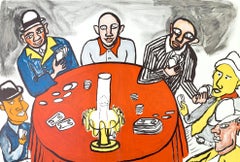
$716 Sale Price
20% Off
Alexander Calder, The Madwomen of Sache, from Derriere le Miroir, 1975
By Alexander Calder
Located in Southampton, NY
This exquisite lithograph by Alexander Calder (1898–1976), titled Les folles de Sache (The Madwomen of Sache), originates from the historic 1975 folio Derriere le Miroir, No. 212. Pu...
Category
1970s Surrealist Figurative Prints
Materials
Lithograph
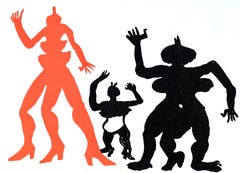
Alexander Calder, A Patriot and Mama Citron, from Derriere le Miroir, 1975
By Alexander Calder
Located in Southampton, NY
This exquisite lithograph by Alexander Calder (1898–1976), titled Un patriote et Mama Citron (A Patriot and Mama Citron), originates from the historic 1975 folio Derriere le Miroir, ...
Category
1970s Surrealist Figurative Prints
Materials
Lithograph
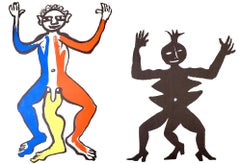
Alexander Calder, Card Players I and II, from Derriere le Miroir, 1975
By Alexander Calder
Located in Southampton, NY
This exquisite lithograph by Alexander Calder (1898–1976), titled Joueurs de cartes I et II (Card Players I and II), originates from the historic 1975 folio Derriere le Miroir, No. 2...
Category
1970s Surrealist Figurative Prints
Materials
Lithograph
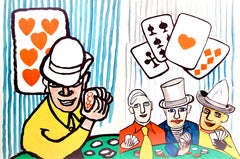
Alexander Calder, A Family from Over There II, from Derriere le Miroir, 1975
By Alexander Calder
Located in Southampton, NY
This exquisite lithograph by Alexander Calder (1898–1976), titled Une famille de là-bas II (A Family from Over There II), originates from the historic 1975 folio Derriere le Miroir, ...
Category
1970s Surrealist Figurative Prints
Materials
Lithograph
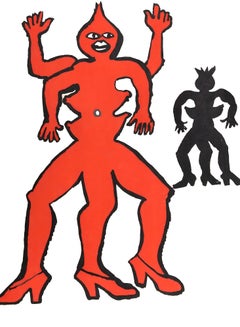
Alexander Calder, Card Players II, from Derriere le Miroir, 1975
By Alexander Calder
Located in Southampton, NY
This exquisite lithograph by Alexander Calder (1898–1976), titled Joueurs de cartes II (Card Players II), originates from the historic 1975 folio Derriere le Miroir, No. 212. Publish...
Category
1970s Surrealist Figurative Prints
Materials
Lithograph
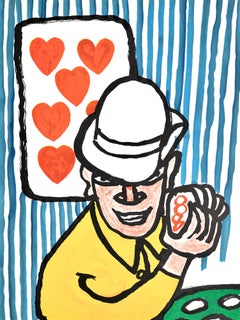
$716 Sale Price
20% Off
Alexander Calder, Card Players I, from Derriere le Miroir, 1975
By Alexander Calder
Located in Southampton, NY
This exquisite lithograph by Alexander Calder (1898–1976), titled Joueurs de cartes I (Card Players I), originates from the historic 1975 folio Derriere le Miroir, No. 212. Published...
Category
1970s Surrealist Figurative Prints
Materials
Lithograph
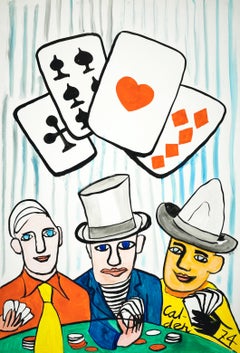
$716 Sale Price
20% Off
Alexander Calder, A Patriot, from Derriere le Miroir, 1975
By Alexander Calder
Located in Southampton, NY
This exquisite lithograph by Alexander Calder (1898–1976), titled Un Patriote (A Patriot), originates from the historic 1975 folio Derriere le Miroir, No. 212. Published by Maeght Ed...
Category
1970s Surrealist Figurative Prints
Materials
Lithograph
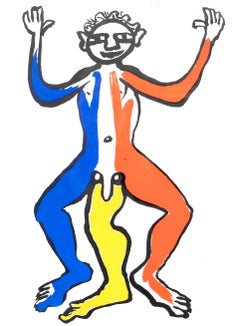
$716 Sale Price
20% Off
Alexander Calder, Mama Citron, from Derriere le Miroir, 1975
By Alexander Calder
Located in Southampton, NY
This exquisite lithograph by Alexander Calder (1898–1976), titled Mama Citron, originates from the historic 1975 folio Derriere le Miroir, No. 212. Published by Maeght Editeur, Paris...
Category
1970s Surrealist Figurative Prints
Materials
Lithograph
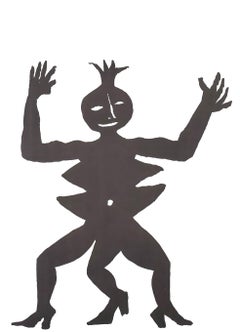
$716 Sale Price
20% Off
Albert Andre, Portrait of Auguste Renoir, 1951 (after)
By Albert Andre
Located in Southampton, NY
This exquisite lithograph after Albert Andre (1869–1954), titled Portrait de Auguste Renoir (Portrait of Auguste Renoir), from the album Les Lithographies de Renoir (The Lithographs ...
Category
1950s Impressionist Figurative Prints
Materials
Lithograph
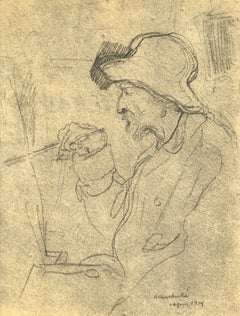
$716 Sale Price
20% Off