La Galerie d Art Moderne à Southampton Still-life Prints
to
428
327
85
11
3
2
Overall Width
to
Overall Height
to
215
46
36
33
22
8
1
21
17
8
3
2
428
12
1
58
146
145
35
31
277
139
12
56
40
32
23
19
17
16
14
13
9
8
7
6
5
5
5
4
4
4
4
401
44
23
2
1
428
Alexander Calder, The Moon and the Prickly Pig, from Derriere le Miroir, 1963
By Alexander Calder
Located in Southampton, NY
This exquisite lithograph by Alexander Calder (1898–1976), titled La lune et porc qui pique (The Moon and the Prickly Pig), originates from the historic 1963 folio Derriere le Miroir...
Category
1960s Surrealist Abstract Prints
Materials
Lithograph
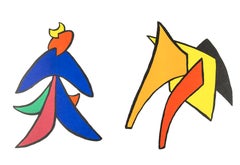
Alexander Calder, Clog and Phrygian Cap, from Derriere le Miroir, 1963
By Alexander Calder
Located in Southampton, NY
This exquisite lithograph by Alexander Calder (1898–1976), titled Sabot et le bonnet phrygien (Clog and Phrygian Cap), originates from the historic 1963 folio Derriere le Miroir, No....
Category
1960s Surrealist Abstract Prints
Materials
Lithograph
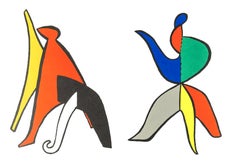
Saul Steinberg, Untitled, from Derriere le Miroir, 1982
By Saul Steinberg
Located in Southampton, NY
This exquisite lithograph by Saul Steinberg (1914–1999), titled Sans titre (Untitled), originates from the historic 1982 folio Derriere le Miroir, No. 250, Hommage a Aime et Margueri...
Category
1980s Modern Abstract Prints
Materials
Lithograph

$796 Sale Price
20% Off
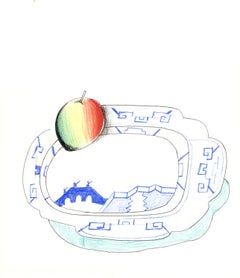
Konrad Klapheck, Untitled, from Derriere le Miroir, 1982
By Konrad Klapheck
Located in Southampton, NY
This exquisite lithograph by Konrad Klapheck (1935–2023), titled Sans titre (Untitled), originates from the historic 1982 folio Derriere le Miroir, No. 250, Hommage a Aime et Marguer...
Category
1980s Modern Abstract Prints
Materials
Lithograph
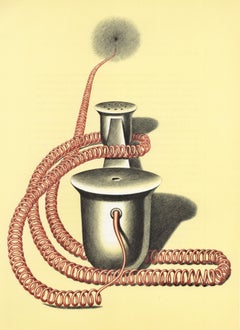
$716 Sale Price
20% Off
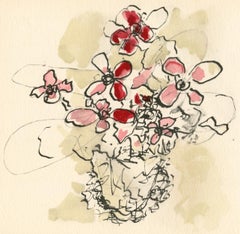
Georges Braque, Red Flowers, from Le Solitaire, XXe siecle, 1959 (after)
By Georges Braque
Located in Southampton, NY
This exquisite lithograph and pochoir after Georges Braque (1882–1963), titled Fleurs rouges (Red Flowers), from the album Georges Braque, Le Solitaire (The Solitary), originates fro...
Category
1950s Cubist Abstract Prints
Materials
Lithograph
$716 Sale Price
20% Off
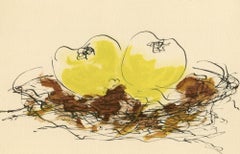
Georges Braque, Apples, from Le Solitaire, XXe siecle, 1959 (after)
By Georges Braque
Located in Southampton, NY
This exquisite lithograph and pochoir after Georges Braque (1882–1963), titled Pommes (Apples), from the album Georges Braque, Le Solitaire (The Solitary), originates from the 1959 e...
Category
1950s Cubist Abstract Prints
Materials
Lithograph
$716 Sale Price
20% Off
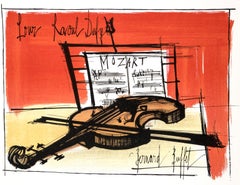
Bernard Buffet, Violin and Mozart Score, 1965
By Bernard Buffet
Located in Southampton, NY
This exquisite lithograph by Bernard Buffet (1928–1999), titled Violon et partition de Mozart (Violin and Mozart Score), from the folio Lettre a mon peintre Raoul Dufy (Letter to My Painter Raoul Dufy), originates from the 1965 edition published by Librairie academique Perrin et Cie, Paris...
Category
1960s Modern Still-life Prints
Materials
Lithograph
$716 Sale Price
20% Off
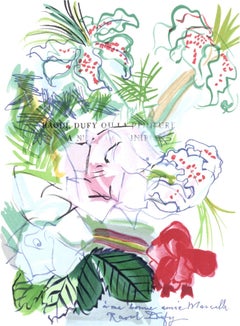
Raoul Dufy, Painted Flowers, from Letter to My Painter Raoul Dufy, 1965 (after)
By Raoul Dufy
Located in Southampton, NY
This exquisite lithograph after Raoul Dufy (1877–1953), titled Fleurs peintes (Painted Flowers), from the folio Lettre a mon peintre Raoul Dufy (Letter to My Painter Raoul Dufy), ori...
Category
1960s Fauvist Still-life Prints
Materials
Lithograph
$716 Sale Price
20% Off
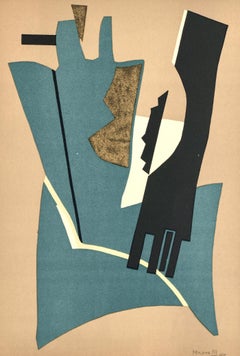
Alberto Magnelli, Homage to San Lazzaro, San Lazzaro et ses Amis, 1975 (after)
By Alberto Magnelli
Located in Southampton, NY
This exquisite lithograph after Alberto Magnelli (1888–1971), titled Hommage a San Lazzaro (Homage to San Lazzaro), from the album San Lazzaro et ses Amis, Hommage au fondateur de la...
Category
1970s Modern Abstract Prints
Materials
Lithograph
$956 Sale Price
20% Off
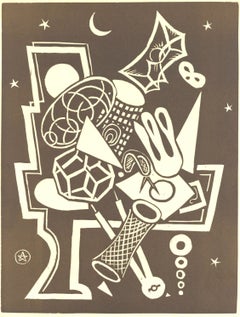
John Joseph Wardell Power, The Calculating Man, from XXe siecle, 1939
Located in Southampton, NY
This exquisite linocut by John Joseph Wardell Power (1881–1943), titled L'homme calculateur (The Calculating Man), from the album XXe siecle, Chroniques du jour, 13 rue Valette (5e),...
Category
1930s Modern Abstract Prints
Materials
Engraving
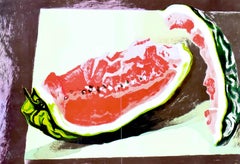
Renato Guttuso, Watermelon, from XXe siecle, 1981
By Renato Guttuso
Located in Southampton, NY
This exquisite lithograph by Renato Guttuso (1911–1987), titled Anguria (Watermelon), from the album XXe siecle, Nouvelle serie, XLIIIe Annee, No. 57, Hommage a Guttuso, originates f...
Category
1980s Modern Still-life Prints
Materials
Lithograph
$716 Sale Price
20% Off
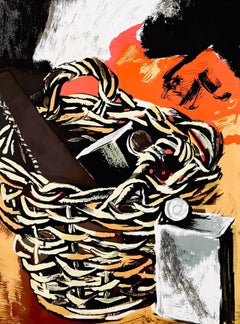
Renato Guttuso, Basket and Saw, from XXe siecle, 1981
By Renato Guttuso
Located in Southampton, NY
This exquisite lithograph by Renato Guttuso (1911–1987), titled Cesto e sega (Basket and Saw), from the album XXe siecle, Nouvelle serie, XLIIIe Annee, No. 57, Hommage a Guttuso, ori...
Category
1980s Modern Still-life Prints
Materials
Lithograph
$716 Sale Price
20% Off
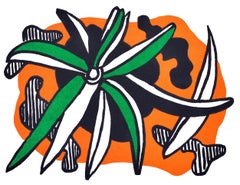
Fernand Leger, Green Leaves and Orange Background, from XXe siecle, 1971 (after)
By Fernand Léger
Located in Southampton, NY
This exquisite lithograph after Fernand Leger (1881–1955), titled Feuilles vertes et fond orange (Green Leaves and Orange Background), from the album XXe Siecle, numero special hors abonnement, Cahiers d'art publies sous la direction de G. di San Lazzaro, Hommage a Fernand Leger, originates from the 1971 edition published by Societe Internationale d'Art XXe siecle, Paris, under the direction of Gualtieri di San Lazzaro, editeur, Paris, and printed by Mourlot Freres, Paris, 1971. Feuilles vertes et fond orange exemplifies Leger’s mastery of modern form and color, uniting bold geometry and organic vitality in a celebration of rhythm, balance, and the harmony between nature and mechanized abstraction.
Executed as a lithograph on velin paper, this work measures 9.75 x 12.5 inches. Unsigned and unnumbered, as issued. The edition exemplifies the superb craftsmanship of Mourlot Freres, Paris.
Artwork Details:
Artist: After Fernand Leger (1881–1955)
Title: Feuilles vertes et fond orange (Green Leaves and Orange Background), from the album XXe Siecle, numero special hors abonnement, Cahiers d'art publies sous la direction de G. di San Lazzaro, Hommage a Fernand Leger
Medium: Lithograph on velin paper
Dimensions: 9.75 x 12.5 inches (24.77 x 31.75 cm)
Inscription: Unsigned and unnumbered, as issued
Date: 1971
Publisher: Societe Internationale d'Art XXe siecle, Paris, under the direction of Gualtieri di San Lazzaro, editeur, Paris
Printer: Mourlot Freres, Paris
Catalogue raisonne reference: Leger, Fernand, and Lawrence Saphire. Fernand Leger: The Complete Graphic Work. Blue Moon Press, 1978, illustration 120.
Condition: Well preserved, consistent with age and medium
Provenance: From the album XXe Siecle, numero special hors abonnement, Cahiers d'art publies sous la direction de G. di San Lazzaro, Hommage a Fernand Leger, published by Societe Internationale d'Art XXe siecle, Paris; printed by Mourlot Freres, Paris, 1971
About the Publication:
Gualtieri di San Lazzaro's XXe Siecle (Twentieth Century) was one of the most influential art journals of the modern era, founded in Paris in 1938 as a platform for the greatest painters, sculptors, and writers of the 20th century. San Lazzaro, a visionary editor, critic, and champion of modernism, believed that art and literature should coexist as expressions of a shared human imagination. Under his direction, XXe Siecle became a cultural bridge between Europe and the wider world, publishing special issues devoted to leading figures such as Picasso, Matisse, Chagall, Braque, Calder, Miro, Kandinsky, and Leger. Each edition combined essays by renowned critics and poets with original lithographs printed by the foremost ateliers of Paris, London, and New York, including Mourlot, Curwen, and Universal Graphics, creating a uniquely rich dialogue between text and image. Through XXe Siecle, San Lazzaro preserved the creative spirit of the avant-garde during and after World War II, championing freedom of expression and the evolution of abstraction, surrealism, and modern thought. Over nearly four decades, the journal shaped international taste and defined the intellectual landscape of postwar art publishing. Today, XXe Siecle remains celebrated for its extraordinary synthesis of art, literature, and design, an enduring testament to Gualtieri di San Lazzaro's belief that the visual arts are the soul of the modern age.
About the Artist:
Fernand Leger (1881–1955) was a French painter, sculptor, and filmmaker whose pioneering fusion of modern life, mechanization, and visual abstraction made him one of the most influential artists of the 20th century. Emerging from the Cubist movement, Leger developed a highly personal style distinguished by bold contrasts, cylindrical forms, and rhythmic compositions that celebrated the beauty of industrial progress and the vitality of modern urban life. Deeply influenced by the innovations of Paul Cezanne and the structural experimentation of Pablo Picasso and Georges Braque, Leger transformed Cubism’s fragmented perspective into a dynamic, machine-age aesthetic that bridged fine art, architecture, and design. His work often depicted workers, machinery, and everyday objects as monumental symbols of harmony between humanity and technology, reflecting both his optimism for modernity and his belief in the democratization of art. During his career, Leger was part of an extraordinary artistic circle that included Henri Matisse, Marc Chagall, Alexander Calder, Alberto Giacometti, Salvador Dali, Joan Miro, Wassily Kandinsky, Marcel Duchamp, and Man Ray—visionaries who shared his commitment to pushing the boundaries of artistic form and expression. A leading figure in the international avant-garde, Leger also explored large-scale murals, public art, and film, expanding the reach of modern art beyond the gallery. His works are represented in major museum collections worldwide, including the Museum of Modern Art, the Centre Pompidou, the Tate, and the Guggenheim, where they continue to inspire admiration for their bold geometry, humanist vision, and timeless modernity. The highest price ever paid for a Fernand Leger artwork is approximately $70 million USD, achieved in 2017 at Christie's New York for Contraste de formes (1913).
Fernand Leger Feuilles vertes et fond orange, Leger Green Leaves and Orange Background, Leger 1971 XXe siecle, Leger Mourlot...
Category
1970s Cubist Landscape Prints
Materials
Lithograph
$716 Sale Price
20% Off
Henri Laurens, Still Life, from XXe Siecle, 1956 (after)
By Henri Laurens
Located in Southampton, NY
This exquisite lithograph and pochoir after Henri Laurens (1885–1954), titled Nature morte (Still Life), from the album XXe Siecle, Nouvelle serie N°6 (double), Janvier 1956, origina...
Category
1950s Cubist Still-life Prints
Materials
Lithograph

$716 Sale Price
20% Off
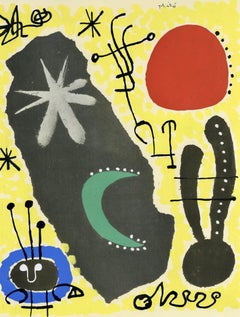
Joan Miro, The Woman and the Bird, from XXe Siecle, 1956
By Joan Miró
Located in Southampton, NY
This exquisite lithograph and pochoir by Joan Miro (1893–1983), titled La Femme et l’Oiseau (The Woman and the Bird), from the album XXe Siecle, Nouvelle serie No. 6, originates from...
Category
1950s Surrealist Still-life Prints
Materials
Lithograph
$1,036 Sale Price
20% Off
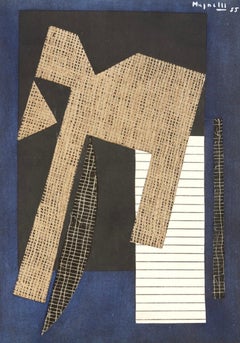
Alberto Magnelli, Pasted Paper, from XXe Siecle, 1957
By Alberto Magnelli
Located in Southampton, NY
This exquisite lithograph by Alberto Magnelli (1888–1971), titled Papel colle (Pasted Paper), from the album XXe Siecle, Nouvelle serie, No. 9 (double), Juin 1957, originates from th...
Category
1950s Cubist Still-life Prints
Materials
Lithograph
$796 Sale Price
20% Off
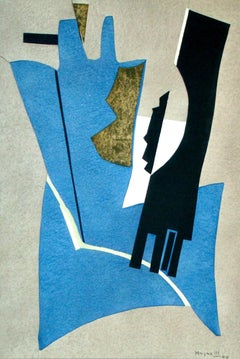
Alberto Magnelli, Pasted Paper, from XXe Siecle, 1956
By Alberto Magnelli
Located in Southampton, NY
This exquisite lithograph and pochoir by Alberto Magnelli (1888–1971), titled Papel colle (Pasted Paper), from the album XXe Siecle, Nouvelle serie, No. 6 (double), Janvier 1956, ori...
Category
1950s Cubist Still-life Prints
Materials
Lithograph
$796 Sale Price
20% Off
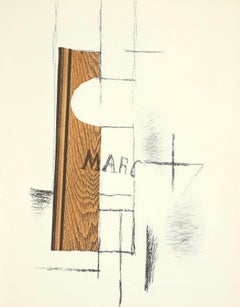
Georges Braque, The Bottle of Marc, from XXe Siecle, 1956
By Georges Braque
Located in Southampton, NY
This exquisite lithograph by Georges Braque (1882–1963), titled La Bouteille de Marc (The Bottle of Marc), from the album XXe Siecle, Nouvelle serie N°6 (double) Janvier 1956, origin...
Category
1950s Cubist Still-life Prints
Materials
Lithograph
$796 Sale Price
20% Off
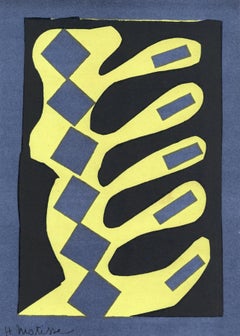
Henri Matisse, Decoupage, from XXe Siecle 1954 (after)
By Henri Matisse
Located in Southampton, NY
This exquisite lithograph after Henri Matisse (1869–1954), titled Decoupage (Decoupage), from the album XXe Siecle, Nouvelle serie N°4 (double) Janvier 1954, originates from the 1954 edition published by Societe Internationale dArt XXe Siecle, Paris, under the direction of Gualtieri di San Lazzaro, editeur, Paris, and printed by Mourlot Freres, Paris, 1954. Decoupage reflects Matisses late career mastery of distilled form, harmonious contour, and poetic abstraction.
Executed as a lithograph on velin paper, this work measures 12.5 x 9.75 inches. Signed in the plate and unnumbered as issued. The edition exemplifies the superb craftsmanship of Mourlot Freres, Paris
Artwork Details:
Artist: After Henri Matisse (1869–1954)
Title: Decoupage (Decoupage)
Medium: Lithograph on velin paper
Dimensions: 12.5 x 9.75 inches (31.75 x 24.77 cm)
Inscription: Signed in the plate and unnumbered as issued
Date: 1954
Publisher: Societe Internationale dArt XXe Siecle, Paris, under the direction of Gualtieri di San Lazzaro, editeur, Paris
Printer: Mourlot Freres, Paris
Condition: Well preserved, consistent with age and medium
Provenance: From the album XXe Siecle, Nouvelle serie N°4 (double) Janvier 1954, published by Societe Internationale dArt XXe Siecle, Paris; printed by Mourlot Freres, Paris, 1954
About the Publication:
Gualtieri di San Lazzaros XXe Siecle (Twentieth Century) was one of the most influential art journals of the modern era, founded in Paris in 1938 as a platform for the greatest painters, sculptors, and writers of the 20th century. San Lazzaro, a visionary editor, critic, and champion of modernism, believed that art and literature should coexist as expressions of a shared human imagination. Under his direction, XXe Siecle became a cultural bridge between Europe and the wider world, publishing special issues devoted to leading figures such as Picasso, Matisse, Chagall, Braque, Calder, Miro, Kandinsky, and Leger. Each edition combined essays by renowned critics and poets with original lithographs, linocuts, and pochoirs printed by the foremost ateliers of Paris, Milan, and New York, including Mourlot, Curwen, Atelier Lacouriere, and Amilcare Pizzi, creating a uniquely rich dialogue between text and image. The 1954 issue, Nouvelle serie N°4 (double), stands among the journals landmark mid century editions. Today, XXe Siecle remains an essential record of 20th century modernism, celebrated for its seamless integration of fine art, literature, and design.
About the Artist:
Henri Matisse (1869–1954) was a French painter, sculptor, draughtsman, and printmaker whose revolutionary vision redefined modern art through his daring use of color, line, and form. Celebrated as one of the greatest artists of the 20th century, Matisse led the Fauvist movement and devoted his life to the pursuit of balance, beauty, and emotional expression in visual art. His early works burst with vibrant hues and liberated brushwork, while his later cut out compositions achieved a poetic simplicity that transformed the relationship between color and space. Deeply influenced by the work of Paul Cezanne, Vincent van Gogh, and Georges Seurat, as well as by the rhythmic patterns of Islamic art, Byzantine mosaics, and Japanese prints, Matisse forged a new visual language that celebrated joy, movement, and serenity. He was part of an extraordinary generation of artists who shaped the evolution of modernism, maintaining lifelong dialogue and friendly rivalry with contemporaries such as Pablo Picasso, Georges Braque, Marc Chagall, Andre Derain, Albert Marquet, and Raoul Dufy peers who, like him, sought to expand the expressive potential of color and composition. Matisses influence extended across generations, inspiring modern and contemporary masters including Alexander Calder, Alberto Giacometti, Salvador Dali, Joan Miro, Wassily Kandinsky, Marcel Duchamp, and Man Ray, each of whom drew upon his fearless experimentation and refined visual harmony. His paintings, sculptures, and works on paper are held in the most prestigious museums in the world, including the Museum of Modern Art, the Centre Pompidou, the Tate, and the Hermitage Museum, where his art continues to symbolize the essence of creativity and human emotion. The highest price ever paid for a Henri Matisse artwork is approximately 80.8 million USD, achieved in 2018 at Christies New York for Odalisque couchee aux magnolias (1923).
Henri Matisse Decoupage...
Category
1950s Fauvist Abstract Prints
Materials
Lithograph
$956 Sale Price
20% Off
Henri Matisse, Decoupage, from XXe Siecle 1954 (after)
By Henri Matisse
Located in Southampton, NY
This exquisite lithograph after Henri Matisse (1869–1954), titled Decoupage (Decoupage), from the album XXe Siecle, Nouvelle serie N°4 (double) Janvier 1954, originates from the 1954 edition published by Societe Internationale dArt XXe Siecle, Paris, under the direction of Gualtieri di San Lazzaro, editeur, Paris, and printed by Mourlot Freres, Paris, 1954. Decoupage reflects Matisses late career mastery of distilled form, harmonious contour, and poetic abstraction.
Executed as a lithograph on velin paper, this work measures 12.5 x 9.75 inches. Signed in the plate and unnumbered as issued. The edition exemplifies the superb craftsmanship of Mourlot Freres, Paris
Artwork Details:
Artist: After Henri Matisse (1869–1954)
Title: Decoupage (Decoupage)
Medium: Lithograph on velin paper
Dimensions: 12.5 x 9.75 inches (31.75 x 24.77 cm)
Inscription: Signed in the plate and unnumbered as issued
Date: 1954
Publisher: Societe Internationale dArt XXe Siecle, Paris, under the direction of Gualtieri di San Lazzaro, editeur, Paris
Printer: Mourlot Freres, Paris
Condition: Well preserved, consistent with age and medium
Provenance: From the album XXe Siecle, Nouvelle serie N°4 (double) Janvier 1954, published by Societe Internationale dArt XXe Siecle, Paris; printed by Mourlot Freres, Paris, 1954
About the Publication:
Gualtieri di San Lazzaros XXe Siecle (Twentieth Century) was one of the most influential art journals of the modern era, founded in Paris in 1938 as a platform for the greatest painters, sculptors, and writers of the 20th century. San Lazzaro, a visionary editor, critic, and champion of modernism, believed that art and literature should coexist as expressions of a shared human imagination. Under his direction, XXe Siecle became a cultural bridge between Europe and the wider world, publishing special issues devoted to leading figures such as Picasso, Matisse, Chagall, Braque, Calder, Miro, Kandinsky, and Leger. Each edition combined essays by renowned critics and poets with original lithographs, linocuts, and pochoirs printed by the foremost ateliers of Paris, Milan, and New York, including Mourlot, Curwen, Atelier Lacouriere, and Amilcare Pizzi, creating a uniquely rich dialogue between text and image. The 1954 issue, Nouvelle serie N°4 (double), stands among the journals landmark mid century editions. Today, XXe Siecle remains an essential record of 20th century modernism, celebrated for its seamless integration of fine art, literature, and design.
About the Artist:
Henri Matisse (1869–1954) was a French painter, sculptor, draughtsman, and printmaker whose revolutionary vision redefined modern art through his daring use of color, line, and form. Celebrated as one of the greatest artists of the 20th century, Matisse led the Fauvist movement and devoted his life to the pursuit of balance, beauty, and emotional expression in visual art. His early works burst with vibrant hues and liberated brushwork, while his later cut out compositions achieved a poetic simplicity that transformed the relationship between color and space. Deeply influenced by the work of Paul Cezanne, Vincent van Gogh, and Georges Seurat, as well as by the rhythmic patterns of Islamic art, Byzantine mosaics, and Japanese prints, Matisse forged a new visual language that celebrated joy, movement, and serenity. He was part of an extraordinary generation of artists who shaped the evolution of modernism, maintaining lifelong dialogue and friendly rivalry with contemporaries such as Pablo Picasso, Georges Braque, Marc Chagall, Andre Derain, Albert Marquet, and Raoul Dufy peers who, like him, sought to expand the expressive potential of color and composition. Matisses influence extended across generations, inspiring modern and contemporary masters including Alexander Calder, Alberto Giacometti, Salvador Dali, Joan Miro, Wassily Kandinsky, Marcel Duchamp, and Man Ray, each of whom drew upon his fearless experimentation and refined visual harmony. His paintings, sculptures, and works on paper are held in the most prestigious museums in the world, including the Museum of Modern Art, the Centre Pompidou, the Tate, and the Hermitage Museum, where his art continues to symbolize the essence of creativity and human emotion. The highest price ever paid for a Henri Matisse artwork is approximately 80.8 million USD, achieved in 2018 at Christies New York for Odalisque couchee aux magnolias (1923).
Henri Matisse Decoupage...
Category
1950s Fauvist Abstract Prints
Materials
Lithograph
$956 Sale Price
20% Off
Henri Matisse, Decoupages, from XXe Siecle 1954 (after)
By Henri Matisse
Located in Southampton, NY
This exquisite lithograph after Henri Matisse (1869–1954), titled Decoupages (Cutouts), from the album XXe Siecle, Nouvelle serie N°4 (double) Janvie...
Category
1950s Fauvist Abstract Prints
Materials
Lithograph
$1,196 Sale Price
20% Off
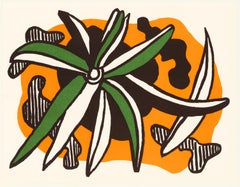
Fernand Leger, The Flower, from XXe Siecle, 1952
By Fernand Léger
Located in Southampton, NY
This exquisite lithograph by Fernand Leger (1881–1955), titled La Fleur (The Flower), from the album XXe Siecle, Nouvelle serie N°3 (double) Juin 1952, originates from the 1952 editi...
Category
1950s Cubist Landscape Prints
Materials
Lithograph
$1,196 Sale Price
20% Off
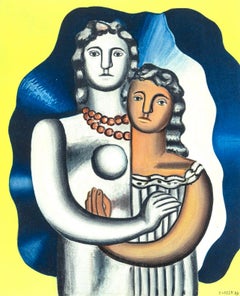
Fernand Leger, The Two Figures, from Derriere le miroir, 1955 (after)
By Fernand Léger
Located in Southampton, NY
This exquisite lithograph after Fernand Leger (1881–1955), titled Le deux figures (The Two Figures), from the folio Derriere le miroir, No. 79-81, originates from the 1955 edition published by Maeght Editeur, Paris, and printed by Mourlot Freres, Paris, 1955. This composition exemplifies Leger’s rhythmic balance of color, form, and movement, translating the mechanical vitality of modern life into a harmonious, humanized geometry.
Executed as a lithograph on velin paper, this work measures 15 x 11 inches. Signed in the plate and unnumbered as issued. The edition exemplifies the superb craftsmanship of Mourlot Freres, Paris.
Artwork Details:
Artist: After Fernand Leger (1881–1955)
Title: Le deux figures (The Two Figures), from the folio Derriere le miroir, No. 79-81
Medium: Lithograph on velin paper
Dimensions: 15 x 11 inches (38.1 x 27.94 cm)
Inscription: Signed in the plate and unnumbered as issued
Date: 1955
Publisher: Maeght Editeur, Paris
Printer: Mourlot Freres, Paris
Condition: Well preserved, consistent with age and medium
Provenance: From the folio Derriere le miroir, No. 79-81, published by Maeght Editeur, Paris; printed by Mourlot Freres, Paris, 1955
About the Publication:
Derriere le miroir (Behind the Mirror) was one of the most important art publications of the 20th century, created and published by Maeght Editeur in Paris from 1946 to 1982. Founded by the visionary art dealer and publisher Aime Maeght, the series served as both an exhibition catalogue and a work of art in its own right, uniting original lithographs by leading modern and contemporary artists with critical essays, poetry, and design of the highest quality. Printed by master lithographers such as Mourlot Freres and Arte, Derriere le miroir became synonymous with the artistic vanguard of postwar Europe. Each issue was devoted to a single artist or theme and published to accompany exhibitions at the Galerie Maeght in Paris, featuring works by Pablo Picasso, Henri Matisse, Georges Braque, Joan Miro, Marc Chagall, Alexander Calder, Fernand Leger, and Alberto Giacometti, among others. The publication reflected Maeght's belief that art should be both accessible and elevated—an ideal realized through its luxurious production values, meticulous printing, and collaboration with the greatest creative minds of its time.
About the Artist:
Fernand Leger (1881–1955) was a visionary French painter, sculptor, designer, and filmmaker whose groundbreaking fusion of modern industry, vivid color, and geometric form transformed the course of 20th-century art. Born in Argentan, Normandy, Leger began as an architectural draftsman before studying at the Academie Julian and the Ecole des Beaux-Arts in Paris, where he absorbed the lessons of Paul Cezanne’s structural rigor and the revolutionary ideas of Cubism. Alongside Pablo Picasso and Georges Braque, he became one of the leading innovators of the avant-garde, yet his work stood apart through its embrace of mechanical rhythm, bold contrasts, and industrial modernity—earning him the title “the painter of the machine age.” His art celebrated the beauty of technology, urban life, and the human form rendered in dynamic, interlocking cylinders and planes, evoking the pulse of the modern world. Immersed in the vibrant Parisian art scene, Leger worked in dialogue with peers and contemporaries such as Alexander Calder, Alberto Giacometti, Salvador Dali, Joan Miro, Wassily Kandinsky, Marcel Duchamp, and Man Ray, all of whom shared his commitment to innovation and the reimagining of artistic expression. Beyond painting, Leger’s creative reach extended into film, design, and monumental public art—his 1924 collaboration on Ballet Mecanique with Dudley Murphy and Man Ray remains a landmark of avant-garde cinema. His later works evolved toward greater clarity and monumentality, celebrating the unity of form, color, and humanity through large-scale murals and mosaics that bridged fine art and architecture. Leger’s synthesis of Cubism, Futurism, and abstraction paved the way for movements such as Pop Art and influenced generations of artists including Roy Lichtenstein, Ellsworth Kelly, Robert Indiana, and Alexander Calder, who admired his fusion of structure, energy, and optimism. Today, his works are prized by major museums and collectors worldwide for their bold visual power and enduring modernity. His highest auction record was achieved by La femme en rouge et vert (1914), which sold for 39,241,000 USD at Sotheby’s, New York, on May 7, 2008.
After Fernand Leger Le deux figures 1955, Leger Derriere le miroir No. 79-81, Leger Mourlot...
Category
1950s Cubist Still-life Prints
Materials
Lithograph
$956 Sale Price
20% Off
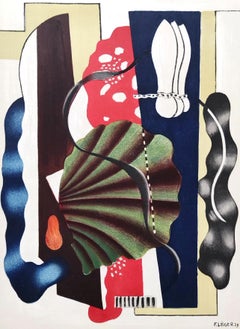
Fernand Leger, Still Life, from Derriere le miroir, 1955 (after)
By Fernand Léger
Located in Southampton, NY
This exquisite lithograph after Fernand Leger (1881–1955), titled Nature morte (Still Life), from the folio Derriere le miroir, No. 79-81, originates from the 1955 edition published by Maeght Editeur, Paris, and printed by Mourlot Freres, Paris, 1955. This composition exemplifies Leger’s rhythmic balance of color, form, and movement, translating the mechanical vitality of modern life into a harmonious, humanized geometry.
Executed as a lithograph on velin paper, this work measures 15 x 11 inches. Signed in the plate and unnumbered as issued. The edition exemplifies the superb craftsmanship of Mourlot Freres, Paris.
Artwork Details:
Artist: After Fernand Leger (1881–1955)
Title: Nature morte (Still Life), from the folio Derriere le miroir, No. 79-81
Medium: Lithograph on velin paper
Dimensions: 15 x 11 inches (38.1 x 27.94 cm)
Inscription: Signed in the plate and unnumbered as issued
Date: 1955
Publisher: Maeght Editeur, Paris
Printer: Mourlot Freres, Paris
Condition: Well preserved, consistent with age and medium
Provenance: From the folio Derriere le miroir, No. 79-81, published by Maeght Editeur, Paris; printed by Mourlot Freres, Paris, 1955
About the Publication:
Derriere le miroir (Behind the Mirror) was one of the most important art publications of the 20th century, created and published by Maeght Editeur in Paris from 1946 to 1982. Founded by the visionary art dealer and publisher Aime Maeght, the series served as both an exhibition catalogue and a work of art in its own right, uniting original lithographs by leading modern and contemporary artists with critical essays, poetry, and design of the highest quality. Printed by master lithographers such as Mourlot Freres and Arte, Derriere le miroir became synonymous with the artistic vanguard of postwar Europe. Each issue was devoted to a single artist or theme and published to accompany exhibitions at the Galerie Maeght in Paris, featuring works by Pablo Picasso, Henri Matisse, Georges Braque, Joan Miro, Marc Chagall, Alexander Calder, Fernand Leger, and Alberto Giacometti, among others. The publication reflected Maeght's belief that art should be both accessible and elevated—an ideal realized through its luxurious production values, meticulous printing, and collaboration with the greatest creative minds of its time.
About the Artist:
Fernand Leger (1881–1955) was a visionary French painter, sculptor, designer, and filmmaker whose groundbreaking fusion of modern industry, vivid color, and geometric form transformed the course of 20th-century art. Born in Argentan, Normandy, Leger began as an architectural draftsman before studying at the Academie Julian and the Ecole des Beaux-Arts in Paris, where he absorbed the lessons of Paul Cezanne’s structural rigor and the revolutionary ideas of Cubism. Alongside Pablo Picasso and Georges Braque, he became one of the leading innovators of the avant-garde, yet his work stood apart through its embrace of mechanical rhythm, bold contrasts, and industrial modernity—earning him the title “the painter of the machine age.” His art celebrated the beauty of technology, urban life, and the human form rendered in dynamic, interlocking cylinders and planes, evoking the pulse of the modern world. Immersed in the vibrant Parisian art scene, Leger worked in dialogue with peers and contemporaries such as Alexander Calder, Alberto Giacometti, Salvador Dali, Joan Miro, Wassily Kandinsky, Marcel Duchamp, and Man Ray, all of whom shared his commitment to innovation and the reimagining of artistic expression. Beyond painting, Leger’s creative reach extended into film, design, and monumental public art—his 1924 collaboration on Ballet Mecanique with Dudley Murphy and Man Ray remains a landmark of avant-garde cinema. His later works evolved toward greater clarity and monumentality, celebrating the unity of form, color, and humanity through large-scale murals and mosaics that bridged fine art and architecture. Leger’s synthesis of Cubism, Futurism, and abstraction paved the way for movements such as Pop Art and influenced generations of artists including Roy Lichtenstein, Ellsworth Kelly, Robert Indiana, and Alexander Calder, who admired his fusion of structure, energy, and optimism. Today, his works are prized by major museums and collectors worldwide for their bold visual power and enduring modernity. His highest auction record was achieved by La femme en rouge et vert (1914), which sold for 39,241,000 USD at Sotheby’s, New York, on May 7, 2008.
After Fernand Leger Nature morte 1955, Leger Derriere le miroir No. 79-81, Leger Mourlot...
Category
1950s Cubist Still-life Prints
Materials
Lithograph
$956 Sale Price
20% Off
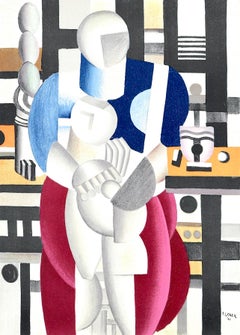
Fernand Leger, The Woman and the Child, from Derriere le miroir, 1955 (after)
By Fernand Léger
Located in Southampton, NY
This exquisite lithograph after Fernand Leger (1881–1955), titled La Femme et l’Enfant (The Woman and the Child), from the folio Derriere le miroir, No. 79-81, originates from the 1955 edition published by Maeght Editeur, Paris, and printed by Mourlot Freres, Paris, 1955. This composition exemplifies Leger’s rhythmic balance of color, form, and movement, translating the mechanical vitality of modern life into a harmonious, humanized geometry.
Executed as a lithograph on velin paper, this work measures 15 x 11 inches. Signed in the plate and unnumbered as issued. The edition exemplifies the superb craftsmanship of Mourlot Freres, Paris.
Artwork Details:
Artist: After Fernand Leger (1881–1955)
Title: La Femme et l’Enfant (The Woman and the Child), from the folio Derriere le miroir, No. 79-81
Medium: Lithograph on velin paper
Dimensions: 15 x 11 inches (38.1 x 27.94 cm)
Inscription: Signed in the plate and unnumbered as issued
Date: 1955
Publisher: Maeght Editeur, Paris
Printer: Mourlot Freres, Paris
Condition: Well preserved, consistent with age and medium
Provenance: From the folio Derriere le miroir, No. 79-81, published by Maeght Editeur, Paris; printed by Mourlot Freres, Paris, 1955
About the Publication:
Derriere le miroir (Behind the Mirror) was one of the most important art publications of the 20th century, created and published by Maeght Editeur in Paris from 1946 to 1982. Founded by the visionary art dealer and publisher Aime Maeght, the series served as both an exhibition catalogue and a work of art in its own right, uniting original lithographs by leading modern and contemporary artists with critical essays, poetry, and design of the highest quality. Printed by master lithographers such as Mourlot Freres and Arte, Derriere le miroir became synonymous with the artistic vanguard of postwar Europe. Each issue was devoted to a single artist or theme and published to accompany exhibitions at the Galerie Maeght in Paris, featuring works by Pablo Picasso, Henri Matisse, Georges Braque, Joan Miro, Marc Chagall, Alexander Calder, Fernand Leger, and Alberto Giacometti, among others. The publication reflected Maeght's belief that art should be both accessible and elevated—an ideal realized through its luxurious production values, meticulous printing, and collaboration with the greatest creative minds of its time.
About the Artist:
Fernand Leger (1881–1955) was a visionary French painter, sculptor, designer, and filmmaker whose groundbreaking fusion of modern industry, vivid color, and geometric form transformed the course of 20th-century art. Born in Argentan, Normandy, Leger began as an architectural draftsman before studying at the Academie Julian and the Ecole des Beaux-Arts in Paris, where he absorbed the lessons of Paul Cezanne’s structural rigor and the revolutionary ideas of Cubism. Alongside Pablo Picasso and Georges Braque, he became one of the leading innovators of the avant-garde, yet his work stood apart through its embrace of mechanical rhythm, bold contrasts, and industrial modernity—earning him the title “the painter of the machine age.” His art celebrated the beauty of technology, urban life, and the human form rendered in dynamic, interlocking cylinders and planes, evoking the pulse of the modern world. Immersed in the vibrant Parisian art scene, Leger worked in dialogue with peers and contemporaries such as Alexander Calder, Alberto Giacometti, Salvador Dali, Joan Miro, Wassily Kandinsky, Marcel Duchamp, and Man Ray, all of whom shared his commitment to innovation and the reimagining of artistic expression. Beyond painting, Leger’s creative reach extended into film, design, and monumental public art—his 1924 collaboration on Ballet Mecanique with Dudley Murphy and Man Ray remains a landmark of avant-garde cinema. His later works evolved toward greater clarity and monumentality, celebrating the unity of form, color, and humanity through large-scale murals and mosaics that bridged fine art and architecture. Leger’s synthesis of Cubism, Futurism, and abstraction paved the way for movements such as Pop Art and influenced generations of artists including Roy Lichtenstein, Ellsworth Kelly, Robert Indiana, and Alexander Calder, who admired his fusion of structure, energy, and optimism. Today, his works are prized by major museums and collectors worldwide for their bold visual power and enduring modernity. His highest auction record was achieved by La femme en rouge et vert (1914), which sold for 39,241,000 USD at Sotheby’s, New York, on May 7, 2008.
After Fernand Leger La Femme et l’Enfant 1955, Leger Derriere le miroir No. 79-81, Leger Mourlot...
Category
1950s Cubist Still-life Prints
Materials
Lithograph
$956 Sale Price
20% Off
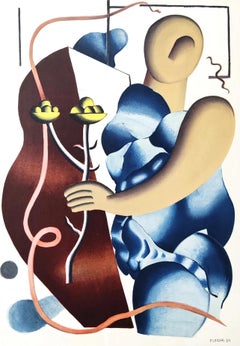
Fernand Leger, Woman Holding a Flower, from Derriere le miroir, 1955 (after)
By Fernand Léger
Located in Southampton, NY
This exquisite lithograph after Fernand Leger (1881–1955), titled Femme tenant une fleur (Woman Holding a Flower), from the folio Derriere le miroir, No. 79-81, originates from the 1955 edition published by Maeght Editeur, Paris, and printed by Mourlot Freres, Paris, 1955. This composition exemplifies Leger’s rhythmic balance of color, form, and movement, translating the mechanical vitality of modern life into a harmonious, humanized geometry.
Executed as a lithograph on velin paper, this work measures 15 x 11 inches. Signed in the plate and unnumbered as issued. The edition exemplifies the superb craftsmanship of Mourlot Freres, Paris.
Artwork Details:
Artist: After Fernand Leger (1881–1955)
Title: Femme tenant une fleur (Woman Holding a Flower), from the folio Derriere le miroir, No. 79-81
Medium: Lithograph on velin paper
Dimensions: 15 x 11 inches (38.1 x 27.94 cm)
Inscription: Signed in the plate and unnumbered as issued
Date: 1955
Publisher: Maeght Editeur, Paris
Printer: Mourlot Freres, Paris
Condition: Well preserved, consistent with age and medium
Provenance: From the folio Derriere le miroir, No. 79-81, published by Maeght Editeur, Paris; printed by Mourlot Freres, Paris, 1955
About the Publication:
Derriere le miroir (Behind the Mirror) was one of the most important art publications of the 20th century, created and published by Maeght Editeur in Paris from 1946 to 1982. Founded by the visionary art dealer and publisher Aime Maeght, the series served as both an exhibition catalogue and a work of art in its own right, uniting original lithographs by leading modern and contemporary artists with critical essays, poetry, and design of the highest quality. Printed by master lithographers such as Mourlot Freres and Arte, Derriere le miroir became synonymous with the artistic vanguard of postwar Europe. Each issue was devoted to a single artist or theme and published to accompany exhibitions at the Galerie Maeght in Paris, featuring works by Pablo Picasso, Henri Matisse, Georges Braque, Joan Miro, Marc Chagall, Alexander Calder, Fernand Leger, and Alberto Giacometti, among others. The publication reflected Maeght's belief that art should be both accessible and elevated—an ideal realized through its luxurious production values, meticulous printing, and collaboration with the greatest creative minds of its time.
About the Artist:
Fernand Leger (1881–1955) was a visionary French painter, sculptor, designer, and filmmaker whose groundbreaking fusion of modern industry, vivid color, and geometric form transformed the course of 20th-century art. Born in Argentan, Normandy, Leger began as an architectural draftsman before studying at the Academie Julian and the Ecole des Beaux-Arts in Paris, where he absorbed the lessons of Paul Cezanne’s structural rigor and the revolutionary ideas of Cubism. Alongside Pablo Picasso and Georges Braque, he became one of the leading innovators of the avant-garde, yet his work stood apart through its embrace of mechanical rhythm, bold contrasts, and industrial modernity—earning him the title “the painter of the machine age.” His art celebrated the beauty of technology, urban life, and the human form rendered in dynamic, interlocking cylinders and planes, evoking the pulse of the modern world. Immersed in the vibrant Parisian art scene, Leger worked in dialogue with peers and contemporaries such as Alexander Calder, Alberto Giacometti, Salvador Dali, Joan Miro, Wassily Kandinsky, Marcel Duchamp, and Man Ray, all of whom shared his commitment to innovation and the reimagining of artistic expression. Beyond painting, Leger’s creative reach extended into film, design, and monumental public art—his 1924 collaboration on Ballet Mecanique with Dudley Murphy and Man Ray remains a landmark of avant-garde cinema. His later works evolved toward greater clarity and monumentality, celebrating the unity of form, color, and humanity through large-scale murals and mosaics that bridged fine art and architecture. Leger’s synthesis of Cubism, Futurism, and abstraction paved the way for movements such as Pop Art and influenced generations of artists including Roy Lichtenstein, Ellsworth Kelly, Robert Indiana, and Alexander Calder, who admired his fusion of structure, energy, and optimism. Today, his works are prized by major museums and collectors worldwide for their bold visual power and enduring modernity. His highest auction record was achieved by La femme en rouge et vert (1914), which sold for 39,241,000 USD at Sotheby’s, New York, on May 7, 2008.
After Fernand Leger Femme tenant une fleur 1955, Leger Derriere le miroir No. 79-81, Leger Mourlot...
Category
1950s Cubist Still-life Prints
Materials
Lithograph
$956 Sale Price
20% Off
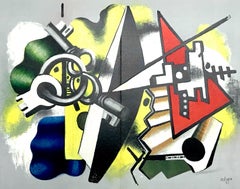
Fernand Leger, Composition with Three Keys, Derriere le miroir, 1955 (after)
By Fernand Léger
Located in Southampton, NY
This exquisite lithograph after Fernand Leger (1881–1955), titled Composition aux trois cles (Composition with Three Keys), from the folio Derriere le miroir, No. 79-81, originates from the 1955 edition published by Maeght Editeur, Paris, and printed by Mourlot Freres, Paris, 1955. This composition exemplifies Leger’s rhythmic balance of color, form, and movement, translating the mechanical vitality of modern life into a harmonious, humanized geometry.
Executed as a lithograph on velin paper, this work measures 15 x 22 inches, with centerfold as issued. Signed in the plate and unnumbered as issued. The edition exemplifies the superb craftsmanship of Mourlot Freres, Paris.
Artwork Details:
Artist: After Fernand Leger (1881–1955)
Title: Composition aux trois cles (Composition with Three Keys), from the folio Derriere le miroir, No. 79-81
Medium: Lithograph on velin paper
Dimensions: 15 x 22 inches (38.1 x 55.88 cm), with centerfold as issued
Inscription: Signed in the plate and unnumbered as issued
Date: 1955
Publisher: Maeght Editeur, Paris
Printer: Mourlot Freres, Paris
Condition: Well preserved, consistent with age and medium
Provenance: From the folio Derriere le miroir, No. 79-81, published by Maeght Editeur, Paris; printed by Mourlot Freres, Paris, 1955
About the Publication:
Derriere le miroir (Behind the Mirror) was one of the most important art publications of the 20th century, created and published by Maeght Editeur in Paris from 1946 to 1982. Founded by the visionary art dealer and publisher Aime Maeght, the series served as both an exhibition catalogue and a work of art in its own right, uniting original lithographs by leading modern and contemporary artists with critical essays, poetry, and design of the highest quality. Printed by master lithographers such as Mourlot Freres and Arte, Derriere le miroir became synonymous with the artistic vanguard of postwar Europe. Each issue was devoted to a single artist or theme and published to accompany exhibitions at the Galerie Maeght in Paris, featuring works by Pablo Picasso, Henri Matisse, Georges Braque, Joan Miro, Marc Chagall, Alexander Calder, Fernand Leger, and Alberto Giacometti, among others. The publication reflected Maeght's belief that art should be both accessible and elevated—an ideal realized through its luxurious production values, meticulous printing, and collaboration with the greatest creative minds of its time.
About the Artist:
Fernand Leger (1881–1955) was a visionary French painter, sculptor, designer, and filmmaker whose groundbreaking fusion of modern industry, vivid color, and geometric form transformed the course of 20th-century art. Born in Argentan, Normandy, Leger began as an architectural draftsman before studying at the Academie Julian and the Ecole des Beaux-Arts in Paris, where he absorbed the lessons of Paul Cezanne’s structural rigor and the revolutionary ideas of Cubism. Alongside Pablo Picasso and Georges Braque, he became one of the leading innovators of the avant-garde, yet his work stood apart through its embrace of mechanical rhythm, bold contrasts, and industrial modernity—earning him the title “the painter of the machine age.” His art celebrated the beauty of technology, urban life, and the human form rendered in dynamic, interlocking cylinders and planes, evoking the pulse of the modern world. Immersed in the vibrant Parisian art scene, Leger worked in dialogue with peers and contemporaries such as Alexander Calder, Alberto Giacometti, Salvador Dali, Joan Miro, Wassily Kandinsky, Marcel Duchamp, and Man Ray, all of whom shared his commitment to innovation and the reimagining of artistic expression. Beyond painting, Leger’s creative reach extended into film, design, and monumental public art—his 1924 collaboration on Ballet Mecanique with Dudley Murphy and Man Ray remains a landmark of avant-garde cinema. His later works evolved toward greater clarity and monumentality, celebrating the unity of form, color, and humanity through large-scale murals and mosaics that bridged fine art and architecture. Leger’s synthesis of Cubism, Futurism, and abstraction paved the way for movements such as Pop Art and influenced generations of artists including Roy Lichtenstein, Ellsworth Kelly, Robert Indiana, and Alexander Calder, who admired his fusion of structure, energy, and optimism. Today, his works are prized by major museums and collectors worldwide for their bold visual power and enduring modernity. His highest auction record was achieved by La femme en rouge et vert (1914), which sold for 39,241,000 USD at Sotheby’s, New York, on May 7, 2008.
After Fernand Leger Composition aux trois cles 1955, Leger Derriere le miroir No. 79-81, Leger Mourlot...
Category
1950s Cubist Still-life Prints
Materials
Lithograph
$956 Sale Price
20% Off
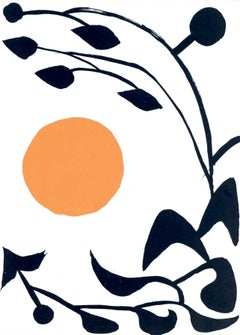
Alexander Calder, Orange Sun, from Derriere le miroir, 1954
By Alexander Calder
Located in Southampton, NY
This exquisite lithograph by Alexander Calder (1898–1976), titled Soleil orange (Orange Sun), from the folio Derriere le miroir, No. 69–70, originates from the 1954 edition published by Maeght Editeur, Paris, and printed by Mourlot Freres, Paris, 1954. This work captures Calder’s mastery of motion, balance, and vibrant color through the spontaneous energy of his abstract forms, embodying the rhythmic harmony and visual poetry that defined his art.
Executed as a lithograph on velin paper, this work measures 15 x 11 inches. Unsigned and unnumbered as issued. The edition exemplifies the superb craftsmanship of Mourlot Freres, Paris.
Artwork Details:
Artist: Alexander Calder (1898–1976)
Title: Soleil orange (Orange Sun), from the folio Derriere le miroir, No. 69–70
Medium: Lithograph on velin paper
Dimensions: 15 x 11 inches (38.1 x 27.9 cm)
Inscription: Unsigned and unnumbered as issued
Date: 1954
Publisher: Maeght Editeur, Paris
Printer: Mourlot Freres, Paris
Condition: Well preserved, consistent with age and medium
Provenance: From the folio Derriere le miroir, No. 69–70, published by Maeght Editeur, Paris; printed by Mourlot Freres, Paris, 1954
About the Publication:
Derriere le miroir (Behind the Mirror) was one of the most important art publications of the 20th century, created and published by Maeght Editeur in Paris from 1946 to 1982. Founded by the visionary art dealer and publisher Aime Maeght, the series served as both an exhibition catalogue and a work of art in its own right, uniting original lithographs by leading modern and contemporary artists with critical essays, poetry, and design of the highest quality. Printed by master lithographers such as Mourlot Freres and Arte, Derriere le miroir became synonymous with the artistic vanguard of postwar Europe. Each issue was devoted to a single artist or theme and published to accompany exhibitions at the Galerie Maeght in Paris, featuring works by Pablo Picasso, Henri Matisse, Georges Braque, Joan Miro, Marc Chagall, Alexander Calder, Fernand Leger, and Alberto Giacometti, among others. The publication reflected Maeght’s belief that art should be both accessible and elevated—an ideal realized through its luxurious production values, meticulous printing, and collaboration with the greatest creative minds of its time.
About the Artist:
Alexander Calder (1898–1976) was an American sculptor, painter, and printmaker whose pioneering innovations in kinetic art revolutionized 20th-century sculpture and transformed modern visual language. Born in Lawnton, Pennsylvania, into a family of artists, Calder initially trained as a mechanical engineer at the Stevens Institute of Technology before turning to art at the Art Students League in New York—a combination of technical precision and creative imagination that defined his career. Moving to Paris in 1926, he immersed himself in the avant-garde and formed friendships with Pablo Picasso, Alberto Giacometti, Joan Miro, Wassily Kandinsky, Salvador Dali, Marcel Duchamp, and Man Ray, whose ideas profoundly shaped his artistic philosophy. From Picasso, he absorbed structural invention; from Miro, lyrical abstraction; from Kandinsky, spiritual geometry; and from Duchamp and Man Ray, the courage to merge intellect and play. In Paris, Calder created his famous Cirque Calder, a miniature mechanical circus that introduced motion and performance as central components of sculpture, and by the early 1930s, he invented the mobile—a term coined by Duchamp—to describe his delicately balanced, moving sculptures that responded to air currents. Later, Jean Arp would name his stationary counterparts stabiles. These two inventions—sculptures that could either float and spin gracefully or stand monumentally still—transformed art into a dynamic dialogue between movement, balance, and space. Calder’s signature forms, painted in vivid reds, blacks, blues, and yellows, embodied both joy and precision, creating an art that was at once abstract, organic, and deeply human. Like Kandinsky and Miro, he viewed art as a form of rhythm and emotion; like Duchamp, he embraced innovation and humor; and like Giacometti and Dali, he was fascinated by perception, structure, and the unseen forces of motion. His monumental public sculptures—such as La Grande Vitesse (1969) in Grand Rapids and Flamingo (1973) in Chicago—redefined public art as a symbol of civic optimism and modern progress. A key bridge between European modernism and American abstraction, Calder’s influence extended to artists including Jean Tinguely, George Rickey, Donald Judd, Ellsworth Kelly, Richard Serra, and Olafur Eliasson, whose works in kinetic and spatial art continue to echo his vision. His gouaches, prints, and jewelry carried the same balance and movement as his sculptures, revealing a unified language of rhythm across media. Represented in every major modern museum—including MoMA, the Guggenheim, the Tate, and the Centre Pompidou—Calder remains celebrated for merging engineering, color, and poetry into an art of pure equilibrium. Standing alongside Pablo Picasso, Alexander Calder, Alberto Giacometti, Salvador Dali, Joan Miro, Wassily Kandinsky, Marcel Duchamp, and Man Ray, he remains one of the cornerstones of modern art—a visionary whose works breathe with motion, grace, and joy. His highest auction record was achieved by Poisson Volant (Flying Fish) (1957), which sold for $25.9 million at Christie’s, New York, on May 15, 2014, reaffirming Alexander Calder’s enduring legacy as one of the most inventive, dynamic, and collectible artists in the history of modern art.
Alexander Calder Soleil...
Category
1950s Modern Abstract Prints
Materials
Lithograph
$796 Sale Price
20% Off
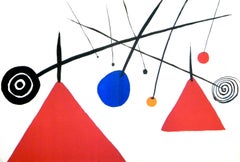
Alexander Calder, Two Pyramids and Spirals, from Derriere le miroir, 1954
By Alexander Calder
Located in Southampton, NY
This exquisite lithograph by Alexander Calder (1898–1976), titled Deux pyramides et spirales (Two Pyramids and Spirals), from the folio Derriere le miroir, No. 69–70, originates from...
Category
1950s Modern Abstract Prints
Materials
Lithograph
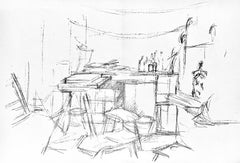
Alberto Giacometti, The Studio VII, from Derriere le miroir, 1957 (after)
By Alberto Giacometti
Located in Southampton, NY
This exquisite lithograph after Alberto Giacometti (1901–1966), titled L'Atelier VII (The Studio VII), from the folio Derriere le miroir, No. 98, originates from the 1957 edition pub...
Category
1950s Modern Abstract Prints
Materials
Lithograph
$716 Sale Price
20% Off
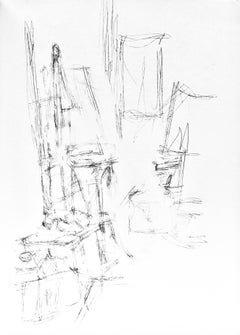
Alberto Giacometti, The Studio V, from Derriere le miroir, 1957 (after)
By Alberto Giacometti
Located in Southampton, NY
This exquisite lithograph after Alberto Giacometti (1901–1966), titled L'Atelier V (The Studio V), from the folio Derriere le miroir, No. 98, originates from the 1957 edition publish...
Category
1950s Modern Abstract Prints
Materials
Lithograph
$716 Sale Price
20% Off
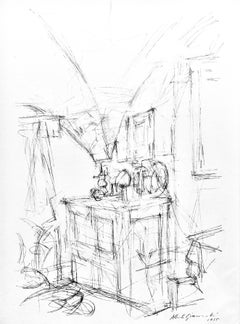
Alberto Giacometti, The Studio II, from Derriere le miroir, 1957 (after)
By Alberto Giacometti
Located in Southampton, NY
This exquisite lithograph after Alberto Giacometti (1901–1966), titled L'Atelier II (The Studio II), from the folio Derriere le miroir, No. 98, originates from the 1957 edition publi...
Category
1950s Modern Abstract Prints
Materials
Lithograph
$716 Sale Price
20% Off
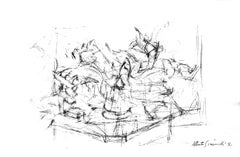
Alberto Giacometti, The Table, from Derriere le miroir, 1954 (after)
By Alberto Giacometti
Located in Southampton, NY
This exquisite lithograph after Alberto Giacometti (1901–1966), titled La table (The Table), from the folio Derriere le miroir, No. 65, originates from the 1954 edition published by ...
Category
1950s Modern Abstract Prints
Materials
Lithograph
$716 Sale Price
20% Off
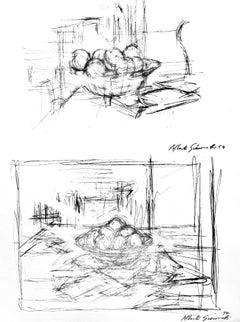
Alberto Giacometti, Two Still Lifes, from Derriere le miroir, 1954 (after)
By Alberto Giacometti
Located in Southampton, NY
This exquisite lithograph after Alberto Giacometti (1901–1966), titled Deux natures mortes (Two Still Lifes), from the folio Derriere le miroir, No. 65, originates from the 1954 edit...
Category
1950s Modern Abstract Prints
Materials
Lithograph
$716 Sale Price
20% Off
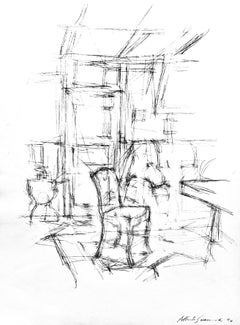
Alberto Giacometti, The Chair, from Derriere le miroir, 1954 (after)
By Alberto Giacometti
Located in Southampton, NY
This exquisite lithograph after Alberto Giacometti (1901–1966), titled La chaise (The Chair), from the folio Derriere le miroir, No. 65, originates from the 1954 edition published by...
Category
1950s Modern Abstract Prints
Materials
Lithograph
$716 Sale Price
20% Off
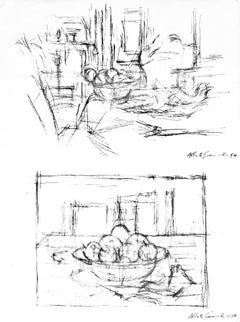
Alberto Giacometti, Two Still Lifes, from Derriere le miroir, 1954 (after)
By Alberto Giacometti
Located in Southampton, NY
This exquisite lithograph after Alberto Giacometti (1901–1966), titled Deux natures mortes (Two Still Lifes), from the folio Derriere le miroir, No. 65, originates from the 1954 edit...
Category
1950s Modern Abstract Prints
Materials
Lithograph
$716 Sale Price
20% Off
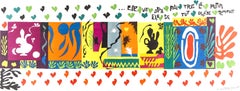
Matisse, Mille et une Nuit, Derrière le miroir (after)
By Henri Matisse
Located in Southampton, NY
Lithograph on vélin paper. Paper Size: 15 x 33 inches, with bifold, as issued. Inscription: Signed in the plate and unnumbered, as issued. Notes: From the folio, Derrière le miroir, ...
Category
1950s Fauvist Abstract Prints
Materials
Lithograph
$1,996 Sale Price
20% Off
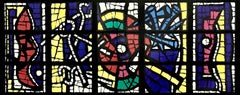
Léger, Les instruments de la Passion, Derrière le miroir (after)
By Fernand Léger
Located in Southampton, NY
Lithograph on vélin paper. Paper Size: 15 x 22 inches, with centerfold, as issued. Inscription: Unsigned and unnumbered, as issued. Notes: From the folio, Derrière le miroir, Sur Qua...
Category
1950s Cubist Abstract Prints
Materials
Lithograph
$716 Sale Price
20% Off
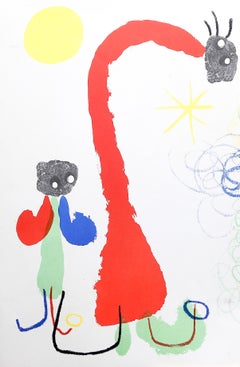
Joan Miro, Figures Before the Sun, from Derriere le miroir, 1950
By Joan Miró
Located in Southampton, NY
This exquisite lithograph by Joan Miro (1893–1983), titled Personnages devant le soleil (Figures Before the Sun), from the folio Derriere le miroir, No. 29–30, originates from the 19...
Category
1950s Surrealist Abstract Prints
Materials
Lithograph
$716 Sale Price
20% Off
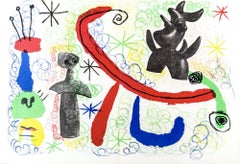
Joan Miro, Untitled, from Derriere le miroir, 1950
By Joan Miró
Located in Southampton, NY
This exquisite lithograph by Joan Miro (1893–1983), titled Sans titre (Untitled), from the folio Derriere le miroir, No. 29–30, originates from the 1950 edition published by Maeght E...
Category
1950s Surrealist Abstract Prints
Materials
Lithograph
$716 Sale Price
20% Off
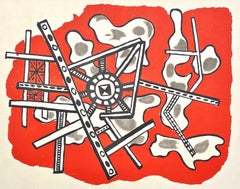
Fernand Leger, Composition on a Red Background, from Derriere le miroir, 1949
By Fernand Léger
Located in Southampton, NY
This exquisite lithograph by Fernand Leger (1881–1955), titled Composition sur fond rouge (Composition on a Red Background), from the folio Derriere le miroir, L’art abstrait, No. 21-22, originates from the 1949 edition published by Maeght Editeur, Paris, and printed by Mourlot Freres, Paris, 1949. The composition exemplifies Leger’s distinctive modernist vision, uniting color, structure, and rhythm into a celebration of harmony between abstraction and industrial dynamism.
Executed as a lithograph on velin paper, this work measures 15 x 22 inches, with centerfold as issued. Unsigned and unnumbered as issued. The edition exemplifies the superb craftsmanship of Mourlot Freres, Paris.
Artwork Details:
Artist: Fernand Leger (1881–1955)
Title: Composition sur fond rouge (Composition on a Red Background), from the folio Derriere le miroir, L’art abstrait, No. 21-22
Medium: Lithograph on velin paper
Dimensions: 15 x 22 inches (38.1 x 55.9 cm), with centerfold as issued
Inscription: Unsigned and unnumbered as issued
Date: 1949
Publisher: Maeght Editeur, Paris
Printer: Mourlot Freres, Paris
Catalogue Raisonne Reference: Leger, Fernand, and Lawrence Saphire. Fernand Leger: The Complete Graphic Work. Blue Moon Press, 1978, illustration 90.
Condition: Well preserved, consistent with age and medium
Provenance: From the folio Derriere le miroir, L’art abstrait, No. 21-22, published by Maeght Editeur, Paris; printed by Mourlot Freres, Paris, 1949
About the Publication:
Derriere le miroir (Behind the Mirror) was one of the most important art publications of the 20th century, created and published by Maeght Editeur in Paris from 1946 to 1982. Founded by the visionary art dealer and publisher Aime Maeght, the series served as both an exhibition catalogue and a work of art in its own right, uniting original lithographs by leading modern and contemporary artists with critical essays, poetry, and design of the highest quality. Printed by master lithographers such as Mourlot Freres and Arte, Derriere le miroir became synonymous with the artistic vanguard of postwar Europe. Each issue was devoted to a single artist or theme and published to accompany exhibitions at the Galerie Maeght in Paris, featuring works by Pablo Picasso, Henri Matisse, Georges Braque, Joan Miro, Marc Chagall, Alexander Calder, Fernand Leger, and Alberto Giacometti, among others. The publication reflected Maeght’s belief that art should be both accessible and elevated—an ideal realized through its luxurious production values, meticulous printing, and collaboration with the greatest creative minds of its time.
About the Artist:
Fernand Leger (1881–1955) was a French painter, sculptor, and filmmaker whose pioneering fusion of modern life, mechanization, and visual abstraction made him one of the most influential artists of the 20th century. Emerging from the Cubist movement, Leger developed a highly personal style distinguished by bold color contrasts, cylindrical forms, and rhythmic compositions that celebrated the beauty of industrial progress and the vitality of modern urban life. Deeply influenced by the innovations of Paul Cezanne and the structural experimentation of Pablo Picasso and Georges Braque, Leger transformed Cubism’s fragmented perspective into a dynamic, machine-age aesthetic that bridged fine art, architecture, and design. His work often depicted workers, machinery, and everyday objects as monumental symbols of harmony between humanity and technology, reflecting both his optimism for modernity and his belief in the democratization of art. During his career, Leger was part of an extraordinary artistic circle that included Henri Matisse, Marc Chagall, Alexander Calder, Alberto Giacometti, Salvador Dali, Joan Miro, Wassily Kandinsky, Marcel Duchamp, and Man Ray—visionaries who shared his commitment to pushing the boundaries of artistic form and expression. A leading figure in the international avant-garde, Leger also explored large-scale murals, public art, and film, expanding the reach of modern art beyond the gallery. His works are represented in major museum collections worldwide, including the Museum of Modern Art, the Centre Pompidou, the Tate, and the Guggenheim, where they continue to inspire admiration for their bold geometry, humanist vision, and timeless modernity. The highest price ever paid for a Fernand Leger artwork is approximately 70 million USD, achieved in 2017 at Christie’s New York for Contraste de formes (1913).
Fernand Leger Composition...
Category
1940s Cubist Abstract Prints
Materials
Lithograph
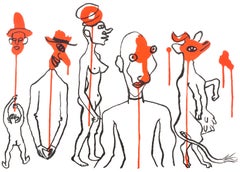
Alexander Calder, Untitled, from Derriere le miroir, 1966
By Alexander Calder
Located in Southampton, NY
This exquisite lithograph by Alexander Calder (1898–1976), titled Sans titre (Untitled), from the folio Derriere le miroir, No. 156, originates from the 1966 edition published by Mae...
Category
1960s Modern Abstract Prints
Materials
Lithograph
$716 Sale Price
20% Off
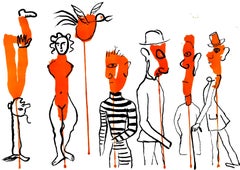
Alexander Calder, Untitled, from Derriere le miroir, 1966
By Alexander Calder
Located in Southampton, NY
This exquisite lithograph by Alexander Calder (1898–1976), titled Sans titre (Untitled), from the folio Derriere le miroir, No. 156, originates from the 1966 edition published by Mae...
Category
1960s Modern Abstract Prints
Materials
Lithograph
$716 Sale Price
20% Off
Alexander Calder, Untitled, from Derriere le miroir, 1966
By Alexander Calder
Located in Southampton, NY
This exquisite lithograph by Alexander Calder (1898–1976), titled Sans titre (Untitled), from the folio Derriere le miroir, No. 156, originates from the 1966 edition published by Mae...
Category
1960s Modern Abstract Prints
Materials
Lithograph

$716 Sale Price
20% Off
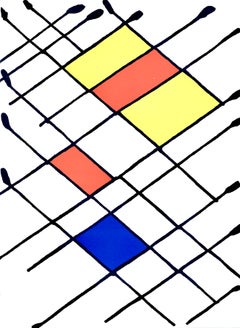
Alexander Calder, Untitled, from Derriere le miroir, 1966
By Alexander Calder
Located in Southampton, NY
This exquisite lithograph by Alexander Calder (1898–1976), titled Sans titre (Untitled), from the folio Derriere le miroir, No. 156, originates from the 1966 edition published by Mae...
Category
1960s Modern Abstract Prints
Materials
Lithograph
$716 Sale Price
20% Off
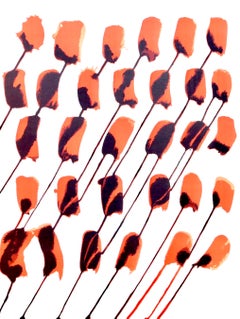
Alexander Calder, Untitled, from Derriere le miroir, 1966
By Alexander Calder
Located in Southampton, NY
This exquisite lithograph by Alexander Calder (1898–1976), titled Sans titre (Untitled), from the folio Derriere le miroir, No. 156, originates from the 1966 edition published by Mae...
Category
1960s Modern Abstract Prints
Materials
Lithograph

$716 Sale Price
20% Off
Alexander Calder, Untitled, from Derriere le miroir, 1966
By Alexander Calder
Located in Southampton, NY
This exquisite lithograph by Alexander Calder (1898–1976), titled Sans titre (Untitled), from the folio Derriere le miroir, No. 156, originates from the 1966 edition published by Mae...
Category
1960s Modern Abstract Prints
Materials
Lithograph
$716 Sale Price
20% Off
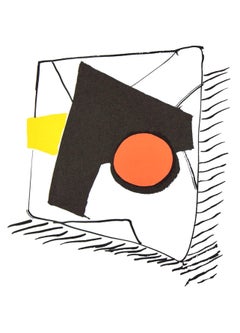
Alexander Calder, Untitled, from Derriere le miroir, 1976
By Alexander Calder
Located in Southampton, NY
This exquisite lithograph by Alexander Calder (1898–1976), titled Sans titre (Untitled), from the folio Derriere le miroir, No. 221, originates from the 1976 edition published by Mae...
Category
1970s Modern Still-life Prints
Materials
Lithograph
$716 Sale Price
20% Off
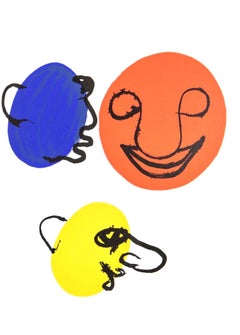
Alexander Calder, The Three Faces, from Derriere le miroir, 1976
By Alexander Calder
Located in Southampton, NY
This exquisite lithograph by Alexander Calder (1898–1976), titled Les Trois Visages (The Three Faces), from the folio Derriere le miroir, No. 221, originates from the 1976 edition pu...
Category
1970s Modern Still-life Prints
Materials
Lithograph
$716 Sale Price
20% Off
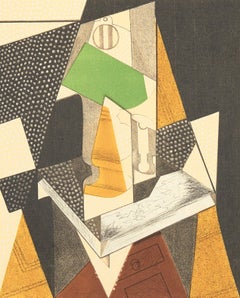
Juan Gris, The Lamp, from Au Soleil du Plafond, 1955 (after)
By Juan Gris
Located in Southampton, NY
This exquisite lithograph after Juan Gris (1887–1927), titled La Lampe (The Lamp), from the folio Au Soleil du Plafond (In the Sunlight of the Ceiling), originates from the 1955 edit...
Category
1950s Cubist Abstract Prints
Materials
Lithograph
$1,996 Sale Price
20% Off
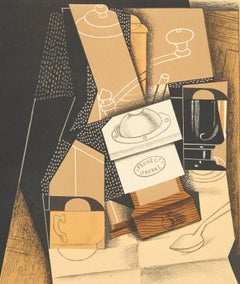
Juan Gris, The Coffee Grinder I, from Au Soleil du Plafond, 1955 (after)
By Juan Gris
Located in Southampton, NY
This exquisite lithograph after Juan Gris (1887–1927), titled Le Moulin a Cafe I (The Coffee Grinder I), from the folio Au Soleil du Plafond (In the Sunlight of the Ceiling), origina...
Category
1950s Cubist Abstract Prints
Materials
Lithograph
$1,996 Sale Price
20% Off
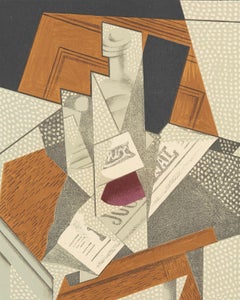
Juan Gris, Bottle, from Au Soleil du Plafond, 1955 (after)
By Juan Gris
Located in Southampton, NY
This exquisite lithograph after Juan Gris (1887–1927), titled Bouteille (Bottle), from the folio Au Soleil du Plafond (In the Sunlight of the Ceiling), originates from the 1955 editi...
Category
1950s Cubist Abstract Prints
Materials
Lithograph
$1,996 Sale Price
20% Off
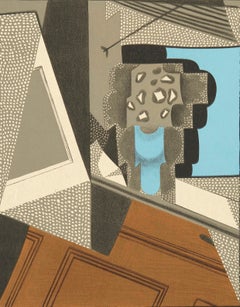
Juan Gris, Flower Pot, from Au Soleil du Plafond, 1955 (after)
By Juan Gris
Located in Southampton, NY
This exquisite lithograph after Juan Gris (1887–1927), titled Pot de Fleurs (Flower Pot), from the folio Au Soleil du Plafond (In the Sunlight of the Ceiling), originates from the 19...
Category
1950s Cubist Abstract Prints
Materials
Lithograph
$1,996 Sale Price
20% Off
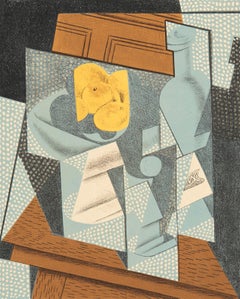
Juan Gris, The Pipe, from Au Soleil du Plafond, 1955 (after)
By Juan Gris
Located in Southampton, NY
This exquisite lithograph after Juan Gris (1887–1927), titled La Pipe (The Pipe), from the folio Au Soleil du Plafond (In the Sunlight of the Ceiling), originates from the 1955 editi...
Category
1950s Cubist Abstract Prints
Materials
Lithograph
$1,996 Sale Price
20% Off
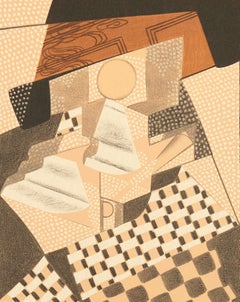
Juan Gris, The Soup Tureen, from Au Soleil du Plafond, 1955 (after)
By Juan Gris
Located in Southampton, NY
This exquisite lithograph after Juan Gris (1887–1927), titled La Soupiere (The Soup Tureen), from the folio Au Soleil du Plafond (In the Sunlight of the Ceiling), originates from the...
Category
1950s Cubist Abstract Prints
Materials
Lithograph
$1,996 Sale Price
20% Off
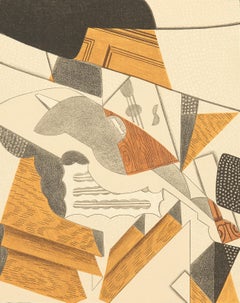
Juan Gris, Violin, from Au Soleil du Plafond, 1955 (after)
By Juan Gris
Located in Southampton, NY
This exquisite lithograph after Juan Gris (1887–1927), titled Violin (Violin), from the folio Au Soleil du Plafond (In the Sunlight of the Ceiling), originates from the 1955 edition ...
Category
1950s Cubist Abstract Prints
Materials
Lithograph
$1,996 Sale Price
20% Off
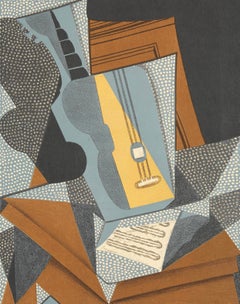
Juan Gris, Guitar, from Au Soleil du Plafond, 1955 (after)
By Juan Gris
Located in Southampton, NY
This exquisite lithograph after Juan Gris (1887–1927), titled Guitare (Guitar), from the folio Au Soleil du Plafond (In the Sunlight of the Ceiling), originates from the 1955 edition...
Category
1950s Cubist Abstract Prints
Materials
Lithograph
$1,996 Sale Price
20% Off
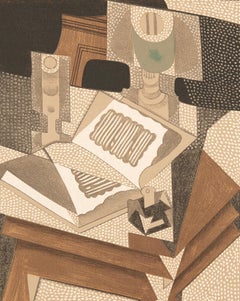
Juan Gris, The Book, from Au Soleil du Plafond, 1955 (after)
By Juan Gris
Located in Southampton, NY
This exquisite lithograph after Juan Gris (1887–1927), titled Le Livre (The Book), from the folio Au Soleil du Plafond (In the Sunlight of the Ceiling), originates from the 1955 edit...
Category
1950s Cubist Abstract Prints
Materials
Lithograph
$1,996 Sale Price
20% Off
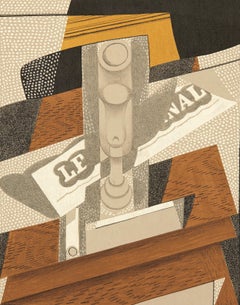
Juan Gris, The Pipe, from Au Soleil du Plafond, 1955 (after)
By Juan Gris
Located in Southampton, NY
This exquisite lithograph after Juan Gris (1887–1927), titled La Pipe (The Pipe), from the folio Au Soleil du Plafond (In the Sunlight of the Ceiling), originates from the 1955 editi...
Category
1950s Cubist Abstract Prints
Materials
Lithograph
$1,996 Sale Price
20% Off
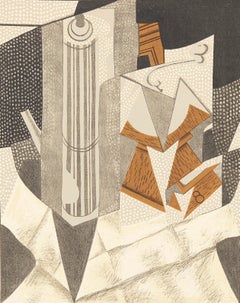
Juan Gris, The Coffee Grinder II, from Au Soleil du Plafond, 1955 (after)
By Juan Gris
Located in Southampton, NY
This exquisite lithograph after Juan Gris (1887–1927), titled Le Moulin a Cafe II (The Coffee Grinder II), from the folio Au Soleil du Plafond (In the Sunlight of the Ceiling), origi...
Category
1950s Cubist Abstract Prints
Materials
Lithograph
$1,996 Sale Price
20% Off