Lincoln Glenn Paintings
to
79
77
84
136
99
161
Overall Width
to
Overall Height
to
78
466
13
20
40
46
28
39
48
60
51
39
19
136
124
87
15
9
6
3
2
2
1
1
326
202
24
172
107
84
77
41
34
34
32
31
30
29
27
27
21
20
20
19
19
19
18
536
444
389
372
90
16
16
14
13
10
431
102
557
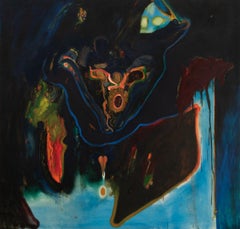
"Tropic of Crucifix" William Scharf, Abstract Expressionist, New York School
By William Scharf
Located in New York, NY
William Scharf
Tropic of Crucifix, 1957
Signed and dated on the reverse
Oil on canvas
40 x 47 inches
Provenance:
The artist
Robert Barnet, New York (gift from the above)
Private Collection, by descent
A visionary painter with ties to the avant-garde artistic community in New York at midcentury, William Scharf nevertheless defies art historical categorization. His abstracted compositions of organic and geometric formal elements recall the free associations of Surrealism and the all-over grandeur of Abstract Expressionism, and at the same time embody a very individual and immediately recognizable pictorial sense. Scharf combines virtuoso paint handling, vibrant color, and rich symbolic language in canvases that engage the viewer in a transcendent and emotional dialogue. This dialogue is accomplished in part through recurring symbols, which allude to hidden, mysterious narratives. Scharf plumbs the psychological wells of collective myths for symbolic content: the crown of thorns, the ladder, the fish, and the cross can be found throughout, functioning not, as one might expect, as religious symbols, but rather as a means through which to access a deeper, symbolic level of visual communication.
Born in 1927 in Media, Pennsylvania, an early friendship with renowned artist N.C. Wyeth encouraged Scharf’s artistic efforts from a very young age. After a time with the Army Air Corps in the mid-1940s, Scharf formalized his art studies at the Pennsylvania Academy of the Fine Arts under Franklin Watkins...
Category
1960s Abstract Abstract Paintings
Materials
Canvas, Oil
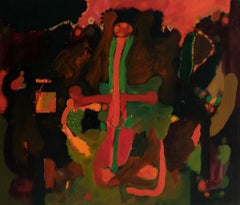
"Untitled" William Scharf, Abstract Expressionist, New York School
By William Scharf
Located in New York, NY
William Scharf
Untitled, 1962
Signed lower left; signed and dated verso
Oil on canvas
48 x 50 inches
A visionary painter with ties to the avant-garde artistic community in New York at midcentury, William Scharf nevertheless defies art historical categorization. His abstracted compositions of organic and geometric formal elements recall the free associations of Surrealism and the all-over grandeur of Abstract Expressionism, and at the same time embody a very individual and immediately recognizable pictorial sense. Scharf combines virtuoso paint handling, vibrant color, and rich symbolic language in canvases that engage the viewer in a transcendent and emotional dialogue. This dialogue is accomplished in part through recurring symbols, which allude to hidden, mysterious narratives. Scharf plumbs the psychological wells of collective myths for symbolic content: the crown of thorns, the ladder, the fish, and the cross can be found throughout, functioning not, as one might expect, as religious symbols, but rather as a means through which to access a deeper, symbolic level of visual communication.
Born in 1927 in Media, Pennsylvania, an early friendship with renowned artist N.C. Wyeth encouraged Scharf’s artistic efforts from a very young age. After a time with the Army Air Corps in the mid-1940s, Scharf formalized his art studies at the Pennsylvania Academy of the Fine Arts under Franklin Watkins...
Category
1960s Abstract Abstract Paintings
Materials
Canvas, Oil
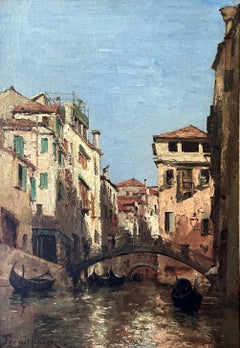
"Canal Pinelli, Venise" Paul Désiré Trouillebert, Venetian Scene in Italy
By Paul Desire Trouillebert
Located in New York, NY
Paul Désiré Trouillebert
Canal Pinelli, Venise
Signed lower left
Oil on canvas
18 3/4 x 12 3/8 inches
Provenance:
Artist's studio sale, 1887, no. 4
With M. Newmann London
Sale, Christie's, London, Save the Children Fund, May 16, 1961 (according to an inscription on the reverse)
Private Collection, United Kingdom
Literature:
Marumo et al, Paul Désiré Trouillebert: Catalogue Raisonné de l'œuvre peint, Stuttgart, 2004, cat. no. 0362 p. 336, illustrated.
Paul Désiré Trouillebert was born in Paris in 1829 and died in the city June 28, 1900. He is considered a portrait, genre and landscape painter from the French Barbizon School. He was a student of Ernest Hébert [1817-1908] and Charles-François Jalabert [1819-1901], and made his debut at the Salon of 1865, exhibiting a portrait. At the Paris Salon of 1869, Trouillebert exhibited “Au bois Rossignolet”, which was a lyrical Fontainebleau landscape that received great critical acclaim.
Trouillebert concentrated on portraits until about 1881, when he began to focus on atmospheric silvery landscapes steeping in cool damp color. In 1882, he exhibited a large landscape titled “Baignneuses” which was well received and helped him gain a reputation as a landscape painter. Another noted work was commissioned by Edmé Piot, a public works contractor. The painting, “Travaux de relèvement du chemin de fer de ceinture: le pont du Cours de Vincennes” (Cleveland Museum) was of a railway project initiated in 1851, after Napoleon III came to power. The commission included four related views of the Paris railway construction, which was completed in February 1889.
After the 1860’s, the misty Barbizon landscapes by Jean-Baptist- Camille Corot’s [1796-1875] had become astonishingly vogue, which brought about a trove of imitators. His followers and students; Henri Joseph Constant Dutilleux [1807-1865], George Devillers, Achille François Oudinot [1820-1901], Edouard Brandon [1831-1887] and Trouillebert were not trying to mislead the public, he was their idol. However, the greatest confusion has always been over works by Corot and Trouillebert because both artists painted river landscapes at dawn or dusk with a very similar approach, palette and style. Like Corot, Trouillebert painted a wide variety of subjects, including genre scenes, portraits and nudes.
Trouillebert would receive the most attention as a result of an 1883 court case involving one of his paintings. The painting “La Fontaine des Gabourets” had been sold by one of Paris’ more prominent dealers George Petit to writer Alexandre Dumas fils. Trouillebert’s signature and been removed and resigned Corot. The fake was discovered by Robaut and Bernheim-Jeune and returned to the original seller, Tedesco. Trouillebert, who had nothing to do with the fraud, brought legal action against the guilty parties to regain his reputation and clear his name. The trial made all of the papers and Trouillebert won his case. George Pettit...
Category
19th Century Landscape Paintings
Materials
Canvas, Oil
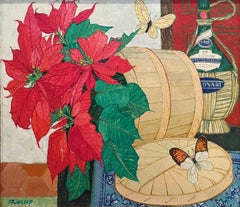
"Floral Still Life Arrangement" Frederick Jessup, Butterflies, Wine Bottle
By Robert Jessup
Located in New York, NY
Frederick Arthur Jessup
Still Life Arrangement
Signed lower left
Oil on canvas
18 1/2 x 22 inches
Provenance:
Findlay Galleries, New York
Private Collection, New York
Category
Mid-20th Century Modern Still-life Paintings
Materials
Canvas, Oil
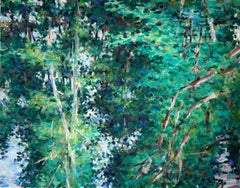
"Clear Reflections" Charles DuBack, Green Landscape, Pond, Sky, Forest
Located in New York, NY
Charles DuBack
Clear Reflections
Signed upper right and titled on verso
Oil on canvas
26 1/2 x 33 1/2 inches
Charles Steven DuBack was born in Fairfield, Connecticut in 1926, the fi...
Category
1980s Landscape Paintings
Materials
Canvas, Oil
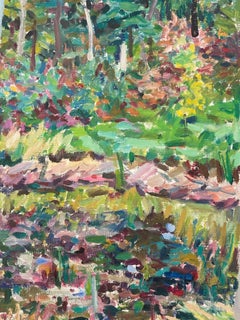
"Tree Landscape" Charles DuBack, Green Decorative with Pond and Forest, Modern
Located in New York, NY
Charles DuBack
Tree Landscape, 1987
Signed and dated lower right
Oil on canvas
21 x 16 inches
Charles Steven DuBack was born in Fairfield, Connecticut in 1926, the first (of ten) bo...
Category
1980s Landscape Paintings
Materials
Canvas, Oil
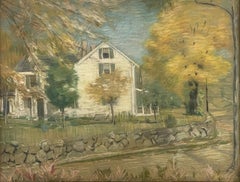
"New England Autumn" Philip Leslie Hale, American Impressionist Landscape House
By Philip Leslie Hale
Located in New York, NY
Philip Leslie Hale
New England Autumn, 1910
Pastel on canvas
25 x 30 inches
Provenance:
Estate of the artist
Sotheby's New York, American Paintings, Drawings and Sculpture, May 24, 1990, Lot 125
R. Anne McCarthy
Rose Art Museum, Waltham, Massachusetts (gift from the above)
Private Collection, Massachusetts
Exhibited:
Philadelphia, The Pennsylvania Academy of the Fine Arts, Tenth Annual Philadelphia Watercolor Exhibition, November 10 - December 15, 1912, no. 13.
Painter, teacher and writer, Philip Leslie Hale is recognized for his decorative paintings of the female figure and for his interior scenes with figures as well as for his progressive approach to painting. However, his career went through several phases that included sporting scenes, figural studies of women including nudes, portraits, and allegorical works reflecting the overwhelming forces of nature.
Of the Boston painters of his time, he seemed the most fully committed to Impressionism, and his technique suggests the influence of French impressionist Edgar Degas. In most of his paintings, the landscape was more important than the figure.
He was a prolific writer in local newspapers and periodicals about the contemporary art scene, discussing the work of his Boston colleagues. He also wrote numerous books on art and art history including a study of Vermeer that was published in 1913. Among his writings are 1892 newspaper columns for Arcadia Magazine titled "Letters from Paris", art criticism for the Boston Herald from 1905 to 1909; and art criticism for the Boston Evening Transcript. He argued for the Boston School of Art as led by Edmund Tarbell whose style was based on Impressionism with elements of Realism, especially figure painting.
Hale was born in Boston in 1865, the son Reverend Edward Hale, a Boston clergyman and a relative of Nathan Hale. He studied with Ellen Day Hale, his sister, and Edmund Tarbell at the Boston Museum School, with J. Alden Weir at the Art Students League in New York City, and then went to Paris for further studies at the Academie Julian and the Ecole des Beaux-Arts. He remained in France for fifteen years, returning to America about 1895. During that time, from 1888, he spent summers at Giverny, France with his good friend, artist, Theodore Butler, and became well acquainted with Claude Monet. Traveling throughout Europe, Hale visited the major museums, and copied the works of Ingres, Vermeer, Watteau and Michelangelo.
Hale married Lilian Westcott Hale...
Category
1910s American Impressionist Landscape Paintings
Materials
Canvas, Pastel
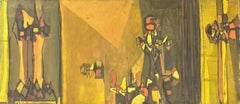
"Untitled" Angelo Ippolito, Yellow 1950s Abstract Expressionism, New York School
By Angelo Ippolito
Located in New York, NY
Angelo Ippolito
Untitled, 1952
Signed and dated on the reverse
Oil on canvas
16 x 36 inches
Provenance:
Gloria Torrice
Estate of the above
Liana Torrice, West Orange...
Category
1950s Abstract Abstract Paintings
Materials
Canvas, Oil
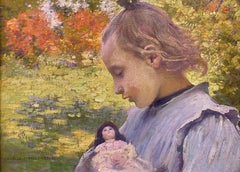
"Girl with Doll" Charles Sprague Pearce, American Impressionism, Figurative
By Charles Sprague Pearce
Located in New York, NY
Charles Sprague Pearce
Girl with Doll, circa 1895
Signed lower left
Oil on canvas
10 x 14 inches
Provenance:
Estate of William S. Barrett
Pierce Galleries, East Bridgewater, Massach...
Category
1890s Impressionist Figurative Paintings
Materials
Canvas, Oil
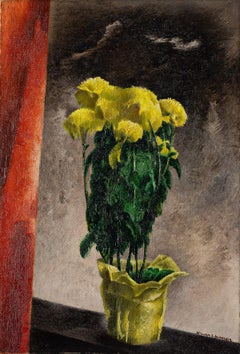
"Mums" William S. Schwartz, Yellow Flowers, Cubist, Modern Still Life
By William S. Schwartz
Located in New York, NY
William S. Schwartz
Still Life with Yellow Mums, circa 1950
Signed lower right
Oil on canvas
20 x 16 inches
Provenance:
Private Collection, Massachusetts
William Schwartz was born in Smorgon, Russia, in 1896, one of nine children in a poor family. He studied art at an early age, earning a scholarship at the Vilna Art School in Russia, 1908–12. He immigrated to the United States at age 17 in 1913, living in New York with his sister for eight months and then moving to Omaha, Nebraska, to live with his brother in 1915. Working as a house painter, he turned his attention to art, studying briefly with J. Laurie Wallace at the Kellom School in Omaha before moving to Chicago. He entered the School of the Art Institute of Chicago (SAIC) in 1916, studying with Ivan Trutnev and Karl A. Buehr, and graduating with honors in life drawing, portraiture, and painting in 1917. He supported himself as a tenor singer in vaudeville, concerts, and opera and received favorable reviews, but he chose to pursue painting instead of singing. His circle of artist friends included important Chicago modernists Aaron Bohrod, Malvin and Ivan Albright, Archibald Motley Jr., and Anthony Angarola...
Category
Mid-20th Century Cubist Still-life Paintings
Materials
Canvas, Oil
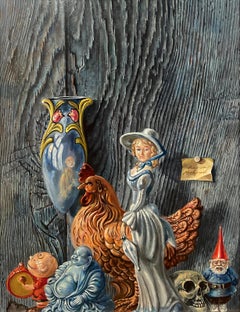
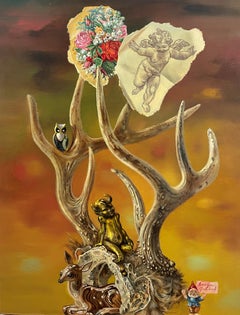
"Gallimaufry" Aaron Bohrod, Realism, Surrealism, Charlie Brown, Buddha, Gnome
By Aaron Bohrod
Located in New York, NY
Aaron Bohrod
Gallimaufry, 1989
Signed on the right
Oil on gesso panel
14 x 11 inches
Aaron Bohrod's work has not been limited to one style or medium. Initially recognized as a regionalist painter of American scenes, particularly of his native Chicago, Bohrod later devoted himself to detailed still-life paintings rendered in the trompe l'oeil style. He also worked for several years in ceramics and wrote a book on pottery.
Born in 1907, Bohrod began his studies at Chicago's Crane Junior College in 1925, and two years later enrolled in the Art Institute of Chicago. But it was at the Art Students League in New York City, from 1930 to 1932, that he studied under the man believed to be his most significant early influence, John Sloan. Sloan's romantic realism...
Category
1980s Realist Animal Paintings
Materials
Oil, Board
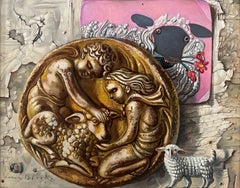
"Baa-Relief" Aaron Bohrod, Pun Humor, Magic Realism, Sheep, Lamb
By Aaron Bohrod
Located in New York, NY
Aaron Bohrod
Baa-Relief, 1986
Signed lower left
Oil on gesso panel
8 x 10 inches
Aaron Bohrod's work has not been limited to one style or medium. Initially recognized as a regionalist painter of American scenes, particularly of his native Chicago, Bohrod later devoted himself to detailed still-life paintings rendered in the trompe l'oeil style. He also worked for several years in ceramics and wrote a book on pottery.
Born in 1907, Bohrod began his studies at Chicago's Crane Junior College in 1925, and two years later enrolled in the Art Institute of Chicago. But it was at the Art Students League in New York City, from 1930 to 1932, that he studied under the man believed to be his most significant early influence, John Sloan. Sloan's romantic realism is reflected in the many depictions of Chicago life...
Category
1980s Realist Animal Paintings
Materials
Oil, Board
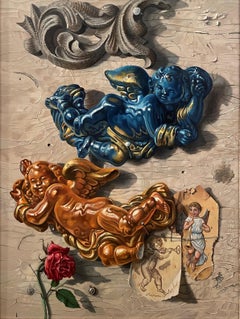
"Complementary Angels" Aaron Bohrod, Pun Humor, Magic Realism, Putti
By Aaron Bohrod
Located in New York, NY
Aaron Bohrod
Complementary Angels, 1977
Signed lower center
Oil on gesso panel
16 x 12 inches
Aaron Bohrod's work has not been limited to one style or medium. Initially recognized as a regionalist painter of American scenes, particularly of his native Chicago, Bohrod later devoted himself to detailed still-life paintings rendered in the trompe l'oeil style. He also worked for several years in ceramics and wrote a book on pottery.
Born in 1907, Bohrod began his studies at Chicago's Crane Junior College in 1925, and two years later enrolled in the Art Institute of Chicago. But it was at the Art Students League in New York City, from 1930 to 1932, that he studied under the man believed to be his most significant early influence, John Sloan. Sloan's romantic realism is reflected in the many depictions of Chicago life...
Category
1970s Realist Animal Paintings
Materials
Oil, Board
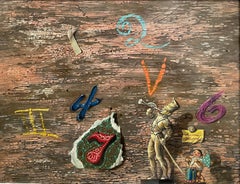
"The Magnificent Seven" Aaron Bohrod, Pun Humor, Magic Realism, Numbers, Text
By Aaron Bohrod
Located in New York, NY
Aaron Bohrod
The Magnificent Seven, 1990
Signed lower right
Oil on gesso panel
11 x 14 inches
Aaron Bohrod's work has not been limited to one style or medium. Initially recognized as a regionalist painter of American scenes, particularly of his native Chicago, Bohrod later devoted himself to detailed still-life paintings rendered in the trompe l'oeil style. He also worked for several years in ceramics and wrote a book on pottery.
Born in 1907, Bohrod began his studies at Chicago's Crane Junior College in 1925, and two years later enrolled in the Art Institute of Chicago. But it was at the Art Students League in New York City, from 1930 to 1932, that he studied under the man believed to be his most significant early influence, John Sloan. Sloan's romantic realism is reflected in the many depictions of Chicago life...
Category
1990s Realist Animal Paintings
Materials
Oil, Board
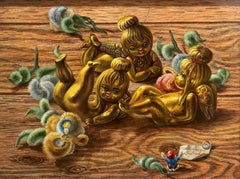
"Golden Girls" Aaron Bohrod, Pun Humor, Magic Realism, Television Show
By Aaron Bohrod
Located in New York, NY
Aaron Bohrod
Golden Girls, 1987
Signed lower right
Oil on gesso panel
9 x 12 inches
Aaron Bohrod's work has not been limited to one style or medium. Initially recognized as a regionalist painter of American scenes, particularly of his native Chicago, Bohrod later devoted himself to detailed still-life paintings rendered in the trompe l'oeil style. He also worked for several years in ceramics and wrote a book on pottery.
Born in 1907, Bohrod began his studies at Chicago's Crane Junior College in 1925, and two years later enrolled in the Art Institute of Chicago. But it was at the Art Students League in New York City, from 1930 to 1932, that he studied under the man believed to be his most significant early influence, John Sloan. Sloan's romantic realism is reflected in the many depictions of Chicago life...
Category
1980s Realist Animal Paintings
Materials
Oil, Board
"Double Bill" Aaron Bohrod, Pun Humor, Magic Realism, Shakespeare, Theater
By Aaron Bohrod
Located in New York, NY
Aaron Bohrod
Double Bill, 1990
Signed upper right
Oil on gesso panel
9 x 12 inches
Aaron Bohrod's work has not been limited to one style or medium. Initially recognized as a regiona...
Category
1990s Realist Animal Paintings
Materials
Oil, Board
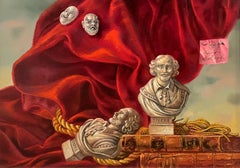
"Old McDonald
s Farm" Aaron Bohrod, Pun Humor, Magic Realism, Midwestern Rural
By Aaron Bohrod
Located in New York, NY
Aaron Bohrod
Old McDonald's Farm, 1989
Signed lower right
Oil on gesso board
14 x 18 inches
Aaron Bohrod's work has not been limited to one style or medium. Initially recognized as ...
Category
1980s Realist Animal Paintings
Materials
Oil, Board
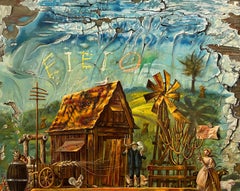
"The Beginning" Aaron Bohrod, Pun Humor, Magic Realism, Alphabet Letters, Text
By Aaron Bohrod
Located in New York, NY
Aaron Bohrod
The Beginning, 1990
Signed center
Oil on gesso board
10 x 8 inches
Aaron Bohrod's work has not been limited to one style or medium. Initially recognized as a regionalis...
Category
1990s Realist Animal Paintings
Materials
Oil, Board
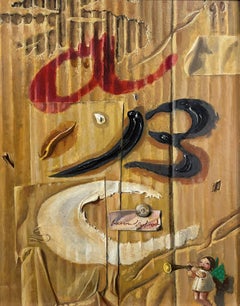
"Hippopotami" Aaron Bohrod, Pun Humor, African Safari, Realism Still Life
By Aaron Bohrod
Located in New York, NY
Aaron Bohrod
Hippopotami, 1990
Signed lower right
Oil on gesso board
12 x 16 inches
Aaron Bohrod's work has not been limited to one style or medium. Initially recognized as a region...
Category
1990s Realist Animal Paintings
Materials
Oil, Board
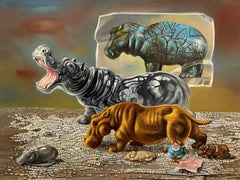
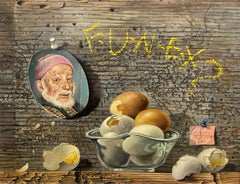
"The Egg and I" Aaron Bohrod, Pun Humor, Yiddish Joke, Realism
By Aaron Bohrod
Located in New York, NY
Aaron Bohrod
The Egg and I, 1991
Signed lower right
Oil on gesso board
11 x 14 inches
Aaron Bohrod's work has not been limited to one style or medium. Initially recognized as a regi...
Category
1990s Realist Animal Paintings
Materials
Oil, Board
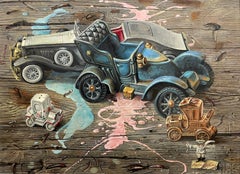
"Autobiography" Aaron Bohrod, Pun Humor, Cars, Realism, Motoring
By Aaron Bohrod
Located in New York, NY
Aaron Bohrod
Autobiography, 1991
Signed lower right
Oil on gesso board
12 x 16 inches
Aaron Bohrod's work has not been limited to one style or medium. Initially recognized as a regionalist painter of American scenes, particularly of his native Chicago, Bohrod later devoted himself to detailed still-life paintings rendered in the trompe l'oeil style. He also worked for several years in ceramics and wrote a book on pottery.
Born in 1907, Bohrod began his studies at Chicago's Crane Junior College in 1925, and two years later enrolled in the Art Institute of Chicago. But it was at the Art Students League in New York City, from 1930 to 1932, that he studied under the man believed to be his most significant early influence, John Sloan. Sloan's romantic realism is reflected in the many depictions of Chicago life...
Category
1990s Realist Animal Paintings
Materials
Oil, Board
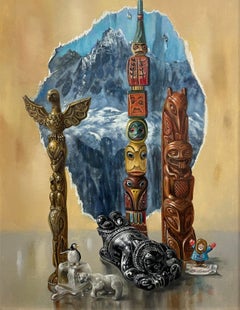
"Objets d
Arctic" Aaron Bohrod, Inuit, Polar Bear, Penguin, Winter Still Life
By Aaron Bohrod
Located in New York, NY
Aaron Bohrod
Objets D'Arctic, 1987
Signed lower right
Oil on gesso board
14 x 11 inches
Aaron Bohrod's work has not been limited to one style or medium. Initially recognized as a regionalist painter of American scenes, particularly of his native Chicago, Bohrod later devoted himself to detailed still-life paintings rendered in the trompe l'oeil style. He also worked for several years in ceramics and wrote a book on pottery.
Born in 1907, Bohrod began his studies at Chicago's Crane Junior College in 1925, and two years later enrolled in the Art Institute of Chicago. But it was at the Art Students League in New York City, from 1930 to 1932, that he studied under the man believed to be his most significant early influence, John Sloan. Sloan's romantic realism is reflected in the many depictions of Chicago life...
Category
1980s Realist Animal Paintings
Materials
Oil, Board
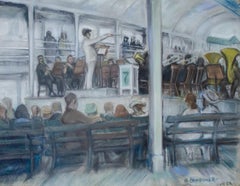
"Musical Conductor" Amy Londoner, Ashcan School, Figurative Concert Scene
By Amy Londoner
Located in New York, NY
Amy Londoner
Musical Conductor, 1922
Signed and dated lower right
Pastel on paper
Sight 18 x 23 inches
Amy Londoner (April 12, 1875 – 1951) was an American painter who exhibited at the 1913 Armory Show. One of the first students of the Henri School of Art in 1909. Prior to the Armory Show of 1913, Amy Londoner and her classmates studied with "Ashcan" painter Robert Henri at the Henri School of Art in New York, N.Y. One notable oil painting, 'The Vase', was painted by both Henri and Londoner.
Londoner was born in Lexington, Missouri on April 12, 1875. Her parents were Moses and Rebecca Londoner, who moved to Leadville, Colorado, by 1880. In 1899, Amy took responsibility for her father who had come to Los Angeles from Leadville and had mental issues. By 1900, Amy was living with her parents and sister, Blanche, in the vicinity of Leadville, Denver, Colorado. While little was written about her early life, Denver City directories indicated that nineteenth-century members of the family were merchants, with family ties to New York, N.Y. The family had a male servant. Londoner traveled with her mother to England in 1907 then shortly later, both returned to New York in 1909. Londoner was 34 years old at the time, and, according to standards of the day, should have married and raised a family long before. Instead, she enrolled as one of the first students at the Henri School of Art in 1909.
At the Henri School, Londoner established friendships with Carl Sprinchorn (1887-1971), a young Swedish immigrant, and Edith Reynolds (1883-1964), daughter of wealthy industrialist family from Wilkes-Barre, PA. Londoner's correspondence, which often included references to Blanche, listed the sisters' primary address as the Hotel Endicott at 81st Street and Columbus Avenue, NYC. Other correspondence also reached Londoner in the city via Mrs. Theodore Bernstein at 252 West 74th Street; 102 West 73rd Street; and the Independent School of Art at 1947 Broadway. In 1911, Londoner vacationed at the Hotel Trexler in Atlantic City, NJ. As indicated by an undated photograph, Londoner also spent time with Edith Reynolds and Robert Henri at 'The Pines', the Reynolds family estate in Bear Creek, PA.
Through her connections with the Henri School, Londoner entered progressive social and professional circles. Henri's admonition, phrased in the vocabulary of his historical time period, that one must become a "man" first and an artist second, attracted both male and female students to classes where development of unique personal styles, tailored to convey individual insights and experiences, was prized above the mastery of standardized, technical skill. Far from being dilettantes, women students at the Henri School were daring individuals willing to challenge tradition. As noted by former student Helen Appleton Read, "it was a mark of defiance,to join the radical Henri group."
As Henri offered educational alternatives for women artists, he initiated exhibition opportunities for them as well. Troubled by the exclusion of work by younger artists from annual exhibitions at the National Academy of Design, Henri was instrumental in organizing the no-jury, no-prize Exhibition of Independent Artists in 1910. About half of the 103 artists included in the exhibition were or had been Henri students, while twenty of the twenty-six women exhibiting had studied with Henri. Among the exhibition's 631 pieces, nine were by Amy Londoner, including the notorious 'Lady with a Headache'. Similarly, fourteen of Henri's women students exhibited in the groundbreaking Armory Show of 1913, forming about eight percent of the American exhibitors and one-third of American women exhibitors. Of the nine documented works submitted by Londoner, five were rejected, while four pastels of Atlantic City beach scenes, including 'The Beach Umbrellas' now in the Remington Collection, were displayed.
Following Henri's example, Londoner served as an art instructor for younger students at the Modern School, whose only requirement was to genuinely draw what they pleased. The work of dancer Isadora Duncan, another artist devoted to the ideals of a liberal education, was also lauded by the Modern School. Henri, who long admired Duncan and invited members of her troupe to model for his classes, wrote an appreciation of her for the Modern School journal in 1915. She was also the subject of Londoner's pastel Isadora Duncan and the Children: Praise Ye the Lord with Dance. In 1914, Londoner traveled to France to spend summer abroad, living at 99 rue Notre Dames des Champs, Paris, France. As the tenets of European modernism spread throughout the United States, Londoner showed regularly at venues which a new generation of artists considered increasingly passe, including the annual Society of Independent Artists' exhibitions between 1918 and 1934, and the Salons of America exhibition in 1922. Londoner also exhibited at the Morton Gallery, Opportunity Gallery, Leonard Clayton Gallery and Brownell-Lambertson Galleries in NYC. Her painting of a 'Blond Girl' was one of two works included in the College Art Associations Traveling Exhibition of 1929, which toured colleges across the country to broad acclaim.
Londoner later in life suffered from illnesses then suffered a stroke which resulted in medical bills significantly mounting over the years that her old friends from the Henri School, including Carl Sprinchorn, Florence Dreyfous, Florence Barley, and Josephine Nivison Hopper, scrambled to raise funds and find suitable long-term care facilities for Londoner. Londoner later joined Reynolds in Bear Creek, PA. Always known for her keen wit, Londoner retained her humor and concern for her works even during her illness, noting that "if anything happens to the Endicott, I guess they will just throw them out." Sprinchorn and Reynolds, however, did not allow this to happen. In 1960, Londoner's paintings 'Amsterdam Avenue at 74th Street' and 'The Builders' were loaned by Reynolds to a show commemorating the Fiftieth Anniversary of the Exhibition of Independent Artists in 1910, presented at the Delaware Art Center, Wilmington, DE. In the late 80's, Francis William Remington, 'Bill Remington', of Bear Creek Village PA, along with his neighbor and artist Frances Anstett Brennan, both had profound admiration for Amy Londoner's art work and accomplishments as a woman who played a significant role in the Ashcan movement. Remington acquired a significant number of Londoner's artwork along with Frances Anstett Brenan that later was part of an exhibition of Londoner's artwork in April 15 of 2007, at the Hope Horn...
Category
1920s Ashcan School Figurative Paintings
Materials
Paper, Pastel
"Faun and Fawn" Aaron Bohrod, Realist Still Life, Deer and Putti
By Aaron Bohrod
Located in New York, NY
Aaron Bohrod
Faun and Fawn, 1984
Signed lower right
Oil on gesso board
16 x 12 inches
Aaron Bohrod's work has not been limited to one style or medium. Initially recognized as a regionalist painter of American scenes, particularly of his native Chicago, Bohrod later devoted himself to detailed still-life paintings rendered in the trompe l'oeil style. He also worked for several years in ceramics and wrote a book on pottery.
Born in 1907, Bohrod began his studies at Chicago's Crane Junior College in 1925, and two years later enrolled in the Art Institute of Chicago. But it was at the Art Students League in New York City, from 1930 to 1932, that he studied under the man believed to be his most significant early influence, John Sloan. Sloan's romantic realism is reflected in the many depictions of Chicago life, which comprised most of Bohrod's early work.
Under Sloan's tutelage, Bohrod came to subscribe to the belief that painters should find the subjects of their art in the immediate world around them. These paintings emphasized architecture unique to north Chicago and featured Chicagoans engaged in such everyday activities as working, playing or going to the theatre. The romantic aspect was conveyed by the use of misty colors, and the realism by attention to detail.
In 1936, Bohrod won the Guggenheim Fellowship award in creative painting...
Category
1980s Realist Animal Paintings
Materials
Oil, Board
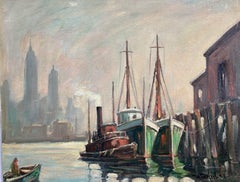
"View from the Docks on the East River, New York" Bela de Tirefort, Cityscape
By Bela de Tirefort
Located in New York, NY
Bela de Tirefort
View from the Docks on the East River, New York, 1958
Signed and dated lower right
Oil on canvas
16 x 20 inches
Bela de Tirefort was born in Eastern Europe, painted...
Category
1950s Modern Landscape Paintings
Materials
Canvas, Oil
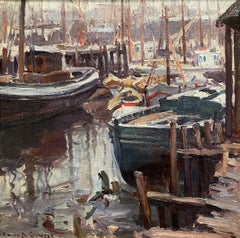
"Rainy Day" Emile Gruppe, Cape Ann, Rockport, Gloucester, Impressionist
By Emile Gruppe
Located in New York, NY
Emile Gruppe
Rainy Day
Signed lower left
Oil on canvas
16 x 16 inches
Emile Gruppe was an unusually prolific artist. He was at his easel almost every day and created thousands of pa...
Category
Mid-20th Century Impressionist Landscape Paintings
Materials
Canvas, Oil
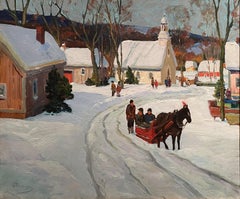
"Mountain Village in Winter" Anthony Thieme, Snowy Landscape
By Anthony Thieme
Located in New York, NY
Anthony Thieme
Mountain Village in Winter
Signed lower left
Oil on canvas
25 x 30 inches
Anthony Thieme was born in the Dutch port city of Rotterdam in 1888. He studied at the Acade...
Category
Early 20th Century American Impressionist Landscape Paintings
Materials
Canvas, Oil
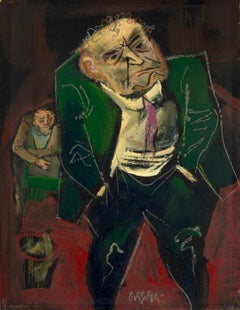
"Senator" William Gropper, Social Realism, WPA Political Art, Caricature
By William Gropper
Located in New York, NY
William Gropper
Senator
Signed lower center
Oil on board
16 x 12 1/4 inches
ACA Galleries, New York
Private Collection, New York
Bonhams, American Art Online, August 23, 2023, Lot 3...
Category
Mid-20th Century American Realist Figurative Paintings
Materials
Oil, Board
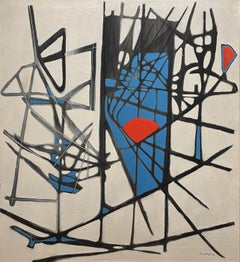
"Personal Equation" Jimmy Ernst, Abstract Surrealism, Black, Red, Blue, White
By Jimmy Ernst
Located in New York, NY
Jimmy Ernst
Personal Equation, 1950
Signed and dated lower right
Oil on canvas
41 x 39 1/2 inches
Provenance:
Laurel Gallery, New York
Grace Borgenicht Gallery, New York
Collection ...
Category
1940s Surrealist Abstract Paintings
Materials
Canvas, Oil

$28,000 Sale Price
20% Off
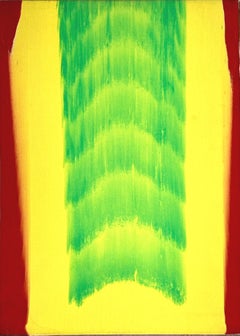
"Untitled" Gene Hedge, Abstract Color Field, Yellow Pattern Midcentury Painting
Located in New York, NY
Gene Hedge
Untitled, circa 1970
Acrylic on canvas
29 x 20 3/4 inches
(P097)
Gene Hedge was born (1928) and raised in rural Indiana. After military service, he briefly attended Ball State University in Muncie, Indiana. There he encountered the writing of Laszlo Moholy-Nagy, and the following year (1949) went to study at the Institute of Design in Chicago. He received a B.S. degree in Visual Design from the Institute of Design (1953), and he also took courses at the Art Institute of Chicago and began working in collage.
During this period, the influence of Eugene Dana...
Category
1970s Abstract Abstract Paintings
Materials
Canvas, Acrylic
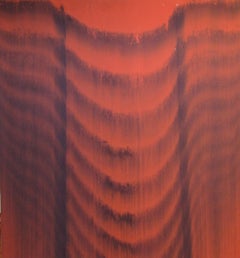
"Untitled" Gene Hedge, Abstract Color Field, Red Pattern Midcentury Painting
Located in New York, NY
Gene Hedge
Untitled, circa 1970
Acrylic on canvas
44 x 43 inches
(P112)
Gene Hedge was born (1928) and raised in rural Indiana. After military service, he briefly attended Ball State University in Muncie, Indiana. There he encountered the writing of Laszlo Moholy-Nagy, and the following year (1949) went to study at the Institute of Design in Chicago. He received a B.S. degree in Visual Design from the Institute of Design (1953), and he also took courses at the Art Institute of Chicago and began working in collage.
During this period, the influence of Eugene Dana...
Category
1960s Abstract Abstract Paintings
Materials
Canvas, Acrylic
"Untitled" Gene Hedge, Abstract Color Field, Yellow Midcentury Painting
Located in New York, NY
Gene Hedge
Untitled, circa 1966
Acrylic on canvas
61 1/2 x 42 1/8 inches
(P122)
Gene Hedge was born (1928) and raised in rural Indiana. After military service, he briefly attended Ball State University in Muncie, Indiana. There he encountered the writing of Laszlo Moholy-Nagy, and the following year (1949) went to study at the Institute of Design in Chicago. He received a B.S. degree in Visual Design from the Institute of Design (1953), and he also took courses at the Art Institute of Chicago and began working in collage.
During this period, the influence of Eugene Dana...
Category
1960s Abstract Abstract Paintings
Materials
Canvas, Acrylic
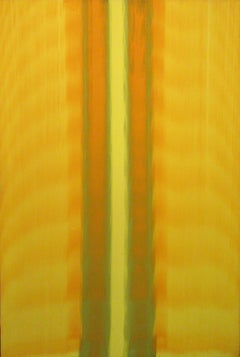
"Inside Blue" Gene Hedge, Abstract Color Field, Bauhaus Midcentury Painting
Located in New York, NY
Gene Hedge
Inside Blue, 1966
Acrylic on canvas
61 1/4 x 43 3/4 inches
(P124)
Gene Hedge was born (1928) and raised in rural Indiana. After military service, he briefly attended Ball State University in Muncie, Indiana. There he encountered the writing of Laszlo Moholy-Nagy, and the following year (1949) went to study at the Institute of Design in Chicago. He received a B.S. degree in Visual Design from the Institute of Design (1953), and he also took courses at the Art Institute of Chicago and began working in collage.
During this period, the influence of Eugene Dana...
Category
1960s Abstract Abstract Paintings
Materials
Canvas, Acrylic
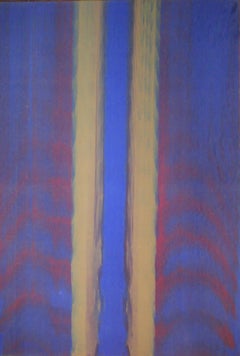
"Untitled" Gene Hedge, Abstract Color Field, Pink Midcentury Bauhaus Painting
Located in New York, NY
Gene Hedge
Untitled, 1966
Acrylic on canvas
60 x 43 inches
(P276)
Gene Hedge was born (1928) and raised in rural Indiana. After military service, he briefly attended Ball State Univ...
Category
1960s Abstract Abstract Paintings
Materials
Canvas, Acrylic
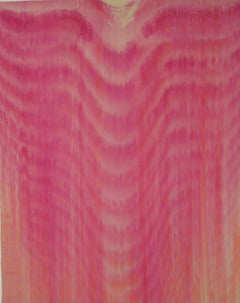
"Emblem" Gene Hedge, Abstract Color Field, Black Midcentury Bauhaus Painting
Located in New York, NY
Gene Hedge
Emblem, 1976
Acrylic on canvas
19 1/2 x 58 1/2 inches
(P063)
Gene Hedge was born (1928) and raised in rural Indiana. After military service, he briefly attended Ball Stat...
Category
1970s Abstract Abstract Paintings
Materials
Canvas, Acrylic
"In Foreign Parts" Eugene Higgins, Southwestern Pueblo, Modern Figurative
By Eugene Higgins
Located in New York, NY
Eugene Higgins
In Foreign Parts, circa 1913
Signed lower right
Watercolor on paper
Sight 17 x 13 inches
Born William Victor Higgins in 1884 to a Shelbyville, Indiana farm family where the only art Victor was aware of as a child was his father's love of flowers. "He loved their forms and their colors, and he tended his garden as a painter might work a canvas." At the age of nine, Victor met a young artist who traveled the Indiana countryside painting advertisements on the sides of barns. He purchased paints and brushes so the young Higgins could practice his own artwork on the inside of his father's barn. He also taught Victor about art museums and especially about the new Chicago Art Institute. This information never left the young artist, and he saved his allowance until his father allowed him at the age of fifteen to attend Chicago Art Institute. He worked a variety of jobs to finance his studies both there and at the Academy of Fine Arts.
Victor Higgins traveled to New York in 1908, where he met Robert Henri, who became a significant influence by depicting every-day scenes and stressing the importance of the spirit and sense of place as important factors in painting. Higgins was also greatly affected by the New York Armory Modernism Show of Marsden Hartley in 1913.
While Victor Higgins was in Chicago he met former mayor and avid collector Carter H. Harrison who was to prove instrumental in the growth of Higgins career for several years. Harrison agreed to support Higgins for four years to go to Paris and Munich and paint and study in the great museums in Europe. While at the Academie de la Grande Chaumier in Paris (1910-1914) he met Walter Ufer, who was another Chicago artist being sponsored by Carter Harrison. This meeting was not only a life-long friendship, but the beginning of a great change in the way Higgins looked at "American" art. He decided that America needed it's own authentic style rather than the 19th Century classic style he was taught in Europe. Very soon after returning to Chicago in 1914, Harrison sent him and Walter Ufer on a painting trip to Taos, New Mexico for a year in exchange for paintings. Higgins made other similar agreements and was able to support himself with his painting. This trip was a life-changing experience and introduced Higgins to the authentic America he had been looking for.
In 1914 Taos was an isolated village about twelve hours from Santa Fe on an impossible dirt road. But the colorful life of the pueblo people and the natural beauty drew a collection of artists who became the Taos art colony, from which the Taos Society of Artists was founded in 1915. Victor Higgins became a permanent resident within a year of his arrival and a member of the society in 1917, exhibiting with Jane Peterson in 1925 and with Wayman Adams and Janet Scudder in 1927. The members would travel around the country introducing the Southwest scenes with great success. He remained a member until the Society's dissolution in 1927. Higgins was the youngest member of the group of seven. Other members were Joseph Henry Sharp, Bert Phillips...
Category
1910s American Modern Figurative Drawings and Watercolors
Materials
Paper, Watercolor
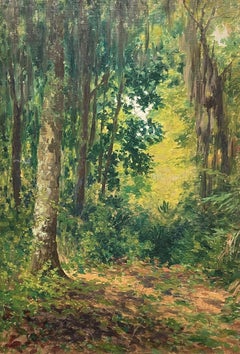
"Hubbard Park, Crescent City, Florida" George Frederick Morse, Landscape
Located in New York, NY
George Frederick Morse
Hubbard Park, Crescent City, Florida, 1906
Oil on canvas
17 x 12 inches
A landscape and marine painter from Portland, Maine, George Morse was a founding membe...
Category
Early 1900s Hudson River School Landscape Paintings
Materials
Canvas, Oil
$5,200 Sale Price
20% Off
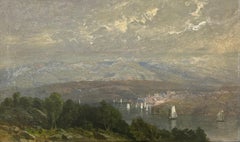
"West Point" John Ferguson Weir, Hudson River School Landscape with Sailboats
By John Ferguson Weir
Located in New York, NY
John Ferguson Weir
West Point, 1873
Signed and dated lower left
Oil on panel
12 1/8 x 20 1/8 inches
Provenance:
Sotheby's Arcade, American Paintings, December 19, 2003, Lot 1091
Spanierman Gallery, New York
Private Collection, New York (acquired directly from the above)
Exhibited:
Roslyn, Nassau County Museum of Fine Art, William Cullen Bryant, The Weirs and American Impressionism, April 24, 1983-July 31, 1983.
A painter, sculptor, writer, and teacher, John Weir was a highly talented man whose painting was overshadowed by his father, Robert Weir, the long-time West Point Academy drawing teacher, and his brother, J Alden Weir, well-known impressionist painter.
His distinguished reputation was primarily based on his accomplishments as a teacher and administrator. For many years, from 1869 to 1913, John Weir was the Director of the Yale University School of Fine Arts. He was also a commissioner of the art exhibition at the Centennial Exposition in Philadelphia.
Weir was born at West Point, New York, and by age 20, had a studio in New York City in the Tenth Street Studio Building, the first building in America dedicated to art studios, and there he associated with many leading painters of the day.
He earned attention early in his career for paintings of industrial scenes...
Category
1870s Hudson River School Landscape Paintings
Materials
Oil, Panel
"Untitled" Bob Thompson, Figurative Work on Paper, Black Abstract Artist
By Bob Thompson
Located in New York, NY
Bob Thompson
Untitled, 1964
Felt tip pen on printed paper
11 x 20 1/2 inches
Provenance:
The artist
Kathy Komaroff Goodman (gift from the artist)
Hollis Taggart, New York
Exhibited...
Category
1960s Modern Figurative Drawings and Watercolors
Materials
Paper, Watercolor
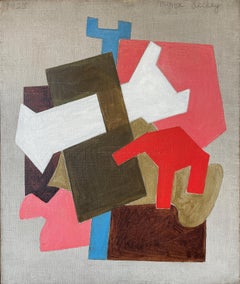
"Abstract Interior of Room" Myron Lechay, Colorful Early Geometric Abstract
By Myron Lechay
Located in New York, NY
Myron Lechay
Abstract Interior of Room, 1923
Signed upper right corner and dated upper left corner
Oil on canvas
24 x 20 inches
Provenance:
Estate of the artist
Spanierman Gallery, ...
Category
1920s Abstract Abstract Paintings
Materials
Canvas, Oil
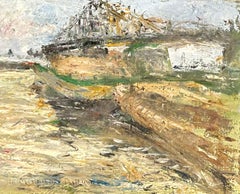
"Near Provincetown" Charles Webster Hawthorne, Cape Cod Impressionist Landscape
By Charles Webster Hawthorne
Located in New York, NY
Charles Hawthorne
Near Provincetown
Signed and inscribed "TO MY FRIEND RILLINGIK" lower left
Oil on canvas
16 x 20 1/4 inches
Provenance:
Private Collection
Sotheby's New York, September 12, 1994, Lot 145
Spanierman Gallery, New York
Private Collection, Scarsdale, New York
Charles W. Hawthorne (1872-1930) was one of America's most dynamic, penetrating and forthright portrait painters, as well as a creative, inspiring teacher. A painter's painter, Hawthorne ran a summer school in Provincetown - the Cape Cod School of Art - for over thirty years and made it a leading artists' colony of plein-air impressionist-inspired talents. Hawthorne grew up in Richmond, Maine, the son of Joseph Jackson Hawthorne and Cornelia Jane Smith...
Category
1910s Impressionist Landscape Paintings
Materials
Canvas, Oil
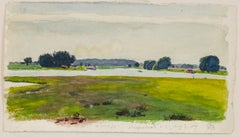
"Sheepshead, Brooklyn, Long Island" Oscar Bluemner, Modernist Watercolor
By Oscar Bluemner
Located in New York, NY
Oscar Bluemner
Sheepshead, Long Island, 1907
Signed with the artist's conjoined initials "OB" and dated "4-30 - 5 - 30" / "Aug 3, 07"
Watercolor on paper
6 x 10 inches
Provenance:
J...
Category
Early 1900s American Modern Landscape Drawings and Watercolors
Materials
Paper, Watercolor
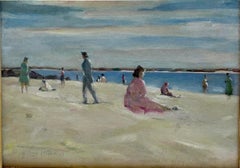
"Ocean Parkway Beach, October 2" Nathan Hoffman, Brooklyn, Impressionist
Located in New York, NY
Nathan Hoffman
Ocean Parkway Beach, October 2, 1941
Signed, titled, dated on the reverse
Oil on artists board
9 3/4 x 14 inches
Born in Russia, the son...
Category
1940s American Impressionist Landscape Paintings
Materials
Oil, Board
"Brighton Beach, August 5" Nathan Hoffman, Brooklyn, Impressionist, Sunny Day
Located in New York, NY
Nathan Hoffman
Brighton Beach, August 5, 1941
Signed, titled, dated and estate stamped on the reverse
Oil on board
9 3/4 x 14 inches
Born in Russia, th...
Category
1940s American Impressionist Landscape Paintings
Materials
Oil, Board
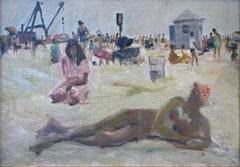
"Manhattan from the Rooftops" Nathan Hoffman, Impressionist Cityscape Landscape
Located in New York, NY
Nathan Hoffman
Manhattan from the Rooftops, July 1, 1947
Signed, dated and estate stamped on the reverse
Oil on board
15 3/4 x 20 inches
Born in Russia...
Category
1940s American Impressionist Landscape Paintings
Materials
Oil, Board
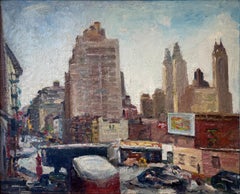
"Brighton Beach" Nathan Hoffman, New York, Sunny Day Landscape Impressionism
Located in New York, NY
Nathan Hoffman
Brighton Beach, July 31, 1946
Signed, dated, and estate stamped on the reverse
Oil on artist's board
10 x 13 1/2 inches
Provenance:
Esta...
Category
1940s American Impressionist Landscape Paintings
Materials
Oil, Board
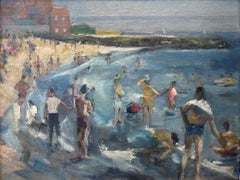
"The Beach" Nathan Hoffman, Brooklyn, New York, Sunny Day Landscape
Located in New York, NY
Nathan Hoffman
The Beach
Estate stamped on the reverse
Oil on artist's board
10 1/4 x 14 inches
Provenance:
Estate of the artist
Born in Russia, the s...
Category
1940s American Impressionist Landscape Paintings
Materials
Oil, Board

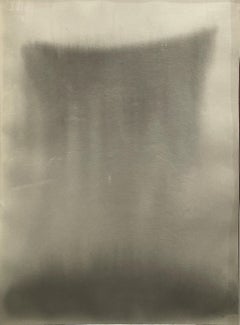
"Untitled, " Thiago Rocha Pitta, Brazilian Contemporary Grey Watercolor
Located in New York, NY
Thiago Rocha Pitta
Untitled, 2006
Watercolor on paper
30 x 23 inches
Brazil-based artist Thiago Rocha Pitta’s (b. 1980) temporal and sensitive body of work depicts interventions wit...
Category
Early 2000s Contemporary Abstract Drawings and Watercolors
Materials
Paper, Watercolor
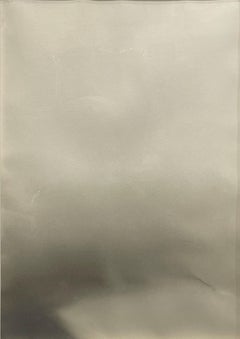
$4,800 Sale Price
20% Off
"Untitled, " Thiago Rocha Pitta, Contemporary Grey Watercolor
Located in New York, NY
Thiago Rocha Pitta
Untitled, 2006
Watercolor on paper
30 x 23 inches
Brazil-based artist Thiago Rocha Pitta’s (b. 1980) temporal and sensitive body of work depicts interventions wit...
Category
Early 2000s Contemporary Abstract Drawings and Watercolors
Materials
Paper, Watercolor
$4,800 Sale Price
20% Off
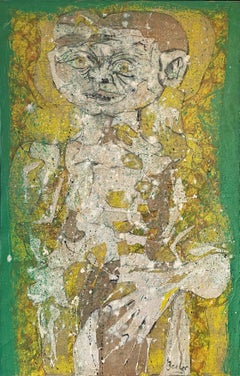
"Boy from Mansos, " Karl Zerbe, Green Figurative "Degenerate" Art Collage
By Karl Zerbe
Located in New York, NY
Karl Zerbe (1903 - 1972)
Boy from Mansos, 1963
Collage and acrylic on canvas
35 x 23 inches
Signed lower right
Provenance:
Lee Nordness Galleries, New York
Karl Zerbe was born on September 16, 1903 in Berlin, Germany. The family lived in Paris, France from 1904–1914, where his father was an executive in an electrical supply concern. In 1914 they moved to Frankfurt, Germany where they lived until 1920. Karl Zerbe studied chemistry in 1920 at the Technische Hochschule in Friedberg, Germany.
From 1921 until 1923 he lived in Munich, where he studied painting at the Debschitz School, mainly under Josef Eberz. From 1924 until 1926 Karl Zerbe worked and traveled in Italy on a fellowship from the City of Munich. In 1932 his oil painting titled, ‘’Herbstgarten’’ (autumnal garden), of 1929, was acquired by the National-Galerie, Berlin; in 1937, the painting was destroyed by the Nazis as "Degenerate art...
Category
1960s Post-War Abstract Paintings
Materials
Canvas, Acrylic
$2,800 Sale Price
30% Off
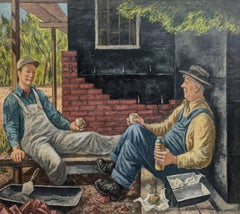
"Lunch Break” Fletcher Martin, Men Working, Bricklayers, WPA, American Scene
By Fletcher Martin
Located in New York, NY
Fletcher Martin
Lunch Break, circa 1940
Signed lower right
Oil on canvas
31 1/2 x 37 3/8 inches
When Fletcher Martin died in 1979, the New York Times entitled his obituary “Artist o...
Category
1940s American Realist Landscape Paintings
Materials
Canvas, Oil
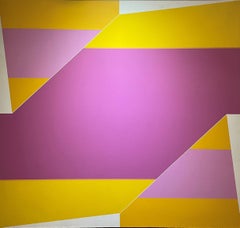
"Jean Jean" Larry Zox, Color Field, Geometric Abstraction, Hard-Edge, Yellow
By Larry Zox
Located in New York, NY
Larry Zox
Jean Jean, 1964
Signed, dated, and titled on the stretcher
Liquitex on canvas
58 x 62 inches
Provenance:
Solomon & Co., New York
Private Collection, NJ
Estate of the above, 2023
Committed to abstraction throughout his career, Larry Zox played a central role in the Color Field discourse of the 1960s and 1970s. His work of the time, consisting of brilliantly colored geometric shapes in dynamic juxtapositions, demonstrated that hard-edge painting was neither cold nor formalistic. He reused certain motifs, but he did so less to explore their aspects than to “get at the specific character and quality of each painting in and for itself,” as James Monte stated in his essay for Zox’s solo exhibition at the Whitney Museum of American Art in 1973. By the 1970s, Zox was using a freer, more emotive method, while maintaining the autonomy of color, which increasingly became more important to him than structure in his late years.
Zox began to receive attention in the 1960s, when he was included in several groundbreaking exhibitions of Color Field and Minimalist art, including Shape and Structure (1965), organized by Henry Geldzahler for the Gallery of Modern Art, New York, and Systemic Painting (1966), organized by Lawrence Alloway for the Guggenheim Museum. In 1973, the Whitney’s solo exhibition of Zox’s work gave recognition to his significance in the art scene of the preceding decade. In the following year, Zox was represented in the inaugural exhibition of the Hirshhorn Museum, which owns fourteen of his works.
Zox was born in Des Moines, Iowa. He attended the University of Oklahoma and Drake University. While studying at the Des Moines Art Center, he was mentored by George Grosz, who despite his own figurative approach encouraged Zox’s forays into abstraction. In 1958, Zox moved to New York, joining the downtown art scene. His studio on 20th Street became a gathering place for artists, jazz musicians, bikers, and boxers. He occasionally sparred with the visiting fighters. He later established a studio in East Hampton, where he painted and fished including using a helicopter to spot fish.
In the 1950s and early 1960s, Zox’s works were collages consisting of painted pieces of paper stapled onto sheets of plywood. He then produced paintings that were illusions of collages, including both torn- and trued-edged forms, to which he added a wide range of intense hues that created ambiguous surfaces. Next, he omitted the collage aspect of his work and applied flat color areas to create more complete statements of pure color and shape.
From 1962 to 1965, he produced his Rotation Series, at first creating plywood and Plexiglas reliefs, which turned squares into dynamic polygons. He used these shapes in his paintings as well, employing white as a foil between colors to produce negative spaces that suggest that the colored shapes had only been cut out and laid down instead of painted. The New York Times noted in 1964: “The artist is hip, cool, adventurous, not content to stay with the mere exercise of sensibility that one sees in smaller works.”
In 1965, he began the Scissors Jack...
Category
1960s Abstract Geometric Abstract Paintings
Materials
Canvas, Acrylic
$64,000 Sale Price
20% Off
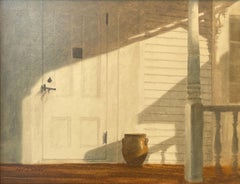
"Doorway" Ken Davies, Realist House Porch Architecture
Located in New York, NY
Ken Davies
Doorway, circa 1970
Signed lower left
Oil on board
11 x 15 inches
Provenance:
The Heritage Gallery Inc., Columbus, Ohio, 1975
Private Collection, Columbus
Acquired from the estate of the above
Born in New Bedford, Massachusetts, Kenneth Davies...
Category
1970s Realist Landscape Paintings
Materials
Oil, Board
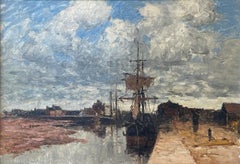
Bateau au Quai (Docked Sailing Vessel at Low Tide), Frank Myers Boggs, Landscape
By Frank Myers Boggs
Located in New York, NY
Frank Myers Boggs
Bateau au Quai (Docked Sailing Vessel at Low Tide)
Signed lower left
Oil on canvas
15 x 21 1/2 inches
Provenance:
David Findlay Galleries, New York
Charles R. Brown Fine Art, Locust Valley, New York
The Impressionist Frank Myers Boggs spent his formative and mature years abroad and in 1923 became a naturalized French citizen. He was born in Springfield, Ohio, but moved as a young boy to New York, where his father was a newspaper executive. The artist began his career at the age of seventeen as a wood engraver for Harper’s, preparing illustrations for Harper’s Weekly and for an American edition of the works of Charles Dickens. It has also been stated that he studied with the portraitist John Barnard Whittaker (1836–1926).
After working at Niblo’s Garden in New York with a scene painter named Vauglin, Boggs went to Paris to study scene painting. On his arrival there in 1876, he was unable to find anyone to instruct him in this field and instead entered the École des Beaux-Arts. Realizing that Boggs was not well suited to painting figurative subjects, his teacher Jean-Léon Gérôme (1824–1904) advised him to try some outdoor landscapes. Between 1877 and 1881, he concentrated on marine...
Category
Late 19th Century Impressionist Landscape Paintings
Materials
Canvas, Oil
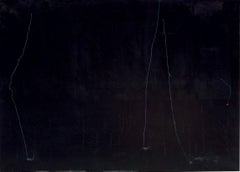
"Pyroclastic Fever, " Nigel Cooke, Contemporary Painting, Lightning Skyscape
By Nigel Cooke
Located in New York, NY
Nigel Cooke (Born 1973)
Pyroclastic Fever, 2002
Oil on canvas
60 1/2 x 84 1/2 inches
Signed, titled and dated "NIGEL COOKE 'PYROCLASTIC FEVER' 2002 Nigel C...
Category
Early 2000s Contemporary Abstract Paintings
Materials
Canvas, Oil
$32,000 Sale Price
20% Off
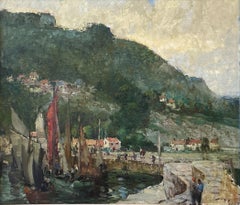
"A Devon Harbor" William Lee Hankey, Coastal Town Seascape with Boats, England
By William Lee Hankey
Located in New York, NY
William Lee Hankey
A Devon Harbor
Signed lower right; titled on the stretcher
Oil on canvas
24 x 29 inches
William Lee Hankey (1869–1952) RWS, RI, ROI, RE, NS[clarification needed] ...
Category
Early 20th Century Impressionist Landscape Paintings
Materials
Canvas, Oil
$7,600 Sale Price
20% Off
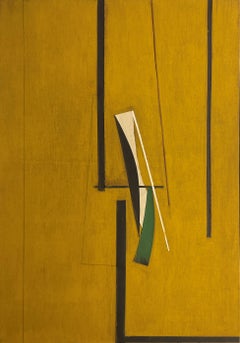
"Ouverture, with Cypress Forms" Stephen Edlich, Abstract Geometric Painting
By Stephen Edlich
Located in New York, NY
Stephen Edlich
Ouverture, with Cypress Forms, 1982
Signed, dated and titled on the stretcher
Acrylic paint, mixed media, and burlap on canvas
60 x 40 inches
An artist who worked in the post-cubist and constructivist traditions, Stephen P. Edlich gained a considerable amount of acclaim in the 1970s and 1980s for his collages, sculpture, and paintings. His promising career was cut short due to his untimely death at age 45 in 1989.
Edlich was born in New York City. He received his undergraduate degree with a major in fine arts studies from New York University in 1967. During his college years, he traveled to London, where he met the art dealer Victor Waddington and created his first white on white collage. In that same year, he attended a major exhibition of the work of Ben Nicholson, which would be influential source in his art. Edlich returned to England in 1967, where he met Barbara Hepworth and Patrick Heron in London and traveled to St. Ives, Cornwall, long a favorite artists' haunt. Edlich began creating acrylic reliefs...
Category
1980s Abstract Geometric Abstract Paintings
Materials
Canvas, Burlap, Mixed Media, Acrylic
$60,000 Sale Price
20% Off
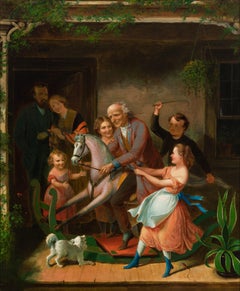
"Playing with Grandfather" Tomkins Harrison Matteson, Family Genre Scene
Located in New York, NY
Tomkins Harrison Matteson
Playing with Grandfather, 1869
Signed and dated lower left
Oil on canvas
29 5/16 x 24 3/16 inches
Provenance:
Sotheby's New York, May 24, 2001, Lot 150
Estate of a New Hampshire Collector
Tompkins H. Matteson was one of the most noted painters in upstate New York during the 1850s and was well-known for genre and historical subjects. Born in Peterboro, New York, he studied and exhibited at the National Academy of Design - established himself as a portrait painter in Sherburne, New York before moving in 1841 to New York City. In 1850, he returned to Shelburne, where he spent the remainder of his life.
A follower of William Sidney Mount...
Category
1860s Realist Figurative Paintings
Materials
Canvas, Oil
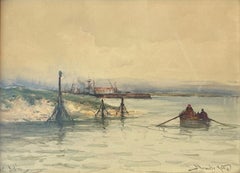
"Gray Morning" James MacMaster, Scottish Seascape, Marine Ship Landscape
By James MacMaster
Located in New York, NY
James MacMaster
Gray Morning
Signed and titled lower left
Watercolor on paper
10 1/4 x 14 inches
Provenance:
Private Collection, New Jersey
Category
Late 19th Century Landscape Paintings
Materials
Paper, Watercolor
$540 Sale Price
70% Off
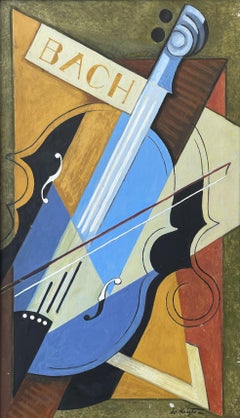
"Nature morte" Bela de Kristo, Mid-century Cubist Still Life Abstract Cello
By Bela De Kristo
Located in New York, NY
Bela de Kristo
Nature morte, circa 1956
Signed lower right
Oil on board
19 5/8 x 11 3/4 inches
Provenance:
Alexander Kahan Fine Arts, New York
Private ...
Category
1950s Cubist Still-life Paintings
Materials
Oil, Board