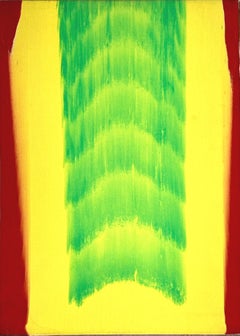
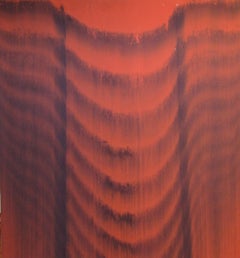
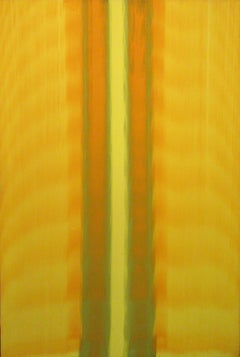
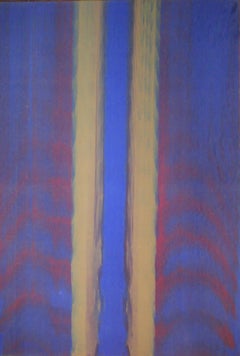
Lincoln Glenn Abstract Paintings

to
21
18
12
34
23
100
Overall Width
to
Overall Height
to
1
177
9
1
1
4
9
30
55
42
22
6
120
9
7
6
2
1
97
73
14
2
1
1
1
1
1
1
1
180
147
131
115
61
16
9
6
6
4
86
84
187
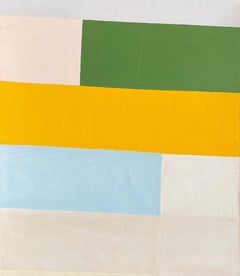
"Untitled" Calvert Coggeshall, Abstract Expressionism Hard-edge Stripes
Located in New York, NY
Calvert Coggeshall Untitled, circa 1975 Oil on canvas 50 x 40 inches Calvert Coggeshall worked as an abstract painter and interior designer primari...
Category

1970s Abstract Expressionist Abstract Paintings

Materials

Canvas, Acrylic

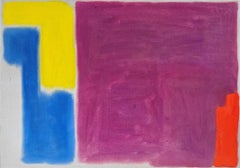
"Untiled" Edward Zutrau, 1963 Intense Color Abstract Expressionist Painting
Located in New York, NY
Edward Zutrau Untiled, 4/1963 Signed and dated on stretcher bar Oil on linen 35 1/2 x 51 inches Edward Zutrau is among the American artists who worked within the whirlwind of diver...
Category

1960s Abstract Expressionist Abstract Paintings

Materials

Canvas, Oil

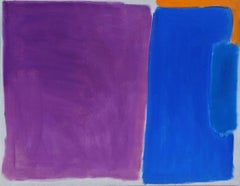
"Kamakura" Edward Zutrau, 1963 Abstract Expressionist Chromatic Composition
Located in New York, NY
Edward Zutrau Kamakura, 5/1963 Signed, dated and titled on verso Oil on linen 38 1/2 x 51 1/2 inches Edward Zutrau is among the American artists who worked within the whirlwind of ...
Category

1960s Abstract Expressionist Abstract Paintings

Materials

Linen, Oil

"Illumination" Calvert Coggeshall, Abstract Expressionism, Hard-edge Stripes
Located in New York, NY
Calvert Coggeshall Illumination, 1973 Signed, titled, and dated on the reverse Acrylic on canvas 65 x 67 inches Calvert Coggeshall worked as an abs...
Category

1970s Abstract Expressionist Abstract Paintings

Materials

Canvas, Acrylic

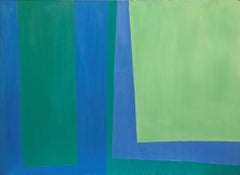
"Untitled" Edward Zutrau, 1957 Blue And Green Abstract Expressionist Work
Located in New York, NY
Edward Zutrau Untitled, 1957 Oil on linen 44 x 60 1/2 inches Edward Zutrau is among the American artists who worked within the whirlwind of diverse abstraction that blossomed in th...
Category

1950s Abstract Expressionist Abstract Paintings

Materials

Linen, Oil

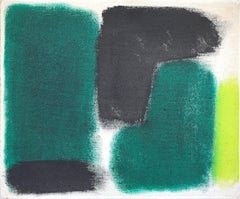
"Untitled" Edward Zutrau, 1963 Post-Painterly Abstract Expressionist Painting
Located in New York, NY
Edward Zutrau Untitled, 1963 Signed and dated on stretcher verso "5/63" Oil on canvas 8 3/4 x 10 3/4 inches Edward Zutrau is among the American artists who worked within the whirlw...
Category

1960s Abstract Expressionist Abstract Paintings

Materials

Canvas, Oil

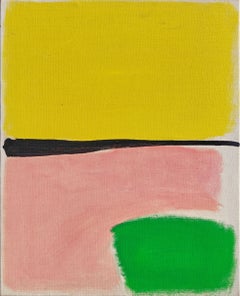
"Untitled" Edward Zutrau, 1963 Post-Painterly Abstraction Expressionist Work
Located in New York, NY
Edward Zutrau Untitled, 2/17/1963 Signed and dated on verso Oil on linen 25 1/2 x 21 inches Edward Zutrau is among the American artists who worked within the whirlwind of diverse a...
Category

1960s Abstract Expressionist Abstract Paintings

Materials

Linen, Oil

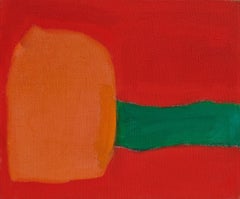
"Untitled" Edward Zutrau, Mid Century Abstract Expressionist Colorist Painting
Located in New York, NY
Edward Zutrau Untitled Signed and dated on stretcher Oil on linen 26 x 31 1/2 inches Edward Zutrau is among the American artists who worked within the whirlwind of diverse abstract...
Category

Mid-20th Century Abstract Expressionist Abstract Paintings

Materials

Linen, Oil

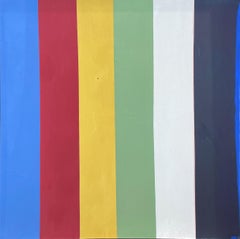
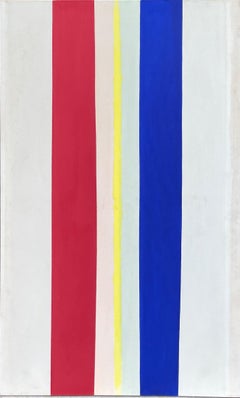
"Meridian" Calvert Coggeshall, Abstract Expressionism Hard-edge Vertical Stripes
Located in New York, NY
Calvert Coggeshall Meridian, 1974 Signed, titled, and dated on the reverse Acrylic on canvas 67 x 45 inches Calvert Coggeshall worked as an abstrac...
Category

1970s Abstract Expressionist Abstract Paintings

Materials

Canvas, Acrylic

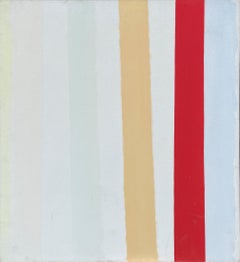
"A Stripe" Calvert Coggeshall, Abstract Expressionism, Hard-edge Vertical Lines
Located in New York, NY
Calvert Coggeshall A Stripe, 1971 Signed, titled, and dated on the reverse Acrylic on canvas 30 x 30 inches Calvert Coggeshall worked as an abstrac...
Category

1970s Abstract Expressionist Abstract Paintings

Materials

Canvas, Acrylic

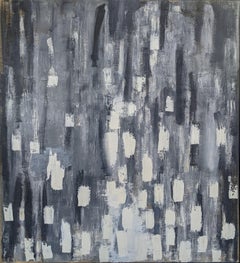
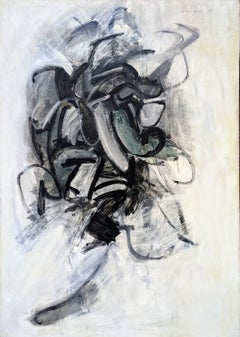
"Untitled" Calvert Coggeshall, Abstract Expressionism, Black, Grey, and White
Located in New York, NY
Calvert Coggeshall Untitled, 1958 Oil on Canvas 38 H. x 36 W. inches Provenance: The artist's estate Calvert Coggeshall worked as an abstract painter and interior designer primarily in Maine and New York City. From 1951 to 1978, he exhibited regularly with the Betty Parsons Gallery, and later with its successor, the Jack Tilton Gallery. Born in Whitesboro, New York, Coggeshall started his career as an interior designer, working on commissions for clients in the New York City area. He later consulted on the interior designs for Henry Dreyfuss' line of cruise/cargo ships called American Export, popular from the 1940s through the 1960s. In the 1940s, he also worked with inventor Arthur Young to design interiors for the first full-sized scale of Bell helicopter models...
Category

1950s Abstract Abstract Paintings

Materials

Canvas, Oil

"Untitled (Park Avenue Series)" Beryl Barr-Sharrar, 1979 Color Field Abstraction
Located in New York, NY
Beryl Barr-Sharrar Untitled (Park Avenue Series), 1979 Signed and dated on the reverse Acrylic on canvas 44 x 73 1/2 inches As an undergraduate at Mount Holyoke College (Beryl McLe...
Category

1970s Color-Field Abstract Paintings

Materials

Canvas, Acrylic

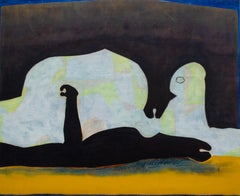
"Abolicion de la Muerte" Fernando de Szyszlo, Grey Abstract Surrealist Painting
By Fernando de Szyszlo
Located in New York, NY
Fernando de Szyszlo Abolicion de la Muerte, 1987 Titled dated verso: "Abolicion de la Muerte" NY/87 Signed lower bottom edge center "Szyszlo" Oil on canvas 56 1/2 x 37 1/2 inches Fernando de Szyszlo was a Peruvian painter...
Category

1980s Abstract Abstract Paintings

Materials

Canvas, Oil

"El Innombrable" Fernando de Szyszlo, Red Mysticist Abstract Composition
By Fernando de Szyszlo
Located in New York, NY
Fernando de Szyszlo El Innombrable, 1980 Titled inscribed dated verso: Orrentia 1980 "El Innombrable" Signed lower bottom edge center "Szyszlo" Oil on canvas 59 1/2 x 59 inches Fernando de Szyszlo was a Peruvian painter...
Category

1980s Surrealist Abstract Paintings

Materials

Canvas, Oil

"Untitled" Norman Bluhm, circa 1960 Abstract Black and White Composition
By Norman Bluhm
Located in New York, NY
Norman Bluhm Untitled, circa 1960 Signed lower right Oil on paper laid down on board 22 x 30 inches Norman Bluhm (1921-1999) was an American Abstract Expressionist celebrated for c...
Category

1960s Abstract Abstract Paintings

Materials

Paper, Oil

"Untitled" James Suzuki, Abstract Color Field Composition, Mid-Century
By James Suzuki
Located in New York, NY
James Suzuki Untitled, circa 1960 Signed lower right "Suzuki" Acrylic on canvas 66 1/4 x 80 inches Provenance: Private Collection, New Jersey James Hiroshi Suzuki...
Category

1960s Color-Field Abstract Paintings

Materials

Canvas, Oil

"Cronus Asleep in the Cave" David Hare, Large Abstract Surrealist Composition
By David Hare
Located in New York, NY
David Hare Cronus Asleep in the Cave, 1971 Acrylic on linen 55 x 67 inches “Freedom is what we want,” David Hare boldly stated in 1965, but then he added the caveat, “and what we are most afraid of.” No one could accuse David Hare of possessing such fear. Blithely unconcerned with the critics’ judgments, Hare flitted through most of the major art developments of the mid-twentieth century in the United States. He changed mediums several times; just when his fame as a sculptor had reached its apogee about 1960, he switched over to painting. Yet he remained attached to surrealism long after it had fallen out of official favor. “I can’t change what I do in order to fit what would make me popular,” he said. “Not because of moral reasons, but just because I can’t do it; I’m not interested in it.” Hare was born in New York City in 1917; his family was both wealthy and familiar with the world of modern art. Meredith (1870-1932), his father, was a prominent corporate attorney. His mother, Elizabeth Sage Goodwin (1878-1948) was an art collector, a financial backer of the 1913 Armory Show, and a friend of artists such as Constantin Brancusi, Walt Kuhn, and Marcel Duchamp. In the 1920s, the entire family moved to Santa Fe, New Mexico and later to Colorado Springs, in the hope that the change in altitude and climate would help to heal Meredith’s tuberculosis. In Colorado Springs, Elizabeth founded the Fountain Valley School where David attended high school after his father died in 1932. In the western United States, Hare developed a fascination for kachina dolls and other aspects of Native American culture that would become a recurring source of inspiration in his career. After high school, Hare briefly attended Bard College (1936-37) in Annandale-on-Hudson. At a loss as to what to do next, he parlayed his mother’s contacts into opening a commercial photography studio and began dabbling in color photography, still a rarity at the time [Kodachrome was introduced in 1935]. At age 22, Hare had his first solo exhibition at Walker Gallery in New York City; his 30 color photographs included one of President Franklin Roosevelt. As a photographer, Hare experimented with an automatist technique called “heatage” (or “melted negatives”) in which he heated the negative in order to distort the image. Hare described them as “antagonisms of matter.” The final products were usually abstractions tending towards surrealism and similar to processes used by Man Ray, Raoul Ubac, and Wolfgang Paalen. In 1940, Hare moved to Roxbury, CT, where he fraternized with neighboring artists such as Alexander Calder and Arshile Gorky, as well as Yves Tanguy who was married to Hare’s cousin Kay Sage, and the art dealer Julian Levy. The same year, Hare received a commission from the American Museum of Natural History to document the Pueblo Indians. He traveled to Santa Fe and, for several months, he took portrait photographs of members of the Hopi, Navajo, and Zuni tribes that were published in book form in 1941. World War II turned Hare’s life upside down. He became a conduit in the exchange of artistic and intellectual ideas between U.S. artists and the surrealist émigrés fleeing Europe. In 1942, Hare befriended Andre Breton, the principal theorist of surrealism. When Breton wanted to publish a magazine to promote the movement in the United States, he could not serve as an editor because he was a foreign national. Instead, Breton selected Hare to edit the journal, entitled VVV [shorth for “Victory, Victory, Victory”], which ran for four issues (the second and third issues were printed as a single volume) from June 1942 to February 1944. Each edition of VVV focused on “poetry, plastic arts, anthropology, sociology, (and) psychology,” and was extensively illustrated by surrealist artists including Giorgio de Chirico, Roberto Matta, and Yves Tanguy; Max Ernst and Marcel Duchamp served as editorial advisors. At the suggestion of Jacqueline Lamba...
Category

1970s Abstract Paintings

Materials

Linen, Acrylic

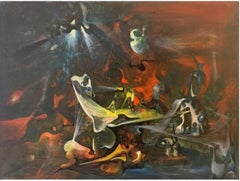
"Cave Drama" Boris Margo, Abstract Surrealism, Surrealist landscape, Modernist
By Boris Margo
Located in New York, NY
Boris Margo Cave Drama, 1938 Signed and dated lower left Oil on canvas 22 x 30 inches Best known as a painter of surrealist imagery, Boris Margo was born in Wolotschisk, Ukraine, i...
Category

1930s Abstract Abstract Paintings

Materials

Canvas, Oil

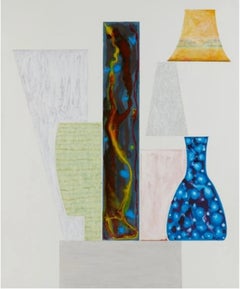
"Abstract (with Two White Vases) " Ed Baynard, Still Life Composition
By Ed Baynard
Located in New York, NY
Ed Baynard Abstract (with Two White Vases), 2005 Signed, titled, and dated along the verso Acrylic on canvas 48 x 40 inches
Category

Early 2000s Abstract Abstract Paintings

Materials

Canvas, Acrylic

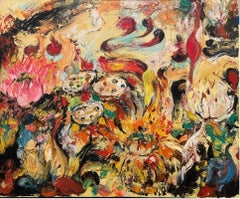
"Untitled" Swirling Abstract Oil on Canvas, Indonesian School of Affandi
Located in New York, NY
In the manner of Affandi Abstract Lotus, circa 1970 Unsigned Oil on canvas 30 x 40 inches
Category

1970s Abstract Abstract Paintings

Materials

Canvas, Oil

"Cronus View from the Cave" David Hare, Abstract Surrealist Composition
By David Hare
Located in New York, NY
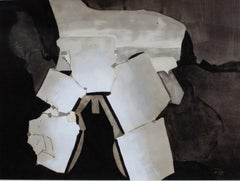
David Hare Cronus View from the Cave, 1971 Graphite, Ink wash, Paper Collage on Paper on Board 25 x 33 inches “Freedom is what we want,” David Hare boldly stated in 1965, but then he added the caveat, “and what we are most afraid of.” No one could accuse David Hare of possessing such fear. Blithely unconcerned with the critics’ judgments, Hare flitted through most of the major art developments of the mid-twentieth century in the United States. He changed mediums several times; just when his fame as a sculptor had reached its apogee about 1960, he switched over to painting. Yet he remained attached to surrealism long after it had fallen out of official favor. “I can’t change what I do in order to fit what would make me popular,” he said. “Not because of moral reasons, but just because I can’t do it; I’m not interested in it.” Hare was born in New York City in 1917; his family was both wealthy and familiar with the world of modern art. Meredith (1870-1932), his father, was a prominent corporate attorney. His mother, Elizabeth Sage Goodwin (1878-1948) was an art collector, a financial backer of the 1913 Armory Show, and a friend of artists such as Constantin Brancusi, Walt Kuhn, and Marcel Duchamp. In the 1920s, the entire family moved to Santa Fe, New Mexico and later to Colorado Springs, in the hope that the change in altitude and climate would help to heal Meredith’s tuberculosis. In Colorado Springs, Elizabeth founded the Fountain Valley School where David attended high school after his father died in 1932. In the western United States, Hare developed a fascination for kachina dolls and other aspects of Native American culture that would become a recurring source of inspiration in his career. After high school, Hare briefly attended Bard College (1936-37) in Annandale-on-Hudson. At a loss as to what to do next, he parlayed his mother’s contacts into opening a commercial photography studio and began dabbling in color photography, still a rarity at the time [Kodachrome was introduced in 1935]. At age 22, Hare had his first solo exhibition at Walker Gallery in New York City; his 30 color photographs included one of President Franklin Roosevelt. As a photographer, Hare experimented with an automatist technique called “heatage” (or “melted negatives”) in which he heated the negative in order to distort the image. Hare described them as “antagonisms of matter.” The final products were usually abstractions tending towards surrealism and similar to processes used by Man Ray, Raoul Ubac, and Wolfgang Paalen. In 1940, Hare moved to Roxbury, CT, where he fraternized with neighboring artists such as Alexander Calder and Arshile Gorky, as well as Yves Tanguy who was married to Hare’s cousin Kay Sage, and the art dealer Julian Levy. The same year, Hare received a commission from the American Museum of Natural History to document the Pueblo Indians. He traveled to Santa Fe and, for several months, he took portrait photographs of members of the Hopi, Navajo, and Zuni tribes that were published in book form in 1941. World War II turned Hare’s life upside down. He became a conduit in the exchange of artistic and intellectual ideas between U.S. artists and the surrealist émigrés fleeing Europe. In 1942, Hare befriended Andre Breton, the principal theorist of surrealism. When Breton wanted to publish a magazine to promote the movement in the United States, he could not serve as an editor because he was a foreign national. Instead, Breton selected Hare to edit the journal, entitled VVV [shorth for “Victory, Victory, Victory”], which ran for four issues (the second and third issues were printed as a single volume) from June 1942 to February 1944. Each edition of VVV focused on “poetry, plastic arts, anthropology, sociology, (and) psychology,” and was extensively illustrated by surrealist artists including Giorgio de Chirico, Roberto Matta, and Yves Tanguy; Max Ernst and Marcel Duchamp served as editorial advisors. At the suggestion of Jacqueline Lamba...
Category

1970s Abstract Abstract Paintings

Materials

Paper, Ink, Graphite

"Cronus Asleep in the Cave" David Hare, Surrealist Mythological Composition
By David Hare
Located in New York, NY
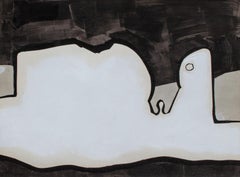
David Hare Cronus Asleep in the Cave, 1971 Acrylic, ink wash, graphite, paper collage on paper on board 26 x 35 inches “Freedom is what we want,” David Hare boldly stated in 1965, b...
Category

1970s Abstract Abstract Paintings

Materials

Acrylic, Paper, Ink, Graphite

"Cronus Asleep in the Cave" David Hare, Mythological Surrealist Composition
By David Hare
Located in New York, NY
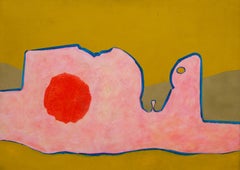
David Hare Cronus Asleep in the Cave, 1971 Acrylic on board 27 1/2 x 38 1/4 inches “Freedom is what we want,” David Hare boldly stated in 1965, but then he added the caveat, “and what we are most afraid of.” No one could accuse David Hare of possessing such fear. Blithely unconcerned with the critics’ judgments, Hare flitted through most of the major art developments of the mid-twentieth century in the United States. He changed mediums several times; just when his fame as a sculptor had reached its apogee about 1960, he switched over to painting. Yet he remained attached to surrealism long after it had fallen out of official favor. “I can’t change what I do in order to fit what would make me popular,” he said. “Not because of moral reasons, but just because I can’t do it; I’m not interested in it.” Hare was born in New York City in 1917; his family was both wealthy and familiar with the world of modern art. Meredith (1870-1932), his father, was a prominent corporate attorney. His mother, Elizabeth Sage Goodwin (1878-1948) was an art collector, a financial backer of the 1913 Armory Show, and a friend of artists such as Constantin Brancusi, Walt Kuhn, and Marcel Duchamp. In the 1920s, the entire family moved to Santa Fe, New Mexico and later to Colorado Springs, in the hope that the change in altitude and climate would help to heal Meredith’s tuberculosis. In Colorado Springs, Elizabeth founded the Fountain Valley School where David attended high school after his father died in 1932. In the western United States, Hare developed a fascination for kachina dolls and other aspects of Native American culture that would become a recurring source of inspiration in his career. After high school, Hare briefly attended Bard College (1936-37) in Annandale-on-Hudson. At a loss as to what to do next, he parlayed his mother’s contacts into opening a commercial photography studio and began dabbling in color photography, still a rarity at the time [Kodachrome was introduced in 1935]. At age 22, Hare had his first solo exhibition at Walker Gallery in New York City; his 30 color photographs included one of President Franklin Roosevelt. As a photographer, Hare experimented with an automatist technique called “heatage” (or “melted negatives”) in which he heated the negative in order to distort the image. Hare described them as “antagonisms of matter.” The final products were usually abstractions tending towards surrealism and similar to processes used by Man Ray, Raoul Ubac, and Wolfgang Paalen. In 1940, Hare moved to Roxbury, CT, where he fraternized with neighboring artists such as Alexander Calder and Arshile Gorky, as well as Yves Tanguy who was married to Hare’s cousin Kay Sage, and the art dealer Julian Levy. The same year, Hare received a commission from the American Museum of Natural History to document the Pueblo Indians. He traveled to Santa Fe and, for several months, he took portrait photographs of members of the Hopi, Navajo, and Zuni tribes that were published in book form in 1941. World War II turned Hare’s life upside down. He became a conduit in the exchange of artistic and intellectual ideas between U.S. artists and the surrealist émigrés fleeing Europe. In 1942, Hare befriended Andre Breton, the principal theorist of surrealism. When Breton wanted to publish a magazine to promote the movement in the United States, he could not serve as an editor because he was a foreign national. Instead, Breton selected Hare to edit the journal, entitled VVV [shorth for “Victory, Victory, Victory”], which ran for four issues (the second and third issues were printed as a single volume) from June 1942 to February 1944. Each edition of VVV focused on “poetry, plastic arts, anthropology, sociology, (and) psychology,” and was extensively illustrated by surrealist artists including Giorgio de Chirico, Roberto Matta, and Yves Tanguy; Max Ernst and Marcel Duchamp served as editorial advisors. At the suggestion of Jacqueline Lamba...
Category

1970s Abstract Abstract Paintings

Materials

Acrylic

"Cronus Dining" David Hare, Yellow White Mythological Surrealist Composition
By David Hare
Located in New York, NY
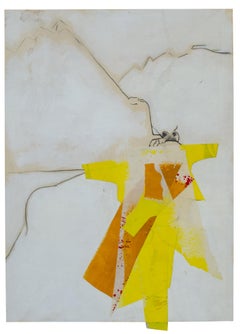
David Hare Cronus Dining, 1968 Graphite, acrylic, paper collage on board 44 x 34 inches “Freedom is what we want,” David Hare boldly stated in 1965, but then he added the caveat, “and what we are most afraid of.” No one could accuse David Hare of possessing such fear. Blithely unconcerned with the critics’ judgments, Hare flitted through most of the major art developments of the mid-twentieth century in the United States. He changed mediums several times; just when his fame as a sculptor had reached its apogee about 1960, he switched over to painting. Yet he remained attached to surrealism long after it had fallen out of official favor. “I can’t change what I do in order to fit what would make me popular,” he said. “Not because of moral reasons, but just because I can’t do it; I’m not interested in it.” Hare was born in New York City in 1917; his family was both wealthy and familiar with the world of modern art. Meredith (1870-1932), his father, was a prominent corporate attorney. His mother, Elizabeth Sage Goodwin (1878-1948) was an art collector, a financial backer of the 1913 Armory Show, and a friend of artists such as Constantin Brancusi, Walt Kuhn, and Marcel Duchamp. In the 1920s, the entire family moved to Santa Fe, New Mexico and later to Colorado Springs, in the hope that the change in altitude and climate would help to heal Meredith’s tuberculosis. In Colorado Springs, Elizabeth founded the Fountain Valley School where David attended high school after his father died in 1932. In the western United States, Hare developed a fascination for kachina dolls and other aspects of Native American culture that would become a recurring source of inspiration in his career. After high school, Hare briefly attended Bard College (1936-37) in Annandale-on-Hudson. At a loss as to what to do next, he parlayed his mother’s contacts into opening a commercial photography studio and began dabbling in color photography, still a rarity at the time [Kodachrome was introduced in 1935]. At age 22, Hare had his first solo exhibition at Walker Gallery in New York City; his 30 color photographs included one of President Franklin Roosevelt. As a photographer, Hare experimented with an automatist technique called “heatage” (or “melted negatives”) in which he heated the negative in order to distort the image. Hare described them as “antagonisms of matter.” The final products were usually abstractions tending towards surrealism and similar to processes used by Man Ray, Raoul Ubac, and Wolfgang Paalen. In 1940, Hare moved to Roxbury, CT, where he fraternized with neighboring artists such as Alexander Calder and Arshile Gorky, as well as Yves Tanguy who was married to Hare’s cousin Kay Sage, and the art dealer Julian Levy. The same year, Hare received a commission from the American Museum of Natural History to document the Pueblo Indians. He traveled to Santa Fe and, for several months, he took portrait photographs of members of the Hopi, Navajo, and Zuni tribes that were published in book form in 1941. World War II turned Hare’s life upside down. He became a conduit in the exchange of artistic and intellectual ideas between U.S. artists and the surrealist émigrés fleeing Europe. In 1942, Hare befriended Andre Breton, the principal theorist of surrealism. When Breton wanted to publish a magazine to promote the movement in the United States, he could not serve as an editor because he was a foreign national. Instead, Breton selected Hare to edit the journal, entitled VVV [shorth for “Victory, Victory, Victory”], which ran for four issues (the second and third issues were printed as a single volume) from June 1942 to February 1944. Each edition of VVV focused on “poetry, plastic arts, anthropology, sociology, (and) psychology,” and was extensively illustrated by surrealist artists including Giorgio de Chirico, Roberto Matta, and Yves Tanguy; Max Ernst and Marcel Duchamp served as editorial advisors. At the suggestion of Jacqueline Lamba...
Category

1960s Abstract Abstract Paintings

Materials

Paper, Acrylic, Graphite

"Erotic #1 (Cronus Sex)" David Hare, Surrealist Abstract Composition
By David Hare
Located in New York, NY
David Hare Erotic #1 (Cronus Sex), 1970 Acrylic and paper collage on linen 68 x 51 inches “Freedom is what we want,” David Hare boldly stated in 1965, but then he added the caveat, ...
Category

1970s Abstract Abstract Paintings

Materials

Linen, Paper, Acrylic

"Cronus Elephant" David Hare, Surrealist Abstract Composition Painting
By David Hare
Located in New York, NY
David Hare Cronus Elephant, 1975 Acrylic on linen 82 x 60 inches “Freedom is what we want,” David Hare boldly stated in 1965, but then he added the caveat, “and what we are most afr...
Category

1970s Abstract Abstract Paintings

Materials

Linen, Acrylic

"Cronus Descending" David Hare, Mythological Abstract Surrealist Painting
By David Hare
Located in New York, NY
David Hare Cronus Descending, 1971 Acrylic on linen 64 x 46 inches “Freedom is what we want,” David Hare boldly stated in 1965, but then he added the caveat, “and what we are most ...
Category

1970s Abstract Abstract Paintings

Materials

Linen, Acrylic

"Cronus Hunting" David Hare, Surrealist Abstract Mythological Composition
By David Hare
Located in New York, NY
David Hare Cronus Hunting, 1967 Acrylic and paper collage on linen 68 x 53 inches “Freedom is what we want,” David Hare boldly stated in 1965, but then he added the caveat, “and wha...
Category

1960s Abstract Paintings

Materials

Linen, Paper, Acrylic

"Tropic of Crucifix" William Scharf, Abstract Expressionist, New York School
By William Scharf
Located in New York, NY
William Scharf Tropic of Crucifix, 1957 Signed and dated on the reverse Oil on canvas 40 x 47 inches Provenance: The artist Robert Barnet, New York (gift from the above) Private Collection, by descent A visionary painter with ties to the avant-garde artistic community in New York at midcentury, William Scharf nevertheless defies art historical categorization. His abstracted compositions of organic and geometric formal elements recall the free associations of Surrealism and the all-over grandeur of Abstract Expressionism, and at the same time embody a very individual and immediately recognizable pictorial sense. Scharf combines virtuoso paint handling, vibrant color, and rich symbolic language in canvases that engage the viewer in a transcendent and emotional dialogue. This dialogue is accomplished in part through recurring symbols, which allude to hidden, mysterious narratives. Scharf plumbs the psychological wells of collective myths for symbolic content: the crown of thorns, the ladder, the fish, and the cross can be found throughout, functioning not, as one might expect, as religious symbols, but rather as a means through which to access a deeper, symbolic level of visual communication. Born in 1927 in Media, Pennsylvania, an early friendship with renowned artist N.C. Wyeth encouraged Scharf’s artistic efforts from a very young age. After a time with the Army Air Corps in the mid-1940s, Scharf formalized his art studies at the Pennsylvania Academy of the Fine Arts under Franklin Watkins...
Category

1960s Abstract Abstract Paintings

Materials

Canvas, Oil

"Untitled" William Scharf, Abstract Expressionist, New York School
By William Scharf
Located in New York, NY
William Scharf Untitled, 1962 Signed lower left; signed and dated verso Oil on canvas 48 x 50 inches A visionary painter with ties to the avant-garde artistic community in New York at midcentury, William Scharf nevertheless defies art historical categorization. His abstracted compositions of organic and geometric formal elements recall the free associations of Surrealism and the all-over grandeur of Abstract Expressionism, and at the same time embody a very individual and immediately recognizable pictorial sense. Scharf combines virtuoso paint handling, vibrant color, and rich symbolic language in canvases that engage the viewer in a transcendent and emotional dialogue. This dialogue is accomplished in part through recurring symbols, which allude to hidden, mysterious narratives. Scharf plumbs the psychological wells of collective myths for symbolic content: the crown of thorns, the ladder, the fish, and the cross can be found throughout, functioning not, as one might expect, as religious symbols, but rather as a means through which to access a deeper, symbolic level of visual communication. Born in 1927 in Media, Pennsylvania, an early friendship with renowned artist N.C. Wyeth encouraged Scharf’s artistic efforts from a very young age. After a time with the Army Air Corps in the mid-1940s, Scharf formalized his art studies at the Pennsylvania Academy of the Fine Arts under Franklin Watkins...
Category

1960s Abstract Abstract Paintings

Materials

Canvas, Oil

"Untitled" Angelo Ippolito, Yellow 1950s Abstract Expressionism, New York School
By Angelo Ippolito
Located in New York, NY
Angelo Ippolito Untitled, 1952 Signed and dated on the reverse Oil on canvas 16 x 36 inches Provenance: Gloria Torrice Estate of the above Liana Torrice, West Orange...
Category

1950s Abstract Abstract Paintings

Materials

Canvas, Oil

"Personal Equation" Jimmy Ernst, Abstract Surrealism, Black, Red, Blue, White
By Jimmy Ernst
Located in New York, NY
Jimmy Ernst Personal Equation, 1950 Signed and dated lower right Oil on canvas 41 x 39 1/2 inches Provenance: Laurel Gallery, New York Grace Borgenicht Gallery, New York Collection ...
Category

1940s Surrealist Abstract Paintings

Materials

Canvas, Oil

"Untitled" Gene Hedge, Abstract Color Field, Yellow Pattern Midcentury Painting
Located in New York, NY
Gene Hedge Untitled, circa 1970 Acrylic on canvas 29 x 20 3/4 inches (P097) Gene Hedge was born (1928) and raised in rural Indiana. After military service, he briefly attended Ball State University in Muncie, Indiana. There he encountered the writing of Laszlo Moholy-Nagy, and the following year (1949) went to study at the Institute of Design in Chicago. He received a B.S. degree in Visual Design from the Institute of Design (1953), and he also took courses at the Art Institute of Chicago and began working in collage. During this period, the influence of Eugene Dana...
Category

1970s Abstract Abstract Paintings

Materials

Canvas, Acrylic

"Untitled" Gene Hedge, Abstract Color Field, Red Pattern Midcentury Painting
Located in New York, NY
Gene Hedge Untitled, circa 1970 Acrylic on canvas 44 x 43 inches (P112) Gene Hedge was born (1928) and raised in rural Indiana. After military service, he briefly attended Ball State University in Muncie, Indiana. There he encountered the writing of Laszlo Moholy-Nagy, and the following year (1949) went to study at the Institute of Design in Chicago. He received a B.S. degree in Visual Design from the Institute of Design (1953), and he also took courses at the Art Institute of Chicago and began working in collage. During this period, the influence of Eugene Dana...
Category

1960s Abstract Abstract Paintings

Materials

Canvas, Acrylic

"Untitled" Gene Hedge, Abstract Color Field, Yellow Midcentury Painting
Located in New York, NY
Gene Hedge Untitled, circa 1966 Acrylic on canvas 61 1/2 x 42 1/8 inches (P122) Gene Hedge was born (1928) and raised in rural Indiana. After military service, he briefly attended Ball State University in Muncie, Indiana. There he encountered the writing of Laszlo Moholy-Nagy, and the following year (1949) went to study at the Institute of Design in Chicago. He received a B.S. degree in Visual Design from the Institute of Design (1953), and he also took courses at the Art Institute of Chicago and began working in collage. During this period, the influence of Eugene Dana...
Category

1960s Abstract Abstract Paintings

Materials

Canvas, Acrylic

"Inside Blue" Gene Hedge, Abstract Color Field, Bauhaus Midcentury Painting
Located in New York, NY
Gene Hedge Inside Blue, 1966 Acrylic on canvas 61 1/4 x 43 3/4 inches (P124) Gene Hedge was born (1928) and raised in rural Indiana. After military service, he briefly attended Ball State University in Muncie, Indiana. There he encountered the writing of Laszlo Moholy-Nagy, and the following year (1949) went to study at the Institute of Design in Chicago. He received a B.S. degree in Visual Design from the Institute of Design (1953), and he also took courses at the Art Institute of Chicago and began working in collage. During this period, the influence of Eugene Dana...
Category

1960s Abstract Abstract Paintings

Materials

Canvas, Acrylic

"Untitled" Gene Hedge, Abstract Color Field, Pink Midcentury Bauhaus Painting
Located in New York, NY
Gene Hedge Untitled, 1966 Acrylic on canvas 60 x 43 inches (P276) Gene Hedge was born (1928) and raised in rural Indiana. After military service, he briefly attended Ball State Univ...
Category

1960s Abstract Abstract Paintings

Materials

Canvas, Acrylic

"Emblem" Gene Hedge, Abstract Color Field, Black Midcentury Bauhaus Painting
Located in New York, NY
Gene Hedge Emblem, 1976 Acrylic on canvas 19 1/2 x 58 1/2 inches (P063) Gene Hedge was born (1928) and raised in rural Indiana. After military service, he briefly attended Ball Stat...
Category

1970s Abstract Abstract Paintings

Materials

Canvas, Acrylic

"Abstract Interior of Room" Myron Lechay, Colorful Early Geometric Abstract
By Myron Lechay
Located in New York, NY
Myron Lechay Abstract Interior of Room, 1923 Signed upper right corner and dated upper left corner Oil on canvas 24 x 20 inches Provenance: Estate of the artist Spanierman Gallery, ...
Category

1920s Abstract Abstract Paintings

Materials

Canvas, Oil

"Untitled, " Thiago Rocha Pitta, Brazilian Contemporary Grey Watercolor
Located in New York, NY
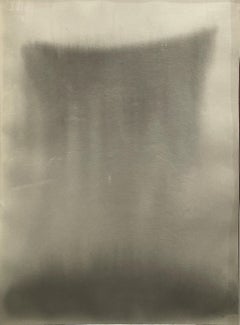
Thiago Rocha Pitta Untitled, 2006 Watercolor on paper 30 x 23 inches Brazil-based artist Thiago Rocha Pitta’s (b. 1980) temporal and sensitive body of work depicts interventions wit...
Category

Early 2000s Contemporary Abstract Drawings and Watercolors

Materials

Paper, Watercolor

"Untitled, " Thiago Rocha Pitta, Contemporary Grey Watercolor
Located in New York, NY
Thiago Rocha Pitta Untitled, 2006 Watercolor on paper 30 x 23 inches Brazil-based artist Thiago Rocha Pitta’s (b. 1980) temporal and sensitive body of work depicts interventions wit...
Category

Early 2000s Contemporary Abstract Drawings and Watercolors

Materials

Paper, Watercolor

"Boy from Mansos, " Karl Zerbe, Green Figurative "Degenerate" Art Collage
By Karl Zerbe
Located in New York, NY
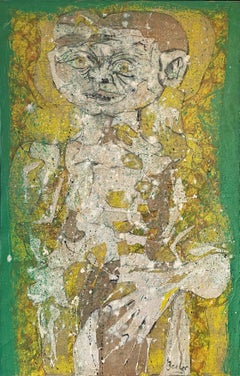
Karl Zerbe (1903 - 1972) Boy from Mansos, 1963 Collage and acrylic on canvas 35 x 23 inches Signed lower right Provenance: Lee Nordness Galleries, New York Karl Zerbe was born on September 16, 1903 in Berlin, Germany. The family lived in Paris, France from 1904–1914, where his father was an executive in an electrical supply concern. In 1914 they moved to Frankfurt, Germany where they lived until 1920. Karl Zerbe studied chemistry in 1920 at the Technische Hochschule in Friedberg, Germany. From 1921 until 1923 he lived in Munich, where he studied painting at the Debschitz School, mainly under Josef Eberz. From 1924 until 1926 Karl Zerbe worked and traveled in Italy on a fellowship from the City of Munich. In 1932 his oil painting titled, ‘’Herbstgarten’’ (autumnal garden), of 1929, was acquired by the National-Galerie, Berlin; in 1937, the painting was destroyed by the Nazis as "Degenerate art...
Category

1960s Post-War Abstract Paintings

Materials

Canvas, Acrylic

"Jean Jean" Larry Zox, Color Field, Geometric Abstraction, Hard-Edge, Yellow
By Larry Zox
Located in New York, NY
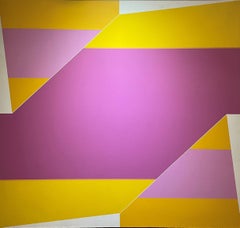
Larry Zox Jean Jean, 1964 Signed, dated, and titled on the stretcher Liquitex on canvas 58 x 62 inches Provenance: Solomon & Co., New York Private Collection, NJ Estate of the above, 2023 Committed to abstraction throughout his career, Larry Zox played a central role in the Color Field discourse of the 1960s and 1970s. His work of the time, consisting of brilliantly colored geometric shapes in dynamic juxtapositions, demonstrated that hard-edge painting was neither cold nor formalistic. He reused certain motifs, but he did so less to explore their aspects than to “get at the specific character and quality of each painting in and for itself,” as James Monte stated in his essay for Zox’s solo exhibition at the Whitney Museum of American Art in 1973. By the 1970s, Zox was using a freer, more emotive method, while maintaining the autonomy of color, which increasingly became more important to him than structure in his late years. Zox began to receive attention in the 1960s, when he was included in several groundbreaking exhibitions of Color Field and Minimalist art, including Shape and Structure (1965), organized by Henry Geldzahler for the Gallery of Modern Art, New York, and Systemic Painting (1966), organized by Lawrence Alloway for the Guggenheim Museum. In 1973, the Whitney’s solo exhibition of Zox’s work gave recognition to his significance in the art scene of the preceding decade. In the following year, Zox was represented in the inaugural exhibition of the Hirshhorn Museum, which owns fourteen of his works. Zox was born in Des Moines, Iowa. He attended the University of Oklahoma and Drake University. While studying at the Des Moines Art Center, he was mentored by George Grosz, who despite his own figurative approach encouraged Zox’s forays into abstraction. In 1958, Zox moved to New York, joining the downtown art scene. His studio on 20th Street became a gathering place for artists, jazz musicians, bikers, and boxers. He occasionally sparred with the visiting fighters. He later established a studio in East Hampton, where he painted and fished including using a helicopter to spot fish. In the 1950s and early 1960s, Zox’s works were collages consisting of painted pieces of paper stapled onto sheets of plywood. He then produced paintings that were illusions of collages, including both torn- and trued-edged forms, to which he added a wide range of intense hues that created ambiguous surfaces. Next, he omitted the collage aspect of his work and applied flat color areas to create more complete statements of pure color and shape. From 1962 to 1965, he produced his Rotation Series, at first creating plywood and Plexiglas reliefs, which turned squares into dynamic polygons. He used these shapes in his paintings as well, employing white as a foil between colors to produce negative spaces that suggest that the colored shapes had only been cut out and laid down instead of painted. The New York Times noted in 1964: “The artist is hip, cool, adventurous, not content to stay with the mere exercise of sensibility that one sees in smaller works.” In 1965, he began the Scissors Jack...
Category

1960s Abstract Geometric Abstract Paintings

Materials

Canvas, Acrylic

"Pyroclastic Fever, " Nigel Cooke, Contemporary Painting, Lightning Skyscape
By Nigel Cooke
Located in New York, NY
Nigel Cooke (Born 1973) Pyroclastic Fever, 2002 Oil on canvas 60 1/2 x 84 1/2 inches Signed, titled and dated "NIGEL COOKE 'PYROCLASTIC FEVER' 2002 Nigel C...
Category

Early 2000s Contemporary Abstract Paintings

Materials

Canvas, Oil

"Ouverture, with Cypress Forms" Stephen Edlich, Abstract Geometric Painting
By Stephen Edlich
Located in New York, NY
Stephen Edlich Ouverture, with Cypress Forms, 1982 Signed, dated and titled on the stretcher Acrylic paint, mixed media, and burlap on canvas 60 x 40 inches An artist who worked in the post-cubist and constructivist traditions, Stephen P. Edlich gained a considerable amount of acclaim in the 1970s and 1980s for his collages, sculpture, and paintings. His promising career was cut short due to his untimely death at age 45 in 1989. Edlich was born in New York City. He received his undergraduate degree with a major in fine arts studies from New York University in 1967. During his college years, he traveled to London, where he met the art dealer Victor Waddington and created his first white on white collage. In that same year, he attended a major exhibition of the work of Ben Nicholson, which would be influential source in his art. Edlich returned to England in 1967, where he met Barbara Hepworth and Patrick Heron in London and traveled to St. Ives, Cornwall, long a favorite artists' haunt. Edlich began creating acrylic reliefs...
Category

1980s Abstract Geometric Abstract Paintings

Materials

Canvas, Burlap, Mixed Media, Acrylic

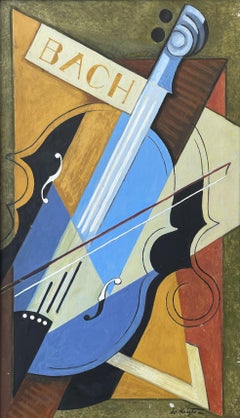
"Nature morte" Bela de Kristo, Mid-century Cubist Still Life Abstract Cello
By Bela De Kristo
Located in New York, NY
Bela de Kristo Nature morte, circa 1956 Signed lower right Oil on board 19 5/8 x 11 3/4 inches Provenance: Alexander Kahan Fine Arts, New York Private ...
Category

1950s Cubist Still-life Paintings

Materials

Oil, Board

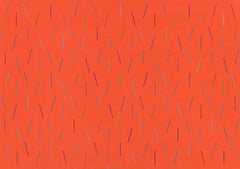
"Eleven Thirteen, (Dancing Line Series)" Elliott Thompson, Color Field Work
Located in New York, NY
Elliott Thompson Eleven Thirteen, (Dancing Line Series), 1972 Signed, Elliott Thompson, dated, 2/72, and inscribed, Eleven Thirteen, on verso and agai...
Category

1970s Color-Field Abstract Paintings

Materials

Canvas, Tape, Acrylic

"Untitled, " Seymour Fogel, Geometric Abstraction, Texas Hard-Edge
By Seymour Fogel
Located in New York, NY
Seymour Fogel Untitled Oil on illustration board construction 10 x 7 1/2 inches Provenance: Estate of the artist Charles and Faith McCracken Larry and Trish Heichel Private Collection Seymour Fogel was born in New York City on August 24, 1911. He studied at the Art Students League and at the National Academy of Design under George Bridgeman and Leon Kroll. When his formal studies were concluded in the early 1930s he served as an assistant to Diego Rivera who was then at work on his controversial Rockefeller Center mural. It was from Rivera that he learned the art of mural painting. Fogel was awarded several mural commissions during the 1930s by both the Works Progress Administration (WPA) and the Treasury Section of Fine Arts, among them his earliest murals at the Abraham Lincoln High School in Brooklyn, New York in 1936, a mural in the WPA Building at the 1939-1940 New York World's Fair, a highly controversial mural at the U.S. Post Office in Safford, Arizona (due to his focus on Apache culture) in 1941 and two murals in what was then the Social Security Building in Washington, D.C., also in 1941. Fogel's artistic circle at this time included Phillip Guston, Ben Shahn, Franz Kline, Rockwell Kent and Willem de Kooning. In 1946 Fogel accepted a teaching position at the University of Texas at Austin and became one of the founding artists of the Texas Modernist Movement. At this time he began to devote himself solely to abstract, non-representational art and executed what many consider to be the very first abstract mural in the State of Texas at the American National Bank in Austin in 1953. He pioneered the use of Ethyl Silicate as a mural medium. Other murals and public works of art done during this time (the late 1940s and 1950s) include the Baptist Student Center at the University of Texas (1949), the Petroleum Club in Houston (1951) and the First Christian Church, also in Houston (1956), whose innovative use of stained glass panels incorporated into the mural won Fogel a Silver Medal from the Architectural League of New York in 1958. Fogel relocated to the Connecticut-New York area in 1959. He continued the Abstract Expressionism he had begun exploring in Texas, and began experimenting with various texturing media for his paintings, the most enduring of which was sand. In 1966 he was awarded a mural at the U.S. Federal Building in Fort Worth, Texas. The work, entitled "The Challenge of Space", was a milestone in his artistic career and ushered in what has been termed the Transcendental/Atavistic period of his art, a style he pursued up to his death in 1984. Painted and raw wood sculpture...
Category

Mid-20th Century Abstract Geometric Abstract Paintings

Materials

Oil, Board

"Composition with Figure, " Irene Rice Pereira
By Irene Rice Pereira
Located in New York, NY
Irene Rice Pereira Composition with Figure, 1951 Inscribed, signed and dated Salford/Pereira 2/51 (lr); inscribed I Rice Pereira/2669 Great Clowes St/Sa...
Category

1950s Abstract Abstract Paintings

Materials

Paper, India Ink, Casein

"Inside the Black Diamond, " Lila Katzen, Pop Art, Color Field Female Abstract
Located in New York, NY
Lila Katzen Inside the Black Diamond, 1964 Signed, titled, and dated on the reverse Acrylic on canvas 30 x 24 inches Lila Katzen said of her pieces in all media: “I feel marvelous w...
Category

1960s Pop Art Abstract Paintings

Materials

Canvas, Acrylic

"Untitled" Knox Martin, Abstract Expressionism, Purple, Yellow, Black
By Knox Martin
Located in New York, NY
Knox Martin (1923 - 2022) Untitled Signed to lower edge Acrylic and gold foil on canvas 9 x 9 inches Knox Martin (1923-2022) was an esteemed New York School painter. Knox Martin was born in 1923 in Barranquilla, Colombia. He was the son of the aviator, painter, and poet William Knox Martin, the first man to fly over the Andes Mountains. After serving in World War II, Knox Martin attended the Art Students League of New York on the G.I. Bill from 1946-1950, where he studied with Harry Sternberg, Vaclav Vytlacil, Will Barnet, and Morris Kantor. In 1954, Knox Martin's friend Franz Kline placed a painting of his in the Stable Gallery Annual. Charles Egan of the renowned Charles Egan Gallery saw Knox Martin's painting at the Stable Gallery and asked Martin to show his work in a one-man show for the tenth anniversary of the Egan Gallery. Since then, Knox Martin was a celebrated painter, sculptor and muralist. Knox Martin had an extensive exhibition record and his work is in museum, corporate and private collections worldwide. His two best-known murals in NYC are Venus and Woman with Bicycle...
Category

Late 20th Century Abstract Abstract Paintings

Materials

Gold, Foil

"Lexington, " Larry Zox, Abstract Expressionism, Minimalism, Brown Modernism
By Larry Zox
Located in New York, NY
Larry Zox Lexington, 1973 Acrylic on canvas 61 x 49 inches Provenance: Andre Emmerich Gallery, New York Janie C. Lee Gallery, Houston, Texas Private Collection, Greenwood Village, Colorado Exhibited: New York, Andre Emmerich Gallery, Larry Zox: New Paintings, March 10 - 28, 1973. Houston, Texas, Janie C. Lee Gallery, Larry Zox, February - April, 1974. A painter who played an essential role in the Color Field discourse of the 1960s and 1970s, Larry Zox is best known for his intensely and brilliantly colored geometric abstractions, which question and violate symmetry. Zox stated in 1965: “Being contrary is the only way I can get at anything.” To Zox, this position was not necessarily arbitrary, but instead meant “responding to something in an examination of it [such as] using a mechanical format with X number of possibilities." What he sought was to “get at the specific character and quality of each painting in and for itself,” as James Monte stated in his introductory essay in the catalogue for Zox’s 1973–74 solo exhibition at the Whitney Museum of American Art. Zox also at times used a freer, more intuitive method, while maintaining coloristic autonomy, which became increasingly important to him in his later career. Zox began to receive attention in the 1960s, when he was included in several groundbreaking exhibitions of Color Field and Minimalist art, including Shape and Structure (1965), organized by Henry Geldzahler and Frank Stella for Tibor de Nagy, New York, and Systemic Painting (1966), organized by Lawrence Alloway for the Guggenheim Museum. In 1973–74, the Whitney’s solo exhibition of Zox’s work gave recognition to his significance in the art scene of the preceding decade. In the following year, he was represented in the inaugural exhibition of the Hirshhorn Museum, which acquired fourteen of his works. Zox was born in Des Moines, Iowa. He attended the University of Oklahoma and Drake University, and then studied under George Grosz at the Des Moines Art Center. In 1958, Zox moved to New York, joining the downtown art scene. His studio on 20th Street became a gathering place for artists, jazz musicians, bikers, and boxers. He occasionally sparred with visiting fighters. He later established a studio in East Hampton, a former black smithy used previously by Jackson Pollock. Zox’s earliest works were collages consisting of pieces of painted paper stapled onto sheets of plywood. He then produced paintings that were illusions of collages, including both torn- and trued-edged forms, to which he added a wide range of strong hues that created ambiguous surfaces. Next, he omitted the collage aspect of his work and applied flat color areas to create more complete statements of pure color and shape. He then replaced these torn and expressive edges with clean and impersonal lines that would define his work for the next decade. From 1962 to 1965, he produced his Rotation series, at first creating plywood and Plexiglas reliefs, which turned squares into dynamic polygons. He used these shapes in his paintings as well, employing white as a foil between colors to produce negative spaces that suggest that the colored shapes had only been cut out and laid down instead of painted. The New York Times noted in 1964: “The artist is hip, cool, adventurous, not content to stay with the mere exercise of sensibility that one sees in smaller works.” In 1965, he began the Scissors Jack series, in which he arranged opposing triangular shapes with inverted Vs of bare canvas at their centers that threaten to split their compositions apart. In several works from this series, Zox was inspired by ancient Chinese water vessels...
Category

1970s Abstract Expressionist Abstract Paintings

Materials

Canvas, Acrylic

"Untitled, " Daniel Lergon, German Contemporary Abstract Painting
Located in New York, NY
Daniel Lergon (German, b. 1978) Untitled, 2012 Oil on canvas 47 1/2 x 39 1/2 inches Signed and dated on the reverse Provenance: Galerie Christian Lether...
Category

2010s Contemporary Abstract Paintings

Materials

Canvas, Oil

"Two Figures, " Louis Stone, Abstract, American WPA Modernism
By Louis Stone
Located in New York, NY
Louis K. Stone (1902 - 1984) Two Figures, 1980 Mixed media on paper Sight 52 x 42 inches Signed and dated lower right Louis King Stone was born in Findlay, Ohio in 1902 and received...
Category

1980s Abstract Abstract Paintings

Materials

Paper, Mixed Media

"Untitled, " Jay Rosenblum, Hard-Edge Color Field, Colorful Horizontal Stripes
By Jay Rosenblum
Located in New York, NY
Jay Rosenblum (1933 - 1989) Untitled, 1973 Acrylic on canvas 54 x 128 inches Signed twice and dated on the reverse Provenance: Private Collection, Long Island Jay Rosenblum experim...
Category

1970s Hard-Edge Abstract Paintings

Materials

Canvas, Oil, Acrylic

"Red Fox, " Alison Hildreth, Abstract Expressionist, Female Artist
By Alison Hildreth
Located in New York, NY
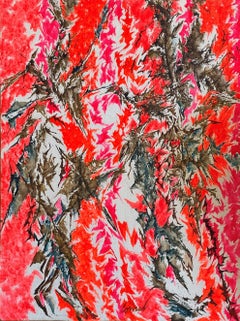
Alison Hildreth (American, b. 1934) Red Fox, 1980 Oil on canvas 54 x 54 inches Signed, titled, and dated on the reverse Alison Hildreth was born in Bo...
Category

1980s Abstract Expressionist Abstract Paintings

Materials

Canvas, Oil

"Study C60, " Ted Kurahara, Abstract Expressionism, Japanese-American Artist
By Ted Kurahara
Located in New York, NY
Ted N. Kurahara (b. 1925) Study C60, 1960 Oil on canvas 70 x 50 inches Signed and dated upper right corner Artist label verso: TED N. KURAHARA STUDY C60, OIL PTG 1960 70” x 50” 800 Ted Kurahara works in a minimal style that transforms color planes into infinite depth. Following his upbringing Seattle and time spent in an Internment Camp before serving in the 442nd, a highly decorated Japanese American...
Category

1960s Abstract Expressionist Abstract Paintings

Materials

Canvas, Oil

"Self-Portrait as Insect Greeting Another, " Conrad Fried, Modern Abstract
By Conrad Fried
Located in New York, NY
Conrad Fried (1918 - 2009) Self-Portrait as Insect Greeting Another, 1994 Oil on canvas 27 3/4 x 22 inches Signed, titled and dated on the reverse Provenance: Gift of the artist Pri...
Category

1990s Abstract Expressionist Abstract Paintings

Materials

Canvas, Oil

"Study for Blue and Gold III, " Matthew Radford, British Abstract Painting
Located in New York, NY
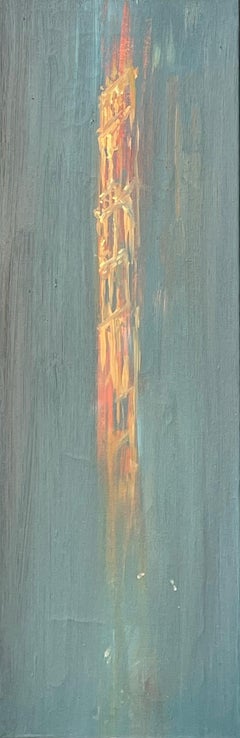
Matthew Radford (British, b. 1953) Study for Blue and Gold III, 1989 Oil on canvas 30 x 10 inches Signed on the reverse Provenance: Frank Bernarducci ...
Category

1980s Abstract Expressionist Abstract Paintings

Materials

Canvas, Oil

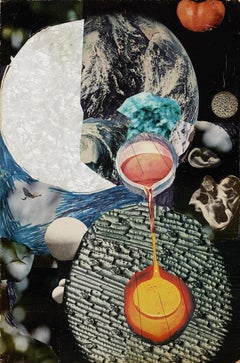
"Untitled (Love Potion), " Juliette Gordon, New York Feminist Collage Art WAR
By Juliette Gordon
Located in New York, NY
Juliette Gordon (American, b. 1934) Untitled (Love Potion), circa 1973 Collage on board 30 x 20 inches Provenance: Allan Stone Gallery, New York Sold wi...
Category

1970s Feminist Abstract Paintings

Materials

Mixed Media, Board