Lions Gallery Art

to
1,197
912
888
381
354
Overall Width
to
Overall Height
to
16
3,393
323
2
2
16
54
59
74
322
393
467
381
1,038
523
345
210
209
186
94
43
21
20
19
16
2
1,901
1,315
170
128
71
50
41
33
28
21
18
17
12
11
10
9
9
8
8
8
6
6
6
1,378
756
665
633
572
48
38
33
30
28
115
1
3,732
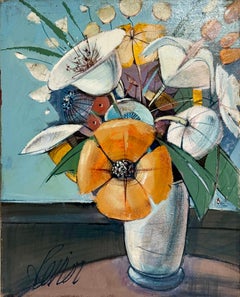
Charles Levier Modernist Artist Vase of Flowers in Bloom Window Paris Modernism
By Charles Levier
Located in Surfside, FL
Charles Levier (French, 1920-2003) Fleurs a La Fenetre, Flowers at the Window, Oil on Canvas Hand signed lower left, Hand signed and titled verso depicting a vase of white, blue, p...
Category

Mid-20th Century Modern Still-life Paintings

Materials

Canvas, Oil

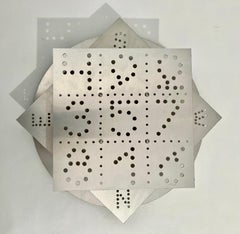
Russian Samizdat Art Conceptual Compass Sculpture Assemblage Gerlovin, Gerlovina
Located in Surfside, FL
Rimma Gerlovina and Valeriy Gerlovin Compass, 1988 Aluminum sculpture, mixed media and c-print photograph construction, c-print, felt tip marker 12.5 h × 12.5w × 4 d in (30 × 30 × 6...
Category

1980s Conceptual Figurative Photography

Materials

Metal

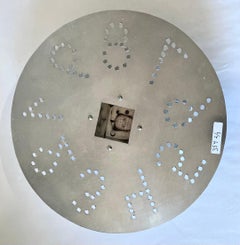
Russian Samizdat Art Conceptual Photo Sculpture Assemblage Gerlovin Gerlovina
Located in Surfside, FL
Rimma Gerlovina and Valeriy Gerlovin Clock, 1987-94 Aluminum sculpture, mixed media and c-print photograph construction, c-print, felt tip marker 13 h × 13 w × 4 d in (30 × 30 × 6 c...
Category

1980s Conceptual Figurative Photography

Materials

Metal

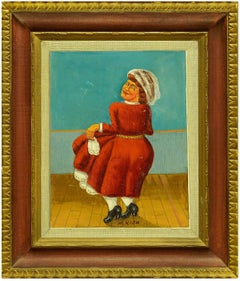
The Happy Inlaw, Oil Painting
By Maurice Kish
Located in Surfside, FL
The imagery of Maurice Kish (1895-1987), whether factories or carousels, reliably subverts expectations. His vision hovers just around the unraveling edge of things, where what is so...
Category

20th Century Folk Art Figurative Paintings

Materials

Oil, Board

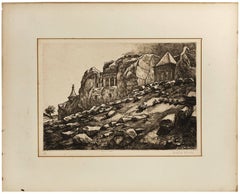
Outside Jerusalem, Tomb of Ashalom, Judaica Print
Located in Surfside, FL
Picturesque depiction of Jerusalem mountainside landscape with Tomb of Ashalom.
Category

20th Century Landscape Prints

Materials

Paper

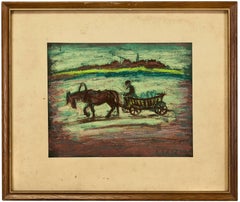
Untitled, Horse and Wagon Pastel Drawing Shtetl Judaica Scene Polish Jewish Life
By Simon Natan Karczmar
Located in Surfside, FL
Simon Karczmar, Polish (1903 - 1982) Born in Warsaw, Poland, in 1903, Simon Karczmar studied art in Paris, where he lived for twenty years. Although he left France for Israel in 196...
Category

Late 20th Century Modern Figurative Drawings and Watercolors

Materials

Oil Pastel, Mixed Media

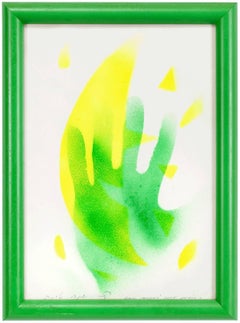
Mod Dutch Jewish Artist Untitled, Green Hand Painting
By Eli Content
Located in Surfside, FL
Signed or titled in Hebrew and english. Eli Content (born in Switzerland 1943) followed in 1974 the education at the Ateliers '63 in Haarlem and received in 1981 his first solo exhi...
Category

20th Century 85 New Wave More Art

Materials

Acrylic

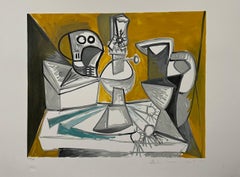
Pablo Picasso Estate Hand Signed Lithograph Abstract Cubist Composition
By Pablo Picasso
Located in Surfside, FL
Pablo Picasso (after) "Tete De Mort, Lampe, Cruches Et Poireaux" limited edition print on Arches paper, Hand signed by Marina Picasso lower right and numbered 318/500 lower left Fr...
Category

20th Century Modern Abstract Prints

Materials

Lithograph

Italian American Surrealist Oil Painting Ivo David Trilogia Chromatic Surrealism
Located in Surfside, FL
Trilogia Homage to Orazio Tanelli (Italian poet) Hand signed middle left and titled extensively and signed and dated verso. 1991 Dimensions: 30 X 24 inches. A painter and poet born ...
Category

1990s Surrealist Figurative Paintings

Materials

Canvas, Oil

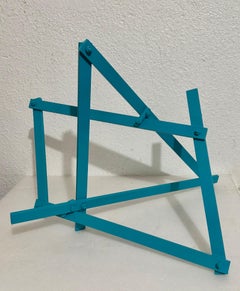
Bars II Sketch Painted Abstract Expressionist Geometric Sculpture Larry Mohr
Located in Surfside, FL
Larry Mohr, American (1921 - 2013) Painted Metal Sculpture Abstract Construction Hand signed, dated and titled (signature is a bit faint) Bars II Sketch 1982 Dimensions: 18.5" x 24....
Category

1980s Abstract Geometric Abstract Sculptures

Materials

Metal

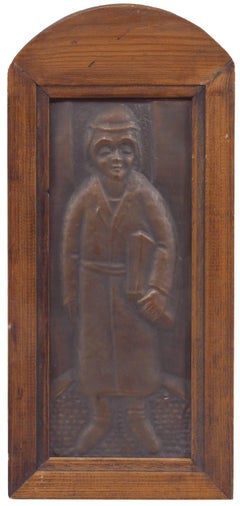
Rare 1940s Copper Repousse Judaica "Shtetl Cheder Boy" Plaque
By Arieh Merzer
Located in Surfside, FL
Arieh Merzer was a prominent Israeli artist and metal worker. Arie Merzer, an artist who worked in hand-hammered copper, was born in Warsaw, Poland in 1905, the scion of a large Has...
Category

1940s Figurative Sculptures

Materials

Copper

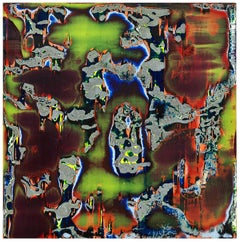
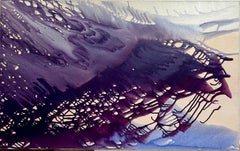
Untitled, Absract, Oil Alkyd and Acrylic on Canvas over Panel
By Adam Ross
Located in Surfside, FL
Adam Ross walks the line between abstraction and realism in his complex, layered paintings. His landscapes are apocalyptic explosions of color, bold and inventive compositions that s...
Category

20th Century Contemporary Abstract Paintings

Materials

Wood, Oil, Alkyd

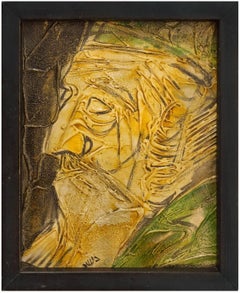
Rabbi, Judaica, Mixed Media
By Moshe Katz
Located in Surfside, FL
Moshe Katz (Romanian Israeli), 1937- an Israeli citizen, studied art at the Bezalel Academy of Art in Jerusalem, as well as at the Chicago Academy of Fine Arts. He received second pr...
Category

20th Century Modern Portrait Paintings

Materials

Canvas, Mixed Media, Acrylic

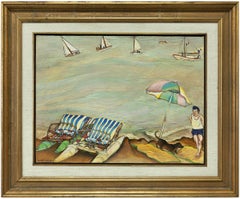
Surrealist "Le Parasol" French Riviera Scene, Paddle Boats Oil Painting
By Pincas Moreno
Located in Surfside, FL
MORENO PINCAS Bulgaria, b. 1936 Moreno Pincas emigrated to Israel in 1949. He studied at the Avni Art Institute in Tel Aviv from 1958 to 1960 and in 1960 obtained the First Prize of ...
Category

20th Century Contemporary Landscape Paintings

Materials

Linen, Oil

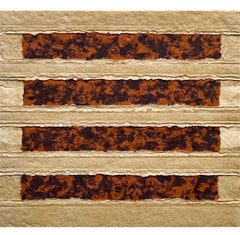
Handmade Paper Collage Sculpture Art Assemblage with String Nancy Genn Modernist
By Nancy Genn
Located in Surfside, FL
Nancy Genn, American (b. 1929) Marshfield 25 (1977) Handmade paper collage Hand signed verso Dimensions: 20 1/8 x 22 inches Utilizing what is now known as the 'Genn Method,' Nancy Ge...
Category

1970s Abstract Abstract Paintings

Materials

Mixed Media, Handmade Paper

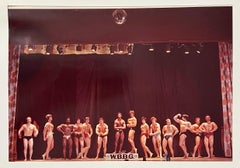
Vintage C Print Groups in America Neal Slavin Color Photograph Ektacolor Photo
By Neal Slavin
Located in Surfside, FL
Neal Slavin (American, b. 1941) World Body Building Guild (W.B.B.G.) Brooklyn, N.Y. Vintage C-print [Chromogenic development print; Ektacolor prints] Hand signed and numbered by the ...
Category

1970s American Modern Color Photography

Materials

Photographic Paper, C Print

Vintage C Print Groups in America Neal Slavin Color Photograph Ektacolor Photo
By Neal Slavin
Located in Surfside, FL
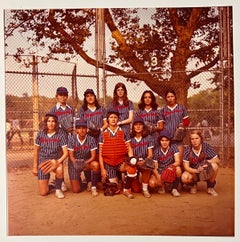
Neal Slavin (American, b. 1941) Women's Intramural Softball Team of Warner Communications, Inc. New York, N.Y. Vintage C-print [Chromogenic development print; Ektacolor prints] Hand ...
Category

1970s American Modern Color Photography

Materials

Photographic Paper, C Print

Vintage C Print Groups in America Neal Slavin Color Photograph Ektacolor Photo
By Neal Slavin
Located in Surfside, FL
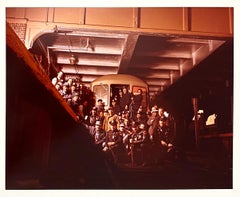
Neal Slavin (American, b. 1941) New York City Transit Authority, Brooklyn, N.Y. Subway workers Vintage C-print [Chromogenic development print; Ektacolor prints] Hand signed and numbe...
Category

1970s American Modern Color Photography

Materials

Photographic Paper, C Print

Vintage C Print Groups in America Neal Slavin Color Photograph Ektacolor Photo
By Neal Slavin
Located in Surfside, FL
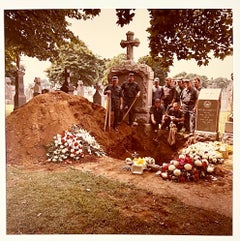
Neal Slavin (American, b. 1941) Cemetery Workers Green Attendants, Ridgewood, NY Gravediggers Union Vintage C-print [Chromogenic development print; Ektacolor prints] Hand signe...
Category

1970s American Modern Color Photography

Materials

Photographic Paper, C Print

Vintage C Print Groups in America Neal Slavin Color Photograph Ektacolor Photo
By Neal Slavin
Located in Surfside, FL
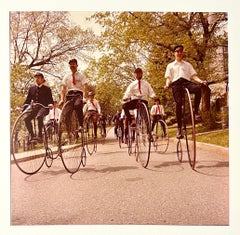
Neal Slavin (American, b. 1941) The Wheelman, Swarthmore, PA Bicycle Riding Club. Antique Highwheeler Penny Farthing Bike club riders. Vintage C-print [Chromogenic development print...
Category

1970s American Modern Color Photography

Materials

Photographic Paper, C Print

Pietro Consagra Italian Mod Abstract Expressionist Forma Art Informel Lithograph
By Pietro Consagra
Located in Surfside, FL
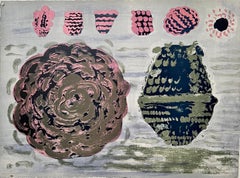
Pietro Consagra (Italian, 1920-2005). Hand signed in pencil and numbered limited edition color lithograph on Magnani paper. Embossed stamp with limited edition numbers in pencil to lower left, and having artist pencil signature to lower right. (from a limited edition of 80 with 15 artist's proofs) Published by Stamperia 2RC, Rome Italy and Marlborough Gallery, Rome, Italy. Abstract Modernist work in colors, produced in the style of the Forma art movement of Postwar Italy, of which the artist was a prominent member. Pietro Consagra (1920 – 2005) was an Italian Post war artist working in painting, printmaking and sculpture. In 1947 he was among the founding members of the Forma 1 group of artists, proponents of structured abstraction. (similar to the Art Informel and Art Brut in France and the Brutalist artists) Consagra was born on 6 October 1920 in Mazara del Vallo, in the province of Trapani in south-western Sicily, to Luigi Consagra and Maria Lentini. From 1931 he enrolled in a trade school for sailors, studying first to become a mechanic, and later to become a captain. In 1938 he moved to Palermo, where he enrolled in the liceo artistico; despite an attack of tuberculosis, he graduated in 1941, and in the same year signed up at the Accademia di Belle Arti, where he studied sculpture under Archimede Campini. After the Invasion of Sicily and the Allied occupation of Palermo in 1943, Consagra found work as a caricaturist for the American Red Cross club of the city; he also joined the Italian Communist Party. Early in 1944, armed with a letter of introduction from an American officer, he travelled to Rome. There he came into contact with the Sicilian artist Concetto Maugeri, and through him with Renato Guttuso, who was also Sicilian and who introduced him to the intellectual life of the city and to other postwar artists such as Leoncillo Leonardi, Mario Mafai and Giulio Turcato. Consagra signed up at the Accademia di Belle Arti di Roma in September 1944 and studied sculpture there under Michele Guerrisi, but left before completing his diploma. In 1947, with Carla Accardi, Ugo Attardi, Piero Dorazio, Mino Guerrini, Achille Perilli, Antonio Sanfilippo and Giulio Turcato, Consagra started the artist's group Forma 1, which advocated both Marxism and structured abstraction. Steadily Consagra's work began to find an audience. Working primarily in metal, and later in marble and wood, his thin, roughly carved reliefs, began to be collected by Peggy Guggenheim and other important patrons of the arts. He showed at the Venice Biennale eleven times between 1950 and 1993, and in 1960 won the sculpture prize at the exhibition. During the 1960s he was associated with the Continuità group, an offshoot of Forma I, and in 1967 taught at the School of Arts in Minneapolis. Large commissions allowed him to begin working on a more monumental scale, and works of his were installed in the courtyard of the Foreign Ministry in Rome and in the European Parliament, Strasbourg. His work is found in the collections of The Tate Gallery, London, in Museo Cantonale d'Arte of Lugano and the Museum of Modern Art, Paris, and the National Gallery of Art in Washington, D.C.. Consagra returned to Sicily where he sculpted a number of significant works during the 1980s. With Senator Ludovico Corrao, he helped created an open-air museum in the new town of Gibellina, after the older town had been destroyed in the earthquake of 1968. Consagra designed the gates to the town's entrance, the building named "Meeting" and the gates to the cemetery, where he was later buried. In 1952 Consagra published La necessità della scultura ("the need for sculpture"), a response to the essay La scultura lingua morta ("sculpture, a dead language"), published in 1945 by Arturo Martini. Other works include L'agguato c'è ("the snare exists", 1960), and La città frontale ("the frontal city", 1969). His autobiography, Vita Mia, was published by Feltrinelli in 1980. In 1989 a substantial retrospective exhibition of work by Consagra was shown at the Galleria Nazionale d'Arte Moderna in Rome; in 1993 a permanent exhibition of his work was installed there. In 1991 his work was shown in the Hermitage Museum in St. Petersburg. In 2002 the Galerie der Stadt Stuttgart opened a permanent exhibition of his work. He was one of ten artists invited by Giovanni Carandente, along with David Smith, Alexander Calder, Arnaldo Pomodoro, Lynn Chadwick, and Beverly Pepper, to fabricate works in Italsider factories in Italy for an outdoor exhibition, "Sculture nella città", held in Spoleto during the summer of 1962. He was included in the The 1962 International Prize for Sculpture the jury included Argan, Romero Brest and James Johnson Sweeney the former director of the Solomon R. Guggenheim Museum in New York. The participants included Louise Nevelson and John Chamberlain for the United States; Lygia Clark for Brazil; Pietro Consagra, Lucio Fontana, Nino Franchina, and Gió Pomodoro for Italy; Pablo Serrano for Spain; and Eduardo Paolozzi, William Turnbull, and Kenneth Armitage for England. Gyula Kosice, Noemí Gerstein...
Category

1960s Abstract Expressionist Abstract Prints

Materials

Lithograph

Vintage C Print Groups in America Neal Slavin Color Photograph Ektacolor Photo
By Neal Slavin
Located in Surfside, FL
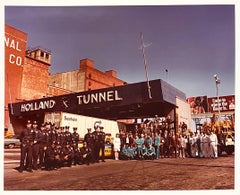
Neal Slavin (American, b. 1941) Holland Tunnel Crew, New York, NY Vintage C-print [Chromogenic development print; Ektacolor prints] Hand signed and numbered by the photographer 48/75...
Category

1970s American Modern Color Photography

Materials

Photographic Paper, C Print

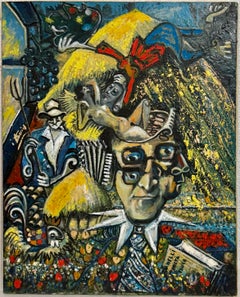
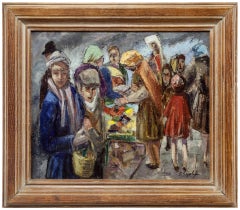
Jewish Peddlers on Market Day Modernist Judaica OIl Painting Cubist Abstraction
By Samuel Sigaloff
Located in Surfside, FL
Sam Sigaloff (1895-1987) signed in the lower right. Vibrant market scene oil on canvas.
Category

20th Century Figurative Paintings

Materials

Canvas, Oil

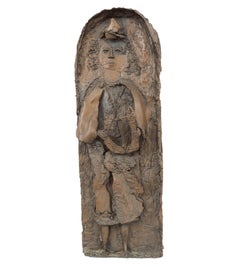
Heavy Bronze Relief Plaque, Young King David with Harp
By Hana Geber
Located in Surfside, FL
American sculptor Hana Geber (1910 - 1990) She was born in Prague of Czechoslovakian heritage and eventually settled in New York. Her sculptures deal with Jewish themes She taught s...
Category

20th Century Modern Figurative Sculptures

Materials

Bronze

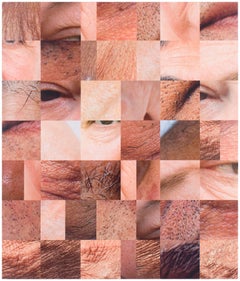
Untitled, #94 from the Dysmorphologies Series Abstract Large Color Photograph
By Ken Gonzales-Day
Located in Surfside, FL
This extra large montage of photographs is mounted onto aluminum from Ken Gonzales-Day's dysmorphologies series. Photo paper mounted to aluminum. Ken Gonzales-Day's interdisciplinar...
Category

20th Century Contemporary Abstract Photography

Materials

Metal

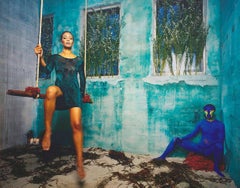
Untitled (Blue), Alchemy Series, Vintage Cibachrome Print
By Lyle Ashton Harris
Located in Surfside, FL
Original color vintage Cibachrome print, very large size, signed on verso. Lyle Ashton Harris (born 1965) is an American artist who has cultivated a diverse artistic practice rangin...
Category

20th Century Contemporary Color Photography

Materials

Photographic Paper, C Print

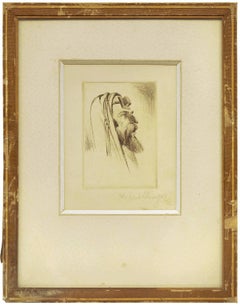
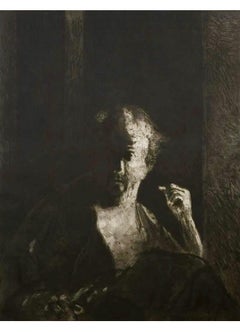
Untitled, Rabbi with Tefillin, Judaica
By Otto Freichlinger
Located in Surfside, FL
Early modernist Judaica, Rabbi in Prayer with Tefillin
Category

20th Century Portrait Prints

Materials

Paper, Etching

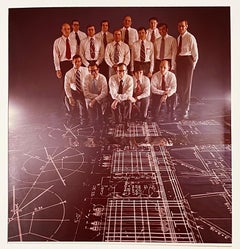
Vintage C Print Groups in America Neal Slavin Color Photograph Ektacolor Photo
By Neal Slavin
Located in Surfside, FL
Neal Slavin (American, b. 1941) Product Managers, AT&T Long Lines, Somerset, New Jersey Vintage C-print [Chromogenic development print; Ektacolor prints] Hand signed and numbered...
Category

1970s American Modern Color Photography

Materials

Photographic Paper, C Print

Hand Colored Etching Cuca Romley Naive Folk Art Young Girl Period Frame
By Cuca Romley
Located in Surfside, FL
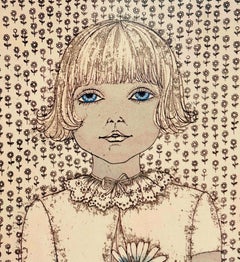
Cuca Romley, Spanish woman artist (born 1933) Color etching "Petite Fille" (young girl with blue eyes) Hand signed lower right, titled lower center, "epreuve d'artiste" lower left....
Category

20th Century Folk Art Portrait Prints

Materials

Etching

Vintage C Print Groups in America Neal Slavin Color Photograph Ektacolor Photo
By Neal Slavin
Located in Surfside, FL
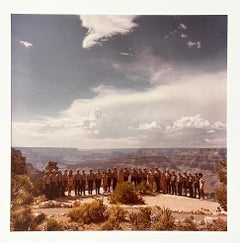
Neal Slavin (American, b. 1941) Grand Canyon National Park Service, Arizona Vintage C-print [Chromogenic development print; Ektacolor prints] Hand signed and numbered by the photogra...
Category

1970s American Modern Color Photography

Materials

Photographic Paper, C Print

Post Soviet Ukrainian Russian Jewish Oil Painting Shabbat Candles Judaic Prayers
Located in Surfside, FL
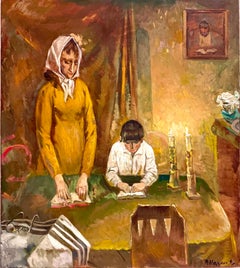
Matskin Ruvim Izrailevich (Russian / Israeli, 1926-1996) - Sabbath Prayer Oil on Canvas 1991 Hand signed in Cyrillic 36 X 32 inches (90x80cm) Rare judaica by a Soviet realist artist. Ruvim Izrailevich Matskin was born in 1926 in Kryvy (Ukraine). In 1955 he graduated from Kharkov State Art School, and in 1970 joined the Kharkov Artists’ Union. Since 1963 he worked at the Industrial Art dep. of the UkraSSR Art Fund. In the late 1880s he and his family moved to Israel. Matskin passed away in 2002. Took part in numerous exhibitions of fine art in the USSR Select Exhibitions Behind the Iron Curtain. The Art of Socialist Realism 20 Years after the Fall of the Berlin Wall 1989-2009, Berlino 2009 Guardando all'URSS. Realismo socialista in Italia dal mito al mercato, Fruttiere di Palazzo Te, Mantova 2015 World Exposition, Milano 2015 The exhibition was held at the Jeschke-Van Vliet gallery in Berlin, which was located in the former Berlin Wall zone, adding a layer of symbolic resonance to the project artists included Askhat Gazizulinovich Safargalin, Petr Ivanovich Kostinsky, Vyacheslav Vasilevich Tokarev, Boris Eremeevich Vladimirski, Alexander Deyneka His most well-known work was the monumental revolutionary "The Defence of Petrograd" from 1928. His mosaics cover the ceiling of Mayakovskaya Metro station in Moscow. Yuri Pimenov A founder member of the Society of Easel Painters, he was well known for documenting Moscow's changes from the 1930s to the 60s, as in his 1937 painting "New Moscow". Geli Korzhev and Yablonska Olena Nylivna Bibliografia: Behind the Iron Curtain. The Art of Socialist Realism 20 Years after the Fall of the Berlin Wall 1989-2009, catalogo della mostra a cura di A.L. Coruzzi, H. Bayati, Milano 2009, p. 87, n. 115 Guardando all'URSS. Realismo socialista in Italia dal mito al mercato, catalogo della mostra a cura di V. Strukelj, F. Zanella, I. Bignotti, Ginevra-Milano 2015, p. 237, n. 17 He was part of a tradition of Soviet Jewish artists that included El Lissitzky, and Natan Altman, Marc Chagall, Robert Falk, Anatoly Kaplan, Ilya Kabakov, Mikhail Grobman, Oscar Rabin...
Category

1970s Modern Figurative Paintings

Materials

Oil, Board

American Pop Art George Segal Color Expressionist Lithograph Woman in Red Kimono
By George Segal
Located in Surfside, FL
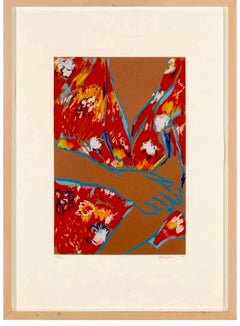
George Segal (American, 1924-2000) "Woman in Red Kimono," 1985 Lithograph in colors on wove paper Edition: 104/120 Signed, dated, and numbered in pencil in the lower margin: G. Sega...
Category

1980s American Modern Portrait Prints

Materials

Lithograph

Large Format American Pop Art Portrait Aquatint Etching Walter George Segal 1987
By George Segal
Located in Surfside, FL
George Segal (American, 1924-2000) Walter from the series Portraits Printed by Vigna Antoniniana Stamperia d'Arte, Rome, Italy Published by Stamperia d'Arte 2RC, Rome, Italy Hand sig...
Category

1980s American Modern Portrait Prints

Materials

Drypoint, Etching, Aquatint

Vintage C Print Groups in America Neal Slavin Color Photograph Ektacolor Photo
By Neal Slavin
Located in Surfside, FL
Neal Slavin (American, b. 1941) Firemen, New York City Fire Department FDNY Vintage C-print [Chromogenic development print; Ektacolor prints] Hand signed and numbered by the photogra...
Category

1970s American Modern Color Photography

Materials

Photographic Paper, C Print

Vintage C Print Groups in America Neal Slavin Color Photograph Ektacolor Photo
By Neal Slavin
Located in Surfside, FL
Neal Slavin (American, b. 1941) Electrolux Vacuum Cleaner Sales Convention, New York City, 1974 Vintage C-print [Chromogenic development print; Ektacolor prints] Hand signed and numb...
Category

1970s American Modern Color Photography

Materials

Photographic Paper, C Print

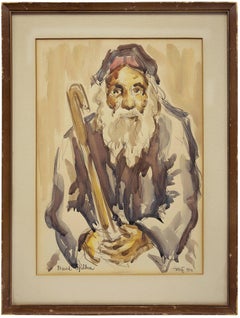
Old Rabbi Holding a Cane
By David Gilboa
Located in Surfside, FL
David Gilboa (1910-1976). David Gilboa was born in Romania in 1910. He studied at Academy of Fine Art, Bucharest, Romania, during the years of 1927-29. He immigrated to Israel in 193...
Category

20th Century Portrait Drawings and Watercolors

Materials

Watercolor

Large Abstract Painting French Iranian Shahla Dadsetan Plongee Dans Ma Pensee
Located in Surfside, FL
Shahla Dadsetan (Iranian, 21st c.) Plongee Dans Ma Pensee 2005 Acrylic painting on canvas Hand signed and dated Dimensions: 32'' x 51'', (81 x 130 cm) Provenance: The Encyclopaedia ...
Category

Early 2000s Abstract Abstract Paintings

Materials

Canvas, Acrylic

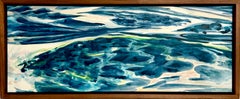
White Atlantic Surf Mixed Media Modernist Abstract Seascape Painting Ray Kass
By Ray Kass
Located in Surfside, FL
RAY KASS, AMERICAN, B. 1944 WHITE ATLANTIC SURF 2001 Watercolor and beeswax on paper laid on board Verso titled, dated, and hand signed in marker on the backing board: White Atlanti...
Category

Early 2000s Post-Modern Abstract Paintings

Materials

Mixed Media, Wax, Watercolor

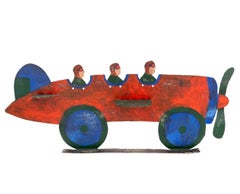
Pilots in Plane Painting on Metal Sculpture Wall Hanging Seymour Chwast Airplane
By Seymour Chwast
Located in Surfside, FL
Seymour Chwast (American, b. 1931) Three Pilots Ready for Take Off Mixed Media Painted Sculpture Hand-painted metal, (galvanized steel or aluminum) large wall hanging Hand signed to ...
Category

20th Century American Modern Figurative Paintings

Materials

Metal

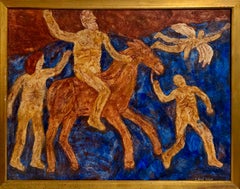
Surrealist Oil Painting Circus Horse Scene Lionel Kalish Fantasy Scene New York
Located in Surfside, FL
Lionel Kalish (American B.1931) Hand signed lower right Oil on canvas Titled: "The Arrival" Dimensions: (Frame) H 22" x W 28" (Sight) H 25.5" x W 19.75" Modernist circus scene depicting nude people...
Category

1960s Surrealist Landscape Paintings

Materials

Canvas, Oil

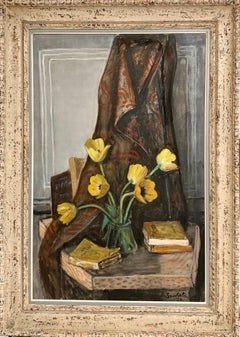
Large French Modernist Nabi Oil Painting Jean Souverbie Still Life Tulipes Jaune
Located in Surfside, FL
Jean Souverbie (French, 1891 - 1981) "Tulipes Jaunes" 1970 Oil on Canvas. Hand signed and dated ('70) lower right. Inscribed verso on canvas. Provenance Paisnel Gallery label verso, Anaf-Martinon (S.V.V.) Tableaux modernes contemporains, 01 oct 2006 Lyon, France Dimensions: Sight Size: 36.5 x 23.5 in. Overall Framed Size: 43.75 x 31 in. Jean Souverbie was a figurative painter of the French school, known for known for his cubist and modern interpretations of classical nudes, in addition to seascapes and still lifes. Born in Boulogne-Billancourt in 1891, It was a meeting with Nabis group artists Maurice Denis and Paul Sérusier in 1908 that influenced Souverbie to become an artist. An interest in the work of the classical painter Nicolas Poussin at the start of his artistic career would turn out to be an enduring one, the influence of which can be seen throughout Souverbie’s oeuvre. Souverbie enrolled at the Académie Ranson in 1916, where he befriended Pierre Bonnard, Edouard Vuillard, and Félix Edouard Vallotton. Souverbie's art style is best described as a distinctive blend of Synthetic Cubism and Classicism (also referred to as Neo-Greek or a return to order). Initially influenced by the Post Impressionist, Symbolists and Fauvist Nabi artists like Maurice Denis In the 1920’s, Souverbie turned toward cubism after the discovery of Georges Braque’s work, but the decisive turning point was reached in 1925, when he exhibited along the Section d’or at the Vavin Raspail gallery and met Charles Gleizes, André Lhote, Louis Marcoussis, and many other members of the Parisian avant-garde including Pablo Picasso who he deeply admired. This master, who had become a friend, deeply influenced Souverbie’s artistic conceptions. His nudes became more and more geometrical, their sculptural bodies echoed cubists icons of the Spanish painter. Souverbie went on to have a show of 54 Cubist paintings at the Bernheim-Jeune Gallery in 1929, which solidified his reputation as an important figure in the Parisian art scene of the 1920s and 1930s. By the 1930’s Souverbie had become renowned. He turned to the realisation of monumental works (commissions) which made him famous around the world. In 1937, he was amongst artists chosen to decorate the new Palais de Chaillot, built for the Universal Exhibition to replace the Palais du Trocadéro. Jean Souverbie taught at the Académie Julian and the École des Beaux-Arts in Paris during the 1940s. Among his best-known students are Philippe de La Hogue-Rey, Philippe Lejeune, Jean Le Merdy, Yves de Saint-Front, Georges Visconti and Pierrette Bloch. He was an important mentor figure for Francoise Gilot during her early career as she developed her own artistic style. During the second half of the 1940’s, he contributed to the decoration of 8 Art Deco ocean liners...
Category

1970s Post-Impressionist Still-life Paintings

Materials

Canvas, Oil

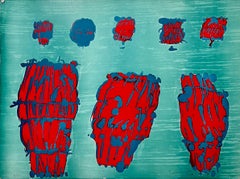
Abstract Expressionism Jay Milder Rhino Horn Painting Bold Colorful Pop Art
By Jay Milder
Located in Surfside, FL
This came from the collection of the Horace Richter Gallery These were done in the 1990's Hand signed and dated by the artist. Old Jaffa Jay Milder (born 1934) is an American artis...
Category

20th Century Abstract Expressionist Abstract Paintings

Materials

Paper, Gouache

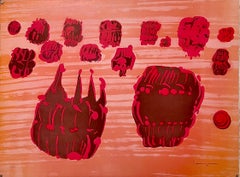
Abstract Expressionist Landscape Jay Milder Rhino Horn Painting American Pop Art
By Jay Milder
Located in Surfside, FL
This came from the collection of the Horace Richter Gallery, Old jaffa, Israel These were done in the 1990's Hand signed and dated. titled Old Jaffa. Jay Milder (born 1934) is an Am...
Category

20th Century Abstract Expressionist Abstract Paintings

Materials

Paper, Gouache

Abstract Expressionist Landscape Jay Milder Rhino Horn Painting American Pop Art
By Jay Milder
Located in Surfside, FL
This came from the collection of the Horace Richter Gallery, Old jaffa, Israel These were done in the 1990's Hand signed and dated. titled Old Jaffa. Jay Milder (born 1934) is an Am...
Category

20th Century Abstract Expressionist Abstract Paintings

Materials

Paper, Gouache

Abstract Expressionist Landscape Jay Milder Rhino Horn Painting American Pop Art
By Jay Milder
Located in Surfside, FL
This came from the collection of the Horace Richter Gallery, Old jaffa, Israel These were done in the 1990's Hand signed and dated. titled Old Jaffa. Jay Milder (born 1934) is an Am...
Category

20th Century Abstract Expressionist Abstract Paintings

Materials

Paper, Gouache

Abstract Expressionist Landscape Jay Milder Rhino Horn Painting American Pop Art
By Jay Milder
Located in Surfside, FL
This came from the collection of the Horace Richter Gallery, Old jaffa, Israel These were done in the 1990's This does not appear to be hand signed. It is signed and dated verso perh...
Category

20th Century Abstract Expressionist Abstract Paintings

Materials

Paper, Gouache

Abstract Expressionist Landscape Jay Milder Rhino Horn Painting American Pop Art
By Jay Milder
Located in Surfside, FL
This came from the collection of the Horace Richter Gallery These were done in the 1990's This does not appear to be hand signed. It is signed and dated verso perhaps by gallerist. ...
Category

20th Century Abstract Expressionist Abstract Paintings

Materials

Paper, Gouache

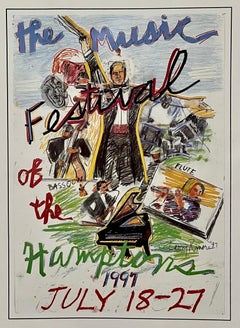
Vintage Pop Art 1997 Offset Lithograph Larry Rivers Music Poster Hamptons NY
By Larry Rivers
Located in Surfside, FL
Larry Rivers "The Music Festival of the Hamptons / July 18-27 1997" poster, Not hand signed. [Dimensions: 24" H x 18" W] Larry Rivers (born Yitzroch Loiza Grossberg) (1923 – 200...
Category

1990s Pop Art Abstract Prints

Materials

Lithograph, Offset

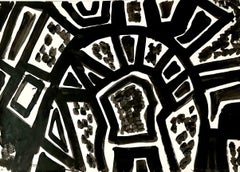
Pietro Consagra Italian Mod Abstract Expressionist Forma, Art Brut Lithograph
By Pietro Consagra
Located in Surfside, FL
Pietro Consagra (Italian, 1920-2005). Hand signed in pencil and numbered limited edition color lithograph on Magnani paper. Embossed stamp with limited edition numbers in pencil to lower left, and having artist pencil signature to lower right. (from a limited edition of 80 with 15 artist's proofs) Published by Stamperia 2RC, Rome Italy and Marlborough Gallery, Rome, Italy. Abstract Modernist work in colors, produced in the style of the Forma art movement of Postwar Italy, of which the artist was a prominent member. Pietro Consagra (1920 – 2005) was an Italian Post war artist working in painting, printmaking and sculpture. In 1947 he was among the founding members of the Forma 1 group of artists, proponents of structured abstraction. (similar to the Art Informel and Art Brut in France and the Brutalist artists) Consagra was born on 6 October 1920 in Mazara del Vallo, in the province of Trapani in south-western Sicily, to Luigi Consagra and Maria Lentini. From 1931 he enrolled in a trade school for sailors, studying first to become a mechanic, and later to become a captain. In 1938 he moved to Palermo, where he enrolled in the liceo artistico; despite an attack of tuberculosis, he graduated in 1941, and in the same year signed up at the Accademia di Belle Arti, where he studied sculpture under Archimede Campini. After the Invasion of Sicily and the Allied occupation of Palermo in 1943, Consagra found work as a caricaturist for the American Red Cross club of the city; he also joined the Italian Communist Party. Early in 1944, armed with a letter of introduction from an American officer, he travelled to Rome. There he came into contact with the Sicilian artist Concetto Maugeri, and through him with Renato Guttuso, who was also Sicilian and who introduced him to the intellectual life of the city and to other postwar artists such as Leoncillo Leonardi, Mario Mafai and Giulio Turcato. Consagra signed up at the Accademia di Belle Arti di Roma in September 1944 and studied sculpture there under Michele Guerrisi, but left before completing his diploma. In 1947, with Carla Accardi, Ugo Attardi, Piero Dorazio, Mino Guerrini, Achille Perilli, Antonio Sanfilippo and Giulio Turcato, Consagra started the artist's group Forma 1, which advocated both Marxism and structured abstraction. Steadily Consagra's work began to find an audience. Working primarily in metal, and later in marble and wood, his thin, roughly carved reliefs, began to be collected by Peggy Guggenheim and other important patrons of the arts. He showed at the Venice Biennale eleven times between 1950 and 1993, and in 1960 won the sculpture prize at the exhibition. During the 1960s he was associated with the Continuità group, an offshoot of Forma I, and in 1967 taught at the School of Arts in Minneapolis. Large commissions allowed him to begin working on a more monumental scale, and works of his were installed in the courtyard of the Foreign Ministry in Rome and in the European Parliament, Strasbourg. His work is found in the collections of The Tate Gallery, London, in Museo Cantonale d'Arte of Lugano and the Museum of Modern Art, Paris, and the National Gallery of Art in Washington, D.C.. Consagra returned to Sicily where he sculpted a number of significant works during the 1980s. With Senator Ludovico Corrao, he helped created an open-air museum in the new town of Gibellina, after the older town had been destroyed in the earthquake of 1968. Consagra designed the gates to the town's entrance, the building named "Meeting" and the gates to the cemetery, where he was later buried. In 1952 Consagra published La necessità della scultura ("the need for sculpture"), a response to the essay La scultura lingua morta ("sculpture, a dead language"), published in 1945 by Arturo Martini. Other works include L'agguato c'è ("the snare exists", 1960), and La città frontale ("the frontal city", 1969). His autobiography, Vita Mia, was published by Feltrinelli in 1980. In 1989 a substantial retrospective exhibition of work by Consagra was shown at the Galleria Nazionale d'Arte Moderna in Rome; in 1993 a permanent exhibition of his work was installed there. In 1991 his work was shown in the Hermitage Museum in St. Petersburg. In 2002 the Galerie der Stadt Stuttgart opened a permanent exhibition of his work. He was one of ten artists invited by Giovanni Carandente, along with David Smith, Alexander Calder, Arnaldo Pomodoro, Lynn Chadwick, and Beverly Pepper, to fabricate works in Italsider factories in Italy for an outdoor exhibition, "Sculture nella città", held in Spoleto during the summer of 1962. He was included in the The 1962 International Prize for Sculpture the jury included Argan, Romero Brest and James Johnson Sweeney the former director of the Solomon R. Guggenheim Museum in New York. The participants included Louise Nevelson and John Chamberlain for the United States; Lygia Clark for Brazil; Pietro Consagra, Lucio Fontana, Nino Franchina, and Gió Pomodoro for Italy; Pablo Serrano for Spain; and Eduardo Paolozzi, William Turnbull, and Kenneth Armitage for England. Gyula Kosice, Noemí Gerstein...
Category

1960s Abstract Expressionist Abstract Prints

Materials

Lithograph

Pietro Consagra Italian Mod Abstract Expressionist Forma Brutalist Lithograph
By Pietro Consagra
Located in Surfside, FL
Pietro Consagra (Italian, 1920-2005). Hand signed in pencil and numbered limited edition color lithograph on Magnani paper. Embossed stamp with limited edition numbers in pencil to lower left, and having artist pencil signature to lower right. (from a limited edition of 80 with 15 artist's proofs) Published by Stamperia 2RC, Rome Italy and Marlborough Gallery, Rome, Italy. Abstract Modernist work in colors, produced in the style of the Forma art movement of Postwar Italy, of which the artist was a prominent member. Pietro Consagra (1920 – 2005) was an Italian Post war artist working in painting, printmaking and sculpture. In 1947 he was among the founding members of the Forma 1 group of artists, proponents of structured abstraction. Consagra was born on 6 October 1920 in Mazara del Vallo, in the province of Trapani in south-western Sicily, to Luigi Consagra and Maria Lentini. From 1931 he enrolled in a trade school for sailors, studying first to become a mechanic, and later to become a captain. In 1938 he moved to Palermo, where he enrolled in the liceo artistico; despite an attack of tuberculosis, he graduated in 1941, and in the same year signed up at the Accademia di Belle Arti, where he studied sculpture under Archimede Campini. After the Invasion of Sicily and the Allied occupation of Palermo in 1943, Consagra found work as a caricaturist for the American Red Cross club of the city; he also joined the Italian Communist Party. Early in 1944, armed with a letter of introduction from an American officer, he travelled to Rome. There he came into contact with the Sicilian artist Concetto Maugeri, and through him with Renato Guttuso, who was also Sicilian and who introduced him to the intellectual life of the city and to other postwar artists such as Leoncillo Leonardi, Mario Mafai and Giulio Turcato. Consagra signed up at the Accademia di Belle Arti di Roma in September 1944 and studied sculpture there under Michele Guerrisi, but left before completing his diploma. In 1947, with Carla Accardi, Ugo Attardi, Piero Dorazio, Mino Guerrini, Achille Perilli, Antonio Sanfilippo and Giulio Turcato, Consagra started the artist's group Forma 1, which advocated both Marxism and structured abstraction. Steadily Consagra's work began to find an audience. Working primarily in metal, and later in marble and wood, his thin, roughly carved reliefs, began to be collected by Peggy Guggenheim and other important patrons of the arts. He showed at the Venice Biennale eleven times between 1950 and 1993, and in 1960 won the sculpture prize at the exhibition. During the 1960s he was associated with the Continuità group, an offshoot of Forma I, and in 1967 taught at the School of Arts in Minneapolis. Large commissions allowed him to begin working on a more monumental scale, and works of his were installed in the courtyard of the Foreign Ministry in Rome and in the European Parliament, Strasbourg. His work is found in the collections of The Tate Gallery, London, in Museo Cantonale d'Arte of Lugano and the Museum of Modern Art, Paris, and the National Gallery of Art in Washington, D.C.. Consagra returned to Sicily where he sculpted a number of significant works during the 1980s. With Senator Ludovico Corrao, he helped created an open-air museum in the new town of Gibellina, after the older town had been destroyed in the earthquake of 1968. Consagra designed the gates to the town's entrance, the building named "Meeting" and the gates to the cemetery, where he was later buried. In 1952 Consagra published La necessità della scultura ("the need for sculpture"), a response to the essay La scultura lingua morta ("sculpture, a dead language"), published in 1945 by Arturo Martini. Other works include L'agguato c'è ("the snare exists", 1960), and La città frontale ("the frontal city", 1969). His autobiography, Vita Mia, was published by Feltrinelli in 1980. In 1989 a substantial retrospective exhibition of work by Consagra was shown at the Galleria Nazionale d'Arte Moderna in Rome; in 1993 a permanent exhibition of his work was installed there. In 1991 his work was shown in the Hermitage Museum in St. Petersburg. In 2002 the Galerie der Stadt Stuttgart opened a permanent exhibition of his work. He was one of ten artists invited by Giovanni Carandente, along with David Smith, Alexander Calder, Arnaldo Pomodoro, Lynn Chadwick, and Beverly Pepper, to fabricate works in Italsider factories in Italy for an outdoor exhibition, "Sculture nella città", held in Spoleto during the summer of 1962. He was included in the The 1962 International Prize for Sculpture the jury included Argan, Romero Brest and James Johnson Sweeney the former director of the Solomon R. Guggenheim Museum in New York. The participants included Louise Nevelson and John Chamberlain for the United States; Lygia Clark for Brazil; Pietro Consagra, Lucio Fontana, Nino Franchina, and Gió Pomodoro for Italy; Pablo Serrano for Spain; and Eduardo Paolozzi, William Turnbull, and Kenneth Armitage for England. Gyula Kosice, Noemí Gerstein...
Category

1960s Abstract Expressionist Abstract Prints

Materials

Lithograph

Pietro Consagra Italian Mod Abstract Expressionist Forma, Art Brut Lithograph
By Pietro Consagra
Located in Surfside, FL
Pietro Consagra (Italian, 1920-2005). Hand signed in pencil and numbered limited edition color lithograph on Magnani paper. Embossed stamp with limited edition numbers in pencil to lower left, and having artist pencil signature to lower right. (from a limited edition of 80 with 15 artist's proofs) Published by Stamperia 2RC, Rome Italy and Marlborough Gallery, Rome, Italy. Abstract Modernist work in colors, produced in the style of the Forma art movement of Postwar Italy, of which the artist was a prominent member. Pietro Consagra (1920 – 2005) was an Italian Post war artist working in painting, printmaking and sculpture. In 1947 he was among the founding members of the Forma 1 group of artists, proponents of structured abstraction. (similar to the Art Informel and Art Brut in France and the Brutalist artists) Consagra was born on 6 October 1920 in Mazara del Vallo, in the province of Trapani in south-western Sicily, to Luigi Consagra and Maria Lentini. From 1931 he enrolled in a trade school for sailors, studying first to become a mechanic, and later to become a captain. In 1938 he moved to Palermo, where he enrolled in the liceo artistico; despite an attack of tuberculosis, he graduated in 1941, and in the same year signed up at the Accademia di Belle Arti, where he studied sculpture under Archimede Campini. After the Invasion of Sicily and the Allied occupation of Palermo in 1943, Consagra found work as a caricaturist for the American Red Cross club of the city; he also joined the Italian Communist Party. Early in 1944, armed with a letter of introduction from an American officer, he travelled to Rome. There he came into contact with the Sicilian artist Concetto Maugeri, and through him with Renato Guttuso, who was also Sicilian and who introduced him to the intellectual life of the city and to other postwar artists such as Leoncillo Leonardi, Mario Mafai and Giulio Turcato. Consagra signed up at the Accademia di Belle Arti di Roma in September 1944 and studied sculpture there under Michele Guerrisi, but left before completing his diploma. In 1947, with Carla Accardi, Ugo Attardi, Piero Dorazio, Mino Guerrini, Achille Perilli, Antonio Sanfilippo and Giulio Turcato, Consagra started the artist's group Forma 1, which advocated both Marxism and structured abstraction. Steadily Consagra's work began to find an audience. Working primarily in metal, and later in marble and wood, his thin, roughly carved reliefs, began to be collected by Peggy Guggenheim and other important patrons of the arts. He showed at the Venice Biennale eleven times between 1950 and 1993, and in 1960 won the sculpture prize at the exhibition. During the 1960s he was associated with the Continuità group, an offshoot of Forma I, and in 1967 taught at the School of Arts in Minneapolis. Large commissions allowed him to begin working on a more monumental scale, and works of his were installed in the courtyard of the Foreign Ministry in Rome and in the European Parliament, Strasbourg. His work is found in the collections of The Tate Gallery, London, in Museo Cantonale d'Arte of Lugano and the Museum of Modern Art, Paris, and the National Gallery of Art in Washington, D.C.. Consagra returned to Sicily where he sculpted a number of significant works during the 1980s. With Senator Ludovico Corrao, he helped created an open-air museum in the new town of Gibellina, after the older town had been destroyed in the earthquake of 1968. Consagra designed the gates to the town's entrance, the building named "Meeting" and the gates to the cemetery, where he was later buried. In 1952 Consagra published La necessità della scultura ("the need for sculpture"), a response to the essay La scultura lingua morta ("sculpture, a dead language"), published in 1945 by Arturo Martini. Other works include L'agguato c'è ("the snare exists", 1960), and La città frontale ("the frontal city", 1969). His autobiography, Vita Mia, was published by Feltrinelli in 1980. In 1989 a substantial retrospective exhibition of work by Consagra was shown at the Galleria Nazionale d'Arte Moderna in Rome; in 1993 a permanent exhibition of his work was installed there. In 1991 his work was shown in the Hermitage Museum in St. Petersburg. In 2002 the Galerie der Stadt Stuttgart opened a permanent exhibition of his work. He was one of ten artists invited by Giovanni Carandente, along with David Smith, Alexander Calder, Arnaldo Pomodoro, Lynn Chadwick, and Beverly Pepper, to fabricate works in Italsider factories in Italy for an outdoor exhibition, "Sculture nella città", held in Spoleto during the summer of 1962. He was included in the The 1962 International Prize for Sculpture the jury included Argan, Romero Brest and James Johnson Sweeney the former director of the Solomon R. Guggenheim Museum in New York. The participants included Louise Nevelson and John Chamberlain for the United States; Lygia Clark for Brazil; Pietro Consagra, Lucio Fontana, Nino Franchina, and Gió Pomodoro for Italy; Pablo Serrano for Spain; and Eduardo Paolozzi, William Turnbull, and Kenneth Armitage for England. Gyula Kosice, Noemí Gerstein...
Category

1960s Abstract Expressionist Abstract Prints

Materials

Lithograph

Pietro Consagra Italian Mod Abstract Expressionist Forma Art Informel Lithograph
By Pietro Consagra
Located in Surfside, FL
Pietro Consagra (Italian, 1920-2005). Hand signed in pencil and numbered limited edition color lithograph on Magnani paper. Embossed stamp with limited edition numbers in pencil to lower left, and having artist pencil signature to lower right. (from a limited edition of 80 with 15 artist's proofs) Published by Stamperia 2RC, Rome Italy and Marlborough Gallery, Rome, Italy. Abstract Modernist work in colors, produced in the style of the Forma art movement of Postwar Italy, of which the artist was a prominent member. Pietro Consagra (1920 – 2005) was an Italian Post war artist working in painting, printmaking and sculpture. In 1947 he was among the founding members of the Forma 1 group of artists, proponents of structured abstraction. (similar to the Art Informel and Art Brut in France and the Brutalist artists) Consagra was born on 6 October 1920 in Mazara del Vallo, in the province of Trapani in south-western Sicily, to Luigi Consagra and Maria Lentini. From 1931 he enrolled in a trade school for sailors, studying first to become a mechanic, and later to become a captain. In 1938 he moved to Palermo, where he enrolled in the liceo artistico; despite an attack of tuberculosis, he graduated in 1941, and in the same year signed up at the Accademia di Belle Arti, where he studied sculpture under Archimede Campini. After the Invasion of Sicily and the Allied occupation of Palermo in 1943, Consagra found work as a caricaturist for the American Red Cross club of the city; he also joined the Italian Communist Party. Early in 1944, armed with a letter of introduction from an American officer, he travelled to Rome. There he came into contact with the Sicilian artist Concetto Maugeri, and through him with Renato Guttuso, who was also Sicilian and who introduced him to the intellectual life of the city and to other postwar artists such as Leoncillo Leonardi, Mario Mafai and Giulio Turcato. Consagra signed up at the Accademia di Belle Arti di Roma in September 1944 and studied sculpture there under Michele Guerrisi, but left before completing his diploma. In 1947, with Carla Accardi, Ugo Attardi, Piero Dorazio, Mino Guerrini, Achille Perilli, Antonio Sanfilippo and Giulio Turcato, Consagra started the artist's group Forma 1, which advocated both Marxism and structured abstraction. Steadily Consagra's work began to find an audience. Working primarily in metal, and later in marble and wood, his thin, roughly carved reliefs, began to be collected by Peggy Guggenheim and other important patrons of the arts. He showed at the Venice Biennale eleven times between 1950 and 1993, and in 1960 won the sculpture prize at the exhibition. During the 1960s he was associated with the Continuità group, an offshoot of Forma I, and in 1967 taught at the School of Arts in Minneapolis. Large commissions allowed him to begin working on a more monumental scale, and works of his were installed in the courtyard of the Foreign Ministry in Rome and in the European Parliament, Strasbourg. His work is found in the collections of The Tate Gallery, London, in Museo Cantonale d'Arte of Lugano and the Museum of Modern Art, Paris, and the National Gallery of Art in Washington, D.C.. Consagra returned to Sicily where he sculpted a number of significant works during the 1980s. With Senator Ludovico Corrao, he helped created an open-air museum in the new town of Gibellina, after the older town had been destroyed in the earthquake of 1968. Consagra designed the gates to the town's entrance, the building named "Meeting" and the gates to the cemetery, where he was later buried. In 1952 Consagra published La necessità della scultura ("the need for sculpture"), a response to the essay La scultura lingua morta ("sculpture, a dead language"), published in 1945 by Arturo Martini. Other works include L'agguato c'è ("the snare exists", 1960), and La città frontale ("the frontal city", 1969). His autobiography, Vita Mia, was published by Feltrinelli in 1980. In 1989 a substantial retrospective exhibition of work by Consagra was shown at the Galleria Nazionale d'Arte Moderna in Rome; in 1993 a permanent exhibition of his work was installed there. In 1991 his work was shown in the Hermitage Museum in St. Petersburg. In 2002 the Galerie der Stadt Stuttgart opened a permanent exhibition of his work. He was one of ten artists invited by Giovanni Carandente, along with David Smith, Alexander Calder, Arnaldo Pomodoro, Lynn Chadwick, and Beverly Pepper, to fabricate works in Italsider factories in Italy for an outdoor exhibition, "Sculture nella città", held in Spoleto during the summer of 1962. He was included in the The 1962 International Prize for Sculpture the jury included Argan, Romero Brest and James Johnson Sweeney the former director of the Solomon R. Guggenheim Museum in New York. The participants included Louise Nevelson and John Chamberlain for the United States; Lygia Clark for Brazil; Pietro Consagra, Lucio Fontana, Nino Franchina, and Gió Pomodoro for Italy; Pablo Serrano for Spain; and Eduardo Paolozzi, William Turnbull, and Kenneth Armitage for England. Gyula Kosice, Noemí Gerstein...
Category

1960s Abstract Expressionist Abstract Prints

Materials

Lithograph

Pietro Consagra Italian Mod Abstract Expressionist Forma Brutalist Lithograph
By Pietro Consagra
Located in Surfside, FL
Pietro Consagra (Italian, 1920-2005). Hand signed in pencil and numbered limited edition color lithograph on Magnani paper. Embossed stamp with limited edition numbers in pencil to lower left, and having artist pencil signature to lower right. (from a limited edition of 80 with 15 artist's proofs) Published by Stamperia 2RC, Rome Italy and Marlborough Gallery, Rome, Italy. Abstract Modernist work in colors, produced in the style of the Forma art movement of Postwar Italy, of which the artist was a prominent member. Pietro Consagra (1920 – 2005) was an Italian Post war artist working in painting, printmaking and sculpture. In 1947 he was among the founding members of the Forma 1 group of artists, proponents of structured abstraction. Consagra was born on 6 October 1920 in Mazara del Vallo, in the province of Trapani in south-western Sicily, to Luigi Consagra and Maria Lentini. From 1931 he enrolled in a trade school for sailors, studying first to become a mechanic, and later to become a captain. In 1938 he moved to Palermo, where he enrolled in the liceo artistico; despite an attack of tuberculosis, he graduated in 1941, and in the same year signed up at the Accademia di Belle Arti, where he studied sculpture under Archimede Campini. After the Invasion of Sicily and the Allied occupation of Palermo in 1943, Consagra found work as a caricaturist for the American Red Cross club of the city; he also joined the Italian Communist Party. Early in 1944, armed with a letter of introduction from an American officer, he travelled to Rome. There he came into contact with the Sicilian artist Concetto Maugeri, and through him with Renato Guttuso, who was also Sicilian and who introduced him to the intellectual life of the city and to other postwar artists such as Leoncillo Leonardi, Mario Mafai and Giulio Turcato. Consagra signed up at the Accademia di Belle Arti di Roma in September 1944 and studied sculpture there under Michele Guerrisi, but left before completing his diploma. In 1947, with Carla Accardi, Ugo Attardi, Piero Dorazio, Mino Guerrini, Achille Perilli, Antonio Sanfilippo and Giulio Turcato, Consagra started the artist's group Forma 1, which advocated both Marxism and structured abstraction. Steadily Consagra's work began to find an audience. Working primarily in metal, and later in marble and wood, his thin, roughly carved reliefs, began to be collected by Peggy Guggenheim and other important patrons of the arts. He showed at the Venice Biennale eleven times between 1950 and 1993, and in 1960 won the sculpture prize at the exhibition. During the 1960s he was associated with the Continuità group, an offshoot of Forma I, and in 1967 taught at the School of Arts in Minneapolis. Large commissions allowed him to begin working on a more monumental scale, and works of his were installed in the courtyard of the Foreign Ministry in Rome and in the European Parliament, Strasbourg. His work is found in the collections of The Tate Gallery, London, in Museo Cantonale d'Arte of Lugano and the Museum of Modern Art, Paris, and the National Gallery of Art in Washington, D.C.. Consagra returned to Sicily where he sculpted a number of significant works during the 1980s. With Senator Ludovico Corrao, he helped created an open-air museum in the new town of Gibellina, after the older town had been destroyed in the earthquake of 1968. Consagra designed the gates to the town's entrance, the building named "Meeting" and the gates to the cemetery, where he was later buried. In 1952 Consagra published La necessità della scultura ("the need for sculpture"), a response to the essay La scultura lingua morta ("sculpture, a dead language"), published in 1945 by Arturo Martini. Other works include L'agguato c'è ("the snare exists", 1960), and La città frontale ("the frontal city", 1969). His autobiography, Vita Mia, was published by Feltrinelli in 1980. In 1989 a substantial retrospective exhibition of work by Consagra was shown at the Galleria Nazionale d'Arte Moderna in Rome; in 1993 a permanent exhibition of his work was installed there. In 1991 his work was shown in the Hermitage Museum in St. Petersburg. In 2002 the Galerie der Stadt Stuttgart opened a permanent exhibition of his work. He was one of ten artists invited by Giovanni Carandente, along with David Smith, Alexander Calder, Arnaldo Pomodoro, Lynn Chadwick, and Beverly Pepper, to fabricate works in Italsider factories in Italy for an outdoor exhibition, "Sculture nella città", held in Spoleto during the summer of 1962. He was included in the The 1962 International Prize for Sculpture the jury included Argan, Romero Brest and James Johnson Sweeney the former director of the Solomon R. Guggenheim Museum in New York. The participants included Louise Nevelson and John Chamberlain for the United States; Lygia Clark for Brazil; Pietro Consagra, Lucio Fontana, Nino Franchina, and Gió Pomodoro for Italy; Pablo Serrano for Spain; and Eduardo Paolozzi, William Turnbull, and Kenneth Armitage for England. Gyula Kosice, Noemí Gerstein...
Category

1960s Abstract Expressionist Abstract Prints

Materials

Lithograph

Russian Samizdat Art Pioneers Conceptual Photo Photograph Gerlovin Gerlovina
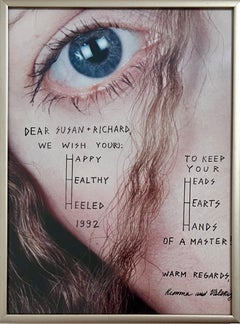
Located in Surfside, FL
Greetings, 1992 Photograph 10.25 h × 7.5 w in (26 × 19 cm), Frame 11 x 8 inches Photo mounted to foamcore and framed behind acrylic Hand signed and dated 'Rimma and Valeriy 1992'; ...
Category

1990s Figurative Photography

Materials

Photographic Paper

Israeli Contemporary Abstract Geometric Painted Pierced Sculpture Zigi Ben Haim
By Zigi Ben-Haim
Located in Surfside, FL
Zigi Ben-Haim, Metal sculpture Hand signed and dated Zigi Ben-Haim, 1998 Untitled, patinated aluminum or steel, Dimensions: 6"h x 2"w x 2"d This listing is for 1. I have 2 similar...
Category

1980s Abstract Geometric Abstract Paintings

Materials

Metal

Israeli Contemporary Abstract Geometric Painted Pierced Sculpture Zigi Ben Haim
By Zigi Ben-Haim
Located in Surfside, FL
Zigi Ben-Haim, Metal sculpture Hand signed and dated Zigi Ben-Haim, 1998 Untitled, patinated aluminum or steel, Dimensions: 6"h x 2"w x 2"d This listing is for 1. I have 2 similar...
Category

1980s Abstract Geometric Abstract Paintings

Materials

Metal

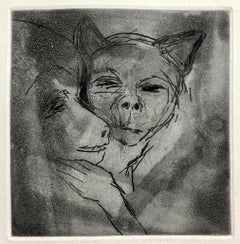
Small Beasts (Dog) Aquatint Etching Jim Dine Pop Art Print
By Jim Dine
Located in Surfside, FL
Jim Dine (American, b. 1935) Etching depicting a dog or wolf Published by Enitharmon Press for Whitman College, London 1999 Hand signed in pencil lower right. Measures 9" x 7" sheet...
Category

1990s Pop Art More Prints

Materials

Drypoint, Etching

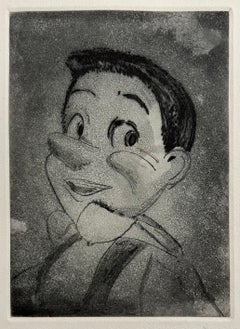
Small Pinocchio Aquatint Etching Jim Dine Pop Art Print
By Jim Dine
Located in Surfside, FL
Jim Dine (American, b. 1935) Etching depicting Pinocchio Published by Enitharmon Press for Whitman College, London 1999 Hand signed in pencil lower right. Measures 9" x 7" sheet siz...
Category

1990s Pop Art More Prints

Materials

Drypoint, Etching

Large Hudson River Figurative Modernist Landscape Oil Painting Edward Avedisian
By Edward Avedisian
Located in Surfside, FL
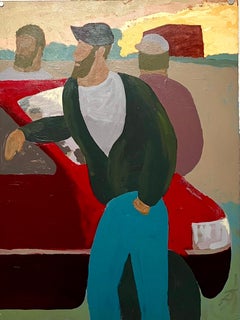
Edward Avedisian ( 1936-2007 ) Gouache or oil on paper, 3 guys around a car, hand signed in paint lower left, Measures 30"x 22.5" Edward Avedisian (June 15, 1936, Lowell, Massac...
Category

20th Century American Modern Landscape Paintings

Materials

Oil, Gouache, Archival Paper

Black/White Lithograph American Modernist Gregory Amenoff Abstract Expressionist
By Gregory Amenoff
Located in Surfside, FL
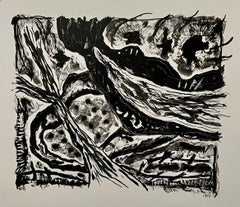
Gregory Amenoff (Contemporary American abstract painter, b. 1948), Title: Haven, STATE II Lithograph, 1986 Edition 4/4 Printer Proof Image Size 21.5 x 30.75" Gregory Amenoff is a...
Category

1980s American Modern Abstract Prints

Materials

Lithograph

Still Thinking About These?

All Recently Viewed