Lions Gallery Figurative Prints
to
200
172
177
50
14
Overall Width
to
Overall Height
to
173
76
73
63
31
20
8
5
3
2
38
23
23
21
17
1
588
24
1
12
22
18
15
68
98
54
33
411
194
7
34
18
18
16
11
8
8
6
4
3
2
2
2
2
2
2
1
1
1
1
321
150
64
48
44
17
1
613
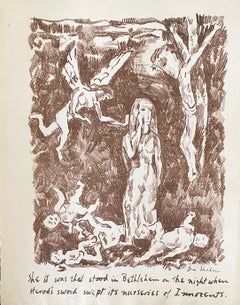
Abel Pann Israeli Bezalel School Lithograph Judaica Biblical Print Jewish Art
By Abel Pann
Located in Surfside, FL
Abel Pann (1883–1963) was a European Jewish painter who settled in the Talpiot neighborhood of Jerusalem in the early twentieth century and taught at the Bezalel Academy of Art under...
Category
Mid-20th Century Symbolist Figurative Prints
Materials
Lithograph
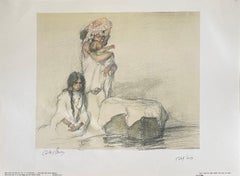

Abel Pann Israeli Bezalel School Lithograph Judaica Biblical Print Jewish Art
By Abel Pann
Located in Surfside, FL
Abel Pann (1883–1963) was a European Jewish painter who settled in the Talpiot neighborhood of Jerusalem in the early twentieth century and taught at the Bezalel Academy of Art under...
Category
Mid-20th Century Symbolist Figurative Prints
Materials
Lithograph
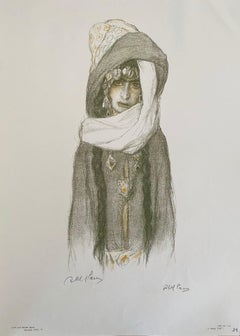
Abel Pann Israeli Bezalel School Lithograph Judaica Biblical Print Jewish Art
By Abel Pann
Located in Surfside, FL
Abel Pann (1883–1963) was a European Jewish painter who settled in the Talpiot neighborhood of Jerusalem in the early twentieth century and taught at the Bezalel Academy of Art under...
Category
Mid-20th Century Symbolist Figurative Prints
Materials
Lithograph
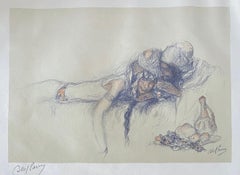
Abel Pann Israeli Bezalel School Lithograph Judaica Biblical Print Jewish Art
By Abel Pann
Located in Surfside, FL
Abel Pann (1883–1963) was a European Jewish painter who settled in the Talpiot neighborhood of Jerusalem in the early twentieth century and taught at the Bezalel Academy of Art under...
Category
Mid-20th Century Symbolist Figurative Prints
Materials
Lithograph
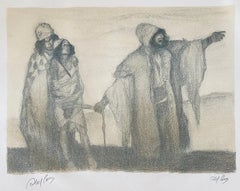
Abel Pann Israeli Bezalel School Lithograph Judaica Biblical Print Jewish Art
By Abel Pann
Located in Surfside, FL
Abel Pann (1883–1963) was a European Jewish painter who settled in the Talpiot neighborhood of Jerusalem in the early twentieth century and taught at the Bezalel Academy of Art under...
Category
Mid-20th Century Symbolist Figurative Prints
Materials
Lithograph
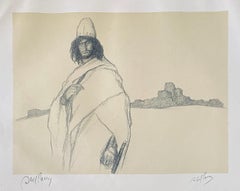
Abel Pann Israeli Bezalel School Lithograph Judaica Biblical Print Jewish Art
By Abel Pann
Located in Surfside, FL
Abel Pann (1883–1963) was a European Jewish painter who settled in the Talpiot neighborhood of Jerusalem in the early twentieth century and taught at the Bezalel Academy of Art under...
Category
Mid-20th Century Symbolist Figurative Prints
Materials
Lithograph
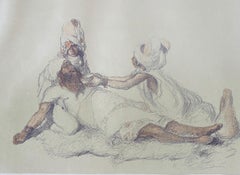
Abel Pann Israeli Bezalel School Lithograph Judaica Biblical Print Jewish Art
By Abel Pann
Located in Surfside, FL
Abel Pann (1883–1963) was a European Jewish painter who settled in the Talpiot neighborhood of Jerusalem in the early twentieth century and taught at the Bezalel Academy of Art under...
Category
Mid-20th Century Symbolist Figurative Prints
Materials
Lithograph
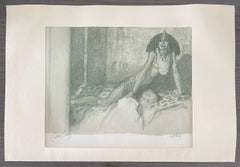
Abel Pann Israeli Bezalel School Lithograph Judaica Biblical Print Jewish Art
By Abel Pann
Located in Surfside, FL
Abel Pann (1883–1963) was a European Jewish painter who settled in the Talpiot neighborhood of Jerusalem in the early twentieth century and taught at the Bezalel Academy of Art under...
Category
Mid-20th Century Symbolist Figurative Prints
Materials
Lithograph
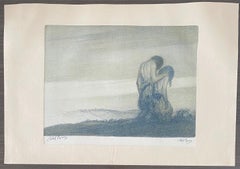
Abel Pann Israeli Bezalel School Lithograph Judaica Biblical Print Jewish Art
By Abel Pann
Located in Surfside, FL
Abel Pann (1883–1963) was a European Jewish painter who settled in the Talpiot neighborhood of Jerusalem in the early twentieth century and taught at the Bezalel Academy of Art under...
Category
Mid-20th Century Symbolist Figurative Prints
Materials
Lithograph
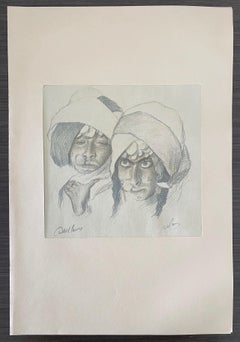
Abel Pann Israeli Bezalel School Lithograph Judaica Biblical Print Jewish Art
By Abel Pann
Located in Surfside, FL
Abel Pann (1883–1963) was a European Jewish painter who settled in the Talpiot neighborhood of Jerusalem in the early twentieth century and taught at the Bezalel Academy of Art under...
Category
Mid-20th Century Symbolist Figurative Prints
Materials
Lithograph
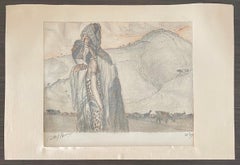
Abel Pann Israeli Bezalel School Lithograph Judaica Biblical Print Jewish Art
By Abel Pann
Located in Surfside, FL
Abel Pann (1883–1963) was a European Jewish painter who settled in the Talpiot neighborhood of Jerusalem in the early twentieth century and taught at the Bezalel Academy of Art under...
Category
Mid-20th Century Symbolist Figurative Prints
Materials
Lithograph
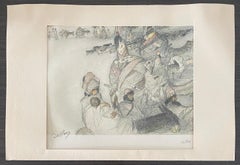
Abel Pann Israeli Bezalel School Lithograph Judaica Biblical Print Jewish Art
By Abel Pann
Located in Surfside, FL
Abel Pann (1883–1963) was a European Jewish painter who settled in the Talpiot neighborhood of Jerusalem in the early twentieth century and taught at the Bezalel Academy of Art under...
Category
Mid-20th Century Symbolist Figurative Prints
Materials
Lithograph
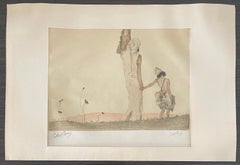
Abel Pann Israeli Bezalel School Lithograph Judaica Biblical Print Jewish Art
By Abel Pann
Located in Surfside, FL
Abel Pann (1883–1963) was a European Jewish painter who settled in the Talpiot neighborhood of Jerusalem in the early twentieth century and taught at the Bezalel Academy of Art under...
Category
Mid-20th Century Symbolist Figurative Prints
Materials
Lithograph
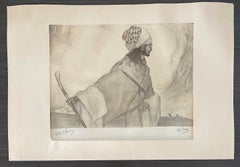
Abel Pann Israeli Bezalel School Lithograph Judaica Biblical Print Jewish Art
By Abel Pann
Located in Surfside, FL
Abel Pann (1883–1963) was a European Jewish painter who settled in the Talpiot neighborhood of Jerusalem in the early twentieth century and taught at the Bezalel Academy of Art under...
Category
Mid-20th Century Symbolist Figurative Prints
Materials
Lithograph
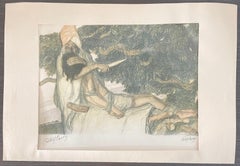
Abel Pann Israeli Bezalel School Lithograph Judaica Biblical Print Jewish Art
By Abel Pann
Located in Surfside, FL
Abel Pann (1883–1963) was a European Jewish painter who settled in the Talpiot neighborhood of Jerusalem in the early twentieth century and taught at the Bezalel Academy of Art under...
Category
Mid-20th Century Symbolist Figurative Prints
Materials
Lithograph
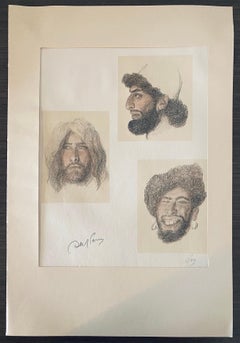
Abel Pann Israeli Bezalel School Lithograph Judaica Biblical Print Jewish Art
By Abel Pann
Located in Surfside, FL
Abel Pann (1883–1963) was a European Jewish painter who settled in the Talpiot neighborhood of Jerusalem in the early twentieth century and taught at the Bezalel Academy of Art under...
Category
Mid-20th Century Symbolist Figurative Prints
Materials
Lithograph
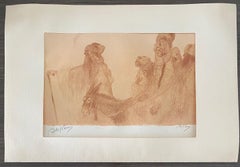
Abel Pann Israeli Bezalel School Lithograph Judaica Biblical Print Jewish Art
By Abel Pann
Located in Surfside, FL
Abel Pann (1883–1963) was a European Jewish painter who settled in the Talpiot neighborhood of Jerusalem in the early twentieth century and taught at the Bezalel Academy of Art under...
Category
Mid-20th Century Symbolist Figurative Prints
Materials
Lithograph
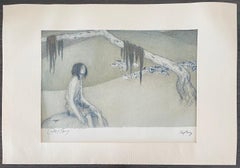
Abel Pann Israeli Bezalel School Lithograph Judaica Biblical Print Jewish Art
By Abel Pann
Located in Surfside, FL
Abel Pann (1883–1963) was a European Jewish painter who settled in the Talpiot neighborhood of Jerusalem in the early twentieth century and taught at the Bezalel Academy of Art under...
Category
Mid-20th Century Symbolist Figurative Prints
Materials
Lithograph
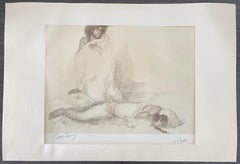
Abel Pann Israeli Bezalel School Lithograph Judaica Biblical Print Jewish Art
By Abel Pann
Located in Surfside, FL
Abel Pann (1883–1963) was a European Jewish painter who settled in the Talpiot neighborhood of Jerusalem in the early twentieth century and taught at the Bezalel Academy of Art under...
Category
Mid-20th Century Symbolist Figurative Prints
Materials
Lithograph
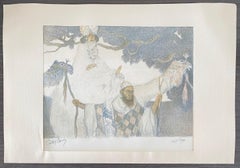
Abel Pann Israeli Bezalel School Lithograph Judaica Biblical Print Jewish Art
By Abel Pann
Located in Surfside, FL
Abel Pann (1883–1963) was a European Jewish painter who settled in the Talpiot neighborhood of Jerusalem in the early twentieth century and taught at the Bezalel Academy of Art under...
Category
Mid-20th Century Symbolist Figurative Prints
Materials
Lithograph
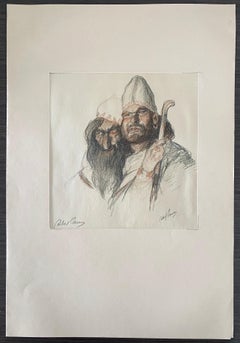
Abel Pann Israeli Bezalel School Lithograph Judaica Biblical Print Jewish Art
By Abel Pann
Located in Surfside, FL
Abel Pann (1883–1963) was a European Jewish painter who settled in the Talpiot neighborhood of Jerusalem in the early twentieth century and taught at the Bezalel Academy of Art under...
Category
Mid-20th Century Symbolist Figurative Prints
Materials
Lithograph
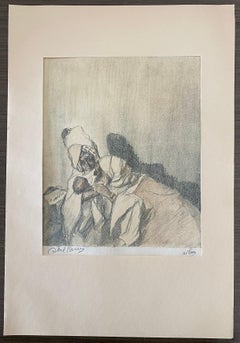
Abel Pann Israeli Bezalel School Lithograph Judaica Biblical Print Jewish Art
By Abel Pann
Located in Surfside, FL
Abel Pann (1883–1963) was a European Jewish painter who settled in the Talpiot neighborhood of Jerusalem in the early twentieth century and taught at the Bezalel Academy of Art under...
Category
Mid-20th Century Symbolist Figurative Prints
Materials
Lithograph
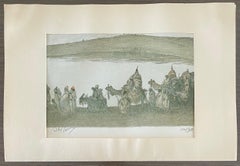
Abel Pann Israeli Bezalel School Lithograph Judaica Biblical Print Jewish Art
By Abel Pann
Located in Surfside, FL
Abel Pann (1883–1963) was a European Jewish painter who settled in the Talpiot neighborhood of Jerusalem in the early twentieth century and taught at the Bezalel Academy of Art under...
Category
Mid-20th Century Symbolist Figurative Prints
Materials
Lithograph
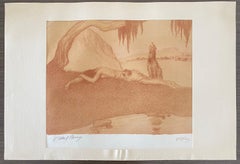
Abel Pann Israeli Bezalel School Lithograph Judaica Biblical Print Jewish Art
By Abel Pann
Located in Surfside, FL
Abel Pann (1883–1963) was a European Jewish painter who settled in the Talpiot neighborhood of Jerusalem in the early twentieth century and taught at the Bezalel Academy of Art under...
Category
Mid-20th Century Symbolist Figurative Prints
Materials
Lithograph
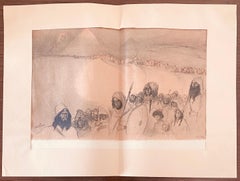
Abel Pann Israeli Bezalel School Lithograph Judaica Biblical Print Jewish Art
By Abel Pann
Located in Surfside, FL
Abel Pann (1883–1963) was a European Jewish painter who settled in the Talpiot neighborhood of Jerusalem in the early twentieth century and taught at the Bezalel Academy of Art under...
Category
Mid-20th Century Symbolist Figurative Prints
Materials
Lithograph
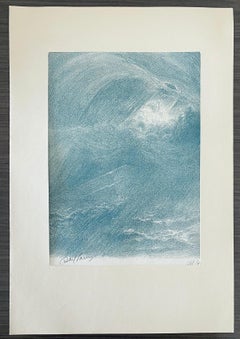
Abel Pann Israeli Bezalel School Lithograph Judaica Biblical Print Jewish Art
By Abel Pann
Located in Surfside, FL
Abel Pann (1883–1963) was a European Jewish painter who settled in the Talpiot neighborhood of Jerusalem in the early twentieth century and taught at the Bezalel Academy of Art under...
Category
Mid-20th Century Symbolist Figurative Prints
Materials
Lithograph
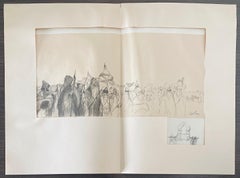
Abel Pann Israeli Bezalel School Lithograph Judaica Biblical Print Jewish Art
By Abel Pann
Located in Surfside, FL
Abel Pann (1883–1963) was a European Jewish painter who settled in the Talpiot neighborhood of Jerusalem in the early twentieth century and taught at the Bezalel Academy of Art under...
Category
Mid-20th Century Symbolist Figurative Prints
Materials
Lithograph
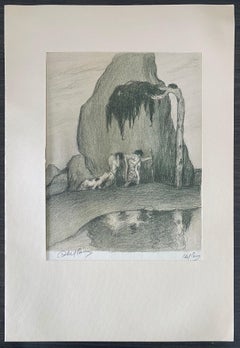
Abel Pann Israeli Bezalel School Lithograph Judaica Biblical Print Jewish Art
By Abel Pann
Located in Surfside, FL
Abel Pann (1883–1963) was a European Jewish painter who settled in the Talpiot neighborhood of Jerusalem in the early twentieth century and taught at the Bezalel Academy of Art under...
Category
Mid-20th Century Symbolist Figurative Prints
Materials
Lithograph
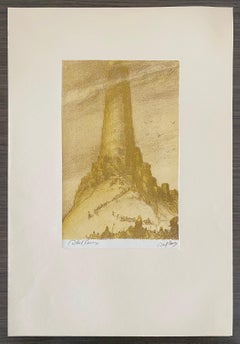
Abel Pann Israeli Bezalel School Lithograph Judaica Biblical Print Jewish Art
By Abel Pann
Located in Surfside, FL
Abel Pann (1883–1963) was a European Jewish painter who settled in the Talpiot neighborhood of Jerusalem in the early twentieth century and taught at the Bezalel Academy of Art under...
Category
Mid-20th Century Symbolist Figurative Prints
Materials
Lithograph
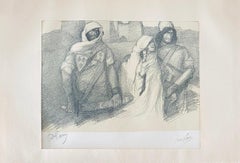
Abel Pann Israeli Bezalel School Lithograph Judaica Biblical Print Jewish Art
By Abel Pann
Located in Surfside, FL
Abel Pann (1883–1963) was a European Jewish painter who settled in the Talpiot neighborhood of Jerusalem in the early twentieth century and taught at the Bezalel Academy of Art under...
Category
Mid-20th Century Symbolist Figurative Prints
Materials
Lithograph
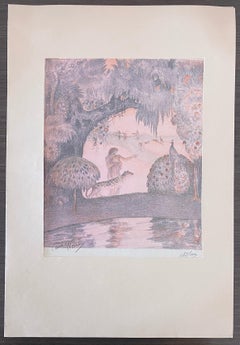
Abel Pann Israeli Bezalel School Lithograph Judaica Biblical Print Jewish Art
By Abel Pann
Located in Surfside, FL
Abel Pann (1883–1963) was a European Jewish painter who settled in the Talpiot neighborhood of Jerusalem in the early twentieth century and taught at the Bezalel Academy of Art under...
Category
Mid-20th Century Symbolist Figurative Prints
Materials
Lithograph
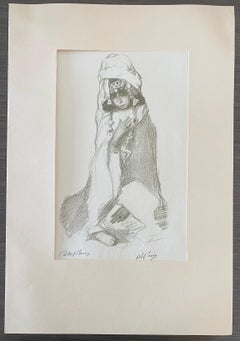
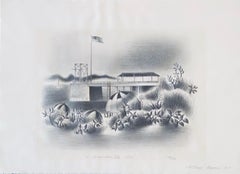
Simka Simkhovitch WPA Artist Lithograph Island Beach 1933 American Modernist
By Simka Simkhovitch
Located in Surfside, FL
Simka Simkhovitch (Russian/American 1893 - 1949) signed lithograph. Pencil signed and dated "S. Simkhovitch 1933" lower center. Title "Island Beach,"...
Category
1930s American Modern Landscape Prints
Materials
Lithograph
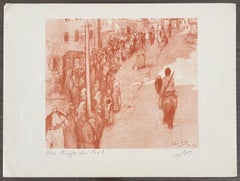
Abel Pann Israeli Bezalel School Lithograph Judaica Biblical Print Jewish Art
By Abel Pann
Located in Surfside, FL
Abel Pann (1883–1963) was a European Jewish painter who settled in the Talpiot neighborhood of Jerusalem in the early twentieth century and taught at the Bezalel Academy of Art under...
Category
Mid-20th Century Symbolist Figurative Prints
Materials
Lithograph
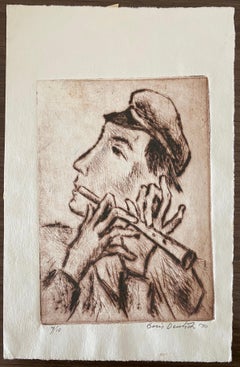
Shtetl Village Doodka Player Judaica Jewish California Modernist Artist Etching
By Boris Deutsch
Located in Surfside, FL
Boris deutsch was born in krasnagorka lithuania june 4 1892 died in los angeles 1978.Entered the polytechnic school in riga 1905.School of applied arts berlin 1912. Settled in l.A. 1...
Category
20th Century Modern Figurative Prints
Materials
Mixed Media, Watercolor
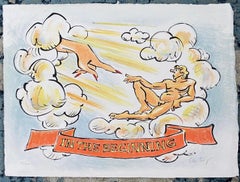
Lithograph Italian Post Modernist Figurative Pop Art - "In The Beginning"
By Sandro Chia
Located in Surfside, FL
Sandro Chia (Italian, 1946)
Children Holiday, 1984
Lithograph in colors on six sheets of Somerset soft white,
71 x 77 inches (180.3 x 195.6 cm)
Numbered A.P. 13/15 (aside from an edi...
Category
Late 20th Century Pop Art Figurative Prints
Materials
Lithograph
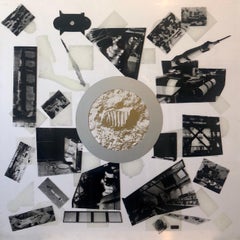
MOONWALK 1970 Color Silkscreen Screenprint Acrylic Plexiglass Mod Space Art
By Lowell Nesbitt
Located in Surfside, FL
Space Race Silkscreen on Acrylic hand signed and dated 1970, MOON WALK, color screenprint on Plexiglas depicting the moon landing, from the numbered edition of 150, size 30 x 30”
L...
Category
1970s Pop Art Abstract Prints
Materials
Plexiglass, Screen
Israeli Naive Folk Art Silkscreen Lithograph David Sharir - Bet Hamikdash Scene
By David Sharir
Located in Surfside, FL
David Sharir was born in 1938 in Tel Aviv, Israel and currently resides there.
David Sharir, the son of Russian immigrants, was born in Israel. Beginning his study of art in Tel Aviv...
Category
20th Century Folk Art Figurative Prints
Materials
Screen

Ben Shahn Original Lithograph From Portfolio - Levana
Our Ladies Of Sorrow
By Ben Shahn
Located in Surfside, FL
SCARCE EARLY WORK. BEN SHAHN
Levana and our Lady's Sorrows.
lithograph printed in sepia on Papier Ancien, 1931. 13 1/8x9 7/8 inches (sheets), full margins, loose as issued.
One of o...
Category
Mid-20th Century American Modern Figurative Prints
Materials
Lithograph
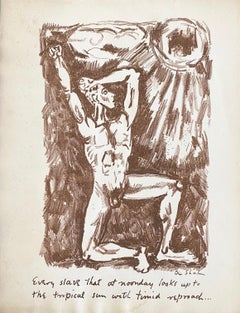
Ben Shahn Original Lithograph From Portfolio - Levana
Our Ladies Of Sorrow
By Ben Shahn
Located in Surfside, FL
SCARCE EARLY WORK. BEN SHAHN
Levana and our Lady's Sorrows.
lithograph printed in sepia on Papier Ancien, 1931. 13 1/8x9 7/8 inches (sheets), full margins, loose as issued.
One of o...
Category
Mid-20th Century American Modern Figurative Prints
Materials
Lithograph
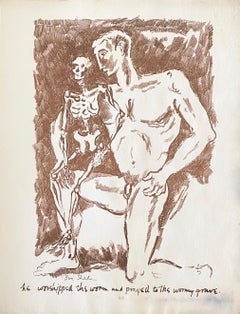
Ben Shahn Original Lithograph From Portfolio - Levana
Our Ladies Of Sorrow
By Ben Shahn
Located in Surfside, FL
SCARCE EARLY WORK. BEN SHAHN
Levana and our Lady's Sorrows.
lithograph printed in sepia on Papier Ancien, 1931. 13 1/8x9 7/8 inches (sheets), full margins, loose as issued.
One of o...
Category
Mid-20th Century American Modern Figurative Prints
Materials
Lithograph

Ben Shahn Original Lithograph From Portfolio - Levana
Our Ladies Of Sorrow
By Ben Shahn
Located in Surfside, FL
SCARCE EARLY WORK. BEN SHAHN
Levana and our Lady's Sorrows.
lithograph printed in sepia on Papier Ancien, 1931. 13 1/8x9 7/8 inches (sheets), full margins, loose as issued.
One of o...
Category
Mid-20th Century American Modern Figurative Prints
Materials
Lithograph
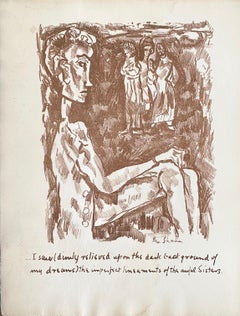
Ben Shahn Original Lithograph From Portfolio - Levana
Our Ladies Of Sorrow
By Ben Shahn
Located in Surfside, FL
SCARCE EARLY WORK. BEN SHAHN
Levana and our Lady's Sorrows.
lithograph printed in sepia on Papier Ancien, 1931. 13 1/8x9 7/8 inches (sheets), full margins, loose as issued.
One of o...
Category
Mid-20th Century American Modern Figurative Prints
Materials
Lithograph
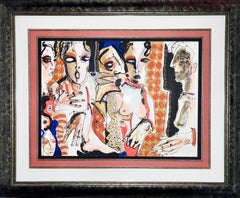
Large Mexican Figurative Expressionist Lithograph Women Juan Sebastian Barbera
Located in Surfside, FL
Juan Sebastian Barbera (Spanish, Born 1964 )
Litho on Guarro Paper
Titled : La Comision (from the Los Conjuros Suite)
Circa, 1994.
Hand signed in pencil lower right with edition size number 62 / 75.
Frame: 38" X 46"
Image: 22" X 30"
Juan Sebastián Barberá Durón Plastic artist Cd. de México 1964 Son of the great musical artist Luisa Duron, Mexican harpsichordist, daughter of pianists Jesús Durón Ruiz and Julia Crespo considered a pioneer of the movement and musical flourishing of the Renaissance and Baroque periods and the initiator of the harpsichord school in Mexico .he grew up in an almost Renaissance environment, among artists and under the main protection of the baroque music of Bach and Hotteterre, Couperin and Scarlatti , among others. Since a very young age, he had a great talent for drawing, painting and sculpture and at the age of ten he won the National School contest of art. From there on, he studied painting and engraving with significant teachers, and was dedicated in a very clear way to the plastic arts from the age of 17 years, after a mystical trip to India. He continued his studies at the academy of San Carlos...
Category
20th Century Abstract Expressionist Figurative Prints
Materials
Lithograph
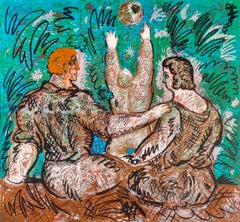
Huge 6X6 Lithograph Italian Post Modernist Figurative Pop Art Children
s Holiday
By Sandro Chia
Located in Surfside, FL
Sandro Chia (Italian, 1946)
Children Holiday, 1984
Lithograph in colors on six sheets of Somerset soft white,
71 x 77 inches (180.3 x 195.6 cm)
Numbered A.P. 13/15 (aside from an edi...
Category
1980s Pop Art Figurative Prints
Materials
Lithograph
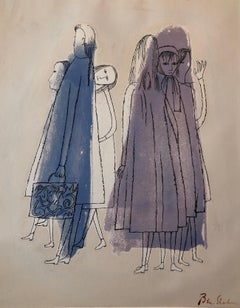
Ben Shahn Original Hand Signed Litho WPA Artist Rilke Poem Lithograph Portfolio
By Ben Shahn
Located in Surfside, FL
"To Days of Childhood That are Still Unexplained". It depicts six female silhouette figures in long dresses or coats against a blue and pastel purple background. From the Rainier Ma...
Category
1950s American Modern Figurative Prints
Materials
Lithograph
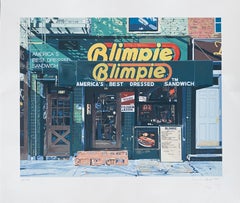
Blimpie, America
s Best Dressed Sandwich Pop Art Photo Realist Silkscreen Litho
By Charles Ford
Located in Surfside, FL
Charles Ford, American Photo Realist Pop Artist Texas Artist
Photorealism is a movement which began in the late 1960's, in which scenes are painted in a style closely resembling phot...
Category
20th Century Photorealist Landscape Prints
Materials
Screen
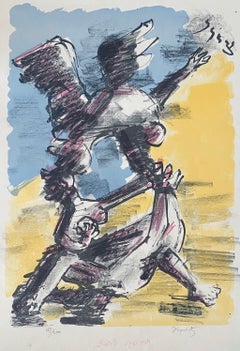
Jacques Lipchitz French Cubist Modernist Lithograph Hebrew Judaica ZIon
By Jacques Lipchitz
Located in Surfside, FL
Hand signed and numbered.
with Hebrew calligraphy "Zion"
Chaim Jacob Lipchitz, 1891-1973, was born in Lithuania and came of age in Paris during the early 20th century, where he was...
Category
1960s Modern Figurative Prints
Materials
Lithograph
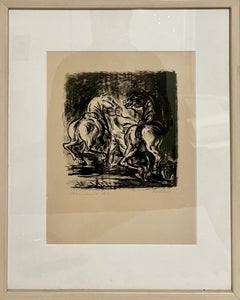
1916 German Expressionism Figurative Lithograph Man Two Horses Paul Kleinschmidt
By Paul Kleinschmidt
Located in Surfside, FL
Paul Kleinschmidt, (1883–1949)
"Man & Two Horses" Lithograph
1916
Frame: 21" X 17"
Image: 13.5" X 10.5"
Rare Artist's Proof
Provenance: bears labels from ACA Galleries and Richard ...
Category
1910s Abstract Figurative Prints
Materials
Lithograph
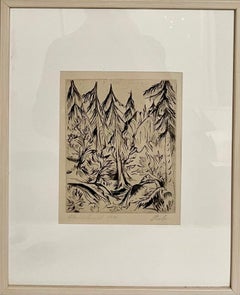
1920 German Expressionist Figurative Lithograph "The Forest" Paul Kleinschmidt
By Paul Kleinschmidt
Located in Surfside, FL
Paul Kleinschmidt, (1883–1949)
"The Forest"
Lithograph on Cream Paper
1920
Frame: 21" X 17"
Image: 10.75" X 8.5"
An expressionist forest scene with pine trees
Provenance: bears label...
Category
1920s Abstract Figurative Prints
Materials
Lithograph, Paper
1920 German Expressionist Figurative Etching Daniel with Lion Paul Kleinschmidt
By Paul Kleinschmidt
Located in Surfside, FL
Paul Kleinschmidt, (1883–1949)
"Daniel" Etching
1920
Frame: 21" X 17"
Image: 9.5" X 7.5"
Daniel in the Lions Den
Rare Artist's second proof
Provenance: bears labels from ACA Gallerie...
Category
1920s Abstract Figurative Prints
Materials
Etching
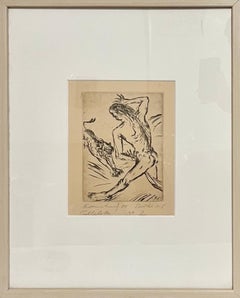
1922 German Expressionist Figurative Train Tunnel Etching Paul Kleinschmidt
By Paul Kleinschmidt
Located in Surfside, FL
Paul Kleinschmidt, (1883–1949)
"Tunnel" Etching
1922
Frame: 17" X 21"
Image: 10.5" X 13.5"
Rare Artist's Proof edition 1 of 4
An architectural study of a bridge and train tunnel
Prov...
Category
1920s Abstract Figurative Prints
Materials
Paper, Etching

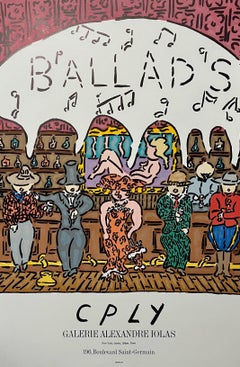
Vintage Galerie Alexandre Iolas Ballads Poster William Copley CPLY Mourlot Litho
Located in Surfside, FL
Ballads Galerie Alexandre Iolas Poster by William N. Copley (CPLY)
New-York, Geneve, Milan, Paris
196, Boulevard Saint-Germain
William Nelson Copley (January 24, 1919 – May 7, 1996) also known as CPLY, was an American painter, writer, gallerist, collector, patron, publisher and art entrepreneur. His works as an artist have been classified as late Surrealist and precursory to Pop Art.
William N. Copley was born in New York City in 1919 to parents John and Flora Lodwell; they died shortly after in the 1919 Spanish Flu epidemic. Copley was adopted in 1921 by Ira C. Copley, the owner of sixteen newspaper companies in Chicago and San Diego. Copley was ten years old whereby the family moved to Coronado Island, California.
Copley was sent to Phillips Andover and then Yale University by his adopted parents. He was drafted in the Second World War in the middle of his education at Yale, a decision negotiated by the school and the army. Copley experimented with politics upon returning home from the war, working as a reporter for his father's newspaper.
By 1946, Copley met and married Marjorie Doris Wead, the daughter of a test pilot for the Navy. Doris's sister was married to John Ployardt, a Canadian-born animator and narrator at Walt Disney Studios. Copley and Ployardt soon became friends and Ployardt began introducing Copley to painting and Surrealism. The two traveled to Mexico and New York, discovering art, meeting the artists behind the works, and grasping Surrealist ideas. It was during this time that Copley and Ployardt decided to open a gallery in Los Angeles to exhibit Surrealist works.
Copley and Ployardt tracked down Man Ray while living in Los Angeles. Ray then introduced them to Marcel Duchamp in New York City. There, Duchamp opened many doors for them, introducing the two to New York dealers in Surrealism. In 1948, Copley and Ployardt opened The Copley Galleries in Beverly Hills, displaying works by artists including René Magritte, Max Ernst, Yves Tanguy, Roberto Matta, Joseph Cornell, and Man Ray. Copley moved to Paris in 1949–50, leaving behind his wife and two children to continue to paint. During his time in Paris, he remained in Surrealist circles and continued to paint with a uniquely American style.
Copley's first exhibition took place in Los Angeles in 1951 at Royer's Book Shop. From there Copley participated in numerous solo and group exhibitions worldwide. In 1961, Copley was given an exhibition in Amsterdam by the Stedelijk Museum. The museum became the first public institution to add a Copley to their collection.
Copley's paintings throughout the 1950s and 60s dealt with ironic and humorous images of stereotypical American symbols like the Western saloon, cowboys, and pin-up girls combined with flags. His works during this period were often considered a combination of American and Mexican folk art and melded in well with the new young POP movement occurring in America when he returned to New York in the 1960s. Artists like Andy Warhol, Christo, Roy Lichtenstein and many others were frequent visitors at Copley's studio on Lower Broadway. Copley believed that pop art had always interested him, claiming American pop art had much to do with "self-disgust" and "satire."
In 1967, after a divorce with his second wife, Noma, Copley and new friend Dmitri Petrov decided to publish portfolios of 20th-century artist collaborations with the abbreviation SMS (for "Shit Must Stop"). Copley's Upper West Side loft became a meeting place for performers, artists, curators, and composers to work together on the open-ended collective. The SMS portfolio...
Category
20th Century Abstract Figurative Prints
Materials
Paper, Lithograph, Offset
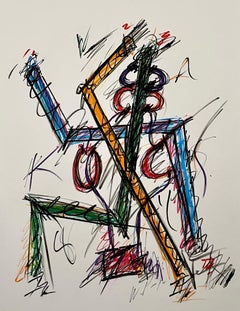
1981 American Post Minimalist Abstract Art Lithograph Neon Series Keith Sonnier
By Keith Sonnier
Located in Surfside, FL
Keith Sonnier, American (1941-2020)
lithograph
From Neon series
circa 1980-1981
Bears the Waterstreet Press watermarks and Arches paper blind stamp to lower right corner. Pub. Edizioni Lucio Amelio
Hand signed with initials in pencil
Dimensions: 30 x 21 3/4 inches
Post minimalist Abstract by Keith Sonnier
Keith Sonnier (1941 – 2020) was a post minimalist sculptor, performance artist, video and light artist. Sonnier was one of the first artists to use light in sculpture in the 1960s. With his use of neon in combination with ephemeral materials he achieved international recognition. Sonnier was part of the Process Art movement.
James Keith Sonnier was born July 31, 1941, in Mamou, Louisiana. His family was Cajun and Roman Catholic. His father was a hardware store owner, Joseph Sonnier, and his mother was a florist and singer, Mae Ledoux. He graduated in 1963 from Southwestern Louisiana Institute (now known as the University of Louisiana at Lafayette). In 1966, he graduated with his MFA degree from Rutgers University, where he studied under Allan Kaprow, Robert Watts, and Robert Morris. After graduation from Rutgers, he moved to New York City with Jackie Winsor and some of his former classmates.
Sonnier died in Southampton, NY on July 18, 2020.
Sonnier began experimenting with neon in 1968. Neon lights became a signature material used in his sculptural works. The common materials Sonnier employed included neon and fluorescent lights; reflective materials; aluminum and copper; and glass and wires. Of the generation of James Turrell and Dan Flavin, He was also associated with the Light and Space movement, a loosely affiliated art movement related to op art, minimalism and geometric abstraction originating in Southern California in the 1960s and influenced by John McLaughlin. It is characterized by a focus on perceptual phenomena, such as light, volume and scale, and the use of materials such as glass, neon, fluorescent lights, resin and cast acrylic, often forming installations conditioned by the work's surroundings. Artists included Ron Cooper...
Category
1980s Post-Minimalist Abstract Prints
Materials
Paper, Lithograph
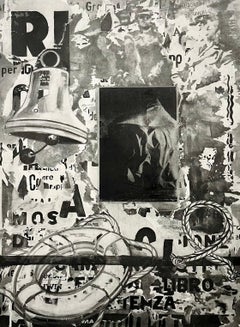
David Salle Photogravure Heliogravure "Lucky" Pictures Generation Signed Print
By David Salle
Located in Surfside, FL
DAVID SALLE (American, 1952- )
Lucky
1992
Photoengraving heliogravure on Lana paper
Edition Julie Sylvester, New York
Hand signed and dated in pencil lower right, numbered lower left...
Category
1990s Contemporary Abstract Prints
Materials
Photogravure
David Salle Photogravure Heliogravure "Lucky" Pictures Generation Signed Print
By David Salle
Located in Surfside, FL
DAVID SALLE (American, 1952- )
Lucky
1992
Photoengraving heliogravure on Lana paper
Edition Julie Sylvester, New York
Hand signed and dated in pencil lower right, numbered lower lef...
Category
1990s Contemporary Abstract Prints
Materials
Photogravure
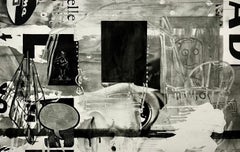
David Salle Photogravure Heliogravure "Lucky" Pictures Generation Signed Print
By David Salle
Located in Surfside, FL
DAVID SALLE (American, 1952- )
Lucky
1992
Photoengraving heliogravure on Lana paper
Edition Julie Sylvester, New York
Hand signed and dated in pencil lower right, numbered lower left...
Category
1990s Contemporary Abstract Prints
Materials
Photogravure
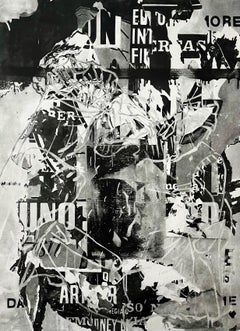
Alexander Calder Circus Reproduction Lithograph After a Drawing
By (after) Alexander Calder
Located in Surfside, FL
(after) Alexander Calder
"Calder's Circus" offset lithograph on wove paper after drawings by the artist
Published by Art in America and Perls gallery in 1964 (from drawings done in the 1930's)
these range slightly in size but they are all about 13 X 17 inches (with minor variations in size as issued.) These have never been framed. The outer folio is not included just the one lithograph.
James Sweeny from the introduction “The fame of Calder’s circus spread quickly between the years 1927 and 1930. All the Paris art world came to know it. It brought him his first great personal success. But what was more important, the circus also provided the first steps in Calder’s development as an original sculptor”
Clive Gray wrote ”A visit to the studio of Alexander Calder led to the chance discovery of some hundred masterful circus drawings completed over thirty years ago. We publish, for the first time, a choice of sixteen from that group.” With signed introduction by Miro.
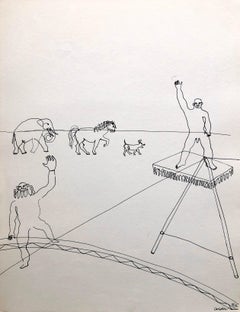
These whimsical drawings, done in the style of wire sculpture, include acrobats, clowns, jugglers, trapeeze artists, an elephant, dog and lion. they are great.
Alexander Calder is widely considered to be one of the most important American sculptors of the 20th century. He is best known for his colorful, whimsical abstract public sculptures and his innovative mobiles, kinetic sculptures powered by motors or air currents, which embraced chance in their aesthetic. Born into a family of accomplished artists, Calder's work first gained attention in Paris in the 1930s and was soon championed by the Museum of Modern Art in New York, resulting in a retrospective exhibition in 1943. Major retrospectives were also held at the Solomon R. Guggenheim Museum (1964) and the Museum of Contemporary Art, Chicago (1974). Calder’s work is in many permanent collections, most notably in the Whitney Museum of American Art, but also the Guggenheim Museum; the Museum of Modern Art; the National Gallery of Art, Washington, D.C.; and the Centre Georges Pompidou. He produced many large public works, including .125 (at JFK Airport, 1957), Pittsburgh (Carnegie International prize winner 1958, Pittsburgh International Airport) Spirale (UNESCO in Paris, 1958), Flamingo and Universe (both in Chicago, 1974), and Mountains and Clouds (Hart Senate Office Building, Washington, D.C., 1976). Although primarily known for his sculpture, Calder was a prodigious artist with a restless creative spirit, whose diverse practice included painting and printmaking, miniatures (such as his famous Cirque Calder), children’s book illustrations, theater set design, jewelry design, tapestry and rug works, and political posters. Calder was honored by the US Postal Service with a set of five 32-cent stamps in 1998, and received the Presidential Medal of Freedom, posthumously in 1977, after refusing to receive it from Gerald Ford one year earlier in protest of the Vietnam War.
Calder moved to New York and enrolled at the Art Students League, studying briefly with Thomas Hart Benton, George Luks, Kenneth Hayes Miller, and John Sloan. While a student, he worked for the National Police Gazette where, in 1925, one of his assignments was sketching the Ringling Bros. and Barnum & Bailey Circus. Calder became fascinated with the action of the circus, a theme that would reappear in his later work.
In 1926, Calder moved to Paris, enrolled in the Académie de la Grande Chaumière, and established a studio at 22 rue Daguerre in the Montparnasse Quarter. In June 1929, while traveling by boat from Paris to New York, Calder met his future wife, Louisa James (1905-1996), grandniece of author Henry James and philosopher William James. They married in 1931. While in Paris, Calder met and became friends with a number of avant-garde artists, including Fernand Léger, Jean Arp, and Marcel Duchamp. Cirque Calder (on view at the Whitney Museum of American Art at present) became popular with the Parisian avant-garde. He also invented wire sculpture, or "drawing in space," and in 1929 he had his first solo show of these sculptures in Paris at Galerie Billiet. Hi! (Two Acrobats) in the collection of the Honolulu Museum of Art is an early example of the artist's wire sculpture. The painter Jules Pascin, a friend of Calder's from the cafes of Montparnasse, wrote the preface to the catalog. A visit to Piet Mondrian's studio in 1930, where he was impressed by the environment-as-installation, "shocked" him into fully embracing abstract art, toward which he had already been tending.
Dating from 1931, Calder’s sculptures of discrete movable parts powered by motors were christened “mobiles” by Marcel Duchamp, a French pun meaning both "motion" and "motive." At the same time, Calder was also experimenting with self-supporting, static, abstract sculptures, dubbed "stabiles" by Jean Arp in 1932 to differentiate them from mobiles.
Public commissions increasingly came his way in the 1960s. Notable examples are .125 for JFK Airport in 1957, Spirale for UNESCO in Paris 1958 and Trois disques, commissioned for Expo 67 in Montreal, Quebec, Canada. Calder's largest sculpture at 25.7 meters high was El Sol Rojo, constructed outside the Aztec Stadium for the 1968 Summer Olympics "Cultural Olympiad" events in Mexico City. Many of his public works were commissioned by renowned architects; I.M. Pei commissioned his La Grande Voile (1966), a 25-ton, 40-foot high stabile for the Massachusetts Institute of Technology.
Part of Calder's repertoire includes pivotal stage sets for more than a dozen theatrical productions, including Nucléa, Horizon, and most notably, Martha Graham’s Panorama (1935), a production of the Erik Satie symphonic drama Socrate (1936), and later, Works in Progress (1968).
In addition to sculptures, Calder painted throughout his career, beginning in the early 1920s. He picked up his study of printmaking in 1925, and continued to produce illustrations for books and journals.As Calder’s professional reputation expanded in the late 1940s and 1950s, so did his production of prints. Masses of lithographs based on his gouache paintings hit the market, and deluxe editions of plays, poems, and short stories illustrated with fine art prints by Calder became available for sale.
One of Calder's most celebrated and unconventional undertakings was a commission from Dallas-based Braniff International Airways to paint a full-size Douglas DC-8-62 four-engined jet as a "flying canvas."
Calder created over 2,000 pieces of jewelry over the course of his career, many of them as gifts for friends and relatives. For his lifelong friend Joan Miró, he set a shard of a broken porcelain vessel in a brass ring. Peggy Guggenheim received enormous silver mobile earrings and later commissioned a hammered silver headboard...
Category
1930s American Modern Animal Prints
Materials
Lithograph
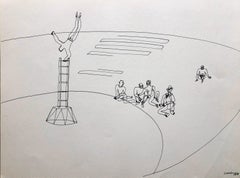
Alexander Calder Circus Reproduction Lithograph of a Drawing
By (after) Alexander Calder
Located in Surfside, FL
(after) Alexander Calder
"Calder's Circus" offset lithograph on wove paper a reproduction lithograph after the drawings by the artist
Published by Art in America and Perls gallery in 1964 (from drawings done in the 1930's)
these range slightly in size but they are all about 13 X 17 inches (with minor variations in size as issued.) These have never been framed. The outer folio is not included just the one lithograph.
James Sweeny from the introduction “The fame of Calder’s circus spread quickly between the years 1927 and 1930. All the Paris art world came to know it. It brought him his first great personal success. But what was more important, the circus also provided the first steps in Calder’s development as an original sculptor”
Clive Gray wrote ”A visit to the studio of Alexander Calder led to the chance discovery of some hundred masterful circus drawings completed over thirty years ago. We publish, for the first time, a choice of sixteen from that group.” With signed introduction by Miro.
These whimsical drawings, done in the style of wire sculpture, include acrobats, clowns, jugglers, trapeeze artists, an elephant, dog and lion. they are great.
Alexander Calder is widely considered to be one of the most important American sculptors of the 20th century. He is best known for his colorful, whimsical abstract public sculptures and his innovative mobiles, kinetic sculptures powered by motors or air currents, which embraced chance in their aesthetic. Born into a family of accomplished artists, Calder's work first gained attention in Paris in the 1930s and was soon championed by the Museum of Modern Art in New York, resulting in a retrospective exhibition in 1943. Major retrospectives were also held at the Solomon R. Guggenheim Museum (1964) and the Museum of Contemporary Art, Chicago (1974). Calder’s work is in many permanent collections, most notably in the Whitney Museum of American Art, but also the Guggenheim Museum; the Museum of Modern Art; the National Gallery of Art, Washington, D.C.; and the Centre Georges Pompidou. He produced many large public works, including .125 (at JFK Airport, 1957), Pittsburgh (Carnegie International prize winner 1958, Pittsburgh International Airport) Spirale (UNESCO in Paris, 1958), Flamingo and Universe (both in Chicago, 1974), and Mountains and Clouds (Hart Senate Office Building, Washington, D.C., 1976). Although primarily known for his sculpture, Calder was a prodigious artist with a restless creative spirit, whose diverse practice included painting and printmaking, miniatures (such as his famous Cirque Calder), children’s book illustrations, theater set design, jewelry design, tapestry and rug works, and political posters. Calder was honored by the US Postal Service with a set of five 32-cent stamps in 1998, and received the Presidential Medal of Freedom, posthumously in 1977, after refusing to receive it from Gerald Ford one year earlier in protest of the Vietnam War.
Calder moved to New York and enrolled at the Art Students League, studying briefly with Thomas Hart Benton, George Luks, Kenneth Hayes Miller, and John Sloan. While a student, he worked for the National Police Gazette where, in 1925, one of his assignments was sketching the Ringling Bros. and Barnum & Bailey Circus. Calder became fascinated with the action of the circus, a theme that would reappear in his later work.
In 1926, Calder moved to Paris, enrolled in the Académie de la Grande Chaumière, and established a studio at 22 rue Daguerre in the Montparnasse Quarter. In June 1929, while traveling by boat from Paris to New York, Calder met his future wife, Louisa James (1905-1996), grandniece of author Henry James and philosopher William James. They married in 1931. While in Paris, Calder met and became friends with a number of avant-garde artists, including Fernand Léger, Jean Arp, and Marcel Duchamp. Cirque Calder (on view at the Whitney Museum of American Art at present) became popular with the Parisian avant-garde. He also invented wire sculpture, or "drawing in space," and in 1929 he had his first solo show of these sculptures in Paris at Galerie Billiet. Hi! (Two Acrobats) in the collection of the Honolulu Museum of Art is an early example of the artist's wire sculpture. The painter Jules Pascin, a friend of Calder's from the cafes of Montparnasse, wrote the preface to the catalog. A visit to Piet Mondrian's studio in 1930, where he was impressed by the environment-as-installation, "shocked" him into fully embracing abstract art, toward which he had already been tending.
Dating from 1931, Calder’s sculptures of discrete movable parts powered by motors were christened “mobiles” by Marcel Duchamp, a French pun meaning both "motion" and "motive." At the same time, Calder was also experimenting with self-supporting, static, abstract sculptures, dubbed "stabiles" by Jean Arp in 1932 to differentiate them from mobiles.
Public commissions increasingly came his way in the 1960s. Notable examples are .125 for JFK Airport in 1957, Spirale for UNESCO in Paris 1958 and Trois disques, commissioned for Expo 67 in Montreal, Quebec, Canada. Calder's largest sculpture at 25.7 meters high was El Sol Rojo, constructed outside the Aztec Stadium for the 1968 Summer Olympics "Cultural Olympiad" events in Mexico City. Many of his public works were commissioned by renowned architects; I.M. Pei commissioned his La Grande Voile (1966), a 25-ton, 40-foot high stabile for the Massachusetts Institute of Technology.
Part of Calder's repertoire includes pivotal stage sets for more than a dozen theatrical productions, including Nucléa, Horizon, and most notably, Martha Graham’s Panorama (1935), a production of the Erik Satie symphonic drama Socrate (1936), and later, Works in Progress (1968).
In addition to sculptures, Calder painted throughout his career, beginning in the early 1920s. He picked up his study of printmaking in 1925, and continued to produce illustrations for books and journals.As Calder’s professional reputation expanded in the late 1940s and 1950s, so did his production of prints. Masses of lithographs based on his gouache paintings hit the market, and deluxe editions of plays, poems, and short stories illustrated with fine art prints by Calder became available for sale.
One of Calder's most celebrated and unconventional undertakings was a commission from Dallas-based Braniff International Airways to paint a full-size Douglas DC-8-62 four-engined jet as a "flying canvas."
Calder created over 2,000 pieces of jewelry over the course of his career, many of them as gifts for friends and relatives. For his lifelong friend Joan Miró, he set a shard of a broken porcelain vessel in a brass ring. Peggy Guggenheim received enormous silver mobile earrings and later commissioned a hammered silver headboard...
Category
1930s American Modern Animal Prints
Materials
Lithograph
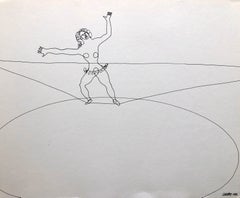
Alexander Calder Circus Reproduction Lithograph After a Drawing
By (after) Alexander Calder
Located in Surfside, FL
(after) Alexander Calder
"Calder's Circus" offset lithograph on wove paper after drawings by the artist
Published by Art in America and Perls gallery in 1964 (from drawings done in the 1930's)
these range slightly in size but they are all about 13 X 17 inches (with minor variations in size as issued.) These have never been framed. The outer folio is not included just the one lithograph.
James Sweeny from the introduction “The fame of Calder’s circus spread quickly between the years 1927 and 1930. All the Paris art world came to know it. It brought him his first great personal success. But what was more important, the circus also provided the first steps in Calder’s development as an original sculptor”
Clive Gray wrote ”A visit to the studio of Alexander Calder led to the chance discovery of some hundred masterful circus drawings completed over thirty years ago. We publish, for the first time, a choice of sixteen from that group.” With signed introduction by Miro.
These whimsical drawings, done in the style of wire sculpture, include acrobats, clowns, jugglers, trapeeze artists, an elephant, dog and lion. they are great.
Alexander Calder is widely considered to be one of the most important American sculptors of the 20th century. He is best known for his colorful, whimsical abstract public sculptures and his innovative mobiles, kinetic sculptures powered by motors or air currents, which embraced chance in their aesthetic. Born into a family of accomplished artists, Calder's work first gained attention in Paris in the 1930s and was soon championed by the Museum of Modern Art in New York, resulting in a retrospective exhibition in 1943. Major retrospectives were also held at the Solomon R. Guggenheim Museum (1964) and the Museum of Contemporary Art, Chicago (1974). Calder’s work is in many permanent collections, most notably in the Whitney Museum of American Art, but also the Guggenheim Museum; the Museum of Modern Art; the National Gallery of Art, Washington, D.C.; and the Centre Georges Pompidou. He produced many large public works, including .125 (at JFK Airport, 1957), Pittsburgh (Carnegie International prize winner 1958, Pittsburgh International Airport) Spirale (UNESCO in Paris, 1958), Flamingo and Universe (both in Chicago, 1974), and Mountains and Clouds (Hart Senate Office Building, Washington, D.C., 1976). Although primarily known for his sculpture, Calder was a prodigious artist with a restless creative spirit, whose diverse practice included painting and printmaking, miniatures (such as his famous Cirque Calder), children’s book illustrations, theater set design, jewelry design, tapestry and rug works, and political posters. Calder was honored by the US Postal Service with a set of five 32-cent stamps in 1998, and received the Presidential Medal of Freedom, posthumously in 1977, after refusing to receive it from Gerald Ford one year earlier in protest of the Vietnam War.
Calder moved to New York and enrolled at the Art Students League, studying briefly with Thomas Hart Benton, George Luks, Kenneth Hayes Miller, and John Sloan. While a student, he worked for the National Police Gazette where, in 1925, one of his assignments was sketching the Ringling Bros. and Barnum & Bailey Circus. Calder became fascinated with the action of the circus, a theme that would reappear in his later work.
In 1926, Calder moved to Paris, enrolled in the Académie de la Grande Chaumière, and established a studio at 22 rue Daguerre in the Montparnasse Quarter. In June 1929, while traveling by boat from Paris to New York, Calder met his future wife, Louisa James (1905-1996), grandniece of author Henry James and philosopher William James. They married in 1931. While in Paris, Calder met and became friends with a number of avant-garde artists, including Fernand Léger, Jean Arp, and Marcel Duchamp. Cirque Calder (on view at the Whitney Museum of American Art at present) became popular with the Parisian avant-garde. He also invented wire sculpture, or "drawing in space," and in 1929 he had his first solo show of these sculptures in Paris at Galerie Billiet. Hi! (Two Acrobats) in the collection of the Honolulu Museum of Art is an early example of the artist's wire sculpture. The painter Jules Pascin, a friend of Calder's from the cafes of Montparnasse, wrote the preface to the catalog. A visit to Piet Mondrian's studio in 1930, where he was impressed by the environment-as-installation, "shocked" him into fully embracing abstract art, toward which he had already been tending.
Dating from 1931, Calder’s sculptures of discrete movable parts powered by motors were christened “mobiles” by Marcel Duchamp, a French pun meaning both "motion" and "motive." At the same time, Calder was also experimenting with self-supporting, static, abstract sculptures, dubbed "stabiles" by Jean Arp in 1932 to differentiate them from mobiles.
Public commissions increasingly came his way in the 1960s. Notable examples are .125 for JFK Airport in 1957, Spirale for UNESCO in Paris 1958 and Trois disques, commissioned for Expo 67 in Montreal, Quebec, Canada. Calder's largest sculpture at 25.7 meters high was El Sol Rojo, constructed outside the Aztec Stadium for the 1968 Summer Olympics "Cultural Olympiad" events in Mexico City. Many of his public works were commissioned by renowned architects; I.M. Pei commissioned his La Grande Voile (1966), a 25-ton, 40-foot high stabile for the Massachusetts Institute of Technology.
Part of Calder's repertoire includes pivotal stage sets for more than a dozen theatrical productions, including Nucléa, Horizon, and most notably, Martha Graham’s Panorama (1935), a production of the Erik Satie symphonic drama Socrate (1936), and later, Works in Progress (1968).
In addition to sculptures, Calder painted throughout his career, beginning in the early 1920s. He picked up his study of printmaking in 1925, and continued to produce illustrations for books and journals.As Calder’s professional reputation expanded in the late 1940s and 1950s, so did his production of prints. Masses of lithographs based on his gouache paintings hit the market, and deluxe editions of plays, poems, and short stories illustrated with fine art prints by Calder became available for sale.
One of Calder's most celebrated and unconventional undertakings was a commission from Dallas-based Braniff International Airways to paint a full-size Douglas DC-8-62 four-engined jet as a "flying canvas."
Calder created over 2,000 pieces of jewelry over the course of his career, many of them as gifts for friends and relatives. For his lifelong friend Joan Miró, he set a shard of a broken porcelain vessel in a brass ring. Peggy Guggenheim received enormous silver mobile earrings and later commissioned a hammered silver headboard...
Category
1930s American Modern Animal Prints
Materials
Lithograph
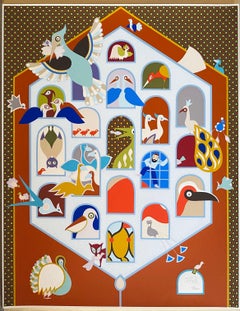
Israeli Naive Folk Art Birdhouse Silkscreen Lithograph David Sharir Birds
By David Sharir
Located in Surfside, FL
David Sharir was born in 1938 in Tel Aviv, Israel and currently resides there.
David Sharir, the son of Russian immigrants, was born in Israel. Beginning his study of art in Tel Aviv...
Category
20th Century Folk Art Figurative Prints
Materials
Screen