Sylvie Tiago
to
65
48
30
30
28
16
15
8
6
5
5
2
2
2
2
1
1
1
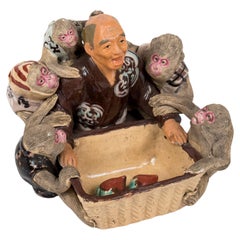
Japanese Sumida-Gawa sculpture of a man distributing peaches to its monkeys
Located in PARIS, FR
Polychrome sculpture in Sumida-gawa stoneware, also called Sumida-yaki, representing an old man surrounded by five monkeys in front of a basket containing two nuts. Glazed clothes an...
Category
Antique Late 19th Century Japanese Meiji Ceramics
Materials
Enamel
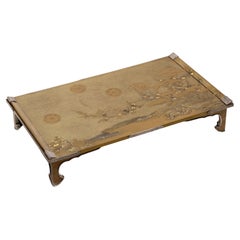
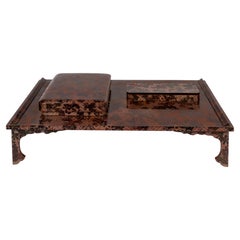
Japanese Bundai or writting table in gold lacquer with a decor of lake landscape
Located in PARIS, FR
Rectangular bundai writing table on four legs in gold lacquer with black highlights on a nashi-ji background. The top is decorated with a lake landscape with plum trees, pine trees a...
Category
Antique Early 18th Century Japanese Edo Lacquer
Materials
Gold, Bronze
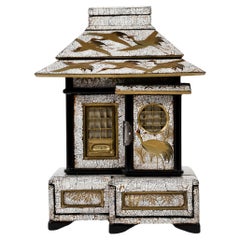
Japanese tea house in rankanku or eggshell lacquer with a decor of gold crane
Located in PARIS, FR
Miniature tea house with a crane and bamboo motif in black and gold takamaki-e lacquer on a rankaku (eggshell inlay) base. It has several compartments and trays on the roof, walls an...
Category
Antique Late 19th Century Japanese Meiji Lacquer
Materials
Gold
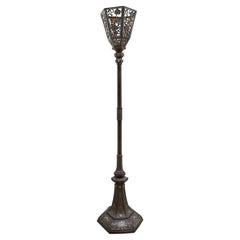
Japanese lantern in cast iron decorated with colourfull enameled champleve.
Located in PARIS, FR
Tall hexagonal lantern in bronze with a blue, red and green enamel openwork with stylized lotus flower motives. The shaft has a nice brown patina. The base is decorated with taotie m...
Category
Early 20th Century Chinese Metalwork
Materials
Bronze, Enamel
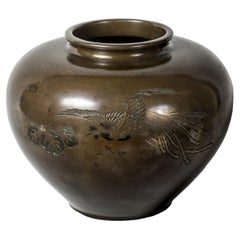
Japanese Bronze Vase decorated with a Phoenix and paulownia leaves
Located in PARIS, FR
Patinated bronze vase decorated with a flying phenix and paulownia leaves. The phoenix has imperial and solar symbolism. This bird of good omen also embodies virtues from the teaching of Confucius (such as goodness, righteousness, and wisdom). Paulownia (kiri) is considered as a symbol of nobility, honor and longevity. Since the Edo era, there has been a tradition that paulownia is planted at the birth of a daughter to be used later as a material for making items that will be part of her dowry. Its wood is ideal for chests and kimono boxes...
Category
20th Century Japanese Showa Metalwork
Materials
Bronze
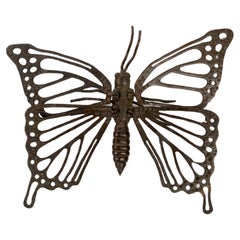
Articulated iron sculpture or Jizai (articulated) in the form of a butterfly
Located in PARIS, FR
Fine iron jizai of an articulated butterfly with fascinating openwork on its wings. In 1876, the Haitōrei decree was proclaimed, prohibiting the use of swords by anyone other than th...
Category
Antique Late 19th Century Japanese Meiji Metalwork
Materials
Bronze
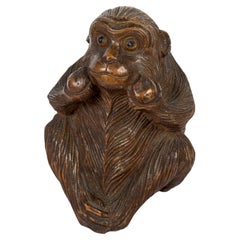
Japanese bamboo sculpture of a Monkey holding Longevity Peaches in its two hands
Located in PARIS, FR
Chiseled wood sculpture representing a seated monkey holding peaches of longevity in his hands. The impression of the fur is quite realistic, and its e...
Category
Antique Late 19th Century Japanese Meiji Sculptures and Carvings
Materials
Bamboo
Japanese writting set in waqasa lacquer including bundai ryoshibako and fudebako
Located in PARIS, FR
Set of bundai, ryōshibako and fudebako in wakasa lacquer with an old rose background and black traditional Japanese patterns.
The saya pattern (or sayagata) is composed by Chinese svastikas. This symbol linked to Buddhism, mean intelligence, power and peace. It is a good omen sign.
The kanoko pattern reminds stains on fawn back.
The sakura (cherry blossom) pattern is emblematic of Japan. The blossoming in a short time marks spring beginning and is a symbol of renewal and ephemeral beauty.
There are also traces of calligraphy brush, in reference to the function of the objects.
Bundai is a low table used to put books or scrolls and, later, to write.
Rectangular ryōshibako (letter and document box) with a slightly domed
Fudebako (pencil case) of rectangular format very narrow in its length with two rounded corners, flat cover.
Wakasa lacquerware...
Category
Early 20th Century Japanese Taisho Lacquer
Materials
Lacquer
Japanese Ikebana or hanakago flower basket in bamboo
Located in PARIS, FR
Dark brown bamboo ikebana basket with twisted handle. The breading of the wickerwork is very intricate and complex and suggests a meditative state on human work and bond to nature.
I...
Category
20th Century Japanese Showa Decorative Baskets
Materials
Bamboo
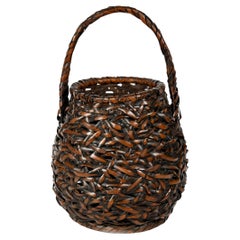
Japanese Ikebana or hanakago basket in wicker and bamboo
Located in PARIS, FR
Ikebana basket (hanakago) in wickerwork of polished bamboo with twisted handle. Features a sheet metal and varnished bamboo vase for the floral arrangement.
Mark under the vase Nana...
Category
20th Century Japanese Showa Decorative Baskets
Materials
Bamboo, Wicker
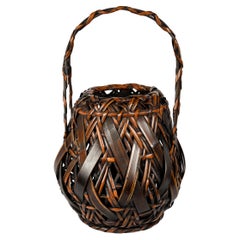
Japanese Ikebana or hanakago wicker basket of elongated and conic shape
Located in PARIS, FR
Ikebana basket (hanakago) made of bamboo wickerwork of elongated cylindrical and conic shape. Accompanied by a natural bamboo vase and a carrying box.
Nakata Kinseki (1902-1959)
Japa...
Category
Mid-20th Century Japanese Showa Decorative Baskets
Materials
Bamboo, Wicker
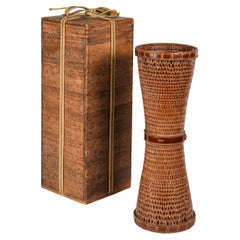
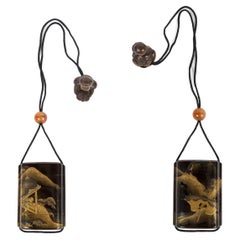
Japanese inro of the edo period adorned with a landscape houses near a lake
Located in PARIS, FR
Inrō with four gold lacquer compartments, decorated with a lake landscape. Accompanied by a bronze ryusa manju.
Small boxes formed of compartments that fit one on top of the other, i...
Category
Antique Late 18th Century Japanese Edo Lacquer
Materials
Gold
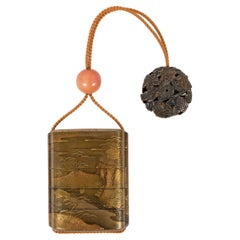
Japanese inro box in black and gold lacquer with a decor of snowy landscape
Located in PARIS, FR
Inrō with four boxes in black and gold lacquer, representing a person in a pavilion in a snowy landscape with mountain on the background. Realised in maki-e on black lacquer with sma...
Category
Antique Late 18th Century Japanese Edo Lacquer
Materials
Gold
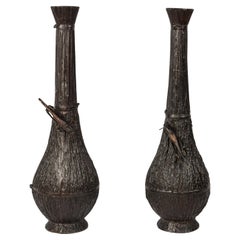
Pair of japanese bronze vase imitating hay and decorated with a grass hopper
Located in PARIS, FR
Detailed pair of vases in bronze of baluster form, textured to represent straws of hay, bound together by three knots that divide each vase in three, just under le second ring, a well detailed grasshopper is detached from the rest of the composition.
Insects (mushi) occupy an important place in Japanese culture. Hunting for insects is a popular pastime, especially among children. Using plastic nets and cages, they catch cicadas and beetles to observe them.
Between 1830 and 1832, Hokusai composed an untitled series of ten large horizontal prints...
Category
Antique Late 19th Century Japanese Meiji Metalwork
Materials
Bronze
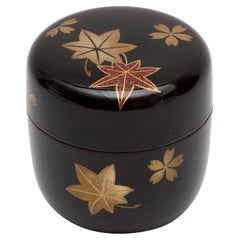
Japanese Natsume or tea box adorned with mapple leaves and sakure flowers
Located in PARIS, FR
Natsume in dark red lacquer, decorated with autumn leaves and cherry blossoms in hiramaki-e and nashiji. Interior in black lacquer.
Maple leaves (Momiji) are celebrated in literature...
Category
Early 20th Century Japanese Taisho Lacquer
Materials
Gold
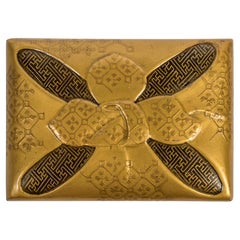
Japanese Kobako box in the form of a furoshiki present in gold and black lacquer
Located in PARIS, FR
Rectangular and flat lacquer Kobako (small box) representing a furoshiki knot seen from above. Fundame background, furoshiki in takamaki-e with floral pattern, inside the folds of th...
Category
Antique Late 18th Century Japanese Edo Lacquer
Materials
Gold
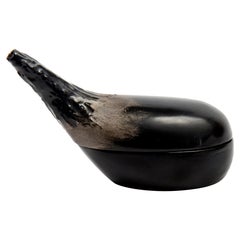
Japanese Kogo or inecens box in the form of a realistic eggplant
Located in PARIS, FR
Small lacquered wooden box in the shape of an eggplant. Top of the fruit near the leaves painted with silver pigments. Interior painted with gold pigments, signature in the center pa...
Category
20th Century Japanese Showa Lacquer
Materials
Silver
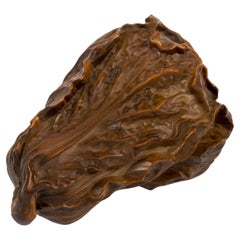
Japanese Okimono sculpture of a Chinese cabbage or Pe-Tsai realised in Boxwood
Located in PARIS, FR
Okimono of a Chinese cabbage made in boxwood. The texture and veins have been delicately detailed.
Native from China, it is an herbaceous plant of the ...
Category
Antique Late 19th Century Japanese Meiji Sculptures and Carvings
Materials
Boxwood
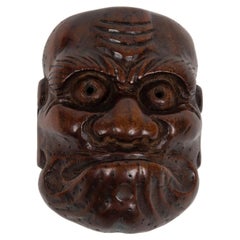
Netsuke in the form of a No mask representing the character of Obeshimi
Located in PARIS, FR
Wooden netsuke depicting the Obeshimi mask in Noh theater.
Obeshimi is a demon characterized by thick eyebrows, eyes that seem to protrude from the face and a closed mouth.
Signed ...
Category
Antique Late 19th Century Japanese Meiji Sculptures and Carvings
Materials
Boxwood
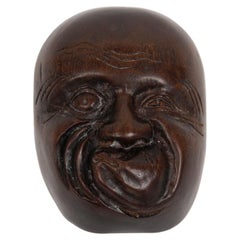
Netsuke in the form of a No mask representing the character of Hyottoko
Located in PARIS, FR
Boxwood netsuke representing the mask of Hyottoko in Noh theatre.
Hyottoko is a legendary comic character, considered to be a fire god in certain regions of north-east Japan. The sha...
Category
Antique Late 19th Century Japanese Edo Sculptures and Carvings
Materials
Boxwood
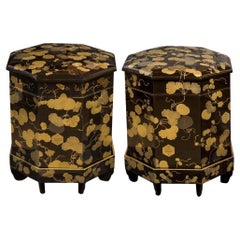
Japanese pair of kaioke boxes or Hokkaibako made of black and gold lacquer
Located in PARIS, FR
Two large eight-sided kaioke boxes in black lacquer, decorated with mon and maple leaves in golden lacquer.
These are usually octagonal boxes containing the painted shells used in ...
Category
Antique Late 19th Century Japanese Meiji Lacquer
Materials
Gold
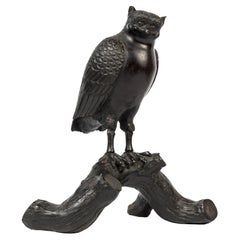
Japanese bronze incense burner in the form of an owl Signed Murata Seimin 村田製眠
Located in PARIS, FR
A bronze okimono of an owl, constructed in two sections, the short-eared owl (detachable) perched on a tree branch with its head cocked quizzically to the right and its wings folded ...
Category
Antique 18th Century Japanese Edo Metalwork
Materials
Bronze
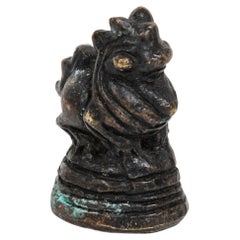
Opium Wieght in the Form of a Buddhist lion
Located in PARIS, FR
Tiny opium weight in bonze with brownish patina in the shape of a Buddhist guardian lion, also name Fo dog, characteristic with its exorbitated eyes and an embossed and wavy mane and...
Category
Antique Late 19th Century Cambodian Folk Art Metalwork
Materials
Bronze
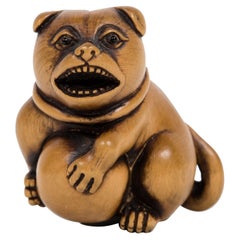
Japanese Puppy Nestuke in boxwood
Located in PARIS, FR
Netsuke in boxwood representing a puppy with incrusted eyes made of buffalo horns. Its mouth is open, as if it was barking, it also wears a knotted collar and holds a ball between it...
Category
Antique Mid-19th Century Japanese Edo Sculptures and Carvings
Materials
Boxwood
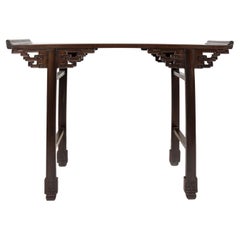
Chinese Altar or Console made of exotic wood
Located in PARIS, FR
Chinese altar also used as console or side table. Made of exotic hard wood, probably zitan, with a dark patina. It features voluptuous flared edges and spandrels carved in cloud moti...
Category
Early 20th Century Japanese Qing Furniture
Materials
Hardwood, Zitan
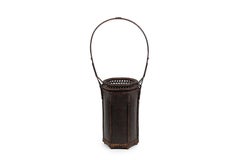
Hexagonal Japanese Ikebana Basket with an Oblong handle
Located in PARIS, FR
Hexagonal Chinese-style rattan and bamboo hanakago basket for ikebana (karamono hanakago). It features a lacquered and brushed bamboo vase.
The body is tightly braided horizontally, ...
Category
Antique Mid-19th Century Japanese Showa Decorative Baskets
Materials
Wicker
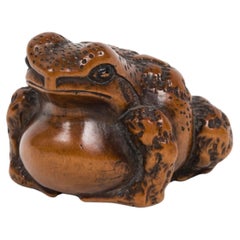
Japanese Netsuke of a croaking Toad in boxwood
Located in PARIS, FR
Netsuke of a wooden toad with its throat swollen. Made entirely in boxwood, the skin is treated with detail, the naturalistic pause suggests that the toad is croaking, the smooth tex...
Category
Antique Late 18th Century Japanese Sculptures and Carvings
Materials
Boxwood
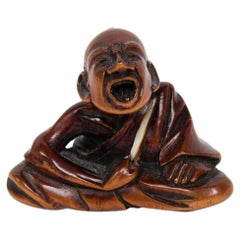
Japanese Professional sneezer Boxwood Netsuke
Located in PARIS, FR
Boxwood netsuke of a seated professional sneezer depicted as an old man with his right hand raised, holding an stick to tickle himself. His head is slightly raised, his eyes practica...
Category
Antique Late 18th Century Japanese Edo Sculptures and Carvings
Materials
Boxwood
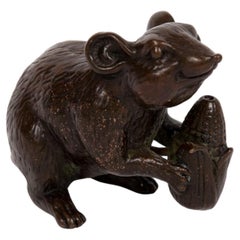
Japanese Bronze sculpture of a Mouse holding a korn knob
Located in PARIS, FR
An interesting bronze sculpture of a seated mouse holding a small corn knob. Realistic treatment of the fur, eyes, hears nose and mouth, its tail is curving on the left side of the s...
Category
Antique Late 19th Century Japanese Meiji Metalwork
Materials
Bronze
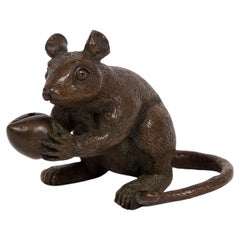
Japanese Bronze sculpture of a standing Mouse holding an Hazelnut
Located in PARIS, FR
It is a very convincing bronze sculpture of a mouse with a light brown patina, represented with an astonishing set of detail on its eyes, nose and fur. She is seated on her rear paws...
Category
Antique Late 19th Century Japanese Meiji Metalwork
Materials
Bronze
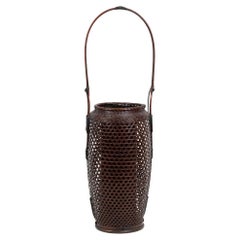
Important Japanese Ikebana basket of an Oblong form
Located in PARIS, FR
Hanakago basket for ikebana in rattan and bamboo. Oblong, rounded on the sides, it features a lacquered bamboo vase.
Rattan braiding scattered over the body, tightly woven over the ...
Category
Antique Mid-19th Century Meiji Decorative Baskets
Materials
Bamboo, Wicker
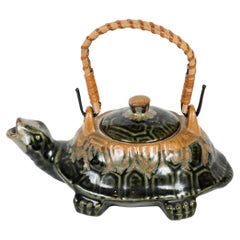
Japanese glazed Sandstone Teapot in the form of a Turtle
Located in PARIS, FR
Sandstone teapot in the shape of a turtle, the inside is enameled. The outside circumferences of the lid and the part in contact with the table are not enameled.
Japan – Taishô er...
Category
Early 20th Century Japanese Taisho Ceramics
Materials
Sandstone
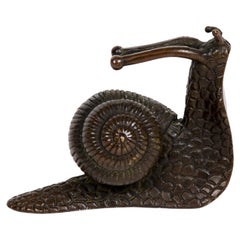
Japanese bronze of a Snail in a Naturalist Pose
Located in PARIS, FR
Bronze with a brown patina representing a snail with a very interesting pose. Its angular pose suggests that it could be exposed in such a way that he would mimic a real snail going ...
Category
Antique Late 19th Century Japanese Meiji Sculptures and Carvings
Materials
Bronze
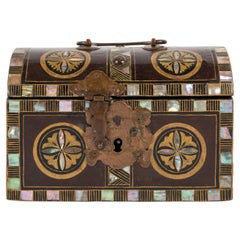
Japanese Namban Chest adorned with cylindrical motives and mother of pearl inlay
Located in PARIS, FR
Small namban style chest with a semi-cylindrical lid made of black lacquered wood (urushi) with gold lacquer (maki-e) and inlaid with mother-of-pearl (raden).
Mon style decoration (...
Category
Antique Mid-18th Century Japanese Lacquer
Materials
Lacquer, Mother-of-Pearl
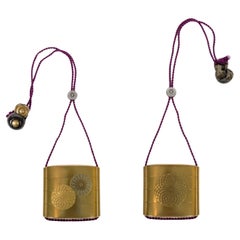
Japanese lacquered Inro chrysantemum
Located in PARIS, FR
Beautifull Inro of three compartments made in kinji lacquer with an hiro maki-e
ornament chrysanthemum flowers of gold and silver lacquer. Inside is in fundame
lacquer.
Signed by J...
Category
Antique Mid-18th Century Japanese Lacquer
Materials
Lacquer
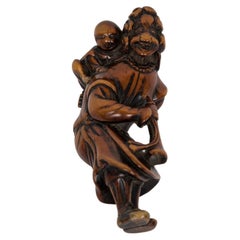
Boxwood netsuke representing a ducthman with child and a trumpet
Located in PARIS, FR
Wooden netsuke of a standing Dutchman figure with his mouth open, leaning forward. He is wearing a long curly wig, a ruff and a long coat tied at the waist. In his right hand, the ma...
Category
Antique Late 18th Century Japanese Japonisme Sculptures and Carvings
Materials
Boxwood
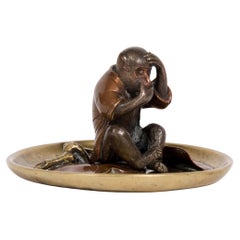
Japanese Monkey Suaka
Located in PARIS, FR
Bronze sculpture of a monkey laying on a golden brass tray adorned with copper
leaves. This sculpture is made of sentoku and shibuchi bronze with a very interesting
suaka patina.
...
Category
Antique Late 19th Century Japanese Sculptures and Carvings
Materials
Bronze

$2,136
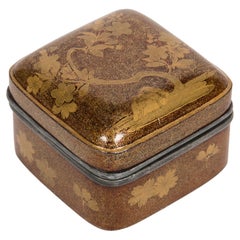
Japanese lacquered Cherry Tree Kobako
Located in PARIS, FR
Kobako in nashiji lacquer of square shape with a hira maki-e décor of a blossoming
cherry tree. Both of the four sides are adorned with golden lacquer cherry flowers,
represented i...
Category
Antique 19th Century Japanese Lacquer
Materials
Lacquer
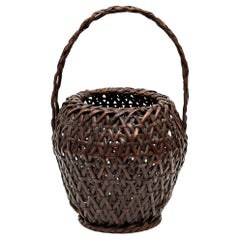
Japanese ikebana bamboo basket - Showa, 20th
Located in PARIS, FR
Ikebana basket (hanakago) in wickerwork of polished bamboo with twisted handle. Features a sheet metal and varnished bamboo vase for the floral arrangement.
Mark under the vase Nana...
Category
20th Century Japanese Japonisme Decorative Baskets
Materials
Bamboo, Wicker, Wood
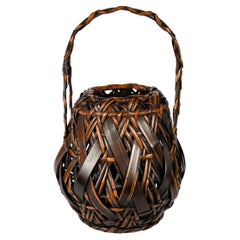
Japanese ikebana bamboo basket - Showa, 20th
Located in PARIS, FR
Ikebana basket (hanakago) made of dark brown varnished bamboo wickerwork rounded shape with a twisted handle.
Ikebana or Ka-do (the way of flowers) is a traditional Japanese art of...
Category
20th Century Japanese Japonisme Decorative Baskets
Materials
Bamboo, Wicker, Wood
Japan lake landscape kobako box lacquer - Edo
Located in PARIS, FR
Rectangular kobako box in takamaki-e and kirigane gold lacquer circled with pewter depicting a lake landscape. Inside and back of the box in nashi-ji lacquer.
Japan – Edo period (16...
Category
Antique 18th Century Japanese Lacquer
Materials
Gold
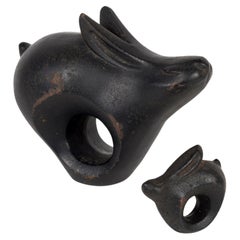
Japanese round shaped rabbits bronze pair Hiroharu Hiramatsu Showa era
By Hiroharu Hiramatsu
Located in PARIS, FR
Pair of bronze rabbits running, their legs forming a round shape.
Made by Hiroharu Hiramatsu (1896 Hyôgo prefecture – 1971, Fukushima,平松宏春). Specialized in metal art, he is a counci...
Category
Vintage 1930s Japanese Japonisme Sculptures and Carvings
Materials
Bronze
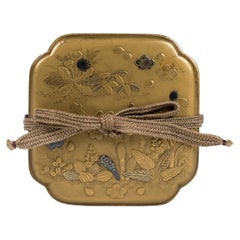
Japanese golden kobako flowers Edo period 18th century
Located in PARIS, FR
Quadrangular kobako box decorated with flowers in gold and blue lacquer with aogai inlay. Lid and sides in fundame lacquer, underside and interio...
Category
Antique 18th Century Japanese Japonisme Lacquer
Materials
Gold
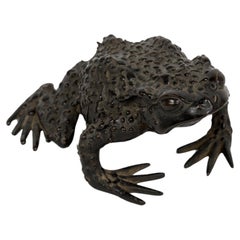
Japanese bronze okimono toad (sculpture)
Located in PARIS, FR
Okimono bronze sculpture of a large toad in a crouching position, possibly about to jump.
The toad and the frog, referred to by the same term in Japanese (kaeru), are associated with...
Category
Antique Mid-19th Century Japanese Japonisme Metalwork
Materials
Bronze
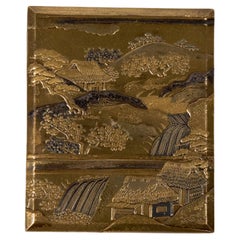
Japanese landscape pine kobako box Edo period 18th century
Located in PARIS, FR
Rectangular black and gold lacquer kobako box decorated with pine trees in a mountain landscape in takamaki-e, kirigane and hiramaki-e lacquer. Background in nashi-ji lacquer. Surmou...
Category
Antique 18th Century Japanese Lacquer
Materials
Gold
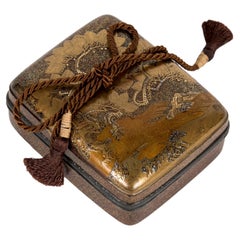
Japanese suzuribako lacquered box peony river
Located in PARIS, FR
Suzuribako box (empty) in black lacquer. Gold maki-e decoration of a river bordered by peonies, one with red highlights. The edges of the lid are in gold lacquer. Nashi-ji interior.
Category
Antique Late 19th Century Japanese Lacquer
Materials
Gold
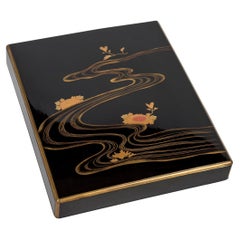
Japan chrysanthemum tsuba
Located in PARIS, FR
Iron tsuba in the shape of a chrysanthemum (kikugata), openworked in negative with foliage and geometric patterns. Chrysanthemum shaped tsuba were quite popular in the Edo period as...
Category
Antique Mid-18th Century Japanese Metalwork
Materials
Gold, Iron
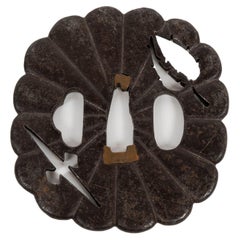
Japan medallions tsuba Tanaka school Edo period
Located in PARIS, FR
Ovoid-shaped (nagamarugata) iron tsuba hammered and chased with medallions. On one side, medallions of a dragon with gold highlights and a komainu (or shishi – lion dog guarding the ...
Category
Antique Mid-18th Century Japanese Metalwork
Materials
Gold, Iron
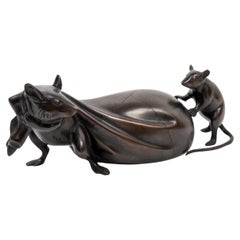
Japan mice treasure bag Meiji
Located in PARIS, FR
Japanese bronzewith brown patina representing two mice. One is pulling pulling a treasure bag. crouching down with its head turned to the left. While the other mouse is standing on i...
Category
Late 20th Century Japanese Japonisme Metalwork
Materials
Bronze
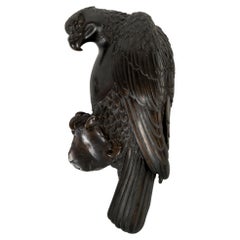
Japanese Bronze Hawk Ikebana
Located in PARIS, FR
Bronze intended for hanging (? dô kakenanaike, « hanging bronze ») depicting a hawk, placed on a branch. The inside is hollow so a bouquet a flowers can be put inside and thus, serve...
Category
Antique Late 19th Century Japanese Metalwork
Materials
Bronze
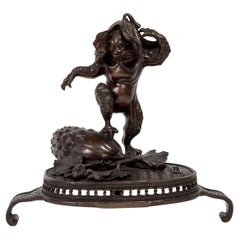
Japanese Bronze Kappa
Located in PARIS, FR
Dark brown patina bronze figure of a standing kappa with its right leg leaning on a cucumber. The figure is put on four-legged rattan-like bronze stand.
The kappa (??) is a aquatic creature taken from Japanese folklore having the appearance of an anthropomorphic turtle.
His skull is either slightly hollowed out to accommodate water, from which it derives its power, or hidden with a water lily leaf hiding this sag. Naturally polite, it is advisable to bow to him in order that it should do so in return, thus losing all the water he has gathered and leaving it harmless.
Kappa has the reputation of attempting to lure both humans and animals into the water. In some areas, it ravages fields, stealing eggplants and cucumbers. Some people prefer to worship it and give it offerings rather than be its victims.
Signed Shokaken (???). His real name is Ôshima Yasutarô. He was born in 1849 and is the third generation of a metalworkers family. Together with his brother Ôshima Joun...
Category
Antique Late 19th Century Japanese Metalwork
Materials
Bronze
$5,340
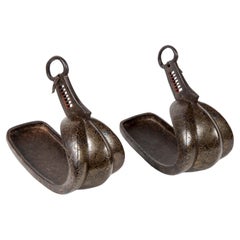
Pair of Japanese Abumi Stirrups
Located in PARIS, FR
Pair of stamped brass stirrups decorated with Hashizuka, Ito and Manabe Mons.
Japan - Edo (1615-1868), 18th century.
Height: 10.24 in. (26 cm), length: 12.6 in. (32 cm), width 4.72 in. (12 cm)
As in Western culture, the culture Japanese stirrups were part of traditional accessories...
Category
Antique Late 18th Century Japanese Metalwork
Materials
Brass
$7,120 / set
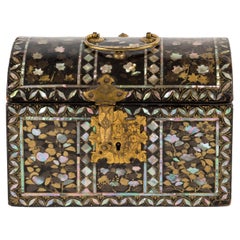
Momoyama Namban Chest
Located in PARIS, FR
Namban chest with a semi-cylindrical lid made of black lacquered wood (urushi) with gold lacquer (maki-e) and inlaid with mother-of-pearl (raden).
Decorated with three main bands o...
Category
Antique 17th Century Japanese Antiquities
Materials
Lacquer
$41,535
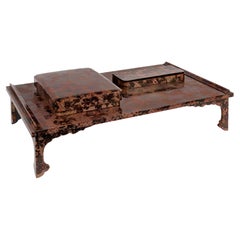
Wakasa-Nuri Lacquer Bundai, Ryoshobako, Fubako Set
Located in PARIS, FR
Set of bundai, ryoshibako and fudebako in wakasa lacquer with an old rose background and black traditional Japanese patterns.
The saya pattern (or sayagata) is composed by Chinese svastikas. This symbol linked to Buddhism, mean intelligence, power and peace. It is a good omen sign.
The kanoko pattern reminds stains on fawn back.
The sakura (cherry blossom) pattern is emblematic of Japan. The blossoming in a short time marks spring beginning and is a symbol of renewal and ephemeral beauty.
There are also traces of calligraphy brush, in reference to the function of the objects.
Bundai is a low table used to put books or scrolls and, later, to write.
Rectangular ryoshibako (letter and document box) with a slightly domed
Fudebako (pencil case) of rectangular format very narrow in its length with two rounded corners, flat cover.
Wakasa lacquerware...
Category
Early 20th Century Japanese Lacquer
Materials
Lacquer
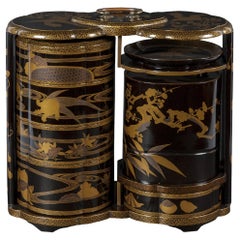
Fine Japanese Black and Gold Lacquer Sageju-Bako - Picnic Box
Located in PARIS, FR
Black and gold lacquer sageju-bako (picnic box) decorated with floral motifs in hiramaki-e. It includes a sake bottle, a four-compartment box with nashi-ji lacquer inside, a simple tray and a hollow tray. At the top, there is a bronze handle for transport.
The sageju-bako is divided into four superimposed boxes for food on the left; a simple tray, a sake bottle and a hollow tray on the right. They are in the shape of a plum blossom.
On the top, on both sides a phoenix. The phoenix (hôo) has an imperial and solar symbolism. This auspicious bird also embodies virtues taken from the teachings of Confucius (such as goodness, righteousness and wisdom).
The left boxes are patterned with turtles, plum tree, bamboo, cherry blossoms, water plantains near rivers. The two trays on the right have a shell and seaweed pattern. The sake bottle is decorated with a plum tree and bamboo.
On the sides, calabash decoration. Borders in saya (or sayagata) pattern, composed of Chinese swastikas...
Category
Antique Early 19th Century Japanese Lacquer
Materials
Lacquer
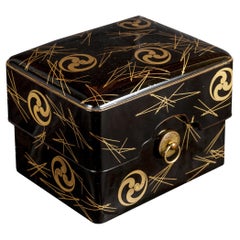
Japanese Black and Gold Lacquer Kushibako
Located in PARIS, FR
Kushibako (comb box) in black lacquer with gold lacquer decoration of arrows and my in the shape of three assembled commas " mitsudomoe " (Okabe; Itakura; Kuki; Hijikata; Arima famil...
Category
Antique Late 19th Century Japanese Lacquer
Materials
Lacquer
Japanese Lacquered Tebako
Box
Located in PARIS, FR
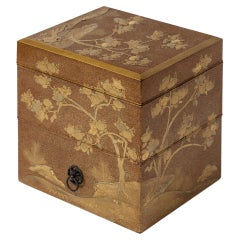
Tebako box with three compartments in golden and nashi-ji lacquer, decorated with golden, red, and kirigane lacquer, golden persimmon tree leaves, among rocks. The compartments are of increasing size from the top. The decoration is in continuity.
Persimmon has been cultivated in southern China for more than 2500 years and is believed to have been introduced to Japan in the 8th century. The veneer is a tree with very hard wood, similar to ebony. According to a legend, one specimen survived the atomic bombing of Nagasaki on August 9, 1945, close to the epicenter. It is therefore in Japan a symbol of strength and longevity. It is also the national fruit of the country. It is eaten as a traditional dish during New Year's Day celebrations.
Tebako literally means "portable box...
Category
Antique 1860s Japanese Lacquer
Materials
Lacquer
Japanese Lacquered Furoshiki Kobako
Box
Located in PARIS, FR
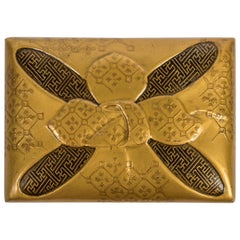
Rectangular and flat lacquer Kobako (small box) representing a furoshiki knot seen from above. Fundame background, furoshiki in takamaki-e with floral pattern, inside the folds of the fabric with black and gold sayagata pattern with togidashi maki-e technique. The saya (or sayagata) pattern is composed of Chinese swastikas...
Category
Antique Late 19th Century Japanese Lacquer
Materials
Lacquer
Japanese Lacquered Natsume
Tea Box
Located in PARIS, FR
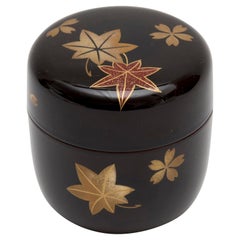
Natsume in dark red lacquer, decorated with autumn leaves and cherry blossoms in hiramaki-e and nashiji. Interior in black lacquer.
Maple leaves (Momiji) are celebrated in literatur...
Category
Mid-20th Century Japanese Lacquer
Materials
Lacquer
Japanese Bronze Vase
Located in PARIS, FR
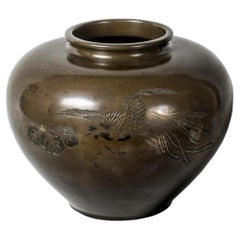
Patinated bronze vase decorated with a flying phenix and paulownia leaves.
It comes with its tomobako marked with the date Shôwa 5 (1930).
Japan, Shôwa period (1926-1989), 1930
...
Category
Vintage 1930s Japanese Vases
Materials
Bronze
$4,153