Thomas French Fine Art Prints and Multiples
to
3
388
126
78
9
10
Overall Width
to
Overall Height
to
93
76
54
52
28
14
9
8
8
5
1
18
15
13
12
12
35
107
441
28
34
20
56
38
23
51
76
80
42
15
22
338
251
21
129
64
62
38
34
34
21
16
12
11
11
10
8
8
8
8
8
7
7
6
196
164
105
69
52
52
611
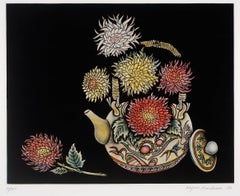
Flower and Pot
Located in Fairlawn, OH
Flower and Pot
Color mezzotint, 1983
Signed, numbered, and dated in pencil
John Szoke Graphics blindstamp, lower right
Edition: 150 (100/150)
Image si...
Category
1980s Contemporary Still-life Prints
Materials
Mezzotint
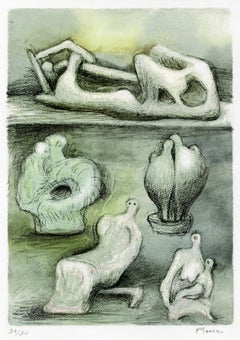
Five Ideas for Sculpture
By Henry Moore
Located in Fairlawn, OH
Five Ideas for Sculpture
Lithograph, 1981
Signed and numbered in pencil by the artist lower margin. (see photos)
Edition: (35/50) 50
There were also 15 Roman Numeral artist's proofs....
Category
1950s Modern Abstract Prints
Materials
Lithograph
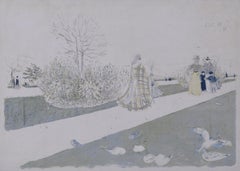
Les Jardin des Tuileries
By Edouard Vuillard
Located in Fairlawn, OH
Signed by the artist in pencil upper right; Annotated in pencil by the artist below signature: "no 58"
Edition: Intended edition of 100 for Vollard's "Album des Peintres-Gravures" o...
Category
Late 19th Century Landscape Prints
Materials
Lithograph
La Naissance d’Annette (Birth of Annette)
By Edouard Vuillard
Located in Fairlawn, OH
La Naissance d’Annette (Birth of Annette)
Color llithograph, 1899
Unsigned (as usual)
Edition: 100
Publisher: Ambrose Vollard
Printer: Auguste Clot, Paris
Condition: Excellent with f...
Category
1890s French School Figurative Prints
Materials
Lithograph
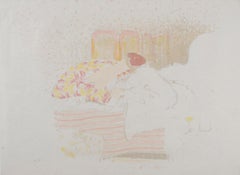
Trees (Trees in Circle)
By Louise Nevelson
Located in Fairlawn, OH
Trees (Trees in Circle)
Etching & drypoint with monotype inking, 1953-1955
Signed in pencil
An unrecorded trial proof, printed on heavy wove proofing paper at Atelier 17, before the ...
Category
1950s Abstract Landscape Prints
Materials
Drypoint, Etching, Monotype
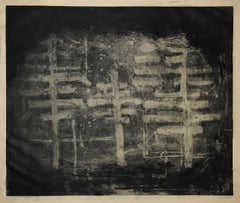
Cahiers d
art, Surrealist Composition 1
By Joan Miró
Located in Fairlawn, OH
Cahiers d'art, Surrealist Composition 1
Pochoir, 1934
Unsigned as issued in Cahier's edition
Published in Cahier's d'art, 1934
Unsigned Edition of 1200
There was also a pencil signed...
Category
1930s Surrealist Abstract Prints
Materials
Stencil
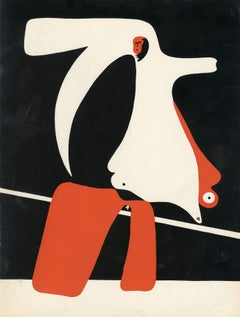
Dames charmante et charmante a tous egard
By Marc Chagall
Located in Fairlawn, OH
(A charming lady chatting with a lady perfect in every possible way)
Signed in the plate. No pencil signed impressions are existent.
Edition: 368 (including 50 imps on japan) includi...
Category
1920s French School Figurative Prints
Materials
Etching
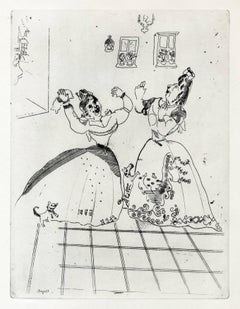
Cleveland Center for Contemporary Art 1968/ 1983
By James Rosenquist
Located in Fairlawn, OH
Cleveland Center for Contemporary Art 1968/ 1983
Off-set lithographic poster, 1983
Signed in ink by the artist in the bottom margin (see photo)
Poster celebrating the 15 year anniver...
Category
1980s American Modern Abstract Prints
Materials
Offset
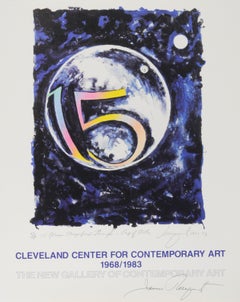
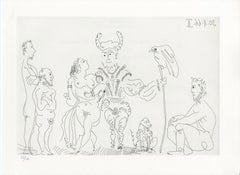
Plate I, Le Cocu Magnifique
By Pablo Picasso
Located in Fairlawn, OH
Plate I, Le Cocu Magnifique
Etching, 1968
From: Le Cocu Magnifique
Unsigned as issued in the portfolio
The set of 12 etching & aquatints is signed by Picasso on the justification pa...
Category
1960s French School Figurative Prints
Materials
Etching
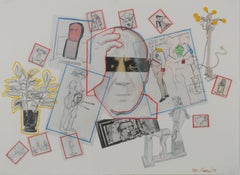
Untitled
By Larry Rivers
Located in Fairlawn, OH
Untitled (Picasso)
Screen print, 1974
Signed, numbered and dated in red pencil lower right (see photo)
from Homage to Picasso (Hommage à Picasso)
Publisher: Propyläen-Verlag, Berlin
...
Category
1970s Pop Art Figurative Prints
Materials
Screen
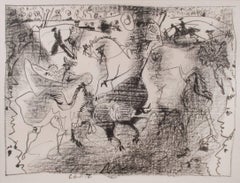
La Pique (The Pike)
By Pablo Picasso
Located in Fairlawn, OH
La Pique (The Pike)
Lithograph, 1950
Original lithograph drawn with chalk and "frottage textures" transferred to stone, 1950.
Unsigned printer's proof
Inscribed on the verso in Mourl...
Category
1950s French School Animal Prints
Materials
Lithograph
Claude Renoir, la Tete Baisee (Claude Renoir, Head Lowered)
By Pierre-Auguste Renoir
Located in Fairlawn, OH
Claude Renoir, la Tete Baisee
(Claude Renoir, Head Lowered)
Lithograph, 1904
Edition 1,000, this one of 950 on wove paper with the stamp signature (there were also 50 impressions pri...
Category
Early 1900s Impressionist Figurative Prints
Materials
Lithograph
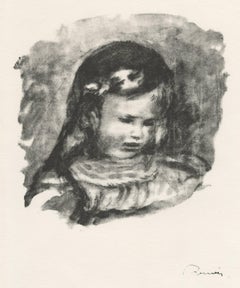
Les Laveuses, 2e Pensee (The Washerwoman)
By Pierre-Auguste Renoir
Located in Fairlawn, OH
Les Laveuses, 2e Pensee (The Washerwomen)
Lithograph, c. 1910
Unsigned (as issued)
Edition: c.30-50 impressions
Condition: Rust spot, associated with pape...
Category
1910s Impressionist Figurative Prints
Materials
Lithograph
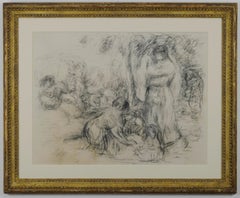
Beauty on a Veranda with Fan and Mirror
By Suzuki (Hozumi) Harunobu
Located in Fairlawn, OH
Signed: Harunobu ga
Series: Series: Eight Fashionable Parlor Views (Furyu zashiki hakkei)?
Format Japanese: chuban
Provenance:
Private Collection, Philadelphia
Collection of McCleaf
...
Category
Mid-18th Century Edo Prints and Multiples
Materials
Woodcut
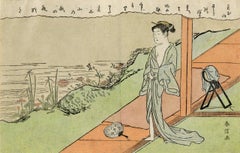
El Ultimo viaje del buque fantasma, Plate III
By Wifredo Lam
Located in Fairlawn, OH
El Ultimo viaje del buque fantasma, Plate III
Color lithograph, 1976
Signed and numbered in pencil
From: Gabriel Garcia Marquez, El Ultimo viaie del buq...
Category
1970s Surrealist Abstract Prints
Materials
Lithograph
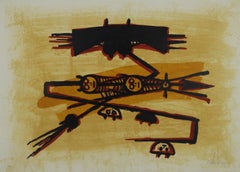
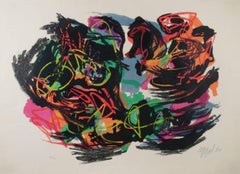
Drole de Drame
By Karel Appel
Located in Fairlawn, OH
Drole de Drame
Lithograph, 1960
Signed, dated and numbered in pencil lower right
(see photos)
Edition: 120 (91/120)
Published by L’Ouevre Grave, Geneve (blindstamp recto)
Printed by ...
Category
1960s Abstract Abstract Prints
Materials
Lithograph
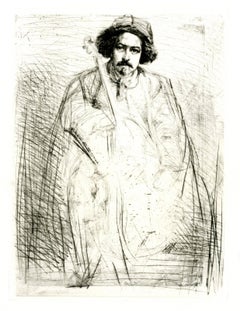
J. Becquet, Sculptor
By James Abbott McNeill Whistler
Located in Fairlawn, OH
J. Becquet, Sculptor
Etching & drypoint, 1859
Unsigned as issued
From: The Thames Set
Printed on this Japanese tissue
Rich impression
Condition: Excellent
Plate/Image size: 9 7/8 x 7...
Category
19th Century Impressionist Portrait Prints
Materials
Drypoint, Etching
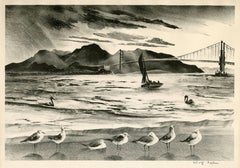
The Golden Gate
By Adolf Arthur Dehn
Located in Fairlawn, OH
The Golden Gate
Lithograph on wove paper watermarked GC, 1940
Signed in pencil by the artist (see photo)
Publisher: Associated American Artists
Edition: 189, unnumbered
The image depicts The Golden Gate Bridge which connects San Francisco and Marin County, California
References And Exhibitions:
Illustrated: Adams, The Sensuous Life of Adolf Dehn, Fig. 13.17, page 324
Reference: L & O 325
AAA Index 391
Adolf Dehn, American Watercolorist and Printmaker, 1895-1968
Adolf Dehn was an artist who achieved extraordinary artistic heights, but in a very particular artistic sphere—not so much in oil painting as in watercolor and lithography. Long recognized as a master by serious print collectors, he is gradually gaining recognition as a notable and influential figure in the overall history of American art.
In the 19th century, with the invention of the rotary press, which made possible enormous print runs, and the development of the popular, mass-market magazines, newspaper and magazine illustration developed into an artistic realm of its own, often surprisingly divorced from the world of museums and art exhibitions, and today remains surprisingly overlooked by most art historians. Dehn in many regards was an outgrowth of this world, although in an unusual way, since as a young man he produced most of his illustrative work not for popular magazines, such as The Saturday Evening Post, but rather for radical journals, such as The Masses or The Liberator, or artistic “little magazines” such as The Dial. This background established the foundation of his outlook, and led later to his unique and distinctive contribution to American graphic art.
If there’s a distinctive quality to his work, it was his skill in introducing unusual tonal and textural effects into his work, particularly in printmaking but also in watercolor. Jackson Pollock seems to have been one of many notable artists who were influenced by his techniques.
Early Years, 1895-1922
For an artist largely remembered for scenes of Vienna and Paris, Adolf Dehn’s background was a surprising one. Born in Waterville, Minnesota, on November 22, 1895, Dehn was the descendent of farmers who had emigrated from Germany and homesteaded in the region, initially in a one-room log cabin with a dirt floor. Adolf’s father, Arthur Clark Dehn, was a hunter and trapper who took pride that he had no boss but himself, and who had little use for art. Indeed, during Adolf’s boyhood the walls of his bedroom and the space under his bed were filled with the pelts of mink, muskrats and skunks that his father had killed, skinned and stretched on drying boards. It was Adolf’s mother, Emilie Haas Dehn, a faithful member of the German Lutheran Evangelical Church, who encouraged his interest in art, which became apparent early in childhood. Both parents were ardent socialists, and supporters of Eugene Debs. In many ways Dehn’s later artistic achievement was clearly a reaction against the grinding rural poverty of his childhood.
After graduating from high school in 1914 at the age of 19—an age not unusual in farming communities at the time, where school attendance was often irregular—Dehn attended the Minneapolis School of Art from 1914 to 1917, whose character followed strongly reflected that of its director, Munich-trained Robert Kohler, an artistic conservative but a social radical. There Dehn joined a group of students who went on to nationally significant careers, including Wanda Gag (later author of best-selling children’s books); John Flanagan (a sculptor notable for his use of direct carving) Harry Gottlieb (a notable social realist and member of the Woodstock Art Colony), Elizabeth Olds (a printmaker and administrator for the WPA), Arnold Blanch (landscape, still-life and figure painter, and member of the Woodstock group), Lucille Lunquist, later Lucille Blanch (also a gifted painter and founder of the Woodstock art colony), and Johan Egilrud (who stayed in Minneapolis and became a journalist and poet).
Adolf became particularly close to Wanda Gag (1893-1946), with whom he established an intense but platonic relationship. Two years older than he, Gag was the daughter of a Bohemian artist and decorator, Anton Gag, who had died in 1908. After her husband died, Wanda’s mother, Lizzi Gag, became a helpless invalid, so Wanda was entrusted with the task of raising and financially supporting her six younger siblings. This endowed her with toughness and an independent streak, but nonetheless, when she met Dehn, Wanda was Victorian and conventional in her artistic taste and social values. Dehn was more socially radical, and introduced her to radical ideas about politics and free love, as well as to socialist publications such as The Masses and The Appeal to Reason.
Never very interested in oil painting, in Minneapolis Dehn focused on caricature and illustration--often of a humorous or politically radical character. In 1917 both Dehn and Wanda won scholarships to attend the Art Students League, and consequently, in the fall of that year both moved to New York. Dehn’s art education, however, ended in the summer of 1918, shortly after the United States entered World War I, when he was drafted to serve in the U. S. Army. Unwilling to fight, he applied for status as a conscientious objector, but was first imprisoned, then segregated in semi-imprisonment with other Pacifists, until the war ended. The abuse he suffered at this time may well explain his later withdrawal from taking political stands or making art of an overtly political nature. After his release from the army, Dehn returned to New York where he fell under the spell of the radical cartoonist Boardman Robinson and produced his first lithographs. He also finally consummated his sexual relationship with Wanda Gag.
The Years in Europe: 1922-1929
In September of 1921, however, he abruptly departed for Europe, arriving in Paris and then moving on to Vienna. There in the winter of 1922 he fell in love with a Russian dancer, Mura Zipperovitch, ending his seven-year relationship with Wanda Gag. He and Mura were married in 1926. It was also in Vienna that he produced his first notable artistic work.
Influenced by European artists such as Jules Pascin and Georg Grosz, Dehn began producing drawings of people in cafes, streets, and parks, which while mostly executed in his studio, were based on spontaneous life studies and have an expressive, sometimes almost childishly wandering quality of line. The mixture of sophistication and naiveté in these drawings was new to American audiences, as was the raciness of their subject matter, which often featured pleasure-seekers, prostitutes or scenes of sexual dalliance, presented with a strong element of caricature. Some of these drawings contain an element of social criticism, reminiscent of that found in the work of George Grosz, although Dehn’s work tended to focus on humorous commentary rather than savagely attacking his subjects or making a partisan political statement. Many Americans, including some who had originally been supporters of Dehn such as Boardman Robinson, were shocked by these European drawings, although George Grocz (who became a friend of the artist in this period) admired them, and recognized that Dehn could also bring a new vision to America subject matter. As he told Dehn: “You will do things in America which haven’t been done, which need to be done, which only you can do—as far at least as I know America.”
A key factor in Dehn’s artistic evolution at this time was his association with Scofield Thayer...
Category
1940s American Realist Landscape Prints
Materials
Lithograph
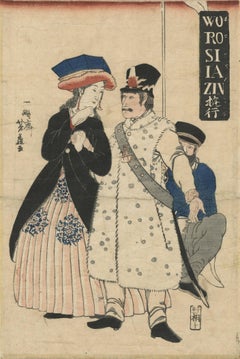
WO RO SI IA ZIN Russian Soldier with His Family
Located in Fairlawn, OH
WO RO SI IA ZIN Russian Soldier with His Family
Color woodcut, 1861 2nd month
Signed upper left (see photo)
Titled upper right in black cartouche (see photo)
Format: oban
Style: Yokohama-e
Publisherr: Sagamiya Tokichi (Marks #435) active 1955-1866
Metropolitan Museum of Art in New York, has an impression of this image
RARE
Condition: with usual aging
Image size: 13 7/8 x 9 3/8 inches
Rebecca Salter in her Japanese Popular Prints... on page 18 gives a different take on the situation that Yoshifuji found himself in.
"A giant of the period, however, was Utagawa Kuniyoshi (1797-861). Although best known for warrior prints which reflected the militaristic undercurrents of the time, he was also responsible for some of the most light-heartend and humorous works in this book. His followers in the Utagawa school, Utagawa Yoshitsuya...
Category
1860s Other Art Style Figurative Prints
Materials
Woodcut
Ontario St. Grading and Temporary Ramps
By Louis Conrad Rosenberg
Located in Fairlawn, OH
Ontario St. Grading and Temporary Ramps
Drypoint, August 1929
Signed in pencil lower right (see photo)
From: The Cleveland Set (23 plates), this being No. 13
Edition: Small
A brilliant example of American industrial art. A wonderful, rich impression, with lots of burr and contrasts.
Louis Conrad Rosenberg
1890-1983
An American architectural etcher and engraver of the 1920's and 1930's era, Louis Conrad Rosenberg first studied at the Massachusetts Institute of Technology. He then enrolled at the Royal College of Art, London, to study etching techniques under Malcolm Osborne...
Category
1920s American Modern Landscape Prints
Materials
Drypoint
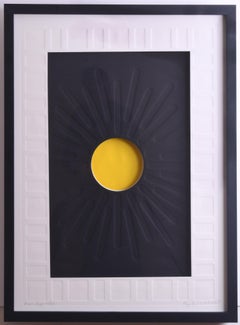
Moon Rays
By Ray H. French
Located in Fairlawn, OH
Moon Rays
Graphic Construction (three sheets layered in a shadow box presentation), 1967
Signed lower right. Editioned lower left. (see photos)
Edition: 60 f...
Category
1960s Op Art Abstract Prints
Materials
Other Medium
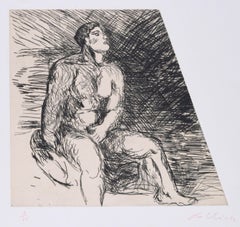
Light Struck
By Sandro Chia
Located in Fairlawn, OH
Light Struck
Etching & Drypoint, 1984
Signed, dated and numbered in red pencil (see photos0
The artist's chop stamp (CS) lower right corner
Edition: 25 (18/25), 5 artist's proofs, B....
Category
1980s Contemporary Nude Prints
Materials
Etching
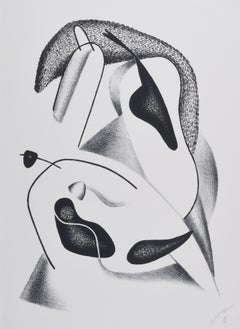
Le Groupe
By Alexander Archipenko
Located in Fairlawn, OH
Le Groupe
Lithograph, 1963
Signed and numbered in pencil, lower right
Edition: 75 (68/75) see photo
Publisher: Erker Presse, St. Gallen blindstamp lower left. see photo
From the suit...
Category
1960s Cubist Abstract Prints
Materials
Lithograph
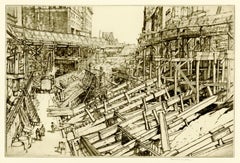
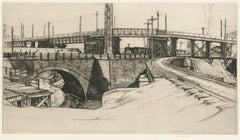
Western Hills Viaduct Under Construction
By Louis Conrad Rosenberg
Located in Fairlawn, OH
Western Hills Viaduct Under Construction
Drypoint, June 1931
Signed in pencil lower right (see photo)
Initialed and dated in the plate lower right above pencil signature (see photo)
From: Cincinnati Series, 1930-1931, 8 plates, this No. 5
Small edition, not specified
From Greenfield Hill
Condition: Excellent
Image/Plate size: 8 1/2 x 15 1/4 inches
Sheet size: 11 1/4 x 18 1/2 inches
Louis Conrad Rosenberg
1890-1983
An American architectural etcher...
Category
1930s American Modern Landscape Prints
Materials
Drypoint
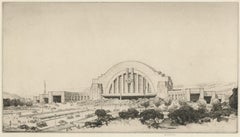
Cincinnati Union Terminal, Perspective From East
By Louis Conrad Rosenberg
Located in Fairlawn, OH
Cincinnati Union Terminal, Perspective From East
Drypoint, 1930-1931
Signed in pencil lower right (see photo)
Initialed and dated the the plate above the pencil signature
From: Cincinnati Series (8 Plates), this No. 2
Edition: 155, completed May 4, 1931
Delivered to Fellheimer & Wagner, 1931
Louis Conrad Rosenberg
1890-1983
An American architectural etcher and engraver of the 1920's and 1930's era, Louis Conrad Rosenberg first studied at the Massachusetts Institute of Technology...
Category
1930s American Modern Landscape Prints
Materials
Drypoint
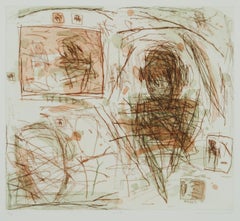
Woods
By Louisa Chase
Located in Fairlawn, OH
Woods
Etching and aquatint printed in colors, 1985
Signed, titled & numbered in pencil
Edition: 15 (12/15)
Printed on BFK RIVES paper
Provenance: GE Art Program, (label included), se...
Category
1980s Abstract Abstract Prints
Materials
Etching
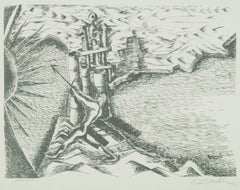
The Columns of Herakles
By Ossip Zadkine
Located in Fairlawn, OH
The Columns of Herakles
Lithograph in Grey printed Zerkall-Vellum paper, 1960
Signed in pencil by the artist 'O. Zadkine' at the lower right corner (see photo)
Numbered in pencil 102...
Category
1960s Surrealist Landscape Prints
Materials
Lithograph
Burst of Sound
By Misako Shimizu
Located in Fairlawn, OH
Burst of Sound
Lithograph printed in colors
Signed and titled in pencil in Japanese (see photos)
Edition: 30 (5/30)
Provenance:
Ralph Drake, Cleveland, OH, noted collector of decorat...
Category
Mid-20th Century Abstract Still-life Prints
Materials
Lithograph
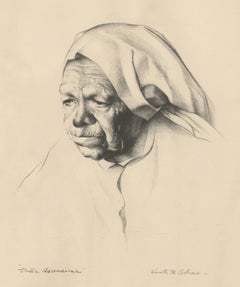
Dona Ascensione
By Kenneth M. Adams
Located in Fairlawn, OH
Dona Ascensione
Off set lithograph, 1932/published 1950
Signed in pencil by the artist lower right (see photo)
Titled in the stone, lower left
From: New Mexico Artist...
Category
1930s American Realist Portrait Prints
Materials
Offset
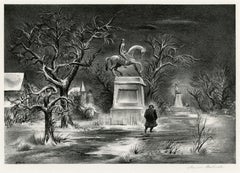
City Park, Winter
By Aaron Bohrod
Located in Fairlawn, OH
City Park, Winter
Lithograph, c. 1947
Signed in pencil lower right (see photo)
Published by Associated American Artists
Printed by George C. Miller, New York
Edition: c. 250
In the Bohrod papers at Syracuse University, the artist states that it is a view of Pittsburgh. It depicts the George Washington Monument in Allegheny Commons Park, dedicated in 1891. The sculptor f the monument is Edward Ludwig Albert Pausch (1856-1931).
Condition: Excellent
Image size: 9 1/4 x 13 7/16 inches
Frame size: 19 x 23 inches
Provenance: Estate of Adolf Dehn
Reference: AAA Index No. 848
Aaron Bohrod (21 November 1907 – 3 April 1992) was an American artist best known for his trompe-l'œil still-life paintings.
Education
Bohrod was born in Chicago in 1907, the son of an emigree Bessarabian-Jewish grocer. Bohrod studied at the School of the Art Institute of Chicago and the Art Students League of New York between 1926 and 1930. While at the Art Students League, Bohrod was influenced by John Sloan and chose themes that involved his own surroundings.
Career
He returned to Chicago in 1930 where he painted views of the city and its working class. He eventually earned Guggenheim Fellowships which permitted him to travel throughout the country, painting and recording the American scene. His early work won him widespread praise as an important social realist and regional painter and printmaker and his work was marketed through Associated American Artists in New York. Bohrod completed three commissioned murals for the Treasury Departments Section of Fine Arts in Illinois; Vandalia in 1935, Galesburg in 1938 and Clinton in 1939. During World War II, Bohrod worked as an artist; first in the Pacific for the United States Army Corps of Engineers' Army War Art Unit...
Category
1940s American Realist Landscape Prints
Materials
Lithograph
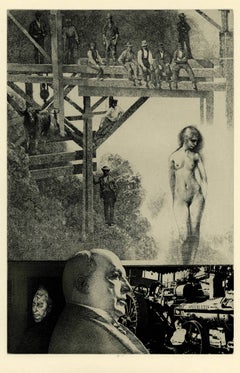
The Jolly Corner. A portfolio of 21 etchings.
By Peter Milton
Located in Fairlawn, OH
Portfolio of 21 photosensitive etchings and engravings on Rives Heavyweight Buff
Signed by the artist in pencil on frontispiece
Plate No. II:2; Signed by the artist
Numbered 27/150 in pencil on the colophon page along with chop marks of artist/printers Robert E. Townsend and Gretchen Ewert, and the chop of Impressions Workshop, Boston
Edition: 150
References And Exhibitions:
A portfolio edition of Henry James' ghost story first published by "The English Review" in December, 1908
Principal Portfolio Edition
Published by Aquarius Press Baltimore, MD
Reference:
Kneeland McNulty, Peter Milton: Complete Etchings 1960...
Category
1970s Contemporary More Prints
Materials
Etching
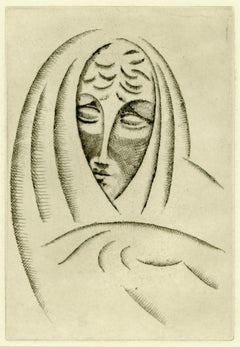
Woman
s Head
By Elie Nadelman
Located in Fairlawn, OH
Edition of 50 printed by Charles White in 1951 for the estate
Bibliography:
Lincoln Kirstein, Elie Nademan (New York: The Eakins Press, 1973),, 20
Elie Nadelman
Born 1882, Warsaw...
Category
1920s American Modern Prints and Multiples
Materials
Drypoint
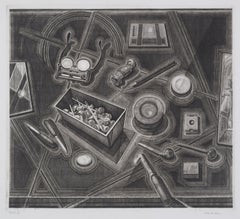
Engraver
s Tools
By Armin Landeck
Located in Fairlawn, OH
Engraver's Tools
Engraving, 1974
Signed and annotated in pencil by the artist (see photos)
This a "Trial Proof" impression with graphite additions
Regular Edition: 100
References And...
Category
1970s American Modern Still-life Prints
Materials
Engraving
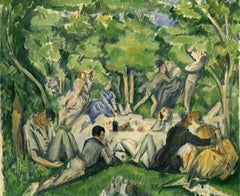
Dejeuner sur l
Herbe
By After Paul Cezanne
Located in Fairlawn, OH
Dejeuner sur l'Herbe
Lithograph, c. 1914
Edition: c. 100
Unsigned as issued by Vollard
References And Exhibitions:
Commissioned from Cezanne by Ambrose Vollard in the late 1890s
Prin...
Category
1910s French School Landscape Prints
Materials
Lithograph
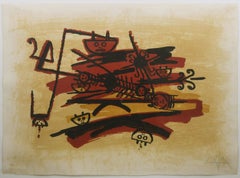
El Ultimo viaje del buque fantasma, Plate IV
By Wifredo Lam
Located in Fairlawn, OH
El Ultimo viaje del buque fantasma, Plate IV
Color lithograph, 1976
Signed and numbered in pencil (see photos)
From: Gabriel Garcia Marquez, El Ultimo viaie del buque Fantasma
(The Last Voyage of the Ghost Ship (1868), 12 illustration by Wilfredo Lam
Edition: 99 (6/99)
This one of an edition of 99 from the deluxe edition of the book of the same title
There was an additional edition of 200 books, signed and numbered on the justification page
Publisher: Poligrafa, Barcelona
Printer: Poligrafa, Barcelona
The Gabriel Garcia Marquez/Lam book is an illustrated version of the short story, a man recalls the night during his boyhood when an enormous passenger ship went aground in his small town on the shores of the Caribbean. It is considered a Latin American masterpiece of surrealism and transculturation. (See below analysis of the story)
Condition: slight yellows (aging) of paper
small paper scuffs verso from previous hinges
Sheet size: 22 x 29 7/8 inches
About the author and the storyline of the book by Marquez:
Gabriel García Márquez was born in 1927, he is a famous Colombian writer, novelist, short story writer, screenwriter and journalist. In 1982 he received the Novel Prize for Literature. He is an author sometimes inherently related to magical realism and his best-known work is the novel One Hundred Years of Solitude in which we find this literary genre.
Summary of "The Last Voyage of the Ghost Ship" (1868):
The novel by Gabriel García Márquez, The Last Voyage of the Ghost Ship, written in 1968, is written in a single great sentence, which tells the surprising and amazing adventure that has changed the existence of a child living in a coastal town with a small port sunny, almost forgotten by civilization. The days are peaceful, the nights are silent and illuminated only by the rotating beacon that, every fifteen seconds, transforms the town into a lunar camp with phosphorescent houses. During one night in March, the boy saw an immense afterlife ship that sails through the seas with all the dead crew and sometimes appears to the living, silently crossing the deserted sea, a huge and unexpected mass whose trajectory suddenly it seems to drift, and then runs aground on the reefs. This cataclysm is accomplished without disturbing the night's silence, and the next day the boy found no traces of the shipwreck and no one believed it, not even his mother. Time passes, and the same shipwreck occurs again, every year, on the same night in March; the adolescent...
Category
1970s Surrealist Abstract Prints
Materials
Lithograph
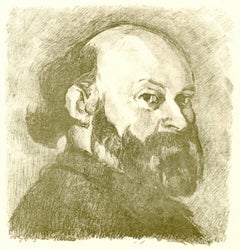
Portrait De Cezanne
By Edouard Vuillard
Located in Fairlawn, OH
Portrait De Cezanne
Lithograph, 1914
Unsigned (as issued in 1914)
Edition: Either 100 (per Roger Marx) or 400 impressions on various papers
Published in, Cezanne, Bernheim Jeune, 1914
Reference:
Roger-Marx 51 ii/II, printed in greenish-grey ink on laid paper
Condition: Excellent
Image: 9 1/2 x 9"
Sheet: 14 3/4 x 11 1/8"
Edouard Vuillard
French, 1868 - 1940
Vuillard's work straddles two centuries: he was a major post-impressionist in the 1890s, as well as a participant in the renewal of decorative art before and after 1900. Vuillard was one of the central figures of "Les Nabis...
Category
1910s French School Portrait Prints
Materials
Lithograph
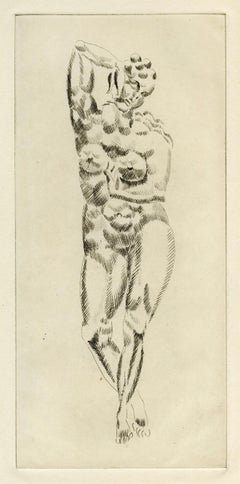
Female Nude - Standing Female Nude (Havard)
By Elie Nadelman
Located in Fairlawn, OH
Female Nude - Standing Female Nude (Havard)
Drypoint, 1920
Unsigned, as issued in the portfolio
No signed impression are known to exist
From: The Drypoint...
Category
1920s American Modern Nude Prints
Materials
Drypoint
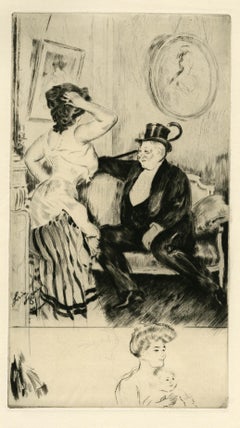
En passant (Passing by)
By Louis Legrand
Located in Fairlawn, OH
En passant (Passing by)
Drypoint, 1909
Unsigned (as issued in the deluxe portfolio)
From the album "Les Bars" (8 plates plus cover illustration)
Edition: 30, this state with remarque
Published by Gustav Pellet, Paris
A very rich impression wwith burr
Condition: Excellent
Image/Plate size: 9 7/8 x 6 3/8 inches
Reference: Arwas 391a (remarque)
Exteens 277 i/II
IFF 148 (portfolio)
Louis Auguste Mathieu Legrand (29 September 1863 – 1951) was a French artist, known especially for his aquatint engravings, which were sometimes erotic. He was awarded the Légion d'honneur for his work in 1906.
Life
Legrand was born in the city of Dijon in the east of France. He worked as a bank clerk before deciding to study art part-time at Dijon's Ecole des Beaux-Arts. He won the Devosge prize at the school in 1883.[2] In 1884 Legrand studied engraving under the Belgian printmaker Félicien Rops.
Legrand's artworks include etchings, graphic art and paintings. His paintings featured Parisian social life. Many were of prostitutes, dancers and bar scenes, which featured a sense of eroticism. According to the Hope Gallery, "Louis Legrand is simply one of France's finest early twentieth century masters of etching." His black and white etchings especially provide a sense of decadence; they have been compared to those of Henri de Toulouse-Lautrec, though his drawings of the Moulin Rouge, the can-can dance and the young women of Montmartre preceded Toulouse-Lautrec's paintings of similar scenes. He made over three hundred prints of the night life of Paris. They demonstrate "his remarkable powers of observation and are executed with great skill, delicacy, and an ironic sense of humor that pervades them all."
Two of his satirical artworks caused him to be tried for obscenity. The first, "Prostitution" was a symbolic drawing which depicted a naked girl being grasped by a dark monster which had the face of an old woman and claws on its hands; the second, "Naturalism", showed the French novelist Émile Zola minutely studying the thighs of a woman with a magnifying glass. Defended by his friend the lawyer Eugène Rodrigues-Henriques (1853–1928), he was found not guilty in the lower court, but was convicted in the appeal court and then given a short prison sentence for refusing to pay his fine.
Legrand was made famous by his colour illustrations for Gil Blas magazine's coverage of the can-can, with text by Rodrigues (who wrote under the pseudonym Erastene Ramiro). It was a tremendous success, with the exceptional quantity of 60,000 copies of the magazine being printed and instantly sold out in 1891.
In 1892, at the instigation of the publishing house Dentu, Legrand made a set of etchings of his Gil Blas illustrations. The etchings were published in a book, Le Cours de Danse Fin de Siecle (The End of the Century Dance Classes).
Legrand took a holiday in Brittany, which inspired him to engrave a set of fourteen lithographs of simple country life called Au Cap de la Chevre (On Goat Promontory). It was published by Gustave Pellet who became a close friend of Legrand's. Pellet eventually published a total of 300 etchings by Legrand, who was his first artist; he also published Toulouse-Lautrec and Félicien Rops among others.
He did not only work in graphics; he exhibited paintings at the Paris salon of the Société Nationale des Beaux-Arts starting in 1902. In 1906 he was made a chevalier of the Légion d'honneur.
Legrand died in obscurity in 1951. A retrospective exhibition was held at the Félicien Rops museum in Namur, Belgium in 2006 to celebrate his graphic art. The art collector Victor Arwas published a catalogue raisonné for the occasion.
Books illustrated
de Maupassant, Guy: Cinq Contes Parisiens, 1905.
Poe, Edgar Alan: Quinze Histoires d'Edgar Poe...
Category
Early 1900s Art Nouveau Interior Prints
Materials
Drypoint
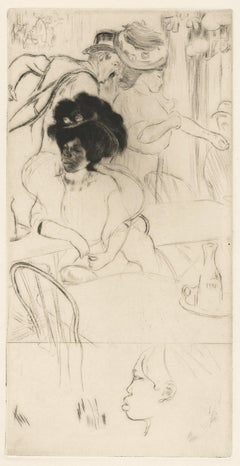
La Negresse (The Negress)
By Louis Legrand
Located in Fairlawn, OH
La Negresse (The Negress)
Etching & drypoint, 1909
Unsigned (as issued in the portfolio)
From the album "Les Bars" (8 plates plus cover illustration)
Editi...
Category
Early 1900s Art Nouveau Interior Prints
Materials
Etching
A L
Ombre (In Shadow)
By Louis Legrand
Located in Fairlawn, OH
A L'Ombre (In Shadow)
Etching & drypoint, 1905
Signed with the red stamp of the publisher Pellet (see photo)
Edition: 50 on velin paper, signed and numbered
Publisher: Gustav Pellet, Paris (his red stamp lower right, recto; Lugt 1193)
Condition: Excellent
Image/Plate size: 5-7/8 x 8-5/8" (14.8 x 21.8 cm.)
Sheet size: 11 5/8 x 17 1/8"
Reference: IFF 119
Exteens 229
Arwas 256 v/V
Louis Auguste Mathieu Legrand (29 September 1863 – 1951) was a French artist, known especially for his aquatint engravings, which were sometimes erotic. He was awarded the Légion d'honneur for his work in 1906.
Life
Legrand was born in the city of Dijon in the east of France. He worked as a bank clerk before deciding to study art part-time at Dijon's Ecole des Beaux-Arts. He won the Devosge prize at the school in 1883.[2] In 1884 Legrand studied engraving under the Belgian printmaker Félicien Rops.
Legrand's artworks include etchings, graphic art and paintings. His paintings featured Parisian social life. Many were of prostitutes, dancers and bar scenes, which featured a sense of eroticism. According to the Hope Gallery, "Louis Legrand is simply one of France's finest early twentieth century masters of etching." His black and white etchings especially provide a sense of decadence; they have been compared to those of Henri de Toulouse-Lautrec, though his drawings of the Moulin Rouge, the can-can dance and the young women of Montmartre preceded Toulouse-Lautrec's paintings of similar scenes. He made over three hundred prints of the night life of Paris. They demonstrate "his remarkable powers of observation and are executed with great skill, delicacy, and an ironic sense of humor that pervades them all."
Two of his satirical artworks caused him to be tried for obscenity. The first, "Prostitution" was a symbolic drawing which depicted a naked girl being grasped by a dark monster which had the face of an old woman and claws on its hands; the second, "Naturalism", showed the French novelist Émile Zola minutely studying the thighs of a woman with a magnifying glass. Defended by his friend the lawyer Eugène Rodrigues-Henriques (1853–1928), he was found not guilty in the lower court, but was convicted in the appeal court and then given a short prison sentence for refusing to pay his fine.
Legrand was made famous by his colour illustrations for Gil Blas magazine's coverage of the can-can, with text by Rodrigues (who wrote under the pseudonym Erastene Ramiro). It was a tremendous success, with the exceptional quantity of 60,000 copies of the magazine being printed and instantly sold out in 1891.
In 1892, at the instigation of the publishing house Dentu, Legrand made a set of etchings of his Gil Blas illustrations. The etchings were published in a book, Le Cours de Danse Fin de Siecle (The End of the Century Dance Classes).
Legrand took a holiday in Brittany, which inspired him to engrave a set of fourteen lithographs of simple country life called Au Cap de la Chevre (On Goat Promontory). It was published by Gustave Pellet who became a close friend of Legrand's. Pellet eventually published a total of 300 etchings by Legrand, who was his first artist; he also published Toulouse-Lautrec and Félicien Rops among others.
He did not only work in graphics; he exhibited paintings at the Paris salon of the Société Nationale des Beaux-Arts starting in 1902. In 1906 he was made a chevalier of the Légion d'honneur.
Legrand died in obscurity in 1951. A retrospective exhibition was held at the Félicien Rops museum in Namur, Belgium in 2006 to celebrate his graphic art. The art collector Victor Arwas published a catalogue raisonné for the occasion.
Books illustrated
de Maupassant, Guy: Cinq Contes Parisiens, 1905.
Poe, Edgar Alan: Quinze Histoires d'Edgar Poe...
Category
Early 1900s Art Nouveau Landscape Prints
Materials
Etching
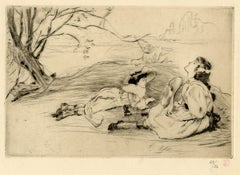
L
Aieule (The Grandmother)
By Louis Legrand
Located in Fairlawn, OH
L'Aieule (The Grandmother)
Etching and aquatint printed in colors, 1904
Signed with the red stamp of the publisher, Gustave Pellet, Lugt 1193 and numbered (see photo)
Edition: 100 (81/100)
Reference: Arwas 202 iv/IV
IFF 98
Condition: Excellent, the sheet aged as usual
Image size: 14 1/4 x 18 5/8"
Sheet size: 16 15/16 x 24 1/4"
Louis Auguste Mathieu Legrand (29 September 1863 – 1951) was a French artist, known especially for his aquatint engravings, which were sometimes erotic. He was awarded the Légion d'honneur for his work in 1906.
Life
Legrand was born in the city of Dijon in the east of France. He worked as a bank clerk before deciding to study art part-time at Dijon's Ecole des Beaux-Arts. He won the Devosge prize at the school in 1883.[2] In 1884 Legrand studied engraving under the Belgian printmaker Félicien Rops.
Legrand's artworks include etchings, graphic art and paintings. His paintings featured Parisian social life. Many were of prostitutes, dancers and bar scenes, which featured a sense of eroticism. According to the Hope Gallery, "Louis Legrand is simply one of France's finest early twentieth century masters of etching." His black and white etchings especially provide a sense of decadence; they have been compared to those of Henri de Toulouse-Lautrec, though his drawings of the Moulin Rouge, the can-can dance and the young women of Montmartre preceded Toulouse-Lautrec's paintings of similar scenes. He made over three hundred prints of the night life of Paris. They demonstrate "his remarkable powers of observation and are executed with great skill, delicacy, and an ironic sense of humor that pervades them all."
Two of his satirical artworks caused him to be tried for obscenity. The first, "Prostitution" was a symbolic drawing which depicted a naked girl being grasped by a dark monster which had the face of an old woman and claws on its hands; the second, "Naturalism", showed the French novelist Émile Zola minutely studying the thighs of a woman with a magnifying glass. Defended by his friend the lawyer Eugène Rodrigues-Henriques (1853–1928), he was found not guilty in the lower court, but was convicted in the appeal court and then given a short prison sentence for refusing to pay his fine.
Legrand was made famous by his colour illustrations for Gil Blas magazine's coverage of the can-can, with text by Rodrigues (who wrote under the pseudonym Erastene Ramiro). It was a tremendous success, with the exceptional quantity of 60,000 copies of the magazine being printed and instantly sold out in 1891.
In 1892, at the instigation of the publishing house Dentu, Legrand made a set of etchings of his Gil Blas illustrations. The etchings were published in a book, Le Cours de Danse Fin de Siecle (The End of the Century Dance Classes).
Legrand took a holiday in Brittany, which inspired him to engrave a set of fourteen lithographs of simple country life called Au Cap de la Chevre (On Goat Promontory). It was published by Gustave Pellet who became a close friend of Legrand's. Pellet eventually published a total of 300 etchings by Legrand, who was his first artist; he also published Toulouse-Lautrec and Félicien Rops among others.
He did not only work in graphics; he exhibited paintings at the Paris salon of the Société Nationale des Beaux-Arts starting in 1902. In 1906 he was made a chevalier of the Légion d'honneur.
Legrand died in obscurity in 1951. A retrospective exhibition was held at the Félicien Rops museum in Namur, Belgium in 2006 to celebrate his graphic art. The art collector Victor Arwas published a catalogue raisonné for the occasion.
Books illustrated
de Maupassant, Guy: Cinq Contes Parisiens, 1905.
Poe, Edgar Alan: Quinze Histoires d'Edgar Poe...
Category
Early 1900s Art Nouveau Figurative Prints
Materials
Aquatint
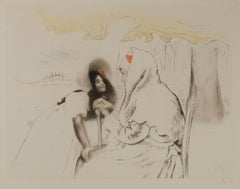
La Toilette
By Louis Legrand
Located in Fairlawn, OH
La Toilette
Drypoint, 1908
Signed and numbered in pencil by the artist (see photos)
Edition: 65 this state (35/65)
Published by Gustave Pellet (1859-1919),...
Category
Early 1900s Art Nouveau Figurative Prints
Materials
Drypoint
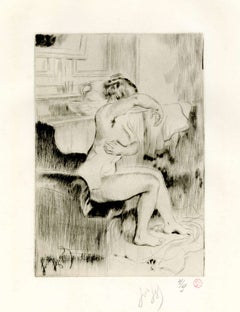
Old Houses in Amsterdam
By T.F. Simon
Located in Fairlawn, OH
Old Houses in Amsterdam
Drypoint, 1909
Signed and dedicated in pencil lower right.
"A Mr. H. A. Webster, bien sympathiquement, T.F. Simon, Paris 26/10"
Simon...
Category
Early 1900s American Impressionist Prints and Multiples
Materials
Drypoint
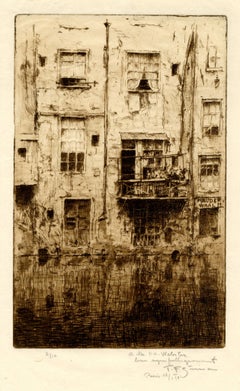
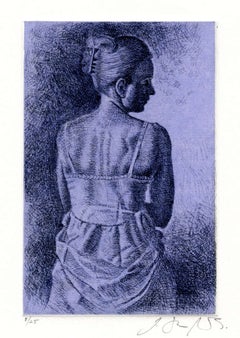
Figure Study (From Interior: Evening)
By Stone Roberts
Located in Fairlawn, OH
Signed and numbered by the artist
Edition: 25
Printed on Hahnemuhle paper
Published by Neptune Fine Arts
Condition: excellent
Plate/Image size:
Sheet size:
"Stone Roberts’ luminous still lifes, private interiors, and large-scale panoramas of figures in motion invite us to look—and then look some more—and relish in the sensuality of the three-dimensional world. While Roberts’ varied influences include Greek Mythology and Roman Classicism, Dutch and Spanish Old Masters, Fantin-Latour, Ingres, and Balthus, his subjects are decidedly of today. From Grand Central Terminal to his wife gardening in Stonington, Connecticut, Roberts paints people and places from his personal surroundings into formal compositions that often appear to have mythical, literary, or psychological elements. Roberts received his B.A. from Yale University, New Haven, CT, where he studied painting with William Bailey, and his M.F.A. from the Tyler School of Art, Philadelphia, and Rome.
Roberts' work can be found in numerous public and private collections throughout the United States and Europe, including the collection of The Metropolitan Museum of Art and the Louis-Dreyfus Family Collection, New York.
A solo exhibition of Stone Roberts’ work was held at the Museum of the City of New York in 2012 entitled Stone Roberts: New York City Paintings." Courtesy of Hirschl & Adler Modern
PUBLIC COLLECTIONS
Asheville Art Museum, Asheville, NC
Sydney and Walda Besthoff
Biltmore Estate, Asheville, NC
Mrs. Robert Carroll
Mr. and Mrs. Willam Cecil
Chase Manhattan Bank, New York, NY
Evansville Museum of Arts and Sciences, Evansville, IN
Jerald Dillon Fessenden
Flint Institute of Arts, Flint, MI
Ms. Barbara Goldsmith
Mrs. Paul Gottlieb
Mr. and Mrs. Graham Gund
Mr. and Mrs. Arie L. Kopelman
Alex S. Jones
William Louis-Dreyfus
Mr. and Mrs. James C. Marlas
J.D. McClatchy and Chip Kidd
Mr. and Mrs. Richard L. Menschel
The Metropolitan Museum of Art, New York, NY
Mrs. Stephen Paine
Mr. and Mrs. W.J.W.J. van Roijen
Mrs. Julius Rosenwald II
Mark Singer
Carl Spielvogel and Barbaralee Diamonstein-Spielvogel
Bruce Springsteen and Patti Scialfa
Stephens Inc., Little Rock, Arkansas
Woodberry Forest...
Category
20th Century American Realist Figurative Prints
Materials
Etching

$840 Sale Price
30% Off
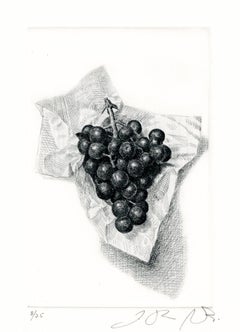
Cluster of Grapes in Folded Napkin
By Stone Roberts
Located in Fairlawn, OH
Cluster of Grapes in Folded Napkin
Etching, 2006
Signed and numbered by the artist (see photo)
Edition: 25 (8/25), see photo
Printed on Hahnemuhle pa...
Category
21st Century and Contemporary American Realist Prints and Multiples
Materials
Etching
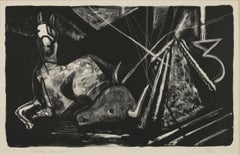
Toro and Horse
By Ralston Crawford
Located in Fairlawn, OH
Toro and Horse
Lithograph, 1957
Signed and numbered in pencil by the artist.
Titled in pencil lower left.
Edition: 25 (24/25)
Printer: Ravel, Paris
Reference: Freeman L57.11
'Toro and Horse' was inspired by Spanish bullfighting...
Category
1950s Cubist Prints and Multiples
Materials
Lithograph
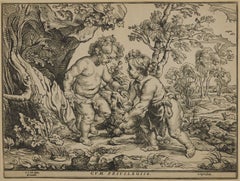
The Infant Christ and St. John Playing with the Lamb, after Peter Paul Rubens
By Christoffel Jegher
Located in Fairlawn, OH
The Infant Christ and St. John Playing with the Lamb,
after Peter Paul Rubens (1577-1640)
Woodcut, trimmed and tipped to support
Initialed in the block bottom ...
Category
1630s Old Masters Prints and Multiples
Materials
Woodcut
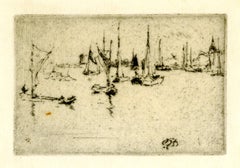
Barges, Dordrecht
By James Abbott McNeill Whistler
Located in Fairlawn, OH
Barges, Dordrecht
Etching, c. 1886
Signed in the plate with the butterfly
Edition: One of 10 known impressions of this image. VERY RARE
Provenance:
Frederick Keppel & Co. with their ...
Category
19th Century Impressionist Landscape Prints
Materials
Etching
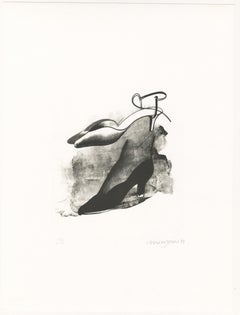
Shoe Box (D)
By Allen Jones
Located in Fairlawn, OH
Shoe Box (D)
Lithograph printed on BFK Rives
Signed, dated, titled and numbered in pencil (see photos)
From: Shoe Box-Exotic (Sculpture and seven original li...
Category
1960s Pop Art Still-life Prints
Materials
Lithograph
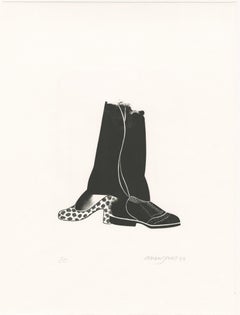
Shoe Box (C)
By Allen Jones
Located in Fairlawn, OH
Shoe Box (C)
From: Shoe Box-Exotic (Sculpture and seven original lithographs)
Signed, dated, titled and numbered in pencil (see photos)
Lithograph printed on ...
Category
1960s Pop Art Still-life Prints
Materials
Lithograph
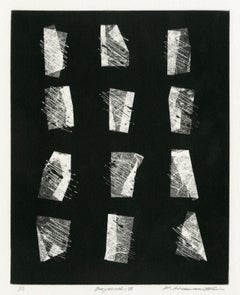
Beyound (sic) - IX
By Katsunori Hamanishi
Located in Fairlawn, OH
Beyond (sic) - IX
Mezzotint, n.d.
Signed, titled and numbered in pencil (see photos)
Edition: Unique impression (i/I)
Ninion and Sheldon Landy were major collectors of Hamanishi's works. They donated a large group of his mezzotints to Art Institute of Chicago, which formed the core of the exhibitions of his works at AIC in 2014 and again in 2019.
Condition: excellent
Plate/Image size: 9.75 x 7.75 inches
Sheet size: 12 1/2 x 9 5/8 inches
Provenance: Ninion and Sheldon Landy, Hamanishi's patrons
EXTREMELY RARE-UNIQUE
Katsunori Hamanishi
Born: 1949, Hokkaido
Medium: Mezzotint, with relief printing and metallic foil. Also a few woodblocks
Hamanishi studied painting and graduated from Tokai University with a degree in Art, in 1973. Since then, he has been living in the Tokyo area, where his primary focus is printmaking. Mezzotint is a variation of intaglio printing--an exacting and laborious process whereby ink is transferred from below the surface of the plate by use of a press. First, the entire copper plate is indented with a toothed steel rocker tool. Worked in all directions, this creates an even finely-grained texture over the surface of the plate. Each pit will hold ink and were the plate inked at this stage, it would print almost solid black.
To create the design the artist smoothes out some of the pits with a burnisher so they will hold less ink. Where highlights are required the plate is burnished and polished quite smooth. A wide range of tones are possible in mezzotint and the process can usually be recognized by a light design on a velvety black background. Hamanishi is internationally known for his mastery of this medium. He creates images with both subtle detail and dynamic composition that explore spatial relationships.
His genius is in balancing calm and meditative qualities with the energetic tensions of inanimate and natural objects. Early work had such things as pipes and branches wrapped with cloth, later rope, then straw. When he moved to a more rural area, rice fields became a common element. He has also been exploring the use of color and metallic leaf in his artwork. In 2005 Mr. Hamanishis began the Haze series exploring more abstract themes using the subtle differences between matte and black inks done in mezzotint and relief printing.
There is always a sense of mystery and intrigue in the complex mezzotint prints that come from Hamanishi’s deft hands. They compel the viewer to do a slow, thoughtful examination in order to fully absorb the vision the artist intends.
Exhibitions:
Worcester Art Museum, Massachusetts --2 person show with Hamaguchi
Ibiza Biennial, Spain--Grand Prize
Original Colored Graphic Print Triennial, Switzerland--Grand Prize
Cabo Frio International Print Biennial, Brazil--Grand Prize
CWAJ Print Show, Tokyo--Art Grant winner
Republic of China Print Exhibit--Gold Medal
Graphic Arts Council, Achenbach Foundation, San Francisco--commissioned print
Art Institute of Cleveland
University of Alberta, Edmonton, Canada--visiting artist
Shun-yo-Kai, Tokyo--prize winner
Bhara Bhavan International Print Biennale, India
Ren Brown...
Category
1980s Abstract Abstract Prints
Materials
Mezzotint
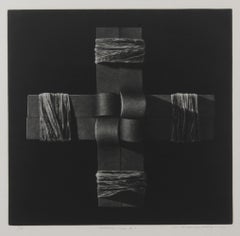
Combination-Cross No. 3
By Katsunori Hamanishi
Located in Fairlawn, OH
Combination-Cross No. 3
Mezzotint, 1979
Signed, titled and numbered in pencil
Edition: 30 (9/30)
Provenance: Ninion and Sheldon Landy, Chicago
The Landy's donated a large collection of Hamanishi to the Art Institute of Chicago in 2013, which formed the core of the exhibitions of his works at AIC in 2014 and again in 2019.
Condition: Excellent
Image size: 13 5/8 x 14 1/8 inches
HAMANISHI Katsunori...
Category
1970s Contemporary Abstract Prints
Materials
Mezzotint
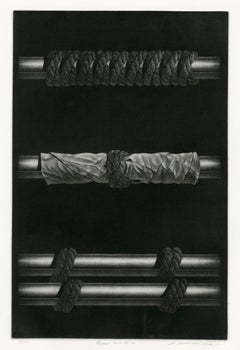
Game Work No. 20
By Katsunori Hamanishi
Located in Fairlawn, OH
Game Work No. 20
Mezzotint, c. 1984
Signed, titled and numbered in pencil (see photos)
Edition 100: (7/100)
Provenance:
Ninion and Sheldon Landy Collection, Donors to Art Inst. of Chicago Hamanishi Exhibition, Oct. 12, 2013-January 5, 2014
Reference:
Katsunori Hamanishi's Work Price List-Small 22
Condition: Excellent
Image: 13 1/4 x 8 3/4"
Sheet: 17 1/2 x 13 1/8"
Ninion and Sheldon Landy were major collectors of Hamanishi's works. They donated a large group of his mezzotints to Art Institute of Chicago, which formed the core of the exhibitions of his works at AIC in 2014 and again in 2019.
HAMANISHI Katsunori...
Category
1980s Abstract Still-life Prints
Materials
Mezzotint
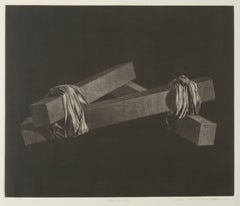
Setsugo
By Katsunori Hamanishi
Located in Fairlawn, OH
Setsugo-Δ
Mezzotint, 1977
Signed, titled and numbered in pencil (see photo)
Edition: 30 (8/30)
Provenance:
Ninion and Sheldon Landy Collection, Donors to Art Inst. of Chicago Hamanishi Exhibition, Oct. 12, 2013-January 5, 2014
Hamanishi Large 12
HAMANISHI Katsunori...
Category
1970s Abstract Still-life Prints
Materials
Mezzotint
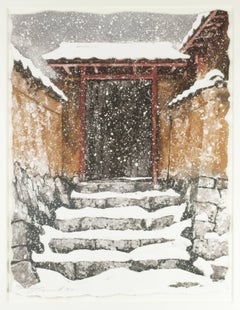
Looking Back
By Joel Stewart
Located in Fairlawn, OH
Looking Back
Etching with hand coloring by the artist, 1994
Signed, dated, and numbered in pencil lower left (see photo)
Edition: 67 (49/67) (see photo)
References And Exhibitions:
Franco & Verne, Quiet Elegance: Japan Through the Eyes of Nine American Artists, 1997. Illustrated pg. 61. Cited as a “great print” by Stewart pg. 53.
Note: An important print by the artist
Joel Stewart
Biography
Museum Collections:
•
Los Angeles County Museum of Art, Los Angeles, California, USA
Cleveland Museum of Art, Cleveland, Ohio, USA.
Portland Art Museum, Portland, Oregon, USA
Library of Congress, Washington D.C., USA
Allen Memorial Art Museum, Oberlin, Ohio, USA
Hoehn Family Galleries, University of San Diego, USA
Group Exhibitions:
2020
The Terminal, Kyoto, “Kyoen”
2019
Rijksmuseum, Amsterdam, “Long Live Rembrandt”
Alt Space POST Gallery, Kyoto, “The Echo Of Songs”
2018
Hakuhou-Doh Gallery, Kyoto, Japan – “Ki Ni Naru”
CWAJ Print Show, Tokyo, Japan
2017
Kyoto Municipal Museum Of Art – “Kyoten 2017”
CWAJ Print Show, Tokyo, Japan
2016
CWAJ Print Show, Tokyo, Japan
2015
CWAJ Print Show, Tokyo, Japan – 60th Annual Exhibition
2014
Kyoto Municipal Museum Of Art – “Kyoten 2014”
The Kura, Kyoto, Japan – Collaborative Paintings With The Mangold Collection
2012
CWAJ Print Show, Tokyo, Japan – 56th Annual Exhibition
2011
CWAJ Print Show, Tokyo, Japan – 55th Annual Exhibition
2008
Phoenix Art Museum, Arizona, USA, “Making Waves – Contemporary Japanese Prints”
2007
Library Of Congress, Washington D.C., USA – “On The Cutting Edge: Contemporary Japanese Prints”
2006
Portland Art Museum, Oregon, USA – “Mahaffey Fine Art: 14 Years, 14 Artists”
LA County Museum Of Art, California, USA – “Modern Japanese Prints: Etchings”
CWAJ Print Show, Tokyo, Japan – 50th Annual Exhibition
2005
CWAJ Print Show, Tokyo, Japan – 49th Annual Exhibition
2004
CWAJ Print Show, Tokyo, Japan – 48th Annual Exhibition
2003
CWAJ Print Show, Tokyo, Japan – 47th Annual Exhibition
2002
CWAJ Print Show, Tokyo, Japan – 46th Annual Exhibition
2001
CWAJ Print Show, Tokyo, Japan – 46th Annual Exhibition
2000
Cleveland Museum Of Art, Ohio, USA, “East Meets West: Modern Japanese Prints”
CWAJ Print Show, Tokyo, Japan – 46th Annual Exhibition
1999
Tolman Collection Gallery, Tokyo, Japan – “Miyabi”
CWAJ Print Show, Tokyo, Japan – 46th Annual Exhibition
1998
Anne Reed Gallery, Ketchum, Indiana, USA, “One Common Denominator”
CWAJ Print Show, Tokyo, Japan – 46th Annual Exhibition
1997
CWAJ Print Show, Tokyo, Japan – 46th Annual Exhibition
1996
CWAJ Print Show, Tokyo, Japan – 46th Annual Exhibition
1995
CWAJ Print Show, Tokyo, Japan – 46th Annual Exhibition
1994
Kawaguchi Bijutsu Gallery, Kyoto, Japan – “Prints By Painters”
1993
CWAJ Print Show, Tokyo, Japan – 46th Annual Exhibition
1992
Kato Gallery, Tokyo, Japan – Spring Show
1990
CWAJ Print Show, Tokyo, Japan – 46th Annual Exhibition
1987
Cydney Payton Gallery, Denver, Colorado, USA – Group Exhibition
Osaka Modern Art Center, Osaka, Japan – Biennale
1986
Voice Gallery, Kyoto, Japan – 3 Man Show
1983
Tacoma Art Museum, Tacoma, Washington, USA, Biennial Show
1983
Bellevue Art Museum, Bellevue, Washington, USA, Biennial Show
One Person Exhibitions:
2020
Alt Space POST, Kyoto, Japan, “Floating Screens”, Pop-Up Installation
2019
Hasu Projects, Kyoto, Japan, “Gojo Rakuen”, Pop-Up Installation
2017
Hakuhou-Doh Gallery
Hakuhou-Doh Gallery, Kyoto, Japan, “Fractured Fairy Tales, A New Print Series”
2015
Hakuhou-Doh Gallery
2013
Nishi Bijutsu Gallery
2011
Azuma Gallery, Seattle, Washington, USA ,“Recent Works”
2010
Fushimi Souko, Kyoto, Japan , “Crossroads: A Folding Screen Installation”
2005
Azuma Gallery, Seattle, Washington, USA , “Recent Works”
2004
Kato Gallery, Tokyo, Japan
2002
Kato Gallery, Tokyo, Japan
Azuma Gallery Seattle, Washington, USA
2001
Keihan Art Salon, Osaka, Japan
2000
Azuma Gallery, Seattle Washington, USA, “New Works”
Ren Brown...
Category
1990s Contemporary Prints and Multiples
Materials
Etching
Eloignement (Remoteness)
By Arthur Luiz Piza
Located in Fairlawn, OH
Eloignement (Remoteness)
Etching, aquatint and engraving, 1990
Signed lower right corner (see photo)
Numbered lower left corner (see photo)
Edition: 99 (28/99)
Publisher: Jacqueline ...
Category
1990s French School Abstract Prints
Materials
Aquatint
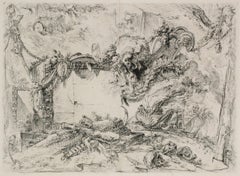
The Monumental Tablet
By Giovanni Battista Piranesi
Located in Fairlawn, OH
The Monumental Tablet
Etching, engraving, drypoint and burnishing, c. 1748
Series: Grotteschi (Grotesques, 4 plates)
Original, unwashed condition. Excellent.
Second edition first is...
Category
1740s Old Masters Prints and Multiples
Materials
Etching
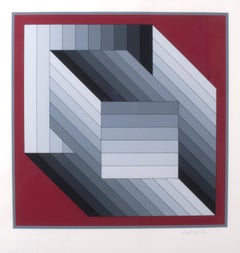
TRIDIM Gris
By Victor Vasarely
Located in Fairlawn, OH
TRIDIM Gris
Screen print, 1986
Signed in pencil lower right (see photo)
Edition: 200 (76/200)
From: portfolio enetitled "35 ans apres"
Printed at Atelier Arcay, Paris, France
Publisher: Park West Gallery...
Category
1980s Op Art Abstract Prints
Materials
Screen
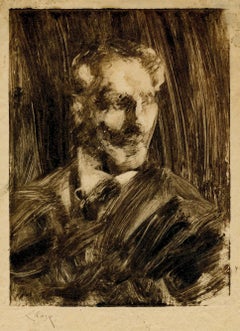
Portrait of a Man Facing Left
By William Merritt Chase
Located in Fairlawn, OH
Portrait of a Man Facing Left
Monotype printed in brown ink, c. 1880-1914
Signed in ink lower left: Chase (see photo)
Provenance:
Helen Chase Storm (the artist's daughter)
Jackson Chase Storm (her son)
Chapellier Galleries (as agent)
James Bergquist, Boston
References And Exhibitions:
Exhibited at the Museum of Fine Arts, Boston and the Clark Art Institute, Williamstown, MA. (See MFA paperwork in photos)
Reference:
Ronald G. Pisano, Completed by D. Frederick Baker and Carolyn K. Lane, William Merritt Chase: Still Lifes, Interiors, Figures, Copies of Old Masters, and Drawings, Catalogue Raisonne, Vol. IV (New Haven and London: Yale University Press, 2010), Vol. 1, M. 8. (See photos of entry)
William Merritt Chase (1840-2016)
Born in Nineveh, Indiana Died New York, New York
In 1883 Chase was involved in the organization of an exhibition to help raise funds for a pedestal for the Statute of Liberty. The exhibition featured loans of three works by Manet and urban scenes by the Italian Impressionist Giuseppe de Nittis. Both artists influenced Chase's Impressionistic style that gave rise to a series of New York park scenes. It is also thought that he was influenced by John Singer Sargent's In the Luxembourg Gardens (1879) which was exhibited in New York at this time. Indeed, Chase had met Sargent in Europe in 1881, the two men becoming lifelong friends with Sargent painting Chase's portrait in 1902.
On another European trip in 1885, Chase met James McNeill Whistler in London. While Whistler had a reputation for being difficult, the two artists got along famously and agreed to paint one another's portrait. Eventually, however, Whistler's moods began to grate with Chase who wrote home stating "I really begin to feel that I never will get away from here". For his part, Whistler criticized Chase's finished portrait and, according to Hirshler, "complained about Chase for the rest of his life". While no record exists of Whistler's portrait of Chase; Chase's portrait of Whistler remains a well-known piece in his oeuvre.
In 1887 Chase married Alice Gerson, the daughter of the manager of a lithography company. Though some fifteen years his junior (Chase was 37), he had known Alice for some time through her family's devotion to the arts. The pair, who would enjoy a happy marriage with Alice in full support of her husband's career, settled initially in Brooklyn...
Category
1890s Impressionist Portrait Prints
Materials
Monoprint
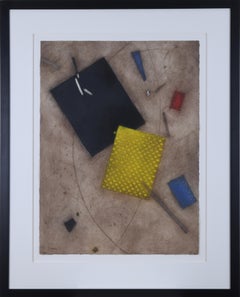
Tempus Fidgets
Located in Fairlawn, OH
Tempus Fidgets
Etching, 1952
Signed in pencil lower right (see photo)
Titled in pencil lower left (see photo)
During his military service, Gilkey was part of the "Monuments Men" art recovery team
The title is a play on Tempus fugit is a Latin phrase, usually translated into English as "time flies". The expression comes from line 284 of book 3 of Vergil's Georgics, where is appears as FVGIT INREPARABILE TEMPVS: "it escapes, irretrievable time".
Condition: Excellent
Image/Plate size: 11 3/4 x 14 5/8 inches
Sheet size: 15 3/4 x 20 9/16
Reference: Portland Art Museum, 82.80.642
Gordon Waverly Gilkey was a printmaker, teacher, collector, and curator. He graduated from Albany College, which is now Lewis & Clark College, in 1933 and obtained a Master of Fine Arts degree from the University of Oregon in 1936. He served in World War II in a special division dedicated to locating and returning art confiscated by the Nazis and to confiscating Nazi propaganda.
Gilkey spent the majority of his career teaching printmaking at Oregon State University. He amassed a large collection of prints, primarily by trading work with his colleagues. When he retired in 1978, Gilkey became curator of prints and drawings at the Portland Art Museum and professor and printmaker in residence at the Museum Art School, which is now known as the Pacific Northwest College of Art. Over the course of many years, he donated more than 10,000 prints and drawings from his personal collection to the Museum. Gilkey was crucial in building awareness for and appreciation of works on paper, and was instrumental in creating proper storage and viewing spaces for the graphic arts. In 1993, the Vivian and Gordon Gilkey...
Category
1950s Abstract Abstract Prints
Materials
Etching