TISHU Furniture
to
37
1,294
9
1,178
118
7
285
122
17
7
6
5
4
3
3
1
169
353
656
125
179
216
188
27
5
15
19
37
52
47
69
34
33
473
331
294
263
151
767
714
384
272
226
1,303
1,303
1,303
36
29
18
17
15
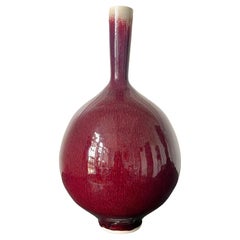
Early Large Ceramic Vase with Sang-de-boeuf Glaze by Brother Thomas Bezanson
By Brother Thomas Bezanson
Located in Atlanta, GA
An early ceramic long-neck vase with a brilliant copper red glaze by Benedictine monk potter Brother Thomas Bezanson (1929-2007). The minimalistic an...
Category
Vintage 1960s American Modern Vases
Materials
Ceramic
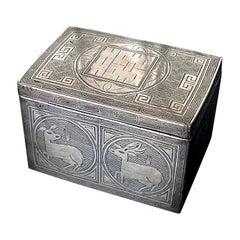
Fine Korean Iron Box with Silver Inlay Joseon Dynasty
Located in Atlanta, GA
A fine Korean iron box that was traditionally used to store tobacco leaves dated to the late Joseon Dynasty circa 19th century. The box is made from iron and has a heavy weight, although the wears along the edges of the lid and base exposes a bronze metal color underneath, indicating the iron metal may contains a high level of copper. The surface was beautifully decorated with elaborate silver inlay that covers the entire surface except the base. The extraordinary workmanship depicts a pair of deer within the circled square (shape of heaven and earth) and a lined background on the long sides and a crane with spread wings on the shorter sides. Both animals were associated with longevity. Their eyes were highlighted with copper inlay, adding a lively touch to the animation. The lid is centered with a Chinese character "Xi" (Paired-Hui in Korean), which means double happiness. (In Chinese culture, it is often used in a wedding ceremony). The large symbol was set on geometrical background of tightly scrolling diamond pattern surrounded by stylized Ruyi mushroom heads, another floral longevity symbol. Archaic fret cloud band borders the entire perimeters of the lid and the container.
Tobacco was introduced to Korean in the first half of the 17th century and gradually gained popularity. When the tobacco was started being smoked in shredded form instead of rolled leaves, there rose the production of the smoking accessories, with some in fine quality as luxury items for the elite. The accoutrement such as this box is a fine example made in late Joseon dynasty, using extensive silver inlay, a technique called "jjoeum-ipsa", in which the silver wires were hammered into the scorched iron surface to create the elaborate design.
Similar boxes with variation of shape and motifs are in the collection of several major museums. Compare the box with item Gu 754 in the National Museum of Korea; item 22.78 in MET NYC and M.240:1, 2-1926 in V& A Museum in London. The most closely related example we found is item C232 in the collection of the Museum of East Asian Art...
Category
Antique 19th Century Korean Other Metalwork
Materials
Silver, Copper, Iron
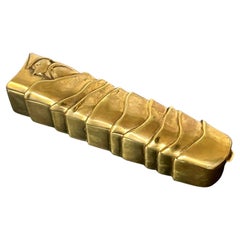
Large Rare French Gilt Bronze Box "Pinocchio" by Line Vautrin
By Line Vautrin
Located in Atlanta, GA
A rare cast gilt bronze box "Pinocchio" by French Parisian art jeweler Line Vautrin (1913-1997). The elongated lidded box depicts a silouette portrait of the famous boy. The interior...
Category
Vintage 1940s French Mid-Century Modern Decorative Boxes
Materials
Bronze
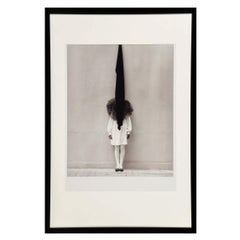
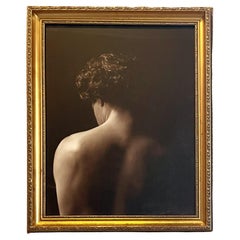
Frame Photograph Stillness in Spirit by John Patrick Dugdale
By John Dugdale
Located in Atlanta, GA
A visually arresting photograph by John Patrick Dugdale (American, born 1960-) titled "Stillness of Spirit". Relatively large in print size, the w...
Category
1990s American Modern Photography
Materials
Paper
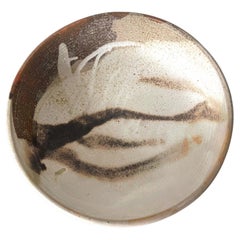
Large Ceramic Center Bowl Toshiko Takaezu
By Toshiko Takaezu
Located in Atlanta, GA
A large ceramic center bowl by Japanese American artist Toshiko Takaezu (American, 1922 - 2011). Meant to be a bespoken center piece., the deep form bowl features a robust body of thick wall, supported by a short round foot ring. The surface showcases an expressive glaze pattern that is the signature style to the artist's work. Free-flowing abstract strokes...
Category
Late 20th Century American Modern Decorative Bowls
Materials
Ceramic
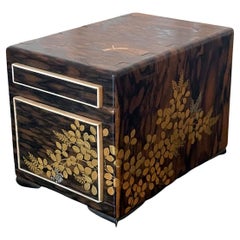
Fine Miniature Japanese Kodansu with Lacquer Inlays
Located in Atlanta, GA
A fine Japanese miniature kodansu constructed from Kaki wood (Persimmon) circa 19th century, late Meiji period. With its expressive exotic wood grains and exposed tenon construction,...
Category
Antique Late 19th Century Japanese Meiji Lacquer
Materials
Wood
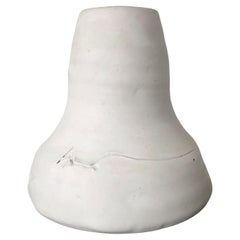
Sculptural Ceramic Funnel Vase by Robert Turner
By Robert Turner
Located in Atlanta, GA
A white stoneware vase by American Ceramist Robert Chapman Turner (1913 - 2005). Made between 1970-80s, the group of white-colored vessels with such a funnel form were called either Beach or Shore, obviously inspired by the ocean. Hand sculptured in a simple form with a neck opens to mouth that also can serve as a handle, the surface was always marked with artistic imperfection intended by the artist, such as incision and kiln bubble and burst. On this vase, the artist made several incision lines randomly, and also sparsely applied some tiny sand-like granules, adding a very subtle texture and allude to the scheme of the ocean. Incised signature "Turner" on the base.
The vessel is one of the classic forms with variations in Turner's repertoire since 1970s when he started to make non-functional abstract sculptural pieces. Incised signature "Turner" on the base.
"In 1971–72, drawn by the power of African sculpture, and wishing to imbue his work with a greater sense of universality, Robert Turner traveled to Nigeria and Ghana. The trip proved transformational. In West Africa he was deeply moved by the way in which art was ingrained in daily experience, and by the beauty of traditional forms of architecture, pottery, ceremonial objects, and decoration. After his return, Turner began to produce series of distinctive vessel types named after African kingdoms and peoples—Ashanti, Ife, Oshogbo, Akan. The first is a squat, lidded pot; the others are cone and cylinder shapes." Smithsonian American Art Museum
Robert Turner's work is in numerous museum collections including the Smithsonian Museum of American Art, Los Angeles County Museum of Art and the Nelson-Atkins Museum of Art, Kansas City.
Several examples of this series are illustrated in the book "Robert Turner Shaping Silence A Life in Clay" by Marsha Miro and Tony Hepburn...
Category
Late 20th Century American Modern Vases
Materials
Ceramic
Korean Celadon Ceramic Long Neck Bottle Vase with Slip Inlay Goryeo Dynasty
Located in Atlanta, GA
A Korean ceramic celadon bottle vase with inlay design from Goryeo Dynasty (918 to 1392AD) circa 12th century. With an elongated neck that continues dow...
Category
Antique 15th Century and Earlier Korean Archaistic Ceramics
Materials
Ceramic

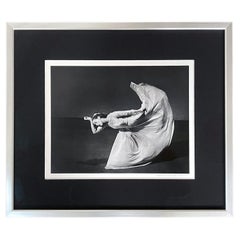
Vintage Photograph Martha Graham Letter to the World by Barbara Morgan
Located in Atlanta, GA
An iconic black and white photography by Barbara Morgan (American, 1900-1992) of "Martha Graham, Letter to the World". The photo was originally tak...
Category
Vintage 1970s American Modern Photography
Materials
Paper
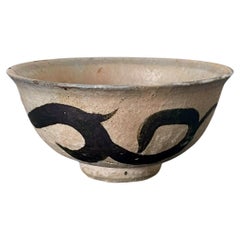
Korean Ceramic Buncheong Ware Tea Bowl Early Joseon Dynasty
Located in Atlanta, GA
An antique Korean Buncheong stoneware tea bowl (chawan) from early Joseon Dynasty circa late 15th to early 16th century. The bowl with a short ring base is nearly entirely covered in a white slip except the base (known as sougusuri in Japanese, total glaze). Iron-colored scrolling vines were painted on with quick and deft brush strokes, rendering the bowl a vital and spontaneous appeal. It appears that the bowl was dipped in the white slip instead of being brushed on, observing from the slip pattern left on the rim of the bowl. The bowl shows significant age and evident of use for tea drinking. There are losses of glaze flakes throughout, along the rim and inside the bowl. The flake off the glaze left a dark spot on the rim, exposing the deep colored clay underneath. Inside the bowl, many of the glaze flakes appear more superficial and retains a yellowing color from the tea stains (known as amamori, rain leak). There is a historical crack line on the exterior (surface only) that result in associated small losses of glaze. It appears that the crack line was the result from the kiln firing and gradually the glaze around it started to reduce. The bowl comes with a later wrapping cloth and a wood tomobako box, but they are not original to the piece.
This particular type of Buncheong ware was associated with the Hakbong-ri kilns in the sacred Mount Gyeryong Mountains, west of Daejeon city in the Chungcheong province. During early Joseon Dynasty, the emperor decided to reject Buddhism to embrace the Confucianism. As a result, many monks were forced to abandon their religious life and returned to the secular society. The monks in Gyeryong mountains set up the kilns and started to produce this so called "Hakbong-ri" type of Buncheong ware. The production was shorted-lived for only a few decades from late 15th to early 16th century before it turned to porcelain, but the ware made during that period was noted for their fresh and enigmatic appeal with deft iron-paint decoration. Collectors cherish these rare pieces for their vitality and spontaneity often used them on important occasions of chado in Japan and passed down to generation.
For a similar bowl, see Catalog 52 illustrated on page 87 of the book "Korean Buncheong Ceramics...
Category
Antique 15th Century and Earlier Korean Archaistic Ceramics
Materials
Ceramic
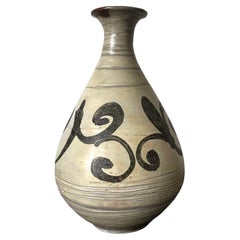
Korean Glazed Ceramic Vase Buncheong Ware Early Joseon Dynasty
Located in Atlanta, GA
An antique Korean Buncheong stoneware vase from early Joseon Dynasty circa late 15th to early 16th century. The vase is of a classic pear form with a ...
Category
Antique 15th Century and Earlier Korean Archaistic Ceramics
Materials
Ceramic
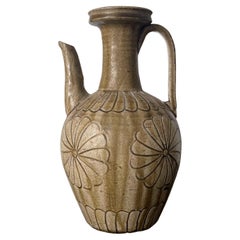
Japanese Ko-Seto Stoneware Ewer with Carved Design
Located in Atlanta, GA
On offer is a rare Ko-seto (old seto) stoneware ewer from Kamakura period (12-14th century) Japan. The exceptionally heavily potted ewer is made of stoneware. The main body was likely hand-coiled with individually built handle, sprout and wheel-made neck and mouth assembled. It takes the basic form from the contemporary Chinese ewer...
Category
Antique 15th Century and Earlier Japanese Archaistic Ceramics
Materials
Stoneware
Antique Korean Mishma Tea Bowl Chawan Joseon Dynasty
Located in Atlanta, GA
A Korean Hori-Mishima Chawan (tea bowl) circa 16th-17th century (Joseon Dynasty). The tea bowl is of an upright conical form supported by a high foot ring. It was decorated with incised brushwood fence patterns filled with white slip on both the interior and exterior surface. These dominant motifs were spaced by three encircling double lines. Seven chrysanthemum flowers (inka) were stamped on the lower interior surrounding a swirling tea well on the bottom. There are six spur marks known as Meato in Japanese on the interior bottom and a pointy spot in the center of the foot ring known as Tokin. Two crack lines were historically repaired by superb Kintsugi, adding a mysterious wabi-sabi appeal to the piece.
The Hori-Mishima bowl was also known as Gohon Mishima. It was made in Bushan Kilns of the Southern Gyeongsang Province specifically for the Japanese market in the 16th-17th century, when the tea ceremonies in Japan demanded such ware. The bowl comes with a purple fabric pouch...
Category
Antique 17th Century Korean Other Ceramics
Materials
Ceramic
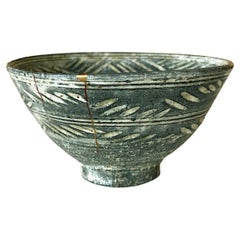
Ceramic Oval Vessel by British Studio Potter John Ward
By John Ward
Located in Atlanta, GA
A stoneware vessel in an oval form with dipped rim with glazed by British studio ceramist John Ward (1938-2023) circa 1997. The form of this vessel is m...
Category
Late 20th Century English Organic Modern Vases
Materials
Ceramic
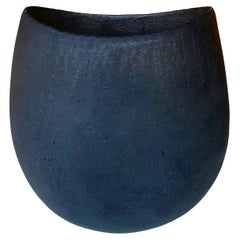
Japanese Satsuma Vase Yabu Meizan Meiji
By Yabu Meizan
Located in Atlanta, GA
A Satsuma baluster form vase from the studio of Yabu Meizan (birth name Yabu Masashichi; 1853-1934), who is one of the most celebrated and collectible Satsuma artists from Meiji Peri...
Category
Early 20th Century Japanese Meiji Ceramics
Materials
Ceramic
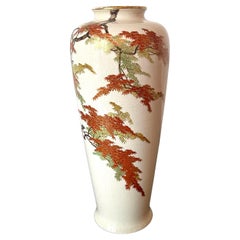
Japanese Miniature Satsuma Vase Yabu Meizan Meiji
By Yabu Meizan
Located in Atlanta, GA
A small Satsuma vase from the studio of Yabu Meizan (birth name Yabu Masashichi; 1853-1934), who is one of the most celebrated and collectible Satsu...
Category
Antique Early 1900s Japanese Meiji Ceramics
Materials
Ceramic
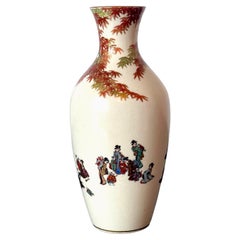
Fine and Rare Miniature Satsuma Vase by Taizan Yohei
Located in Atlanta, GA
A very fine miniature ceramic vase in satsuma ware by Taizan Yohei IX (1864-1922) circa 1880-1890s of late Meiji period. The vase with a broad flat should...
Category
Antique 1880s Japanese Japonisme Ceramics
Materials
Ceramic
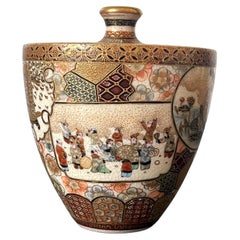
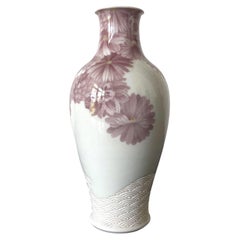
Japanese Ceramic Vase with Delicate Carvings by Makuzu Kozan Meiji Period
By Makuzu Kozan
Located in Atlanta, GA
A delicate and rare Japanese ceramic vase by the important Meiji imperial potter Makuzu Kozan (1842-1916) circa 1887-1910. Dated to his underglaze phase post 1887 after he successful...
Category
Antique 1890s Japanese Japonisme Ceramics
Materials
Ceramic
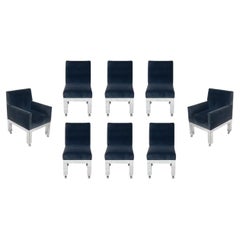
Set of Eight Chrome Cityscape Dining Chairs by Paul Evans for Directional
By Directional, Paul Evans
Located in Atlanta, GA
A nice set of eight cityscape dining chairs by Paul Evans for Directional, circa 1974. The set consists of two armchairs model PE-241 and six side chairs model PE-240. Chromed steel ...
Category
Vintage 1970s American Mid-Century Modern Dining Room Chairs
Materials
Steel, Chrome
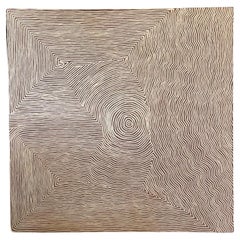
Contemporary Australian Aboriginal Painting by Kenny Williams Tjampitjinpa
Located in Atlanta, GA
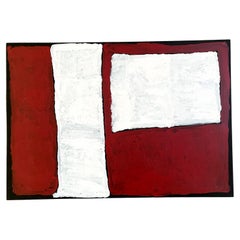
Entitled "Two Kuniya (Pythons) During Tingari Cycle", this mesmerizing painting was painted by Australian aboriginal artist Kenny Williams Tjampitjinpa...
Category
21st Century and Contemporary Australian Modern Paintings
Materials
Linen, Acrylic
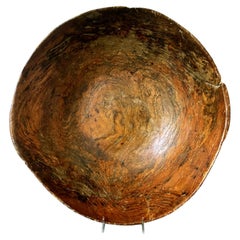
Large Antique Americana Carved Elm Burl Bowl with Handles
Located in Atlanta, GA
A massive Americana bowl hand-carved from Elm wood (with some possible burl pattern in the wood) circa 18th century. The bowl was from Northeastern part or Eastern Woodlands of the U...
Category
Antique 18th Century American American Colonial Decorative Bowls
Materials
Wood
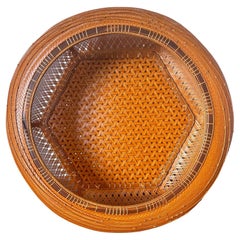
Contemporary Japanese Bamboo Sculptural Ikebana Kawano Shoko
By Kawano Shoko
Located in Atlanta, GA
A large woven bamboo basket form ikebana called "Richness" beautiful bamboo by contemporary Japanese bamboo artist Kawano Shoko (born 1957-) circa 2002 and purchased from Tai Modern...
Category
Early 2000s Japanese Organic Modern Sculptures and Carvings
Materials
Bamboo, Rattan
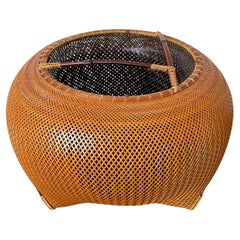
Contemporary Japanese Bamboo Sculpture Kawano Shoko
By Kawano Shoko
Located in Atlanta, GA
A beautiful bamboo sculpture in a double-walled basket form by contemporary Japanese bamboo artist Kawano Shoko (born 1957-). The piece entitled "Birth" was made in 2002 and purchased from Tai Modern...
Category
Early 2000s Japanese Organic Modern Sculptures and Carvings
Materials
Bamboo, Rattan
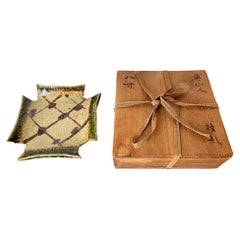
Japanese Oribe Glazed Stoneware Dish by Kitaoji Rosanjin
By Rosanjin Kitaoji
Located in Atlanta, GA
An oribe stoneware square dish with four notched corners and up-turned edges made by Kitaoji Rosanjin (1883-1959) circa 1950s. The Mingei style dish h...
Category
20th Century Japanese Modern Ceramics
Materials
Ceramic
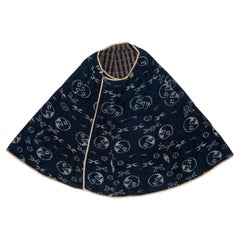
Japanese Indigo Kasuri Ikat Traveling Cape
Located in Atlanta, GA
Known in Japanese as Bozugappa (priest's raincoat), this cape-like garment was worn by the travelers in Japan circa late 19th century to early 20th century (end of Meiji period). Derived from the cape worn by the Portuguese missionary, who first arrived in Japan in mid-16th century, this type of cape was originally reserved for the Japanese military...
Category
Antique 1890s Japanese Meiji Textiles
Materials
Cotton, Linen
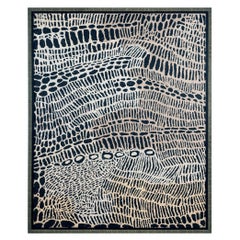
Australian Aboriginal Painting Tjukurla Country Nyurapayia Nampitjinpa
Located in Atlanta, GA
A stunning abstract painting by Australian Aboriginal artist Nyurapayia Nampitjinpa
(also known as Mrs. Bennett; 1935-2013). Entitled "Tjukurla Country", this work was acrylic on Be...
Category
Early 2000s Australian Modern Contemporary Art
Materials
Canvas, Acrylic
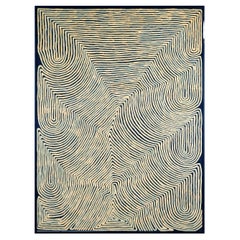
Australian Aboriginal Painting Rain Dreaming Ronnie Tjampitjinpa
By Ronnie Tjampitjinpa
Located in Atlanta, GA
A contemporary painting by Australian Aboriginal artist Ronnie Tjampitjinpa (1943-2023). Entitled "Rain Dreaming", the artwork was acrylic on canvas and painted in 1999
Fully documented: originally purchased in 1999 from Kimberley Australian Aboriginal Art, Melbourne, cat. no. KA 708/99; The in the collection of The Kelton Foundation, Santa Monica; It was exhibited in: "G'Day LA" Australia Week, in partnership with the Australian Consulate Los Angeles, Pacific Design Center, West Hollywood, CA, 15-25 January 2004. It is housed in a black thin wood frame.
Ronnie Tjampitjinpa was born in Pintupi land at Muyinnga, about 100 kilometres west of the Kintore Range, just across the Western Australian border. He is the son of Uta Uta Tjangala’s older brother, Minpuru Tjangala (c.1899–1976).
Artist's Biography (Courtesy of Art Gallery NSW)
After his initiation into Pintupi law at the site of Yumari, Tjampitjinpa and his younger brother Smithy Zimran Tjampitjinpa walked into the Aboriginal community of Yuendumu. They later joined their parents and other siblings – who had come in to Ikuntji (Haasts Bluff) in 1956 from the Dover Hills/Yumari area – at the new settlement of Papunya. Tjampitjinpa worked as a labourer, assisting with the fencing of the aerodromes at Papunya and Ikuntji. He was one of the youngest of the group of men who began painting at the start of the Western Desert art movement in 1971, and was a founder of Paunya Tula Artists.
During the 1970s, Tjampitjinpa was preoccupied with returning to his traditional lands and became a strong advocate for the outstation movement, travelling between meetings in Papunya, Yuendumu, Wirrimanu (Balgo) and Mount Doreen Station. His goal was finally achieved with the establishment of the Walungurru (Kintore) settlement in 1981. Tjampitjinpa moved there with his young family in 1983, establishing an outstation at Ininti (Redbank) and serving as chairman of the Kintore Outstation Council. During this period, he emerged as one of Papunya Tula Artists’ major painters, pioneering the bold, scaled-up, linear style that came to dominate many of the Walungurru painters’ work during the 1990s. His distinctive aesthetic preoccupa-tion is exemplified in the untitled works of 1994 and 2001. Now one of the last founding members of Papunya Tula Artists, Tjampitjinpa’s career spans more than 40 years. He has had six solo exhibitions since 1989 in Australia, most recently at Utopia Art, Sydney.
Throughout the 1980s Tjampitjinpa worked devotedly on a land claim for Ininti, holding meetings in Darwin, Warmun (Turkey Creek...
Category
1990s Australian Modern Paintings
Materials
Canvas, Acrylic
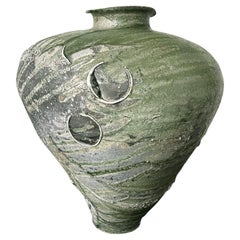
Massive Ceramic Jar Tsubo by Japanese Potter Tsujimura Yui
By Tsujimura Yui
Located in Atlanta, GA
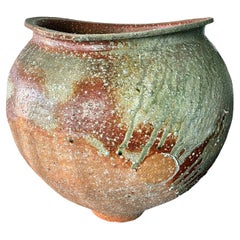
A massive and magnificent ceramic Tsubo jar by Japanese potter Tsujimura Yui (1975-). Inspired by the techniques and aesthetics of the early medieval Sue ware, the artist hand builds an impressive voluminous oviform, irregular by intention, from a combination clay from both Shigaraki and Iga, coarse by nature and rich in feldspar. Fired on their sides horizontally, the surface of the thick wall tsubo is covered with streaks and drips of natural ash glazes in shades of green and blue, forming an abstract and mesmerizing pattern that resembles geothermal earth activity. Additional ashes are blown during the firing to accentuate the textures. Most recognizably, there are many circular marks scattered on the surface of his archaic looking vessels. That is resulted from using stacked tea bowls to prevent the conjoining of the vessels. After the firing, the stacked vessels are chipped away, leaving behind those circular impression, as well as deep pools of glaze which gather where they were placed.
Born in 1975, Tsujimura Yui is the first son of the contemporary ceramic artist Tsujimura Shiro...
Category
Early 2000s Japanese Modern Ceramics
Materials
Ceramic
Large Contemporary Ceramic Tsubo Jar by Kai Tsujimura
Located in Atlanta, GA
A massive stoneware tsubo floor jar created by Japanese contemporary ceramic artist Kai Tsujimura (1976-). The heavy jar with its impressive volume was made in the tradition of Iga ware with local coarse sandy clay that turned reddish after the firing. It took its shape from heavy medieval storage jars with a wide-open mouth. For a nearly identical form, see an Echizen jar from Heian period (794–1185) in the collection of MET (Accession Number: 1977.261). The surface showcases scattered white crystalized feldspars and a green vitrified ash glaze cascade down the body (known as biidoro in Japanese - after the Portuguese word for glass vidoro). These is a globular shape impressed on the jar. It is a signature practice of the Tsujimura potter family by stacking bowls between the pieces in the kiln during the firing, resulting in an accidental but iconic aethetic (Kai and Yui Tsujimura...
Category
2010s Japanese Organic Modern Ceramics
Materials
Stoneware
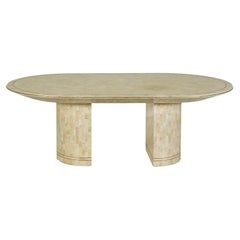
Large Dining Fossilized Coral Table with Stone Mosaic by Karl Springer
By Karl Springer
Located in Atlanta, GA
A glamorous dining table designed and retailed by Karl Springer, circa 1980s. The iconic shape features a beveled horse track-shape top with ro...
Category
Vintage 1980s American Modern Dining Room Tables
Materials
Stone

$8,400 Sale Price
30% Off
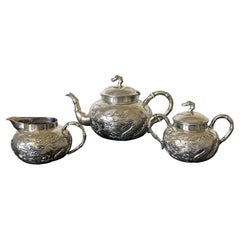
Early Chinese Export Silver Tea Service by Cutshing
By Cutshing
Located in Atlanta, GA
An early set of Chinese export sterling silver tea service circa 1840-70s. The service consists of a lidded tea pot, a creamer and a sugar bowl. The surface was beautifully decorated with chased high-relief dragons with tightly chased scales, slithering with open claws...
Category
Antique Late 19th Century Chinese Chinese Export Metalwork
Materials
Sterling Silver
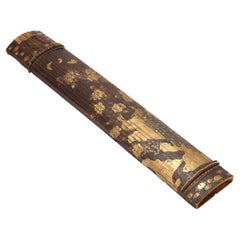
Japanese Meiji Han Koto with Maki-e Lacquer Decoration
Located in Atlanta, GA
A rare Japanese Koto made from carved Paulownia wood and lavishly decorated with lacquer Maki-e circa late 19th century of Meiji Period (1868-1912). The ...
Category
Antique Late 19th Century Japanese Japonisme Lacquer
Materials
Wood
Triptych Photographs Rock Bottom by David Hilliard
Located in Atlanta, GA
Entitled "Rock Bottom", this triptych photographs were by American photographer David Hilliard (born 1964) in 2008. These chromogenic prints were f...
Category
Early 2000s American Post-Modern Photography
Materials
Acrylic, Paper

Japanese Ceramic Centerpiece Bowl Makuzu Kozan Meiji Period
By Makuzu Kozan
Located in Atlanta, GA
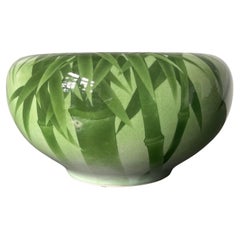
A beautiful ceramic vessel in the form of Bo, the so-called monk's alms bowl from the studio of Japanese Potter Makuzu Kozan, also known as Miyagawa Kozan (1842–1916), one of the most established and collected ceramist from Meiji Period. Born as Miyagawa Toranosuke, Kozan established his pottery studio in Yokohama circa 1870s and later became one of the appointed artists to the Japanese Imperial household. His work was exhibited in many international fairs that the Meiji government participated at the turn of the century and won many grand prizes.
Of a relatively large size, this piece was made as a decorative center piece for display. It was brilliantly decorated with underglaze paint of a green-on-green bamboo motif, using the novel technique developed by Kozan called Fuki-e (the blow painting). As a result, the bamboos appear took on a three-dimensional quality as if appearing in a mist. Known as one of the most creative ceramists, circa 1887, Kozan started experimenting with new chemical colors from the West in the format of his porcelain glaze. New colors allowed him to create underglaze design that appeared bright, smooth and glossy. To create design that is realistic and dimensional, more common in the western paintings, he was inspired by the native Japanese ink painting technique developed around 1900 by Yokoyama Taikan...
Category
Antique Early 1900s Japanese Japonisme Ceramics
Materials
Ceramic
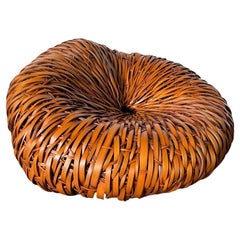
Large Contemporary Japanese Woven Bamboo Sculpture Mimura Chikuho
By Mimura Chikuho
Located in Atlanta, GA
A contemporary hand-woven bamboo sculpture in an organic form by Japanese bamboo artist Mimura Chikuho (1973-). Named "Cloud on the Peak", the piece was made as one of his series in 2004. Entirely hand-woven in irregular plaiting, the artist challenged the traditional bamboo basket making and elevated it into modern abstract sculpture. The minimalist donut form resembles the hat-shaped cloud formed around the peak of the mountain (often seen on Fujisan in Japanese art). It displays a wonderful subtle undulation and irregularity in its organic shape, achieved by a mastery of the traditional technique. The irregular plaiting appears chaotic in its busy crossing patterns yet as a whole, the piece strangely quiet and introverted, demanding contemplation from the viewer. Signed "Chikuho" underneath in Kanji. The piece comes with its original storage paper box and a silk bag.
Provenance: Purchased from Tai Gallery/Textile Arts now (Tai Modern) in Santa Fe.
Mimura Chikuho was born in 1973 in Tokyo. He studied under Yufu Shohaku...
Category
Early 2000s Japanese Organic Modern Sculptures and Carvings
Materials
Bamboo
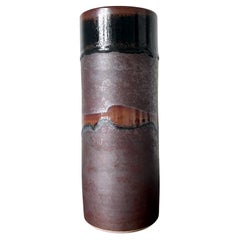
Early Ceramic Vase with Unique Glaze by Brother Thomas Bezanson
By Brother Thomas Bezanson
Located in Atlanta, GA
An early ceramic vase in a slightly tapered cylinder form by potter Brother Thomas Bezanson (1929-2007). The minimalistic silouette is striking...
Category
Mid-20th Century American Modern Vases
Materials
Ceramic
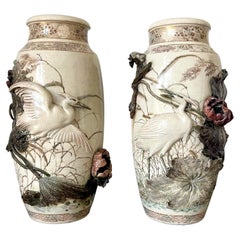
Rare Pair of Early Period Makuzu Kozan Takauki High-Relief Vases
By Makuzu Kozan
Located in Atlanta, GA
A stunning pair of ceramic vases with gilt, paint and high-relief decoration by imperial artist Makuzu Kozan (1842-1916, also known as Miyagawa Kozan) circa 1876-81 (late Meiji period). These vases belong to early period (1876-1881) of Kozan's repertoire, during which time the high relief sculpturing (known as Takauki ware) was used as a distinguished technique on top of the traditional gilt and paint ornaments of satsuma ware. Due to the relatively limited production and the fragile nature of these wares, not a large quantity of the examples remained in the first place, not mentioning a fine matching signed pair in such impressive sizes.
Not only a rarity, this pair of vases is also superb in workmanship, thus the fine example of the work from that short and unique period of the artist's career before he switched to the underglaze period. In a conceptually mirrored fashion, the surface is richly decorated with flying cranes among large lotus leaves and flower, like an idyllic aqua scenery of pure poetry on a circular scroll. The high-relief appliques were rendered and composed in realistic fashion but with a dramatic touch. They are literally about to break the surface free, alive and in motion. The dark colors of the glaze were used to set a moody tone. The approach to create this type of ornamentations is more akin to sculpturing an ink painting in three-dimension than ceramic making. It is not hard to imagine the demand of both the artistry and the technique.
Both vases were signed as "Makuzu Kozan Kiln" and each further with another name and seal, which are most likely the individual artist involved in the making process. Similar signatures can be seen in the reference book below.
For similarly Takauki vases, see Miyagawa Kozan Makuzu...
Category
Antique 1870s Japanese Japonisme Ceramics
Materials
Ceramic
Japanese Maki-e Lacquer Portable Sagejubako Theme of Three Winter Friends
Located in Atlanta, GA
Sagejubako is a portable lunch or picnic set that became popular in the early Edo period when an additional meal was added between breakfast and dinner. It normally consists of a han...
Category
Antique 19th Century Japanese Japonisme Lacquer
Materials
Lacquer
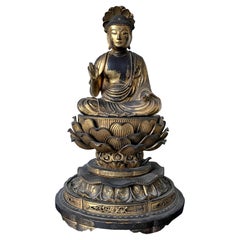
Japanese Antique Gilt Wood Amitabha Buddha on Loctus Throne Statue
Located in Atlanta, GA
A Japanese carved wood Amitabha (Amida) Buddha statue with residual gold leafed surface circa 19th century (late Edo period). The buddha is seated in the padmasana position on an elevated double lotus throne, under a small lotus halo canopy. His right hand is held in abhaya mudra which means fearlessness in Sanskrit. The mudra symbolizes protection, peace, and fearless. His left hand gently resting on his thigh. Dressed in a flowing robe with open chest, the statue showcases a classic iconography found prominently in Japanese Buddhism art during Edo to Meiji period, characterized by the double lotus throne and a particularly serene meditative facial expression, highlighted by inset gemstones...
Category
Antique 19th Century Japanese Edo Sculptures and Carvings
Materials
Gold Leaf
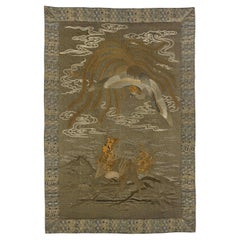
Massive Japanese Embroidery Tapestry Display Box Meiji Period
Located in Atlanta, GA
A massive Japanese embordered tapestry professionally displayed in a custom acrylic shadow box. The fine work of textile art is dated to 1890-1920s, late Meiji (1868-1912) or possibl...
Category
Early 20th Century Japanese Japonisme Textiles
Materials
Brocade, Silk, Acrylic
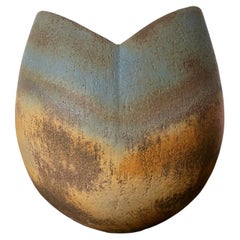
Ceramic Vase Vessel by British Studio Potter John Ward
By John Ward
Located in Atlanta, GA
A stoneware vessel with glazed and banded stripes design by British studio ceramist John Ward (1938-2023) circa 1980s. The vessel takes its simple but d...
Category
Late 20th Century English Organic Modern Vases
Materials
Ceramic
Ceramic Vessel Vase by British Studio Potter John Ward
By John Ward
Located in Atlanta, GA
A stoneware vessel with glazed and banded stripes design by British studio ceramist John Ward (1938-2023) circa 1980s. The vessel takes its simple but d...
Category
Late 20th Century English Modern Vases
Materials
Ceramic
Japanese Studio Ceramic Vase by Ken Matsuzaki with Original Tomobako
By Ken Matsuzaki
Located in Atlanta, GA
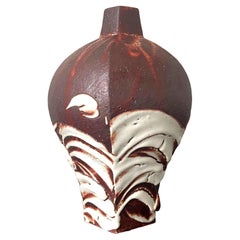
An impressive stoneware bottle form vase by contemporary Japanese studio potter Ken Matsuzaki (1950-) circa 2010s. The solid form takes its cue from Chinese traditional plum vase (Meiping) with raised and swelled shoulder and a small opening, yet it rises from a non-conventional pentagonal faceted base. The extraordinary surface was covered with Yohen Shino glaze in a deep iron hue. Thick white slips were applied in bold strokes to the lower portion of the vase. The abstract pattern calls to mind of the imagery of the iconic ocean waves found in traditional Japanese art. The presence of the vase is strong and none-compromising, reaching back to the past yet appearing utterly modern. It is marked by the artist underneath and comes with the original tomobako with title and author inscriptions and a wrapping cloth with the artist's seal.
"Ken Matsuzaki’s haptic ceramics bring a contemporary approach to traditional Japanese ceramicware, most notably 16th-century Oribe pottery...
Category
21st Century and Contemporary Japanese Modern Ceramics
Materials
Ceramic
Studio Ceramic Vase Brother Thomas Bezanson
By Brother Thomas Bezanson
Located in Atlanta, GA
A ceramic vase crafted by Brother Thomas Bezanson (1929-2007) circa 1970s. The vase takes a classic Chinese "Mei Ping" form but with a modern s...
Category
Late 20th Century American American Craftsman Vases
Materials
Ceramic
Korean Ceramic Moon Jar with Dragon Joseon Dynasty
Located in Atlanta, GA
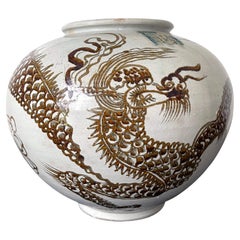
On offer is a large Korean ceramic storage jar (hangari) with white glaze and iron red underglaze dragon design. The globular shaped jar derived its form from the Moon Jar of the ear...
Category
Antique 18th Century Korean Archaistic Ceramics
Materials
Ceramic
Rare Antique Japanese Folding Screen by Kano Tanshin
By Kano Tanshin
Located in Atlanta, GA
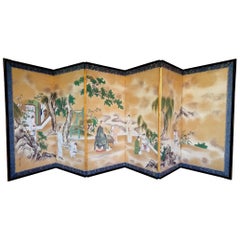
An exquisite Japanese folding screen painted and signed by Kano Tanshin (Morimasa) (1658-1719), circa early Edo Period. An important member of the Kano painter family, the son of Kano Tanyu...
Category
Antique 17th Century Japanese Japonisme Paintings and Screens
Materials
Brass
Japanese Woven Ikebana Hanging Basket by Suemura Shobun
By Suemura Shobun
Located in Atlanta, GA
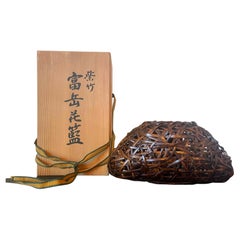
A Japanese woken bamboo Hanakago, a wall hanging Ikebana basket by Suemura Shobun (1917-2000). The basket is entitled Purple Bamboo Mt. Fuji and was woven with Susudake (smoked bamboo) using irregular plaiting technique to achieve a voluminous form that resembles the iconic Mount Fuji and with the textural appearance of a bird's nest. The base was detailed with mushi-maki knotting and the mouth rim is equipped with a small loop for hanging. The surface has a lustrous lacquer coating that shows off the natural pattern of the bamboo marking. It houses a removable lacquered container made from bamboo culm. The piece is not singed, but it comes with an original fabric stroage pouch, and an original storage box (Tomobako), which is signed with the title on the esterior Mt. Fuji Purple Bamboo” and signed Suemura Shobun on the inside with two red seals.
Suemura Shobun was from Kansai region and active in Osaka. He studies under Yamamoto Chikuryosai I. Shobun is known for making unconventional baskets that are modern and sculptural.
For reference, see page 94 Master of Bamboo" Rinne.
For a recently sold basket...
Category
20th Century Japanese Modern Sculptures and Carvings
Materials
Bamboo
Pair of Rare Porcelain Commemorative Vases by Makuzu Kozan Meiji Period
By Makuzu Kozan
Located in Atlanta, GA
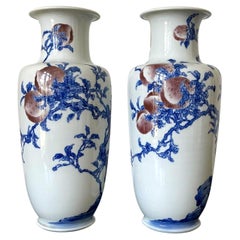
A pair of porcelain vases in classic form, decorated with underglaze blue and copper red painting by Imperial potter Makuzu Kozan. Also known as Miyagawa Kozan (1842–1916), Makuzu was one of the most established and collected ceramist known to the west from Meiji Period.
The vases are in a classic Chinese form called "Bang Chu Ping" (grain-mallet vase...
Category
Vintage 1910s Japanese Japonisme Ceramics
Materials
Ceramic
Large Art Nouveau Ceramic Landscape Plate with Luster Glaze by Clement Massier
By Clement Massier
Located in Atlanta, GA
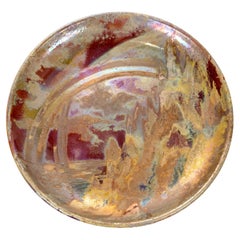
A large wall-hanging ceramic platter by French artist Clement Massier (1811-1917) made in his studio in Golfe-Juan, France, dated to August 31st of 1891. The Art Nouveau style plate ...
Category
Antique 1880s French Art Nouveau Ceramics
Materials
Ceramic
Contemporary Australian Aboriginal Painting by Kudditji Kngwarreye
Located in Atlanta, GA
Entitled "My Country", this bold and abstract landscape painting was by renowned Australian aboriginal artist Kudditji Kngwarreye (1928-2017). Acrylic painting on canvas, it was painted in 2012 and signed and inscribed on verso. The saturated colors and the visible brush strokes and intentionally uneven earth-like textures invokes the view of a landscape, partially real, partially imaginary.
Kudditji Kngwarreye from the Utopia community in the Northern Territory. He was the skin brother of the late Emily Kame Kngwarreye and like his skin sister Emily, was one of the most prominent and successful artists in the history of contemporary indigenous Australian...
Category
2010s Australian Modern Paintings
Materials
Canvas, Acrylic
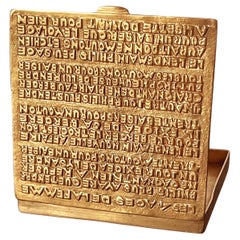
Gilded Bronze Box with Poem by French Art Jeweler Line Vautrin
By Line Vautrin
Located in Atlanta, GA
A gilt bronze poudrier box with cast poem on surface by Parisian art jeweler Line Vautrin (1913-1997) circa 1940s. The poem "Les 4 ages de la Femme" was an old French lyrical poem th...
Category
Vintage 1940s French Mid-Century Modern Decorative Boxes
Materials
Bronze
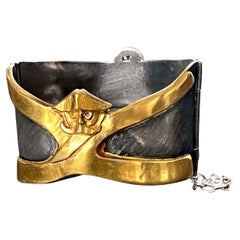
French Art Bronze Bracelet by Line Vautrin
By Line Vautrin
Located in Atlanta, GA
A rare cuff bracelet in gilded and silvered bronze by Parisian art jewller Line Vautrin (1913-1997). The playful piece is called "Le gendarme et le voleur"...
Category
Vintage 1940s French Mid-Century Modern Collectible Jewelry
Materials
Bronze
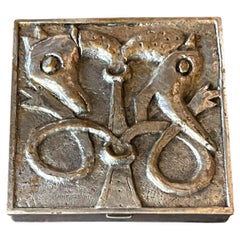
French Silvered Bronze Box Line Vautrin
By Line Vautrin
Located in Atlanta, GA
A silvered bronze Poudrier "Le loup et le renard" (The wolf and the fox). by Parisian art jeweler Line Vautrin (1913-1997) circa 1940s. The square box features a relief cast of two s...
Category
Vintage 1940s French Mid-Century Modern Decorative Boxes
Materials
Bronze
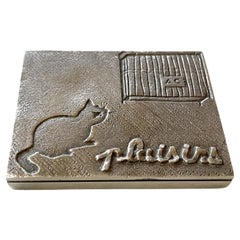
French Silvered Bronze Paperweight Line Vautrin
By Line Vautrin
Located in Atlanta, GA
A silvered cast bronze rectangular paperweight by Parisian art jeweler Line Vautrin (1913-1997) circa 1940s. A lovely piece of desktop object d'art in a relatively uncommon form and ...
Category
Vintage 1940s French Mid-Century Modern Paperweights
Materials
Bronze
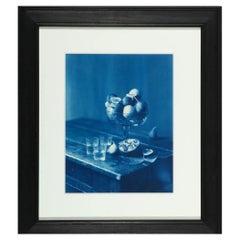
Framed Editioned Cyanotype Photography by John Dugdale
By John Dugdale
Located in Atlanta, GA
Artist: John Patrick Dugdale (American, born 1960)
Title: Figs and Pomegranates
Year: 1997
Print type: Cyanotype
Edition: Number 10 of an edition ...
Category
1990s American Modern Photography
Materials
Wood, Paper
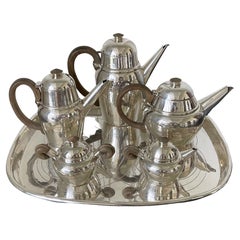
Large Mexican Modern Sterling Silver Coffee Tea Serving Set William Spratling
By William Spratling
Located in Atlanta, GA
A large six-piece sterling silver service for coffee and tea that consists of a gallery tray, a coffee pot, a tea pot, a hot milk or chocolate pot, a sugar and a milk jar. This stunn...
Category
Vintage 1960s Mexican Mid-Century Modern Sterling Silver
Materials
Sterling Silver
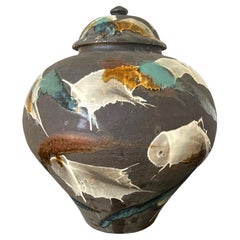
Large Japanese Contemporary Ceramic Jar from Onda Yaki Kiln
By Onda Yaki
Located in Atlanta, GA
A large Japanese lidded ceramic jar from the kiln of Onda Yaki, circa 2010. The stoneware jar impresses the viewer with a robust bulbous form. Its black body is nearly unglazed but exuberantly splashed with strokes of slip glazes of white, yellow and blue. The visual effect is wonderful that it appears traditional and contemporary at the same time. The tri-color glaze calls to mind the San-Cai from Chinese Tang dynasty, yet the application is akin to abstract painting on canvas.
Onda Yaki also spelled as Onta Yaki also spelled Onta, is a type of Japanese pottery produced in and around the village of Onta in Oita Prefecture in Kyushu Island. It was founded in 1705. Closely associated with Mingei folk art, Onda ware was inscribed by the national government in 1995 as an Intangible Cultural Property
Background from Pucker Gallery where the jar was exibited and purchased.
"In his search for true folk pottery, the Japanese philosopher Soetsu Yanagi...
Category
2010s Japanese Organic Modern Ceramics
Materials
Ceramic
Contemporary Japanese Bamboo Sculpture by Kawano Shoko
By Kawano Shoko
Located in Atlanta, GA
A contemporary Japanese bamboo sculpture entitled Light at Dawn (Gyoko) made in 2004 by Kawano Shoko (B. 1957). This airy piece is unconventi...
Category
Early 2000s Japanese Modern Sculptures and Carvings
Materials
Bamboo, Rattan
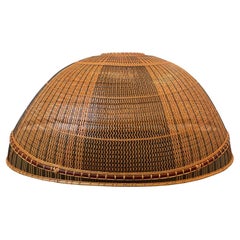
Framed Vintage Photography by André Kertész
By Andre Kertesz
Located in Atlanta, GA
A vintage gelatin silver print photograph by celebrated Hungarian-born photographer André Kertész (1894-1985). Entitled "Martinique", printed in 1972, this is an iconic image by the ...
Category
Vintage 1970s American Modern Photography
Materials
Wood, Paper
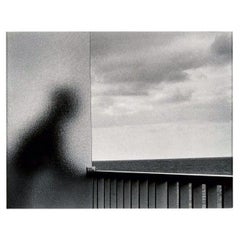
Vintage Photograph Leslie Winer in Yohji Yamamoto by Albert Watson
By Albert Watson
Located in Atlanta, GA
An iconic fashion photograph by Albert Watson (Scottish, 1942-). Entitled "Leslie Winer in Yohji Yamamoto, London, 1989", this is an editioned chromogenic...
Category
Vintage 1980s Scottish Modern Photography
Materials
Aluminum