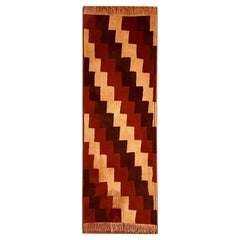
TISHU Wall Decorations
to
5
292
241
44
7
Height
to
Width
to
104
5
3
2
1
1
30
92
119
51
24
38
44
3
1
1
2
2
13
11
9
12
16
187
120
100
97
38
136
132
73
70
59
292
292
292
8
7
6
6
6
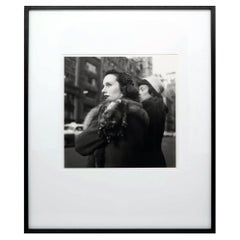
Framed Street Photograph by Vivian Maier Editioned with Provenance
By Vivian Maier
Located in Atlanta, GA
A framed black and white street photograph by Vivian Maier (American, 1926-2009), entitled "New York, NY, December 2, 1954", this is a gelatin silver prin...
Category
Vintage 1950s American Modern Photography
Materials
Wood, Paper

Large Aboriginal Painting "Wati Kutjara" by Yannima Tommy Watson
Located in Atlanta, GA
A large and striking aboriginal painting by celebrated Australian artist Yannima Tommy Watson (1935s-2017; Pitjantjatjara people from Australia's central western desert). Stretched and ready to display (no frame).
Medium: Acrylic on canvas
Year of Creation: 2013
Title: Wati Kutjara
An important aboriginal dreamtime story from the Western Australia (the song line is also known as Two Men Dreaming), the narrative is about two young lizard-men travelling all over the Western Desert. They covered a vast landscape from Kimberley in the north to Southern Australia. The two brothers often took the form of wind and left songs in their epic journey to enlighten the people they encountered with rituals and knowledge. As magical ancestral beings, they destroyed evil spirits and created sacred objects across all over the Western Dessert.
Provenance:
Agathon Galleries, Melbourne 2013
Art Yarramunua, Melbourne (accompanied by a certificate of authenticity)
Private Collection, Melbourne 2017
About the artist (courtesy of Kate Owen and Japingka Gallery)
Yannima Tommy Watson was a celebrated Pitjantjatara artist, born around 1935 in the desert west of Irrunytju in Western Australia. Tommy was a Law man of Karima skin group, and his traditional names were Yannima and Pikarli relate to specific sites near his birthplace at Anumarapiti, west of Irrunytju.
As a young man Tommy learned the bush skills of hunting and gathering, living off the land. In these years his physical and spiritual knowledge of the land was deeply embedded in his life.
Tommy Watson first met white people at Ernabella Mission in the 1940s. He then spent decades working as a stockman and laborer on cattle stations. Not until 2001 when he was in his mid 60s, did Tommy Watson pick up a paint brush and painted his first picture at Irrunytju art center established by a small group of artists.
Watson's work became quickly recognized for his powerful use of colors and his mesmerizing creation of energetic movement. He exhibited in Alice Springs at Desert Mob and as a finalist at the Telstra NATSIAA Art Awards in Darwin. With his work becoming highly collectable, Tommy soon entered into an exclusive representation agreement with Jon Ioannou of Agathon Gallery. This arrangement marked the start of a second phase of Tommy's career and saw the creation of a large body of outstanding artworks which were to further propel Tommy into the upper echelons of Australian indigenous artists. This painting was created toward the end of that phase.
In 2005, Tommy was commissioned, along with Ningura Napurrula, Lena Nyadbi, Michael Riley, Judy Watson, John Mawurndjul, Paddy Bedford...
Category
2010s Australian Modern Paintings
Materials
Canvas
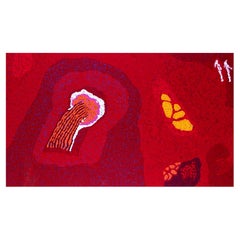
Contemporary Australian Aboriginal Painting by Wentja Napaltjarri
Located in Atlanta, GA
A stunning abstract painting by Australian Aboriginal artist Wentja Napaltjarri (c1945 - 2021) entitled Rockhole West of Kintore, the work depicts the artist's ancestral land in Drea...
Category
21st Century and Contemporary Australian Modern Paintings
Materials
Canvas
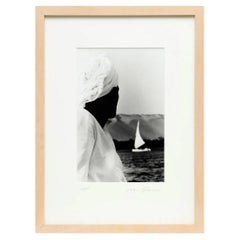
Vintage Photograph Pharaonic Light by Ralph Gibson
By Ralph Gibson
Located in Atlanta, GA
A vintage black and white gelatin silver black and white print by American photographer Gibson Ralph (born 1939, Los Angeles, CA),
An iconic photo from Gibson's 1991 series Pharaonic...
Category
1990s American Modern Photography
Materials
Paper
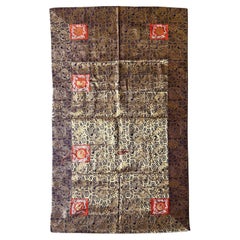
Magnificent Antique Japanese Woven Brocade Kesa Monk
s Robe Meiji Period
Located in Atlanta, GA
A stunning Japanese Kesa (Monk's Vestment) made from thirteen columns of patchworks of shimmering woven brocades with luxuriant golden threads. Dated to late 19th century of Meiji Period, the elaborate woven motifs on this kesa feature repetitive roundels dragon and phoenix intermixed with peonies and chrysanthemum blossoms. Two shades of contrasting gold threads were used on a striking purplish-blue background, with a dark metallic thread for the outer border and a brighter thread for the main body. The brilliantly woven fabric was possibly recycled from Noh costumes...
Category
Antique Late 19th Century Japanese Meiji Textiles
Materials
Brocade, Silk
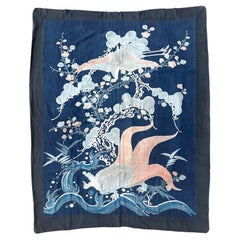
Antique Large Japanese Futon Cover with Resist Yuzen Dye
Located in Atlanta, GA
A large unframed Japanese Futonji textile art circa late 19th century toward the end of the Meiji period. Seamed together from four vertical sections of cotton in deep indigo color, ...
Category
Antique 1890s Japanese Meiji Textiles
Materials
Cotton
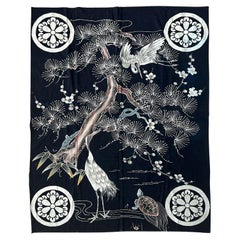
Large Japanese Textile Futon Cover with Resist Yuzen Dye
Located in Atlanta, GA
A large unframed Japanese textile art circa late early 20th century toward the end of the Meiji period. Seamed together from four vertical sections of cotton in deep indigo color, th...
Category
Early 20th Century Japanese Meiji Textiles
Materials
Cotton
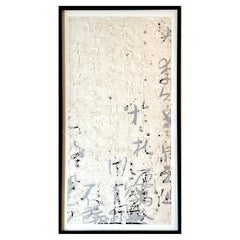
Chinese Contemporary Ink Art by Wang Tiande
Located in Atlanta, GA
Artist: Wang Tiande (Chinese b.1960)
Title: "Digital Series No.4 C07", 2004
Medium: Chinese ink on paper and cigarette burns
Signed and dated lower left Wang Tiande 2004.
Original gallery label on verso
Frame (wood shadow box under acylic): 52 3/4" x 25 3/4"
Provenance: Purchased from Michael Goedhuis, October 23, 2006
An important figure in the Chinese contemporary art scene, in the field of modern calligraphic art particularly, Wang Tiande was born in Shanghai in 1960. After graduating from the Chinese Painting Department at the Zhejiang Academy of Fine Arts in 1988, Wang received a doctoral degree in the calligraphy department of the same school. Currently, Wang is a professor at Shanghai Fudan University. His work is held in the permanent collection of many important museums across the globe, including the Metropolitan Museum of Art, the Museum of Fine Arts Boston and the British Museum.
Known for his revival and reinterpretation of Chinese calligraphy and painting...
Category
Early 2000s Chinese Modern Contemporary Art
Materials
Acrylic, Wood, Paper
Framed Editioned Dali Photograph by Philippe Halsman
By Philippe Halsman
Located in Atlanta, GA
Artist: Philippe Halsman (1906-1979)
Medium: Gelatin silver print
Title: Dali Fishing
Date: 1954; Printed in 1981 as part of the ten-piece Dali Portfolio...
Category
Vintage 1950s American Modern Photography
Materials
Wood, Paper
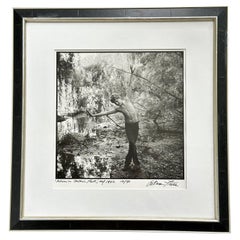
Framed Editioned Vintage Photograph Adam in Central Park New York Arthur Tress
By Arthur Tress
Located in Atlanta, GA
A framed black and white gelatin silver photograph by American surrealist photographer Arthur Tress (1940-). Entitled "Adam in Central Park, New York". the gelatin silver print was m...
Category
Late 20th Century American Modern Photography
Materials
Wood, Paper
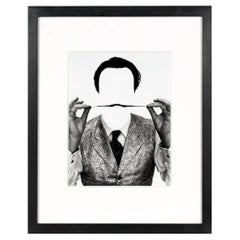
Framed Edition Dali Photograph by Philippe Halsman
By Philippe Halsman
Located in Atlanta, GA
Artist: Philippe Halsman (1906-1979)
Medium: Gelatin Silver Print
Title: Invisible Dali
Date: 1954; Printed in 1981 as part of the ten-piece Dali Portfolio...
Category
Vintage 1950s American Modern Photography
Materials
Wood, Paper
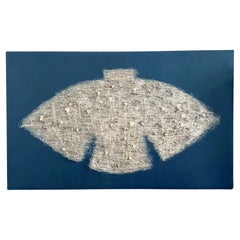
Contemporary Fiber Art Installation by Chen Qingqing
Located in Atlanta, GA
A fiber art installation by Chinese artist Chen Qingqing (1953-), called "Clothing, from Artificial Artifact Series-Flower" was created in 2004 and purchased from Plum Blossom Galler...
Category
Early 2000s Chinese Organic Modern Contemporary Art
Materials
Fabric, Natural Fiber, Acrylic, Wood
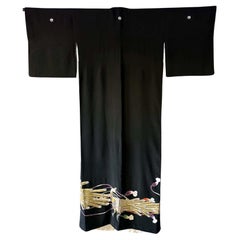
Vintage Japanese Formal Black Silk Kimono with Pheonix Embroidery
Located in Atlanta, GA
A vintage Japanese silk Kuro Tomesode Kimono, circa 1950s-1980s. Kuro Tomesode is a dress for married woman for the most formal occasions, equivalent of the evening gowns in the west. It is overall black, decorated only with patterns of bright colors on the bottom. This kimono has three Mon family crests on the front and back shoulder. It is lined with white silk in its interior. On the front, it features exposed white stitches around neck and breast, a very subtle and elegant touch. The bottom part of the kimono is decorated with an embroidery imagery of two phoenix in flight. The lavish use of gold and polychrome threads and meticulous rendition of the birds contrast greatly with the otherwise sober black background. Pheonix is the mythical bird traditionally represents the Queen or Female Supreme in Chinese culture. Known as Hoo-oo in Japanese, Pheonix is a symbol of good fortune, power and divine wisdom and represents the sun goddess Amaterasu, the Queen of Heaven and Creation, who was believed to be the ancestor of the lines of the Japanese imperial family...
Category
Mid-20th Century Japanese Showa Textiles
Materials
Silk
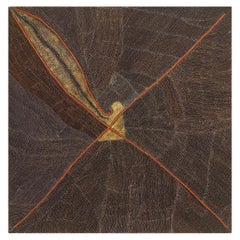
Rare Very Large Australian Aboriginal Painting by Kathleen Petyarre
By Kathleen Petyarre
Located in Atlanta, GA
A significant contemporary aboriginal painting by Kathleen Petyarre (1940-2018) in 2010. The painting was a rare oversize piece, exceptionally executed in earthy colors, showcasing m...
Category
2010s Australian Modern Paintings
Materials
Canvas, Acrylic
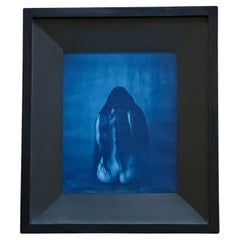
Framed Cyanotype Photograph by John Patrick Dugdale
By John Dugdale
Located in Atlanta, GA
Artist: John Patrick Dugdale (New York, b. 1960)
Title: Margie
Medium: Cyanotype
Year: 1996
Edition: number 2/10
Measurement: Sight H 9", W 7.5"; with artist fame H 14.5", W 12.5"
Pr...
Category
1990s American Modern Photography
Materials
Wood, Paper
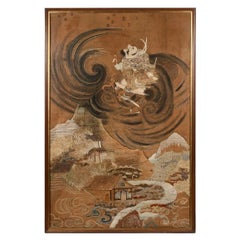
Framed Japanese Antique Embroidery Sennin Tapestry Meiji Period
Located in Atlanta, GA
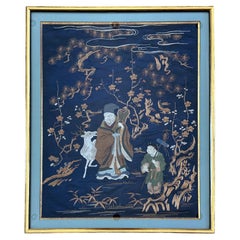
A stunning Japanese embroidery tapestry circa 1880s-1900s from late Meiji period, presented with an original wood frame with inner gold trim. The tour-de-force embroidered tapestry s...
Category
Antique 1890s Japanese Meiji Textiles
Materials
Silk, Giltwood
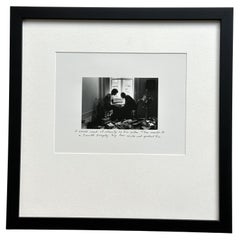
Framed Editioned Photograph Homage to Cavafy Series by Duane Michals
By Duane Michals
Located in Atlanta, GA
An editioned gelatin silver print by American photographer Duane Michals (1932-). "I could read it clearly in his palm. There would be a terrible tragedy. My love could not protect him" from Homage to Cavafy Series, published in 1978. Gelatin silver print, hand-written titled on the lower margin. Signed and numbered 8/25 in ink on the bottom of the sheet (as shown). 3 1/2 x 5" for the image size. Displayed in a brand-new black wood archive frame with museum glass.
Michals created ten photographs in honor of Greek gay...
Category
Vintage 1970s American Modern Photography
Materials
Wood, Paper
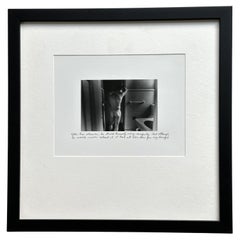
Framed Editioned Photograph Homage to Cavafy Series by Duane Michals
By Duane Michals
Located in Atlanta, GA
An editioned gelatin silver print by American photographer Duane Michals (1932-). "After his shower, he dried himself very carefully. and although he would never admit it, it had all been done for my benefit" from Homage to Cavafy Series, published in 1978. Gelatin silver print, hand-written titled on the lower margin. Signed and numbered 8/25 in ink on the bottom of the sheet (as shown). 3 1/2 x 5" for the image size. Displayed in a brand-new black wood archive frame with museum glass.
Michals created ten photographs in honor of Greek gay...
Category
Vintage 1970s American Modern Photography
Materials
Wood, Paper
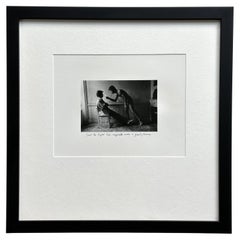
Framed Editioned Photograph Homage to Cavafy Series by Duane Michals
By Duane Michals
Located in Atlanta, GA
An editioned gelatin silver print by American photographer Duane Michals (1932-). "Just to light his cigarette was a great pleasure" from Homage to Cavafy Series, published in 1978. Gelatin silver print, hand-written titled on the lower margin. Signed and numbered 8/25 in ink on the bottom of the sheet (as shown). 3 1/2 x 5" for the image size. Displayed in a brand-new black wood archive frame with museum glass.
Michals created ten photographs in honor of Greek gay...
Category
Vintage 1970s American Modern Photography
Materials
Wood, Paper
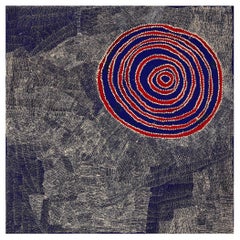
Contemporary Australian Aboriginal Painting by Walangkura Napanangka
Located in Atlanta, GA
A striking abstract painting by Australian Aboriginal painter Walangkura Napanangka (1940-2014), one of the matching pair painted in 2007 in Alice Spring. Entitled "Kutungka", acrylic on Belgium linen, inscribed on reverse with gallery catalog no.
"Kutungka" depicts the landscape of a country where an old woman named "Kutungka" travelled from Malparingya to Kaltarra in Western Desert during the Dreamtime creation. The highly abstract forms are the dreamtime memory of the land features, such as rock piles and waterholes.
Provenance: Grasstree Gallery, Australia.
It comes with a COA from the gallery as well as progressive photos taken during the creation of this painting by the artist in 2007.
Brief biography From Australian Art Gallery artist...
Category
Early 2000s Australian Modern Paintings
Materials
Linen, Acrylic, Wood
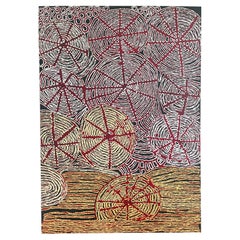
Contemporary Australian Aboriginal Painting by Walangkura Napanangka
Located in Atlanta, GA
A striking abstract painting by Australian Aboriginal painter Walangkura Napanangka (1940-2014), one of the matching pair painted in 2007 in Alice Spring. Entitled "Kutungka", acrylic on Belgium linen, inscribed on reverse with gallery catalog no.
"Kutungka" depicts the landscape of a country where an old woman named "Kutungka" travelled from Malparingya to Kaltarra in Western Desert during the Dreamtime creation. The highly abstract forms are the dreamtime memory of the land features, such as rock piles and waterholes.
Provenance: Grasstree Gallery, Australia.
It comes with a COA from the gallery as well as progressive photos taken during the creation of this painting by the artist in 2007.
Brief biography From Australian Art Gallery...
Category
Early 2000s Australian Modern Paintings
Materials
Acrylic, Wood, Linen
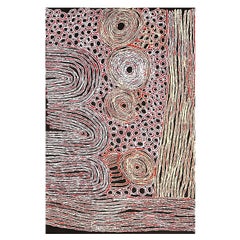
Contemporary Photography by Chinese Artist Liu Xiaofang
Located in Atlanta, GA
Artist: Liu Xiaofang (Chinese, b. 1980)
Title: I Remember II-02, 2012
Medium: Digital pigment print mounted on Acrylic
Measurement: 39.25" x 39.25"
Edition: 2/8
PROVENANCE: Purchased...
Category
2010s Chinese Modern Photography
Materials
Acrylic, Paper
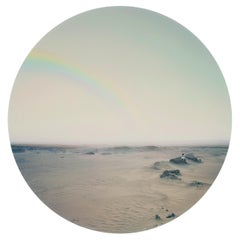
Japanese Woodblock Print Famous Views of the Sixty-Odd Provinces by Hiroshige
By Utagawa Hiroshige (Ando Hiroshige)
Located in Atlanta, GA
Artist: Utagawa Hiroshige (1797 - 1858)
Series: Pictures of Famous Places in the Sixty-odd Provinces
Number: 44 Oki Province: Takuhi Shrine
Medium: Woodblock Print
Date: 1853 (Kaei 6), 12th month
Number of Prints: 70/70 (inc. Title Page)
Format: Vertical Oban
Size (H x W): 14" x 9.25" print only.
Publisher: Koshimuraya Heisuke (Koshihei)
Blockcutter's mark: Hori Ko-Sen
Signature: Hiroshige hitsu
Additional marks: Censor's seals: aratame, Ox 12
Displayed with mat and gilt wood frame.
Reference: For an identical print, see the collection of MIA (Minneapolis Institute of Art) Accession Number P.75.51.398; MFA...
Category
Antique 1850s Japanese Edo Prints
Materials
Paper
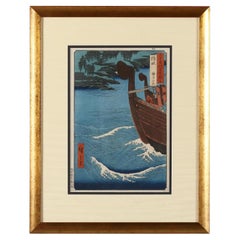
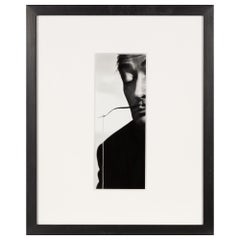
Photograph Self-Portrait by Sam Taylor-Wood
Located in Atlanta, GA
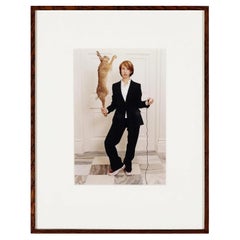
A framed C-print photography by British artist Sam Taylor-Wood (1967-). Entitled "Self-Portrait in a Single-Breasted Suit with Hare", the print was made in 2001 and its unique in this size at 9" h x 6" w. Presented in a wood frame.
Provenance: Matthew Marks Gallery, NYC (label verso).
Artist Biography (courtesy of Guggenheim Musuem Collection)
Sam Taylor-Wood
B. 1967, LONDON
Sam Taylor-Wood was born in London in 1967. At the age of sixteen, she enrolled in an art school in Hastings, later moving back to London to attend Goldsmiths College. After graduating in 1990, she worked as a bartender and as a dresser at the Royal Opera House; the latter experience would influence her work’s unabashed theatricality. Originally a sculptor, she began working in photography, film, and video in the early 1990s. Her first film, 16mm (1993), consists of an isolated female figure gyrating to a steady beat. She explored similar intersections between video, dance, theater, music, film, and video in subsequent works, including Killing Time (1994), in which seemingly bored actors wait their turn to lip-synch the lines of different characters from Richard Strauss’s Electra. Her photographic work also finds points of intersection with other mediums. The title of Five Revolutionary Seconds (1995–98), for example, refers to her creation of a panoramic image by rotating her camera around a room over that period of time; the resulting image has a narrative quality despite being a static image. In recent years, Taylor-Wood has engaged ideas of celebrity culture in her work. Third Party (1999–2000), a seven-screen video installation at the Hayward Gallery in London, featured pop singer Marianne Faithful and actor Ray Winstone in different one- and two-person scenes of flirtation and ennui, creating a party-like environment in the gallery where the viewer is privy to these personal exchanges. Equal parts pathos and humor, the two-minute film Pietà (2001), in which the artist attempts to suspend the Hollywood actor and hard-living icon Robert Downey, Jr. in her arms, also evokes the well-known art historical subject. Her video David (2004) evokes similar connotations and intimately unveils the much-photographed dynamic soccer icon David Beckham in deep sleep. Time and speed are often centerpieces of her videos, whether the rapid acceleration of a bowl of fruit’s decay process in Still Life (2001) or the illusion of frozen time in The Last Century (2006), for which the actors are in fact filmed in real time but remain impossibly still. Taylor-Wood’s first narrative film, Love You More (2008), borrows its title from a song by the 70s punk band Buzzcocks and chronicles the story of two teenagers who hear the recently released song together in a record store.
Since her first show, Killing Time at the Showroom in London in 1994, Taylor-Wood has had solo exhibitions at White Cube in London (1995, 2001, 2004, and 2008), Kunsthalle Zürich (1997), Hirshhorn Museum and Sculpture Garden in Washington, D.C. (1999), Museo Nacional Centro de Arte Reina Sofía in Madrid (2000), Centre National de la Photographie in Paris (2001), Musée d’Art Contemporain de Montréal (2002), Russian Museum in St. Petersburg (2004), Museum of Contemporary Art in Sydney (2006), Museum of Contemporary Art in Cleveland (2007), and Museum of Contemporary Art in Houston...
Category
Early 2000s English Modern Photography
Materials
Paper
Japanese Silk Suijaku Scroll Nyorai-Kojin with Mixed Buddhism and Shinto Deities
Located in Atlanta, GA
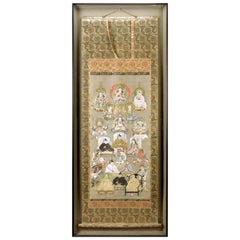
A Japanese silk Suijaku hanging scroll beautifully presented in a custom wood shadow box frame from Edo period (circa 18-19th century). The scroll, surmounted on golden brocade was painted in fine details with gouache, ink and gold powder highlight, served as a Suijaku mandala for the worshippers. Honji Suijaku is a complicated religious concept uniquely developed in Japan. It mixed and hybrid the Buddism deities with native shinto spirits (known as Kami), which were seen as local manifestations (the suijaku, literally means a "trace") of Buddhist deities (the honji literally the original ground). The original idea may lie with the synergetic strategy to spread Buddism by making it more relatable to the local population who had already worshiped Shinto gods. The paradigm, adopted in the 10th century from an orignal Chinese concept, remained a defining feature of Japanese religious life up to the end of the Edo period (1868). Instead of being confined to deities, its application was often extended to historical figures as shown on this scroll.
This long hanging scroll depicts an arrangement of 21 figures including Buddhism and Shinto deities as well as two historical figures on the bottom. Each figure was name-tagged in Kanji for easy identification by the worshippers. It was used in the temple or shrine so that when the worshipper prayed in front the mandala, they prayed simultaneously to all the deities.
On the very top, sits Nyorai-Kojin, a hybrid deity of Nyorai Buddha and Kojin, the kaki for fire, stove and kitchen. From the top to bottom and left to right, here is the list of the deities: Kanon with Thousand Hands, Kanon with Willow Branch, Monju Bosatsu...
Category
Antique Early 19th Century Japanese Edo Paintings and Screens
Materials
Silk, Wood
Contemporary Chinese Ink Wash Painting by Li Jin
Located in Atlanta, GA
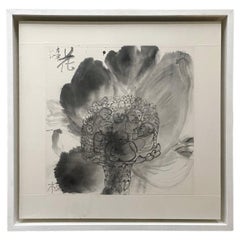
A contemporary ink painting on paper by Chinese artist Li Jin (1958-) presented in a white shadowbox frame. Entitled in English "Morning Practice in California", this series of work was painted in 2017 when the artist resided in US. The Chinese title inscription is "Blossom Branch" with artist's name signed in both Chinese and English. The painting is considered "Expressionistic-abstract". Using only various shades of ink, the poetic work depicts a large lotus flower with the pistil in the center composed of clusters of mediating arhats, the beings who have gained nirvana through Buddhism practice (known as Luohans in Chinese). There is a strong association of lotus flower and purity in Buddhism. The wisdom one can possibly achieve may be considered omnipresent and morphogenetical quantum and be part of everything around us. The image size is 13.5" x 13.5".
Provenance: Purchased in 2017 from the Ink Studio at West Bund Art and Design Fair, Shanghai, China.
Li Jin (1958-, Tianjin, China) is an ink master who draws from the tradition of Chinese literati ink painting and creates contemporary works celebrating all aspects of everyday life. Having explored color washes for two decades, Li Jin has translated them into a masterful control of tonality-the "five colors of ink"-in a series of monochrome paintings in the expressionistic-abstract "Da Xie Yi" manner. Through the ink medium's inherent sensitivity and ambiguity, they evoke the nuances of human existence and raise profound questions about self-representation and subjectivity. Trained at Tianjin Academy of Fine Arts (graduated in 1983) and has been a leading figure in contemporary Chinese ink art...
Category
2010s Chinese Modern Paintings and Screens
Materials
Wood, Paper
Frame Photograph Stillness in Spirit by John Patrick Dugdale
By John Dugdale
Located in Atlanta, GA
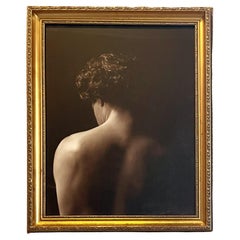
A visually arresting photograph by John Patrick Dugdale (American, born 1960-) titled "Stillness of Spirit". Relatively large in print size, the w...
Category
1990s American Modern Photography
Materials
Paper
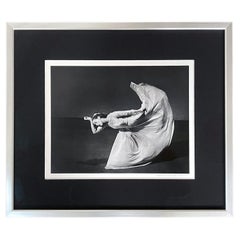
Vintage Photograph Martha Graham Letter to the World by Barbara Morgan
Located in Atlanta, GA
An iconic black and white photography by Barbara Morgan (American, 1900-1992) of "Martha Graham, Letter to the World". The photo was originally tak...
Category
Vintage 1970s American Modern Photography
Materials
Paper
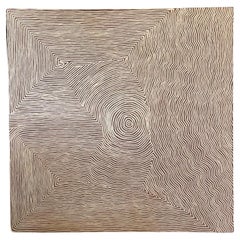
Contemporary Australian Aboriginal Painting by Kenny Williams Tjampitjinpa
Located in Atlanta, GA
Entitled "Two Kuniya (Pythons) During Tingari Cycle", this mesmerizing painting was painted by Australian aboriginal artist Kenny Williams Tjampitjinpa...
Category
21st Century and Contemporary Australian Modern Paintings
Materials
Linen, Acrylic
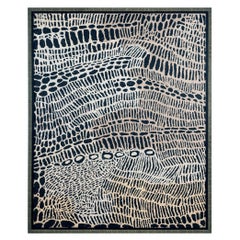
Australian Aboriginal Painting Tjukurla Country Nyurapayia Nampitjinpa
Located in Atlanta, GA
A stunning abstract painting by Australian Aboriginal artist Nyurapayia Nampitjinpa
(also known as Mrs. Bennett; 1935-2013). Entitled "Tjukurla Country", this work was acrylic on Be...
Category
Early 2000s Australian Modern Contemporary Art
Materials
Canvas, Acrylic
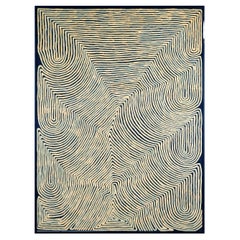
Australian Aboriginal Painting Rain Dreaming Ronnie Tjampitjinpa
By Ronnie Tjampitjinpa
Located in Atlanta, GA
A contemporary painting by Australian Aboriginal artist Ronnie Tjampitjinpa (1943-2023). Entitled "Rain Dreaming", the artwork was acrylic on canvas and painted in 1999
Fully documented: originally purchased in 1999 from Kimberley Australian Aboriginal Art, Melbourne, cat. no. KA 708/99; The in the collection of The Kelton Foundation, Santa Monica; It was exhibited in: "G'Day LA" Australia Week, in partnership with the Australian Consulate Los Angeles, Pacific Design Center, West Hollywood, CA, 15-25 January 2004. It is housed in a black thin wood frame.
Ronnie Tjampitjinpa was born in Pintupi land at Muyinnga, about 100 kilometres west of the Kintore Range, just across the Western Australian border. He is the son of Uta Uta Tjangala’s older brother, Minpuru Tjangala (c.1899–1976).
Artist's Biography (Courtesy of Art Gallery NSW)
After his initiation into Pintupi law at the site of Yumari, Tjampitjinpa and his younger brother Smithy Zimran Tjampitjinpa walked into the Aboriginal community of Yuendumu. They later joined their parents and other siblings – who had come in to Ikuntji (Haasts Bluff) in 1956 from the Dover Hills/Yumari area – at the new settlement of Papunya. Tjampitjinpa worked as a labourer, assisting with the fencing of the aerodromes at Papunya and Ikuntji. He was one of the youngest of the group of men who began painting at the start of the Western Desert art movement in 1971, and was a founder of Paunya Tula Artists.
During the 1970s, Tjampitjinpa was preoccupied with returning to his traditional lands and became a strong advocate for the outstation movement, travelling between meetings in Papunya, Yuendumu, Wirrimanu (Balgo) and Mount Doreen Station. His goal was finally achieved with the establishment of the Walungurru (Kintore) settlement in 1981. Tjampitjinpa moved there with his young family in 1983, establishing an outstation at Ininti (Redbank) and serving as chairman of the Kintore Outstation Council. During this period, he emerged as one of Papunya Tula Artists’ major painters, pioneering the bold, scaled-up, linear style that came to dominate many of the Walungurru painters’ work during the 1990s. His distinctive aesthetic preoccupa-tion is exemplified in the untitled works of 1994 and 2001. Now one of the last founding members of Papunya Tula Artists, Tjampitjinpa’s career spans more than 40 years. He has had six solo exhibitions since 1989 in Australia, most recently at Utopia Art, Sydney.
Throughout the 1980s Tjampitjinpa worked devotedly on a land claim for Ininti, holding meetings in Darwin, Warmun (Turkey Creek...
Category
1990s Australian Modern Paintings
Materials
Canvas, Acrylic
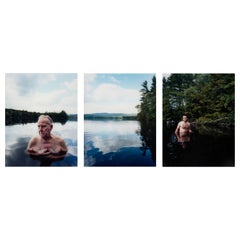
Triptych Photographs Rock Bottom by David Hilliard
Located in Atlanta, GA
Entitled "Rock Bottom", this triptych photographs were by American photographer David Hilliard (born 1964) in 2008. These chromogenic prints were f...
Category
Early 2000s American Post-Modern Photography
Materials
Acrylic, Paper
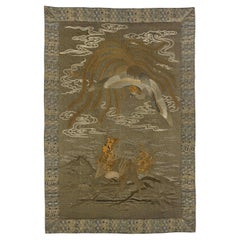
Massive Japanese Embroidery Tapestry Display Box Meiji Period
Located in Atlanta, GA
A massive Japanese embordered tapestry professionally displayed in a custom acrylic shadow box. The fine work of textile art is dated to 1890-1920s, late Meiji (1868-1912) or possibl...
Category
Early 20th Century Japanese Japonisme Textiles
Materials
Brocade, Silk, Acrylic
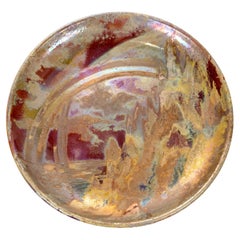
Large Art Nouveau Ceramic Landscape Plate with Luster Glaze by Clement Massier
By Clement Massier
Located in Atlanta, GA
A large wall-hanging ceramic platter by French artist Clement Massier (1811-1917) made in his studio in Golfe-Juan, France, dated to August 31st of 1891. The Art Nouveau style plate ...
Category
Antique 1880s French Art Nouveau Ceramics
Materials
Ceramic
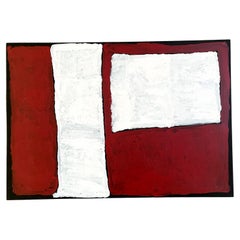
Contemporary Australian Aboriginal Painting by Kudditji Kngwarreye
Located in Atlanta, GA
Entitled "My Country", this bold and abstract landscape painting was by renowned Australian aboriginal artist Kudditji Kngwarreye (1928-2017). Acrylic painting on canvas, it was painted in 2012 and signed and inscribed on verso. The saturated colors and the visible brush strokes and intentionally uneven earth-like textures invokes the view of a landscape, partially real, partially imaginary.
Kudditji Kngwarreye from the Utopia community in the Northern Territory. He was the skin brother of the late Emily Kame Kngwarreye and like his skin sister Emily, was one of the most prominent and successful artists in the history of contemporary indigenous Australian...
Category
2010s Australian Modern Paintings
Materials
Canvas, Acrylic
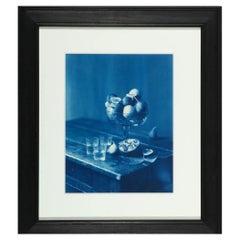
Framed Editioned Cyanotype Photography by John Dugdale
By John Dugdale
Located in Atlanta, GA
Artist: John Patrick Dugdale (American, born 1960)
Title: Figs and Pomegranates
Year: 1997
Print type: Cyanotype
Edition: Number 10 of an edition ...
Category
1990s American Modern Photography
Materials
Wood, Paper
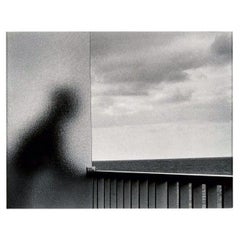
Framed Vintage Photography by André Kertész
By Andre Kertesz
Located in Atlanta, GA
A vintage gelatin silver print photograph by celebrated Hungarian-born photographer André Kertész (1894-1985). Entitled "Martinique", printed in 1972, this is an iconic image by the ...
Category
Vintage 1970s American Modern Photography
Materials
Wood, Paper
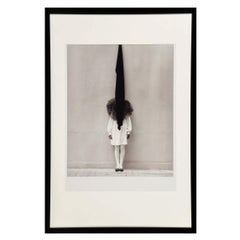
Vintage Photograph Leslie Winer in Yohji Yamamoto by Albert Watson
By Albert Watson
Located in Atlanta, GA
An iconic fashion photograph by Albert Watson (Scottish, 1942-). Entitled "Leslie Winer in Yohji Yamamoto, London, 1989", this is an editioned chromogenic...
Category
Vintage 1980s Scottish Modern Photography
Materials
Aluminum
Painting Australian Aboriginal Artist Lorna Fencer Napurrula
By Lorna Fencer Napurrula
Located in Atlanta, GA
"Sweet Potato Dreaming" painting by Lorna Fencer Napurrula
Lorna is a Senior Warlpiri Custodian and she is among a small group of women who collectively produced the first paintings ...
Category
20th Century Australian Modern Paintings
Materials
Canvas, Acrylic
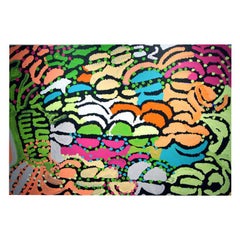
Caterpillar Dreaming Australian Aboriginal Artist Lorna Fencer
By Lorna Fencer Napurrula
Located in Atlanta, GA
Description: "Caterpillar Dreaming" painting by Lorna Fencer Napurrula
Lorna is a Senior Warlpiri Custodian and she is among a small group of women who collectively produced the fir...
Category
20th Century Australian Modern Paintings
Materials
Canvas, Acrylic
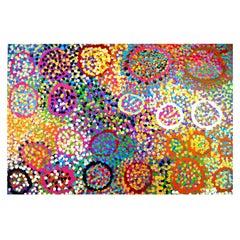
Contemporary Painting by Australian Aboriginal Artist Ningura Napurrula
By Ningura Napurrula
Located in Atlanta, GA
A large aboriginal painting by Ningura Napurrula (1938-2013).
Title: "Rockhole Site of Wirrulnga"
Artists: Ningura Napurrula (Australian Aboriginal, c.1938-2013)
Birthplace: Watul...
Category
20th Century Australian Modern Contemporary Art
Materials
Canvas
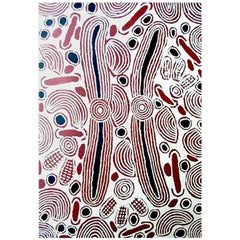
Japanese Silk Embroidery Tapestry Meiji Period
Located in Atlanta, GA
A spectacular Japanese embroidered silk panel beautifully presented in a gilt frame suspended in a lucite shadow box with gilt wood border. The silk picture is dated to 1890-1910s toward the end of Meiji Period, when Japanese started to participate international expose by presenting its best art and craft. Elaborate embroidered silk tapestry like this was very popular among westerners due to its superb craftmanship and also exotic subject matter that was often derived from classic Japanese folklore, mythology and various motifs. The tapestry on offer is such an example. It depicts an old couple...
Category
Antique 1890s Japanese Japonisme Textiles
Materials
Fabric, Silk, Lucite
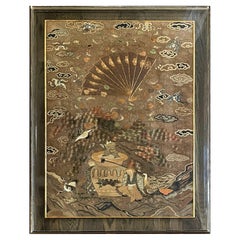
Antique Korean Embroidered Civil Rank Badge Joseon Dynasty
Located in Atlanta, GA
A fine Korean silk embroidered rank badge (Hyungbae in Korean) from Joseon Dynasty circa late 19th century. The badge features a design of double flying cr...
Category
Antique 19th Century Korean Other Textiles
Materials
Fabric, Silk, Wood
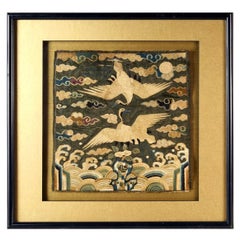
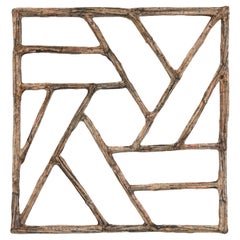
"Window A #49" by Gordon Cheung
By Gordon Cheung
Located in Atlanta, GA
Artwork by Gordon Cheung, "Window A #49" sculpted with Bamboo, the Financial Times and adhesive, 2020
Windows
Traditional Chinese windows made from financial newspaper and bamb...
Category
2010s Contemporary Art
Materials
Paper, Bamboo
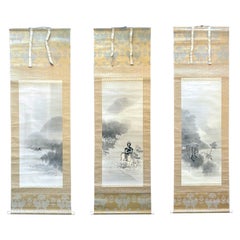
Rare Triptych Scroll Paintings by Watanabe Seitei Meiji Period
Located in Atlanta, GA
A set of three paintings of ink and watercolor on silk mounted within brocade borders as scrolls by Watanabe Seitei (1851-1918). This is a very rare an...
Category
Antique Early 1900s Japanese Japonisme Paintings and Screens
Materials
Brocade, Silk, Wood
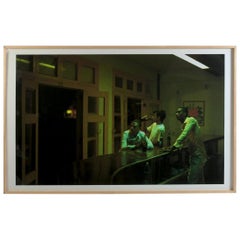
Editioned Large Photograph by Quentin Shih
Located in Atlanta, GA
Artist: Quentin Shih (aka Xiaofan Shi; Chinese, 1975-)
Title: "Rey Mascullo, Yesmany Ramirez and Javier Lopez", From La Habana In Waiting Part A.
Year: ...
Category
2010s Chinese Modern Photography
Materials
Wood, Paper
Framed Photograph by John Patrick Dugdale
By John Dugdale
Located in Atlanta, GA
Artist: John Patrick Dugdale (New York, b. 1960)
Title: The Spirit Eye
Medium: Cyanotype
Year: 1998
Edition: number 3/12
Measurement: H 14", W 11"...
Category
1990s American Modern Photography
Materials
Wood, Paper

Contemporary Photograph by Japanese Artist Yoshida Kimiko
Located in Atlanta, GA
Yoshida Kimiko (Japanese, b. 1963)
The Golden Bride from Fez, 2005
C-print, Diasec; aluminum mounted
Signed, titled and dated to artist's label verso...
Category
Early 2000s French Modern Photography
Materials
Aluminum
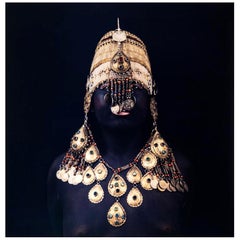
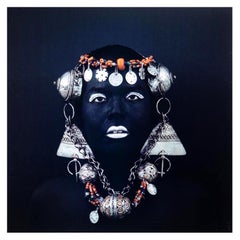
Contemporary Photograph by Japanese Artist Yoshida Kimiko
Located in Atlanta, GA
Yoshida Kimiko (Japanese, b. 1963)
The Berber Bride, Morocco, early 20th century; self-portrait
C-print, Diasec; aluminum mounted
Signed, titled and dated to artist's label verso
Edition 2/10
Size: 47.25 x 47.25 in.
Kimiko Yoshida...
Category
Early 2000s French Post-Modern Photography
Materials
Aluminum
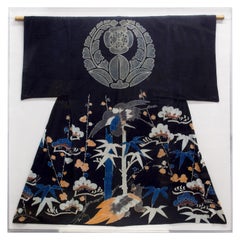
Framed Japanese Festival Kimono with Tsutshugaki Dye
Located in Atlanta, GA
A Japanese festival kimono expertly mounted and displayed in a large acrylic shadow box. This impressive ceremonial garment circa late 19th-early 20th century was made from a thick l...
Category
Early 20th Century Japanese Japonisme Textiles
Materials
Textile, Acrylic
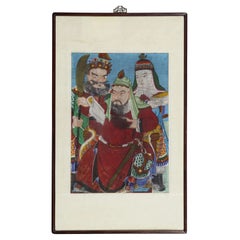
Framed Korean Folk Painting of General Guan Gong
Located in Atlanta, GA
A Korean folk Shamanism watercolor on textile matted with woven brocade and presented in a wood frame with an oriental style metal hanging hardware. The painting was estimated to be from early 20th century circa 1910-1930s. It depicts Guan Yu (160-220AD), a legendary Chinese warrior and general from Eastern Han Dynasty. Long worshiped in China as a deity, across all three major religions, Guan Gong...
Category
Early 20th Century Korean Folk Art Paintings and Screens
Materials
Textile, Brocade
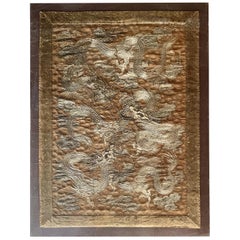
Large Framed Japanese Embroidery Dragon Tapestry
Located in Atlanta, GA
An impressive Japanese embroidery tapestry circa 1890s Meiji period, presented with brocade border on linen canvas in a Lucite shadow box. The stunning design features three dragons coiling and flying in the clouds. The high relief technique used to render the dragons using mostly the silver threads gives this piece a tremendous sense of motion. The most auspicious mythological creature in Japan and China, dragons were a very popular motif in textile art. In this particular piece, it is the impressive size, the superb craftsmanship, the profuse use of silver threads and near perfect condition that set it apart. Japanese Meiji textiles were widely exhibited in the west during turn of the 20th century at the international exposition. It was used to showcase the Japanese aesthetics with the techniques at their pinnacle. These expositions solidified the country's images overseas and felled the Japanese craze in the west, which turned out to be a long-lasting influence on the western art. Many pieces were purchased and stayed in the west. It is likely this estate piece was from one of the expositions based on its high quality.
For two similar dragon tapestries...
Category
Antique 1890s Japanese Japonisme Textiles
Materials
Textile, Lucite
Aboriginal Diptyque Paintings by Raelene Kerinauia
By Raelene Kerinauia
Located in Atlanta, GA
A lovely diptyque paintings by Australian Aboriginal artist Raelene Kerinauia (1962- ). Born in 1962 (Tiwi People), Wurrumiyanga, Mantiyupwi Country, Bathurst Island, Northern Terri...
Category
21st Century and Contemporary Australian Modern Paintings
Materials
Canvas
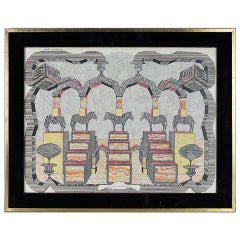
Framed Surrealistic Drawing by Pedro Friedeberg
By Pedro Friedeberg
Located in Atlanta, GA
Artist: Pedro Friedeberg (Mexican, 1936-)
Title:Le Tombeau D'Hemingway
Year: 1963
Medium: Ink and watercolor on paper:
Size: 14 3/4 x 19 1/2 plus 3 inch frame
Mark: upper lef...
Category
Vintage 1960s Mexican Modern Drawings
Materials
Paper
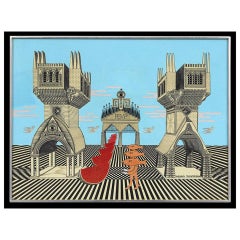
Framed Surrealistic Painting by Pedro Friedeberg
By Pedro Friedeberg
Located in Atlanta, GA
Artists: Pedro Friedeberg (Mexican, b. 1936)
Title: "Nietzche's Last Picnic"
Year: 1969
Medium: oil, pen and ink on board
Size: 15 x 20"
Marked: signed and dated "MCMLXIX" mid-...
Category
Vintage 1960s Mexican Modern Paintings
Materials
Paint
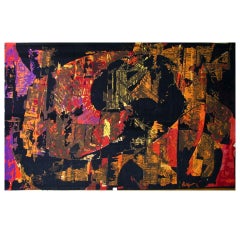
A Large Modernist Abstract Tapestry by Mathieu Mategot
By Mathieu Matégot
Located in Atlanta, GA
A modernist wool woven tapestry designed by French artist and designer Mathieu Mategot (1910-2001) circa 1960s. The piece is signed with Matégot and monogrammed TMP fino (Manufactur...
Category
Vintage 1960s Portuguese Mid-Century Modern Tapestries
Materials
Canvas, Wool
Framed Antique Japanese Embroidery Fukusa Panel
Located in Atlanta, GA
A finely embroidered Japanese silk Fukusa panel presented in a beautiful silk-lined giltwood frame (newly framed and glazed), circa late 19th century of Meiji Period. Fukusa is a tra...
Category
Antique Late 19th Century Japanese Meiji Textiles
Materials
Silk, Wood
Framed Antique Japanese Embroidery Fukusa Panel Takasago Legend
Located in Atlanta, GA
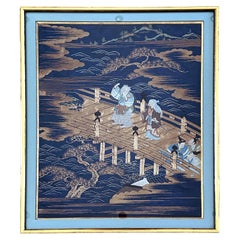
A finely embroidered Japanese silk Fukusa panel presented in a beautiful silk-lined giltwood frame (newly framed and glazed), circa late 19th century of Meiji Period. Fukusa is a traditional Japanese textile art used to wrap and present gifts at important occasions. Depending on the occasion, the panel itself can be a very fine textile art on its own.
On the deep blue background, this elaborate textile art depicts an old couple standing on a bridge with three bystanders, flanked by pine trees with hills afar. The couple is Jotomba (Joo and Uba are their respective names), characters in the Legend of Takasago, one of the oldest Japanese mythologies, who are associated with old pines. The legend goes as: "At Takasago Shrine there is a very old pine tree, the trunk of which is bifurcated; in it dwells the spirit of the Maiden of Takasago who was seen once by the son of Izanagi who fell in love and wedded her. Both lived to a very great age, dying at the same hour on the same day, and since then their spirits abide in the tree, but on moonlight nights they return to human shape to revisit the scene of their earthly felicity and pursue their work of gathering pine needles. His pine tree is called “The Pine of Suminoe” while hers is "Takasago pine".
In Japan, Takasago couple...
Category
Antique Late 19th Century Japanese Meiji Textiles
Materials
Silk, Wood
Framed Large Nazca Textile Panel with Geometrical Design
Located in Atlanta, GA
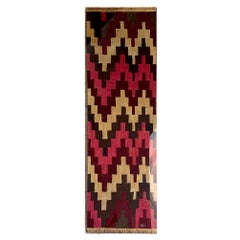
A large woven textile panel from Nazca culture on the south coast of nowadays Peru circa 600 to 800AD. The panel with short fringes on the end used to be half of a sleeveless tunic (similar to poncho) in which two similar pieces were joined together. Professionally mounted and conversed on a linen-backed wood frame and presented in an acrylic shadow box. The textile was finely woven from a camelid fiber dyed with natural pigments. The work strikes the viewer immediately with its unexpected modernity. The tri-colored geometrical blocks created a zigzagged step design that is visually minimal but bold at the same time. Its repetition evokes a lyrical visual rhythm that is unparallel in the ancient textile art and could easily mistake it as an abstract art from the 20th century. The zigzag step design was one of the unusual abstract motifs used by the pre-Columbian weavers from Nazca, who created some of the most mysterious and soul-stirring work with a minimalism aesthetic that was rarely seen in the ancient world. Considering that the artists were completely isolated without the influences of other cultures, their intrinsic creativity and artistic vision are even more impressive.
Reference: James W. Reid, The Lee M...
Category
Antique 15th Century and Earlier Peruvian Pre-Columbian Tapestries
Materials
Textile, Acrylic
Published Large Nazca Wari Textile Panel with Geometrical Design Framed
Located in Atlanta, GA
A large Nazca-Wari woven textile panel known as Llika or Awayo (shawl) from Ica Valley on the south coast of nowadays Peru. Professionally mounted and conversed on a linen-backed wood frame and presented in an acrylic shadow box. Shawls with this step design were identified as made from the period of 700 to 1100 AD during the transitional period when Nazca went under the expanded rule of the Wari empire. The textile was finely woven from a camelid fiber dyed with natural pigments. The work strikes the viewer immediately with its unexpected modernity. The simple, bold and repetitive geometry with the scintillating color blocks created a lyrical visual rhythm and could easily mistake it as an abstract art from the 20th century. The step design was one of the unusual abstract motifs used by the pre-Columbian weavers from Nazca, who created some of the most mysterious and soul-stirring work with a minimalism aesthetic that was rarely seen in any other ancient textile art. Considering that the artists were completely isolated without the influences of other cultures, their intrinsic creativity and artistic vision are even more impressive.
Provenance: From the collection of Lee M...
Category
Antique 15th Century and Earlier Peruvian Pre-Columbian Tapestries
Materials
Textile