Antiquities
to
461
914
433
2,115
13
7
9
7
5
5
4
3
3
2
2
1
1
1
1
1
1
787
654
674
20
291
90
71
35
2
18
13
7
16
11
10
17
2
704
536
494
287
222
1,903
1,348
741
396
391
2,135
2,132
2,132
10
6
4
3
2
Antiquities For Sale
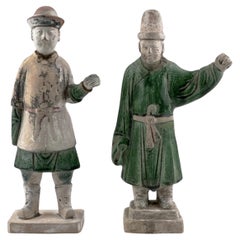
Two Figures of Attendants, Ming Period(1368-1644)
Located in seoul, KR
Statues of attendants crafted from terracotta, featuring glazes in green, Set on rectangular bases.
Period: Ming Dynasty
Medium: Glazed Pottery
Type: Figure
Condition : Excellent(It has soil on it, which is presumed to be evidence of excavation)
Provenance : Acquired in late 1990s from Hongkong
Reference :
1) Indianapolis Museum of Art - Dinastia ming, figure maschili, 1368-1644
(Type : Closely related)
2) V&A Museum - Accession number FE.295:1, 2-2005
(Type : Closely related)
3) Sotheby's 01 May 2007 - The Collection Of Paul Otto Taubert & Jewellery And Decorative Arts - Lot 233
(Price range : 5,000 - 7,000 AUD / Type : Closely related)
4) Asian Art Museum, San Francisco - Object number B60P1631 - Standing Man Tomb Figure
* Ming Dynasty Glazed Pottery Figures
Ming Dynasty glazed pottery figures are renowned for their bold color palette, intricate detailing, and lifelike forms, distinguishing them from earlier traditions. These figures, which depict officials, warriors, animals, and mythical creatures, are characterized by high-gloss lead-based glazes in green, amber, ochre, and sancai (three-color) combinations. The thickly applied glaze pools in recesses, creating depth and enhancing sculptural details. With dynamic postures, expressive facial features, and meticulously rendered drapery, these figures reflect the period’s advancement in ceramic craftsmanship, offering a greater sense of movement and realism compared to the rigid and stylized forms of earlier dynasties.
A defining characteristic of Ming glazed pottery is its elaborate surface detailing, often achieved through raised relief elements and contrasting glazes. Equestrian figures, for example, feature carefully sculpted saddles, harnesses, and decorative embellishments, while human figures are adorned with intricate robes and headdresses. The large scale of these tomb figures, often more imposing than those from previous periods, underscores the increasing importance of funerary art during the Ming era. Unlike later Qing Dynasty figures...
Category
15th Century and Earlier Hong Kong Ming Antique Antiquities
Materials
Pottery
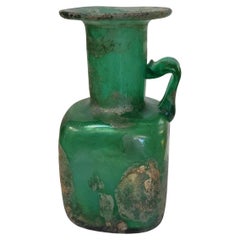
Ancient Roman Glass Flask, 1st–3rd Century AD
Located in North Palm Beach, FL
This is an exceptional example of ancient mold-blown glass, likely originating from the Eastern Roman Empire, dating circa 1st–3rd century AD.
The vessel takes the form of a small f...
Category
15th Century and Earlier European Antique Antiquities
Materials
Glass
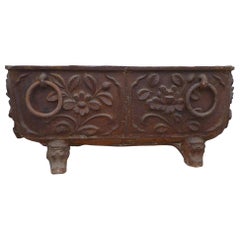
Large Cast Iron Tub with Floral Motif
Located in Greenwich, CT
Large cast iron tub with floral motif with four ring pulls, there is one casted inscription on one side with date made : " Emperor Qianglong Era 32nd yea...
Category
Late 19th Century Chinese Qing Antique Antiquities
Materials
Iron
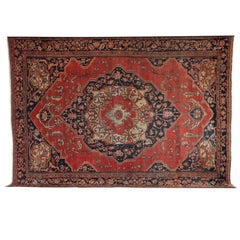
Antique 1880s Persian Fereghan Rug, 8
x 11
Located in New York, NY
This Persian Fereghan carpet circa 1880 in handspun wool and vegetable dyes was completed using a hand-knotted pile with cotton warp and thread. Its deep navy and red medallion desig...
Category
20th Century Persian Sarouk Farahan Antiquities
Materials
Wool
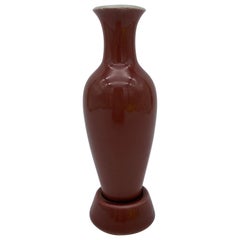
Antique Chinese Red Glazed Porcelain Vase with Porcelain Stand
Located in Brea, CA
Qing dynasty an antique important Chinese red glazed porcelain vase with porcelain stand, GuangXu Mark and of the period. Measures: 6.5” height 2.15 '' di...
Category
Early 20th Century Chinese Chinese Export Antiquities
Materials
Porcelain
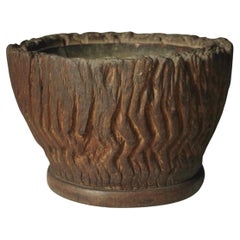
Japanese Antique Wooden Brazier/Hibachi Brazier/1868-1912s Wabi-Sabi
Located in Iwate-gun Shizukuishi-cho, Iwate Prefecture
This is an old Japanese brazier.
It is made of zelkova wood and is thought to date back to the Meiji period.
It features the strong grain of zelkova...
Category
Late 19th Century Japanese Primitive Antique Antiquities
Materials
Copper
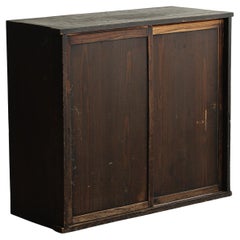
Japanese Antique Wood Cabinets, Wabi Sabi, Japandi
Located in Katori-Shi, 12
This is a tasteful antique storage shelf made in the Meiji period.
Made from cedar, the dark wood gives it a deep flavor.
No nails are used for the joints, but the traditional "mor...
Category
Early 20th Century Japanese Meiji Antiquities
Materials
Wood
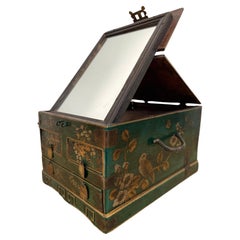
Chinese Wooden Jewelry Box or Vanity Dresser Chest Featuring Inlay
Located in Mt Kisco, NY
Antique Chinese Wooden Jewelry Box, a masterpiece of intricate inlay work. Handcrafted by skilled artisans, it blends authentic Chin...
Category
Mid-19th Century Chinese Antique Antiquities
Materials
Metal
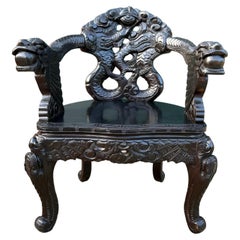
Antique Japanese Export Meiji High Relief Dragon Carved Throne Chair.
Located in Nantwich, GB
An impressive Imperial Meiji period Japanese throne chair which is finely and lavishly carved with dragons holding the eternal pearl in their mouths.
...
Category
Early 20th Century Japanese Meiji Antiquities
Materials
Wood

$2,452 Sale Price
20% Off
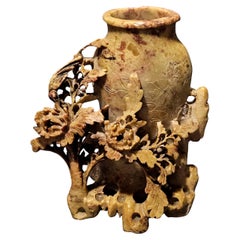
Antique Chinese Soap Stone Carving #1
Located in Norton, MA
Antique Chinese Soap Stone Carving depicting a large vase and flowers, good condition
Category
20th Century Chinese Qing Antiquities
Materials
Stone
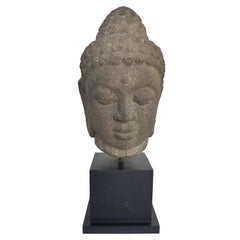
Ancient Carved Stone Buddha Head Sculpture, Provenance Royal-Athena Galleries NY
Located in Miami, FL
Ancient Carved Stone Buddha Head Sculpture, Provenance Royal-Athena Galleries NY
Offered for sale is an ancient carved stone Buddha head sculpture which was acquired at Royal-Athena...
Category
15th Century and Earlier Asian Antique Antiquities
Materials
Stone
$4,500 Sale Price
30% Off
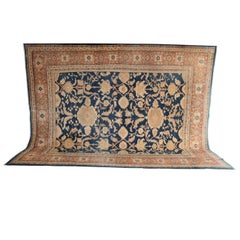
Antique 1880s Persian Sultanabad Rug, 11
x 14
Located in New York, NY
This Persian Sultanabad carpet circa 1880 consists of handspun wool and natural vegetal dyes. Created in the Sultanabad workshop of the Swiss artist Zigler, it is an extremely fine p...
Category
19th Century Persian Sultanabad Antique Antiquities
Materials
Wool
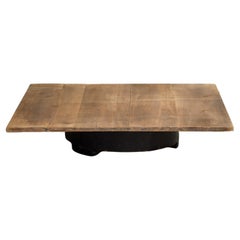
Japanese Antique Wood Low Table , Primitive Low Table , Wabi Sabi
Located in Katori-Shi, 12
This is an antique low table from the Taisho period.
The table top is made of five pieces of Shurizakura wood with beautiful grain, and its rich expression captivates the viewer. In...
Category
Early 20th Century Japanese Taisho Antiquities
Materials
Wood
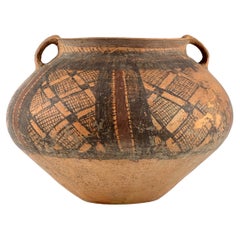
Neolithic Pottery Jar, Majiayao culture, 3rd-2nd Millenium BC
Located in seoul, KR
Fine-grained, buff-colored clay. Potted thin. Upper part of body painted with symbolic patterns in black and chocolate brown. Majiayao culture, Banshan type, 3rd millennium BC
Peri...
Category
15th Century and Earlier Hong Kong Antique Antiquities
Materials
Earthenware, Pottery
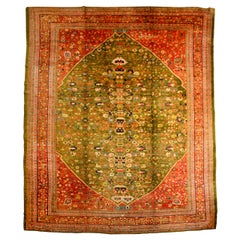
Antique 1880s Persian Sultanabad Rug, Tree of Life, Wool, 14
x 17
Located in New York, NY
This Persian Sultanabad carpet circa 1880 was created using handspun wool and organic vegetable dyes. It is an exceptional Sultanabad by uniqueness of coloration and design, created ...
Category
19th Century Persian Sultanabad Antique Antiquities
Materials
Wool
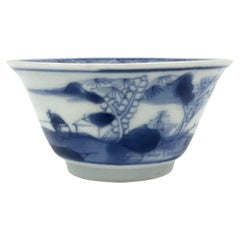
Riverscape Blue and White Teabowl, Circa 1725, Qing Dynasty, Yongzheng Reign.
Located in seoul, KR
The serene landscape and leisure activity of fishing are meticulously captured in cobalt blue on the porcelain's white surface, suggesting the value placed on harmony with the natura...
Category
1720s Vietnamese Qing Antique Antiquities
Materials
Ceramic
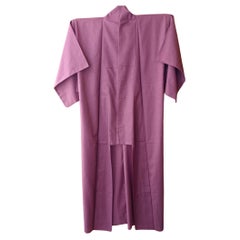
Japanese Kimono silk purple with patterns 1970s
Located in Paris, FR
This a silk kimono which was made in Showa era around 1970s in Japan.
The kimono is a traditional Japanese garment and the national dress of Japan. The kimono is a wrapped-front gar...
Category
Late 20th Century Japanese Showa Antiquities
Materials
Silk
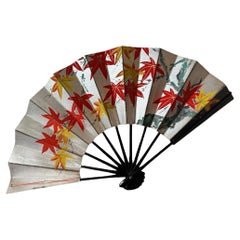
Double-Sided Japanese Fan — Edo Period, Hand-Painted on Silver Leaf Paper
Located in Fukuoka, JP
Japan, Edo period (1603–1868)
Size: 49 × 30 cm
A magnificent double-sided Japanese folding fan (ōgi), hand-painted on paper richly decorated with gold and silver leaf. One side depi...
Category
19th Century Japanese Edo Antique Antiquities
Materials
Wood, Paper
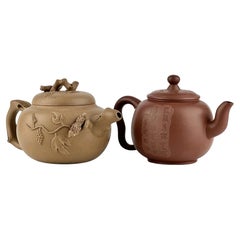
Two Yixing Teapots and Covers
Located in seoul, KR
Both Yixing Zisha teapots appear to be modern-Republic era pieces. Yixing Zisha teapots are made from rare Zisha (紫砂) clay, which is exclusively mi...
Category
20th Century East Asian Antiquities
Materials
Pottery
$1,500 / set
Japanese Antique Thatching Tools "Gangi" 1860s-1920s / Wall Decoration Wabisabi
Located in Chōsei District Nagara, JP
This is a traditional Japanese thatched roof tool known as a “Gangi.”
A Gangi is used to trim the cut ends of the thatch and smooth the roof’s surface, symbolizing the craftsmanship ...
Category
Early 20th Century Japanese Meiji Antiquities
Materials
Cedar
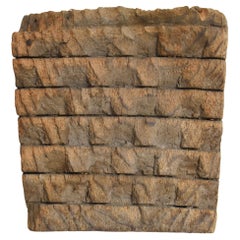
Japanese Antique Cabinets, Wabi Sabi, Japandi
Located in Katori-Shi, 12
This is an antique Japanese-style cabinet made in the Meiji period.
The texture of the black lacquer, smoked with soot from the hearth, has a unique depth and charm that is unlike a...
Category
Early 20th Century Japanese Meiji Antiquities
Materials
Wood
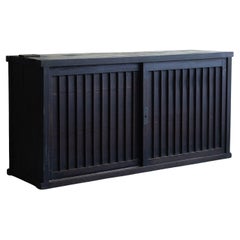
Japanese Antique Open shelf, Wabi Sabi, Japandi
Located in Katori-Shi, 12
This antique is just the right size for a storage shelf.
This is a rare shelf with flap doors that has a Japanese essence.
A flap door is a door that can be opened and stored insid...
Category
Early 20th Century Japanese Taisho Antiquities
Materials
Wood
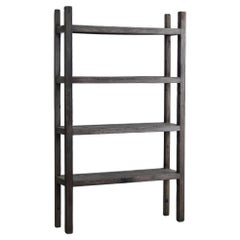
Chinese Black Carved Soapstone Flower Birds 4 Panel Folding Screen Room Divider
Located in DE MEERN, NL
Looking for a statement piece to elevate your living space? Look no further than this midcentury Chinese 4 Panel Carved Soapstone Brutalist Room Divide...
Category
1950s Brutalist Vintage Antiquities
Materials
Soapstone
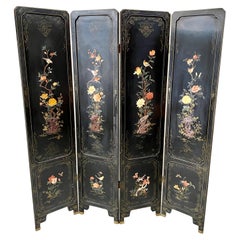
14th-16th Century, Sukhothai, Antique Thai Sukhothai Stoneware Naga
Located in Sampantawong, TH
Antique Sukhothai stoneware Naga.
Age: Thailand, Sukhothai Period, 14th - 16th Century
Size of Naga only: Height 34.8 C.M. / Width 12.5 C.M. / Length 15.5 C.M.
Size including stand:...
Category
15th Century and Earlier Thai Antique Antiquities
Materials
Stoneware
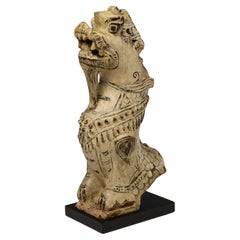
$1,720 Sale Price
20% Off
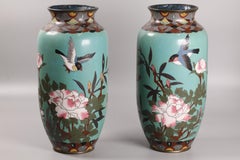
pair of Japanese cloisonné vases, 19th c.
Located in New York, NY
decorated with bird & floral motif on turquoise ground
Category
Late 19th Century Chinese Antique Antiquities
Materials
Metal, Enamel
$2,000 / set
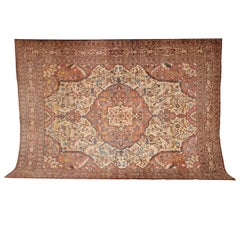
Antique Persian Haji Jalili Tabriz Rug, Circa 1880s, Wool, 9’ x 12’
Located in New York, NY
This Persian Haji Jalili Tabriz carpet circa 1880 consists of a cotton warp and thread, hand-knotted wool pile and natural vegetable dyes. It is an exceptional piece from the workshi...
Category
19th Century Persian Tabriz Antique Antiquities
Materials
Wool
$45,500 Sale Price
30% Off
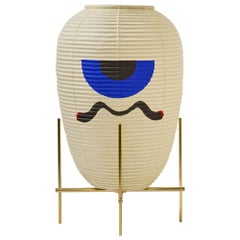
Contemporary Japanese Chochin Floor Lamp Limited Edition #2 Zen Washi
Located in Shibuya-ku, Tokyo
Name: OBAKE UN
Contemporary style Japanese Washi Japanese traditional paper shade floor lamp. Washi shade is famous as Isamu Noguchi Akari lightings.
Base is made of brass. Limited pattern painted model. Edition of 3+1AP
E26,27 light bulb.
Available to work with 100-250V.
Artist statement
In Japan, there is an animist belief that the soul dwells in old tools that have passed a long time and turns into spirits such as "Youkai" or "OBAKE." Its existence lurks in the darkness of everyday life, sometimes causing fear and sometimes entertaining.
This lantern is not an old tool, but it is made by the historic "Kojima Shoten", where the 10th generation are craftsmen in Kyoto. It's rare nowadays, and it's a style in which lanterns are made from bamboo bones to assembling papers and painting in one workshop and go. So, I decided to transform the polite crafted Japanese lanterns, which have been run through a traditional history, into a modern and pop style. It's not just OBAKE lurking in the darkness, but an existence who snuggles up to us as a more sophisticated being.
These one-eyed OBAKE have a meaningful look that originated in ancient Sanskrit culture. The red-eye "A [a]" is the facial expression that is the first pronunciation to make a sound in Sanskrit, which means "truth" and "spirit of inquiry" at the same time. The blue-eyed "UN [hu?]" expresses the pronunciation to close the sound, and at the same time means "wisdom" and "nirvana." There is also the idea that describing the beginning and end of the universe is represented by considering the "A" and "UN" as a pair. In Asia, it is a common sight to see a pair of guardian statues...
Category
2010s Japanese Edo Antiquities
Materials
Brass
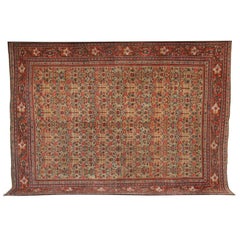
Antique 1880s Wool Persian Sultanabad Rug, Red and Cream, 9
x 12
Located in New York, NY
This Persian Sultanabad carpet consists of handspun wool and organic vegetable dyes, circa 1880. The size is 8'10" x 11'9", and it is in great antique condition.
Orley Shabahang take...
Category
20th Century Persian Sultanabad Antiquities
Materials
Wool
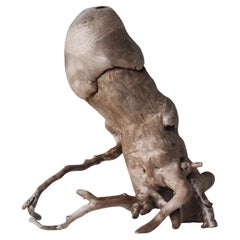
Japanese Antique Natural Wood Penis 1860s-1920s / Figurine Object Wabisabi
Located in Chōsei District Nagara, JP
This is a phallic statue made of natural wood produced in Japan.
It is estimated to have been created during the Meiji and Taisho periods (1860s-1920s), and is made of richly texture...
Category
Early 20th Century Japanese Meiji Antiquities
Materials
Pine
$800 Sale Price
20% Off
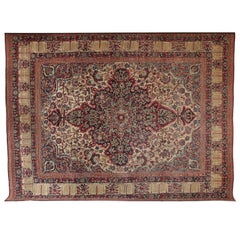
Antique Wool Persian Kermanshah Rug, Circa 1880, Hand-knotted, 8
x 11
Located in New York, NY
This Persian Kermanshah carpet circa 1880 consists of handspun wool and vegetable dyes. The size is 8'4" x 10'10", and it is in excellent antique condition.
Orley Shabahang takes pri...
Category
20th Century Persian Kirman Antiquities
Materials
Wool
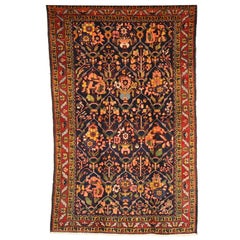
Antique 1910s Persian Chahal Shotor Bakhtiari Rug, Wool, 4
x 7
Located in New York, NY
This 1910 Bakhtiari rug from the village of Chahal Shotor consists of a cotton warp and handspun wool weft and hand-knotted pile. Its beautiful bright colors are derived from organic...
Category
Early 20th Century Persian Antiquities
Materials
Wool
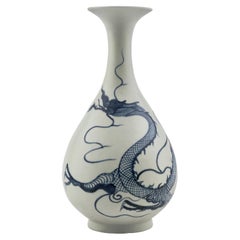
Blue And White Yuan-style ‘Dragon’ Bottle Vase, Yuhuchunping, Early Qing dynasty
Located in seoul, KR
The vase is delicately potted featuring a pear-shaped body that rests on a slightly flared foot and extends upward into a trumpet-shaped neck. Its exterior showcases a dynamic, three-clawed dragon in stride amidst flames.
This piece reflects a similar style to Yuan dynasty Yuhuchunping dragon vases, while reinterpreting certain details, such as the sharp and simplified shape of the dragon's head, the distinctive straight design of its claws, and the intricate depiction of the dragon’s scales.
The sticker on the base indicates that the absolute age was determined through radiological mechanical appraisal using the quantum absolute dating method, with the results pointing to the early 18th century.
Period : Qing Dynasty(Presumably Kangxi or Yongzheng Period)
Type : Yuhuchunping
Medium : Blue and White glaze
Condition : Excellent(slight salt residue remains on the surface, and the glaze is worn primarily around the edges, such as mouth and base)
Provenance: Southeast Asia, South China Sea from Shipwreck in early 2000s
Reference :
1) Christies Hong Kong 26 SEP 2024 - Lot 2
(Price realised : 819,000 HKD / Type : related)
* Yuan-Ming Style from Qing Dynasty
During the Qing dynasty, many ceramics were produced that imitated the styles of the Ming and Yuan dynasties. This practice was not mere imitation but a creative endeavor to inherit and innovate upon past techniques and styles. Qing dynasty ceramicists mastered the exceptional techniques of Ming and Yuan ceramics and used them as a foundation to develop more advanced works. Particularly, Yuan dynasty blue and...
Category
Early 18th Century Vietnamese Qing Antique Antiquities
Materials
Porcelain
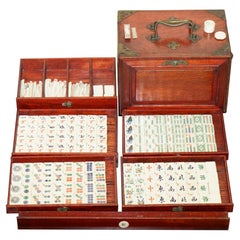
FOUR PERSON ANTIQUE MAHJONG SUITE CIRCA 1920
s CHINESE EXPORT PERIOD WITH STAND
Located in West Sussex, Pulborough
Royal House Antiques
Royal House Antiques is delighted to offer for sale this highly collectable Chinese export Circa 1920's Mahjong set with the original box and additional dice, t...
Category
1920s Chinese Chinese Export Vintage Antiquities
Materials
Bamboo, Wood
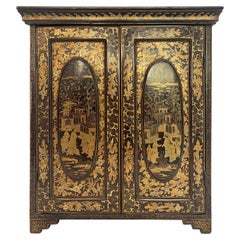
19th Century Antique Hand Painted Chinese Lacquer Table Jewelry Cabinet
By The Lacquer Company
Located in Brea, CA
19th century antique hand painted Chinese lacquer jewelry cabinet with a pair of raised panel doors opening to five drawers with turned ivory...
Category
Late 19th Century Chinese Qing Antique Antiquities
Materials
Lacquer
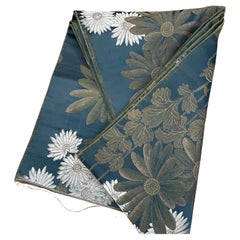
Japanese Vintage Kimono Silk Belt Flowers Navy and Silver 1920s
Located in Paris, FR
This is a Fukuro Obi made in Japan around 1920s.
Obi is a belt of varying size and shape worn with both traditional Japanese clothing like Kimono.Obi are categorised by their desig...
Category
1920s Japanese Taisho Vintage Antiquities
Materials
Silk
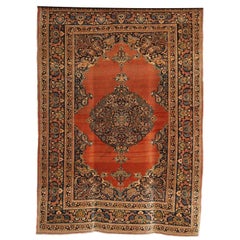
Antique 1890s Persian Haji Jalili Tabriz Rug, Medallion Design, Wool, 4
x 6
Located in New York, NY
This 1890 Haji Jalili Persian Tabriz rug consists of a cotton warp, handspun wool weft and hand-knotted handspun wool pile. The bright copper hues, soft blues, indigos, cream and bei...
Category
19th Century Persian Tabriz Antique Antiquities
Materials
Wool
$6,875 Sale Price
44% Off
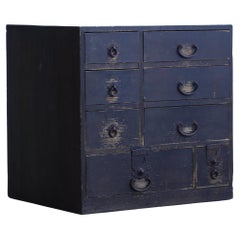
Japanese Antique Chests of Drawers , Wabi-Sabi
Located in Katori-Shi, 12
This antique Japanese chest of drawers dates back to the Meiji period.
This chest is made from sturdy cedar wood with a lacquer finish, and the iron handles add industrial elegance....
Category
Early 20th Century Japanese Meiji Antiquities
Materials
Wood
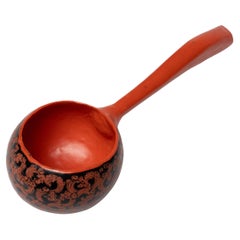
Burmese Red
Black Lacquer Ladle
Located in Chicago, IL
This colorful, wooden ladle continues the time-honored tradition of Burmese lacquer art (pan yun). Built atop a substrate of wood or bamboo, the decorative ladle has a vibrant finish...
Category
20th Century Burmese Folk Art Antiquities
Materials
Wood
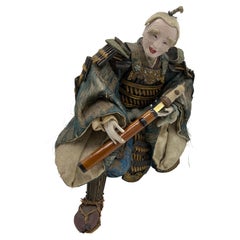
Japanese Samurai Figure Hinaningyo, Edo Period
Located in Munich, Bavaria
Antique samurai doll called Hinaningyo; Japan, late EDO period
Praised at the Tang-no-sekku boys' festival on May 5th as a sign of bravery, embodying the...
Category
Mid-18th Century Japanese Antique Antiquities
Materials
Textile, Wood
$2,709 Sale Price
20% Off
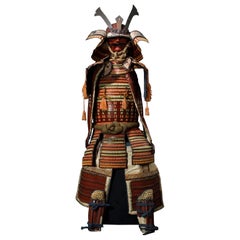
Samuraï armor
Located in Brussel, BE
Amazing and unique Samuraï armor.
Early XXth century.
Composed of an iron helmet mounted with large standing rivets and "Kuwagata" decoration (shoe shaped decoration) on the front. R...
Category
Early 20th Century Japanese Japonisme Antiquities
Materials
Iron
$29,918
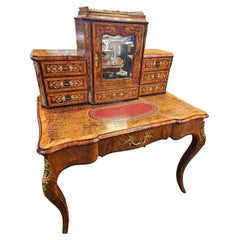
Beautiful C19th inlaid Bonheur de Jour
Located in London, GB
Beautiful French Inlaid Bonheur de jour
Burr Walnut
Lovely Cabrio Legs
Just Been Restored
Very Fine Example
Dated C1880s
Category
Late 19th Century French French Provincial Antique Antiquities
Materials
Walnut
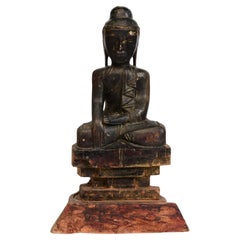
18th Century, Shan, Antique Burmese Wooden Seated Buddha
Located in Sampantawong, TH
Burmese wooden Buddha sitting in Mara Vijaya (calling the earth to witness) posture on a base.
Age: Burma, Shan Period, 18th Century
Size: Height 50.6 C.M. / Width 31.2 C.M.
Conditi...
Category
18th Century Burmese Antique Antiquities
Materials
Wood
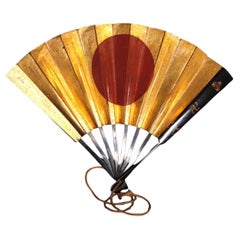
$960 Sale Price
20% Off
17th century Rare Samurai War fan
Located in Fukuoka, JP
A rare Samurai Gunsen war fan from the Mid-Edo period (17th-18th century), adorned with the distinguished crests of the Hachisuka clan. Expertly crafted from lacquered and carved bam...
Category
Late 17th Century Japanese Edo Antique Antiquities
Materials
Belgian Black Marble, Gold Leaf
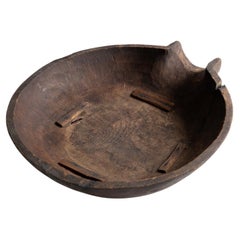
Japanese Katakuch Wood bowl / Mingei Wabisabi
Located in Sammu-shi, Chiba
If you are looking for something special, we recommend buying items selected by BROOD.
We sell a carefully selected range of old Japanese items.
We have seen tens of thousands of ite...
Category
Mid-20th Century Japanese Showa Antiquities
Materials
Wood
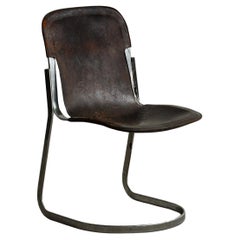
Antique Japanese leather chair, Primitive Chair, Wabi-Sabi
Located in Katori-Shi, 12
This is an antique chair from the Showa era.
The deep-colored genuine leather has a unique texture and soft feel that comes from years of use. You can enjoy the changes in the leath...
Category
Early 20th Century Japanese Showa Antiquities
Materials
Leather
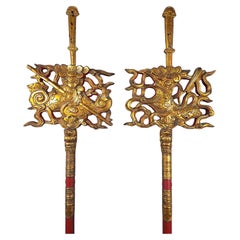
Vietnam - Pair Of Large Standards In Gilded And Red Lacquered Wood
Located in BARSAC, FR
Pair of large, richly carved, gilded and red lacquered wooden standards.
A religious and decorative object in Vietnamese temples and pagodas.
Different decor each side.
Brough...
Category
Mid-19th Century Vietnamese Other Antique Antiquities
Materials
Wood
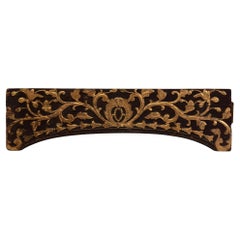
19th Century, Antique Thai Wood Carving
Located in Sampantawong, TH
Antique Thai wood carving.
Age: Thailand, 19th Century
Size: Length 104.5 C.M. / Width 5.3 C.M. / Height 28.6 C.M.
Condition: Nice condition overall (some expected degradation due t...
Category
19th Century Antique Antiquities
Materials
Wood
$1,000 Sale Price
20% Off
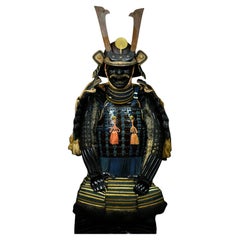
Rare Antique Original high Ranking Edo period Samurai armor Yoroi Japan Daimyō
Located in Ijzendijke, NL
This complete Edo-period samurai armor is an exceptional example of the refined martial elegance and ceremonial grandeur associated with Japan’s warrior aristocracy. Every component reflects a precise harmony of functionality, symbolism, and prestige.
At the heart of the set is a superb suji-bachi kabuto, constructed from multiple riveted iron plates arranged with flawless symmetry and enriched by a beautifully aged patina. It is crowned with a gilt tehen no kanamono, and the imposing maedate presents a pair of antler-like blades framing a gilded sun disc an emblem of celestial authority and divine lineage.
The Fukigaeshi feature extraordinary gilt dragon ornaments, carved in high relief. Dragons, ancient symbols of protection and power, were reserved for armor of the highest rank, strongly indicating that this set belonged to a Daimyō or high-ranking retainer.
The menpō, lacquered in deep black, includes a natural-hair moustache and an articulated jaw (resseibō), lending the face a vivid sense of character. Below it, the shikoro is composed of finely lacquered blue-and-gold plates, meticulously laced with silk.
The okegawa ni-mai dō cuirass is finished in a dark brown lacquer and laced in deep indigo silk, complemented by elegant orange ceremonial tassels a hallmark of formal presentation armor. The sode (shoulder guards) retain their rare bear-fur trimming, an expensive and status-laden material symbolizing courage and noble rank.
Completing the ensemble are beautifully made kote, haidate, and suneate, each executed with rich fabrics and refined lacquer work. A butterfly mon (chō-mon) appears on the leg guards an elegant symbol of transformation, adding a poetic contrast to the armor’s martial presence.
The extensive use of gilding, the rare bear-fur details, and the prominent dragon motifs confirm this as a piece created for the highest echelons of samurai society. It is a masterpiece where ceremonial artistry, symbolism, and authority converge.
Artistic and Historical Significance
This armor epitomizes the Edo-period ideal, when arms and armor transcended their battlefield origins and became expressions of identity, dignity, and cultural refinement. The interplay of dark lacquer, golden ornamentation, and natural materials embodies the spirit of bushidō discipline, inner strength, and beauty through restraint.
Whether displayed in a private collection, gallery, office, or interior setting, this armor commands attention. Its presence transforms any space, making it a truly museum-worthy centerpiece for collectors of Japanese, military, or historical art.
The set includes its traditional stand and storage box. As with all antique armor...
Category
17th Century Japanese Japonisme Antique Antiquities
Materials
Metal
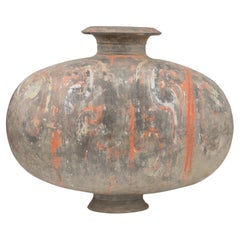
Large Cocoon-shaped jar with cloud-scroll design, Han Dynasty
Located in seoul, KR
This jar would have served as a mortuary object (mingqi), placed in a tomb as a substitute for the more valuable bronze and lacquer vessels used in daily life. Along with a variety o...
Category
15th Century and Earlier Hong Kong Han Antique Antiquities
Materials
Pottery
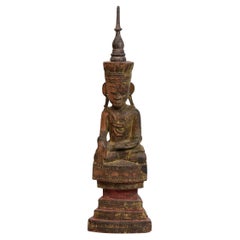
18th Century, Shan, Antique Burmese Wooden Seated King Crowned Buddha
Located in Sampantawong, TH
Antique Burmese wooden seated crowned Buddha or sometimes known as 'King Buddha's, wearing diadem-crowns and ornaments of kings instead of ordinary monk's robes.
Age: Burma, Shan P...
Category
18th Century Burmese Antique Antiquities
Materials
Wood
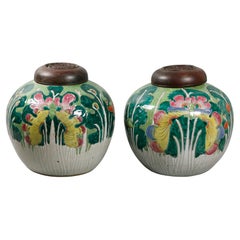
$1,200 Sale Price
20% Off
pair of Chinese porcelain cover jars, 19th c.
Located in New York, NY
cabbage motif; 8in(W) x 8in(D) x 8in(H) are the approximate dimensions of each jar including its cover
Category
Mid-19th Century Chinese Antique Antiquities
Materials
Porcelain
$2,000 / set
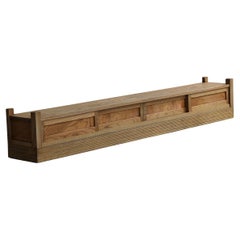
Japanese Antique Cabinets , Low board Storage , Wabi Sabi, Japandi
Located in Katori-Shi, 12
This is an antique lowboard made in Japan. In Japan, it was used as a flooring.
A flooring is a platform that can be moved, like the floorboards of a tokonoma, which is indispensabl...
Category
Early 20th Century Japanese Taisho Antiquities
Materials
Wood
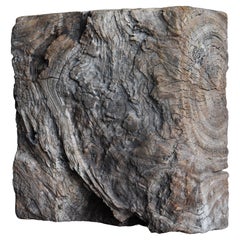
Japanese Antique Wabi-Sabi Weathered Keyaki Wood Block 1900s-1940s / Figurine
Located in Chōsei District Nagara, JP
This is an antique, weathered block of Japanese keyaki (zelkova) wood. It is estimated to date from the early 1900s to the 1940s. Its form, shaped over many decades, carries a presen...
Category
Mid-20th Century Japanese Primitive Antiquities
Materials
Wood
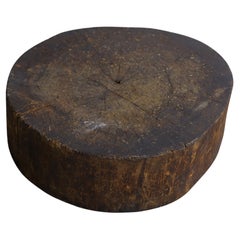
Wooden Low Table, Japanese Antique, Wabi-Sabi, Mingei
Located in Katori-Shi, 12
This is an antique wooden low table from the Taisho period.
It was used as a workbench by a craftsman at the time, and although it is unclear which craftsman used it, there are smal...
Category
Early 20th Century Taisho Antiquities
Materials
Wood
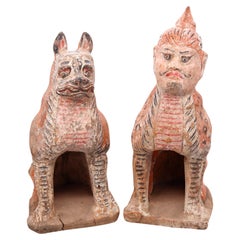
China 618-907 AD Tang Dynasty Pair Of Polychromate Earth Spirits Zhenmushou
Located in Miami, FL
Pair of Earths Spirits "Zhenmushou" from the China Tang Dynasty 618-907 AD.
A beautiful and rare pair of "Earths Spirits guardians" from the Yunnan province region in the ancient China. This was created in clay earthenware pottery during the Tang Dynasty period between 618 and 907 AD. Featuring the molded figures of two seated guardians with decorations with polychrome pigmentations. The figures are seated on their haunches with cloven hooves planted firmly on the base looking forward with their front legs in a straight position. Both with face and body alert expressions on a rectangular base.
Earth spirits usually appear in pairs, one with a human head and the other with a lion head. Their supernatural powers, indicated by antlers, spiky flanges and flames, enable them to confront evil spirits and protect any precincts within their gaze. Have been believed to protect the living by keeping the spirits of the dead from inappropriately roaming the world outside the tomb.
Zhenmushou or guardian deities, developed from a line of protective spirits found normally in pairs at the front of Tang dynasty tombs. They served both to protect the figure from untoward spirits, and the outside world from the roving spirit of the dead. Combining features from a number of animals to form the perfect mythic beast, these mythical creatures were perceived to be the ideal guardians of the dead
The semi human faced figure has a measures of 11.25 by 4.5 by 5.75 inches (28.57 x 11.43 x 14.60 Cm).
The mythological lion animal figure has a measures of 10 by 5 by 5.8 inches (24.5 x 12.7 x 14.73 Cm).
Tang dynasty or Tang Empire, was an imperial dynasty of China that ruled from 618 to 907, with an interregnum between 690 and 705. It was preceded by the Sui dynasty and followed by the Five Dynasties and Tend Kingdoms period. Historians generally regard the Tang as a high point in Chinese civilization, and a the golden age of cosmopolitan culture. Tang territory, acquired through the military campaigns of its early rulers, rivaled that of the Han dynasty.
The Li family founded the dynasty, seizing power during the decline and collapse of the Sui Empire and inaugurating a period of progress and stability in the first half of the dynasty's rule. The dynasty was formally interrupted during 690–705 when Empress Wu Zetian seized the throne, proclaiming the Wu Zhou dynasty...
Category
15th Century and Earlier Chinese Tang Antique Antiquities
Materials
Earthenware, Pottery
$4,600 Sale Price / set
20% Off
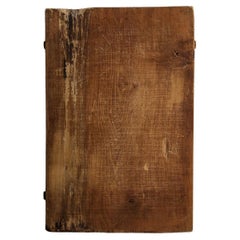
Japanese Antique Wooden Board , Wall Decoration Abstract Art , Wabi-Sabi
Located in Katori-Shi, 12
This wooden board was made in the Taisho era.
The dense and beautiful grain of the wood, unique to time-honored zelkova, is eye-catching. The color that has deepened over the years,...
Category
Early 20th Century Japanese Taisho Antiquities
Materials
Wood
Antique 1910s Persian Kermanshah Songhor Rug, 4
x 6
Located in New York, NY
This Persian Kermanshah carpet from the village of Songhor circa 1910 consists of a hand-knotted handspun wool pile and natural vegetable dyes. The medallion design features exceptio...
Category
Early 20th Century Persian Antiquities
Materials
Wool
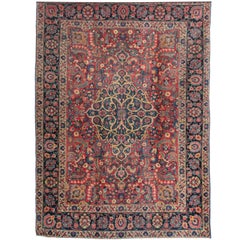
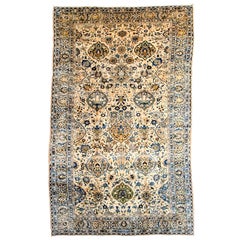
Antique 1910s Persian Lavar Rug, Wool, Hand-knotted, 6
x 12
Located in New York, NY
This Persian Lavar carpet created circa 1910 consists of a pure wool hand-knotted pile with cotton warp and threads and natural vegetable dyes. The work of master weaver Sakhaie, as ...
Category
Early 20th Century Persian Antiquities
Materials
Wool
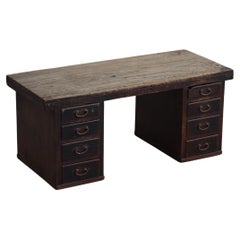
Japanese Antique Table, Desk, Double-sleeved desk, Wabi-Sabi, Early 20th Century
Located in Katori-Shi, 12
This antique Japanese table was produced in the Taisho period (1912-1926).
This is a double-sleeved desk whose lacquer has gained a deep flavo...
Category
Early 20th Century Taisho Antiquities
Materials
Wood
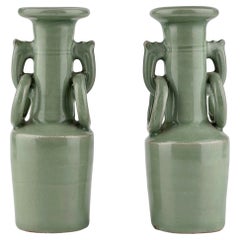
Pair of Celadon Vases with Double Handles, Song-Yuan
Located in seoul, KR
These tall-necked vases feature gently flared rims and double dragon-form handles on the shoulders, each suspending a large, free-moving ring. The surfaces are covered with a lustrou...
Category
15th Century and Earlier East Asian Antique Antiquities
Materials
Celadon
$15,000 / set
Still Thinking About These?
All Recently ViewedMore Ways To Browse
Schist Buddha
Tibetan Prayer Wheel
Vung Tau Vase
Walking Buddha
Wei Horse
Afghanistan Buddha
Ancient Luristan Bronze
Antique Wood Foot Warmer
Bronze Age Sword
Chinese Dagger
Chinese Dragon Pottery Jar
Chinese Porcelain 8 Immortals
Gandharan Schist
Gerald Hong
Gong Cambodia
Han Dynasty Bowl
Haniwa Heads
Ichimatsu Doll