Pottery Antiquities
to
32
28
2
153
146
3
4
1
1
1
6,177
694
517
480
287
153
130
58
55
23
153
153
153
Material: Pottery
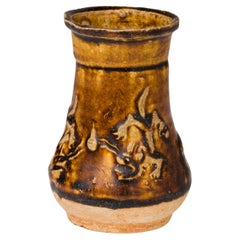
Brown Glazed Small Jar with Two Dragons and a Fish, Song-Yuan Dynasty
Located in seoul, KR
The glaze blends harmoniously with the color of the clay, giving a natural, earthy feel. This piece features intricate carvings of two dragon presumably pursuing a sacred jewel called "Yeouiju" and a fish. The glaze drips and irregular streaks of brown-glazed pottery from that period are distinctive aesthetic elements of Song-Yuan Dynasty brown glazed ceramics, with glaze colors ranging from deep chocolate to light amber or honey tones.
Date : Song-Yuan Dynasty(960~1368)
Type : Olive-Brown-glazed pottery
Provenance : Acquired in late 1990s from Hongkong
Reference :
1) Bonhams London 13 May 2024 - The John E. Bodie OBE (1930-2023) Collection of Chinese Art - Lot 12
(Price realised : 2,432 GBP / Type : Closely related)
2) Christies 25 Mar 2015 - The Collection of Robert Hatfield Ellsworth...
Category
15th Century and Earlier Hong Kong Tang Antique Pottery Antiquities
Materials
Pottery
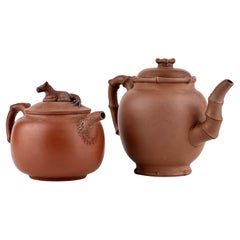
Two Yixing Zisha Teapots and Covers
Located in seoul, KR
Both Yixing Zisha teapots appear to be modern to republic-era pieces. Yixing Zisha teapots are made from rare Zisha (紫砂) clay, which is exclusively...
Category
20th Century East Asian Pottery Antiquities
Materials
Pottery

$1,500 / set
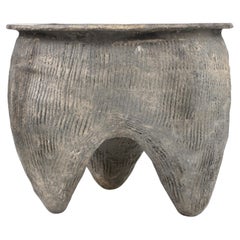
Tripod in the shape of a bronze vessel li, Zhou or Shang dynasty
Located in seoul, KR
The tri-lobed shape and combed ridges of this cooking pot increased heating efficiency by maximizing the vessel’s surface area. The shape of a bronze vessel li, with the body rising out of three hollow pointed legs to a wide moiuth with splayed-out rim. The exterior is covered with cord impressed pattern. The surface shows signs of oxidation from being buried in the soil for a long time.
Period: Zhou or Shang dynasty circa 1000 B.C.E.
Medium : Grey earthenware with impressed decoration
Type : Tripod vessel
Size : 29cm (Height) x 35cm(Diameter)
Condition : Good
Provenance : Acquired in late 1990s from Hongkong
Reference :
1) V&A Museum - ACCESSION NUMBER C.87-1954
2) Smithsonian National Museum of Asian Art - ACCESSION NUMBER F1984.13
3) The University of Chicago - OBJECT NUMBER 1989.1
4) The MET - Accession Number: 1972.275.5
5) Kyoto National Museum - Three-footed Earthenware Vessel
* Shang Dynasty Pottery (1600-1046 BCE)
The Shang dynasty, known for its significant advancements in bronze casting, also produced notable pottery. Shang pottery is characterized by its practical use and simple designs, reflecting the utilitarian needs of the society. The pottery from this period includes both coarse wares used for everyday purposes and fine, high-quality ceramics used in ritualistic contexts. Common forms include jars, bowls, and cups, often with a dark, burnished surface. One distinctive feature of Shang pottery is the use of gray clay, and many pieces display clear signs of oxidation, giving them a unique, mottled appearance. The decorations were typically incised or stamped, featuring geometric patterns, zoomorphic designs, and motifs that are also seen in Shang bronze...
Category
15th Century and Earlier Hong Kong Antique Pottery Antiquities
Materials
Pottery
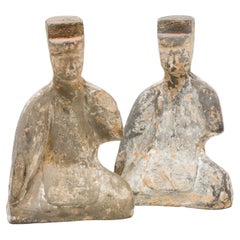
Two Pottery Kneeling Figures of Attendant
Located in seoul, KR
The statuette shows traces of the original red, black, and white pigmentation. Ceramic statuette from the han Dynasty, depicting two court people, probably a musician. They are dress...
Category
15th Century and Earlier Hong Kong Han Antique Pottery Antiquities
Materials
Pottery
$3,790 / set
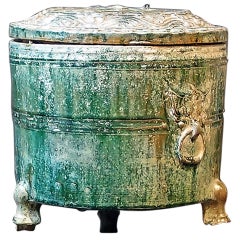
Chinese Han Dynasty Green Glazed Covered Storage Jar
Located in Austin, TX
A wonderful Han Dyansty (206 BC-200 AD) storage vessel. The circular body set upon three legs and fitted with a lid. The entirety covered in heavy leaded green glaze, imitating bronz...
Category
15th Century and Earlier Chinese Han Antique Pottery Antiquities
Materials
Pottery
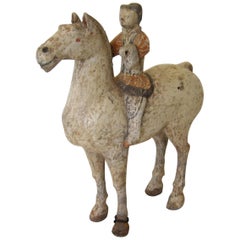
Han Dynasty Horse and Rider TL Tested
Located in Atlanta, GA
Tombs of the Han dynasty (206 BC-220 AD) were typically furnished with model figures and other objects believed to be necessary for a safe journey to the afterlife. Historical records indicate that when important military officials died, the imperial Han court would give them elaborate funerals, including a full military cortege. It is likely that this figure of a horse and rider was originally part of a model funerary retinue comprised of soldiers and cavalrymen that would have been placed in such a tomb.
Beautifully proportioned Han dynasty polychrome painted terracotta horse and rider. The warrior is decorated with a painted orange and black tunic. A quiver is visible attached to his back. He would have originally held a wooden bow in between his hands that has rotted away over the centuries. He is riding a beautifully sculpted white horse.
TL tested...
Category
15th Century and Earlier Chinese Antique Pottery Antiquities
Materials
Earthenware, Pottery
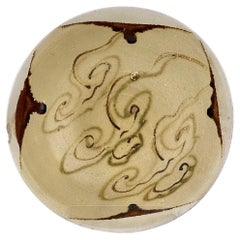
Large Changsha Bowl from Belitung Ship, Tang Dynasty
Located in seoul, KR
The edges have been dipped in four places with brown, probably iron-oxide. The well of the bowl is freely painted in deep green and coffee coloured brown. These are characteristic fe...
Category
15th Century and Earlier Indonesian Tang Antique Pottery Antiquities
Materials
Pottery
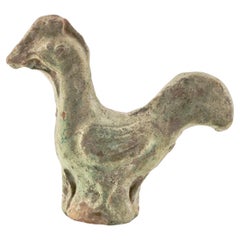
Green Glazed Pottery Figure of Rooster
Located in seoul, KR
The head is rounded, with minimal detailing of the beak, eyes, and comb. The neck is thick and solid, seamlessly transitioning into the body, which appears sturdy and compact, giving...
Category
15th Century and Earlier Hong Kong Han Antique Pottery Antiquities
Materials
Pottery
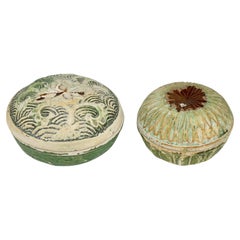
Swatow Lidded Boxes in the shape of Waves and Flowers, Late Ming Era(16-17th c)
Located in seoul, KR
Small green-glazed boxes from the late Ming dynasty cargo. Identical pieces are included on page 142, 143 of the Bin Thuan catalog titled 'The Age of Discove...
Category
16th Century Vietnamese Ming Antique Pottery Antiquities
Materials
Ceramic, Pottery
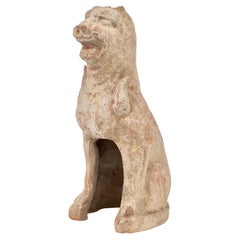
Guardian Haitai Lion Pottery Figure
Located in seoul, KR
This figure represent a guardian haitai. The style of the figurine, with its facial features and remnants of paint, suggests it could be a part of funerary art, which was common in Chinese culture during these periods.
Date : Northern Wei...
Category
15th Century and Earlier Hong Kong Tang Antique Pottery Antiquities
Materials
Pottery, Stoneware
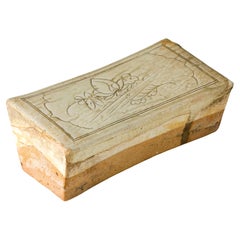
Cizhou Rectangular Pillow with Carved Decoration, Yuan Dynasty
Located in seoul, KR
Cizhou ware is known for its robust forms and freely applied decoration, often featuring a white slip under clear glaze. The pillow is rectangular, with a slightly curved top surface to accommodate the head of the sleeper. The decoration on this pillow features an incised design, delineated with fine lines to create a clear and simplistic representation. The motif includes floral elements, likely peony or chrysanthemum, and foliage, which were popular during the Song and Yuan periods. The carving is subtle yet skillful, showing the artistry and aesthetic preferences of the era.
Period : Yuan Dynasty, 13th-14th Century
Type : Pillow
Medium : Cizhou Ware
Provenance : Acquired in late 1990s from Hongkong
Reference :
1) Datong Museum - Cizhou Pillow...
Category
15th Century and Earlier Hong Kong Antique Pottery Antiquities
Materials
Pottery, Stoneware
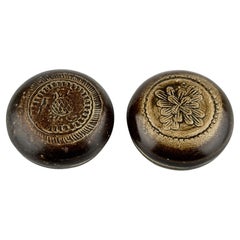
Brown-Glazed Moulded Box And Cover, Fujian Kiln, Yuan-Ming Dynasty
Located in seoul, KR
The circular domed cover moulded with a brown glaze that falls short of the straight foot. The pattern on the left features a central circular design with simple shapes and lines car...
Category
15th Century and Earlier Chinese Ming Antique Pottery Antiquities
Materials
Pottery
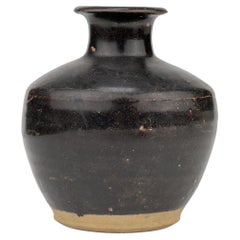
Black glazed bottle, Late Ming Era(16-17th century)
Located in seoul, KR
Black glazed bottle from the late Ming dynasty binh thuan cargo. An identical piece is included on page 146 of the Bin Thuan catalog titled 'The Age of Disco...
Category
16th Century Vietnamese Ming Antique Pottery Antiquities
Materials
Pottery
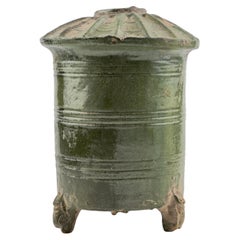
Funerary Model of a Granary, Han dynasty
Located in seoul, KR
Cylindrical vessel on three animal-shaped feet (dragon or snake), wall with profile grooves, roof. pottery with green lead glaze. "Iridescence" is observed in surface.
Period : Han...
Category
15th Century and Earlier Hong Kong Han Antique Pottery Antiquities
Materials
Pottery
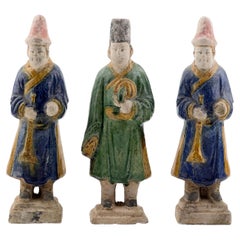
Two Glazed Court Attendants, Ming Period (1368-1644)
Located in seoul, KR
Two finely hollow-moulded terracotta statuettes from ancient China, dating to the Ming Dynasty. The figure is depicted standing, dressed in long, flowing robes, painted in vibrant blue or green and deep amber yellow. The hair is styled into an elaborate top-knot, painted in a muted brown. Areas left unpainted would have been 'cold-painted' after firing, contrasting with the vivid fired blue or green and amber pigments. The figure is shown with the left hand raised to the chest, as if holding something, possibly an offering or incense. Figurines like this were placed in tombs to guide the deceased on their journey to the afterlife.
The Ming Dynasty was known for its exceptional artistic achievements, partly due to its economic prosperity. Since the Han Dynasty, it was customary to bury terracotta miniatures of everyday objects with the deceased. These items, known as mingqi, or "spirit utensils" and "vessels for ghosts," were believed to help and assist the deceased in the afterlife. Mingqi were crafted in the form of cooking utensils, miniature replicas of houses, temples, furniture, and other items. Anthropomorphic and zoomorphic terracotta figures were also popular, designed to assist, entertain, and recreate the living world for the deceased.
Period: Ming Dynasty
Medium: Green/blue-glazed Pottery
Type: Figure
Provenance : Acquired in late 1990s from Hongkong
Reference :
1) Ancient & Oriental - Terracotta Tomb Attendants
(Type : Highly related)
2) La Maison De La Petite Sara S.r.l. - Archaeology section - A Black glazed Terracotta Statuette, Servant with Trumpet, Ming Dynasty
(Price realised : 700 GBP / Type : Highly related)
* Ming Dynasty Glazed Pottery Figures
Ming Dynasty glazed pottery figures are renowned for their bold color palette, intricate detailing, and lifelike forms, distinguishing them from earlier traditions. These figures, which depict officials, warriors, animals, and mythical creatures, are characterized by high-gloss lead-based glazes in green, amber, ochre, and sancai (three-color) combinations. The thickly applied glaze pools in recesses, creating depth and enhancing sculptural details. With dynamic postures, expressive facial features, and meticulously rendered drapery, these figures reflect the period’s advancement in ceramic craftsmanship, offering a greater sense of movement and realism compared to the rigid and stylized forms of earlier dynasties.
A defining characteristic of Ming glazed pottery is its elaborate surface detailing, often achieved through raised relief elements and contrasting glazes. Equestrian figures, for example, feature carefully sculpted saddles, harnesses, and decorative embellishments, while human figures are adorned with intricate robes and headdresses. The large scale of these tomb figures, often more imposing than those from previous periods, underscores the increasing importance of funerary art during the Ming era. Unlike later Qing Dynasty figures...
Category
15th Century and Earlier Hong Kong Ming Antique Pottery Antiquities
Materials
Pottery

Three Glazed Figures of Musicians, Ming Period (1368-1644)
Located in seoul, KR
Statues of Chinese musicians crafted from terracotta, featuring glazes in green, blue with nice condition. Set on rectangular bases. Compared to other figures, musician figures are relatively rare, two figures with distinctive instrument from that era.
Period: Ming Dynasty
Medium: Green and Blue glazed Pottery
Type: Figure
Provenance : Acquired in early 2000s from Hongkong
Reference :
1) V&A Museum - Accession number C.1501913
(Type : Closely related)
* Ming Dynasty Glazed Pottery Figures
Ming Dynasty glazed pottery figures are renowned for their bold color palette, intricate detailing, and lifelike forms, distinguishing them from earlier traditions. These figures, which depict officials, warriors, animals, and mythical creatures, are characterized by high-gloss lead-based glazes in green, amber, ochre, and sancai (three-color) combinations. The thickly applied glaze pools in recesses, creating depth and enhancing sculptural details. With dynamic postures, expressive facial features, and meticulously rendered drapery, these figures reflect the period’s advancement in ceramic craftsmanship, offering a greater sense of movement and realism compared to the rigid and stylized forms of earlier dynasties.
A defining characteristic of Ming glazed pottery is its elaborate surface detailing, often achieved through raised relief elements and contrasting glazes. Equestrian figures, for example, feature carefully sculpted saddles, harnesses, and decorative embellishments, while human figures are adorned with intricate robes and headdresses. The large scale of these tomb figures, often more imposing than those from previous periods, underscores the increasing importance of funerary art during the Ming era. Unlike later Qing Dynasty figures...
Category
15th Century and Earlier Hong Kong Ming Antique Pottery Antiquities
Materials
Pottery
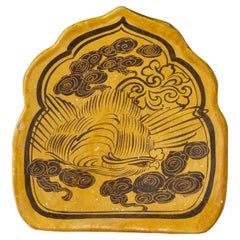
Rare Cizhou
Mandarin duck and Reishi mushroom
Painted Pillow, Jin-Song Dynasty
Located in seoul, KR
Mandarin ducks symbolize eternal love and fidelity in East Asian culture, often representing marital harmony as they are believed to mate for life. Reishi mushrooms, known as symbols of longevity and health, are revered in traditional Asian medicine for their association with immortality and have been used for centuries to promote vitality and strengthen the immune system.
The orange glaze is commonly found on Cizhou-type tiger pillows. The attached materials indicate that this tiger pillow is from the same period and shares the same color tone as the one housed in the Baoji Bronzeware Museum, a national museum located in Shaanxi Province. Considering the glaze color, painting style, and shape, it is speculated that this piece was used by the imperial court.
Period : Jin-Song Dynasty(12-13th century)
Type : Pillow
Medium : Cizhou Ware
Size : 28 cm(Width), 30cm(Vertical), 16cm(Height)
Provenance : Acquired in late 1990s from Hongkong
Reference
1) Christies Hongkong 9 OCT 2019 - The Pavilion Sale - Chinese Ceramics and Works of Art Including the Quek Kiok Lee Collection
(Price realised : HKD 225,000 / Type : related)
2) The Baoji Bronzeware Museum, Shaanxi Province - Tiger Cizhou Pillow...
Category
15th Century and Earlier Hong Kong Antique Pottery Antiquities
Materials
Pottery
Changsha Bowl from Belitung Ship, Tang Period
Located in seoul, KR
The edges have been dipped in four places with brown, probably iron-oxide. The well of the bowl is freely painted in deep green and coffee coloured brown. These are characteristic fe...
Category
15th Century and Earlier Indonesian Tang Antique Pottery Antiquities
Materials
Pottery

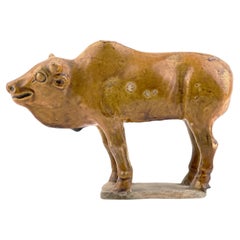
Amber-Glazed Pottery Figure of Sacred Bull
Located in seoul, KR
Naturalistically modelled, standing on a rectangular base with head facing forward and short tail curled to one side, incised details and covered overall in a rich chestnut glaze sav...
Category
15th Century and Earlier Hong Kong Tang Antique Pottery Antiquities
Materials
Pottery
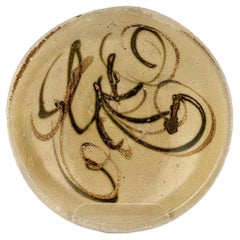
Changsha Bowl from Belitung Ship, Tang Period
Located in seoul, KR
The back side edges have been dipped in four places with brown, probably iron-oxide. The well of the bowl is freely painted in deep green and coffee coloured brown. These are charact...
Category
15th Century and Earlier Indonesian Tang Antique Pottery Antiquities
Materials
Pottery
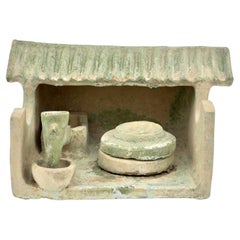
Milling Shed pottery with Green Glaze, Eastern Han Dynasty
Located in seoul, KR
Made from the standard orange earthenware body of Han green glazed tomb models, this miniature milling station features a circular millstone and a foot...
Category
15th Century and Earlier Hong Kong Han Antique Pottery Antiquities
Materials
Earthenware, Pottery
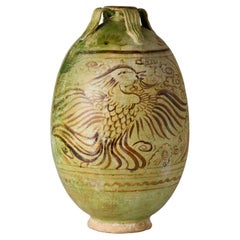
Green-glazed Pottery Amphora with Brown glazed Phoenix, Tang-Liao Dynasty
Located in seoul, KR
The vessel has an overall oval shape, characterized by smooth curves that transition naturally from the rim to the body. The upper part of the jar narrows slightly, with four handles...
Category
15th Century and Earlier Hong Kong Tang Antique Pottery Antiquities
Materials
Pottery
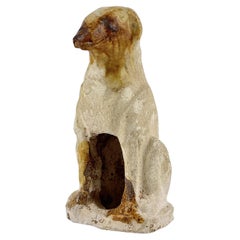
Amber-Glazed Pottery Figure of Dog
Located in seoul, KR
A Dog sitting on his haunches, covered in an amber glaze. Naturalistically modeled, the figure follows the artistic style of the period. It remains uncertain whether the glaze has wo...
Category
15th Century and Earlier Hong Kong Tang Antique Pottery Antiquities
Materials
Pottery
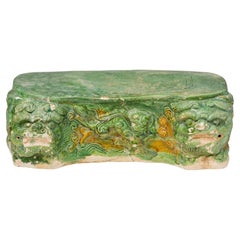
A Sancai-glazed pottery
Haitai
Pillow, Tang dynasty
Located in seoul, KR
The pillow is intricately decorated with a vibrant pattern, demonstrating the craftsmanship and artistic sensibilities of the period. The Haitai is a creature from Chinese mythology,...
Category
15th Century and Earlier Hong Kong Tang Antique Pottery Antiquities
Materials
Earthenware, Pottery
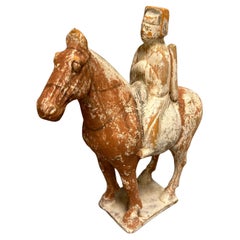
Chinese pottery horse with rider, Tang Dyansty
Located in New York, NY
pigmented horse; please refer to the pictures, which include documentation detailing its provenance
Category
15th Century and Earlier Chinese Antique Pottery Antiquities
Materials
Pottery
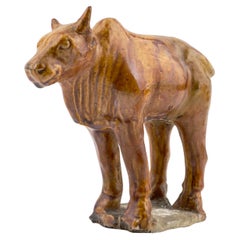
Amber-Glazed Pottery Figure Of Sacred Bull
Located in seoul, KR
Naturalistically modelled, standing on a rectangular base with head facing forward and short tail curled to one side, incised details and covered overall in a rich chestnut glaze sav...
Category
15th Century and Earlier Hong Kong Tang Antique Pottery Antiquities
Materials
Pottery
Guardian Official Pottery Figure
Located in seoul, KR
This figure appears to be a terracotta statuette, possibly representing a court official or a deity given the distinct headgear which could signify a rank or divine attribute. The style of the figurine, with its facial features and remnants of paint, suggests it could be a part of funerary art, which was common in Chinese culture during these periods.
Date : Northern Wei...
Category
15th Century and Earlier Hong Kong Tang Antique Pottery Antiquities
Materials
Earthenware, Pottery
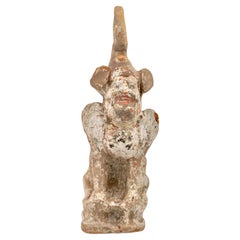
Two Green glazed Figures Holding Pitchpork
Located in seoul, KR
Han dynasty pottery tomb figure, modelled standing holding a Pitchpork in front of his body, covered in a turquoise-green glaze. These two pieces are believed to have been produced i...
Category
15th Century and Earlier Hong Kong Han Antique Pottery Antiquities
Materials
Pottery
$2,970 / set
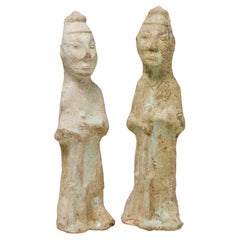
Large Pottery Standing Figure of Attendant
Located in seoul, KR
The statuette shows traces of the original red, black, and white pigmentation. The figure’s body, head, and hands (which in this case are lost) were all made separately to give her an essence of movement and dynamism. Given its almost identical shape to the piece from the Artemis Gallery...
Category
15th Century and Earlier Hong Kong Han Antique Pottery Antiquities
Materials
Pottery
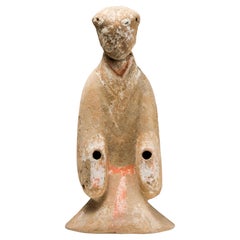
Rare Pottery Rectangular Brazier with cicadas in Green Glaze, Han Dynasty
Located in seoul, KR
This pottery brazier, a burial artifact from the Han Dynasty, features quadrilateral sides that slope inward and a base with slits for ventilation. Each side is adorned with animal motifs and geometric patterns. The brazier stands...
Category
15th Century and Earlier Hong Kong Han Antique Pottery Antiquities
Materials
Pottery
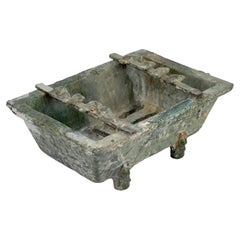
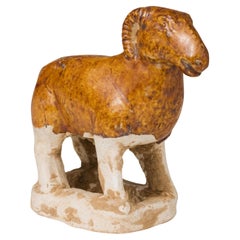
Amber-Glazed Pottery Figure of Sheep
Located in seoul, KR
Naturalistically modelled, standing on a rectangular base with head facing forward, incised details and covered overall in a rich chestnut glaze save for the hooves and base.
Date :...
Category
15th Century and Earlier Hong Kong Tang Antique Pottery Antiquities
Materials
Pottery
Changsha Ewer, Tang Dynasty
Located in seoul, KR
It features two small lug handles on either side of the neck and a spout opposite the main handle. This ewer might have been used for wine or other liquids, which were poured through...
Category
15th Century and Earlier Hong Kong Tang Antique Pottery Antiquities
Materials
Pottery, Stoneware

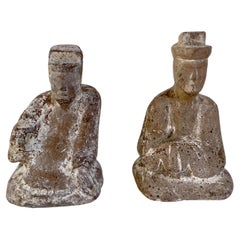
Pair of Han Dynasty Seated Figures
Located in Atlanta, GA
Pair of seated pottery figures, Han dynasty (2nd century BC to 2nd century AD). The taller of the two sits very still and upright, his hands folded into his sleeves, gazing straight ...
Category
15th Century and Earlier Chinese Antique Pottery Antiquities
Materials
Pottery
$1,250 / set
Still Thinking About These?
All Recently ViewedMore Ways To Browse
Wei Horse
Afghanistan Buddha
Ancient Luristan Bronze
Antique Wood Foot Warmer
Bronze Age Sword
Chinese Dagger
Chinese Dragon Pottery Jar
Chinese Porcelain 8 Immortals
Gandharan Schist
Gerald Hong
Gong Cambodia
Han Dynasty Bowl
Haniwa Heads
Ichimatsu Doll
Jade Belt Hook
Kojima Shoten
Tibetan Travelling Buddha Shrine
Tigers Eye Snuff Bottle