East Asian Antiquities
to
179
589
288
1,304
13
5
4
3
2
2
1
1
449
404
451
18
217
56
62
22
2
12
4
3
5
10
7
14
1
539
288
275
249
130
1,865
1,322
727
384
380
1,322
1,319
1,319
10
6
3
3
2
Place of Origin: East Asian
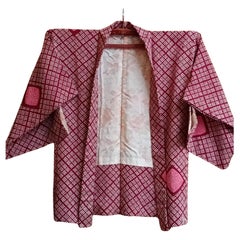
Japanese dark red and pink Haori Kimono Coat for Women with Silk Shibori 1970s
Located in Paris, FR
This is a silk jacket (Coat for winter) which was made in Japan.
It was made in Showa era around 1970s.
There is two haori himo to close this jacket.
The haori is a traditional Jap...
Category
Mid-20th Century Showa East Asian Antiquities
Materials
Silk
Northern Wei Dynasty Terracotta Horses, TL Tested,
386 AD-535 AD
Located in Miami, FL
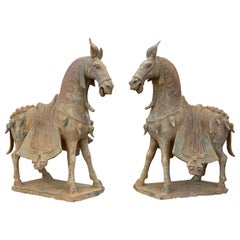
A massive pottery pair of horses standing on all fours and striding with its right hoof forward. Extended snout ends in parted lips showing teeth beneath in a braying attitude. Low relief bridle on face and well defined eyes. Raised mane down back of the neck
A fantastic example of the Wei dynasty horses.
Large, exquisite walking Ferghana horses with great attention paid to anatomical detail were the choice of the wealthy. The horse was second only in importance to the dragon. It was supposed to possess magical powers which the early Chinese were eager to explore. It would be the horse that would carry the deceased to the next life and it would be the amount of horses that an individual owned that would guarantee his ongoing status in the hereafter.
Thermoluminescence certificate from Madrid Labs included.
In southern China, people turned to Daoism, and mingqi, as well as above-ground sculptures, became ever more infused with animal iconography and energized with dynamic lines.
The north of China was eventually united by nomadic Tuoba invaders who founded the Northern Wei dynasty...
Category
15th Century and Earlier Han Antique East Asian Antiquities
Materials
Terracotta
Early 20th C., Showa, A Pair of Antique Japanese Old Bronze Hibachi Brazier Pots
Located in Sampantawong, TH
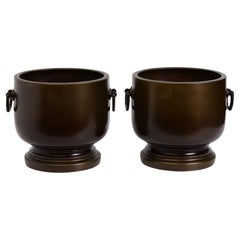
A pair of Antique Japanese old bronze Hibachi brazier pots.
Hibachi is a traditional Japanese heating device.
Age: Japan, Showa Period, Early 20th Century
Size: Height 26.8 C.M. / ...
Category
Early 20th Century East Asian Antiquities
Materials
Bronze
Pair of Chinese Blue/White Porcelain Ginger Jars
Located in Queens, NY
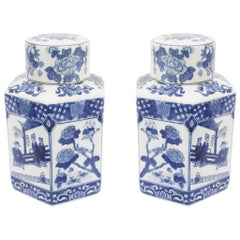
PAIR of Asian Chinese (20th Century) blue and white porcelain temple / ginger jars with round lids, and hexagonal bases, featuring figures and a floral pattern (PRICED AS PAIR)
Category
20th Century Chinese Export East Asian Antiquities
Materials
Porcelain

$1,500 / set
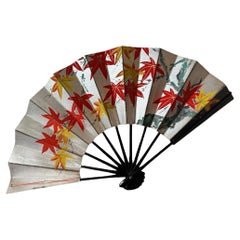
Double-Sided Japanese Fan — Edo Period, Hand-Painted on Silver Leaf Paper
Located in Fukuoka, JP
Japan, Edo period (1603–1868)
Size: 49 × 30 cm
A magnificent double-sided Japanese folding fan (ōgi), hand-painted on paper richly decorated with gold and silver leaf. One side depi...
Category
19th Century Edo Antique East Asian Antiquities
Materials
Wood, Paper
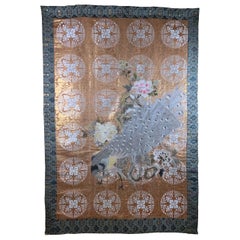
Large Vintage Chinese Hand Embroidery Tapestry
Located in Delray Beach, FL
About
A spectacular Chinese embroidery wall hanging purchased from Antique Chinese collector This example, entailed with many stitch techni...
Category
1960s Vintage East Asian Antiquities
Materials
Wool, Cotton, Silk
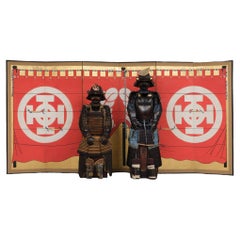
Rare set of 2 Japanese suits-of-armour, complete with 2 matching folding screens
Located in Amsterdam, NL
Important unique set of two suits-of-armour (yoroi), complete with two high six-panel screens, that belong together as is indicated by the used family crests (mon). Two crests are used, both belonging to the Nakagawa family of Oka Castle, Ôita prefecture on Kyûshû.
They are:
– the Nakagawa-kurusu, a circle depicting a Celtic-like cross through a ring.
The cross was originally a Christian symbol but after the ban on Christianity in Japan the use of a hidden cross in family crests could continue.
– the Nakagawa-kashiwa, two leaves of the Japanese Emperor Oak turned to each other (dakikashiwa mon).
The remarkable aspect of this ensemble is the presence of matching crests on both the yoroi and the accompanying folding screens. The kurusu and kashiwa crests adorning the yoroi are elegantly replicated on the screens, providing compelling evidence that these pieces form a harmonious and unified set. This exceptional cohesion between the armour and screens further enhances their artistic and historical value.
After the warlord Toyotomi Hideyoshi (1537-1598) had interfered in the battle between the Lord of Bungo Province Ôtomo Yoshi-mune (1558-1605) and the Shimazu of Hyûga Province, he split the Bungo Province in a number of small fiefs and transferred in 1594 Nakagawa Hideshige (1570-1612) from Miki Castle
in the Harima Fief to Oka Castle in Kyûshû.
The Nakagawa family stayed in possession of Oka Castle till the abolishment of the military use of castles in 1873. In 1884 the Nakagawa family received the title of Count (a title in use till the abolishment of aristocracy in 1947).
After the Nakagawa’s left, the castle and the building soon dilapidated and is now known as Oka Castle Ruins. The castle is located in Taketa Village part of Taketa Town in Ôita Province on Kyûshû.
> Set of two tall byôbu (folding screens),
painted with large red jinmaku (camp enclosure curtain) on a gold leaf ground. The curtains show both crests of the Nakagawa family: one screen depicts two Nakagawa-kurusu crests next to a Nakagawa-kashi crest in the middle, and the other shows the symbols the other way round.
Dimensions:
Total width 148.66 in/377.6 cm (2 x 25.35 in/64.4 cm, 4 x 24.48 in/62.2 cm); Height 72.63 in/184.5 cm.
Period: Japan – Late Edo period (First half 19th century), and maybe even older.
> Yoroi with Nakagawa-kashiwa crest:
A Japanese black lacquered suit-of-armour (yoroi) completely laced with orange cords (kuro’urushinuri hi’ito odoshi nimai’dô’maru).
A thirty-two plate suji’bachi kabuto (helmet with raised ridges) with in front a maedate (fore crest) -with traces of gilding- in the shape of flames, resembling a mythical flaming bird flying down. The fukikaeshi (face guards) and the mabizashi (visor) have the Nakagawa-kashiwa crest in gold maki-e lacquer.
Five curved ‘itazane’-plate neck guards (shikoro) laced with orange cords.
Together with an ‘angry man...
Category
18th Century Antique East Asian Antiquities
Materials
Gold Leaf, Iron, Metal
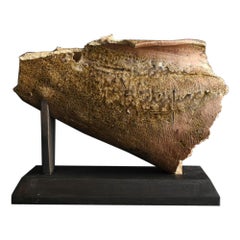
Japanese antique pottery fragments/12th to 13th century/Flower vase
Located in Sammu-shi, Chiba
Tokoname ware is a historic kiln in Japan, where pottery has been made since before the Common Era, and a kiln was established in the 5th century. This kiln is located in Aichi Prefe...
Category
15th Century and Earlier Other Antique East Asian Antiquities
Materials
Pottery
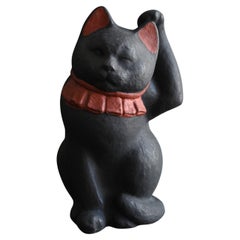
Old Japanese black maneki-neko object / 20th century / lucky ornament
Located in Sammu-shi, Chiba
Here is a Japanese "Maneki Neko" (beckoning cat) figurine from the Showa era. It is made from either clay or plaster and features a simple yet impactful design. On the back, you can ...
Category
20th Century Showa East Asian Antiquities
Materials
Plaster, Clay
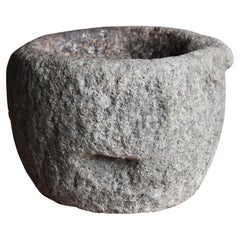
Japanese Antique Stone Mortar 1860s-1900s / Stone Bowl Object Wabi Sabi
By Axel Vervoordt
Located in Chōsei District Nagara, JP
This is an old Japanese stone “yagen” (medicine grinder), believed to have been used during the Meiji period (1860s–1900s).
Though simple in form, it carries with it the silent prese...
Category
Early 20th Century Primitive East Asian Antiquities
Materials
Stone
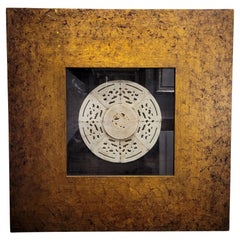
Asian carved and framed green Bi Disc, jadeite
By Chow
s Oriental Furniture Co.
Located in Valladolid, ES
Exquisite carved and framed jadeite bi disc (璧). A bi disc is a circular (flat) jade disc with a hole in the center, used in ancient China. In this case, it is composed of eight piec...
Category
1940s Chinese Export Vintage East Asian Antiquities
Materials
Crystal, Jade
$1,599 Sale Price
20% Off
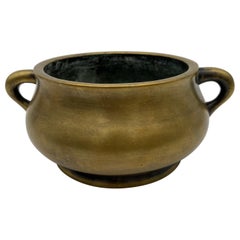
Antique Qing Dynasty Chinese Twin Handled Bronze Censer Xuande Marks to Base
Located in Brea, CA
Qing dynasty 18th century Chinese twin handled bronze censer bearing XuanDe marks to base , 990 grams , 17cm wide, internal width 10cm , 7cm high.
Category
Late 18th Century Qing Antique East Asian Antiquities
Materials
Bronze
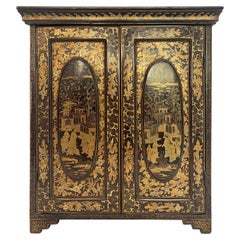
19th Century Antique Hand Painted Chinese Lacquer Table Jewelry Cabinet
By The Lacquer Company
Located in Brea, CA
19th century antique hand painted Chinese lacquer jewelry cabinet with a pair of raised panel doors opening to five drawers with turned ivory...
Category
Late 19th Century Qing Antique East Asian Antiquities
Materials
Lacquer
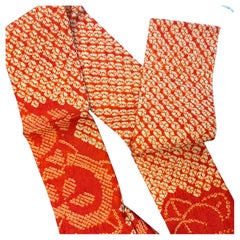
Japanese Vintage Kimono Silk Belt Nagoya-obi Red Shibori 1980s
By Japanese Studio
Located in Paris, FR
This is a Nagoya obi made in Japan around 1980s.
Obi is a belt of varying size and shape worn with both traditional Japanese clothing like Kimono.Obi are categorised by their desig...
Category
1980s Showa Vintage East Asian Antiquities
Materials
Silk
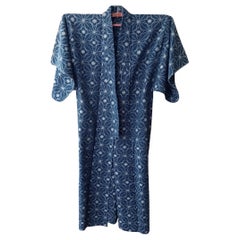
Japanese Cotton Kasuri Kimono Navy Blue with White patterns
Located in Paris, FR
This is a Kasuri kimono which was made in Showa era around 1970s in Japan.
The kimono is a traditional Japanese garment and the national dress of Japan. The kimono is a wrapped-fron...
Category
Late 20th Century Showa East Asian Antiquities
Materials
Cotton
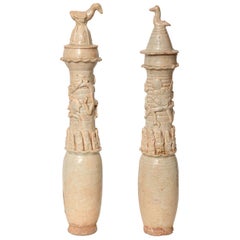
Antique Ceremonial Urns, Song Dynasty, 12th-13th Century
Located in New York, NY
Two tall ceremonial urns dating from the 12th-13th century, Southern Song dynasty. Glazed terracotta. They depict 12 traditional ritual attendant...
Category
15th Century and Earlier Other Antique East Asian Antiquities
Materials
Earthenware
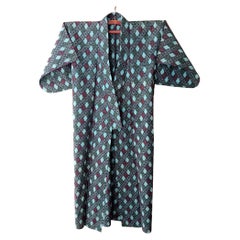
Japanese Kasuri Kimono navy blue with blue and red patterns
Located in Paris, FR
This is a Kasuri kimono which was made in Showa era around 1970s in Japan.
The kimono is a traditional Japanese garment and the national dress of Japan. The kimono is a wrapped-fron...
Category
Late 20th Century Showa East Asian Antiquities
Materials
Cotton
$269 Sale Price
20% Off
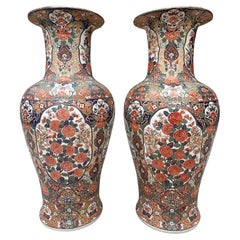
Pair of large antique Japanese Imari porcelain vases
Located in Brea, CA
Large Japanese beautiful porcelain vases A pair of baluster Imari porcelain vases, Japan, Meiji. Polychrome floral decor, very beautiful ,
Category
Early 20th Century Japonisme East Asian Antiquities
Materials
Porcelain
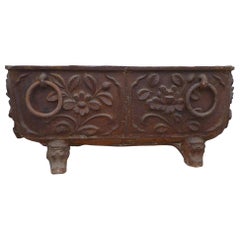
Large Cast Iron Tub with Floral Motif
Located in Greenwich, CT
Large cast iron tub with floral motif with four ring pulls, there is one casted inscription on one side with date made : " Emperor Qianglong Era 32nd yea...
Category
Late 19th Century Qing Antique East Asian Antiquities
Materials
Iron
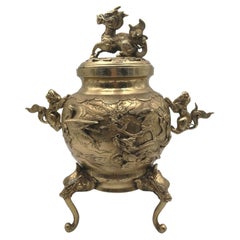
Japanese bronze Koro
Located in Beuzevillette, FR
Impressive handmade large and powerfully cast Japanese tripod bronze censer of the 19th century, made during the Meiji period and with mythical animals...
Category
19th Century Antique East Asian Antiquities
Materials
Brass
$2,498 Sale Price
20% Off
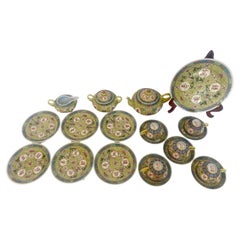
20pcs WanShouWuJiang Chinese Porcelain Tea Service Set
Located in Brea, CA
20 Pieces vintage Chinese set of tea and coffee service set, WanShouWuJiang yellow ground, all marked on the bottom : QIANLONGNIANZHI,
No crake, on...
Category
Early 20th Century Chinese Export East Asian Antiquities
Materials
Porcelain
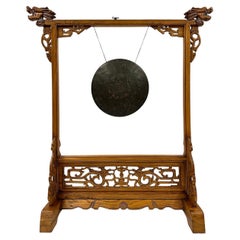
Early 20th Century Antique Chinese Table Gong With Dragon Stand
Located in Pomona, CA
This antique Chinese table gong is hanging on a carved wood stand. It features beautiful carved fretwork on the bottom and detailed carving work of decorated dragons on the top of th...
Category
Early 20th Century Chinese Export East Asian Antiquities
Materials
Bronze
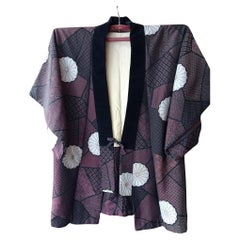
Japanese Kimono Coat for Women with Silk Chrysanthemum 1950s
Located in Paris, FR
This is a silk jacket (Coat for winter) which was made in Japan.
It was made in Showa era around 1950s.
There is two haori himo to close this jacket.
The haori is a traditional Jap...
Category
Mid-20th Century Showa East Asian Antiquities
Materials
Silk
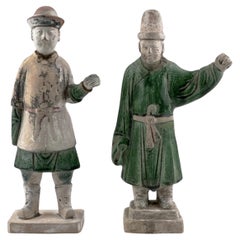
Two Figures of Attendants, Ming Period(1368-1644)
Located in seoul, KR
Statues of attendants crafted from terracotta, featuring glazes in green, Set on rectangular bases.
Period: Ming Dynasty
Medium: Glazed Pottery
Type: Figure
Condition : Excellent(It has soil on it, which is presumed to be evidence of excavation)
Provenance : Acquired in late 1990s from Hongkong
Reference :
1) Indianapolis Museum of Art - Dinastia ming, figure maschili, 1368-1644
(Type : Closely related)
2) V&A Museum - Accession number FE.295:1, 2-2005
(Type : Closely related)
3) Sotheby's 01 May 2007 - The Collection Of Paul Otto Taubert & Jewellery And Decorative Arts - Lot 233
(Price range : 5,000 - 7,000 AUD / Type : Closely related)
4) Asian Art Museum, San Francisco - Object number B60P1631 - Standing Man Tomb Figure
* Ming Dynasty Glazed Pottery Figures
Ming Dynasty glazed pottery figures are renowned for their bold color palette, intricate detailing, and lifelike forms, distinguishing them from earlier traditions. These figures, which depict officials, warriors, animals, and mythical creatures, are characterized by high-gloss lead-based glazes in green, amber, ochre, and sancai (three-color) combinations. The thickly applied glaze pools in recesses, creating depth and enhancing sculptural details. With dynamic postures, expressive facial features, and meticulously rendered drapery, these figures reflect the period’s advancement in ceramic craftsmanship, offering a greater sense of movement and realism compared to the rigid and stylized forms of earlier dynasties.
A defining characteristic of Ming glazed pottery is its elaborate surface detailing, often achieved through raised relief elements and contrasting glazes. Equestrian figures, for example, feature carefully sculpted saddles, harnesses, and decorative embellishments, while human figures are adorned with intricate robes and headdresses. The large scale of these tomb figures, often more imposing than those from previous periods, underscores the increasing importance of funerary art during the Ming era. Unlike later Qing Dynasty figures...
Category
15th Century and Earlier Ming Antique East Asian Antiquities
Materials
Pottery
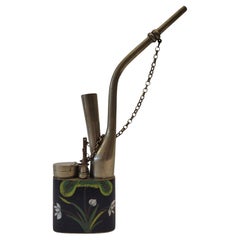
Chinese black green enamel flowers small water pipe opium pipe
By Dynasty Transorient
Located in Valladolid, ES
Amazing and beautiful Chinese cloisonné opium pipe, enamelled with loto flowers, character marks to the base, 28cm high
Astonishing opium pipe with mot...
Category
1890s Chinese Export Antique East Asian Antiquities
Materials
Bronze, Enamel
$679 Sale Price
34% Off
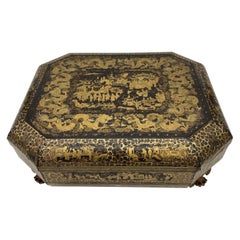
Antique 19th Century Export Chinese Lacquer Gaming Box
Located in Brea, CA
Antique 19th century export Chinese lacquer gaming box with hand painted scenes gilt export black lacquer with 4 pair of two dragons playing a ball, the...
Category
Mid-19th Century Qing Antique East Asian Antiquities
Materials
Lacquer
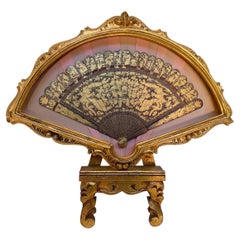
Antique Chinese Hand Paint Gold Lacquer Scene Gilt Fan
Located in Brea, CA
19th Century antique Chinese hand painted gold lacquer scene gilt fan 100 faces with original wood case and stand, fan is 13 inch x 8 '', the fan in ...
Category
1830s Qing Antique East Asian Antiquities
Materials
Lacquer
19th Century Chinese Gilt Lacquer Fan with Mother of Pearl Faces and Lacquer Box
Located in Brea, CA
Antique 19th century hand painted Chinese fan with mother of pearl faces, Qing dynasty, the fan features black and gold lacquered handled a colorful screen with a figural, hand painted, scene with antique lacquer fan box...
Category
1850s Qing Antique East Asian Antiquities
Materials
Lacquer

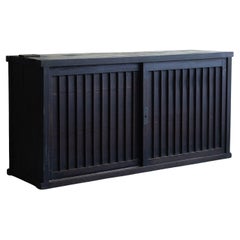
Japanese Antique Cabinets, Wabi Sabi, Japandi
Located in Katori-Shi, 12
This is an antique Japanese-style cabinet made in the Meiji period.
The texture of the black lacquer, smoked with soot from the hearth, has a unique depth and charm that is unlike a...
Category
Early 20th Century Meiji East Asian Antiquities
Materials
Wood
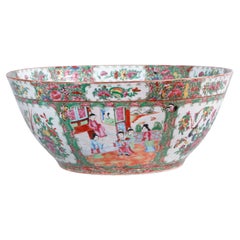
Chinese Rose Medallion Porcelain Bowl, 19th Century
Located in New York, NY
exterior decorated with panels alternating between figural scenes, and flower and bird scenes
Category
Mid-19th Century Antique East Asian Antiquities
Materials
Porcelain
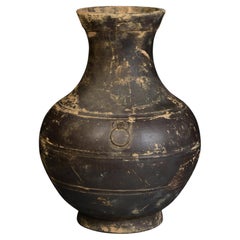
Han Dynasty, Antique Chinese Pottery Hu Jar
Located in Sampantawong, TH
Antique Chinese pottery Hu jar decorated with bands of raised lines and a pair of monster masks on the shoulder.
Age: China, Han Dynasty, 206 B.C. - A.D.220
Size: Height 46.6 C.M. /...
Category
15th Century and Earlier Antique East Asian Antiquities
Materials
Pottery
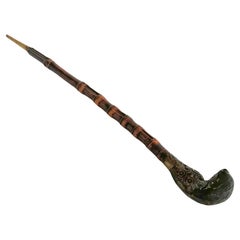
19th Century Chinese Bamboo Opium Pipe
Located in Atlanta, GA
An opium pipe is a pipe designed specifically for the vaporization and inhalation of opium. But these beautiful little antiques have become one-of-a-kind works of art.
This late 19th...
Category
Late 19th Century Antique East Asian Antiquities
Materials
Brass
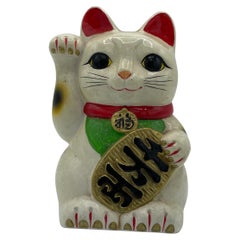
Japanese Antique Pottery Manekineko Rocking Cat Object 1970s
Located in Paris, FR
This is a vintage piggy bank of manekineko cat. It is made with pottery and it was made around 1970s in Showa era. This cat is rocking object, it is rare than the other manekineko ca...
Category
1970s Showa Vintage East Asian Antiquities
Materials
Pottery
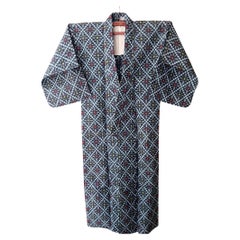
Japanese Cotton Kasuri Navy Blue Square Pattern
Located in Paris, FR
This is a Kasuri laquer kimono which was made in Showa era around 1950s in Japan.
The kimono is a traditional Japanese garment and the national dress of Japan. The kimono is a wrapp...
Category
Late 20th Century Showa East Asian Antiquities
Materials
Cotton
$268 Sale Price
20% Off
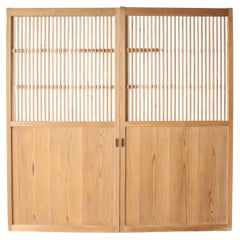
D7 Japanese Antiques, two lattice doors, fittings
Located in Niiza, JP
Material: Cedar wood, etc.
Size per piece: Width 890 x Height 1770 x Depth 30 mm, Weight 6 kg per piece
Estimated Packaging (9 mm thick plywood sandwiched):
14 cm x 97 cm x 185 cm, W...
Category
19th Century Antique East Asian Antiquities
Materials
Wood, Cedar
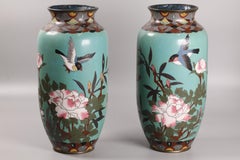
pair of Japanese cloisonné vases, 19th c.
Located in New York, NY
decorated with bird & floral motif on turquoise ground
Category
Late 19th Century Antique East Asian Antiquities
Materials
Metal, Enamel
$2,000 / set
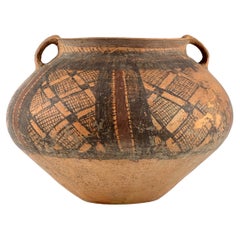
Neolithic Pottery Jar, Majiayao culture, 3rd-2nd Millenium BC
Located in seoul, KR
Fine-grained, buff-colored clay. Potted thin. Upper part of body painted with symbolic patterns in black and chocolate brown. Majiayao culture, Banshan type, 3rd millennium BC
Peri...
Category
15th Century and Earlier Antique East Asian Antiquities
Materials
Earthenware, Pottery
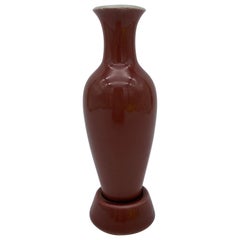
Antique Chinese Red Glazed Porcelain Vase with Porcelain Stand
Located in Brea, CA
Qing dynasty an antique important Chinese red glazed porcelain vase with porcelain stand, GuangXu Mark and of the period. Measures: 6.5” height 2.15 '' di...
Category
Early 20th Century Chinese Export East Asian Antiquities
Materials
Porcelain
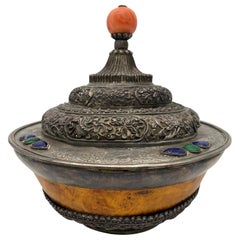
17th Century Rare Tibetan Silver Mounted Brul Covered Bowl with Coral
Located in Brea, CA
17th century rare Tibetan silver mounted brul covered bowl with coral bottom, the repousse and domed cover inset with Cora and lapis, big 3cm diameter red coral bottom, some tarnish,...
Category
17th Century Tibetan Antique East Asian Antiquities
Materials
Silver
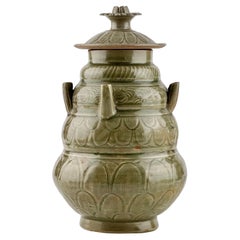
A Longquan Celadon Five-spouted Jar, Sui-Northern Song Dynasty
Located in seoul, KR
The jar features a round body with well-proportioned four distinct tiers and a short, stable foot. The surface is coated in a deep green Longquan celadon glaze, showcasing the sprout...
Category
15th Century and Earlier Antique East Asian Antiquities
Materials
Celadon
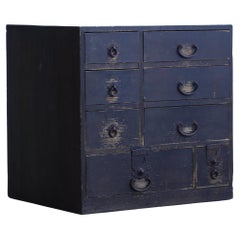
Japanese Antique Chests of Drawers , Wabi-Sabi
Located in Katori-Shi, 12
This antique Japanese chest of drawers dates back to the Meiji period.
This chest is made from sturdy cedar wood with a lacquer finish, and the iron handles add industrial elegance....
Category
Early 20th Century Meiji East Asian Antiquities
Materials
Wood
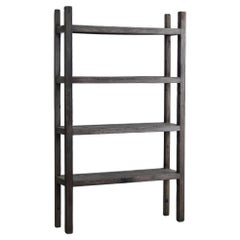
Japanese Antique Open shelf, Wabi Sabi, Japandi
Located in Katori-Shi, 12
This antique is just the right size for a storage shelf.
This is a rare shelf with flap doors that has a Japanese essence.
A flap door is a door that can be opened and stored insid...
Category
Early 20th Century Taisho East Asian Antiquities
Materials
Wood
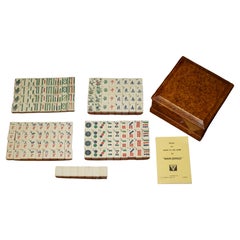
ANTIQUE CIRCA 1920 CHINESE MAHJONG SET + COUNTERS IN ORIGiNAL AMBOYNA WOOD CASE
Located in West Sussex, Pulborough
Royal House Antiques
Royal House Antiques is delighted to offer for sale this highly collectable Chinese Circa 1920's Mahjong set with the original Burr and Burl Amboyna wood box in...
Category
1920s Chinese Export Vintage East Asian Antiquities
Materials
Bamboo, Amboyna
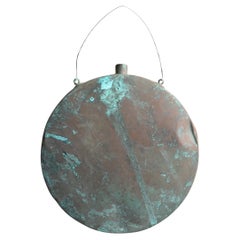
Antique Japanese copper water bottle / wall hanging object / early 20th century
Located in Sammu-shi, Chiba
This antique copper water bottle is believed to have been used in Japan during the early 20th century, around World War II. Over the years, a beautiful patina has developed on the co...
Category
Early 20th Century Showa East Asian Antiquities
Materials
Copper
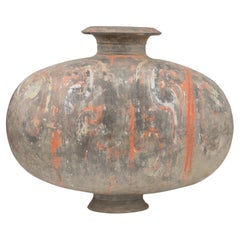
Large Cocoon-shaped jar with cloud-scroll design, Han Dynasty
Located in seoul, KR
This jar would have served as a mortuary object (mingqi), placed in a tomb as a substitute for the more valuable bronze and lacquer vessels used in daily life. Along with a variety o...
Category
15th Century and Earlier Han Antique East Asian Antiquities
Materials
Pottery
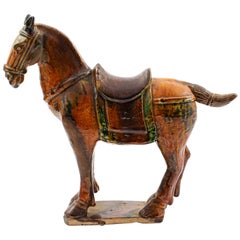
Late Ming Era Documented Glazed Pottery Horse
Located in Kastrup, DK
An elegant Chinese Ming dynasty pottery figurine depicting a horse in a standing pose with polychrome finish (aubergine, light brown and g...
Category
17th Century Ming Antique East Asian Antiquities
Materials
Pottery
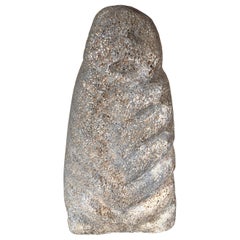
Chinese Ancient Hongshan Culture Stone Sculpture, 4700-2900 BC
Located in South Burlington, VT
China, a fine archaic human effigy hand-carved from a granular medium to dark gray volcanic stone with six (6) "V" sections carved front. Neolithic period, Hongshan culture...
Category
15th Century and Earlier Antique East Asian Antiquities
Materials
Stone
$6,800 Sale Price
54% Off
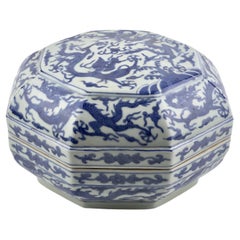
A Rare Blue And White Octagonal Box And Cover, Ming Dynasty Wanli Six-Character
Located in seoul, KR
Numerous similar octagonal blue and white boxes with Wanli, Jiajing marks are housed in prestigious museum collections. An example in the Tokyo National Museum is featured in Illustr...
Category
16th Century Ming Antique East Asian Antiquities
Materials
Ceramic
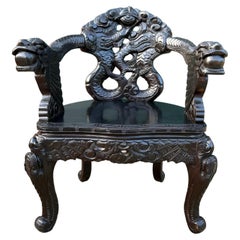
Antique Japanese Export Meiji High Relief Dragon Carved Throne Chair.
Located in Nantwich, GB
An impressive Imperial Meiji period Japanese throne chair which is finely and lavishly carved with dragons holding the eternal pearl in their mouths.
...
Category
Early 20th Century Meiji East Asian Antiquities
Materials
Wood
$2,480 Sale Price
20% Off
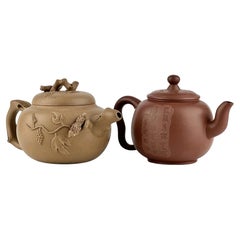
Two Yixing Teapots and Covers
Located in seoul, KR
Both Yixing Zisha teapots appear to be modern-Republic era pieces. Yixing Zisha teapots are made from rare Zisha (紫砂) clay, which is exclusively mi...
Category
20th Century East Asian Antiquities
Materials
Pottery
$1,500 / set
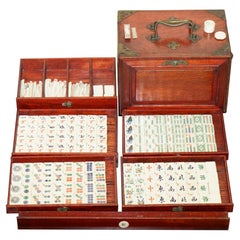
FOUR PERSON ANTIQUE MAHJONG SUITE CIRCA 1920
s CHINESE EXPORT PERIOD WITH STAND
Located in West Sussex, Pulborough
Royal House Antiques
Royal House Antiques is delighted to offer for sale this highly collectable Chinese export Circa 1920's Mahjong set with the original box and additional dice, t...
Category
1920s Chinese Export Vintage East Asian Antiquities
Materials
Bamboo, Wood
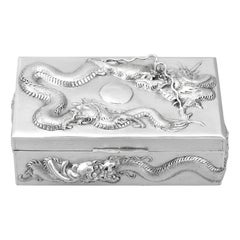
1920s Chinese Export Silver Box
Located in Jesmond, Newcastle Upon Tyne
An exceptional, fine and impressive antique Chinese Export silver box; an addition to our collection of boxes and cases.
This exceptional an...
Category
1890s Chinese Export Antique East Asian Antiquities
Materials
Silver
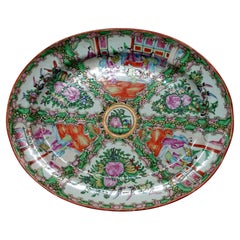
Large Size Chinese Rose Medallion Porcelain Plater, Ric 059
Located in Norton, MA
A truly fine hand-painted medium-sized porcelain and very large Plater from the 19th century.
Category
19th Century Qing Antique East Asian Antiquities
Materials
Porcelain
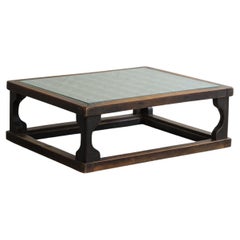
Japanese Antique Glass Low Table, Wabi Sabi
Located in Katori-Shi, 12
This antique low table was made in the Taisho era.
The tabletop is made of a single piece of high-quality zelkova wood. The legs are lathe-turned.
It is unified with a ginkgo surfa...
Category
Early 20th Century Taisho East Asian Antiquities
Materials
Wood, Glass
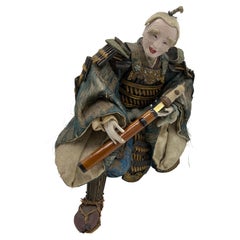
Japanese Samurai Figure Hinaningyo, Edo Period
Located in Munich, Bavaria
Antique samurai doll called Hinaningyo; Japan, late EDO period
Praised at the Tang-no-sekku boys' festival on May 5th as a sign of bravery, embodying the...
Category
Mid-18th Century Antique East Asian Antiquities
Materials
Textile, Wood
$2,719 Sale Price
20% Off
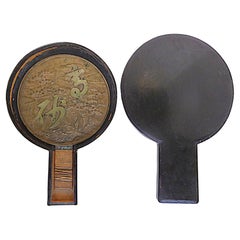
Edo Period Japanese Bronze Mirror with Lacquer Box Japan mid 1800s
Located in Miami, FL
Antique Japanese Bronze Mirror decorated with a scene of clouds swirling over two intertwinning pine trees, symbol of long life, on a promontory with waves breaking against it. Larg...
Category
1880s Edo Antique East Asian Antiquities
Materials
Bronze
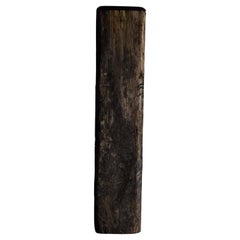
Japanese old wood stand / Exhibition stand wabi-sabi / primitive wood stand /
Located in Sammu-shi, Chiba
This display stand is made by combining old wooden sleepers with a newly made tabletop.
The top of the display stand is finished with cashew paint, like lacquer, and has a jet blac...
Category
Mid-20th Century Primitive East Asian Antiquities
Materials
Wood
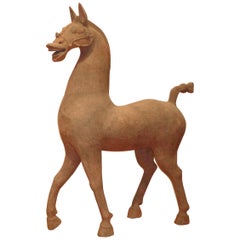
Massive Chinese Han Dynasty Sichuan Terracotta Pottery Horse, Oxford TL Tested
Located in Greenwich, CT
A massive Chinese Han dynasty Sichuan terracotta pottery figure of a horse
Han dynasty (206 BC-220 AD)
Powerfully modelled in a pose of alert attention, its strong neck and head pois...
Category
15th Century and Earlier Han Antique East Asian Antiquities
Materials
Terracotta
$58,000 Sale Price
31% Off
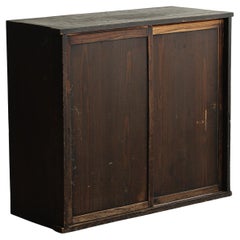
Japanese Antique Wood Cabinets, Wabi Sabi, Japandi
Located in Katori-Shi, 12
This is a tasteful antique storage shelf made in the Meiji period.
Made from cedar, the dark wood gives it a deep flavor.
No nails are used for the joints, but the traditional "mor...
Category
Early 20th Century Meiji East Asian Antiquities
Materials
Wood
Yellow
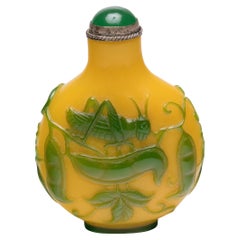
Green Peking Glass Snuff Bottle, c. 1900
Located in Chicago, IL
With bright color and intricate carvings, this petite Chinese snuff bottle from the early 20th century is a lovely example of the art of Peking glass. The little bottle is sculpted i...
Category
Early 20th Century Qing East Asian Antiquities
Materials
Glass
Still Thinking About These?
All Recently ViewedMore Ways To Browse
Wei Horse
Afghanistan Buddha
Ancient Luristan Bronze
Antique Wood Foot Warmer
Bronze Age Sword
Chinese Dagger
Chinese Dragon Pottery Jar
Chinese Porcelain 8 Immortals
Gandharan Schist
Gerald Hong
Gong Cambodia
Han Dynasty Bowl
Haniwa Heads
Ichimatsu Doll
Jade Belt Hook
Kojima Shoten
Tibetan Travelling Buddha Shrine
Tigers Eye Snuff Bottle