Hong Kong Antiquities
to
1
3
1
142
1
133
5
4
3
1
1
131
58
21
19
19
6,846
1,903
1,348
742
395
142
142
142
1
Place of Origin: Hong Kong
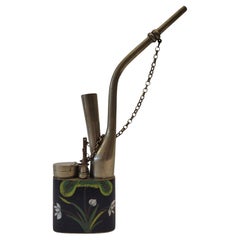
Chinese black green enamel flowers small water pipe opium pipe
By Dynasty Transorient
Located in Valladolid, ES
Amazing and beautiful Chinese cloisonné opium pipe, enamelled with loto flowers, character marks to the base, 28cm high
Astonishing opium pipe with mot...
Category
1890s Chinese Export Antique Hong Kong Antiquities
Materials
Bronze, Enamel

$680 Sale Price
34% Off
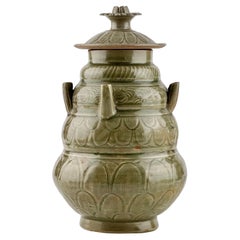
A Longquan Celadon Five-spouted Jar, Sui-Northern Song Dynasty
Located in seoul, KR
The jar features a round body with well-proportioned four distinct tiers and a short, stable foot. The surface is coated in a deep green Longquan celadon glaze, showcasing the sprout...
Category
15th Century and Earlier Antique Hong Kong Antiquities
Materials
Celadon
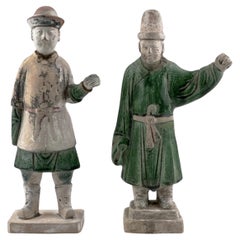
Two Figures of Attendants, Ming Period(1368-1644)
Located in seoul, KR
Statues of attendants crafted from terracotta, featuring glazes in green, Set on rectangular bases.
Period: Ming Dynasty
Medium: Glazed Pottery
Type: Figure
Condition : Excellent(It has soil on it, which is presumed to be evidence of excavation)
Provenance : Acquired in late 1990s from Hongkong
Reference :
1) Indianapolis Museum of Art - Dinastia ming, figure maschili, 1368-1644
(Type : Closely related)
2) V&A Museum - Accession number FE.295:1, 2-2005
(Type : Closely related)
3) Sotheby's 01 May 2007 - The Collection Of Paul Otto Taubert & Jewellery And Decorative Arts - Lot 233
(Price range : 5,000 - 7,000 AUD / Type : Closely related)
4) Asian Art Museum, San Francisco - Object number B60P1631 - Standing Man Tomb Figure
* Ming Dynasty Glazed Pottery Figures
Ming Dynasty glazed pottery figures are renowned for their bold color palette, intricate detailing, and lifelike forms, distinguishing them from earlier traditions. These figures, which depict officials, warriors, animals, and mythical creatures, are characterized by high-gloss lead-based glazes in green, amber, ochre, and sancai (three-color) combinations. The thickly applied glaze pools in recesses, creating depth and enhancing sculptural details. With dynamic postures, expressive facial features, and meticulously rendered drapery, these figures reflect the period’s advancement in ceramic craftsmanship, offering a greater sense of movement and realism compared to the rigid and stylized forms of earlier dynasties.
A defining characteristic of Ming glazed pottery is its elaborate surface detailing, often achieved through raised relief elements and contrasting glazes. Equestrian figures, for example, feature carefully sculpted saddles, harnesses, and decorative embellishments, while human figures are adorned with intricate robes and headdresses. The large scale of these tomb figures, often more imposing than those from previous periods, underscores the increasing importance of funerary art during the Ming era. Unlike later Qing Dynasty figures...
Category
15th Century and Earlier Ming Antique Hong Kong Antiquities
Materials
Pottery
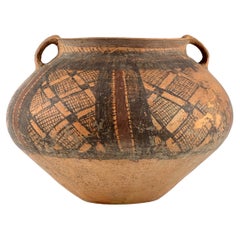
Neolithic Pottery Jar, Majiayao culture, 3rd-2nd Millenium BC
Located in seoul, KR
Fine-grained, buff-colored clay. Potted thin. Upper part of body painted with symbolic patterns in black and chocolate brown. Majiayao culture, Banshan type, 3rd millennium BC
Peri...
Category
15th Century and Earlier Antique Hong Kong Antiquities
Materials
Earthenware, Pottery
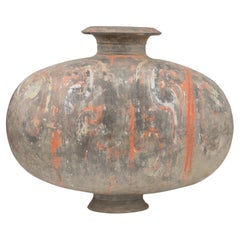
Large Cocoon-shaped jar with cloud-scroll design, Han Dynasty
Located in seoul, KR
This jar would have served as a mortuary object (mingqi), placed in a tomb as a substitute for the more valuable bronze and lacquer vessels used in daily life. Along with a variety o...
Category
15th Century and Earlier Han Antique Hong Kong Antiquities
Materials
Pottery
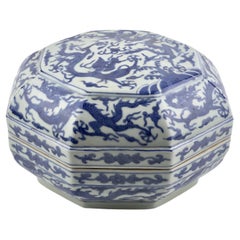
A Rare Blue And White Octagonal Box And Cover, Ming Dynasty Wanli Six-Character
Located in seoul, KR
Numerous similar octagonal blue and white boxes with Wanli, Jiajing marks are housed in prestigious museum collections. An example in the Tokyo National Museum is featured in Illustr...
Category
16th Century Ming Antique Hong Kong Antiquities
Materials
Ceramic
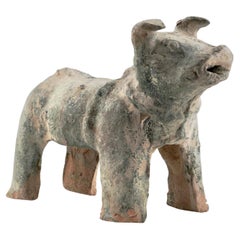
Green Glazed Red Pottery Figure of Dog
Located in seoul, KR
The dog faces forward, with clearly defined eyes that stand out. Its ears are slightly curled, giving the impression of a relaxed, natural stance. The collar around its neck, connect...
Category
15th Century and Earlier Han Antique Hong Kong Antiquities
Materials
Pottery
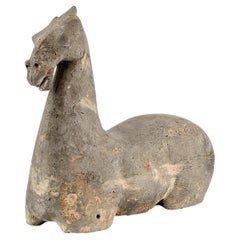
A Gray Pottery Figure of a Horse
Located in seoul, KR
This particular horse sculpture exemplifies the typical pose of Han-period equine figures—a neighing steed with its mouth wide open. Like many tomb sculptures of the era, it is crafted in unglazed, with its ears, tail, and legs separately fabricated in wood or clay and slotted into pre-prepared holes. However, several distinguishing features elevate this piece beyond standard Han horse...
Category
15th Century and Earlier Han Antique Hong Kong Antiquities
Materials
Earthenware, Pottery
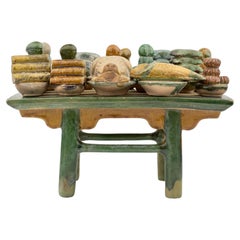
Green and Ochre Glazed Altar Table with Offerings, Ming Dynasty, 15~16th Century
Located in seoul, KR
The table bearing pig head, rice cakes, dishes of meat, fish and fruit. Known as Mingqi, these terracotta models were customarily included in Chinese burial practices, particularly among the affluent, to aid the deceased in their journey through the afterlife. This tradition extends back to the Neolithic Period. A unique terracotta funeral table...
Category
15th Century and Earlier Ming Antique Hong Kong Antiquities
Materials
Pottery
Small Celadon Chrysanthemum Dish, Five Dynasties/Song Dynasty
Located in seoul, KR
Potted with the fluted sides rising from a recessed base, carved to the interior with Chrysanthemum, covered overall with a grayish-green glaze, save for a ring to the underside left unglazed to reveal the gray stoneware...
Category
15th Century and Earlier Ming Antique Hong Kong Antiquities
Materials
Celadon

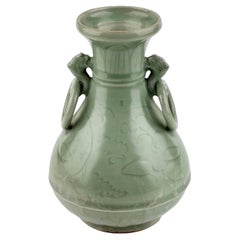
Carved Longquan Celadon Vase, Yuan-Ming Dynasty
Located in seoul, KR
A graceful baluster form with a flared mouth, a rounded body, and a slightly raised foot. The vase features two intricate handles in the shape of animal figures holding large looped ...
Category
15th Century and Earlier Ming Antique Hong Kong Antiquities
Materials
Celadon
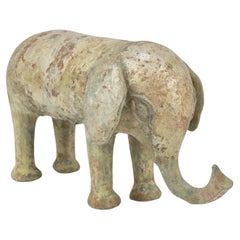
Green-Glazed Pottery Elephant, Han dynasty
Located in seoul, KR
This piece is an elephant statue made of green-glazed pottery. During the Han Dynasty, artworks depicting elephants were quite rare. However, such representations did occasionally appear. For example, the bronze vessel from the Han Dynasty housed in the Shanghai Museum is one of the notable examples of this type of craftsmanship. The existence of elephants in ancient China is attested both by archaeological evidence and by depictions in Chinese artwork. Long thought to belong to an extinct subspecies of the Asian elephant named Elephas maximus...
Category
15th Century and Earlier Han Antique Hong Kong Antiquities
Materials
Pottery
Large Cizhou Jar, Yuan Dynasty
Located in seoul, KR
This vase is sturdily potted with a robust ovoid body that rises from a short, spreading foot to a gently tapering neck, finishing with a lipped mouth rim. The exterior is decorated ...
Category
15th Century and Earlier Antique Hong Kong Antiquities
Materials
Pottery
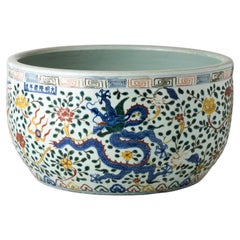
A Rare Large Wucai Dragons and Phoenix Jar, Ming dynasty Longqing Emperor
Located in seoul, KR
The blue dragon and the red dragon are depicted in dynamic postures, each extending its claws to grasp a ruyi pearl (如意珠). The phoenix is adorned with flowing feathers and delicate c...
Category
16th Century Ming Antique Hong Kong Antiquities
Materials
Ceramic
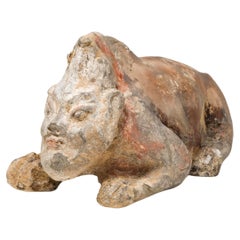
Guardian(Half human half beast) Pottery Figure, Northern Wei-Tang Dynasty
Located in seoul, KR
This guardian figure represents a fusion of human and beast, a common motif symbolizing protection in Chinese lore. Crafted from pottery, the figure is a testament to the era's sculp...
Category
15th Century and Earlier Han Antique Hong Kong Antiquities
Materials
Pottery
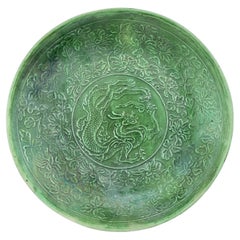
A Rare Dingyao Green-Glazed Dragon Dish, Liao-Song Dynasty
Located in seoul, KR
This dish is covered in a rich green glaze, with a central medallion depicting a sinuous dragon in high relief, surrounded by a continuous band of floral scrolls. The dragon’s scales...
Category
15th Century and Earlier Ming Antique Hong Kong Antiquities
Materials
Ceramic, Stoneware
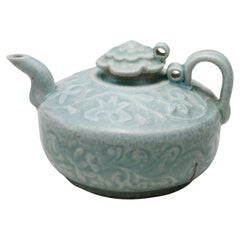
Rare Qingbai Carved Ewer, Song-Yuan Dynasty
Located in seoul, KR
This Qingbai ewer features a rounded body with smooth curves, a short spout, and a looped handle, presenting a harmonious and balanced form. The lid is adorned with a flower-shaped f...
Category
15th Century and Earlier Antique Hong Kong Antiquities
Materials
Ceramic
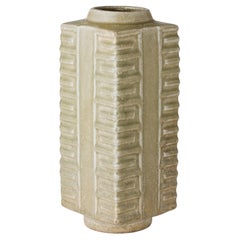
A Rare Yue Celadon Cong-Shaped Vase, Western Jin Dynasty(3-5th C)
Located in seoul, KR
This vase is an exceptionally rare piece and likely the only known example of a Cong-shaped vase from the Jin Dynasty. While some experts may attribute this work to the Song Dynasty or later periods based on its form, it is, in fact, a much earlier creation from the 3rd to 4th century CE during the Jin Dynasty. It was imported from Hong Kong in the late 1990s and was acquired by our gallery as part of a collection that included other Jin Dynasty Yue celadon pieces.
The vase features a cylindrical form with a square (方形) design and geometric incised patterns. While these design elements became more refined and sophisticated during the Song Dynasty (960~1279), their origins trace back much earlier, as evidenced by Cong-shaped jade artifacts dating as far back as 2,500 B.C.E. Examples of these ancient jade Congs...
Category
15th Century and Earlier Antique Hong Kong Antiquities
Materials
Celadon
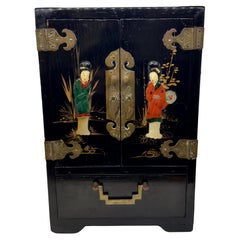
Chinoiserie Style Black Lacquered Jewlery Chest or Cabinet
Located in Plainview, NY
A Chinoiserie lacquered jewelry chest in striking black. The chest features two doors adorned with graceful women figures facing aha other. Upon opening these doors, a treasure trove...
Category
Early 20th Century Chinoiserie Hong Kong Antiquities
Materials
Soapstone
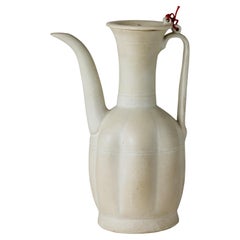
Rare Cream Glazed Ding yao Ewer and Cover, Song Dynasty (960~1279)
Located in seoul, KR
The body is characterized by distinctly carved octagonal or segmented ridges. The neck rises tall and straight, flaring outward at the rim, a proportion frequently seen in ewers from...
Category
15th Century and Earlier Chinese Export Antique Hong Kong Antiquities
Materials
Ceramic
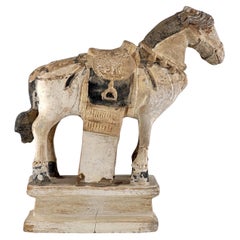
Ming Period Large Pottery Horse with Saddle (15-16th Century)
Located in seoul, KR
This Ming Dynasty painted pottery horse is depicted standing on a tiered rectangular pedestal. The horse has a well-proportioned body, with sturdy legs and a slightly arched neck. The eyes and muzzle are subtly outlined and incised.
The mane is sculpted with deep, parallel grooves. The tail is long and slightly curved left, extending downward. The saddle is prominently featured at the center of the horse’s back, detailed with a raised, rounded seat and an attached stirrup hanging down one side. The saddlecloth is textured with a crosshatch pattern, bordered by a row of carved fringe-like elements. The horse's legs display subtle musculature, and the hooves are clearly defined, with black pigment accentuating their edges.
The original painted pigments, including white, black, and ochre, are still visible, though faded in some areas. The black pigment highlights the mane, tail, and parts of the bridle, while the ochre tones accentuate the saddle and decorative elements.
Period: Ming Dynasty
Medium: Green, black, and ochre glazed Pottery
Type: Figure
Provenance : Acquired in late 1990s from Hongkong
Reference : Asian Civilisations Museum - Accession No. C-1384 / 1994-00441 - Ming Dynasty Figure of Horse
(Type : Closely Related)
* Ming Dynasty Glazed Pottery Figures
Ming Dynasty glazed pottery figures are renowned for their bold color palette, intricate detailing, and lifelike forms, distinguishing them from earlier traditions. These figures, which depict officials, warriors, animals, and mythical creatures, are characterized by high-gloss lead-based glazes in green, amber, ochre, and sancai (three-color) combinations. The thickly applied glaze pools in recesses, creating depth and enhancing sculptural details. With dynamic postures, expressive facial features, and meticulously rendered drapery, these figures reflect the period’s advancement in ceramic craftsmanship, offering a greater sense of movement and realism compared to the rigid and stylized forms of earlier dynasties.
A defining characteristic of Ming glazed pottery is its elaborate surface detailing, often achieved through raised relief elements and contrasting glazes. Equestrian figures, for example, feature carefully sculpted saddles, harnesses, and decorative embellishments, while human figures are adorned with intricate robes and headdresses. The large scale of these tomb figures, often more imposing than those from previous periods, underscores the increasing importance of funerary art during the Ming era. Unlike later Qing Dynasty figures...
Category
15th Century and Earlier Ming Antique Hong Kong Antiquities
Materials
Pottery
Pair of Qingbai Vases, Song-Yuan Dynasty
Located in seoul, KR
This pair of Qingbai vases features a soft bluish-green glaze with elegant, fluted bodies and wide, flared rims. The vases are hand-crafted, with subtle differences that highlight th...
Category
15th Century and Earlier Antique Hong Kong Antiquities
Materials
Porcelain
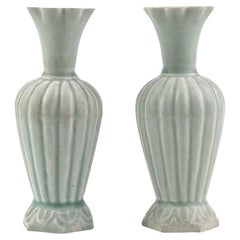
$5,750 / set
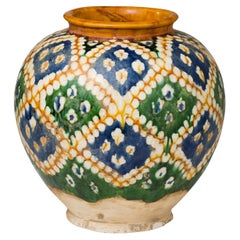
A Rare Sancai-Glazed Pottery Jar, Tang Dynasty
Located in seoul, KR
The jar is of globular shape and is decorated to the body with a geometric design band of lozenge-shaped motifs in blue, green, ochre and cream below a plain ochre everted mouth rim,...
Category
15th Century and Earlier Tang Antique Hong Kong Antiquities
Materials
Earthenware
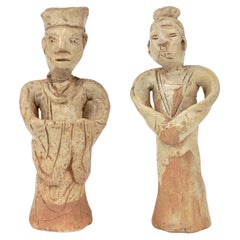
Two Incised Sandstone Mingqi
Located in seoul, KR
Figures from this era tend to be simpler and more utilitarian, reflecting the instability and regional diversity of the time. These pottery figures often unglazed or painted with bas...
Category
15th Century and Earlier Antique Hong Kong Antiquities
Materials
Sandstone
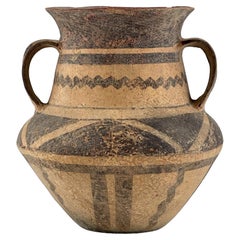
Neolithic Pottery Amphora(Gansu Province), 3rd-2nd Millenium BC
Located in seoul, KR
Neolithic Vase with raised neck, slightly flared, two handles. Geometric designs and stylized bovine heads in black. Acquired in Hong Kong in the late 1990s.
Date : 3,000-2,000 BC
M...
Category
15th Century and Earlier Antique Hong Kong Antiquities
Materials
Earthenware, Pottery
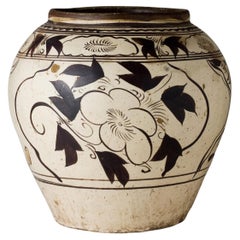
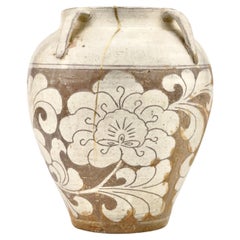
Cizhou Lotus Carved Jar, Song-Yuan dynasty
Located in seoul, KR
This jar features a carved design, which is typical of Cizhou ware. It has a creamy white and brown color scheme, and the prominent decoration of lotus flower, which is a common motif in Chinese art and culture, symbolizing purity and enlightenment.
The carving technique involves coating the vessel with a layer of white slip (liquid clay), then carving away parts of it to create the design, revealing the darker clay body beneath. This technique allows for a strong contrast between the background and the carved motif.
Period : Song-Yuan Dynasty
Type : Jar
Medium : Cizhou Ware
Size : 21.5 cm(Height), 11cm(Mouth Diameter)
Provenance : Acquired in 1999, Hongkong
* Cizhou Ware
Cizhou is the name given to a number of stonewares, grey or buff, of varying degrees of hardness, with painted, incised or carved decoration on a clay slip. These stonewares were not only made in the region of Cizhou, Hebei Province, but in several provinces of China during the Song, Yuan and Ming periods. The great centres of production were in the north of China in the provinces of Hebei, Henan and Shanxi.
Cizhou wares seem to have been very popular, made for a clientèle of rich merchants, at a period when the paintings of famous...
Category
15th Century and Earlier Antique Hong Kong Antiquities
Materials
Pottery
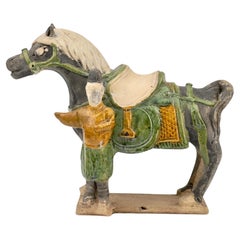
Ming Dynasty Green-Glazed Horse and Rider (15-16th Century)
Located in seoul, KR
Statues of Chinese horse and rider, featuring glazes in green, amber, are set on rectangular bases.
Period: Ming Dynasty
Medium: Green-glaze...
Category
15th Century and Earlier Ming Antique Hong Kong Antiquities
Materials
Pottery
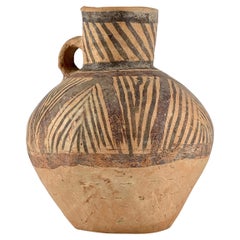
Neolithic Pottery Amphora(Gansu Province), 3rd-2nd Millenium BC
Located in seoul, KR
Neolithic Jar with strap handle from Gansu Province. Acquired in Hong Kong in the late 1990s.
Date : 3,000-2,000 BC
Made in : Gansu province
Dimension : 23cm (Height) x 8.5cm(Mouth ...
Category
15th Century and Earlier Antique Hong Kong Antiquities
Materials
Earthenware, Pottery
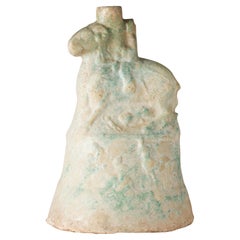
Green-Glazed Pottery ‘Money Tree’ Base, Han Dynasty
Located in seoul, KR
This piece, directly referred to as a Money Tree, is a captivating work that embodies wishes for material prosperity. It takes center stage in the Asian collections of institutions s...
Category
15th Century and Earlier Han Antique Hong Kong Antiquities
Materials
Earthenware, Pottery
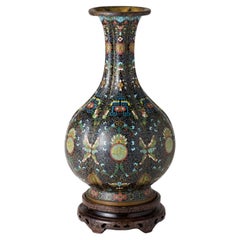
Cloisonné Vase, Qing Period, 19th Century
Located in seoul, KR
Cloisonné enamel vase of baluster form and lobed sides decorated with foliage and flowers on a black background, gilt copper neck and base. Around 1900
Period: Qing Dynasty
Type: Va...
Category
19th Century Qing Antique Hong Kong Antiquities
Materials
Enamel
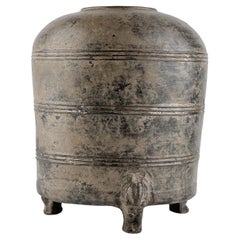
Grey Tripod Granary Jar, Han dynasty
Located in seoul, KR
The vessel consists of a rounded cylindrical body, a gently curved upper section, and a small circular opening, suggesting that it was used for storing grain or valuable goods.
Thre...
Category
15th Century and Earlier Han Antique Hong Kong Antiquities
Materials
Earthenware
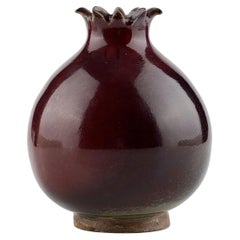
Pomegranate Shaped Copper Red Glazed Vase
Located in seoul, KR
This piece is a small ceramic vessel with a distinctive silhouette modeled after a pomegranate, notable for its full, well-balanced curves. The mouth, reminiscent of the fruit’s caly...
Category
16th Century Ming Antique Hong Kong Antiquities
Materials
Copper
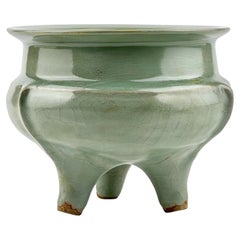
Rare Longquan Celadon Tripod Incense Burner, Song-Yuan Dynasty
Located in seoul, KR
The vessel features a compressed body supported by three tapered feet and a flat, outwardly flaring rim. Three slender flanges originate from a subtle ridge on the shoulder and exten...
Category
15th Century and Earlier Antique Hong Kong Antiquities
Materials
Celadon
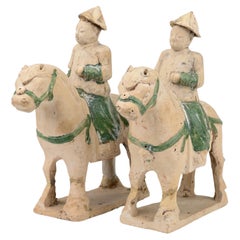
Ming Dynasty Two Green Glazed Horses and Riders (15-16th Century)
Located in seoul, KR
Statues of Chinese horse riders, featuring glazes in green, are set on rectangular bases.
Period: Ming Dynasty
Medium: Green-glazed Pottery
Typ...
Category
15th Century and Earlier Ming Antique Hong Kong Antiquities
Materials
Pottery
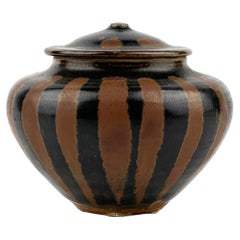
A Russet-Splashed Blackish-Brown-Glazed Jar, Song Dynasty
Located in seoul, KR
Lustrous blackish-brown glaze decorated on the exterior with lines of splashes of russet color. This jar features a rounded and voluminous body, with its shoulders gently curving upward to meet the lid. The lid is topped with a small knob-like handle at the center, creating a harmonious and well-balanced overall proportion.
Under microscopic magnification, the brown-glazed...
Category
15th Century and Earlier Antique Hong Kong Antiquities
Materials
Ceramic
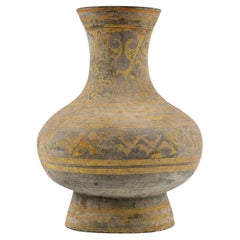
Earthenware Pottery Jar, Han Dynasty(206 BC-220 AD)
Located in seoul, KR
This jar would have served as a mortuary object (mingqi), placed in a tomb as a substitute for the more valuable bronze and lacquer vessels. Along with a variety of other funerary earthenware objects, attendant figures, and animals, richly decorated vessels of this kind were intended to serve the spirit of the deceased in the afterlife.
Period : Han dynasty
Type : Jar
Medium : Earthenware
Dimension : 28.5 cm(Height) x 11cm(Mouth Diameter)
Condition : Good(Overall in well-preserved ancient burial condition with some soil still adhering (showing minor abrasions and wear due to prolonged burial underground)
Provenance : Acquired in late 1990s from Hongkong
* Han Dynasty Earthenware...
Category
15th Century and Earlier Han Antique Hong Kong Antiquities
Materials
Earthenware
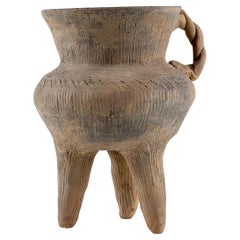
Pottery Tripod Vessel, Neolithic Period
Located in seoul, KR
The sturdy triangular legs, wide mouth, convex body, and diagonal incised patterns create a harmonious balance, showcasing a form that is both primitive and refined. Notably, the twi...
Category
15th Century and Earlier Antique Hong Kong Antiquities
Materials
Earthenware, Pottery
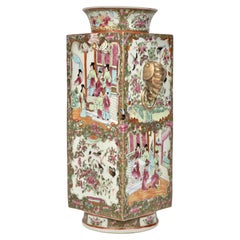
Rose Medallion Porcelain Vase, Late Qing Period
Located in seoul, KR
The square body famille rose porcelain vase with a Rose Medallion pattern, gilt highlights, and polychrome enamel decoration with alternating medallions of court life against a groun...
Category
19th Century Qing Antique Hong Kong Antiquities
Materials
Ceramic, Porcelain
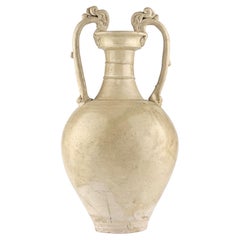
A Large and Rare Straw-Glazed Pottery Amphora, Tang Dynasty
Located in seoul, KR
The ovoid shape suggests the influence from “amphora” of Greece and Rome, while the dragon-shaped handles allude to Persian and Central Asian metalwork. The ubiquitous dragon is a Ea...
Category
15th Century and Earlier Tang Antique Hong Kong Antiquities
Materials
Pottery, Stoneware
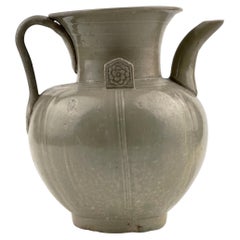
Yue Celadon Ewer, Late Tang-Northern Song Dynasty
Located in seoul, KR
This Yue ware celadon ewer features a gracefully rounded body that expands smoothly, complemented by a wide, flaring mouth. The translucent olive-green glaze envelops the surface, en...
Category
15th Century and Earlier Tang Antique Hong Kong Antiquities
Materials
Celadon
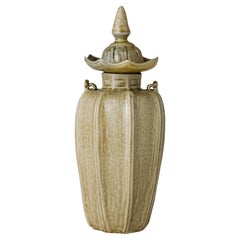
A Rare
Yue
Celadon Glazed Octagonal Vase, Western Jin Dynasty (266 - 316 AD)
Located in seoul, KR
Finely potted with incurved facetted sides divided by raised ribs and set with two short lugs to the shoulder, the body rising to a short octagonal neck, the domed cover of conforming section, surrounded by an upturned rim and surmounted by a bud finial, applied overall with a celadon glaze of the period.
A related vase of this rare and charming form, in the Zhenjiang Museum, Zhenjiang, is illustrated in the Complete Collection of Chinese Ceramics. Song, vol. 8, Shanghai, 1999, pl. 52. Vases of related octagonal shape were produced at the Ding kilns, in Hebei province, and the qingbai kilns in Jiangxi province; see a Ding vase in the Palace Museum, Beijing, illustrated in Selection of Ding Ware. The Palace Museum’s Collection and Archaeological Excavation, Beijing, 2002, pl. 37; and a qingbai example, from the Meiyintang collection, illustrated in Regina Krahl, Chinese Ceramics from the Meiyintang Collection, vol. 3 (II), London, 2006, pl. 1590; and another carved with a floral scroll, included in the exhibition Song Ceramics from the Kwan Collection, Hong Kong Museum of Art, Hong Kong, 1994, cat. no. 105.
Period : Western Jin Dynasty (266 - 316 AD)
Type : Octagonal Vase
Medium : Yue celadon...
Category
15th Century and Earlier Han Antique Hong Kong Antiquities
Materials
Celadon
Ming Period Large Pottery Horse with Saddle (15-16th Century)
Located in seoul, KR
The figure stands on a rectangular base. The horse is depicted in a poised stance, with strong, muscular legs and a slightly bowed head. The mane is carefully sculpted with deep, flowing grooves, adding a dynamic texture to the piece. The head features expressive details, including a well-defined muzzle, flared nostrils. The bridle and harness are delicately painted in faded green, contrasting against the creamy beige body. The saddle is adorned with intricate details, including decorative tassels and a textured pattern, indicative of the elaborate tack used in the Ming period.
Traces of original polychrome pigments in green, black, and ochre remain on the surface, hinting at the sculpture’s once-vibrant appearance. The weathered patina and areas of flaking paint add to its historical authenticity, reflecting centuries of age. The overall craftsmanship and detailing exemplify the Ming Dynasty’s refined ceramic artistry, making this piece a remarkable representation of of asian culture during this period.
Period: Ming Dynasty
Medium: Green, black, and ochre glazed Pottery
Type: Figure
Condition : Good(chips on the upper saddle.)
Provenance : Acquired in late 1990s from Hongkong
Reference : Asian Civilisations Museum - Accession No. C-1384 / 1994-00441 - Ming Dynasty Figure of Horse
(Type : Closely Related)
* Ming Dynasty Glazed Pottery Figures
Ming Dynasty glazed pottery figures are renowned for their bold color palette, intricate detailing, and lifelike forms, distinguishing them from earlier traditions. These figures, which depict officials, warriors, animals, and mythical creatures, are characterized by high-gloss lead-based glazes in green, amber, ochre, and sancai (three-color) combinations. The thickly applied glaze pools in recesses, creating depth and enhancing sculptural details. With dynamic postures, expressive facial features, and meticulously rendered drapery, these figures reflect the period’s advancement in ceramic craftsmanship, offering a greater sense of movement and realism compared to the rigid and stylized forms of earlier dynasties.
A defining characteristic of Ming glazed pottery is its elaborate surface detailing, often achieved through raised relief elements and contrasting glazes. Equestrian figures, for example, feature carefully sculpted saddles, harnesses, and decorative embellishments, while human figures are adorned with intricate robes and headdresses. The large scale of these tomb figures, often more imposing than those from previous periods, underscores the increasing importance of funerary art during the Ming era. Unlike later Qing Dynasty figures...
Category
15th Century and Earlier Ming Antique Hong Kong Antiquities
Materials
Pottery
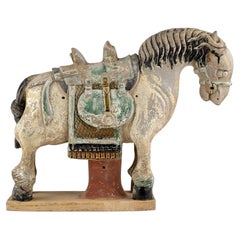
Cizhou Baluster Jar, Yuan-Ming Dynasty
Located in seoul, KR
The vase features a broad, rounded body with a slightly flared neck and a pedestal base. The decoration consists of intricate brushwork in iron-brown pigment, depicting figures and s...
Category
15th Century and Earlier Antique Hong Kong Antiquities
Materials
Pottery
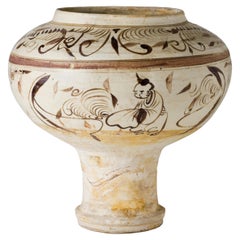
Longquan Celadon Figurine, Ming Dynasty (1368-1644)
Located in seoul, KR
This sculpture is a Longquan celadon from the Ming Dynasty, renowned for its rich and jade-like green glaze. The figurine is likely a representation of a Buddhist deity or a revered scholar, showcasing the calm aesthetic expressions and graceful contours prevalent during the era. The spectrum of celadon glaze ranges from a dense grey stoneware to a nearly white porcelain texture, with unglazed parts revealing a terracotta brown upon firing. Such pieces were often part of household altars, reflecting the era's spiritual devotion. This artifact would be a treasured exhibit in any museum's Asian art collection, symbolizing both religious reverence and artistic excellence.
Period: Ming Dynasty (1368-1644)
Region: Longquan, China
Medium: Stoneware - Celadon glazed, with a range from heavy grey to almost white porcelain-like material
Type: Sculpture
Height : 24.5 cm
Provenance : Acquired in 1999, Hongkong
* Ming Dynasty Longquan Celadon
Longquan celadon from the Ming Dynasty typically exhibits a more robust and heavier stoneware body compared to its Song Dynasty predecessors. The Ming era saw an evolution in celadon glaze, achieving a wider spectrum of green hues, from olive to bluish-greens. Ming celadons...
Category
15th Century and Earlier Ming Antique Hong Kong Antiquities
Materials
Celadon
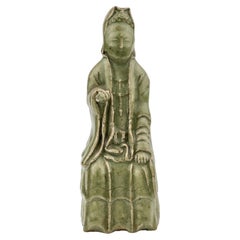
Antique Chinese Export Silver Goblet
By Wang Hing
Co.
Located in Jesmond, Newcastle Upon Tyne
An exceptional, fine and impressive antique Chinese export silver goblet; an addition to our wine and drinks related silverware collection.
This exceptional antique Chinese Export silver (CES) goblet has a circular bell shaped form a shaped stem and plain circular stepped foot.
The drinking vessel of this silver wine goblet is embellished with impressive engraved bamboo stems emanating from the lower portion.
The embossed stem of this impressive solid silver goblet...
Category
Early 1900s Chinese Export Antique Hong Kong Antiquities
Materials
Silver
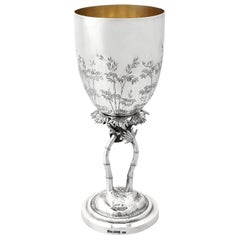
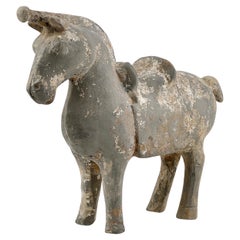
Figure of a Horse with traces of white slip
Located in seoul, KR
A standing horse, back legs slightly apart and bent, tail erect, wearing a saddle with saddlecloth, and with bridal ornaments on forelock. This horse represents a breed from the Mong...
Category
15th Century and Earlier Han Antique Hong Kong Antiquities
Materials
Pottery
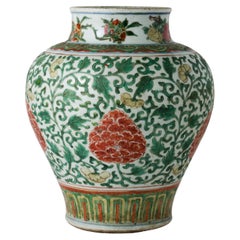
A Wucai
Peony
Vase Transitional Period, 17th century, Transitional Period
Located in seoul, KR
The jar features a balanced and robust form, typical of the Transitional period, which was a time of significant change and innovation in Chinese porcelain art. The decoration is exu...
Category
17th Century Qing Antique Hong Kong Antiquities
Materials
Ceramic
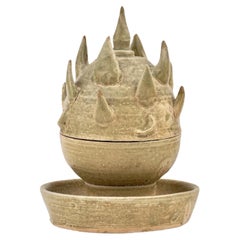
Rare Boshan Incense Burner Yue Celadon, Jin dynasty
Located in seoul, KR
The Boshan incense burner is particularly notable among Han dynasty incense burners for its unique shape. Designed to resemble a mountain or even a mythical mountain, it is characterized by its pointed peaks that rise upwards. These peaks often function as vents for the smoke, creating an effect reminiscent of a volcanic eruption.
The body of the incense burner is typically round, with multiple small peaks surrounding a central, larger peak. The material used is mainly ceramic, although there are instances where they were made of bronze. It is presumed that this incense burner was used for religious or ceremonial purposes during its time. The colors of these burners are usually in shades of pale green or greyish brown, with the application of glaze to achieve a variety of colors on occasion.
Such incense burners are often found in tombs or ritual sites, and their purpose was to burn incense for purification of space or to produce pleasant aromas. The Boshan incense burner also represents a significant cultural heritage, showcasing the craftsmanship and artistic values of the period. Today, it is considered a quintessential example of ancient Chinese art.
Period : Han-Jin Dynasty
Type : Incense Burner
Medium : Yue celadon...
Category
15th Century and Earlier Han Antique Hong Kong Antiquities
Materials
Stoneware
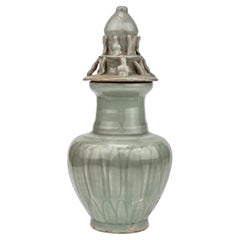
Carved
Longquan
Celadon-glazed Funerary vase and cover, Song dynasty
Located in seoul, KR
The vase features a ribbed body, subtly enhancing its graceful contours, and is topped with a uniquely sculpted lid adorned with figurative elements.
Period : Song Dynasty
Type : Ce...
Category
15th Century and Earlier Antique Hong Kong Antiquities
Materials
Celadon
A Carved White Ware
peony
vase, Song-Yuan dynasty
Located in seoul, KR
The vase is raised on a slightly splayed foot and flanked on the tall cylindrical neck by a pair of mask handles. The body is molded with lotus scroll pattern between a floral scroll...
Category
15th Century and Earlier Antique Hong Kong Antiquities
Materials
Ceramic, Porcelain
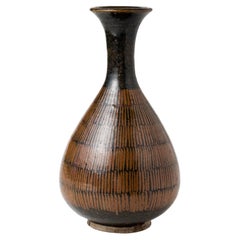
Black-Glazed Russet-Painted Bottle Vase, Northern Song-Jin Dynasty
Located in seoul, KR
Of broad pear shape rising from a low foot to a waisted neck and flared rim, covered overall with a lustrous brownish-black glaze with rare six bands of russet-strokes radiating in yuhuchunping shape.
Period : Northern Song-Jin Dynasty
Type : Yuhuchunping
Medium : Black glazed with russet painted
Provenance : Acquired in late 1990s from Hongkong
Reference :
1) Bonhams London 12 MAY 2016 - Fine Chinese Art - Lot 30
(Price realised : £ 37,500 / Type : Closely Related)
2) Bonhams London 11 MAY 2021 - Roger Keverne Ltd Moving On - Lot 99
(Price realised : £12,750 / Type : Related)
3) Christies NEW YORK 22 MAR 2018 - The Classic Age of Chinese Ceramics - The Linyushanren Collection, Part III - Lot 521
(Price realised : 35,000 USD / Type : Closely Related)
4) Christies HONG KONG 30 MAY 2024 - Important Chinese Ceramics and Works of Art - Lot 2854
(Price realised : HKD 201,600 / Type : Related)
* Black-glazed ceramics in Northern Song-Jin dynasty
Black-glazed ceramics, also known as "black ware," were prominent during the Northern Song (960–1127) and Jin (1115–1234) dynasties. The creation of these ceramics involved the application of a rich, dark glaze, typically achieved using iron oxide. This glaze was applied over a stoneware or porcelain body, then fired at high temperatures to produce a glossy, dark finish ranging from deep brown to black. Notable techniques included the "tea-dust" glaze, which exhibited a speckled appearance, and the "oil-spot" glaze, characterized by small, iridescent spots. The high-temperature firing process was crucial for achieving the desired glaze effects and durability.
The design of black-glazed ceramics often included intricate carvings, incised, or molded decorations. Common forms included bowls, vases, jars, and ceramic pillows. These pillows, used as headrests, featured detailed designs such as floral patterns, animals, and mythical creatures. An example of this is a black-glazed ceramic pillow from the Jin dynasty, which features carvings of two lions. Similar pieces can be found in the Guanfu Museum, where black-glazed pillows...
Category
15th Century and Earlier Antique Hong Kong Antiquities
Materials
Stoneware
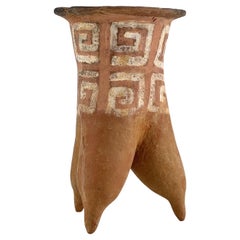
Lower Xiajiadian Culture Tripod Li Jar, 2000–1500 BCE
Located in seoul, KR
This tripod jar, dating from 2000 to 1500 BCE, is attributed to the Lower Xiajiadian Culture, which flourished in Northeast China. It exemplifies the early ceramic craftsmanship of N...
Category
15th Century and Earlier Antique Hong Kong Antiquities
Materials
Pottery, Earthenware
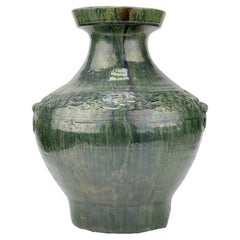
Hu vase with green glaze, Han Dynasty
Located in seoul, KR
It is made from a fairly high-fired reddish pottery and coated in a particularly attractive glossy thick streaky green and finely-crackled glaze, the colour of which varies according...
Category
15th Century and Earlier Han Antique Hong Kong Antiquities
Materials
Stoneware
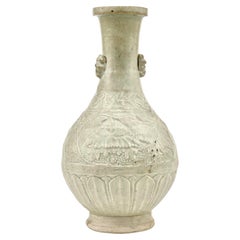
A Carved Qingbai
Chrysanthemum
Vase, Song-Yuan Dynasty(13-14th century)
Located in seoul, KR
The ovoid body to a tall neck, the body decorated with a chrysanthemum meander, covered overall in a translucent pale blue glaze. Traces of excavation can be seen in the dirt marks o...
Category
15th Century and Earlier Antique Hong Kong Antiquities
Materials
Ceramic, Porcelain
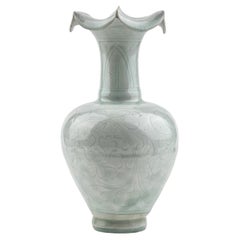
Green Glazed Horse and Rider, Ming period(15-16th Century)
Located in seoul, KR
Statues of East Asian horse rider, featuring glazes in green, are set on rectangular base.
Period: Ming Dynasty
Medium: Green-glazed Pottery
Type: Figure
Condition : Good
Provenance : Acquired in early 2000s from Hongkong
* Ming Dynasty Glazed Pottery Figures
Ming Dynasty glazed pottery figures are renowned for their bold color palette, intricate detailing, and lifelike forms, distinguishing them from earlier traditions. These figures, which depict officials, warriors, animals, and mythical creatures, are characterized by high-gloss lead-based glazes in green, amber, ochre, and sancai (three-color) combinations. The thickly applied glaze pools in recesses, creating depth and enhancing sculptural details. With dynamic postures, expressive facial features, and meticulously rendered drapery, these figures reflect the period’s advancement in ceramic craftsmanship, offering a greater sense of movement and realism compared to the rigid and stylized forms of earlier dynasties.
A defining characteristic of Ming glazed...
Category
15th Century and Earlier Ming Antique Hong Kong Antiquities
Materials
Pottery
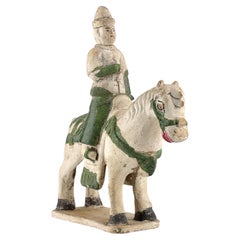
A Longquan Celadon-Glazed
Dragon
Dish, Yuan Dynasty
Located in seoul, KR
The dish is decorated to the centre with a moulded appliqué dragon chasing the flaming pearl surrounded by a carved stylised foliage band at the cavetto. The moulded fluted exterior ...
Category
15th Century and Earlier Ming Antique Hong Kong Antiquities
Materials
Celadon
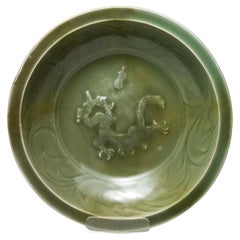
Qingbai Floriform Dish, Song-Yuan Dynasty
Located in seoul, KR
The dish has a scalloped rim, which gives it a flower-like appearance. The wavy edges were often inspired by nature. It has a pale, almost translucent blue-green glaze, typical of Qi...
Category
15th Century and Earlier Antique Hong Kong Antiquities
Materials
Ceramic

Large Pottery Standing Figure of Attendant
Located in seoul, KR
This artwork, acquired in Hong Kong during the 1990s, is presumed to have been produced in the same kiln from the Han dynasty, based on the head of the Sotheby's reference piece, which also originated from Hong Kong. Furthermore, given its almost identical shape to the piece from the Artemis Gallery...
Category
15th Century and Earlier Han Antique Hong Kong Antiquities
Materials
Pottery
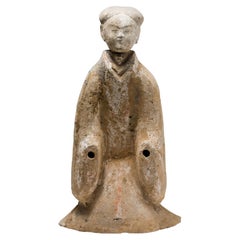
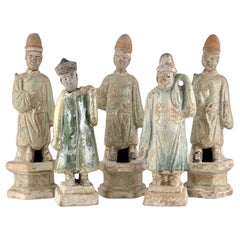
Five Green Glazed Pottery Attendant Figures, Ming Dynasty(1368-1644)
Located in seoul, KR
The three figurines in the back exhibit the typical form of attendants, wearing conical red hats and adopting poses where their right hands are either held in front of their chests o...
Category
15th Century and Earlier Ming Antique Hong Kong Antiquities
Materials
Pottery
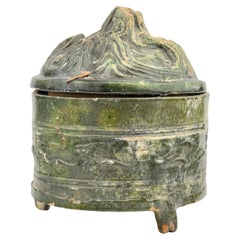
Green-glazed pottery tripod
hill
jar, Han Dynasty, 206 BC - 220 AD
Located in seoul, KR
The modelled animal figures and landscapes of this piece represent the Daoist ideology of the Han dynasty. The mountain-shaped lid refers to the sacred dwellings of the immortals, th...
Category
15th Century and Earlier Han Antique Hong Kong Antiquities
Materials
Stoneware
Still Thinking About These?
All Recently ViewedMore Ways To Browse
Antique Wood Foot Warmer
Bronze Age Sword
Chinese Dagger
Chinese Dragon Pottery Jar
Chinese Porcelain 8 Immortals
Gandharan Schist
Gerald Hong
Gong Cambodia
Han Dynasty Bowl
Haniwa Heads
Ichimatsu Doll
Jade Belt Hook
Kojima Shoten
Tibetan Travelling Buddha Shrine
Tigers Eye Snuff Bottle
Wood Carved Tamil Nadu
Yak Horn
Ancient Egypt Amulet