Hong Kong Antiquities
to
1
3
1
142
1
133
5
4
3
1
1
131
58
21
19
19
6,852
1,903
1,348
741
396
142
142
142
1
Place of Origin: Hong Kong
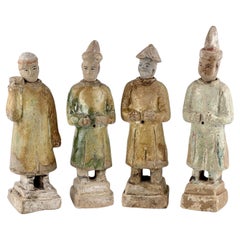
Four Green Glazed Pottery Attendant Figures, Ming Dynasty(1368-1644)
Located in seoul, KR
The first figure wears a short cap and takes a posture as if carrying something on the shoulder, possibly symbolizing a servant or a messenger.
The second figure wears a tall hat and...
Category
15th Century and Earlier Ming Antique Hong Kong Antiquities
Materials
Pottery
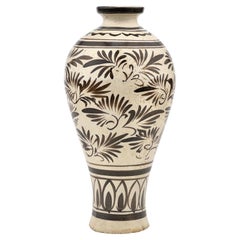
Cizhou slender meiping, Yuan Dynasty
Located in seoul, KR
The elongated body is fluidly painted in brown on a white slip and under a clear glaze with a broad band of abstract floral scroll between a band of upright petals below and further ...
Category
15th Century and Earlier Other Antique Hong Kong Antiquities
Materials
Stoneware
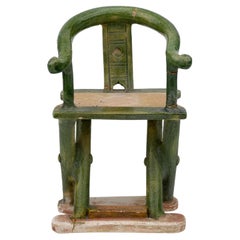
16th Century Pottery Model of a Folding Chair, Ming dynasty
Located in seoul, KR
This piece is an example of Mingqi, items specifically crafted for burial to accompany the deceased into the afterlife. The terracotta army is the most renowned example of such buria...
Category
16th Century Ming Antique Hong Kong Antiquities
Materials
Pottery
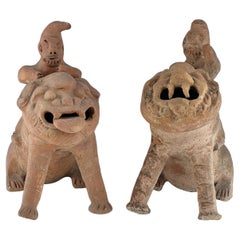
Pair of Rider Figures on Mythical Beasts Possibly from Qing Dynasty
Located in seoul, KR
Identical piece is housed in the Longhai Museum of Zhangzhou City. On October 7, 1989, it was appraised as a third-class cultural relic by the Cultural Relics Appraisal Team of the F...
Category
17th Century Qing Antique Hong Kong Antiquities
Materials
Pottery
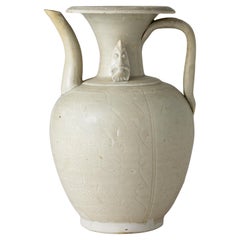
Qingbai Melon form water ewer, Five Dynasties-Northern song dynasty
Located in seoul, KR
The oviform body is divided into few lobes, and the shoulder is applied with a pair of small loops molded.
Period : Five Dynasties-Song Dynasty(907~1279)
Type : Ewer
Medium : Zheji...
Category
15th Century and Earlier Antique Hong Kong Antiquities
Materials
Porcelain
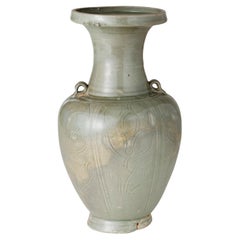
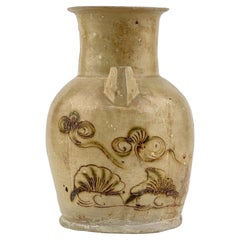
Celadon Vase, Five Dynasties or Northern Song
Located in seoul, KR
This celadon vase features a gently rounded shoulder, a tall, slender neck, and a broad, flaring rim. Two small loop handles are applied to the shoulders. The body is finely incised ...
Category
15th Century and Earlier Antique Hong Kong Antiquities
Materials
Celadon
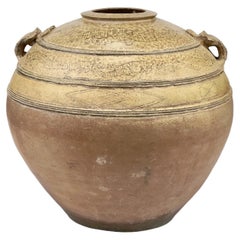
Large Yue Globular Stoneware Jar, Han Dynasty-Three Kingdoms
Located in seoul, KR
Robustly crafted with a voluminous spherical body and a layered mouth rim, this jar features a pair of taotie handles. It is adorned with three horizontal bands on the upper half of ...
Category
15th Century and Earlier Han Antique Hong Kong Antiquities
Materials
Stoneware
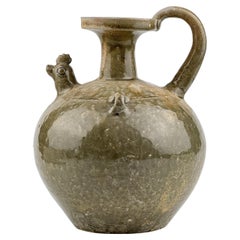
Rare Yue Celadon Chicken-Head Ewer, Jin-Southern Dynasty
Located in seoul, KR
Chicken-head ewers are among the most distinct and emblematic pottery pieces from the Han (206 BC ~ AD 220) to the Tang dynasties. Their production commenced during the Jin dynasty i...
Category
15th Century and Earlier Han Antique Hong Kong Antiquities
Materials
Pottery
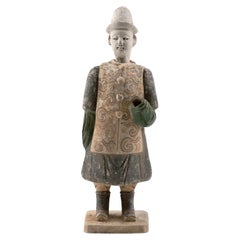
Rare Figure of an Attendant Wearing Swirling Vest, Ming Dynasty(1368-1644)
Located in seoul, KR
Statues of attendant crafted from terracotta, dressed in a black coat-like garment with a vest adorned with swirling patterns. Set on rectangular bases.
Period: Ming Dynasty
Medium...
Category
15th Century and Earlier Ming Antique Hong Kong Antiquities
Materials
Pottery
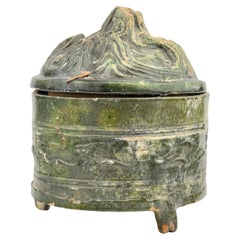
Green-glazed pottery tripod
hill
jar, Han Dynasty, 206 BC - 220 AD
Located in seoul, KR
The modelled animal figures and landscapes of this piece represent the Daoist ideology of the Han dynasty. The mountain-shaped lid refers to the sacred dwellings of the immortals, th...
Category
15th Century and Earlier Han Antique Hong Kong Antiquities
Materials
Stoneware
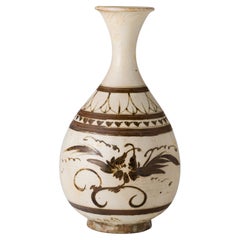
A Cizhou Yuhuchunping, Yuan Dynasty
Located in seoul, KR
This piece has a flared neck and a globular body, typical of the forms seen in Cizhou ware. The body is decorated with freely drawn floral motifs and abstract patterns, which may inc...
Category
15th Century and Earlier Chinese Export Antique Hong Kong Antiquities
Materials
Stoneware
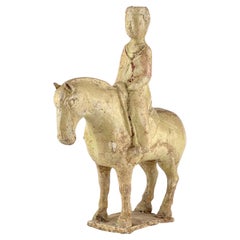
A Straw-Glazed Pottery Figure of a man on Horseback
Located in seoul, KR
The rider is seated upright, wearing a smoothly draped robe with finely sculpted folds. The red markings on the garment surface are likely either soil deposits or remnants of pigment...
Category
15th Century and Earlier Tang Antique Hong Kong Antiquities
Materials
Pottery, Straw
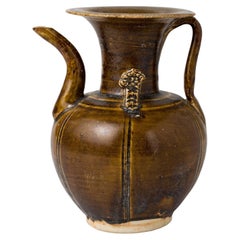
Brown Glazed Ceramic Ewer, Five Dynasties-Song Dynasty
Located in seoul, KR
The glaze crackles, reflecting the passage of time, add to the piece's antique charm. The spout and handle are well-proportioned, and the brown glaze is evenly applied, the unique fi...
Category
15th Century and Earlier Antique Hong Kong Antiquities
Materials
Ceramic
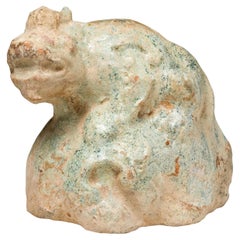
Green-glazed model of a Haitai, Han dynasty
Located in seoul, KR
This Han Dynasty green-glazed Haitai sculpture, though worn over time, retains its dynamic form.
Period : Han Dynasty (206 BC - 220 AD)
Medium : Earthenware with Green glaze
Provena...
Category
15th Century and Earlier Han Antique Hong Kong Antiquities
Materials
Pottery
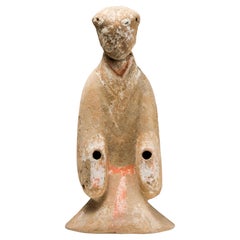
Large Pottery Standing Figure of Attendant
Located in seoul, KR
The statuette shows traces of the original red, black, and white pigmentation. The figure’s body, head, and hands (which in this case are lost) were all made separately to give her an essence of movement and dynamism. Given its almost identical shape to the piece from the Artemis Gallery...
Category
15th Century and Earlier Han Antique Hong Kong Antiquities
Materials
Pottery
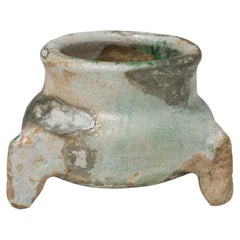
Green-Glazed Tripod Vessel, Han Dynasty
Located in seoul, KR
Han Dynasty green-glazed tripods are comparatively rare, especially ones that have retained their structural integrity and glaze over millennia. Pieces in good condition are scarce b...
Category
15th Century and Earlier Han Antique Hong Kong Antiquities
Materials
Earthenware
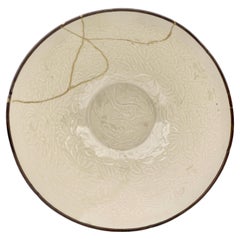
A Rare Moulded Dingyao
Cranes And Fishes
Bowl, Northern Song - Jin Dynasty
Located in seoul, KR
This bowl stands out for its detailed depiction of two fish amid soft spiral waves, bordered by two cranes within the bowl. The design's depth and clarity, from the lifelike portraya...
Category
15th Century and Earlier Antique Hong Kong Antiquities
Materials
Ceramic, Porcelain
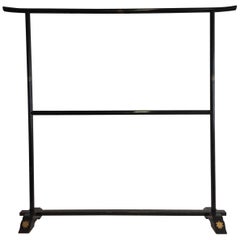
Kimono Rack Provenience Charlotte Horstmann and Gerald Godfrey, Hong Kong
Located in Hamburg, DE
Kimono rail, black lacker embellished with gold leaves hand-painted, all parts are dismountable, base need a bit of Restauration in order to have to item ...
Category
1920s Art Deco Vintage Hong Kong Antiquities
Materials
Wood
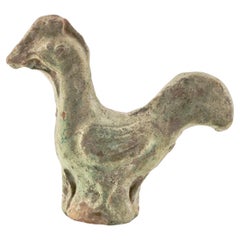
Green Glazed Pottery Figure of Rooster
Located in seoul, KR
The head is rounded, with minimal detailing of the beak, eyes, and comb. The neck is thick and solid, seamlessly transitioning into the body, which appears sturdy and compact, giving...
Category
15th Century and Earlier Han Antique Hong Kong Antiquities
Materials
Pottery
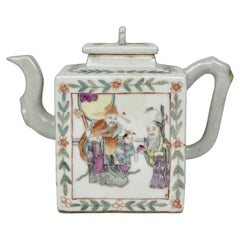
Famille Rose Teapot Jar, Late Qing Period
Located in seoul, KR
A square Chinese famille rose teapot, Tongzhi mark and of the period
Period: Qing Dynasty
Type: Teapot
Medium: Famille rose, enamel
* Famille Ro...
Category
19th Century Qing Antique Hong Kong Antiquities
Materials
Ceramic, Porcelain
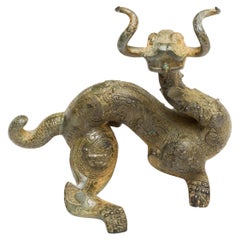
A Rare Gilt-Bronze Mythical Beast
Located in seoul, KR
Cast in bronze, this sculpture depicts a mythical beast with a sinuously curved body and an animated, rising posture. The overall form evokes a dragon or guardian creature, embodying...
Category
15th Century and Earlier Antique Hong Kong Antiquities
Materials
Bronze
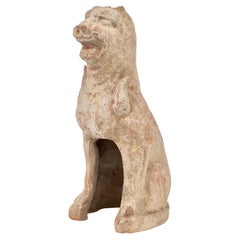
Guardian Haitai Lion Pottery Figure
Located in seoul, KR
This figure represent a guardian haitai. The style of the figurine, with its facial features and remnants of paint, suggests it could be a part of funerary art, which was common in Chinese culture during these periods.
Date : Northern Wei...
Category
15th Century and Earlier Tang Antique Hong Kong Antiquities
Materials
Pottery, Stoneware
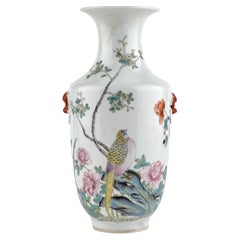
Famille rose porcelain vase, 19-20th century
Located in seoul, KR
This porcelain vase, likely from the late Qing dynasty or early Republic period (late 19th to early 20th century), is a fine example of Famille-Rose (fencai) decoration. The body is ...
Category
Late 19th Century Qing Antique Hong Kong Antiquities
Materials
Ceramic, Porcelain
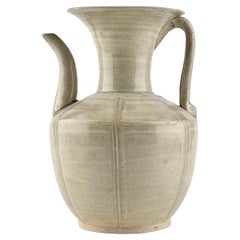
A Zhejiang Porcelain Ewer, Northern Song Dynasty
Located in seoul, KR
The oviform body is divided into few lobes. All covered in a finely crackled pale olive-green glaze. The surface and glaze characteristics are definitive, confirming the authenticity...
Category
15th Century and Earlier Antique Hong Kong Antiquities
Materials
Porcelain
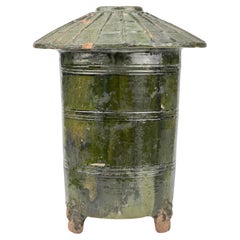
Funerary Model of a Granary, Han dynasty
Located in seoul, KR
Cylindrical vessel on three animal-shaped feet (dragon or snake), wall with profile grooves, roof. Ceramic with green transparent glaze. "Iridescence" is observed in surface.
Period...
Category
15th Century and Earlier Han Antique Hong Kong Antiquities
Materials
Stoneware
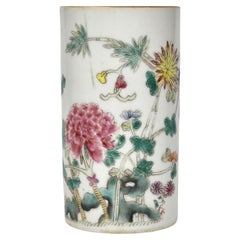
Famille Rose Hongxian Marked Sleeve Vase With Flowers, Republic Period
Located in seoul, KR
A stunning 20th-century Chinese Famille Rose vase, also known as a hatstand, from the Republic period, is adorned with a detailed Hongxian mark on the bottom. This vase features exqu...
Category
20th Century Qing Hong Kong Antiquities
Materials
Ceramic, Porcelain
Two Glazed Court Attendants, Ming Period (1368-1644)
Located in seoul, KR
Two finely hollow-moulded terracotta statuettes from ancient China, dating to the Ming Dynasty. The figure is depicted standing, dressed in long, flowing robes, painted in vibrant blue or green and deep amber yellow. The hair is styled into an elaborate top-knot, painted in a muted brown. Areas left unpainted would have been 'cold-painted' after firing, contrasting with the vivid fired blue or green and amber pigments. The figure is shown with the left hand raised to the chest, as if holding something, possibly an offering or incense. Figurines like this were placed in tombs to guide the deceased on their journey to the afterlife.
The Ming Dynasty was known for its exceptional artistic achievements, partly due to its economic prosperity. Since the Han Dynasty, it was customary to bury terracotta miniatures of everyday objects with the deceased. These items, known as mingqi, or "spirit utensils" and "vessels for ghosts," were believed to help and assist the deceased in the afterlife. Mingqi were crafted in the form of cooking utensils, miniature replicas of houses, temples, furniture, and other items. Anthropomorphic and zoomorphic terracotta figures were also popular, designed to assist, entertain, and recreate the living world for the deceased.
Period: Ming Dynasty
Medium: Green/blue-glazed Pottery
Type: Figure
Provenance : Acquired in late 1990s from Hongkong
Reference :
1) Ancient & Oriental - Terracotta Tomb Attendants
(Type : Highly related)
2) La Maison De La Petite Sara S.r.l. - Archaeology section - A Black glazed Terracotta Statuette, Servant with Trumpet, Ming Dynasty
(Price realised : 700 GBP / Type : Highly related)
* Ming Dynasty Glazed Pottery Figures
Ming Dynasty glazed pottery figures are renowned for their bold color palette, intricate detailing, and lifelike forms, distinguishing them from earlier traditions. These figures, which depict officials, warriors, animals, and mythical creatures, are characterized by high-gloss lead-based glazes in green, amber, ochre, and sancai (three-color) combinations. The thickly applied glaze pools in recesses, creating depth and enhancing sculptural details. With dynamic postures, expressive facial features, and meticulously rendered drapery, these figures reflect the period’s advancement in ceramic craftsmanship, offering a greater sense of movement and realism compared to the rigid and stylized forms of earlier dynasties.
A defining characteristic of Ming glazed pottery is its elaborate surface detailing, often achieved through raised relief elements and contrasting glazes. Equestrian figures, for example, feature carefully sculpted saddles, harnesses, and decorative embellishments, while human figures are adorned with intricate robes and headdresses. The large scale of these tomb figures, often more imposing than those from previous periods, underscores the increasing importance of funerary art during the Ming era. Unlike later Qing Dynasty figures...
Category
15th Century and Earlier Ming Antique Hong Kong Antiquities
Materials
Pottery

Changsha ewer, Tang Dynasty(618-907)
Located in seoul, KR
Changsha Ware has distinct and recognizable designs and motifs. Painted designs often depict flowers, vines, clouds and mountain landscapes. Some painting is simply splotches of colo...
Category
15th Century and Earlier Tang Antique Hong Kong Antiquities
Materials
Stoneware
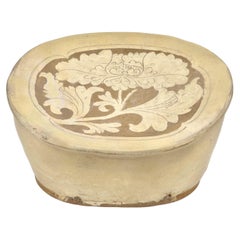
Cizhou carved bean-shaped pillow, Song-Jin Dynasty, 11th-12th century
Located in seoul, KR
Crafted from fine clay, the pillow's surface boasts a sophisticated carved design featuring a floral motif that is both symmetrical and organic. The interplay of the earthy tones and...
Category
15th Century and Earlier Chinoiserie Antique Hong Kong Antiquities
Materials
Stoneware
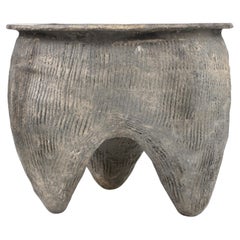
Tripod in the shape of a bronze vessel li, Zhou or Shang dynasty
Located in seoul, KR
The tri-lobed shape and combed ridges of this cooking pot increased heating efficiency by maximizing the vessel’s surface area. The shape of a bronze vessel li, with the body rising out of three hollow pointed legs to a wide moiuth with splayed-out rim. The exterior is covered with cord impressed pattern. The surface shows signs of oxidation from being buried in the soil for a long time.
Period: Zhou or Shang dynasty circa 1000 B.C.E.
Medium : Grey earthenware with impressed decoration
Type : Tripod vessel
Size : 29cm (Height) x 35cm(Diameter)
Condition : Good
Provenance : Acquired in late 1990s from Hongkong
Reference :
1) V&A Museum - ACCESSION NUMBER C.87-1954
2) Smithsonian National Museum of Asian Art - ACCESSION NUMBER F1984.13
3) The University of Chicago - OBJECT NUMBER 1989.1
4) The MET - Accession Number: 1972.275.5
5) Kyoto National Museum - Three-footed Earthenware Vessel
* Shang Dynasty Pottery (1600-1046 BCE)
The Shang dynasty, known for its significant advancements in bronze casting, also produced notable pottery. Shang pottery is characterized by its practical use and simple designs, reflecting the utilitarian needs of the society. The pottery from this period includes both coarse wares used for everyday purposes and fine, high-quality ceramics used in ritualistic contexts. Common forms include jars, bowls, and cups, often with a dark, burnished surface. One distinctive feature of Shang pottery is the use of gray clay, and many pieces display clear signs of oxidation, giving them a unique, mottled appearance. The decorations were typically incised or stamped, featuring geometric patterns, zoomorphic designs, and motifs that are also seen in Shang bronze...
Category
15th Century and Earlier Antique Hong Kong Antiquities
Materials
Pottery
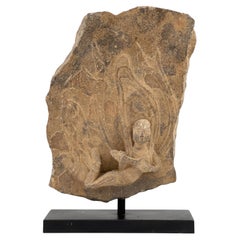
Apsara Carved Limestone Stele with Extremely Rare
Oolitic silica
, Wei Dynasty
Located in seoul, KR
The small dots apparent on the surface of this stone stele are indicative of an oolitic silica structure or oolites formed in what is known as "Oolitic chert." The same phenomenon can also be observed in the Tang Dynasty Limestone Stele at the Asian Art Museum in San Francisco. This formation occurs gradually over the course of thousands to several hundred thousand years within the soil or sea. Similar structures are commonly found in ancient fossils or arrowheads. Ancient peoples chose certain types of stones for tool-making, preferring materials that were easier to work with and could be sharpened effectively. This predilection is believed to be the reason why oolitic silica structures are frequently found in ancient arrowheads.
The development of these oolitic silica structures is a very slow process involving the accumulation of siliceous layers around particulates. This phenomenon, where silica reacts with water to form layers around a nucleus, occurs under specific chemical and physical conditions. Typically, it takes thousands to hundreds of thousands of years for silica to gradually accumulate in layers through contact with moisture, a process that requires a precise harmony of many variables, including chemical conditions, temperature, pressure, pH, and biological activity.
It is known that no other stele with such a silica structure has been identified to date, serving not only as evidence of its authenticity but also significantly enhancing the rarity of this piece.
This stele appears to be a stone sculpture of an apsara, a celestial nymph from Buddhist and Hindu traditions. Despite its fragmentary state, the sculpture conveys grace and movement. The apsara is captured in a dynamic pose, perhaps once part of a larger tableau, playing a flute-like instrument.
The black stand was made in Hong Kong at the time of the acquisition.
Date : Northern Wei/Eastern Wei Dynasty(386~550)
Size : 22cm (Height) x 16cm(diameter)
Condition : Good (oolites dots on surface)
Provenance : Acquired in late 1990s from Hongkong
Reference :
1) Sotheby's New York 20 March 2018 - Jingyatang Treasures Of Chinese Buddhist...
Category
15th Century and Earlier Han Antique Hong Kong Antiquities
Materials
Stone, Limestone
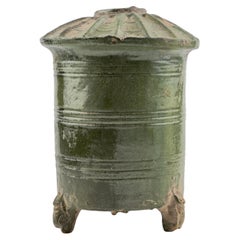
Funerary Model of a Granary, Han dynasty
Located in seoul, KR
Cylindrical vessel on three animal-shaped feet (dragon or snake), wall with profile grooves, roof. pottery with green lead glaze. "Iridescence" is observed in surface.
Period : Han...
Category
15th Century and Earlier Han Antique Hong Kong Antiquities
Materials
Pottery
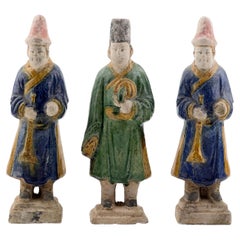
Three Glazed Figures of Musicians, Ming Period (1368-1644)
Located in seoul, KR
Statues of Chinese musicians crafted from terracotta, featuring glazes in green, blue with nice condition. Set on rectangular bases. Compared to other figures, musician figures are relatively rare, two figures with distinctive instrument from that era.
Period: Ming Dynasty
Medium: Green and Blue glazed Pottery
Type: Figure
Provenance : Acquired in early 2000s from Hongkong
Reference :
1) V&A Museum - Accession number C.1501913
(Type : Closely related)
* Ming Dynasty Glazed Pottery Figures
Ming Dynasty glazed pottery figures are renowned for their bold color palette, intricate detailing, and lifelike forms, distinguishing them from earlier traditions. These figures, which depict officials, warriors, animals, and mythical creatures, are characterized by high-gloss lead-based glazes in green, amber, ochre, and sancai (three-color) combinations. The thickly applied glaze pools in recesses, creating depth and enhancing sculptural details. With dynamic postures, expressive facial features, and meticulously rendered drapery, these figures reflect the period’s advancement in ceramic craftsmanship, offering a greater sense of movement and realism compared to the rigid and stylized forms of earlier dynasties.
A defining characteristic of Ming glazed pottery is its elaborate surface detailing, often achieved through raised relief elements and contrasting glazes. Equestrian figures, for example, feature carefully sculpted saddles, harnesses, and decorative embellishments, while human figures are adorned with intricate robes and headdresses. The large scale of these tomb figures, often more imposing than those from previous periods, underscores the increasing importance of funerary art during the Ming era. Unlike later Qing Dynasty figures...
Category
15th Century and Earlier Ming Antique Hong Kong Antiquities
Materials
Pottery
Gate Pillar, Han Dynasty(206BC-220AD)
Located in seoul, KR
The Han Dynasty gate pillar held by the Asian Art Museum in San Francisco and this gate pillar are the only known examples of their type worldwide, highlighting its extraordinary rar...
Category
15th Century and Earlier Han Antique Hong Kong Antiquities
Materials
Earthenware
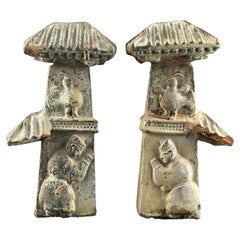

$7,980 / set
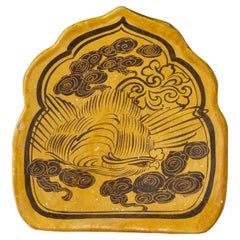
Rare Cizhou
Mandarin duck and Reishi mushroom
Painted Pillow, Jin-Song Dynasty
Located in seoul, KR
Mandarin ducks symbolize eternal love and fidelity in East Asian culture, often representing marital harmony as they are believed to mate for life. Reishi mushrooms, known as symbols of longevity and health, are revered in traditional Asian medicine for their association with immortality and have been used for centuries to promote vitality and strengthen the immune system.
The orange glaze is commonly found on Cizhou-type tiger pillows. The attached materials indicate that this tiger pillow is from the same period and shares the same color tone as the one housed in the Baoji Bronzeware Museum, a national museum located in Shaanxi Province. Considering the glaze color, painting style, and shape, it is speculated that this piece was used by the imperial court.
Period : Jin-Song Dynasty(12-13th century)
Type : Pillow
Medium : Cizhou Ware
Size : 28 cm(Width), 30cm(Vertical), 16cm(Height)
Provenance : Acquired in late 1990s from Hongkong
Reference
1) Christies Hongkong 9 OCT 2019 - The Pavilion Sale - Chinese Ceramics and Works of Art Including the Quek Kiok Lee Collection
(Price realised : HKD 225,000 / Type : related)
2) The Baoji Bronzeware Museum, Shaanxi Province - Tiger Cizhou Pillow...
Category
15th Century and Earlier Antique Hong Kong Antiquities
Materials
Pottery
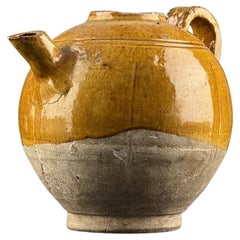
Amber-Glazed Pottery Ewer, Tang-Liao Dynasty (7-12th Century)
Located in seoul, KR
This historical piece features a robust, rounded body with a broad shoulder tapering down to a narrower base. The glaze, characterized by its rich amber hue, covers most of the vessel, while the lower part remains unglazed, exposing the rough, textured clay beneath.
Date : Tang-Liao Dynasty(7-12th century)
Type : Amber-glazed pottery
Provenance : Acquired in late 1990s from Hongkong
Reference :
1) Christies Newyork 1–15 DEC 2015 - Exquisite Splendor: Chinese Ceramics And Works Of Art - Lot 49
(Price realised : 5,250 USD / Type : Closely related)
2) Christies Newyork 18–27 MAR 2015 - The Collection of Robert Hatfield Ellsworth...
Category
15th Century and Earlier Tang Antique Hong Kong Antiquities
Materials
Pottery
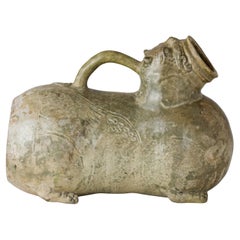
A Rare Yue Celadon-Glazed Figural Vessel, Western Jin dynasty (265-420)
Located in seoul, KR
This vessel is well-modeled as a recumbent winged lion with detailed decorative elements. It features a grimacing face with large protruberant eyes under heavy brows and a gaping mouth, which forms a large aperture. The piece has a tail that arches to form a loop handle, and the wings are incised on the sides. The whole piece is finished with a thin olive-green glaze.
This kind of figural vessel dates back to at least the Western Han dynasty, with the design fully developed in the Yue kilns of Zhejiang province during the 3rd and 4th centuries. Such zoomorphic forms became popular among the literati and were transformed into various functional objects like wine ewers and water pots.
There is a pair, and you can check it in the uploaded list. If you would like to purchase two in pairs, please leave a message.
Period : Western Jin Dynasty (266 - 316 AD)
Type : Figural vessel
Medium : Yue celadon(Stoneware)
Provenance : The piece was acquired in Hong Kong in late 1990s.
Reference :
1) Sotheby's New York 17 March 2015 - Chinese Art Through The Eye Of Sakamoto Gorō – Ceramics Lot 33
(Price Range : 15,000 USD-20,000 USD / Type : Highly related)
2) Sotheby's London 17 May 2023 - A Journey Through China's History. The Dr Wou Kiuan Collection Online. Part I - Lot 30
(Price realised : 13,970 GBP / Type : Closely related)
3) Ethnological Museum, Berlin, Germany - Pouring vessel in animal shape, China, Yue kilns, Zhejiang province, late Western or early Eastern Jin dynasty, 4th century
4) Sotheby's London 16 May 2018 - Important Chinese Art Lot 68
(Price realised : 50,000 GBP / Type : Closely related)
5) The MET - Accession Number: 1985.207 - Vessel in the Shape of a Tiger (Huzi)
(Type : Closely related)
* Yue Celadon
Yue celadon, also known as Yue ware, is a type of Chinese pottery with a celadon glaze, originating from the eastern Han dynasty in the Zhejiang province. The name 'Yue' comes from the Yue kilns which were among the earliest to develop the celadon technique. Yue ware is known for its jade-like glaze, which can range in color from bluish-green to olive green.
Yue celadon was highly regarded during its time and was the first Chinese ware...
Category
15th Century and Earlier Chinese Export Antique Hong Kong Antiquities
Materials
Celadon
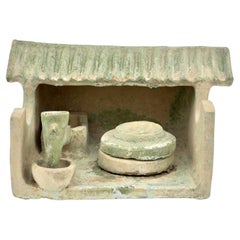
Milling Shed pottery with Green Glaze, Eastern Han Dynasty
Located in seoul, KR
Made from the standard orange earthenware body of Han green glazed tomb models, this miniature milling station features a circular millstone and a foot...
Category
15th Century and Earlier Han Antique Hong Kong Antiquities
Materials
Earthenware, Pottery
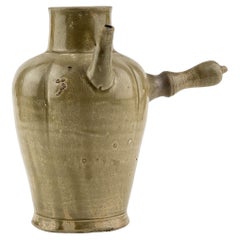
Celadon Ewer with Straight Handle, Tang to Northern Song Dynasty
Located in seoul, KR
Celadon-glazed ewer characterized by its simple and functional design. The piece features a straight handle extending horizontally from the body and a short spout for pouring liquids...
Category
15th Century and Earlier Tang Antique Hong Kong Antiquities
Materials
Celadon
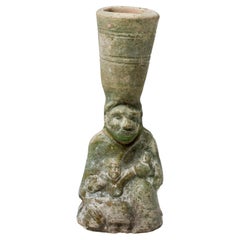
Green-glazed pottery
figural
lamp, Han Dynasty
Located in seoul, KR
The lamp shaped as a kneeling female figure wearing long robes, her face with a large nose, deep-set eyes and pronounced cheeks, holding an infant in her lap, her cylindrical and elo...
Category
15th Century and Earlier Han Antique Hong Kong Antiquities
Materials
Earthenware
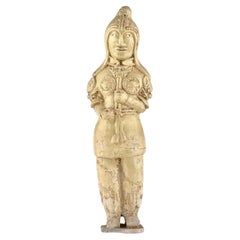
A Large Straw Glazed Pottery Figure of a Solider
Located in seoul, KR
This well-modeled ceramic figure depicts a Scythian warrior in full armor, likely serving as a standard bearer. The warrior stands upright on a thin rectangular base, with clenched f...
Category
15th Century and Earlier Tang Antique Hong Kong Antiquities
Materials
Straw
Black-glazed Lion Pillow, Northern Song-Jin Dynasty
Located in seoul, KR
Black-glazed ceramic pillow, frequently-produced during the Jin dynasty. Similar piece can be found in the Guanfu Museum, where there are black-glazed pillows...
Category
15th Century and Earlier Antique Hong Kong Antiquities
Materials
Ceramic
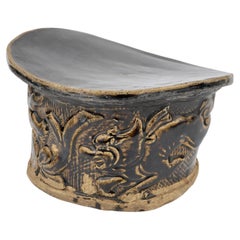
Amber-Glazed Pottery Figure of Sacred Bull
Located in seoul, KR
Naturalistically modelled, standing on a rectangular base with head facing forward and short tail curled to one side, incised details and covered overall in a rich chestnut glaze sav...
Category
15th Century and Earlier Tang Antique Hong Kong Antiquities
Materials
Pottery
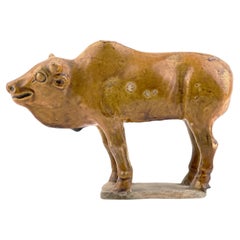
Two Pottery Kneeling Figures of Attendant
Located in seoul, KR
The statuette shows traces of the original red, black, and white pigmentation. Ceramic statuette from the han Dynasty, depicting two court people, probably a musician. They are dress...
Category
15th Century and Earlier Han Antique Hong Kong Antiquities
Materials
Pottery
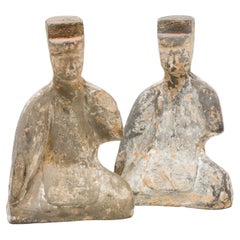
$3,790 / set
Stone Head of Bodhisattva, Northern Wei-Tang Dynasties
Located in seoul, KR
The face with downcast eyes and a smile, the hair swept up behind the pendulous ears into a high topknot. Faint traces of pigmentation hinting at the sculpture's original polychromy. The black stand was made in Hong Kong at the time of the acquisition.
Date : Northern Wei-Tang Dynasty(5-8th century)
Provenance : Acquired in late 1990s from Hongkong
Reference :
1) Sotheby's London 13 May 2015 - The Soul Of Japanese Aesthetics – The Tsuneichi Inoue Collection - Lot 18
(Price realised : 17,500 GBP / Type : Closely related)
2) Sotheby's New York 26 September 2023 - CHINA / 5000 YEARS - Lot 1156
(Price realised : 8,890 USD / Type : Closely related)
* Stone Head of Bodhisattva...
Category
15th Century and Earlier Tang Antique Hong Kong Antiquities
Materials
Limestone
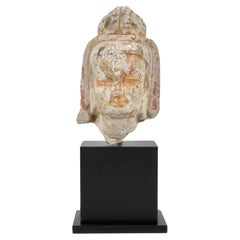
A Sancai-glazed pottery
Haitai
Pillow, Tang dynasty
Located in seoul, KR
The pillow is intricately decorated with a vibrant pattern, demonstrating the craftsmanship and artistic sensibilities of the period. The Haitai is a creature from Chinese mythology,...
Category
15th Century and Earlier Tang Antique Hong Kong Antiquities
Materials
Earthenware, Pottery
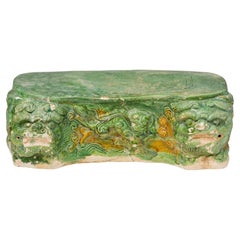
Rare Yue Celadon Chicken-Head Ewer, Jin-Southern Dynasty
Located in seoul, KR
Chicken-head ewers are among the most distinct and emblematic pottery pieces from the Han (206 BC - AD 220) to the Tang (618-907) dynasties. Their production commenced during the Jin...
Category
15th Century and Earlier Han Antique Hong Kong Antiquities
Materials
Celadon, Stoneware
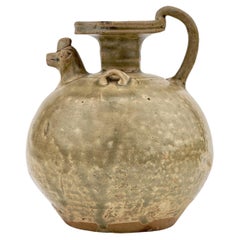
Qingbai Lotus Censer, Song Dynasty
Located in seoul, KR
This exquisite Qingbai piece, acquired in Hong Kong in the late 1990s, is a high-quality artifact from the Southern Song Dynasty, likely produced at the Hutian Kiln. The base exhibit...
Category
15th Century and Earlier Antique Hong Kong Antiquities
Materials
Ceramic
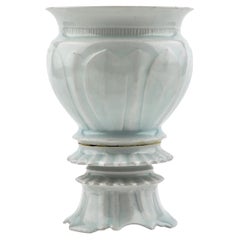
Porcelain with transparent pale-bluish (qingbai-type) glaze, Yuan Dynasty
Located in seoul, KR
This piece is shaped like a lotus bud, featuring a gracefully undulating body and intricate geometric patterns. The neck is adorned with finely incised dense lines, adding visual var...
Category
15th Century and Earlier Antique Hong Kong Antiquities
Materials
Ceramic, Porcelain
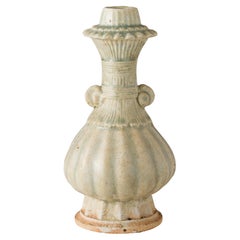
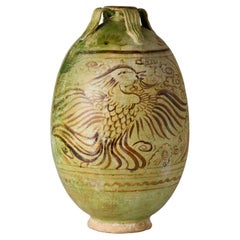
Green-glazed Pottery Amphora with Brown glazed Phoenix, Tang-Liao Dynasty
Located in seoul, KR
The vessel has an overall oval shape, characterized by smooth curves that transition naturally from the rim to the body. The upper part of the jar narrows slightly, with four handles...
Category
15th Century and Earlier Tang Antique Hong Kong Antiquities
Materials
Pottery
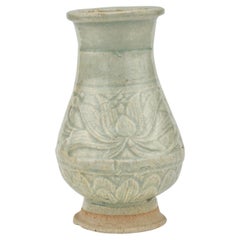
White Ware Moulded Baluster Form, Yuan Dynasty, 14th century
Located in seoul, KR
This vase is made from a type of low-fired, porous clay and features a crackled glaze. It bears resemblance to the renowned funerary vases and covers adorned with applied decorations...
Category
15th Century and Earlier Antique Hong Kong Antiquities
Materials
Ceramic, Porcelain
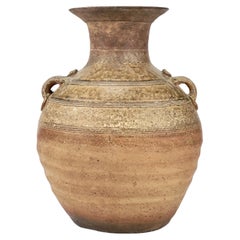
A Green-Glazed Stoneware Jar (Hu Vessel), Han Dynasty
Located in seoul, KR
Ovoid form escalating to a cylindrical neck with a flaring rim, adorned at the shoulder with three narrow grooved horizontal bands. Each side is equipped with an incised double-loop ...
Category
15th Century and Earlier Han Antique Hong Kong Antiquities
Materials
Stoneware
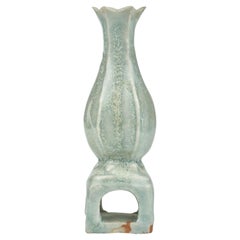
Small Qingbai Pear-Shaped Vase, Song-Yuan Dynasty(13-14th century)
Located in seoul, KR
This exquisite piece is a Qingbai ware from the Song to Yuan dynasty, and it appears to be an excavated artifact given its earthy encrustations, suggesting it has rested in the groun...
Category
15th Century and Earlier Antique Hong Kong Antiquities
Materials
Ceramic, Porcelain
Two Straw-Glazed Pottery Figures of Court Male and Female
Located in seoul, KR
This pair of straw-glazed pottery figures represents a male and female court attendant, both elegantly attired in period fashion. The female figure wears a flowing robe with draped f...
Category
15th Century and Earlier Tang Antique Hong Kong Antiquities
Materials
Pottery, Straw
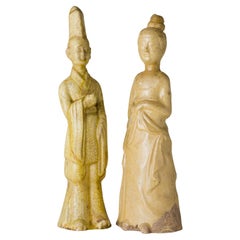
Amber-Glazed Pottery Figure of Dog
Located in seoul, KR
A Dog sitting on his haunches, covered in an amber glaze. Naturalistically modeled, the figure follows the artistic style of the period. It remains uncertain whether the glaze has wo...
Category
15th Century and Earlier Tang Antique Hong Kong Antiquities
Materials
Pottery
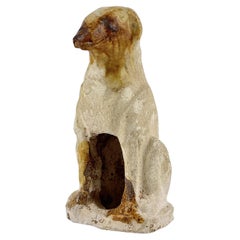
Qingbai ewer with slip decoration of two phoenix and lotus leaves, Yuan Dynasty
Located in seoul, KR
This small ewer is an exquisite example of Qingbai ware, known for its pale blue-tinged glaze. The vessel showcases the advanced ceramic techniques and artistic sophistication of the...
Category
15th Century and Earlier Antique Hong Kong Antiquities
Materials
Ceramic, Porcelain
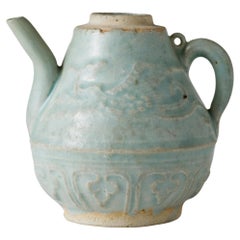
White Ware with two dragons, Yuan Dynasty, 13-14th century
Located in seoul, KR
This vase is made from a type of low-fired, porous clay and features a crackled glaze. It bears resemblance to the renowned funerary vases and covers adorned with applied decorations...
Category
15th Century and Earlier Antique Hong Kong Antiquities
Materials
Ceramic, Porcelain
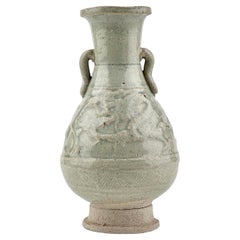
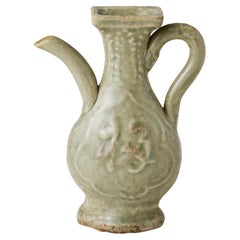
A Molded Longquan Celadon
Fu Shou
Ewer, Ming Dynasty
Located in seoul, KR
One side of the vase showcases a panel with the Shou character at its center, symbolizing longevity, while the opposite side displays the Fu character, signifying luck. The neck of the vase is adorned with leaves. There are similar types and decoration but varying in shape, resembling a pear, all from the same era and crafted in celadon, often referred to as 'fu shou' vases.
Period: Yuan-Ming Dynasty (1271-1644)
Region: Longquan, China
Medium: Celadon
Type: Ewer
Provenance : Acquired in late 1990s from Hongkong
Reference
1) British Museum - Museum number 1931,1118.5
(Type : Closely related)
2) Christies NEW YORK 24–25 MAR 2022 - Important Chinese Ceramics and Works of Art - Lot 1105
(Price realised : 9,450 USD / Type : Related)
3) Sotheby's New York 19 March 2024 - Chinese Art - Lot 172
(Price range : 15,000 USD - 20,000 USD / Type : Related)
* Ming Dynasty Longquan Celadon
Longquan celadon from the Ming Dynasty typically exhibits a more robust and heavier stoneware body compared to its Song Dynasty predecessors. The Ming era saw an evolution in celadon glaze, achieving a wider spectrum of green hues, from olive to bluish-greens. Ming celadons...
Category
15th Century and Earlier Ming Antique Hong Kong Antiquities
Materials
Celadon
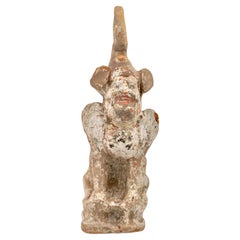
Guardian Official Pottery Figure
Located in seoul, KR
This figure appears to be a terracotta statuette, possibly representing a court official or a deity given the distinct headgear which could signify a rank or divine attribute. The style of the figurine, with its facial features and remnants of paint, suggests it could be a part of funerary art, which was common in Chinese culture during these periods.
Date : Northern Wei...
Category
15th Century and Earlier Tang Antique Hong Kong Antiquities
Materials
Earthenware, Pottery
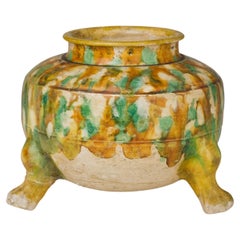
Sancai-Glazed Pottery Tripod Jar, Tang Dynasty
Located in seoul, KR
The globular body is supported on three claw feet and is covered in a splashed-glaze of amber, green and cream color, which stops short of the unglazed base.
Date : Tang Dynasty(61...
Category
15th Century and Earlier Tang Antique Hong Kong Antiquities
Materials
Earthenware
Still Thinking About These?
All Recently ViewedMore Ways To Browse
Antique Wood Foot Warmer
Bronze Age Sword
Chinese Dagger
Chinese Dragon Pottery Jar
Chinese Porcelain 8 Immortals
Gandharan Schist
Gerald Hong
Gong Cambodia
Han Dynasty Bowl
Haniwa Heads
Ichimatsu Doll
Jade Belt Hook
Kojima Shoten
Tibetan Travelling Buddha Shrine
Tigers Eye Snuff Bottle
Wood Carved Tamil Nadu
Yak Horn
Ancient Egypt Amulet