15th Century and Earlier Antiquities
to
74
161
28
448
3
755
645
657
20
281
83
72
34
2
18
11
5
14
10
11
17
2
307
138
67
60
51
436
301
133
89
88
448
448
448
Period: 15th Century and Earlier
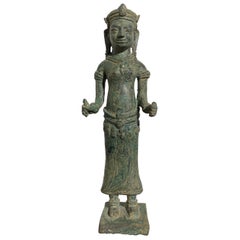
Lopburi Style Cast Bronze Figure of Uma, 13th-14th Century, Thailand
Located in Austin, TX
A charming and unusual cast bronze figure of the Hindu goddess Uma, Lopburi Style, 13th-14th century, Thailand.
Uma, the Hindu goddess of love and beauty, also known as Parvati, i...
Category
Thai Antique 15th Century and Earlier Antiquities
Materials
Bronze
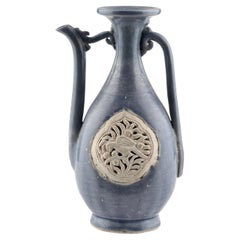
A Rare Annamese Blue and white Ewer, Circa 15th century
Located in seoul, KR
Stoneware painted with underglaze cobalt blue and remnants of overglaze enamel. This work has been presented as a centerpiece in the Annamese gallery of the Asian Art Museum of San Francisco, underscoring its significant artistic and historical standing.
Year/Period : 15th century
Region : North Vietnam, Vietnam
Type : Ewer
Found/Acquired : Southeast Asia , South China Sea, Hoi An Ship
Reference :
1) Phoenix Art Museum - OBJECT NUMBER 2000.108.1
2) Asian Art Museum of San Francisco - Annamese Collection
3) Butterfield Treasures Hoi An Hoard Auction Catalogs / San Francisco Butterfields 2000
* Vietnamese trade ceramics
Around the mid-14th century, Vietnam developed its ceramics production technology by producing blue and white porcelain, and began to export it overseas. During this period, China Ming Dynasty implemented a policy of lifting the ban from 1371 to 1657 and restricted foreign trade. This served as a good opportunity in the trade history of Vietnamese ceramics, and ceramic exports...
Category
East Asian Ming Antique 15th Century and Earlier Antiquities
Materials
Stoneware
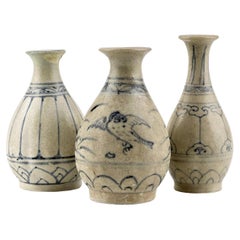
Three Annamese Small Yuhuchunping, 15th century, Le Dynasty
Located in seoul, KR
These 15th-century Annamese ceramics from Le dynasty, are notable for their rarity and refined design. The Yuhuchunping vases, with their elegant pear-shaped bodies and delicate blue-and-white motifs, showcase the sophisticated craftsmanship of the time. They offer a glimpse into the vibrant maritime trade networks of Southeast Asia during the 15th century, making them valuable artifacts in the study of East Asian ceramics...
Category
Vietnamese Antique 15th Century and Earlier Antiquities
Materials
Ceramic
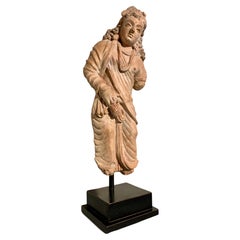
Gandharan Terracotta Figure of the Bodhisattva Maitreya, 4th-6th Century
Located in Austin, TX
A very rare and decidedly charming half-scale terracotta sculpture of the bodhisattva Maitreya, the Buddha of the Future, ancient region of Gandha...
Category
Pakistani Antique 15th Century and Earlier Antiquities
Materials
Terracotta
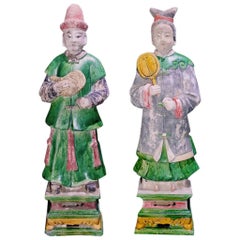
Magnificent Court Attendants in Terracotta - Ming Dynasty, China 1368-1644 AD TL
Located in San Pedro Garza Garcia, Nuevo Leon
A magnificent pair of male and female courtiers from the Ming Dynasty (1368-1644 CE) in excellent condition. They are wearing traditional Daopao robes in green and black garments wit...
Category
Chinese Ming Antique 15th Century and Earlier Antiquities
Materials
Terracotta
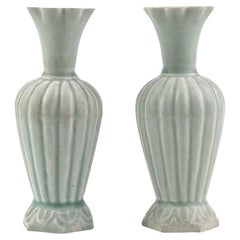
Pair of Qingbai Vases, Song-Yuan Dynasty
Located in seoul, KR
This pair of Qingbai vases features a soft bluish-green glaze with elegant, fluted bodies and wide, flared rims. The vases are hand-crafted, with subtle differences that highlight th...
Category
Hong Kong Antique 15th Century and Earlier Antiquities
Materials
Porcelain

$5,750 / set
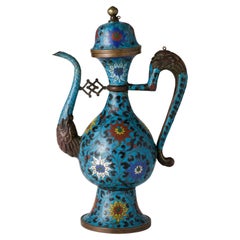
Cloisonné Enamel Ewer, Ming-Qing Period
Located in seoul, KR
This cloisonné ewer features a brass body covered with turquoise-toned enamel and densely arranged lotus and floral motifs. The spout and handle are shaped in the form of a phoenix o...
Category
East Asian Antique 15th Century and Earlier Antiquities
Materials
Enamel
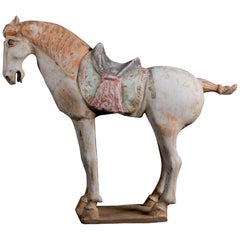
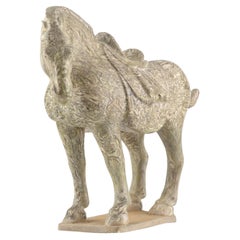
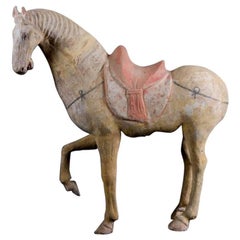
Stunning Terracotta Standing Horse, Tang Dynasty, China
618-907 AD
, TL Test
Located in San Pedro Garza Garcia, Nuevo Leon
Magnificent standing horse in orange terracotta and traces of painting. With a finely decorated saddle and with the mane and tail hair braided. TL Test by Ralph Kotalla Lab NE: 09K12...
Category
Chinese Tang Antique 15th Century and Earlier Antiquities
Materials
Terracotta
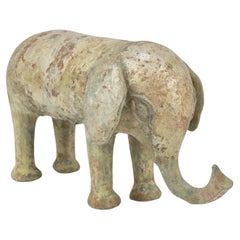
Green-Glazed Pottery Elephant, Han dynasty
Located in seoul, KR
This piece is an elephant statue made of green-glazed pottery. During the Han Dynasty, artworks depicting elephants were quite rare. However, such representations did occasionally appear. For example, the bronze vessel from the Han Dynasty housed in the Shanghai Museum is one of the notable examples of this type of craftsmanship. The existence of elephants in ancient China is attested both by archaeological evidence and by depictions in Chinese artwork. Long thought to belong to an extinct subspecies of the Asian elephant named Elephas maximus...
Category
Hong Kong Han Antique 15th Century and Earlier Antiquities
Materials
Pottery
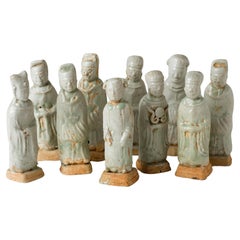
Ten Qingbai Figures of Courtiers, Five Dynasties-Song Dynasty
Located in seoul, KR
This work is a group of Qingbai (青白磁) porcelain figurines produced during the Five Dynasties to the Northern or Southern Song period (10th–13th century). A transparent glaze is appli...
Category
East Asian Antique 15th Century and Earlier Antiquities
Materials
Porcelain
6 Elegant Ming Dynasty Court Attendants in Glazed Terracotta, China 1368-1644 AD
Located in San Pedro Garza Garcia, Nuevo Leon
A fine set of a six court attendants as in the Forbidden City of Beijing, elegantly dressed in a Green & Red Daopao – a traditional men’s formal attire from the Ming Dynasty dated 1368-1643 A.D. – with glazed robes and Red Pigment remains in their hat and belts. They stand in an honorary posture atop a red plinth, some with orifices in their hands, where spirit objects were placed to comfort or satisfy the deceased. The heads are detachable, as often seen on the larger figures from this period.
They are accompanied by a Certificate of Authenticity, and Certificate of Expertise by Jean-Yves Nathan - a leading authority specialized in Far East Archaeology from the CEDEA (The European Confederation of Art Experts).
Burial figurines of graceful dancers, mystical beasts, and everyday objects reveal both how people in early China approached death and how they lived. Since people viewed the afterlife as an extension of worldly life, these figurines, called mingqi, sometimes referred as “spirit utensils” or “vessels of ghosts” disclose details of routine existence and provide insights into belief systems over a thousand-year period.
The Ming dynasty was the ruling dynasty of China – then known as the Empire of the Great Ming – for 276 years (1368–1644 AD). Founded by Chu Yuan-chang, the rebel leader that was successful in removing the mongols from the throne. Chinese control was re-asserted in China and eastern Asia. Literature became more important, schools were created, and the justice system was reformed. The Ming dynasty is described by some as "one of the greatest eras of orderly government and social stability in human history,” was the last imperial dynasty in China ruled by ethnic Han Chinese.
The practice of burying ceramic objects with the deceased went into decline from the 10th to the 14th Century AD. There was a revival in placing miniature representations of glazed terracotta objects such a furniture, food offerings, horses, miniature statues...
Category
Chinese Ming Antique 15th Century and Earlier Antiquities
Materials
Terracotta

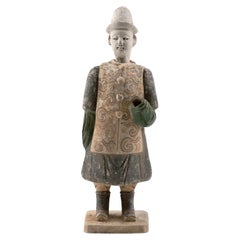
Rare Figure of an Attendant Wearing Swirling Vest, Ming Dynasty(1368-1644)
Located in seoul, KR
Statues of attendant crafted from terracotta, dressed in a black coat-like garment with a vest adorned with swirling patterns. Set on rectangular bases.
Period: Ming Dynasty
Medium...
Category
Hong Kong Ming Antique 15th Century and Earlier Antiquities
Materials
Pottery
A Rare Yue Celadon Cong-Shaped Vase, Western Jin Dynasty(3-5th C)
Located in seoul, KR
This vessel is an exceptionally rare example believed to represent a Cong-shaped ceramic attributable to the Jin Dynasty, and it may be the only known ceramic work of this form from the period. While certain formal similarities have led some scholars to tentatively associate it with the Song Dynasty or later, the present work is more convincingly attributed to the Western Jin Dynasty (3rd–4th century CE).
The vessel is constructed with a cylindrical inner structure and a square outer profile, conforming to the characteristic geometry of the ancient Cong (琮) form. Its surface is decorated with restrained geometric incised patterns. This structural concept is directly derived from ancient jade Cong (玉琮), which represent the earliest and most authoritative prototypes of the form. Jade Congs...
Category
Hong Kong Antique 15th Century and Earlier Antiquities
Materials
Celadon

A Rare Yellow-glazled Marbled Pottery Horse
Located in seoul, KR
The figure depicts a horse standing on all four legs, created as an animal-shaped funerary sculpture. The body is hollow-molded. The neck is gently arched, with the head lowered, and...
Category
East Asian Antique 15th Century and Earlier Antiquities
Materials
Pottery
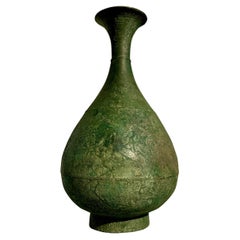
Korean Goryeo Bronze Bottle Vase with Green Patina, 12th/13th Century
Located in Austin, TX
An elegant and unusually large Korean Goryeo bronze bottle vase with green patina, Goryeo Dynasty, 12th/13th century, Korea.
The graceful vase of typical bottle form, with a bulbous...
Category
Korean Antique 15th Century and Earlier Antiquities
Materials
Bronze
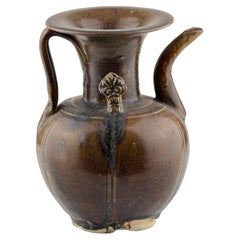
Brown Glazed Ceramic Ewer, Five Dynasties-Song Dynasty
Located in seoul, KR
The glaze crackles, reflecting the passage of time, add to the piece's antique charm. The spout and handle are well-proportioned, and the brown glaze is evenly applied, the unique fi...
Category
East Asian Antique 15th Century and Earlier Antiquities
Materials
Ceramic
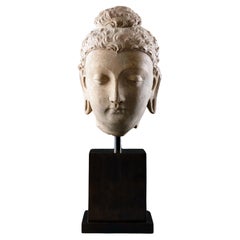
A Fine Gandharan Head of a Buddha
Located in London, GB
A Fine Gandharan Head of a Buddha
Stucco with ‘earth pigment’
Some old ‘restoration’ to the nose
Afghanistan
3rd Century AD
Size: 26cm high, 14.5cm...
Category
Afghan Antique 15th Century and Earlier Antiquities
Materials
Stucco
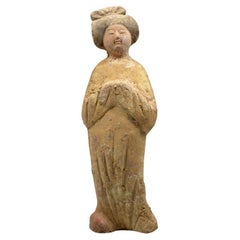
China. Terracotta Mingqi of Fat Lady, Tang dynastie, 700-750 AD
Located in UTRECHT, UT
Terracotta figurine depicting a standing court lady with hands folded in front of her chest, hair pinned up and pleated robe.
Intact, with remains of original polychromy.
Height:...
Category
Chinese Tang Antique 15th Century and Earlier Antiquities
Materials
Terracotta
Magnificent Tang Dynasty Prancing Horse, TL Test by ASA Francine Maurer
Located in San Pedro Garza Garcia, Nuevo Leon
Magnificent Prancing Horse in Orange Terracotta with Traces of Yellow Painting. With its Anterior right Leg raised. TL Test by ASA Francine Maurer Laboratory. It was during the "gol...
Category
Chinese Tang Antique 15th Century and Earlier Antiquities
Materials
Terracotta
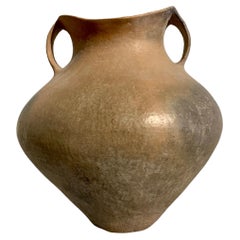
Chinese Siwa Culture Burnished Pottery Jar, 1500 - 1100 BC, China
Located in Austin, TX
A striking Chinese Neolithic to Bronze Age burnished red pottery double handled saddle mouth storage jar, Siwa Culture (circa 1500 to 1100 BC), modern day Gansu Province, China.
...
Category
Chinese Antique 15th Century and Earlier Antiquities
Materials
Pottery
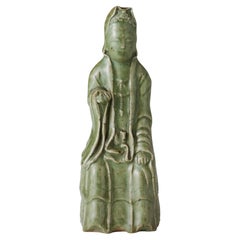
Longquan Celadon Figurine, Ming Dynasty (1368-1644)
Located in seoul, KR
This Longquan celadon figure is defined by a composed frontal presence: half-lidded eyes, a calm oval face, and a hooded mantle that reads as a single, clean silhouette. The robe is modeled with restrained but deep folds—glaze pools in the recesses into a richer olive tone, while the raised edges fire thinner and lighter, sharpening the relief and giving the carving real definition. The color shifts naturally from jade-like grey-green to mossy depths, with fine peppered speckling and subtle kiln character on the surface—an understated, materially convincing piece where form and glaze do the work.
Period: Ming Dynasty (1368-1644)
Region: Longquan, China
Medium: Stoneware - Celadon glazed, with a range from heavy grey to almost white porcelain-like material
Type: Sculpture
Height : 24.5 cm
Provenance : Acquired in 1999, Hongkong
* Ming Dynasty Longquan Celadon
Longquan celadon from the Ming Dynasty typically exhibits a more robust and heavier stoneware body compared to its Song Dynasty predecessors. The Ming era saw an evolution in celadon glaze, achieving a wider spectrum of green hues, from olive to bluish-greens. Ming celadons...
Category
East Asian Ming Antique 15th Century and Earlier Antiquities
Materials
Celadon
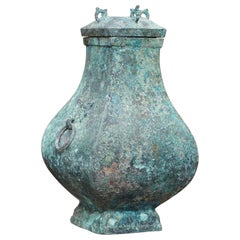
Fanghu Han Dynasty 206BC-220AD Chinese Bronze Ritual Wine Vessel Jug
Cover
Located in West Sussex, Pulborough
We are delighted to offer for sale this exceptionally important and highly collectable museum quality original Chinese bronze ritual wine vessel and...
Category
Chinese Han Antique 15th Century and Earlier Antiquities
Materials
Bronze
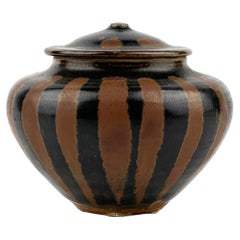
A Russet-Splashed Blackish-Brown-Glazed Jar, Song Dynasty
Located in seoul, KR
Lustrous blackish-brown glaze decorated on the exterior with lines of splashes of russet color. This jar features a rounded and voluminous body, with its shoulders gently curving upward to meet the lid. The lid is topped with a small knob-like handle at the center, creating a harmonious and well-balanced overall proportion.
Under microscopic magnification, the brown-glazed...
Category
Hong Kong Antique 15th Century and Earlier Antiquities
Materials
Ceramic
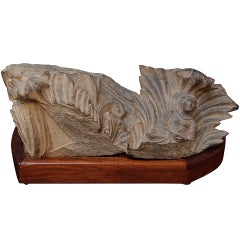
Gandharan Column Capital Fragment with an Image of the Buddha
Located in Austin, TX
A bold and expressive Gandharan carved gray schist column capital fragment, circa 2nd - 3rd century, ancient region of Gandhara.
The fragment of a c...
Category
Pakistani Hellenistic Antique 15th Century and Earlier Antiquities
Materials
Schist
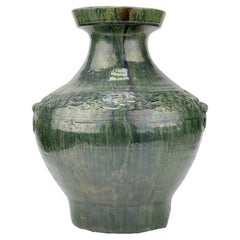
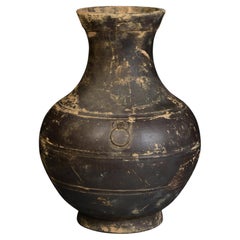
Hu vase with green glaze, Han Dynasty
Located in seoul, KR
It is made from a fairly high-fired reddish pottery and coated in a particularly attractive glossy thick streaky green and finely-crackled glaze, the colour of which varies according...
Category
Hong Kong Han Antique 15th Century and Earlier Antiquities
Materials
Stoneware
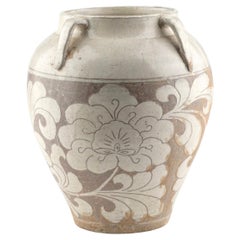
Cizhou Lotus Carved Jar, Song-Yuan dynasty
Located in seoul, KR
This jar features a carved design, which is typical of Cizhou ware. It has a creamy white and brown color scheme, and the prominent decoration of lotus flower, which is a common motif in Chinese art and culture, symbolizing purity and enlightenment.
The carving technique involves coating the vessel with a layer of white slip (liquid clay), then carving away parts of it to create the design, revealing the darker clay body beneath. This technique allows for a strong contrast between the background and the carved motif.
Period : Song-Yuan Dynasty
Type : Jar
Medium : Cizhou Ware
Size : 21.5 cm(Height), 11cm(Mouth Diameter)
Provenance : Acquired in 1999, Hongkong
* Cizhou Ware
Cizhou is the name given to a number of stonewares, grey or buff, of varying degrees of hardness, with painted, incised or carved decoration on a clay slip. These stonewares were not only made in the region of Cizhou, Hebei Province, but in several provinces of China during the Song, Yuan and Ming periods. The great centres of production were in the north of China in the provinces of Hebei, Henan and Shanxi.
Cizhou wares seem to have been very popular, made for a clientèle of rich merchants, at a period when the paintings of famous...
Category
Hong Kong Antique 15th Century and Earlier Antiquities
Materials
Pottery
Han Dynasty, Antique Chinese Pottery Hu Jar
Located in Sampantawong, TH
Antique Chinese pottery Hu jar decorated with bands of raised lines and a pair of monster masks on the shoulder.
Age: China, Han Dynasty, 206 B.C. - A.D.220
Size: Height 46.6 C.M. /...
Category
Chinese Antique 15th Century and Earlier Antiquities
Materials
Pottery
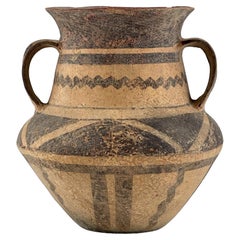
Neolithic Pottery Amphora(Gansu Province), 3rd-2nd Millenium BC
Located in seoul, KR
Neolithic Vase with raised neck, slightly flared, two handles. Geometric designs and stylized bovine heads in black. Acquired in Hong Kong in the late 1990s.
Date : 3,000-2,000 BC
M...
Category
Hong Kong Antique 15th Century and Earlier Antiquities
Materials
Earthenware, Pottery
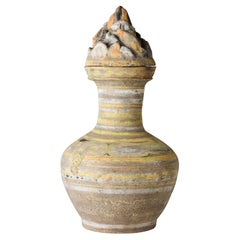
Large Earthenware Pottery Jar with Hill Cover
Located in seoul, KR
The vessel has a rounded body rising to a tall neck, surmounted by a rare cover modeled in the form of mountain peaks. The entire surface is painted with layers of yellow, white and ...
Category
East Asian Han Antique 15th Century and Earlier Antiquities
Materials
Earthenware
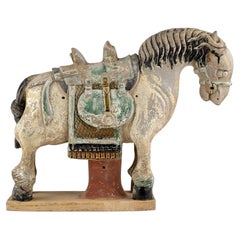
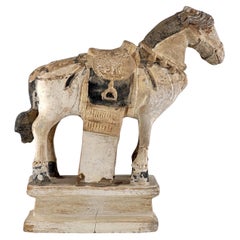
Ming Period Large Pottery Horse with Saddle (15-16th Century)
Located in seoul, KR
The figure stands on a rectangular base. The horse is depicted in a poised stance, with strong, muscular legs and a slightly bowed head. The mane is carefully sculpted with deep, flowing grooves, adding a dynamic texture to the piece. The head features expressive details, including a well-defined muzzle, flared nostrils. The bridle and harness are delicately painted in faded green, contrasting against the creamy beige body. The saddle is adorned with intricate details, including decorative tassels and a textured pattern, indicative of the elaborate tack used in the Ming period.
Traces of original polychrome pigments in green, black, and ochre remain on the surface, hinting at the sculpture’s once-vibrant appearance. The weathered patina and areas of flaking paint add to its historical authenticity, reflecting centuries of age. The overall craftsmanship and detailing exemplify the Ming Dynasty’s refined ceramic artistry, making this piece a remarkable representation of of asian culture during this period.
Period: Ming Dynasty
Medium: Green, black, and ochre glazed Pottery
Type: Figure
Condition : Good(chips on the upper saddle.)
Provenance : Acquired in late 1990s from Hongkong
Reference : Asian Civilisations Museum - Accession No. C-1384 / 1994-00441 - Ming Dynasty Figure of Horse
(Type : Closely Related)
* Ming Dynasty Glazed Pottery Figures
Ming Dynasty glazed pottery figures are renowned for their bold color palette, intricate detailing, and lifelike forms, distinguishing them from earlier traditions. These figures, which depict officials, warriors, animals, and mythical creatures, are characterized by high-gloss lead-based glazes in green, amber, ochre, and sancai (three-color) combinations. The thickly applied glaze pools in recesses, creating depth and enhancing sculptural details. With dynamic postures, expressive facial features, and meticulously rendered drapery, these figures reflect the period’s advancement in ceramic craftsmanship, offering a greater sense of movement and realism compared to the rigid and stylized forms of earlier dynasties.
A defining characteristic of Ming glazed pottery is its elaborate surface detailing, often achieved through raised relief elements and contrasting glazes. Equestrian figures, for example, feature carefully sculpted saddles, harnesses, and decorative embellishments, while human figures are adorned with intricate robes and headdresses. The large scale of these tomb figures, often more imposing than those from previous periods, underscores the increasing importance of funerary art during the Ming era. Unlike later Qing Dynasty figures...
Category
Hong Kong Ming Antique 15th Century and Earlier Antiquities
Materials
Pottery
Ming Period Large Pottery Horse with Saddle (15-16th Century)
Located in seoul, KR
This Ming Dynasty painted pottery horse is depicted standing on a tiered rectangular pedestal. The horse has a well-proportioned body, with sturdy legs and a slightly arched neck. The eyes and muzzle are subtly outlined and incised.
The mane is sculpted with deep, parallel grooves. The tail is long and slightly curved left, extending downward. The saddle is prominently featured at the center of the horse’s back, detailed with a raised, rounded seat and an attached stirrup hanging down one side. The saddlecloth is textured with a crosshatch pattern, bordered by a row of carved fringe-like elements. The horse's legs display subtle musculature, and the hooves are clearly defined, with black pigment accentuating their edges.
The original painted pigments, including white, black, and ochre, are still visible, though faded in some areas. The black pigment highlights the mane, tail, and parts of the bridle, while the ochre tones accentuate the saddle and decorative elements.
Period: Ming Dynasty
Medium: Green, black, and ochre glazed Pottery
Type: Figure
Provenance : Acquired in late 1990s from Hongkong
Reference : Asian Civilisations Museum - Accession No. C-1384 / 1994-00441 - Ming Dynasty Figure of Horse
(Type : Closely Related)
* Ming Dynasty Glazed Pottery Figures
Ming Dynasty glazed pottery figures are renowned for their bold color palette, intricate detailing, and lifelike forms, distinguishing them from earlier traditions. These figures, which depict officials, warriors, animals, and mythical creatures, are characterized by high-gloss lead-based glazes in green, amber, ochre, and sancai (three-color) combinations. The thickly applied glaze pools in recesses, creating depth and enhancing sculptural details. With dynamic postures, expressive facial features, and meticulously rendered drapery, these figures reflect the period’s advancement in ceramic craftsmanship, offering a greater sense of movement and realism compared to the rigid and stylized forms of earlier dynasties.
A defining characteristic of Ming glazed pottery is its elaborate surface detailing, often achieved through raised relief elements and contrasting glazes. Equestrian figures, for example, feature carefully sculpted saddles, harnesses, and decorative embellishments, while human figures are adorned with intricate robes and headdresses. The large scale of these tomb figures, often more imposing than those from previous periods, underscores the increasing importance of funerary art during the Ming era. Unlike later Qing Dynasty figures...
Category
Hong Kong Ming Antique 15th Century and Earlier Antiquities
Materials
Pottery
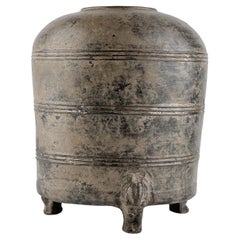
Grey Tripod Granary Jar, Han dynasty
Located in seoul, KR
The vessel consists of a rounded cylindrical body, a gently curved upper section, and a small circular opening, suggesting that it was used for storing grain or valuable goods.
Thre...
Category
Hong Kong Han Antique 15th Century and Earlier Antiquities
Materials
Earthenware
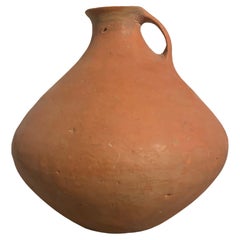
Chinese Neolithic Qijia Culture Red Pottery Vessel, 2200 BC - 1600 BC, China
Located in Austin, TX
A sublime Chinese neolithic burnished red pottery jug, Qijia Culture (2200 BC - 1600 BC), modern day Gansu Province, China.
The simple jug of alluring form, with a voluptuous body, short, narrow neck with slightly everted mouth, and a single ear handle.
The red pottery of gorgeous shades of terracotta, and slightly burnished.
Overall surprisingly contemporary for a piece over three thousand years old.
The Qijia Culture was a late Neolithic...
Category
Chinese Antique 15th Century and Earlier Antiquities
Materials
Pottery
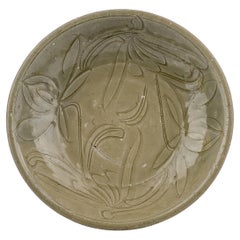
Celadon Bowl with Incised Lotus Patterns, Song Dynasty
Located in seoul, KR
Beneath the soft grayish-green glaze, incised lotus design emerges. The surface is adorned with flowing lines depicting lotus flowers and leaves, rendered in a refined carving techni...
Category
East Asian Antique 15th Century and Earlier Antiquities
Materials
Celadon
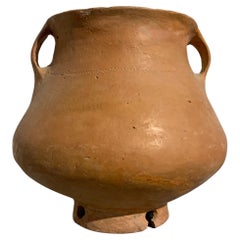
Chinese Neolithic Qijia Culture Red Pottery Vessel, 2200 BC - 1600 BC, China
Located in Austin, TX
An attractive Neolithic Chinese burnished red pottery vessel, Qijia Culture (2200 BC - 1600 BC), modern day Gansu Province, China.
The vessel of compressed globular form set on a short, pieced pedestal foot, and featuring two ear handles, a short, wide neck, and slightly everted mouth. A simple incised band decorates the otherwise plain body.
The red pottery with a beautiful rich terracotta hue. The slight burnishing makes the vessel glow.
The Qijia Culture was a late Neolithic...
Category
Chinese Antique 15th Century and Earlier Antiquities
Materials
Pottery
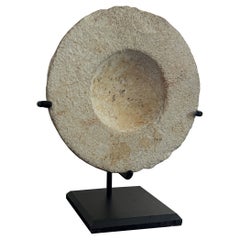
Bronze age stone cup
Located in Vosselaar, BE
Ancient Near East, Holyland, Late Bronze Age, Deir Samit, Judea, ca. 1500 to 1250 BCE. A lovely limestone cosmetic dish presenting a hemispherical body with a flattened top and a dep...
Category
Israeli Antique 15th Century and Earlier Antiquities
Materials
Sandstone
$1,006
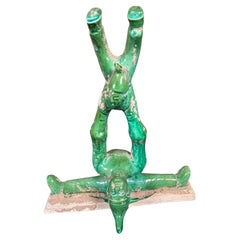
Chinese Ancient Acrobat Entertainers Collection, Ming Dynasty 1368-1644
Located in South Burlington, VT
Ancient Chinese collection of twelve (12) acrobatic entertainers each performing a unique twisting profile , some with with cymbal and drum attributes, Ming Dynasty 1368-1644.
Unmi...
Category
Chinese Ming Antique 15th Century and Earlier Antiquities
Materials
Ceramic, Pottery
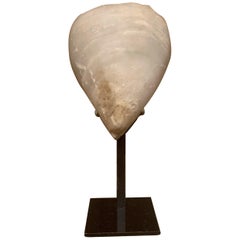
Prehistoric Stargazer Marble Head
Located in Vosselaar, BE
A small, Prehistoric Anatolian marble head of the kiliya type. Of highly stylized geometric form, the marble head is elliptical, with a faintly defined nos...
Category
Turkish Prehistoric Antique 15th Century and Earlier Antiquities
Materials
Marble
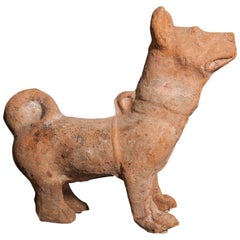
Chinese Han Dynasty Terracotta Fighting Dog
Located in Hudson, NY
Chinese Han Dynasty Terracotta Fighting Dog. During the Han Dynasty (206 BC to 220 AD), terracotta dogs were placed at a grave site in order to protec...
Category
Chinese Han Antique 15th Century and Earlier Antiquities
Materials
Terracotta
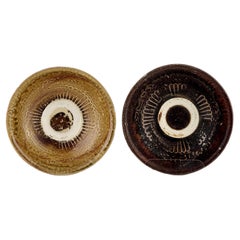
Rare Annamese Stoneware Bowls with Brown-Green Glaze, Vietnam, 14th–15th Century
Located in seoul, KR
This finely matched pair of Annamese stoneware bowls exemplifies the refined ceramic artistry of Đại Việt (medieval Vietnam) during the 14th to 15th century. Each bowl is delicately ...
Category
Vietnamese Antique 15th Century and Earlier Antiquities
Materials
Stoneware
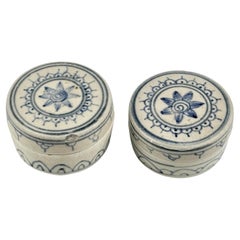
Two Annamese Miniature Covered Boxes with Flower, 15th century, Le Dynasty
Located in seoul, KR
Vietnamese covered boxes with star like flower designs. Both are made of cream-colored base and blue designs, typical of Annamese stoneware.
Dates : 15th century Le Dynasty
Region :...
Category
Vietnamese Antique 15th Century and Earlier Antiquities
Materials
Stoneware
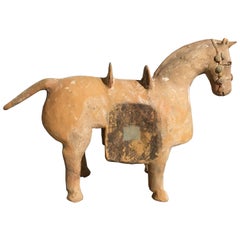
Chinese Six Dynasties Pottery Model of an Armored Horse, 3rd-4th Century, China
Located in Austin, TX
An extremely rare Chinese painted pottery model of an armored horse, Six Dynasties period (220-581 AD), TL tested by Oxford Authentication.
The stocky ...
Category
Chinese Antique 15th Century and Earlier Antiquities
Materials
Pottery
Two Annamese Miniature Covered Boxes with Scenary Motif, 15th century, Le Dynast
Located in seoul, KR
Vietnamese covered boxes with representative scenary designs. Both are made of cream-colored base and blue designs, typical of Annamese pottery. These shared characteristics highligh...
Category
Vietnamese Ming Antique 15th Century and Earlier Antiquities
Materials
Stoneware
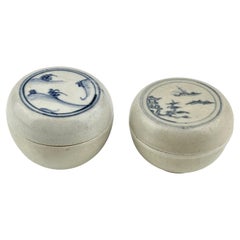
Three Annamese Frog, parrot, monkey shape Waterdroppers, 15th c. Le Dynasty
Located in seoul, KR
With one hole on the back of the frog and the monkey in the mouth, body decorations. The central object appears to be a parrot-shaped ceramic, which might serve as a pouring vessel, ...
Category
Vietnamese Antique 15th Century and Earlier Antiquities
Materials
Ceramic
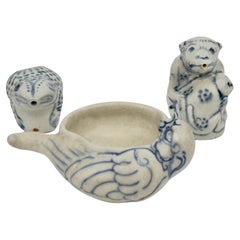
A Rare
Yue
Celadon Glazed Octagonal Vase, Western Jin Dynasty (266 - 316 AD)
Located in seoul, KR
Finely potted with incurved facetted sides divided by raised ribs and set with two short lugs to the shoulder, the body rising to a short octagonal neck, the domed cover of conforming section, surrounded by an upturned rim and surmounted by a bud finial, applied overall with a celadon glaze of the period.
A related vase of this rare and charming form, in the Zhenjiang Museum, Zhenjiang, is illustrated in the Complete Collection of Chinese Ceramics. Song, vol. 8, Shanghai, 1999, pl. 52. Vases of related octagonal shape were produced at the Ding kilns, in Hebei province, and the qingbai kilns in Jiangxi province; see a Ding vase in the Palace Museum, Beijing, illustrated in Selection of Ding Ware. The Palace Museum’s Collection and Archaeological Excavation, Beijing, 2002, pl. 37; and a qingbai example, from the Meiyintang collection, illustrated in Regina Krahl, Chinese Ceramics from the Meiyintang Collection, vol. 3 (II), London, 2006, pl. 1590; and another carved with a floral scroll, included in the exhibition Song Ceramics from the Kwan Collection, Hong Kong Museum of Art, Hong Kong, 1994, cat. no. 105.
Period : Western Jin Dynasty (266 - 316 AD)
Type : Octagonal Vase
Medium : Yue celadon...
Category
Hong Kong Han Antique 15th Century and Earlier Antiquities
Materials
Celadon
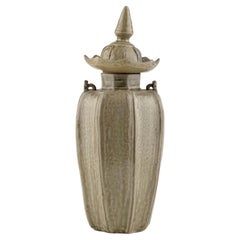
Annamese Stoneware Miniature Vase and Jar, Hoi An Hoard, Late 15th C, Le Dynasty
Located in seoul, KR
These ceramics feature finely detailed depictions of birds and cloud motifs using underglaze blue, showcasing an elegant and refined design. The vase portrays a bird in mid-flight, w...
Category
Vietnamese Ming Antique 15th Century and Earlier Antiquities
Materials
Stoneware

Three Annamese Small Jars with bird design, 15th century, Le Dynasty
Located in seoul, KR
Vietnamese stoneware jar with representative bird designs. These pieces exhibit a relatively vivid and clear color compared to similar works from Hoi An hoard. The main feature of th...
Category
Vietnamese Antique 15th Century and Earlier Antiquities
Materials
Stoneware
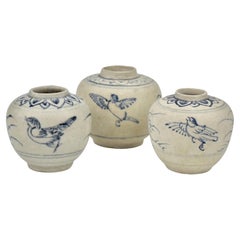
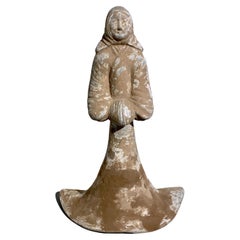
Chinese Han Dynasty Standing Cowled Lady, Gray Pottery, 202 BC - 9 AD, China
Located in Austin, TX
A tall and dramatic Chinese high fired gray pottery model of a standing lady wearing a hood and a flared skirt, Western Han Dynasty (202 BCE - 9 CE), Shaanxi, China.
This striking ...
Category
Chinese Han Antique 15th Century and Earlier Antiquities
Materials
Earthenware, Pottery
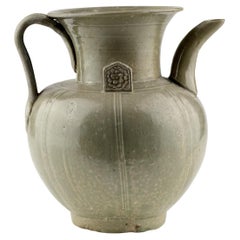
Yue Celadon Ewer, Late Tang-Northern Song Dynasty
Located in seoul, KR
This Yue ware celadon ewer features a softly rounded body rising from a stable foot to a wide, flaring mouth. A translucent olive-green glaze is evenly applied, pooling gently in rec...
Category
East Asian Tang Antique 15th Century and Earlier Antiquities
Materials
Celadon
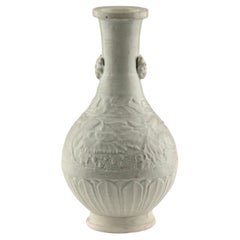
A Carved White Ware
peony
vase, Song-Yuan dynasty
Located in seoul, KR
The vase is raised on a slightly splayed foot and flanked on the tall cylindrical neck by a pair of mask handles. The body is molded with lotus scroll pattern between a floral scroll...
Category
East Asian Antique 15th Century and Earlier Antiquities
Materials
Ceramic, Porcelain
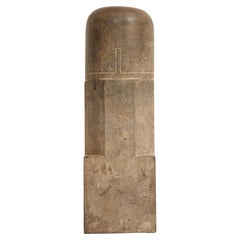
Ancient Polished Sandstone Lingam, Khmer, 12th-13th C., Angkor Period
Located in New York, NY
An Ancient Polished Sandstone lingam stone with an octagonal shaft which Rises from a Square Base, Khmer Period, 12-13th Century, Angkor Period. A fan...
Category
Cambodian Antique 15th Century and Earlier Antiquities
Materials
Sandstone
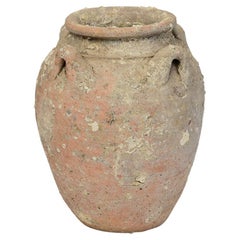
14th-16th Century, Sukhothai, Antique Sukhothai Pottery Jar from Shipwreck
Located in Sampantawong, TH
Sukhothai pottery jar from shipwreck.
Age: Thailand, Sukhothai Period, 14th - 16th Century
Size: Height 27 C.M. / Width 21 C.M.
Condition: Nice condition overall (some expected degr...
Category
Thai Antique 15th Century and Earlier Antiquities
Materials
Pottery
$680 Sale Price
20% Off
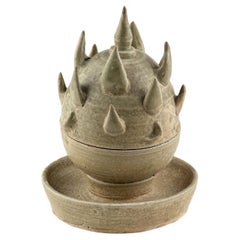
Rare Boshan Incense Burner Yue Celadon, Jin dynasty
Located in seoul, KR
The Boshan incense burner is particularly notable among Han dynasty incense burners for its unique shape. Designed to resemble a mountain or even a mythical mountain, it is characterized by its pointed peaks that rise upwards. These peaks often function as vents for the smoke, creating an effect reminiscent of a volcanic eruption.
The body of the incense burner is typically round, with multiple small peaks surrounding a central, larger peak. The material used is mainly ceramic, although there are instances where they were made of bronze. It is presumed that this incense burner was used for religious or ceremonial purposes during its time. The colors of these burners are usually in shades of pale green or greyish brown, with the application of glaze to achieve a variety of colors on occasion.
Such incense burners are often found in tombs or ritual sites, and their purpose was to burn incense for purification of space or to produce pleasant aromas. The Boshan incense burner also represents a significant cultural heritage, showcasing the craftsmanship and artistic values of the period. Today, it is considered a quintessential example of ancient Chinese art.
Period : Han-Jin Dynasty
Type : Incense Burner
Medium : Yue celadon...
Category
Hong Kong Han Antique 15th Century and Earlier Antiquities
Materials
Stoneware
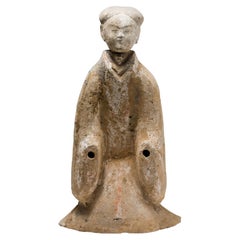
Large Pottery Standing Figure of Attendant
Located in seoul, KR
This artwork, acquired in Hong Kong during the 1990s, is presumed to have been produced in the same kiln from the Han dynasty, based on the head of the Sotheby's reference piece, which also originated from Hong Kong. Furthermore, given its almost identical shape to the piece from the Artemis Gallery...
Category
Hong Kong Han Antique 15th Century and Earlier Antiquities
Materials
Pottery
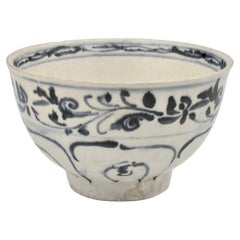
Annamese blue and white bowl, circa 15th century.
Located in seoul, KR
The bowl's design features fluid, dynamic brushstrokes typical of Annamese pottery, where cobalt blue underglaze was used to create intricate patterns before a clear glaze was applied. The artwork, with its foliage and floral motifs, suggests a connection to the natural world—a common theme in Vietnamese art. Such items were highly traded, and their recovery from shipwrecks helps us understand the extent of maritime commerce in Southeast Asia during the 15th and 16th centuries. This piece embodies the craftsmanship and aesthetic values of the period, providing insights into the cultural and economic contexts of its time.
Dates : 15th century Le Dynasty
Region : North Annam, Vietnam
Type : Dish
Found/Acquired : Southeast Asia , South China Sea, Hoi An Ship
Diameter : 17cm
Reference : Double checked with reference to the original catalogue
Butterfield Treasures Hoi An Hoard Auction Catalogs / San Francisco Butterfields 2000
* Vietnamese trade ceramics
Around the mid-14th century, Vietnam developed its ceramics production technology by producing blue and white porcelain, and began to export it overseas. During this period, China Ming Dynasty implemented a policy of lifting the ban from 1371 to 1657 and restricted foreign trade. This served as a good opportunity in the trade history of Vietnamese ceramics, and ceramic exports...
Category
Vietnamese Antique 15th Century and Earlier Antiquities
Materials
Stoneware
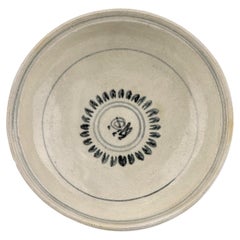
Annamese Dish Circa 15th Century, Le Dynasty
Located in seoul, KR
Its surface is coated with a smooth, glossy white or cream-colored glaze, exuding a clean and elegant finish. At the center, a geometric motif painted in black pigment draws the eye,...
Category
Vietnamese Antique 15th Century and Earlier Antiquities
Materials
Stoneware
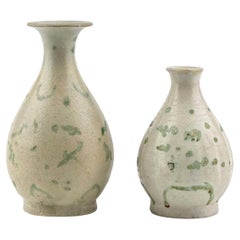
Two Annamese Small Yuhuchunping, 15th century, Le Dynasty
Located in seoul, KR
These 15th-century Annamese ceramics from Le dynasty, are notable for their rarity and refined design. The Yuhuchunping vases, with their elegant pear-shaped bodies and delicate blue...
Category
Vietnamese Ming Antique 15th Century and Earlier Antiquities
Materials
Ceramic, Stoneware
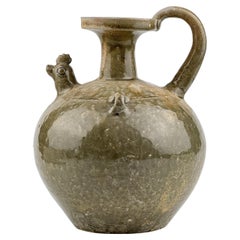
Rare Yue Celadon Chicken-Head Ewer, Jin-Southern Dynasty
Located in seoul, KR
Chicken-head ewers are among the most distinct and emblematic pottery pieces from the Han (206 BC ~ AD 220) to the Tang dynasties. Their production commenced during the Jin dynasty i...
Category
Hong Kong Han Antique 15th Century and Earlier Antiquities
Materials
Pottery
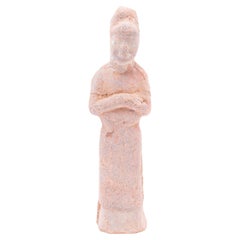
Chinese Male Mingqi Spirit Attendant
Located in Chicago, IL
Molded of earthenware, this petite sculpture is a type of centuries-old burial figurine known as míngqì. Such model figures were placed in tombs of individuals with high status to ensure a safe journey to the afterlife. Meant to depict the pleasures of daily life, common burial figures...
Category
Chinese Antique 15th Century and Earlier Antiquities
Materials
Ceramic
Set of Five Chinese Sancai Female Attendant Figures
Located in Chicago, IL
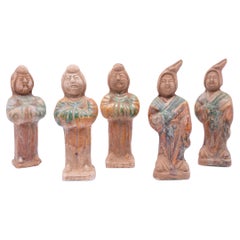
Molded of earthenware, this set of five petite sculptures are a type of centuries-old burial figurine known as míngqì. Such model figures were placed in tombs of individuals with high status to ensure a safe journey to the afterlife. Meant to depict the pleasures of daily life, common burial figures...
Category
Chinese Antique 15th Century and Earlier Antiquities
Materials
Ceramic
More Ways To Browse
Antique Wood Foot Warmer
Bronze Age Sword
Chinese Dagger
Chinese Dragon Pottery Jar
Chinese Porcelain 8 Immortals
Gandharan Schist
Gerald Hong
Gong Cambodia
Han Dynasty Bowl
Haniwa Heads
Ichimatsu Doll
Jade Belt Hook
Kojima Shoten
Tibetan Travelling Buddha Shrine
Tigers Eye Snuff Bottle
Wood Carved Tamil Nadu
Yak Horn
Ancient Egypt Amulet