Ming Antiquities

MING STYLE

In what’s considered a golden age of Chinese furniture, Ming dynasty artisans produced expertly made designs that married elegance and function. Ming furniture was versatile, such as tables that doubled as writing desks and dining spaces. But it was also beautiful, enhancing a room with clean lines, soft curves and sophisticated decoration.

Dating from 1368 to 1644, the Ming dynasty was a vibrant time for international trade and culture. Especially for scholars and the wealthy, there was an emphasis on a home’s design to promote a good life. From large wardrobes to angular sofas, Ming-style furniture was defined by its joinery, which, instead of nails, involved meticulously designed interlocking elements of wood. This material was carefully selected and positioned to make the grain part of the design. The slow-growing huanghuali, a yellowish rosewood, was particularly valued for its bright color.

Although ornamentation was minimal, Ming dynasty furniture often featured carved or painted details of flowers, insects, dragons, fruits and other motifs. Chairs crafted for scholars could include calligraphic brush writing. As overseas trade expanded, techniques from the West, like cloisonné enamel painting, adorned table screens and other pieces.

Ming furniture influenced styles abroad such as Queen Anne in England and Hollywood Regency in the United States. The curved shape of Ming armchairs had a profound impact on legendary Scandinavian modernist furniture designer Hans Wegner. The Danish cabinetmaker shared the Ming artisans’ interest in creating streamlined, functional furnishings, and his China chair, Round chair and Wishbone chair are inspired by Ming dynasty seating. Today, the Ming-style horseshoe chair is a graceful and sought-after type of seat, and contemporary Chinese designers such as Jerry Chen and Gan Erke are also drawing on this heritage for a new era of style.

Find a collection of Ming cabinets, decorative objects, lounge chairs and other furniture on 1stDibs.

to
4
17
5
74
9
7
5
5
4
3
3
2
2
1
1
1
1
1
70
2
2
1
58
20
9
8
7
73
59
29
23
14
74
74
74
Style: Ming
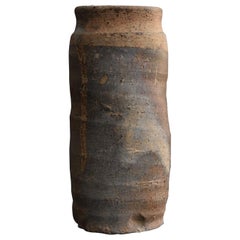
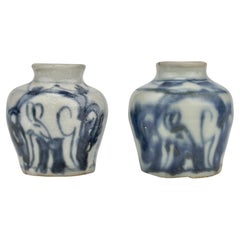
Antique Vases in Southern China / Small Vases / 16th to 17th Centuries
Located in Sammu-shi, Chiba
It is believed that pottery baked in southern China in the early Ming dynasty was imported into Japan. It is a small size. The upper part is slightly ...
Category

15th Century and Earlier Chinese Antique Ming Antiquities

Materials

Pottery

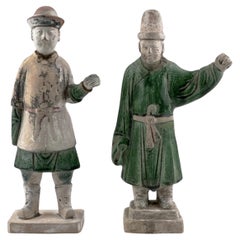
Two Figures of Attendants, Ming Period(1368-1644)
Located in seoul, KR
Statues of attendants crafted from terracotta, featuring glazes in green, Set on rectangular bases. Period: Ming Dynasty Medium: Glazed Pottery Type: Figure Condition : Excellent(It has soil on it, which is presumed to be evidence of excavation) Provenance : Acquired in late 1990s from Hongkong Reference : 1) Indianapolis Museum of Art - Dinastia ming, figure maschili, 1368-1644 (Type : Closely related) 2) V&A Museum - Accession number FE.295:1, 2-2005 (Type : Closely related) 3) Sotheby's 01 May 2007 - The Collection Of Paul Otto Taubert & Jewellery And Decorative Arts - Lot 233 (Price range : 5,000 - 7,000 AUD / Type : Closely related) 4) Asian Art Museum, San Francisco - Object number B60P1631 - Standing Man Tomb Figure * Ming Dynasty Glazed Pottery Figures Ming Dynasty glazed pottery figures are renowned for their bold color palette, intricate detailing, and lifelike forms, distinguishing them from earlier traditions. These figures, which depict officials, warriors, animals, and mythical creatures, are characterized by high-gloss lead-based glazes in green, amber, ochre, and sancai (three-color) combinations. The thickly applied glaze pools in recesses, creating depth and enhancing sculptural details. With dynamic postures, expressive facial features, and meticulously rendered drapery, these figures reflect the period’s advancement in ceramic craftsmanship, offering a greater sense of movement and realism compared to the rigid and stylized forms of earlier dynasties. A defining characteristic of Ming glazed pottery is its elaborate surface detailing, often achieved through raised relief elements and contrasting glazes. Equestrian figures, for example, feature carefully sculpted saddles, harnesses, and decorative embellishments, while human figures are adorned with intricate robes and headdresses. The large scale of these tomb figures, often more imposing than those from previous periods, underscores the increasing importance of funerary art during the Ming era. Unlike later Qing Dynasty figures...
Category

15th Century and Earlier Hong Kong Antique Ming Antiquities

Materials

Pottery

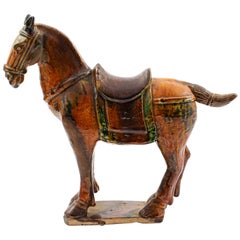
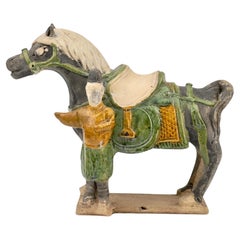
Late Ming Era Documented Glazed Pottery Horse
Located in Kastrup, DK
An elegant Chinese Ming dynasty pottery figurine depicting a horse in a standing pose with polychrome finish (aubergine, light brown and g...
Category

17th Century Chinese Antique Ming Antiquities

Materials

Pottery

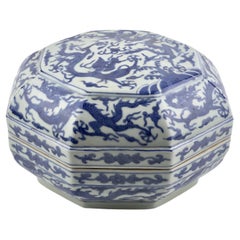
A Rare Blue And White Octagonal Box And Cover, Ming Dynasty Wanli Six-Character
Located in seoul, KR
Numerous similar octagonal blue and white boxes with Wanli, Jiajing marks are housed in prestigious museum collections. An example in the Tokyo National Museum is featured in Illustr...
Category

16th Century Hong Kong Antique Ming Antiquities

Materials

Ceramic

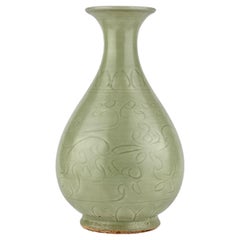
A Rare Longquan Celadon Peony Vase Yuan-Ming Dynasty
Located in seoul, KR
This vase features a traditional vase coated with a clear and rich green celadon glaze. A fine network of crazing covers the surface. The neck is adorned with raised vine motifs, whi...
Category

15th Century and Earlier East Asian Antique Ming Antiquities

Materials

Celadon

Small Celadon Chrysanthemum Dish, Five Dynasties/Song Dynasty
Located in seoul, KR
Potted with the fluted sides rising from a recessed base, carved to the interior with Chrysanthemum, covered overall with a grayish-green glaze, save for a ring to the underside left unglazed to reveal the gray stoneware...
Category

15th Century and Earlier Hong Kong Antique Ming Antiquities

Materials

Celadon

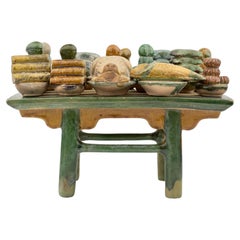
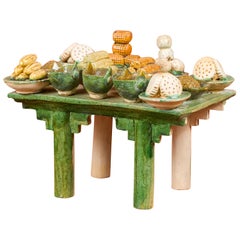
Green and Ochre Glazed Altar Table with Offerings, Ming Dynasty, 15~16th Century
Located in seoul, KR
The table bearing pig head, rice cakes, dishes of meat, fish and fruit. Known as Mingqi, these terracotta models were customarily included in Chinese burial practices, particularly among the affluent, to aid the deceased in their journey through the afterlife. This tradition extends back to the Neolithic Period. A unique terracotta funeral table...
Category

15th Century and Earlier Hong Kong Antique Ming Antiquities

Materials

Pottery

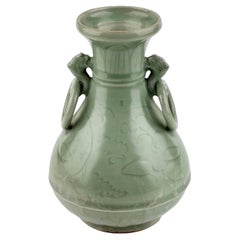
Carved Longquan Celadon Vase, Yuan-Ming Dynasty
Located in seoul, KR
A graceful baluster form with a flared mouth, a rounded body, and a slightly raised foot. The vase features two intricate handles in the shape of animal figures holding large looped ...
Category

15th Century and Earlier Hong Kong Antique Ming Antiquities

Materials

Celadon

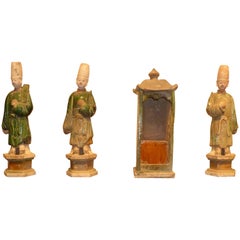
Set of Refine Ming Dynasty Green Glazed Attendants and a Sedan Chair
Located in Greenwich, CT
A set of very refined green glazed attendants and one sedan chair, each with benevolent facial expression, beautiful colors and lines, Ming dynasty 1368-1644. Three glazed attendants...
Category

15th Century and Earlier Chinese Antique Ming Antiquities

Materials

Pottery

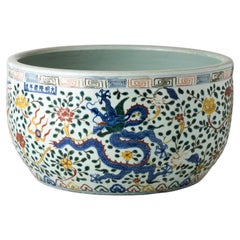
A Rare Large Wucai Dragons and Phoenix Jar, Ming dynasty Longqing Emperor
Located in seoul, KR
The blue dragon and the red dragon are depicted in dynamic postures, each extending its claws to grasp a ruyi pearl (如意珠). The phoenix is adorned with flowing feathers and delicate c...
Category

16th Century Hong Kong Antique Ming Antiquities

Materials

Ceramic

A Large Carved Longquan Celadon Yuhuchunping, Yuan-Ming Dynasty
Located in seoul, KR
* DDP Seoul, South Korea (Incoterms) – Seller is responsible for all duties, taxes, and customs clearance. The bulbous body is adorned with elegantly carved floral motifs, with inte...
Category

15th Century and Earlier East Asian Antique Ming Antiquities

Materials

Celadon

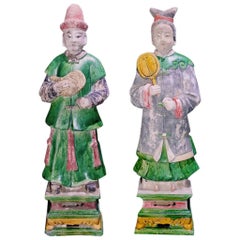
Magnificent Court Attendants in Terracotta - Ming Dynasty, China 1368-1644 AD TL
Located in San Pedro Garza Garcia, Nuevo Leon
A magnificent pair of male and female courtiers from the Ming Dynasty (1368-1644 CE) in excellent condition. They are wearing traditional Daopao robes in green and black garments wit...
Category

15th Century and Earlier Chinese Antique Ming Antiquities

Materials

Terracotta

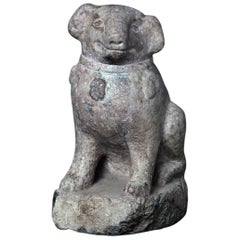
Important Ancient Chinese Effigy Pug Dog, Ming Dynasty 1368-1644
Located in South Burlington, VT
China, a carving of a canine “Pug”, Ming Dynasty, 1368-1644 CE Dimensions: 38 cm, 15” High Photographs taken indoors and out of doors for your viewing pleasure. The hand carved limestone beast shown on its haunches with naturalistic joyful expression and a well defined compact head, ears, noes, eyes, feet, and tail parted to one side on reverse with distinctive collar ornament seated four square on a thick base all-over showing a weathered surface from significant age. Formerly exhibited “Asia Week” New York City, Fuller Building, Hutton Gallery 2006. Provenance: ex collection luoyang, Henan Province, China. Includes custom display base as shown Catalog reference: 35 years collecting 35 treasures, Number 35, p.76 (photo) In ancient China, it is a well-known fact that several types of small dogs were bred and were favored pet gifts between emperors and kings including Lion Dogs, Pekingese and Lo-sze breeds. Some Lo-sze are pictured wearing collars with bells a frequent combination fancied by European royalty of the seventeenth and eighteenth centuries. Lo-sze or pugs were prized for their compact body, good bones, flat face, square jaw, short coat, curled tail, side set back ears, and temperate disposition. History: Placing stone animals in important tombs can be traced back at least to the Qin Dynasty (221-206 BCE), some two thousand years ago. In ancient times, stone animals and human figures placed before imperial tombs symbolized royal power and privilege in addition to decorative functions. The first Ming tomb...
Category

15th Century and Earlier Chinese Antique Ming Antiquities

Materials

Limestone

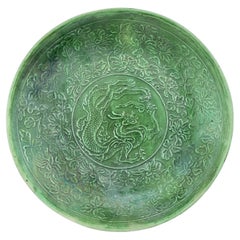
A Rare Dingyao Green-Glazed Dragon Dish, Liao-Song Dynasty
Located in seoul, KR
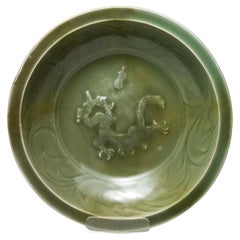
This dish is covered in a rich green glaze, with a central medallion depicting a sinuous dragon in high relief, surrounded by a continuous band of floral scrolls. The dragon’s scales...
Category

15th Century and Earlier Hong Kong Antique Ming Antiquities

Materials

Ceramic, Stoneware

A Longquan Celadon-Glazed Dragon Dish, Yuan Dynasty
Located in seoul, KR
The dish is decorated to the centre with a moulded appliqué dragon chasing the flaming pearl surrounded by a carved stylised foliage band at the cavetto. The moulded fluted exterior ...
Category

15th Century and Earlier Hong Kong Antique Ming Antiquities

Materials

Celadon

Rare Annamese Stoneware with underglaze Blue and Painted Green, 15-16th Century
Located in seoul, KR
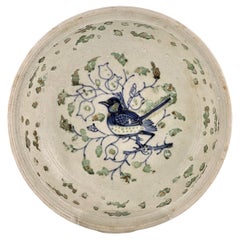
A bird on a tree. Stoneware with underglaze blue and painted green. The leaves were creatively expressed with green-glaze. The use of green overpainting, a distinctive element in Annamese ceramics, parallels similar examples documented in The Age of Discovery: Asian Ceramics Found Along the Maritime Silk Road, particularly on pages 59, 64, and 66 of the Annamese ship catalog. Such pieces were widely traded along the Maritime Silk Road, showcasing the rich cultural exchange between Vietnam and other regions. Dates : 15th century Le Dynasty Region : North Annam, Vietnam Type : Dish Found/Acquired : Southeast Asia , South China Sea, Hoi An Ship Reference : Double checked with reference to the original catalogue 1) Butterfield Treasures Hoi An Hoard Auction Catalogs / San Francisco Butterfields 2000 2) Asian Ceramic Found along Maritime Silk Route / National Maritime Museum of Korea * Vietnamese trade ceramics Around the mid-14th century, Vietnam developed its ceramics production technology by producing blue and white porcelain, and began to export it overseas. During this period, China Ming Dynasty implemented a policy of lifting the ban from 1371 to 1657 and restricted foreign trade. This served as a good opportunity in the trade history of Vietnamese ceramics, and ceramic exports...
Category

15th Century and Earlier Vietnamese Antique Ming Antiquities

Materials

Stoneware

Pair of Bowls from Shipwreck, Late Ming Era(16-17th century)
Located in seoul, KR
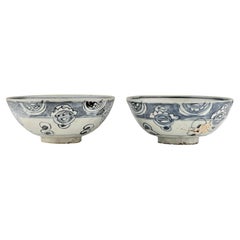
These shallow bowls feature stylized floral and wave motifs rendered in fluid cobalt brushwork beneath a clear glaze. The slightly everted rims and neatly cut foot rings are characteristic of export wares produced in southern kilns during the Ming period. Marine encrustations and glaze degradation attest to prolonged submersion in a maritime context, offering valuable insight into historical trade routes and overseas demand for Chinese ceramics. Period: Late Ming Dynasty Type: Bowl Medium : Blue and White Condition : Good(Marine encrustation is attached on one bowl and it's crack) Provenance : Presumably from the shipwrecked Binh Thuan...
Category

17th Century East Asian Antique Ming Antiquities

Materials

Ceramic

Ming Period Large Pottery Horse with Saddle (15-16th Century)
Located in seoul, KR
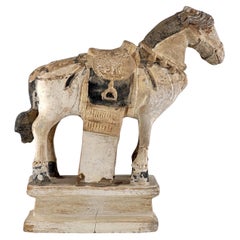
This Ming Dynasty painted pottery horse is depicted standing on a tiered rectangular pedestal. The horse has a well-proportioned body, with sturdy legs and a slightly arched neck. The eyes and muzzle are subtly outlined and incised. The mane is sculpted with deep, parallel grooves. The tail is long and slightly curved left, extending downward. The saddle is prominently featured at the center of the horse’s back, detailed with a raised, rounded seat and an attached stirrup hanging down one side. The saddlecloth is textured with a crosshatch pattern, bordered by a row of carved fringe-like elements. The horse's legs display subtle musculature, and the hooves are clearly defined, with black pigment accentuating their edges. The original painted pigments, including white, black, and ochre, are still visible, though faded in some areas. The black pigment highlights the mane, tail, and parts of the bridle, while the ochre tones accentuate the saddle and decorative elements. Period: Ming Dynasty Medium: Green, black, and ochre glazed Pottery Type: Figure Provenance : Acquired in late 1990s from Hongkong Reference : Asian Civilisations Museum - Accession No. C-1384 / 1994-00441 - Ming Dynasty Figure of Horse (Type : Closely Related) * Ming Dynasty Glazed Pottery Figures Ming Dynasty glazed pottery figures are renowned for their bold color palette, intricate detailing, and lifelike forms, distinguishing them from earlier traditions. These figures, which depict officials, warriors, animals, and mythical creatures, are characterized by high-gloss lead-based glazes in green, amber, ochre, and sancai (three-color) combinations. The thickly applied glaze pools in recesses, creating depth and enhancing sculptural details. With dynamic postures, expressive facial features, and meticulously rendered drapery, these figures reflect the period’s advancement in ceramic craftsmanship, offering a greater sense of movement and realism compared to the rigid and stylized forms of earlier dynasties. A defining characteristic of Ming glazed pottery is its elaborate surface detailing, often achieved through raised relief elements and contrasting glazes. Equestrian figures, for example, feature carefully sculpted saddles, harnesses, and decorative embellishments, while human figures are adorned with intricate robes and headdresses. The large scale of these tomb figures, often more imposing than those from previous periods, underscores the increasing importance of funerary art during the Ming era. Unlike later Qing Dynasty figures...
Category

15th Century and Earlier Hong Kong Antique Ming Antiquities

Materials

Pottery

Annamese Stoneware Miniature Vase and Jar, Hoi An Hoard, Late 15th C, Le Dynasty
Located in seoul, KR
These ceramics feature finely detailed depictions of birds and cloud motifs using underglaze blue, showcasing an elegant and refined design. The vase portrays a bird in mid-flight, w...
Category

15th Century and Earlier Vietnamese Antique Ming Antiquities

Materials

Stoneware

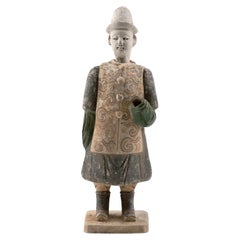
Rare Figure of an Attendant Wearing Swirling Vest, Ming Dynasty(1368-1644)
Located in seoul, KR
Statues of attendant crafted from terracotta, dressed in a black coat-like garment with a vest adorned with swirling patterns. Set on rectangular bases. Period: Ming Dynasty Medium...
Category

15th Century and Earlier Hong Kong Antique Ming Antiquities

Materials

Pottery

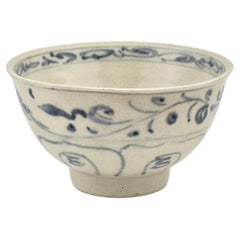
Vietnamese Blue And White Bowl Circa 15th Century
Located in seoul, KR
The artwork, with its foliage and floral motifs, suggests a connection to the natural world—a common theme in Vietnamese art. Such items were highly traded, and their recovery from shipwrecks helps us understand the extent of maritime commerce in Southeast Asia during the 15th and 16th centuries. This piece embodies the craftsmanship and aesthetic values of the period, providing insights into the cultural and economic contexts of its time. Dates : 15th century Le Dynasty Region : North Annam Type : Bowl Found/Acquired : Southeast Asia , South China Sea, Hoi An Ship Reference : Double checked with reference to the original catalogue Butterfield Treasures Hoi An Hoard Auction Catalogs / San Francisco Butterfields 2000 * Vietnamese trade ceramics Around the mid-14th century, Vietnam developed its ceramics production technology by producing blue and white porcelain, and began to export it overseas. During this period, China Ming Dynasty implemented a policy of lifting the ban from 1371 to 1657 and restricted foreign trade. This served as a good opportunity in the trade history of Vietnamese ceramics...
Category

15th Century and Earlier Chinese Antique Ming Antiquities

Materials

Ceramic, Stoneware

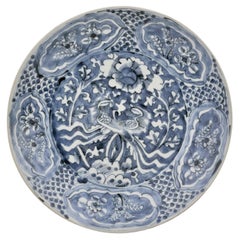
Chinese Swatow Blue and White Ceramic Dish, Late Ming Dynasty
Located in seoul, KR
Famous late ming dynasty chinese blue and white porcelain plate, double phoenix, from the shipwrecked binh thuan Period: Ming Dyn...
Category

16th Century Vietnamese Antique Ming Antiquities

Materials

Ceramic

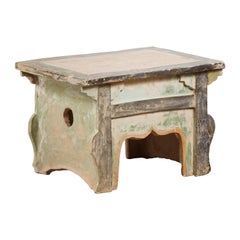
Petite Chinese Ming Dynasty Period Glazed Pedestal with Polychrome Finish
Located in Yonkers, NY
A petite Chinese Ming Dynasty glazed pedestal from the 15th or 16th century with polychrome finish. Crafted in China during the prestigious Ming Dynasty, this petite pedestal table...
Category

16th Century Chinese Antique Ming Antiquities

Materials

Ceramic

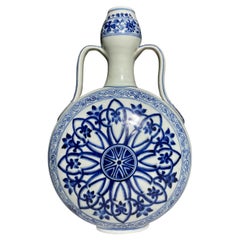
Chinese Antique Gourd-Shaped Blue and White Porcelain Vase, Ming Period
Located in Chuo-ku, Tokyo
The bottom sign tells this vase was made in the era of Xuande emperor. The characteristic Arabic pattern is Influenced by the Silk Road trade in Ming p...
Category

17th Century Chinese Antique Ming Antiquities

Materials

Earthenware

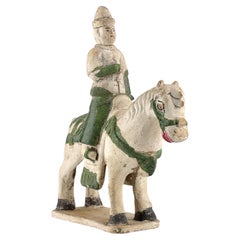
Green Glazed Horse and Rider, Ming period(15-16th Century)
Located in seoul, KR
Statues of East Asian horse rider, featuring glazes in green, are set on rectangular base. Period: Ming Dynasty Medium: Green-glazed Pottery Type: Figure Condition : Good Provenance : Acquired in early 2000s from Hongkong * Ming Dynasty Glazed Pottery Figures Ming Dynasty glazed pottery figures are renowned for their bold color palette, intricate detailing, and lifelike forms, distinguishing them from earlier traditions. These figures, which depict officials, warriors, animals, and mythical creatures, are characterized by high-gloss lead-based glazes in green, amber, ochre, and sancai (three-color) combinations. The thickly applied glaze pools in recesses, creating depth and enhancing sculptural details. With dynamic postures, expressive facial features, and meticulously rendered drapery, these figures reflect the period’s advancement in ceramic craftsmanship, offering a greater sense of movement and realism compared to the rigid and stylized forms of earlier dynasties. A defining characteristic of Ming glazed...
Category

15th Century and Earlier Hong Kong Antique Ming Antiquities

Materials

Pottery

Ming Dynasty Green-Glazed Horse and Rider (15-16th Century)
Located in seoul, KR
Statues of Chinese horse and rider, featuring glazes in green, amber, are set on rectangular bases. Period: Ming Dynasty Medium: Green-glaze...
Category

15th Century and Earlier Hong Kong Antique Ming Antiquities

Materials

Pottery

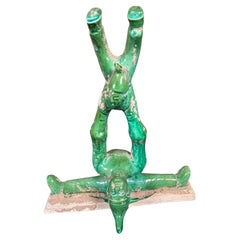
Chinese Ancient Acrobat Entertainers Collection, Ming Dynasty 1368-1644
Located in South Burlington, VT
Ancient Chinese collection of twelve (12) acrobatic entertainers each performing a unique twisting profile , some with with cymbal and drum attributes, Ming Dynasty 1368-1644. Unmi...
Category

15th Century and Earlier Chinese Antique Ming Antiquities

Materials

Ceramic, Pottery

Longquan Celadon Figurine, Ming Dynasty (1368-1644)
Located in seoul, KR
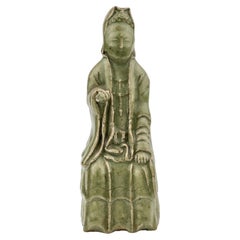
This sculpture is a Longquan celadon from the Ming Dynasty, renowned for its rich and jade-like green glaze. The figurine is likely a representation of a Buddhist deity or a revered scholar, showcasing the calm aesthetic expressions and graceful contours prevalent during the era. The spectrum of celadon glaze ranges from a dense grey stoneware to a nearly white porcelain texture, with unglazed parts revealing a terracotta brown upon firing. Such pieces were often part of household altars, reflecting the era's spiritual devotion. This artifact would be a treasured exhibit in any museum's Asian art collection, symbolizing both religious reverence and artistic excellence. Period: Ming Dynasty (1368-1644) Region: Longquan, China Medium: Stoneware - Celadon glazed, with a range from heavy grey to almost white porcelain-like material Type: Sculpture Height : 24.5 cm Provenance : Acquired in 1999, Hongkong * Ming Dynasty Longquan Celadon Longquan celadon from the Ming Dynasty typically exhibits a more robust and heavier stoneware body compared to its Song Dynasty predecessors. The Ming era saw an evolution in celadon glaze, achieving a wider spectrum of green hues, from olive to bluish-greens. Ming celadons...
Category

15th Century and Earlier Hong Kong Antique Ming Antiquities

Materials

Celadon

Pomegranate Shaped Copper Red Glazed Vase
Located in seoul, KR
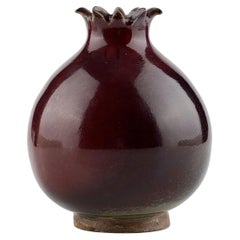
This piece is a small ceramic vessel with a distinctive silhouette modeled after a pomegranate, notable for its full, well-balanced curves. The mouth, reminiscent of the fruit’s caly...
Category

16th Century Hong Kong Antique Ming Antiquities

Materials

Copper

Ming Dynasty Two Green Glazed Horses and Riders (15-16th Century)
Located in seoul, KR
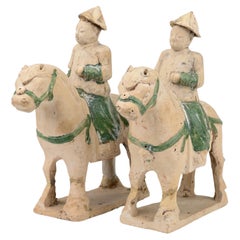
Statues of Chinese horse riders, featuring glazes in green, are set on rectangular bases. Period: Ming Dynasty Medium: Green-glazed Pottery Typ...
Category

15th Century and Earlier Hong Kong Antique Ming Antiquities

Materials

Pottery

Ming Period Large Pottery Horse with Saddle (15-16th Century)
Located in seoul, KR
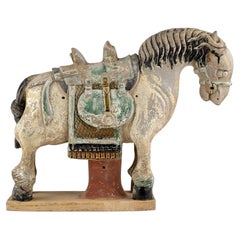
The figure stands on a rectangular base. The horse is depicted in a poised stance, with strong, muscular legs and a slightly bowed head. The mane is carefully sculpted with deep, flowing grooves, adding a dynamic texture to the piece. The head features expressive details, including a well-defined muzzle, flared nostrils. The bridle and harness are delicately painted in faded green, contrasting against the creamy beige body. The saddle is adorned with intricate details, including decorative tassels and a textured pattern, indicative of the elaborate tack used in the Ming period. Traces of original polychrome pigments in green, black, and ochre remain on the surface, hinting at the sculpture’s once-vibrant appearance. The weathered patina and areas of flaking paint add to its historical authenticity, reflecting centuries of age. The overall craftsmanship and detailing exemplify the Ming Dynasty’s refined ceramic artistry, making this piece a remarkable representation of of asian culture during this period. Period: Ming Dynasty Medium: Green, black, and ochre glazed Pottery Type: Figure Condition : Good(chips on the upper saddle.) Provenance : Acquired in late 1990s from Hongkong Reference : Asian Civilisations Museum - Accession No. C-1384 / 1994-00441 - Ming Dynasty Figure of Horse (Type : Closely Related) * Ming Dynasty Glazed Pottery Figures Ming Dynasty glazed pottery figures are renowned for their bold color palette, intricate detailing, and lifelike forms, distinguishing them from earlier traditions. These figures, which depict officials, warriors, animals, and mythical creatures, are characterized by high-gloss lead-based glazes in green, amber, ochre, and sancai (three-color) combinations. The thickly applied glaze pools in recesses, creating depth and enhancing sculptural details. With dynamic postures, expressive facial features, and meticulously rendered drapery, these figures reflect the period’s advancement in ceramic craftsmanship, offering a greater sense of movement and realism compared to the rigid and stylized forms of earlier dynasties. A defining characteristic of Ming glazed pottery is its elaborate surface detailing, often achieved through raised relief elements and contrasting glazes. Equestrian figures, for example, feature carefully sculpted saddles, harnesses, and decorative embellishments, while human figures are adorned with intricate robes and headdresses. The large scale of these tomb figures, often more imposing than those from previous periods, underscores the increasing importance of funerary art during the Ming era. Unlike later Qing Dynasty figures...
Category

15th Century and Earlier Hong Kong Antique Ming Antiquities

Materials

Pottery

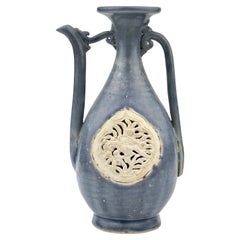
A Rare Annamese Blue and white Ewer, Circa 15th century
Located in seoul, KR
Stoneware painted with underglaze cobalt blue and remnants of overglaze enamel. Valuable piece housed in a few major museum collections in the United States. Year/Period : 15th century Region : North Vietnam, Vietnam Type : Ewer Found/Acquired : Southeast Asia , South China Sea, Hoi An Ship Reference : 1) Phoenix Art Museum - OBJECT NUMBER 2000.108.1 2) Asian Art Museum of San Francisco - Annamese Collection 3) Butterfield Treasures Hoi An Hoard Auction Catalogs / San Francisco Butterfields 2000 * Vietnamese trade ceramics Around the mid-14th century, Vietnam developed its ceramics production technology by producing blue and white porcelain, and began to export it overseas. During this period, China Ming Dynasty implemented a policy of lifting the ban from 1371 to 1657 and restricted foreign trade. This served as a good opportunity in the trade history of Vietnamese ceramics, and ceramic exports...
Category

15th Century and Earlier Vietnamese Antique Ming Antiquities

Materials

Stoneware

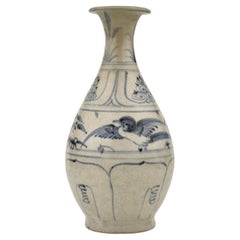
An Annamese stoneware with cobalt blue, Hoi An Hoard, Late 15th century
Located in seoul, KR
At the center of the vase, a bird is depicted with clean yet detailed lines, capturing the moment mid-flight with a sense of dynamic energy. The artist skillfully conveys the bird’s vitality with minimal strokes, creating the impression that it could soar into the sky at any moment. Though there are no explicit branches or leaves, the flowing curves of the background subtly connect the bird with the natural world. The simplicity of the lines creates a harmonious relationship between the bird and its environment, reflecting the artist’s ability to evoke nature without relying on intricate details. The neck of the vase is adorned with elegant plant motifs, where stems and leaves stretch upward, complementing the overall shape of the vase. These motifs, while simple, add sophistication and enhance the vase’s graceful form. At the base, repeating geometric patterns contribute to the sense of balance and stability. These patterns not only ground the piece but also serve as decorative elements, completing the vase’s aesthetic unity. Dates : 15th century Le Dynasty Region : North Annam, Vietnam Type : Yuhuchun Vase Found/Acquired : Southeast Asia , South China Sea, Hoi An Ship Reference : 1) Seattle Art Museum - Gift of Mary and Cheney Cowles, 2000.125. 2) Butterfield Treasures Hoi An Hoard Auction Catalogs / San Francisco Butterfields 2000 3) Asian art museum, San Francisco * Vietnamese trade ceramic...
Category

15th Century and Earlier Vietnamese Antique Ming Antiquities

Materials

Stoneware

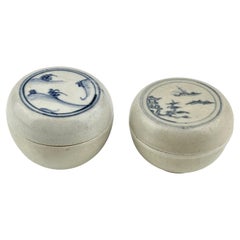
Two Annamese Miniature Covered Boxes with Scenary Motif, 15th century, Le Dynast
Located in seoul, KR
Vietnamese covered boxes with representative scenary designs. Both are made of cream-colored base and blue designs, typical of Annamese pottery. These shared characteristics highligh...
Category

15th Century and Earlier Vietnamese Antique Ming Antiquities

Materials

Stoneware

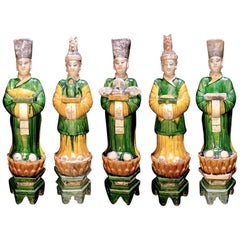
Superb Set of 5 Elegant Court Attendants, Ming Dynasty, 1368-1644 AD TL Tested
Located in San Pedro Garza Garcia, Nuevo Leon
A stunning set of 5 graceful terracotta figurines from the Ming Dynasty '1368-1644' AD. These elegant attendants are standing on a yellow glazed lotus flower over a high hexagonal green plinth and wear fine robes in matching green and yellow glazes. The unglazed areas have pigmented colors in red, black and white. Each is carrying essential offerings for the royal family. The head is detachable as often seen on the larger figures from this period. Meticulously detailed facial expressions have been hand-painted. Condition: Mint, finely preserved glaze and pigment, undamaged and no repairs. Provenance: Ex. Danish Collection. This set is guaranteed authentic and comes with a Certificate of Authenticity and TL Test from Laboratory Kotalla in Germany (The Oldest Thermoluminescence Testing Laboratory in the World). Dimensions: Average 54 H cms Burial figurines of graceful dancers, mystical beasts, and everyday objects reveal both how people in early China approached death and how they lived. Since people viewed the afterlife as an extension of worldly life, these figurines, called mingqi, sometimes referred as “spirit utensils” or “vessels of ghosts” disclose details of routine existence and provide insights into belief systems over a thousand-year period. The Ming dynasty was the ruling dynasty of China – then known as the Empire of the Great Ming – for 276 years (1368–1644 AD). Founded by Chu Yuan-chang, the rebel leader that was successful in removing the mongols from the throne. Chinese control was re-asserted in China and eastern Asia. Literature became more important, schools were created, and the justice system was reformed. The Ming dynasty is described by some as "one of the greatest eras of orderly government and social stability in human history,” was the last imperial dynasty in China ruled by ethnic Han Chinese. The practice of burying ceramic objects with the deceased went into decline from the 10th to the 14th Century AD. There was a revival in placing miniature representations of glazed terracotta objects such a furniture, food offerings, horses, miniature statues...
Category

15th Century and Earlier Chinese Antique Ming Antiquities

Materials

Terracotta

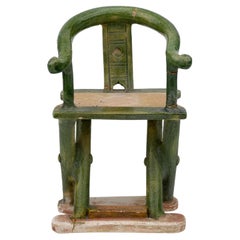
16th Century Pottery Model of a Folding Chair, Ming dynasty
Located in seoul, KR
This piece is an example of Mingqi, items specifically crafted for burial to accompany the deceased into the afterlife. The terracotta army is the most renowned example of such buria...
Category

16th Century Hong Kong Antique Ming Antiquities

Materials

Pottery

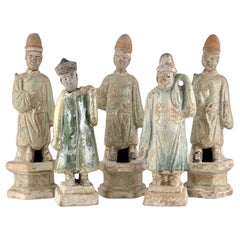
Five Green Glazed Pottery Attendant Figures, Ming Dynasty(1368-1644)
Located in seoul, KR
The three figurines in the back exhibit the typical form of attendants, wearing conical red hats and adopting poses where their right hands are either held in front of their chests o...
Category

15th Century and Earlier Hong Kong Antique Ming Antiquities

Materials

Pottery

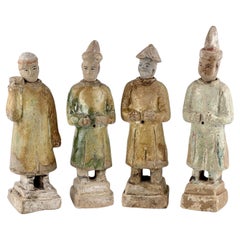
Four Green Glazed Pottery Attendant Figures, Ming Dynasty(1368-1644)
Located in seoul, KR
The first figure wears a short cap and takes a posture as if carrying something on the shoulder, possibly symbolizing a servant or a messenger. The second figure wears a tall hat and...
Category

15th Century and Earlier Hong Kong Antique Ming Antiquities

Materials

Pottery

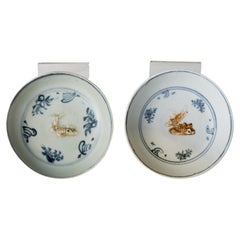
Moulded Goldfish Blue and White Dishes, Ming Dynasty
Located in seoul, KR
Exquisitely decorated set of plates, dating back to around 1500, from the Hongzhi or Zhengde period. Intricately adorned with a raised, moulded goldfish design. The goldfish, painted in a orange-red enamel, are set amidst water plants depicted in rich cobalt blue. These plates enjoyed widespread popularity, not only in the local markets of China but also overseas in countries. This style of plate played a significant role in the daily life of the Sengoku period in Japan, as evidenced by several similar flat bowls excavated from the Ichijodani Asakura Ruins in Fukui Prefecture, Japan, along with other ceramic artifacts...
Category

16th Century Indonesian Antique Ming Antiquities

Materials

Ceramic

Pair of Small Jarlet with arabesque design, Late Ming Era(16-17th century)
Located in seoul, KR
Pair of jarlet from the late Ming dynasty cargo. An identical piece is included on page 145 of the Bin Thuan catalog titled 'The Age of Discovery: Asian Cera...
Category

16th Century Vietnamese Antique Ming Antiquities

Materials

Ceramic, Porcelain

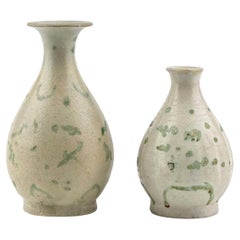
Two Annamese Small Yuhuchunping, 15th century, Le Dynasty
Located in seoul, KR
These 15th-century Annamese ceramics from Le dynasty, are notable for their rarity and refined design. The Yuhuchunping vases, with their elegant pear-shaped bodies and delicate blue...
Category

15th Century and Earlier Vietnamese Antique Ming Antiquities

Materials

Ceramic, Stoneware

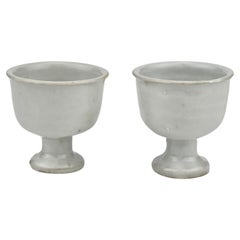
Pair of Small White porcelain Cup, Late Ming Era(16-17th Century)
Located in seoul, KR
Teacup from the late Ming dynasty shipwreck. An identical piece is included on page 141 of the Bin Thuan catalog titled Asian Ceramic Found along Maritime Si...
Category

17th Century Vietnamese Antique Ming Antiquities

Materials

Ceramic, Porcelain

6 Elegant Ming Dynasty Court Attendants in Glazed Terracotta, China 1368-1644 AD
Located in San Pedro Garza Garcia, Nuevo Leon
A fine set of a six court attendants as in the Forbidden City of Beijing, elegantly dressed in a Green & Red Daopao – a traditional men’s formal attire from the Ming Dynasty dated 1368-1643 A.D. – with glazed robes and Red Pigment remains in their hat and belts. They stand in an honorary posture atop a red plinth, some with orifices in their hands, where spirit objects were placed to comfort or satisfy the deceased. The heads are detachable, as often seen on the larger figures from this period. They are accompanied by a Certificate of Authenticity, and Certificate of Expertise by Jean-Yves Nathan - a leading authority specialized in Far East Archaeology from the CEDEA (The European Confederation of Art Experts). Burial figurines of graceful dancers, mystical beasts, and everyday objects reveal both how people in early China approached death and how they lived. Since people viewed the afterlife as an extension of worldly life, these figurines, called mingqi, sometimes referred as “spirit utensils” or “vessels of ghosts” disclose details of routine existence and provide insights into belief systems over a thousand-year period. The Ming dynasty was the ruling dynasty of China – then known as the Empire of the Great Ming – for 276 years (1368–1644 AD). Founded by Chu Yuan-chang, the rebel leader that was successful in removing the mongols from the throne. Chinese control was re-asserted in China and eastern Asia. Literature became more important, schools were created, and the justice system was reformed. The Ming dynasty is described by some as "one of the greatest eras of orderly government and social stability in human history,” was the last imperial dynasty in China ruled by ethnic Han Chinese. The practice of burying ceramic objects with the deceased went into decline from the 10th to the 14th Century AD. There was a revival in placing miniature representations of glazed terracotta objects such a furniture, food offerings, horses, miniature statues...
Category

15th Century and Earlier Chinese Antique Ming Antiquities

Materials

Terracotta

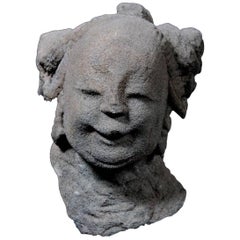
Ming Dynasty Celestial Deity Head Carved in Stone - China 1368-1644 AD
Located in San Pedro Garza Garcia, Nuevo Leon
Wonderful celestial deity head with a jovial expression in stone with a finely engraved cap. It is mounted on a custom lucite base. This piece is accompanied by a Certificate of Authenticity, and Certificate of Expertise by Jean-Yves Nathan - Specialist in Asian Arts for the CEDEA (The European Confederation of Art Experts). The Ming dynasty was the ruling dynasty of China – then known as the Empire of the Great Ming...
Category

15th Century and Earlier Chinese Antique Ming Antiquities

Materials

Stone

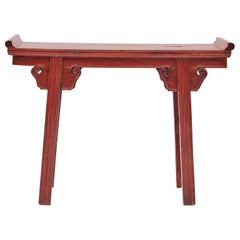
19th Century Alter Table in Peach wood China
Located in Kastrup, DK
Small alter / communion table in peach wood from the Zhejiang Province of China. Original condition with red lacquer with age-related patina. Ming sty...
Category

Mid-19th Century Chinese Antique Ming Antiquities

Materials

Wood

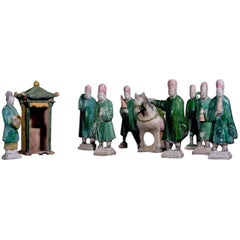
Impressive Terracotta Funerary Procession - Ming Dynasty, China 1368-1644 AD
Located in San Pedro Garza Garcia, Nuevo Leon
Impressive Funeral Ensamble of 10 Terracotta Glazed Figures in green and caramel colors depicting a votive procession with a palanquin, his four carriers, a horse, a stableman, two musicians, and an offering carrier. This ensemble is accompanied by a Certificate of Authenticity, and Certificate of Expertise by Jean-Yves Nathan - Specialist in Asian Arts for the CEDEA (The European Confederation of Art Experts). Burial figurines of graceful dancers, mystical beasts, and everyday objects reveal both how people in early China approached death and how they lived. Since people viewed the afterlife as an extension of worldly life, these figurines, called mingqi, sometimes referred as “spirit utensils” or “vessels of ghosts” disclose details of routine existence and provide insights into belief systems over a thousand-year period. The Ming dynasty was the ruling dynasty of China – then known as the Empire of the Great Ming – for 276 years (1368–1644 AD). Founded by Chu Yuan-chang, the rebel leader that was successful in removing the mongols from the throne. Chinese control was re-asserted in China and eastern Asia. Literature became more important, schools were created, and the justice system was reformed. The Ming dynasty is described by some as "one of the greatest eras of orderly government and social stability in human history,” was the last imperial dynasty in China ruled by ethnic Han Chinese. The practice of burying ceramic objects with the deceased went into decline from the 10th to the 14th Century AD. There was a revival in placing miniature representations of glazed terracotta objects such a furniture, food offerings, horses, miniature statues...
Category

15th Century and Earlier Chinese Antique Ming Antiquities

Materials

Terracotta

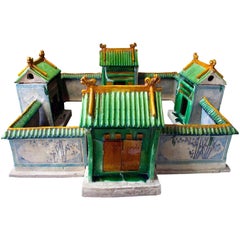
Ming Dynasty Chinese Countryside Villa - TL Tested
Located in San Pedro Garza Garcia, Nuevo Leon
Extremely rare Chinese model of a countryside villa for the royal courtiers and ministries of the Ming Dynasty -1368-1644 AD- showing three guest houses and one main entry. The villa is surrounded by a cuadrangular wall painted with bucolic scenes of garden, mountains, and bamboo forests. The roof tiles are glazed in green enamel with yellow finials – as the ones in the forbidden city – typical from the Ming epoch. Truly a museum piece. The doors swivel and are painted in ochre. State of preservation: impeccable mint condition with original paintings, all of the original parts are complete, except for one house which is missing part of the plinth (broken during transport). Each part has been tested for authenticity, consisting of eight separate TL tests...
Category

15th Century and Earlier Chinese Antique Ming Antiquities

Materials

Terracotta

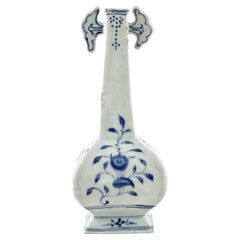
Four-Sided Blue and White Vase with Floral Scrolls
Located in seoul, KR
This vase has a four-lobed form that creates a stable, well-balanced profile from shoulder to foot. Its underglaze-blue vegetal scrolls are drawn with fluid, controlled lines, the le...
Category

15th Century and Earlier East Asian Antique Ming Antiquities

Materials

Porcelain

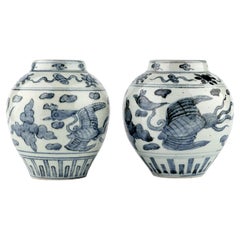
Blue and White Jars with Phoenix amid Clouds, Mid-Late Ming Dynasty
Located in seoul, KR
This blue and white porcelain jar was produced at a southern folk kiln (minyao) during the mid to late Ming dynasty. It features a well-balanced form with rounded shoulders, a short ...
Category

17th Century East Asian Antique Ming Antiquities

Materials

Ceramic

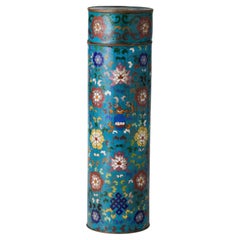
Cloisonné Enamel Vase, Ming-Qing Dynasty
Located in seoul, KR
This cylindrical cloisonné vessel is made with a brass body filled with turquoise-toned enamels that are fired to create a vivid, multi-colored surface. The exterior is densely decor...
Category

15th Century and Earlier East Asian Antique Ming Antiquities

Materials

Bronze, Enamel

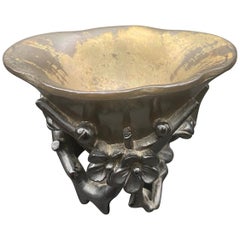
17th Century Ming Dynasty Chinese Zitan Libation Cup Silver Inlaid
Located in Brea, CA
17th century Ming dynasty Chinese Zitan libation cup silver inlaid, of deep oval form , the exterior carved in high relief and undercut around the sides and base with gnarled branche...
Category

Early 17th Century Chinese Antique Ming Antiquities

Materials

Wood

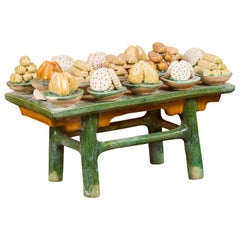
Ming Dynasty Glazed Terracotta Funeral Table Mingqi with Miniature Food Offering
Located in Yonkers, NY
A Ming dynasty period glazed terracotta funeral table mingqi from 15th-16th century with food in dishes. This rare Ming dynasty period glazed terracotta funeral table, dating from the 15th to 16th century, beautifully embodies the traditional Chinese practice of creating Mingqi—terracotta models meant to assist the deceased in the afterlife. This piece depicts a typical Chinese altar, adorned with green tempera glaze and meticulously crafted miniature foods, such as cakes and breads, representing offerings. The modeled and painted details give a glimpse into the customs of wealthy Chinese burials...
Category

16th Century Chinese Antique Ming Antiquities

Materials

Terracotta

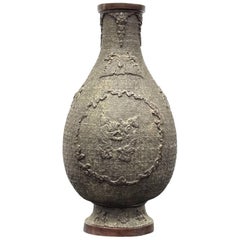
Large Bronze Vase Ming Dynasty Style Archaic Geometric Decoration 15th Century
Located in Taranto, IT
Large Vase In embossed Bronze with geometric decoration of Archaic inspiration , China, Ming Dynasty style 19th Century. In very good conservative condition, patina due to age . He...
Category

19th Century Chinese Antique Ming Antiquities

Materials

Bronze

Ming Dynasty 15th-16th Century Glazed Terracotta Funeral Table with Food Mingqi
Located in Yonkers, NY
A Ming dynasty period glazed terracotta funeral table mingqi from 15th-16th century with food and drinks. Created during the Ming Dynasty, this glazed terracotta funeral table, known...
Category

16th Century Chinese Antique Ming Antiquities

Materials

Terracotta

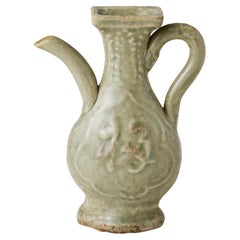
A Molded Longquan Celadon Fu Shou Ewer, Ming Dynasty
Located in seoul, KR
One side of the vase showcases a panel with the Shou character at its center, symbolizing longevity, while the opposite side displays the Fu character, signifying luck. The neck of the vase is adorned with leaves. There are similar types and decoration but varying in shape, resembling a pear, all from the same era and crafted in celadon, often referred to as 'fu shou' vases. Period: Yuan-Ming Dynasty (1271-1644) Region: Longquan, China Medium: Celadon Type: Ewer Provenance : Acquired in late 1990s from Hongkong Reference 1) British Museum - Museum number 1931,1118.5 (Type : Closely related) 2) Christies NEW YORK 24–25 MAR 2022 - Important Chinese Ceramics and Works of Art - Lot 1105 (Price realised : 9,450 USD / Type : Related) 3) Sotheby's New York 19 March 2024 - Chinese Art - Lot 172 (Price range : 15,000 USD - 20,000 USD / Type : Related) * Ming Dynasty Longquan Celadon Longquan celadon from the Ming Dynasty typically exhibits a more robust and heavier stoneware body compared to its Song Dynasty predecessors. The Ming era saw an evolution in celadon glaze, achieving a wider spectrum of green hues, from olive to bluish-greens. Ming celadons...
Category

15th Century and Earlier Hong Kong Antique Ming Antiquities

Materials

Celadon

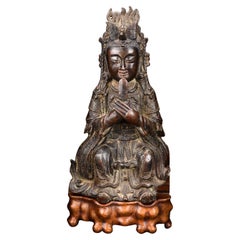
Bixia Yuanjun Figure of Bronze Dated Ming Dynasty, 1368-1644
Located in London, GB
Bixia Yuanjun figure of bronze dated Ming Dynasty 1368-1644. Base of hardwood. Height excluding base 26cm; Heigh including base 31cm. Condition: Corrosion on reverse/back; ...
Category

15th Century and Earlier Chinese Antique Ming Antiquities

Materials

Bronze

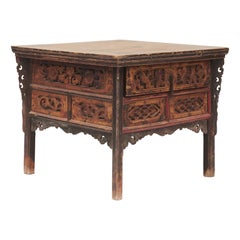
16th-17th Century Chinese Pine Center Table with Carvings and Decorations
Located in Kastrup, DK
16th-17th century center table from 'Shanxi Province, China with 1 drawer. Made of pine and with original polychrome lacquer. Original condition. Rare piece of furniture.
Category

17th Century Chinese Antique Ming Antiquities

Materials

Elm

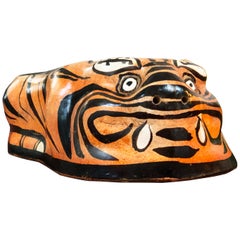
Jin Dynasty Cizhou Ware Crouching Tiger Pottery Pillow, 12th-century, China
Located in Brooklyn, NY
Chinese Jin Dynasty 12th Century Cizhou Ware Crouching Tiger Pottery Pillow .Tiger pillow, Jin dynasty, 12th century (circa 1150) The pillow is assembled ...
Category

15th Century and Earlier Chinese Antique Ming Antiquities

Materials

Ceramic

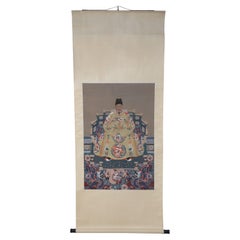
Chinese Ming Dynasty Style Paper and Silk King Portrait Hanging Scrolls
Located in Queens, NY
3 Chinese Ming Dynasty-style scroll wall hangings depicting a king seated on a chair draped in ornate cloth, a mushroom colored background and floral rug beneath him. The rest of th...
Category

20th Century Chinese Ming Antiquities

Materials

Wood

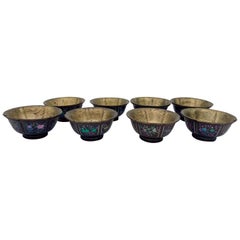
18th Century Set of 8 Chinese Silver Lacquer Bowls with Mother of Pearl Inlaid
Located in Brea, CA
A fine set of 8 pieces Chinese lacquered and mother of pearl inlaid bowls with silvered interiors from the 18th century Qing Dynast...
Category

Early 18th Century Chinese Antique Ming Antiquities

Materials

Lacquer

Ming antiquities for sale on 1stDibs.

Find a broad range of unique Ming antiquities for sale on 1stDibs. Many of these items were first offered in the Early 20th Century, but contemporary artisans have continued to produce works inspired by this style. If you’re looking to add vintage antiquities created in this style to your space, the works available on 1stDibs include asian art and furniture, tables, building and garden elements and other home furnishings, frequently crafted with ceramic, terracotta and other materials. If you’re shopping for used Ming antiquities made in a specific country, there are Asia, East Asia, and China pieces for sale on 1stDibs. It’s true that these talented designers have at times inspired knockoffs, but our experienced specialists have partnered with only top vetted sellers to offer authentic pieces that come with a buyer protection guarantee. Prices for antiquities differ depending upon multiple factors, including designer, materials, construction methods, condition and provenance. On 1stDibs, the price for these items starts at $700 and tops out at $88,880 while the average work can sell for $6,500.

Still Thinking About These?

All Recently Viewed