Ming Antiquities

MING STYLE

In what’s considered a golden age of Chinese furniture, Ming dynasty artisans produced expertly made designs that married elegance and function. Ming furniture was versatile, such as tables that doubled as writing desks and dining spaces. But it was also beautiful, enhancing a room with clean lines, soft curves and sophisticated decoration.

Dating from 1368 to 1644, the Ming dynasty was a vibrant time for international trade and culture. Especially for scholars and the wealthy, there was an emphasis on a home’s design to promote a good life. From large wardrobes to angular sofas, Ming-style furniture was defined by its joinery, which, instead of nails, involved meticulously designed interlocking elements of wood. This material was carefully selected and positioned to make the grain part of the design. The slow-growing huanghuali, a yellowish rosewood, was particularly valued for its bright color.

Although ornamentation was minimal, Ming dynasty furniture often featured carved or painted details of flowers, insects, dragons, fruits and other motifs. Chairs crafted for scholars could include calligraphic brush writing. As overseas trade expanded, techniques from the West, like cloisonné enamel painting, adorned table screens and other pieces.

Ming furniture influenced styles abroad such as Queen Anne in England and Hollywood Regency in the United States. The curved shape of Ming armchairs had a profound impact on legendary Scandinavian modernist furniture designer Hans Wegner. The Danish cabinetmaker shared the Ming artisans’ interest in creating streamlined, functional furnishings, and his China chair, Round chair and Wishbone chair are inspired by Ming dynasty seating. Today, the Ming-style horseshoe chair is a graceful and sought-after type of seat, and contemporary Chinese designers such as Jerry Chen and Gan Erke are also drawing on this heritage for a new era of style.

Find a collection of Ming cabinets, decorative objects, lounge chairs and other furniture on 1stDibs.

to
4
17
5
74
9
7
5
5
4
3
3
2
2
1
1
1
1
1
70
2
2
1
58
20
9
8
7
73
59
29
23
14
74
74
74
Style: Ming
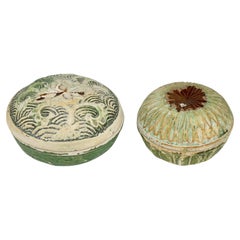
Swatow Lidded Boxes in the shape of Waves and Flowers, Late Ming Era(16-17th c)
Located in seoul, KR
Small green-glazed boxes from the late Ming dynasty cargo. Identical pieces are included on page 142, 143 of the Bin Thuan catalog titled 'The Age of Discove...
Category

16th Century Vietnamese Antique Ming Antiquities

Materials

Ceramic, Pottery

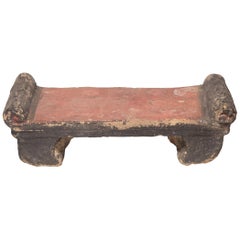
Chinese Stone Tabletop Altar, c. 1600
Located in Chicago, IL
This tabletop altar with scrolled edges, a scalloped apron, and turned legs from China's Shanxi province is a rare find. We conservatively estimate it to be late Ming dynasty (circa ...
Category

Early 17th Century Chinese Antique Ming Antiquities

Materials

Limestone

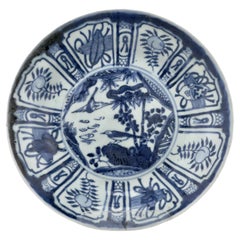
Blue And White Kraak Plate, Late Ming Dynasty
Located in seoul, KR
A Chinese blue and white Kraak plate, the central roundel depicting birds and floral design in a waterside, the rim with panels enclosing foliage and decorative objects. Period: Late Ming-Early Qing Dynasty (17th century) Type: Blue and White Porcelain Provenance : Acquired early 2000s from Southeast asia(Probably from Shipwreck) Reference : 1) Sotheby's London 12 November 2019 - STYLE: Private Collections - Lot 12 (Price range : 3,000GBP-5,000GBP / Type : Closely related) 2) Christies NEW YORK - 1–11 MAY 2018 - THE COLLECTION OF PEGGY AND DAVID ROCKEFELLER: ONLINE SALE - Lot 1405 (Price realised : 5,625 USD / Type : Highly related) * Kraak Kraak porcelain is a type of Chinese export porcelain that was produced during the late Ming Dynasty, especially during the reign of the Wanli Emperor (1573-1620). It is famous for its distinctive design and style. Kraak ware...
Category

17th Century Indonesian Antique Ming Antiquities

Materials

Ceramic, Porcelain

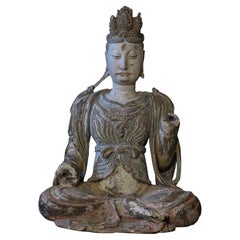
Ming-style Sculpture of Chinese Bodhisattva Guanyin, circa 1900s, 6518
Located in Ukiah, CA
A large Ming-style sculpture of Chinese Bodhisattva Guanyin, circa 1900s, from a century-old US collection. Dated circa 1900s based on the face (b...
Category

Early 20th Century Korean Ming Antiquities

Materials

Wood

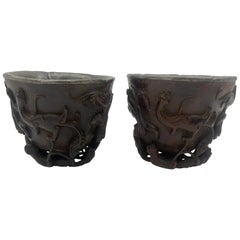
17th Century Pair of Ming Dynasty Chinese ZiTan Inlaid Silver Cups
Located in Brea, CA
17th century a pair of Ming dynasty Chinese ZiTan inlaid silver cups, the exterior carved in high relief and undercut around the sides and base with Chi dragon, 5 edges with silver l...
Category

Early 17th Century Chinese Antique Ming Antiquities

Materials

Wood

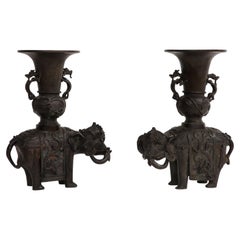
A Pair of Chinese Ming Period Patinated Bronze Enameled Elephant Vases/Censors
Located in New York, NY
A Pair of Chinese Ming Period Patinated Bronze Enameled Elephant Vases/Censors. The elephant has a Buddhistic caparisoned dress with pearl harness, tassels, and high-relief dragon p...
Category

1640s Chinese Antique Ming Antiquities

Materials

Bronze

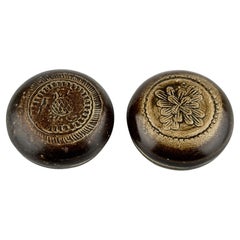
Brown-Glazed Moulded Box And Cover, Fujian Kiln, Yuan-Ming Dynasty
Located in seoul, KR
The circular domed cover moulded with a brown glaze that falls short of the straight foot. The pattern on the left features a central circular design with simple shapes and lines car...
Category

15th Century and Earlier Chinese Antique Ming Antiquities

Materials

Pottery

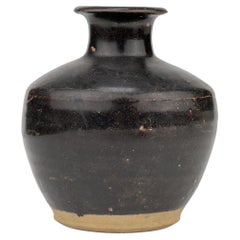
Black glazed bottle, Late Ming Era(16-17th century)
Located in seoul, KR
Black glazed bottle from the late Ming dynasty binh thuan cargo. An identical piece is included on page 146 of the Bin Thuan catalog titled 'The Age of Disco...
Category

16th Century Vietnamese Antique Ming Antiquities

Materials

Pottery

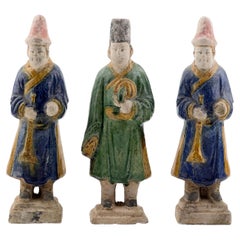
Two Glazed Court Attendants, Ming Period (1368-1644)
Located in seoul, KR
Two finely hollow-moulded terracotta statuettes from ancient China, dating to the Ming Dynasty. The figure is depicted standing, dressed in long, flowing robes, painted in vibrant blue or green and deep amber yellow. The hair is styled into an elaborate top-knot, painted in a muted brown. Areas left unpainted would have been 'cold-painted' after firing, contrasting with the vivid fired blue or green and amber pigments. The figure is shown with the left hand raised to the chest, as if holding something, possibly an offering or incense. Figurines like this were placed in tombs to guide the deceased on their journey to the afterlife. The Ming Dynasty was known for its exceptional artistic achievements, partly due to its economic prosperity. Since the Han Dynasty, it was customary to bury terracotta miniatures of everyday objects with the deceased. These items, known as mingqi, or "spirit utensils" and "vessels for ghosts," were believed to help and assist the deceased in the afterlife. Mingqi were crafted in the form of cooking utensils, miniature replicas of houses, temples, furniture, and other items. Anthropomorphic and zoomorphic terracotta figures were also popular, designed to assist, entertain, and recreate the living world for the deceased. Period: Ming Dynasty Medium: Green/blue-glazed Pottery Type: Figure Provenance : Acquired in late 1990s from Hongkong Reference : 1) Ancient & Oriental - Terracotta Tomb Attendants (Type : Highly related) 2) La Maison De La Petite Sara S.r.l. - Archaeology section - A Black glazed Terracotta Statuette, Servant with Trumpet, Ming Dynasty (Price realised : 700 GBP / Type : Highly related) * Ming Dynasty Glazed Pottery Figures Ming Dynasty glazed pottery figures are renowned for their bold color palette, intricate detailing, and lifelike forms, distinguishing them from earlier traditions. These figures, which depict officials, warriors, animals, and mythical creatures, are characterized by high-gloss lead-based glazes in green, amber, ochre, and sancai (three-color) combinations. The thickly applied glaze pools in recesses, creating depth and enhancing sculptural details. With dynamic postures, expressive facial features, and meticulously rendered drapery, these figures reflect the period’s advancement in ceramic craftsmanship, offering a greater sense of movement and realism compared to the rigid and stylized forms of earlier dynasties. A defining characteristic of Ming glazed pottery is its elaborate surface detailing, often achieved through raised relief elements and contrasting glazes. Equestrian figures, for example, feature carefully sculpted saddles, harnesses, and decorative embellishments, while human figures are adorned with intricate robes and headdresses. The large scale of these tomb figures, often more imposing than those from previous periods, underscores the increasing importance of funerary art during the Ming era. Unlike later Qing Dynasty figures...
Category

15th Century and Earlier Hong Kong Antique Ming Antiquities

Materials

Pottery

Three Glazed Figures of Musicians, Ming Period (1368-1644)
Located in seoul, KR
Statues of Chinese musicians crafted from terracotta, featuring glazes in green, blue with nice condition. Set on rectangular bases. Compared to other figures, musician figures are relatively rare, two figures with distinctive instrument from that era. Period: Ming Dynasty Medium: Green and Blue glazed Pottery Type: Figure Provenance : Acquired in early 2000s from Hongkong Reference : 1) V&A Museum - Accession number C.1501913 (Type : Closely related) * Ming Dynasty Glazed Pottery Figures Ming Dynasty glazed pottery figures are renowned for their bold color palette, intricate detailing, and lifelike forms, distinguishing them from earlier traditions. These figures, which depict officials, warriors, animals, and mythical creatures, are characterized by high-gloss lead-based glazes in green, amber, ochre, and sancai (three-color) combinations. The thickly applied glaze pools in recesses, creating depth and enhancing sculptural details. With dynamic postures, expressive facial features, and meticulously rendered drapery, these figures reflect the period’s advancement in ceramic craftsmanship, offering a greater sense of movement and realism compared to the rigid and stylized forms of earlier dynasties. A defining characteristic of Ming glazed pottery is its elaborate surface detailing, often achieved through raised relief elements and contrasting glazes. Equestrian figures, for example, feature carefully sculpted saddles, harnesses, and decorative embellishments, while human figures are adorned with intricate robes and headdresses. The large scale of these tomb figures, often more imposing than those from previous periods, underscores the increasing importance of funerary art during the Ming era. Unlike later Qing Dynasty figures...
Category

15th Century and Earlier Hong Kong Antique Ming Antiquities

Materials

Pottery

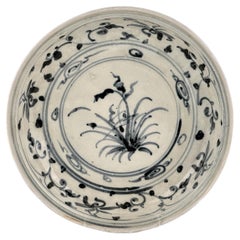
Annamese Stoneware Dish with Lotus Motif, 15-16th Century Vietnam, Le Dynasty
Located in seoul, KR
This Annamese ceramic dish features a central lotus motif, enclosed by a thin circular border. The rim is adorned with intertwining vine patterns and swirling motifs. The dish has a gently curved form with a well-proportioned depth and a neatly finished rim. Dates : 15th century Le Dynasty Region : North Annam, Vietnam Type : Dish Found/Acquired : Southeast Asia , South China Sea, Hoi An Ship Reference : Double checked with reference to the original catalogue Butterfield Treasures Hoi An Hoard Auction Catalogs / San Francisco Butterfields 2000 * Vietnamese trade ceramics Around the mid-14th century, Vietnam developed its ceramics production technology by producing blue and white porcelain, and began to export it overseas. During this period, China Ming Dynasty implemented a policy of lifting the ban from 1371 to 1657 and restricted foreign trade. This served as a good opportunity in the trade history of Vietnamese ceramics, and ceramic exports...
Category

15th Century and Earlier Vietnamese Antique Ming Antiquities

Materials

Stoneware

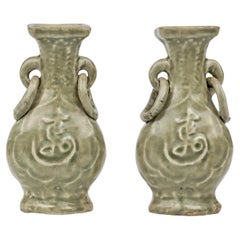
Two Set of Molded Longquan Celadon Fu Shou Vases, Ming Dynasty
Located in seoul, KR
One side of the vase showcases a panel with the Shou character at its center, symbolizing longevity, while the opposite side displays the Fu character, signifying luck. The neck of the vase is adorned with leaves. Period: Yuan-Ming Dynasty (1271-1644) Region: Longquan, China Medium: Celadon Type: Ewer Provenance : Acquired in late 1990s from Hongkong Reference 1) British Museum - Museum number 1931,1118.5 (Type : Closely related) 2) Christies NEW YORK 24–25 MAR 2022 - Important Chinese Ceramics and Works of Art - Lot 1105 (Price realised : 9,450 USD / Type : Related) 3) Sotheby's New York 19 March 2024 - Chinese Art - Lot 172 (Price range : 15,000 USD - 20,000 USD / Type : Related) * Ming Dynasty Longquan Celadon Longquan celadon from the Ming Dynasty typically exhibits a more robust and heavier stoneware body compared to its Song Dynasty predecessors. The Ming era saw an evolution in celadon glaze, achieving a wider spectrum of green hues, from olive to bluish-greens. Ming celadons...
Category

15th Century and Earlier Hong Kong Antique Ming Antiquities

Materials

Celadon

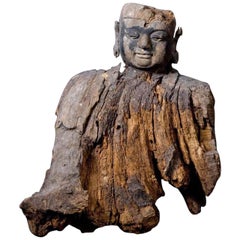
Ming Dynasty Very Rare Wooden Bust of Lohan
Located in San Pedro Garza Garcia, Nuevo Leon
Very serene depiction of a Lohan carved in wood, eroded with the pass of time. Lohan is the Chinese term, derived from the Sanskrit word Arhan, for a disciple or follower of Buddha w...
Category

15th Century and Earlier Antique Ming Antiquities
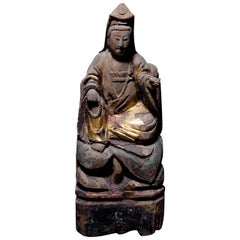
Lady Guanyin Bodhisattva Gilded Wood Carving - Ming Dynasty, China 1368-1644 AD
Located in San Pedro Garza Garcia, Nuevo Leon
Magnificent Lady Guanyin Bodhisattva seated in Royal Relaxation pose hand-carved in Gilded Wood with traces of paint still visible. This expressi...
Category

15th Century and Earlier Chinese Antique Ming Antiquities

Materials

Wood

Ming antiquities for sale on 1stDibs.

Find a broad range of unique Ming antiquities for sale on 1stDibs. Many of these items were first offered in the Early 20th Century, but contemporary artisans have continued to produce works inspired by this style. If you’re looking to add vintage antiquities created in this style to your space, the works available on 1stDibs include asian art and furniture, tables, building and garden elements and other home furnishings, frequently crafted with ceramic, terracotta and other materials. If you’re shopping for used Ming antiquities made in a specific country, there are Asia, East Asia, and China pieces for sale on 1stDibs. It’s true that these talented designers have at times inspired knockoffs, but our experienced specialists have partnered with only top vetted sellers to offer authentic pieces that come with a buyer protection guarantee. Prices for antiquities differ depending upon multiple factors, including designer, materials, construction methods, condition and provenance. On 1stDibs, the price for these items starts at $700 and tops out at $88,880 while the average work can sell for $6,500.

Still Thinking About These?

All Recently Viewed