Japonisme Ceramics

JAPONISME STYLE

In the late 19th and early 20th century, France developed an enduring passion for Japanese aesthetics and craftsmanship. Not only did this interpretation of Japanese culture — which became known as Japonisme — infuse fresh energy into French art and design, but it also radically transformed how Europeans, and subsequently the world, would come to understand visual culture. 

Until 1853, Japan had been closely guarded against foreign visitors for over two centuries. However, American Commodore Matthew C. Perry sailed into Japan that year and initiated the first of its treaties with the United States and Europe, thereby opening its borders and giving the West its first-ever look at Japanese design. 

For the next few decades, taken with Japonisme, sophisticated collectors in Paris, New York and elsewhere gorged themselves on lacquered screens, celadon ceramics and netsuke ornaments, along with artworks depicting various aspects of Japanese life. The East Asian country’s influence on Europe, particularly France, contributed to one of the most creatively prosperous periods in history, leaving an imprint on the Impressionist, Art Nouveau and Art Deco movements, and inspiring artists like Edgar Degas, Mary Cassatt, Vincent van Gogh as well as luxury houses such as Louis Vuitton and Hermès. Japonisme emerged at the time when the ornate Renaissance Revival style was the most prominent mode of decorating in Europe, and Japanese aesthetics seemed strikingly modern and elegant in comparison. 

In addition to everyday practical objects from Japan, such as vases, tableware and decorative boxes, Japanese art, especially Japanese woodblock prints by masters of the ukiyo-e school, caught the eye of many artists — particularly those in the Art Nouveau poster community in 1880s Paris. The luscious organic colors associated with traditional Japanese design, motifs like cherry blossoms and carp and the vivid patterns found in woodblock prints, silks and more were adopted and appropriated by painters as well as ceramicists and those working in other fields of the decorative arts. Today, demand for Japanese lacquerware — furniture, trays, writing boxes, screens, incense burners — from the Edo period (1615–1868) and the late 19th century continues to be very strong among collectors.

Find a collection of antique Japonisme furniture and decorative objects on 1stDibs.

to
8
60
20
89
5
4
86
54
17
16
14
7
6
5
4
4
3
3
2
2
2
1
4
47
38
9
21
7
3
11
2
1
1
1
95
40
11
5
3
94
94
93
2
1
98
98
98
16
3
2
2
2
Style: Japonisme
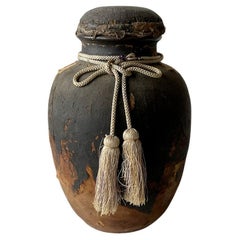
Early Showa-period Japanese Shuko Pottery Sake Jar
Located in Chiba, JP
Pottery sake jar with wooden lid, covered with old used papers, tied string, Early Showa period, Japan, H 26 x D 17 cm (10.23 x 6.69in).
Category

Mid-20th Century Japanese Japonisme Ceramics

Materials

Ceramic, String, Wood, Paper

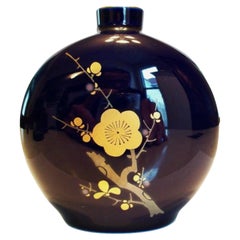
FUKAGAWA PORCELAIN COMPANY - Vintage Gilt Decorated Vase - Japan - 20th Century
Located in Chatham, ON
FUKAGAWA PORCELAIN COMPANY - Vintage gilt decorated porcelain vase - small size - signed on the base - Japan - 20th century. Excellent/mint vintage condition - no loss - no damage -...
Category

Mid-20th Century Japanese Japonisme Ceramics

Materials

Porcelain

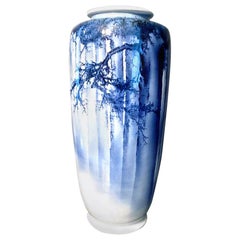
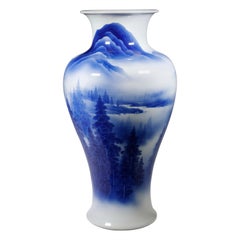
Large Japanese Blue and White Vase by Mazuku Kozan Meiji Period
Located in Atlanta, GA
A striking blue and white vase from the studio of Japanese Potter Makuzu Kozan, also known as Miyagawa Kozan (1842–1916), one of the most established and collected ceramist from Meiji Period. Born as Miyagawa Toranosuke, Kozan established his pottery studio in Yokohama around 1870s and later became one of the appointed artist to the Japanese Imperial household. His work was exhibited in many international fairs that the Meiji government participated at the turn of the century and won many grand prizes. With a relative large size, this vase is decorated with underglaze cobalt blue using the novel technique developed by Kozan called Fuki-e (the blow painting), in order to achieve the striking dimensional misty winter landscape. The pine trees with upright trunks and down-sweeping branches appear receding into the depth of the mist, forming an visually unending forest. Known as one of the most creative ceramists, around 1880s, Kozan started experimenting with new chemical colors from the West in the format of his porcelain glaze. New colors allowed him to create underglaze design that appeared bright, smooth and glossy. He even invented his own receipt of cobalt blue to achieve a much brighter yet softer shade, as evident on this vase. To create landscape that is realistic and dimensional, more common in the western paintings, he was inspired by the native Japanese ink painting technique developed around 1900 by Yokoyama...
Category

Early 20th Century Japanese Japonisme Ceramics

Materials

Porcelain

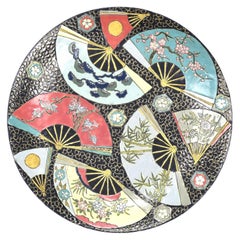
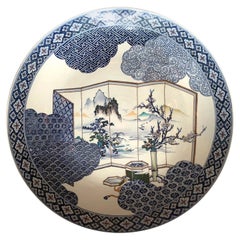
Large Meiji Imari Charger with Famille Noir Fan Motifs, Japan, 19th Century
Located in Bad Säckingen, DE
This magnificent large Japanese charger dates to the Meiji period (1868–1912) and is a striking example of Imari ware executed in a rare famille...
Category

Late 19th Century Japanese Antique Japonisme Ceramics
Materials

Enamel

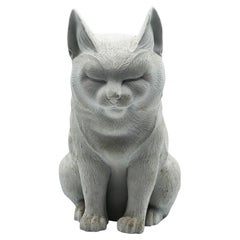
Japanese Art Nouvea Meiji Period Hirado Porcelain, Seated Sleeping Cat, ca. 1900
Located in New York, NY
Japanese Art Nouveau Meiji Period Hirado Porcelain Figure of Seated Sleeping Cat, Ca. 1900 DIMENSIONS Height: 9.5 inches Width: 6 inches Depth: 7.5 inches
Category

Early 1900s Japanese Antique Japonisme Ceramics

Materials

Porcelain

Rare and Large Japanese Porcelain Vase Makuzu Kozan
Located in Atlanta, GA
A striking blue and white vase from the studio of Japanese Potter Makuzu Kozan, also known as Miyagawa Kozan (1842–1916), one of the most established and collected ceramist from Meiji Period. Born as Miyagawa Toranosuke, Kozan established his pottery studio in Yokohama around 1870s and later became one of the appointed artist to the Japanese Imperial household. His work was exhibited in many international fairs that the Meiji government participated at the turn of the century and won many grand prizes. With an impressively large size, this vase was likely made and reserved as a presentation piece for one of the many expositions the studio participated in the early 20th century. It was decorated with underglaze cobalt blue using the novel technique developed by Kozan called Fuki-e (the blow painting), in order to achieve the striking dimensional literary landscape known as "Mountain and Water". Being one of the most creative ceramists, Kozan started experimenting with new chemical colors from the West in the format of his porcelain glaze around 1880s. New colors allowed him to create underglaze designs that appeared bright, smooth and glossy. He even invented his own receipt of cobalt blue to achieve a much brighter yet softer shade, as evident on this vase. To create landscape that is realistic and dimensional, more common in the western paintings, he was inspired by the native Japanese ink painting technique developed around 1900 by Yokoyama Taikan...
Category

Early 20th Century Japanese Japonisme Ceramics

Materials

Porcelain

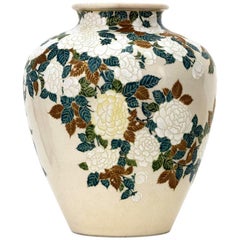
Japanese Ceramic Vase by Ito Tozan I Meiji Period
Located in Atlanta, GA
This stoneware vase of a jar form was finely decorated with low relief carving and delicate colored glazes depicting bundles of peony flowers. It was made by Ito Tozan I (1846-1920) circa 1890-1900s in the late Meiji Period. The color pallet was both bold and subtle, with dark green and rusty leaves with golden outlines and white and light yellow peony petals covering much of the surface. Impressed with potter's mark on the base. Examples of two pieces by Ito Tozan I were in the collection of MNAAG (Guimet) Paris. Inventory no. MG 13790 an 13792. A vase with similar shape and decoration techniques is featured as Lot 1340 Fine Japanese Art, 13 Sep 2017 Bonhams New York Tozan Ito I established his ceramic business in Kyoto 1867. His studio made both porcelain and stoneware in a style some considered Satsuma while they retained a sophistication of Kyoto ware...
Category

1890s Japanese Antique Japonisme Ceramics

Materials

Ceramic

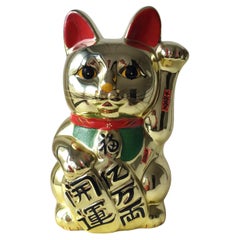
1980s Japanese Large Retro Golden Maneki Neko Beckoning Cat Coin Bank
Located in Chiba, JP
Large type retro ceramic ‘Maneki-neko’ coin bank, 1980s, Japan, approx. H 40 x W 24 x D 20 cm (15.74 x 9.44 x 7.87in). in rare very fine storage condition with just some expected sli...
Category

1980s Japanese Vintage Japonisme Ceramics

Materials

Ceramic

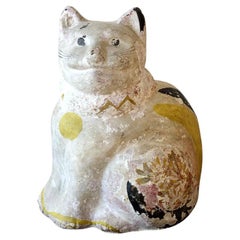
Early-Mid 20th century Traditional Japanese Hanamaki Clay Cat Doll
Located in Chiba, JP
Traditional Hanamaki clay doll, early-mid 20th century, Iwate, Japan. H 15.5 x W 13.3 x D 10 cm (6.10 x 5.23 x 3.93in). Aged deterioration as is as seen.
Category

Mid-20th Century Japanese Japonisme Ceramics

Materials

Clay

Fine and Rare Miniature Satsuma Vase by Taizan Yohei
Located in Atlanta, GA
A very fine miniature ceramic vase in satsuma ware by Taizan Yohei IX (1864-1922) circa 1880-1890s of late Meiji period. The vase with a broad flat should...
Category

1880s Japanese Antique Japonisme Ceramics

Materials

Ceramic

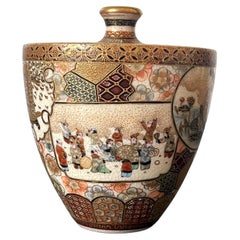
Japanese Satsuma Vase with Figures
Located in Antwerp, BE
A mid-20th century Japanese Satsuma vase with figures. Satsuma ware is a style of Japanese earthenware originally from the Satsuma region of what is today southern Kyushu. There are two distinct categories of this ware: The original plain dark clay early Satsuma...
Category

Mid-20th Century Japanese Japonisme Ceramics

Materials

Ceramic

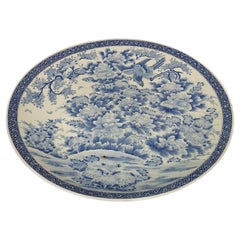
Massive Antique Japanese Arita Porcelain Emperor Meiji
Located in Hillringsberg, SE
This very large plate made in Japan during the Emperor Meiji time 1868-1912. Wonderful blue pattern on fine porcelain. There is a crack that’s shown thro...
Category

19th Century Japanese Antique Japonisme Ceramics

Materials

Ceramic

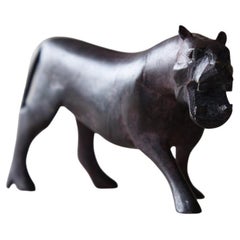
Ebony Wood Carving Tiger Sculpture
Located in Chiba, JP
Traditional Hanamaki clay doll, early-mid 20th century, Iwate, Japan. H 15.5 x W 13.3 x D 10 cm (6.10 x 5.23 x 3.93in). Aged deterioration as is as seen.
Category

20th Century Unknown Japonisme Ceramics

Materials

Ebony

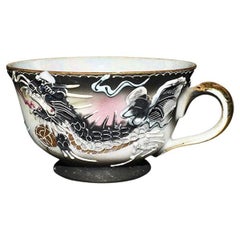
Antique Japonisme Moriage Dragon Ware Cup in Black, 1920s
Located in Oklahoma City, OK
A beautiful artisanal handcrafted porcelain Dragon ware teacup. This set features a moriage dragon design. Created from slip and applied around the body...
Category

20th Century Japanese Japonisme Ceramics

Materials

Ceramic, Porcelain, Paint

Rare Japanese Ceramic Glazed Bowl Makuzu Kozan Meiji Period
Located in Atlanta, GA
On offer is a rare ceramic bowl with overglazed design by the famed Japanese ceramic artist Makuzu Kozan (1842-1916), circa 1906-1916. The bowl is rather unusual from the potter's repertoire with its unique glaze colors and decoration, and it likely belonged to a small series that Kozan made in and after 1906. A bowl of similar glaze and nearly identical dragon motif was recorded as a diplomatic present to the British royalty Arthur Connaught (1883-1932) when he represented King Gorge V in Japan in 1906. Other pieces, such as this bowl, were likely made with similar materials and designs afterwards. Essentially round in form, the bowl has a generous volume with six harmonious lobes. The bottom of the interior showcases a coiled dragon in red, green and gold slithering on a cobalt blue background. The roundel shares an echoing lobed perimeter, which is further outlined by red and turquois bands and rising sun design. The exterior of the bowl features six stylized Japanese camellias...
Category

Early 1900s Japanese Antique Japonisme Ceramics

Materials

Ceramic

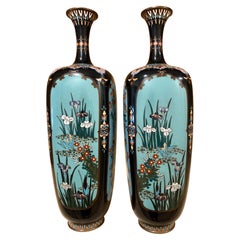
Japanese Meiji Cloisonne Pair of Vases
Located in Sarasota, FL
Japanese Meiji cloisonne pair of very fine and detailed vases. Maker's mark on the bottom.
Category

Late 19th Century Japanese Antique Japonisme Ceramics

Materials

Enamel

Rare Porcelain Bowl with Plique-a-Jour Design by Makuzu Kozan
Located in Atlanta, GA
An extremely fine and delicate porcelain bowl from the studio of Japanese Potter Makuzu Kozan, also known as Miyagawa Kozan (1842–1916), one of the most established and collected cer...
Category

Early 1900s Japanese Antique Japonisme Ceramics

Materials

Porcelain

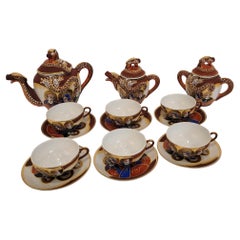
Satsuma Red Gold Blue Satsuma Porcelain Tea Set, Nakasima Japan
Located in Valladolid, ES
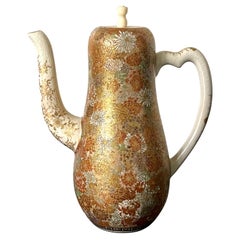
Gorgous and very Delicate six-piece tea or coffee set made of Japanese Satsuma porcelain. Cherry, blue, and ochre colors predominate. The main motif features the goddess Kannon surro...
Category

Early 1900s Japanese Antique Japonisme Ceramics

Materials

Gold

Extra-Large Japanese Mingei Shigaraki Dobin Pottery Tea Pot
Located in Chiba, JP
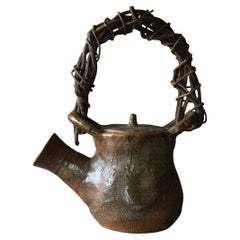
Extra-large high-fired unglazed Shigaraki stoneware dobin tea-pot with such a wild vine handle, Showa period, 20th century, Japan, approx. H 44 x 35 x 19cm (17.32 x 13.77 x 7.48in)
Category

Mid-20th Century Japanese Japonisme Ceramics

Materials

Ceramic

Japanese Ceramic Bowl Makuzu Kozan Utusushi Kenzan
Located in Atlanta, GA
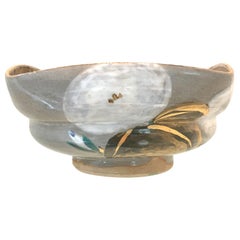
A rare ceramic bowl with overglaze paint decoration by Japanese imperial potter Makuzu Kozan ((1842–1916). Unlike the better-known works Kozan made for the expositions in the west and export to the foreign market, this piece exemplifies his work for the domestic market and the tea ceremony. The bowl was made in the so called "Utusushi" Ogata Kenzan (1663-1743), a celebrated Edo painter and ceramicist. Utusushi is loosely translated as "in the spirit of". It is not at all a simple imitation of a master, but a Japanese concept of embracing the spiritual essence of a master while the creator is free to mix in his or her own unique artistic interpretation and flavor. The bowl was made to hold fruits during the tea ceremony. It has a very distinguished form with a circular lower body morphing into a square upper portion that further opening with flared rim. The surface has a grey glaze onto which Asagao flowers (Japanese morning glory) on the vines were painted in a free and poetic style. White was used for the petals, green for the leaves with touches of gold highlight. Asagao, the symbol of the summer was rendered in the spirit of Ogata Kenzan, and interestingly the shape of the blossom echoes the unique form the bowl. It was likely reserved for the tea ceremony during the summer months. Under the base, Kozan was signed in black on a white porcelain plaque inlay. For two similar examples of Kozan's work Utusushi Kenzan, see Page 168-169 of the book: Sekai ni Aisa Reta ya Kimono Miyagawa Kozan Makuzu...
Category

Early 1900s Japanese Antique Japonisme Ceramics

Materials

Ceramic

Japanese Porcelain Dragon Glazed Vase Mazuku Kozan
Located in Atlanta, GA
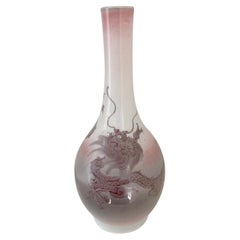
A porcelain vase with dragon motif by Japanese imperial potter Makuzu Kozan (1842-1916), circa 1900s. The vase is made in what is considered early phase of his underglaze period during late Meiji era. In a classic elongated baluster form, the surface of the vase was decorated in an unusual pink mist on a white and aubergine background (called Morotai, the Hazy style), on which a flying dragon is showcased on the center. The dragon was outlined in iron red and filled with the aubergine color and was artistically emphasized on its bulging eyes, claws, scales and a long tail. It was the sole focus of the design circumventing the entire body of the vase. The imagery calls in mind the dragon decoration found in Korean...
Category

Early 1900s Japanese Antique Japonisme Ceramics

Materials

Porcelain

Japanese Late Meiji Period Hirado Porcelain Incense Vessel, Ca. 1890-1910
Located in New York, NY
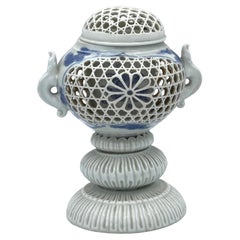
Japanese Late Meiji Period (1868-1912) Hirado Porcelain Incense Vessel Ca. 1890-1910 DIMENSIONS 5.5” high x 4.5” across
Category

1890s Japanese Antique Japonisme Ceramics

Materials

Porcelain

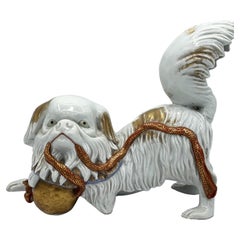
Japanese Late Edo/Early Meiji Period Kakiemon Porcelain Chin Dog, Ca. 1850/1870
Located in New York, NY
Japanese Late Edo / Early Meiji Period Kakiemon Porcelain Chin Dog, Ca. 1850/1870 DIMENSIONS Height: 9.5 inchess Width: 5.5 inches ABOUT Highly expressive figure of a Japanese Chin...
Category

1850s Japanese Antique Japonisme Ceramics

Materials

Porcelain

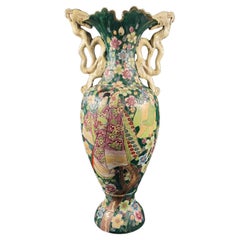
Large Japanese Vase With Geisha Decor
Located in BARSAC, FR
Large Japanese porcelain vase depicting a seduction scene between a geisha and a masculine figure in a rich polychrome floral and plant decoration with dominant green colors. Lar...
Category

Late 19th Century Japanese Antique Japonisme Ceramics

Materials

Porcelain

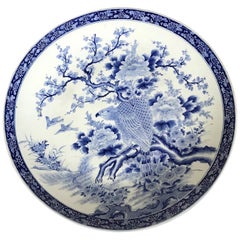
A Massive Antique Japanese Arita Porcelain Plate by Kajiwara Kiln
Located in Atlanta, GA
On offer is a truly impressive blue and white porcelain plate of Hizen ware, from Arita in Japan, circa mid to late-19th century. The plate was made by Kajiwara Kikujiro (菊次郎, the second Kiku son) and/or Kajiwara Kikusaburo (菊三郎, the third Kiku son who died in 1883) of the Kajiware Family Kiln of in Arita. It was decorated in a superb design with blue under-glaze, clearly out of a hand of a master. In a Classic Japanese composition that was popular in the Meiji Period, the plate displays a riot of auspicious elements, arranged still in a surprisingly harmonious manner. Anchoring the center of the design is an eagle perched on the branch of a blooming cherry tree, its talons clenching the bark and its wings about to open. The motion of the its immediate taking off is palpable. The trunk and the branches of the old cherry tree provide a spacial frame for the arrangement of large peonies with foliage, bundles of chrysanthemums, Chinese bell...
Category

19th Century Japanese Antique Japonisme Ceramics

Materials

Ceramic

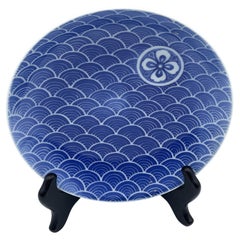
Japanese Edo Period Nabashima Porcelain Plate w/ Sea Shells Crest, Ca. 1850
Located in New York, NY
Japanese Edo Period Nabashima Blue White Porcelain Plate Sea Shells Family Crest Japan, Ca. 1850 Period: Edo Period (1603–1868) Date: Circa 1850 Markings: Signed o...
Category

1850s Japanese Antique Japonisme Ceramics

Materials

Porcelain

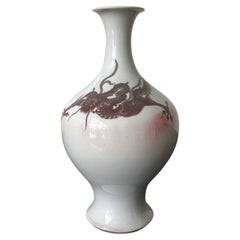
Japanese Porcelain Glazed Vase with Dragon Design Mazuku Kozan
Located in Atlanta, GA
A porcelain vase with dragon design by Japanese imperial potter Makuzu Kozan (1842-1916), circa 1900s. The vase is made in what is considered early phase of his underglaze period during late Meiji era. In a classic baluster form, the surface of the vase was decorated with a slithering dragon in underglaze iron red circulating the exterior among pink clouds. The animated rendering of the dragon is fine and detailed, with five claws, scales, long tails and highlighted eyes. The pink cloud is misty and called Morotai or the hazy style, created with a unique technique developed in Kozan's studio called fuki-e by blowing the pigment powders onto the surface. Kozan Studio experimented with newly available colors from the west starting in the 1880s, which resulted in the expansion of the palette and style that bridged the east and west aesthetic tradition. Marked in underglaze blue on the base. Known also as Miyagawa Kozan...
Category

Early 1900s Japanese Antique Japonisme Ceramics

Materials

Porcelain

Japanese Ceramic Vase with Delicate Carvings by Makuzu Kozan Meiji Period
Located in Atlanta, GA
A delicate and rare Japanese ceramic vase by the important Meiji imperial potter Makuzu Kozan (1842-1916) circa 1887-1910. Dated to his underglaze phase post 1887 after he successful...
Category

1890s Japanese Antique Japonisme Ceramics

Materials

Ceramic

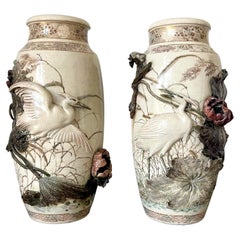
Rare Pair of Early Period Makuzu Kozan Takauki High-Relief Vases
Located in Atlanta, GA
A stunning pair of ceramic vases with gilt, paint and high-relief decoration by imperial artist Makuzu Kozan (1842-1916, also known as Miyagawa Kozan) circa 1876-81 (late Meiji period). These vases belong to early period (1876-1881) of Kozan's repertoire, during which time the high relief sculpturing (known as Takauki ware) was used as a distinguished technique on top of the traditional gilt and paint ornaments of satsuma ware. Due to the relatively limited production and the fragile nature of these wares, not a large quantity of the examples remained in the first place, not mentioning a fine matching signed pair in such impressive sizes. Not only a rarity, this pair of vases is also superb in workmanship, thus the fine example of the work from that short and unique period of the artist's career before he switched to the underglaze period. In a conceptually mirrored fashion, the surface is richly decorated with flying cranes among large lotus leaves and flower, like an idyllic aqua scenery of pure poetry on a circular scroll. The high-relief appliques were rendered and composed in realistic fashion but with a dramatic touch. They are literally about to break the surface free, alive and in motion. The dark colors of the glaze were used to set a moody tone. The approach to create this type of ornamentations is more akin to sculpturing an ink painting in three-dimension than ceramic making. It is not hard to imagine the demand of both the artistry and the technique. Both vases were signed as "Makuzu Kozan Kiln" and each further with another name and seal, which are most likely the individual artist involved in the making process. Similar signatures can be seen in the reference book below. For similarly Takauki vases, see Miyagawa Kozan Makuzu...
Category

1870s Japanese Antique Japonisme Ceramics

Materials

Ceramic

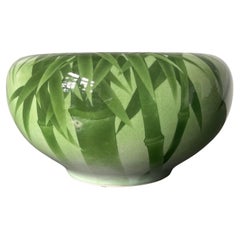
Japanese Ceramic Centerpiece Bowl Makuzu Kozan Meiji Period
Located in Atlanta, GA
A beautiful ceramic vessel in the form of Bo, the so-called monk's alms bowl from the studio of Japanese Potter Makuzu Kozan, also known as Miyagawa Kozan (1842–1916), one of the most established and collected ceramist from Meiji Period. Born as Miyagawa Toranosuke, Kozan established his pottery studio in Yokohama circa 1870s and later became one of the appointed artists to the Japanese Imperial household. His work was exhibited in many international fairs that the Meiji government participated at the turn of the century and won many grand prizes. Of a relatively large size, this piece was made as a decorative center piece for display. It was brilliantly decorated with underglaze paint of a green-on-green bamboo motif, using the novel technique developed by Kozan called Fuki-e (the blow painting). As a result, the bamboos appear took on a three-dimensional quality as if appearing in a mist. Known as one of the most creative ceramists, circa 1887, Kozan started experimenting with new chemical colors from the West in the format of his porcelain glaze. New colors allowed him to create underglaze design that appeared bright, smooth and glossy. To create design that is realistic and dimensional, more common in the western paintings, he was inspired by the native Japanese ink painting technique developed around 1900 by Yokoyama Taikan...
Category

Early 1900s Japanese Antique Japonisme Ceramics

Materials

Ceramic

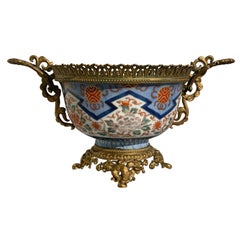
Japanese Imari Bowl Centerpiece with French Ormolu Mounts, circa 1900
Located in Austin, TX
An elegant French Louis XVI style Japonisme centerpiece comprised of a large 19th century Meiji Period Japanese Imari Porcelain bowl with French gilt metal ormolu mounts, late 19th-e...
Category

Late 19th Century French Antique Japonisme Ceramics

Materials

Ormolu

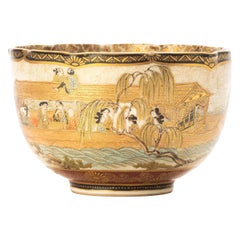
A Japanese Satsuma ceramic lobed bowl
Located in Milano, IT
Satsuma ceramic lobed bowl with curved corners and embellished with a refined scene of daily life along a watercourse on the outside. The interior is adorne...
Category

Late 19th Century Japanese Antique Japonisme Ceramics

Materials

Ceramic

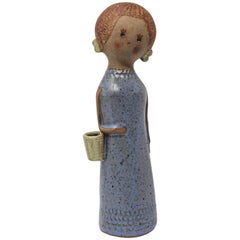
Vintage Traditional Japanese Young Woman Ceramic Sculpture
Located in Moreno Valley, CA
Japanese lady sculpture wood fired handmade ceramic pottery. Traditional Japanese young woman small sculpture. Unusual shape beautiful collectib...
Category

Late 20th Century Japanese Japonisme Ceramics

Materials

Ceramic

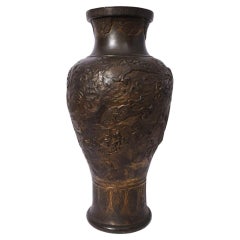
Large Baluster Japanese Copper Vase, 1920s
Located in Lisboa, PT
Large baluster vase with copper leaf on a ceramic core, decorated in repoussé with two dragons passing through the clouds, the perimeter of the bas...
Category

Early 20th Century Japanese Japonisme Ceramics

Materials

Copper

Massive Japanese Arita Presentation Porcelain Plate Meiji Period
Located in Atlanta, GA
This massive Japanese Arita plate was made in Hizen, circa 1890-1910s, at the end of Meiji period by a potter named Takeshige Yoshisuke who was active in A...
Category

Late 19th Century Japanese Antique Japonisme Ceramics

Japanese Satsuma Ceramic Ewer Yabu Meizan
Located in Atlanta, GA
A Satsuma ware miniature ewer from the studio of Yabu Meizan (birth name Yabu Masashichi; 1853-1934), who was one of the most celebrated and collectible Satsuma artists from the Meij...
Category

Early 20th Century Japanese Japonisme Ceramics

Materials

Ceramic

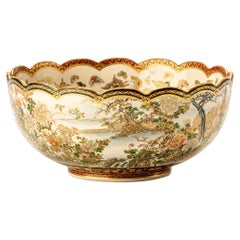
A Satsuma bowl decorated with a striking landscape
Located in Milano, IT
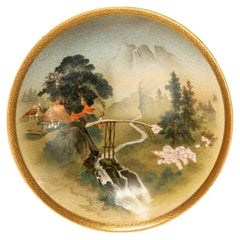
Satsuma bowl decorated with a striking landscape that evokes the beauty and serenity of the Japanese hills, with a gently flowing river surrounded by trees and mountains. The bowl i...
Category

19th Century Japanese Antique Japonisme Ceramics

Materials

Ceramic

Large Kutani Charger
Located in Swadlincote, GB
A very good Mutant charger, signed to the back, in overall super condition. Kutani porcelain, a distinct style of Japanese porcelain, originates from the Kutani village, which is now...
Category

19th Century Japanese Antique Japonisme Ceramics

Materials

Porcelain

Japanese Black Lacquer Box Together with a Blue and White Arita Plate
Located in Ottawa, Ontario
2 drawers. Drop down top. A Japanese black lacquer box Together with a blue and white Arita plate, 20th century Lacquer box of rectangular form with b...
Category

20th Century Japanese Japonisme Ceramics

Materials

Ceramic, Lacquer

Antique Awaji Grey Crackle Glaze Ceramic Vase - Meiji Period - Japan - C.1910
Located in Chatham, ON
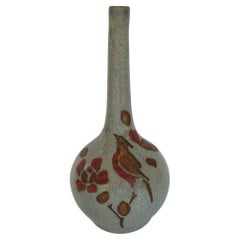
Antique Awaji ceramic vase - grey crackle glaze - cold painted decoration with red and gilt enamel bird on a branch with flower and leaves - old faint inventory numbers to the base -...
Category

Early 20th Century Japanese Japonisme Ceramics

Materials

Ceramic

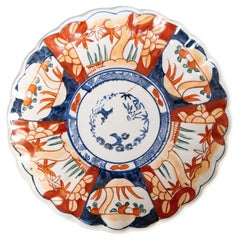
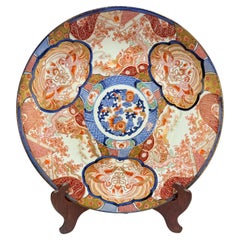
Antique 19th Century Japanese Imari Scalloped Plate
Located in Pearland, TX
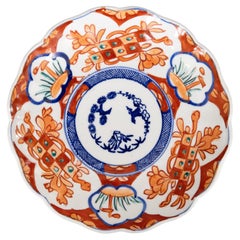
Wonderful 19th century antique Imari plate with scalloped edge. Featuring vibrant oranges, blues, and teal.
Category

19th Century Japanese Antique Japonisme Ceramics

Materials

Ceramic

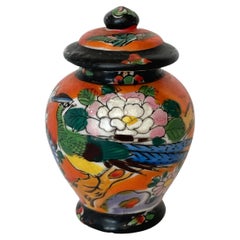
Japanese Miniature Hand Painted Porcelain Ginger Jar
Located in New York, NY
Hand painted Japanese porcelain miniature ginger jar with handled top. Old Japan motifs of a peacock with chrysanthemum flower, dogwood trees, clouds and and butterfly. Stamped with signature on bottom, T & T Made in Japan Hand paint.
Category

Early 20th Century Japanese Japonisme Ceramics

Materials

Porcelain

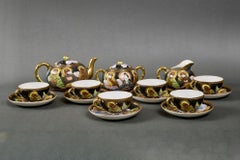
1920s Japanese Hand Painted and Gilded Demitasse Coffee Service
Located in Roma, IT
1920s Japanese Hand Painted and Gilded Demitasse Coffee Service This exceptional 1920s Japanese coffee service features 6 demitasse cups with accompanying, coffee pot, sugar bowl an...
Category

Early 20th Century Japanese Japonisme Ceramics

Materials

Porcelain

Signed Japanese Imari Scalloped Plate with Floral Design
Located in New York, NY
Japanese Imari fluted porcelain plate hand decorated with floral design and gilt painted rim. Hand signed Japanese signature on bottom.
Category

20th Century Japanese Japonisme Ceramics

Materials

Porcelain

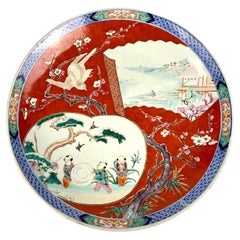
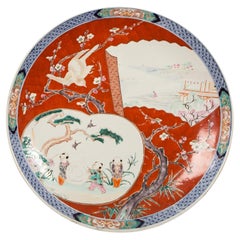
Large Antique Japanese Kutani Charger Red Ground Hand-Painted Children at Play
Located in Katonah, NY
This large Japanese Kutani charger, measuring 18 " in diameter, was created during the late 19th-century Meiji period. Its decoration features intricate hand-painted designs depictin...
Category

Late 19th Century Japanese Antique Japonisme Ceramics

Materials

Porcelain

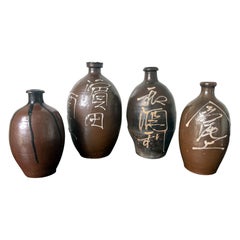
Collection of Four Japanese Tanba Tokkuri Sake Bottles
Located in Atlanta, GA
A set of four Japanese Ceramic Tokkuri Sake storage bottles circa early 20th century (Meiji to Taisho period). The bottles were made in Tanba (or Tamba) ...
Category

Early 20th Century Japanese Japonisme Ceramics

Materials

Ceramic

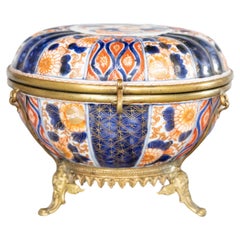
19th Century Imari Porcelain Lidded Bowl Jewelry Box
Located in Pearland, TX
A fine and rare lidded and hinged Imari bowl with ormolu fittings, set atop three ornamented feet. Perfect for jewelry, trinkets, or sweets.
Category

Mid-19th Century Japanese Antique Japonisme Ceramics

Materials

Ceramic

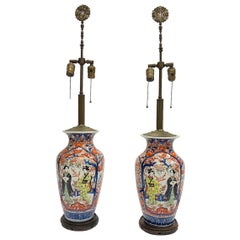
Pair Antique 19th Century Imari Porcelain Vases Mounted as Table Lamps
Located in New York, NY
Pair of antique (19th century) Japanese Imari porcelain vases with raised figurative designs later mounted as table lamps.
Category

Late 19th Century Japanese Antique Japonisme Ceramics

Materials

Porcelain

Monumental Japanese Imari Charger with Phoenix Floral Reserves, Late Edo 19th
Located in Atlanta, GA
Monumental Japanese Imari Charger with Phoenix and Floral Reserves, Late Edo–Meiji, 19th Century A richly enameled and gilded Imari porcelain charger of impressive scale (diameter 1...
Category

19th Century Japanese Antique Japonisme Ceramics

Materials

Porcelain

Satsuma ceramic lobed bowl, signed Juzan under the base
Located in Milano, IT
Satsuma ceramic lobed bowl adorned with raised enamels and fine gold details, depicting a vibrant landscape within. Characters and traditional Japanese home...
Category

Late 19th Century Antique Japonisme Ceramics

Materials

Ceramic

Imari Porcelain Bowl, Meiji Period, Japan, 19th c.
Located in West Palm Beach, FL
Hand decorated Japanese Meiji period porcelain bowl. The interior hand painted scene depicts three birds sitting on the limb of a tree. The reverse is hand painted with underglaze bl...
Category

1880s Japanese Antique Japonisme Ceramics

Materials

Enamel

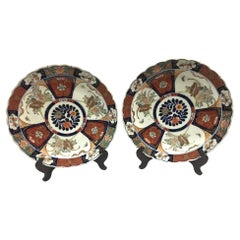
Pair Imari Porcelain Chargers w/Four Hand Painted Panels and Scalloped Edges
Located in Savannah, GA
This lovely pair of Japanese Imari Meiji period six panel scalloped chargers are entirely hand painted with much detail and feature three panels depicting birds and butterflies among...
Category

1880s Japanese Antique Japonisme Ceramics

Materials

Porcelain

Mid-Century Chinese Porcelain Vase with Lid, Jiangxi
Located in Bochum, NRW
Mid-century early People Chinese Republic period hand enameled porcelain lidded urn vase, Jiangxi Jingdezhen Min Ci 6 Hao Cai mark under the bottom, Famille-rose Dimensions: height ...
Category

1950s Japanese Vintage Japonisme Ceramics

Materials

Porcelain

Large Pair of Japanese Kutani Porcelain Vases, C19th
Located in Brighton, Sussex
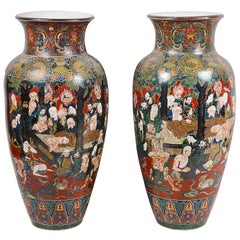
A magnificent pair of Japanese Meiji period (1868-1912) Kutani porcelain vases. Having wonderful hand painted images of attendants gathering in morning, having classical motif decora...
Category

Late 19th Century Japanese Antique Japonisme Ceramics

Materials

Porcelain

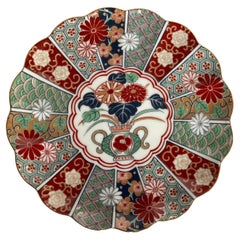
Antique 19th Century Japanese Imari Scalloped Plate
Located in Pearland, TX
Wonderful 19th century antique Imari plate with scalloped edge. Featuring vibrant oranges, blues, and green.
Category

19th Century Japanese Antique Japonisme Ceramics

Materials

Ceramic

Pair of Antique Japanese Imari Blue White Chargers with Geishas at Lake Side
Located in Miami, FL
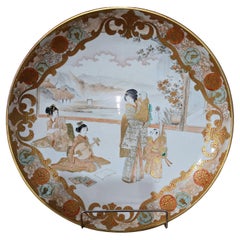
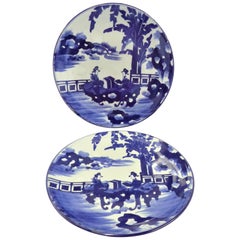
Beautiful pair of Meiji Period blue and white Japanese Imari Chargers depicting two Japanese Courtesans reading poetry by a lake in a serene setting framed by banana palms or trees o...
Category

1890s Japanese Antique Japonisme Ceramics

Materials

Porcelain

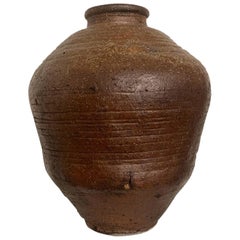
Large Japanese Antique Shigaraki Tsubo Jar
Located in Atlanta, GA
An antique Japanese stoneware storage jar, known as tsubo from Shigaraki kiln, circa 17th-18th century (early Edo possibly Momoyama period)....
Category

17th Century Japanese Antique Japonisme Ceramics

Materials

Ceramic

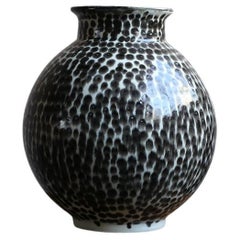
Small Round Vase with dot painting by Scarlet Pottery
Located in Sammu-shi, Chiba
This is a vase made by the Japanese ceramic artist unit "Scarlet Pottery." It is a piece of pottery made using Amakusa pottery stone. Amakusa pottery stone is famous as the raw mater...
Category

2010s Japanese Japonisme Ceramics

Materials

Porcelain

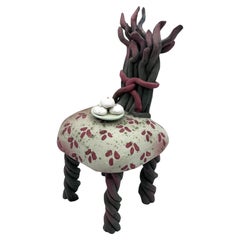
American Contemporary Painted Ceramic Fantasy Chair by Vicky Choke, Ca. 1990
Located in New York, NY
Vicky Choke, Chinese Contemporary Painted Ceramic Fantasy Chair, Ca. 1990 This unique little ceramic sculpture by renowned American Ceramist, Vicky Choke depicts a fantasy chair wit...
Category

1990s Japanese Japonisme Ceramics

Materials

Ceramic

Large Red Antique Japanese Low Bowl Hand-Painted Children-at-Play circa 1885
Located in Katonah, NY
We are pleased to offer this large antique Japanese low bowl painted with children-at-play and bird-and-flower motifs on a striking red background. The bowl dates to the late 19th ce...
Category

Late 19th Century Japanese Antique Japonisme Ceramics

Materials

Porcelain

Japonisme ceramics for sale on 1stDibs.

Find a broad range of unique Japonisme ceramics for sale on 1stDibs. Many of these items were first offered in the 21st Century and Contemporary, but contemporary artisans have continued to produce works inspired by this style. If you’re looking to add vintage ceramics created in this style to your space, the works available on 1stDibs include asian art and furniture, decorative objects, serveware, ceramics, silver and glass and other home furnishings, frequently crafted with ceramic, porcelain and other materials. If you’re shopping for used Japonisme ceramics made in a specific country, there are Asia, East Asia, and Japan pieces for sale on 1stDibs. While there are many designers and brands associated with original ceramics, popular names associated with this style include Makuzu Kozan, Norihiko Terayama, Awaji Pottery, and Ito Tozan I. It’s true that these talented designers have at times inspired knockoffs, but our experienced specialists have partnered with only top vetted sellers to offer authentic pieces that come with a buyer protection guarantee. Prices for ceramics differ depending upon multiple factors, including designer, materials, construction methods, condition and provenance. On 1stDibs, the price for these items starts at $115 and tops out at $54,000 while the average work can sell for $3,271.

Still Thinking About These?

All Recently Viewed