Gold Asian Art and Furniture
to
101
268
105
448
246
3
5
3
2
2
1
1
1
1
113
216
119
249
54
25
9
9
1
4
2
1
4
8
2
1
12,626
6,413
5,397
5,329
3,013
670
612
562
44
28
697
677
683
16
7
4
2
1
Material: Gold
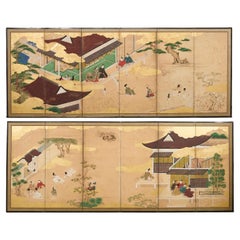
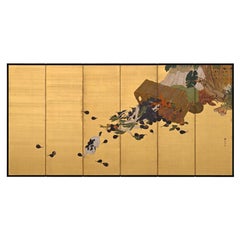
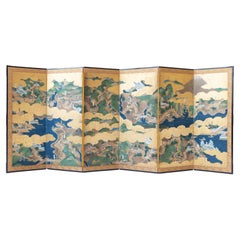
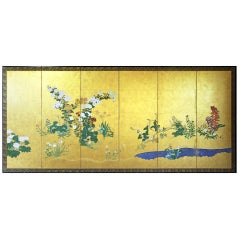
Pair Japanese Edo Six Panel Screens Legend of Minamoto
Located in Rio Vista, CA
Fascinating pair of large Japanese 19th century Edo period six-panel folding byobu screens depicting the legend of Minamoto No Yorimasa (Japanese Samurai 1106-1180). The pair of pain...
Category

19th Century Japanese Edo Antique Gold Asian Art and Furniture
Materials

Brass, Gold Leaf

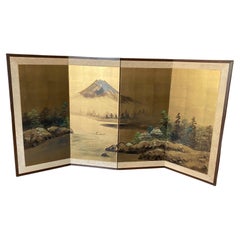
Japanese Asian Signed Four Panel Folding Byobu Screen of Mount MT Fuji Landscape
Located in Studio City, CA
A gorgeous four-panel Showa Period Japanese Byobu folding screen featuring a luminous Mount (Mt,) Fuji perched high above a beautiful natural landscape scene which depicts a small qu...
Category

20th Century Japanese Showa Gold Asian Art and Furniture
Materials

Gold Leaf

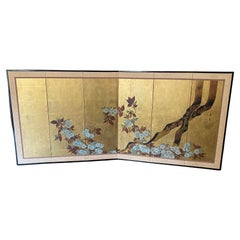
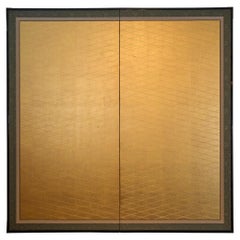
Japanese Asian Signed 8-Panel Folding Byobu Showa Cherry Blossom Tree Screen
Located in Studio City, CA
A gorgeous eight-panel (the screen folds in half instead of fourths due to hanging brackets on the back) Showa Period Japanese Byobu folding screen depicting a nature scene with a be...
Category

20th Century Japanese Showa Gold Asian Art and Furniture
Materials

Gold Leaf

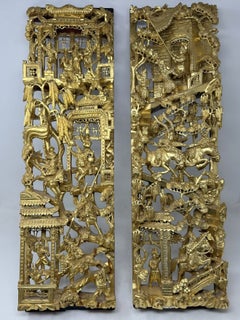
Antique Pair Chinese Hand Cut Carvings Mounted Warriors, Pavilions Foliage Gilt
Located in Dublin, Ireland
Exquisite Pair of Hand Carved Giltwood Cantonese Chinese decorative wall panels of generous size, early Twentieth Century. These stunning and quite rare panels are made from solid...
Category

Late 19th Century Chinese Chinese Export Antique Gold Asian Art and Furniture

Materials

Gold Leaf

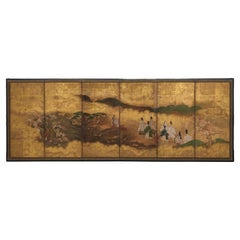
Mid-size 6-panel byôbu 屏風 with a scene from The Tale of Genji
Located in Amsterdam, NL
A refined medium-sized six-panel byôbu (folding screen) showcasing a classical autumn court scene from chapter 7 of The Tale of Genji (Genji Monogatari), titled Momiji no Ga (The Aut...
Category

17th Century Japanese Antique Gold Asian Art and Furniture

Materials

Metal, Gold Leaf

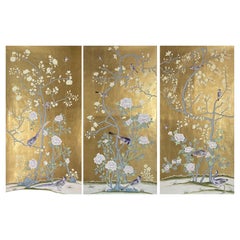
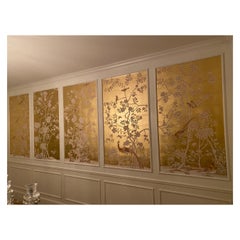
Chinoiserie Panel Hand Painted Wallpaper on Gold Metallic, Accept Custom Size
Located in Wuxi, 32
If you love the look of De Gournay wallpaper but not the price, this is for you. The colorways in this sections present our latest colorways, which can be applied to any designs and...
Category

21st Century and Contemporary Chinese Gold Asian Art and Furniture

Materials

Gold Leaf

Chinoiserie Panel Hand Painted Wallpaper on Gold Metallic, Accept Custom Size
Located in Wuxi, 32
If you love the look of De Gournay wallpaper but not the price, this is for you. The colorways in this sections present our latest colorways, which can be applied to any designs a...
Category

21st Century and Contemporary Chinese Gold Asian Art and Furniture

Materials

Gold Leaf

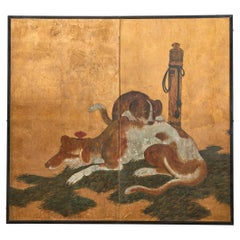
Japanese Two Panel Screen: European Hounds
Located in Hudson, NY
18th century painting of European hound and her pup. Mineral pigments on gold leaf with black lacquer trim.
Category

Mid-18th Century Japanese Antique Gold Asian Art and Furniture

Materials

Gold Leaf

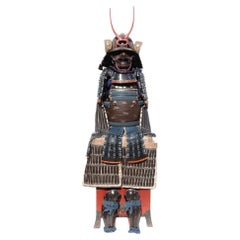
Antique Japanese Samurai Suit of Armor, Edo Period, 18th Century
Located in Point Richmond, CA
Antique Japanese Samurai Suit of Armor, Edo period, 18th century. A complete matching set of lacquered iron work; the cuirass with dragonfly decoration and blue lacing, a Kaga schoo...
Category

18th Century Japanese Edo Antique Gold Asian Art and Furniture

Materials

Gold Leaf, Silver, Foil, Iron, Metal

Chinoiser roll Hand Painted Wallpaper on Gold Metallic, Accept Custom Size
Located in Wuxi, 32
If you love the look of De Gournay wallpaper but not the price, this is for you. The colorways in this sections present our latest colorways, which can be applied to any designs a...
Category

21st Century and Contemporary Chinese Gold Asian Art and Furniture

Materials

Gold Leaf

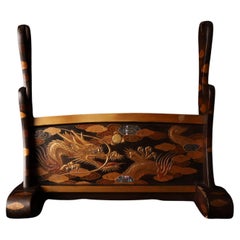
Japanese Gold Maki-e Katana Kake (Sword Stand) with Dragon Motif
Located in Fukuoka, JP
This elegant katana kake (sword stand) is crafted from wood and finished with a rich lacquer coating. Its surface is adorned with a striking gold maki-e depiction of a dragon — a tim...
Category

Late 18th Century Japanese Edo Antique Gold Asian Art and Furniture

Materials

Gold Leaf

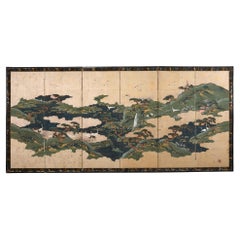
Japanese Edo Screen Kano School Isle of Immortals
Located in Rio Vista, CA
Fascinating 19th century Japanese Edo period six-panel byobu screen depicting the Isle of Immortals. The painting features white Manchurian cranes among pines and flowering plum cent...
Category

19th Century Japanese Edo Antique Gold Asian Art and Furniture

Materials

Brass, Gold Leaf

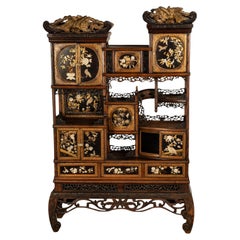
Antique Japanese Lacquer Inlaid Hardwood Meiji Period Shibayama Shodana Cabinet
Located in Portland, OR
An exquisite antique Japanese Meiji period Shibayama Shodana cabinet, circa 1880. One of the finest antique Shibayama cabinets one will see, ...
Category

Late 19th Century Japanese Meiji Antique Gold Asian Art and Furniture

Materials

Gold

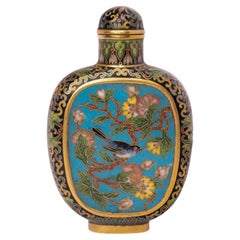
Antique 16k Gold Chinese Qianlong Cloisonne Enamel Snuff Bottle Mark Period
Located in Portland, OR
A fine & rare antique Imperial Chinese Qing dynasty solid gold & cloisonne enamel snuff bottle, Qianlong mark & period, 1736-1795, tests as 16k gold. It is rare to find a cloisonné e...
Category

18th Century Chinese Qing Antique Gold Asian Art and Furniture

Materials

Gold, Enamel

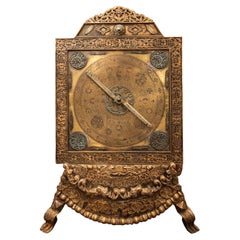
Monumental Antique Islamic Ottoman Safavid Astrological Astrolabe on Stand 1720
Located in Portland, OR
An incredibly rare 18th Century monumental palace size Ottoman Islamic astrolabe on an easel stand, Turkey, circa 1720. This rare palace size Astrola...
Category

Early 18th Century Turkish Islamic Antique Gold Asian Art and Furniture

Materials

Brass, Steel, Gold Leaf

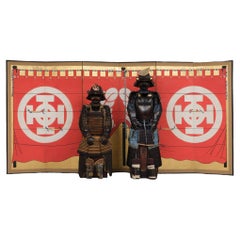
Rare set of 2 Japanese suits-of-armour, complete with 2 matching folding screens
Located in Amsterdam, NL
Important unique set of two suits-of-armour (yoroi), complete with two high six-panel screens, that belong together as is indicated by the used family crests (mon). Two crests are used, both belonging to the Nakagawa family of Oka Castle, Ôita prefecture on Kyûshû. They are: – the Nakagawa-kurusu, a circle depicting a Celtic-like cross through a ring. The cross was originally a Christian symbol but after the ban on Christianity in Japan the use of a hidden cross in family crests could continue. – the Nakagawa-kashiwa, two leaves of the Japanese Emperor Oak turned to each other (dakikashiwa mon). The remarkable aspect of this ensemble is the presence of matching crests on both the yoroi and the accompanying folding screens. The kurusu and kashiwa crests adorning the yoroi are elegantly replicated on the screens, providing compelling evidence that these pieces form a harmonious and unified set. This exceptional cohesion between the armour and screens further enhances their artistic and historical value. After the warlord Toyotomi Hideyoshi (1537-1598) had interfered in the battle between the Lord of Bungo Province Ôtomo Yoshi-mune (1558-1605) and the Shimazu of Hyûga Province, he split the Bungo Province in a number of small fiefs and transferred in 1594 Nakagawa Hideshige (1570-1612) from Miki Castle in the Harima Fief to Oka Castle in Kyûshû. The Nakagawa family stayed in possession of Oka Castle till the abolishment of the military use of castles in 1873. In 1884 the Nakagawa family received the title of Count (a title in use till the abolishment of aristocracy in 1947). After the Nakagawa’s left, the castle and the building soon dilapidated and is now known as Oka Castle Ruins. The castle is located in Taketa Village part of Taketa Town in Ôita Province on Kyûshû. > Set of two tall byôbu (folding screens), painted with large red jinmaku (camp enclosure curtain) on a gold leaf ground. The curtains show both crests of the Nakagawa family: one screen depicts two Nakagawa-kurusu crests next to a Nakagawa-kashi crest in the middle, and the other shows the symbols the other way round. Dimensions: Total width 148.66 in/377.6 cm (2 x 25.35 in/64.4 cm, 4 x 24.48 in/62.2 cm); Height 72.63 in/184.5 cm. Period: Japan – Late Edo period (First half 19th century), and maybe even older. > Yoroi with Nakagawa-kashiwa crest: A Japanese black lacquered suit-of-armour (yoroi) completely laced with orange cords (kuro’urushinuri hi’ito odoshi nimai’dô’maru). A thirty-two plate suji’bachi kabuto (helmet with raised ridges) with in front a maedate (fore crest) -with traces of gilding- in the shape of flames, resembling a mythical flaming bird flying down. The fukikaeshi (face guards) and the mabizashi (visor) have the Nakagawa-kashiwa crest in gold maki-e lacquer. Five curved ‘itazane’-plate neck guards (shikoro) laced with orange cords. Together with an ‘angry man...
Category

18th Century Japanese Antique Gold Asian Art and Furniture

Materials

Gold Leaf, Iron, Metal

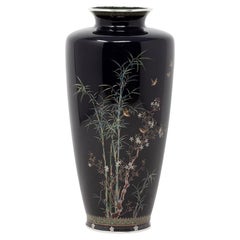
Japanese Antique Cloisonne Enamel Vase Hayashi Kodenji
Located in Newark, England
MEIJI PERIOD (1868-1912) From our Japanese collection, we are delighted to introduce this good size Japanese Cloisonne Enamel Vase. The Vase of gently tapered form with a pinched n...
Category

Early 1900s Japanese Meiji Antique Gold Asian Art and Furniture

Materials

Gold, Silver, Enamel

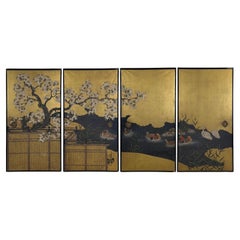
Stunning Set of Four 19th Century Edo Period Fusuma Door Decorative Panels
Located in Los Angeles, CA
A set of four fusuma (sliding door) panels from the 19th century, painted in ink and colors on gold leaf. The panels depict a blossoming cherry tree extending beyond a woven fence an...
Category

Late 19th Century Japanese Edo Antique Gold Asian Art and Furniture

Materials

Gold Leaf, Brass

Rare and Magnificent Thai Silver, Gold Jeweled Palace Mirror for Indian Palace
Located in Queens, NY
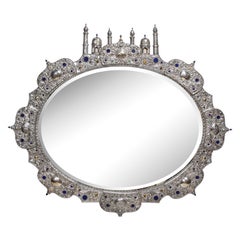
A rare and magnificent silver, gold jeweled palace mirror, certainly made for an Indian Maharaja, circa 1900. A special commission for an Indian palace from the late Victorian era, likely produced in Thailand. This palace size hand-hammered Indian mirror is made from pure silver. A truly exceptional work of art with floral design topped with miniatures structures...
Category

Early 1900s Indian Antique Gold Asian Art and Furniture

Materials

Lapis Lazuli, Malachite, Multi-gemstone, Gold, Silver
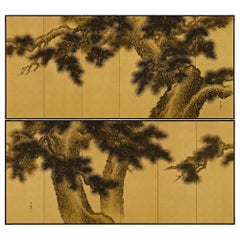
Early 20th Century Japanese Screen Pair - Ink Pine Trees on Gold
Located in Kyoto, JP
Imao Keisho (1902-1993) Pine Trees Early 20th Century, Circa 1930 Pair of six-panel Japanese screens. Ink on silk and gold leaf. Dimensions: Each screen H. 67.5” x 148” (172 cm x 376 cm) A pair of monumental six-panel Japanese pine screens by the renowned Nihonga artist Imao Keisho. Here Keisho entirely removed the background and brought the pine trees to the surface of the painting. This simplification of the elements makes the scene exceptionally direct and compelling and injects a very modern...
Category

Early 20th Century Japanese Showa Gold Asian Art and Furniture

Materials

Gold Leaf

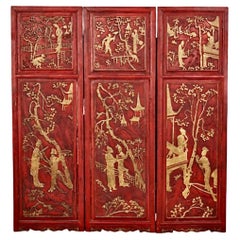
Chinese Carved Gilt Wood Panels or Screen, 19th Century
Located in Pasadena, CA
This is a charming 19th century Chinese carved and gilt wood 3 panel screen. The panels are carved in high relief with multiple figures and architectural elements. The panels are pai...
Category

Late 19th Century Chinese Chinese Export Antique Gold Asian Art and Furniture

Materials

Gold Leaf

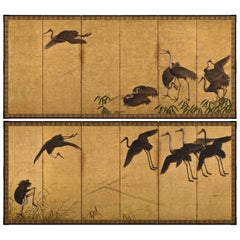
17th Century Japanese Screen Pair. Flock of Cranes. Ink and color on gold leaf.
Located in Kyoto, JP
A pair of six-fold Japanese screens from the 17th century depicting a flock of cranes arriving at their wintering grounds. The expansive scene is heavily atmospheric. The cranes are...
Category

17th Century Japanese Edo Antique Gold Asian Art and Furniture

Materials

Gold Leaf

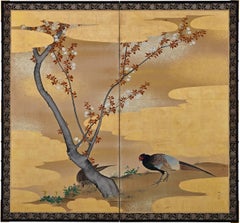
Early 19th Century Japanese Screen. Cherry Blossom Pheasants by Mori Tetsuzan
Located in Kyoto, JP
Mori Tetsuzan (1775-1841) Pheasants and Cherry Blossoms Two-fold Japanese screen. Ink, color, gofun, gold and silver on paper. A two-fold Japanese bir...
Category

Early 19th Century Japanese Edo Antique Gold Asian Art and Furniture

Materials

Gold Leaf

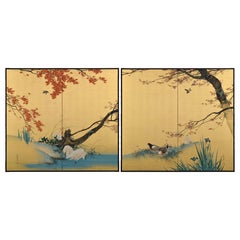
Meiji era Japanese Screen Pair, Two-panel. Spring Autumn Birds Flowers.
Located in Kyoto, JP
Spring and Autumn Birds & Flowers Hasegawa Gyokujun (1863-1921) Meiji period, circa 1900. Ink, color and gofun on silk. Dimensions of each screen: H. 172 cm x W. 188 cm (68’’ x 7...
Category

Early 20th Century Japanese Meiji Gold Asian Art and Furniture

Materials

Gold Leaf

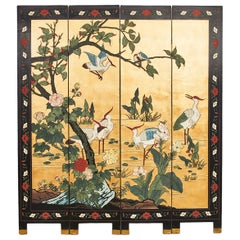
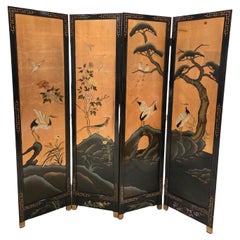
Chinese Export Four Panel Coromandel Screen Cranes on Gold Leaf
Located in Rio Vista, CA
Dazzling Chinese export lacquered four-panel coromandel screen featuring a flora and fauna waterscape with stylized cranes. The carved lacquer panels...
Category

20th Century Chinese Chinese Export Gold Asian Art and Furniture

Materials

Brass, Gold Leaf

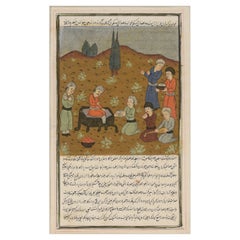
Persian Manuscript Page - Garden Scene
Located in Soquel, CA
Persian Manuscript Page depicting a garden scene. Circa 18th century. Hand painted scene depicts a hilly outdoor landscape where people are congre...
Category

Late 18th Century Persian Islamic Antique Gold Asian Art and Furniture

Materials

Gold Leaf

Circa 1920 Japanese Screen. Cat Mouse Harvest Scene on Gold Silk.
Located in Kyoto, JP
The narrative playfulness of the scene depicted on this Japanese screen sets alight what is at its core a celebration of a bountiful harvest. The screen offers a visual representatio...
Category

Early 20th Century Japanese Taisho Gold Asian Art and Furniture

Materials

Gold

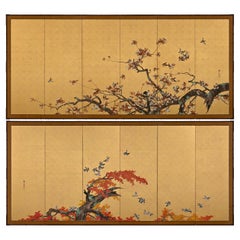
Meiji Era, Circa 1900 Japanese Screen Pair, Flowers Birds of Spring Autumn
Located in Kyoto, JP
Flowers & Birds of Spring and Autumn Unknown artist. Japan. Meiji period, circa 1900. A pair of six-fold screens. Ink, color, gofun and gold leaf on paper. Signed: Gaga S...
Category

1890s Japanese Meiji Antique Gold Asian Art and Furniture

Materials

Gold Leaf

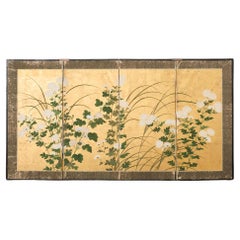
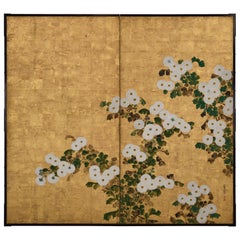
Japanese Edo Four Panel Screen Flowering White Chrysanthemums
Located in Rio Vista, CA
19th century extraordinary Japanese late Edo/early Meiji period four-panel byobu screen featuring flowering white chrysanthemums painted in a moriage (raised pigment) style. The pain...
Category

19th Century Japanese Edo Antique Gold Asian Art and Furniture

Materials

Brass, Gold Leaf

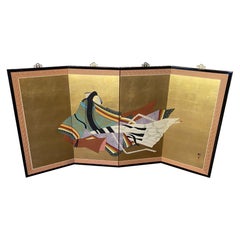
Japanese Asian Signed Four-Panel Folding Byobu Showa Genji Screen Lady Murasaki
Located in Studio City, CA
A gorgeous and quite striking four-panel Japanese Byobu folding screen featuring an elegantly clad Lady Murasaki, the Japanese novelist, (and famed author of the classic "Tale of Gen...
Category

Mid-20th Century Japanese Showa Gold Asian Art and Furniture

Materials

Gold Leaf

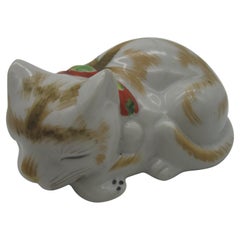
Japanese Meiji Period Gold White Porcelain Sleeping Cat Sculpture, circa 1910
Located in Takarazuka, JP
Exquisite Meiji period Japanese Kutani sculpture of a sleeping cat in fine porcelain, inspired by the small wooden sculpture at the entrance of...
Category

Early 20th Century Japanese Meiji Gold Asian Art and Furniture

Materials

Gold

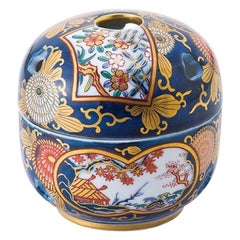
Japanese Contemporary Ko-Imari Gold Blue Porcelain Koro Incense Burner
Located in Takarazuka, JP
Stunning contemporary Japanese Ko-Imari style porcelain koro or incense burner or jewelry box, hand painted on a beautifully shaped round body in cobalt blue, red and green and gener...
Category

21st Century and Contemporary Japanese Meiji Gold Asian Art and Furniture

Materials

Gold

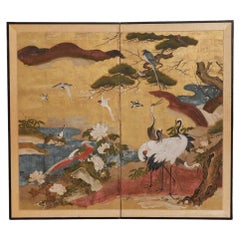
Antique Japanese Kachoga Kano School 2-Panel Screen, Edo Period
Located in Point Richmond, CA
Antique Japanese 2-panel Screen of Birds Flowers in a Landscape Setting, Kano School, Edo Period. This Kachoga subject of birds and flowers contains a brilliant mix of a variet...
Category

18th Century Japanese Edo Antique Gold Asian Art and Furniture

Materials

Gold Leaf

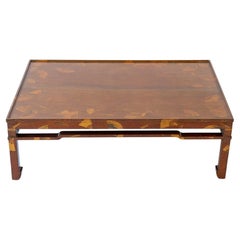
19th century Japanese Lacquer Zataku (low table) with Scattered fan Motif
Located in New York, NY
This Japanese antique low table features a scattered fan motif and is a type of zataku (low table), historically used for meals, tea ceremonies, and other seated activities. Lacque...
Category

Late 19th Century Japanese Antique Gold Asian Art and Furniture

Materials

Gold Leaf

Large Japanese 6-panel byôbu 屏風 (folding screen) with Edo genre painting
Located in Amsterdam, NL
An elaborate, large six-panel byôbu (folding screen) featuring a detailed genre painting on gold leaf, capturing the vibrancy of festive scenes from the Edo period. Central to the p...
Category

Early 19th Century Japanese Antique Gold Asian Art and Furniture

Materials

Metal, Gold Leaf

18th Century Japanese Rinpa Screen. White Chrysanthemums. School of Korin.
Located in Kyoto, JP
School of Ogata Korin White Chrysanthemums 18th Century, Edo period. A two-panel Japanese screen. Ink, color, gofun and gold leaf on paper. Dimensions: H. 171 cm x W. 188 cm (67.5” x 74”) On this two-panel Japanese screen we see blooming chrysanthemums, a flower which embodies the essence of autumn in Japan. Here the traditional floral theme has been simplified and stylized. The bright colors and asymmetrical composition against the delicate gold leaf create a luxurious and ornate work of art. Its background, a strikingly patinated grid of gold leaf, denies any sense of place or time and imbues everything with an ethereal glow. The leaves and stems of the plants are nothing more than pools of mottled color and ink without any outline whatsoever. These are typical Rinpa adaptations of traditional ink painting methods; tarashikomi, or diluted washes of color blended while very wet, and mokkotsu, or “bonelessness,” which creates forms without exterior outlines. The relief work of the rounded flower petals has been obtained by the moriage process (a mixture based on ground shells modeled on the surface of the paper). On the lower right of the screen, the siganture “Hokyo Korin Jakumyo” and the “Hoshuku” seal can be read. Korin is Ogata Korin, famed for the Irises (Nezu Museum) and Red and White Plum Blossom (MOA Museum of Art) folding screens, both National Treasures. Korin worked in both Kyoto and Edo in the mid-Edo period. Korin was using the art name “Jakumyo” just after he received the Hokyo level, which was in 1701. This particular screen was published in May of 1961 in the Japanese Sansai Fine Art Magazine*. An in depth article accompanies the photograph of the screen and and a photograph of the signature and seal. This article devotes much of its body to discussing the moriage technique, how it enlivens the chrysanthemum flowers and Korin’s specific skill in using the technique. The article goes on to discuss the most famous works of Korin, utilizing this technique, which were known at the time. Specifically a two-panel screen held in the Honolulu Museum which was discovered in the store-house of Takahashi Soan. A two-panel screen pair which the Nakano family own. A two-panel screen pair with chrysanthemums in moriage in fan designs owned by the Nomura family. Also a small folding screen featuring chrysanthemums held in the Yamato Bunkakan. The article goes on to say that this particular two-fold screen came from the Nijo family. Korin is known to have had a strong connection with the aristocratic Nijo family. The article explains that Korin received a lot of favors from the Nijo family and that this screen would have been gifted to them. Since that time the Honolulu screen has been amended to ‘attributed to Ogata Korin’ and I do not know further details of the other 3 screens. Other Chrysanthemum screens...
Category

18th Century Japanese Edo Antique Gold Asian Art and Furniture

Materials

Gold Leaf

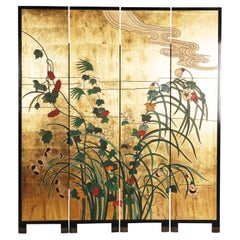
Vintage Gold Leaf Lacquer Asian-Inspired Four-Panel Folding Screen
Located in Sheridan, CO
Vintage Black and Gold Leaf Lacquer Asian-Inspired Four-Panel Folding Screen. An Asian-Inspired Four-Panel Screen depicting colorful foliage, floral and grasses on a stunning gold le...
Category

1950s Japanese Japonisme Vintage Gold Asian Art and Furniture

Materials

Gold Leaf

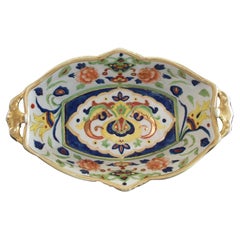
Nippon, Morimura Bros., Antique Hand Painted Center Bowl, Japan, C. 1911-21
By Royal Nippon Hinode
Located in Chatham, ON
NIPPON - MORIMURA BROTHERS (Manufacturer) - Antique hand painted ceramic center bowl - rare design featuring flowers and arabesque scrolls in the P...
Category

Early 20th Century Japanese Anglo-Japanese Gold Asian Art and Furniture

Materials

Enamel, Gold Leaf

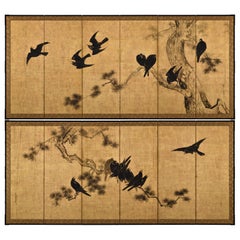
Mid 18th Century Japanese Screen Pair. Crows Pines by Unkoku Toshuku.
Located in Kyoto, JP
Unkoku Toshuku (1722-1779) Crows and Pines A pair of six-panel Japanese Screens. Ink and gold leaf on paper. Dimensions: Each Screen: H. 170.5 cm x W. 375 cm Haha-cho or mynah birds, whose forms resemble crows in artwork, were commonly depicted in Japanese art. These types of paintings were originally modeled on paintings attributed to the 13th century Chinese painter Muqi (Mokkei), whose art was enormously influential in Japan. Crows only became a theme among Japanese artists from the later 1500s onward. They likely were inspired by these imported Chinese paintings of myna birds, which are not native to Japan, substituting the native species of crow instead.  The best known early examples of the depiction of Japanese crows are two Momoyama screen...
Category

Mid-18th Century Japanese Edo Antique Gold Asian Art and Furniture

Materials

Gold Leaf

Antique 19th Century Japanese Two-Panel Screen ‘Byobu’, Kano School, Edo Period
Located in London, GB
Japanese Kano School Edo period two-panel screen depicting flowering prunus and bamboo on a rock formation, with colorful birds next to a body of water. ...
Category

Mid-19th Century Japanese Edo Antique Gold Asian Art and Furniture

Materials

Gold Leaf

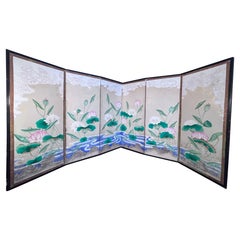
Japanese Antique Hand Painted Lotus And Blue Waters Screen Vibrant Colors
Located in South Burlington, VT
From our recent Japanese Acquisitions- Hard to Find Lotus Flowers A stunning Japanese Antique Hand Painted six panel byobu screen on silk executed with lovely lotus flowers and vib...
Category

19th Century Japanese Meiji Antique Gold Asian Art and Furniture

Materials

Gold Leaf

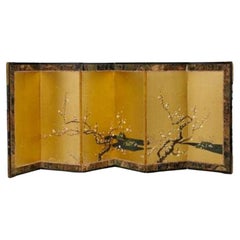
Early 20th Century Japanese 6-Panel Gouache and Gold Leaf Painted Table Screen
Located in Morristown, NJ
20th c., Showa period gouache and gold leaf Japanese screen. Depicting plum tree blossoms on a riverbank across 6 panels. Plum blossoms are often mentioned in Japanese poetry as a symbol of spring...
Category

20th Century Japanese Showa Gold Asian Art and Furniture

Materials

Gold Leaf

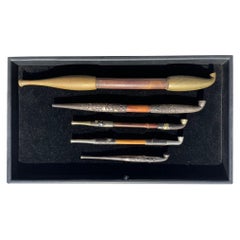
Japanese Connoisseurs Collection Fine Antique Smoking Pipes Kiseru
Located in South Burlington, VT
Rare one-of-a-kind collection Japanese Connoisseurs Collection of Five (5) Fine Antique Smoking Pipes, Kiseru. You dont need to be a conn...
Category

19th Century Japanese Meiji Antique Gold Asian Art and Furniture

Materials

Bronze, Gold, Sterling Silver, Copper

Contemporary Large Japanese Green Blue Gilded Porcelain Vase by Master Artist
Located in Takarazuka, JP
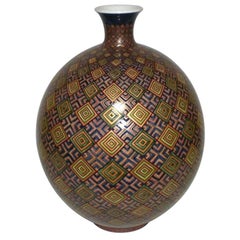
Outstanding contemporary large Japanese porcelain vase featuring a fascinating and detailed geometric progression that is hand painted in...
Category

21st Century and Contemporary Japanese Gold Asian Art and Furniture

Materials

Gold

18th Century Five-Panel Chinese Coromandel Screel
Located in CABA, AR
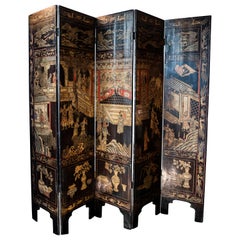
Transport yourself back to the opulent splendor of the 18th century with this magnificent Chinese five-panel black Coromandel screen, a true m...
Category

18th Century Chinese Chinese Export Antique Gold Asian Art and Furniture

Materials

Gold Leaf

Japanese Asian Signed Four Panel Folding Byobu Screen Eternal Spring Landscape
Located in Studio City, CA
A gorgeous four-panel Showa Period Japanese Byobu folding screen depicting a beautiful nature scene with a stunning piercing blue blossoming flowers placed along the waterway landsca...
Category

20th Century Japanese Showa Gold Asian Art and Furniture

Materials

Gold Leaf

Kiku to Hagi Byobu, Rinpa School Style, Edo Period.
Located in Point Richmond, CA
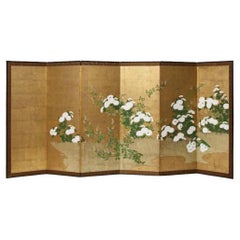
A Chrysanthemum and Bush Clover painting on gold leaf six-panel folding screen, painted with clusters of leafy green chrysanthemum plants with white blossoms having moriage relief petals of gofun growing amidst pink blossoming bush clover within a bunched bush clover garden fence rendered in lighter gold relief, all on a background entirely of rich gold leaf. These two flowers are symbolic of Japan and the autumn season. The classic patterned paper verso with a Naga Antiques...
Category

Early 1800s Japanese Edo Antique Gold Asian Art and Furniture

Materials

Gold Leaf

Chinoiserie Panel Hand Painted Wallpaper on Gold Metallic, Accept Custom Size
Located in Wuxi, 32
If you love the look of De Gournay wallpaper but not the price, this is for you. The colorways in this sections present our latest colorways, which can be applied to any designs a...
Category

21st Century and Contemporary Chinese Gold Asian Art and Furniture

Materials

Gold Leaf

Japanese Contemporary Blue Pink Porcelain Vase by Master Artist Duo
Located in Takarazuka, JP
Exceptional Japanese Contemporary museum=quality extremely intricately hand painted decorative porcelain vase in blue elegantly featuring the four auspicious creatures of Chinese myt...
Category

21st Century and Contemporary Japanese Meiji Gold Asian Art and Furniture

Materials

Gold

Japanese Screen Pair, circa 1730, Peacocks and Phoenix, Kano School
Located in Kyoto, JP
Phoenix and Peacocks. A pair of six-panel Japanese folding screens by Tsunetake Yotei (n.d.) First half of the 18th century. The signature reads 67 year old Tsunetake. The seals read: -Tsunetake no in, -Yotei, -Seishin Dimensions: Each screen – H. 69” x W. 149” (176 cm x 378 cm) A pair of Kano Grand Picture (Waga) screens depicting phoenix and peacocks rich with symbolic meaning. Dating to the first half of the 18th century, from the Kobikicho Kano school in Edo, this pair of folding...
Category

Early 18th Century Asian Edo Antique Gold Asian Art and Furniture

Materials

Gold Leaf

Elegant Horse Screen. In style of Kano Tanshin
By Kano Tanshin
Located in Fukuoka, JP
Ink on gold. This continuation of equine grace unfolds across a stunning gold-leaf backdrop, capturing the essence of nobility that horses represent in Japanese lore. The screen de...
Category

Late 18th Century Japanese Edo Antique Gold Asian Art and Furniture

Materials

Gold Leaf

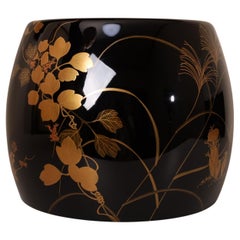
Lacquer Hibachi with Seasonal Motifs — Late Meiji Period (c.1900)
Located in Fukuoka, JP
Dimensions: 23 × 23 × 26 cm Material: Black lacquer with maki-e decoration Box: Signed tomobako (original wooden box) A refined example of late Meiji craftsmanship, this lacquer hibachi (traditional Japanese brazier...
Category

Late 19th Century Japanese Meiji Antique Gold Asian Art and Furniture

Materials

Copper, Gold Leaf

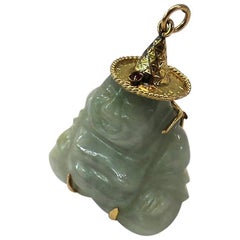
Chinese 14-Karat Gold and Jade Buddha Necklace Pendant with Ruby
Located in Hamilton, Ontario
Chinese 14-Karat Gold and Jade Buddha Necklace Pendant with Ruby
Category

1950s Asian Vintage Gold Asian Art and Furniture

Materials

Jade, Gold

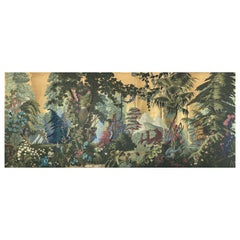
Panoramic Mural Hand Painted Wallpaper on Gold Metallic, Accept Custom Size
Located in Wuxi, 32
If you love the look of De Gournay wallpaper but not the price, this is for you. The colorways in this sections present our latest colorways, which can be applied to any designs a...
Category

21st Century and Contemporary Chinese Gold Asian Art and Furniture

Materials

Gold Leaf

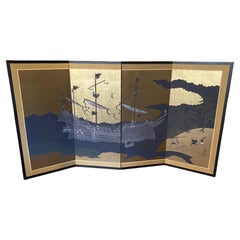
Japanese Asian Signed Four Panel Folding Byobu Nanban Ship at Sea Arrival Screen
Located in Studio City, CA
A beautiful, quite engaging four-panel Showa Period Japanese Nanban (Namban) Byobu folding screen depicting the exotic arrival by ship and activities of Southern Barbarians (Portugue...
Category

Mid-20th Century Japanese Showa Gold Asian Art and Furniture

Materials

Gold Leaf

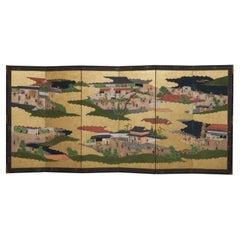
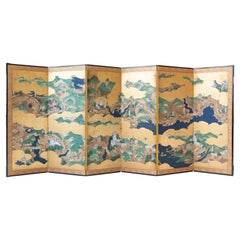
Early 19th century Japanese Screen with Village Scenes, on Gold Leaf
Located in New York, NY
A striking antique six-fold Japanese screen. This is one of a pair. See other listing. The subject is "Tokaido", which features famous locations between Tokyo and Kyoto. The desig...
Category

Early 19th Century Japanese Antique Gold Asian Art and Furniture

Materials

Gold Leaf

Early 19th century Japanese Screen with Village Scenes on Gold Leaf
Located in New York, NY
A striking antique six-fold Japanese screen. This is one of a pair. The subject is "Tokaido", which features famous locations between Tokyo and Kyoto. The design is beautifully det...
Category

Early 19th Century Japanese Antique Gold Asian Art and Furniture

Materials

Gold Leaf

Hand Painted, 4 Panel Folding Screen with Crane Birds, Room Divider
Located in Waasmunster, BE
Hand Painted, 4 Panel Folding Screen with Crane Birds, Room Divider
Category

1970s Japanese Japonisme Vintage Gold Asian Art and Furniture

Materials

Gold Leaf

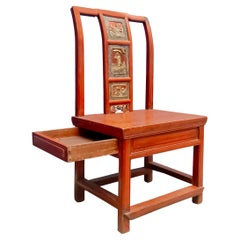
Late 19th Century Qing Dynasty Red Lacquered and Parcel-Gilt Altar Chair
Located in Glasgow, GB
A late 19th-century Chinese Qing Dynasty altar chair, exquisitely handcrafted from hardwood and finished in a bold imperial red lacquer. This striking piece exemplifies the fine craftsmanship and technical woodworking skills for which Chinese artisans were renowned. Constructed using traditional mortise and tenon joinery—an advanced technique that requires no nails or glue—the chair demonstrates remarkable stability and artistry, hallmarks of Qing Dynasty furniture. The chair’s centre back splat features parcel-gilt cartouche decorations, each meticulously hand-carved and gilded with symbolic Chinese motifs and a central figural scene. The rich red lacquer and gilding reflect the traditional colours associated with good fortune and reverence in Chinese culture. Compact in stature, this antique altar chair...
Category

Late 19th Century Chinese Chinoiserie Antique Gold Asian Art and Furniture

Materials

Gold Leaf

Edo Landscape Japanese Folding Screen
Located in Brescia, IT
Refined work by a painter from the first half of the 19th century, from the landscape of the "Rinpa" school by a painter from the end of the 18th century, the Rinpa school. Six panels painted in ink on gold leaf and "gofun" on vegetable paper. The flowers are made with the "gofun" technique, natural or pigmented white oyster powder. Rinpa is one of the major historical schools of Japanese painting. The style was consolidated by the brothers Ogata Korin (1658–1716) and Ogata Kenzan (1663–1743). This folding screen has a very clean design that leaves plenty of room for the beautiful golden landscape. It comes flat and you can easily hang it with our hooks. Lucio Morini...
Category

18th Century Japanese Edo Antique Gold Asian Art and Furniture

Materials

Gold Leaf

Still Thinking About These?

All Recently Viewed