Gold Asian Art and Furniture

to
102
265
91
431
246
3
5
3
2
2
1
1
1
1
100
212
119
249
53
26
10
9
1
4
2
1
4
9
2
1
1
12,634
6,358
5,359
5,329
3,007
653
597
549
42
27
680
660
666
16
8
4
2
1
Material: Gold
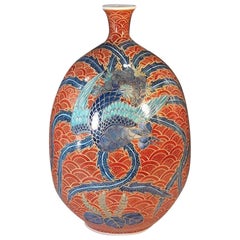
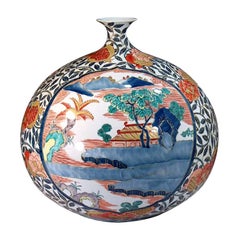
Japanese Porcelain Vase in Red and Blue by Contemporary Master Artist
Located in Takarazuka, JP
Stunning contemporary decorative porcelain vase showcasing a blue and turquoise Phoenix gracefully extending its wings all around the body of the vase on a red background with a deta...
Category

21st Century and Contemporary Japanese Meiji Gold Asian Art and Furniture

Materials

Gold

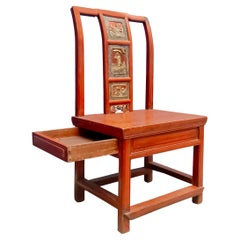
Late 19th Century Qing Dynasty Red Lacquered and Parcel-Gilt Altar Chair
Located in Glasgow, GB
A late 19th-century Chinese Qing Dynasty altar chair, exquisitely handcrafted from hardwood and finished in a bold imperial red lacquer. This striking piece exemplifies the fine craftsmanship and technical woodworking skills for which Chinese artisans were renowned. Constructed using traditional mortise and tenon joinery—an advanced technique that requires no nails or glue—the chair demonstrates remarkable stability and artistry, hallmarks of Qing Dynasty furniture. The chair’s centre back splat features parcel-gilt cartouche decorations, each meticulously hand-carved and gilded with symbolic Chinese motifs and a central figural scene. The rich red lacquer and gilding reflect the traditional colours associated with good fortune and reverence in Chinese culture. Compact in stature, this antique altar chair...
Category

Late 19th Century Chinese Chinoiserie Antique Gold Asian Art and Furniture

Materials

Gold Leaf

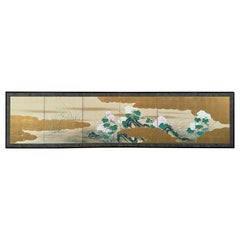
Edo Landscape Japanese Folding Screen
Located in Brescia, IT
Refined work by a painter from the first half of the 19th century, from the landscape of the "Rinpa" school by a painter from the end of the 18th century, the Rinpa school. Six panels painted in ink on gold leaf and "gofun" on vegetable paper. The flowers are made with the "gofun" technique, natural or pigmented white oyster powder. Rinpa is one of the major historical schools of Japanese painting. The style was consolidated by the brothers Ogata Korin (1658–1716) and Ogata Kenzan (1663–1743). This folding screen has a very clean design that leaves plenty of room for the beautiful golden landscape. It comes flat and you can easily hang it with our hooks. Lucio Morini...
Category

18th Century Japanese Edo Antique Gold Asian Art and Furniture

Materials

Gold Leaf

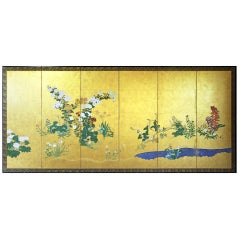
Japanese Six-Panel Folding Screen with Floral Landscape
Located in Fukuoka, JP
Elegant Japanese six-panel byōbu depicting a tranquil landscape with blooming flowers set against softly rendered hills and stylized clouds. The composition is balanced and serene, w...
Category

20th Century Japanese Showa Gold Asian Art and Furniture

Materials

Gold Leaf

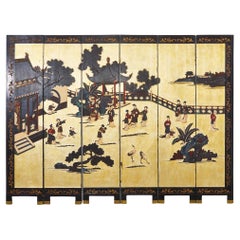
20th Century Chinese Export Six Panel Gold Leaf Coromandel Screen
Located in Rio Vista, CA
Late Qing, early republic period style Chinese export six-panel coromandel screen featuring a pavillion with figures engaged in leisurely activities on a dramatic gilt gold leaf back...
Category

20th Century Chinese Chinese Export Gold Asian Art and Furniture

Materials

Brass, Gold Leaf

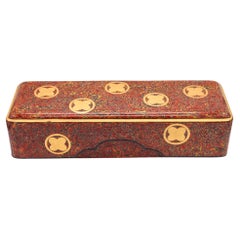
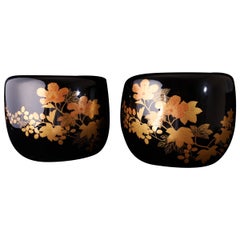
JAPAN 1900 Meiji Period Fubako Box In Hiramaki-e Lacquered Wood With Gilding
Located in Miami, FL
Fubako letters-box from the Japanese Meiji period (1868-1912). Beautiful decorative Fubako letters box from the Japanese Imperial Meiji period, circa 1900. This box has been meticul...
Category

Early 1900s Japanese Meiji Antique Gold Asian Art and Furniture

Materials

Gold

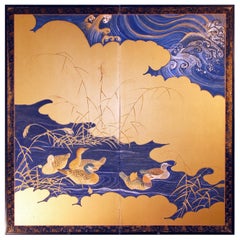
Paravento Giapponese a due pannelli
Located in Brescia, IT
Sempre alla ricerca di cose particolari abbiamo acquistato questo paravento giapponese da una collezionista di Osaka. Un esempio di arte del novec...
Category

20th Century Japanese Showa Gold Asian Art and Furniture

Materials

Gold

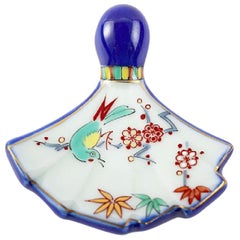
Set of Six Japanese Contemporary Blue Red Green Porcelain Chopstick Rests
Located in Takarazuka, JP
Set of six Japanese Contemporary porcelain chopstich rests, on a stunning fan-shaped body in cobalt blue, green, red and gold details. Chopstick rests k...
Category

21st Century and Contemporary Japanese Meiji Gold Asian Art and Furniture

Materials

Gold

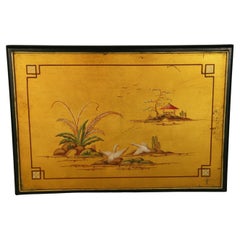
Japanese Landscape Painting on Gilt Wood Panel
Located in Douglas Manor, NY
4013 Hand painted Japanese landscape on gilt wood panel.
Category

1950s Japanese Vintage Gold Asian Art and Furniture

Materials

Gold Leaf

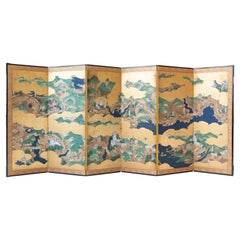
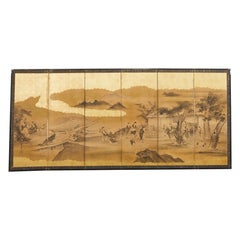
Early 19th century Japanese Screen with Village Scenes on Gold Leaf
Located in New York, NY
A striking antique six-fold Japanese screen. This is one of a pair. The subject is "Tokaido", which features famous locations between Tokyo and Kyoto. The design is beautifully det...
Category

Early 19th Century Japanese Antique Gold Asian Art and Furniture

Materials

Gold Leaf

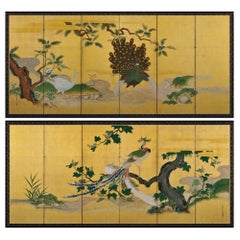
Japanese Screen Pair, circa 1730, Peacocks and Phoenix, Kano School
Located in Kyoto, JP
Phoenix and Peacocks. A pair of six-panel Japanese folding screens by Tsunetake Yotei (n.d.) First half of the 18th century. The signature reads 67 year old Tsunetake. The seals read: -Tsunetake no in, -Yotei, -Seishin Dimensions: Each screen – H. 69” x W. 149” (176 cm x 378 cm) A pair of Kano Grand Picture (Waga) screens depicting phoenix and peacocks rich with symbolic meaning. Dating to the first half of the 18th century, from the Kobikicho Kano school in Edo, this pair of folding...
Category

Early 18th Century Asian Edo Antique Gold Asian Art and Furniture

Materials

Gold Leaf

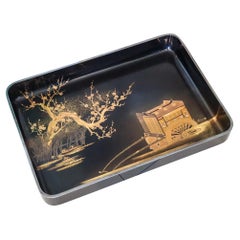
MEIJI PERIOD 1890 Maki-e Presentation Tray In Lacquer Gold With Kanji Wood Box
Located in Miami, FL
A large maki-e presentation tray from the Meiji period. This is an extraordinary presentation rectangular tray created in the Imperial Japan period during the pinnacle of the Meiji ...
Category

1890s Japanese Meiji Antique Gold Asian Art and Furniture

Materials

Gold, Silver

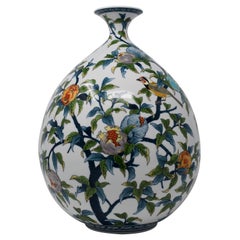
Japanese Contemporary Blue Green Yellow Porcelain Vase by Master Artist, 3
Located in Takarazuka, JP
Extraordinary contemporary Japanese museum-quality decorative porcelain vase, stunningly hand-painted in blue, green and orange on a gracefully shaped ...
Category

21st Century and Contemporary Japanese Meiji Gold Asian Art and Furniture

Materials

Gold

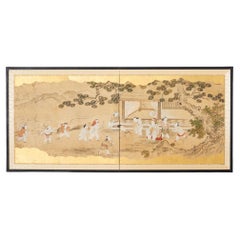
19th Century Japanese Edo Screen Kano School Garden Terrace
Located in Rio Vista, CA
Fantastic 19th century Japanese Edo/Tokugawa period two-panel byobu screen featuring Chinese children frolicking on a garden terrace with a pavilion and large pine tree. Made in the ...
Category

19th Century Japanese Edo Antique Gold Asian Art and Furniture

Materials

Brass, Gold Leaf

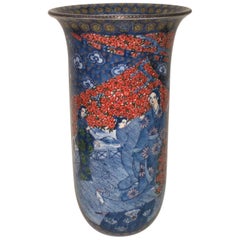
Japanese Red Pink Blue Porcelain Vase by Master Artist
Located in Takarazuka, JP
Extraordinary large Japanese contemporary decorative porcelain vase/centerpiece, extremely intricately hand painted on a tall stunning cylinder shape porcelain body in red, pink, blu...
Category

21st Century and Contemporary Japanese Meiji Gold Asian Art and Furniture

Materials

Gold

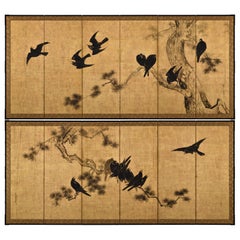
Mid 18th Century Japanese Screen Pair. Crows Pines by Unkoku Toshuku.
Located in Kyoto, JP
Unkoku Toshuku (1722-1779) Crows and Pines A pair of six-panel Japanese Screens. Ink and gold leaf on paper. Dimensions: Each Screen: H. 170.5 cm x W. 375 cm Haha-cho or mynah birds, whose forms resemble crows in artwork, were commonly depicted in Japanese art. These types of paintings were originally modeled on paintings attributed to the 13th century Chinese painter Muqi (Mokkei), whose art was enormously influential in Japan. Crows only became a theme among Japanese artists from the later 1500s onward. They likely were inspired by these imported Chinese paintings of myna birds, which are not native to Japan, substituting the native species of crow instead.  The best known early examples of the depiction of Japanese crows are two Momoyama screen...
Category

Mid-18th Century Japanese Edo Antique Gold Asian Art and Furniture

Materials

Gold Leaf

18th Century Japanese Rinpa Screen. White Chrysanthemums. School of Korin.
Located in Kyoto, JP
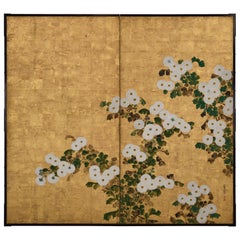
School of Ogata Korin White Chrysanthemums 18th Century, Edo period. A two-panel Japanese screen. Ink, color, gofun and gold leaf on paper. Dimensions: H. 171 cm x W. 188 cm (67.5” x 74”) On this two-panel Japanese screen we see blooming chrysanthemums, a flower which embodies the essence of autumn in Japan. Here the traditional floral theme has been simplified and stylized. The bright colors and asymmetrical composition against the delicate gold leaf create a luxurious and ornate work of art. Its background, a strikingly patinated grid of gold leaf, denies any sense of place or time and imbues everything with an ethereal glow. The leaves and stems of the plants are nothing more than pools of mottled color and ink without any outline whatsoever. These are typical Rinpa adaptations of traditional ink painting methods; tarashikomi, or diluted washes of color blended while very wet, and mokkotsu, or “bonelessness,” which creates forms without exterior outlines. The relief work of the rounded flower petals has been obtained by the moriage process (a mixture based on ground shells modeled on the surface of the paper). On the lower right of the screen, the siganture “Hokyo Korin Jakumyo” and the “Hoshuku” seal can be read. Korin is Ogata Korin, famed for the Irises (Nezu Museum) and Red and White Plum Blossom (MOA Museum of Art) folding screens, both National Treasures. Korin worked in both Kyoto and Edo in the mid-Edo period. Korin was using the art name “Jakumyo” just after he received the Hokyo level, which was in 1701. This particular screen was published in May of 1961 in the Japanese Sansai Fine Art Magazine*. An in depth article accompanies the photograph of the screen and and a photograph of the signature and seal. This article devotes much of its body to discussing the moriage technique, how it enlivens the chrysanthemum flowers and Korin’s specific skill in using the technique. The article goes on to discuss the most famous works of Korin, utilizing this technique, which were known at the time. Specifically a two-panel screen held in the Honolulu Museum which was discovered in the store-house of Takahashi Soan. A two-panel screen pair which the Nakano family own. A two-panel screen pair with chrysanthemums in moriage in fan designs owned by the Nomura family. Also a small folding screen featuring chrysanthemums held in the Yamato Bunkakan. The article goes on to say that this particular two-fold screen came from the Nijo family. Korin is known to have had a strong connection with the aristocratic Nijo family. The article explains that Korin received a lot of favors from the Nijo family and that this screen would have been gifted to them. Since that time the Honolulu screen has been amended to ‘attributed to Ogata Korin’ and I do not know further details of the other 3 screens. Other Chrysanthemum screens...
Category

18th Century Japanese Edo Antique Gold Asian Art and Furniture

Materials

Gold Leaf

Six-panel gold leaf screen
Located in Brescia, IT
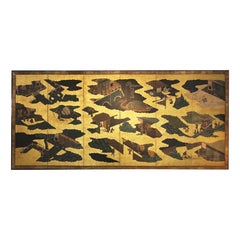
Large Japanese six-panel screen, ink, color, gold, and gold leaf on paper, depicting three scenes from Genji monogatari (The Tale of Genji), the vignettes punctuated by raised golden...
Category

Early 19th Century Japanese Edo Antique Gold Asian Art and Furniture

Materials

Gold Leaf

Japanese Edo Six Panel Screen Chinese Children at Play
Located in Rio Vista, CA
Amazing 19th century Japanese Edo period six panel folding byobu screen depicting Chinese children at play. The screen alludes to the 100 children theme. ...
Category

19th Century Japanese Edo Antique Gold Asian Art and Furniture

Materials

Gold Leaf

Antique Burmese Sadaik  Manuscript Chest.
Located in Point Richmond, CA
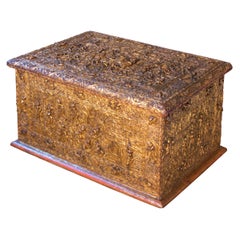
The chest is constructed of teak covered in lacquer and gold leaf with a hinged lid and detailed decoration on four sides. The high relief thayo lacquer depicts narrative scenes, bordered by a tendril vine frame with reserve cartouches of birds, beasts or men within.  The scenes may be from the Mahajanaka Jataka, one of the last Jataka tales of a life preceding the life of becoming the Buddha. This tale of endurance starts by depicting the rivalry between two brothers fighting for the throne. The lid depicts this great conflict having two battling elephants at center. Half of the surrounding characters are sending the opponents into retreat. The brother that is King is killed. The sides of the chest dynamically continue the story. On the right side of the front scene, the pregnant Queen at the front of the palace is informed of the King’s death  by her kneeling subjects.  On the left side of the front panel, the Queen is shown in retreat with her riches sacked upon her head. On the left side of the chest the story continues with Saka the Lord of the Dewas offering the Queen a lift upon an ox drawn cart. The right side of the chest depicts the pregnant Queen at her destination of refuge discussing her predicament with her long lost brother who offers protection in the birth of her child, Prince Mahajanaka. The elaborate high relief thayo lacquer is molded and modeled of a putty of lacquer sap mixed with clay, saw-dust, or ash. The interior and back are lacquered red. Provenance: From a residence designed by Kalef Alaton. East & Orient Company, Dallas. Private collection, Texas. Lark Mason...
Category

Late 19th Century Burmese Anglo-Indian Antique Gold Asian Art and Furniture

Materials

Gold Leaf

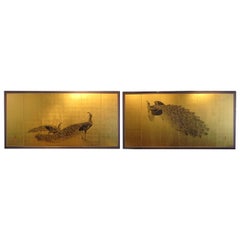
Pair of Japanese Screens: Ink paintings of peacocks on gold leaf by Imao Keinen
By Imao Keinen
Located in Prahran, Victoria
A pair of screens by Imao Keinen featuring peacocks painted in ink on gold leaf. Lacquered wood frame, brocade border, incised copper hardware. Dimensions: H 175cm x W 352cm Biogr...
Category

Late 19th Century Japanese Meiji Antique Gold Asian Art and Furniture

Materials

Gold Leaf

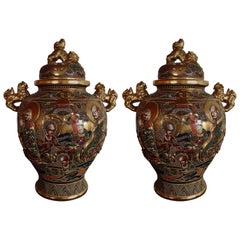
Pair of Satsuma Vases Porcelain with Lid
Located in Schöfflisdorf, CH
Pair of Satsuma vases porcelain with lid.
Category

1920s Japanese Other Vintage Gold Asian Art and Furniture

Materials

Gold Plate

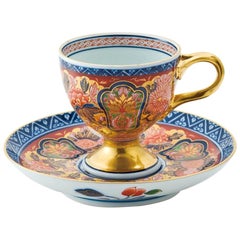
Japanese Contemporary Hand Painted Red Gilded Porcelain Cup and Saucer
Located in Takarazuka, JP
Exquisite Japanese contemporary Ko-Imari (Old Imari) style gilded hand painted porcelain cup and saucer. This extraordinary piece brings back the glory an...
Category

21st Century and Contemporary Japanese Gold Asian Art and Furniture

Materials

Gold

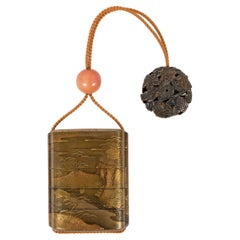
Japanese inro of the edo period adorned with a landscape houses near a lake
Located in PARIS, FR
Inrō with four gold lacquer compartments, decorated with a lake landscape. Accompanied by a bronze ryusa manju. Small boxes formed of compartments that fit one on top of the other, i...
Category

Late 18th Century Japanese Edo Antique Gold Asian Art and Furniture

Materials

Gold

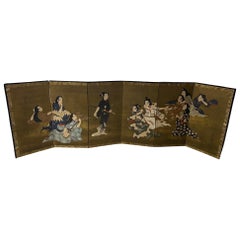
Japanese Asian Signed Six-Panel Folding Byobu Screen of Playful Court Scene
Located in Studio City, CA
A gorgeous, quite fascinating hand-painted six-panel Japanese Byobu folding screen depicting a rather engaging androgynous or erotic court scene (it has been suggested to us that thi...
Category

Mid-20th Century Japanese Showa Gold Asian Art and Furniture

Materials

Gold Leaf

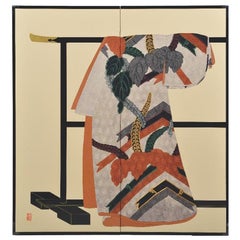
Japanese Contemporary Orange Black Silk Brocade Two-Panel Folding Screen, 3
Located in Takarazuka, JP
Extraordinary Japanese contemporary two panel "byobu" or folding screen featuring genryoku style handcrafted raised silk and brocade kimono in black, orange and gold on textured crea...
Category

21st Century and Contemporary Japanese Meiji Gold Asian Art and Furniture

Materials

Gold

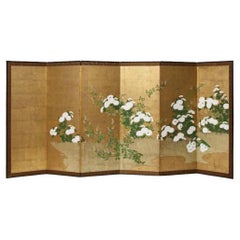
Kiku to Hagi Byobu, Rinpa School Style, Edo Period.
Located in Point Richmond, CA
A Chrysanthemum and Bush Clover painting on gold leaf six-panel folding screen, painted with clusters of leafy green chrysanthemum plants with white blossoms having moriage relief petals of gofun growing amidst pink blossoming bush clover within a bunched bush clover garden fence rendered in lighter gold relief, all on a background entirely of rich gold leaf. These two flowers are symbolic of Japan and the autumn season. The classic patterned paper verso with a Naga Antiques...
Category

Early 1800s Japanese Edo Antique Gold Asian Art and Furniture

Materials

Gold Leaf

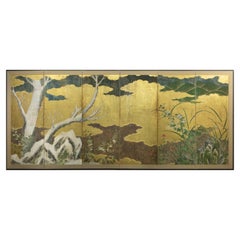
Japanese Six-Panel Screen Winter Into Spring
Located in Hudson, NY
With snow-covered willow tree, garden stone and winter berries. Right panels have spring flowers and a view of hills in the distance (likely the Higashiyama Hills painted in Kyoto by...
Category

18th Century Japanese Edo Antique Gold Asian Art and Furniture

Materials

Gold Leaf

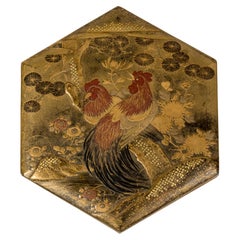
Kobako or japanese incens box, of hexagonal shape and adorned with two roosters
Located in PARIS, FR
This small hexagonal kobako presents a rich scene featuring two roosters perched on a pine tree, set within an abundant natural landscape. The sides of the composition are adorned wi...
Category

Early 19th Century Japanese Edo Antique Gold Asian Art and Furniture

Materials

Gold Leaf

Japanese Contemporary Blue Pink Porcelain Vase by Master Artist Duo
Located in Takarazuka, JP
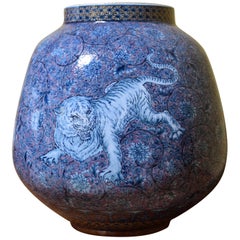
Exceptional Japanese Contemporary museum=quality extremely intricately hand painted decorative porcelain vase in blue elegantly featuring the four auspicious creatures of Chinese myt...
Category

21st Century and Contemporary Japanese Meiji Gold Asian Art and Furniture

Materials

Gold

Japanese Edo Six Panel Screen Merrymaking in the Chinese Countryside
Located in Rio Vista, CA
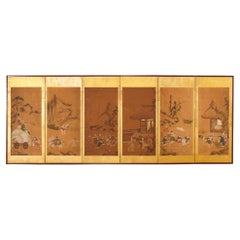
Large 19th century Japanese Edo period six panel folding byobu screen made in the Kano school style. Beautifully crafted with signature after Kano Tan'yu. Ink and natural color pigme...
Category

19th Century Japanese Edo Antique Gold Asian Art and Furniture

Materials

Gold Leaf

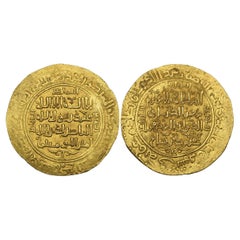
13th Century Gold Coin From The Ghurid Rulers Of India MU IZZ AL-DIN MUHAMMAD
Located in London, GB
Ghurid Rulers Of India, Mu'izz Al-Din Muhammad B. Sam (567-602h). Gold 10-Mithqals/Dinars, Balad Ghazna 601h. Obverse: In Field: La Ilaha Illa Allah Muhammad Rasul Allah Al-Nasir Li-Din Allah Amir Al-Mu'minin; In Field (Above, And To Left And Right): Allah A'la; (Below): Ornament Of Two Intertwined Tendrils; In Margin: Qur'an Ix, 33. Reverse: In Field: Al Sultan Al-A'azam Mu 'Izz Al-Dunya Wa Al-Din Abu'l-Muzaffar Muhammad Bin Sam; In Field (Above, And To Left And Right): Allah A'la; (Below): Ornament Of Two Intertwined Tendrils; In Margin: Mint And Date. Weight: 44.82g. Published: The Shah Firzan Heritage Of Islamic Coins...
Category

15th Century and Earlier Indian Antique Gold Asian Art and Furniture

Materials

Gold

Pair of Japanese Lacquer Hibachi with Tropical Motifs — Taishō to Early Shōwa Pe
Located in Fukuoka, JP
Dimensions: each approx. 23 × 23 × 26 cm Material: Black lacquer with gold maki-e decoration Condition: Very good, minor wear consistent with age A rare matched pair of Japanese lac...
Category

Early 20th Century Japanese Taisho Gold Asian Art and Furniture

Materials

Copper, Gold Leaf

Japanese Contemporary Green Blue Red Porcelain Vase by Master Artist, 3
Located in Takarazuka, JP
Exceptional contemporary Japanese decorative porcelain vase, hand painted in red and blue depicting a beautiful scene from old rural Japan, a signed masterpiece by highly acclaimed m...
Category

21st Century and Contemporary Japanese Meiji Gold Asian Art and Furniture

Materials

Gold

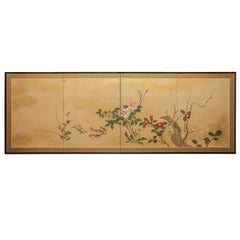
Japanese Four Panel Screen: Early Spring Into Summer
Located in Hudson, NY
Japanese Four Panel Screen: Early Spring Into Summer, Meiji period (1868 -1912) painting of plum in bloom with red camellias on the right and peony and thistle on the left. A clutc...
Category

Early 1900s Japanese Meiji Antique Gold Asian Art and Furniture

Materials

Gold Leaf

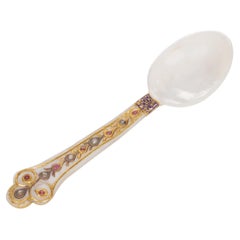
A Rare Mughal Indian Gold and Enamel Mother of Pearl Spoon with Diamonds
Located in Queens, NY
A Rare Mughal Indian Gold and Enamel Mother of Pearl Spoon with Diamonds Discover the exquisite craftsmanship of Mughal India with this rare and...
Category

Late 18th Century Indian Antique Gold Asian Art and Furniture

Materials

Gold, Enamel

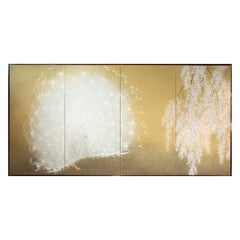
A four-panel folding screen depicting a white peacock, signed Yukihiko Kurihara
Located in Milano, IT
An unusual four-panel folding screen depicting a majestic white peacock and a flowering cherry tree, painted on paper with gold powder ground. The scene shows the peacock, rendered w...
Category

Mid-20th Century Japanese Gold Asian Art and Furniture

Materials

Gold Leaf

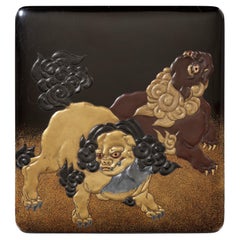
Japanese lacquer suzuri’bako 硯箱 (writing box) with shishi Hotei design
Located in Amsterdam, NL
A captivating lacquer suzuri’bako (writing box) of rounded rectangular form depicting a pair of shishi (temple lions) and the lucky god Hotei 布袋 on a rôiro...
Category

Early 19th Century Japanese Antique Gold Asian Art and Furniture

Materials

Gold Leaf, Silver Leaf

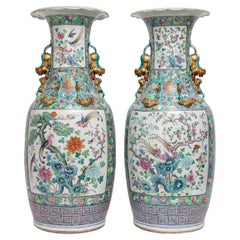
Pair of Chinese Famille Rose Decorated Porcelain Vases w/ Foo Dog Handles 1800s
Located in New York, NY
Exquisite Pair of Century Chinese Famille Rose Decorated Porcelain Vases with Striking Foo Dog Handles, 1800s. Presenting an awe-inspiring and opulent duo of antique Famille Rose Chinese Porcelain vases, adorned with elaborate motifs and breathtaking craftsmanship. Standing almost waist-high, these vases command attention with their majestic presence and captivating artistry. The prominent aqua background, gracefully envelops each vase, setting the stage for an enchanting display of visual splendor. Delicate white rectangular panels on the neck of each vase feature whimsical scenes portraying highly detailed pheasants, resplendent flowers, intricate foliage, and gracefully entwined tree limbs. The necks culminate in a tulip-edged gold dipped design, lavishly adorned with turquoise enamel that gracefully flows from the lips of the vases into the very heart of their being. The body of each vase showcases larger white rectangular panels, showcasing meticulously hand-painted graceful tree limbs, vibrant pheasants, sprightly sparrows, and charming lyre birds. Amidst this lively scene, an array of multi-colored flowers and leaves effortlessly breathe life into the composition, while charming aqua blue funghi add a touch of whimsy to the spectacle. The aqua background of the remaining surfaces of the vases, is skillfully adorned with enamels in relief, showcasing a plethora of resplendent hand-painted multi-toned colorful blossoms and foliate, meticulously hand painted in mild relief and scattered to create an elegantly harmonious and evenly spread-out design. Gracing the upper belly of each vase, magnificent tiny dragons take center stage in intricate high relief, lavishly painted with 24K gold enamel. Their sinuous forms and exquisite detailing bring a sense of majestic energy to the vases, adding a touch of awe-inspiring grandeur. However, it is the handles of these vases that truly steal the limelight. Crafted with unparalleled artistry, they feature larger Foo Dogs...
Category

1860s Chinese Qing Antique Gold Asian Art and Furniture

Materials

Gold

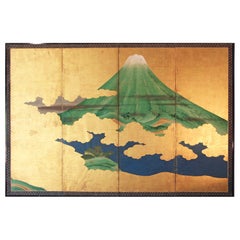
Japanese Folding Screen Gold Leaf
Located in Brescia, IT
Byobu painted with mineral pigments on gold leaf, the quality of the painting is still excellent, with no color loss or restorations. A classic four-panel screen depicting Mount Fuji...
Category

Early 19th Century Japanese Edo Antique Gold Asian Art and Furniture

Materials

Gold Leaf

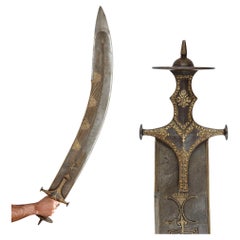
Large Indian Gold Damascened Steel Tegha Sword
Located in London, GB
Large Indian gold damascened steel tegha sword. Indian, c. 1850 Length 112cm, width 16cm, depth 10cm This remarkable sword is a tegha, a large Indian sword...
Category

Mid-19th Century Indian Antique Gold Asian Art and Furniture

Materials

Gold, Steel

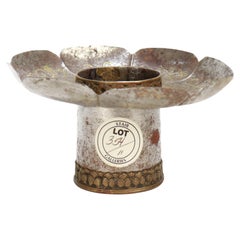
Antique Tibetan Steel Buddhist Cup Stand with Inlaid Gold
Located in Philadelphia, PA
A fine antique Tibetan Buddhist cup stand. In gold inlaid steel. The bowl in an eight-petaled lotus form with gold depictions of one the Eight Auspicious Symbols to each of the lob...
Category

19th Century Tibetan Antique Gold Asian Art and Furniture

Materials

Gold, Steel

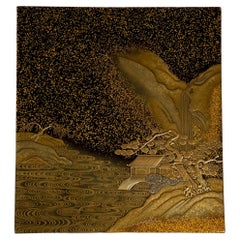
Writting box or Suzuribako in black and gold lacquer of a karstic landscape
Located in PARIS, FR
Suzuribako (writing box) in black lacquer, rectangular in shape, with a gold lacquer (maki-e) decoration of a pavilion by the edge of a waterfall and a mountain river surrounded by v...
Category

Late 18th Century Japanese Edo Antique Gold Asian Art and Furniture

Materials

Gold Leaf

Kobako in nashiji lacquer imitating wood texture, lid decorated with an ikebana
Located in PARIS, FR
Imposing kobako in nashiji lacquer on a black ground, decorated with a motif imitating wood grain. The lid is adorned with an ikebana basket (hanakago) containing a bouquet of remark...
Category

Early 19th Century Japanese Meiji Antique Gold Asian Art and Furniture

Materials

Gold

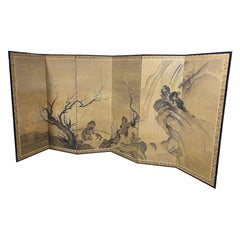
Japanese Asian Large Edo Six-Panel Folding Byobu Screen Landscape Monkeys Trees
Located in Studio City, CA
An absolutely gorgeous, wonderfully composed six-panel Japanese Byobu folding screen/room divider depicting a family of playful monkeys among the blooming trees and mountainous lands...
Category

Early 19th Century Japanese Edo Antique Gold Asian Art and Furniture

Materials

Gold Leaf

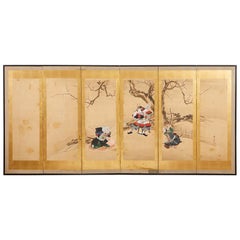
Japanese Edo Six Panel Screen Yoshitsune and Benkei
Located in Rio Vista, CA
Spectacular 19th century Japanese late Edo period six-panel byobu screen depicting Yoshitsune and Benkei, two heroes of Japanese folklore. Crafted in ink and natural color pigments on mulberry paper with thick gold leaf borders on each panel. The character Yoshitsune is seated under a blossoming cherry tree in full armor holding a fan. The warrior priest or monk Benkei is depicted kneeling on a leopard skin...
Category

19th Century Japanese Edo Antique Gold Asian Art and Furniture

Materials

Brass, Gold Leaf

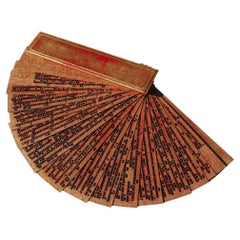
Antique Burmese Gilt Lacquered Kammavaca Manuscript
Located in Point Richmond, CA
Antique Burmese Gilt Lacquered Kammavaca Manuscript, Consisting of 2 lacquered wood end covers and 16 double sided folios of lacquered cloth in red and black with gold leaf. This Kam...
Category

19th Century Burmese Other Antique Gold Asian Art and Furniture

Materials

Gold Leaf

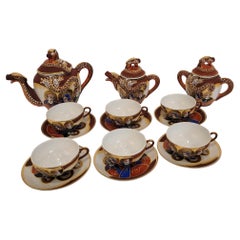
Satsuma Red Gold Blue Satsuma Porcelain Tea Set, Nakasima Japan
Located in Valladolid, ES
Gorgous and very Delicate six-piece tea or coffee set made of Japanese Satsuma porcelain. Cherry, blue, and ochre colors predominate. The main motif features the goddess Kannon surro...
Category

Early 1900s Japanese Japonisme Antique Gold Asian Art and Furniture

Materials

Gold

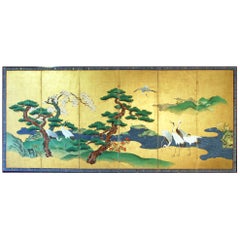
Japanese Folding Screen Six Panels Painted on Gold Leaf
Located in Brescia, IT
Paravento a sei pannelli di scuola giapponese Kano: paesaggio con bellissime ed eleganti gru vicino al fiume, con alberi di pino e sakura. Dipinto a mano con pigmenti minerali ed inc...
Category

Early 19th Century Japanese Edo Antique Gold Asian Art and Furniture

Materials

Gold Leaf

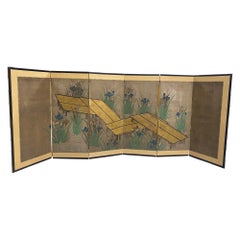
Japanese Asian Six-Panel Folding Byobu Screen Landcape Bridge with Iris Flowers
Located in Studio City, CA
A gorgeous six-panel Japanese Byobu folding screen depicting a nature lake/landscape scene with a water walkway/angular bridge and blossoming iris flowers - perhaps an homage to the famed Irises screens...
Category

19th Century Japanese Edo Antique Gold Asian Art and Furniture

Materials

Gold Leaf

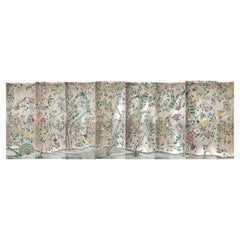
Peacock Chinoiserie Wallpaper Hand Painted Wallpaper on Champagne Metallic
Located in Wuxi, 32
If you love the look of De Gournay wallpaper but not the price, this is for you. Measures: 36" wide x 91" height The colorways in this sections present our latest colorways, which c...
Category

21st Century and Contemporary Chinese Gold Asian Art and Furniture

Materials

Gold Leaf

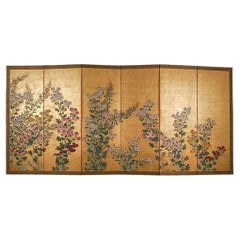
Japanese Six-Panel Screen Byobu With Chrysanthemums And Autumn Grass and Flower
Located in Torino, IT
The 19th Century Six-Panel Japanese folding screen "Byōbu" usually used in the most important Japanese house to stop wind and also to separate different space of the same big room de...
Category

Mid-19th Century Japanese Edo Antique Gold Asian Art and Furniture

Materials

Gold Leaf

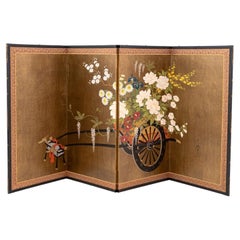
Japanese 4-Panel Byobu Screen
Located in Astoria, NY
Japanese Four-Panel Byobu Screen, 20th century, ink on gold leaf ground, decorated with a scene of a hana guruma (flower cart), signed lower right. Each panel: 36.25" H x 18.25" W x ...
Category

20th Century Japanese Gold Asian Art and Furniture

Materials

Gold Leaf

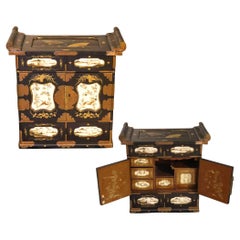
JAPAN 1820 Edo Period Black Lacquered Gilded Tansu Cabinet Chest With Drawers
Located in Miami, FL
Lacquered cabinet of drawers from the Edo Period. This is a remarkable Japanese antique Tansu cabinet with drawers created during the Edo period (1600-1868). The portable Tansu cabi...
Category

1820s Japanese Edo Antique Gold Asian Art and Furniture

Materials

Gold, Bronze, Copper

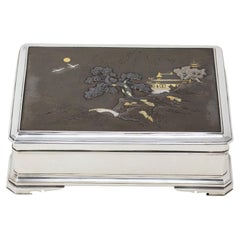
Japanese Silver and Shibuichi Box by Hiroteru Meiji Period
Located in Newark, England
FREE WORLDWIDE SHIPPING From our Japanese collection, we’re delighted to offer this beautifully made Japanese Silver and Shibuichi Box by Hiroteru 廣照, dating to the late Meiji peri...
Category

Early 20th Century Japanese Meiji Gold Asian Art and Furniture

Materials

Metal, Gold, Silver

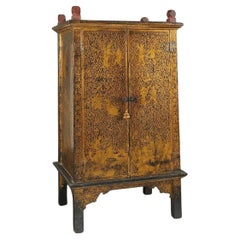
Large Antique Thai Buddhist Manuscript Storage Cabinet.
Located in Point Richmond, CA
Large Antique Thai Buddhist Manuscript Storage Cabinet. A tapering upright cabinet made of teak with black lacquered exterior and red interior. The decoration of gold on a black ground on three sides is created by the Lai Rot Nam...
Category

19th Century Thai Other Antique Gold Asian Art and Furniture

Materials

Gold Leaf

Japanese Six-Panel Screen, a Garden for All Seasons
Located in Hudson, NY
An imaginary garden with flowers from all seasons including spring lilies, summer hibiscuses, autumn chrysanthemums, and winter berries. Wild autumn grasses move in a soft breeze wit...
Category

1890s Japanese Meiji Antique Gold Asian Art and Furniture

Materials

Gold Leaf

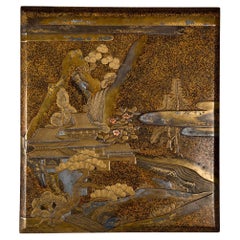
Suzuribako or writing box made of nashiji lacquer and adorned with a landscape
Located in PARIS, FR
Suzuribako, or writing box, of rectangular shape, decorated with an imposing architecture realized in hira maki-e lacquer, probably a palatial structure, situated beside a waterfall...
Category

Late 18th Century Japanese Edo Antique Gold Asian Art and Furniture

Materials

Gold Leaf

JAPAN 1900 Meiji Signed Okimono Sculpture of Fukurokuju In Polychrome Gilt
Located in Miami, FL
Meiji period okimono sculpture of Fukurokuju. This is a beautiful okimono sculpture created in the late 19th century during the imperial Japan in the Meiji era period, back in 1900....
Category

Early 1900s Japanese Meiji Antique Gold Asian Art and Furniture

Materials

Gold

Pair of Japanese Edo Six Panel Screens the Seven Sages
Located in Rio Vista, CA
Fantastic pair of 19th century Japanese late Edo/early Meiji period six-panel screens titled The seven sages of the bamboo grove. The Kano school screens...
Category

19th Century Japanese Edo Antique Gold Asian Art and Furniture

Materials

Brass, Gold Leaf

Still Thinking About These?

All Recently Viewed