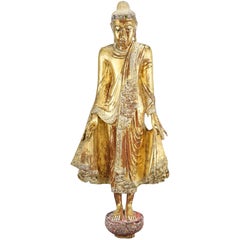
Gold Leaf Asian Art and Furniture

to
33
172
46
276
19
3
2
1
1
1
1
1
66
139
71
22
23
19
7
3
1
1
3
6
1
1
6,861
6,363
5,361
5,322
3,004
280
243
218
24
24
298
287
293
15
8
4
2
1
Material: Gold Leaf
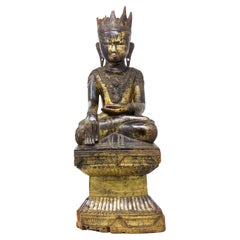
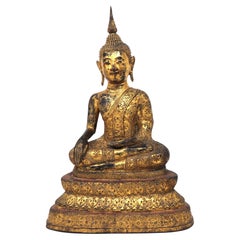
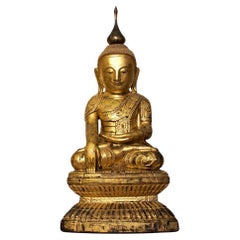
Antique Shan (Tai Yai) Jambupati Buddha Image
Located in Point Richmond, CA
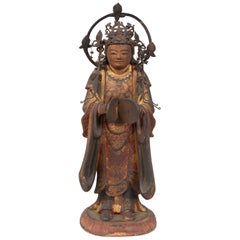
Antique Shan (Tai Yai) Jambupati Buddha Image, wood, lacquer and gold leaf, Konbaung Empire (1752-1885) A crowned style that displays Northern Thai iconography merged with the aesthetic of Burmese rule in the region. The figure is depicted in the popular Theravada seated position of padmasana, (interlocking legs position) and the hand mudra in bhumisparsa (earth touching) wherein the feet are souls  up, the fingers of the right hand extend beyond the right shin and the left hand palm up resting above the lap. Remnants of the leaf-like kirita crown remain.  The image is dressed in Burmese royal costume with thayo rolled lacquer relief decoration modeled into cuffs, epaulettes, knee pads and a detailed “U” shaped necklace covering the chest. There is also a lappet of clothing between the legs draping down toward the base. The figure is seated upon a tall and waisted throne pedestal having rows of lotus petal grooves on the diagonal portions . The  base and body are carved from one solid piece of hard wood. All covered in black lacquer with thayo lacquer details, red pigment for the lips and gold leaf overall. The Jambupati style Buddha illustrates the tale of the Buddha’s life when he came across the arrogant King Jambupati, a king who terrorized his subjects and who lacked humility and compassion for his people. The Buddha on meeting the King asked that he forsake his evil ways and instead practice kindness to his fellow man. Ignoring the Buddha’s request, the King continued to terrorize the people. The Buddha then in his efforts to change the King of his evil ways, one day magically appeared to him in resplendent royal attire. King Jambupati was in awe of the Buddha’s appearance prostrated himself in obeisance and from that day onward accepted the Buddhist precepts. In Southeast Asian countries like Burma, where rulers have very high if not semi-divine status, tales of this type, reinforced the need for the leader to worship the Buddha, the King of Kings. Condition: Heavy deterioration of the underside of the base as well as the interior portion of the crown, other losses include crown flanges, the crown spire, earrings, the tip of the left thumb, one base corner edge, rolled lacquer losses and general wear of the gold leaf surface, all commensurate with age and wear. Measuring: 22.25 in. high x 8.75 in. wide x 7.75 in. deep(56.5cm x 22.2cm x 29.7cm). Weight: 10.8 lbs. Age: Late 18th century. Provenance: Lark...
Category

Late 18th Century Burmese Other Antique Gold Leaf Asian Art and Furniture

Materials

Gold Leaf

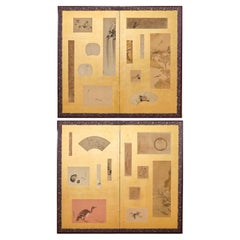
Pair of Japanese Two Panel Screens Edo Period Vignettes
Located in Rio Vista, CA
Impressive pair of Japanese two-panel byobu screens featuring late 18th-century edo period applied vignettes, poems, and paintings in various formats over a dramatic gold leaf square...
Category

18th Century Japanese Edo Antique Gold Leaf Asian Art and Furniture

Materials

Gold Leaf

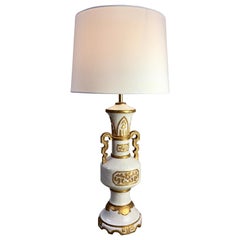
Zaccagnini Lamp in White with Gold Leaf, Italy, 1950s
Located in Melbourne, AU
A large Hollywood Regency lamp with stylised decoration, standing 32 inches tall to the top of the shade. In keeping with the 1940s-1950s decorative style which saw large lamps move into the domestic market, this lamp is influenced by the scale and themes of Hollywood blockbuster set design. These make fabulous lamps for cocktail lounges or theatres of public entertainment such as bars, restaurants or cafes. They are pure expressions of maximalism and mid-20th century Hollywood glamour...
Category

1950s Italian Hollywood Regency Vintage Gold Leaf Asian Art and Furniture

Materials

Gold Leaf, Brass

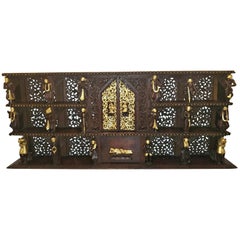
19th Century SE Asian Highly Carved Wooden and Gilded Floor/Wall Cabinet
Located in Dallas, TX
PRESENTING an EXCEPTIONAL AND RARE 19C SE Asian Highly Carved Wooden and Gilded Floor or Wall Case or cabinet featuring Hindu Gods. OUTSTANDING and VERY RARE! Mid 19th Century, cir...
Category

Mid-19th Century Cambodian Folk Art Antique Gold Leaf Asian Art and Furniture

Materials

Gold Leaf

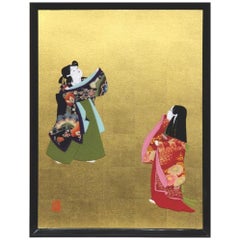
Japanese Contemporary Framed Green Red Black Gold Decorative Art
Located in Takarazuka, JP
Exquisite Japanese contemporary framed three-dimensional decorative art piece in Japanese silk kimono fabric in vivid red, green and black on gold leaf Japanese paper, recreating a s...
Category

21st Century and Contemporary Japanese Meiji Gold Leaf Asian Art and Furniture

Materials

Gold Leaf

Thai Gilt Bronze Figure of a Seated Buddha
Located in Point Richmond, CA
Thai Gilt Bronze Figure of a Seated Buddha, depicted with legs crossed in the virasana position with the right leg resting on the left leg, soles up, the hands in the earth touching ...
Category

Late 19th Century Thai Other Antique Gold Leaf Asian Art and Furniture

Materials

Bronze, Gold Leaf

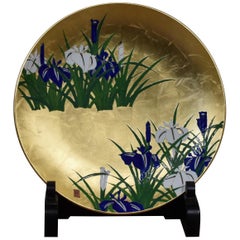
Japanese Contemporary Blue Gold Leaf Green Porcelain Charger by Master Artist, 3
Located in Takarazuka, JP
Superb museum quality Japanese large contemporary gold leaf porcelain charger, beautifully hand painted in a stunning iris motif in vivid purple/blue, white and green on an exquisite...
Category

21st Century and Contemporary Japanese Meiji Gold Leaf Asian Art and Furniture

Materials

Gold Leaf

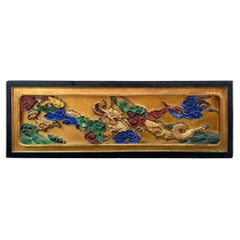
Meiji Temple Dragon Panels
Located in Fukuoka, JP
Magnificent Meiji-era temple panel is traditionally placed above the entrance, gracing the space with spiritual protection and aesthetic beauty. Each panel vividly depicts a dragon, ...
Category

Late 19th Century Japanese Meiji Antique Gold Leaf Asian Art and Furniture

Materials

Gold Leaf

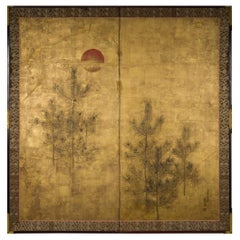
Japanese Two Panel Screen Pine and Red Sun on Gold
Located in Hudson, NY
Mineral pigments on gold leaf. Signature and seal read: Anei H-eishin Boshun ga, dated: late spring 1766 with a dedication to Okyo (Maruyama).
Category

Mid-18th Century Japanese Antique Gold Leaf Asian Art and Furniture

Materials

Gold Leaf

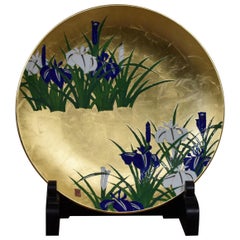
Japanese Contemporary Gold Leaf Purple Green Porcelain Charger by Master Artist
Located in Takarazuka, JP
Extraordinary Japanese contemporary museum quality decorative porcelain charger breathtakingly hand painted in a stunning iris motif in vivid purple/blue, white and green on a magnif...
Category

21st Century and Contemporary Japanese Meiji Gold Leaf Asian Art and Furniture

Materials

Gold Leaf

Antique Burmese Shan Wood, Lacquer and Gold Leafed Buddha, 19th Century
Located in Point Richmond, CA
Antique Burmese Shan Wood, Lacquer and Gold Leafed Buddha, 19th Century. The image sits on a waisted lotus base with raised lacquer  details, seated in padmasana, the lotus position ...
Category

19th Century Burmese Other Antique Gold Leaf Asian Art and Furniture

Materials

Gold Leaf

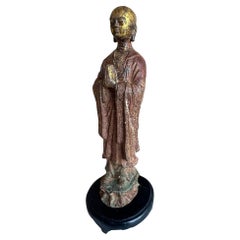
Chinese Cast Iron Figure Buddhist Monk with Original Paint Gilt, c. 1880 s
Located in Ross, CA
Cast iron Buddhist monk, cast around 1880, likely in Guangdong, China. The monk has original paint and some some remaining gilt. The monk stands snugly on a hand made mid 20th centu...
Category

1880s Chinese Chinese Export Antique Gold Leaf Asian Art and Furniture

Materials

Iron, Gold Leaf

Japanese Contemporary Gold Leaf Green Blue Porcelain Vase by Master Artist, 2
Located in Takarazuka, JP
Exquisite Japanese contemporary museum-quality decorative porcelain vase in deep blue and beautiful shades of green on a stunningly shaped body. This is a masterpiece by a third gene...
Category

21st Century and Contemporary Japanese Meiji Gold Leaf Asian Art and Furniture

Materials

Gold Leaf

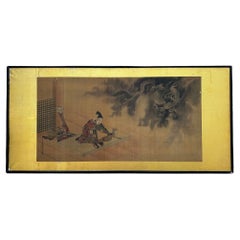
Elegant Edo period painting by Reizei Tamechika (1823-1864) 冷泉為恭
Located in Fukuoka, JP
Elegant Edo period painting by Reizei Tamechika (1823-1864) Period: Edo Size: 113x53 cm Indulge in the elegance of the Edo period with our superb painting on silk, a masterpiece ...
Category

19th Century Japanese Edo Antique Gold Leaf Asian Art and Furniture

Materials

Gold Leaf

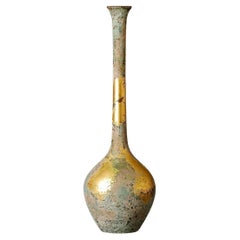
Beautiful signed Bronze vase
Located in Fukuoka, JP
Beautiful signed Basket shape Bronze vase signed as Houn Age: 20th century . Dimensions: W7.5 cm x 7.5cm (3inch x 3inch) , H:30cm (12 inch) Weight: 490g (1 lb) with original s...
Category

20th Century Japanese Gold Leaf Asian Art and Furniture

Materials

Bronze, Gold Leaf

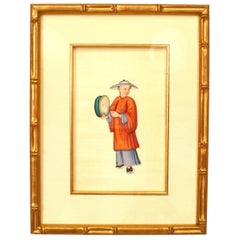
Set of 8 Chinese Gouache Traditional Figure Paintings
Located in Queens, NY
Set of 8 Asian Chinese (19th century) gouache paintings of traditionally clad figures framed in modern gilt faux bamboo frames.
Category

19th Century Chinese Antique Gold Leaf Asian Art and Furniture

Materials

Gold Leaf

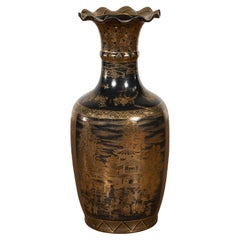
Black Lacquer and Gold Leaf Underlay Chinese Altar Vase with Scalloped Top
Located in Yonkers, NY
A black lacquer with gold-leaf underlay vintage Chinese altar vase from the mid 20th century with traditional architectures in landscapes and court scenes décor, as well as scalloped top. This striking mid-20th-century Chinese altar vase is an exquisite example of the artistry and craftsmanship that are hallmarks of traditional Chinese design. The vase's base is rendered in a lustrous black lacquer, which creates a sophisticated backdrop for the captivating gold-leaf underlay that adorns its surface. The combination of these two contrasting elements produces a visually dynamic and alluring effect that draws the eye and invites closer inspection. The gold-leaf underlay is meticulously applied to create intricate representations of traditional Chinese architecture set...
Category

Mid-20th Century Chinese Gold Leaf Asian Art and Furniture

Materials

Gold Leaf

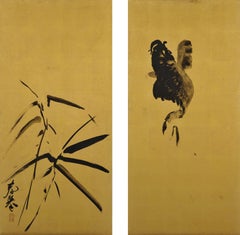
Yamamoto Shunkyo (1871-1933) Japanese Framed Painting Pair, Carp and Bamboo
Located in Kyoto, JP
Two framed panels by Yamamoto Shunkyo depicting a carp (koi) leaping from a river. Ink and gold leaf on paper. Instinctively brushed in a freehand s...
Category

Early 20th Century Japanese Meiji Gold Leaf Asian Art and Furniture

Materials

Gold Leaf

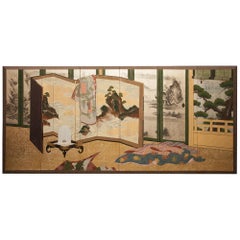
Japanese Antique Six Panel Screen: Inside the Imperial Household
Located in Hudson, NY
Kano School painting depicting an interior with finery such as a lacquer table, silk textiles, and other paintings. The fusuma doors appear to be a famous...
Category

1890s Japanese Antique Gold Leaf Asian Art and Furniture

Materials

Gold Leaf

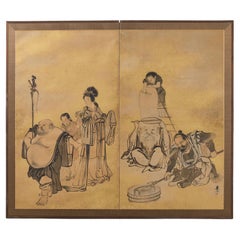
Japanese Edo Two Panel Screen Deities by Yokoyama Kazan
Located in Rio Vista, CA
Whimsical Japanese late Edo period two-panel screen circa 1800 by Yokoyama Kazan (Japanese 1784-1837). The screen depicts four of the seven Gods or deities ...
Category

19th Century Japanese Edo Antique Gold Leaf Asian Art and Furniture

Materials

Brass, Gold Leaf

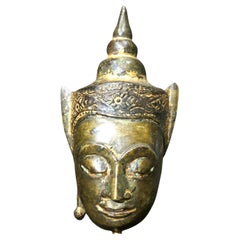
A Diminutive Gilt Copper Alloy Head of a Crowned Buddha, Ayutthaya Period
Located in Ottawa, Ontario
This 17th century Ayutthaya Period copper alloy (bronze) head of Buddha depicted in the ‘Phra Chao Song Khruang’ manner (Lord Wearing Ornaments), showing Buddha adorned with an ornat...
Category

17th Century Thai Other Antique Gold Leaf Asian Art and Furniture

Materials

Bronze, Gold Leaf

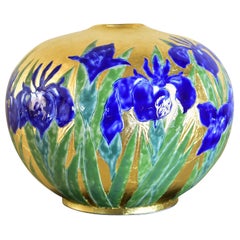
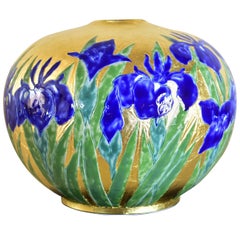
Japanese Contemporary Gold Green Blue Porcelain Vase by Master Artist, 2
Located in Takarazuka, JP
Exquisite Japanese contemporary porcelain vase in gold leaf decorated -paintings in deep blue and beautiful shades of green on a stunningly shaped body. This piece is by a third gen...
Category

21st Century and Contemporary Japanese Meiji Gold Leaf Asian Art and Furniture

Materials

Gold Leaf

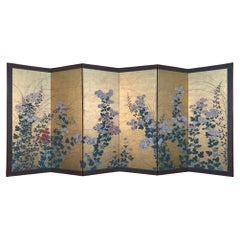
Early 19th Century Rimpa School Floral Screen
Located in Fukuoka, JP
Early 19th Century Rimpa School Floral Screen Period: Early 19th Century Dimensions: 367x171 cm (144.5x67.3 inches) SKU: RJ118/2 This 6-panel gold-leafed screen is a splendid repre...
Category

Early 19th Century Japanese Edo Antique Gold Leaf Asian Art and Furniture

Materials

Gold Leaf

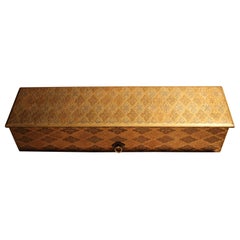
Edo Maki-e Japanese Box
Located in Brescia, IT
Japanese box with lacquer lid finely decorated with Maki-e, dating from the 18th century, mid-Edo period. The box is of special size to preserve important calligraphy. All sides of ...
Category

Late 18th Century Japanese Edo Antique Gold Leaf Asian Art and Furniture

Materials

Gold Leaf

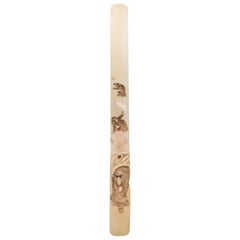
JAPAN 1900 Meiji Carved Letter Opener With Sculpted Monkeys
Located in Miami, FL
Japanese Meiji period letter opener. An exceptional letter opener, created during the imperial Japan in the Meiji period, back in he 1900. The letter opener has been carefully carve...
Category

Early 1900s Japanese Meiji Antique Gold Leaf Asian Art and Furniture

Materials

Gold Leaf

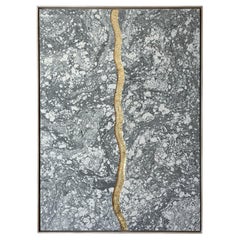
Vintage kimono textile art " Marble Story ~ Healing ~" by ikasu Grey Japan
Located in Setagaya City, JP
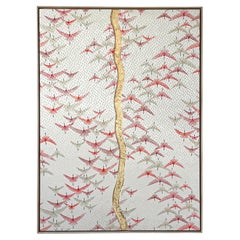
< This work uses a vintage kimono fabric with marble pattern, that makes it look like a real piece of marble. The line in the middle symbolizes “kintsugi” - concept of wabi-sabi, which values imperfection, impermanence, and the beauty of aging. It is elegantly framed with paulownia wood originally used for kimono chest-of-drawers, and is filled with storytelling and sense of luxury. I used pieces of kimono that could no longer be used as clothing and kiritansu chest-of-drawers that would normally be discarded to create the ultimate upcycled piece. << Explanation and meaning of pattern and colors Kintsugi (金継ぎ), which translates to "golden joinery" or "golden repair," is a traditional Japanese art form of repairing broken pottery with lacquer mixed with powdered gold, silver, or platinum. I used this tecnique here to "repair" antique kimono by transforming it into art work. Beyond its literal meaning of mending broken ceramics, kintsugi carries profound philosophical and cultural significance in Japanese tradition: ・Embracing Imperfection: Kintsugi celebrates imperfection and impermanence. Rather than disguising or concealing flaws, it highlights them, treating the breakage as part of the object's history. This philosophy encourages acceptance of imperfection as an essential aspect of life, beauty, and human experience. ・Wabi-Sabi Aesthetic: Kintsugi embodies the principles of wabi-sabi, an aesthetic worldview centered on the acceptance of transience and imperfection. Wabi-sabi values simplicity, authenticity, and the beauty of things that are imperfect, impermanent, and incomplete. Kintsugi exemplifies these principles by turning what might be considered flaws into features that enhance the object's beauty and character. ・Resilience and Transformation: The act of repairing broken things with precious metals symbolizes resilience and transformation. Instead of discarding or replacing the broken object, kintsugi honors its history and transforms it into something new and valuable. This reflects broader philosophical themes of overcoming adversity, finding beauty in imperfection, and embracing change. ・Honoring the Past: Kintsugi preserves and honors the history of the object. Rather than erasing or ignoring its past, it acknowledges and celebrates it. This aspect of kintsugi can be seen as a metaphor for honoring our own personal histories, including the challenges and setbacks we have faced, and recognizing how they have shaped us into who we are today. ・Spiritual and Philosophical Symbolism: Kintsugi has spiritual and philosophical implications, reflecting concepts such as the interconnectedness of all things, the cycle of life and death, and the pursuit of harmony and balance. The process of repairing broken objects with precious metals is seen as a metaphor for spiritual growth, enlightenment, and the journey towards wholeness. Overall, kintsugi represents not only a practical technique for repairing ceramics but also a profound philosophical and cultural perspective on life, beauty, and the human experience. It embodies values such as resilience, acceptance, and the transformative power of embracing imperfection. << Characteristics of the fabric This vintage textile is hand-painted with a traditional painting technique where the colors are added on wet surface, which creates an effect of marble. << About the frame Kiritansu - chest-of-drawers for kimono, is traditionally made from paulownia wood, a uniquely Japanese material closely tied to the world of kimonos. Paulownia wood is known as the lightest wood in Japan, prased for its natural luster, resistance to moisture, and resilience against cracking. Since ancient times, it has been used in crafting furniture, chests, and musical instruments. During the Edo period, it became customary to store cherished kimonos in paulownia chests...
Category

1960s Japanese Japonisme Vintage Gold Leaf Asian Art and Furniture

Materials

Gold Leaf

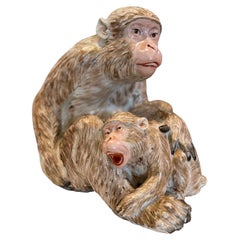
19th Century Japanese Kutani Porcelain Mother Monkey and Son
Located in North Miami, FL
19th Century Japanese Kutani large size gold gilded porcelain mother monkey figure nurturing her baby.  
Category

19th Century Japanese Antique Gold Leaf Asian Art and Furniture

Materials

Gold Leaf

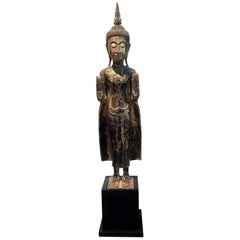
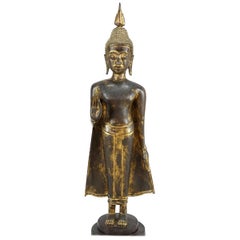
Antique Giltwood Buddha Statue Southeast Asia
Located in Atlanta, GA
A delicately carved wood Buddha in an upright standing posture with a double Abhaya mudra. The statue displays a gilt surface with beautiful patina and some minor wear. The face was ...
Category

19th Century Thai Other Antique Gold Leaf Asian Art and Furniture

Materials

Gold Leaf

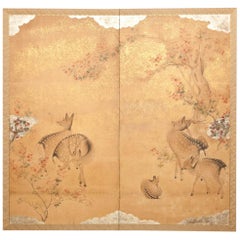
Japanese Two Panel Screen Nara Deer in Gentle Yoshino Landscape
Located in Hudson, NY
Japanese two panel screen: Nara Deer in Gentle Yoshino Landscape. Yoshino is in the Nara Prefecture, an area famous for these small and tame deer native to J...
Category

Early 1900s Japanese Meiji Antique Gold Leaf Asian Art and Furniture

Materials

Gold Leaf, Silver Leaf

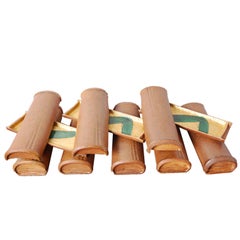
Vintage Japanese Stoneware Dishes, Set of Eight
Located in Prahran, Victoria
Set of eight vintage Japanese stoneware dishes, in the shape of bamboo with gilded interior. Each piece sold individually. Please ...
Category

Late 20th Century Japanese Showa Gold Leaf Asian Art and Furniture

Materials

Gold Leaf

Chinoiserie Palm Oval Paintings
Located in Sturminster Marshall, Dorset
A pair of carved giltwood Chippendale crossed palm frames, with inset hand-painted chinoiserie portraits of 18th century oriental nobility. We a...
Category

21st Century and Contemporary English Chippendale Gold Leaf Asian Art and Furniture

Materials

Gold Leaf

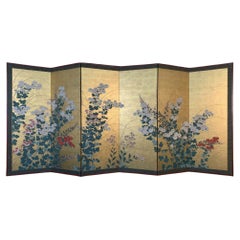
Early 19th Century Rimpa School Floral Screen
Located in Fukuoka, JP
Early 19th Century Rimpa School Floral Screen Period: Early 19th Century Dimensions: 367x171 cm (144.5x67.3 inches) SKU: RJ118 This 6-panel gold-leafed screen is a splendid represe...
Category

Early 19th Century Japanese Edo Antique Gold Leaf Asian Art and Furniture

Materials

Gold Leaf

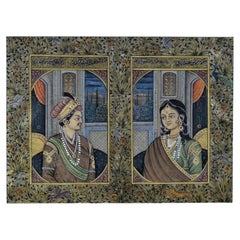
Mughal miniature portrait depicting Emperor Akbar and Jodha Bai, 19th Century
Located in Islamabad, PK
The Mughal miniature portrait, created with a single-hair brush on delicate rice paper and embellished with 24k gold water, depicts the noble Mughal Emperor Akbar and his esteemed consort, Jodha Bai. This exquisite artwork exemplifies the pinnacle of Mughal artistry, renowned for its intricate detail and luxurious use of materials. At the center of the composition, Emperor Akbar is portrayed with an air of majestic authority and wisdom. He is dressed in regal attire, featuring rich textiles adorned with elaborate patterns. The gold water applied to his garments and accessories adds a shimmering, ethereal quality, highlighting the emperor's status and the richness of his attire. His turban is prominently adorned with a jeweled ornament, enhancing his royal presence. Akbar's expression is composed and contemplative, reflecting his reputation as a wise and benevolent ruler. Beside him stands Jodha Bai, exuding grace and elegance. Her attire is a masterpiece of Mughal textile...
Category

Mid-19th Century Indian Anglo Raj Antique Gold Leaf Asian Art and Furniture

Materials

Gold Leaf

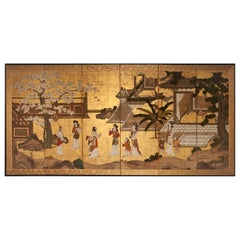
Japanese Six-Panel Screen Women of the Court in the Garden
Located in Hudson, NY
Japanese six-panel screen: Women of the Court in the Garden. Edo period (circa 1700) painting of an early Kano school subject matter: nobility socializing in a coutryard garden. Deta...
Category

Early 1700s Japanese Edo Antique Gold Leaf Asian Art and Furniture

Materials

Gold Leaf

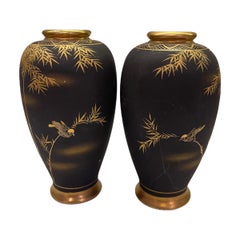
Early 20th Century Pair of Small Japanese Kutani Porcelain Damascene Vases
Located in North Miami, FL
Early 20th century pair of small Japanese Kutani Porcelain Damascene vases. They are black, matte ground, and hand painted gold tone scenes of bamboo. T...
Category

Early 20th Century Japanese Gold Leaf Asian Art and Furniture

Materials

Gold Leaf

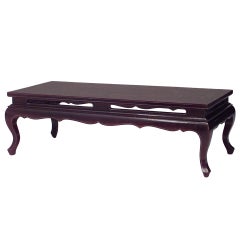
Asian Chinese Style Maroon Lacquered Coffee Table
Located in Queens, NY
Asian Chinese-style (20th Century) rectangular coffee table with a maroon lacquered finish, floral table top design, and gilt bamboo decorated cabriole legs.
Category

20th Century Chinese Gold Leaf Asian Art and Furniture

Materials

Gold Leaf

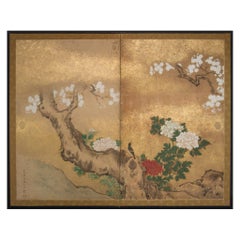
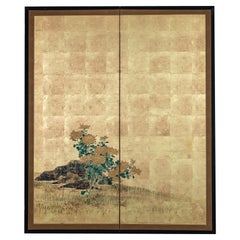
Japanese Two-Panel Screen Peony and Cherry
Located in Hudson, NY
Japanese two-panel screen: Peony and Cherry, Edo period (circa 1800) painting, formerly fusuma (Japanese sliding doors), executed in the Kano school style, featuring a cherry tree in...
Category

Early 1800s Japanese Edo Antique Gold Leaf Asian Art and Furniture

Materials

Gold Leaf

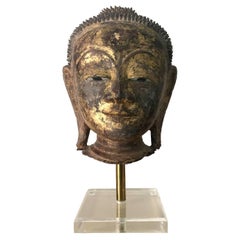
An Exquisite Antique Buddha Head Statue Southeast Asian
Located in Atlanta, GA
An gilt and lacquered wood Buddha head with displayed on a metal and Lucite stand. stunning presence with its refined features and amazing details. The carving is of exquisite qualit...
Category

18th Century Laotian Archaistic Antique Gold Leaf Asian Art and Furniture

Materials

Gold Leaf

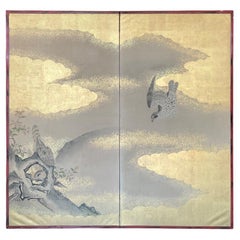
Majestic Hawks Edo Screen by Tosa School
Located in Fukuoka, JP
Majestic Hawks Edo Screen Period: Edo Size: 150x168 cm (59x66 inches) SKU: PTA93 Step back in time to the Edo period with our superb Tosa school screen d...
Category

19th Century Edo Antique Gold Leaf Asian Art and Furniture

Materials

Gold Leaf

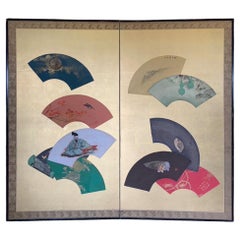
Taisho Golden Fan Screen
Located in Fukuoka, JP
Taisho Golden Fan Screen Period: Meiji Size: 190x171 cm Step into a world of elegance with our exquisite two-panel Taisho screen adorned in gold, depicting fans adorned with vario...
Category

20th Century Japanese Taisho Gold Leaf Asian Art and Furniture

Materials

Gold Leaf

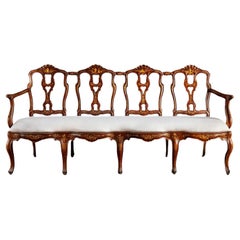
Chinoiserie Bench
Located in BARCELONA, ES
Authentic Choiserie An exceptional and elegant bench in the Chinoiserie style, crafted from rich mahogany and adorned with delicate gold-painted motifs. This rare decorative piece r...
Category

18th Century Spanish Chinoiserie Antique Gold Leaf Asian Art and Furniture

Materials

Gold Leaf

19th Century obi textile art " Pine forest ~ Longivety ~ " by ikasu Green Japan
Located in Setagaya City, JP
<< Story behind the work Obi fabric I used for this artwork is taken from three different over 100-years-old antique sashes, and is framed in wood taken from antique ...
Category

Early 20th Century Japanese Japonisme Gold Leaf Asian Art and Furniture

Materials

Gold Leaf

"View from the Terrace, " Mixed-Media by Yamin Young
Located in Houston, TX
Well listed Chinese Artist Yamin Young. "View from the Terrace". Mixed-media on handmade rice paper, mounted to the fabric base, protected by the plexiglas...
Category

Late 20th Century Chinese Other Gold Leaf Asian Art and Furniture

Materials

Gold Leaf

Antique kimono textile art " Peacock Feathers ~ Royalty ~" by ikasu Blue Japan
Located in Setagaya City, JP
This work uses an antique furisode (festive kind of kimono with long sleeves) with peacock feathers - a symbol of royalty and prosperity. Can be used both vertically and horizontall...
Category

Early 20th Century Japanese Japonisme Gold Leaf Asian Art and Furniture

Materials

Gold Leaf, Silver Leaf

Japanese Two Panel Screen Peonies In the Mist
Located in Hudson, NY
Japanese Two Panel Screen: Peonies In the Mist. Showa period (1926 - 1945) painting in oil on canvas of peonies with gold and silver dust clouds. Signature reads, Seishu.
Category

1930s Japanese Showa Vintage Gold Leaf Asian Art and Furniture

Materials

Gold Leaf, Silver Leaf

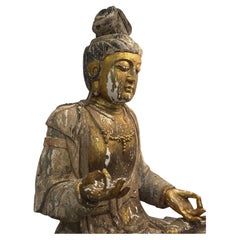
Very Large Antique Life Size Buddha Carving 18/19th Century with Gold leaf
Located in Euless, TX
This is a very large and very old Antique Buddha that is nearly life size and weighs 72 lbs. I had aquired this during the 90s when I provided antique restoration to many of the anti...
Category

Early 19th Century Central Asian Antique Gold Leaf Asian Art and Furniture

Materials

Gold Leaf

Vintage kimono textile art " Cranes ~ Kintsugi ~ " by ikasu White Red Gold Japan
Located in Setagaya City, JP
< The frame for this work is made of paulownia wood taken from antique Kiritansu - chest-of-drawers for kimono. I use antique kiritansu that can’t be used as furniture anymore to create basis and frames for my works. It adds them even more authentic atmosphere of traditional wabisabi spirit. Can you feel it? The piece uses the concept of "kintsugi" - it "unites" the pieces of antique kimono back together with golden leaf to give it a second wind as art work. << Period / Story The kimono used in this piece was originally crafted during the late Showa period (1960-80ies). << Explanation and meaning of pattern and colors The Japanese saying goes, "A crane lives a thousand years, a tortoise lives ten thousand years," making cranes a symbol of longevity. Cranes are also known for staying with the same partner for their entire lives, which is why they are often used at weddings and other celebrations to symbolize "marital bliss" and the desire for harmony between husband and wife. On this particular piece, cranes are flying through snow woven on the fabric, as if they are overcoming all the disasters to get to their beloved ones. The color scarlet, or deeply dyed red, used for the most of the cranes here, has long been associated with the meaning of "warding off evil." It is believed to possess the power to repel malevolent forces and invite good fortune. During the Heian period, scarlet was reserved for sacred buildings and ceremonial objects that held great significance. Ordinary people were prohibited from wearing scarlet-red kimonos, which made it a highly special color. << Characteristics of the fabric Cranes, going up and down, are generously decorated by kimpaku here. "Kimpaku" (金箔) refers to gold leaf/foil in Japanese. Gold leaf is a traditional material used in various aspects of Japanese culture, including art, crafts, and even in culinary applications. In traditional Japanese art, gold leaf is often applied to religious objects, sculptures, paintings, and lacquerware to create a luxurious and decorative effect. The use of gold leaf in art dates back centuries and is associated with a sense of wealth, prestige, and the divine. Traditional kimpaku technique is used here to make an accent decoration in the middle. << About the frame This artwork frame is crafted from paulownia wood, a uniquely Japanese material closely tied to the world of kimonos, and it serves to convey the refined beauty of Japanese nature. Paulownia wood is known as the lightest wood in Japan, prased for its natural luster, resistance to moisture, and resilience against cracking. Since ancient times, it has been used in crafting furniture, chests, and musical instruments. Paulownia wood is closely linked to kimono culture. During the Edo period, it became customary to store cherished kimonos in paulownia chests...
Category

Late 20th Century Japanese Japonisme Gold Leaf Asian Art and Furniture

Materials

Gold Leaf

16th Century Japanese Sculpture of a Buddhist Tenbu
Located in Hudson, NY
16th century Japanese sculpture of a Buddhist Tenbu, Late Momoyama period (1333-1598) sculpture dated "Bunroku 3", or 1594, in ink on the back. T...
Category

16th Century Japanese Antique Gold Leaf Asian Art and Furniture

Materials

Metal, Gold Leaf

Japanese Two Panel Screen: Simple Chrysanthemums on Gold
Located in Hudson, NY
Mineral pigments on gold leaf. Not signed, by: Baikei Hitsu.
Category

1880s Japanese Antique Gold Leaf Asian Art and Furniture

Materials

Gold Leaf

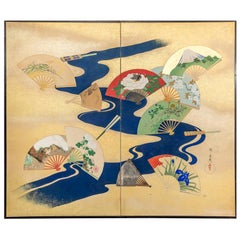
Japanese Two-Panel Screen, Deco Landscape with River Fans
Located in Hudson, NY
Japanese two-panel screen, deco landscape with river fans. Modern scene of a 12th century festival in Kyoto in which fans are sent down the Kamo River and caught downstream. Taisho (...
Category

Early 20th Century Japanese Taisho Gold Leaf Asian Art and Furniture

Materials

Gold Leaf

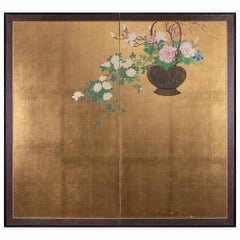
Japanese Two-Panel Screen Ikebana on Gold
Located in Hudson, NY
Japanese two-panel screen: Ikebana on gold. Meiji period (1868-1912) painting of a basket with beautifully arranged spring flowers in the style of ikebana (Japanese traditional flowe...
Category

Late 19th Century Japanese Meiji Antique Gold Leaf Asian Art and Furniture

Materials

Gold Leaf

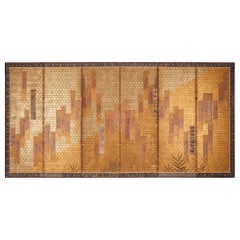
Japanese Six Panel Screen: Waka Poems on Basketry Design
Located in Hudson, NY
Ribbons of 17th century calligraphy poems are mounted on an 18th century screen with a woven bamboo motif. These poems are aristocratic Waka poem...
Category

17th Century Antique Gold Leaf Asian Art and Furniture

Materials

Gold, Bronze, Gold Leaf

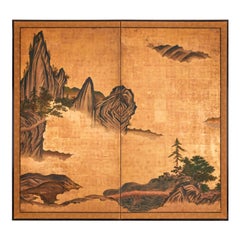
Japanese Two Panel Screen: Mountain Landscape With Cedar and Pine on Gold Leaf
Located in Hudson, NY
Kano School painting, reminiscent of early Kano School paintings, in sumi (ink) and minimal pigments on gold leaf with a silk brocade border.
Category

Early 19th Century Japanese Antique Gold Leaf Asian Art and Furniture

Materials

Gold Leaf

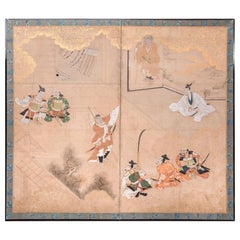
Japanese Two Panel Screen: Genpei Warriors
Located in Hudson, NY
The Genpei War took place from 1180–1185, during which the Minamoto clan rebelled against the Taira clan for control of Japan. The two clans had a bitter rivalry for years, and the M...
Category

Early 19th Century Japanese Edo Antique Gold Leaf Asian Art and Furniture

Materials

Gold Leaf

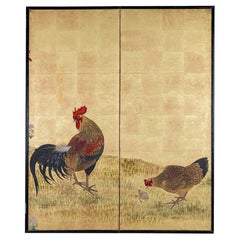
Japanese Two Panel Screen: Family of Chickens on Gold Leaf
Located in Hudson, NY
Mineral pigments on gold. Not signed, by Baikei Hitsu.
Category

1880s Japanese Antique Gold Leaf Asian Art and Furniture

Materials

Gold Leaf

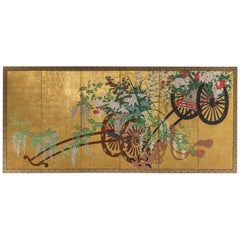
Japanese Six Panel Screens: Pair of Festival Carts
Located in Hudson, NY
Antique Japanese screen with Festival Cart design. Edo period painting (First half of the 19th century) of one brown lacquer cart and one bla...
Category

Early 19th Century Japanese Edo Antique Gold Leaf Asian Art and Furniture

Materials

Gold Leaf

Thai 19th Century Bronze Buddha with Lovely Worn Gilt Finish
Located in Buchanan, MI
48" 19th century bronze Buddha with lovely worn gilt finish.
Category

19th Century Thai Antique Gold Leaf Asian Art and Furniture

Materials

Bronze, Gold Leaf

Exceptional Monumental 19th Century Carved Wood Budha with Gilt Finish
Located in Buchanan, MI
Exceptional monumental 19th century carved wood Budha with gilt finish and jewels.
Category

19th Century Asian Antique Gold Leaf Asian Art and Furniture

Materials

Gold Leaf

Still Thinking About These?

All Recently Viewed