Metalwork
to
273
1,072
570
1,838
24
7
79
42
28
19
12
9
8
7
4
3
1
1
1
1
132
869
837
31
438
176
51
38
14
22
8
9
10
20
8
6
2
1,837
639
361
354
336
1,538
1,163
631
481
177
1,869
1,858
1,866
17
16
16
5
4
Metalwork For Sale
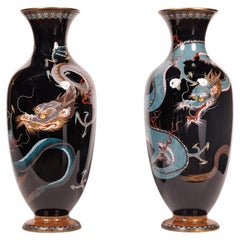
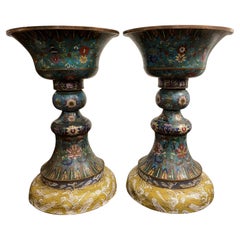
Large Pair of Meiji Period Japanese Cloisonne Enamel Double Dragon Vases
Located in Queens, NY
A large pair of Meiji Period Japanese Cloisonne Enamel Double Dragon Vases, 19th century.
Japanese cloisonne enamel dragon vases are highly ...
Category
19th Century Japanese Meiji Antique Metalwork
Materials
Copper, Enamel
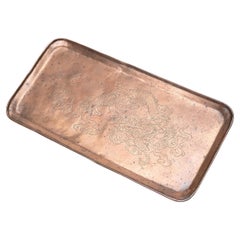
Chinese Copper Opium Tray with Celestial Dragon, c. 1900
Located in Chicago, IL
By the 18th century, opium use had become as central to Chinese social life as taking tea or smoking tobacco, fostering a subculture rich with its own customs, traditions, and exquis...
Category
Early 20th Century Chinese Qing Metalwork
Materials
Copper
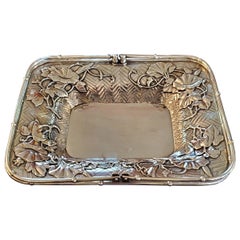
Japanese Meiji Period Sterling Silver 2 Handled Basket by Katsu Miyamoto
Located in Dallas, TX
PRESENTING a GORGEOUS, VERY HIGH QUALITY and EXTREMELY RARE piece of Japanese Meiji Period Sterling Silver 2 Handled Basket by Katsu Miyamoto.
EXQUISITE, EXCEPTIONAL, RARE & IMPORTANT!
This is definitely a Meiji Period piece due to the fact that it is marked with the sterling silver mark “jungin”.
The Meiji period was from 1868 to 1912 and in 1928 a law was introduced in Japan compelling the use of decimal marks for silver.
This pre-dates that decimalization law.
We are of the opinion that it is from circa 1900.
Miyamoto Shoko was founded in 1880 as the first silverware specialty shop. In 1899, Miyamoto Shoko’s silverwares were ordered by the family members of the Emperor of Japan, and to this day, they are making fine and graceful handicrafts with skillful craftsmen.
Loved by numerous customers since the Meiji era, Miyamoto Shoko’s products have also been given to Princess Mako and Princess Kako of Akishino, as well as Princess Aiko Toshinomiya, on their birthdays.
Katsu Miyamoto (宮本勝), in 1880, in order to increase the sales of tobacco and cigarettes to foreigners founded the Moyamoto Shoko company, which produced different silverwares in general and particularly silver cigarette cases. Miyamoto’s first name, Katsu (勝) in some sources is written as “Masaru”, since 勝 kanji can be pronounced in both ways.
This basket is of the HIGHEST QUALITY imaginable!
The top of the basket has the MOST GORGEOUS repousse work of flowers, probably lotus flowers, with leaves and foliage. It has an underlying chevron effect chasing, reflecting parquetry.
The 2 handles are cast in the form of bamboo handles.
The rim of the top likewise is cast as bamboo.
The base is equally stunning in a different way!
It is chased with a chevron effect, like parquetry flooring and the four feet simulate pieces of sliced bamboo with an interlinking gallery of support columns, likewise, simulating bamboo.
The QUALITY of WORKMANSHIP is OUTSTANDING!
The pieces weighs exactly 525 grams.
This piece takes my breath away!
This is one for the SERIOUS COLLECTOR of EXQUISITE AND RARE Japanese silver. You will not find another like it, for sale ANYWHERE ELSE IN THE WORLD …… I know as I have searched!
Provenance: Acquired from a Dallas Private Collector.
Dimensions: 9.6 inches wide, 7.6 inches deep and 2.75 inches tall ( 7.25 inches tall with handles up)
Condition: Very good. It looks like the base 4 legged gallery, has been repaired/re-attached to the base, but otherwise it is excellent and of Museum quality.
The Meiji period (明治時代 Meiji-jidai?), also known as the Meiji era, is a Japanese era which extended from October 23, 1868 through July 30, 1912.[1] This period represents the first half of the Empire of Japan during which Japanese society moved from being an isolated feudal society to its modern form. Fundamental changes affected its social structure, internal politics, economy, military, and foreign relations. The period corresponded with the reign of Emperor Meiji after 1868, and lasted until his death in 1912. It was succeeded by the Taishō period upon the accession of Emperor Taishō to the throne.
Solid silver pieces...
Category
Early 20th Century Japanese Meiji Metalwork
Materials
Sterling Silver
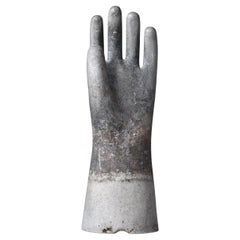
Japanese Old Aluminum Glove Mold 1940s-1960s / Object Wabi Sabi
Located in Chōsei District Nagara, JP
This is an old rubber glove mold made in Japan.
It was made in the Showa period (1940s-1960s), and the material used is aluminum.
Although it is a practical item that has been used f...
Category
Mid-20th Century Japanese Showa Metalwork
Materials
Aluminum

$400 Sale Price
20% Off
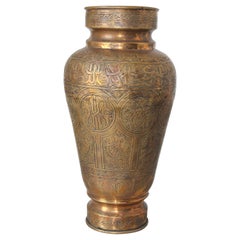
Middle Eastern Brass Islamic Art Vase Engraved with Arabic Calligraphy
By Rajhastani
Located in Moreno Valley, CA
Middle Eastern Islamic brass repoussé vase, finely hand-etched, engraved, hammered and chased with elaborate Moorish Syrian designs decorated with medall...
Category
Early 20th Century Southeast Asian Moorish Metalwork
Materials
Brass
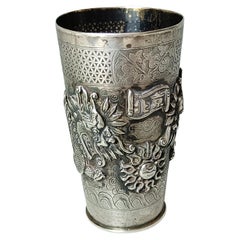
Rare Chinese Antique engraved silver Dragon beaker Beijing Asian art
Located in London, GB
Fine Vintage silver Dragon beaker
A silver beaker with curling dragon and finely engraved geometric designs
Description:
This finely crafted silver beaker features a dramatic c...
Category
Mid-19th Century Chinese Antique Metalwork
Materials
Silver
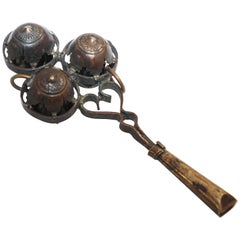
Antique Brass Baby Rattle Whistle Bell Dangles, India
Located in Moreno Valley, CA
Antique brass baby rattle whistle bell dangles, India.
Handcrafted baby rattle in openwork designs with whistle handle and three decorative bell dangles.
...
Category
Mid-20th Century Indian Folk Art Metalwork
Materials
Brass
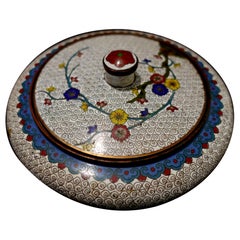
Antique Chinese Cloisonné Enamel Round Lidded Box 19th Century CO#08
Located in Norton, MA
Antique Chinese cloisonné enamel round box with lid depicting floral patterns. A white base tone and colorful floral all around, from the 19th century.
Category
Late 19th Century Chinese Chinese Export Antique Metalwork
Materials
Copper
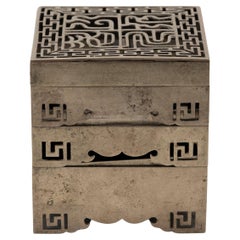
Chinese Baitong Stacking Incense Clock, c. 1850
Located in Chicago, IL
This three-tiered container is a 19th-century white brass incense clock, once used as a relatively accurate method to mark the passage of time. Incense c...
Category
Mid-19th Century Chinese Qing Antique Metalwork
Materials
Brass
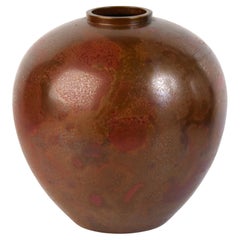
Early 20th Century, Showa, Japanese Bronze Vase with Artist Sign
Located in Sampantawong, TH
Japanese bronze vase with artist sign, used to decorate single flower arrangement in Japanese traditional tea ceremony.
Artist signature is on the last photo.
Age: Japan, Showa Pe...
Category
Early 20th Century Japanese Metalwork
Materials
Bronze
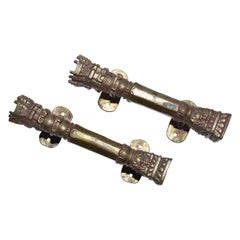
Brass Door Handle
Located in Sheffield, MA
Pair of very decorative brass door or cabinet handles with carved details. Ready to mount.
Category
20th Century Indian British Colonial Metalwork
Materials
Brass
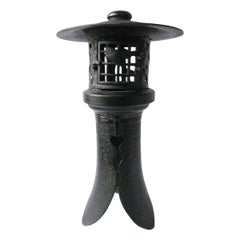
Japanese Iron Pagoda Garden Lantern
Located in New York, NY
Midcentury Japanese cast iron pagoda lantern with lattice fret work hinged door.
Bird and bamboo iron cut outs surround pagoda. Beautiful slo...
Category
Mid-20th Century Japanese Japonisme Metalwork
Materials
Iron
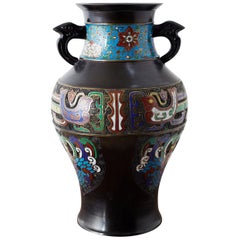
20th Century Japanese Bronze Champlevé Enamel Vase
Located in Rio Vista, CA
Colorful 20th century Japanese bronze champlevé vase with a vibrant enamel decoration. Adorned with zoomorphic motifs in an Art Deco style...
Category
20th Century Japanese Art Deco Metalwork
Materials
Bronze, Enamel
$640 Sale Price
20% Off
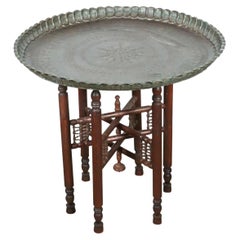
Turkish Tin Copper Tray Table on Wooden Folding Stand
Located in Moreno Valley, CA
Turkish tin copper tray table on wooden folding stand
Turkish Persian Mameluke style tinned copper tray table.
Very nice unusual Asian dark bron...
Category
Late 19th Century Turkish Moorish Antique Metalwork
Materials
Metal, Copper
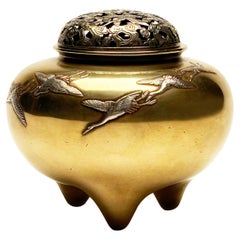
Japanese Bronze and Sterling Incense Burner from Takaoka
Located in Louisville, KY
This stunning Koro was crafted in Takaoka, Japan where craftsmen use intricate tooling and expert kills to create the delicate details found in this piece. Crafted of bronze, this Ko...
Category
20th Century Japanese Other Metalwork
Materials
Sterling Silver, Bronze
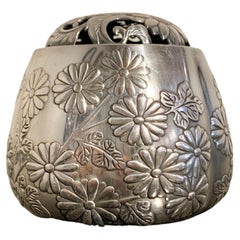
Japanese Silver Incense Burner, Akoda Koro, by Nomura, Meiji Period, Japan
Located in Austin, TX
A lovely and luxurious Japanese silver incense burner of lobed melon form, akoda koro, marked jungin and signed Nomura, Meiji Period, circa 1900, Japan.
The silver koro...
Category
1910s Japanese Meiji Vintage Metalwork
Materials
Silver, Sterling Silver
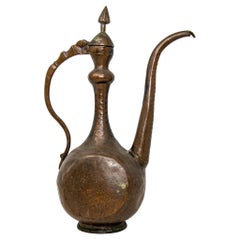
Antique Islamic Middle Eastern Qajar Persian Copper Ewer 19th Century
Located in Moreno Valley, CA
Antique Islamic Middle Eastern Qajar Persian Copper Ewer 19th Century.
Rare Museum quality Antique piece from the early 19th Century hand forged copper pitcher with lid cover.
Great antique patina.
Circa 1800.
Measurements: 14” height 9.5” length 5” width.
Quality Museum Islamic Metalwork from a private Beverly Hills CA collection.
Middle Eastern Asian Turkish Ottoman Antique...
Category
Late 18th Century Unknown Islamic Antique Metalwork
Materials
Copper
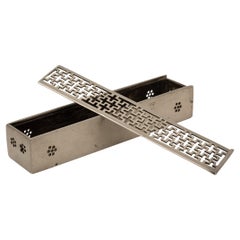
Chinese Lattice Top Incense Box, c. 1850
Located in Chicago, IL
This slender metal container is a 19th-century white brass incense burner, used for storing and burning incense sticks. The small box has a rectangular form and a removable sliding t...
Category
Mid-19th Century Chinese Qing Antique Metalwork
Materials
Brass
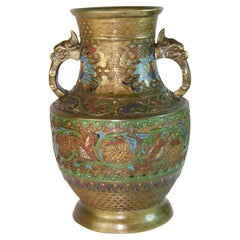
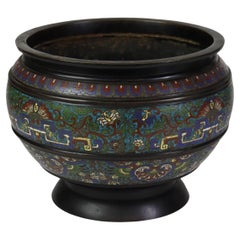
Antique Chinese Bronze Cloissone Urn
Located in Douglas Manor, NY
1845 Antique bronze cloissone urn
Category
1940s Vintage Metalwork
Materials
Bronze
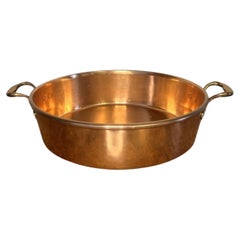
Large quality antique George III copper pan
Located in Ipswich, GB
Large quality antique George III copper pan having a quality large antique George III copper pan with shaped handles to both sides.
D. 1800
Category
Early 19th Century George III Antique Metalwork
Materials
Copper
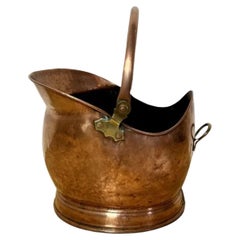
Quality antique Victorian copper helmet coal scuttle
Located in Ipswich, GB
Quality antique Victorian copper helmet coal scuttle having a swing carrying handle to the top with a shaped quality copper helmet coal scut...
Category
Early 19th Century Victorian Antique Metalwork
Materials
Copper, Brass
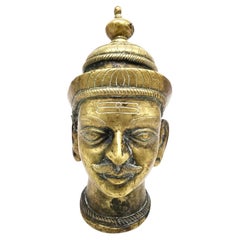
Antique 19th C Hindu Shiva Brass Votive Head Indian Ritual Art Sculpture
Located in London, GB
Antique Indian Hindu Shiva Brass Votive Head – 19th Century
Beautiful 19th-century brass votive head of Lord Shiva, finely cast with detailed moustache and turban. This larger form ...
Category
18th Century Indian Antique Metalwork
Materials
Brass, Bronze
$451 Sale Price
40% Off
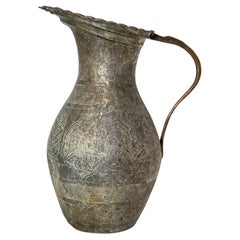
Islamic Tinned Copper Pitcher Middle Eastern Persian Antique 19th Century Ewer
Located in Moreno Valley, CA
Antique 19th century Middle Eastern Persian Qajar Dynasty ( 1785-1924) tinned copper pitcher.
The teardrop form ruffled mouth with a flat hand wrought handle, over a neck decorated with hand chased figures and geometric designs.
Nice decorative old rustic hand-hammered ewer pitcher in the Mameluke Qajar style.
Large tinned copper pitcher entirely engraved and plated with silver, tinned with incised scene of a figure seated.
Persian Moorish Middle Eastern tinned copper water jug ewer.
Middle eastern Arabic...
Category
19th Century Unknown Islamic Antique Metalwork
Materials
Metal, Copper, Tin
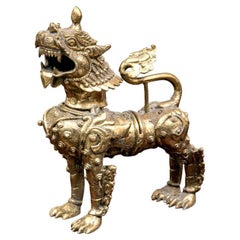
Brass Guardian Temple Lion Figure
Located in Bridgeport, CT
Well cast brass temple lion with fierce open mouth, armored headdress, bold protective stance.
Dimensions: 9" W x 4 3/4" D x 11" H
Condition: brass imperfection at base of tail th...
Category
20th Century Asian Anglo-Indian Metalwork
Materials
Brass
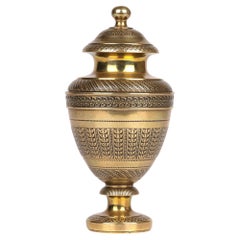
Exceptional Southeast Asian Brass Engine Turned Lidded Urn
Located in Bishop
s Stortford, Hertfordshire
An exceptional quality antique Southeast Asian brass lidded urn dating from the 19th century. The heavily made urn stands raised on a narrow round pedestal foot with a short narrow k...
Category
19th Century Southeast Asian Other Antique Metalwork
Materials
Brass
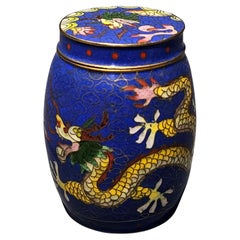
Antique Japanese Lidded Cloisonné Canister, Meiji Period
Located in Norton, MA
Quality work, Antique Japanese Lidded Cloisonné Canister, Meiji Period, with the theme of dragons.
Dimensions;
2.125" Dia x 2.625" H
Category
19th Century Chinese Antique Metalwork
Materials
Bronze, Copper
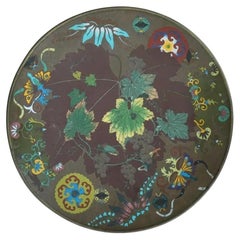
Antique Japanese Cloisonne Charger with Insects and Fall Foliage Plate Goto
Located in Long Island City, NY
A large antique Japanese Meiji period, 1868 to 1912, cloisonne enamel metal charger plate depicting a multicolored picture of vines and grapes with...
Category
Late 19th Century Japanese Meiji Antique Metalwork
Materials
Copper, Enamel
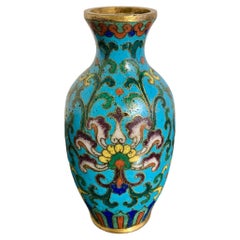
Chinese Cloisonne Incense Tool Vase, Qing Dynasty, 18th/19th Century, China
Located in Austin, TX
A small and elegant Chinese cloisonné vase for incense tools, Qing Dynasty, 18th/19th century, China.
Made for the scholar's studio, this small refined vase, was used to hold incense tools, including a small pair of tongs or chopsticks and spoon. The tools no longer present.
Of miniature baluster vase form, the vase beautify proportioned and decorated in the cloisonné enamel technique, with gilt wires forming the cloisons, or partitions. Within the cloisons, colorful enamels have been expertly laid.
The small incense tool vase...
Category
Early 1800s Chinese Qing Antique Metalwork
Materials
Copper, Enamel
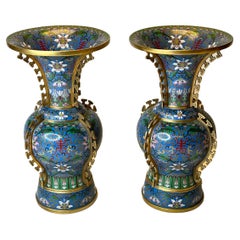
Pair Antique Chinese Blue Cloisonne Vases
Located in New York, NY
Pair Chinese cloisonne enamel vases with floral designs on blue ground and gilt mounts representing stylized dorsal fins of a dragon.
Category
1960s Chinese Qing Vintage Metalwork
Materials
Enamel
$1,800 / set
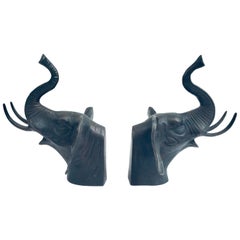
Pair of Cast Iron Elephant Heads Bookends
Located in Moreno Valley, CA
Cast iron elephant heads bookends.
Elephant heads in dark bronze patinated color, nice quality and details sculpture.
Great to use as bookends, pa...
Category
Early 20th Century Indian Anglo-Indian Metalwork
Materials
Bronze
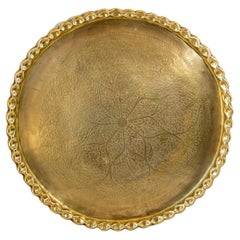
Antique Islamic Mughal Rajasthani Large Moorish Round Brass Tray with Crest Edge
Located in Moreno Valley, CA
Asian Mughal Rajasthani Large Polished Round Brass Tray with Crest Edges.
Asian Antique Islamic Mughal Rajasthani Large Polished round Brass Tray with crest edges, 3o inches in diameter.
Rare find, large antique...
Category
Early 20th Century Indian Islamic Metalwork
Materials
Brass
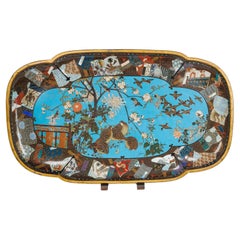
A Grand Meiji Cloisonné Enamel Tray Featuring Cherry Blossoms and Birds
Located in Queens, NY
A Grand Meiji Japanese Cloisonné Enamel Tray – Lush Cherry Blossom Garden with Sparrows, Quail, and Japanese Fountain, Circa 1890
This monumental exhibition-size Meiji period Japane...
Category
19th Century Japanese Meiji Antique Metalwork
Materials
Enamel
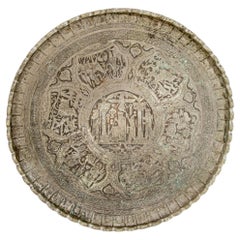
Antique Middle Eastern Persian Wall Hanging Metal Tray
Located in Moreno Valley, CA
Large engraved antique Middle Eastern Persian wall hanging metal tray, platter.
A large metal decorative centerpiece or wall hanging. Beautiful handmade craftsmanship.
A fine Persian Qajar large heavy metal round tray with tinned surface covered in etched geometric, hand chased floral and Persian, Middle Eastern scenes decorations.
Nicely handcrafted and carved with floral details and a figural scene with Kings, animals and various oother figures.
Medallions around with different scenes of men on horses and animals.
A large frise around with Arabic, Persian Kufic writing.
Persian Middle Eastern metal Islamic work Qajar style tinned copper, silvered, and blackened metal.
Metal silver color and black hammered antique Persian wall hanging decorative tray.
Has a hook in the back for hanging.
Highest craftsmanship according to old tradition. Very decorative embossed brass tray from Persian Qajar era, nice combination of traditional designs as deer, birds, flowers, Dervish or opium pipe.
Handsomely intertwined with calligraphic inscriptions, this brass plate/tray is remarkable mix of Qajar patterns.
Late 19th, eraly 20th century Qajar era Persian Islamic tray with engraved figures and floral designs.
Engraving(Ghalam Zani...
Category
Early 20th Century Asian Islamic Metalwork
Materials
Metal
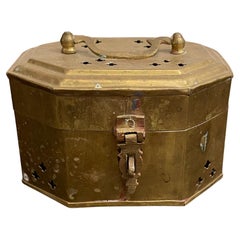
A Chinese Brass Jewellery Lidded Box, Early 20th Century
Located in ARMADALE, VIC
A Chinese Brass Jewellery Lidded Box, Early 20th Century
Provenance: Private Australian Collection Acquired in 1980s.
Dimension: Width: 11cm Height: 7cm Depth: 9cm.
Category
Early 20th Century Chinese Metalwork
Materials
Brass
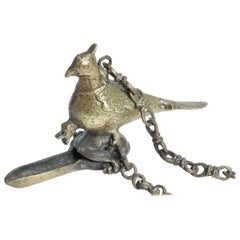
Hanging Mughal Deccani Bronze Oil Lamp in the Shape of a Bird India
Located in Moreno Valley, CA
Antique hanging cast bronze oil lamp in the shape of a beautiful mythical bird peacock figure with hanger chain.
The body of the bird acts as a reservoi...
Category
Late 19th Century Indian Agra Antique Metalwork
Materials
Bronze
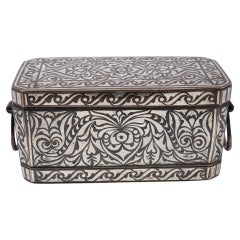
Antique Medium Betel Nut Box, Maranao, Southern Philippines (Mindanao)
Located in Point Richmond, CA
Medium Betel Nut Box, Maranao, Southern Philippines (Mindanao).
Bronze with bordered silver inlay design overall of a symmetrical floral tendril vine pattern referred to as “the okir...
Category
Early 1900s Philippine Tribal Antique Metalwork
Materials
Silver, Bronze, Copper
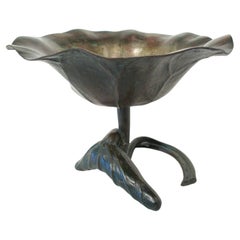
John Scott Bradstreet - Bronze Lotus Bowl - United States - circa 1900
Located in Chatham, ON
JOHN SCOTT BRADSTREET (Attributed) - Arts & Crafts cast and patinated bronze center-piece flower bowl taking the form of a lotus - later patinated flower 'frog' - unsigned - United S...
Category
Early 20th Century American Arts and Crafts Metalwork
Materials
Bronze
Antique Chinese Bronze Foo Dog Sculpture with good detail, Qing 19th Century
Located in Lincoln, Lincolnshire
This is a very good antique Chinese foo or lion dog sculpture, sometimes called a temple lions, made of bronze, with excellent detail, dating to the 19th century, Qing period or poss...
Category
19th Century Chinese Qing Antique Metalwork
Materials
Bronze

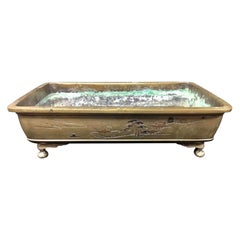
Antique Japanese Bronze Bonsai Planter
Located in Bradenton, FL
Fine Bronze from Japan with great weight and strength. Large form for Bonsai presentation. Elegant style and beautiful patina. Incised decoration on the front and bronze elephant hea...
Category
Early 20th Century Japanese Japonisme Metalwork
Materials
Bronze
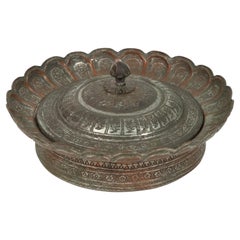
Decorative Tinned Copper South Asian Round Box with Lid
Located in Moreno Valley, CA
Beautiful decorative tinned copper hand-hammered Indo-Persian box with lid.
Probably used as a tea caddy or tobacco storage.
Nice Middle Eastern Arabian Moorish style hand chiseled copper...
Category
19th Century Asian Moorish Antique Metalwork
Materials
Metal, Copper
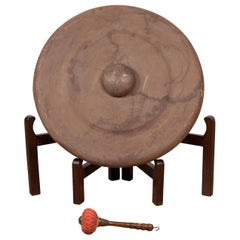
Antique Burmese Bronze Temple Gong with Mallet and Raised Center
Located in Yonkers, NY
An antique Burmese bronze temple gong with mallet. This exquisite antique Burmese bronze temple gong captures attention with its traditional circular form and raised center. Featuring a rich, brown veined patina, this piece embodies the timeless beauty of Burmese craftsmanship. The gong comes with a mallet and a rope for easy hanging, adding authenticity and functionality to its striking design. Though the base is not included, its presence alone makes a bold statement, whether displayed as a decorative object or used in a more interactive setting.
Perfect for enhancing a living room, meditation space, or entryway, this temple gong serves as both a historical artifact and a stunning conversation piece. Its strong visual presence and the mallet's tactile invitation offer an engaging experience for guests. Whether hung as a sculptural wall accent or placed in a central area to invoke a sense of serenity and tradition, this Burmese gong...
Category
Early 20th Century Burmese Metalwork
Materials
Metal
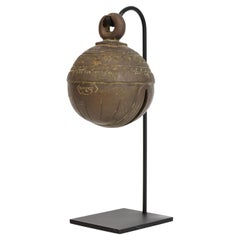
19th Century, Antique Burmese Bronze Elephant Bell with Stand
Located in Sampantawong, TH
Burmese bronze elephant bell with stand.
Age: Burma, 19th Century
Size: Height 12.5 C.M. / Width 9 C.M.
Size including stand: Height 23.5 C.M.
Condition: Nice condition overall...
Category
19th Century Burmese Antique Metalwork
Materials
Bronze
$384 Sale Price
20% Off
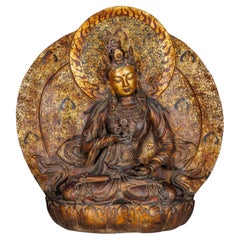
A Monumental Gilt-Lacquered Bronze Ornamental Buddha Sculpture of Vajravidarana
Located in Queens, NY
A Monumental Gilt-Lacquered Bronze Ornamental Buddha Sculpture of Vajravidarana:
A Masterpiece of Sino-Tibetan Craftsmanship, Late 19th Century, Qing Dynasty
This monumental gilt-lacquered bronze ornamental sculpture of Vajravidarana is an extraordinary and commanding piece of art, showcasing the pinnacle of Sino-Tibetan craftsmanship from the late 19th century. The figure of Vajravidarana, a powerful purification deity in Tibetan Buddhism, is meticulously sculpted to embody both spiritual authority and artistic excellence.
Vajravidarana is primarily known for his role in removing spiritual impurities and negativities. Unlike other deities associated with wisdom or compassion, Vajravidarana’s function is centered on purification and healing. He is typically depicted holding a vajra and a bell, symbolizing the cutting away of delusions and the resonance of divine truth. In this striking sculpture, Vajravidarana is shown holding a vishva vajra (the double vajra), a unique and powerful variation of the traditional iconography, which signifies ultimate protection and the dispelling of negative karma.
Vajravidarana: The Supreme Purifier and Protector
Vajravidarana is revered in Tibetan Buddhism as the deity of spiritual purification, called upon to cleanse practitioners of defilements and negative influences. His vajra represents the indestructibility of truth, while his bell signifies the wisdom that resonates through purification rituals. In this sculpture, the presence of the vishva vajra, or double vajra, enhances his association with supreme protection, ensuring the destruction of all spiritual obstacles and afflictions.
The figure’s powerful yet composed expression conveys a sense of unwavering resolve and divine authority. His posture, along with the carefully sculpted details of his robes and ornaments, highlights his function as a guardian against impurity. The inclusion of the vishva vajra rather than the usual single vajra reinforces his role as a supreme protector, capable of dispelling all forms of negativity and restoring balance.
Symbolism of the Mantras and Aureole:
Unlike deities that embody wisdom through duality, Vajravidarana’s iconography is centered on purification and exorcism. The aureole surrounding him is inscribed with sacred purification mantras rather than depictions of a consort. These mantras emphasize his function as a remover of obstacles and impurities, reinforcing his role in Buddhist healing rituals.
The presence of the sacred inscriptions elevates the sculpture’s spiritual significance, making it a focal point for meditation and ritual purification. Practitioners often visualize Vajravidarana radiating purifying light, dissolving afflictions and negative karma. This theme is mirrored in the sculptural repetition of the purification symbols on the aureole, reinforcing the deity’s role as a divine cleanser.
Gilt-Lacquered Bronze: The Artistry of Sino-Tibetan Metalwork:
The craftsmanship of this monumental figure reflects the expertise of late 19th-century Sino-Tibetan metalwork, where traditional Tibetan themes were infused with Chinese artistic sensibilities. Cast in bronze and finished with a rich gilt lacquer, the statue has an otherworldly glow, giving it an ethereal, almost divine presence. The gilding process—applied with exceptional skill—gives the sculpture a striking luminosity that enhances the fine details of the facial features, flowing robes, jewelry, and other elements of the deity’s attire.
The technique employed to create this figure speaks to the high level of craftsmanship that flourished during the late Qing Dynasty and early modern Tibetan art. The ornate details of the robes and the fine texture of the sculpture highlight the exceptional skill of the artisans who brought this work to life. The use of gold and lacquer not only reflects the preciousness of the sculpture but also its spiritual significance as an object meant to inspire reverence and meditation.
An Ornamental Sculpture of Monumental Scale:
Unlike smaller devotional objects, this sculpture is designed as an ornamental masterpiece, intended to make a grand visual and spiritual statement. Its monumental size allows it to dominate any space, offering a commanding presence that is both physically and symbolically impressive. In Buddhist practice, large sculptures of this nature are often placed in temples or meditation halls, where their imposing size and serene presence would encourage contemplation and devotion.
The grand scale of the statue further amplifies the spiritual power it is meant to convey. As a representation of Vajravidarana, it is not only a physical object of beauty but also a conduit for meditation, purification, and enlightenment. The scale of the sculpture also emphasizes the divine stature of the deity, highlighting his importance in the Buddhist tradition as the ultimate force for spiritual cleansing and protection.
Provenance:
Acquired in China in circa 1900
1905 Private Buddhist Temple, Northeast, USA
Private Sale
Solomon Treasure...
Category
Late 19th Century Chinese Tibetan Antique Metalwork
Materials
Bronze
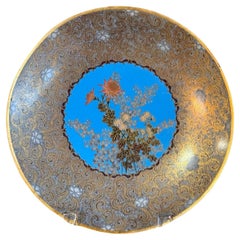
Fine Meiji Japanese Cloisonne Enamel Plate with Central Medallion and Bats
Located in Long Island City, NY
A beautifully executed Meiji period Japanese cloisonne enamel plate featuring a vivid sky blue central medallion framed by an elaborate border of intricate wire work. The center is d...
Category
Late 19th Century Japanese Meiji Antique Metalwork
Materials
Enamel
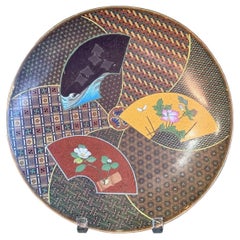
Fine Japanese Cloisonne Enamel Fan Design Plate with Tokugawa Mon by Goto
Located in Long Island City, NY
A refined Japanese cloisonne enamel plate by Goto Seizaburo, one of the most distinctive enamel artists active in Yokohama during the late Meiji period. The plate is composed in an e...
Category
Late 19th Century Japanese Meiji Antique Metalwork
Materials
Enamel
A Pair of Chinese Cloisonne Vases, Late 19th Century
Located in ARMADALE, VIC
A Pair of Chinese Cloisonne Vases, 19th Century
Provenance: Private Australian Collection.
Description:
Each on rolled foot with undulating standard rising to a tape...
Category
Late 19th Century Chinese Qing Antique Metalwork
Materials
Bronze
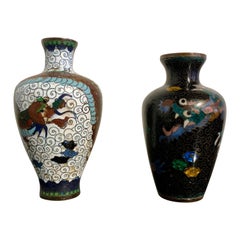
Two Small Japanese Cloisonne Dragon Vases, Early 20th Century, Japan
Located in Austin, TX
Two charming, small Japanese cloisonné dragon vases, Meiji to Taisho period, early 20th century, Japan.
The miniature vases of baluster f...
Category
Early 20th Century Japanese Taisho Metalwork
Materials
Copper, Enamel, Foil
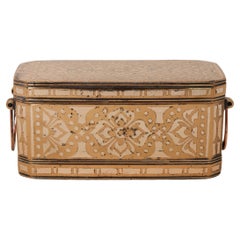
Personal size Betel Nut Box, Maranao, Southern Philippines (Mindanao)
Located in Point Richmond, CA
Personal size Betel Nut Box, Maranao, Southern Philippines (Mindanao).
A mixed metal box having a brass body with bordered silver inlay design overall of a symmetrical floral tendril...
Category
Early 20th Century Philippine Tribal Metalwork
Materials
Silver, Brass
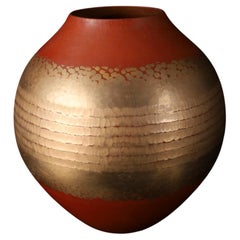
Japanese Hand-Hammered Copper Vase by Gyokusendō — Signed, with Original Tomobak
Located in Fukuoka, JP
Dimensions: Height 16 cm
Origin: Tsubame, Niigata, Japan
Material: Pure copper (dōsei)
A finely hand-hammered copper vase (tsuiki dōsei kabin) crafted by the renowned metalwork atel...
Category
Early 20th Century Japanese Meiji Metalwork
Materials
Copper
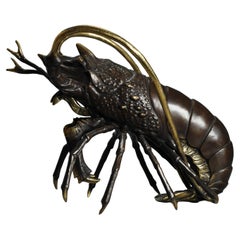
Large 30 cm Showa Period Bronze Japanese Lobster Okimono Statue Japan
Located in Amsterdam, Noord Holland
BRONZE top level Japanese statue. Lobster
Condition
Perfect. Size: 30x18cm
Period
Showa Period
Category
Early 20th Century Japanese Meiji Metalwork
Materials
Porcelain
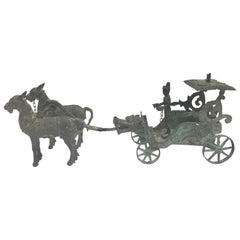
Antique Asian Bronze Chariot with Dragon Head Pulled by Horses
By Rajhastani
Located in Moreno Valley, CA
From the Ramakien a Thai Ramayana.
A scene from Ramakian or Ramayan, the Indian epic Lakshman riding in a chariot along with Rama and Sita sitting in the back.
After his victory over Ravana, Sri Rama prepares to leave for Ayodhya, Rama now told Vibheeshan that there was just one more day...
Category
Early 20th Century Indian Folk Art Metalwork
Materials
Bronze
Antique Chinese Enameled Floor Vase With Removable c1930
Located in Big Flats, NY
Antique Chinese Cloisonne Enameled Floor Vase With Removable Bottom Unsigned C1910 (11 1/4" x 15 1/4" x 15 1/4").
A fine antique Chinese enameled floor vase dating to circa 1910...
Category
Early 20th Century Metalwork
Materials
Metal, Enamel
$960 Sale Price
20% Off
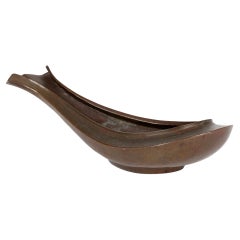
Indian Antique Large Ceremonial Hand Crafted Copper Yoni
Located in Bishop
s Stortford, Hertfordshire
A large and rare antique Indian copper Yoni Shiva Lingam Ceremonial water Vessel dating from the 19th century. The Yoni represents the Hindu godd...
Category
19th Century Indian Other Antique Metalwork
Materials
Copper
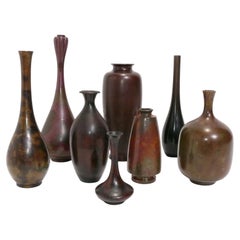
Japanese Bronze Vases Collection of Eight
Located in Atlanta, GA
Collection of Eight Japanese Bronze Vases, Japan, at least circa 1950s, some much earlier. The largest vase measures 12.75"H x 4.25"W. The smallest vase measures 5.25"H x 3"W. They r...
Category
1950s Japanese Japonisme Vintage Metalwork
Materials
Bronze
$2,850 / set
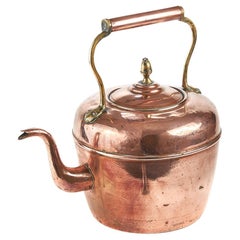
Large Antique Copper
Brass Kettle
Located in Ipswich, GB
Offered for sale is this large 19th Century Victorian antique copper and brass kettle of good quality, having a shaped brass and copper...
Category
19th Century Early Victorian Antique Metalwork
Materials
Brass, Copper
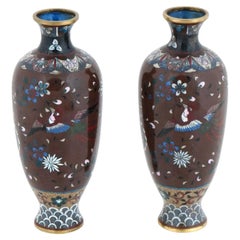
Antique Pair Of Meiji Japanese Cloisonne Enamel Vases
Located in Long Island City, NY
A pair of identical antique Japanese copper vases with cloisonne enamel design. Late Meiji period, before 1912. Elongated baluster shape with pronounced neck. Floral ornament with bl...
Category
Late 19th Century Japanese Meiji Antique Metalwork
Materials
Enamel, Copper
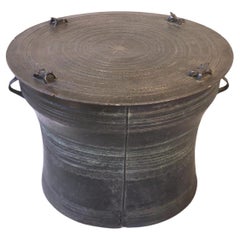
Small Burmese Karen 4 Frog Drum, 18th century
Located in Point Richmond, CA
Burmese Karen Frog Drum, a small bronze tribute drum (Heger Type III), Pazi (Burmese), pam klo’ (Karen) also known as “The Magical Bronze Pond” (Cooler - ...
Category
18th Century Burmese Tribal Antique Metalwork
Materials
Bronze
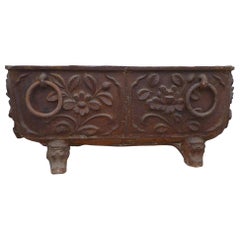
Large Cast Iron Tub with Floral Motif
Located in Greenwich, CT
Large cast iron tub with floral motif with four ring pulls, there is one casted inscription on one side with date made : " Emperor Qianglong Era 32nd yea...
Category
Late 19th Century Chinese Qing Antique Metalwork
Materials
Iron
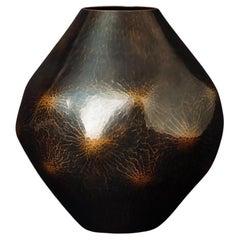
Japanese hand hammered copper vase by famous Gyokusendo
Located in Fukuoka, JP
Beautiful Gyokusendou Hand hammered copper vase
Gyokusendo Tsuiki Copperware is a traditional Japanese craft .
It originated in Tsubame City, Niigata Prefecture ,with a history of...
Category
Mid-20th Century Japanese Showa Metalwork
Materials
Copper
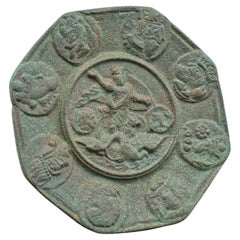
Small Antique Octagonal Dish, Middle Eastern, Decorative, Bronze Tray, Georgian
Located in Hele, Devon, GB
This is a small antique octagonal dish. A Middle Eastern, decorative bronze tray with relief decor in Persian taste, dating to the Georgian period, circa 1800.
Unusual and delightfu...
Category
Early 19th Century Asian Georgian Antique Metalwork
Materials
Bronze
Still Thinking About These?
All Recently ViewedMore Ways To Browse
Tibetan Singing Bowl
Bronze Hibachi
China Brazier
Elephant Censer
Foo Censer
Japanese Bronze Crane And Turtle
Miyao Bronze
Quran Verse
Small Incense Burner
Tibetan Metal Art
Zhou Bronze
Antique Arabic Coffee Pot Dallah
Antique Chinese Bronze Marks
Antique Lime Boxes
Bidri Art
Burmese Bell
Cast Iron Kettle
Chinese Cloisonne Censer