Enamel Metalwork
to
98
265
66
337
2
1
1
1
8
190
139
79
22
9
11
6
2
2
2
4
1,833
629
364
354
337
314
312
210
102
3
337
337
337
13
2
1
1
1
Material: Enamel
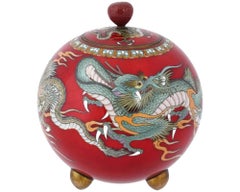
Rare Meiji Japanese Cloisonne Red Enamel Green and White Dragon Jar
Located in Long Island City, NY
A rare antique Japanese late Meiji Era tripod and covered enamel copper censer koro. Circa: late 19th century to early 20th century. The sphere form censer koro is enameled with poly...
Category
Late 19th Century Japanese Meiji Antique Enamel Metalwork
Materials
Enamel, Copper
A Large Jet Black Japanese Meiji Period Cloisonné Enamel Vase
Located in London, GB
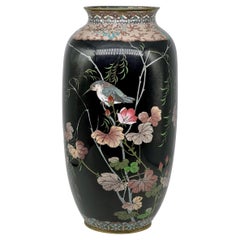
A Large Jet Black Japanese Meiji Period Cloisonné Enamel Vase
An elegant Meiji period Japanese cloisonné vase of ovoid form with a gently flared neck finely decorated on a rich bla...
Category
19th Century Japanese Antique Enamel Metalwork
Materials
Enamel
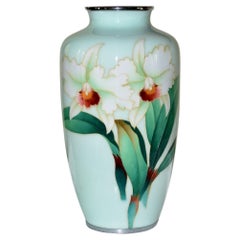
Large Signed Ando Jubei Japanese Cloisonné Vase Orchids 10"
By Ando Jubei
Located in Somis, CA
A large, rare masterpiece of Ando Jubei's wireless cloisonné artistry in excellent condition, depicting two orchids in full bloom, capturing their delicate beauty and verdant vitalit...
Category
20th Century Japanese Meiji Enamel Metalwork
Materials
Metal, Enamel

$960 Sale Price
46% Off
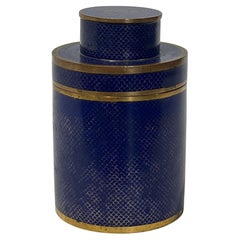
Fish Scale Midnight Blue Chinese Cloisonne Tobacco Box 1930
s
Located in Mobile, AL
Monochrome Chinese Fish Scale cloisonne is long famed for it's high quality of craftsmanship and understated elegance. A staple of interior design...
Category
1930s Chinese Chinoiserie Vintage Enamel Metalwork
Materials
Metal, Enamel
$396 Sale Price
20% Off
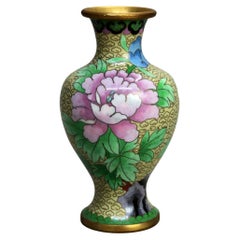
Antique Chinese Cloisonne Enameled Vase With Peonies 20thC
Located in Big Flats, NY
Antique Chinese Cloisonne Enameled Vase With Peonies 20thC
Measures - 6.25"h x 3.5"diam
Category
20th Century Enamel Metalwork
Materials
Metal, Enamel
$360 Sale Price
20% Off
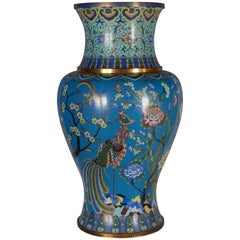
Massive Chinese Cloisonné Vase with Phoenix, Magnolia, Lotus and Chrysanthemums
Located in New York, NY
A massive Chinese blue cloisonné vase or urn depicting a colorful imperial phoenix with gilt bronze wires among birds and butterflies in an imperia...
Category
1920s Chinese Vintage Enamel Metalwork
Materials
Enamel
$22,400 Sale Price
20% Off
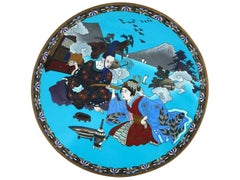
Rare Antique Meiji Japanese Cloisonne Enamel Charger With Figures 12 Inches
Located in Long Island City, NY
An antique Japanese copper serving plate with polychrome cloisonne enamel design. Meiji period, ca. 1880s. Round footed piece. Turquoise blue ground color. The plate depicts a samura...
Category
Late 19th Century Japanese Meiji Antique Enamel Metalwork
Materials
Enamel, Copper
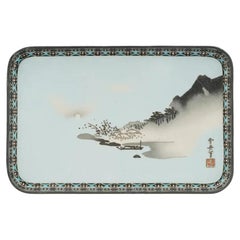
Japanese Wireless Cloisonné Serving Tray Meiji After Namikawa Sosuke
Located in Long Island City, NY
A rare 19th Century Japanese copper serving tray with cloisonne enamel design. The central part of the tray depicts a wireless cloisonne picture, a coastal landscape view with a full moon. The hieroglyphical signature of the artist is in the lower right. The rims and the backside are decorated with floral ornaments. Blue and black color palette. Collectible Oriental Decor And Applied Arts For Interior Design.
Namikawa Sosuke (1847–1910) was a Japanese cloisonné artist,[1] known for innovations that developed cloisonné enamel into an artistic medium sharing many features with paintings.[2][3] He and Namikawa Yasuyuki (no relation)[notes 1] were the most famous cloisonné artists of the 1890 to 1910 period, known as the "golden age" of Japanese enamels.[1] Around 1880 he set up and ran the Tokyo branch of the Nagoya Cloisonné Company.[1] He exhibited his artworks at national and international expositions, where he took an organising role.[2] He was recognised as an Imperial Household Artist and created art works for imperial residences. He sometimes signed his works with the character sakigake (Pioneer)
the art work is based off a art work done by Sesshu Toyo
Sesshu Toyo (?? ??, c. 1420 – August 26, 1506), also known simply as Sesshu (??), was a Japanese Zen monk and painter who is considered a great master of Japanese ink painting. Initially inspired by Chinese landscapes, Sesshu's work holds a distinctively Japanese style that reflects Zen Buddhist aesthetics.[1] His prominent work captured images of landscapes, portraits, and birds and flowers paintings, infused with Zen Buddhist beliefs, flattened perspective, and emphatic lines.[2]
Sesshu was born into the samurai Oda family (???) and trained at Shokoku-ji temple in Kyoto, Japan, as a Zen monk.[1] From his early childhood, Sesshu showed a talent for painting and eventually became widely revered throughout Japan as a wise, reputable Zen scholar, and the greatest painter priest of Zen-Shu.[3]
Sesshu worked in a painting atelier whilst training under Tensho Shubun (c. 1418–1463). But upon visiting China, his work betook a distinctive Chinese influence, merging Japanese and Chinese styles to develop his individualistic style of Zen paintings.[3] Sesshu's influence on painting was so wide that many schools of art appointed him their founder.[4] Sesshu's most acclaimed works are Winter Landscape (c. 1470s), Birds and Flowers (1420–1506) and Four Landscape Scrolls...
Category
Late 19th Century Japanese Antique Enamel Metalwork
Materials
Copper, Enamel
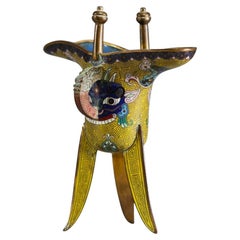
20th C. Chinese Bronze and cloisonné enamel wine cup for ritual ceremonies
Located in Bilzen, BE
China - Bronze and cloisonné enamel wine cup for ritual ceremonies with archaic Jue decoration, body decorated with a Chilong head early 20th c
Heigth 15.5 cm
Category
1920s Chinese Qing Vintage Enamel Metalwork
Materials
Bronze, Enamel
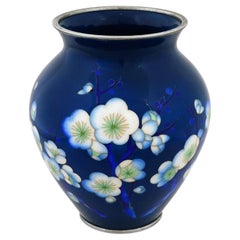
Japanese Flowers Butterfly Cloisonne Enamel Vase
Located in Long Island City, NY
A Japanese enamel over metal vase. The vase has a globular shaped body and a wide neck with a fluted mouth. The exterior of the ware is enameled with a polychrome design depicting bl...
Category
Mid-20th Century Japanese Enamel Metalwork
Materials
Metal, Enamel
$1,500 Sale Price
50% Off
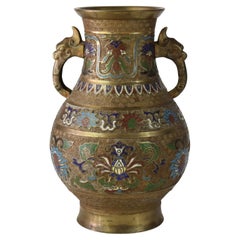
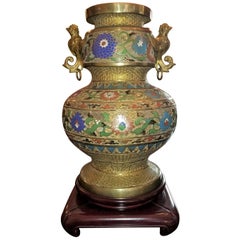
Antique Chinese Enameled Vase with Figural Handles Signed C1890
Located in Big Flats, NY
Antique Chinese Enameled Vase with Figural Handles Signed C1890 (12" x 7 1/2" x 7 1/2").
This exquisite antique Chinese vase dates to circa 1890. It features figural handles wi...
Category
Late 19th Century Antique Enamel Metalwork
Materials
Metal, Enamel
$960 Sale Price
20% Off
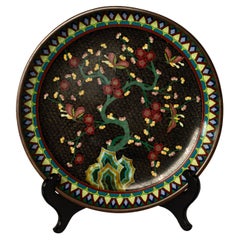
Antique Chinese Qing Dynasty 1644-1911 Enamel on Copper Cloisonne Plate Bowl
Located in Portland, OR
A fine antique Chinese Qing Dynasty (1644-1911) cloisonne shallow bowl, circa 1880.
The bowl is finely decorated with gold spiral cloisons on a black enamel ground, to the center is ...
Category
1880s Chinese Qing Antique Enamel Metalwork
Materials
Copper, Enamel
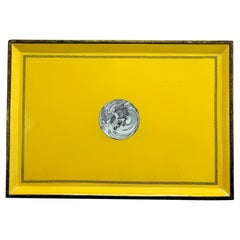
Imperial-Yellow Japanese Cloisonné Enamel Tray with Phoenix Medallion, Showa Era
Located in Atlanta, GA
A refined rectangular cloisonné enamel tray on copper, its field finished in a saturated imperial yellow and centered by a roundel bearing a stylized hō-ō (phoenix) in swirling cloud...
Category
20th Century Japanese Japonisme Enamel Metalwork
Materials
Brass, Enamel
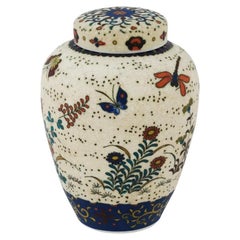
Japanese Cloisonne Totai Enamel Ceramic Jar Butterflies and Dragonflies
Located in Long Island City, NY
An antique Japanese late Meiji era covered Totai enamel on ceramic ginger jar. Circa: late 19th century
The ware is enameled with polychrome images of blossoming flowers, butterflies, and dragonflies made in the Cloisonne technique. The cover of the ware is made in the same design. The neck and the base are adorned with polychrome floral, and foliage motifs made in the same technique. Signed with red ink hieroglyphs, on the bottom. Totai Shippo is the name given to Japanese cloisonne on ceramics, both on earthenwares and on porcelain. It has a similar appearance to metallic cloisonne ware...
Category
Late 19th Century Japanese Meiji Antique Enamel Metalwork
Materials
Enamel
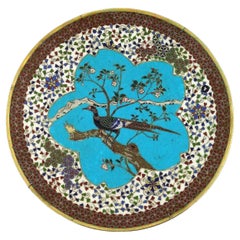
Antique Meiji Japanese Cloisonne Enamel Plate Depicting A Pheasant On A Tree
Located in Long Island City, NY
An antique Japanese Meiji era enamel plate. The plate is enameled with a polychrome image of a bird sitting on a branch with blossoming flowers on a blue turquoise ground made in the...
Category
Late 19th Century Japanese Antique Enamel Metalwork
Materials
Enamel
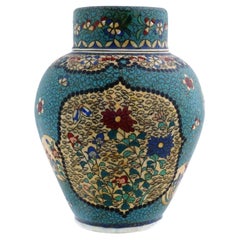
Antique Japanese Cloisonne Totai Covered Enamel Porcelain Jar
Located in Long Island City, NY
A Japanese covered Totai enamel on porcelain ginger jar. The ware is enameled with polychrome medallions representing blossoming flowers surrounded by floral, foliage and geometrical...
Category
19th Century Japanese Antique Enamel Metalwork
Materials
Enamel
$600 Sale Price
60% Off
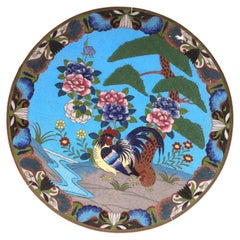
Antique Meiji Japanese Cloisonne Enamel Charger Plate
Located in Long Island City, NY
An antique Japanese, late Meiji era, enamel over copper charger plate. The plate is adorned with a polychrome scene with a rooster and a chicken on a pond with blossoming flowers and...
Category
Early 20th Century Japanese Meiji Enamel Metalwork
Materials
Copper, Enamel
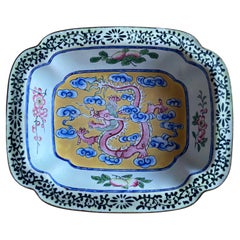
Qianlong period Canton Enamel Square Dish with Dragon, China Late 18th Century
Located in Grythyttan, SE
This small and exquisite Chinese Canton Qianlong period enamel square dish features cut corners and is beautifully decorated with a five-clawed pink dragon surrounded by 18 blue ruyi clouds against a vibrant yellow background. The design is accented by two branches of peaches (or similar fruit) and two branches of peach blossoms (or other fruit blossoms), all framed by an intricate seaweed pattern border.
In Chinese symbolism, five-clawed dragons are reserved exclusively for emperors, as the number five is considered sacred, representing the five elements. In contrast, four-clawed dragons are associated with kings, princes, and high-ranking officials, while three-clawed dragons are designated for the merchant class.
This piece is crafted from enamel on brass, dating back to the Qianlong period (1736–1795), and is characterized by its hexagonal form and the distinctive Famille Rose palette, often referred to as "Canton enamel."
Chinese painted enamel, commonly known as Canton enamel, derives its name from its principal manufacturing location, Canton. This technique was introduced to China in the 18th century, likely by French missionaries, and is inspired by the enameling techniques developed in Limoges, France around 1470. It is referred to in China as "foreign porcelain," suitable since much of it was made for export.
During the 18th and 19th centuries, there was significant demand in the West for Chinese porcelain dinner sets...
Category
Late 18th Century Chinese Qing Antique Enamel Metalwork
Materials
Copper, Enamel
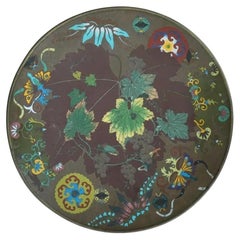
Antique Japanese Cloisonne Charger with Insects and Fall Foliage Plate Goto
Located in Long Island City, NY
A large antique Japanese Meiji period, 1868 to 1912, cloisonne enamel metal charger plate depicting a multicolored picture of vines and grapes with...
Category
Late 19th Century Japanese Meiji Antique Enamel Metalwork
Materials
Copper, Enamel
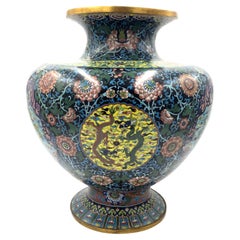
Antique 19th Century Cloisonne Chinese Vase
Located in London, GB
This Chinese vase is made of brass with a lovely enamel cloisonné floral design. The elegant vase sits on a narrow round base with a short funnel neck. The cloisonne floral and leaf ...
Category
19th Century Chinese Antique Enamel Metalwork
Materials
Enamel
$17,502 Sale Price
20% Off
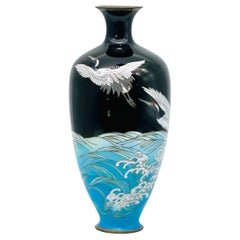
A magnificent Japanese cloisonne enamel Vase. Signed. Meiji period
Located in London, GB
A magnificent Japanese cloisonne enamel Vase. Signed. Meiji period
of tapering form with everted neck, decorated in various coloured enamels with two cranes in flight above the cra...
Category
19th Century Japanese Antique Enamel Metalwork
Materials
Enamel
$1,454 Sale Price
20% Off
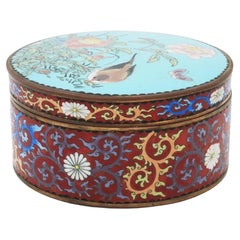
Antique Japanese Meiji Cloisonne Enamel Trinket Box
Located in Long Island City, NY
An antique Japanese, late Meiji era, covered enamel over brass jewelry or trinket box. The body of the ware is enameled with floral and foliage motifs made in the Cloisonne technique...
Category
Late 19th Century Japanese Meiji Antique Enamel Metalwork
Materials
Brass, Enamel
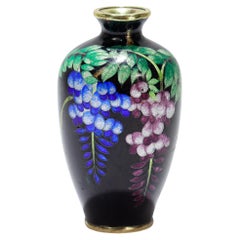
Antique Japanese Cloisonne Enamel Cabinet Vase with Wisteria
Located in Philadelphia, PA
A fine antique Japanese cloisonne enamel cabinet vase.
With polychrome enamel on a brass base.
Decorated with an enameled tree branches with blue & purple wisteria blossoms on a ...
Category
19th Century Japanese Meiji Antique Enamel Metalwork
Materials
Enamel
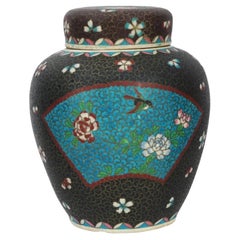
Large Antique Japanese Cloisonne Enamel on Porcelain Totai Jar Signed
Located in Long Island City, NY
A large antique Japanese late Meiji era covered Totai enamel on porcelain ginger jar. Circa: late 19th century to early 20th century. The ware is enameled with a polychrome fan shaped medallions with blossoming flowers, and butterflies, surrounded by floral and butterfly wings patterns made in the Cloisonne technique. The cover of the ware is decorated with a polychrome image of a flower surrounded by floral, foliage, and butterfly wings made in the same technique. The neck, the base, and the lid are adorned with polychrome geometrical, and floral motifs made in the same technique. Signed with red ink hieroglyphs, on the bottom. Totai Shippo is the name given to Japanese cloisonne on ceramics, both on earthenwares and on porcelain. It has a similar appearance to metallic cloisonne ware...
Category
Late 19th Century Japanese Meiji Antique Enamel Metalwork
Materials
Enamel
$720 Sale Price
60% Off
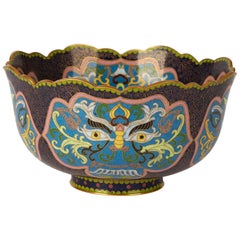
Vintage Chinese Republic Period Cloisonné Bowl, Early 20th Century
Located in Bishop
s Stortford, Hertfordshire
An exceptional and finely decorated vintage Chinese Republic period cloisonné bowl decorated with panels containing grotesque masks. The rounde...
Category
Early 20th Century Chinese Enamel Metalwork
Materials
Enamel
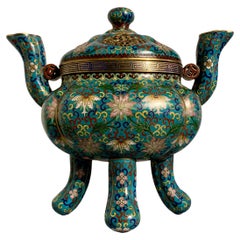
Chinese Cloisonne Incense Burner, circa 1960
s, China
Located in Austin, TX
A fine and beautifully enameled Chinese cloisonne incense burner, censer, with pierced cover, mid 20th century, circa 1960's, China.
The ce...
Category
1960s Chinese Qing Vintage Enamel Metalwork
Materials
Copper, Enamel
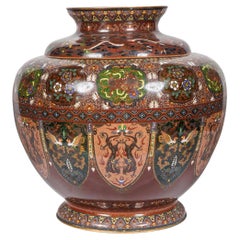
Meiji Masterpiece by Ando Jubei: A Maroon Cloisonné Vase with Dragons
Phoenix
By Ando Jubei
Located in Queens, NY
Meiji Masterpiece attributed to Ando Jubei: A Maroon Cloisonné Vase with Dragons
Phoenix, circa 1895
This monumental Meiji period Japanese cloisonné vase, attributed to the es...
Category
19th Century Japanese Meiji Antique Enamel Metalwork
Materials
Enamel
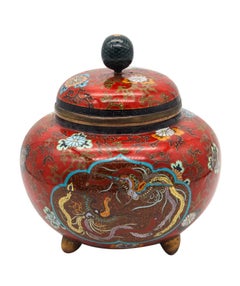
JAPAN IMPERIAL 1900 Meiji Period Tripode Koro Censer In Cloisonné Enamel With
Located in Miami, FL
Japanese tripod Koro from the Meiji Period (1868-1912).
This is a rare and beautiful antique koro censer, created in the imperial Japan during the Meiji period (1868-1912), circa 1900. It was carefully crafted in solid bronze and copper with silver wires and embellished with applications of polychromatic Cloisonné enamels and aventurine. The designs depict organics and natural motifs such mythological animals and flowers.
The Chrysanthemum Symbol
In Imperial Japan, the chrysanthemum (Kiku) was a potent symbol of the imperial family and the emperor himself, representing longevity, royalty, and divine power. The 16-petaled chrysanthemum is the Imperial Seal and crest, found on passports, coins, and the Chrysanthemum Throne. This association dates back to the Kamakura period (1185–1333), particularly with Emperor Go-Toba's fondness for the flower, establishing its link to imperial authority and lineage. The connection between the chrysanthemum and the imperial family began when Emperor Go-Toba adopted it as a personal emblem, aligning it with the strength and refinement of the emperor's rule. During the Meiji Period, the 16-petaled chrysanthemum crest, solidifying the association with the imperial family, was established during this time.
The Meiji Imperial Period
This is an era of Japanese history that extended from October 23, 1868 to July 30, 1912.The Meiji era was the first half of the Empire of Japan, when the Japanese people moved from being an isolated feudal society at risk of colonization by Western powers to the new paradigm of a modern, industrialized nation state and emergent great power, influenced by Western scientific, technological, philosophical, political, legal, and aesthetic ideas. As a result of such wholesale adoption of radically different ideas, the changes to Japan were profound, and affected its social structure, internal politics, economy, military, and foreign relations. The period corresponded to the reign of Emperor Meiji. It was preceded by the Keiō era and was succeeded by the Taishō era, upon the accession of Emperor Taishō.
Country: Imperial Japan.
Period: Meiji, 1890-1910.
Technique: Silver Wire Cloisonné over copper and bronze.
Weight: 416.80 Grams, (0.417 Kg).
Measurements:118 mm by 115 mm (4.65 x 4.52 Inches).
Koro
This term refers to a Japanese censer, incense burner, perfume burner or pastille burner is a vessel made for burning incense or perfume in some solid form. They vary greatly in size, form, and material of construction, and have been in use since ancient times throughout the world. They may consist of simple earthenware bowls or fire pots to intricately carved silver or gold vessels, small tabletop objects a few centimeters tall to as many as several meters high. Many designs use openwork to allow a flow of air. In many cultures, burning incense has spiritual and religious connotations, and this influences the design and decoration of the censer.
Cloisonné
This is an enameling technique in which the pattern is formed by wires soldered to the surface of the object to be decorated, which is usually made from copper, forming cells or cloisons, each of which holds a single colour of enamel paste which is then fired, and ground and polished. The champleve technique also uses an enameling technique, but the cells are formed by carving into the surface of the object, or in the casting. The cloisonne technique has been in use since the 12th century BC in the west, but the technique did not reach China until the 13th or 14th century. It became popular in China in the 18th century. Initially bronze or brass bodies were used, and in the 19th century copper, at which time the quality of the items produced began to decline. Chinese cloisonné is the best-known enamel cloisonné, though the Japanese produced large quantities from the mid-19th century, of very high technical quality. In the west the cloisonne technique was revived in the mid-19th century following imports from China, and its use continued in the Art Nouveau and Art Deco periods.
Condition: Basically, is in great antique condition, near mint, with insignificant and minimal usage, in great condition. All parts are secured in the settings. This Japanese Meiji Koro...
Category
Early 1900s Japanese Meiji Antique Enamel Metalwork
Materials
Silver, Bronze, Copper, Enamel
$1,598 Sale Price
20% Off
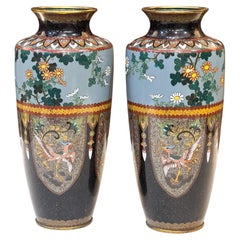
A Fine pair of Japanese cloisonné enamel vases Attributed to Honda Yasaburō
Located in London, GB
A Fine pair of Japanese cloisonné enamel vases
Attributed to Honda Yasaburō, Nagoya,
Meiji era
Each of baluster form, worked in polychrome enamels and silver wire on a mottled da...
Category
19th Century Japanese Antique Enamel Metalwork
Materials
Enamel
$1,039 Sale Price / set
20% Off
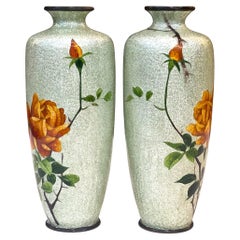
A Fine Pair of Japanese Cloisonné Vases with Ginbari Floral Decoration, 19th C
Located in London, GB
A Fine Pair of Japanese Cloisonné Vases with Ginbari Floral Decoration, Meiji Period (late 19th – early 20th century)
Of elegant baluster form with gently flared necks, this refined...
Category
19th Century Japanese Antique Enamel Metalwork
Materials
Enamel
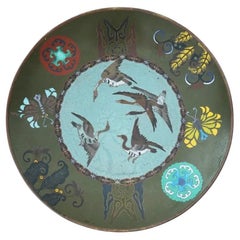
Antique Japanese Cloisonne Flying Geese Enamel Plate Goto
Located in Long Island City, NY
An antique Japanese late Meiji era decorative enamel over copper plate or charger. Attributed to Goto
The interior of the plate is adorned with a polychrome design of flying geese ...
Category
Late 19th Century Japanese Meiji Antique Enamel Metalwork
Materials
Enamel, Copper
$2,700 Sale Price
40% Off
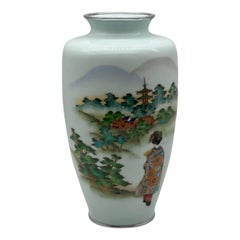
A Large Japanese Cloisonne Enamel vase attributed to Ando Jubei
By Ando Jubei
Located in London, GB
A Large Japanese Cloisonne Enamel vase attributed to Ando Jubei.
Taisho period (1912 – 1926)
A large baluster Cloisonne-Enamel vase worked in musen and silver wire of varying gauge...
Category
Early 20th Century Japanese Enamel Metalwork
Materials
Enamel
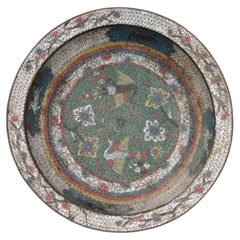
Chinese Phoenix Bird Cloisonne Enamel Over Brass Bowl
Located in Long Island City, NY
A Ming Dynasty Chinese enamel over brass bowl. The interior of the bowl is adorned with polychrome images of Phoenix birds in blossoming trees and flowers, medallions with mythical c...
Category
17th Century Chinese Ming Antique Enamel Metalwork
Materials
Enamel, Brass
$2,000 Sale Price
60% Off
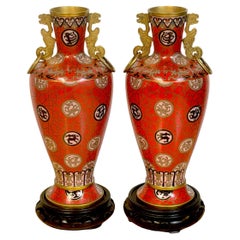
Pair of Chinese Red Cloisonné Zodiac Vases, with Stands
Located in West Palm Beach, FL
Pair of Chinese red cloisonné zodiac vases, with stands, each one with gilt brass phoenix bird ring handles, with 'cracked ice' and floating animal medalli...
Category
20th Century Chinese Chinese Export Enamel Metalwork
Materials
Brass, Enamel
$2,360 Sale Price / set
20% Off
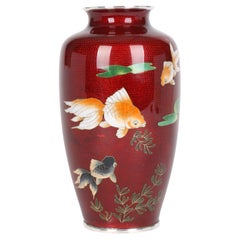
Japanese Vintage Silver Metal Mounted Cloisonne Vase with Fish
Located in Bishop
s Stortford, Hertfordshire
Exceptional vintage Japanese silver mounted cloisonne vase decorated with veiltail gold-fish and carp swimming amidst pond weed and dating arou...
Category
1940s Japanese Mid-Century Modern Vintage Enamel Metalwork
Materials
Silver Plate, Enamel
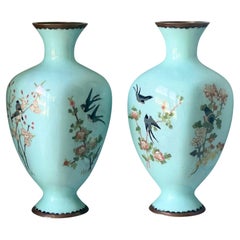
A Fine Pair of Japanese Cloisonné-Enamel Vases with Swallows and Parrots. 19th C
Located in London, GB
A Fine Pair of Japanese Cloisonné-Enamel Vases with Swallows and Parrots
Meiji period
Each of square shape with rounded shoulders, rising to a slightly waisted neck and flaring mout...
Category
19th Century Japanese Antique Enamel Metalwork
Materials
Enamel
$1,579 Sale Price / set
30% Off
Japanese Cloisonne Totai Enamel Jar with Paulownia Flowers
Located in Long Island City, NY
An antique Japanese late Meiji era covered Totai enamel on ceramic ginger jar. Circa: late 19th century .
The body and the lid of the ware are enameled with polychrome floral, foliate scroll, and foliage motifs made in the Cloisonne technique. The neck and the base are adorned with polychrome geometrical, and foliage motifs made in the same technique. Signed with red and blue ink hieroglyphs, on the bottom. Totai Shippo is the name given to Japanese cloisonne on ceramics, both on earthenwares and on porcelain. It has a similar appearance to metallic cloisonne ware...
Category
Late 19th Century Japanese Meiji Antique Enamel Metalwork
Materials
Enamel
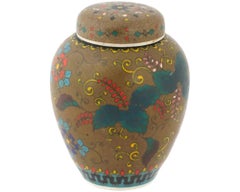
$800 Sale Price
20% Off
Japanese Meiji Champleve and Bronze Urn
Located in Dallas, TX
Presenting a gorgeous Japanese Meiji Champleve and bronze urn.
Made in Japan during the Meiji Period circa 1880.
The body of ...
Category
Late 19th Century Japanese Meiji Antique Enamel Metalwork
Materials
Bronze, Enamel
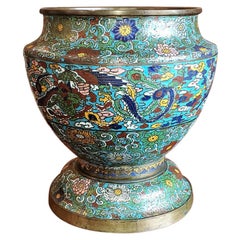
A Fine Silver-Mounted Cloisonné-Enamel Vase By Satō Sei, Meiji era
Located in London, GB
A Silver-Mounted Cloisonné-Enamel Vase
By Satō, Meiji era
By Satō, Meiji era (late 19th century), circa 1890–1900
Of globular form with a gently tapered neck, the body worked in y...
Category
19th Century Japanese Antique Enamel Metalwork
Materials
Silver, Enamel
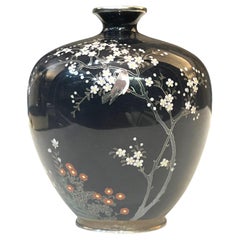
Exquisite Japanese Cloisonné Red Enamel Six-Piece Dressing Table Set, Ando Jubei
By Ando Jubei
Located in Queens, NY
Japanese Ando Jubei Cloisonné Enamel Six-Piece Dressing Table Set with Ando Marks and Original Fitted Case
A rare Japanese cloisonné enamel six-piece dressing table set by Ando Jube...
Category
Early 20th Century Japanese Meiji Enamel Metalwork
Materials
Copper, Enamel
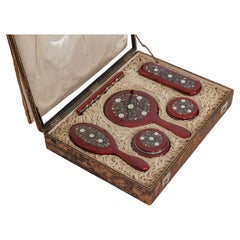
Large Oriental Champleve Urn on Stand
Located in Dallas, TX
PRESENTING a BEAUTIFUL and VERY HIGH QUALITY Large Oriental Champleve Urn on Stand.
Early 20th Century, circa 1910 – 20.
Probably Japanese.
Marked, but we cannot decipher the mark...
Category
Early 20th Century Japanese Japonisme Enamel Metalwork
Materials
Brass, Bronze, Enamel
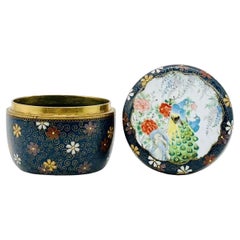
A Fine Unusual Antique Japanese Cloisonne Enamel Kogo Box and Cover By Inaba
Located in London, GB
A Fine Unusual Antique Japanese Cloisonne Enamel Kogo Box and Cover signed by Inaba
Meiji Period.
Worked in gold wire and decorated all over with swirls and flowers on dark blue...
Category
19th Century Japanese Antique Enamel Metalwork
Materials
Enamel
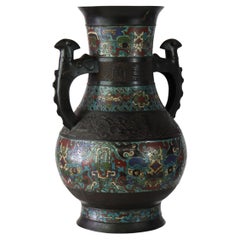
Antique Chinese Enameled Floor Vase C1890
Located in Big Flats, NY
Antique Chinese Enameled Floor Vase Unsigned C1890 (17 7/8" x 12" x 10 3/8").
This exquisite antique Chinese floor vase, dating to circa 1890, showcases the intricate art of cl...
Category
Late 19th Century Antique Enamel Metalwork
Materials
Metal, Enamel
$960 Sale Price
20% Off
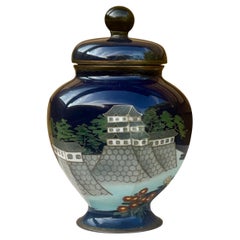
A Fine Japanese Cloisonné-Enamel Vase/Jar with Cover Attributed to Ando
Located in London, GB
A Fine Japanese Cloisonné-Enamel Vase/Jar with Cover Attributed to the Ando Company,
Meiji to Taishō period, early 20th century
Of baluster form with a domed cover surmounted by a k...
Category
19th Century Japanese Antique Enamel Metalwork
Materials
Enamel
$1,353 Sale Price
40% Off
Antique Cloisonne Vase with Bird
Floral Decoration C1920
Located in Big Flats, NY
Antique Cloisonne Vase with Bird & Floral Decoration C1920.
11" x 4 5/8" x 4 5/8".
A finely crafted antique cloisonné vase from circa 1920, featuring intricate bird and floral ...
Category
Early 20th Century Enamel Metalwork
Materials
Metal, Enamel
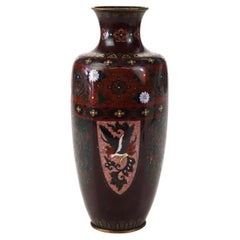
$360 Sale Price
20% Off
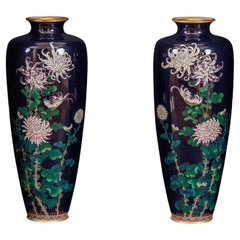
An Exquisite Pair Of Japanese Cloisonné Enamel Vases with Chrysanthemum Blossoms
Located in Queens, NY
An Exquisite Pair Of Japanese Cloisonné Enamel Vases with Chrysanthemum Blossoms, Attributed to Hayashi, Meiji Period.
Experience the exquisite craftsmanship of the Meiji period wit...
Category
19th Century Japanese Meiji Antique Enamel Metalwork
Materials
Enamel
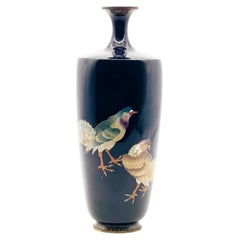
A Magnificent Cloisonné Enamel Vase decorated with pigeons. Meiji period
Located in London, GB
A Magnificent Cloisonné Enamel Vase decorated with pigeons.
Meiji period (late 19th century)
Of a tapered spill shape decorated in silver and gold wire and various coloured clo...
Category
19th Century Japanese Antique Enamel Metalwork
Materials
Enamel
$1,312 Sale Price
34% Off
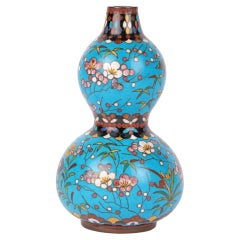
Oriental Flowering Hawthorn Cloisonne Double Gourd Vase
Located in Bishop
s Stortford, Hertfordshire
A very fine and stylish antique oriental, Chinese attributed, cloisonne double gourd vase dating from the latter 19th century. The vase stands on a flat brass base with a wide round base, pinched waist and narrow round upper section with a funnel style top with a flat metal rim. The body of the vase is decorated with a mixture of flowering shrubs dominated with flowering hawthorn incorporating a butterfly to one side. The continuous scenes are decorated in colored enamels against a bright turquoise ground and set between formal borders around the foot, the pinched centre and top of the vase. The vase is typically not marked but is a striking and very stylish example.
Provenance: Acquired from the UK art...
Category
19th Century Japanese Antique Enamel Metalwork
Materials
Metal, Enamel
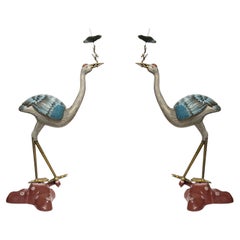
Pair Large Antique Chinese Cloisonne Crane Candle Holders
Located in New York, NY
Pair of very large antique Chinese cloisonne enameled metal candle holders fashioned as standing cranes holding prunus branch and lotus leaf in their mouths. Tops of the bodies remo...
Category
Early 20th Century Chinese Enamel Metalwork
Materials
Metal, Enamel
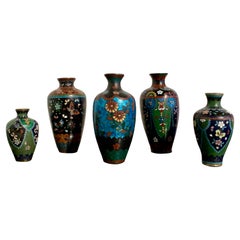
Group of 5 Small Japanese Cloisonne and Ginbari Vases, Early 20th Century, Japan
Located in Austin, TX
A charming group of five Japanese cloisonné and ginbari foiled vases, Meiji period, early 20th century, Japan.
The group consists of one vase with cloisonné chrysanthemum blossoms against bold and bright turquoise ginbari foil background, two similar vases of primarily black and burgundy cloisonné - one with a butterfly motif, the other with a floral motif, and two similar vases of primarily dark blue and green cloisonné, both with floral and butterfly motifs.
Turquoise ginbari vase...
Category
Early 20th Century Japanese Meiji Enamel Metalwork
Materials
Copper, Enamel, Foil, Wire
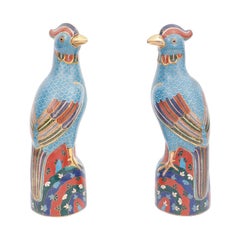
Pair of Vintage Chinese Cloisonné Birds
Located in Palm Beach, FL
Intriguing pair of vintage Chinese cloisonne or enamel on brass birds with quizzical expressions, colorful wings and tails, blue bodies and floral bases.
Category
20th Century Chinese Chinoiserie Enamel Metalwork
Materials
Enamel
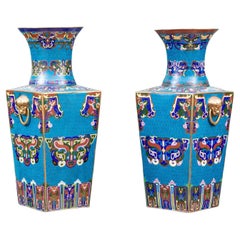
$2,700 / set
Pair Large Antique 19th Century Cloisonne Vases
Located in New York, NY
Unusual and finely crafted pair of large Chinese cloisonne enameled vases of rectangular shape with gilt metal masks and ring handles, 25 1/2 by 10 by 10 inches.
Category
1950s Vintage Enamel Metalwork
Materials
Brass, Enamel
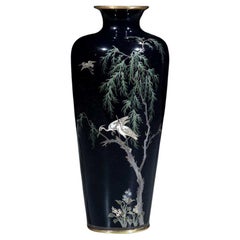
A blue-ground cloisonné vase depicting herons and a weeping willow
Located in Milano, IT
A cloisonné vase decorated on a dark blue ground with a pair of herons perched on the branch of a weeping willow and another heron in flight.
The decoration is executed with silver ...
Category
Late 19th Century Japanese Antique Enamel Metalwork
Materials
Enamel
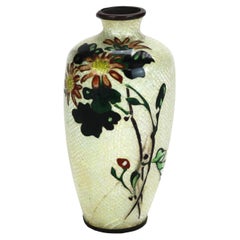
Antique Cloisonne Enameled Cabinet Vase with Flowers, Signed, Early 20thC
Located in Big Flats, NY
Antique Cloisonne Enameled Cabinet Vase with Flowers, Signed, Early 20thC.
4 5/8" x 2 3/8" x 2 3/8".
A beautifully crafted antique cloisonné enameled cabinet vase from the earl...
Category
Early 20th Century Enamel Metalwork
Materials
Metal, Enamel
$280 Sale Price
20% Off
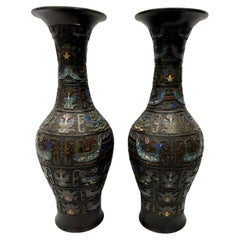
Pr. 19th C. Meiji Japanese Champleve Inset Bronze Vases Signed 21.25"
Located in Atlanta, GA
Japanese, 19th century.
This exquisite pair of 19th-century Japanese Champlevé or cloisonne style inset bronze vases represents a masterful blend of artistry and craftsmanship. Each...
Category
19th Century Japanese Chinese Export Antique Enamel Metalwork
Materials
Bronze, Enamel
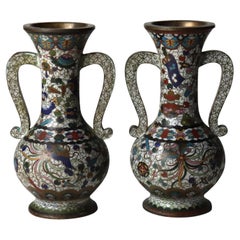
Pair Of Antique Chinese Cloisonne Enameled Vases Signed C1900
Located in Big Flats, NY
Pair Of Antique Chinese Cloisonne Enameled Vases Signed C1900 (10 5/8" x 6" x 6").
A pair of antique Chinese cloisonné enameled vases from circa 1900. These vases feature intri...
Category
Early 20th Century Enamel Metalwork
Materials
Metal, Enamel
$520 Sale Price / set
20% Off
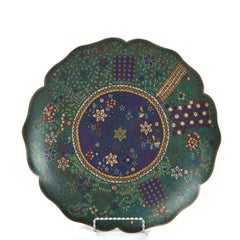
Antique Japanese Cloisonne Scalloped Edge Charger with Geometric Floral Design
Located in Big Flats, NY
Antique Japanese Cloisonne Scalloped Edge Charger with Geometric Floral Pattern C1920.
2 1/4" x 14 3/8" x 14 3/8".
A beautifully crafted antique Japanese cloisonne charger from c...
Category
Early 20th Century Enamel Metalwork
Materials
Metal, Enamel
$760 Sale Price
20% Off
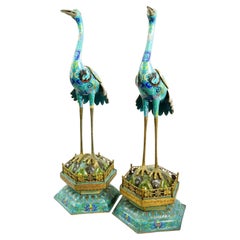
Monumental Pair of Chinese Qing Cloisonne Enamel Cranes Figurines
Located in Long Island City, NY
A pair of large antique Chinese cloisonne enamel crane figurines with long necks and legs. The bodies of the cranes and their bases are decorated with foliage patterns and dragon ima...
Category
Early 20th Century Chinese Enamel Metalwork
Materials
Enamel
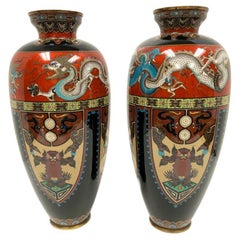
Pair Of Japanese Meiji Era Cloisonne Vases
Located in Bridgeport, CT
Pair of Japanese cloisonné vases with fine traditional form decorated with dragons and demons, geometric motifs and floral bands.
Dimensions: 5" W x 12" H
Condition: Please see detai...
Category
Late 19th Century Japanese Meiji Antique Enamel Metalwork
Materials
Metal, Enamel
$1,400 / set
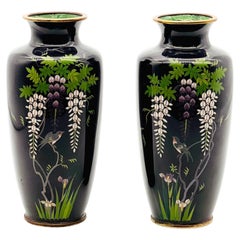
A Fine Pair of Japanese Cloisonne Enamel Wisteria Vases. Meiji Era
Located in London, GB
A FINE PAIR OF JAPANESE CLOISONNE ENAMEL VASES.
Meiji Period (1868-1912).
Worked in silver wire of varying gauge with a continuous design depicting birds perched among leafy bra...
Category
19th Century Japanese Antique Enamel Metalwork
Materials
Enamel
Still Thinking About These?
All Recently ViewedMore Ways To Browse
Tibetan Singing Bowl
Bronze Hibachi
China Brazier
Elephant Censer
Foo Censer
Japanese Bronze Crane And Turtle
Miyao Bronze
Quran Verse
Small Incense Burner
Tibetan Metal Art
Zhou Bronze
Antique Arabic Coffee Pot Dallah
Antique Chinese Bronze Marks
Antique Lime Boxes
Bidri Art
Burmese Bell
Cast Iron Kettle
Chinese Cloisonne Censer